engine oil AUDI A5 CABRIOLET 2015 Owners Manual
[x] Cancel search | Manufacturer: AUDI, Model Year: 2015, Model line: A5 CABRIOLET, Model: AUDI A5 CABRIOLET 2015Pages: 268, PDF Size: 66.88 MB
Page 5 of 268
M N
ci u.. co ,...., \!) 1.1'1
N 1.1'1 ,....,
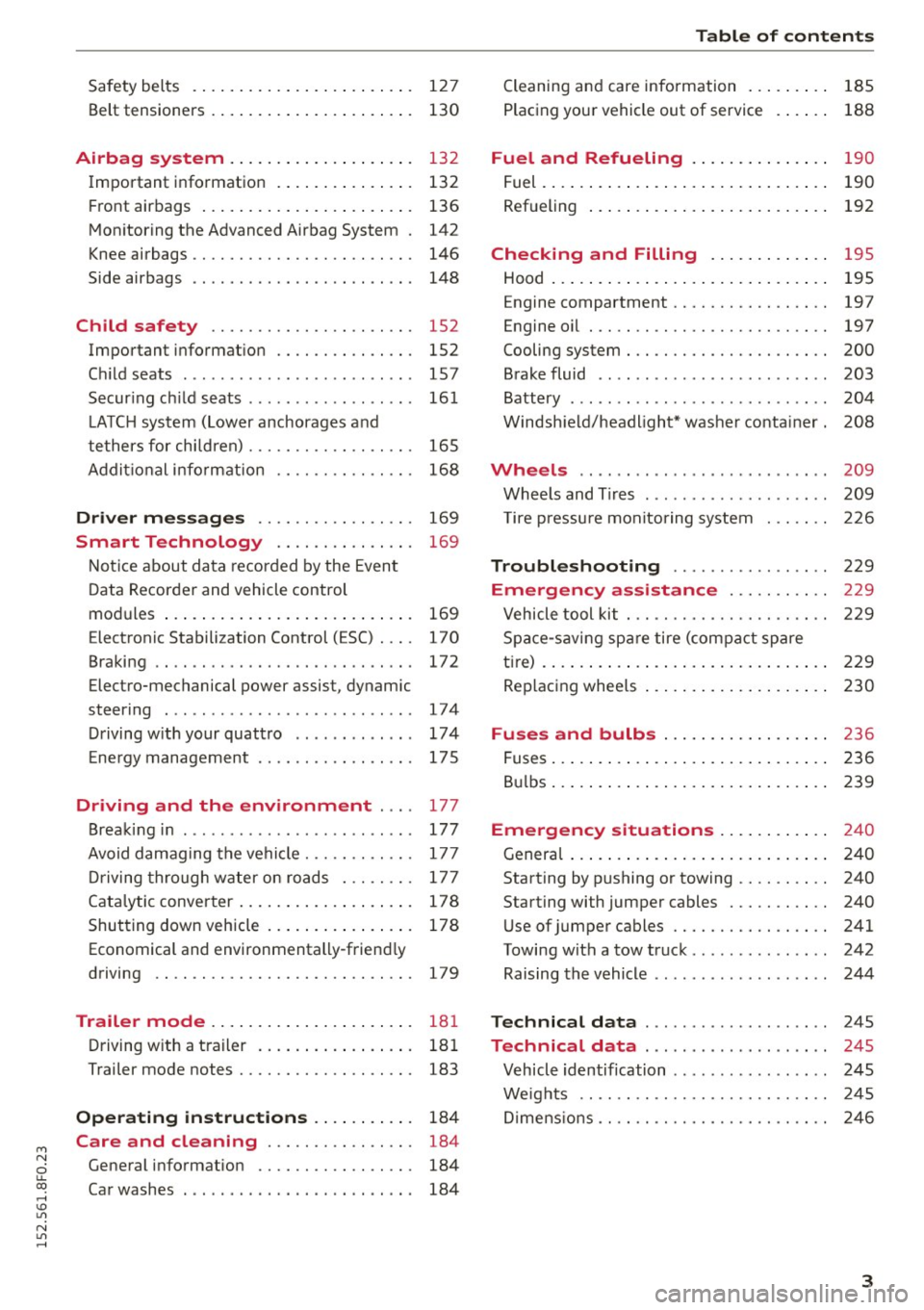
Safety belts . . . . . . . . . . . . . . . . . . . . . . . . 12 7
Belt tensioners . . . . . . . . . . . . . . . . . . . . . . 130
Airbag system ............... .. ... 132
Important information . . . . . . . . . . . . . . . 132
Fr ont airbags . . . . . . . . . . . . . . . . . . . . . . . 136
Monitoring the Advanced Airbag System . 142
Knee airbags . . . . . . . . . . . . . . . . . . . . . . . . 146
Side airbags . . . . . . . . . . . . . . . . . . . . . . . . 148
Child safety . . . . . . . . . . . . . . . . . . . . . . 152
Important information . . . . . . . . . . . . . . . 152
Ch ild seats . . . . . . . . . . . . . . . . . . . . . . . . . 157
Securing child seats . . . . . . . . . . . . . . . . . . 16 1
L A TCH system (Lower anchorages and
tethers for children) . . . . . . . . . . . . . . . . . . 165
Additional information 168
Driver messages . . . . . . . . . . . . . . . . . 169
Smart Technology . . . . . . . . . . . . . . . 169
Notice about data recorded by the Event
Dat a Recorder and vehicle control
modules . . . . . . . . . . . . . . . . . . . . . . . . . . . 169
Electronic Stabili zation Control ( ESC) . . . . 170
Braking . . . . . . . . . . . . . . . . . . . . . . . . . . . . 172
Electro-mechanical power assist, dynamic
steering . . . . . . . . . . . . . . . . . . . . . . . . . . . 174
Driving with your quattro . . . . . . . . . . . . . 17 4
E ne rgy management . . . . . . . . . . . . . . . . . 175
Driving and the environment . . . . 177
Breaking in . . . . . . . . . . . . . . . . . . . . . . . . . 177
Avoid damaging the vehicle . . . . . . . . . . . . 177
Driving through water on roads . . . . . . . . 177
Catalytic converter................... 178
Shutting down vehicle . . . . . . . . . . . . . . . . 178
Economical and environmentally -friend ly
driving . . . . . . . . . . . . . . . . . . . . . . . . . . . . 179
Trailer mode . . . . . . . . . . . . . . . . . . . . . . 181
Driving with a t railer . . . . . . . . . . . . . . . . . 181
Trailer mode notes . . . . . . . . . . . . . . . . . . . 183
Operating instructions . . . . . . . . . . . 184
Care and cleaning . . . . . . . . . . . . . . . . 184
General information . . . . . . . . . . . . . . . . . 184
Car washes . . . . . . . . . . . . . . . . . . . . . . . . . 184
Table of contents
Cleaning and care information . . . . . . . . . 185
Placing your vehicle out of service . . . . . . 188
Fuel and Refueling . . . . . . . . . . . . . . . 190
Fuel . . . . . . . . . . . . . . . . . . . . . . . . . . . . . . . 190
Refueling . . . . . . . . . . . . . . . . . . . . . . . . . . 192
Checking and Filling . . . . . . . . . . . . . 195
Hood . . . . . . . . . . . . . . . . . . . . . . . . . . . . . . 195
Engine compartment . . . . . . . . . . . . . . . . . 197
Engine oil . . . . . . . . . . . . . . . . . . . . . . . . . . 197
Cooling system . . . . . . . . . . . . . . . . . . . . . . 200
Brake fluid . . . . . . . . . . . . . . . . . . . . . . . . . 203
Battery . . . . . . . . . . . . . . . . . . . . . . . . . . . . 204
Windshield/headlight* washer container. 208
Wheels ...... .. .. ........ ...... ... 209
Wheels and Tires . . . . . . . . . . . . . . . . . . . . 209
T ire pressure monitoring system 226
Troubleshooting . . . . . . . . . . . . . . . . . 229
Emergency assistance . . . . . . . . . . . 229
Vehicle tool kit . . . . . . . . . . . . . . . . . . . . . . 229
Space-saving spare tire (compact spare
tire) . . . . . . . . . . . . . . . . . . . . . . . . . . . . . . . 229
Replacing wheels . . . . . . . . . . . . . . . . . . . . 230
Fuses and bulbs . . . . . . . . . . . . . . . . . . 236
Fuses.............................. 236
Bulbs. . . . . . . . . . . . . . . . . . . . . . . . . . . . . . 239
Emergency situations . . . . . . . . . . . . 240
General . . . . . . . . . . . . . . . . . . . . . . . . . . . . 240
Starting by pushing or towing . . . . . . . . . . 240
Start ing with jumper cables . . . . . . . . . . . 240
Use of jumper cables . . . . . . . . . . . . . . . . . 241
Towing with a tow truck . . . . . . . . . . . . . . . 242
Raising the vehicle . . . . . . . . . . . . . . . . . . . 244
Technical data . . . . . . . . . . . . . . . . . . . . 245
Technical data . . . . . . . . . . . . . . . . . . . . 245
Vehicle identification . . . . . . . . . . . . . . . . . 245
Weights . . . . . . . . . . . . . . . . . . . . . . . . . . . 24S
Dimensions . . . . . . . . . . . . . . . . . . . . . . . . . 246
3
Page 16 of 268

Instruments and indicator lights
"O~ I I ~ .,
14
Electronic Stabilization Control
( E SC)
<=:> page 170
USA models :
Anti-lock braking system (ABS) de
fective./
c::> page 19
Canada models :
Anti-lock braking system (ABS) de
fective./
<=:> page 19
USA models :
Safety systems ./
<=:>page 19
Canada model s:
Safety systems ./
<=:>page 19
Worn brake pads
c::>page20
Electromechanical parking brake
<=:>page 16
Tire pressure monitoring
system./
c::> page 2 2 7
Tire pressure moni toring sys tem
c::> page 2 2 7
Elect ro nic power control./
c::>page20
Malfunct ion ind icator Lamp (MIL)
./
c::> page20
Engine speed limit ation
c::> page20
Engine oil level
<=:> page 17
Engine oil sensor
c::> page20
Batte ry
<=:> page 16
Ta nk sys tem
c::> page20
Warm up e ng ine*
c::> page 191
Windsh ie ld washer fluid level
<=:> page 21
Windshie ld wipers
<=:> page 21
Remote contro l key
<=:> page 75
Battery in remo te control key
<=:> page 31
Defec tive light bulb wa rning
<=:> page 21
Fog lights
<=:>page 21
Rear fog lig ht(s)*
<=:> page 21
Headlight range control*
<=:> page 21
Adaptive light*
<=>page 21
Light -/rain sensor*
<=> page 21
Adaptive dampers*
<=>pag e22
Spor t differen tial *
<=>page22
Ig nition loc k
<=>page2 2
Steering co lumn lock
<=> page 18
Electromechanica l steer ing,
dynam ic steer ing*
./ <=:> page 174
Transmission
- mu ltit ronic, tiptronic
<=> page 88
- S tronic c::> page 88
Transmission
- S tronic
<=> page 88
Other indicator light s
--------------
Turn signals
<=>page22
Page 19 of 268

M N
ci u.. co ,...., \!) 1.1'1
N 1.1'1 ,....,
9:::1: Engine oil pressure
The red engine oil pressure warning symbol re
quires immediate service or repair . Driving with a
low-oil-pressure indication is likely to inflict se
vere damage to the engine.
• Turn off engin e! Oil pressure too low
If the indicator light t urns on and the message
appears, the oil pressure is too low.
• Pull
off the road.
• Stop the vehicle .
• Turnoff the engine.
• Check the engine oil level ¢ page 199.
• If the engine oil level is too low, add engine oil
¢ page 199. Make sure that the o il pressure
warning symbol. appears no longe r in the
display before you start dr iving again.
• If the engi ne oil leve l is correct a nd the ind ica
tor light st ill turns on, turn the eng ine
off and
do not continue driving . Seek p rofess ional as
s istance .
(D Tips
- The engine oil pressure symbol. is not
an indicator for a low engine oil level. Do
not rely on it. Instead , check the oil level in
your engine at regular intervals, prefe rably
each time you refuel, and always before
going on a long trip.
- The yellow oil level warning indication
Ill
requires oil refill or workshop service with
out delay. Do not wait until the red oil pressure warning. starts to flash before
you respond to the low oil leve l warning
Ill . By then , your engine may already have
suffered serious damage.
~ . Engine oil level
• WARNING : Plea se add oil immediately
If the indicator light and the message appear,
add engine o il immed iate ly
¢page 197.
Ill Add oil, max X XXX l. You may cont . driv .
When the symbo l II and driver message appear,
add the amount of oi l appearing in the display at
the next opportunity¢
page 197.
Instruments and indicator lights
-L Engine cooling system
A malfunction in the engine cooling system must
be repaired as soon as possible .
• Turn off eng ine and check coolant level
If the indicator light turns on and the message
appears, the coolant temperature is too high o r
the coo lant leve l is too low.
• Pull
off th e roa d.
• Stop the vehicle.
• Tur noff the engine .
• Check coolant leve l¢
page 201 .
• Add coo lant if necessary ¢ page 202.
• Continue dr iv ing o nly after the engine coolant
warning/ indicator light goes out .
• Contact your autho rized Aud i dealer for assis-
tance if necessa ry.
If the engi ne coo lant level is correct, t hen the ra
dia to r fan may be the cause o f th e malfunct io n.
• Coolant temperature! Let engine run with
v ehicle stationary
If the indicator ligh t turns on and the message
appears, let the eng ine run at id le for a few mi
nutes to coo l down.
A WARNING
-- If your vehicle should brea k down for me
cha nica l o r other reasons, pa rk at a safe d is
tanc e from moving traffic, turn
off the en
g ine and turn o n the h azard warn ing lights
¢ page 52, Emergency flashers.
- Ne ver open the hood if you see o r hear
steam or coo la nt es caping fro m the eng ine
compa rtment - y ou risk being scalded. Wai t
until yo u can no longer see or hear s te a m o r
coo lant escapin g.
- Th e engine comp artment o f any vehicle is a
d angerous a rea. Befo re you perfo rm any
wo rk in the eng ine com partment, tur n of
the engine and a llow it to cool. Fo llow the
warn ing stickers
¢ page 195.
(D Note
Do not con tinue dr iv ing if the . symbol illu-
minates. The re is a ma lfunction in the engine
II>-
17
Page 22 of 268
Instruments and indicator lights
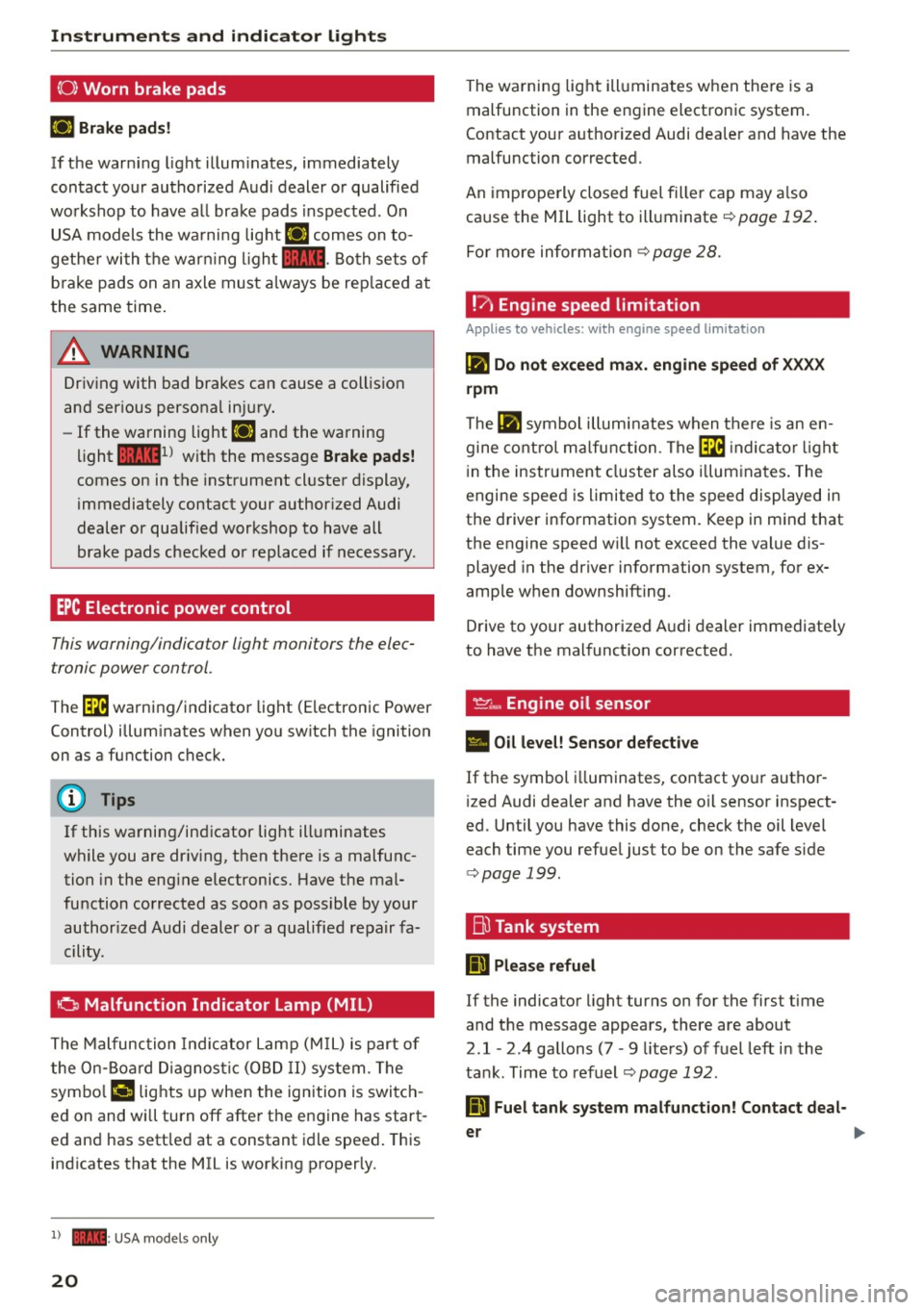
(0) Worn brake pads
El Brak e pads!
If th e warn ing lig ht illum ina tes, imme diately
c o ntact your authorized Aud i dealer or qualified
workshop to have a ll brake pads i nspected. On
USA models the wa rni ng light
El comes on to
gethe r with the war ning l igh t
1111 . Both sets of
b ra ke pads on an axle must a lways be rep laced at
the same time .
A WARNING
Driv ing with bad brakes can cause a collis ion
and ser ious personal in jury.
- If the warning light El and the warning
light
11111 ) w ith the message Brake pads!
comes on in the instrument cl uster display,
immediately contact your author ized Audi
dealer or qualified workshop to have all
brake pads checked o r replaced if necessary .
EPC Electronic power control
This warning/indicator ligh t monitors the elec
tronic power control .
The~ warning/indicator light (Electronic Power
Control) illum inates when yo u sw itch the ignition
on as a function check.
(D Tips
If this wa rning/ind icator light ill uminates
while you are dr iv ing, then the re is a malfunc
tion in the eng ine electronics. Have the mal
function corrected as soon as possible by your
author ized A udi dealer or a qualified re pair fa
cility.
0 Malfunction Indicator Lamp (MIL)
T he Malfunc tion Ind ica tor Lamp (M IL) is part o f
the On-Board Diagnos tic (O BD II ) system . The
symbo l
('4 lights up when the ignition is switch
e d on and wi ll turn off afte r the engine has start
e d an d has sett le d at a constant i dle speed . This
indicates that the MIL is working p roperly.
l) - : USA mo dels o nly
20
The wa rning lig ht ill uminates when the re is a
malfunction in the engine electronic system.
Contact your a uthorized Audi dea ler and have the
malfunction corrected.
An imprope rly closed fuel fille r cap may a lso
ca use the MIL light to ill uminate
¢ page 192.
For more inform ation ¢ page 28.
!?) Engine speed limitation
Applies to vehicles: wi th engine speed limitation
(II Do not exceed max. engine speed of XXXX
rpm
The (II symbo l illu min ates when t here is an en
gine co ntro l m alfu nction . The ~ indica tor light
in the instrument clus ter also i llum ina tes . T he
engine spee d is limited to the speed displayed in
t h e d river i nfo rmation system. Keep in m ind that
the engine speed w ill not exceed the value dis
played in the driver information system, for ex
amp le w hen downshifting .
D rive to your authorized A udi dealer immediate ly
to have t he mal funct ion corrected.
~~. Engine oil sensor
• Oil level! Sensor defective
If the symbol illuminates, contact yo ur autho r
i zed Audi dealer and have the oil sensor inspect
ed . Until you have this done, check t he oil level
each time you refue l just to be on the safe s ide
¢ page 199.
Bu Tank system
ID Please refuel
If the indicator light turns on for the first time
and the message appea rs, there are about
2
.1 -2 .4 gallons (7 -9 liters) of fuel left in the
ta nk . Time to refuel
¢page 192.
ID Fuel tank system malfunction! Contact deal -
er
~
Page 76 of 268

Driving
Sw itching the ignition on /off
If you would like to switch the ignition o n wit h
out starting the engine, fo llow these steps:
• Inse rt the key into the ignition lock.
• Press the key brief ly
wi thout p ress ing the b rake
pedal.
• To sw itch the ignition off , press the key again.
When starting the engine, major e lectr ica l loads
are sw itched off temporar ily.
You ca n only remove the key with the ignition
sw itched off .
If the engine should not start immedia tely , the
starti ng process is automatically stopped after a
short time . Repeat sta rting procedure .
A WARNING
-Never allow the engine to run in confined
spaces - dange r of asp hyxiation.
- Never remove the ignition key from the ign i
t ion loo k while the vehicle is moving . Other
wise, the steering lock cou ld sudden ly en
gage and you would not be able to steer the
vehicle.
- Always ta ke the key with yo u wheneve r you
leave your vehi cle. Otherwise, the engine
could be started or electrical eq uipment
s uch as the power windows cou ld be operat
ed . T his can lead to ser ious injury.
- Never leave ch ildren or persons requiring as
sistance unattended in the vehicle. The
doors can be locked using the remote trans
mitter, preventing peop le from escap ing
from the vehicle on their own in the event of an emergency . Depending on the time of
year, people inside the vehicle can be ex posed to very high o r very low tempe ra
t ur es.
([) Note
Avoid high engine rpm, full throttle and heavy
eng ine loads until the eng ine has reached op
erati ng temperature - otherwise you risk en
gine dam age.
74
-
@) For the sake of the env ironment
Do not let the engine run while pa rked to
warm up. Begin dr iv ing immediately. Th is re
d uces unnecessary em iss ions .
@ Tips
-If the key cannot be removed from the igni
t ion lock, you have to pu ll the mechan ica l
key out of the master key in order to be able
to lock the vehicle
c::, page 32.
- After starting a co ld engine, there may be a
br ief per iod of increased noise because the
oil pressure must first build up in the hy
draulic valve adjusters. This is norma l and
not a cause fo r concern .
- If you leave the veh icle with the ignition
switched on, the ig nition w ill switch off af
ter a ce rtain period of t ime . Pleas e note tha t
ele ct rical eq uipme nt such as e xterior lights
w ill switch off a s well when that hap pens.
Starting the vehicle with the emergency
key
Applies to vehicles: with ignition lock
You can use the emergen cy key as an igni tion key
in an emergency.
F ig. 89 G love co mp art men t: Adapte r fo r em erge ncy key
Fi g. 9 0 Insert e merg ency key into t he ad ap ter
Page 78 of 268

Driving
"'Press on the I START ENGINE STOPI button
¢fig. 91 -the engine wi ll start.
Switching the ignition on /off
If you would like to sw itch the ignition on with
out start ing the e ng ine, fo llow these steps:
"' Press the
!START ENGINE STOPI button with -
out pressing the brake pedal.
"'T o sw itch the ignition off, press the but to n
again.
If the engine sho uld not start immed iately, the
starting p rocess is a utomat ically stopped after a
short time. Repeat sta rting procedure.
When starting the engine, major e lectr ica l loads
are sw itched off temporar ily .
After a cold engine is started, there may be a brief period of increased noise because oil pres
sure must first build up in the hydraulic valve ad
justers. This is normal and not a cause for con
cern.
_& WARNING
- Never allow t he engine to ru n in co nfine d
spaces -dange r of asp hyxiation.
- Never turn off the engine unti l the vehicle
h as come to a comp lete stop.
- Always ta ke t he key with yo u w heneve r you
leave your vehi cle. Otherw ise, the eng ine
c ou ld be started or ele ct rical eq uipment
s u ch as the power w indows co uld be operat
ed. This can lead to serious injury.
- Never leave ch ild ren o r persons requ iring as
sistance unattended in the vehicle. The doo rs can be locked using the remote trans
mitter, preventing peop le from escap ing
from the vehicle on their own in the event of
an emergency. Depending on the time of
year, people inside the vehicle can be ex
posed to very high o r ve ry low tempe ra-
tu res.
(D Note
- Avoid high eng ine rpm, fu ll throttle and
heavy engine loads until the engine has
r eached operating tempe rat ure - otherwise
you r isk eng ine damage.
76
-
@ For the sake of the environment
Do not let the engine run while pa rked to
warm up. Begin dr iv ing immediately. Th is re
d uces unnecessary em issions.
(!} Tips
- After starting a col d en gine, t here may be a
br ie f per iod of increased noise because the
oil pressure must first bui ld up in the hy
draulic valve adjusters. This is norma l and
not a cause for concern.
- If you leave the veh icle with the ignition
switched on, the ig nition w ill switch off af
ter a ce rtain period of time. Please note that
e lect rical equipment such as exte rior lights
wi ll switch off as well when that happens.
Switching engine off
App lies to vehicles: wi th convenience key
"' Br ing your vehi cle to a comple te stop.
"' Move the se lector lever to the P o r N pos ition.
"' Press the
I START ENGINE STOP ! button
r=>poge 75, fig. 91.
Steering lock
The steer ing lo cks w hen yo u tur n the eng ine off
u sing the
I START ENGINE STOP I button a nd open
the d river's doo r. The loc ked steering helps pre
vent ve hicle theft .
Emergency off
If necessary, the e ngine can be switched off with
the se lec to r lever in the R or D/S posi tions. The
engine s tops if you press a nd ho ld the
I START ENGI NE STOP I button at speeds below
6 mph (10 km/ h) and press the brake peda l.
_& WARNING
-Never turn off the engine before the vehicle
has come to a complete stop. The full func
tion of the brake booster and the power
steer ing is not guaranteed. You must use
more force to turn or b rake if necessary. Be
caus e you cannot stee r and brake as you
usually wo uld, this cou ld lead to crashes
a nd se rio us in juries.
~
Page 91 of 268
M N
ci LL co
rl I.O
"' N
"' rl
will no longer shift at a ll. The engine may stall.
Drive to your authorized Audi dealer or qualified
repair facility immediately to have the malfunc
tion corrected.
rm l;j Transmission malfunction: No reverse
You can continue driving
S tronic transmission: There is a system malfunc
tion in the transmission. The transmission is
switching to emergency mode. This mode only
shifts into certain gears or will no longer shift at
all. The engine may stall. You cannot engage the
reverse gear. Drive to your authorized Audi dea ler
or qualified repair facility immediately to have
the ma lfunction corrected .
rm Transmission malfunction: Stop vehicle and
shift to park.
Do not continue driving. Select the P se lector lev
er position and see your authorized Audi dealer
or qualified repair facility for assistance.
([) Note
If the transmission switches to emergency
mode, you shou ld take the vehicle to an au
thorized Audi dealersh ip as soon as possible
to have the condit ion corrected.
Selector lever emergency release
Applies to vehicles: with multitronic/5 tronic/tiptronic
If the vehicle's power supply foils, the selector
lever can be released in an emergency.
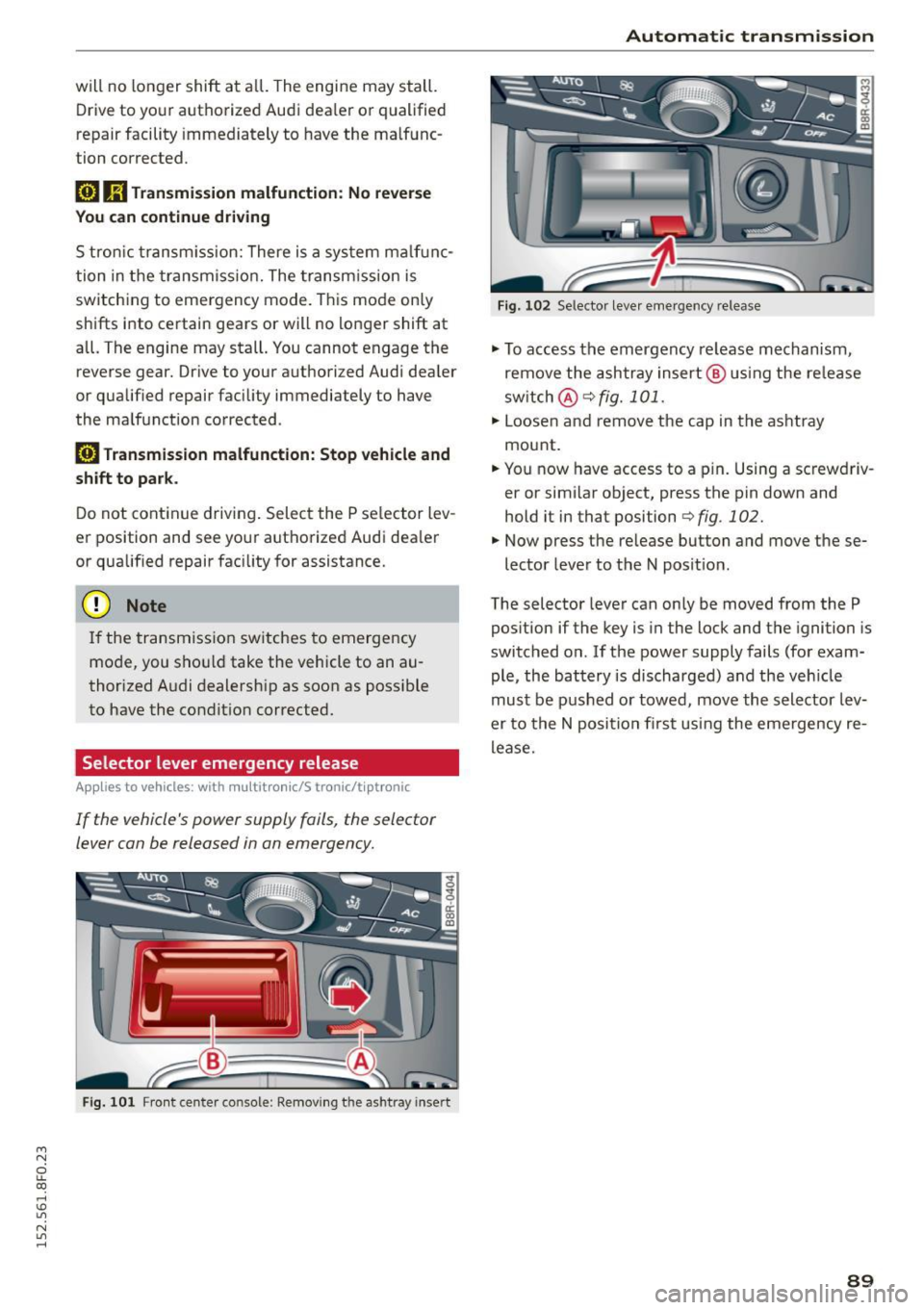
Fig . 101 Front center console: Removing the ashtray insert
Automatic transmission
Fig. 102 Selector lever emergency release
"'To access the emergency release mechanism,
remove the ashtray insert @ using the release
sw itch @ c:::>fig.
101.
"' Loosen and remove the cap in the ashtray
mount.
"' You now have access to a pin. Using a screwdriv
er or similar object, press the pin down and
hold it in that position
c:::>fig . 102.
"' Now press the re lease button and move these-
lector lever to the N position .
The selector lever can only be moved from the P
position if the key is in the lock and the ignition is
switched on . If the power supply fails (for exam
ple, the battery is discharged) and the vehicle
must be pushed or towed, move the selector lev
er to the N position first using the emergency re
lease.
89
Page 176 of 268

Smart Technolog y
Clean off accumulated salt coating from
brake discs and pads w ith a few carefu l
brake applications .
- If you damage the front spoiler, or if you in
stall a d ifferent spoiler, be sure the air flow
to the front brakes is not obstructed. Other
wise the brake system could overheat reduc
ing the effectiveness of the entire brake sys
tem.
- Failure of one brake c ircuit will impair the
braking capab ility result ing in an increased
stopp ing distance. Avoid driving the veh icle
and have it towed to the nearest autho rized
Audi dealer or qualified workshop.
- Never let the vehicle ro ll to a stop with the
engine shut off .
- If the brake booster is not work ing, the
brake pedal must be pressed considerably
harder to make up for the lack of booste r as
sistance .
Electro-mechanical
power assist, dynamic
steering
The electro-mechanical power assist helps the
driver when steering.
Power steering adapts electronically based on
the vehicle speed .
Indicator lights and me ssages
• Stee ring defe cti ve! D o not dr ive vehicle!
If this indicator light tu rns on and stays on and
this message appears, the power steering may
have fai led .
Do
not contin ue driving. See yo ur authorized
Aud i dealer o r a qua lified repair facility for assis
tance.
l ;r- ij Dynami c steering : S ys te m fault! You can
c on tinu e dr iving
If the indicator light turns on and the message
appears, the steer ing may be more difficult to
move or mo re sensitive than us ual. The steer ing
wheel may also be at an ang le when dr iv ing
straight.
174
Drive slowly to your authorized Audi dea ler or
qualified workshop to have the ma lf u nction cor
rected.
' -r, ij Dynamic ste ering: i nitializing
If this driver message appears and the indicator
li ght is flashing on the i nstrume nt pane l, dynam
i c steer ing* is being rein it ia lized . After sta rting
the engine, the steer ing whee l w ill move sligh tly.
Re-initialization might be necessary if the steer
ing whee l was moved hard to th e left and right
whi le the vehicle was not moving . The display
goe s out as soon as initiali zation is comp lete.
A WARNING
,-
H ave the dynamic steering* system malfunc-
tion repaired as soon as possible by an author
ized Audi dealer or qualified workshop - r isk
of accid ent!
@ Tips
- If the . or 'T fl indicator light only stays on
for a short time, you may cont inue driving.
- The dynamic steering* stab ility system s are
not availab le in the event of a system mal
function .
- For add itional information on dynamic
steering*, refer to<=> page 103 .
Driving with your quattro
Applies to vehicles : wit h all -w hee l drive
With all-wheel drive , all four wheels are driven .
General information
With a ll-wheel drive, power is distrib uted to a ll
fo ur wheels . This happens automatica lly depend
i ng on your driving style and the road conditions
at the t ime . See also <=> page 1 70 .
A center d ifferential distributes the driving power
variab ly to the front and rear ax le. It works to
gether w ith select ive whee l torque control , which
activates when drivi ng throug h curves
¢ page 171 . W ith the sport diffe rential*, power
distribution to the rear wheels is var iable and can
be ad justed with d rive select ¢ page 103 .
1111-
Page 179 of 268
M N
ci u.. co ,...., \!) 1.1"1
N 1.1"1 ,....,
Driving and the
environment
Breaking in
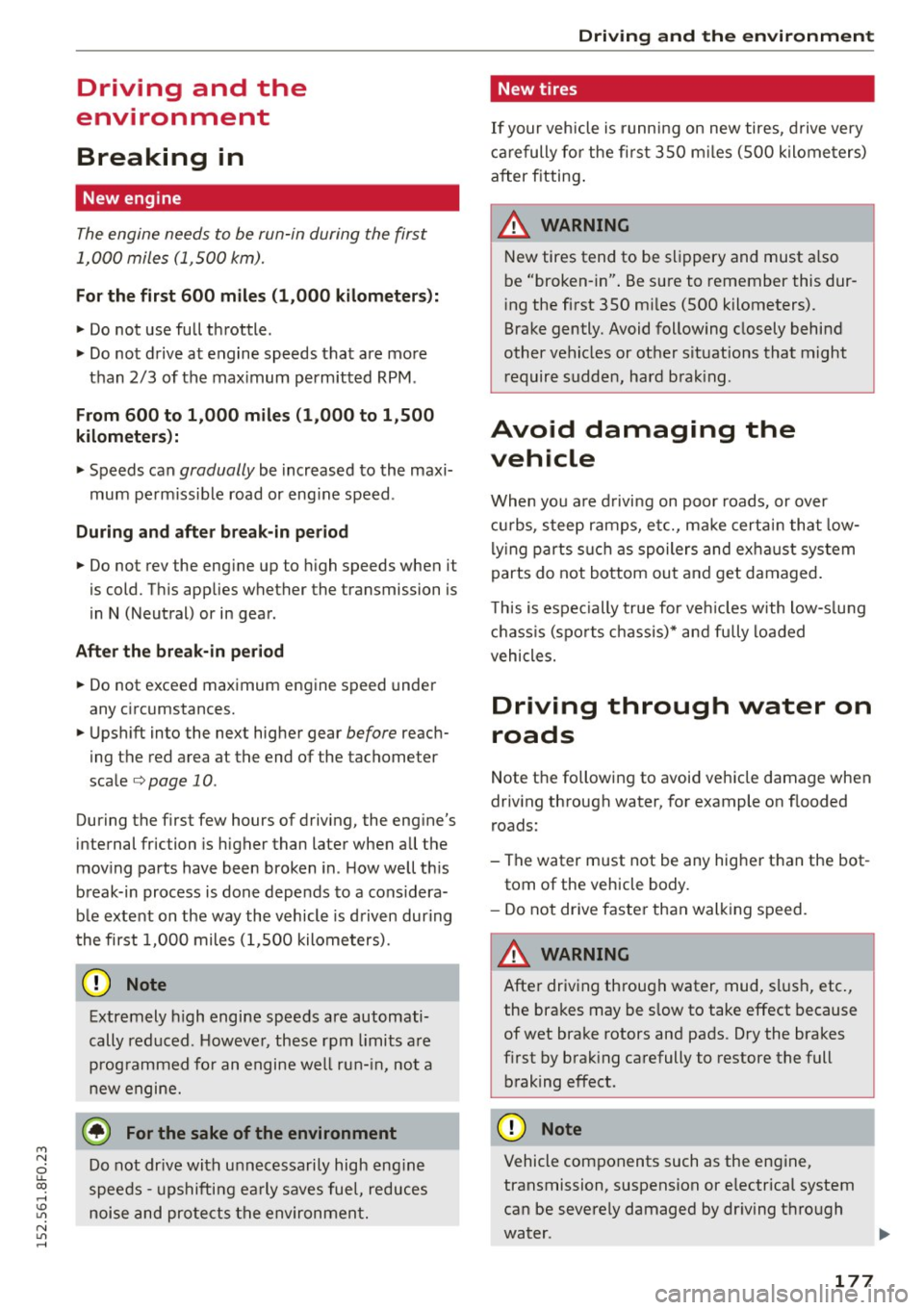
New engine
The engine needs to be run-in during the first
1,000 miles (1,500 km).
For the first 600 miles (1,000 kilometers ):
"' Do not use full throttle .
"' Do not drive at engine speeds that are more
than
2/3 of the max imum permitted RPM .
From 600 to 1,000 miles (1,000 to 1,500
kilometers):
"' Speeds can gradually be increased to the maxi
mum perm issible road or engine speed.
During and after break-in period
"'Do not rev the engine up to high speeds when it
is cold. This applies whether the transmission is
in N (Neutral) or in gear .
After the break-in period
"'Do not exceed maximum engine speed under
any circumstances.
"'U pshift into the next higher gear
before reach
ing the red area at the end of the tachometer
scale
c=> page 10.
During the first few hours of driving, the engine's
internal friction is higher than later when all the
moving parts have been broken in. How well this
break-in process is done depends to a considera
ble extent on the way the vehicle is driven during
the first 1,000 miles (1,500 kilometers).
(D Note
Extremely high engine speeds are automati
cally reduced. However, these rpm limits are
p rog rammed for an engine wel l run- in, not a
new engine.
@) For the sake of the environment
Do not dr ive with unnecessarily high eng ine
speeds -upshifting early saves fuel, reduces
noise and protects the environment.
Driving and the environment
New tires
If your vehicle is running on new tires, drive very
carefully for the fi rst 350 m iles (500 kilometers)
after fitting .
New tires tend to be slippery and must also
be "broken-in". Be sure to remember this dur
ing the first
350 miles (500 kilometers).
Brake gently. Avoid following closely behind
other vehicles or other situations that might
require sudden, hard brak ing .
Avoid damaging the
vehicle
When you are d riving on poor roads, or over
curbs, steep ramps, etc., ma ke certain that low
lying parts such as spoilers and exhaust system
parts do not bottom out and get damaged.
T his is espec ially true for veh icles with low-s lung
chassis (sports chassis)* and fully loaded
vehicles.
Driving through water on
roads
Note the following to avoid vehicle damage when
driving through water, for example on f looded
roads:
- The water must not be any higher than the bot
tom of the vehicle body.
- Do not drive faster than walking speed.
A WARNING
= -
After driving through water, mud, slush, etc.,
the brakes may be s low to take effect because
of wet brake rotors and pads. Dry the brakes
first by braking carefully to restore the full braking effect.
(D Note
Vehicle components such as the engine,
transmission, suspension or electrical system
can be severely damaged by driving through
water . ""
177
Page 180 of 268

Driving and th e environment
(D Tips
- Check the depth of the water before driving
through it.
- Do not stop the veh icle, drive in reverse or
switch the engine
off when driving through
water.
- Keep in mind that oncoming vehicles may
create waves that raise the water level and
make it too deep for your vehicle to dr ive
through safely.
- Avoid driving through sa lt water because it
can cause corrosion.
Catalytic converter
It is very important that your emission control
system (catalytic converter) is functioning prop erly to ensure that your vehicle is running in an
environmentally sound manner .
~ Always use lead-free gasoline c:::;, page 190,
Fuel supply .
~ Never run the tank down a ll the way to empty .
~ Never put too much motor oil in your engine
c:::;, page 199, 9::?1 Adding engine oil .
~ Never try to push- or tow -start your veh icle.
The cata lytic conve rter is an eff icient "clean-up"
dev ice bu ilt into the exhaust system of the vehi
cle. The cataly tic converter burns many of the
pollutants in the exhaust gas before they are re
leased into the atmosphere.
The ex clusive use of u nleaded fuel is critically im
por tant for the life of the catalyt ic converte r and
p roper functioning o f the engine.
A WARNING ,..___ -
- The temperature of the exhaust system is
high, both when driving and after stopping
the engine.
- Never touch the exha ust tail pipes once they
have become hot. This could result in burns.
- Do not park o r operate the vehicle in areas
whe re the hot exhaust system may come in
contact with dry grass, brush, fue l spill or
other mater ial which can cause a fire.
- Do not apply additional undercoating or
rustproofing on or near the exha ust man i-
178
fold, exha ust pipes, catalytic converter or
heat shields. During driv ing, the substance
used for undercoat ing could overheat and
cause a f ire.
Cl) Note
- Be aware that just one tank fill ing with
le ad·
ed
fue l w ill already ser iously degrade the
performance of the catalytic converter.
- Do not exceed the correct engine oil level
c:::;,page 199.
-Do not drive until the fue l tank becomes
completely empty. The engine co uld m isfire.
Unburned fuel could also get into the ex
haust system and this could cause the cata
lyt ic converter to overheat.
- Do not turn
off the ignition while the vehicle
is moving .
- Do not continue to operate your veh icle un
der these conditions, as otherwise fuel can
reach the catalytic converter . This could re
sult in overheating of the conve rter, requ ir
ing its replacement.
- T o assure efficient operation of the Emission
Cont ro l System:
- Have your vehicle maintained properly and
in accordance with the se rvice recommen
dations in yo ur Warranty
& Maintenance
booklet.
- Lack of proper maintenance as we ll as im
proper use of the vehicle will impair the
function of the emission control system
and could lead to damage.
(® For the sake of the environment
Even when the Emiss ion C ontrol System is op
e rat ing proper ly, the exhaust gas can have a
sulfur-like exhaust gas sme ll under some op
erat ing states. This depends on the sulfur
content of the fuel being used. Us ing a d iffe r
ent brand of fue l may he lp, or fi llin g the tank
wi th lead-free s uper grade gaso line.
Shutting down vehicle
If you would like you r vehicle to remai n inope ra
tive for a longer period of time, con tact an Audi
o r other spec ia liz ed dealer. They can adv ise you .,.