ecu AUDI A5 CABRIOLET 2017 User Guide
[x] Cancel search | Manufacturer: AUDI, Model Year: 2017, Model line: A5 CABRIOLET, Model: AUDI A5 CABRIOLET 2017Pages: 266, PDF Size: 66.64 MB
Page 67 of 266
a:,
a:,
...... N
l'
N
...... 0
0
LL co
Securing the ski sack
Applies to: vehicles with ski sack
Long objects such as skis or snowboards can be
transported in the ski sack.
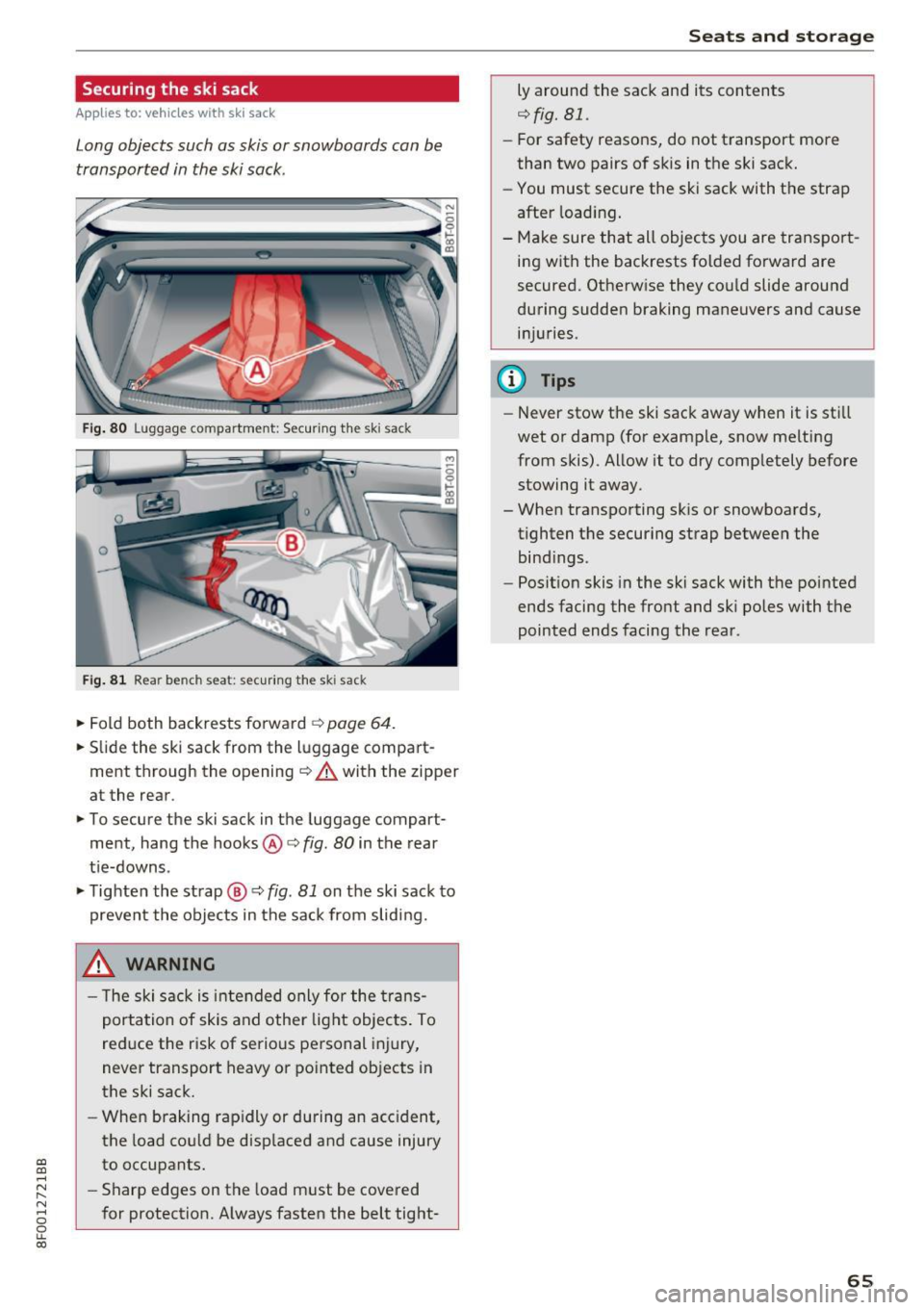
Fig. 80 Luggage compartment: Securing the ski sack
Fig. 81 Rear bench seat: securing the ski sack
~ Fold both backrests forward ¢ page 64.
~ Slide the ski sack from the luggage compart
ment through the opening ¢.&. with the zipper
at the rear .
~ To secure the ski sack in the luggage compart
ment, hang the hooks@¢
fig. 80 in the rear
tie-downs.
~ Tighten the strap@¢ fig. 81 on the ski sack to
prevent the objects in the sack from sliding.
_& WARNING
- The ski sack is intended only for the trans
portation of skis and other light objects . To
reduce the risk of serious personal injury,
never transport heavy or pointed objects in
the ski sack.
- When braking rapidly or during an accident,
the load could be displaced and cause injury
to occupants.
- Sharp edges on the load must be covered
for protection. Always fasten the belt tight-
Seats and storage
Ly around the sack and its contents
¢fig. 81.
-For safety reasons, do not transport more
than two pairs of skis in the ski sack.
- You must secure the ski sack with the strap
after loading.
- Make sure that all objects you are transport
ing with the backrests folded forward are
secured. Otherwise they could slide around
during sudden braking maneuvers and cause
injuries.
(D Tips
- Never stow the ski sack away when it is still
wet or damp (for example, snow melting
from skis). Allow it to dry completely before
stowing it away.
- When transporting skis or snowboclrds,
tighten the securing strap between the
bindings.
- Position skis in the ski sack with the pointed
ends facing the front and ski poles with the
pointed ends facing the rear.
65
Page 77 of 266

a:,
a:,
...... N r--. N ...... 0
0
LL 00
A WARNING ,~
- Never turn off the engine before the veh icle
has come to a comp lete stop. T he f ull func
t io n of the brake booster and the power
steering is no t gua ran teed. You must us e
more for ce to turn or b rake if ne cessa ry. Be
c a use you ca n no t steer a nd bra ke as you
u sually wou ld, thi s could lead to crashes
and ser ious injuries .
- F or sa fe ty reasons, you should always par k
yo ur vehicle wi th t he selec tor lever in P .
Otherwise, the ve hicl e cou ld inadvertently
roll away.
- The radia tor fan can continue to run fo r up
to 10 m inutes even afte r you have turned
off the engine and removed t he ignition key.
The radiato r fan can also turn on again if the
engi ne coolant heats up because of intense
s u nlight or heat bui ld-up in the engine com
partmen t.
- Always take the key with you whenever you
leave your vehicle. Othe rw ise, the engine
cou ld be sta rted o r electrical e quipme nt
s u ch as the power windows co uld be opera t
ed. This can lead t o se rious inj ury.
0 Note
If the engine has been under heavy load for
an exte nded per iod, heat builds up in the en
g in e compa rtment after the eng ine is switch
ed off -there is a risk of damaging the eng ine.
Allow t he engine to r un at idle fo r abo ut two
m inu tes befo re swit chi ng i t off .
Driver messages
Ignition is on
This message appea rs and a warning tone sounds
if you open t he d river's doo r when the ignition is
sw itche d on.
No key identified
This message appea rs when the
I S TAR T ENGINE STOPI button is pressed if the re
is no master key ins ide the ve hicle or if the sys
tem does not recognize it . For examp le, the mas
ter key cannot be recognized if it is cove red by an
D riving
object (e .g. al uminum brief case) which screens
t h e radio signal. Electronic devices such as ce ll
phones can a lso interfe re with the radio signal.
Pre ss brake pedal to start engine
T h is message appears if you do not p ress the
bra ke peda l to s tart t he engine.
Shift to N or P to start engine
This message appears w hen attempting to start
the engine if the se lector lever for the automatic
transm ission is not in the P or N position. The en
gine can on ly be started with the se lector in
these positions .
I!! Is the key in the vehicle?
This message appears if the mas ter key is re
moved from the veh icle with the engine r unning .
If the master key is no longer in the vehicle, you
cannot sw itch on the ign ition after stopping the
engine a nd you also cannot start the engine
again . Moreover, you cannot lock the vehicle
from the o uts ide with the key .
Shift to P otherwise vehicle can roll away. Doo rs
do not lock if le ver is not in P.
This message appears for safety reasons along
with a warning signal. It appears if the selector l ever for the automat ic transmission is not in the
P position when switch ing off the ign ition. Move
t h e se lector lever to the P position, otherw ise the
vehicle is no t secured against roll ing away. Yo u
also cannot lock the vehicle us ing t he lock ing
button * on t he doo r handle o r using t he remo te
k ey.
Convenienc e key defective! Use ignition lock
This message appears if the engine must be
started or stopped using the ignition key and not
th e
I S TA RT ENGINE ST OPI button .
75
Page 86 of 266
Automatic transmission
This prevents too much stress from being placed
on the locking mechanism.
Vehicles with multitronic transmission: Your ve hicle is equipped with
hill hold assist allowing
you to start while on an incline. The system is ac
tivated when the brake pedal is pressed down
and held
for a few seconds. The brake pressure
will hold for
a moment after the brake pedal
loosens to prevent the vehicle from rolling back
wards while starting up.
A WARNING
- The vehicle can also roll when the engine is
stopped.
- Unintended vehicle movement can cause se rious injury.
- Never leave your vehicle with the engine
running while in gear. If you must leave
your vehicle when the engine is running, ac tivate the parking brake and move the selec
tor lever to P.
- Power is still transmitted to the wheels
when the engine is running at idle. To pre
vent the vehicle from "creeping", you must
keep your foot on the brake when the en
gine is running and the selector lever is in 0/
Sor R or "tiptronic" mode is selected.
- Do not press the accelerator pedal when changing the selector lever position while
the vehicle is stationary and the engine is
running.
- Never shift into R or P while driving.
- Before driving down a steep slope, reduce
your speed and shift into a lower gear with
"tiptronic".
- Do not ride the brakes or press the brake
pedal too often or too long when driving
down a hill. Constant braking causes the
brakes to overheat and substantially re
duces braking performance, increases brak
ing distance or causes complete failure of
the brake system.
- To prevent the vehicle from rolling back
when stopping on inclines, always hold it in
place with the brake pedal or parking brake.
- Never hold the vehicle on an incline with a
slipping clutch. The clutch opens automati-
84
cally when it becomes too hot from the
overload. An indicator lamo
[O ] illuminates
and a driver message appears
c::;, page 86
when the clutch is overloaded.
- If the engine must remain running, never
have any driving position engaged when
checking under the hood. Make sure these
lector lever has securely engaged and is
locked in P with the parking brake set
¢page 193. Otherwise, any increase in en
gine speed may
set the vehicle in motion,
even with the parking brake applied.
(D Note
- S tronic- and tiptronic transmission: When
stopping on an incline, do not try to hold
the vehicle in place by pressing the accelera
tor pedal while a driving gear is selected.
This can cause the transmission to overheat
and can damage it. Activate the parking
brake or press the brake pedal to prevent
the vehicle from rolling.
- S tronic- and tiptronic transmission: Allow
ing th@ vehicle to roll when th@ engine is
stopped and the selector lever is in N will
damage the transmission because it is not
lubricated under those circumstances.
(D Tips
For safety reasons, the parking brake is re
leased automatically only when the driver's
safety belt is engaged in the buckle.
· Hill descent control
App lies to: vehicles with mult itron ic/S tron ic/t iptronic
The hill descent control system assists the driver
when driving down declines .
Hill descent control is activated when the selec
tor lever is in D/S and you press the brake pedal.
The transmission automatically selects a gear
that is suitable for the incline. Hill descent con
trol tries to maintain the speed achieved at the
time of braking, within physical and technical
limitations. It may still be necessary to adjust the
speed with the brakes. ..,..
Page 97 of 266

a:,
a:,
...... N r--. N ...... 0
0
LL 00
Audi adapt ive cruis e control and braking gua rd
promptly detected or may not be detected
at all.
- Reflective surfaces including crash barriers
or tunnel entrances may impair the function
of the radar sensor.
(D Tips
- You can cancel the braking that is initiated
by the system by braking yourse lf, by accel
erating noticeably or by swerving.
- Braking guard error messages ¢
page 95.
-Keep in mind that braking guard can brake
unexpected ly. Always secure any cargo or
objects that you are transporting to reduce
the risk of damage or injury.
Settings in the radio/MM!
A ppl ies to: vehicl es with Audi adaptive cruise co ntro l
... Se lect : I CARI funct ion button > C ar s ystem s*
control button > Driver a ssi st > Audi brak ing
guard .
Or
... Select:
~I C-A-R~I funct ion button > A udi braking
g uard .
S ystem -
Switch Audi braking guard On and Off.
When you sw itch the ignition on, the message
Audi bra king gua rd off appears if the system is
switched off.
Ea rly warn ing -The distance and approach warn
ings in the display can be switched
On/ Off.
(D Tips
-Your settings are automatically stored and
ass igned to the remote control key being
used at the times the sett ings are made.
- If you restrict or sw itch off the ESC, the
braking guard also sw itches itself off
¢ page 168 .
- Switch braking guard off when you are load
ing the veh icle onto a vehicle ca rr ier, train,
sh ip or other type of transportation . This
can p revent undesired warnings from the
braking gua rd system.
Messages
Applies to: vehicles wi th Aud i adapt ive c ruise control
Braking guard : Off
This dr iver message appears if the system is
tu rned off via the radio/MM I*. O therwise, if the
system is turne d off, the information appears ev
ery time shortly after t he start o f the trip .
T he driver message a lso appea rs if the system is
not avai lab le due to a ma lfunction o r if the ES C i s
not switched on
¢ page 168 . If th is is the case,
the system wi ll not provide warnings about a
possib le collision .
Braking guard : Ac tivated
This dr iver message appears if sharp brake pres
su re was applied due to an acute warning .
•••
Three white dots appear if a setting cannot be se
l ected with the operating lever. For example, this
happens if you want to raise/lower the speed
even though there was no previously saved
speed .
ACC: Sen sor bloc ked
T his message appears if the senso r view is ob
structed, for examp le by leaves, snow, heavy
spray or dirt. Clean the sensor ¢
page 88,
fig. 102.
ACC : not avail able
The dr iver message appears if there is a malfunc
t ion. The adaptive cruise control tu rns off. A
c hi me so unds as a reminde r. Have the system
c h ecke d by an author ized Audi dealer or au thor
ized Audi Se rvice Facility .
ACC: unavailable
The driver message appears if, for examp le, the
brake temperature is too high . The adapt ive
c ruise co ntro l is temporarily u navailable . A chime
sou nds as a reminder.
Shift lever posi tion!
The driver message appears if the se lector lever
is shifted to the N position. The adapt ive cru ise
contro l is not available wh ile in this position.
Ill>
95
Page 113 of 266
a:,
a:,
,....,
N r--. N ,....,
0
0
LL 00
Driving safety
Basics
Safe driving habits
Please remember -safety first!
This chapter contains important information,
tips, instructions and warnings that you need to read and observe for your own safety, the safety
of your passengers and others . We have summar
ized here what you need to know about safety
belts, airbags, child restraints as well as child
safety. Your safety is for us
priority number 1. Al
ways observe the information and warnings in
this section - for your own safety as well as that
of your passengers.
The information in this section applies to all
model versions of your vehicle. Some of the fea
tures described in this sections may be standard
equipment on some models, or may be optional
equipment on others. If you are not sure, ask
your authorized Audi dealer.
A WARNING
- Always make sure that you follow the in
structions and heed the WARNINGS in this
Manual. It is in your interest and in the in
terest of your passengers .
-
-Always keep the complete Owner's Litera
ture in your Audi when you lend or sell your
vehicle so that this important information
will always be available to the driver and passengers.
-Always keep the Owner's literature handy so
that you can find it easily if you have ques
tions.
Safety equipment
The safety features are part of the occupant re
straint system and work together to help reduce the risk of injury in a wide variety of accident sit
uations.
Your safety and the safety of your passengers
should not be left to chance. Advances in tech
nology have made a variety of features available
to help reduce the risk of injury in an accident.
Driving safety
The following is a list of just a few of the safety
features in your Audi:
- sophisticated safety belts for driver and all pas-
senger seating positions,
- belt force limiters for the front seats,
- belt pretensioners for the seats,
- head restraints for each seating position,
- front airbags,
- side airbags in the front seats,
- special LATCH anchorages for child restraints,
- adjustable steering column.
These individual safety features, can work to gether as a system to help protect you and your
passengers in a wide range of accidents. These
features cannot work as a system if they are not
always correctly adjusted and correctly used.
Safety is everybody's responsibility!
Important things to do before driving
Safety is everybody 's job! Vehicle and occupant
safety always depends on the informed and care
f1,1/ driver.
For your safety and the safety of your passen
gers,
before driving always:
.,. Make sure that all lights and signals are operat
ing correctly .
.,. Make sure that the tire pressure is correct .
.,. Make sure that all windows are clean and afford
good visibility to the outside.
.,. Secure all luggage and other items carefully
qpage 62.
.,. Make sure that nothing can interfere with the
pedals.
.,. Adjust front seat, head restraint and mirrors
correctly for your height .
.,. Instruct passengers to adjust the head re
straints according to their height.
.,. Make sure to use the right child restraint cor
rectly to protect children
¢ page 150, Child
safety.
.,. Sit properly in your seat and make sure that
your passengers do the same
q page 57, Seats
and storage.
Ill>
111
Page 116 of 266
Driving safety
-Each passenger must always sit on a seat of
their own and properly fasten and wear the
safety belt belonging to that seat.
- Before driving, always adjust the front pas
senger seat and head restraint properly.
- Always keep your feet on the floor in front
of the seat. Never rest them on the seat, in
strument panel, out of the window, etc. The
airbag system and safety belt will not be
able to protect you properly and can even in crease the risk of injury in a crash.
- Never drive with the backrest reclined or
tilted far back! The farther the backrests are
t il ted back, the greater the risk of injury due
to incorrect positioning of the safety belt
and improper seating position.
- Children must always ride in child safety
seats¢
page 150. Special precaut ions ap
ply when installing a child safety seat on the
front passenger seat¢
page 130.
Proper seating positions for passengers in
rear seats
Rear seat passengers must sit upright with both
feet on the floor consistent with their physical
size and be properly restrained whenever the ve
hicle is in use.
To reduce the risk of injury caused by an incorrect
seating position in the event of a sudden braking
maneuver or an accident, your passengers on the
rear bench seat must always observe the follow
i ng:
... Make sure that the seatback is securely latched
in the upright position ¢
page 64.
.,. Keep both feet flat in the footwell in front of
the rear seat.
... Fasten and wear safety belts properly
¢ page 125 .
.,. Make sure that children are always properly re
strained in a child restraint that is appropriate
for their size and age¢
page 150.
A WARNING
Passengers who are improperly seated on the
rear seat can be seriously injured in a crash.
114
-Each passenger must always sit on a seat of
their own and properly fasten and wear the safety belt belonging to that seat.
- Safety belts only offer maximum protection
when the seatback is securely latched in the upright position and the safety belts are
properly positioned on the body . By not sit
ting upright, a rear seat passenger increases
the risk of personal injury from improperly
positioned safety belts!
Proper adjustment of head restraints
Applies to: vehicles with adjustable head restraints
Correctly adjusted head restraints are an impor
tant part of your vehicle's occupant restraint sys
tem and can help to reduce the risk of injuries in
accident situations.
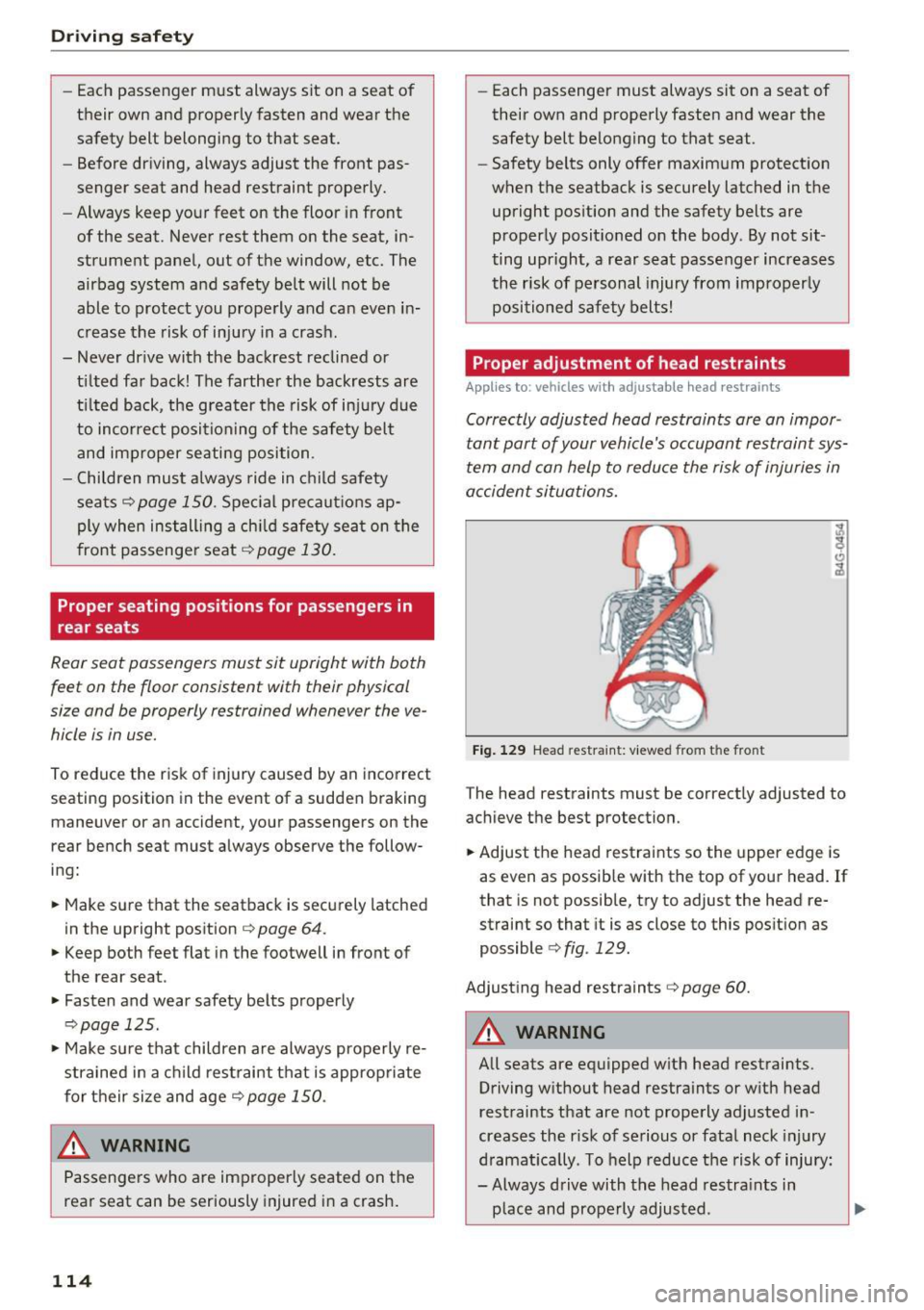
Fig. 129 Head restraint: viewe d from t he front
The head restraints must be correctly adjusted to
achieve the best protection.
... Adjust the head restraints so the upper edg e is
as even as possible with the top of your head. If
that is not possible, try to adjust the head re
straint so that it is as close to this position as
possible
¢ fig . 129 .
Adjusting head restraints¢ page 60 .
A WARNING
All seats are equipped with head restraints.
Driving without head restraints or with head
restraints that are not properly adjusted in
creases the risk of serious or fatal neck injury
dramatically . To help reduce the risk of injury:
-Always drive with the head restra ints in
place and properly adjusted.
-
Page 118 of 266
Driving sa fe ty
the a irbag dep loys and injure you or yo ur
passengers.
Pedal area
Pedals
The pedals must always be free to move and
must never be interfered with by a floor mat or
any other object.
Make sure that all pedals move freely without in
terference and that noth ing prevents them from
retu rni ng to the ir origi nal positions.
Only use floor mats that leave the pedal area free
and can be secured with floor mat fasteners.
If a brake circuit fails, increased brake pedal trav
el is required to br ing the veh icle to a full stop.
_&. WARNING
Peda ls that cannot move free ly can cause loss
of vehicle control and increase the risk of seri
ous inj ury.
- Never place any objects in the driver's foot
well. An object could get into the pedal area
and interfere w ith pedal function . In case of
s u dden brak ing o r an accident, you would
not be ab le to bra ke or accelerate!
- Always make sure that nothing can fa ll or
move into the dr ive r's footwell.
Floor mats on the driver side
Always use floor mats that can be securely at
tached to the floor mat fasteners and do not in
terfere with the fre e movement of the pedals .
... Make sure that the floor mats are properly se
cured and cannot move and interfere with the
peda ls ~ .&_ .
Use on ly floor mats that leave the pedal area un
obstructed and that are firmly secured so that
they cannot slip o ut of pos ition . Yo u ca n obtain
suitable floo r mats from you r authorized Aud i
dea le r.
F loor mat fasteners are insta lled in your Audi.
116
Floor mats used in your vehicle must be attached
to these fasteners. Properly securing the floor
mats will prevent them from slid ing into posi
tions that could interfere with the pedals or im
pair safe operat ion of your vehicle in other ways.
_&. WARNING
Pedals that ca nnot move freely can res ult in a
loss of vehicle co ntro l and increase the r isk of
serious pe rsonal injury.
-Always make sure that floo r mats a re prop
erly secured.
- Never p lace or install floor mats o r other
floor coverings in the vehicle that cannot be
proper ly sec ured in place to prevent them
from s lipping and interfer ing wi th t he ped
al s or the ab ili ty to cont ro l t he vehicle.
- Never p lace or ins tall floor mats o r other
floor coverings on top of a lready installed
floor m ats. Addi tional floor ma ts and o ther
cover ings will reduce the size o f th e pedal
area and interfere with the pedals.
- Always proper ly re insta ll and se cure floo r
mats tha t have been taken ou t for cleaning.
- Alway s make sure th at o bje cts canno t fall
into the driver foo twell whi le the vehicle is
mov ing. Objects can become trapped under
the brake pedal a nd accelerator pedal caus
ing a loss o f vehicle control.
Storing cargo correctly
Loading the luggage compartment
All luggage and other objects must be properly
stowed and secured in the luggage compart
ment .
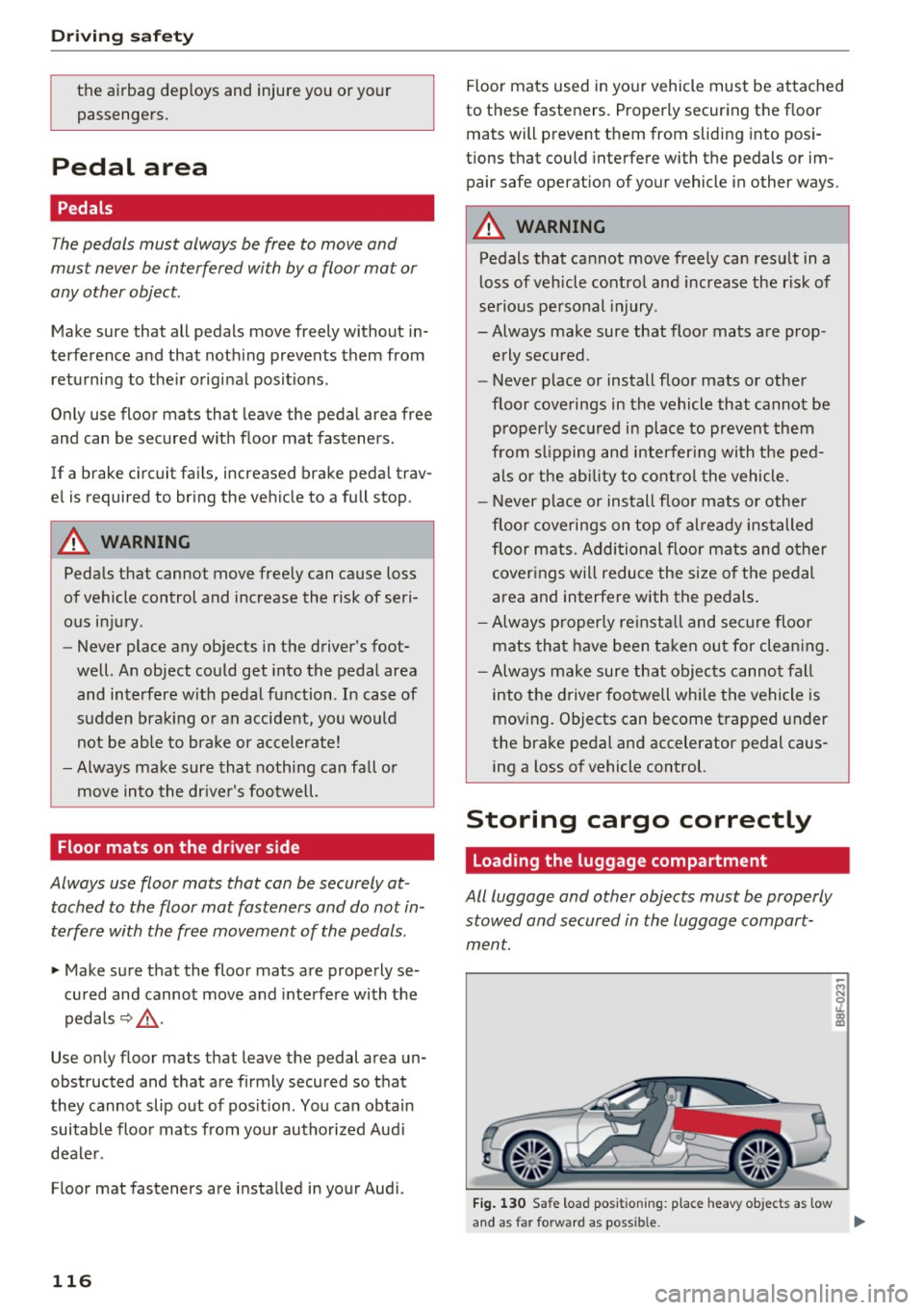
Fig. 13 0 Safe load pos it ion ing: p lace heavy objects as low
-M N 0 oL CD m
an d as far forwa rd as possible. .,.
Page 119 of 266
a:,
a:,
...... N r--. N ...... 0
0
LL 00
Loose items in the luggage compartment can
shift suddenly, changing vehicle handling charac
teristics . Loose items can also increase the risk of
serious personal injury in a sudden vehicle ma
neuver or in a collision.
~ Distribute the load evenly in the luggage com
partment.
~ Always place and properly secure heavy items in
the luggage compartment as low and as far for
ward as possible
c> fig . 130 .
~ Secure luggage using the tie-downs provided
i=>page 64 .
~ Make sure that the rear seatback is securely
latched in place.
A WARNING ,~ -
Improperly stored luggage or other items can
fly through the vehicle causing serious per
sonal injury in the event of hard braking or an
accident. To help reduce the risk of serious
personal injury:
- Always put objects, for example, luggage or
other heavy items in the luggage compart
ment.
-Always secure objects in the luggage com
partment using the tie-down eyelets and
suitable straps.
A WARNING
Heavy loads will influence the way your vehi
cle handles . To help reduce the risk of a loss
of contro l leading to serious personal injury:
- Always keep in mind when transporting heavy objects, that a change in the center of
gravity can also cause changes in vehicle
hand ling:
- Always distribute the load as evenly as
possible.
- Place heavy objects as far forward in the
luggage compartment as possible.
- Never exceed the Gross Axle Weight Rating
or the Gross Vehicle Weight Rating specified
on the safety compliance sticker on the left
door jamb. Exceeding permissible weight
standards can cause the vehicle to slide and
handle differently .
Driving safety
-Please observe information on safe driving
i=> page 111.
A WARNING
-To help prevent poisonous exhaust gas from
being drawn into the vehicle, always keep the
rear lid closed while driving.
- Never transport objects larger than those
fitting completely into the luggage area be
cause the rear lid cannot be fully closed.
- If you absolutely must drive with the rear lid
open, observe the following notes to reduce
the risk of poisoning:
- Close all windows,
- Close the power top,
- Open all a ir outlets in the instrument pan-
el,
- Switch off the air recirculation,
- Set the fresh air fan to the highest speed.
A WARNING ~ -
Always make sure that the doors, all win
dows , the power top and the rear lid are se
curely closed and locked to reduce the risk of
in jury when the vehicle is not being used.
- After closing the rear lid, always make sure
that it is properly closed and locked.
- Never leave your vehicle unattended espe
cially with the rear lid left open. A child
could crawl into the vehicle through the lug
gage compartment and close the rear lid be
coming trapped and unable to get out. Be
ing trapped in a vehicle can lead to serious
personal injury.
- Never let children play in or around the vehi
cle.
- Never let passengers ride in the luggage
compartment. Vehicle occupants must a l
ways be properly restrained in one of the
ve
hicle's seating positions.
(D Tips
-Air circulation helps to reduce w indow fog
ging. Stale air escapes to the outside
through vents in the trim panel. Be sure to
keep these slots free and open.
117
Page 120 of 266
Driving sa fe ty
-The tire pressure must correspond to the
l oad . The tire pressure is shown on the tire
pressure labe l. The tire pressure label is lo
cated on the driver's s ide B-pillar. The tire
pressure labe l lists the recommended cold
tire inflation pressures for the vehicle at its
max imum capacity weight and the t ires t hat
were on your vehicle at the t ime it was man
ufa ctu red. Fo r recommended tire p ressures
fo r no rmal load cond itions, please see chap
te r
~ page 217 .
Tie-downs
Appl ies to: ve hicles w ith tie-dow ns
The Luggage compartment is equipped with four
tie-downs to secure Luggage and other items.
Use the tie-downs to secure your cargo proper ly
~ page 116, Loading the luggage compartment.
In a collis io n, the laws of phys ics mean that even
smalle r items that are loose in the vehicle will
become heavy missiles that can cause ser ious in
jury. Items in the ve hicle possess energy whi ch
vary wi th vehicle speed and t he weight of the
item . Veh icle speed is the most s ignifica nt facto r.
For examp le, in a frontal collision at a speed of
30 mph (48 km/h), the forces ac ting o n a 10-lb
( 4 . 5 kg) object are abo ut 20 times the no rma l
weight of the item. This means that t he weight
of the item would suddenly be about
200 lbs. (90 kg) . You can imagine the injuries
that a 200 lbs. (90 kg) item flying free ly through
the passenge r compartment could cause in a col
lision l ike this .
A WARNING
Weak, damaged or improper s traps used to
secure i tems to tie-downs can fail d uring ha rd
brak ing o r in a col lision and cause se rious per
sonal i nju ry.
- Always use suitab le mou nti ng straps and
prope rly secure items to the tie-downs in
t h e luggage compartmen t to help p revent
items from sh ifting or flying fo rwa rd as dan
gerous missiles.
- When the rea r seat b ackrest is folde d down,
always use suitab le mounting str aps and
118
-
proper ly sec ure items to the tie-downs in
the l uggage compartment to help prevent
items from flying forward as dangerous
m iss iles into the passenger compartment.
- Never attach a child safety seat tether strap
to a tie-down.
Reporting Safety Defects
Applicable to U.S.A.
If you believe that your vehicle
ha s a d efect which could cause a
crash or could cau se injur y or
death, you should immedi ate ly in
form the Nat ional High way Traffic
Safet y Administration (NHT SA) in
addition t o notifyin g Audi of
America, Inc.
If NHTSA re ce ives s imilar com
pl aint s, it m ay ope n an in ve sti ga
tion , and if it find s that a safety
defe cts ex is ts in a group of
v ehi cle s, i t m ay order a re call and
remed y campaign . H ow ev er ,
NHT SA cann ot become in vol ve d in
indi vidu al probl ems b etween you ,
y o ur deal er, o r Audi of Am erica ,
In c.
To contact the NHTSA, you may
either call:
T el. : 1-888- 327-4236 (TTY :
1-800-424 -9153) or
1 -800-424-9 393
or you may write to:
Page 122 of 266

Driving safety
-the safety belts with belt tensioners
- the windshield frame
- the rollover sensors
The active rollover protection system provides
additional safety in the event of a rollover. With
in milliseconds, sensors deploy two rollbars lo
cated behind the headrests in the rear seats
¢fig. 132 .
The rollbars, reinforced windshield frame and
belt tensioners help protect front and rear pas
sengers in the event of a rollover.
The rollover protection system functions when
the power top is both open and closed.
A WARNING
Do not use the area behind the rear seat
headrests
¢fig. 131 as a storage area. This is
the area where the rollbars deploy.
If the roll
over protection system is triggered, objects
placed there can be propelled through the ve
hicle and make it more difficult for the roll
bars to deploy. This increases the risk for seri
ous or life-threatening injuries.
When is rollover protection deployed?
Rollover protection deploys in o collision or roll
over.
Depending on the collision, sensors throughout
the vehicle and the control module trigger the
ro llov er system to deploy.
Fo r safety reasons, rollover protection also de
ploys during front, side and rear collisions above
a certain level of severity.
120
Retracting rollover protection
Fig. 133 Deployed rollbar wit h release loop.
Fig. 134 Deployed rollbar wit h power top frame facing up
ward .
If the rollover protection has triggered but the
vehicle was not involved in an accident, you can
retract the rollover protection yourself in an
emergency. Drive to your authorized Audi dealer
or qualified repair facility immediately to have
the malfunction corrected.
With the power top open
... Pull the loop upward in the direction of the ar
row and hold it in place~
fig. 133.
... Slide the rollbar down.
... Release the loop just before the rollbar reaches
its end position by approximately 1-2 in. (3-5
cm) .
.,. Press the rollbar down until it stops .
.,. Make sure the rollbar is secure before releasing
it .
.,. Close the cover @¢
fig. 134 .
.,. Repeat the procedure on the other rollbar.
With the power top closed
... Switch the ignition on .
.,. Press the convertible switch to adjust the con-
vertible frame until it is vertical¢
fig. 134. .,._