door lock AUDI A5 CABRIOLET 2017 Owner's Manual
[x] Cancel search | Manufacturer: AUDI, Model Year: 2017, Model line: A5 CABRIOLET, Model: AUDI A5 CABRIOLET 2017Pages: 266, PDF Size: 66.64 MB
Page 158 of 266
Child safety
The airbag on the passenger side makes the front
seat a potentially dangerous p lace for a child to
ride. The front seat is not the safest place for a
child in a forward-facing child seat. It is a very
dangerous place for an infant or a larger child in
a rearward-fac ing seat.
A WARNING
Not using a ch ild safety seat, using the wrong
child safety seat or improperly installing a
child restra int increases the r isk of serious
personal inju ry and death in a crash.
- Never install rearward-fac ing ch ild safety
seats or infant carriers on the front passen ger seat -even w ith an Advanced A irbag Sys
tem. A child will be seriously injured and can
be ki lled when the inflating airbag hits the
child safety seat or infant carrier with great
force and smashes the child safety seat and
child against the backrest, center armrest,
door or roof
c::, page 131, Child restraints on
the front seat -some important things to
know.
-Always install rearward-fac ing ch ild safety
seats or infant carriers on the rear seat.
- Never install a rearward-facing child re
straint in the forward-facing direction. Such restra ints are des igned for the special needs
of infants and very small ch ild ren and can
not protect them properly if the seat is for
ward- facing.
- If you mus t install a rearward fac ing ch ild
safe ty seat on the front passenger seat be
ca use of exceptiona l circumstances and the
PASSENGER AIR BAG OFF light does not
come on and stay on, immediate ly install
the rearward-facing child safety seat in a
rear seat ing position and have the airbag
system inspected by your author ized Audi
dealer.
- Always read and heed all WARNINGS when
ever using a child restrained in a veh icle is
being used
c:> page 122, Safety belts,
c:> page 130, Airbag system and
9 page 150, Important information.
156
Convertible child safety seats
Properly used convertible child safety seats can
help protect toddlers and children over age one
who weigh between 20 and 40 lbs. (9 and 18 kg)
in a crash.
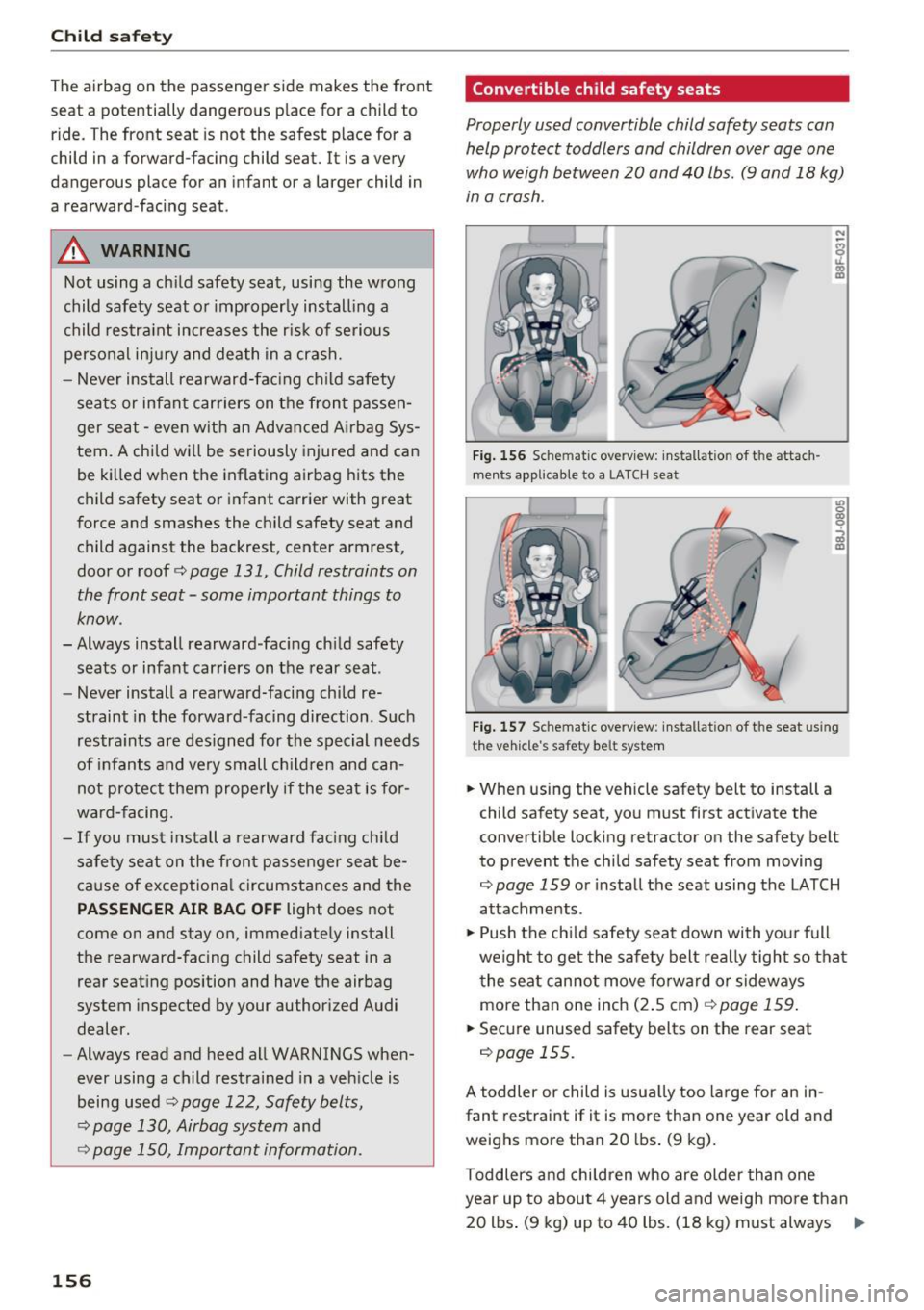
Fig . 156 Schemat ic overv iew : installat ion of the attach
ments applicable to a LA TCH seat
Fig. 157 Schemat ic overv iew: installat ion of the seat using
the vehicle's safety belt system
.. When using the vehicle safety belt to install a
child safety seat, you must first activate the
convertib le locking retractor on the safety belt
to prevent the child safety seat from moving
c:> page 159 or install the seat using the LATCH
attachments .
.. Push the chi ld safety seat down wi th your full
we igh t to get the safe ty belt really tight so that
the seat cannot move forward or sideways
more than one inch (2 .5 cm)
c:>page 159.
.. Secure unused safety belts on the rear seat
c:> page 155.
A toddler or child is usua lly too la rge for an in
fant restraint if it is more than one year old and
weighs more than 20 lbs . (9 kg).
Toddlers a nd chi ldren who are older than one
year up to about 4 years old and weigh more than 20 lbs . (9 kg) up to 40 lbs. (18 kg) must always ..,.
Page 163 of 266
-The inflating airbag will hit the child safety
seat or infant carrier with great force and
will smash the child safety seat and child
against the backrest, center armrest, door
or roof .
- Always be especially careful if you must in
stall a rearward facing child safety seat on
the front passenger seat in exceptional c ir
cumstances.
-A tight tether strap on a rearward-facing child restraint attached to the front passen
ger seat can put too much pressu re on the
we ight-mat in the seat and register a heavi
er weight in the Advanced Ai rbag System.
T he heavier we ight registered can make the
system work as though an adult were on the
seat and deploy the Advanced Airbag when
it must be suppressed causing serious or
even fatal injury to the child.
- Make sure that the
PASS ENG ER AIR B AG
OFF
light comes on and stays on all the time
whenever the ignition is switched on.
- If the
PA SSENGER AIR BAG OFF light does
not come on and stay on, immediately in
stall the rearward-facing child safety seat in a rear seating position and have the a irbag
system inspected by your author ized Audi
dealer.
Activating the convertible locking retractor
Use the convertible locking retractor to secure a
child restraint.
Always heed the child safety seat manufacturer's
instructions when installing a child restraint in
your veh icle . T o act ivate the convertible locking
retractor:
.. Place the child restraint on a seat, preferab ly
on the rear seat.
.. Slowly pull the belt all the way out .
.. Route it around or through the ch ild rest raint
belt path
Q .&, .
.. Push the child safety seat down with your fu ll
weight to get the safety be lt rea lly t ight .
a:,
~ .. Insert the belt tongue into the buckle for that
N ~ seating position .
... 0
0
LL 00
Ch ild safety
.. Guide the safety belt back into the retractor un
til the belt lies flat and snug on the child safety
seat.
.. You shou ld hear a "cl icking" noise as the belt
w inds back into the inertia reel. Test the con
vert ible lock ing retractor by pulling on the belt.
You should no longer be able to pull the belt out of the retractor . The convertib le locking re
tracto r is now activated.
.. Ma ke sure that t he red release bu tton is facing
away from the child restraint so that it can be
unbuckled quickly .
.. Pull on the belt to make sure the safety belt is
properly t ight and fastened so that the seat
cannot move forward or sideways more than
one inch (2.5 cm).
A WARNING
Using the wrong ch ild restraint or an improp
e rly installed child restra int can cause serious
personal injury or death in a crash .
- Always make sure that the safety belt re
tractor is locked when installing a child
safety seat. An unlocked safety belt retrac
tor cannot hold the ch ild safety sea t in place
during normal driving or in a crash.
- Always buckle the child safety seat fi rm ly in
p lace even if a ch ild is not si tting in it. A
loose child safety seat can fly around dur ing
a sudden stop or in a crash.
- Always make sure the seat backrest to which
the child restraint is installed is in an up right position and securely latched into
p lace and cannot fo ld forward. Otherw ise,
the seatback with the child safety seat at
tached to it could fly forward in the event of
an accident or other emergency s ituation .
- Always read and heed all WARNINGS when
ever using a child restrained in a vehicle is
be ing used
Q page 150 . Special precautions
apply when install ing a child safety seat on
the front passenge r seat
Q page 131, Child
restraint s on the front seat -some impor
tant things to know .
161
Page 167 of 266
Installing a child restraint with LATCH
lower anchorages
Whenever you install a child restraint always fol
low the child restraint manufacturer's instruc tions.
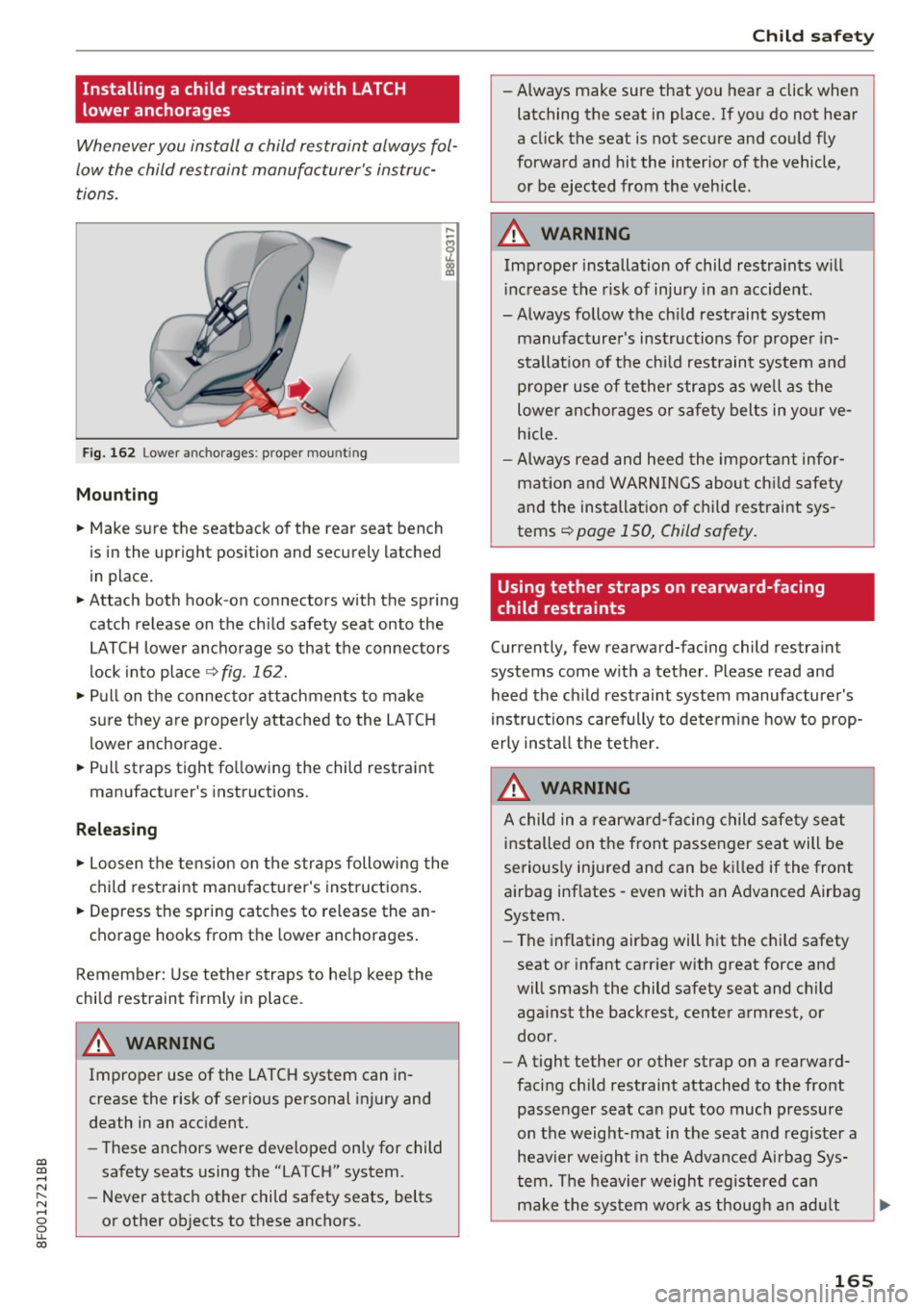
Fig. 162 Lowe r anch orages : proper mo untin g
M ounting
~ Make sure the seatback of the rear seat bench
is in the upright position and securely latched
in place.
~ Attach both hook-on connectors with the spring
catch release on the ch ild safety seat onto the
LATCH lower anchorage so that the connectors
lock into place
¢ fig . 162.
~ Pullon the connector attachments to make
sure they are properly attached to the LA TCH
l ower anchorage.
~ Pull straps tight following the child restraint
manufacturer's instructions.
R el ea sing
~ Loosen the tension on the straps following the
child restraint manufactu rer's instruct ions.
~ Depress the spring catches to release the an
chorage hooks from the lower anchorages .
Remember: Use tether straps to he lp keep the
chi ld restraint firm ly in place.
A WARNING
Improper use of the LATCH system can in
crease the risk of serious personal injury and
death in an acc ident.
-
- These anchors were deve loped only for child a:,
~ safety seats using the "LATCH" system.
N
~ - Never attach other child safety seats, belts ..... g or other objects to these anchors .
LL 00
Child safety
-Always make sure that you hear a click when
latching the seat in place. If you do not hear
a cl ick the seat is not secure and cou ld fly
forward and hit the inter ior of the vehicle,
or be ejected from the vehicle .
A WARNING
'"----
Improper installation of child restra ints w ill
i ncrease the risk of injury in an accident.
-Always follow the ch ild restraint system
manufacturer's instructions for proper in
stallat io n of the chi ld restraint system a nd
proper use of tether straps as well as the
lowe r anchorages or safety belts in yo ur ve
h icle.
- Always read and heed the importan t info r
mat ion and WARNINGS abou t ch ild safety
and the installation of child restraint sys
tems
¢ page 150, Child safety.
Using tether straps on rearward-facing
child restraints
Currently, few rearward-facing child restraint
systems come w ith a tether . Please read and
heed the ch ild restraint system manufacturer's
instruct ions carefully to determ ine how to prop
erly install the tethe r.
A WARNING
A child in a rearward-facing child safety seat
installed on the front passenger seat will be
seriously injured and can be ki lled if the front
airbag inflates - even with an Advanced Airbag
System.
- The inflating airbag will hit the child safety
seat or infant carrier with great force and
will smash the child safety seat and child against the backrest, center armrest, or
door .
- A tight tether or other strap on a rearward
facing ch ild restraint attached to the front
passenger seat can put too much pressure
on the weight-mat in the seat and register a
heavier we ight in the Advanced Ai rbag Sys
tem. The heavier weight registered can
make the system wor k as thoug h an ad ul t
Ill>
165
Page 193 of 266
a:,
a:,
...... N r--. N ...... 0
0
LL 00
When activating the central locking, the fuel fill
er flap is automatically unlocked or locked. Re
fue l the vehicle with the ignit ion turned
off.
T a king the fuel cap off
.,. Turn off the ignition.
.,. Press the left side of the fue l filler flap to open
it
r=;, fig . 165 -arrow -.
.,. Unscrew fue l cap counter -clockwise and hang it
on the fue l filler flap
c:> fig. 166.
Refuelling proc edure
.,. Inse rt the fue l nozzle from the gasoline pump
into the fuel filler neck as far as it will go .
.,. Se lect a medium refuelling rate so that the
nozzle switches off automatically when the
tank is full.
Putting the fuel cap back on
.,. After filling your tank, tw ist the f uel cap clock-
wise as far as it wi ll go .
.,. Close the fuel filler flap.
To avoid fuel spill ing o r evaporating from the f uel
tank always close fuel cap proper ly and com
pletely.
A WARNING
Improper refueling or handling of fuel can
cause fire, explosion and severe b urns.
-
- Fuel is highly flammable and can cause se
vere burns and other injur ies .
- Failure to shut the engine off wh ile refuel
ing and/or to insert the pump nozz le fully
into the fuel filler neck could ca use fue l to
spray out of filler neck or to ove rflow. Fuel
spray and overflowing fue l can cause a fire.
- Never use a cellular telephone wh ile refuel
ing. The electromagnetic radiation can
cause spa rks that can ignite f uel vapors and
cause a fire .
- Never get back into your vehicle while refu
eling. If in except ional circumstances you
must get back in your vehicle while refuel
ing, make certain that you close the door
and touch meta l to discha rge static ele ctric
ity befo re touching the filler noz zle ag ain.
Fuel and R efueling
Stat ic electricity can cause sparks that can
ignite fue l vapors released during refueling.
- Never smo ke or have an open flame any
where in or near your vehicle when ref ueling
or filling a portable fuel container .
- For your safety, we strongly recommend
that you do not trave l with a po rtable fuel
container in your veh icle. The container, fu ll
or empty may leak and co uld cause a fire,
especially in a crash .
- If, under except ional circumstances, you
m ust transport a portable fuel container,
p lease observe the following:
- Never fill a portab le fue l conta iner while it
is anywhere in or on the vehicle (for exam
ple, in the l uggage compa rtment, o r on
the trunk). Static electricity can build up
while filling and can ignite fuel vapors caus ing a f ire .
-Always place a portab le fue l conta iner on
the ground before fi lling .
-A lways keep the f iller nozzle comp lete ly
inside the portable container before and
during f il li ng.
- If filling a portable conta iner made of
metal, the filler nozz le must always be in
contact with the container . This will he lp
prevent stat ic elec trici ty from discharging
and ca use a fire .
- Never spill fue l inside the vehicle o r lug
gage compartment. F uel vapors a re highly
flammable .
- Always observe loca l and state/prov incial
laws rega rding the use, storage a nd trans
po rtation of fuel contai ners.
- Make ce rtain the f uel con tainer mee ts i n
dust ry standards (A NSI/ AS TM F852 -86) .
(D Note
If any fuel has sp illed onto the car, it should
be removed immed iately to p revent damage
to the pa int.
@) For the sake of the environment
As soon as the correctly operated nozzle
switches off automatically for the first time,
191
Page 194 of 266
Fuel and Refueling
the tank is full . Do not try to add more fuel
because fuel may spill out. In addition, the
expansion space in the fuel tank will be filled -
causing the fuel to overflow when it becomes
warm and pollute the environment.
(D Tips
- Running your engine while refuelling may
cause vapors to escape or even cause fuel to
sp ill out of the tank. This would then shut
off the fuel nozzle before the tank is full.
- Do not refuel your vehicle with the ignition
turned on. The fuel gauge may otherwise
not indicate the correct fuel level after refu
elling.
- The fuel filler flap of your vehicle is not
l ocked when you lock the veh icle from the
inside .
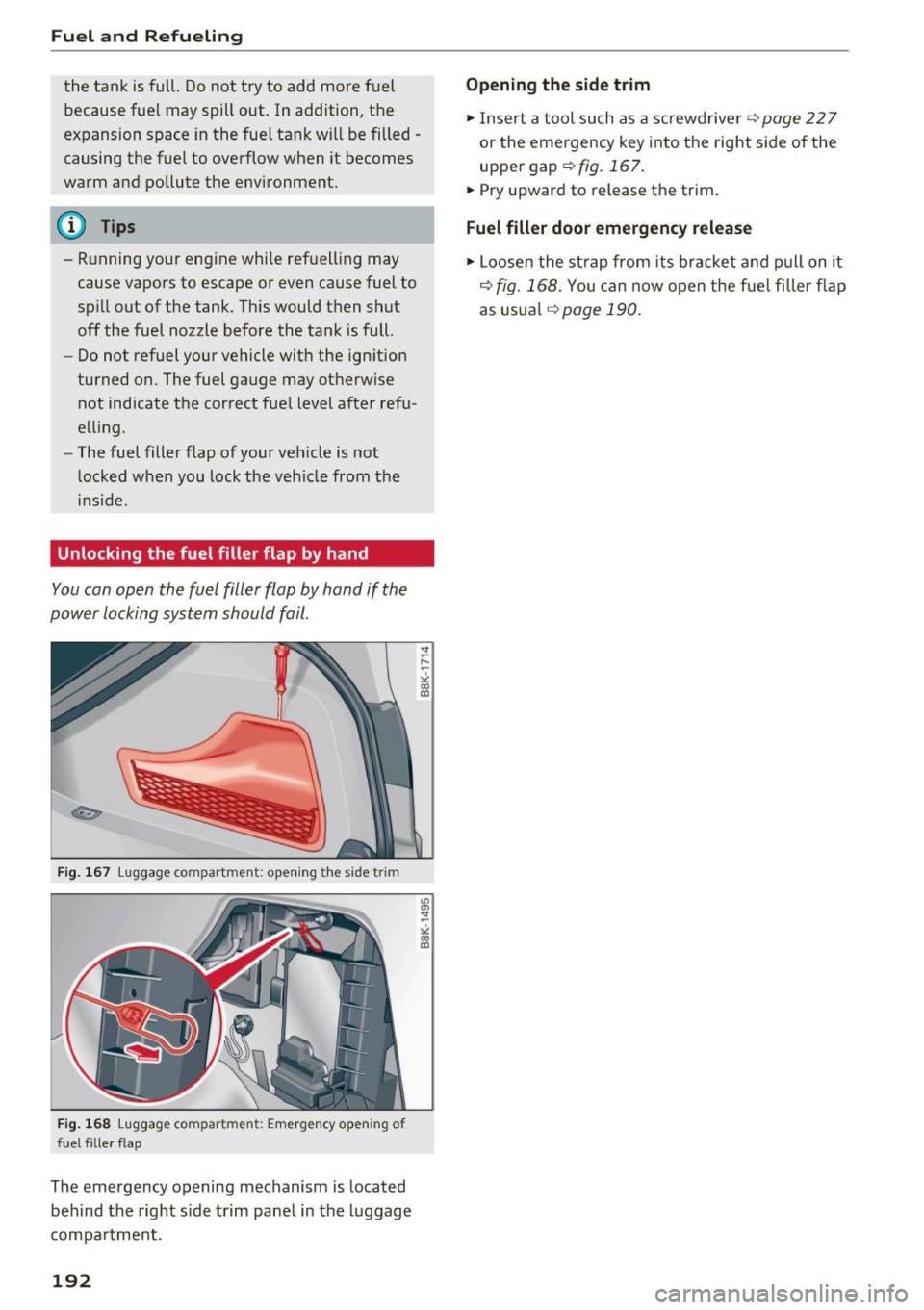
Unlocking the fuel filler flap by hand
You con open the fuel filler flop by hand if the
power locking system should fail.
F ig. 167 luggage compartment: opening the side trim
F ig. 168 luggag e compartment: Emergency opening of
fuel filler flap
The emergency opening mechanism is located
behind the right side trim panel in the luggage
compa rtment.
192
"' a, st
-
" co
"'
Opening the side trim
.,. Insert a tool such as a screwdriver¢ page 22 7
or the eme rgency key into the right side of the
upper gap¢
fig. 167 .
.,. Pry upward to release the trim.
Fuel filler door emergency release
.,. Loosen the st rap from its bracket and pull on it
¢fig. 168. You can now open the fue l filler f lap
as usual
¢page 190.
Page 195 of 266

a:,
a:,
...... N
" N ...... 0
0
LL co
Checking and Filling Hood
Releasing and opening the engine hood
The engine hood is released from inside the vehi
cle.
Fig. 169 Driver's side footwell: engine hood re lea se lever
Fig. 170 Release lever under the engine hood
Before opening the engine hood, make sure that
the windshield wipers are flat against the wind
shield. Otherwise, they could damage the paint
on the hood.
.. With the driver's door open, pull the lever un
der the instrument panel in the direction of the
arrow
¢ fig. 169.
.. Raise the hood slightly¢&.
.. Press the rocker switch under the hood upward
¢
fig . 170. This releases the catch.
.. Open the hood.
A WARNING
Hot engine coolant can burn you.
- To reduce the risk of being burned, never
open the hood if you see or hear steam or
coolant escaping from the engine compart
ment. Wait until no steam or coolant can be
Checking and Filling
seen or heard before carefully opening the
hood.
Closing the engine hood
.. Pull the hood down until the pressure from the
struts is reduced.
"' Le t the hood
drop down and latch in place. Do
not try to push it shut;
it may fail to engage
¢&, .
A WARNING
A hood that is not completely latched could
fly up and block your view while driving.
- When you close the engine hood, check it to
make sure the safety catch has properly en
gaged. The hood should be flush with the
surrounding vehicle body parts.
- If you notice while driving that the hood is
not secured properly, stop at once and close
it.
Working in the engine compartment
Be especially careful whenever you work in the
engine compartment.
-
Whenever you must perform any work in the
engine compartment, for example checking and
filling different fluids, there is a risk of injury, burns and accidents. To prevent personal injury
always observe the following WARNINGS. The
engine compartment of any vehicle is a hazard
ous area
¢ .&. .
A WARNING
-~
To help avoid injury, before you check any
thing under the hood:
- Turn off the engine.
- Remove the ignition key .
- Apply the parking brake.
- Move selector lever of automatic transmis-
sion to "P" (Park).
-Always let the engine cool down. Hot com
ponents will burn skin on contact.
- To reduce the risk of being burned, never
open the hood if you see or hear steam or
coolant escaping from the engine
193
Page 237 of 266

a:,
a:,
...... N
" N ...... 0
0
LL co
Fuse panel @ (black)
No . Consumer
1 Dynamic steering
2 Electronic Stabilization Cont rol (mod ule)
A/C system press ure sensor, elect rome -
chan ica l park ing brake , Homelink, auto-
3 mat
ic dimming interior rear v iew mirror,
air q uality/outside a ir sensor, Electronic
Stabili zation Cont rol (button)
5 Sound actuator
6 Headlight range control/
headlight (cor-
ne ring light)
7 Headlight (cornering light)
Con trol modules (e lectrom echan ica l par k-
8 ing brake, s hock ab so rbe r, q uattro s port),
DCDC converter
9 Adapt ive cru ise control
1 0 Shift ga te/clu tch se nsor
1 1 Side assist
12 Headlight range control
, p arkin g sys tem
13 Airbag
14 Rear wiper (a
llroad)
1 5 Auxiliary fuse (instrument panel)
1 6 Auxiliary fuse terminal 15 (engine area
)
Fuse panel@ (brown)
No . Consumer
2 Brake light senso r
3 Fuel pump
4 Clutch sensor
5
Left seat heating w it h /w it h out seat venti-
l a tion
6 Electronic Stabili zation Cont rol (e lectr ic)
7 Ho rn
8
Front left door (window regulator, central
locki ng, mirror, switch, lig hting)
9 Windshield wiper moto r
10 Electronic Stabilization Cont rol (va lves)
Fuses and bulbs
No . Consumer
Two-door mode ls: rear left w indow reg ula-
1 1 tor; Four-door mode
ls: rear left door (w in-
dow regu lator, central locking, switch,
li ght ing)
1 2 Rain and
light sensor
Fuse panel © (red)
No . Consumer
3 Lumbar support
4 Dynam ic steering
5 Inter
io r ligh ting ( Cabr io let)
6 W
indshie ld washer system, headlight
wash er system
7 Vehicle e lectrica l system control module 1
8 Ve hicl e e lec trica l sy stem con trol module 1
9
Left rear window regu lator motor (Cabr io-
l et)/s unroof
1 0 Vehicle e lec tric al system con trol module 1
1 1 R
ight rear window regulator (Cabriolet)/
su n shade motor
1 2 A
nti- theft alarm warning system
Right cockpit fuse assignment
Fig. 194 R ig h t cockp it : f use pane l wit h plast ic cl ip
235
Page 239 of 266
a:,
a:,
...... N r--. N ...... 0
0
LL 00
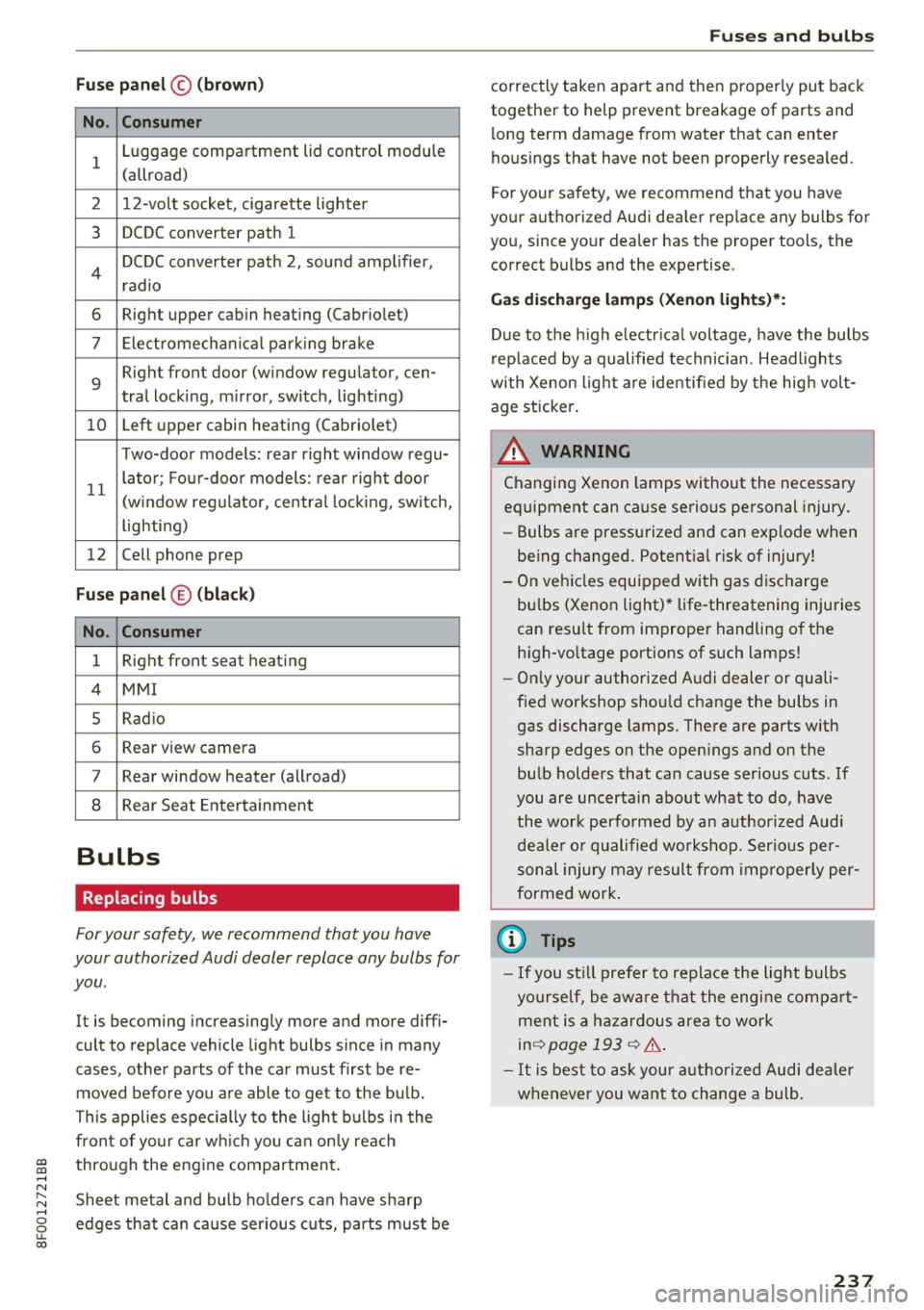
Fuse panel© (brown)
No . Consumer
1 Luggage compartment lid control module
(allroad)
2 12-volt socket, cigarette lighter
3 DCDC converter path 1
4 DCDC converter path 2, sound amplifier,
radio
6 Right upper cabin heating (Cabriolet)
7 Elect romechan ical park ing brake
9
Right front door (window regulator, cen-
tral locking, m irror, switch, lighting)
10 Left
upper cabin heating (Cabriolet)
Two-door models: rear r ight window regu-
11 lator; Four-door models:
rear right door
(w indow regulator, central locking, switch,
lighting)
12 Cell phone prep
Fuse panel ® (black )
No . Consumer
1 Right front seat
heating
4 MMI
5 Radio
6 Rear view camera
7 Rear window heater (allroad)
8 Rear Seat Entertainment
Bulbs
Replacing bulbs
For your safety, we recommend that you have
your authorized Audi dealer replace any bulbs for
you .
It is becoming increasingly more and more diffi
cult to replace vehicle light bulbs since in many
cases, other parts of the car must first be re
moved before you are able to get to the bu lb.
This applies especially to the light bulbs in the
front of your car which you can only reach
through the eng ine compartment.
Sheet metal and bulb ho lders can have sharp
edges that can cause serious cuts, parts must be
Fuses and bulbs
correctly taken apart and then properly put back
together to help prevent breakage of parts and
long term damage from water that can enter
hous ings that have not been properly resealed.
For your sa fety, we recommend that you have
your authorized Audi dea ler replace any bulbs for
you, since your dealer has the proper tools, the
correct bulbs and the expertise.
Gas discharge lamps (Xenon lights)*:
Due to the high e lectr ica l voltage, have the bulbs
replaced by a qualified technician. Headlights
with Xenon light are identified by the high volt
age sticker .
A WARNING
Changing Xenon lamps without the necessary
equipment can cause serious personal injury.
- Bulbs are pressurized and can explode when
being changed . Potential risk of injury!
- On vehicles equipped with gas discharge
bu lbs (Xenon light)* life-threatening injuries
can resu lt from improper handling of the
high -vo ltage portions of such lamps!
- Only your authorized Audi dealer or quali
fied workshop shou ld change the bulbs in
gas discharge lamps. There are parts w ith
sharp edges on the openings and on the bulb holders that can cause serious cuts . If
you are uncerta in about what to do, have
the wor k performed by an authorized Audi
dealer or qualified workshop. Serious per
sonal injury may result from improperly per
formed work.
(D Tips
- If you st ill prefer to replace the light bulbs
yourself, be awa re that the engine compa rt
ment is a hazardous area to work
inq page 193 q &,.
- It is best to ask your authorized Audi dealer
whenever you want to change a bulb.
237
Page 255 of 266

a:,
a:,
...... N r--. N ...... 0
0
LL 00
Determin ing correct load limit . . . . . . . . . . 22 1
Dig ita l clock . . . . . . . . . . . . . . . . . . . . . . . . . . 10
Dig ita l compass . . . . . . . . . . . . . . . . . . . . . . . 55
Di mensions . . . . . . . . . . . . . . . . . . . . . . . . . . 244
Dimming the rearview mirror . . . . . . . . . . . . 52
Doors emergency lock ing . . . . . . . . . . . . . . . . . . . . 32
D river information system . . . . . . . . . . . . . . . 2 1
Open doo r o r fron t lid wa rn ing . . . . . . . . . . 2 1
Outside temperature d isp lay. ... .. .... .. 21
Sound system display . . . . . . . . . . . . . . . . . 21
Dri ver seat
refer to Seat ing pos ition . . . . . . . . . . . . . . 112
Driving economically . . . . . . . . . . . . . . . . . . 177
Driving safe ly . . . . . . . . . . . . . . . . . . . . . . . . 111
D riving through wate r . . . . . . . . . . . . . . . . . 175
Driving t ime . . . . . . . . . . . . . . . . . . . . . . . . . . 22
D us t filte r
refer to Pollutant filte r (au toma tic A/C sys -
tem) . . . . . . . . . . . . . . . . . . . . . . . . . . . . . . . 66
Dynamic stee ring ............. 101, 167 , 17 1
E
E85 (Fue l) . . . . . . . . . . . . . . . . . . . . . . . . . . . 189
Easy entry function . . . . . . . . . . . . . . . . . . . . . 59
E ff iciency p rogr am . . . . . . . . . . . . . . . . . . . . . 24
Fu el economy messages . . . . . . . . . . . . . . . 24
M emory levels . . . . . . . . . . . . . . . . . . . . . . . 22
Other equipment . . . . . . . . . . . . . . . . . . . . . 24
E lect ro-mechan ica l powe r ass ist . . . . . . . . . 17 1
Electromechanica l parking brake
Emergency braking . . . . . . . . . . . . . . . . . . . 77
Indicator light . . . . . . . . . . . . . . . . . . . . . . . 76
Parking . . . . . . . . . . . . . . . . . . . . . . . . . . . . . 76
Re leas ing and closing . . . . . . . . . . . . . . . . . 76
St arting assis t . . . . . . . . . . . . . . . . . . . . . . . 77
S tarting from res t . . . . . . . . . . . . . . . . . . . . 77
Starting off w ith a t railer . . . . . . . . . . . . . . . 77
Warning/indicator lights . . . . . . . . . . . . . . . 14
E lect ronic d ifferen tial lock
Wa rn in g/i nd ic ator lights . . . . . . . . . . . . . . . 16
Electronic Differential Lock . . . . . . . . . . . . . 167
E lect ronic diffe ren tial lock ( EDL)
Wa rning/indicator lights.. ... .. .. .... .. 1 7
E lect ronic immob ilizer . . . . . . . . . . . . . . . 10, 33
Index
El ectron ic powe r contro l
(EPC) warning/indicator light . . . . . . . . . . . 18
El ectron ic spee d lim ite r . . . . . . . . . . . . . . . . . 26
E lectron ic stabilization control
Spo rt mode . . . . . . . . . . . . . . . . . . . . . . . . 168
E lectron ic Stab ilization Contro l . . . . . . . . . . 167
El ectron ic Stab ilization Contro l (E SC)
War ning/ indica to r li ghts . . . . . . . . . . . . . . . 16
Emergency actuation
Doors . . . . . . . . . . . . . . . . . . . . . . . . . . . . . . 32
Ign it io n key . . . . . . . . . . . . . . . . . . . . . . . . . 30
Emergency braking . . . . . . . . . . . . . . . . . . . . . 77
E mergency f lasher . . . . . . . . . . . . . . . . . . . . . 50
War ning/ in d ica to r li ghts . . . . . . . . . . . . . . . 20
Emergency key . . . . . . . . . . . . . . . . . . . . . . . . 28
Start ing engine . . . . . . . . . . . . . . . . . . . . . . 72
Emergency operation
Emergency braking function (parking brake) .7.7
Luggage compartment lid . . . . . . . . . . . . . . 34
Power top . . . . . . . . . . . . . . . . . . . . . . . . . . . 44
Emergency starting . . . . . . . . . . . . . . . . . . . 238
En ergy manage men t . . . . . . . . . . . . . . . . . . 173
B attery power . . . . . . . . . . . . . . . . . . . . . . . . 14
D rive r notific ation . . . . . . . . . . . . . . . . . . . . 14
E ngine
Compartment .. .. .. ................. 195
Coo lant . . . . . . . . . . . . . . . . . . . . . . . . . . . . 1 99
Hood . . . . . . . . . . . . . . . . . . . . . . . . . . . . . . 193
Start ing . . . . . . . . . . . . . . . . . . . . . . . . . 71, 73
Starting wi th ju mpe r cab les . . . . . . . . . . . 238
Stopping . ... .. . ... .... . ..... ... .. 7 3, 74
E ngine compartment . . . . . . . . . . . . . . . . . . 1 95
S afe ty in str uctions . . . . . . . . . . . . . . . . . . . 193
Working the engi ne compa rtment . . . . . . 193
Engine coolant Indicator light . . . . . . . . . . . . . . . . . . . . . . . 15
Engine coolant system . . . . . . . . . . . . . . . . . 199
Adding coolant . . . . . . . . . . . . . . . . . . . . . . 200
Checking coolant level . . . . . . . . . . . . . . . . 199
Checking the engine coo lant level . . . . . . . 199
Radiator fan . . . . . . . . . . . . . . . . . . . . . . . . 201
Engine coolant temperature
Temperature gauge . . . . . . . . . . . . . . . . . . . . 8
E ngine hoo d
Closing . . . . . . . . . . . . . . . . . . . . . . . . . . . . 193
How to release the hood . . . . . . . . . . . . . . 193
253
Page 256 of 266

Index
Engine oil . . . . . . . . . . . . . . . . . . . . . . . . . . . 195
Adding . . . . . . . . . . . . . . . . . . . . . . . . . . . . 197
Addit ives . . . . . . . . . . . . . . . . . . . . . . . . . . . 197
Changing . . . . . . . . . . . . . . . . . . . . . . . . . . 198
Check oil level . . . . . . . . . . . . . . . . . . . . . . 197
Consumption . . . . . . . . . . . . . . . . . . . . . . . 197
Indicator light . . . . . . . . . . . . . . . . . . . . 15, 18
Oi l consumption . . . . . . . . . . . . . . . . . . . . . 196
Pressure malfunction . . . . . . . . . . . . . . . . . 15
Sensor defective . . . . . . . . . . . . . . . . . . . . . . 18
Specification and viscosity . . . . . . . . . . . . . 195
Engine speed limitation . . . . . . . . . . . . . . . . . 18
Environment Catalytic converter . . . . . . . . . . . . . . . . . . . 176
Disposing of your vehicle battery . . . . . . . 206
Driving at high speeds . . . . . . . . . . . . . . . . 177
Fuel ...... .... ........... ........ . . 190
Leaks under your vehicle . . . . . . . . . . . . . . 193
L ett ing the veh icle stand and warm up . . . 177
Proper disposal of drained brake fluid . . . 202
Proper disposal of drained engine coolant 200
Proper disposal of drained engine oil 197, 198
Recycling used engine oil . . . . . . . . . . . . . 197
Unleaded fuel . . . . . . . . . . . . . . . . . . . . . . . 188
What should I do with an old battery? . . . 206
EPC
refer to Electronic power control . . . . . . . . 18
Ethyl alcohol (Fuel) . . . . . . . . . . . . . . . . . . . . 189
E vent Data Recorder (EDR) . . . . . . . . . . . . . 169
Expansion tank . . . . . . . . . . . . . . . . . . . . . . . 199
Exterior lighting . . . . . . . . . . . . . . . . . . . . . . . 48
Exterior mirrors Adjusting . . . . . . . . . . . . . . . . . . . . . . . . . . . 51
Dimming . . . . . . . . . . . . . . . . . . . . . . . . . . . . 52
He ating . . . . . . . . . . . . . . . . . . . . . . . . . . . . . 51
F
Fan
Radiator 201
Fa sten ing
Booster seats . . . . . . . . . . . . . . . . . . . . . . . 158
Convertible child safety seats . . . . . . . . . . 156
Infant seats . . . . . . . . . . . . . . . . . . . . . . . . 155
f lexible fuel . . . . . . . . . . . . . . . . . . . . . . . . . . 189
Floor mats . . . . . . . . . . . . . . . . . . . . . . . . . . . 116
Fog lights/rear fog light(s) . . . . . . . . . . . . . . 48
Folding the rear seats . . . . . . . . . . . . . . . . . . . 64
254
Foot pedals .......................... 116
For the sake of the environment Environmentally-friendly driving . . . . . . . 177
Gasoline fumes and the env ironment . . . . 190
Letting the engine warm up . . . . . . . . . 71 , 73
Refueling . . . . . . . . . . . . . . . . . . . . . . . . . . 190
Saving fuel by early upshifting . . . . . . . . . . . 9
Front airbags Description . . . . . . . . . . . . . . . . . . . . . . . . . 134
How they work . . . . . . . . . . . . . . . . . . . . . . 138
Frontal collisions and the laws of physics . . 123
Front passenger's door emergency locking . . 32
Front seats Adjust ing . . . . . . . . . . . . . . . . . . . . . . . . . . 113
Child restraints in the front seat........ 131
Upper cabin heating . . . . . . . . . . . . . . . . . . . 69
Fuel Additives. . . . . . . . . . . . . . . . . . . . . . . . . . . 188
B lended gasol ine . . . . . . . . . . . . . . . . . . . . 188
Consumption . . . . . . . . . . . . . . . . . . . . . . . . 22
Fuel gauge . . . . . . . . . . . . . . . . . . . . . . . . . . 10
Gasoline additives . . . . . . . . . . . . . . . . . . . 190
Low fuel level symbol . . . . . . . . . . . . . . . . . 18
Octane rating . . . . . . . . . . . . . . . . . . . . . . . 188
Recommendation . . . . . . . . . . . . . . . . . . . . 188
Refuelling . . . . . . . . . . . . . . . . . . . . . . . . . . 190
Reserve . . . . . . . . . . . . . . . . . . . . . . . . . . . . . 10
Saving fuel ......................... 177
T ank capacity . . . . . . . . . . . . . . . . . . . . . . . 244
Tank system . . . . . . . . . . . . . . . . . . . . . . . . . 18
Unlocking the fuel filler flap by hand . . . . 192
Fuel economy messages (efficiency program) .24
F u el filler flap
Unlocking the fuel filler flap by hand . . . . 192
Fuses Assignment ... .. .. .. ....... 234, 235, 236
Replacing . . . . . . . . . . . . . . . . . . . . . . . . . . 234
G
Garage door opene r (Home Link) . . . . . . . . . . 36
Gas discharge lamps ................... 237
Gauges Engine coolant temperature . . . . . . . . . . . . . 8
Fuel gauge . . . . . . . . . . . . . . . . . . . . . . . . . . 10
Tachometer . . . . . . . . . . . . . . . . . . . . . . . . . . 9
General illustration Instruments and controls . . . . . . . . . . . . . . . 6