belt AUDI A5 CABRIOLET 2017 Owner's Guide
[x] Cancel search | Manufacturer: AUDI, Model Year: 2017, Model line: A5 CABRIOLET, Model: AUDI A5 CABRIOLET 2017Pages: 266, PDF Size: 66.64 MB
Page 140 of 266
Airbag syste m
restraints or occupants on the front passen
ger seat and prevent the side airbag in the
seat backrest from deploying properly.
- Never use cushions, pillows, blankets or
similar items on the front passenger seat.
The additional padding will prevent the
weight-sens ing mat in the seat from accu
rately reg istering the ch ild restraint or per
son on the seat and prevent the Advanced
Airbag System from funct ioning prope rly.
- If you must use a child restraint on the front
passenge r seat and the child restraint man
ufact urer's instructions require the use of a
towel, foam cushion or something else to properly position the chi ld restraint, make
certain that the
PASSENGER A IR BAG OFF
light comes on and stays on whenever the
child restraint is installed on the front pas
senger seat.
- If the
PAS SENGER AIR BAG O FF light does
not come on and stay on, immediately in
stall child restraint in a rear seating position and have the airbag system inspected by
you r authorized Aud i deale r.
How the Advanced Airbag System
components work together
The front Advanced Airbag System and the side
ai rbags supplement the protection offered by the
front three-point safety belts with pretensioners and load limiters and the adjustable head re
stra ints to help reduce the r isk of injury in a wide
range of accident and crash situations. Be sure to
read the important information about safety and heed the WARNINGS in th is chapter .
Deployment of the Advanced Airbag System and
the activation of the safety belt pretensioners de
pend on the deceleration measured by the crash
sensors and registered by the electronic control
unit . Crash severity depends on speed and decel
eration as we ll as the mass and stiffness of the
vehicle or object involved in the crash.
On the passenger s ide, regardless of safety belt
use, the a irbag will be t urned off if the weight on
the passenge r seat is less than the amount p ro
g rammed in the e lectron ic cont rol unit . T he front
1 38
airbag on the passenger side will also be turned
off if one of the child safety seats that has been
certified under Federal Motor Vehicle Safety
Standard 208 has been recogn ized on the seat.
The
PAS SEN GER AI R BA G OFF light comes on
and stays on to te ll you when the front Advanced
Airbag on the passenger side has been turned off
¢ page 131, Child restraints on the front seat
some important things to know .
.&_ WARNING
To reduce the risk of injury when an airbag in
f lates, always wear safety belts properly.
- I f you are unrestrained, leaning forward, sit
ting sideways or ou t of position in any way,
your ris k of injury is much highe r.
- You will a lso receive ser ious injuries and
could even be killed if yo u are up against the
airbag or too close to i t when it inflates -
even with an Advanced Airbag
r::!;>page 130.
More important things to know about front
airbags
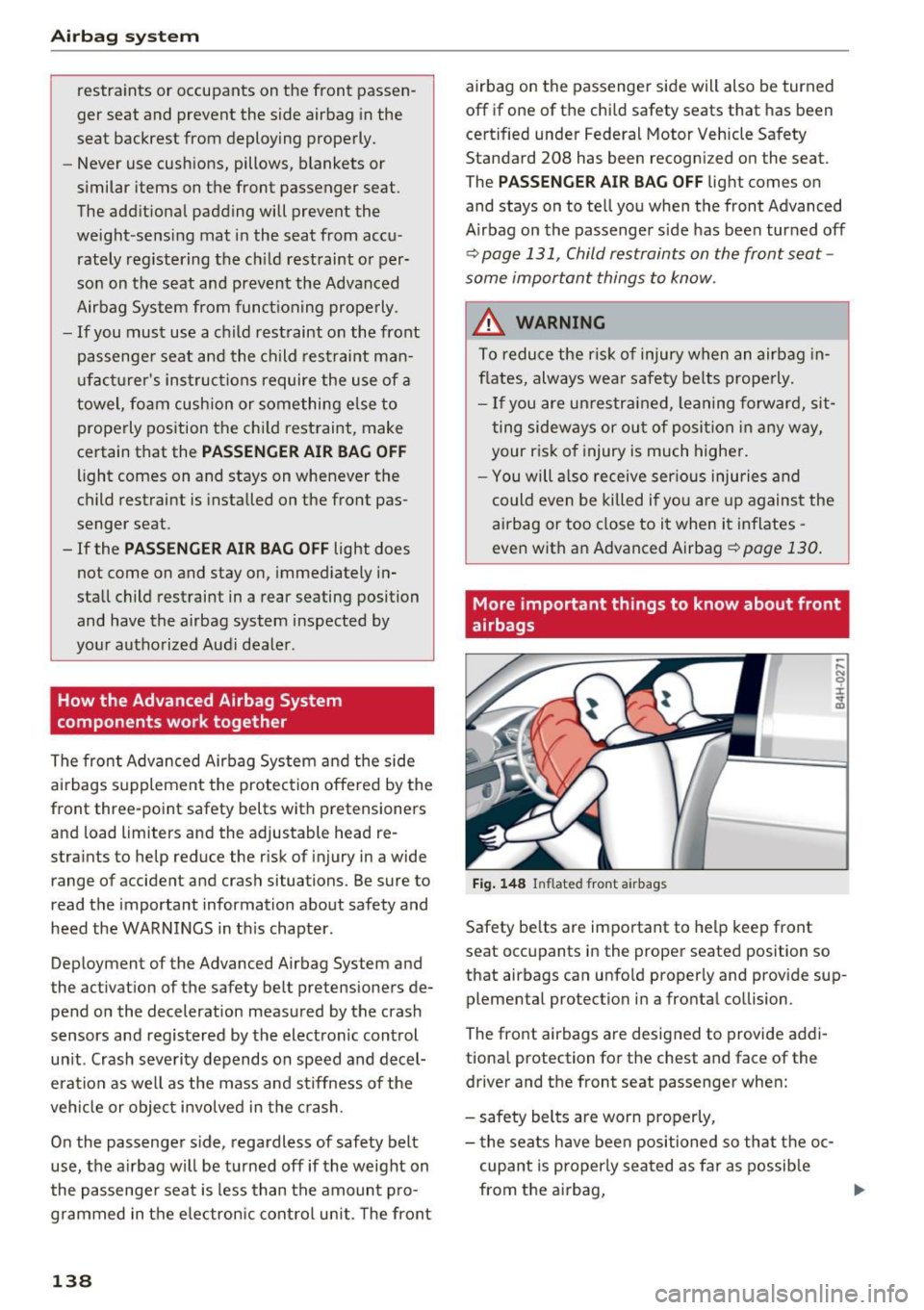
Fig. 14 8 Inflated front a irbags
-,... N 0 :i: ;;i;
Safety be lts are important to help keep front
seat occupants in the proper seated position so
that airbags can unfo ld properly and prov ide sup
plemental protection in a fronta l co llision.
The front airbags a re designed to provide addi
tional protection for the chest and face of the driver and the front seat passenger when:
- safety belts are worn properly,
- t he seats have been positioned so that the oc-
cupant is properly seated as far as possib le
from the airbag,
Ill-
Page 141 of 266
-and the head restraints have been properly ad -
justed.
Because airbags inflate in the blink of a n eye w ith
great for ce, things you have on you r lap or have
p laced on the seat cou ld become dangerous pro
jectiles, and be pushed into you if the airbag in
flates.
When an a irbag deploys, fine dust is released .
This is normal and is not caused by a fire in the
vehicle. This dust is made up mostly of a powder
used to lubricate the airbags as they deploy. It
could irr itate skin.
It is important to remember that while the sup
p lemental airbag system is designed to reduce
the likelihood of ser ious injuries, other inj uries,
for example swell ing, bruising and minor abra
sions, can also happen when airbags inflate. Air
bags do not protect the arms or the lower parts
of the body . Front airbags only supplement the
three po int safety belts i n some fronta l co llisions
i n which the veh icle decelerat ion is high enough
to deploy the airbags.
F ront airbags will not deploy:
- if the ignit ion is switched off when a crash oc -
curs,
- in s ide collisions,
- in rear-end collisions,
- in rollovers,
- when the crash decelerat ion measured by the
airbag system is less than the minimum thresh
o ld needed for airbag deployment as registered
by the electronic contro l unit .
Th e front passeng er airbag will a lso not
deplo y:
- when the front passenger seat is not occupied,
- when the weight on the front passenger seat as
sensed by the Advanced Airbag System indi
cates that the front airbag on the passenger
s ide has to be turned off by the electronic con
trol unit (the
P A SSENGER AIR B AG OFF light
comes on and stays on).
; A WARNING N
~ Sitting in the wrong pos ition can increase the
8 r isk of se rious injury in c rashes. LL 00
Airb ag sys tem
-To reduce the risk of injury when the ai rbags
inflate, the driver and passengers must al
ways sit in an upright posit ion, must not
lean aga inst or place any part of their body
too close to the area where the airbags are located.
- Occupants who are unbelted, out of posit ion
or too close to the airbag can be seriously in jur ed by an airbag as it unfolds with g reat
for ce in the blink of an eye
Qpage 131.
A WARNING
A child in a rearward-facing child safety seat
i nsta lled on the front passenger seat will be
seriously injured and can be k illed if the front
a irbag inflates - even with an Advanced Airbag
System .
- The inflating airbag will hit the child safety seat or infant ca rrier with great force and
will smash the child safety seat and child aga inst the backrest, center armrest, door
or roof.
- Always install rear-fac ing child safety seats
on the rear seat.
- If you must install a rea rwa rd facing child
safety seat on the front passenger seat be
cause of exceptional circumstances and the
PA SS ENGER AIR BAG OFF light does not
come on and stay on, immediately install
the rea r-facing child safety seat in a rear
seating position and have the a irbag system
inspected by your au thori zed A udi dealer.
A WARNING
Objects between you and the airbag will in
crease the risk of injury in a crash by interfer
ing with the way the airbag unfolds or by be
ing p ushed into you as the airbag inflates .
- Never hold things in yo ur hands or on your
lap when the vehicle is in use .
- Never transport items on or in the area o f
the front passenger seat . Objects could
move into the area of the front airbags dur
ing braking or other sudden maneuver and
become dangerous projectiles that can
cause serious persona l injury if the airbags
inflate.
139
Page 143 of 266

The PASSENGER AIR BAG O FF light is located in
the c enter of the instrument panel¢
fig. 149 .
The PASS ENGER AIR BAG OFF light will come on
and stay on to tell you when the front Advanced
Airbag on the passenger side has been turned off
by the el ectronic control unit . Each time you turn
on the ignition, the
P ASSENGER AIR BAG OFF
light will flash for a few seconds and:
- will stay on if the front passenger seat is not
occupied,
- will stay on if the re is a sma ll child or child re
straint on the front passenger seat,
- wi ll go out if the front passenge r seat is occu
pied by an adult as registered by the weight
sensing mat .
The
PA SSENGER AIR BAG O FF light mu st c ome
on and sta y on
if the igni tion is on and
- a car bed has been insta lled on the front seat,
o r
- a rearward-facing child restrai nt has been in
stalled on the front passenger seat , or
- a forward -facing child restra int has been instal
led on the front passenger seat, or
- the weight reg istered on the front passenger
seat is equal to or less than the comb ined
weight of a typical 1 yea r-o ld restrained in one
of the rear-facing or forward-fac ing infant re
strain ts listed in Federal Motor Vehicle Safety
Standard 208 w ith which the Advanced A irbag
System in your vehicle was certified.
I f the front passenger seat is no t occupied, the
fron t air bag w ill not deploy, and the
PASSENGER
AIR BAG OFF
light will stay on . Never install a
rearward -fac ing child restraint on the front pas
senger s eat, the safest p lace for a child in any
kind of child restraint is at one of the seating po
sitions on the rear seat ¢
page 131, Child re
s train ts on the front sea t-some impor tan t
things to know
and ¢ page 1 SO, Child safety .
If the PASSENGER AIR BAG OFF light comes on
when one of the condit ions listed above is met,
be sure to check the light regularly to make cer-
gi tain that the PASSENGER AIR BA G OFF light ......
~ stays on cont inuously whenever the ign ition is
~ on . If the PASSENGER A IR BAG OFF lig ht does
0 LL 00
Airb ag sys tem
not appear and not stay on all the time, stop as
soon as it is safe to do so and
- react ivate the system by tur ning t he ignit ion
off and then t urn ing it on again ;
- remove and re insta ll th e chi ld restrain t. M ake
sure that the chi ld restraint is properly ins ta l
led and that the safety belt for the front pas
senger seat has bee n correct ly routed around
the child restraint as desc ribed in the c hild re
straint manufacture r's instruct ions;
- make sure that the convertible locking retrac
tor on the safety belt for the front passenge r
seat has been activated and that the safety belt
has been pulled tight. The belt must not be
loose or have loops of slack so that the sensor
below the safety belt latch on the seat can do its job
¢ page 159.
-make sure that th ings that may increase the
weight of the child and ch ild safety seat are not
be ing transported on the front passenger seat ;
- make sure that the safety belt tens ion sensor is
not b locked . Shake the safety belt la tch on the
front passenger seat bac k and forth;
- If a strap or tether is being used to tie the child
safety seat to the front passenger seat, make
sure that it is not so tight t hat i t causes the
weight-sensing mat to me asu re more weight
than is actua lly on the sea t.
If the PASSENGER AIR BAG OFF light still do es
not come on
and does not stay on co nti nuously
(whe n the ignition is switched on),
- take the child restraint off the front passenge r
seat and install it p roper ly at one of the rear
seat pos itions . Have the airbag system inspect
ed by yo ur au thori zed Aud i deale r immedi ately .
- move the child to a rear seat pos ition and ma ke
sure that t he chi ld is proper ly rest rained in a
child restra int that is appropr iate for its s ize
and age .
T he
PASSENGER AIR BAG OFF lig ht should NOT
come on when the ignit io n is on and an adu lt is
s itting in a prope r seat ing pos ition on the front
passenge r seat. If the
PASSENGER AIR BAG OFF
light comes on and stays on or flashes for about
5 seconds whi le dr iv ing, under these c ircumstan-
ces, make sure that :
Ill-
141
Page 144 of 266

Airbag syste m
-the adu lt on the front passenger seat is proper
ly seated on the center of the seat cushion with
his or her back up against the backrest and the
backrest is not reclined
r::>page 112, Correct
passenger seating positions,
-the adu lt is not taking weight off the seat by
holding on to the passenger assist handle
above the front passenger door or supporting
their we ight on the armrest,
- the safety belt is being properly worn and that
there is not a lot of slack in the safety belt web
bing,
- accessory seat covers or cushions or other
th ings that may cause an incorrect read ing or
impression on the weight-sensing mat under
the upho lstery of the seat have been removed
from the front passenge r seat,
- a safety be lt extender has not been left in the
safety belt latc h for the front passenge r seat.
In addition to the
PASSE NGER AIR BAG OFF
light in the center of the instrument panel, the
message
PASSENGER AIR BAG OFF or PASSEN
GER AIR BAG ON
w ill briefly appear in the inst ru
ment cluster display . T his is to inform the driver
of the current front passenger airbag status.
Important safety instructions on
monitoring the Advanced Airbag System
A WARNING
An airbag system that is not funct ion ing prop
er ly cannot p rovide supplemental p rotection
in a frontal crash.
- If the airbag indicato r light
c> page 17
comes when the vehicle is be ing used, h ave
the system inspected immediate ly by yo ur
authorized Aud i dealer. It is possible that
the airbag will inflate when it is not s up
posed to, or will not inflate when it should.
A WARNING
If the front airbag inflates, a child without a
child restraint, in a rearward-facing child safe
ty seat or in a forward-facing child restraint
that has not been properly installed will be
ser iously injured and can be killed .
142
-Even though your vehicle is equipped with
an Advanced A irbag System, make certain
that all children, espec ia lly 12 years and
younger, always ride on the back seat prop
erly restrained for their age and s ize.
- Always install forward or rear-facing child
safety seats on the rear seat -even with an
Advanced A irbag System.
- If you must install a rearward-facing child
safety seat on the front passenger seat be
cause of exceptional circumstances and the
PASSENGER AIR BAG OFF l ight does not
appear and s tay on, immedi ately ins tall the
rear-facing child safety seat in a re ar seat ing
position and have the a irbag system in
spected by your a uthorized Audi dea ler.
- A t ight tether or other s trap on a rearward
facing chi ld restraint attached to the front
passenger seat can put too much pressure
on the weight-sensing mat in the seat and
register more weight than is actually on the
seat. The heavier weight registered can
make the system work as thoug h an adu lt
were on the seat and deploy the Advanced
Airbag when it must be suppressed causing
serious or even f atal injury to the child.
- If, in exceptional circumstances, you must
install a forward-fa cing child res traint on
the front p assenge r seat, always move the
seat into i ts rearmost posi tion in the sea t's
fore and aft ad justment range, as far away
from the ai rbag as possible . The back rest
must be adjusted to an upr ight position.
Make sure that the
PASSENGER AIR BAG
OFF
li ght comes on and stays on all the time
wheneve r the ignit ion is switched on.
A WARNING
- If the PASSENGER AIR BAG OFF light does
not go out when an adult is sitting on the
front passenger seat afte r taking the steps
described above, make s ure the adult is
p roper ly sea ted and restra ined at one o f the
rear sea ting posit ions .
- Have the ai rbag system inspec ted by your
author ized Audi dealer befo re t ransporting
anyone on the front passenger seat.
Page 146 of 266
Airbag system
@ For the sake of the environment
Undeployed airbag modu les and pretension
ers might be classified as Perchlorate Materi
al -special handling may apply, see
www.dtsc.ca.gov/hazardouswaste/perchlo rate . When the vehicle or parts of the re
straint system including airbag modules safe
ty belts with pretens ioners are scrapped, all
applicable laws and regulat ions must be ob
served. Your authorized Audi dealer is familiar
with these requirements and we recommend
that you have your dealer perform this service
for you.
Other things that can affect Advanced
Airbag performance
Changing the vehicle's suspension system can
cha nge the way that the Advanced Airbag System
pe rforms in a crash. For example, using tire-r im
comb inat ions not approved by Audi, lower ing the
veh icle, changing the stiffness of the suspens ion,
including the spr ings, suspension struts, shock
absorbers etc . can change the forces that are
measured by the airbag sensors and sent to the
electronic control unit . Some suspens ion changes
can, for example, increase the force levels meas
ured by the sensors and make the airbag system
deploy in crashes in wh ich it would not deploy if
the changes had not been made. Other ki nds of
changes may reduce the force levels measured by
the sensors and preven t the airbag from deploy
ing when it should .
A WARNING
Changing the vehicle's suspension including
use of unapproved tire-rim combinations can
change Advanced A irbag performance and in
crease the risk of serious personal injury in a
crash.
- Never install suspension components that
do not have the same performance charac
teristics as the components originally insta l
led on your veh icle .
- Never use tire-rim comb inations that have
not been approved by Audi.
144
A WARNING
Items stored between the safety belt buckle
and the center console can cause the sensors in the buckle to send the wrong information
to the electronic control module and prevent
the Advanced A irbag System from working
properly.
- Always make sure that nothing can inte rfe re
w ith the safety belt buckles and that they
are not obstructed.
Knee airbags
Description of knee airbags
Applies to: vehicles with knee airbags
The knee airbag system can provide supplemen
tal protection to properly restrained front seat
occupants.
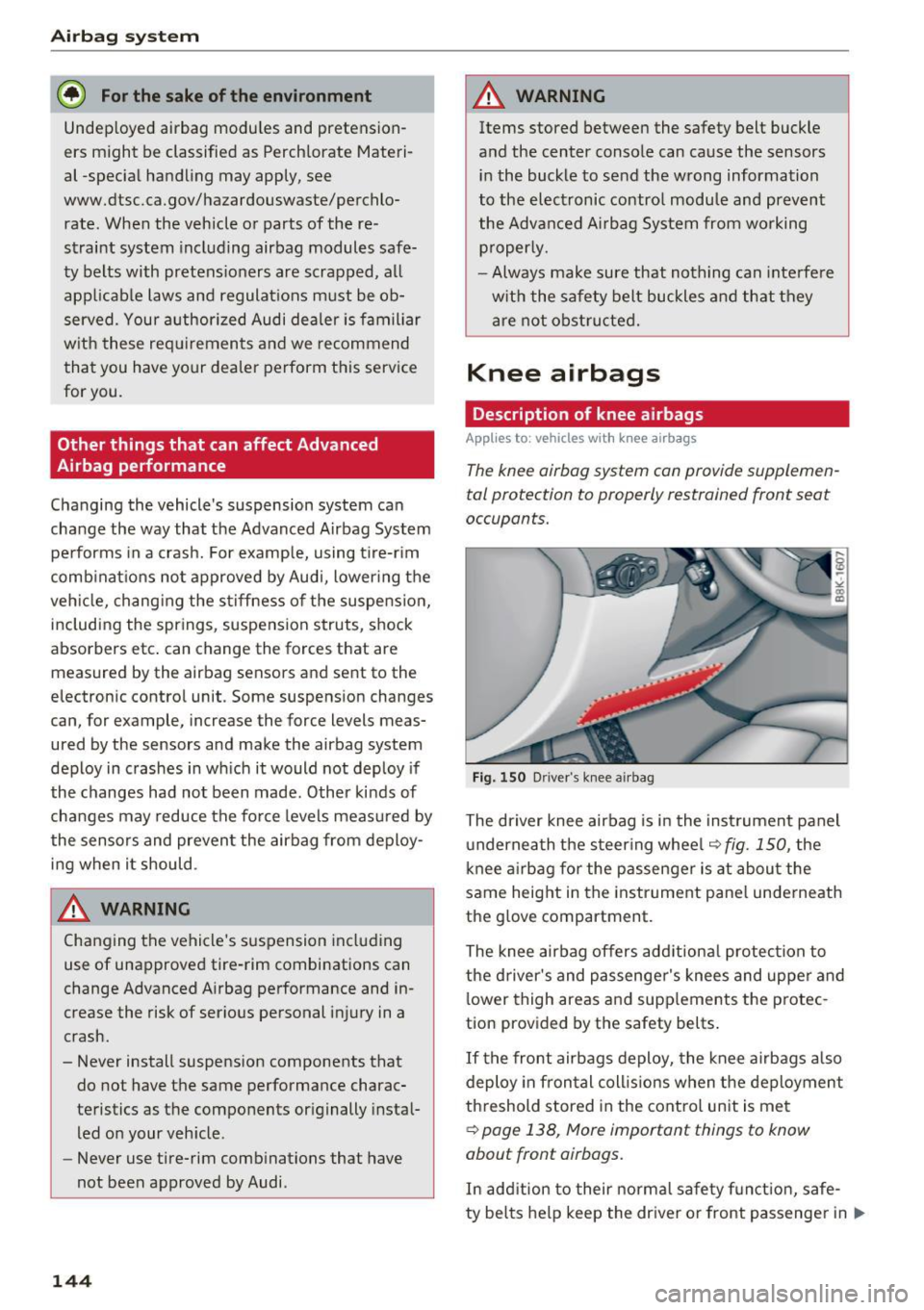
Fig. 150 Driver's knee a irbag
The driver knee airbag is in the instrument panel
underneath the steering whee l~
fig. 150, the
knee airbag for the passenger is at about the
same height in the instrument panel underneath
the g love compartment.
The knee airbag offers additional protection to
the driver's and passenger's knees and uppe r and
l ower thigh areas and supp lements the protec
tion provided by the safety belts .
If the front airbags deploy, the knee airbags also
deploy in frontal collis ion s when the deployment
th reshold stored in the control unit is met
~ page 138, More important things to know
about front airbags.
In addition to their normal safety funct ion, safe-
ty belts help keep the driver or front passenger in
IJJ>
Page 147 of 266
position in a frontal collision so that the airbags
can provide supplemental protection.
The airbag system is not a s ubst itute for yo ur
safety belt. Rather, it is part of the overa ll occu
pant restraint system in your vehicle. Always re
member that the airbag system can only help to
protect you if you are wearing your safety belt
and wear ing it properly . This is why you should
always wear your safety belt, not just because
the law requires you to do soc::,
page 122, Gener
al information.
Remember too, airbags will deploy only once and
only in certain k inds of accidents -your safety
be lts
a re always there to offer protection in those
accidents in which airbags are not supposed to
deploy or when they have a lready dep loyed, for
examp le when yo ur vehicle str ikes or is str uck by
anothe r afte r the f irst collis ion.
This is just one of the reasons why an airbag is
not a substitute for the safety belt. The a irbag
sys tem wo rks most effec tively when used with
the safety belts. Therefore , al ways wear your
safety bel ts cor rect ly .
It is important to remember that while the sup
p lemental knee a irbag sys tem is designed to re
d uce the like lihood of serious injur ies, other inju
ries, fo r example, swell ing, b ruising, and m inor
abrasions and fr iction burns can also occu r when
an airbag inflates.
The kne e airbag system basically consists of:
- The electronic contro l modu le
- Two inf latab le airbags (airbag and gas genera-
tor), one for the dr ive r and one fo r the front
passenge r
- T he airbag ind icator light in the instrument
pane l
The knee airbag system will not deploy:
-when the ignition is turned off
- in frontal collisions when the deceleration
measured by the control unit is too low
- in side collisions
~ -in rear-end collisions ......
~ -in rollovers N ...... 0
0
LL co
Airb ag sys tem
-in the event of a system malfunction (warning/
indicator light is on)
c::, poge 17.
A WARNING
-
-Safety belts and the airbag system can only
provide protect ion when occupants are in
the proper seat ing pos ition c::,
page 138.
-If the airbag indicator light c::, page 17
comes w hen the veh icle is being used, have
the system inspected immediately by your
author ized Audi dealer. It is possible that
the airbag will inflate when it is not sup
posed to, or w ill not inflate w hen it should.
How knee airbags work
Applies to: vehicles with knee airbags
The risk of injury to the leg area can be reduced
by fully deployed knee airbags.
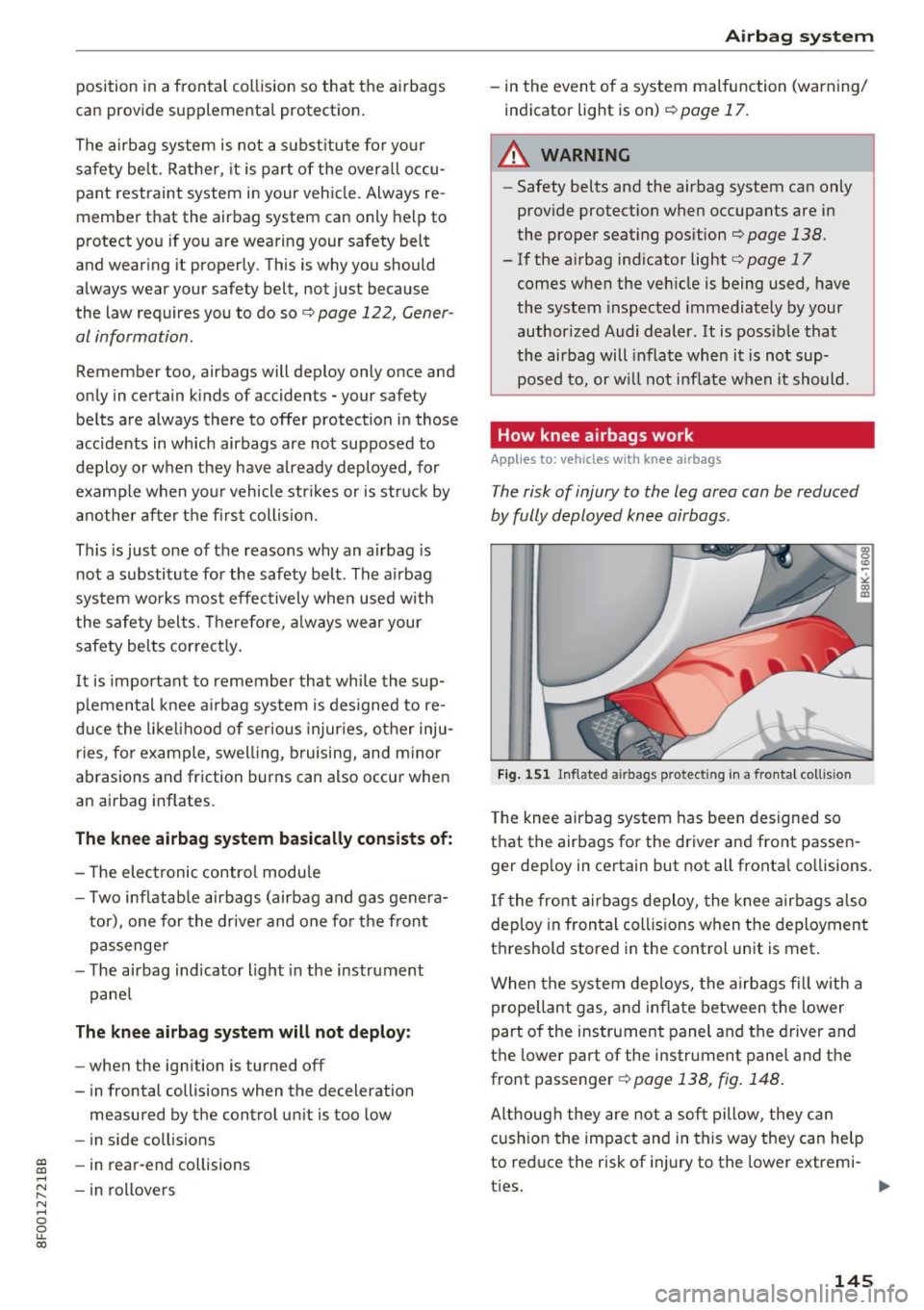
F ig . 15 1 Inflated ai rbags protecting in a fronta l co llision
T he knee air bag system has been designed so
t h at the airbags fo r the driver and front passen
ger dep loy in certain but not all fronta l co llisions.
If t he front airbags deploy, the knee a irbags also
deploy in frontal coll is ions when t he deploy ment
th reshold stored in the cont rol unit is met .
When the system deploys, the a irbags fi ll with a
prope llant gas, and infla te between the lower
part o f the instrument panel and t he driver an d
the lowe r part of the instrument panel and the
front passenger
c::, page 138, fig . 148 .
Although they are not a soft pillow, they can
cush io n the impact and in th is way they can help
to red uce the risk of in jury to the lower extremi-
ties . ""
145
Page 148 of 266
Airbag syste m
All of this takes place in the blink of an eye, so
fast that many people don't even realize that the
airbags have deployed. The a irbags also inflate
with a great deal of force and it is important for
occupant safety that nothing should be in their
way when they deploy .
Fully inflated airbags in comb ination with proper
ly worn safety belts slow down and limit the oc
cupant 's forward movement and help to reduce
the risk of inju ry .
Important safety instructions on the knee
airbag system
App lies to : ve hicles w ith knee a irbags
Airbags are only supplemental restraints . Always
wear safety belts correctly and ride in a proper
seating position.
There is a lot that you and your passengers must
know and do to help the safety belts and airbags
to provide supplemental protection .
,&. WARNING
An inflating knee airbag can cause ser ious in
jury. Wea ring safety bel ts incorrectly and im
proper seating positions increase the r isk of
serious personal injury and death whenever a
vehicle is being used.
- The knee airbag system cannot protect you properly if you are seated too close to any of
the airbag locat ions. When adjusting their
seat positions, it is important that both the driver and the front passenger keep their
upper bod ies and knees at the following
min imum safe distances:
- at least 10 inches (25 cm) between the
chest and the steering wheel/instrument panel.
- at least 4 inches (10 cm) between the
knees and the lower part of the instru ment panel.
- The risk of persona l injury increases if you
lean forward or to the s ide, or if the seat is
improperly positioned and you are not wear
ing your safety belt. The risk increases even
more should the airbag deploy .
146
-Always make sure that the knee a irbag can
inflate w ithout interference. Objects be
tween you and the airbag can increase the
r isk of injury in an accident by interfering
w ith the way the airbag deploys or by being
pushed into you as the a irbag deploys .
- Never let anybody, especially children or anima ls ride in the footwell in front of the
passenger seat. If the airbag deploys, this
can result in serious or fatal injuries .
- Never carry objects of any kind in the foot
well area in front of the driver's or pas
senger's seat. Bulky objects (shopp ing
bags, for example) can interfere with or
prevent proper deployment of the a irbag.
Small objects can be thrown through the
vehicle if the airbag deploys and injure you
or your passengers.
- Make sure there are no crac ks, deep scratch
es o r othe r damage in the area of the inst ru
ment panel where the knee airbags are lo
cated.
- I f ch ildren are i ncorrectly se ated, their risk
of injury i ncreases in a col lision
~ page 150, Child safety.
Side airbags
Description of side airbags
The a irbag system con provide supplemental
protec tion to properly restrained occupants .
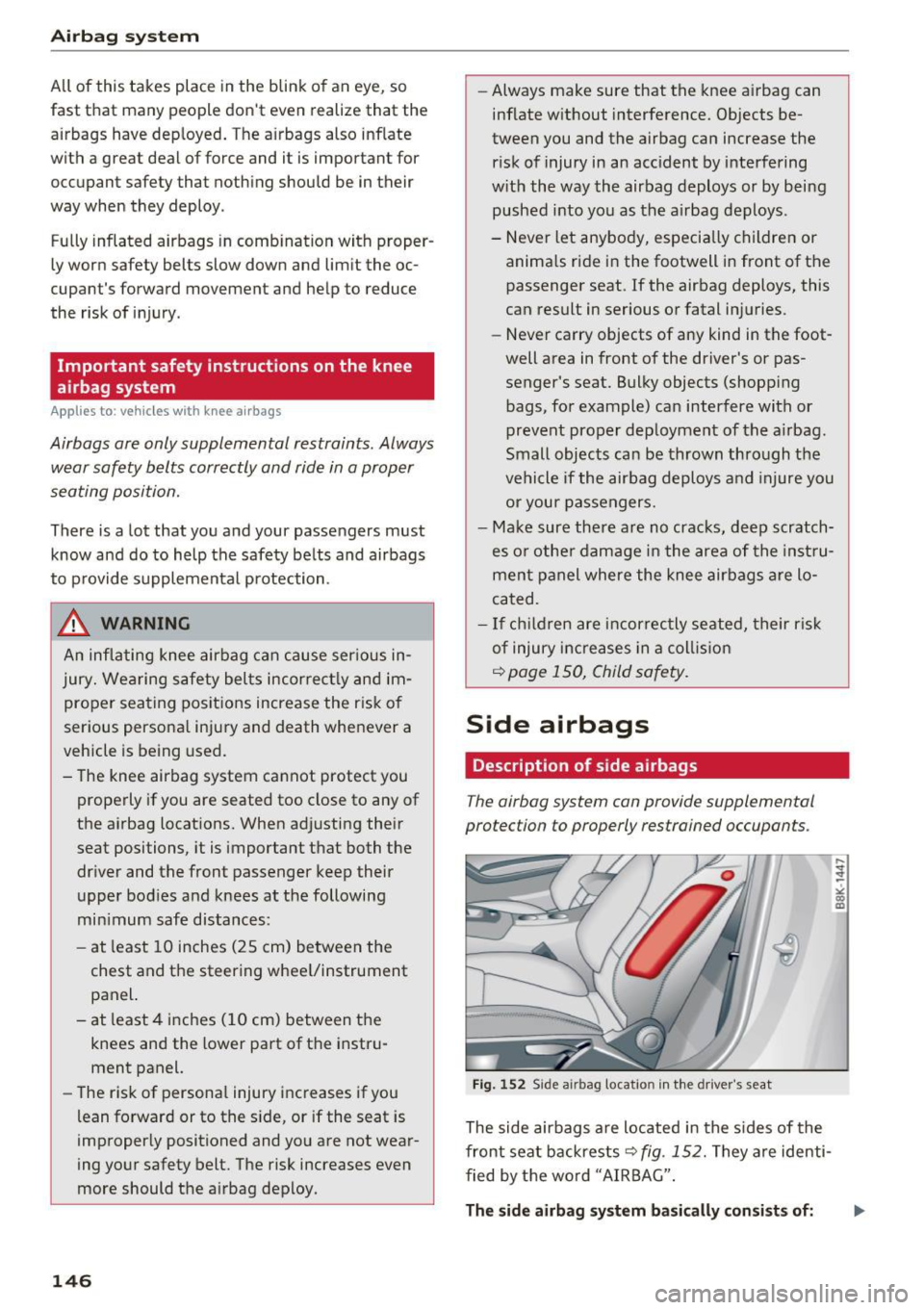
Fig. 152 S ide a irbag locat io n in th e dri ver's seat
The side airbags a re located in the s ides of the
front seat backrests
Q fig . 152. They a re identi
fied by the word "AIRBAG".
The side airbag sy ste m ba sically con sis t s of: IJII>
Page 149 of 266

a:,
a:,
...... N r--. N ...... 0
0
LL 00
-the e lectron ic control modu le and externa l side
impact sensors
- the two side airbags located in the sides o f the
front backrests
- the a irbag warning light in the inst rument cl us-
ter.
The a irbag system is monitored electronically to
make certa in that it is func tioning properly at all
times. Each time you turn on the ignit ion, the air
bag system indicator light will come on for a few
seconds (self diagnostics).
The s ide a irbag system supp lements the safety
be lts and can help to reduce the risk of injury to
the driver's and fron t passenger 's upper torso on
the side of the vehicle that is struck in a side col lision. The airbag d eploys on ly in side impacts
and only when the veh icle acceleration reg istered
by the contro l unit is high enough. If this rate is
below the reference value programmed into the
control un it, the s ide a irbags w ill not be tr ig
gered, even though the car may be badly dam
aged as a resu lt of the collision .
It is not possib le
to define an airbag trigge ring range that w ill cov
e r every possible angle of impact, since the ci r
cumstances wi ll vary considerably between one
collision and another. Important factors include,
for examp le, the nature (hard or soft) of the im
pacting objec t, the ang le of impact, vehicle
speed, etc. ¢
page 148, Impor tant safety in
structions on the side airbag system .
Aside from their normal safety function, safety
be lts work to help keep the driver or front pas
senger in posit ion in the event of a side collision
so that the s ide a irbags can provide protection .
T he airbag system is
not a substitute for your
safety belt. Rather, it is part of the overa ll occu
pant restrain t system in your veh icle. Always re
member that the s ide a irbag system can only
h elp to protect yo u if you a re wearing your safety
be lt and wea ring it properly. This is another rea
son why you s hou ld always wear yo ur safety
be lts, not just bec ause the law req uires yo u to do
so ¢
page 122 , General information.
It is important to remember that wh ile the s up
p lemental s ide a irbag system is designed to re
d uce the likelih ood of serious injur ies, other inju-
Airb ag sys tem
ries, for example, swelling, bru is ing , and minor
abrasions can also be associated wit h deployed
s ide airbags . Remember too, s ide airbags will de
ploy only once and only in certain k inds of acci
den ts -your safety belts are always there to offer
protect io n.
Vehicle damage, repair costs or even the lack of
vehicle damage are not necessar ily an ind ication
of over-sens it ive or fa iled a irbag activation. In
some collisions, both front and side airbags may i nflate. Remember too, that a irbags w ill deploy
only once and only i n certa in kinds of collisions -
you r safety be lts are always there to offer protec
t ion in those accidents in wh ich airbags are no t
s u pposed to deploy or when they have already
deployed .
The side airbag system will not deploy:
-when t he ignit ion is t urned off
- in side collisions whe n the acceleration meas-
ured by the sensor is too low
- in front -end coll is ions
- in rear-end collisions
- in rollovers.
In some types of accidents the fron t air bags and
s ide airbags may be triggered togethe r.
.&, WARNING ~
- Safety belts and the airbag system will only
provide protect ion when occupants are in
the proper seat ing pos ition ¢
page 148 .
-If the ai rbag ind icator light¢ page 17
comes when the veh icle is being used, have
the system inspected immediately by your
author ized Audi dealer. It is possib le that
the airbag will inflate when it is not sup
posed to, or w ill not inflate w hen it should .
147
Page 150 of 266
Airbag syste m
How supplemental side airbags work
Side airbags deploy instantly and can help re
duce the risk of upper torso injuries for occu
pants who are properly restrained .
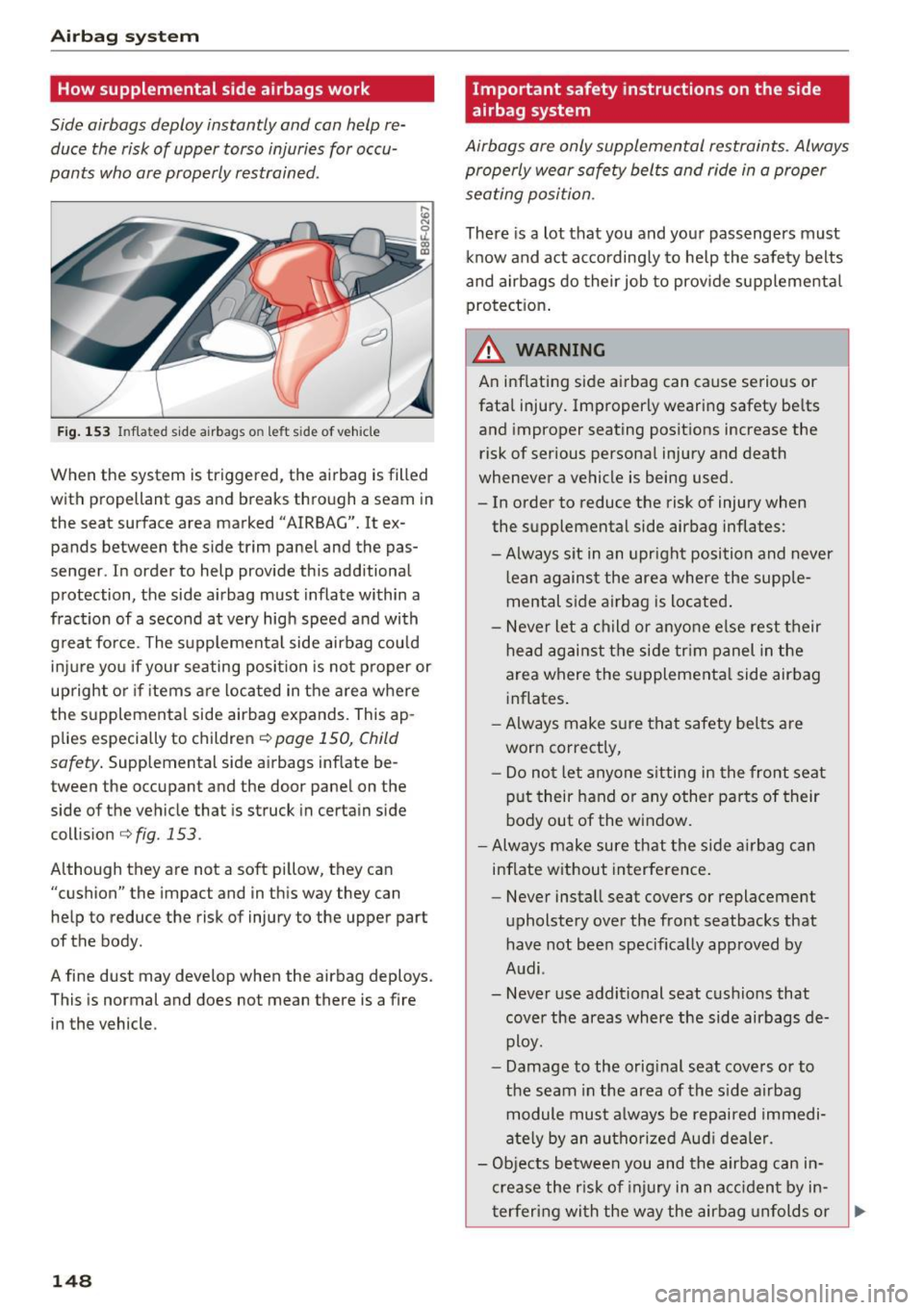
Fig . 1 53 Infla ted side airbags o n lef t s ide of vehicle
When the system is triggered, the airbag is filled
with propellant gas and breaks through a seam in
the seat surface area marked "AIRBAG". It ex
pands between the side trim panel and the pas
senger . In order to help provide this additional
protection, the side airbag must inflate within a
fract ion of a second at very high speed and with
great fo rce. The supplemental side airbag could
inj ure yo u if your seating position is not proper or
upright or if items a re loca ted in the area where
the s upplemental side airbag expands. This ap
plies especially to children¢
page 150, Child
safety .
Supplemental side a irbags inflate be
tween the occupant and the door panel on the
side of the vehicle that is struck in certain side
collis ion ¢
fig. 153 .
Although they are not a soft p illow, they can
"cushion" the impact and in this way they can he lp to reduce the risk of injury to the upper part
of the body .
A fine dust may develop when the airbag deploys.
This is normal and does not mean there is a fire in the vehicle.
148
Important safety instructions on the side
airbag system
Airbags are only supplemental restraints . Always
properly wear safety bel ts and ride in a proper
seating position .
There is a lot that you and your passengers must
k now and act according ly to help the safety belts
and airbags do their job to prov ide supplemental
protect ion .
_& WARNING
An inflating side airbag can cause serious or
fatal injury. Improperly wearing safety be lts
and improper seating posit ions increase the
risk of serious persona l injury and death
whenever a vehicle is being used.
- In order to reduce the risk of injury when
the supplemental side airbag inflates:
- Always s it in an upr ight position and never
l ean agains t the area where the supple
mental s ide airbag is located .
- Never let a child or anyo ne e lse rest their
head against t he side tr im panel in the
area where the s upplementa l side airbag
inflates .
- Always make s ure t hat safety bel ts are
worn correctly,
- Do no t let anyone s itting in the front seat
p ut their hand or any other par ts of their
body out of the window.
- Always make sure that the side a irbag can
inflate w ithout in terference.
- Never install seat covers or replacement
upholstery over the front seatbacks that
have not bee n specifical ly approved by
A udi .
- Never use additional seat cushions that
cover the areas where the side airbags de ploy.
- Damage to the orig inal seat cove rs or to
the seam in the area of the s ide airbag
module must a lways be repaired immedi
ate ly by an autho rized Aud i dealer .
-
-Objects between you and the a irbag can in
crease the r isk of injury in an acc iden t by in
t erfering wi th the way the airbag unfolds or
~
Page 152 of 266
Child safety
Child safety
Important information
Introduction
The rear seat is generally the safest place in a
collision .
The physical principles of what happens when
your vehicle is in a crash apply also to children
¢ page 123, What happens to occupants not
wearing safety belts? .
But unlike adults their
muscles and bones are not fu lly deve loped . In
many respects ch ildren are at greater risk of ser i
ous injury in crashes than adults.
Because children's bodies are not fu lly devel
oped, they requ ire restraint systems especially
des igned for their size, we ight, and body struc
ture. Many countries and all states of the United
S tates and p rovinces of Canada have laws requir
ing the use of approved child restraint systems
for infants and small children.
I n a frontal crash at a speed of 20-35 mph
(30-56 km/h) the forces acting on a 13-pound
(6 kg) infant will be more than 20 times the
weight of the child. This means the weight of th e
child would suddenly be more than 260 pounds
(120 kg) . Under these conditions, only an appro
priate child restraint properly used can reduce
the risk of serious injury. Child restraints must be
used properly to be effective . Used improperly,
they can increase the risk of serious injury in an
accident.
Consult the child safety seat manufacturer's in
structions to be sure the seat is right for your
child's size¢
page 153, Important safety in
structions for using child safety seats.
Please be
sure to read and heed all of the important infor
mation and WARN INGS about ch ild safety, Ad
vanced Airbags, and the installation of child re
straints in this chapter.
There is a lot you need to know about the Ad
vanced Airbags in you r vehicle and how they work
when infants and children in child restraints are
on the front passenger seat . Because of the large
amount of important information, we cannot re
peat it all here. We urge you to read the detailed
150
information in this owner 's manual about airbags
and the Advanced Airbag System in your vehicle
and the very important information about trans
porting children on the front passenger seat.
Please be sure to heed the WARNINGS - they are
extremely important for your safety and the safe
ty of your passengers, especially infants and small chi ldren .
&_ WARNING
-Accident statistics have shown that children
are generally safer in the rear seat area than
in the front seating position. Always restrain
any child age 12 and under in the rear.
- All vehicle occupants and especially children
m ust be restrained properly whenever riding
in a vehicle. An unrestrained or improperly
restrained child cou ld be injured by striking
the interior or by being ejected from the ve hicle during a sudden maneuver or impact.
An unrestrained or improperly restrained
child is also at greater r isk of injury or death
through contact w ith an inflating airbag .
- A suitable ch ild restraint properly installed
and used at one of the rear seating positions
provides the highest degree of protect ion
for infants and small children in most acci
dent sit uat ions.
&_ WARNING
Children on the front seat of any car even with
Advanced Airbags can be ser iously injured or
even killed when an airbag inflates. A child in
a rearward-facing child safety seat installed
on the front passenger seat will be seriously
injured and can be killed if the front airbag in
flates.
- The inflating airbag will hit the ch ild safety
seat or infant carrier with great force and
w ill smash the child safety seat and child
aga inst the backrest, center armrest or
door.
-Always install rearward-facing child safety
seats on the rear seat.
- If you must install a rearward facing child
safety seat on the front passenger seat in