brake AUDI A5 CABRIOLET 2017 Workshop Manual
[x] Cancel search | Manufacturer: AUDI, Model Year: 2017, Model line: A5 CABRIOLET, Model: AUDI A5 CABRIOLET 2017Pages: 266, PDF Size: 66.64 MB
Page 213 of 266

"' "' .... N ,.._ N .... 0
0
u. a:,
Maximum (permissible )
inflat ion pressure
means the maximum cold infla
tion pressure to wh ich a t ire may
be inflated . Also called "maxi
mum inflation pressure ."
Normal occupant weight
means 150 lbs . (68 kilograms)
times the numbe r of occupants
seated in the veh icle up to the to
tal seating capacity of your vehi
c le .
Occupant distribution
means distribution of occupants
in a vehicle .
Outer diameter
means the overall diameter of an
inflated new tire .
Overall width
means the linear dis ta n ce be
tween the exteriors of the side
walls of an inflated tire, inc luding
e levations due to labeling, deco
rations, or protect ive bands or
ribs.
Ply
means a layer of rubber-coated
parallel cords .
Wheels
Production options weight
means the combined weight of
those installed regular production
options weighing over 5 lbs. (2.3 kg) in excess of those standard
items which they replace, not pre
viously considered in curb weight
or accessory weight , including
heavy duty brakes, ride levelers,
heavy duty battery, and special
trim .
Radial ply tire
means a pneumatic tire in which
the ply cords that extend to the
beads are laid at substantia lly 90
degrees to the centerline of the
tread .
Recommended inflation
pressure
see c:::> page 210, Cold tire infla
tion pressure .
Reinforced tire
means a tire designed to operate
at higher loads and at higher in
fl ation pressures than the corre
sponding standard tire. Rein
forced tires may be iden tified as
"X L" "x l" "EXTRA LOA D" or "RF"
, , ,
on the sidewa ll. ..,
211
Page 217 of 266
CX)
CX)
-N ,.... N
-0
0 l,L
CX)
Audi. Otherwise, damage to the vehicle and an accident
could result.
-For technical reasons, it is not
possible to use tires from oth
er vehicles -in some cases,
you cannot even use tires from the same vehicle model.
-Make sure that the tires you
select have enough clearance
to the vehicle. Replacement
tires should not be chosen
simply based on the nominal
size, because tires with a dif
ferent construction can differ
greatly even if they are the
same size. If there is not
enough clearance, the tires or
the vehicle can be damaged
and this can reduce driving
safety and increase the risk of
an accident.
-Only use tires that are more than six years old when absolutely necessary and drive
carefully when doing so.
-If you install wheel covers on
the vehicle, make sure they al low enough air circulation to
cool the brake system. If they
do not, this could increase the risk of an accident.
Wheels
Tire wear/damage
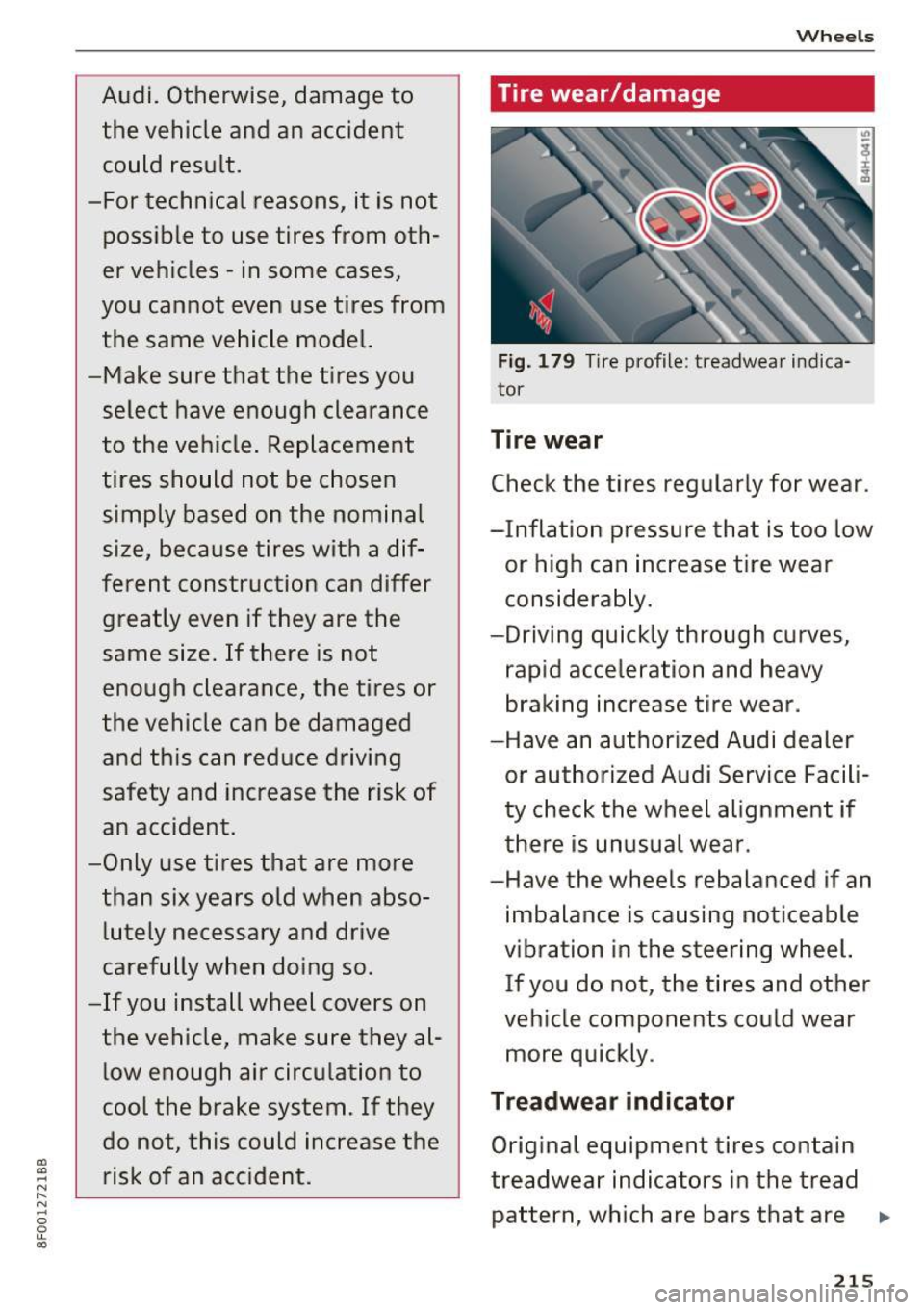
Fig. 179 Tire profi le: treadwear indica
tor
Tire wear
Check the tires regularly for wear.
-Inflation pressure that is too low or high can increase tire wear
considerably.
-Driving quickly through curves,
rapid acceleration and heavy
braking increase tire wear .
-Have an authorized Audi dealer
or authorized Audi Service Facili
ty check the wheel alignment if
there is unusual wear.
-Have the wheels rebalanced if an
imbalance is causing noticeable
vibration in the steering wheel. If you do not, the tires and other
vehicle components could wear
more quickly.
Treadwear indicator
Original equipment tires contain
treadwear indicators in the tread pattern, which are bars that are
215
...
Page 222 of 266
Wheels
passengers that the vehicle is in
tended to carry ("seating capaci
ty") with an assumed weight of 1 SO lbs. (68 kg) for each passen
ger at a designated seating posi
tion and the total weight of any
luggage in the vehicle. If you tow
a trailer, the weight of the trailer hitch and the tongue weight of
the loaded trailer must be includ
ed as part of the vehicle load.
The
Gross Axle Weight Rating
("GAWR") is the maximum load
that can be applied at each of the
vehicle's two axles.
The fact that there is an upper limit to your vehicle's Gross Vehi
cle Weight Rating means that the
total weight of whatever is being
carried in the vehicle (including
the weight of a trailer hitch and
the tongue weight of the loaded
trailer) is limited. The more pas
sengers in the vehicle or passen
gers who are heavier than the
standard weights assumed mean
that less weight can be carried as luggage.
The Gross Vehicle Weight Rating
and the Gross Axle Weight Rating
are listed on the safety compli
ance sticker label located on the
220
driver's side B-pillar ¢ page 217,
fig. 180.
~ WARNING
Overloading a vehicle can cause
loss of vehicle control, a crash
or other accident, serious per
sonal injury, and even death.
-Carrying more weight than your vehicle was designed to carry will prevent the vehicle
from handling properly and
increase the risk of the loss of
vehicle control.
-The brakes on a vehicle that has been overloaded may not
be able to stop the vehicle
within a safe distance.
-Tires on a vehicle that has been overloaded can fail sud
denly, including a blowout and
sudden deflation, causing loss
of control and a crash.
-Always make sure that the to tal load being transported -including the weight of a trail
er hitch and the tongue
weight of a loaded trailer -
does not make the vehicle
heavier than the vehicle's
Gross Vehicle Weight Rating.
Page 230 of 266
Emerg enc y assis ta nc e
Using th e spa re tire (co mpact sp are tire)
The compact spare tire is only intended for emer
genc ies until you can reach a repair shop. Repla ce
it as qu ickly as possible with a standard wheel
and tir e.
There are some restrictions on the use of the
compact spare tire . The compact spare tire has
been designed specifically for yo ur type of vehi
cle. It must not be swapped with a compact
spare tire from another type of vehicle.
Snow chain s
For technica l reasons, the use of snow chains on
the compact spare tire is
not p ermitt ed .
If you do have to dr ive with snow cha ins and a
front tire fails , mo unt the spare wheel with t ire
instead of a rear tire. Install the snow chains on
the rear tire and use it to rep lace the defective
front tire .
A WARNING
-Never use the spare tire if it is damaged or if
it is worn down to the tread wear indicators.
- If the spare tire is more than 6 years o ld,
use it only in an emergency and with ex
treme caution and carefu l dr iving .
- The spare tire is intended on ly for tempora
ry and short-term use. It shou ld be replaced
as soon as possible with the normal wheel
and t ire .
- After mounting the compact spare t ire, the
t ire pressure must be checked as soon as
poss ible. The tire pressure of the compact
spare tire m ust be 4.2 bar; otherwise, you
risk having an accident .
- Do not drive faster than SO mph (80 km/h) .
You risk hav ing an accident.
- Avoid full-throttle accelerat ion, heavy brak
ing, and fast cornering. You risk having an
acc ident.
- Never dr ive using more than one spare
wheel and tire . You risk having an acc ident .
- Normal summer or winter tires must not be mounted on the compact spare wheel rim .
- For technical reasons, the use of tire chains
on the spare tire is not perm itted . If it is
228
necessary to drive with tire chains, the spare
wheel must be mounted on the front axle in
the event of a flat in a rear tire. The newly
ava ilable front wheel must then be installed
in place of the rear wheel w ith the flat tire.
Installing the tire chain before mounting
the wheel and tire is recommended.
- Loose items in the passenger compartment can cause serious personal injury during
ha rd braking or in an accident. Never store
the spare tire or jack and tools in the pas
senger compartment.
Replacing wheels
· Before changing a wheel
Observe the following precautions for your own
and your passenger's safety when changing a wheel.
.,. After you experience a tire failure, pull the car
well away from moving traffic and try to reach
lev el ground before you stop¢ A_.
.,. All passengers should le av e the car and move
to a safe location (for instance, behind the
guardrail) ¢
&_.
.,. Engage the parkin g brake to prevent your vehi
cle from rolling unintentionally ¢
A_.
.,. Move the se lector lever to the P p osition.
.,. If you are towing a trai ler: unhitch the trailer
from your vehicle.
.,. Take the
jack ¢ page 22 7 and the sp ar e ti re
¢ page 227 out of the luggage compartment.
A WARNING
You or your passengers could be injured while
changing a wheel if you do not follow these
safety precaut ions:
- If you have a flat tire, move a safe distance
off the road . Turn off the eng ine, turn the
emergency flashers on and use other warn ing dev ices to alert other motorists.
- Make sure that passengers wait in a safe
place away from the vehicle and well away
from the road and traff ic.
- To help prevent the veh icle from moving
suddenly a nd possibly slipping off the jac k,
Page 231 of 266

always fully set the parking brake and block
the wheel diagonally opposite the wheel be ing changed with the folding chocks or oth
er objects. When one front wheel is lifted
off the ground, placing the Automatic
Transmission in "P" (Park) will
not prevent
the vehicle from moving.
- Before you change a wheel, be sure the
ground is level and firm. If necessary, use a
sturdy board under the jack.
- Always store the vehicle tool kit, the jack*
and the replaced tire in the luggage com
partment
r::!>page 116.
(D Note
If you are changing the wheel on a steep in
cline, use a rock or similar object to block the
opposite wheel to prevent the vehicle from
moving.
(D Tips
Obey all laws.
Changing a wheel
When you change a wheel, follow the sequence
described below step-by-step and in exactly that
order.
1.
Remove the decorative wheel cover* or the
wheel bolt caps*. For more details see also
r::!> page 229, Decorative wheel covers or
r::!> page 230, Wheels with wheel bolt caps .
2. Loosen the wheel bolts~ page 230.
3. Locate the proper mounting point for the
jack and align the jack below that point
r::!> page 2 31.
4. lift the car with the jack r::!> page 231.
5. Remove the wheel with the flat tire and then
in stall the
spare tire r::::> page 232.
6. Tighten all wheel bolts lightly .
7 .
lower the vehicle with the jack.
8 . Use the wheel bolt wrench and
firmly tighten
all wheel bolts in a crisscross pattern
r::!> page 230.
~ 9. Replace the decorative wheel cover* or the ......
~ wheel bolt caps*. N ...... 0
0
LL co
Emergency assistance
A WARNING
-Always read and follow all WARNINGS and in-
formation
r::!> .&. in Raising the vehicle on
page231
and r::::> page233.
After changing a wheel
A wheel change is not complete without the do
ing the following.
.. Always store the vehicle tool kit, the jack*, and
the replaced tire in the luggage compartment
r::::>page 116.
.. Check the tire pressure of the spare tire as soon
as possible .
.. As soon as possible, have the
tightening tor
ques
on all wheel bolts checked with a torque
wrench. The correct tightening torque is 90 ft
lbs .
(120 Nm).
.. Have the flat tire
replaced as soon as possible.
@ Tips
-If you notice that the wheel bolts are cor
roded and difficult to turn while changing a
tire, they should be replaced before you
check the tightening torque.
- Drive at reduced speed until you have the tightening torques checked.
Decorative wheel covers
Applies to: vehicles wit h deco rative w heel covers
The decorative wheel covers must be removed
first to access the wheel bolts.
Fig. 18S C ha nging a wheel: removing the wheel cover
229
Page 233 of 266

Raising the vehicle
The vehicle must be li~ed with the jack first be
fore the wheel can be removed .
Fig. 188 S ill panels: markings
Fig. 189 Sill: posit ion ing th e vehicle jack
The location of the jack point is indicated by an
indentat ion on the underside of the vehicle
c::> fig. 188.
;:;; N 0 u. a, ID
~ Activate the parkin g brake to p reve nt the vehi
cle from roll ing unintentionally.
~ Move the selector lever to position P.
~ Find the m ark in g (imprint) on the sill that is
nearest the wheel that will be changed
<=> fig . 188. Behind the marking, there is a lift
i ng p oint on the sill for the vehicle jack .
~ Turn the ve hicle ja ck located under the lifting
po int on the s ill to ra ise the jack until the jaw
<=> fig. 189 @cove rs the n o tch on the vehicle
Q ,& c::>0 .
~ Align the vehicle jack so the jaw @covers the
notch and the base plate @ is flat on the floor.
The base plate @ must be
vertical under the
lifting point @.
~ Install the rod on the vehicle jack: Insert the
; rod into the opening on the handwheel. Turn
~ the rod left or right to secure it. N .... 0
0
LL co
Emergen cy a ssis tanc e
~ Continue ra ising the jack with t he rod unti l the
wheel lifts off the ground slightly .
Pos ition the vehicle jack
only under the des igna t
ed lift ing points on the sill
c::> fig. 188. There is ex
actly
one l ocation for each wheel. The jack must
not be posit ioned at any ot her location
c::> &<=>CD .
Soft ground under the jack can cause the vehicle
to s lip off the jack. A lways p lace the jack on firm
ground . Use a f lat, stab le support if necessary .
Use a non-s lip surface such as a rubber mat on a
slipp ery s urface such as tile.
_& WARNING
--You or your passengers could be injured
while changing a wheel if you do not follow
these safety precautions:
- Position the vehicle jack only at t he des ig
nated lifting points and align the jack .
Otherwise, the vehicle jack could slip and
cause an injury if it does not have suffi
c ient hold on the vehicle.
- A soft or unstable surface under the jack
may cause the veh icle to slip off the jack.
Always provide a firm base for the jack on
the ground . If necessary, use a sturdy
board unde r the jack .
- On hard, slippery surface (such as t iles)
use a rubber mat or similar to prevent the
jack from slipping.
- To help prevent injury to yourse lf and your
passengers:
- Do no t raise the veh icle until you are sure
the jack is securely engaged.
- Passengers m ust not remai n in the vehicle
when it is jacked up.
- Make su re tha t passengers wait in a safe
place away from the vehicle and well away
from the road and traffic.
- Make s ure jack position is correct, adjus t
as necessary and t hen continue to raise
the jack .
(D Note
Do not lift the vehicle by the s ill. Pos ition the
vehicle j ack only at the des ignated lift ing
231
Page 234 of 266

Emergency assistance
points on the sill. Otherwise, your vehicle will
be damaged .
Taking the wheel off/installing the spare
tire
Follow these instructions step-by-step for chang
ing the wheel .
Fig. 190 Cha nging a wheel : usin g the screwdr iver handle
(with the b lade removed) to turn th e bo lts
Fig. 191 Chan gin g a wheel: align ment pin inside the top
h ole
After you have loosened all wheel bolts and
raised the vehicle off the ground, remove and re
p lac e the whee l as follows:
Removing the wheel
"' Remove the topmost wheel bolt completely
with the
hexagonal socket in the screwdriver
handle (vehicle tool kit)
¢fig. 190 and set it
aside on a
clean surface.
"' Screw the threaded end of the
alignment pin
from the tool kit hand -tight into the empty bolt
hole
r=;, fig . 191 .
"'Then remove the other wheel bo lts as described
above.
"' Take off the wheel leaving the alignment pin in
the bolt hole
r=;, (D.
232
Putting on the spare tire
"'Push the spare tire over the alignment pin.
"' Scr ew on the whee l bolts and tighten them
slightly using the hexagona l socket.
"' Remove the alignment pin and insert and tight
en the remaining wheel bolt slightly like the
rest.
"' Turn the jack handle counter-clockw ise to lower
the vehicle until the jack is fully released .
"' Use the wheel bolt wrench to tighten a ll wheel
bolts firmly ¢
page 230. Tighten them in a
crisscross pattern,
from one bolt to the (ap
proximate ly) opposite one, to keep the whee l
centered.
"' Perform the steps required after changing the
wheel
r=;, page 229, After changing a wheel .
The hexagonal socket makes it easier to remove
the wheel bolts from the rim. Care should be tak
en when removing the reversible blade.
(D Note
When removing or installing the wheel, the
rim could hit the brake rotor and damage the
rotor. Work carefully and have a second per
son to help you.
(D Tips
-When mounting tires with unidirectional
tread design
make sure the tread pattern is
pointed the right way¢
page 233.
-The wheel bolts should be clean and easy to
turn. Check for dirt and corrosion on the
mating surfaces of both the wheel and the
hub. Remove all dirt from these surfaces be
fore remounting the wheel.
- Do not use the hexagonal socket in the
screwdriver handle to loosen or tighten the
wheel bolts .
Page 237 of 266

a:,
a:,
...... N
" N ...... 0
0
LL co
Fuse panel @ (black)
No . Consumer
1 Dynamic steering
2 Electronic Stabilization Cont rol (mod ule)
A/C system press ure sensor, elect rome -
chan ica l park ing brake , Homelink, auto-
3 mat
ic dimming interior rear v iew mirror,
air q uality/outside a ir sensor, Electronic
Stabili zation Cont rol (button)
5 Sound actuator
6 Headlight range control/
headlight (cor-
ne ring light)
7 Headlight (cornering light)
Con trol modules (e lectrom echan ica l par k-
8 ing brake, s hock ab so rbe r, q uattro s port),
DCDC converter
9 Adapt ive cru ise control
1 0 Shift ga te/clu tch se nsor
1 1 Side assist
12 Headlight range control
, p arkin g sys tem
13 Airbag
14 Rear wiper (a
llroad)
1 5 Auxiliary fuse (instrument panel)
1 6 Auxiliary fuse terminal 15 (engine area
)
Fuse panel@ (brown)
No . Consumer
2 Brake light senso r
3 Fuel pump
4 Clutch sensor
5
Left seat heating w it h /w it h out seat venti-
l a tion
6 Electronic Stabili zation Cont rol (e lectr ic)
7 Ho rn
8
Front left door (window regulator, central
locki ng, mirror, switch, lig hting)
9 Windshield wiper moto r
10 Electronic Stabilization Cont rol (va lves)
Fuses and bulbs
No . Consumer
Two-door mode ls: rear left w indow reg ula-
1 1 tor; Four-door mode
ls: rear left door (w in-
dow regu lator, central locking, switch,
li ght ing)
1 2 Rain and
light sensor
Fuse panel © (red)
No . Consumer
3 Lumbar support
4 Dynam ic steering
5 Inter
io r ligh ting ( Cabr io let)
6 W
indshie ld washer system, headlight
wash er system
7 Vehicle e lectrica l system control module 1
8 Ve hicl e e lec trica l sy stem con trol module 1
9
Left rear window regu lator motor (Cabr io-
l et)/s unroof
1 0 Vehicle e lec tric al system con trol module 1
1 1 R
ight rear window regulator (Cabriolet)/
su n shade motor
1 2 A
nti- theft alarm warning system
Right cockpit fuse assignment
Fig. 194 R ig h t cockp it : f use pane l wit h plast ic cl ip
235
Page 238 of 266

Fuses and bulbs
Fuse panel @ (black)
No. Consumer
5 Steering column switch module
7 Terminal 15 diagnostic connector
8 Gateway (Databus diagnostic interface)
9 Supplementary heater
Fuse panel @ (brown)
No. Consumer
1 CD/DVD player
2 Wi-Fi
3 MMI/Radio
4 Instrument cluster
5
Gateway (instrument cluster control mod-
ule)
6 Ignition lock
7 Light switch
8 Climate control system blower
9 Steering column lock
10 Climate control system
11 Terminal 30 diagnostic connector
12 Steering column switch module
236
Right luggage compartment fuse
assignment
Fig. 195 Right lugg age compartment: fuse panel wit h
plastic cl ip
Fuse panel @ (black)
No. Consumer
2 Rear window heater (Cabriolet)
3 Power top latch (Cabriolet)
4 Power top hydraulics (Cabriolet)
Fuse panel @ (black)
No. Consumer
Luggage compartment lid control module
1 (allroad)/Power top control module (Cab- riolet)
2 Retractable rear
spoiler
(RS 5 Coupe)
5 Electromechanical
parking brake
6 Electronic damping control
7 Electromechan ical park ing brake
8 Rear exterior lighting
9 quattro sport
10 Rear exterior lighting
11 Central
locking
12 Terminal 30
...
Page 239 of 266
a:,
a:,
...... N r--. N ...... 0
0
LL 00
Fuse panel© (brown)
No . Consumer
1 Luggage compartment lid control module
(allroad)
2 12-volt socket, cigarette lighter
3 DCDC converter path 1
4 DCDC converter path 2, sound amplifier,
radio
6 Right upper cabin heating (Cabriolet)
7 Elect romechan ical park ing brake
9
Right front door (window regulator, cen-
tral locking, m irror, switch, lighting)
10 Left
upper cabin heating (Cabriolet)
Two-door models: rear r ight window regu-
11 lator; Four-door models:
rear right door
(w indow regulator, central locking, switch,
lighting)
12 Cell phone prep
Fuse panel ® (black )
No . Consumer
1 Right front seat
heating
4 MMI
5 Radio
6 Rear view camera
7 Rear window heater (allroad)
8 Rear Seat Entertainment
Bulbs
Replacing bulbs
For your safety, we recommend that you have
your authorized Audi dealer replace any bulbs for
you .
It is becoming increasingly more and more diffi
cult to replace vehicle light bulbs since in many
cases, other parts of the car must first be re
moved before you are able to get to the bu lb.
This applies especially to the light bulbs in the
front of your car which you can only reach
through the eng ine compartment.
Sheet metal and bulb ho lders can have sharp
edges that can cause serious cuts, parts must be
Fuses and bulbs
correctly taken apart and then properly put back
together to help prevent breakage of parts and
long term damage from water that can enter
hous ings that have not been properly resealed.
For your sa fety, we recommend that you have
your authorized Audi dea ler replace any bulbs for
you, since your dealer has the proper tools, the
correct bulbs and the expertise.
Gas discharge lamps (Xenon lights)*:
Due to the high e lectr ica l voltage, have the bulbs
replaced by a qualified technician. Headlights
with Xenon light are identified by the high volt
age sticker .
A WARNING
Changing Xenon lamps without the necessary
equipment can cause serious personal injury.
- Bulbs are pressurized and can explode when
being changed . Potential risk of injury!
- On vehicles equipped with gas discharge
bu lbs (Xenon light)* life-threatening injuries
can resu lt from improper handling of the
high -vo ltage portions of such lamps!
- Only your authorized Audi dealer or quali
fied workshop shou ld change the bulbs in
gas discharge lamps. There are parts w ith
sharp edges on the openings and on the bulb holders that can cause serious cuts . If
you are uncerta in about what to do, have
the wor k performed by an authorized Audi
dealer or qualified workshop. Serious per
sonal injury may result from improperly per
formed work.
(D Tips
- If you st ill prefer to replace the light bulbs
yourself, be awa re that the engine compa rt
ment is a hazardous area to work
inq page 193 q &,.
- It is best to ask your authorized Audi dealer
whenever you want to change a bulb.
237