oil AUDI A5 COUPE 2011 User Guide
[x] Cancel search | Manufacturer: AUDI, Model Year: 2011, Model line: A5 COUPE, Model: AUDI A5 COUPE 2011Pages: 362, PDF Size: 84.88 MB
Page 141 of 362
_________________________________________________ A_ u_d _ i_ s_id _ e_ a_s _s_ i_s _t __ _
Deactivating
- Pre ss th e b utton again . Th e ind icator light on the button
goes o ut.
The system works at speeds faster than 19 mph (30 km/h) .
& WARNING
• Improper reliance on the side assist system can cause collisions
and seriou s per sonal injury:
- Never rely only on side assist when changing lanes.
- Alway s check rear view mirrors to make sure that it is safe to
change lanes.
• Side assist cannot detect all vehicles under all condition s
danger of accident!
• Side a ssist cannot detect vehicle s
in time to alert you when
they approach from behind at very high speed , or fall drop bac;k
very quickly .
• The radar sensor's
vision can be reduced o r entirely blocked by
rain, snow, and heavy spray . Thi s can result in side a ssist not
adequately detecting vehicles o r, in some cases , not detecting
them at all. Always keep an eye on the direction you are traveling
and the relevant area around the vehicle.
• Plea se note that side assi st indi cates there are approaching
veh icles, or vehicles in your blind spot, only after your vehicle has
reached a driving speed of at lea st 19 mph (30 km/h).
• Side assist signal does not work around tight corners (turning
radius le ss than 328 feet or 100 m).
• Side assist is no replacement for the driver's full attention. The
driver alone is respon sible for lane changes and similar driving
maneuvers. Always keep an eye on the direction you are traveling
and the relevant area around the vehicle .
Controls and equip
ment Safety first
0 Note
• T
o ens ure t hat you do not adve rsely affec t side assist, do not blo ck
the area on the rear bumper where the radar sensors are located with
foreign obje cts (s uch as stickers or bicy cle ra cks).
• Make s ure that the s ignal light on the outside mirror is not
blo cked by st ickers or o ther ite ms.
W Tips
• Side assist a utoma tically deact iva tes if it de tects that the rada r
sensors are blocked=>
page 145. The indicator light on the button
goe s out.
• Th e area on the bumpe r w here the ra dar sensors are located must
c o nsistent ly remain free of snow, i ce, a nd heavy soiling so tha t side
assist can funct ion p roper ly. Follow the add itiona l notes on
=>
page 1 45 .
• Additiona l tint ing on the front si de windows can make it ha rder to
see and co rrec tly un ders t and t he sig nal ligh t on the outs ide m irro r.
• F or Declaration of Compliance to United States FC C and Industry
Cana da regulat ions=>
pag e 343. •
Applies to veh icl es: w ith s ide ass ist
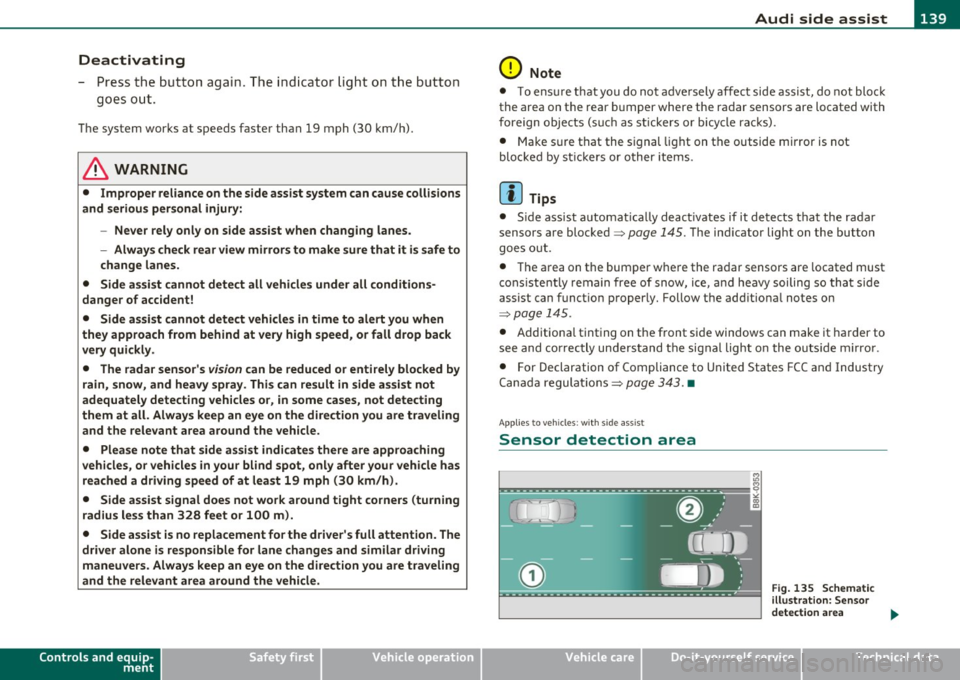
Sensor detection area
Vehicle care
Fig . 135 Schem atic
ill ustration: Se nsor
detectio n area
~
Technical data
Page 242 of 362
Intelligent technology
'-------------------------------------------------
Corrosion
T he re may be a te ndency fo r d irt to build u p on the bra ke pads and
co rrosion to form on the d iscs if the car is not dr iven reg ularly o r only
for short trips with litt le use of the bra kes .
If the brakes a re not used freq uen tly, or if co rrosion has formed o n
the discs, it is advisable to clean off the pads and discs by braking
fir mly a few times from a mode rat ely h igh spee d~ & .
Faults in the brake system
If yo u sh ou ld noti ce a sudden increase in b rake peda l trave l, then one
of the two brake circu its may have failed~& .
Low brake fluid level
Ma lfunctions can occ ur in t he brake system if the brake fluid level is
t oo low. The bra ke f lu id level is moni tore d elec tron ically.
Brake lin ing wear status
Brake lin ing wear may be checked by v isua l inspect ion of the condi
tion of the brake pads throu gh the open ings in the whee l.
If neces
sary, the whe el may be removed fo r thi s insp ection~
page 3 16,
"Changing a w hee l".
& WARNING
• You should perform braking maneuvers for the purpose of
cleaning the brake system only if road conditions permit. Other
road users must not be put at risk - you may cau se an accident!
• Before descending a steep grade, reduce speed and shift trans
mission into a lower gear or lower driving range. Do not ride the
brakes or hold the pedal down too long or too often . This could
cause the brakes to get hot and diminish braking efficiency.
• Do not "ride the brakes " by resting your foot on the pedal when
you do not intend to brake . This may cause the brakes to overheat ,
premature wear and increased stopping distance.
• Under certain climatic and operating condition s such as
passing through water , driving in heavy rain or after washing the
& WARNING (co ntinued )
vehicle, the effectiveness of the brakes can be reduced . In winter,
ice can ac cumulate on the brake pads, linings, dis cs and drums.
Carefully apply brakes for a test. Brakes will dry and ice coatings
will be cleaned off after a few careful brake appli cations.
• Driving for an extended period of time on salt-covered roads
without u sing your brakes can also affect braking efficiency . Clean
off accumulated salt coating from b rake discs and pads with a few
careful brake applic ations.
• If you damage the front spoiler, or if you install a different
spoiler, be sure the air flow to the front brakes i s not obstructed .
Otherwise the brake system could overheat reducing the effective
ness of the entire brake system.
• Failure of one brake circuit will impair the braking capability
resulting in an increased stopping di stance. Avoid driving the
vehicle and have it towed to the nearest authorized Audi dealer or
qualified workshop.
n
Brake booster
The b roke boost er odds extra broking po wer.
The bra ke boos ter wor ks wi th v acuum pressure whi ch is crea ted o nly
when the eng ine is ru nning~ &.
& WARNING
• Never let the vehicle roll to a stop with the engine shut off.
• If the brake booster is not working, for example when towing
your vehicle , or because the brake booster has somehow been
damaged, the brake pedal mu st be pressed considerably harder to
make up for the lack of booster assistance. •
Page 249 of 362
____________________________________________ D_ r_ i_ v _i_,ng and environment
New brake pads have to be "b urn ished in" before they have opt imal
grab ~& -
Dur ing the break-in period, you sho uld avoid putti ng severe loads on
the brakes. Severe loads include, for example, sud den ha rd brak ing,
i n part icula r a t very high s peed s or, for e xam ple, on moun tain passes.
& WARNING
New brake pads don't have the best stopping power and must be
" broken-in " during the initial 100 to 150 miles (150 to 200 kilo
meters ) of normal city driving . You can compensate for this by
p ressing the brake pedal more firmly . This also applies later when
new pad s are installed .•
Avoid damaging the vehicle
Whe n yo u are d riving on poor ro ad s, or ove r curbs, steep r amps, etc.,
ma ke ce rtain that low -lying parts such as spoilers and exhaust system
p arts do not bo ttom out and ge t damage d.
Th is is espec ia lly true for veh icles with low-slung chass is (sports
chassis)* and fully loaded vehicles .
a
Driving through water on roads
Note the fo llowing to avoid vehicle damage w hen drivi ng thro ugh
water, fo r examp le on flooded roa ds:
• The wate r must not be any h igher than the bottom of the vehicle
b ody .
• Do not dr ive faster tha n walk ing spee d.
Controls and equip
ment Safety first Vehicle operation
& WARNING
After driving through water, mud
, slush, etc ., the brakes may be
slow to take effect because of wet brake rotors and pads. Dry the
brakes first by braking carefully to restore the full braking effect .
0 Note
Vehicle components such as the engin e, tra nsmission, sus pension or
elect rical system can be severe ly damaged by driv in g thro ugh water .
[ i ] Tips
• Check the depth of t he wate r before driving throug h it.
• Do not stop the vehicle, drive in reverse or switch the e ng ine off
w hen driving throug h wate r.
• Keep in m ind that o ncoming vehicles may c reate waves that raise
t he water leve l and make it too deep fo r yo ur vehicle to d rive throug h
safely.
• Avo id drivi ng t hroug h sa lt w at er bec ause it can cause cor rosio n.
Catalytic converter
It is very imp ortant that your emission contr ol syst em
(ca ta lytic convert er) is functioning pro p erly to ensur e
t h at your vehic le is runnin g in an environment ally s oun d
man ner .
- Always use lead -f re e gasoli ne~ p age 269 , "Fuel sup ply" .
- Never r un th e t ank down a ll the way to em pt y.
- Neve r pu t too muc h mo to r oil i n y our eng ine ~
page 279,
"Add ing eng ine oil
'l!:r." .
- Never try to p ush- or tow-start your veh icle.
Vehicle care Do-it-yourself service Technical data
Page 250 of 362
Driving and environment
The catalytic converter is an effic ient ''clean-up" dev ice built into the
ex hau st system of the ve hicle. The c ata ly tic converter bu rns many of
the pollutants in the exhaust gas before they are released into the
atmosphere.
T he exclusive use of unleaded fuel is c rit ical ly import ant for the life of
the cata lytic converter and proper funct ioning of the eng ine.
& WARNING
• Do not park or operate the vehicle in areas where the hot
e xhaust system may come in contact with dry grass, brush, fuel
spill or other material which can cause a fi re.
• Do not apply additional undercoating or rustproofing on or
near the e xhaust man ifold , exhaust pipes , catalytic converte r or
heat shields . During driving, the substance used for undercoating
could overheat and cause a fire.
0 Note
• Be aware that j ust one tank filling with leaded fuel will already
seriously degrade the performance of the ca talytic conve rter.
• Do not exceed the correct engine oil level =>
page 279.
• Do not dr ive until the fuel tan k becomes complete ly empty . The
engine could misfire . Unburned fuel cou ld also get into the exha ust
system and th is cou ld cause the catalyt ic converter to overheat .
• Do not tu rn o ff the igni tion while t he vehi cle is moving.
• Do not contin ue to operate your vehicle under these conditions, as
otherwi se fuel c an reac h the c atal ytic conve rter. This co uld res ult in
overheat ing of the converter, requir ing its replacement.
• T o ass ure eff icient ope ra ti on of the Emiss ion Cont rol System:
- Have your vehicle maintained properly and in accordance with
the se rvice recommendations in your Wa rranty
& M aintenance
booklet. -
Lack of proper maintenance as well as improper use of the
veh icle w ill impair the f unc tion of the emiss io n con trol sys te m an d
co uld lead to damage.
<£> For the sake of the environment
Even when the Emiss ion Control System is operating p roperly, the
exhaust gas can have a s ulfur -like exhaust gas smell under some
operat ing states . This depends on the sulfur content of the fu el being
used. Using a different brand of fuel may help, or filling the tank with
lead -free supe r grade gasoline. •
Operate your vehicle economically
and minimize pollution
General
Your personal style of d riving will det ermine the economy
of your vehicle, as well as exhaust and noise le vels.
Fuel eco nomy, e nvir onmenta l impa ct, and wea r o n your eng ine ,
brakes and tires large ly depend on three factors:
• your persona l driving style
• operat ing cond itions
• t echni cal lim itat io ns
If you anticipate what you need to do next and drive economica lly,
you c an easily cut yo ur fuel consum ptio n by 10- 15 pe rcen t. T his
sect io n w ill give you some tips on how you can he lp the env ironment
and your pocket book.
[ i ] Tips
Th e consumption estimates as pub lished by ENV IRONMENTAL
PROTECTIO N AG ENCY ( EPA) and Transport Ca nada may not co rre
spond to your act ua l cons umption on the road, which will vary
Page 251 of 362
Driving and environment
------------------------------------------------'
depending upon vehicle load and speed, road and weather conditions,
trip length, etc. •
Drive smoothly and keep a lookout ahead
Vehicles use the most fuel when they are accelerating .
-Avoid unnecessary accelerating and braking.
Vehicles use the most fuel when they are accelerating. If you antici
pate what is going to happen next, you will need to brake less and,
thus, accelerate less. Let the vehicle coast whenever possible - for
example when you see that the next traffic light is red.
Avoid full throttle
Driving at moderate speeds saves fuel and improves your
mileage.
- Try and keep well below your car's maximum speed.
Accelerating gently reduces fuel consumption, engine wear, and does
not disturb the environment .
Fuel consumption, exhaust emissions and eng ine noise increase
disproportionately at high speeds . If you drive at approximately three
quarters of top speed, fuel consumption will be reduced by one half.
Never drive faster than the posted speed limit and weather condi
tions permit. •
Reducin~ unnecessary idling
Even when your car is just idling it burns up fuel.
-Shut the engine off when you are not driving the vehic le .
- Do not warm up the vehicle by letting the engine run at
idle.
Controls and equip ment Safety first Vehicle operation It makes sense to shut off the engine in traffic jams, when waiting for
trains to pass at railroad crossings, or at traffic lights that have long
waits on red. Turning the engine off for just 30 -40 seconds saves
more fuel than is burned starting the engine again .
It takes a long t ime for the engine to warm up fully when it is running
at idle. However, wear and noxious emissions are especia lly high
when the eng ine is warming up. So you should dr ive away as soon as
you start the engine and avoid running at high rpms while the engine
is still warming up.
0 Note
Do not leave engine idling unattended after starting . If warning
lights should come on to indicate improper operation, they would go
unheeded. Extended idling also produces heat, which could result in
overheat ing or other damage to the vehicle or other property. •
Regular maintenance
A badly tuned engine unnecessarily wastes a lot of fuel .
- Have your vehic le serviced at regular intervals .
By having your vehicle regularly serviced by an authorized Audi dealer
helps to ensure that it runs properly and economically . The condit ion
of your vehicle not on ly affects its safety and ability to hold its val ue,
it also affects fuel consumption.
Check your oil each time you fill your tank.
Th e amount of oil used is related to engine load and speed.
It is normal for the oil consumption of a new engine to reach its
lowest value after a certain mileage has been driven.
You must dr ive your veh icle about 3,000 miles (5,000 kilometers)
before you can properly assess oi l consumption .
Thi s also applies to fuel consumption and eng ine output.
Vehicle care Do-it-yourself service Technical data
Page 259 of 362

____________________________________________ C_l_e _a_ n_ i n--= g=--- a_n_ d----' p,__ r_o _t_ e_ c_ t_ i _o_ n __ lffll
Under certain circumstances, weekly washing may be necessary .
Under other conditions, a monthly washing and waxing may be
adequate.
After the winter, the underside of the vehicle shou ld be thoroughly
washed, p referably in a profess ional car wash.
& WARNING
Always read and heed all WARNINGS and other information
~page 256. •
Automatic car wash
The vehicle can be washed in almost any modern auto
matic car wash.
Th e vehicle paint is so durable that the vehicle can normally be
washed without problems in an automatic car wash . However, the
effect on the paint depends to a lar ge exten t on the design of the
facility, the filtering of the wash water, the type of wash and care material, etc. If the paint has a dull appearance after going through
the car wash or is scratched, bring this to the attention of the oper
ator immediately . If necessary, use a different car wash.
Before going thro ugh a car wash, be sure to take the usual precau
tions such as closing the windows and the roof. Factory installed
antennas must not be removed.
If you have installed additional accessories on the vehicle -such as
spoilers, roof rack, etc. - it is best to ask the car wash operator if these
should be removed.
& WARNING
Always read and heed all WARNINGS and other information
~page 256. •
Safety first
Washing the vehicle by hand
A lot of water is needed when washing a vehicle by hand.
-Before you star t washing, make sure you have read and
understood the WARNINGS~
& in "General informa
tion" on
page 256.
- First soak all dried dirt until it is soft, then rinse it off .
- As you clean your vehicle, start with the roof and work your
way down to the bottom, using a sponge, a sponge glove
or a clean brush.
- Rinse the sponge or the sponge glove often, flush ing it
clean each time .
- Use special car shampoo only for very persistent dirt.
- Rinse the car thoroughly with water.
- Use a chamois leather to gently wipe the exterior dry.
Use a separate sponge for cleaning the wheels, door sills and other
regions exposed to road dirt. In this way, you will not scratch the
paint with coa rse particles imbedded in the sponge the next time you
wash the car.
& WARNING
• Do not clean the underside of the chassis, fenders, wheel
covers, or other hard to reach parts without protecting your hands
and arms. You may cut yourself on sharp-edged metal parts.
• Always read and heed all WARNINGS and other information
~page 256. _..
Vehicle care Technical data
Page 262 of 362
-~_C_ le_ a_n_ i_ n_ g=- a_ n_d__. p_ ro_ t_e _c_ t_ i_o _n ___________________________________________ _
Plastic and vinyl
Plastic needs special care.
Use a clean, damp cloth or sponge to remove dust and light surface
dirt. For other soil, use a lukewarm all-purpose cleaning solution or a
mild saddle soap for vinyl trim . Remove water spots and traces of
soap with a clean, damp cloth or sponge. Use a clean, soft cloth to rub
dry.
Grease, tar or oil stains can be removed with a clean cloth or sponge
soaked with all-purpose cleaner or with a solvent designed especially
to clean vinyl.
Occasionally apply a colorless vinyl or leather preservative to retain
the material's luster and pliability.
& WARNING
Always read and heed all WARNINGS and other information
:::> page 256. •
Aluminum trim
Use only neutral-pH products to remove spots and deposits from
aluminum surfaces. Chrome care products and alkaline cleaners will
attack aluminum surfaces and can damage them over time .
& WARNING
Always read and heed all WARNINGS and other information
=>page 256. •
Touch-up paint
Minor paint damages should be touched up immediately.
- Use either a touch-up paint stick or spray paint to cover
minor scratches and nicks.
Your authorized Audi dealer has touch-up paint for minor scratches
and stone chips. Scratches should be touched up soon after they
occur to prevent corrosion.
If a spot starts to rust, however, a simple touch-up job will not be
enough. The affected surface must be sanded smooth and coated
with an anti-rust primer before the painted finish can be restored.
The number for the original vehicle paint can be found on the vehicle identification label=>
page 336.
& WARNING
Always read and heed all WARNINGS and other information
=>page 256. •
Windows
Clear vision to all sides.
Clean all windows regularly to remove road film and car wash
wax buildup.
- Remove snow from windows using a brush.
- Use a plastic ice scraper to remove ice from windows and
mirrors.
- Remove other residue on the windows with a spray-on glass cleaner.
- Wipe the windows dry with a clean piece of cloth or
kitchen paper towel.
Page 263 of 362
____________________________________________ C_l_e _a_ n_ i n--= g=--- a_n_ d----' p,__ r_o _t_ e_ c_ t_ i _o_ n __ _
The best way to remove snow from windows and mirrors is to use a
brush. Use a non-abrasive
plastic ice scraper -better still, a spray
deicer -to remove
ice from windows and mirrors.
Th e windows must not be cleaned with insect remover or wax since
these can interfere with the function of the windshie ld wipe r blades
(chatter).
Oil , grease, or silicone residue can be removed with
glass cleaner or
silicone remover. However, wax residue requires the use of a specially
formulated solvent . P lease contact your authorized Audi dea le r for
advice on safe products for wax removal.
Windows should also be cleaned on the inside at regular intervals .
Never dry windows w ith the same chamo is that you use to dry painted
surfaces. Wax residue on the chamois can impair vision through the
windows.
& WARNING
• Always read and heed all WARNINGS and other information
=> page 256.
• The windshield must not be treated with water-repellent
materials. They can increase glare under poor visibility conditions
such as wetness, darkness, or when the sun is low on the horizon.
In addition, they can cause the windshield wipers to chatter.
0 Note
• Never use warm or hot water to remove snow and ice from
windows and mir rors . This could cause the glass to crack.
• To prevent damage to the wires of the rear defogger, do not place
any adhesive stickers on the inside of the rear window over the wires.
• T o help prevent dirt from scratching the window, a lways scrape in
a forward direction -pushing the scraper away from you -never back
and forth.
• Water leaking from the inside of the rear windows may damage
sensitive e lectrica l components located either under the rear parce l
Safety first
shelf or in the rear trunk area. Always ensure that water never leaks
t hrough the body section of the vehicle . You can do this by using
waterproof protection over the vehicle's electrical components (e .g.
when installing window tinting).
• Damage or malfunct ion of electrical components due to water
damage or any other outside influence is not covered by the Audi New
Vehicle Limited Warranty. See your Warranty
& Ma intenance booklet
for additional details about your warranty .•
Weatherstrips
Complete car care includes the weatherstrips as well.
-Apply a suitable rubber conditioner to the weatherstrips
from time to t ime.
To be able seal properly, the weatherstrips around the hood, doors,
rear lid, etc. must remain pliable. Spray the weatherstrips with sili
cone or coat them with talcum powder or glycerin to reta in the flexi
bility of the rubber and to protect them against freezing in the
wi nter.
& WARNING
Always read and heed all WARNINGS and other information
=> page 256.
[ i ] Tips
Keep silicone sprays off the windshield to avoid wiper smear in rain .•
Cast (Light) alloy wheels
Cast (light) alloy wheels require special care.
- Wash the wheels with a sponge or hose brush every other
week. _,.
Vehicle care Technical data
Page 266 of 362
-~_C_ le_ a_n_ i_ n_ g=- a_ n_d___. p_ro _t_e _c_ t_ i_o _n ___________________________________________ _
Normal surface stains can be cleaned using a comme rcially avai lab le
fo am cle aner. Spread t he fo am o n th e sur fa ce of the fabr ic wit h a soft
sponge and work it in gently . Do not saturate the fabr ic . T hen pat the
foam dry using absorbent, dry cloths (e .g . m icrofiber cloth) a nd
vacuum it afte r it has dr ied com plete ly.
Cleaning stains
Sta ins caused by beverages (e .g . coffee, fruit juice, etc .) can be
t re ate d wi th a mild detergen t sol utio n. Apply the dete rgent solu tion
w ith a s ponge . In the case o f stubbo rn stains, a detergent pas te ca n
be applied directly to the stain an d wo rked into the fabric . Afte r
wa rds, use copious amo unts o f clean water to remove the rema ining
detergent . App ly t he water with a damp cloth o r sponge an d pat the
f abr ic dr y wi th a n absorbe nt, dr y cloth .
Sta ins from choco late or makeup sho uld have detergent paste
r u bbed into the m. Afte rw ards, remove the so ap wi th w ate r (dam p
sponge) .
Alcoho l can be used to treat stains from grease, oil, lipstic k or a ba ll
point pen . M elte d gre as e o r dye mus t be pa tted off using abso rbe nt
material. It may be necessary to ret reat t he a reas with detergent
p ast e and water.
In the case of ge nera l soiling o f the upholste ry and cover mater ia l, we
recommend hiring a specialis t that has the equ ipmen t to clean the
seat covers and other fa bric surfaces by shampoo ing and sp ray
extraction .
& WARNING
Always read and heed all WARNINGS and the information
~page 256 .
[I] Tips
Open Velcro fasteners on your clothing can damage the seat cover.
Please make s ure t hat Velcro fasteners are close d.•
Plastic parts and instrument panel
Always use a clean cloth moistened in clear wate r to clean these
a reas . For pe rsis te nt di rt use an A udi appr ove d
solvent-free plastic
cleaner /protectant.
& WARNING
Solvents can change the propert ies of some plastics and make it
harder for the airbag to deploy.
• Never clean the instrument panel or the surface of airbag
modules with cleaning products that contain solvents.
• Products containing solvents will make the surface of this part
porous.
• Serious injuries can result if pla stic parts come loose when the
airbag is deployed .
• Alway s read and heed all WARNINGS and other information
~ page 256 .
0 Note
Cleaning agents contai ning solvents will attac k the material and can
ch ange the w ay i t be have s. •
Appli es to veh icl es: wit h nat ura l leather
Natural leather
A udi makes gre at e ffo rts t o m ain tain the prop ert ies,
n a tu ra l loo k and fee l of inte rio r leat her .
General
We offe r many differen t types o f leat he r on our vehi cles. Most are
different types of nappa leather, wh ich has a smooth s urface and
comes in va rious co lo rs . _,,,
Page 267 of 362
____________________________________________ C_l_e _a_ n_ i n--= g,___ a_n_ d----' p,___ r_o _t_ e_ c_ t_ i _o_ n __ _
The intensity of the color determines the visual characteristics and
appea rance. If the s urface of the leather has a typical natu ral look,
then the leather is a nappa leather that has been left in a relatively
natura l condition. This leather offers partic ularly good comfort and
breathes well. Fine veins, closed grains, insect b ites, sk in folds, and
subtle var iations in co lor remain visible. These character istics demon
st rate that the mater ia l is nat ura l.
Natural nap pa leather is not covered by a color fin ish. It is therefore
mo re sensitive to soiling and we ar, which is some thi ng you need to
consider if children, animals or other factors mig ht prove to be partic
ularly hard on the leather.
By contrast, leather types that a re cove red by a colo red fi nish layer
are more durab le . This has a positive effect on the leather's resistance
to wear and so ilin g in daily use. On the othe r hand, the typical charac
teristics of natura l leather are barely or not apparent . However, this
does not mean that the leathe r itse lf is of inferio r quali ty.
Care and handling
Be cause of the exclusive na ture of t he types of leat her t ha t Audi uses
and their unique properties (such as sensitivity to oils, grease, soiling,
e tc. ), yo u will need to be somewhat c arefu l with these leat hers , a nd
a certain type of care is requ ired. For example, dark clothing mate
r ia ls can dis co lor leather seats (especially if s uch cloth ing is damp and
was not dyed correctly). Dust and dirt particles in pores, folds, and
seams can have an ab rasive effect and can damage the leathe r
surface as well as weaken seams.
T he leather s ho ul d be cleaned regularly as needed . After having been
used for a relatively long time, your leather seats will a cquire a rich
aged f in ish. This is a characterist ic of natura l leather and a s ign of
t rue quality.
In order to maintain the value of this natural product over the life of
yo ur vehicle, you sho uld fo llow the recommendations below :
Safety first
0 Note
• To keep you r leat he r from b leach ing out, do not a llow it to be
exposed to bright s unlight for long periods of time . If yo u have to
leave t he veh icle parked o utside for long pe riods, cover the leather to
protect it from direct exposure to sunlight.
• Sharp objects on clot hing, such as z ippers, rivets or sha rp pieces
on belts can leave permanent scratches or scrape mar ks on the
surfa ce of the leathe r.
(I] Tips
• After ea ch t ime you clean the le athe r and at regular inte rvals, use
a leather preservat ive cream that contains UV-blockers and that
works into the leather . This cream will nourish and moistu rize the
leather, helping it to breathe and stay supp le. It also he lps to build up
a protect ive coa ting on the surface .
• Clean the leather every 2 -3 months, and clean any areas t hat get
so ile d.
• Remove fresh marks made by ballpoint pens, ink, lipstick, shoe
polish, etc. as soon as poss ible.
• Preserve the color of the leather as needed by using a special
c o lored leat he r car e cream to touch up a reas of uneven color. •
Applies to vehicles: w it h na tur al leat her
Cleaning and caring for leather upholstery
and trim
Natural leather requires s pecial care and attention .
Normal cleaning
-Clean soiled areas w it h a slightly moistened cotton or
woolen cloth.
Vehicle care Technical data