door lock AUDI A5 COUPE 2012 Owner's Manual
[x] Cancel search | Manufacturer: AUDI, Model Year: 2012, Model line: A5 COUPE, Model: AUDI A5 COUPE 2012Pages: 316, PDF Size: 78.59 MB
Page 100 of 316

98 On the road
-When the vehicle is locked, no one - par
t icu larly not ch ildren should remain in
the vehicle. Locked doors make it more
difficult for emergency workers to get in
to the vehicle - putt ing lives at risk.
Starting from rest
The starting assist function ensures that the
parking brake is released automatically upon
starting .
Stopping and applying parking brake
.. Pu ll the switch to apply the parking brake.
Starting and automatically releasing the
parking brake
.. When you start to drive as usua l, the park
ing brake is automatically re leased and your
vehicle begins to move.
When stopping at a traffic signal or stopping
in city traffic on vehicles with an automatic
transmission, the park ing brake can be ap
plied. The veh icle does not have to be held
with the footbrake. The park ing brake elimi
nates the tendency to creep with a drive range
engaged. As soon as you dr ive off as usual,
the park ing brake is released automatically
and the veh icle sta rts to move.
Starting on slopes
When starting on inclines, the start ing ass ist
prevents the vehicle from unintentionally roll
i ng back . The braking force of the parking
brake is not released until sufficient dr iving
fo rce has been built up at the whee ls.
(D Tips
For safety reasons, the park ing brake is re
leased automatically only when the dr iv
er 's safety belt is engaged in the buck le.
Starting off with a trailer
To prevent rolling back unintentionally on an
incline, do the following:
• Keep the switch pulled and depress the ac
celerator . The parking brake stays applied
and prevents the vehicle from roll ing back
ward .
• You can re lease the switch once you a re sure
that you are developing enough driving
force at the wheels by depressing the accel
erator.
Depending on the weight of the rig (vehicle
and t railer) and the severity of the incline, yo u
may roll backwa rds as you start . You can pre
vent rolling backwards by holding the parking
brake switch pulled out and accelerating -just
as you would when starting on a hill with a
convent ional hand brake.
Emergency braking
In the event that the conventional brake sys
tem fails or locks.
.. In an emergency, pull the switch and con
tinue to pull it to slow your vehicle down
w ith the park ing brake.
• As soon as you release the switch or acceler-
ate, the brak ing process stops.
If you pull the switch and hold it above a
speed of about 5 mph (8 km/h), the emergen cy brak ing funct ion is initiated . The vehicle is
braked at all four wheels by activating the hy
draulic brake system . The brake performance
i s sim ilar to making an emergency stop~& .
In order not to act ivate the emergency brak
i ng by mistake, an audib le warning tone (buz
zer) sounds when the switch is pulled. As soon
as the switch is re leased, or the accelerator
pedal is depressed, emergency braking stops.
A WARNING
Emergency braking should only be used in
an emergency, when the norma l foot brake
has failed or the brake pedal is obstructed. .,..
Page 153 of 316
area because the rear lid cannot be fully
closed.
-If you absolutely must drive with the rear
lid open, observe the following notes to
reduce the risk of poisoning:
- Close all windows,
- Close the panoramic tilting sunroof*,
- Open all air outlets in the instrument
panel,
- Switch off the air recirculation,
- Set the fresh air fan to the highest
speed.
A WARNING
Always make sure that the doors, all win
dows, the panoramic tilting sunroof* and
the rear lid are securely closed and locked
to reduce the risk of injury when the vehi
cle is not being used.
-After closing the rear lid, always make sure that it is properly closed and locked.
- Never leave your vehicle unattended es
pecially with the rear lid left open. A
child could crawl into the vehicle through
the luggage compartment and close the
rear lid becoming trapped and unable to
get out. Being trapped in a vehicle can
lead to serious personal injury.
- Never let children play in or around the
vehicle.
- Never let passengers ride in the luggage
compartment. Vehicle occupants must
always be properly restrained in one of
the vehicle's seating positions.
(D Tips
- Air circulation helps to reduce window
fogging. Stale air escapes to the outside
through vents in the trim panel. Be sure
to keep these slots free and open.
- The tire pressure must correspond to the load. The tire pressure is shown on the
tire pressure label. On USA vehicles, the
tire pressure label is located on the driv
er's side B-pillar. On Canada vehicles, the
tire pressure label is located either on
the driver's side B-pillar or inside the fuel
.
Driving Safely 151
filler flap. The tire pressure label lists
the recommended cold tire inflation
pressures for the vehicle at its maximum
capacity weight and the tires that were
on your vehicle at the time it was manu
factured . For recommended tire pres
sures for normal load conditions, please
see chapter
~page 256.
Tie-downs
The luggage compartment is equipped with
four tie-downs to secure luggage and other
items.
Use the tie -downs to secure your cargo prop
erly ~
page 150, Loading the luggage com
partment .
In a collision, the laws of physics mean that
even smaller items that are loose in the vehi
cle will become heavy missiles that can cause
serious injury. Items in the vehicle possess en
ergy which vary with vehicle speed and the
weight of the item. Vehicle speed is the most
significant factor.
For example, in a frontal collision at a speed
of 30 mph (48 km/h), the forces acting on a
10-lb (4.S kg) object are about 20 times the
normal weight of the item. This means that
the weight of the item would suddenly be
about 200 lbs. (90 kg). You can imagine the
injuries that a 200 lbs. (90 kg) item flying
freely through the passenger compartment
could cause in a collision like this.
A WARNING
Weak, damaged or improper straps used
to secure items to tie-downs can fail dur
ing hard braking or in a collision and cause
serious personal injury.
- Always use suitable mounting straps and
properly secure items to the tie-downs in
the luggage compartment to help pre
vent items from shifting or flying for
ward as dangerous missiles.
- When the rear seat backrest is folded
down, always use suitable mounting
straps and properly secure items to the
•
•
Page 176 of 316
174 Airbag sys te m
Vehicle Safety Standard 208 with which the
Advanced Airbag System in your vehicle was certified.
I f the front passenger seat is not occupied,
the front airbag will not deploy, and the
PAS
SENGER AIRBAG OFF
light will stay on . Never
install a rearward-facing chi ld restraint on the
front passenger seat, the safest p lace for a
child in any kind of child restraint is at one of
the seating posit ions on the rear seat
c::> page 163, Child restraints on the front seat
- some important things to know
and
c::> page 186, Child Safety .
If the PASSENG ER A IRBAG OFF light com es
on
when one of the conditions l isted above is
met, be sure to check the light regularly to
make certa in that the
PASSENGER AIRBAG
OFF
l igh t stays on cont inuo usly whenever the
ignition is on.
If the PAS SENGER AIRBAG OFF
light does not appear and not stay on all the
time, stop as soon as it is safe to do so and
- react iva te the system by turning the ignition
off and then turning it on again;
- remove and re insta ll the chi ld restraint.
Make su re that the child res traint is properly
insta lled and that the safety be lt for the
front passenger seat has been correct ly
ro uted around the child restraint as descri
bed in the chi ld restraint manufacturer's in
structions;
- make sure that the convertible locking fea
ture on the safety be lt for the front passen
ger seat has been activated and that the
safety belt has been pulled tight. The belt must not be loose or have loops of slack so
t h at the sensor below the safety be lt latch
on the sea t can do its job
c::> page 195.
- make sure that th ings that may increase the
we ight of t he chi ld and child safety seat are
not be ing tra nspo rted on the front passen
ger seat;
- make su re that the safety be lt tension sen
so r is not b locked. Shake t he safety be lt
l atch on the front passenger seat back and
forth;
- If a st rap or te ther is being used to tie the
child safety seat to the front passenger seat, make sure that
it is not so tight that it
causes the weight-sensing mat to measure
more weight than is act ually on the seat.
If the PASSENGER AIRBAG OFF light still
does not come on
and does not stay on con
tin uous ly (when the ignition is switched on),
- t ake the child res train t off the front passen-
ge r seat and ins tall it properly at one of the
rear seat positions. Have the airbag system
inspected by your authorized Audi dea ler
immed iate ly .
- move the child to a rear seat position and
make sure t hat the c hild is properly restra in
ed in a ch ild restra int that is appropriate for
its size and age.
The
PASSENGER AIRBAG OFF light should
NOT come on when the ignit ion is on and an
adult is s itting in a proper seating position on
the front passenger seat. If the
PASSENGER
AIRBAG OFF
lig ht comes on a nd stays on or
flashes fo r about 5 seconds wh ile driving, un
der these c ircumstances, make sure that:
- the adult on the front passenger seat is
properly seated on the center of the seat
cushion with his or her back up aga inst the
backrest and the backrest is not recl ined
c::> page 145, Proper occupant seating posi
tions,
- the adult is not tak ing weight off the seat by
holding on to the passenger assist handle
above the fron t passenger door or s upport
ing their weight on the armres t,
- t he safety belt is be ing properly wo rn and
t hat the re is not a lot o f slack in the safety
be lt webb ing,
- accessory seat covers or cushions or othe r
t hings tha t may cause an incorrec t reading
or impression on the weight-sensing mat
under the upho lstery of the seat have been
removed from the front passenger seat,
- a safety belt extender has not been left in
the safety belt latch for the front passenger
seat.
In add ition to the
PASSENGER AIRBAG OFF
light in the center of the instrument panel,
the message
PASSENGER AIRBAG OFF or
Page 194 of 316
192 Child Safety
& WARNING
Not using a child safety seat, using the
wrong child safety seat or improperly in
stalling a child restraint increases the risk of serious personal injury and death in a
crash.
- Never install rearward-facing child safety
seats or infant carriers on the front pas
senger seat - even with an Advanced Air
bag System. A child will be seriously in
jured and can be killed when the inflat
ing airbag hits the child safety seat or in
fant carrier with great force and smashes
the child safety seat and child against
the backrest, center armrest, door or
roof
c:> page 163, Child restraints on the
front seat -some important things to
know.
- Always install rearward-facing child safe
ty seats or infant carriers on the rear
seat.
- Never install a rearward-facing child re straint in the forward-facing direction. Such restraints are designed for the spe
cial needs of infants and very small chil
dren and cannot protect them properly if
the seat is forward-facing.
- If you must install a rearward facing
child safety seat on the front passenger
seat because of exceptional circumstan
ces and the
PASSENGER AIR BAG OFF
light does not come on and stay on, im
mediately install the rearward-facing
child safety seat in a rear seating posi
tion and have the airbag system inspect
ed by your authorized Audi dealer.
- Always read and heed all WARNINGS
whenever using a child restrained in ave
hicle is being used
c:>page 154, Safety
belts,
c:> page 162, Airbag system and
c:> page 186, Important things to know.
Convertible child safety seats
Properly used convertible child safety seats
can help protect toddlers and children over
age one who weigh between 20 and
40 lbs. (9
and 18 kg)in a crash.
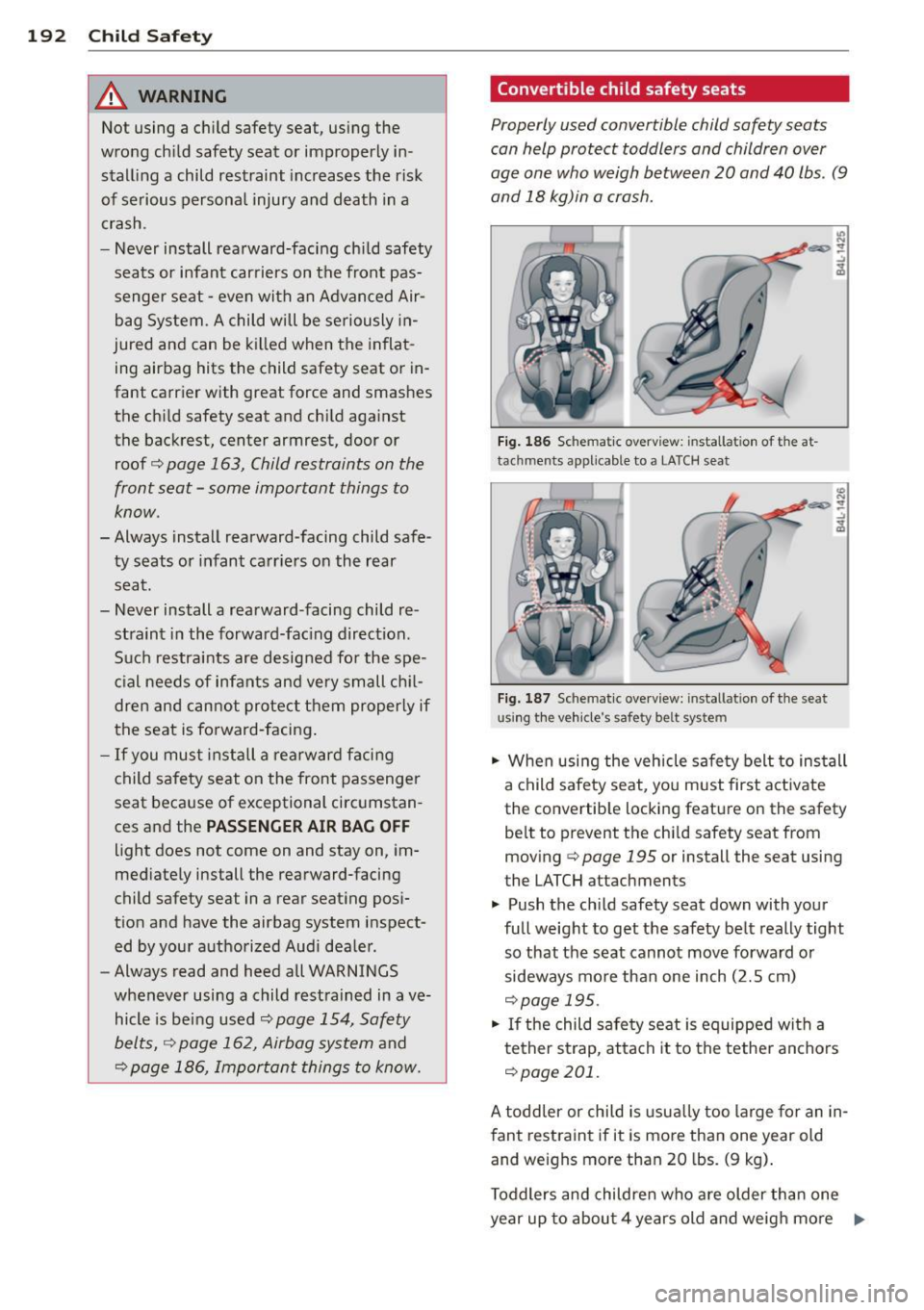
Fig. 186 Schematic overview: installat ion of t he at
tachments appl icable to a LATCH seat
Fig. 187 Schematic overview: installat ion of the seat
using the vehicl e's safety belt system
.,. When using the vehicle safety belt to install
a child safety seat, you must first activate
the convertible locking feature on the safety
belt to prevent the child safety seat from
moving
c:> page 195 or install the seat using
the LATCH attachments
., Push the ch ild safety seat down with your
full weight to get the safety belt really tight
so that the seat cannot move forward or
sideways more than one inch (2.5 cm)
c:> page 195 .
.,. If the child safety seat is equipped with a
t ether strap, attach it to the tether anchors
c:>page 201.
A toddler or child is usually too large for an in
fant r estraint if it is more than one year old
and weighs more than 20 lbs. (9 kg) .
Toddlers and children who are older than one
year up to about 4 years old and weigh more ..,.
Page 198 of 316
196 Child Safety
is locked so that the child and child safety
seat will stay in place.
Always remember: Even though your vehicle is
equipped with an Advanced Airbag system, all
children, especially those 12 years and young
er, should always ride in the back seat proper ly restrained fo r their age and weight.
.&_ WARNING
Improperly installed child safety seats in
crease the risk of serious personal injury
and death in a collision.
- Always make sure that the safety belt re
tractor is locked when installing a child
safety seat . An unlocked safety belt re
tractor cannot hold the child safety seat in place during normal driving or in a
crash .
- Always buckle the child safety seat firmly
in place even if a child is not sitting in it.
A loose child safety seat can fly around
during a sudden stop or in a collision.
- Always make sure that the rear seat
backrest to which the center rear safety
belt is attached is securely latched when
ever the rear center safety belt is being
used to secure a child restraint.
- If the backrest is not securely latched, the child and the child restraint will be
thrown forward together with the back
rest and will strike parts of the vehicle
interior. The child can be seriously in
jured or killed.
- Never install rearward-facing child safety
seats or infant carriers on the front pas
senger seat . A child will be seriously in
jured and can be killed when the passen
ger airbag inflates.
- The inflating airbag will hit the child
safety seat or infant carrier with great
force and will smash the child safety seat
and child against the backrest, center
armrest, door or roof.
- Always install rearward-facing child safe
ty seats or infant carriers on the rear
seat. -
Forward-facing child safety seats or in
fant carriers installed on the front pas
senger 's seat may interfere with the de
ployment of the airbag and cause serious
injury to the child .
- It is safer to install a forward-facing
child safety seat on the rear seat.
- Always read and heed all WARNINGS
whenever using a child restrained in ave
hicle is being used
~ page 186. Special
precautions apply when installing a child
safety seat on the front passenger seat
~ page 163, Child restraints on the front
seat -some important things to know.
.&_ WARNING
-
Always take special precautions if you
must install a forward or rearward-facing
child restraint on the front passenger's
seat in exceptional situations:
- Whenever a forward or rearward-facing
child restraint is installed on the front
passenger seat, the
PASSENGER AIR
BAG OFF light must come on and stay on
whenever the ignition is switched on.
- If the
PASSENGER AIR BAG OFF light
does not come on and stay on, perform
the checks described
~ page 173, Moni
toring the Advanced Airbag System.
- Take the child restraint off the front pas
senger seat and install it properly at one
of the rear seat positions if the
PASSEN
GER AIR BAG OFF
light does not stay on
whenever the ignition is switched on.
- Improper installation of child restraints
can reduce their effectiveness or even
prevent them from providing any protec
tion.
- An improperly installed child restraint
can interfere with the airbag as it de
ploys and seriously injure or even kill the
child.
- Always carefully follow the manufactur
er's instructions provided with the child
safety seat or carrier.
Page 199 of 316
-Never place additional items on the seat
that can increase the total weight regis
tered by the weight-sensing mat and can
cause injury in a crash .
_&. WARNING
Forward-facing child restraints:
- Always make sure the forward-facing
seat has been designed and certified by
its manufacturer for use on a front seat
with a passenger front and side airbag .
- Never put the forward-facing child re
straint up, against or very near the in
strument panel.
-Always move the passenger seat into its
rearmost position in the seat's fore and
aft adjustment range, as far away from
the airbag as possible before installing
the forward-facing child restraint. The
backrest must be adjusted to an upright
position.
- Make sure that the
PASSENGER AIR BAG
OFF
light comes on and stays on all the
time whenever the ignition is switched
on.
_&. WARNING
Rearward-facing child restraints:
- A child in a rearward-facing child safety
seat installed on the front passenger
seat will be seriously injured and can be
killed if the front airbag inflates -even
with an Advanced Airbag System.
- The inflating airbag will hit the child
safety seat or infant carrier with great
force and will smash the child safety seat
and child against the backrest, center
armrest, door or roof.
- Always be especially careful if you must
install a rearward facing child safety seat
on the front passenger seat in exception
al circumstances.
-A tight tether strap on a rearward-facing
child restraint attached to the front pas
senger seat can put too much pressure
on the weight-mat in the seat and regis
ter a heavier weight in the Advanced Air-
Child Safety 197
bag System. The heavier weight regis
tered can make the system work as
though an adult were on the seat and de ploy the Advanced Airbag when it must
be suppressed causing serious or even
fatal injury to the child.
- Make sure that the
PASSENGER AIR BAG
OFF
light comes on and stays on all the
time whenever the ignition is switched
on .
- If the
PASSENGER AIR BAG OFF light
does not come on and stay on, immedi
ately install the rearward-facing child
safety seat in a rear seating position and
have the airbag system inspected by your
authorized Audi dealer.
Activating the convertible locking
retractor
Use the convertible locking retractor to se
cure a child restraint.
Always heed the child safety seat manufactur er 's instructions when installing a child re
straint in your vehicle. To activate the conver
tible locking retractor:
.. Place the child restraint on a seat, prefera
bly on the rear seat.
.. Slowly pull the belt
all the way out.
.. Route it around or through the child re
straint belt path
c:> ,&. .
.. Push the child safety seat down with your
full weight to get the safety belt really tight.
.. Insert the belt tongue into the buckle for
that seating position .
.. Guide the safety belt back into the retractor
until the belt lies flat and snug on the child
safety seat.
.. You should hear a "clicking" noise as the
belt winds back into the inertia reel. Test the
convertible locking retractor by pulling on
the belt. You should no longer be able to
pull the belt out of the retractor. The con
vertible locking retractor is now activated .
.. Make sure that the red release button is fac
ing away from the child restraint so that it
can be unbuckled quickly. .,. •
•
Page 224 of 316
222 Cleaning and protection
Automatic car wash
The vehicle can be washed in almost any
modern automatic car wash.
The vehicle paint is so durable that the vehicle
can normally be washed without problems in
an automatic car wash. However, the effect on
the paint depends to a large extent on the de
sign of the facility, the filtering of the wash
water, the type of wash and care material, etc. If the paint has a dull appearance after going
through the car wash or is scratched, bring
this to the attention of the operator immedi
ately. If necessary, use a different car wash.
Before going through a car wash, be sure to
take the usual precautions such as closing the
windows and the roof. Factory installed an
tennas must not be removed.
If you have installed additional accessories on
the vehicle - such as spoilers, roof rack, etc. -
it is best to ask the car wash operator if these
should be removed.
A WARNING
Always read and heed all WARNINGS and
other information
c;, page 221.
Washing the vehicle by hand
A lot of water is needed when washing a vehicle by hand.
., Before you start washing, make sure you
have read and understood the WARNINGS
r:::;, A in General information on page 221.
., First soak all dried dirt until it is soft, then
rinse it off.
., As you clean your vehicle, start with the
roof and work your way down to the bottom,
using a sponge, a sponge glove or a clean
brush.
., Rinse the sponge or the sponge glove often,
flushing it clean each time.
., Use special car shampoo only for very per
sistent dirt.
., Rinse the car thoroughly with water .
., Use a chamois leather to gently wipe the ex
terior dry. Use
a separate sponge for cleaning the
wheels, door sills and other regions exposed
to road dirt. In this way, you will not scratch
the paint with coarse particles imbedded in
the sponge the next time you wash the car.
A WARNING
---Do not clean the underside of the chas
sis, fenders, wheel covers, or other hard
to reach parts without protecting your
hands and arms. You may cut yourself on
sharp-edged metal parts.
- Always read and heed all WARNINGS and
other information
c;, page 221.
0 Note
- Never try to remove dirt, mud or dust if
the surface of the vehicle is dry. Never
use a dry cloth or sponge, since this
could scratch your vehicle's paint or win
dows.
- Never wash your car in bright sunlight.
Drops of water act as magnifying lenses
and may damage your paint.
-When you wash your car in the winter: if
you rinse your vehicle with a hose, be
careful not to aim the stream of water
directly at locks, or at door or hatch
openings - they can freeze shut.
- Never use sponges designed to remove
insects, or any kitchen scouring sponges
or similar products. They can damage
your paint finish .
- You should remove debris (such as in
sects) from the headlight lenses on a
regular basis, for example when refuel
ing your vehicle. Never use a dry cloth or
sponge to clean the headlights. Only use
wet cloths or sponges to prevent
scratches. It is best to use soapy water.
@ For the sake of the environment
In the interest of the environment, the ve
hicle should only be washed in special
wash bays .
Page 229 of 316
~ Then wipe the MMI contro l conso le with a
clean, soft, slightly damp cloth.
The MM I control console shou ld be cleaned
with a brush first so that no dirt is trapped be
tween the buttons and the housing . We rec
ommend giving the MMI contro l console a fi
na l wipe with a cloth moistened with water
and d ish washing detergent.
(D Note
To prevent damage, make sure that no flu
id ever gets into the MMI control console .
Aluminum trim
Use only neutral-pH products to remove spots
and depos its from alum inum surfaces.
Ch rome care products and alkaline cleaners
will attack alum inum su rfaces and can dam
age them ove r time.
A WARNING
Always read and heed a ll WARNINGS and
other information
¢ page 2 2 1.
Fabrics and fabric coverings
Fabrics and fabric coverings (e .g. seats, door
trim panels, etc.) should be cleaned at reg ular
interva ls with a vacuum cleaner. Th is removes
surface dirt particles which could become em
bedded in the fabr ic through use. Steam
cleane rs should not be used, because the
steam tends to push the dirt deeper into the
fabric and lock it there.
Norm al cleaning
Generally, we recommend using a soft sponge
or a lint-free microfiber cloth to the clean fab
ric. Brushes should o nly be used for carpets
and floor mats, s ince other fab ric su rfaces
could be harmed by b rushes .
Normal surface sta ins can be cleaned using a
commercially available foam cleaner . Spread
the foam on the surface of the fab ric with a
soft sponge and work it in gently. Do not satu
r ate the fabric. Then pat the foam d ry using
Cleaning and protec tion 22 7
absorbent, dry cloths (e .g . m icrofiber cloth)
and vac uum it after it has dried completely .
Cleaning stains
Stains caused by beverages (e.g. coffee, fr uit
j u ic e, etc.) ca n be treated w ith a mild de ter
gen t solu tion. Apply the detergent sol ution
with a sponge. In the case o f stubborn stains,
a detergent paste can be applied directly to
the stain and worked into the fabric . After
wards, use copious amounts of clean water to remove the rema ining detergent. Apply the
water wit h a damp cloth or sponge and pat
the fabr ic dry with an absorbent, dry clot h.
Stains from choco late or makeup should have
detergent paste rubbed into them . After
wards, remove the soap with water (damp
sponge) .
Alcohol can be used to treat stains from grease, o il, lipstick or a ballpoint pen. Melted
grease or dye must be patted off using ab
sorbent mater ial. It may be necessary to re
treat the areas with detergent paste and wa
te r.
In the case of general soiling of the up hols
te ry and cover material, we recommend hir ing
a spec ia list t hat has the equipment to clean
the seat cove rs and othe r fabr ic surfa ces by
shampooing a nd spray extraction.
A WARNING ~ -
Always read and heed all WARN INGS and
the information
~ page 221 .
(D Tips
Open Ve lcro fas teners on yo ur clothing can
d am age the sea t cover. Please m ake su re
that Ve lcro fasteners are closed .
Plastic parts and instrument panel
Always use a clean cloth moistened in clear
water to clean these areas. For persistent d irt
use an Aud i approved
sol vent -free p lastic
cleaner/protectant. ..,. •
•
Page 236 of 316
234 Fuel supply and filling your fuel tank
transport fuel to use for your lawn mower,
snow blower, etc., be very careful and al
ways observe local and state laws regard
ing the use, transportat ion and storage of
such fuel containers . Make certain the con
tainer meets industry standards (ANSI/
AS TM F852 -86) .
(D Note
Never drive your vehicle until the fuel tank
is completely empty. The irregular supply
of fuel can cause misfiring . Gasoline could
enter the exhaust system and damage the
catalyt ic converter.
Refuelling
Fig. 197 Rig ht rear vehicle s ide: Opening th e fuel filler
f lap
Fig . 198 Fu el filler fla p with attached fuel c ap
When activating the central locking, the fuel
fi ller flap is automatically un locked or locked.
Refuel the vehicle with the ignition turned
off.
Taking the fuel cap off
,.. Turn off the ignit io n.
,.. Press the left side of the fue l filler flap to
open it
.?) fig . 197-a rrow -.
,.. Unscrew fuel cap counter-clockw ise and
hang it on the fuel filler flap
~ fig. 198.
Refuelling procedure
,.. Insert the fu el nozzle from the gasoline
pump into the fuel filler neck as far as it will
go .
,.. Select a medium r efuelling rate so that the
no zzle switches off automatically when the
tank is full.
Putting the fuel cap back on
,.. After fi lling your tank, tw ist the fuel cap
clockwise as far as it will go .
,.. Close the fue l fill er flap.
T o avoid fuel spilling or evaporating from the
fuel tank always close fuel cap properly and
complete ly.
A WARNING
-
Improper refue ling or handling of fuel can
cause fire, explosion and severe burns.
- Fue l is highly flammable and can cause
severe burns and other injuries.
- Failure to shut the engine off while refu
eling and/or to insert the pump nozzle
fully into the fuel filler neck could cause
fuel to spray out of filler neck or to over
flow . Fuel spray and overflowing fuel can
cause a fire .
- Never use a cellular telephone while re
fueling . The electromagnet ic rad iat ion
can cause sparks that can ignite fuel va
pors and cause a fire.
- Never get back into your vehicle white re
fueling .
If in exceptional circumstances
you must get back in your vehicle while
refueling, make certain that you close
the door and touch metal to discharge
static electricity before touching the fill
er nozzle again. Static e lectricity can
cause sparks that can ignite fuel vapors
released during refueling .
- Never smoke or have an open f lame any
where in or near your veh icle when refu
eling or filling a portab le fuel conta iner.
- For your safety, we strongly recommend
that you do not travel with a portable
Page 239 of 316

Checking and filling Engine hood
Releasing the engine hood
The engine hood is released from inside the
vehicle .
Fig. 201 Dr iver's s ide footwell: engine hood release
lever
"' Open the driver's door .
"' Pull the release lever on the left under the
instrument panel
i=:> fig. 201 in the d irection
of the arrow.
The hood pops up slight ly under spring pres
sure.
Opening the engine hood
F ig . 202 Re lease lever under the engine hood
Before opening the engine hood, make sure
that the windshie ld wipers are flat against the
windshie ld. Otherwise, they could damage the
paint on the hood.
"' Pull up on the release under the hood
r::!> fig. 202 . This releases the catch.
"' Open the hood all the way
c::> &,.
Checkin g and fillin g 237
A WARNING
Hot engine coolant can burn you.
- To reduce the risk of being burned, never
open the hood if you see or hear steam
or coolant escaping from the eng ine
compartment. Wait unt il no steam or
coolant can be seen or heard before care
fu lly opening the hood.
Closing the engine hood
"' Pull the hood down un til the pressure from
the struts is reduced.
"' Let the hood
drop down and latch in p lace.
Do not try to push it shut; it may fail to en
gage
c;, &, .
A WARNING
--
A hood that is not completely latched
could fly up and b lock your view while dr iv
ing.
- When you close the engine hood, check it
to make sure the safety catch has p roper
ly engaged. The hood should be flush
with the surround ing vehicle body parts.
- If you notice while driv ing that the hood
is not secured prope rly, stop at once and
close it .
Working in the engine compartment
Be especially careful whenever you work in
the engine compartment.
Whene ver y ou must pe rform any wo rk in the
eng ine compartment, for e xample checking
and filling different fluids, th ere is a risk of
injury, burns and accid ent s. To pr event per
s o nal injury always observe the following
WARNINGS . The engine compa rtment of an y
vehicle i s a hazardou s are a
c;, Lh,.
A WARNING ~
To help avoid injury, be fo re yo u check any
thing under the hood:
- Tu rn off the engine.
- Remove the ignition key.