lock AUDI A5 COUPE 2013 Manual PDF
[x] Cancel search | Manufacturer: AUDI, Model Year: 2013, Model line: A5 COUPE, Model: AUDI A5 COUPE 2013Pages: 294, PDF Size: 73.84 MB
Page 211 of 294
CD Note
-Never use chemical solvents (e.g . lighter
flu id, turpentine), waxes, shoe polish or
s imilar products on the leather surfaces
in your Audi.
- To avoid damage, have stubborn stains removed by a commerc ial cleaning spe
cialist .
Cleaning Alcantara ® (synthetic suede)
App lies to vehicles: with Alcantara® upholstery
Rem oving dus t and dirt
.,. Moisten a cloth, squeeze out excess water
and wipe down the seat surfaces .
Rem ov ing sta in s
.,. Moisten a cloth with lukewarm water or
with diluted
e th yl (rubb ing ) a lcohol.
.,. Dab at the stain. Start at the outside and
work inwards .
.,. Once the stain is no longer visible, use a
soft dry cloth or t issue to soak up the mois
tu re.
Do not use leather cleaning products on Al
cantara ®.
You may use a suitable shampoo for removing
dust and dirt. Dust and grit in the pores and seams can
scratch and damage the surface. If the car is
left standing in the sun for long periods, the
Alcantara ® should be protected against direct
sunlight to prevent it from fad ing . Slight color
variations will develop in normal use and are
not an indication of material deterioration.
CD Note
- Never use chemical solvents (e.g . lighter
flu id, turpentine), waxes, shoe polish or
s imilar products on Alcantara ® surfaces.
- To avoid damage, have stubborn stains
removed by a commerc ial cleaning spe
cia list .
- Do not use brushes, st iff sponges or s im
i larly abrasive cleaning aids .
Cleaning and protec tion
Safety belts
Only well-maintained safety belts work relia
bly when needed .
.,. Keep belts clean.
.,. For cleaning, use a mild soap and water so l
ution . Let belts dry thoroughly and away
from d irect sunlight .
.,. Do not allow inertia ree l safety belts to re
tract befo re they are completely dry.
.,. Check the condition of your safety bel ts
reg
ularly .
Heavi ly so iled safety be lts may not ret ra ct
properly.
A WARNING
-Damaged safety belts can break in a crash .
- Anyth ing that might damage yo ur safety
be lts could mea n that you and your pas
sengers would not be adequate ly pro
tected in an accident .
- Safety belt performance depends on cor
rect insta llation. Never remove be lts
from the vehicle to clean them.
- Do not use chemical clean ing agents,
bleach or dyes. They have corrosive prop
erties which wea ken the webbing.
- When clean ing you r safety be lts, inspect
them for damage . If you discover dam
age, see yo ur authorized Audi dealer .
- Always read and heed a ll WARNINGS and
other information
¢ page 200.
Engine compartment
Be especially careful when cleaning the en
gine compartment.
Alway s swit ch off th e ign ition befor e clean
ing the engine
¢ ,&. .
Plenum panel
Remove leaves from the plenum panel in front
of the windshield under the eng ine hood . This
prevents t he wate r drain holes from becomi ng
blocked, and it p revents deb ris from enter ing
the ve hicl e interio r th ro ugh the heating and
ventilat ion duc ts . .,..
209
•
•
Page 215 of 294
Detergent Gasoline, please go to the o fficia l
website (www.toptiergas .com) .
Afte r an ex tende d pe riod of using i na dequate
fue ls, built -up carbon deposits can rob you r
e ngine of peak pe rformance .
(D Note
Damage o r m alfunction due to poor fuel
qua lity is not cove re d by the Audi New Ve
hicle Limited Warranty .
Fuel tank
Fuel filler neck
The fuel filler neck is located on the r ight rear
side panel beh ind the f uel filler flap.
If t he power locki ng system should fail, you
can st ill open the flap manually -for detailed
instr uctions
see <::;> page 215.
You can f ind the fuel tank capac ity of your ve
h icle in
Technical Data r=;, page 271.
The label on the inside of the fuel filler flap
tells you the correct fuel for yo ur vehicle . For
more informat ion about fuel spec ificat ions,
see
r=;, page 211 .
Your vehicle fuel tank has an on-board refuel
ling vapor recovery system . Th is feature he lps
to prevent fuel vapors from escaping from the
tank and polluting the enviro nment whi le you
refuel your ve hicle. In order to fill the tank
p rope rly whi le pro tect ing t he env ironment,
p lease follow t his refueling procedure car eful
l y .
& WARNING
Under norm al oper ating co ndi tions, neve r
carry additional fuel containe rs in your car .
Gas canisters and other containers used to
transport fue l can be d angerous. Such con
tainers, full or empty, may leak and co uld
cause a fire in a collision. If you must
transport fue l to use for yo ur lawn mowe r,
snow blower, etc., be very carefu l and al
ways observe local and state laws regard
ing the use, tra nspor tat io n and storage o f
Fuel suppl y and filli ng your fuel t ank 213
such fuel containe rs . M ake certa in the con
tainer meets industry standa rds (ANSI/
ASTM F852 - 86).
(D Note
Neve r drive your vehicle until the fuel tank
i s completely empty. T he irreg ular s upply
of fue l can ca use m isfir ing. Gasoline cou ld
enter t he exhaust system and damage the
catalytic converter .
Refuelling
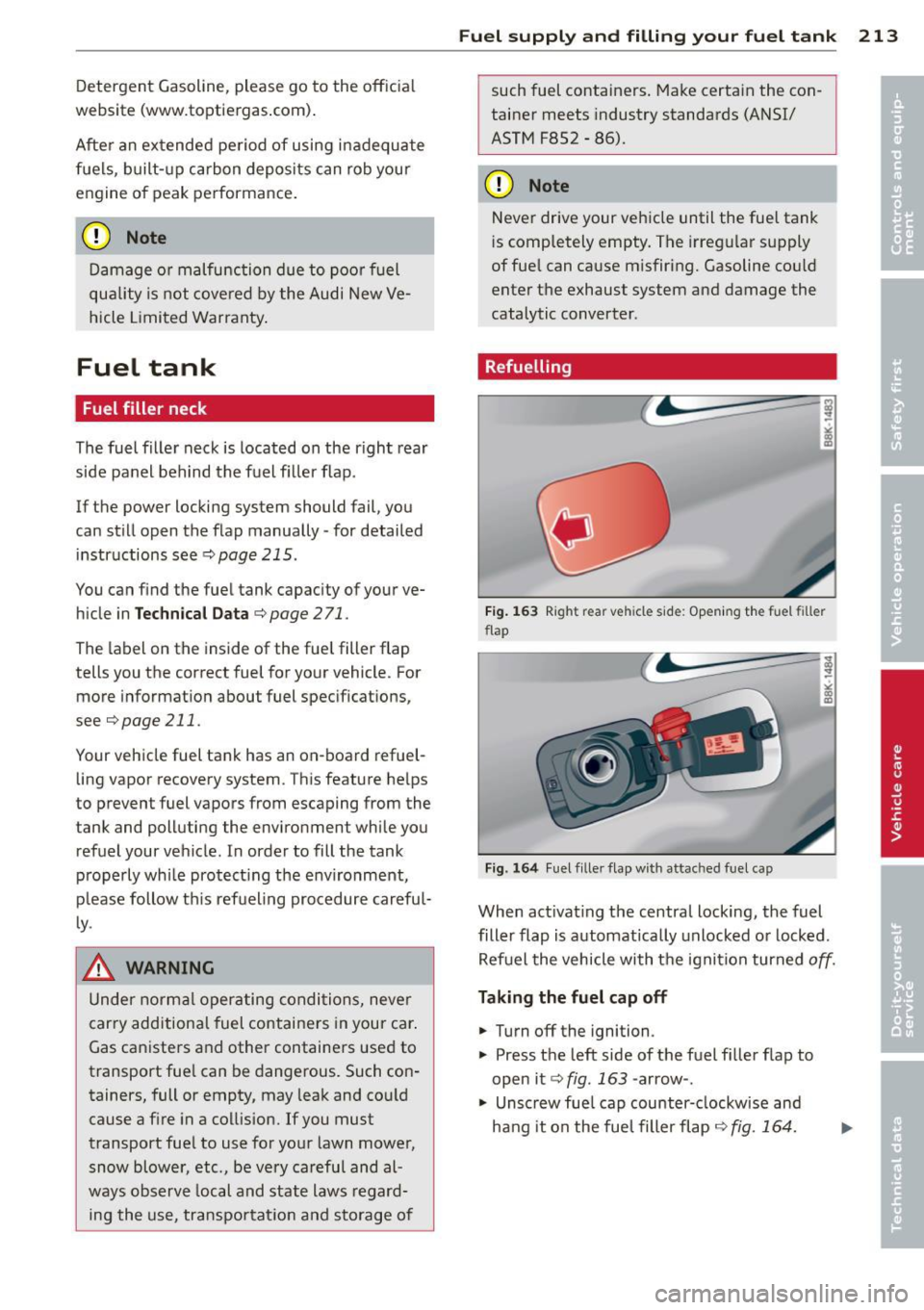
Fig. 1 63 Right rea r ve hicle s ide : Open ing t he fuel filler
flap
F ig . 164 Fu el f ille r fla p with attac hed fuel cap
>< "' a,
When act ivat ing the centra l locking, the fuel
filler flap is a utomatically unlocked o r locked .
Ref uel the vehicle wi th t he ignition turned
off.
Taking the fuel cap off
.,. Turn off the ignition.
.,. Press t he left side of the fuel f iller flap to
open it
r::> fig . 163 -arrow-.
.,. Unsc rew fue l cap counter-clockwise and
ha ng it on the fue l filler flap
r:::> fig. 164.
Page 216 of 294
214 Fuel supply and filling your fuel tank
Refuelling procedure
.. Inse rt the fue l nozzle from the gasol ine
pump into the fue l filler neck as far as it will
go.
.. Select a m edium refu elling rate so that the
no zzle switches
off automatica lly when the
tank is full.
Putting the fuel cap back on
.. After filling your tank, twist the fuel cap
clockwise as far as it will go.
.. Close the fuel filler flap.
To avoid fuel spi lling or evaporating from the
fuel tank always close fuel cap properly and
comp letely.
A WARNING
Improper refueling or handling of fue l can
cause fire, explosion and severe burns.
- Fuel is highly f lammable and can cause
severe burns and other injuries.
- Failure to shut the engine
off while refu
eling and/or to insert the pump nozzle
fully into the fuel filler neck could cause
fuel to spray out of filler neck or to over
flow. Fuel spray and overflow ing fuel can
cause a fire .
- Never use a cellular telephone while re
fueling . The electromagnetic radiation
can cause sparks that can ignite fue l va
pors and cause a fire.
- Never get back into your vehicle while re
fueling. If in exceptiona l circumstances
you must get back in your vehicle wh ile
refue ling, make certa in that you close
the door and touch metal to discharge
static electricity before touching the fill
er nozzle again . Static electricity can
cause sparks that can ignite fuel vapors
released during refueling.
- Never smoke or have an open flame any
where in or near your vehicle when refu
eling or filling a portable fuel container.
- For your safety, we strongly recommend that you do not travel w ith a portable
fuel container in your vehicle. The con- tainer, fu
ll or empty may leak and could
cause a fire, especially in a crash .
- If, under exceptional circumstances, you
must transport a portab le fuel container,
please observe the following:
- Never fill a portable fuel container
wh ile it is anywhere in or on the vehicle
(for example, in the luggage compart
ment, or on the trunk) . Static electrici
ty can build up while filling and can ig
nite fue l vapors causing a fire .
-Always place a portab le fue l container
on the ground before filling .
- Always keep the filler nozzle complete
ly inside the portable container before
and during filling.
- If filling a portab le container made of
metal, the filler nozzle must always be
in contact with the container. This will
help prevent static electricity from dis
charging and cause a fire.
- Never spill fuel inside the vehicle or luggage compartment . Fuel vapors are
highly flammable .
- Always observe local and state/provin
c ial laws regarding the use, storage
and transportation of fuel containers .
- Make certain the fuel container meets
industry standards (ANSI/ ASTM
F852-86) .
(D Note
If any fuel has spi lled onto the car, it
should be removed immediately to prevent
damage to the paint.
@) For the sake of the environment
As soon as the correct ly operated nozzle
switches
off automat ically for the first
time, the tank is full. Do not try to add
more fuel because fuel may spill out . In
addition, the expansion space in the fuel
tank wi ll be filled -causing the fuel to
overflow when it becomes warm and pol
lute the environment.
Page 217 of 294
@ Tips
-Running yo ur engine while refuelling
may cause vapors to escape or even
cause fue l to spill out of the tank. This
would then shut off the fuel nozzle be
fore the tank is full.
- Do not refuel your veh icle w ith the igni
tion turned on . The fuel gauge may oth
erwise not ind icate the correct fue l level
after refuelling .
- The fuel filler flap of your vehicle is not
l ocked when you lock the vehicle from
the i nside.
Unlocking the fuel filler flap by hand
You can open the fuel filler flap by hand if the
power locking system should fail.
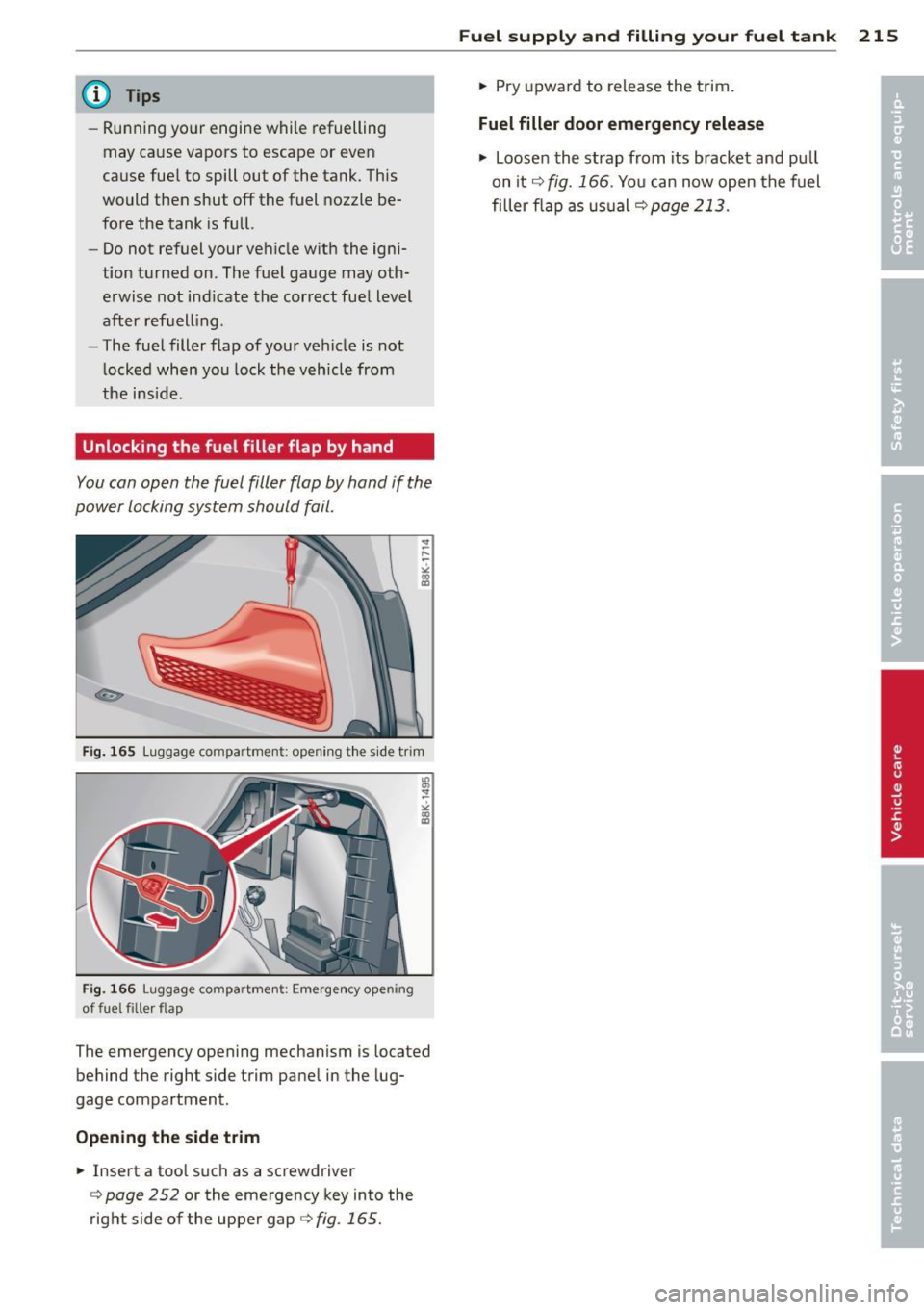
F ig. 1 65 Luggage co mpartme nt: open ing t he side trim
Fi g. 166 Luggage co mpa rt m ent : E m erge ncy ope ning
of fuel fill er flap
The emergency opening mechanism is located
behind the right side trim pane l in the lug
gage compartment .
Opening the side trim
.. Insert a too l such as a screwdriver
¢
page 252 or the emergency key into the
rig ht side of the upper gap ¢
fig. 165.
Fuel suppl y and filli ng your fuel t ank 215
.. Pry upward to release the trim .
Fuel filler door emergency release
.. Loosen the strap from its bracket and pu ll
on it ¢
fig. 166. You can now open the fuel
filler f lap as usual ¢
page 213.
Page 218 of 294
216 Checking and filling
Checking and filling
Engine hood
Releasing the engine hood
The engine hood is released from inside the
vehicle .
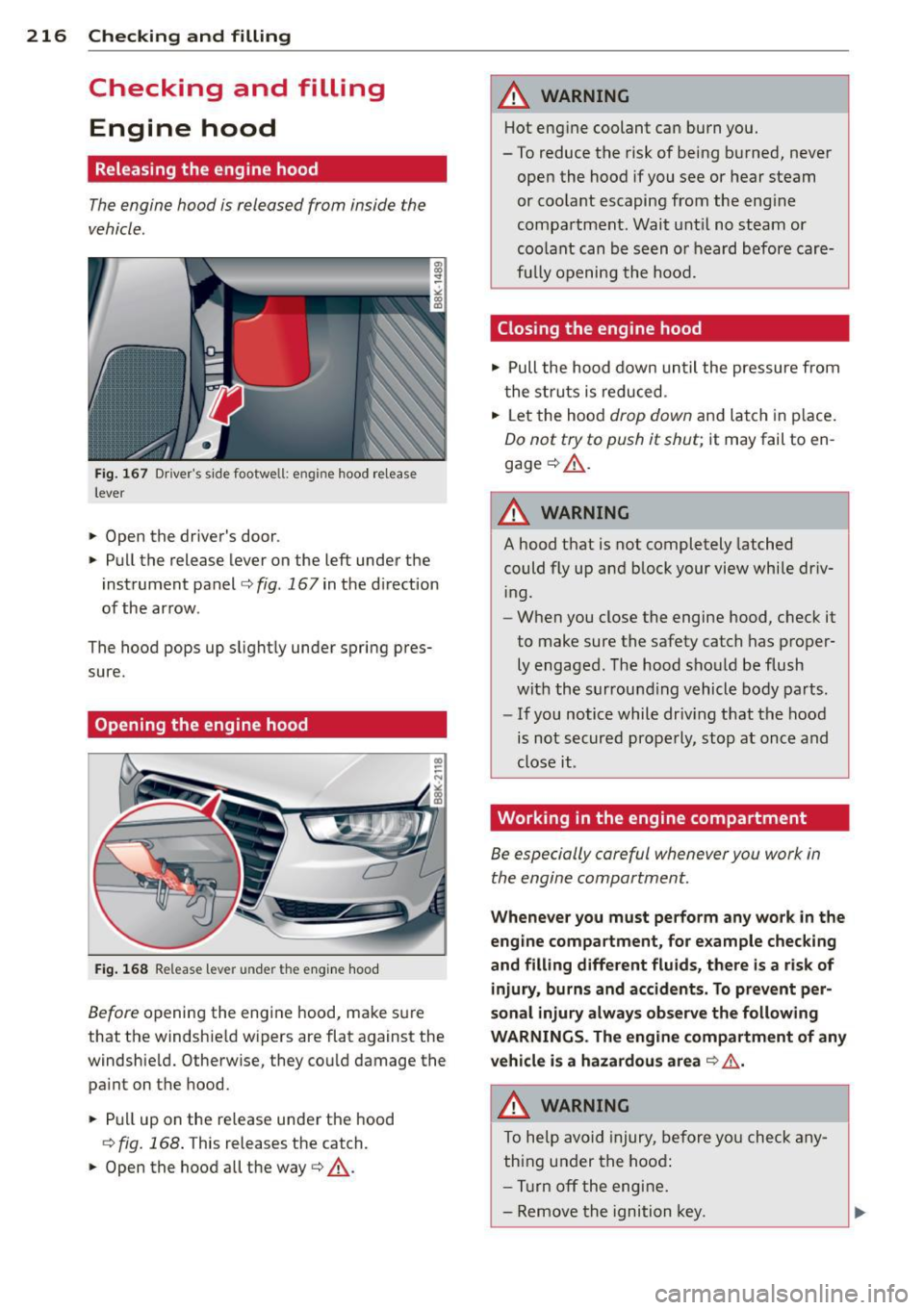
Fig . 16 7 Dr iver' s side footwe ll: e ngin e hood re lease
lever
.. Open the drive r's door.
.. Pull the release lever on the left under the
inst rument panel
c> fig . 167 in the d irect ion
of the ar row .
The hood pops up s light ly under spring pres
sure.
Opening the engine hood
Fig. 168 Re lease lever under the eng ine hood
Before opening the engine hood, make s ure
that the windshie ld w ipers are flat against the
windshie ld. Otherwise, they co uld damage the
pa in t on the hood.
.. Pull up on the release unde r the hood
r:!> fig . 168 . This releases the catch.
.. Open the hood all the way
c> .&,.
A WARNING
-Hot eng ine co olant can burn you.
- To reduce the risk of being b urned, never
o pen the hood if you see or hear steam
or coo la nt escapi ng from the eng ine
compa rtment . W ait unt il no steam or
coo lant can b e se en o r heard before care
fu lly openi ng the ho od.
Closing the engine hood
.. Pull the hood down un til the pressure from
t he stru ts is reduced .
.. Let the hood
drop down an d latc h in p lace.
Do not try to push it shut; it may fail to en
gage
c> .&, .
A WARNING
--
A ho od t hat is not completely latched
could fly up an d block your vi ew while dr iv
i ng.
- W hen you close the engine hood, c heck it
to make sure the safety catch has p ro per
ly engaged . The ho od s houl d be flush
wit h the surrou nding vehicle body parts.
- If you notice while dr iv ing t hat t he hood
is not s ecured properly, stop at once and
close it .
Working in the engine compartment
Be especially careful whenever you work in
the engine compartment .
Whenever you must perform any wo rk in the
engine compartment, for example checking
and filling different fluids, th ere is a risk of
injury, burns and accidents. To prevent per
sonal injury always observe the following
WARNINGS. The engine compartm ent of any
vehicle is a hazardous area
c> &, .
A WARNING
To he lp avo id i njury, before yo u check any
thi ng under the hoo d:
- Tu rn off the eng ine.
- Remove the igni tion key.
Page 226 of 294
224 Check ing and filling
The location of the coolant expansion tank
can be seen in the engine compartment illus
tration
¢ page 218.
To obtain an accurate read ing, the eng ine
must be switched off .
The expans io n tank in you r vehicle is equipped
with an e lectr ic cool ant level sensor.
When the coolant level is too low, the warning light in the A uto-Check System
¢ page 18 w ill
b link until you add coo lant and the level has
been restored to no rm al. Even though the re is
an e lec tric coolant level sensor, we s till rec
ommend you check the coolant leve l from
time to time.
Coolant loss
Coolant loss may indicate a leak in the cooling
system. In the event of coolan t loss, the cool
i ng system should be inspected immedia tely
by your authorized A udi dealer. It is not
enough merely to add coolant.
I n a
s e aled system, losses can occur only if
the boiling poin t of the coolant is excee ded as
a result of overheating.
A WARNING
The cooling system is unde r pressure and
can get ve ry hot. Reduce the risk of sca ld
ing from hot coolant by following these
steps.
- Turn off the engine and allow it to cool
down.
- Protect yo ur face, hands and arms from
escaping fluid and steam by covering the
cap with a large, thick rag.
- Turn the cap slowly and ve ry carefu lly in
a counter-clockwise direction wh ile ap
plying light, downward pressure on the
top of the cap .
- To avoid being b urned, do not spill ant i
freeze or coolant on t he exhaust system
or hot eng ine parts. Unde r certain condi
tions, t he ethy lene g lycol in engine cool
an t can ca tch fire .
(D Note
Do not ad d any type of radiator leak sea l
ant to your veh icle's engine coo lant. Add
i ng radiator repa ir fluid may adverse ly af
fect the funct ion and performance of your
cooling system and could result in damage not cove red by your New Veh icle L imited
War ran ty .
Adding coolant
Be very careful when adding engine coolant.
Before you check anyth ing in the eng ine com
partmen t,
always read and heed all WARN
INGS ¢ &. in Working in the engine compart
ment on page 216.
.. Turn off the engine.
.. Let the engine cool down.
.. Place a thick rag over the coolant expansion
tank ¢
page 223, fig. 172 and carefully turn
the cap counter-clockwise ¢
,&..
.,. Add coo lant.
.. Twist the cap on aga in
t ightly.
Replacement engine coo lant must confo rm to
exact spec ificat ions ¢
page 223, Coolant. We
recommend using on ly coo la nt add itive G 12+
+ , G 13 or in an eme rgency G12+. Do
not use a
different additive. In an emergency use plain
water until yo u can get the correct additive
and can restore the correct ratio . This sho uld
be done as soon as possible .
If you have los t a considerab le amount o f
coolant , then you sho uld add cold antifreeze
and cold wate r on ly w hen the engine is cold.
Always use
new engine coo lan t when refilling.
Do not f ill coo lant abov e the
"MAX" ma rk . Ex
cess coo la nt w ill be fo rced o ut through the
pressure relief valve in the cap when the en
gine becomes hot.
A WARNING
-= -
-The cooling system is under pressure and
can get very hot. Reduce the risk of ..,.
Page 227 of 294
scalding from hot coo lant by following
these steps.
- Turn
off the engi ne and a llow it to cool
down.
- Protect your face, hands and arms from
escapi ng fl uid and steam by cover ing
the cap with a large, thick rag .
- Turn the cap slowly and very ca refully
i n a cou nte r-clockw ise dir ect ion while
a pply ing lig ht, downwa rd p ress ure on
the top of the cap.
- T o avo id being burned, do no t sp ill an
tifree ze o r coolan t on t he exh aust sys
tem or ho t engine parts . Un der certain
conditions, the ethylene glyco l in en
gine coolant can catch fire .
- Antifree ze is poisono us. Always store an
tifreeze in its or iginal co ntainer and we ll
o ut o f the reac h of children.
- If you drain the coolant , it must be
caught and safely stored in a p roper con
tainer clear ly marked "poison".
(D Note
- Coolant po llutes the env ironment and
could ca use a n engine fire . Excess coo l
ant wi ll be forced out through the pres
sure re lief va lve in the cap when the en
gine becomes hot.
- If, in an emergency, only water can be
added , the correct ratio between water
and antifreeze¢
page 223 must be re
stored as soon as possib le .
@ For the sake of the environment
Drained coolant should not be re used . Al
ways dispose of used c oolant while observ
ing all envir onmental regulations .
Radiator fan
The radiator fan switches on automa tically by
itself
T he radiator fan is driven by the engine via the
V-be lt. The viscous clutch regulates the speed
of the fan according to the temperature of the
coolant .
Checkin g and fillin g 225
An auxiliary electric radiato r fan* sw itches on
and
off depending on coolant temperature
and othe r vehicle ope rat ing con ditions.
After yo u switc h the engi ne off, the aux iliary
f an can con tinue r unning for up to 10 minutes
- even with the ignition off. It can even switch
on again later by itself¢ & , if
- t he temperatu re of the engine coo lant rises
due to the heat b uild -up from the en gine in
the engi ne compartment, or
- the engine compartment heats up be cause
the vehicle is parked in intense sunlight.
A WARNING
- To reduce the risk of personal in jury nev
er touch the radiator fan.
- The a uxiliary electric fan is temperat ure
contro lled and can switch on sud denly
even when the engine is not running.
- The a uxiliary radiator fa n switches on a u
tomatically when the engine coo lant
reaches a certain temperature and will
continue to run until the coo lant temper
ature drops .
Brake fluid
Checking brake fluid level
The brake fluid level can be checked with a
qui ck glance.
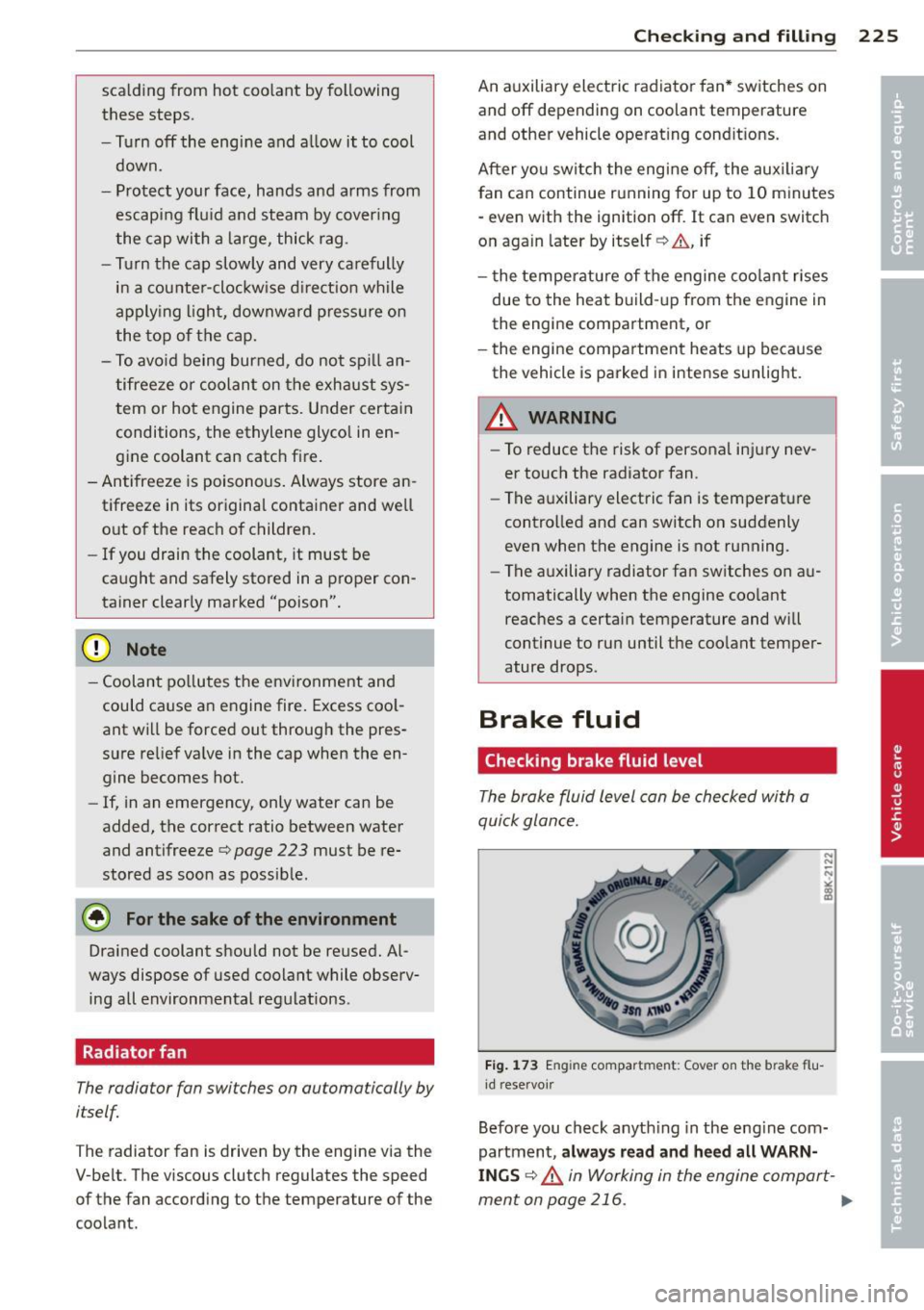
Fig. 17 3 En gin e compar tment: Cover o n the brak e flu
i d reservoi r
Before you check anyth ing in the eng ine com
partment ,
always re ad and heed all WARN
INGS c::> ,& in Working in the engine compar t-
ment on page 216 . .,..
Page 228 of 294
226 Check ing and filling
• Read the brake fluid level from the brake
fluid reservoir ¢
fig. 173, ¢ page 218,
fig . 169.
The brake fluid level must be be
tween the "MIN" and "MAX" markings.
The brake fluid reservoir is located at the rear partition of the engine compartment on the
left side ¢
page 218 .
The fluid level may drop slightly after some
time due to the automatic adjustment of the brake pads . This is not cause for alarm .
I f the brake fluid level falls
considerably be
l ow the "MIN" mark, the brake wa rning/indi
cator light (U .S . mode ls:
1111 , Canadian
models :. ) will come on
¢ page 15. Do not
continue to operate the vehicle. The complete
brake system should be thoroughly checked
by an authorized Audi dealer or qualified
workshop and the cause corrected . If the
brake fluid level is too low, the brake warn ing/
i ndicato r light w ill illuminate . Contact an au
thor ized Audi dealer
imm ediat ely .
@ Tips
The brake f luid reservoir is located under
neath the cove r.
Changing brake fluid
Have the brake fluid changed by an experi
enced technician .
Brake fluid absorbs moisture from the a ir . If
the water content in the brake fluid is too
h igh, corrosion in the brake system may result
after a per iod of t ime . The bo iling po int of the
b rake fluid w ill also decrease considerably and
decrease braking performance.
Therefore, the brake flu id must be changed
ev ery two years. A lways use new brake fluid
which confo rms to Fede ral Motor Vehicle
S tanda rd "FMVSS 116 DO T 4".
The brake flu id reservoir can be difficult to
reach, therefo re , we recommend that you
have the brake fl uid changed by yo ur au tho r
ized
Audi d eale r. Your dea le r has the correct tools, the
right brake flu id and the know -how
to do this for you.
A WARNING
'-
- Brake flu id is poisonous. It must be stor-
ed only in the closed or iginal container
out of the reach of children!
- Brake failure can resu lt from o ld or inap
propriate brake f lu id. Observe these pre
cautions:
- Use only brake f luid that meets SA E
specifi cation
J 1703 and conforms to
Federa l Motor Vehicle Standard 1 16 .
Always check with your authorized Audi
dealer to make sure yo u are using the
correct brake fluid. The correct type of
brake flu id is also ind icated on the
brake f lu id reservoir.
- The brake fluid must be new. Heavy use
of the brakes can cause a vapor lock if
the brake fluid is left i n the system too
long . This can se riously affect the effi
c iency of the brakes as well as your
safety . T his could result in an accident.
W Note
Brake fluid will damage the paint of your
vehicle .
@ For the sake of the environment
Because of the prob lem of proper disposal
of brake fluid as well as the spec ial tools
required and the necessary expertise, we
recommend that you have the brake flu id
changed by your autho rized Aud i deale r.
Battery
General information
Under normal operat ing cond itions, the bat
tery in your Audi does not need any ma inte
nance. With
high outside temperatures or
long da ily drives we recommend that you have
the e lectrolyte leve l che cked by an autho rized
A udi dealer or qualified workshop. The elec
trolyte level should also be checked each time
the battery is charged
¢ page 229. ..,_
Page 240 of 294
238 Tire s and whee ls
Remember that the vehicle manufacturer, not
the tire manufacturer, determines the correct
tire pressure for the t ires on your vehicle.
I t is important to check the tire pressu re when
the tires are cold.
- Read the requ ired t ire pressure from the tire
pressure label. The tire pressure labe l is lo
cated on the drive r's side 8-p illar. The tire
pressure label lists the recommended cold
tire inflation pressures for the vehicle at its maximum capacity we ight and the tires that
were on your vehicle at the time it was man ufactured . For recommended tire pressures
for normal load condit ions, please see chap
ter ¢
page 235 .
-Turn the valve stem cap coun ter-clockwise
to remove it from the tire valve .
- Place the air pressure gauge on the valve .
- The tire pressures should on ly be checked
and adjusted when the tires are cold . The
s lightly raised pressures of warm tires must
not be reduced .
- Adjust the tire pressure to the load you are
carrying.
- Re install the valve stem cap on the valve .
When should I check th e tire p ressur e?
The correct tire pressure is especially impor
tant at high speeds . The pressure should
therefore be checked at least once a month
and a lways before starting a journey . Do not
forget to check the tire pressure for the spare
wheel.
When should I adju st the tire pre ssure s?
Adjust the tire pressure to the load you are
carrying. After changing a wheel
or replacing
wheels you have to adjust the tire pressures
on all wheels. In addition, you must then init i
alize the new tire pressures in the tire pres
sure mon itor ing system*
¢ page 249 .
A WARNING
Incorrect tire pressures and/or underinf la
tion can lead sudden tire failure, loss of contro l, collision, ser ious persona l inju ry
or even death. -
When the
[ti warning symbol appears in
the instrument cluster, stop and inspect
the t ires.
- Incorrect tire pressure and/or underinfla
tion can cause increased tire wear and can affect the handling of the vehicle and
stopping ability .
- Incorrect tire pressures and/or underin
flation can a lso lead to sudden t ire fail
ure, including a blowout and sudden de
flation, caus ing loss of veh icle control.
- The driver is responsible for the correct
tire pressures for all tires on the veh icle.
The applicable pressure values a re locat
ed on a sticker on the dr iver's s ide 8-pil
lar.
- Only when all tires on the vehicle are fil
led to the correct pressu re, the t ire pres
sure mon itor ing system* can work cor
rectly.
- The use of incorrect tire p ressure va lues
can lead to acc idents or other damage .
Therefore it is essential that the driver
observe the spe<;ified tire pressure val ues
for the tires and the correct pressures for
the function of the tire pressure monitoring system*.
-Always inf late tires to the recommended
and correct t ire pressure before dr iving
off.
- Driving with underinflated tires bend
more, letting them get too hot resulting
in tread separation, sudden tire failure
and loss of control.
- Excessive speed and/overloading can
cause heat build-up, sudden tire failure
and loss of control.
- If the tire pressure is too low or too high,
the t ires will wear prematurely and the
veh icle w ill not handle well.
- If the tire is not flat and you do not have to change a wheel immediately, drive at
reduced speed to the nearest service sta
tion to check the t ire press ure and add
ai r as requ ired .
Page 247 of 294
-All four wheels must be fitted with radial
tires of the same type, size (rolling cir
cumference) and the same tread pattern .
Driving with different tires reduces vehi
cle handling and can lead to a loss of
control.
- If the spare tire is not the same as the
tires that are mounted on the vehicle -
for example with winter tires -only use
the spare tire for a short period of time and drive with extra care. Refit the nor
mal road wheel as soon as safely possi
ble.
- Never drive faster than the maximum
speed for which the tires on your vehicle
are rated because tires that are driven
faster than their rated speed can fail
suddenly.
- Overloading tires cause heat build-up,
sudden tire failure, including a blowout
and sudden deflation and loss of control.
- Temperature grades apply to tires that
are properly inflated and not over or un
derinflated .
- For technical reasons it is not always
possible to use wheels from other
vehicles -in some cases not even wheels
from the same vehicle model.
- If you install wheel trim discs on the ve
hicle wheels, make sure that the air flow
to the brakes is not blocked. Reduced air
flow to the brakes can them to overheat,
increasing stopping distances and caus
ing a collision.
- Run flat tires may only be used on
vehicles that were equipped with them at the factory. The vehicle must have a
chassis designed for run flat tires and a
factory-installed tire pressure monitor ing system* that indicates a loss of tire
pressure. Incorrect use of run flat tires
can lead to vehicle damage or accidents.
Check with an authorized Audi dealer or
tire specialist to see if your vehicle can be
equipped with run flat tires .
If run flat
tires are used, they must be installed on
all four wheels. Mixing tire types is not
permitted.
Tires and wheels 245
@ Note
- For technical reasons, it is not generally
possible to use the wheel rims from oth
er vehicles. This can hold true for wheels
of the same vehicle type.
- If the spare tire is different from the
tires that you have mounted on your ve
hicle (for example winter tires or wide
profile tires), then use the spare tire for a
short period of time only and drive with
extra care. Replace the flat tire with the
tire matching the others on your vehicle
as soon as possible.
- Never drive without the valve stem cap .
The valves could get damaged.
(® For the sake of the environment
Dispose of old tires in accordance with the
local requirements.
Uniform tire quality grading
- Tread wear
- Traction AA A B C
- Temperature ABC
Quality grades can be found where applicable
on the tire side wall between tread shoulder
and maximum section width
c:> page 242,
fig. 180 .
For example: Tread wear 200, Traction AA,
Temperature A.
All passenger car tires must conform to Feder
al Safety Requirements in addition to these
grades.
Tread wear
The tread wear grade is a comparative rating
based on the wear rate of the tire when tested
under controlled conditions on a specified
government test course.
For example, a tire graded 1S0 would wear
one and one half (1 1/2) times as well on the
government course as a tire graded 100.
1JJ>
•
•