lock AUDI A5 COUPE 2013 Repair Manual
[x] Cancel search | Manufacturer: AUDI, Model Year: 2013, Model line: A5 COUPE, Model: AUDI A5 COUPE 2013Pages: 294, PDF Size: 73.84 MB
Page 175 of 294
Convertible child safety seats
Properly used convertible child safety seats
can help protect toddlers and children over
age one who weigh between 20 and 40 lbs. (9
and 18 kg) in a crash.
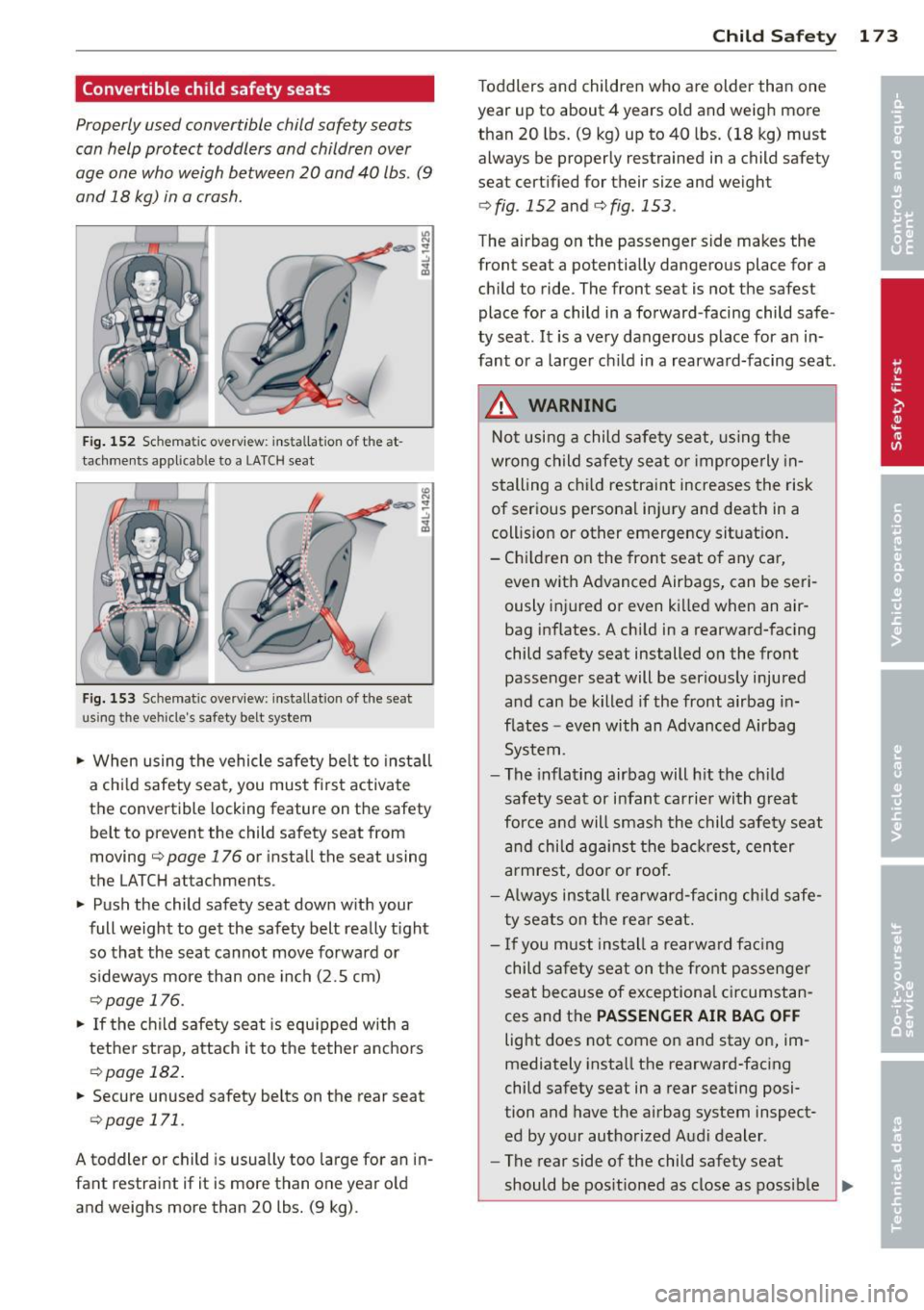
Fig. 152 Schematic overview: installat ion of the at
tachments applicable to a LATCH seat
F ig. 153 Schematic overview: installation of the seat
using the vehicle's safety belt system
.. When using the vehicle safety be lt to insta ll
a chi ld safety seat, you must f irst activate
the convertible locking feature on the safety
belt to prevent the child safety seat from
moving
c::>page 176 or install the seat using
the LATCH attachments.
.,. Push the child safety seat down w ith your
full weight to get the safety belt really t ight
so that the seat cannot move forward or
s ideways more than one inch (2.5 cm)
c:;, page 176.
.,. If the child safety seat is equ ipped with a
tether strap, attach it to the tether anchors
c:;, page 182 .
.. Secure unused safety belts on the rear seat
c:;, page 171.
A toddler or child is usually too large for an in
fant restraint if it is more than one year o ld
and weighs more than 20 lbs. (9 kg). Child Safety 173
Toddlers and children who are older than one
year up to about 4 years old and weigh more
than 20 lbs. (9 kg) up to 40 lbs. (18 kg) must
always be properly restrained in a child safety
seat cert ified for their size and weight
c::>fig . 152 and c::>fig. 153.
The airbag on the passenger side makes the
front seat a potentially dangerous place for a
child to ride. The front seat is not the safest place for a child in a forward-facing child safe
ty seat.
It is a very dangerous place for a n in
fant or a large r ch ild in a rearward-facing seat .
.&_ WARNING
Not using a child safety seat, using the
wrong child safety seat or imprope rly in
stalling a chi ld restraint increases the risk
of serious personal injury and death in a
collision or other emergency situation .
- Ch ildren on the front seat of any car,
even with Advanced Airbags, can be seri
ously injured or even killed when an air bag inflates. A child in a rearward-facing
child safety seat installed on the front passenger seat will be serious ly injured
and can be killed if the front airbag in
flates -even with an Advanced Airbag
System .
- The inflating airbag will hit the child
safety seat or infant carrier with great
force and will smash the child safety seat
and child against the backrest, center
armrest, door or roof.
- Always install rearward-f acing child safe
ty seats on the rear seat.
- If you must install a rearward facing
child safety seat on the front passenger
seat because of exceptional circumstan
ces and t he
PASSENGER AIR BAG OFF
light does not come on and stay on, im
mediately install the rearward-fac ing
child safety seat in a rear seating posi
tion and have the airbag system inspect
ed by your authorized Audi dealer.
- The rear side of the child safety seat
should be positioned as close as possible
~
Page 176 of 294
174 Child Safety
to the backrest on the vehicle seat. Ad
just or remove the rear seat head restraint if it is difficult to install the
child seat with the head restraint in place
<=>page 57. Install the head restraint
again immediately once the child seat is
removed. Driving without head restraints
or with head restraints that are not prop
erly adjusted increases the risk of serious
or fatal neck injury dramatically.
- Always read and heed all WARNINGS
whenever using a child restrained in ave
hicle is being used
<=> page 134, Safety
belts,<=> page 142, Airbag system
and
t::> page 166, Important things to know.
A WARNING
If exceptional circumstances require the
use of a forward-facing child restraint on
the front passenger's seat, the child's safe
ty and well-being require that the follow
ing special precautions be taken:
- Make sure the forward-facing seat has been designed and certified by its manu
facturer for use on a front seat with a passenger front and side airbag.
-Always follow the manufacturer's in
structions provided with the child safety
seat or infant carrier.
- Always move the front passenger seat in
to the rearmost position of the passen
ger seat's fore and aft adjustment range,
and as far away from the airbag as possi
ble before installing the child restraint.
- Always make sure that nothing prevents
the front passenger's seat from being
moved to the rearmost position in its
fore and aft adjustment range.
- Always make sure the backrest is in an
upright position.
- Make sure that the
PASSENGER AIR BAG
OFF
light comes on and stays on all the
time whenever the ignition is switched
on.
- If the light does not stay on, perform the
checks
<=> page 153, Monitoring the Ad
vanced Airbag System.
-
- Take the child restraint off the front pas
senger seat and install it properly at one
of the rear seat positions if the
PASSEN
GER AIR BAG OFF
light does not stay on
whenever the ignition is switched on.
Booster seats and safety belts
Properly used booster seats can help protect
children weighing between about 40 lbs. and
80 lbs. (18 kg and 36 kg) who are less than 4
ft. 9 in . (57 inches/1 .45 meters) tall.
"' .....
"' 0 ±
o5
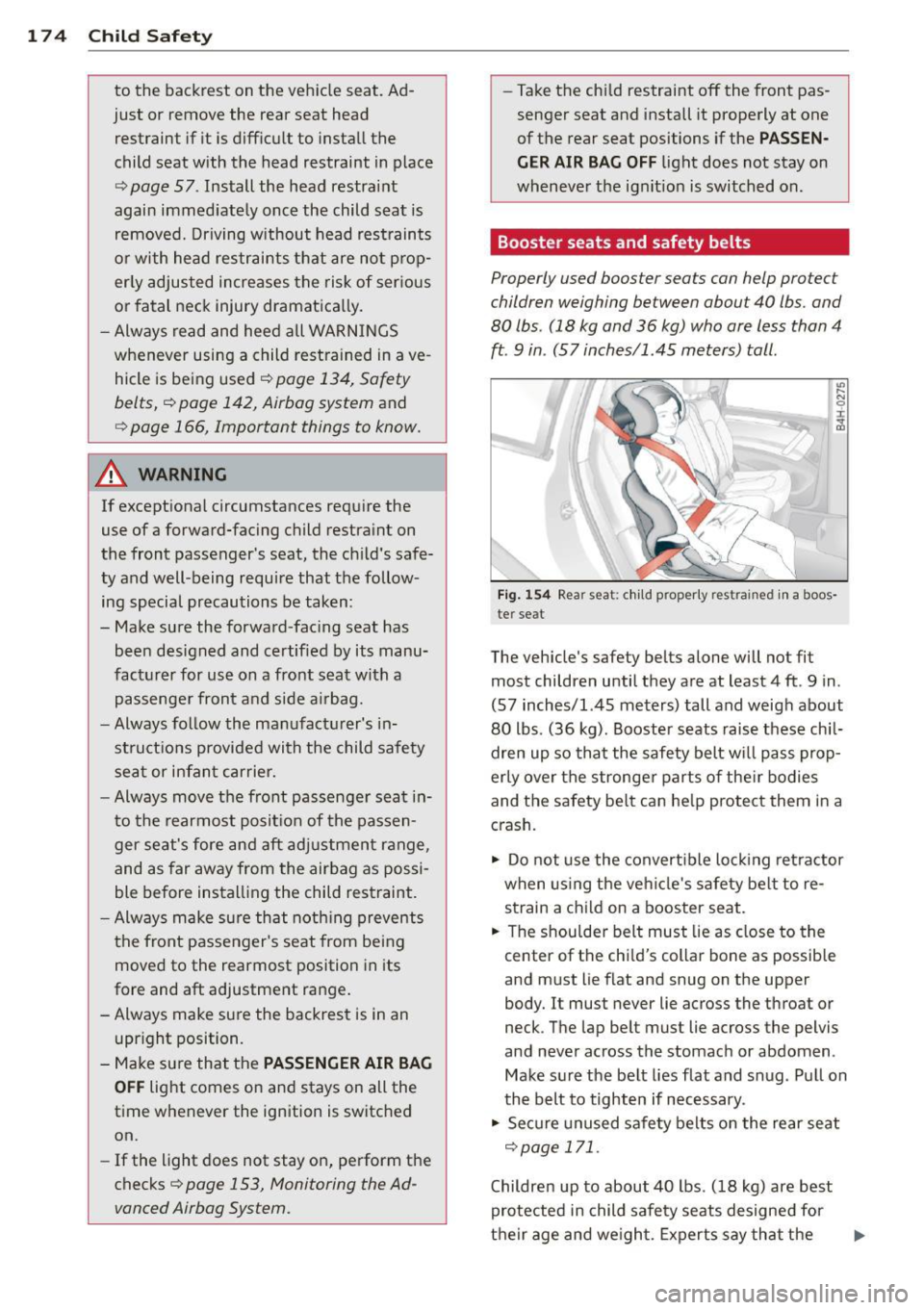
Fig. 154 Rear seat: child properly restrained in a boos
ter seat
The vehicle 's safety belts alone will not fit
most children until they are at least 4 ft . 9 in .
(57 inches/1.45 meters) tall and weigh about
80 lbs.
(36 kg). Booster seats raise these chil
dren up so that the safety belt will pass prop
erly over the stronger parts of their bodies
and the safety belt can help protect them in a
crash.
.,. Do not use the convertible locking retractor
when using the vehicle's safety belt to re
strain a child on a booster seat.
.. The shoulder belt must lie as close to the
center of the child's collar bone as possible
and must lie flat and snug on the upper
body. It must never lie across the throat or
neck . The lap belt must lie across the pelvis
and never across the stomach or abdomen .
Make sure the belt lies flat and snug. Pull on
the belt to tighten if necessary .
.,. Secure unused safety belts on the rear seat
<=>page 171.
Children up to about 40 lbs. (18 kg) are best
protected in child safety seats designed for
their age and weight. Experts say that the
Page 178 of 294
176 Child Saf ety
- Never let a child ride in the cargo area of
your vehicle .
- Always remember that a chi ld leaning
forward, sitt ing s ideways or out of posi
t ion in any way during an acc ident can be
struck by a deploying airbag . This will re
sult in serious personal injury or death .
- If you must install a booster seat on the
front passenger seat because of excep
t ional circumstances the
PASSENGER
AIR BAG OFF
light must come on and
stay on, whenever the ignition is sw itch
ed on.
- If the PASSENGER AIR BAG OFF light
does not come on and s tay on, perform
the chec ks described ¢
page 153, Moni
toring the Advanced Airbag System.
- T ake the child rest raint off the front p as
senger seat and install it properly at one
of the rea r seat positions if the
PASS EN·
GER AIR BAG OFF
light does not stay on
whenever the ignition is switched on .
- Always read and heed all WARNINGS whenever using a child rest rained in ave
hicle is being used
¢ page 134, Safety
belts,¢ page 142 , Airbag system
and
¢ page 166, Important things to know.
Installing a child safety
seat
Securing a child safety seat using a
safety belt
Safety belts for the rear seats and the front
passenger's seat can be locked with the con
vertible locking retrac tor to properly secure
child safety seats.
The safety belts emergency locking retractors
for the rear seats safety belts and for the
fro nt passenger's seat safety belt have a con
vertible locking retracto r for child restra ints .
The safety belt must be locke d so that belt
webbing can not unreel. The ret ractor ca n be
activ ated to lock the safety be lt and p revent
the safety belt webbing from loosening up
d ur ing normal driv ing . A child sa fe ty seat can
on ly be proper ly installed whe n the safety belt is locked so that the chi
ld and child safety
seat wi ll stay in place.
Alw ays remember: Even tho ugh yo ur vehicle is
equipped wi th an A dvan ced Airbag system, all
ch ildren, especially those 1 2 years and young
er, sho uld always ride in the back seat prope r
l y restra ined fo r the ir age and we ight .
A WARNING
Improperly installed chi ld safety seats in
crease the risk of serious personal injury
and death in a co llision.
- Always make sure that the safety belt re
tractor is locked when insta lling a child
safety seat. A n un locked safety belt re
trac to r cannot hold the child safety seat
in place dur ing norma l driving o r in a
crash.
- Always buckle the child safe ty seat firmly
in place even if a ch ild is not si tt ing in it.
A lo ose child safe ty se at can fly aro un d
during a s udden stop or in a collision .
- Always make sure that the rear seat
backrest to wh ich the center rear safety
belt is atta ched is securely latched when
eve r the rea r center safety belt is being
used to secure a ch il d restra int .
- If the backrest is not securely la tc h ed,
the child and the child restraint will be
thrown forward together with the back
rest and will strike parts of the vehicle
interior. The child can be seriously in
jured or killed.
- Never install rearwa rd-facing child safety
seats or infant ca rr ie rs o n the front pas
senger seat . A child will be serious ly in
jured and can be killed when the passen
ge r airbag inflates.
- The infla ting airbag will h it the ch ild
safety seat or infan t carrie r with gr eat
for ce a nd will smas h the child safe ty seat
a nd child ag ai nst the backr est, cen ter
armrest, doo r or roof.
- Always inst all rearward-fa cing ch ild safe
ty seats or inf ant carriers on the rea r
se at.
~
Page 180 of 294
178 Child Safety
though an adult were on the seat and deploy the Advanced Airbag when it must
be suppressed causing serious or even
fatal injury to the child .
- Make sure that the
PASSENGER AIR BAG
OFF
light comes on and stays on all the
time whenever the ignition is switched
on.
- If the
PASSENGER AIR BAG OFF light
does not come on and stay on, immedi
ately install the rearward-facing child
safety seat in a rear seating position and
have the airbag system inspected by your
authorized Audi dealer.
Activating the convertible locking retractor
Use the convertible locking retractor to se
cure a child restraint.
Always heed the child safety seat manufactur
er's instructions when installing a child re
straint in your vehicle. To activate the conver
tible locking retractor:
"" Place the child restraint on a seat, prefera
bly on the rear seat.
"" Slowly pull the belt
all the way out.
"" Route it around or through the child re
straint belt path¢&_ .
"" Push the child safety seat down with your
full weight to get the safety belt really tight.
"" Insert the belt tongue into the buckle for
that seating position.
"" Guide the safety belt back into the retractor
until the belt lies flat and snug on the child
safety seat.
"" You should hear a "clicking" noise as the
belt winds back into the inertia reel. Test the
convertible locking retractor by pulling on
the belt. You should no longer be able to
pull the belt out of the retractor. The con
vertible locking retractor is now activated.
"" Make sure that the red release button is fac
ing away from the child restraint so that it
can be unbuckled quickly .
"" Pull on the belt to make sure the safety belt
is properly tight and fastened so that the seat cannot move forward or sideways more
than one inch (2.5 cm).
A WARNING ....__ -
Using the wrong child restraint or an im
properly installed child restraint can cause
serious personal injury or death in a crash.
- Always make sure that the safety belt re- tractor is locked when installing a child
safety seat. An unlocked safety belt re
tractor cannot hold the child safety seat
in place during normal driving or in a
crash.
- Always buckle the child safety seat firmly
in place even if a child is not sitting in it.
A loose child safety seat can fly around
during a sudden stop or in a crash.
- Always make sure the seat backrest to
which the child restraint is installed is in
an upright position and securely latched
into place and cannot fold forward. Oth
erwise, the seatback with the child safety
seat attached to it could fly forward in
the event of an accident or other emer
gency situation.
- Always read and heed all WARNINGS whenever using a child restrained in ave
hicle is being used ¢
page 166. Special
precautions apply when installing a child
safety seat on the front passenger seat
¢ page 143, Child restraints on the front
seat -some important things to know.
Deactivating the convertible locking
retractor
The convertible locking retractor for child re
straints will be deactivated automatically when the belt is wound all the way back into
the retractor.
"" Press the red button on the safety belt
buckle. The belt tongue will pop out of the
buckle.
"" Guide the safety belt all the way back into
its stowed position .
Always let the safety belt retract completely
into its stowed position. The safety belt can
1J1-
Page 181 of 294
now be used as an ordinary safety belt with
out the convertible locking retractor for chi ld
restra ints.
I f the convertible locking retractor shou ld be
activated inadvertently, the safety belt must
be unfastened and guided completely back in
to its stowed position to deactivate this fea
ture.
If the convertib le locking retractor is not
deactivated, the safety belt will gradually be
come tighter and uncomfortable to wear .
A WARNING
Improperly installed child safety seats in
crease the risk of ser ious personal injury
and death in a collision.
- Never unfasten the safety belt to deacti
vate the convert ible lock ing ret ractor for
c hild restraints while the veh icle is mov
ing. You would not be restrained and
cou ld be ser iously injured in an accident.
- Always read and heed all WARN INGS
whenever using a child rest rained in ave
hicle is being used
¢page 166. Special
precautions apply when installing a chi ld
safety seat on the front passenger seat
¢ page 143, Child restraints on the front
seat -some important things to know.
Child Sa fet y 179
•
•
Page 183 of 294
Description
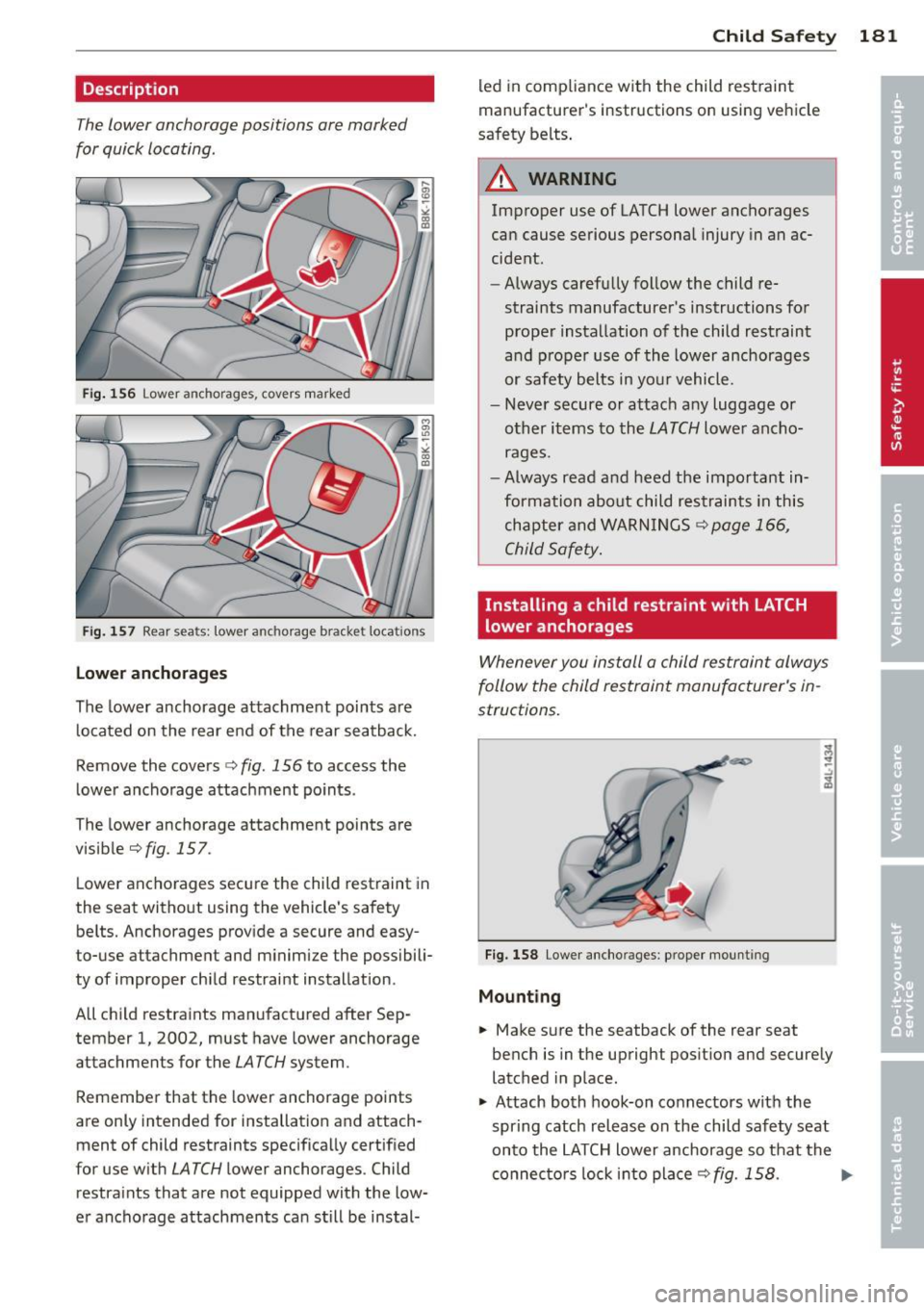
The lower anchorage positions are marked
for quick locating.
Fig . 156 Lower anchorages, covers marke d
Fi g. 157 Rea r seats: lower anc horage bracket locat io ns
Lowe r ancho rages
The lower anchorage attachment points are
l ocated on the rear end of the rear seatback.
Remove the covers
c::> fig . 156 to access the
lower anchorage attachment points .
The lower anchorage attachment points are
visib le
c::> fig. 157 .
Lower anchorages secure the child restraint in
the seat witho ut using the vehicle 's safety
be lts. Anchorages provide a secure and easy
to-use attachment and minimize the possibili
ty of improper child restraint installation .
All chi ld restraints manufactured after Sep
tember 1, 2002, must have lower anchorage
attachments for the
LATCH system.
Remember that the lower anchorage points
are only intended for installation and attach
ment of child restraints specifically certified
for use w ith
LATCH l ower anchorages. Child
restra ints that are not equipped with the low
er anchorage attachments can still be instal-
Child S afety 181
led in compliance with the child restraint
manufacturer's instructions on using vehicle
safety belts .
_& WARNING
Improper use of LATCH lower anchorages
can cause serious personal injury in an ac
cident.
- Always carefully follow the child re
straints manufacturer's instructions for
proper installation of the child restraint
and p roper use of the lower anchorages
or safety belts in your vehicle.
- Never secure or attach any luggage or
other items to the
LATCH lowe r ancho
rages.
- Always read and heed the important in
formation about child restraints in this
chapter and WARN INGS
c::> page 166,
Child Safety.
Installing a child restraint with LATCH
lower anchorages
Whenever you install a child restraint always
follow the child restraint manufacturer's in
structions.
F ig. 158 Lowe r anc horages: proper mount ing
Mounting
.. Make sure the seatback of the rear seat
bench is in the upright pos it ion and securely
latched in place .
"' Attach both hook-on connectors with the
spring catch release on the child safety seat
onto the LATCH lower anchorage so that the
connec to rs lock into place
c::> fig. 158 . ..,.
Page 188 of 294
186 Intelligent technology
ESC includes and/or works together with the
anti-lock brake system (ABS), brake assist sys
tem, anti-slip regulation (ASR) , e lectronic dif
ferential lock (EDL), dynamic steering" and
e lectronic interaxle differentia l lock* /selective
wheel torque control* . ESC is switched on all
the t ime. I n certa in s ituations whe n you need
l ess t raction, you can switch
off ASR by p ress
i ng the bu tto n
[ru ¢ page 187, fig. 161 or
¢ page 187, fig. 162. Be sure to sw itch ASR
on aga in when yo u no longer need less t rac
tion .
Anti -lock braking system (ABS)
ABS prevents the wheels from locking up
when braki ng. The veh icle can still be steered
even d uring h ard br aking. Apply ste ady p res
sure to the brake pedal. Do no t pump the ped
a l. A pulsing in the brake peda l indicates t hat
the system is he lping yo u to b rake the vehicle .
Brake assist system
The brake assis t system can decrease b ra ki ng
d ista nce. It incre ases braking power w hen the
d river p resses the brake pedal q uic kl y in eme r
gency situations . You must p ress and hold the
b rake peda l until the situation is over. In
vehicles w ith adapt ive cru ise contro l", the
brake assist system is more sensit ive if the
d ista nce detected to t he vehicle a head is too
small.
Anti-slip regulation (ASR)
ASR reduces engine power when the drive
wheels begin to spin and adapts the fo rce to
the road condit ions. This makes it eas ier to
start , accelerate and drive up hills.
Electronic differenti al lock (EDL )
The ED L brakes wheels that are spinn ing and
transfers the drive power to the other drive
wheel or whee ls if t he vehicle is equipped with
all-w heel drive*. This function is available up
to abo ut 60 mph (100 km/h).
In extreme cases, EDL automat ica lly switches
off to help keep the bra ke on the braked whee l
from overheating. EDL wi ll switch on again au-tomat
ica lly when conditions have ret urned to
no rma l.
Dynamic steering*
On vehicles wi th dynam ic steering*, ESC he lps
st abiliz e the steer ing in cr itical situ ations.
Electronic interaxle differential lock* /
selective wheel torque control*
T he elec troni c int eraxle differentia l lock (front
whee l dr ive) o r th e se lec tive whee l torque
control (all-whee l dr ive) oper ates when dr iv
ing t hro ugh curves. The front w heel on the in
side of the c urve or both whee ls on the inside
of the c urve are b raked se lectively as needed.
This m inimizes sliding in the front wheels and
allows for more precise driving through
curves . The applicable system may not acti
vate when dr iving in wet o r snowy cond itions.
A WARNING
- ESC, ABS, ASR, EDL dynam ic steering*
an d the ele ct roni c interaxle differential
lo ck* /se lective whee l torque con trol *
fu nction canno t over come the laws of
p hys ics. Th is is especially important on
slippe ry or wet roads . If the systems be
g in acting to stabilize yo ur vehicle, you
should immediately change yo ur speed
to match the road and traffic conditions. Do not let the increased safety provided
by these systems tem pt you to ta ke risks.
Doing so will increase the risk of a loss of
veh icle cont ro l, col lision and ser ious per
sonal injur ies.
- Always ada pt your speed to road, traffi c
a nd wea ther condi tions. The risk of los-
ing con trol of the vehicle increases when
d riving too fast, es pec ia lly through
curves and o n slippe ry or wet roads, an d
when dr iv ing too close to vehicles up
ahead. ESC, ABS, the brake ass ist sys
tem, ASR, EDL dynam ic steer ing* and the
e lectronic inte raxle differentia l lock*/se
lec tive whee l to rque control* func tion
cannot prevent collisions.
-
Page 203 of 294
Automatic car wash
The vehicle can be washed in almost any
modern automatic car wash .
The vehicle paint is so durable that the vehicle
can normally be washed without problems in
an automatic car wash. However, the effect on
the paint depends to a large extent on the de
sig n of the fac ility, the filte ring of the wash
water, the type of wash and care mater ial , etc.
If the paint has a dull appearance afte r go ing
through the car wash or is scratched, bring
this to the attention of the operator immedi
ately. If necessary, use a different car wash.
Before going through a ca r wash, be s ure to
take the usual precautions such as closing the
windows and the roof . Factory installed an
tennas must not be removed.
If you have installed additional accessories on
the vehicle -such as spoilers, roof rack, etc. -
it is best to ask the car was h operator if these
should be removed .
A WARNING
Always read and heed a ll WARNINGS and
other information
¢ page 200.
(D Note
Before washing the vehicle in an automatic
car wash, p lease make sure to retract the
exterior m irrors to prevent them from be
ing damaged.
Washing the vehicle by hand
A lot of water is needed when washing a vehi
cle by hand.
~ Before you start washing, make sure yo u
have read and understood the WARNINGS
¢ A in General information on page 200 .
~ First soak all dried dirt until it is soft, then
rinse it off .
~ As you clean your veh icle, start with the
roof and work your way down to the bottom,
us ing a sponge , a sponge glove o r a clean
brush.
Cleaning and protec tion 20 1
~ Rinse the sponge or the sponge g love often,
flushing it clean eac h time .
~ Use spec ia l car shampoo only for very per
sistent d irt .
~ Rinse the car thoroughly with water.
~ Use a chamois leather to gently w ipe the ex-
ter ior d ry .
U se a separate sponge for cleaning the
whee ls, door sills and other regions exposed
to road dirt . In this way, you w ill not scratch
the pa int wit h coarse particles imbedded in
the sponge the next time you wash the car.
&_ WARNING
- Do not clean the underside of the chas
sis, fenders, wheel covers, or o ther ha rd
to reach pa rts without protect ing you r
hands and arms. You may cut yourself on
sharp-edged metal parts .
-Always read and heed a ll WARNINGS and
other information
¢ page 200.
(D Note
- N ever try to remove dirt, mud or dust if
the s urface o f the veh icle is dry . Never
use a dry cloth or sponge, since this
co uld scratch your vehicle's paint or win
dows.
- Never wash your car in bright s unlight .
Drops of wate r act as magnifying lenses
and may damage yo ur paint .
- When you wash yo ur car in the winter: if
you rinse yo ur vehicle with a hose, be
careful not to aim the stream of water
directly at locks, or at door or hatch
openings -they can freeze shut .
- Never use sponges designed to
remove
insects, or any k itche n scou ring sponges
or s imilar products. They can damage
your paint finish .
- You should remove debris (such as in
sects) from the headlight lenses on a
regu lar bas is, for exampl e w hen refuel
ing your veh icle . Never use a dry cloth o r
sponge to clean t he headlights. On ly use
wet cloths o r sponges to prevent
scratches. It is best to use soapy water.
-
•
•
Page 208 of 294
206 Cleaning and protection
Your authorized Audi dealer can provide clean
ing prod ucts that have been tested and ap
proved for your vehicle .
Care of interior
Infotainment components
The Radio/MM !* display may be cleaned with
a soft cloth and commerc ially-avai lable "LCD
cleaner" . The cloth should be coated lightly
when the cleaning solution when cleaning the
display.
The
MM I* controls must be cleaned first with
a brush so that dirt does not enter the unit or
enter between the buttons and the housing.
Then wiping the controls with a cloth damp
ened with dish detergent and water is recommended.
(D Note
- To avoid scratching the disp lay, you
shou ld never clean it dry.
- To prevent damage, make sure fluids do
not enter the controls.
Aluminum trim
Use only neutral -pH products to remove spots
and depos its from alum inum surfaces.
Chrome care products and alkaline cleaners
will attack alum inum surfaces and can dam
age them over time.
..&, WARNING
Always read and heed all WARNINGS and
other information
¢ page 200.
Fabrics and fabric coverings
Fab rics and fabric coverings (e.g. seats, doo r
trim panels, etc.) should be cleaned at regular
interva ls with a vacuum cleaner. This removes
surface dirt particles which could become em
bedded in the fabr ic through use. Steam
cleaners should not be used, because the
steam tends to push the dirt deeper into the
fabr ic and lock it there.
Normal cleaning
Generally, we recommend using a soft sponge
or a lint-free microfiber cloth to the clean fab
ric. Brushes shou ld only be used for carpets
and floor mats, since other fabric surfaces
could be harmed by brushes.
Normal surface stains can be cleaned using a
commercially availab le foam cleaner . Spread
the foam on the surface of the fabric with a
soft sponge and work it in gently. Do not satu
rate the fabric. Then pat the foam dry using
absorbent, dry cloths (e.g. m icrofiber cloth)
and vacuum it after it has dried completely.
Cleaning stains
Stains caused by beverages (e.g. coffee, fruit
juice, etc.) can be treated with a mild deter
gent solution. Apply the detergent solution
with a sponge. In the case of stubborn stains,
a detergent paste can be applied directly to
the stain and worked into the fabric. After
wards, use copious amounts of clean water to
remove the remaining detergent. Apply the
water with a damp doth or sponge and pat
the fabric dry with an absorbent, dry cloth .
Stains from chocolate or makeup should have
detergent paste rubbed into them . After
wards, remove the soap with water (damp
sponge).
Alcohol can be used to treat stains from
grease, o il, lipstick or a ballpoint pen. Melted
grease or dye must be patted off using ab
sorbent material.
It may be necessary to re
treat the areas with detergent paste and wa
ter.
In the case of general soiling of the upho ls
tery and cover material, we recommend hiring
a specia list that has the equipment to clean
the seat covers and other fabr ic surfaces by
shampooing and spray extraction.
..&, WARNING
-Always read and heed all WARNINGS and
the information
i:> page 200.
Page 210 of 294
208 Cleaning and protection
-To keep your leather from bleaching out,
do not a llow it to be exposed to bright
sunlight for long periods of time. If you
have to leave the vehicle parked outside
for long periods, cover the leather to
protect it from direct exposure to sun
li ght.
- Sharp objects on clothing, such as zip pers, rivets or sharp pieces on belts can
l eave pe rmanent scratches or scrape
marks on the surface of the leather.
@ Tips
-After each time you clean the leather and
at regular intervals, use a leather preser
vat ive cream that contains UV-blockers
and that works into the leather. This
cream will nourish and moistur ize the
l eather, helping it to breathe and stay
supple. It also helps to build up a protec
tive coating on the surface.
- Clean the leather every 2 -3 months,
and clean any areas that get soiled.
- Remove fresh marks made by ballpoint
pens, ink, lipst ick, shoe polish, etc . as
soon as possible.
- Preserve the color of the leather as need
ed by using a special colored leather care
cream to touch up areas of uneven color.
Cleaning and caring for leather
upholstery and trim
App lies to vehicles: with nat ura l leather
Natural leather requires special care and at
tention.
Normal cleaning
.. Clean soi led areas wit h a slightly moistened
cotton or woo len cloth.
More stubborn dirt
.. More stubborn dirt can be removed using a
cloth saturated with a mild soap so lution (2
tablespoons mi ld liquid soap) . ..
Never allow the soap solution to saturate
the leather, and make certain that no water
soaks into the seams.
.. Wipe off the soap so lution with a soft, dry
cloth.
Cleaning spots
.. Remove fresh water-based spots (such as
coffee, tea, juices, blood) with an absorbent
cloth or paper towel.
.. Remove fresh
grease or oil-based spots
(such as butter, mayonnaise, chocolate) with
an absorbent cloth or pape r towel, or use
the cleaner from the leather care k it if the
spot has not yet penetrated into the surface
of the leathe r.
.. Use an oil/grease dissolving spray, if
oil/
grease spots have dried on.
.. Remove specific kinds of spots (ballpoint
pen, fe lt marker, fingernai l polish, water
based paint, shoe polish, etc.) with a spot
remover specifically formulated for leather.
Leather care
.. Every half year use an approved leather care
product (available from your authorized
Audi dea ler) to care for the leather .
.. App ly the product very spar ingly.
.. Wipe it off with a damp cloth.
If you have any questions about cleaning and
caring for the leather in your vehicle, it is best
to contact your authorized Audi dealer, who
will be glad to help you and tell you about our
full range of leather care products, such as :
- Leather cleaning and care kit
- Creams to care for colored leather
- Spot removers for ballpoint pens, shoe pol-
ish, etc .
- Oil/grease dissolving spray
- New and upcom ing products.
,&. WARNING
Always read and heed all WARNINGS and
other information
~page 200.