airbag off AUDI A5 COUPE 2014 Owners Manual
[x] Cancel search | Manufacturer: AUDI, Model Year: 2014, Model line: A5 COUPE, Model: AUDI A5 COUPE 2014Pages: 286, PDF Size: 70.99 MB
Page 34 of 286
32 Openin g and clo sing
Opening and closing
Power locking system
General description
The power locking system locks or unlocks all
doors and the rear lid simultaneously.
You can lock and unlock the vehicle centrally.
You have the following choices:
- Remote master key~
page 35,
-Door handles with convenience key*
~page 36,
-Lock cy linder at the dr iver's door
~ page 37, or
- Power loc king switch inside
~ page 36.
Automatic l ocking
The automatic locking feature locks all the ve
h icle doors and the rear lid when you drive
faster than 9 mph ( 15 km/h) .
The car is unlocked again once the ignition key is removed. In addition, the veh icle can be un
locked if the opening function in the power
lock ing system switch or at one of the door
leve rs is actuated. The Auto Loc k function can
be turned on and off in the rad io or
MMI*
~ page 37.
Addit ionally, in the event of a crash with a ir
bag deployment the doors are automatically
un locked to allow access to the veh icle.
Selective unlocking
When you lock the vehicle, the power locking
system w ill lock the doors and the rear lid .
When unlocking, you can set in the rad io or
MMI* whether
only the dr iver's door or the
enti re ve hicle should be unlocked
~ page 37.
Anti -th eft alarm warning system
If the anti-theft alarm warning system de
tects a break- in into the vehicle, acoust ic and
visua l wa rning signals are triggered.
The anti -theft warn ing system is act ivated au
tomatically when you lock the vehicle .
It is de
activated when u nlocking using the remote key, with the mechanica
l key, and when yo u
switch on the ignition.
T he alarm a lso t urns off when t he a la rm cycle
has expired.
Turn signals
When you u nlock the veh icle, the turn s ignals
flash twice , when you lock it once . If they do
not flash, one of the doo rs, the luggage com
partment lid or the hood is not locked or the
ignition is s till sw itched on.
Unint entionally locking yourself out
In the follow ing cases there safegua rds to
prevent you lock ing you r remote master key in
the vehicle:
- The vehicle does not lock w ith the power
lock ing switch ~
page 36 if the drive r's
door is open .
- On veh ides with convenience key*, if the
most recently used master key is in the lug
gage compa rtment, the rear lid is automat i
cally un locked again after it is closed.
Do not lock your veh icle w ith the remote mas
ter key or convenience key* unt il all doors and
the rea r lid a re closed . In this way you avoid
locking yourself out accidentally .
_& WARNING
-
-When you leave the veh icle, alw ays re
move the ignition key and take it with
you . This will prevent passengers (chil
dren, for example) from acc identally be
ing locked in the vehicle should they acci
dentally press the power locking switch in the front doors .
- Do not leave ch ildren inside the vehicle
unsuperv ised. In an emergency it would
be imposs ible to open the doors from
the o utside without the key .
(D Tips
- In the event of a crash with airbag de
ployment all locked doors will be auto
matically unlocked to give access to the
vehicle occupants from the outside.
Page 39 of 286
- You cannot open the doors or the rear lid
from the
outside (increased security, for ex
amp le when you are stopped at a red light).
- The diodes in the power locking switc h illu
minate when all the doors are closed and
locked.
- You can unlock and open the doors from the
i nside by pul ling on the door hand le .
- If you have a crash and the airbag is activat
ed , the doors automatically un lock .
_& WARNING
- The power locking switch works with the
ignition off and automatically locks the
entire vehicle when it is actuated .
- On a vehicle locked from the outside the
power locking system switch is inopera
t ive.
- locked doors make it more difficult for
emergency workers to get into the vehi
cle, which puts lives at risk . Do not leave
anyone behind in the veh icle, especially
children .
@ Tips
Your vehicle is locked automatically at a
speed of 9 mph (15 km/h) (Auto lock)
¢page 32. You can un lock the vehicle
aga in using the opening function in the
powe r locking system switch~-
Setting power locking
In the radio/MM!*, you can set which doors
the centrol locking system will unlock .
~ Select: I CAR I function button > Central lock
ing .
Or
~ Select: ~IC_A_R~I funct ion button> Car systems *
control button > Vehicle settings > (C entral
locking )* .
Sin gle door unlocki ng /Unl ock door s* -
you
can specify which doors u nlock when you open
the vehicle .
- Se lecting
off / All and pressing the Ii button
on the remote control key unlocks the entire
vehicle.
Opening and clo sin g 3 7
- Select ing o n/Dri ver and pressing the~ but
ton on the remote control key once u nlocks
only the driver's door . In vehicles w ith a con
ven ience key*, only the door whose handle
you pull w ill unlock . If you press the @! but
ton tw ice, the entire vehicle will u nlock . If
you press the [@] button, t he e ntire ve hicle
w ill always lock .
Luggage comp. lock /Lock e xterio r trunk han
dl e -
If you select On , you can no longer open
the luggage compartment us ing the rear lid
hand le ¢
page 39, fig. 28 . In this case, the
r ear lid can be opened with the
l""I bu tton on
the maste r key ¢
poge 35, fig. 22 or with the
l"" I* button in the driver's door ¢ page 39,
fig .
27 .
Ton e when lo cking -if you select On, a tone
will sound when yo u loc k the vehicle .
Auto Lock /Lock when dri ving -if you select
On, the enti re ve hicle w ill lock automatica lly
when the speed reaches 9 mph (15 km/h).
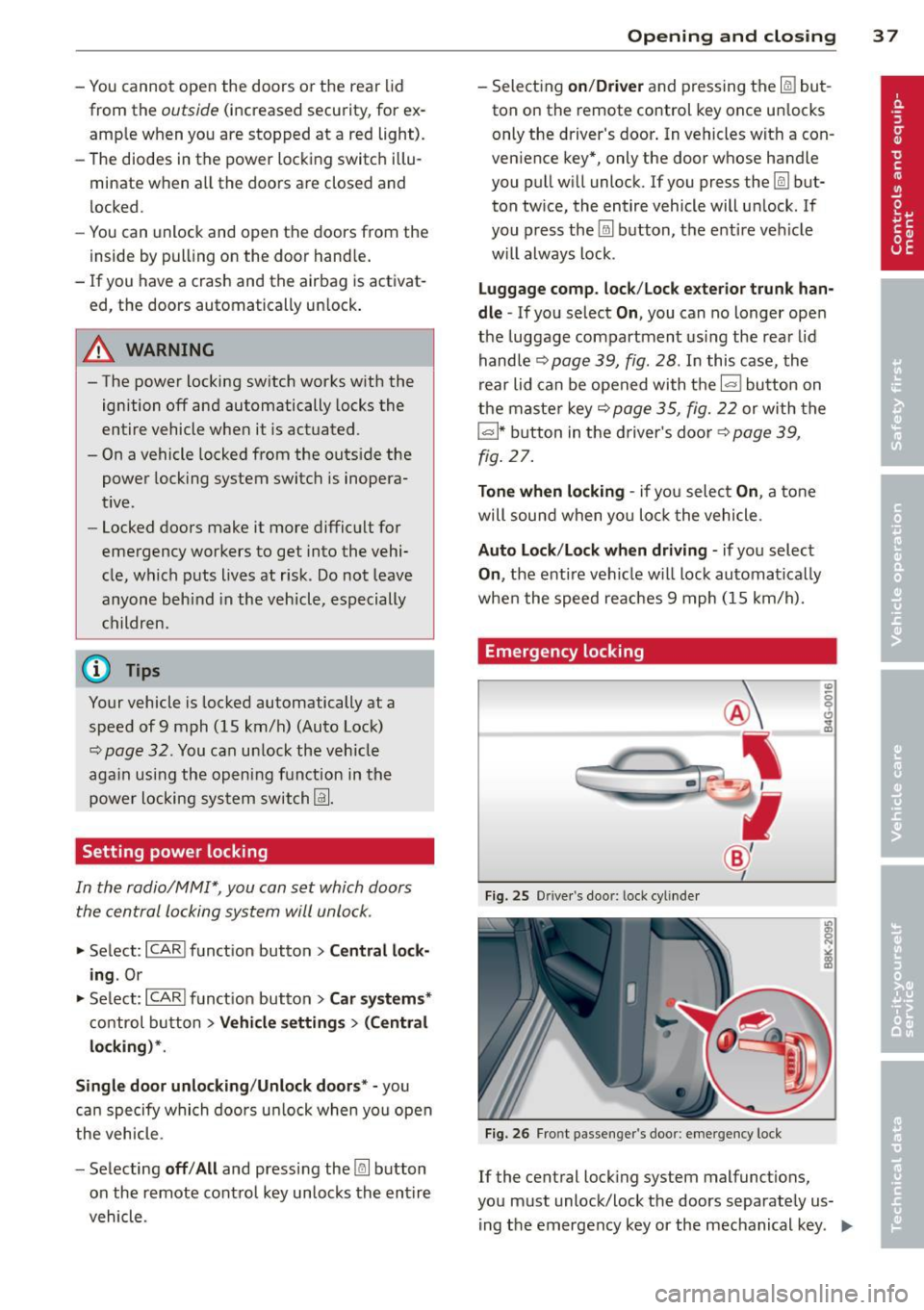
Emergency locking
Fi g. 25 Drive r's doo r: lock cylinde r
Fig. 26 Fro nt passenger 's doo r: emergency lock
If the central lock ing system malfunct ions,
you must unlock/lock the doors separate ly us
ing t he emergency key or the mechanical key .
IJJJ,
Page 47 of 286
The leavin g home function il luminates the
area around the vehicle when unlocking it.
This function can be switched on and off.
The
c o ming h om e and lea ving home func
tions on ly operate when it is dark and the
light switch is in the AUTO position
¢ page 43, fig. 34.
Auto headlight s*
When the light switch is in the A UTO
¢ page 43 position, the switch-on po int of the
lights can be changed in the automatic driving
light function.
Daytime running lights
USA m odel s:
You can switch the dayt ime run
ni ng lights
on and o ff .
Canada mod els:
The function cannot be
turned off .
It is activated a utomat ica lly each
time the ignition is switched on.
Travel mode*
The headlight beam is asymmetrical. This pro
v ides stronger illum ination on the side of the
road on wh ich you are driving .
If you are driv
i ng in a count ry that d rives on the opposite
side of the road from your own country, th is
will cau se glare for on coming dr ivers. To pre
vent glare:
- Trave l mode must be selected in vehicles
with Xenon headlights*.
- In veh icles with halogen headlights, ce rtain
areas of the head light lenses must be cov
ered w ith wate rproof adhesive covers that
prevent light from passing thro ugh. Fo r
more information, please see your author
ized Audi dea ler or author ized repa ir faci lity .
(D Tips
When trave l mode is activated, a display in
the dr iver information system indicates
this each time you switch the ignit io n on.
Clear vi sion 45
Emergency flashers
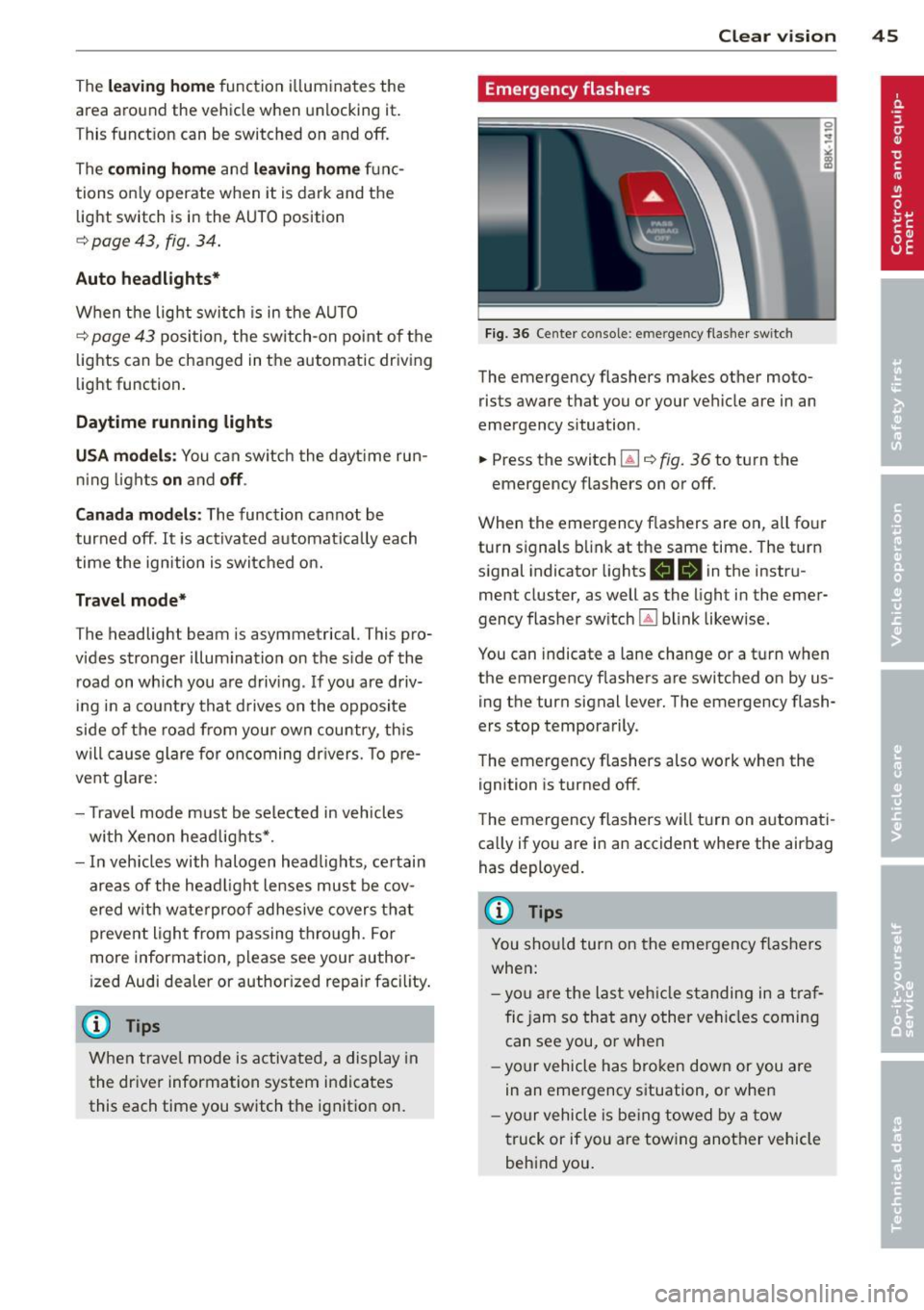
F ig. 36 Center console: emergency flasher switch
The emergency flashers makes other moto
rists aware that you or your vehicle are in an
emergency situation .
.. Press the switch
Gil¢ fig. 36 to turn the
emergency flashers on or off.
When the emergency flas hers are on, all four
turn signals b link at the same time. The turn
s ignal indicator lights .
1B in the instru
ment cluster, as well as the light in the emer
gency flasher switch ~ blink likewise.
You can indicate a lane change or a tu rn w hen
the emergency flashers are switched on by us
ing the turn signal lever. The emergency flash
ers stop temporarily.
T he emergency flashers also work when the
ignition is turned off.
T he emergency flashers w ill turn on a utomat i
ca lly if yo u are in an accident where the airbag
has deployed.
(D Tips
You sho uld turn on the emergency f las hers
when:
- yo u are the last veh icle standing in a t raf
fic jam so that any other vehi cles coming
can see you, or whe n
- yo ur vehicle has bro ken down or you are
in an eme rgency s ituation, or when
- yo ur vehicle is be ing towed by a tow
truck or if you are tow ing another vehicle
beh ind you.
Page 55 of 286
Seats and storage
General recommen
dations
Why is your seat adjustment so important?
The safety belts and the airbag system can
only provide maximum protection if the front
seats are correctly adjusted.
There are various ways of adjusting the front
seats to provide safe and comfortable support
for the driver and the front passenger. Adjust
your seat properly so that :
- you can easily and quick ly reach all the
switches and controls in the instrument
panel
- your body is properly supported thus reduc ing physical stress and fatigue
- the safety belts and airbag system can offe r
maximum protection
¢ page 137.
In the following sections, you will see exactly
how you can best adjust your seats .
There are special regulations and instructions
for installing a child safety seat on the front passenger's seat. Always follow the informa
tion regard ing child safety provided in
¢ page 161, Child Safety.
.&_ WARNING
-
Refer to ¢ page 119, Driving Safely for
important information, tips, suggestions
and warnings that you should read and fol
low for your own safety and the safety of
your passengers.
.&_ WARNING
Incorrect seating position of the driver and
all other passengers can result in serious
personal injury.
- Always keep your feet on the floor when
the vehicle is in motion -never put your
feet on top of the instrument panel, out of the w indow or on top of the seat cush
ion. This app lies especially to the passen-
S eat s an d sto rage 53
gers . If your seating position is incorrect,
you increase the risk of injury in the case
of sudden braking or an accident . If the
airbag inflates and the seating position
is incorrect, this cou ld result in pe rsonal
in jury or even death.
- It is important for both the driver and front passenger to keep a distance of at least 10 inches (25 cm) between them
selves and the steering wheel and/or in
strumen t panel. If you're s itting any
closer than th is, the airbag system can
not protect you properly. In addition, the
front seats and head restraints m ust be
adj usted to your body height so that they
can give you max imum protect ion.
- Always try to keep as much distance as
possible between yourself and the steer
ing wheel or instrument panel.
- Do not adjust the driver's or front pas senger's seat whi le the vehicle is moving.
Your seat may move unexpectedly, caus
ing sudden loss of veh icle control and
pe rsonal injury. If you adjust you r seat
while the veh icle is moving, you are ou t
of posit ion.
Driver's seat
The correct seat position is important for safe
and relaxed driving .
We recommend that you adjust the dr iver's
seat in the follow ing manner:
.., Adjust the seat in fore and aft direction so
that you can easily push the pedals to the
floor wh ile keeping your knees slightly bent
¢ .&, in Why is your seat adjustment so im
portant? on page 53.
"" Adjust the seatback so that when you sit
w ith your back against the seatback , you can
s ti ll grasp the top of t he steering wheel.
... App lies to vehicles with adjustab le head re
straints: Adjust the head restraint so the up
per edge is as even as possible wit h the top
of your head. If that is not possib le, try to
adjust the head restraint so that it is as .,.
Page 56 of 286
54 Seats and storage
close to this position as possib le
¢ page 56.
A WARNING
Never place any objects in the driver's foot
well. An object could get into the pedal area and interfere with pedal function. In
case of sudden braking or an accident, you
wou ld not be ab le to brake or accelerate .
Front passenger's seat
Always move the front passenger seat into
the rearmost position .
To avoid contact with the airbag whi le it is de
ploying, do not sit any closer to the instru
ment panel than necessary and always wear
the three-point safety belt provided adjusted correctly . We recommend that you adjust the
passenger's seat in the following ma nner:
• Bring the backrest up to an (almost) upr ight
pos it ion. Do not ride with the seat reclined .
• Applies to vehicles with adjustable head re
stra ints: Adjust the head restrain t so the up
per edge is as even as possible with the top
of your head . If that is not possible, try to
adjust the head restra int so that it is as
close to this position as possible
¢ page 56.
• Place your feet on the floor in front of the
passenger's seat.
Front seats
Power seat adjustment
Applies to vehicles: with power adjustab le seats
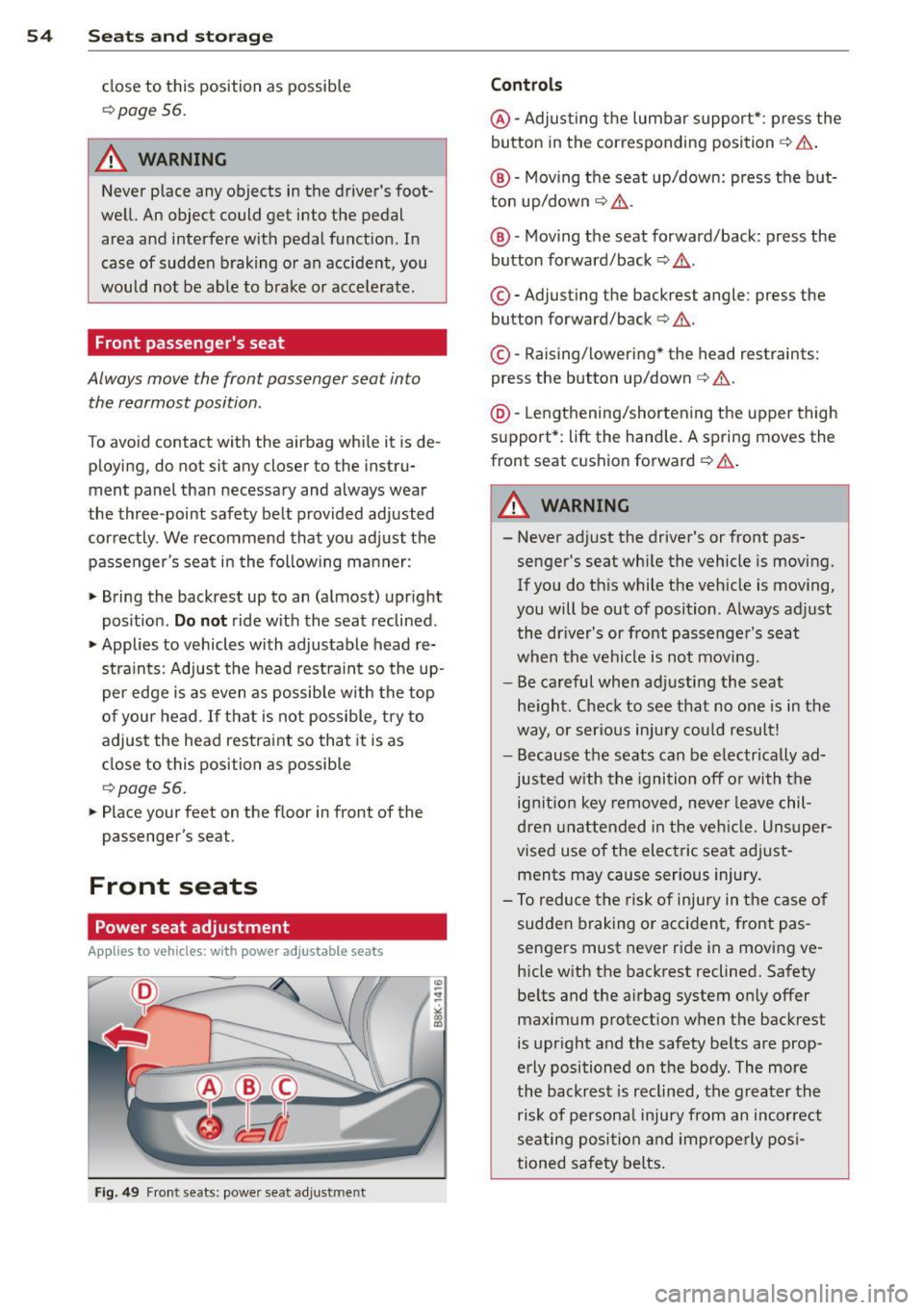
Fig. 4 9 Fr ont seats: powe r seat adjustme nt
Controls
@ -Adjust ing the lumbar support *: press the
button in the corresponding position ¢ .&, .
@ -Moving the seat up/down: press the b ut
ton up/down ¢ .&, .
@ -Moving the seat forward/back : press the
button forward/back ¢.&, .
©-Adjust ing the backrest angle : press the
button forward/back ¢.&, .
©-Raising/lowering * the head restraints:
press the button up/down¢.&, .
@ -Lengthening/shortening the upper thigh
s u pport* : lift the hand le. A spring moves the
front seat c ushion forward ¢ .&, .
A WARNING
--- Never ad just the driver's or front pas
senger's seat whi le the vehicle is moving.
If you do th is while the veh icle is moving,
you will be out of position . A lways ad just
the dr iver's or front passenger's s eat
when t he vehicle is not mov ing.
- Be ca reful when ad justing the seat
he ight . C hec k to see that no one is in the
way, or serio us inju ry co uld resu lt!
- Because the seats can be e lectrically ad
justed w ith the ignition off o r with the
ig nit ion key removed, never le ave chil
d ren una ttended in the veh icle. Unsuper
vised use of the elec tric seat adjust
ments may cause serious injury.
- T o reduce the risk of injury in t he c ase o f
sudden braking o r acciden t, front pas
sengers must never ride in a movi ng ve
h icle with the back rest reclined. Safety
be lts and the airbag system only offer
maximum protection when the backrest
is upr ight and the safety belts are prop
erly positioned on the bo dy. The more
the backrest is r eclined, the greater the
ris k of persona l inju ry from an incorrect
sea tin g po sit ion and improperly pos i
tioned safety belts .
Page 124 of 286
122 Driving Safely
-Passengers must always sit in an upright
position and never lean against or place
any part of their body too close to the
area where the airbags are located.
- Passengers who are unbelted, out of po
sition or too close to the airbag can be
seriously injured by an airbag as it un
folds with great force in the blink of an
eye.
- Always make sure that there are at least
10 inches (25 cm) between the front
passenger's breastbone and the instru
ment panel.
- Each passenger must always sit on a seat
of their own and properly fasten and
wear the safety belt belonging to that
seat.
- Before driving, always adjust the front
passenger seat and head restraint prop
erly.
- Always keep your feet on the floor in
front of the seat. Never rest them on the
seat, instrument panel, out of the win
dow, etc. The airbag system and safety
belt will not be able to protect you prop
erly and can even increase the risk of in
jury in a crash.
- Never drive with the backrest reclined or
tilted far back! The farther the backrests
are tilted back, the greater the risk of in
jury due to incorrect positioning of the
safety belt and improper seating posi
tion.
- Children must always ride in child safety
seats<=:>
page 161 . Special precautions
apply when installing a child safety seat
on the front passenger seat <=:>
page 13 7.
Proper seating positions for passengers
in rear seats
Rear seat passengers must sit upright with
both feet on the floor consistent with their
physical size and be properly restrained
whenever the vehicle is in use.
To reduce the risk of injury caused by an incor
rect seating position in the event of a sudden
braking maneuver or an accident, your pas- sengers on the
rear bench seat must always
observe the following:
" Make sure that the seatback is securely
latched in the upright position <=:>
page 63.
"Keep both feet flat in the footwell in front of
the rear seat.
" Fasten and wear safety belts properly
<=:>page 132.
"Make sure that children are always properly
restrained in a child restraint that is appro
priate for their size and age ¢
page 161.
,&. WARNING
Passengers who are improperly seated on
the rear seat can be seriously injured in a
crash.
- Each passenger must always sit on a seat
of their own and properly fasten and
wear the safety belt belonging to that
seat.
- Safety belts only offer maximum protec
tion when the seatback is securely latch
ed in the upright position and the safety
belts are properly positioned on the body. By not sitting upright, a rear seat
passenger increases the risk of personal
injury from improperly positioned safety
belts!
- Always adjust the head restraint properly
so that it can give maximum protection .
Proper adjustment of head restraints
-
Applies to vehicles: with adjustable head restraints
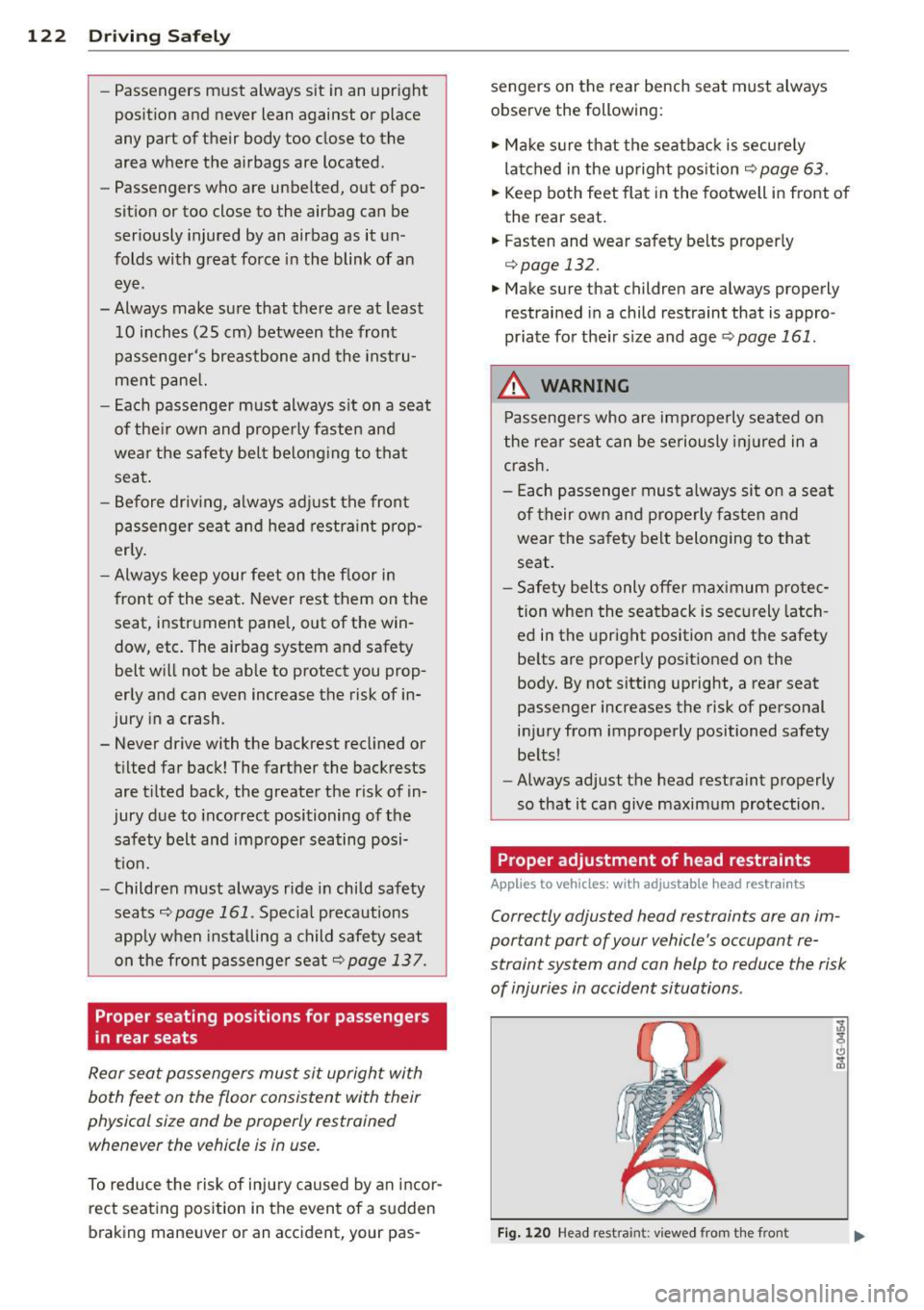
Correctly adjusted head restraints are an im
portant part of your vehicle's occupant re
straint system and can help to reduce the risk
of injuries in accident situations .
Fig. 120 Head restraint : v iewed from the front
Page 133 of 286
with the vehicle interior has all the energy
they had just before the crash.
Never rely on air bags a lone for protec tion.
E ven when they deploy, airbags provide only
additional protection . Ai rbags are not sup
posed to deploy in all kinds of accidents. Al
though your Audi is equipped with a irbags, all
veh icle occupants, including the driver , must
wear safety belts correctly in order to min i
mize t he risk of severe injury or death in a
crash .
Remember too, that airbags wi ll deploy on ly
once and that your safety belts are always
there to offer protection in those accidents in
which airbags are not supposed to deploy or
when they have a lready deployed . U nbelted
occupants ca n also be thrown out of the vehi
cle whe re even mo re severe o r fa tal in ju ries
can occur .
It is also impo rtant fo r the rear passenge rs to
wear safety belts co rrec tly. Unbe lted passen
ge rs i n the rea r seats endanger no t on ly them
se lves bu t also the driver a nd o ther passen
gers
¢ fig. 126 . In a frontal collision they will
be thrown forward vio lent ly, where they can
h it and injure the dr iver and/or front seat pas
senger .
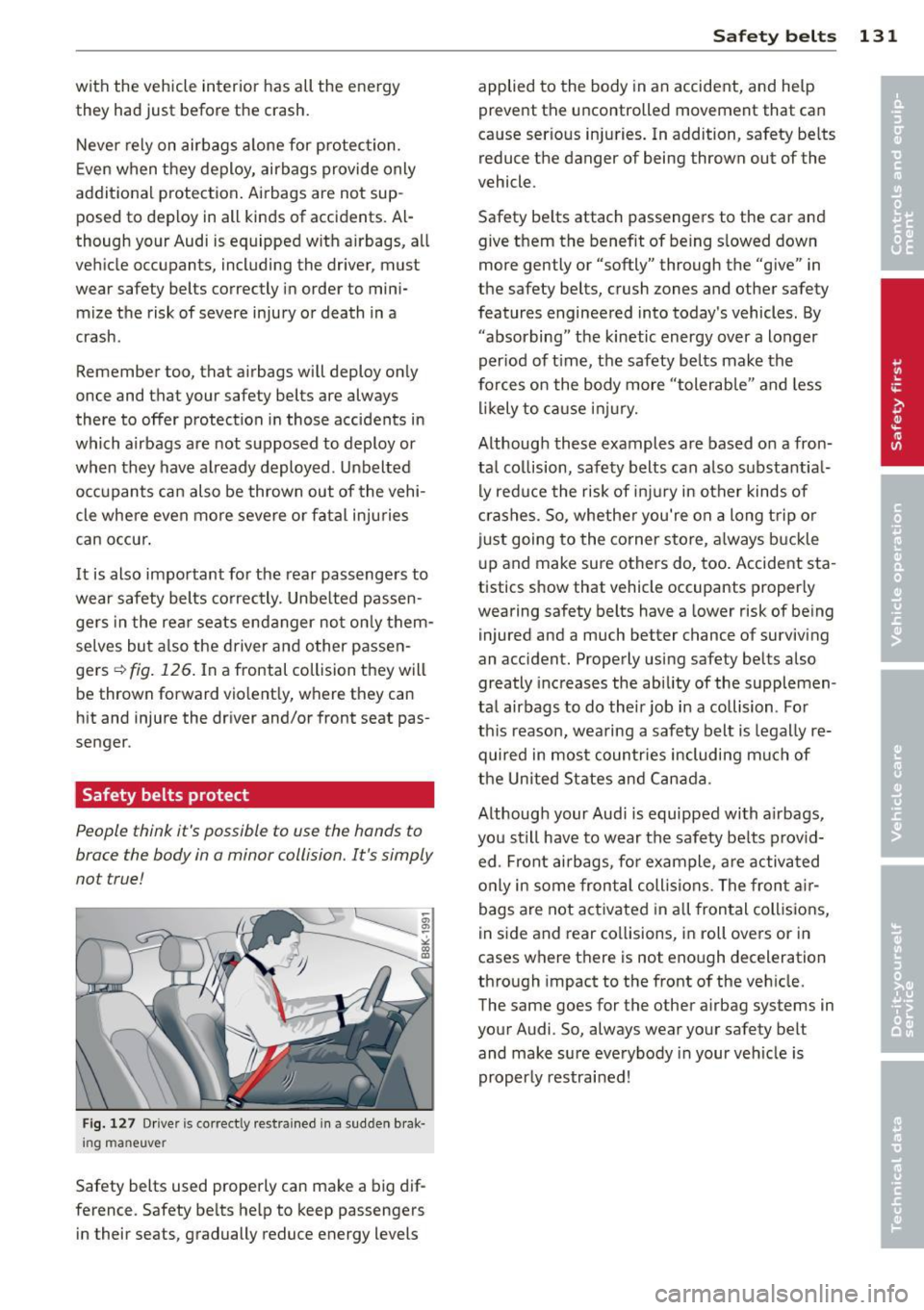
Safety belts protect
People think it 's possible to use the hands to
brace the body in a minor collision. It 's simply
not true!
F ig . 127 D river is correctly restra ined in a sud den bral<·
ing maneuve r
Safety belts used properly can make a big dif
ference . Safety be lts he lp to keep passengers
in their seats, gradually reduce energy levels
Safety belts 131
applied to the body in an accident, and he lp
prevent the uncontrolled movement that can
ca use serio us injuries . In addition, safety be lts
reduce the danger of being thrown out of the
vehicle.
Safety be lts attach passengers to the car and
give t hem the benefit of being s lowed down
more gently or "softly" through the "give" in
the safety belts, crush zones and other safety
features enginee red into today's vehicles. By
"absorbing" t he kinetic energy over a longer
per iod of t ime, the safety be lts make the
fo rces on the body more "tolerable" and less
li kely to ca use inju ry.
Althoug h these examples a re based o n a fron
ta l co llision, safety belts can a lso substantia l
l y red uce the risk of in jur y in other kinds of
cr ashes. So, whethe r you're on a long trip o r
just going to the co rner store, a lways buckle
u p and make sure others do, too . Accident sta
tistics show that vehicle occupants properly
wearing safety belts have a lower risk of be ing
i njured and a much better chance of surviving
an accident. Properly using safety belts also
greatly increases the ability of the supplemen
ta l airbags to do the ir job in a collision . Fo r
th is reason, wearing a safety belt is legally re
quired in mos t coun tries including much of
t he United States and Canada.
Althoug h your Aud i is equipped wi th a irbags,
you st ill have to wear the safety be lts p rov id
ed . Front airbags, fo r example, a re activa ted
o nly in some frontal collisions. The fron t air
bags are not act ivated in a ll fron tal coll isions,
in s ide and rear co llisions, in roll ove rs or in
cases where t here is not eno ugh deceleration
through impact to the front of the veh icle.
The same goes for the other a irbag systems in
your Audi . So, always wear your safety belt
and make su re everybody in your veh icle is
properly restrai ned!
Page 139 of 286
Airbag system Important things to know
Importance of wearing safety belts and
sitting properly
Airbags are only supplemental restraints. For
airbags to do their job , occupants must al
ways properly wear their safety belts and be
in a proper seating position.
For your safety and the safety of your passen
gers, before driving off, always:
"" Adjust the driver's seat and steering wheel
properly ¢
page 120,
"" Adjust the front passenger's seat properly
¢page 54,
""Wear safety be lts properly ¢ page 132,
"" Always properly use the proper child re-
straint to protect chi ldren
r::::> page 161.
In a collision airbags must inflate within th e
blink of an eye and with considerable force.
The supplemental airbags can cause injuries if
the driver or the front seat passenger is not
seated properly . Th erefore in order to help the
a ir bag to do its job, it is important, both as a
driver and as a passenge r to s it properly at all
times.
By keeping room between your body and the
steer ing whee l and the front of the passenger
compartment, the airbag can inflate fully and
comp lete ly and provide supplemental protec
tion in certain frontal collisions
r::::> page 120,
Proper occupant seating positions.
F or details
on the operation of the seat adjustment con
trols
¢ page 54.
It's especially important that children are
properly restrained
r::::> page 161.
There is a lot that the driver and the passen
gers can and must do to help the individua l
safety features installed in your Aud i work to
gether as a system.
Proper seating pos ition is important so that
the front airbag on the driver side can do its
job. If you have a physical impairment or con-
Airbag system 137
dition that prevents you from sitting properly
on the driver seat with the safety belt properly
fastened and reaching the pedals, spec ial
modifications to yo ur vehicle may be necessa
ry.
Contact your authorized Audi dea ler, or call
Audi Customer Re lations at 1-800-822-2834.
When the airbag system dep loys, a gas gener
ator will fi ll the airbags, break open the pad
ded covers, and inf late between the steering
whee l and the driver and between the instru
ment panel and the front passenger. The air
bags will deflate immediately after deploy
ment so that the front occupants can see
through the windshield aga in without inter
ruption .
All of th is takes place in the blink of an eye, so
fast that many people don't even realize that
the air bags have deployed . The airbags also
inflate with a great deal of force and noth ing
shou ld be in their way when they deploy.
Front airbags in combination with properly
worn safety belts slow down and limit the oc
cupant's forward movement. Together they
help to prevent the driver and front seat pas
senge r from hitting parts of the inside the ve
hicle while reducing the forces acting on the
occupant dur ing the crash. In this way they
help to reduce t he risk of injury to the head
and upper body in the crash . A irbags do not
protect the arms or the lower parts of the
body .
Both front air bags w ill not inflate in all frontal
collisions . The triggering of the airbag system
depends on the vehicle deceleration rate
caused by the collision and registered by the
electron ic control unit. If this rate is below
the reference value programmed into the con
trol unit, the airbags will not be triggered,
ev en though the car may be bad ly damaged as
a resu lt of the co llision . Vehicle damage, re
pair costs or even the lack of ve hicle damage
is no t necessarily an indication of whether an
airbag should inflate o r not .
It is not possib le to define a range of vehicle
speeds that w ill cover every possible kind and ..,.
•
•
Page 140 of 286
138 Airbag sys te m
angle of im pact that will always trig ger the
airbags, since the circumstances wi ll vary con
siderably between one collision and another.
Important factors include, for example, the
nature (hard or s oft) of the object which the
car h its, the angle of impact, vehicle speed,
etc. The front airbags will also not inflate in
side or re ar collisions, or in roll-overs .
Always remember : Airbags will deploy only
once, and only in certa in kinds of collisions .
Your safety belts are always there to offe r pro
tection in those s ituations in which airbags
a re not supposed to deploy , or when they have
a lready deployed; for example , when yo ur ve
h icle strikes or is st ruck by another after the
first collision .
This is just one of the reaso ns why an a irbag is
a supplementary restra int and is not a s ubst i
tute for a safety be lt. The airbag system
works most effective ly when used with the
safety be lts. Therefore, always properly wear
you r safety belts ¢
page 129 .
A WARNING
Sitting too close to the steer ing wheel or
instrument panel will decrease the effec
tiveness of the airbags and will increase
the risk of pe rsonal injury in a collision .
- Never sit closer than 10 inches (25 cm)
to the stee ring wheel or instr ument pan
el.
- If you cannot sit more than 10 inches
(25 cm) from t he steer ing wheel, investi
gate whethe r adaptive equipment may
be available to help you reach the pedals
and incre ase your sea ting dis tance from
the steering wheel.
- If you are unrestr ained, lean ing fo rward,
s itting sideways or out of posi tion in any
way, your risk of injury is much higher.
- Yo u w il l a lso receive serio us in juries and
co uld even be killed if you are up against
the airbag or too close to it when it in
flates -even with an Advanced Airbag.
- To reduce the r is k of i njury when an air
bag inf lates, a lways wear safety belts
properly
c::> page 132, Safety belts .
-Always make certain that ch ild ren age 12
or younger always ride in the rear seat. If
children are not properly restrained, they
may be severe ly injured or killed when an
airbag inflates .
- Never let c hildren ride unrestrained or
improperly restrained in the vehicle . Ad
just the front seats prope rly .
- Never ride with the back rest reclined.
- Always sit as far as possible from the
steer ing whee l or the instrument pane l
¢page 120.
-Always sit upright with your back against
the backrest of your seat.
- Never p lace your feet on the instrument
panel or on the seat. Always keep both
feet on the floor in front of the seat to
he lp prevent serious in ju ries to the legs
and h ips if the airbag inflates .
- Never recline the front passenger 's seat
to transport objects . Items can a lso
move i nto the a rea of the s ide airbag or
the front a irbag d uring br akin g or in a
sudden maneuve r. Obje cts ne ar the air
bags can become projec tiles and cause
inj ury when an airbag inflates.
.&, WARNING
A irbags that have deployed in a crash must
be replaced.
- Use on ly original eq uipment airbags ap
proved by Audi and installed by a trained
technician who has the necessary too ls
and d iagnost ic equipment to properly re
p lace any airbag in your vehicle and as
sure system effectiveness i n a crash .
- Never permit salvaged or recycled air
bags to be installed in your vehicle .
Child restraints on the front seat - some
important things to know
.,. Be s ure to read the importa nt information
and head the WAR NINGS for important de
t ails about children and Advanced A irbags
c::> page 161. ..,.
Page 141 of 286
Even though your vehicle is equipped with an
Advanced Airbag System, make certain that
all ch ildren, especially those 12 years and
younger, a lways ride in the back seat properly
restrained for their age and size. The airbag
on the passenger side makes the front seat a
potentially dangerous place for a child to ride.
The front seat is not the safest place for a
child in a forward-facing child safety seat.
It
can be a very dangerous place for an infant or
a child in a rearward-facing seat.
The Advanced Airbag System in your veh icle
has been certified to comply w ith the Requ ire
ments of United States Federa l Motor Vehicle
Safety Standard 208 as applicable at the time
your vehicle was manufactured.
The Standard requires the front ai rbag on the
passenger side to be turned off ("sup
p ressed") if a ch ild up to about one year of
age restrained in one of the rear-facing or for
ward -facing infant restraints listed in Federal
Motor Vehicle Safety Standard 208 with wh ich
the Advanced Airbag System in your vehicle
was certified has been installed on the front passenger seat . For a listing of the child re
straints that were used to certify compliance
with the US Safety Standard
Q page 163.
The PASSENGER AIR BAG OFF light in the in
strument panel tells you when the front Ad
vanced A irbag on the passenger side has bee n
turned off by the electronic control unit.
Each t ime you turn on the ignition, the
PAS
SENGER AIR BAG OFF
light will come on for a
few seconds and :
- will stay on if the front passenger seat is not
occupied,
- will stay on if there is a small child or child restraint on the front passenger seat,
- will go off if the front passenger seat is oc
cupied by an adult as registered by the
weight-sensing mat
Q page 147, Monitor
ing the Advanced Airbag System .
The PASSENGER AIR BAG OFF light comes on
when the control un it detects a total weight
on the front passenger seat that requires the
front airbag to be turned off.
Airbag system 139
If the total weight on the front passenger
seat is more than that of a typical 1 year-o ld
c hild but less than the weight of a small
adult, the front airbag on the passenger side
can deploy (the
PASSENGER AIR BAG OFF
light does not come on). If the PASSENGER
AIR BAG OFF
light does not come on, the
front a irbag on the passenger side has not
been turned off by the electronic con trol unit
and can deploy if the contr ol unit senses an
impact that meets the cond itions stored in its
memory .
For example, the airbag may deploy if:
-a small ch ild that is heav ie r than a typical 1
year-old ch ild is o n the front passenger seat
(regard less of whether the child is in one of
the child safety seats listed
Q page 163), or
- a child who has outgrown child restraints is
on the front passenger seat.
If the front passenger airbag is turned off, the
PASSENGER AIR BAG OFF light comes on in
the instrument cluster and stays on.
The front airbag on the passenger side may
not deploy (the PASSENGER AIR BAG OFF
light does not illum inate and stay lit) even if a
small adult or teenager, or a passenger who is
not sitting uprig ht with their back against a
non-reclined backrest w ith their feet on the
vehicle floor in front of the seat is on the front
passenger seat
~ page 120, Proper seating
position for the driver.
If the front passenger airbag deploys, the
Federal Standard requires the airbag to meet
the "low risk" deployment criteria to reduce
the risk of injury thro ugh interaction with the
airbag . "Low risk" deployment occ urs in those
crashes that take place at lower dece lerat ions
as defined in the electronic control unit
Q page 148, PASSENGER AIR BAG OFF light .
Always remember, a child safety seat or infant
carr ier installed on the front seat may be
struck and knocked out of posit ion by the rap
idly inflating passenger's airbag in a frontal
collision . The airbag could greatly reduce the
effectiveness of the child restraint and even
seriously injure the child during inflation. •
•