warning AUDI A6 2014 Owners Manual
[x] Cancel search | Manufacturer: AUDI, Model Year: 2014, Model line: A6, Model: AUDI A6 2014Pages: 304, PDF Size: 76.32 MB
Page 271 of 304
-Replace the flat tire with a new one and
have it installed on your vehicle a s soon as
possible. Remount the wheel co ve r.
U ntil th en, driv e with extr a car e and at re
du ced speeds .
~ WARNING
-
-If you are going to equip your vehicle
with t ires or rims wh ich differ from those
wh ich were factory installed, then be
sure to read the informat ion
c:> page 251,
New tires and replacing tires and
wheels.
- Always make sure the damaged wheel or
even a flat tire and the jack and tool k it
are properly secured in th e luggage com·
partment and are not loose in the pas·
senger compartment.
- In an accident o r sudden maneuver they
c ou ld fly forward, inju ring anyone in the
vehicle .
- Always store damaged w heel, jac k and
tools secure ly in the luggage compart
ment. Otherw ise, in an acc iden t or sud
den maneuver they cou ld fly forward,
causing injury to passenge rs i n the vehi·
cle .
What do I do now? 269
•
•
Page 272 of 304
2 70 Fuses and bulbs
Fuses and bulbs
Fuses
Replacing fuses
Fuses that have blown will have metal strips
that have burned through.
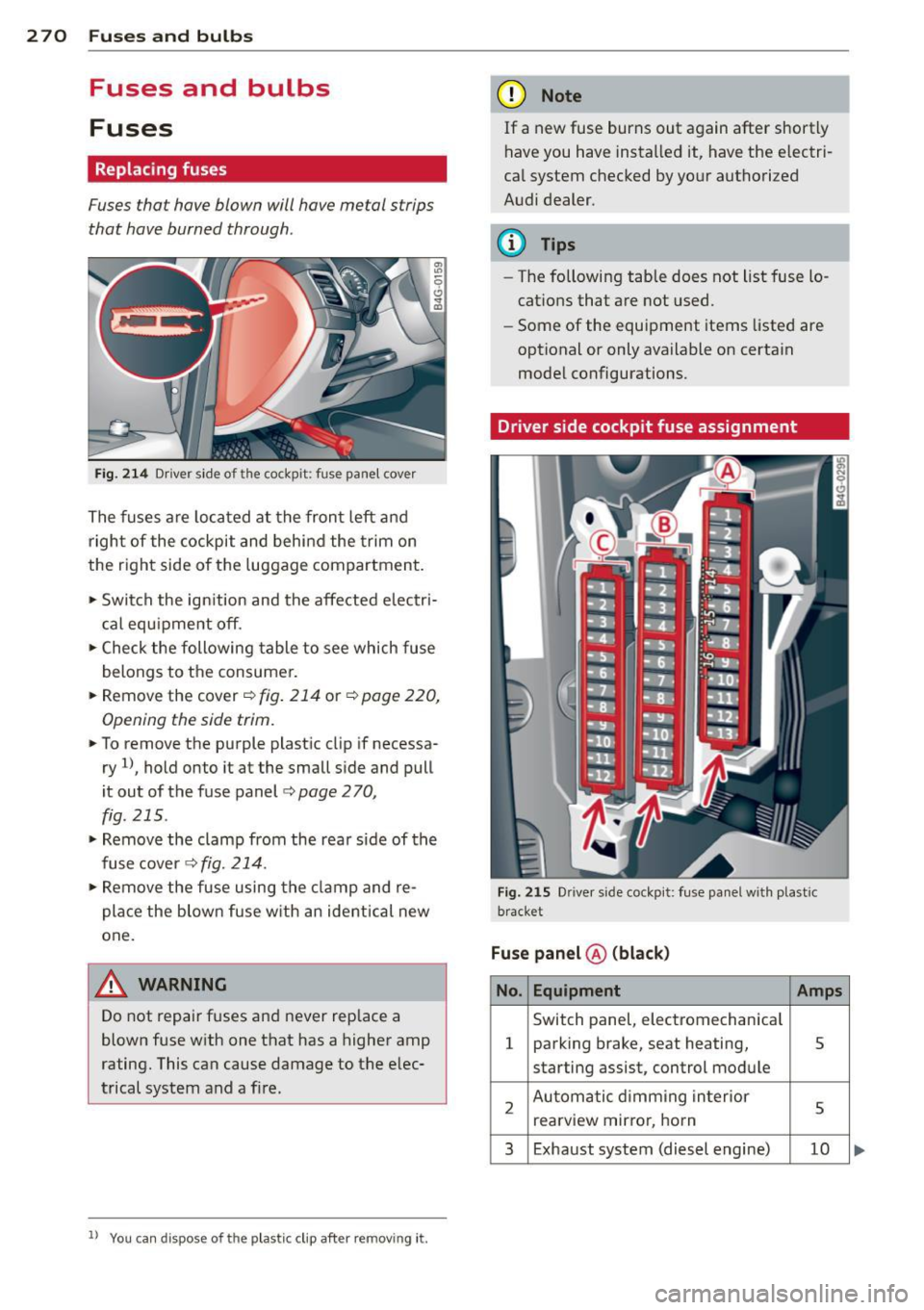
Fig. 214 Dr iver side of the cockpit: fuse panel cover
The fuses are located at the front left and
right of the cockpit and behi nd the trim on
the right side of the luggage compartment.
• Switch the ign ition and the affected electri
c al equ ipment off.
• Check the following table to see which fuse
belongs to the consumer.
• Remove the cover ¢
fig. 214 or¢ page 220,
Opening the side trim.
• To remove the purple plast ic clip if necessa
ry
ll, hold onto it at the small side and pull
i t out of the fuse panel
c:> page 2 70,
fig. 215 .
• Remove the clamp from the rear s ide of the
fuse cover ¢
fig. 214.
• Remove the fuse using the cla mp and re
pla ce the blown fuse w ith an ident ical new
one.
A WARNING
Do not repair fuses and never rep lace a
blown fuse with one that has a higher amp
rating. This can cause damage to the e lec
trical system and a fi re.
ll You can dis pose of the plastic clip after removing it.
(D Note
If a new fuse burns out again after shortly
have you have installed it, have the electri
ca l system checked by yo ur authorized
Audi dealer.
(D Tips
- The following table does not list fuse lo
cations that are not used .
- Some of the equipment items listed are
optional or only available on certain
model configurations.
Driver side cockpit fuse assignment
Fig . 2 15 Dr iver side cockpit: fuse pa nel w ith plast ic
bracket
Fuse panel ® (blac k)
No. Equipment Amps
Switch panel, electromechan ica l
1 parking brake, seat heating, 5
starting assist, control module
2 Automatic d imming in terior
5 rea rview mirro r, horn
3 Exhaust system (diesel engine) 10
Page 275 of 304
No. Equipment Amps
5 Parking system 5
6 Rear Seat Entertainment 5
7 Start-Stop-System 5
8 side ass ist 5
9
Gateway, Vehicle electrical sys-
5 tern control module 1
10 Sport differential
5
Fuse panel © (black)
No. Equipment
Amps
1 Not used
Fuse panel ® (black)
No. Equipment
Amps
1 Movement-activated luggage 1
compartment lid opening
Bulbs
Replacing light bulbs
For your safety, we recommend that you have
your authorized Audi dealer replace burned
out bulbs for you.
It is becoming increasingly more and more
difficult to replace vehicle light bulbs since in
many cases, other parts of the car must first
be removed before you are able to get to the
bulb. This appl ies especially to the light bulbs
in the front of your car which you can only
reach through the engine compartment .
Sheet metal and bulb ho lders can have sharp
edges that can cause ser ious cuts, and parts
must be correctly taken apart and then prop
erly put back together to help prevent break
age of parts and long term damage from wa
ter that can enter housings that have not been properly resealed.
F or your safety, we recommend that you have
your authorized Audi dealer replace any bulbs for you, since your dealer has the proper tools,
the correct bu lbs and the expertise .
Gas discharge lamps (Xenon lights):
Fuses and bulbs
Due to the high e lectr ica l voltage, have the
bulbs replaced by a qualified technician.
Head lights w ith Xenon light can be identified
by the high voltage sticker.
LED headlights* require no maintenance.
Please contact your authorized Audi dealer if a
bulb needs to be replaced.
_& WARNING
Contact with high-voltage components of
the electrical system and improper re
placement of gas discharge (Xenon) head
light bulbs can cause ser ious personal in
jury and death .
- Xenon bulbs are pressur ized and can ex
plode when being changed .
- Changing Xenon lamps requ ires the spe
cial tra ining, instructions and equip
ment.
- Only an authorized Audi dealer or other
qualified workshop should change the
bulbs in gas discharge lamps.
&_ WARNING
There are parts with sharp edges on the
openings and on the bulb holders that can
cause serious cuts.
- If you are uncertain about what to do,
have the work performed by an author
ized Audi dealer or other qualified work
shop . Serious personal injury may result
from improperly performed work.
(D Tips
-If you still prefer to replace the light
bulbs yourself, be aware that the engine
compartment is a hazardous area to
work in ¢
page 224¢ &.
-It is best to ask your authorized Audi
dealer whenever yo u need to change a
bulb .
273
•
•
Page 276 of 304
2 7 4 Emergency situations
Emergency situations
General
This chapter is intended for trained emer
gency crews and working personnel who
have the necessary tools and equipment to
perform these ope rations.
Starting by pushing or
towing
Q;) Note
Vehicles w ith an automatic transmission
cannot be started by pus hing o r tow ing.
Starting with jumper
cables
If necessary, the engine can be started by
connecting it to the battery of another vehi
cle.
If the engine should fail to start because of a
discharged or weak battery, the battery can be
connected to the battery of
another veh icle,
using a
pair of jumpe r cables to start the en
g ine .
Jumper cables
Use only jumper cables of sufficiently large
cross section to carry the starter current safe
ly. Refer to the manufacturer's specif ications.
Use only jumper cables with
insulated termi
na l clamps which are distinctly marked:
plus(+) cable in most cases colored red
minu s(-) cable
in most cases colored black .
A WARNING
Batteries contain electricity, acid, and gas.
Any of these can cause very serious or fatal
inju ry. Follow the instructions below for
safe handling of your veh icle's battery.
- Always shield you r eyes and avoid lean
ing over the battery whenever possible.
- A discharged battery can freeze at tem
peratures just be low 32 °F (0 °C). Before connecting a
jumper cable, you must
thaw the frozen battery complete ly, oth
erwise it could explode.
- Do not allow battery acid to contact eyes
or skin . Flush any contacted area with
water immediately .
- Improper use of a booster battery to start a vehicle may cause an explosion.
- Vehicle batteries generate explosive gas
es. Keep sparks, flame and lighted ciga
rettes away from batteries.
- Do not try to jump start any vehicle with a low acid level in the battery.
- The vo ltage of the booster battery must
also have a 12-volt rating. The capacity
(Ah) of the booster battery should not be
lower than that of the discharged bat
tery . Use of batteries of d ifferent voltage
or substantially different "Ah" rating
may cause an exp losion and personal in
jury.
- Never charge a frozen batte ry. Gas trap
ped in the ice may cause an explosion.
- Never charge or use a battery that has
been frozen. The battery case may have
be weakened.
- Use of batter ies of different voltage or
substantially different capacity (Ah) rat
ing may cause an exp losion and injury.
The capacity (Ah) of the booster battery
should not be lower than that of the dis
charged battery.
- Before you check anything in the engine
compartment, always read and heed a ll
WARNINGS¢
page 224.
(D Note
- App lying a higher voltage booster bat
tery will cause expensive damage to sen
sitive electronic components, such as
contro l units, relays, radio, etc .
- Th ere must be no electrical contact be
tween the vehicles as otherwise current cou ld already start to f low as soon as the
positive(+) terminals are connected. .,.
Page 277 of 304
@ Tips
The disc harged battery must be properly
connected to the vehicle's electrical sys
tem. When jump starting or charg ing the
battery, never connect the negative
ground cable to the battery negat ive post
because the ba ttery manager system must
be ab le to detect the battery's state of
charge. Always connect the negative
g round cab le to the negative ground pos t
of t he battery manager cont ro l unit.
Use of jumper cables
Make sure to connect the jumper coble
clomps in exactly the order described b elow!
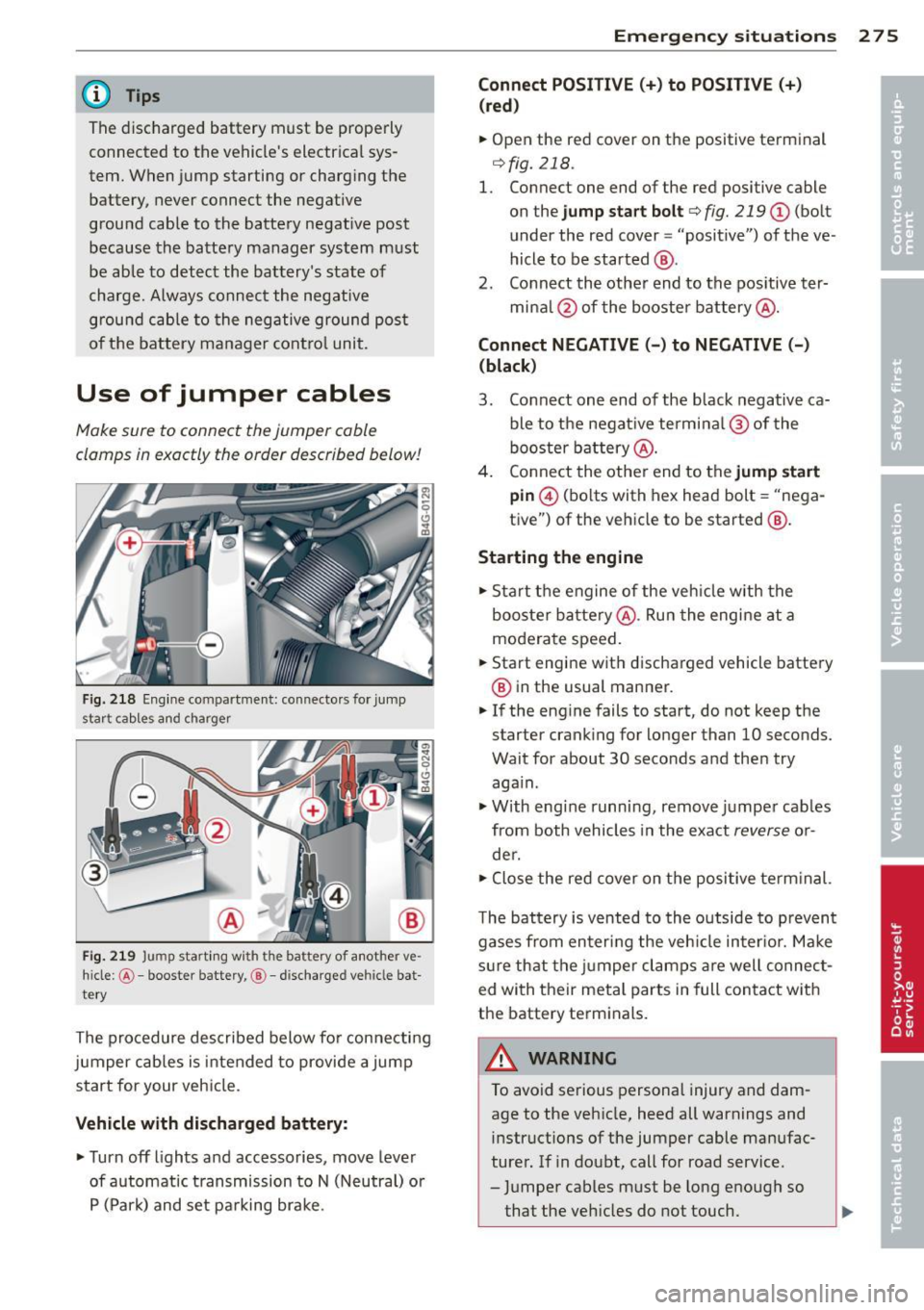
Fi g. 21 8 Eng ine co mpar tment : connecto rs for jum p
s tar t cab les and ch arg er
F ig. 219 Jump start in g w ith t he ba ttery of a not her ve ·
hi cle :
@-booster battery, ®-disc harged ve hicle bat
te ry
The procedure described below fo r connecting
jumper cables is intended to provide a jump
start for your veh icle.
Vehicle with discharged battery :
• Turnoff lights and accessories, move lever
of automatic t ransmission to N (Neutral) o r
P ( Par k) and set pa rking brake .
Emergenc y situ ation s 2 7 5
Connect POSI TIVE(+) to POSITIVE(+)
(red )
• Open the red cov er on the posit ive te rminal
¢ fig. 218 .
1. Connect one end of the red positive cable
on the jump sta rt bolt
¢ fig. 219 (D (bolt
under the red cover = "positive") of the ve
hicle to be started @.
2 . Connect th e othe r end to the pos itive ter-
mi na l@ of the booster battery @.
Connect NEGATIVE( -) to NEGATIVE(-)
(black )
3. Connect one end of the black negative ca ble to the negat ive termi na l@ of the
booster b attery @.
4. Connect the othe r end to the jump start
pin @ (bo lts w ith hex head bolt = "nega
tive") of the vehicle to be started @.
Starting the engine • Sta rt the engine of the veh icle w ith the
booste r ba tte ry @ . Ru n the engine at a
moderate speed.
• Start engine w it h discharged vehicle battery
@ in the usual manner.
• If the eng ine fails to start, do not keep the
starter c ranking for longer than 10 seconds.
Wait for about 30 seco nds a nd the n try
aga in .
• With eng ine runni ng,
remove ju mpe r cab les
from both vehicles in the exact
reverse o r
de r.
• Close the re d
cover on the positive te rm inal.
T he battery is v ented to th e outside to p rev ent
gases from en ter ing the veh icle in ter io r. Ma ke
s ur e th at the j umper clamps are well connec t
ed with their meta l parts in full con ta ct w ith
the battery term inals.
,8. WARNING
To avoid se rious personal injury and dam
age to the veh icle, heed all warnings and
instructions of the jumper cable man ufac
ture r. If in doubt, call for road service .
- Ju mpe r cables m ust be long enough so
that the veh icles d o not touch.
-
Page 278 of 304
2 76 Emergency situations
-When connecting jumper cables, make
sure that they cannot get caught in any
moving parts in the engine compart
ment.
- Before you check anything in the engine
compartment, always read and heed all
WARNINGS c:>
page 224.
(D Note
Improper hook-up of jumper cables can ru
in the generator.
- Always connect POSITIVE( +) to POSI
TIVE(+), and NEGATIVE(-) to NEGATIVE
( - ) ground post of the battery manager
control unit.
- Check that all screw plugs on the battery
cells are screwed in firmly . If not, tighten
plugs prior to connecting clamp on nega
tive battery terminal.
- Please note that the procedure for con
necting a jumper cable as described
above applies specifically to the case of
your vehicle being jump started. When
you are giving a jump start to another ve
hicle , do
not connect the negat ive( -) ca
ble to the negative( -) terminal on the
discharged battery@c:>
fig. 219. In
stead, securely connect the negative( -)
cable to either a solid metal component
that is firmly bolted to the engine block
or to the engine block itself. If the bat
tery that is being charged does not vent
to the outside, escaping battery gas
could ignite and explode!
Emergency towing
with commercial tow
truck
General hints
Your Audi requires special handling for tow
tng.
The following information is to be used by
commercia l tow truck operators who know
how to operate their equipment safely.
-Never tow your Audi. Towing will cause
damage to the engine and transmission .
- Never wrap the safety chains or winch ca
bles around the brake lines.
- To prevent unne cessary damage, your Audi
must be transported with a flat bed truck.
- To load the vehicle on to the flat bed, use
the towing loop found in the vehicle tools
and attach to the front or rear anchorage
c:> page 2 76 and c:> page 2 77.
.&_ WARNING
=
A vehicle being towed is not safe for pas-
sengers. Never allow anyone to ride in a
vehicle be ing towed, for any reason.
Front towing loop
Only install the front towing loop when it is
needed.
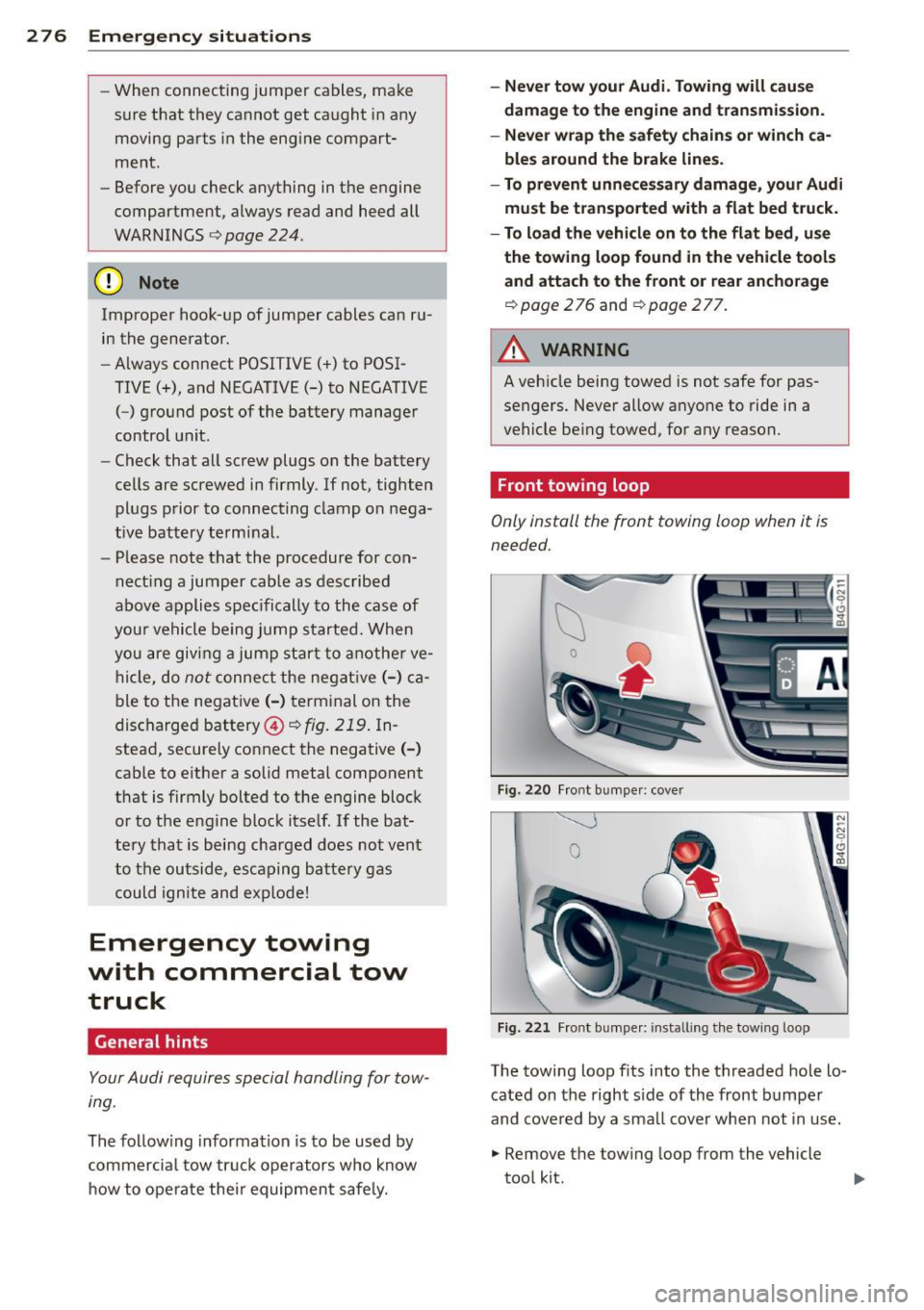
Fig. 220 Front bumper: cover
Fig. 221 Front bumper : in stalling the towing loop
-
The towing loop fits into the threaded hole lo
cated on the right side of the front bumper
and covered by a smal l cover when not in use.
.,. Remove the towing loop from the vehicle
tool kit.
Page 279 of 304
.. Press inward strongly to the button side of
the cap to
remove it from the bumper
¢ fig . 220 .
.. Screw the towing loop in the threaded open -
ing and tighten it until it stops
¢fig. 221.
Remove the towing loop when you are done
using it and place it back in the vehicle tool
kit. Install the
cover in the bumper. Always
keep the towing loop in the vehicle.
A WARNING
If you do not screw the tow ing loop com
pletely, it could come out of the threaded
hole while the vehicle is being towed cau s
ing damage to the vehicle and possib le se
r ious personal inju ry.
Rear towing loop
Only install the rear towing loop when it is
needed.
0
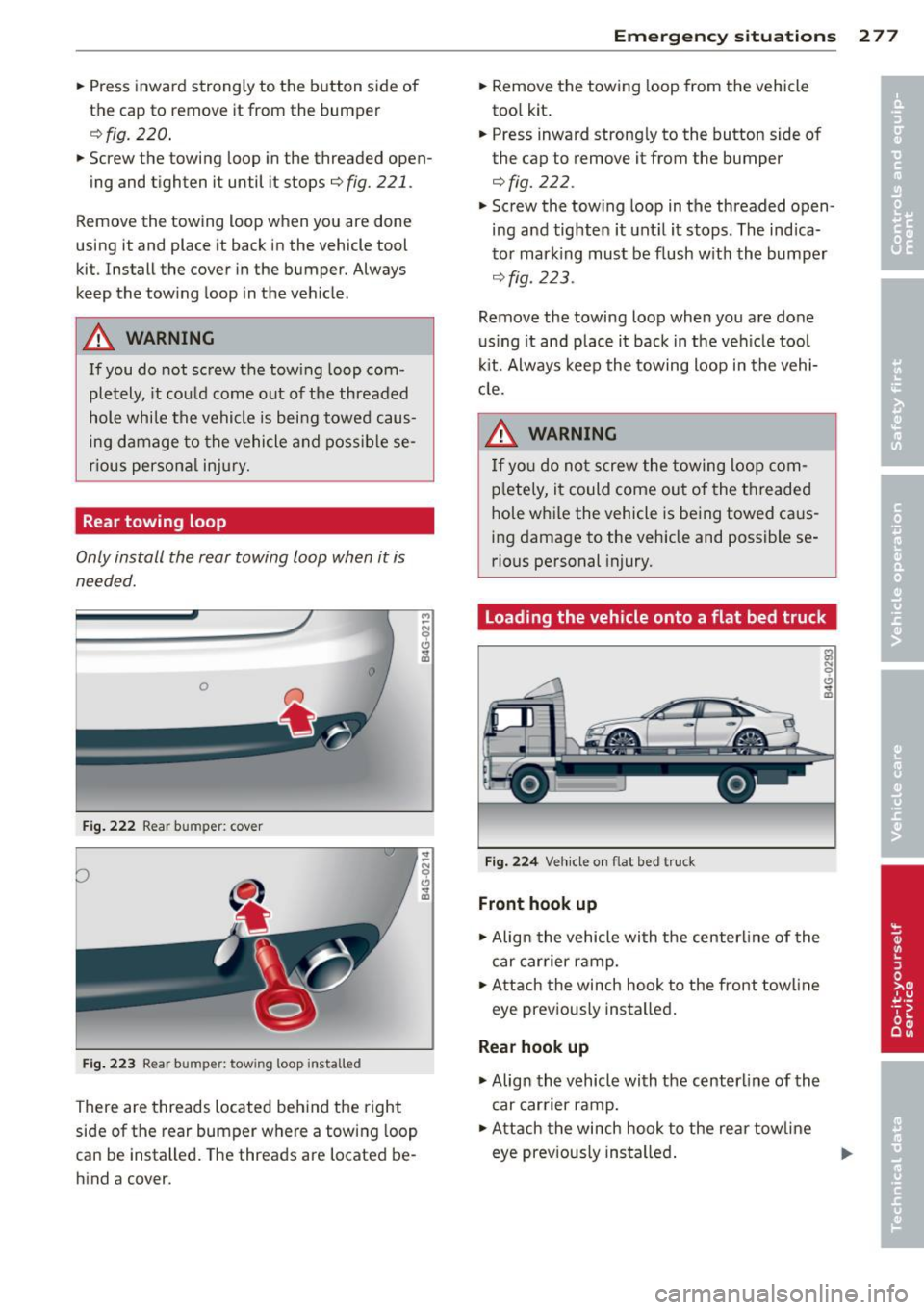
F ig . 2 22 Rear bu mper: cover
Fig. 223 Rear bumper: towing loop installed
There are threads located behind the right
side of the rear bumper where a towing loop
can be installed. The threads are located be
hind a
cover.
Emergenc y situ ation s 2 77
.. Remove the tow ing loop from the vehicle
too l kit .
.. Press inward strongly to the button side of
the cap to
remove it from the bumper
¢fig. 222.
.. Screw the towing loop in the threaded open
ing and tighten it unt il it stops. The indica
to r mark ing must be flush w ith the bumper
¢ fig. 223 .
Remove the towing loop when you are done
us ing it and place it back in the veh icle too l
ki t. Always keep the towing loop in the vehi
cle.
A WARNING
If yo u do not screw the towing loop com
p letely, i t could come ou t of the threaded
hole while the vehicle is being towed caus
ing damage to the vehicle and possible se
rious pe rsonal injury.
loading the vehicle onto a flat bed truck
Fi g. 22 4 Vehicle on flat bed tru ck
Front hook up
.. Align the vehicle with t he centerline of the
car carrier ramp .
.,. Attach the winch hook to the front towline
eye prev iously installed .
Rear hook up
.,. Align the vehicle with the center line of the
car carrier ramp .
.. Attach the winch hook to the re ar tow line
eye prev ious ly insta lled .
M a, N 0 0
"' "'
Page 280 of 304
2 78 Emergency situations
@ Tips
Check carefully to make sure the hook-up
is secure before moving the car up the flat
bed truck ramp.
Vehicle transport
Whenever you have your vehicle transported,
be sure to note the following:
(D Note
Mount the tie-down chains/cables over the
running surface (circumference) of the
tires. Never secure the vehicle by the axle,
the suspension struts or the front or rear
towline eye. For technical reasons, the
pressure in the suspension struts may
change during the transport and this will
adversely affect vehicle handling.
Lifting vehicle
Lifting with workshop hoist and with
floor jack
The vehicle may only be lifted at the lifting
points illustrated.
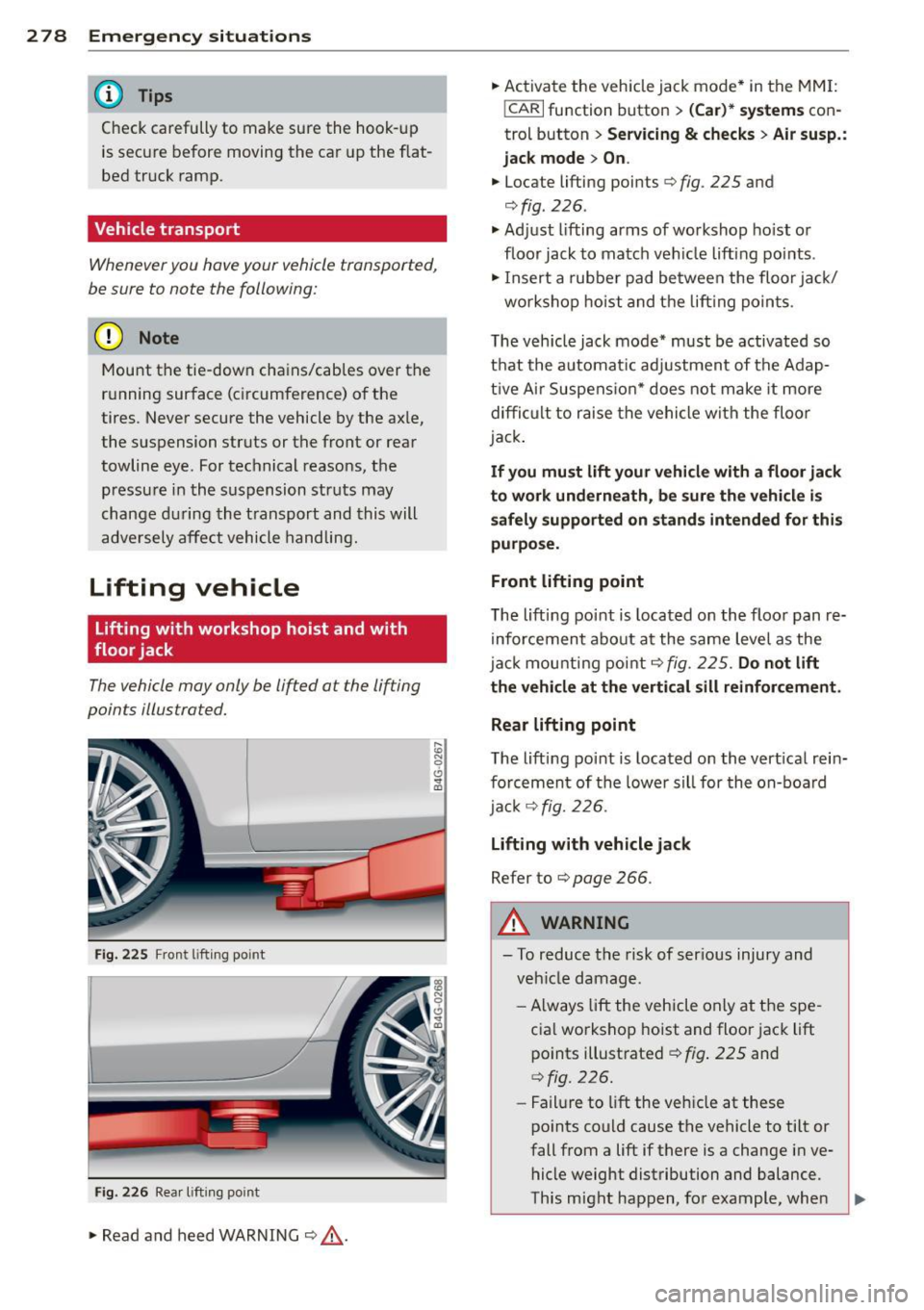
Fig. 225 Front lift in g po int
Fig. 226 Rear lifti ng point
.,. Read and heed WARNING c> &, .
~ N 0 6 .., (0
... Activate the vehicle jack mode* in the MMI:
!CARI function button > (Car)* systems con
trol button>
Servicing & checks> Air susp.:
jack mode > On .
... Locate lifting points ¢ fig . 225 and
¢fig. 226.
.,. Adjust lifting arms of workshop hoist or
floor jack to match veh icle lifting points .
.,. Insert a rubber pad between the floor jack/
workshop hoist and the lifting points .
The vehicle jack mode* must be activated so
that the automat ic adjustment of the Adap
tive Ai r Suspens ion* does not make it more
difficult to raise the vehicle with the floor
jack .
If you must lift your vehicle with a floor jack
to work underneath, be sure the vehicle is
safely supported on stands intended for this
purpose.
Front lifting point
The lifting point is located on the floor pan re
inforcement about at the same level as the
jack mounting point
¢fig. 225. Do not lift
the vehicle at the vertical sill reinforcement .
Rear lifting point
The lifting point is located on the vert ical rein
forcement of the lower sill for the on-board
jack
c!;> fig. 226 .
Lifting with vehicle jack
Refer to¢ page 266.
A WARNING
-To reduce the risk of serious injury and
veh icle damage.
- Always lift the vehicle only at the spe
cial workshop hoist and floor jack lift
points illustrated¢
fig. 225 and
¢ fig. 226.
-Failure to lift the veh icle at these
points could cause the vehicle to tilt or
fall from a lift if there is a change in ve
hicle weight distribution and balance.
This might happen, for example, when
-
Page 282 of 304
280 Technical data
Technical data
Vehicle identification
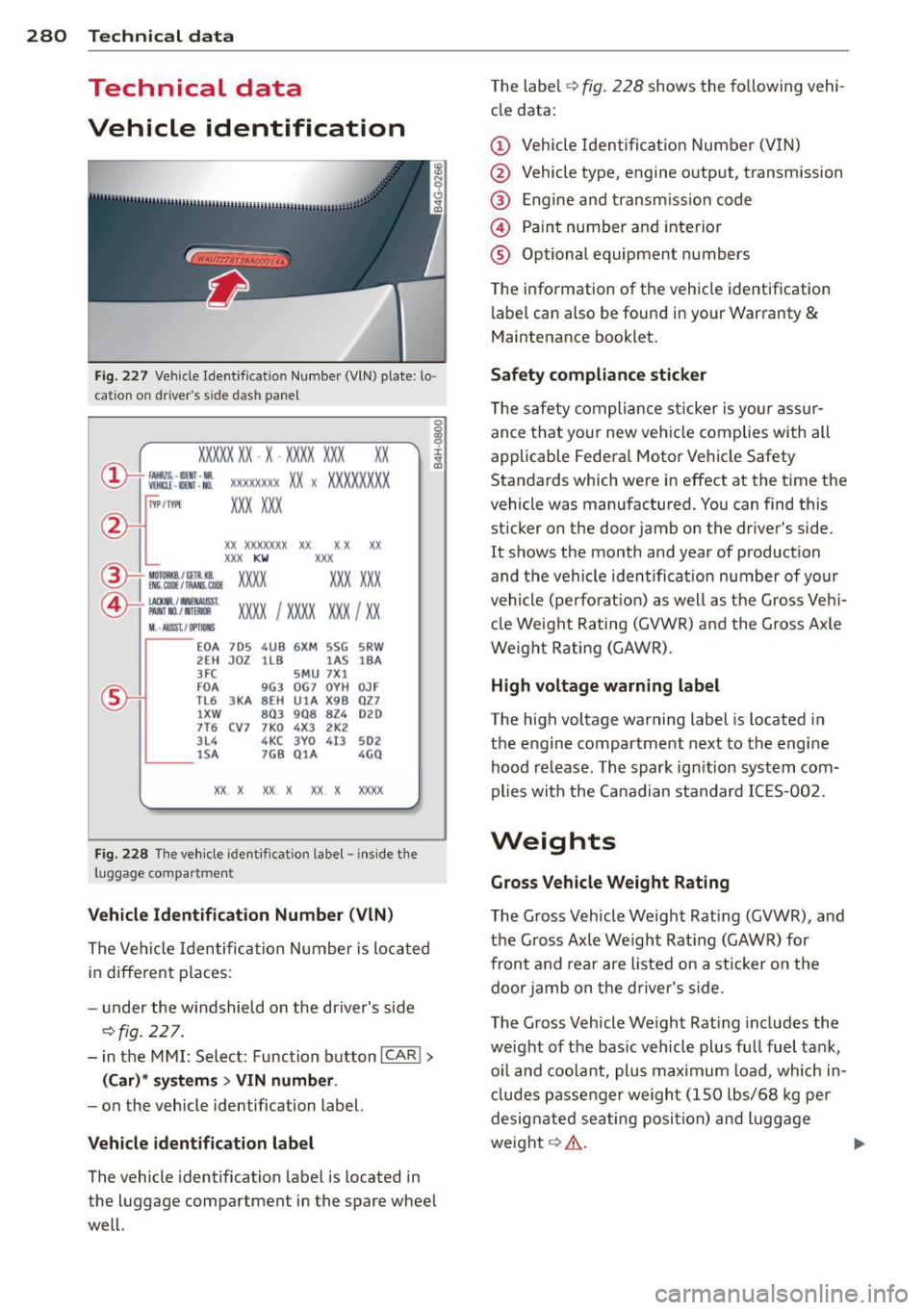
F ig. 227 Vehicle I dent ifica tion Numbe r (VlN) pla te: lo·
cat ion on driver 's side dash pane l
XXXXX XX · X -XXXX XXX xx
r,"\__l f~ -11!111 · NII. ~ V!Hlll -llllll . NO.
IYP IT'fl'E
XXXXXXXX XX X XXXXXXXX
XXX XXX
XX XXXXXXX XX X X XX
XXX
KW XXX
®i ~~:f :l~~ XXXX XXX XXX
@+ ~~r= XXXX I XXXX XXX I XX M ,. AIIISl./ lflllllS
EOA 7D5 4 UB 6XM SSG 5RW
2E H JDZ llB l AS lBA
3FC 5MU 7Xl
FO A
9G3 OG7 O
YH OJF
TL6 3
KA BEH
UlA X9B QZ 7
l XW
8Q3 9Q8 82 4 020
7T6 CV 7 7KO 4X3 2K2
3L4 4 KC 3YO 4I3 502
lS A 7GB Q1A 4GQ
XX X
XX X XX X XXXX
Fig. 228 Th e ve hicle identi ficat ion label -inside the
luggage co mpa rtmen t
Vehicle Id entification Number (VlN )
The Ve hicle Identific ation Number is located
in different p laces:
- under the w indshield on the driver's s ide
~fig . 227.
- in the MMI : Select: Function button ICAR I >
(Car )* systems > VIN number .
-on the veh icle identification label.
Vehicle identification label
The vehicle identification labe l is located in
the luggage compartment in the spare wheel
well. T
he label ~
fig. 228 shows the following vehi
cle data:
(D Vehicle Ident ificat io n Number (V IN)
@ . Vehicle type, engine o utput, transmission
® Engine and transm iss ion code
@ Paint number and inte rior
® Optional equipment numbers
T he information of the vehicle identification
label can also be found i n your Warranty
&
Maintenance booklet.
Safety compliance sticker
The safety compliance sticker is your assur
ance that yo ur new veh icle complies with all
applicable Federa l Motor Vehicle Safety
Standards which were i n effect at the time the
vehicle was manufactured. You can find this
sticker on the door jamb on the driver's side.
It shows the mo nth and year of production
and the vehicle ident ificat io n number of your
vehicle (perfo rat ion) as well as the Gross Ve hi
cl e Weig ht Rating (GVWR) a nd the Gross Ax le
Weig ht Rating (GAWR) .
High voltage warning label
The high voltage warning label is located in
the engine compartment next to the engine
hood re lease . The spar k ign it ion sys tem com·
plies wi th the Ca nadian standard IC ES-002.
Weights
Gross Vehicle Weight Rating
The Gross Vehicle We ight Rat ing (GVWR), and
the Gross Axle Weight Rat ing (GAWR) for
fron t and rear are listed on a sticker on the
doo r jamb on the d river's side .
The Gross Vehicle We ight Rat ing includes the
weight of the bas ic vehicle plus f ull fuel tank,
o il and coo la nt, plus max imum load, which in
cl udes p asse nger we igh t (150 l bs/68 kg per
designate d sea ting posi tion) an d luggage
weight ~&. - .,.
Page 283 of 304
Gros s Axle Wei ght Rati ng
The G ross Axle Weight Rating is the maximum
l oad that can be applied at each axle of the
vehicle
c::> &. .
Vehicle capacit y weight
The vehicle capacity we ight (max. load) is list
ed eithe r on the dr iver's side B-pillar or inside
the fue l filler flap.
& WARNING
-
- The actual Gross Axle Weight Rating at
the front and rear axles shou ld not ex
ceed the perm iss ible weights, and their
combination must not exceed the Gross
Vehicle Weight Rat ing.
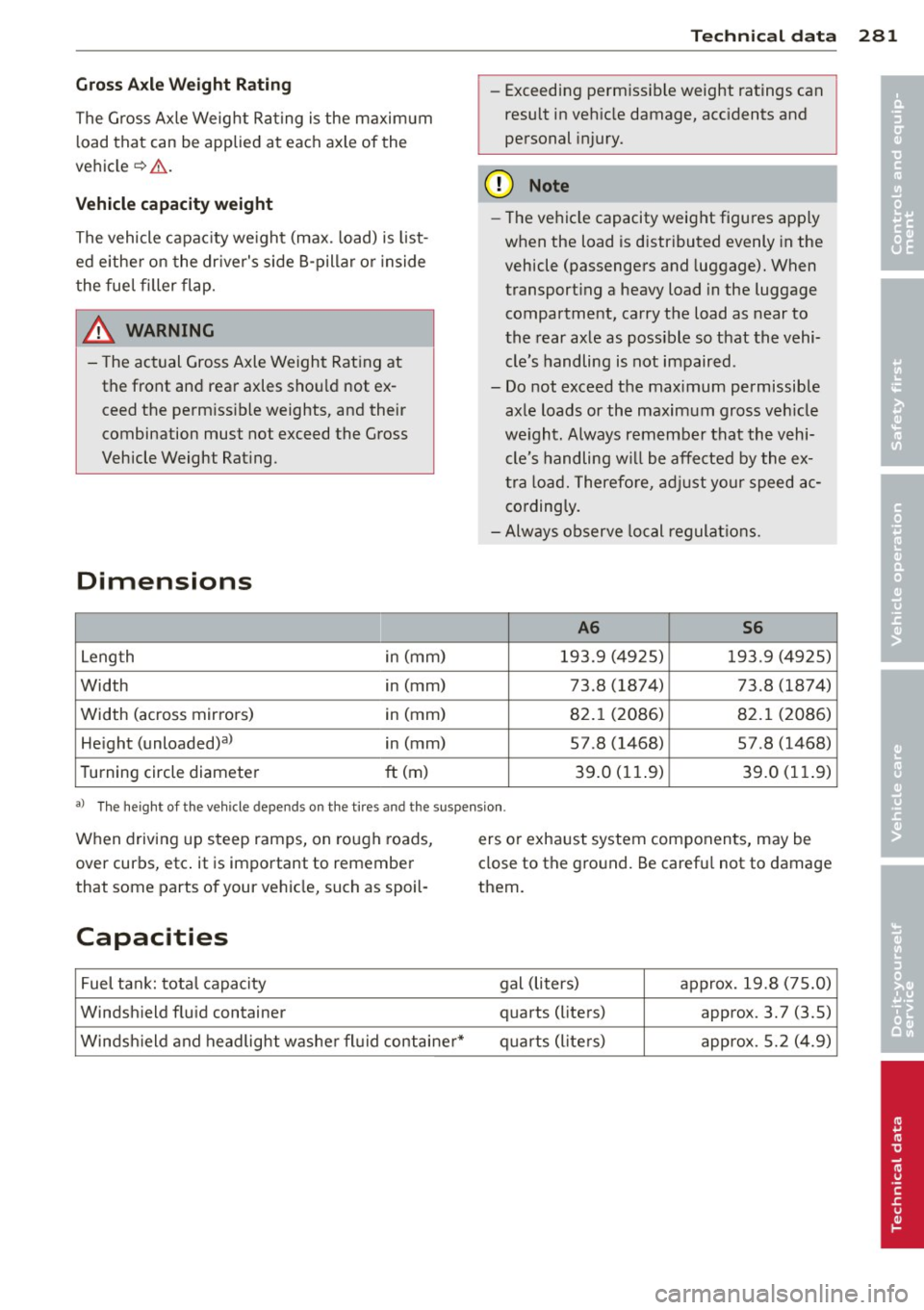
Dimensions
Length in (mm)
Width in
(mm)
Width (across mirrors) in (mm)
He ight (unloaded)a) in (mm)
Turning circle diameter
ft (m)
T e chn ic a l da ta 281
- Exceeding permiss ible weight ratings can
result in vehicle damage, accidents and
personal injury.
([) Note
-The vehicle capacity weight figures apply
when the load is d istr ibuted evenly in the
vehicle (passengers and luggage). When
transport ing a heavy load in the luggage
compartment, carry the load as near to
the rear axle as poss ible so that the vehi
cle's handling is not impaired.
- Do not exceed the maximum permissible axle loads or the maximum gross veh icle
we ight. Always remember that the vehi
cle's handling w ill be affected by the ex
tra load. Therefore, ad just yo ur speed ac
co rdingly.
- Always observe local regulat ions.
A6 S6
193.9 (4925) 193.9 (4925)
73.8 (1874) 73 .8 (1874)
82.1 (2086) 82.1 (2086)
57.8 (1468) 57.8 (1468)
39.0 (11.9) 39.0 (11. 9)
•
•
aJ The he ight of the veh icle depen ds on the t ires and the suspe nsion .
When driving up steep ramps, on rough roads,
over curbs, etc. it is important to remember
that some parts of your ve hicle, such as spoil-
Capacities
Fuel ta nk: total capacity
Windshield flu id container
Windsh ield and headlight washer fluid containe r* ers
or exhaust system components, may be
close to the ground. Be careful not to damage
them .
gal (liters) approx. 19.8 (75.0)
quarts (liters) approx. 3.7 (3.5)
quarts (liters) approx. 5.2
(4.9)