cooling AUDI A7 2013 User Guide
[x] Cancel search | Manufacturer: AUDI, Model Year: 2013, Model line: A7, Model: AUDI A7 2013Pages: 310, PDF Size: 77.45 MB
Page 211 of 310
Trailer towing Driving with a trailer
General information
Your Audi was designed primarily for passen
ger transportation .
If you plan to tow a tra iler, p lease remember
that the addit ional load will affect durab ility,
economy and performance .
Trailer towing not on ly places more stress on
the vehicle, it also calls for more concentra
tion from the driver.
F or this reason, a lways fo llow the operating
and driving instructions provided and use
common sense.
(D Note
If you are going to tow a trai ler, you must
ac tivate the trailer operation mode
c::> page 209, Operating instructions.
Technical requirements
Traile r hitch
Use a weig ht-carrying hitch conforming to the
gross trailer we ight. The hitch must be suita
b le for your veh icle and trailer and must be
mounted securely on t he ve hicle's chassis at a
technically sound location . Use only a trail er
hi tch w ith a removab le ball moun t. A lways
check wi th t he tra ile r hi tch man ufa ctur er to
make sure that you are using the cor rect
h itch.
Do not us e a bumper hitch .
The hitch m ust be installed in such a way that
i t does not interfe re with the impac t-absorb
i ng bumper syst em. No mod ificat ions should
b e made to the vehi cle e xhaus t and br ake sys
tems . From t ime to time, check th at a ll hitc h
mo unt ing bo lts rem ain securely fas tened.
When you are not towing a trail er, remove the
tra ile r hi tch ball moun t. T h is prevents the
hi tch from causing damage sho uld your ve hi
cle be str uck from behind~ .&.
Trailer towin g 209
Trailer brakes
If your trailer is equippe d wi th a bra king sys
tem, check to be s ure that i t conforms to all
regulations .
T he trailer hyd ra u lic bra ke sys tem mus t not be
d irec tly connec ted to the vehicle's hydraulic
brake system .
Safety chains
Always use safety chains be tween your ve hicle
and t he tra ile r.
Trailer lights
Trai ler lights must meet all reg ulations. Be
su re to c heck with your Audi dea ler for correct
wir ing, switches and relays .
Mirrors
If you a re unable to see the traffic behind you
u sing the regula r outside mirrors, then you
must insta ll extended mir rors. It is important
t h at you
always have clea r vis io n to the rear.
_&. WARNING
-
Afte r removi ng the trailer hitch , do no t
s tor e i t in yo ur v ehicl e. In case of sudden
b raki ng, the hi tch co uld fly forwar d and in
j ur e you o r yo ur pass enge rs.
Operating instructions
Maximum trailer weight
A tra ile r fo r you r vehi cle is l imited to a typi cal
cla ss 1 o r class 2 tr ailer.
Trailer load distribution
Be sure the load in the tra ile r is held secure ly
in place to p revent it from shift ing fo rward,
ba ckward or sideways.
Never allow a passenger to ride in a trailer
c::> .& in Driving instructions on page 211 .
Engine cooling sy stem
Towing a t railer ma kes the engine wor k hard
er . It is impo rtant that the cooling system's
performance is up to the additional load.
•
•
Page 212 of 310
210 Trailer towing
Make sure that the cooling system has eno ugh
fluid .
Tire p res sure
When tow ing a trai le r, inflate the t ires of your
vehi cle to the co ld tire pressure listed under
"Full load" on the label located on the driver's
side B-pillar (visible when the door is open) .
Inflate trailer t ires to trai ler and tire manufac
turers' specifications.
Lights
Chec k to make s ure both veh icle and trailer
lights are working properly.
Safety chains
Be sure tra iler safety cha ins are properly con
nected from the trailer to the hitch on the ve
h icle. Leave enough slack in the chains to per
mit turn ing corners . When you install safety
cha ins, make su re they wi ll not drag on the
road when yo u are driving.
The chains shou ld cross under the tra iler
tongue to prevent it from dropping in case of
separation from the hitch.
Adjusting the Audi drive select
Make sure the vehicle is on a level su rface be
for e
hitching up the tra ile r and b efor e adjust
ing the tongue weight. The vehicle must be in
auto or comfort dr iving mode and no t raised
qpage 102, q(D _
Make sure that the vehicle is lowered. In Info
tainment , se lect:
ICARI f u nction button> Low
e r
control b utton .
I f you m ust dr ive under poor road co ndit ions,
you can raise the veh icle
aft er coup ling the
tra iler or
after adjusting the tong ue weig ht
q page 104.
-Changes in tempe ratu re or load can af
fect the heig ht of the veh icle.
- Always se lect
auto or comfort mode.
Otherwise, the tongue load spec ified for
your vehicle will no longer be applicable.
Driving instructions
Driving with a trailer always requires extra
care and consideration .
To obtain the best possible handling of vehicle
and trailer, please note the fo llow ing:
.,. Do not tow a loaded trailer when your car it
self is not loaded.
.,. Be especially carefu l when passing other
veh icles.
.,. Observe speed lim its .
.,. Do not dr ive at the maximum permissible
speed.
.,. Always app ly brakes early .
.,. Monitor the temperatu re ga uge.
Weight distribut ion
T owing a loaded trailer with an empty car re
su lts in a highly unstab le distribution of
we ight. If this cannot be avoided, drive at very
low speeds on ly to avoid t he risk of losing
steering con trol.
A "ba lanced " rig is easier to operate and con
tro l. This means that the tow vehicle should
be loaded to the exten t possible and permissi
ble, while keep ing the trai ler as light as possi
ble under the c ircumstances . Whenever poss i
ble, transfer some cargo to the luggage com
partment of the tow veh icle while observing
tong ue load requirements and vehicle load ing
considerations.
Speed
The higher the speed, the more difficu lt it be
comes for the driver to control the rig . Do not
drive at the maximum permissible speed. Re
duce your speed even more if load, weather or
wind conditions are unfavorable -particularly
whe n going downhill.
Red uce veh icle speed
immediately if the trail
er shows the slightest s ign of sway ing .
Do not
try to stop the swa ying b y accelerating .
Observe speed limits . In some a reas, speeds
for vehicles tow ing trai lers are lower than for
regular veh icles . .,.
Page 239 of 310
Engine cooling system
Coolant
The engine coolant performs two functions: it
keeps the engine from overheating and it pro
te cts the engine from freezing in the winter .
The cooling system is sealed and generally re
qu ires little attention .
The cooling system has been filled at the fac
tory with a permanent coolant which does not need to be changed. The coolant consists of a
mixture of water and the manufacturer's gly
col-based coolant additive G13 ant ifreeze
w ith anticorrosion add itives (50% fo r USA
models; 60% for Canad ian models). This mix
ture bot h assu res the ne cessary frost protec
tion and protects metal components in the
engine's coo ling system from corrosion and
scaling. It also raises the boili ng po int of t he
coolant.
D o not red uce the concentration o f the coo l
ant in the summer by adding plain water .
The
proportion of coolant addit ive must be at
least 50% but not mo re than 60 %
to main
tain antifree ze protection and cooling efficien
cy. If the coolant frost protection is too low,
the coolant cou ld freeze and damage the veh i
cle heating and eng ine cooling system .
For year-round driving, antifree ze is added at
the factory for temperatures down to:
- -3 1°F (-35°C)USA
- -40 ° F ( - 4 0 °C) Canada.
A WARNING
Before yo u check anything in the engine
compartment , always read and heed a ll
WARNINGS
¢ & in Working in the engine
compartment on page 230.
(D Note
- Befo re winter sets i n, have the coolant
chec ked to see i f th e coo lant ad dit ive i n
you r vehicle is suffic ient to meet the cli
mate cond itions . T hi s is especially impor
ta nt if yo u live in a regi on whe re the w in-
-
Checkin g and fillin g 237
ter is ex treme ly co ld. If necessary, i n
crease t he p ro po rtion of coo lant additive
to 60%.
- W hen a dding coolant additive to yo ur
cooling system , remembe r:
- We recommend us ing on ly coo la nt ad
di tive G 12++ or G 13 (check the labe l)
fo r you r ve hicl e. This coolant additive is
a v ailabl e at author ized Aud i de alers.
Ot he r ty pes of antifree ze can signifi
cantly reduce corros ion p rotec tion. The
r es ulting co rrosion can cause a loss of
coolant and serio us engine damage .
- Do not add any ty pe of rad iator leak seal
ant to you r vehicle's engine coo lant .
Add ing radiator repair flu id may adverse
ly affect t he fu nction and performance of
your cooling system and cou ld result in
damage not covered by yo ur New Ve hicle
L imited Warranty .
Checking the engine coolant level
The engine coolant level can be checked with
a quick glance.
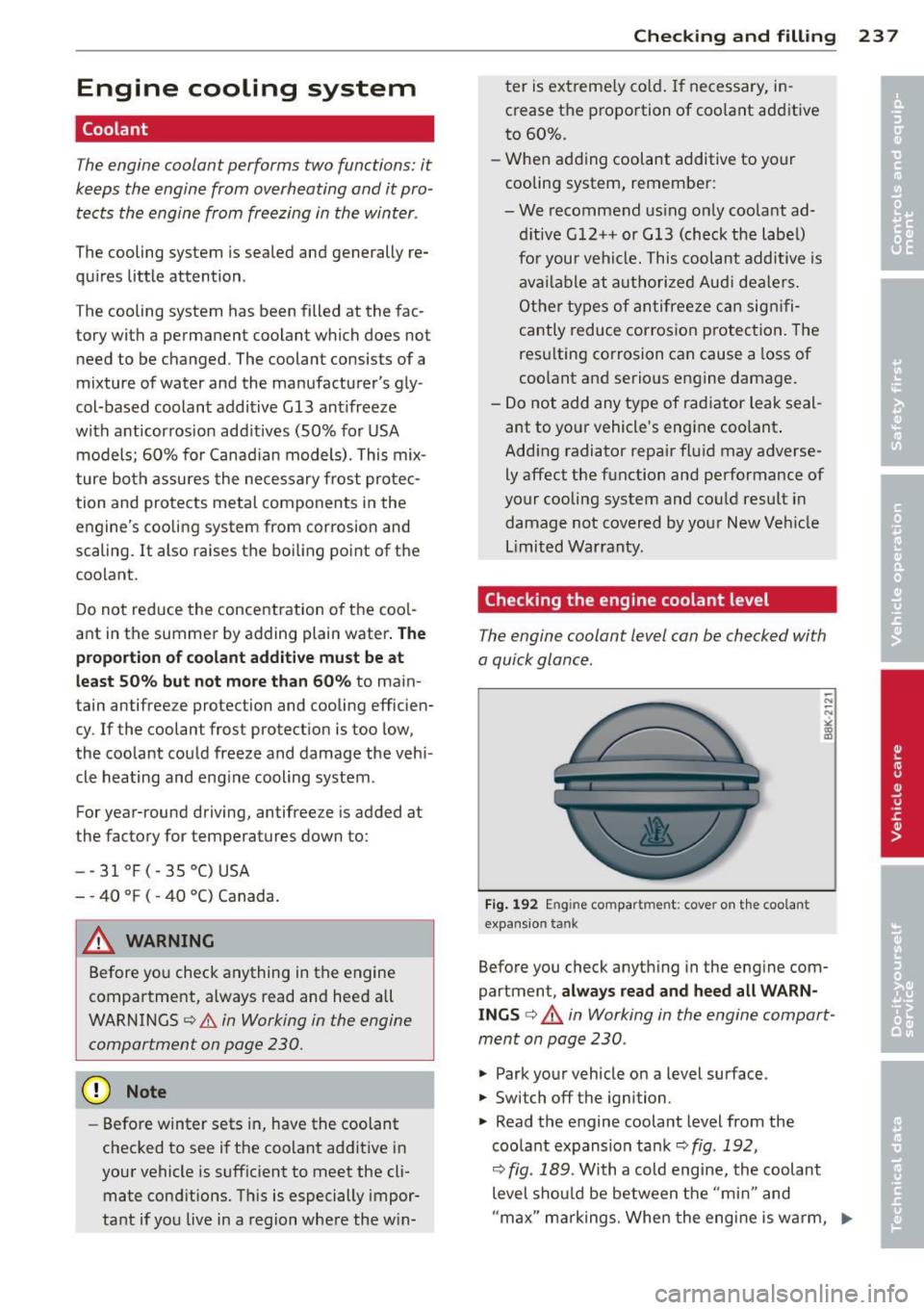
Fig. 19 2 Engine co mpart ment: cover on t he coo la nt
expansio n ta nk
Before you check a nyth ing in the eng ine com
partment,
always read and heed all WARN
INGS <=>&.
in Working in the engine compart
ment on page 230 .
.,. Park yo ur vehicle on a level surface .
.,. Switch off the ignition .
.,. Read the e ngine coolant level from the
coo la nt expansion tan k<=>
fig . 192,
¢ fig. 189 . With a cold engine, the coolant
level s hou ld be be tween the "m in" and
" max" mar kings. Whe n the engi ne is w arm,
Ill>-
Page 240 of 310
238 Checking and filling
the level may be slightly above the "max"
marking.
The location of the coolant expansion tank
can be seen in the engine compartment illus
tration
¢ page 232.
To obtain an accurate reading, the engine
must be switched off.
The expansion tank in your vehicle is equipped
with an electric coolant level sensor.
When the coolant level is too low, the warning light in the Auto-Check System¢
page 16 will
illuminate until you add coolant and the level
has been restored to normal. Even though
there is an electric coolant level sensor , we
still recommend you check the coolant level
from time to time.
Coolant loss
Coolant loss may indicate a leak in the cooling
system. In the event of coolant loss, the cool
ing system should be inspected immediately
by your authorized Audi dealer.
It is not
enough merely to add coolant.
In a
sealed system, losses can occur only if
the boiling point of the coolant is exceeded as
a result of overheating.
_& WARNING
The cooling system is under pressure and
can get very hot. Reduce the risk of scald
ing from hot coolant by following these
steps. -
- Turn off the engine and allow it to cool
down.
- Protect your face, hands and arms from
escaping fluid and steam by covering the
cap with a large, thick rag.
- Turn the cap slowly and very carefully in
a counter-clockwise direction while ap
plying light, downward pressure on the
top of the cap .
- To avoid being burned, do not spill anti freeze or coolant on the exhaust system
or hot engine parts. Under certain condi
tions, the ethylene glycol in engine cool
ant can catch fire .
(D Note
Do not add any type of radiator leak seal
ant to your vehicle's engine coolant. Add
ing radiator repair fluid may adversely af
fect the function and performance of your
cooling system and could result in damage not covered by your New Vehicle Limited
Warranty .
Adding coolant
Be very careful when adding engine coolant.
Before you check anything in the engine com
partment,
always read and heed all WARN
INGS ¢&. in Working in the engine compart
ment on page 230.
.. Turn off the engine .
.. Let the engine cool down.
.. Place a thick rag over the coolant expansion
tank ¢
fig. 192 and carefully twist the cap
counter-clockwise ¢,&. .
.,. Add coolant.
.. Twist the cap on again
tightly.
Replacement engine coolant must conform to
exact specifications ¢
page 23 7, Coolant. We
recommend using only coolant additive G12+
+, G13 or in an emergency G12+. Do
not use a
different additive. In an emergency use plain
water until you can get the correct additive
and can restore the correct ratio. This should
be done as soon as possible .
If you have lost a considerable amount of
coolant , then you should add cold antifreeze
and cold water only when the engine is cold.
Always use
new engine coolant when refilling.
Do not fill coolant above the "MAX" mark. Ex
cess coolant will be forced out through the
pressure relief valve in the cap when the en
gine becomes hot.
_& WARNING
-= -- The cooling system is under pressure and
can get very hot. Reduce the risk of ..,_
Page 298 of 310

296 Index
Checking Engine coolant level ................ 237
Tire pressure . ............. ... .... . 252
Ch ild restra ints
Danger of using child restra ints in the
front seat . ................. ..... . 151
Where can I get additional information
about child restraints and their use? .. 193
Child restraint system anchors ... .... . 189
Child safety .. .. . .......... .. .. .... . 175
Convertible locking retractor .. .. .. .. . 186
Important safety instructions for using
chi ld safety seats ......... .. .. .... . 179
I mportant things to know when dr iving
with chi ldren . ............... .... . 175
Tether anchors ............ ... .... . 192
Tether straps ..................... 192
Child safety lock Rear doors .............. .. .. .... .. 40
Child safety seats .......... .... .... . 181
Booster seats . .......... ... .. .. ... 184
Convertible ch ild seats .... .. .. .. .. . 182
Convertible locking retractor .. .. .. ... 186
H ow do I proper ly install a child safety
seat in my vehicle? ...... .. .. .. .. .. . 179
I nfant seats .............. ... .... . 181
I nstalling . ............... ... .... . 186
Installing a child restraint using the
LATCH system ................ .... . 191
LATCH system ............ .... ..... 191
Lower anchorages ............ ..... 190
Mounting and releasing the anchorage
hook .. .. .. ... .... ...... ... ... .. . 191
Safety instructions . . . . . . . . . . . . . . . . . 179
Unused safety belts on the rear seat .. 181
Cigarette lighter . . . . . . . . . . . . . . . . . . . . . 58
C leaning
Head-up Display .............. .... . 220
Matte finish paint ............ .... . 215
C leaning and protection ..... .. .. .. .. . 213
A lcantara (synthet ic suede) .......... 223
Engine compartment ....... .... ... . 224
Exhaust tail pipes .......... ... .... . 219
Fabrics and fabric coverings .. .. ..... 220
Instrument panel ............. ..... 221
Interior . . . . . . . . . . . . . . . . . . . . . . . . . . 219
Leather .. .. ... .... ...... ... ... .. . 222
MMI display/controls .. ... ... .. .. ... 219 Plastic
and vinyl . . . . . . . . . . . . . . . . . . . 217
Plastic parts . . . . . . . . . . . . . . . . . . . . . . 221
Safety be lts ... .. ................ . 223
trim strips ................... .... 217
Trim strips ................... .... 217
Cleaning the Head-up Display ......... 220
Climate control Air vents .. .. .. .. ............. .. .. . 70
Climate controls . .. ............. .. .. . 68
Climate control (four-zone)
Operation ..... .. .. .............. .. 71
Climate control (three-zone) Operation . . . . . . . . . . . . . . . . . . . . . . . . . 69
Clock ...... .... .................... 27
Closing Rear lid . . . . . . . . . . . . . . . . . . . . . . . . . . . 38
Sliding/ti lting sunroof ............ .. . 42
Co ld tire inflation pressure .......... .. 250
Coming home . .. .. ............. .... . 45
Compact spare tire .............. .... 268
Compartments . . . . . . . . . . . . . . . . . . . . . . 59
Compliance . .. .. .. ............. .... 292
Consumer Information . . . . . . . . . . 138, 289
Consumption (fuel) ... ........... ... . 25
Contacting NHTSA ................. . 138
Convenience key . . . . . . . . . . . . . . . . . . . . . 36
Starting the engine ............ .... . 75
Stopping the engine (START ENG INE
STOP button) . . . . . . . . . . . . . . . . . . . . . . 77
Switching the ignition on ....... .. .. . 75
Unlocking and locking vehicle .. .. .. .. . 36
Convertib le child safety seats ... .... .. 182
Convertible locking retractor Activating ..... .. .. ........ ... .. .. 188
Deactivating . .. .. ... ....... ... .. .. 188
Using to secure a child safety seat 1.86, 188
Coolant
refer to Eng ine coolant .... ..... .. .. 237
Cooling mode (automatic climate control) 71
Cooling mode (climate control) . . . . . . . . . 69
Cruise control Changing speed ................... . 84
Presetting your speed . ...... ... .. .. . 84
Switching off . . . . . . . . . . . . . . . . . . . . . . 84
Switching on . . . . . . . . . . . . . . . . . . . . . . . 83
Warning/indicator lights ............ . 23
Page 307 of 310
Unlocking Power lock ing switch ... ... ... ... .. .. 37
Remote control ......... ... .. .. .. .. 35
Us ing the key ... .. .... ... .... .. .. .. 37
V
Va let parking ..... .. .... ... .. .. .. .. .. 41
Vanity mirrors .... ......... .... .. .. .. 47
Vehicle-care produc ts ....... .. .. .. .. . 213
Vehicle e lectrica l system . . . . . . . . . . . . . . 17
Vehicle ident ificat ion label ....... ... .. 285
Vehicle Identification N umber (VIN) . .. . 285
Vehicle jack .. .... ........... .. 267,27 1
Vehicle literature . . . . . . . . . . . . . . . . . . . . . 5
Vehicle transport .. ..... ... .. .. .. .. . 283
Vent ilation .. .. .. .. .. .... ... .. .. .. .. 68
w
Warn ing/ indicato r lights ....... .. .... . 12
A irbag system ............ ... ... ... 19
Anti-loc k bra king system (ABS) .. .. .. .. 20
Brake system . ........... .. .. .. .... 15
C ruise con trol . . . . . . . . . . . . . . . . . . . . . . 23
E lect romechanical park ing brake . ... .. 1 6
Electronic power contro l . . . . . . . . . . . . . 21
Elect ronic Stabilization Control (ESC) ... 19
Gene rator . . . . . . . . . . . . . . . . . . . . . . . . . 17
Instrument cluster. . . . . . . . . . . . . . . . . . 11
Malfunct ion Indicator Lamp (MIL) ... .. 21
Safety belt . . . . . . . . . . . . . . . . . . . . . . . . 17
Turn signa ls ... ........... ... ... ... 23
Warn ing/Ind icator lights
A irbag system . . . . . . . . . . . . . . . 161, 162
PASS ENG ER AIR BAG OFF ...... ... .. 162
Warranty coverages ..... ... .. .. .. .. . 289
Wash er rese rvoir . ...... ... .... .. ... 244
Washing .. .. ................. .. ... 213
Automatic ca r wash ....... .. .. .. .. . 214
by hand . ... .. ........ ... .. ... ... . 214
Matte fin is h pa int ..... ...... .... .. 215
with a powe r washe r ... ... .. .. .. .. . 215
Waxing ... .. ................. .. ... 217
Wear ind icator ............ .... .. .. . 256
Weights . .. ... ...... ............. .. 285
W hat happens if you wear your safety belt
too loose? . .. .. ........... .. .. .. ... 144
Inde x 305
What happens to unbe lted occupants? . . 141
Wha t impairs d riving safety? .......... 131
What should I do after changing a
whee l? ..... .. .. .. ................. 253
Wha t shou ld I do after replac ing whee ls? 253
Wheel bolts To rque ...... .. .... .......... ..... 263
Wheels ...... .. .. ................. 246
Cast alloy . .. .. .. .... ............. 218
Check ing t ire pressu re ............. . 252
Co ld t ire inflation p ressure ..... ... .. 250
General notes .. ... ...... .......... 246
G lossary of tire and loading term inolo-
gy ....... .. .. .. .. .. ........... .. 24 7
New t ires and wheels . ... .... ... .. .. 257
Tires and vehicle load limits .. ... .. .. 254
When must a safety belt be replaced? .. 143
When must the airbag system be inspect -
ed? ........ .. .. .. ................. 161
When should I adjust the t ire pressures? 253
When should I chec k the ti re p ressu res? . 253
Where are lower anchorages located? . .. 190
Where can I find the t ire p ress ures for my
car? .. ... .. .. .. .. .. . .. ... .... ... .. 252
Why safety belts? . . . . . . . . . . . . . . 140, 141
Windows Cleaning .. .. .. .. ................. 218
defrosting (automatic climate control) . 72
defrosting (climate control) . . . . . . . . . . 70
Windshie ld
Cleaning . ... .... .. . .. .. ..... ... .. . 47
defrosting (automatic climate control) . 72
defrosting (climate control) . . . . . . . . . . 70
Windshie ld washer system .... ... .. .. . 47
Washer fl uid level . .. .. ..... ... .. .. . 22
Washer reservoir ... . ... .... ... .. .. 244
Windsh ie ld w ipers
F o ldi ng up .. .. .. ................. . 48
Ind icator light ..... . .. .. ..... ... .. . 22
Rep lacing windsh ield wiper b lades . ... . 48
Switching on/off .... .. ..... ... .. .. . 47
Win ter operation
B attery . . . . . . . . . . . . . . . . . . . . . . . . . . 240
Cooling system ... .. .. ... ..... ... .. 237
Defrost ing win dows (a utomatic climate
control) . . . . . . . . . . . . . . . . . . . . . . . . . . . 72
Defrost ing windows (climate control) . . 70
•
•