hood open AUDI A7 2014 User Guide
[x] Cancel search | Manufacturer: AUDI, Model Year: 2014, Model line: A7, Model: AUDI A7 2014Pages: 306, PDF Size: 76.83 MB
Page 196 of 306

194 Audi pre sense
Audi pre sense
Preventative passenger
protection
A pp lies to veh icles: with Audi pre se nse
Audi pre sense can initiate steps to help pro
tect vehicle occupants in certain situations.
The functions described depend on equ ipment
installed in your vehicle:
Audi pre sense basic*
The following functions can be triggered in
certain driving situations:
- Tightening of the safety belts (for example,
during heavy braking) : the front safety belts
have reversible belt pretensioners. If a colli
sion does not occur, the safety belts loosen
slightly and are ready to be tightened again.
- Closing the windows and the sunroof*: the
windows and the sunroof* close leaving a
small open gap.
Audi pre sense basic functions can be trig
gered at speeds above 20 mph (30 km/h).
Vehicles with Aud i drive select*: the deploy
ment time is adapted in
Dynamic mode.
Audi pre sense front (vehicles with
adaptive cruise control*)
Audi pre sense front includes the functions in
Audi pre sense basic. In addition, within the
limits of the system, the likelihood of a colli
sion with the vehicle immediately ahead is al
so calculated . If the system senses an immi
nent collision the following functions can be
tr iggered :
- Braking guard
c::> page 92
- Tightening the safety be lts
- Closing the windows and the sunroof* (leav -
ing a small open gap)
Audi pre sense rear (vehicles with Audi
side assist*)
Audi pre sense rear includes the functions in
Audi pre sense basic. In addition, the likeli
hood of a rear-end collision with the vehicle
coming from behind is also calcu lated.
If the risk
of a co llision is detected, the following
functions can be triggered:
- Tig htening the safety belts
- Closing the windows and the sunroof* (leav-
ing a small open gap)
Audi pre sense plus*
Audi pre sense plus includes the functions in
Audi pre sense front and Audi pre sense rear.
Error message
Audi pre sense: not available
Preventative passenger protection is not avail
able. See your authorized Audi dealer immedi
ately to have the malfunction corrected.
_& WARNING
-=
Audi pre sense cannot overcome the laws
of physics. It cannot prevent a collision. Do
not let the increased safety provided
tempt you to take risks. This will increase
the r isk of a collis ion and serious personal
in juries .
- The sensors cannot always detect all ob
jects. This increases the risk of a colli
s10n.
-Aud i pre sense does not detect people or
an im als or objects that are crossing the
veh icle's path
c::> page 86.
-The radar sensor's vis ion can be reduced
by heavy rain, ice, snow, heavy road sp ray
and reflections from guard rails, tunnel
entrances, etc. These and similar condi
tions can prevent vehicles from being ac
curately detected and in some cases they
may not be detected at all.
(D Note
The sensors can be displaced by impacts or
damage to the bumper, wheel housing and
underbody. This can affect the function of
the Audi pre sense system. Have your au
thorized Audi dealer check to make sure
that the system is working properly.
Page 229 of 306

Checking and filling Engine hood
Releasing the engine hood
The engine hood is released from inside the
vehicle .
Fig. 191 Dr iver footwell: release lever
Fig. 192 Rocker switch under the hood
Make sure the wiper arms are not raised up
from the w indshield. Otherw ise the paint
could be damaged.
.. Pull the lever under the instrument panel in
the d irect ion of the arrow
~ fig. 191.
.. Raise the hood slightly~ &-
.. Press the rocker switc h under the hood up
ward
~ fig. 192. This re leases the catch .
.. Open the hood .
A WARNING
Hot engine coo lant can burn you.
- To reduce the r isk of being burned, never
open the hood if you see or hear steam
or coolant escaping from the engine
compartment . Wait until no steam or
coolant can be seen or heard before care
fully opening the hood.
Checkin g and fillin g 22 7
Working in the engine compartment
Be especially careful whenever you work in
the engine compartment.
Wh ene ve r y ou must p erform an y wor k in the
e ng ine com pa rtm ent , for e xample checking
a nd filling diff ere nt fluids, th ere is a risk of
inju ry, burn s and accid ent s. To pr eve nt per
so nal injury alwa ys observ e the foll owing
WARNING S. The engin e compartment of an y
v e hicle i s a h az a rdou s are a
~ ,&.
h WARNING
To help avoid injury, before yo u check any
thing under the hood:
- Turn off the engine.
- Sw itch off the ignition.
- Apply the parki ng brake.
- Move selector leve r to P (Park).
- Always let the engine cool down. Hot
components w ill burn skin on contact .
- To reduce the risk of being burned, never
open the hood if you see or hear steam
or coo la nt escaping from the engine
compa rtment. Wait unt il no steam or
coolant can be seen o r heard before care
fu lly opening the hood.
- Keep ch ildren away from the engine com
pa rtment.
- Never sp ill fluids on hot engine compo
nents . They can cause a fire .
- Never touch the rad iator fan. The auxili
ary electric fan is temperat ure controlled
a nd can sw itch on suddenly .
- Never open the coolant reservoir cap
when the engine is still warm. The cool
a nt system is p ressu rized and hot cool
a nt cou ld spray o ut.
- Protect your face, hands and arm from
steam or hot engine coolant by plac ing a
thick rag ove r the cap when you open the
coo lant rese rvoir.
- Do not remove the engine cover under
any circumstances. This inc reases the
ris k of burns.
- If work on the fue l system o r the elec tri
cal system is necessary:
Page 230 of 306

228 Check ing and filling
- Always disconnect the battery.
- Never smoke or wor k near heaters or
open flames . Fluids in the engine com
partment could start a fire.
- Keep an approved fire extinguisher im
mediately available.
- To avoid electrical shock and persona l in
jury while the engine is running or being started, never touch:
- Ignition cables
- Other components of the high voltage
electronic ignition system.
- If you must perform a check or repa ir
with the engine running:
- Fi rst, fully apply the parking brake,
move se lec tor lever to P (Pa rk) .
- Always use extreme caution to prevent
clot hing, jewe lry, or long ha ir from ge t
ting caught in the radiator fan, V -belts
or other moving parts, or from contact ing hot parts . Tie back hair before
start ing, and do not wear cloth ing that
will hang or droop into the eng ine .
- Minimize exposure to emission and chemica l ha zards¢ ,&..
A WARNING
California Propos ition 65 Warning:
- Engine exhaust, some of its constituents,
and certa in veh icle components conta in
or emit chemicals known to the State of
Califor nia to cause cancer and b irth de
fects a nd reproduct ive ha rm. In addition ,
certain fluids conta ined in vehicles and
certa in prod ucts of co mponent wear co n
ta in or emi t chemicals known to the
State o f Ca lifornia to cause can cer and
birth defects or other reproductive harm . -
Battery posts, terminals and re lated ac
cessories conta in lead and lead com
pounds, chemicals known to the State of
California to cause cancer and reproduc
tive harms. Wash hands after handling .
(D Note
When adding flu ids, always make sure that
they are poured into the proper conta iner
or f iller opening, otherwise serious dam
age to vehicle systems w ill occur.
® For the sake of the environment
To detect leaks in time, inspect the vehicle
floor pan from underneath regularly. If
you see spots from oil or other ve hicle flu
i ds, have yo ur vehicle inspected by a n au
thori zed Audi dea le r.
Closing the engine hood
.,. Pull the hood down un til the pressure from
the struts is reduced.
.,. Let the hood
drop down and latch in p lace .
Do not try to push it shut; it may fail to en
gage ¢&_ .
A WARNING
-
A hood that is not completely latched
could fly up and b lock your view while dr iv
ing .
-When you close the engine hood, check it
to make sure the safety catch has p roper
ly engaged. The hood sho uld be flush
with the surrou nding vehicle body pa rts.
- If you notice while driv ing that the hood
is not s ecured prope rly, stop at onc e and
close it.
Page 234 of 306

232 Checking and filling
(D Note
Driving with an insufficient oi l level is like
ly to ca use seve re damage to the eng ine.
@ Tips
- The oil pressure warning display. i s
not an indicator of the oil level. Do not
r ely on it. Instead , check the oil level in
your engine at regular intervals, pref
erably each t ime you refuel, and always
before going on a long trip .
-If you have the impression your engine
consumes excessive amo unts of oi l, we
recommend that yo u consult your Audi
dealer to have the ca use of you r co nce rn
prope rly diagnosed. Keep in mind that
t h e accurate measure men t of oil con
s u mp tion requires gre at ca re and may
ta ke some time. Your Audi dealer h as in
str uctions about how to measure oil con
sumption accurate ly .
Checking the engine oil level
Fig . 194 Di splay: o il leve l in dicato r
... Pa rk your vehi cle on a leve l surfac e.
... Shu t the engine off when i t is wa rm.
... Swi tch on ly th e igni tion ba ck on.
... Wa it approxima tely two mi nutes .
... Se lect : ICAR !funct io n button>
(Car)* sy s
tems
control button > Se rvicing & checks >
O il level.
... Check the oil leve l in t he display¢ fig. 194 .
Add engi ne oil if the bar of the oil level indi
cator is n ear "m in"
¢ page 232.
Depending on the way the vehicle is driven
a nd the operating conditions, oil consumpt ion can be u
p to 1/2 quart pe r 60 0 miles (0.5 liter
per 1,000 km) . Con sumption may be hig he r
within the first 3,000 miles (5,000 km) .
(D Tips
The oil level indicator in t he MM I Disp lay is
o nl y an information display . If t he oil level
i s lo w, a min imum oil warn ing appears in
the instr ument cluster. Add oil
¢
page 232 . If the hood has been opened ,
the cur ren t oil leve l is s hown in the instru
m ent cluste r th e next t ime the ignit ion is
sw itc hed on.
Adding engine oil 'l:::7:
Fi g. 195 Eng in e compa rtm en t: cove r on t he e ng in e o il
fille r neck
B efo re y ou chec k anyt hing in the engine com
par tmen t,
always read and heed all WARN
INGS
¢ .&. in Working in the engine com part
ment on page 22
7 .
... Shu t the eng ine off .
... Uns crew the cap
"I".:::?-to the eng ine o il filling
hole
¢ fig . 195, ¢page 229, fig . 193 .
... Carefully top off with 0 . 5 quarts (0 .5 liters)
of the appropr iate oil
¢ page 229 .
... Check the oi l level again after two min utes
¢ page 232, Checking the engine oil level.
... Top off the o il aga in, if necessary .
... Screw the cap back on the fi lling hol e .
.&_ WARNING
=
- W hile toppi ng off, t he o il mu st not come
i n cont act wit h hot engi ne part s - fire
h aza rd !
Page 242 of 306
24 0 Ch ecking and filling
(D Note
-Do not disconnect the vehicle battery
when the ignition is on or when the en
gine is running, otherwise, you will dam
age electronic components in the electri
cal system .
- If your vehicle is going to stand for a
long period of time without being driven,
protect t he battery from "freezing", oth
erwise it w ill be damaged and w ill then
have to be replaced .
- When opening the doors, the w indows
lower approx imately 10 mm automati
ca lly. This function is not available when
the battery is disconnected, wh ich
means there is a ris k tha t the door seal
or the w indow cou ld be damaged.
Battery charging
Starting the engine requires a well charged
battery.
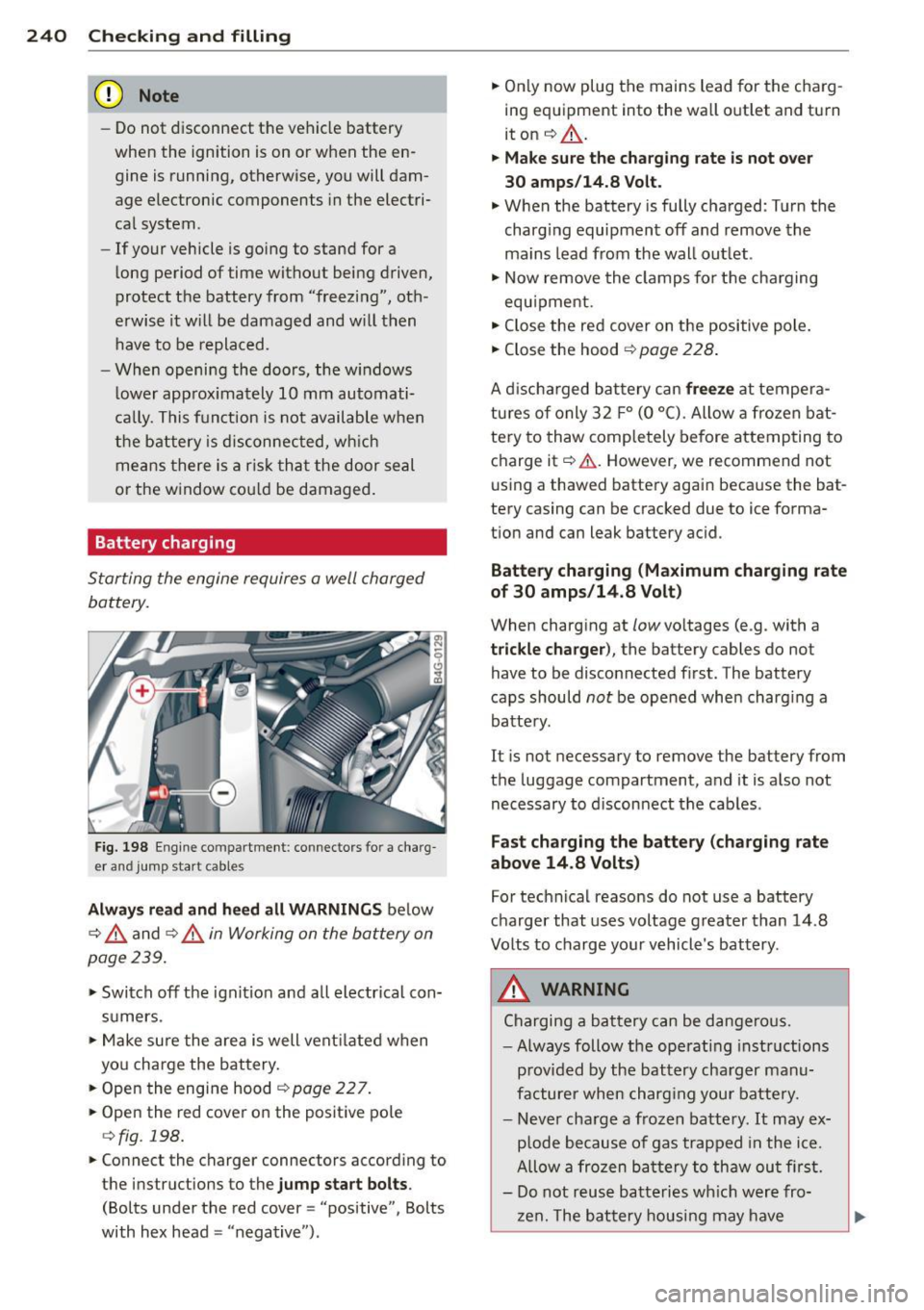
Fig. 198 E n gine co mpartment : co nnector s for a charg
e r and j ump sta rt cable s
Alwa ys read and h eed all WARNING S below
c::> .&. and c::> .&. in Working on the battery on
page 239.
,.. Switch off the ignit ion and all electrical con
sumers .
,.. Make sure the area is well vent ilated when
you charge the battery.
,.. Open the engine hood
c::> page 22 7 .
,.. Open the red cover o n the posit ive pole
c::> fig . 198.
,.. Connect the charger connectors according to
the instructions to the
jump st a rt bol ts .
(Bolts under the red cover = "positive", Bolts
with hex head = "negative "). ,..
On ly now plug the mains lead for the charg
ing equipment into the wa ll outlet and turn
it on
c::> ,&. .
,.. M ake sur e the cha rg in g rate is not over
30 amps /14.8 Volt .
,.. When the battery is fully charged: Turn the
charg ing equipment off and remove the
mains lead from the wall out let .
,.. Now remove the clamps for the charging
equ ipment.
,.. Close the red cover on the positive pole.
,.. Close the hood
c::> page 228 .
A discharged battery can freez e at tempera
tu res of only 32 F
0 (0 °C). Allow a frozen bat
te ry to thaw completely before attempting to
c h arge it
c::> & . However, we recommend not
using a thawed battery again because the bat
tery casing can be cracked due to ice forma
tion and can leak battery acid.
Batt ery cha rging (Ma ximum charging rat e
of
30 amp s/14.8 Volt )
When charg ing at low vo ltages (e .g. with a
trickl e cha rge r), the battery cables do not
have to be disconnected first. The battery
caps should
not be opened when charg ing a
batte ry.
It is not necessary to remove the battery from
the luggage compartment, and it is also not
necessary to d isconnect the cables .
Fast ch arging the battery (ch arging rate
ab ove 14 .8 V olt s)
For technical reasons do not use a battery
charger that uses voltage greater than 14.8
Volts to charge your vehicle's battery .
_&. WARNING -
Charging a battery can be dangerous.
- Always follow the operating instructions
p rovided by the battery cha rger manu
facturer when charg ing your battery.
- Never charge a frozen battery . It may ex
p lode because of gas trapped in the ice.
A llow a fro zen ba ttery to thaw ou t firs t.
- D o not reuse batteries wh ich wer e fro-
z en. The ba ttery housing may have .,..
Page 296 of 306

29 4 Index
Start -Stop -System . . . . . . . . . . . . . . . . . . 81
starting .... ... . ...... ... .. .. .... .. 76
Starting with jumper cab les .. .. .. .. . 276
Stopping . . . . . . . . . . . . . . . . . . . . . . . . . . 77
E ng ine compartmen t ... .... .. .. .... . 229
C losing the hood . ..... ... .. .. .... . 228
Opening the hood ..... ... .. .. .... . 227
Safety instructions ..... ... .. .. .... . 227
Working in the engine compartment . . 227
E ng ine coolan t ... .. ... .... .. .. .. .. . 234
Adding coolant . .. ..... ... .. .. .... . 235
Checking the engine coolant leve l .. .. . 235
Expansion tank . .. ..... ... .. .. .... . 235
M alfunct ion symbo l . . . . . . . . . . . . . . . . . 17
Radi ator f an .... ... .. ...... .. .. .. . 236
T emperature gauge ........ .... ..... 11
Eng ine oil ... ... .. ..... ... .. .. .... . 229
Adding .... ... . ...... ... .. .. .... . 232
Addit ives . .... .... .... ....... .. .. . 232
Ch ang ing .. .... .. ... .. .. .. .. .. ... 233
Check ing the eng ine o il level .. .. .... . 232
Ind ications and cond it ions req uiring ex -
tra checking .................. .... 232
I nd icator light . . . . . . . . . . . . . . . . . . . . . 18
O il cons umption . .. ... .... .. .. .. .. . 23 1
O il grades .... .... .... ... .... .. .. . 229
P ressu re mal function . ... .. .. ... ... .. 18
Recomm ended oil check int ervals . ... . 232
Sensor def ective . . . . . . . . . . . . . . . . . . . . 22
Specification and viscos ity .. .. .. .... . 229
E ng ine sound ...... ....... .. .. .. .. . 102
Eng ine speed limitat ion ...... ... .. .... 22
Engin e start-stop mode
refer to Start-Stop-System . .. .. .. .. . . 83
E ng ine start sys tem (ind icator lights) .. . . 18
E nv ironment
Break- in period .............. ... ... 204
Cata lytic conve rter ........... ... ... 205
Di ese l pa rticul ate fi lter .. .. .. .. .. .. . 205
Di sp osing of yo ur vehicle batte ry .. ... 24 1
D riving a t high speeds ... .. .. .. .... . 20 7
D riving to minimize pollu tion and noise 206
Fu el . .... .. ... .. ..... ... .. .. .... . 221
Fue l economy ... .. ... .... .. .. .. .. . 206
Leaks unde r your veh icle ..... .. .... . 227
Le tting the ve hicle stand and warm up . 207
Prope r disposal of dra ined brake flu id . 23 7 Proper disposal of d
rained eng ine cool -
ant . ... .. .... .. .. ... ..... ... .. .. 235
Proper d isposal of d rained eng ine
o il . . . . . . . . . . . . . . . . . . . . . . . . . 232, 233
Recycling used engine oil . ....... .... 232
U nleaded fuel .. .. ................ . 218
What s hould I do with an old battery? . 241
Event Data Recorde r (EDR) . . . . . . . . . . . . 196
E xhaus t tai l pipes
C leaning .. .. .. . .......... ... ... .. 214
Expansion tank .. .. .......... ...... . 235
Exterior lighting ... .. ... ..... ... .. .. . 44
E xte rior mi rrors
Adjus ting . .. .. .. .. .... .... ....... . SO
D imming . ..... .. .. ... ..... ... .. .. . 51
Heating ... .... .. ... .. ..... .... . .. . SO
E xterior tempera ture display ........... 24
F
Fastening
Booster seats . . . . . . . . . . . . . . . . . . . . . 184
Co nvertib le child safety seats ........ 182
I n fan t seats . .. .. ....... ...... .... 181
Floor mats .. .. .. .. ...... ....... .... 135
F oot peda ls ..... .. .. ... ..... ... .. .. 135
Fo r the sake of the environment
Gasoli ne fumes and the env ironme nt .. 221
Red ucing engine noise by early upshift-
i ng ....... .. .. .. .. ............... . 11
Ref ueling ..... .. ... .. ..... .... . .. 221
Saving f uel by early ups hifting ... .. .. . 11
Fo ur-zone automatic climate control . .. . 72
Front a irbags
Descrip tion .. .. . .. ........ ... ..... 153
How they work . .. .......... ...... . 159
Frontal col lisions and the laws of p hysics 141
Front seats . . . . . . . . . . . . . . . . . . . . . . . . . 53
Adjus ting . .. .. .. ........... .. .. .. 132
C hild rest rain ts in the front seat . ... .. 151
Fuel Additives ...... .. ..... ........... . 218
B lended gaso line ........ .... ...... 218
Cur rent co nsumption .... ....... .... . 25
E conomy messages (e fficiency p rogram) 2 7
Fuel fi lle r flap emergency release ... .. 223
Fuel fi ller neck ... .. .... .... ... .. .. 220
Fuel gauge . . . . . . . . . . . . . . . . . . . . . . . . 12
Page 297 of 306

Gasoline ... ... ... .... ... .. .. .. ... 218
Gasoline additives ..... ... ... ... .. . 219
L ow fuel level symbol .... ... .. .. .. .. 22
Octane rating ..................... 218
Recommendation .................. 218
Refue lling .. ................ ...... 221
Reserve .. .. ... .. .. ..... ... .. .. .. .. 12
Tank capacity . . . . . . . . . . . . . . . . . 12, 283
Fuses Assignment ............. .... .. ... 272
Replacing ............ ........... . 272
G
Garage door opener (Homel ink) .. .. .. . 128
Garment hoo ks ............ .. .. .. .. .. 6 1
Gas discharge lamps .............. .. . 275
Gauges Engine coolant temperature .... .. .... 11
Fuel gauge . .. .. ......... .. .. .. .... 12
Speedometer ... .......... ... .. .. .. 27
Tac hometer ....................... 12
Trip odometer ............ ...... ... 27
General illustration . . . . . . . . . . . . . . . . . . . 8
Gene rato r (warn ing/indicator lights) .... 1 7
Glossary of t ire and load ing termino logy 244
Glove compartment (cooled) ... .. .. .. .. 61
Glow plug system Indicator ligh t . . . . . . . . . . . . . . . . . . . . . 2 1
Gross Veh icle Weight Rating (GVWR) .. . 282
H
Head -up Display . . . . . . . . . . . . . . . . . . . . . 29
H eadlights
Cleaning ... .. ... ..... ... .. .. .. ... 214
C leaning system ... .... ... .. .. .. .. .. 48
Defective . ... .... .... ... .. .. .. .... 23
Headlight range control . . . . . . . . . 23, 44
Washer reservoir .................. 241
H ead restraints . . . . . . . . . . . . . . . . . S6, 134
Ad justing .. .. .. ... . .. ... .. .. .. ... 134
F ront seats .... .. .. ... ... .. .. .. .... 56
Rear seats .. .. .. ......... .. .. .. .... 57
Removing .. ............. .... .. .. .. 57
H ea ted
exterior mirrors ... .... ... .. .. .. .. .. SO
rear window (automatic climate cont ro l) 73
Inde x 295
rear window (climate cont rol) . ... .. .. . 71
seats (automatic climate control) ... .. . 73
seats (climate cont ro l) . . . . . . . . . . . . . . . 71
windshield washer spray noz zles ..... .
48
Heating ............................ 69
Heavy clothi ng a nd safety be lts ... .... . 143
Hig h beam . ... .. .... . ... ...... ... .. . 46
Hig h voltage warn ing label ........... 282
Hill descent contro l ................. 112
Homelink unive rsal remote control . ... 128
Hood (re lease lever) .. .............. . 22 7
Hooks ......... .................... 67
Hor n ............................... 8
How are child restraint system anchors re-
lated to child safety .. . .. .... ...... .. 189
How many a irbags does my vehicle have? 157
How often should I che ck my tire pres-
s ur es? ... .. .... .. .. . .............. 250
How safety belt pretens ioners work .... 147
Hydrop la ni ng ..... .. . .. .. ..... ... .. 254
I
Immobilize r . . . . . . . . . . . . . . . . . . . . . . . . 27
Impo rtant t hings to do before d riving .. 130
Improperly worn safety belts .......... 146
Ind icator lights
refer to Warn ing/ indi ca to r li ghts ...... 12
Infant seats . . . . . . . . . . . . . . . . . . . . . . . 181
Installing child safety seats Safety be lts . . . . . . . . . . . . . . . . . . . . . . 186
Installing the upper te ther s trap on the
anchorage . ... .... .. . .. .. ..... ... .. 192
Instruments Adjust ing the light ing ............... 47
Instr uments and controls
General illustration . . . . . . . . . . . . . . . . . . 8
Instrument cluster . . . . . . . . . . . . . . . . . .
11
Interio r lighting
Amb ience lighting . ... .. .. .... ... .. . 47
Front and rear . .................... 47
In ter mitten t (w indshie ld w ipers) ....... 48
J
Jack .............................. 264
Jump-starting ... ................... 276
•
•
Page 299 of 306

NHTSA Contacting 138
Night vision ass istant ....... .. .. .. .. . 105
C leaning camera lenses .... .. .. .. .. . 214
Nitrogen oxide (NOx) cata lytic converter
refer to Ad Blue ............ ... ... .. 223
Number of seats . ... .... ... .. .. .. ... 140
0
Occupant seating posit ions . ... .. .. .. . 13 1
Octane rating .............. ... ... .. 218
Odometer . .. .. ............. .. .. .... 27
O FF (au to m atic clim ate cont ro l) . . . . . . . . 7 2
OFF (climate control) ........... ... ... 70
O il
refer to Engine oil ..... ... .. .. .. .. . 229
On-boa rd compute r ........ .. .. .. .. .. 25
On-Board Diagnostic System (OBD) Data L ink Connector (DLC) ....... .... . 30
E lect ron ic speed lim ite r . . . . . . . . . . . . . . 31
M alfunct io n I ndicato r Lamp (M IL) . .. .. 30
Open door/hood/rear lid warning . . . . . . . 24
Opening Hood . ..... .. .. ... . .... ... .. .. ... 227
Powe r windows .. ..... ... .. .. .. .. .. 41
Rear lid . . . . . . . . . . . . . . . . . . . . . . . . . . . 38
Sliding/tilting sunroof ..... .. .. .. .. .. 42
Opera te you r vehi cle econom ic all y and
minim ize po llu tion . ..... ... .. .. .. .. . 20 6
Othe r equipment (eff ic iency p rog ram) . .. 26
Outlet .... .. .. ............. .. .. .... 59
p
Paint damage 215
P aint No . .. .. .... ......... .... .. .. . 28 2
Park ing . .. .. ............. .... .. .. .. 80
Automatic transmission . . . . . . . . . . . . 111
Valet park ing ............. ... ... ... 42
Park ing brake . .... ..... ... .. .. .. .... 79
also refer to Electromechanica l park ing
brake .... .. ............. .... .. .... 79
P ark ing system
Ad justing the disp lay/wa rning tone . .. 12 6
C leaning sensors/camera lenses ... .. . 2 14
C leaning the rear view camera .. .. .. . 118
Inde x 297
Malfunction ..... ... .. .. ..... ... .. 127
Pa rking system plus .. ... ...... ... .. 117
Peripheral cameras .. .. ... .... ... .. 121
Rear view camera . ................. 118
Trai ler hitch . .. .. .... ............. 127
also refer to Parking systems . . . 117, 118
Pa rking systems ...... .. .. ..... ... .. 116
Pa rticle fi lter
refer to D iese l par ticula te fil ter .. .. .. . 22
Parts replacement . .... ......... .. .. 287
Pass-through with ski sack . . . . . . . . . . . . . 67
PASS ENGER A IR BAG OFF light ........ 162
Passenger protect ion ... ......... .. .. 194
P a ss ive safe ty system . ........... .... 13 0
Pedals ........ ... .. ..... .......... 135
Physical p rinciples of a frontal collision 141
Plastic parts Cleaning .. .. .. .. .. .. ........... .. 215
Polishing ......... .. ..... .......... 215
Pollen filter
refer to Poll utant fi lter . ..... ... .. .. . 69
Pollu tan t fi lter .. .. .. .. ......... .. .. . 69
Power locki ng system ............ .. .. . 34
Locking/unlock ing the ve hicle from in -
s ide .. ... ... .. .... .. ........ ...... 37
Se lective unlock feature . . . . . . . . . . . . . 35
Settings .. .. .. .. .... ............. . 35
Unl ocking and lo cking veh icle .... .. .. . 35
Power seat adjustment Front seats . . . . . . . . . . . . . . . . . . . . . . . . 54
Power steer ing
refer to Electro-mechanical power as-
s ist .......... .. .. ............... 201
Power windows ...... . .. .. ..... ... .. . 41
malfu nction ..... .. . .. .. ..... ... .. . 41
P regnant women
S p eci al consider ations w hen we aring a
sa fe ty belt . . . . . . . . . . . . . . . . . . . . . . . 145
pre sense . . . . . . . . . . . . . . . . . . . . . . . . . . 194
Preventative passenger protection ... .. 194
Programming the HomeL ink unive rsal re-
mo te control .. .. .. ................. 1 28
Proper occupant seating positions . .... 131
Proper safety belt position . . . . . . . . . . . . 144
•
•