engine AUDI A7 2017 Owner´s Manual
[x] Cancel search | Manufacturer: AUDI, Model Year: 2017, Model line: A7, Model: AUDI A7 2017Pages: 284, PDF Size: 72.29 MB
Page 126 of 284
Intelligent Technology
necessary. This causes the brakes to over
heat and increases bra king distance and
causes wear .
- Befo re driving downhi ll a long distance on a
steep hill, decrease your speed and select a
l ower gear. This makes use of the engine
braking effect and relieves the brakes. If
you need to brake additionally, b rake in in
t e rvals a nd not continuously .
(D Tips
-If the brake booster is not working, you
must press the brake pedal with much more
force than normal.
- If you retrofit you r vehicle with a front spoil
e r, whee l covers o r similar items , make sure
that the a ir flow to t he fron t wheels is not
i nte rr u pted . Othe rw ise the brake sys tem
ca n become too hot .
Electromechanical
steering, dynamic
steering
The electromechanical steering supports the
driver 's st eering movements.
Power steering adapts elec tronically based on
the vehicle speed .
Indicator light s and mes sage s
• Do not drive vehicle: steering defective
If thi s in dica tor light t urns o n and st ays o n and
t his mess age appears, t he power s teer ing m ay
have fai led.
St op the veh icle in a safe lo cat io n as soo n as pos
sib le. Do
not c ontinue dr iving. See an author ized
Aud i dealer o r auth o rize d Aud i Serv ice Facili ty for
assis tance.
(;:r,n Steering : Sy stem fault You can continue
driving
If the indicator lig ht tur ns on and the message
appears, the steering wheel may be mo re diff i
cul t to m ove or mo re sensit ive tha n usua l. The
s teer ing whee l may also be at an angle when
d riving s traight .
124
Drive slowly to an a uth orized Audi dea ler or au
thorized Audi Serv ice Facility to have the mal
funct ion corrected .
,Ion Dynamic steering: Initializing
If the indica to r li gh t is blinking and this message
appea rs, dy namic stee ring* is be ing initiali zed.
The steer ing whee l will be easy to move afte r
s ta rt ing t he en gine . Re- ini tializ ation mig ht be
necessary if the steering wheel was moved hard
to the left and r ight while the veh icle was not
moving . The d isp lay turns off if the in it ia li zation
was s uccessful.
(D Tips
- If the . or ,Ion indicato r light only stays on
f or a s ho rt time, you may cont inue driving .
- The dynamic stee ring stability systems
¢
page 1 20 are not ava ila bl e in the event of
a system mal function.
- For add itiona l information on dynamic
steering, re fer to
¢ page 105.
All wheel drive (quattro)
Applies to: vehicles with all wheel drive
In all wheel drive, all four wheels are powered.
General information
In all whee l drive, the dr iv ing power is divide d be
tween all four whee ls. This happens automatical
l y depending on yo ur driv ing behavior as we ll as
the cur rent road conditions . Also see
¢ page 120 , Electronic Stabilization Control
(ESC).
A center d ifferential distributes the driving powe r
varia bly to the front and rea r ax le. It wor ks to
gether w ith selective whee l torque contro l, w hich
activates w hen d riving through curves
¢ page 120 . With the sport d ifferent ial*, power
dis tribution to the rear wheels is var iable and can
be adjus ted wi th drive select¢
page 105 .
The all wheel drive concept is designed fo r high
engine power . Yo ur vehicle is except iona lly pow
erfu l and has excellent driving cha rac teristics
bot h un der normal d riving condi tions and on
snow and i ce. A lways read and follow safe ty pre-
c auti ons ¢
,&.. IJll-
Page 127 of 284
co
co
.... N
" N .... 0
00
<.,;) 'SI"
Winter tires
By using all wheel drive, your vehicle has good
forward motion with standard tires in winter con
ditions . However, in winter we recommend using
winter or all season tires on all four wheels, be
cause this will improve the braking effect.
Snow chains
If there are snow chain laws, snow chains must
also be used on vehicles with all wheel drive
¢ page 227, Snow chains.
Replacing tires
For vehicles w ith all whee l dr ive, only whee ls w ith
the same rolling circumference should be used .
Avoid using tires with different tread depths
¢ page 218, New tires or wheels.
Offroad vehicle?
Your Audi is not an offroad vehicle -there is not
enough ground clearance. For this reason, avoid
difficult terrain.
_& WARNING
-Also, in vehicles with a ll wheel drive, adapt
your dr iving style to the current road and
traff ic conditions. Do not let the increased
safety provided tempt you into taking risks,
because this increases the risk of an acci
dent .
- The braking ability of your vehicle is limited
to the traction of the wheels . In this way, it
is not different from a two wheel dr ive vehi
cle. Do not be tempted to accelerate to a
high speed when the road is slippery, be
cause this increases the risk of an accident .
- Note that on wet streets, the front wheels
can "hydroplane" if driving at speeds that
are too high. Unlike front wheel drive
vehicles, the engine does not rev higher sud
denly when the vehicle begins hydroplaning .
For this reason, adapt your speed to the
road conditions to reduce the risk of an acci
dent.
Intelligent Technology
Rear spoiler
The extendable rear spoiler increases driving sta
bility.
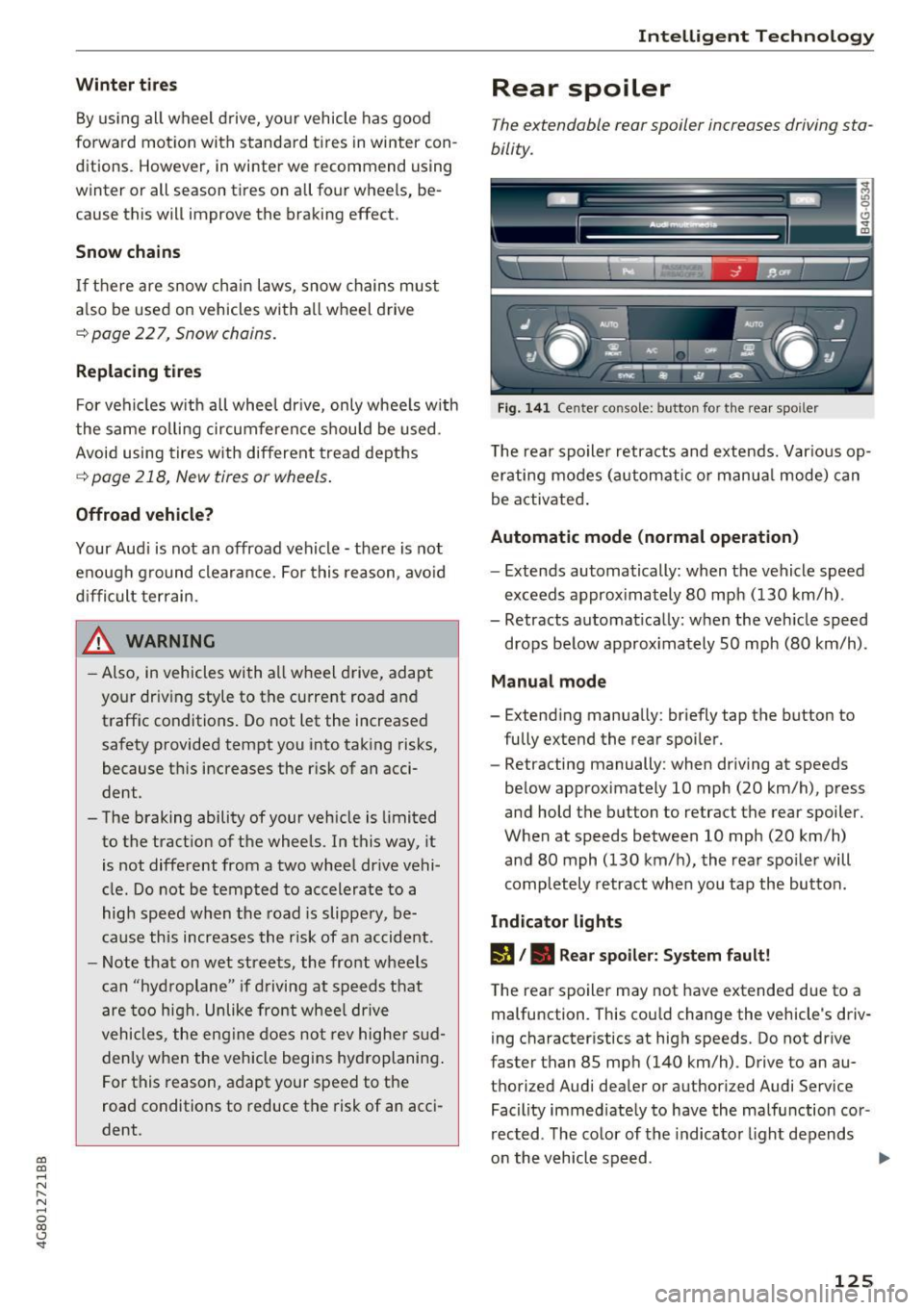
Fig. 141 Center console: button for the rear spoiler
T he rear spo iler retracts and extends. Var ious op
erating modes (automatic o r manua l mode) can
be activated .
Automatic mode (normal operation)
-Extends automatically: when the vehicle speed
exceeds approx imately 80 mph (130 km/h) .
- Retracts automat ically: when the vehicle speed
drops below approx imately SO mph (80 km/h).
Manual mode
- Extending manually: briefly tap the button to
fully extend the rear spoiler.
- Retracting manually: when driving at speeds
below approximately 10 mph (20 km/h), press
and hold the button to retract the rear spoiler.
When at speeds between 10 mph (20 km/h)
and 80 mph (130 km/h), the rear spoiler will
completely retract when you tap the button.
Indicator lights
lfa /. Rear spoiler: System fault!
The rear spoiler may not have extended due to a
malfunction . This cou ld change the vehicle 's driv
ing characteristics at high speeds. Do not drive
faster than 85 mph (140 km/h) . Drive to an au
thorized Audi dealer or authorized Audi Service Facility immed iately to have the malfunction cor
rected . The color of the indicator light depends
on the vehicle speed .
125
Page 128 of 284

Intelligent Technology
& WARNING
When extending and retracting the rear spoil
er, make sure there are no persons or objects
w ith in the spoiler range to red uce the risk of
injury .
& WARNING
Driv ing at higher speeds w ithout the rear
spoiler dep loyed can impa ir hand ling ch arac
t er istics, mak ing t he vehi cle h arder to con
t rol.
- Always make sure tha t the spoiler is de
ployed whe n driving a t speeds ove r 85 mph
(140 km/h) . If the rear spoiler warning/ind i
cator light in the instrument cluster comes
on, the rear spo iler may not have deployed.
- Never drive at speeds higher than 85 mph (140 km/ h) if the spoile r is not deployed.
Have the spoiler inspected as soon as possi
ble by an author ized Audi dealer or qualif ied
workshop.
-Always obey speed limits and other tra ffic
laws .
(D Note
-Never push on the vehicle on the rear spoi l
er . This cou ld cause damage.
- To prevent damage to the rear spoiler do
not lean o r place anything on it.
- Only opera te the rear spoiler man ually when
the luggage compartment lid is close and
the rear spoiler movi ng pa rts a re not
blocked. Otherwise, damage could occur.
(D Tips
Clean the rear spoi ler compartment eve ry 2 to
3 mont hs. To function correctly, the rear
spoiler m ust be free of ice, snow and leaves.
126
Energy management
' The starting ability is optimized
T he energy management system manages the
electrical energy distribution and optimizes the
availability of electrical energy for starting the
engine.
When a vehicle with a conventional energy sys
tem is no t drive n for a long time, the ve hicle bat
te ry is drained by equ ipment (fo r example, t he
i mmob il iz er). I n cer ta in circ umstan ces, the re
could m ay no t be e nough energy to s tart the en
gine.
You r vehicle is equipped with an inte lligent e ner
gy management system fo r dist ributing elec trici
ty. Thi s sign ifica ntl y improves the start ing ability
and incre ases the vehicle battery life .
The ene rgy ma nagement system Is made up of
battery diagnosi s, idling current management ,
and dynamic energy management .
Battery diagnosis
T he battery diagnos is determines the vehicle bat
tery charge level. The sensors detect the ba tte ry,
the batt ery cur rent, and t he battery temperature .
The curren t cha rge level and the pe rformance of
t h e ve hicle battery are dete rm ined based on th is .
Idling current management
The idling current management decreases the
energy used while parked . With the engine
switched off , it m anages t he e ne rgy dis trib ution
to the d ifferen t electr ica l components . Data from
t h e b attery d iagnosis is ta ken into a ccou nt for
th is .
De pen ding on the vehicle batte ry c ha rge level,
e le ctri ca l eq uipme nt is switched off one i tem af
te r th e o ther to p revent t he vehi cle b attery from
dra ining and to ma intain the s tarting ab ility.
Dynamic energy management
While dr iv ing , dynam ic energy management dis
t ributes the app ropr iate amo unt of energy to t he
ele ctrica l eq uipm ent. It contro ls t he batte ry
c harge level so tha t the amou nt o f energy is no t
ll>
Page 129 of 284
co
co
.... N
" N .... 0
00
\.J -
der to maintain an optima l vehicle battery charge
l evel.
(D Tips
- Energy management cannot overcome the
laws of physics. Note that the charge level
and length of the vehicle batte ry life are
li mited.
- When the starting ability is endangered, the
(•j indicator light turns on ¢ page 14.
What you should know
Maintaining the starting ability is the highest
priority .
A lot of stress is placed on the vehicle battery
when driving short distances, during c ity driving,
and at co ld times of the year. A lot of energy is
used but little is generated. It is a lso critical
when the engine is not running but e lectr ica l
equ ipment is switched o n. In th is case, energy is
used but none is generated .
In s ituations like this, energy management will
actively regu late the distribution of ene rgy.
Long periods w ithout use
If yo u do not drive you r vehicle for several days or
weeks, e lectrica l equipment is gradually sca led
back or switched off. This reduces energy use and
ens ures the veh icle w ill be able to start after long
periods of time. Some convenience functions,
such as interior lighting or power seat adjust
ment, may not be available under certain circum
stances . These convenience functions will be
ava ilable again once you switch the ig nition on
an d s tart the engi ne.
With the engine switched off
T he vehicle battery will drain if yo u use I nfota in
ment f unctions such as listening to the rad io
while the eng ine is switched off .
The vehicle's ability to start may be impaired by
the energy use, a message will appear in the In
fotainment system d isplay .
The message ind icates that the system will
switch off automatically soon. If you wou ld like
Intellig ent Technology
to cont inue using the functions, you must start
t h e engine.
With the engine running
Alt hough e lectr ica l energy is ge nerated wh ile
dr iv ing , the ve hicle ba ttery can dra in. This ca n
happen if li ttle ene rgy is generate d but much is
u sed , and the charge level of the vehicle battery
is not optimal.
T o res to re the balance of ene rgy, componen ts
t h at require large amoun ts of ene rgy are tempo
rarily scaled back or switched off . Heat ing sys
tems in partic ula r req uire a great dea l of energy .
If you notice, for example, that the seat heating*
or rear window defogger is not work ing, then it
has been tempora rily reduced or sw itched off.
These systems are availab le aga in as soo n as the
energy sup ply has bee n restored .
In add ition, you may notice that the idle speed
has slig htly increased. That is normal and no
cause for concern . By increas ing the idling speed,
the addit ional required energy will be generated
and the vehicle battery will be charged .
Notice about data
recorded by the Event
Data Recorder and
vehicle control modules
Event Data Recorder
Th is vehicle is equ ipped w ith an Event Data Re
corder (EDR) . The ma in purpose of a n EDR is to
r ecord, in certai n cras h or nea r crash-like situa
ti ons, s uch as an airbag deployme nt o r hi ttin g a
road obsta cle, da ta t hat w ill ass ist in underst and
i ng how a vehicle 's systems performed . The EDR
is des igned to record data related to vehicle dy
namics and safety systems for a short perio d of
t ime, typ ica lly 30 seconds or less . The EDR in this
vehicle is designed to record such data as:
- How va rious systems in your vehicle were ope r
ating;
- W het her o r not the drive r and passenge r safety
be lts were b uckled/fastened;
- How far (if at all) the driver was dep ressing the
accelerator and/or bra ke pedal; and, .,,.
127
Page 130 of 284
Intelligent Technology
-How fast the vehicle was traveling.
These data can help provide a better understand ing of the circumstances in which crashes and in
juries occur. NOTE : EDR data are recorded by your
vehicle only if a non-trivial crash situation occurs ;
no data are recorded by the EDR under normal
driving conditions and no personal data (e.g.,
name, gender, age, and crash location) are re
corded. However, other parties, such as law en
forcement, could combine the EDR data with the
type of personally identifying data routinely ac
quired during a crash investigation.
To read data recorded by an EDR, special equip ment is required, and access to the vehicle or the
EDR is needed . In addition to the vehicle manu
facturer, other parties, such as law enforcement,
that have the special equipment, can read the in
formation if they have access to the vehicle or the
EDR.
Some state laws restrict the retrieval or down
loading of data stored by ED Rs installed in a vehi
cle for the express purpose of retrieving data af
ter an accident or crash event without the own
er's consent.
Audi will not access the EDR and/or similar data
or give it to others -
- unless the vehicle owner (or lessee if the vehi
cle has been leased) agrees; or
- upon the official request by the police; or
- upon the order of a court of law or a govern-
ment agency; or
- for the defense of a lawsuit through the judicial
discovery process.
- Audi may also use the data for research about
vehicle opera tion and safety performance or
provide the data to a third party for research
purposes without identifying the specific vehi
cle or information about the identity of its own
er or lessee and only after the recorded vehicle
data has been accessed.
Vehicle control modules
Your vehicle is also equipped with a number of
electronic control modules for various vehicle
systems, such as engine management, emission
control , airbags, and safety belts.
128
These electronic control modules record data
during normal vehicle operation that may be
needed by trained technicians for diagnostic and
repair purposes. The recording capability of these
modules is limited to data (no sound is record
ed) . Only a small amount of data is actually re
corded over a very limited period of time, or stor
ed when a system fault is detected by a control
module . Some of the data stored may relate to
vehicle speed , direction , or braking, as well as re
straint system use and performance in the event
of a crash. Stored data can also only be read and
downloaded with special equipment that is di
rectly connected to the vehicle.
@ Tips
Your vehicle may be equipped with Audi con
nect. Your use of certain Audi connect fea
tures requires wireless services that are pro
vided by a third party wireless telecommuni
cations provider. For details regarding how in
formation obtained through Audi connect is
collected, processed, transmitted, used, and
shared, please see your contract with the
wireless telecommunications provider and the
"About Audi connect" tab in your vehicle's
MMI:
I MENU ! button > Audi connect> About
Audi connect.
Page 193 of 284

co
co
.... N
" N .... 0
00
\.J '
Gasoline
Fuel supply
Applies to: vehicles with gaso line engine
Using the right fuel helps keep the environment
clean and prevents engine damage .
Fuel reco mm endati on
The fuel recommended for your vehicle is unlead
ed pr em ium
grade gasoline. Audi recommends
using TOP TIER Detergent Gasoline with a mini
mum octane rating of 91 AKI (95 RON). For more
information on TOP TIER Detergent Gasoline,
p lease go to the official website
(www.toptiergas .com) .
The recommended gasoline octane rating for
your engine can also be found on a label located
on the inside of the fuel filler flap . Th is rating
may be spec ified as AKI or RON.
Your vehicle may also be operated using unlead
ed regular gasoline with a min imum octane rat
ing of 87 AKl/91 RON. However, using 87 AKl/91
RON octane fuel will slightly reduce engine pe r
formance.
U se unlea ded gas oline only. Unleaded gasoline
is available throughout the USA, Canada, and in
most European count ries . We recommend that
you do not ta ke your vehicle to areas or countries
where un leaded gasol ine may not be availab le.
For more information on refueling your vehicle,
see
~ page 193.
Octane r ating
Octane rating indicates a gasoline's ability to re
sist engine damaging "knock" caused by prema
ture ignit ion and detonation . Therefore , buy ing
the correct grade of gasoline is very important to
h e lp prevent poss ible engine damage and a loss
of eng ine performance.
Gasoline most commonly used in the Un ited
States and Canada has the following octane rat
ings that can usually be found on the filler pump:
- Premium Grade: 91 -96 AKI
Ch eck ing and Filling
- Regu lar Grade: 87 -90 AK I
E xplanation of the abb reviations:
AK I=
Anti Knock Index = (R +M)/2 = (RON +MON)/
2
RON = Research Octane Number
MON = Motor Octane Number.
(D Note
- Do not use any fue l w ith octane ratings low
er than 8 7 AKI or 91 RON otherwise expen
sive engine damage w ill occur .
- Do
not use leaded gasoline. The use of lead
ed gasoline will severe ly damage your vehi
cle's catalytic converter and its ability to
control exhaust emissions .
Blended gasoline
Applies to: vehicles with gasoline engine
Use of gas olin e con tainin g alcoh ol or MTBE
( meth yl t ert ia ry but yl ether )
You may use unleaded gasoline blended with al
cohol or MTB E (commonly referred to as oxygen
ates) if the blended m ixture meets the follow ing
criteria:
Blend of gasolin e methanol (wood alcohol or
methyl alcoho l)
-Anti -knock index must be 87 AKI or h igher.
- Blend must contain no more than 3% metha-
nol.
- Blend must contain more than 2% co-solvents.
Blend of g asoline and ethanol (grain alc oh ol or
e th yl alcoh ol)
- Anti-knock index must be 87 AKI or h igher .
- Blend must not conta in more than 15% etha-
nol.
Bl end of g asoline and MTBE
-Anti-knock index must be 87 AK I or h igher.
- Blend must contain not mo re than 15% MTBE.
Se asonall y adjust ed ga soline
Many gasoline grades are blended to perform es
pecially well for winter or summer dr iving . Dur-
ing seasonal change-over, we suggest that you ..,.
191
Page 194 of 284

Check ing and F illing
fi ll up at busy gas stations where the seasona l
adjustm ent is more likely to be mad e in time .
0 Note
-Me thanol f uels which do no t meet these re
quirements may cause corrosion and dam
age to plastic and rubber components in the
fuel system .
- Do not use fuels that fail to meet the spec i
fied criteria in this chapter .
- If you are unable to determine whether or not a particular fuel blend meets the spec i
fications, ask your service station or its fuel supplier.
- Do not use fuel for which the contents can
not be identified.
- Fuel system damage and performance prob
lems resulting from the use of fue ls differ
ent from those specified are not the respon
s ibility of Audi and are not covered under
the New Veh icle or the Emiss ion Control
System Warranties.
- If you experience a loss of fuel economy or
driveability and performance problems due
to the use of one of these fuel b lends, we
r ecommend that you switch to unblended
fuel.
Gasoline additives
A ma jo r concern among many auto manufactur
ers is carbon deposit build- up ca used by the type
of gasoline you use.
A lthough gasoline grades d iffer from one manu
facturer to another, they have cer tain things in
common . All gaso line grades contain substances
that can cause deposits to collect on vita l engine
parts, such as fue l injectors and intake valves. Al
though most gasoline brands include additives to
keep engine and fuel systems clean, they are not
equally effective .
Audi recommends using TOP TIE R Detergent Gas
oline. For more information on TOP TIER Deter
gent Gasoline, please go to the official website (www.toptiergas .com) .
192
After an extended period o f using inadequate
fuels, carbon deposit bui ld-ups can rob your en
gine of peak performance.
([) Note
Damage or ma lf u nction due to poor fue l qual
ity is not covered by the Audi New Vehicle
Limited Warranty .
Diesel fuel
Applies to: vehicles wi th diese l en gin e
Always use ULSD (Ultra Low Sulfur Diese l) No. 2 .
The ULSD No. 2 meets the ASTM D97S.
D iesel fuel w ith concentrations of b iod iesel high
er than 5 % such as B l 1, B20 or BlOO are st rict ly
prohibited .
Se rvice station fuel pumps are labe led wi th the
correc t fu el i nfo rmation for easy recogn ition by
the user . If the diesel fue l pump is not labe led
ask the station operator what fue l is being dis
pensed before filling up your vehicle .
U LSD No . 2 may no t be ava ilable outside the USA
and Canada . Be s ure to check befo re t raveling to
other countries .
U LSD No . 2 can become th ic k e r i n very co ld tem
peratures, and this can impa ir the e ng ine's s tart
i ng and running . Depend ing on the season, gas
stations provide ULSD No . 2 that flows better in
cold temperatures so that you can continue oper
at ing your vehicle as usual.
(D Note
- Your vehicle's diese l engine was designed
so ley for use with ULSD No . 2 . Therefore,
never use gasoline, heating oil, other fuels
or flow improvers. These contain substances
that will severely damage the fuel system and the engine. Such damage will not be
covered by your New Vehicle Limited War
ranty.
- If you put any amo unt of incorrect fuel in
the fuel tank, do not start the engine under
any c ircumstances. Immed iate ly contact the
nearest author ized A udi dealer or author-
ized Aud i Serv ice Facility fo r ass istance .
IJ,-
Page 195 of 284

co
co
.... N
" N .... 0
00
<..:l 'SI"
These fuels contain substances that can se
vere ly damage the fuel system and the en
gine if the engine is started .
Refueling
Fuel filler neck
The fuel filler neck is located on the right rear
side panel behind the fuel filler flap.
If the power locking system should fail , you can
still open the flap manually - for detailed instruc
tions see
~ page 195 .
You can find the fuel tank capacity of your vehicle in
~ page 262 .
The label on the inside of the fuel filler flap tells
you the correct fuel for your vehicle. For mo re in
formation about fuel specifications , see
~ page 191 .
You r vehicle fuel tank has an onboa rd refuelling
vapor recovery sys tem . This fea tu re helps to pre
vent fuel vapors from escaping from the tank and polluting the environment while you refuel your
vehicle. In order to fill the tank properly while
protecting the environment, please follow this
refueling procedure carefully.
_& WARNING
Under norma l operating conditions, never car
ry additiona l fuel containers in your car. Gas
canisters and other containers used to trans
port fuel can be dangerous. Such containers,
full or empty, may leak and could cause a fire
in a collision . If you must transport fuel to
use for your lawn mower, snow blower, etc.,
be very careful and always observe local and
state laws regarding the use, transportation
and storage of such fuel containers. Make cer
tain the container meets industry standards
(ANSI/ASTM F852 -86).
(D Note
Never drive your vehicle until the fuel tank is
completely empty. The irregular supply of
fue l can cause misfiring. Gasoline could enter
the exhaust system and damage the catalyt ic
converter.
Checking and Filling
Fueling procedure
Fig. 176 Righ t re ar sid e of the v ehicl e: openin g th e fu el
fille r door
Fig. 177 Fue l filler doo r with at tached fuel cap
T he fue l filler door is unlocked or locked by the
central locking system.
Opening the fuel cap
"' Press on the left side of the fue l filler door to
open ~
fig. 176 .
"'U nscrew the tank cap counterclockwise.
"' Place the cap from above on the open fuel filler
door ~
fig. 177.
Closing the fuel cap
"' Sc rew the tank cap on to the right on the filler
neck until it cannot turn any farther.
"' Then press on the left s ide of the tank door un-
til it latches.
Once the pump nozzle switches off, the fuel tank
is "full ". Do not fill the tank mo re . Otherwise the
expans ion space in the tank w ill be filled .
The correct fuel type for your vehicle can be
found on a label located on the inside of the fuel
filler door. Fo r additional informa tion on fuel,
see
~ page 191.
193
Page 196 of 284

Checking and Filling
The fuel tank capacity of your vehicle is listed in
the
Technical Data section ~ page 262.
To avoid fuel spilling or evaporating from the fuel
tank always close fuel cap properly and com
pletely. An improperly closed fuel filler cap may
also cause the MIL lamp~
page 25 to come on.
A WARNING
Not paying attention when fueling or han
dling fuel incorrectly can lead to fires, explo
sions or serious injuries .
- Fuel ignites easily and can cause serious burns and other injuries .
- If you do not switch the engine off when fu
eling and/or do not insert the fuel no zzle
completely into the tank opening, fuel can
leak out or run over . Leaked fuel can ignite
and start a fire .
- Do not use the telephone while fueling. The
electromagnetic rays can cause sparks,
which can ignite fuel vapors and start a fire .
- Do not sit in your vehicle while fueling . If
you must make an exception and enter your
vehicle again while fueling, close the door
and touch metal to discharge static electricity before touching the fuel nozzle . Static
electricity can create sparks, which can ig
nite vapors when fueling.
- Do not smoke or have an open flame in the
area when fueling your vehicle or filling a
fuel container because this increases the risk of an explosion.
- For your safety, carrying fuel containers in
your vehicle is not recommended. Whether
full or empty, the container can leak and
cause a fire in the event of an accident.
- If you must make an exception and trans
port a fuel container, note the following:
- Never fill the fuel container with fuel
while it is in or on the vehicle. Static elec
tricity is discharged when filling which can
cause the fuel vapors to ignite and in
creases the risk of an explosion.
- Always place a fuel container on the
ground before filling.
- Always hold the fuel nozzle completely in
the fuel container when filling.
194
-If the fuel container is made of metal, the
fuel nozzle must always be in contact with
the container when filling it with fuel. This
prevents static electricity from discharg
ing .
-Never spill fuel in the vehicle or the lug
gage compartment . Evaporated fuel is ex
plosive and increases the risk of serious in
jury or death .
- Follow legal requirements when using, storing and transporting fuel containers .
- Make sure the fuel container conforms to industry standards (ANSI/ASTM F852-86).
(D Note
-Remove spilled fuel from vehicle paint im
mediately, because it can damage paint.
- Never drive until the fuel tank is completely
empty. The irregular supply of fuel that re
sults from that can cause engine misfires.
Uncombusted fuel will enter the exhaust
system and increase the risk of damage to
the catalytic converter .
(D Note
Applies to: vehicles with diesel eng ines
If the fuel tank runs completely empty, the
ignition must remain switched on for at least
30 seconds after refueling before starting the
engine. It may take longer than usual for the
engine to start, even up to a minute. This is
because the air must first bleed out of the
fuel system when starting the engine.
@ For the sake of the environment
Do not overfill the fuel tank, otherwise fuel
can leak out when the vehicle is warming up.
(y Tips
The fuel filler door on your vehicle does not lock if you lock the vehicle from the inside.
(D Tips
Applies to: veh icles with diesel e ngin es
Diesel vehicles are equipped with a misfueling
guard
l) . It allows the vehicle to be fueled on-
ly with a diesel fuel pump nozzle . .,.
Page 198 of 284

Checking and Filling
-Ad Blue is required by law to operate this ve
hicle .
Messages in the instrument cluster display
Applies to: vehicles with selective catalytic reduction
The display indicates if the Ad Blue level is low or
if there is a system malfunction.
AdBlue level low
You will be informed if the Ad Blue in the tank
drops below a certain level.
Please refill AdBlue . Range x mi (km)
This message appears when there is only enough
Ad Blue left to drive the distance indicated in the
driver information system . Fill the AdBlue.
Ad Blue ,0 Refill AdBlue! Cannot start engine
in x mi (x km)! See owner's manual
This message appears when there is only enough
Ad Blue left to drive the distance indicated in the
driver information system. Fill the AdBlue. Other
wise the engine will not start again if you stop it
once the distance indicated has been driven. You
can also check the remaining distance in the on
board computer* .
Refill Ad Blue! No restart! See own-
er's manual
This message appears when the Ad Blue tank is
empty . Fill the Ad Blue . Otherwise you will not be
able to start the engine again once you stop it .
The AdB lue must be refilled when the amount in
the tank has reached the minimum level
c::> page 196, Filling AdBlue.
Incorrect filling/system malfunction
A message appears if the Ad Blue tank was filled
with a fluid other than AdBlue and the system
has detected that the tank was fi lled incorrect ly,
or if there is a system malfunction .
Ad Blue-/' Ad Blue : system fault. No re start in
x mi (x km) See owner's manual
This message appears when it is only possible to
d rive the distance indicated in the driver informa
tion system. Drive to the nearest authorized Aud i
dealer or authorized Aud i Serv ice Facility to have
196
the malfunction corrected . Otherwise the engine
will not start again if you stop it once the dis
tance indicated has been driven.
AdBlue: System fault No restart!
See owner's manual
This message appears if the system has detected
that the tank was fi lled incorrect ly or that there
i s a ma lfunction. Drive immed iate ly to the near
est authorized Audi dealer or authorized Audi
Service Facility to have the ma lfunction co rrect
ed. Otherwise you wi ll not be able to start the en
gine again once you stop it.
Filling AdBlue
Applies to: vehicles with selective cata lytic reduct ion
Fig. 180 R ig ht rea r side of t he ve hicle: removing the Ad B l
ue cap
The Ad Blue tank open ing is located near the die
sel tank opening . Add at least 1.5 gallons (S . 7
lit ers) of Ad Blue . This is the minimum amount re
quired to ensure the system detects the refilling
and to start the eng ine. You can add a maximum
of 4.5 gallons (17 lite rs).
Requirement: the request to add AdBl ue must
appear in the ins trument cluster display .
.,. Switch the ignition off.
.,. Open the tank filler door
c::> page 193.
.,. Tu rn the cap on the filler neck counter-clock
w ise using the wheel wrench from the vehicle
tool kit to remove it
c::> fig. 180.
.. Fill the Ad Blue using a bottle c::> page 197 or a
canister
c::> page 19 7.