child seat AUDI A7 2021 Owner´s Manual
[x] Cancel search | Manufacturer: AUDI, Model Year: 2021, Model line: A7, Model: AUDI A7 2021Pages: 350, PDF Size: 126.66 MB
Page 78 of 350

Sitting correctly and safely
is deactivated. This increases the risk of in-
jury and death. Always make sure that
PASSENGER AIR BAG ON @ remains on
while driving. If
PASSENGER AIR BAG ON @ does not
turn on, make sure the front passenger is
sitting correctly in the seat > page 63 and
that there is nothing covering the front pas-
senger's seat (such as blankets or pillows).
If PASSENGER AIR BAG ON @ still does
not turn on, the front passenger's seat must
not be used. Drive to an authorized Audi
dealer or authorized Audi Service Facility
and have the airbag system inspected.
A child in a child safety seat on the front
passenger's seat - especially in a rear-facing
child safety seat - can receive a severe im-
pact if the front passenger's airbag deploys,
which increases the risk of serious or fatal
injury. Always secure child safety seats on
the rear seats. If special circumstances re-
quire the use of a child safety seat on the
front passenger's seat, always make sure
that PASSENGER AIR BAG OFF %; stays
on while driving. If
PASSENGER AIR BAG OFF #¥; does not
turn on, remove the child safety seat and in-
stall it again according to the child safety
seat manufacturer instructions. If
PASSENGER AIR BAG OFF &%; still does
not turn on, the front passenger's seat must
not be used. Drive to an authorized Audi
dealer or authorized Audi Service Facility
and have the airbag system inspected.
Fluids, electronic devices, or mechanical
damage on the front passenger's seat may
cause the front passenger seat occupant de-
tection to malfunction. The system may
then incorrectly detect if the front passeng-
er's seat is occupied. As a result, it could de-
ploy the front passenger’s airbag incorrectly
or fail to deploy it, which increases the risk
of serious or fatal injury. Make sure that no
wet objects (such as a wet hand towel) and
no fluids come into contact with the front
passenger's seat cushion. If the front pas-
senger's seat becomes wet, dry it immedi-
ately. Make sure no electronic devices (such
76
as a laptop or a retrofitted seat heater) are
on the front passenger's seat. Do not trans-
port any objects on or under the front pas-
senger's seat.
— Seat covers or protective covers may prevent
the advanced airbag system from correctly
detecting child safety seats or passengers in
the front passenger's seat. You must not use
seat covers or protective covers on the front
passenger's seat that are not specifically ap-
proved for use on Audi seats with an ad-
vanced airbag system.
Child safety seats
General information
When installing and using child safety seats, fol-
low the information in this Owner's Manual, the
applicable state and federal regulations, and the
manufacturer instructions for the child safety
seat.
You can also obtain useful and current informa-
tion from the following sources:
U.S. National Highway Traffic Safety Adminis-
tration
http://www.nhtsa.gov
http://www.safercar.gov
National SAFE KIDS Campaign
http://www.safekids.org
SafetyBeltSafe U.S.A.
http://www.carseat.org
Transport Canada Information Centre
http://www.tc.gc.ca/roadsafety
Audi Customer Experience Center
https://www.audiusa.com/help/contact-us
https://www.audi.ca/ca/web/en/models/layer/
contact.html
ZA\ WARNING
To reduce the risk of serious or fatal injuries,
children must always be secured in the vehicle
with a child safety seat that is appropriate for
their body size, weight, and age.
— Children ages 12 and under must be trans-
ported using the appropriate child safety >
Page 79 of 350
4K8012721BF
Sitting correctly and safely
seat. Note differences in regulations be-
tween states and countries.
— Child safety seats secured incorrectly in the
vehicle may cause serious or fatal injuries in
the event of an accident. Always secure the
child safety seat according to the manufac-
turer instructions.
— Children or babies must not under any cir-
cumstances be held on the lap of the driver
or other passengers while driving.
— Do not secure more than one child in a child
safety seat.
— Never allow a child to sit in a child safety
seat unsupervised.
— Never allow children to ride unsecured in the
vehicle or to stand or kneel on the seats
while driving. In the event of an accident, a
child could be propelled through the vehicle.
This can cause serious or fatal injuries for
the child and passengers.
— If children use an incorrect seating position
while driving, they have a higher risk of in-
jury during a sudden braking maneuver or
accident. This especially applies to children
in the front passenger's seat or children who
have their head near the side airbag deploy-
ment area, if the airbag system is deployed
during an accident. This incorrect seating
position can cause severe or even fatal inju-
ries.
— Make sure there is enough space in front of
the child in the child safety seat. If necessa-
ry, adjust the angle and position of the seat
in front of the child safety seat.
— The rear side of a forward-facing child safety
seat should be positioned as close as possi-
ble to the backrest on the vehicle seat. If the
head restraints make it difficult to install a
child safety seat, adjust or remove them if
necessary > page 67. Reinstall the head re-
straints immediately once the child safety
seat has been removed.
— Always make sure that the backrest on the
seat where the child safety seat is installed
is securely locked in place and cannot move
forward. Otherwise, the backrest where the
child safety seat is secured could move for-
ward in the event of an accident or other
emergency situation.
— NEVER use a rear-facing child safety seat on
a seat with an ACTIVATED FRONT AIRBAG;
this could cause DEATH or SERIOUS INJU-
RIES to a CHILD.
— Always secure child safety seats on the
rear seats. If exceptional circumstances re-
quire the child safety seat to be placed on
the front passenger's seat, then the front
passenger's airbag must be deactivated.
Always make sure that
PASSENGER AIR BAG OFF #; stays on
while driving. If
PASSENGER AIR BAG OFF #; does not
turn on, remove the child safety seat and
install it again according to the child safe-
ty seat manufacturer instructions. If
PASSENGER AIR BAG OFF 4; still
does not turn on, the front passenger's
seat must not be used. Drive to an author-
ized Audi dealer or authorized Audi Service
Facility and have the airbag system in-
spected.
— If you must use a forward-facing child safety
seat on the front passenger's seat, move the
seat as far back as possible so that it is as
far as possible from the front passenger's
airbag. While doing this, make sure the seat
can be adjusted all the way. A child in a child
safety seat on the front passenger's seat can
receive a severe impact if the front passeng-
er's airbag deploys, which increases the risk
of serious or fatal injury.
— Replace the child safety seat after an acci-
dent because there could be damage that is
not visible.
— Even if a child is not sitting in the child safe-
ty seat, the child safety seat must be se-
cured. An unsecured child safety seat may
be thrown through the vehicle interior dur-
ing sudden braking maneuvers or an acci-
dent.
77
Page 80 of 350
Sitting correctly and safely
Correct positioning for children
Always secure children in a child safety seat de-
signed for the body size, weight, and age of the
child.
You can secure child safety seats in your vehicle
using the lower LATCH anchors or the safety
belts. You can also secure child safety seats to
the top tether anchor. Depending on the child
safety seat, it may also be necessary to secure it
to the top tether anchor. In Canada, securing for-
ward-facing child safety seats to the top tether
anchors is required by law.
Always transport children in the rear seats
Accident statistics show that children that are se-
cured correctly in the rear seats are safer than in
front seats. Always transport children in suitable
child safety seats secured on the rear seats.
In exceptional circumstances: transporting
children in the front passenger's seat
If exceptional circumstances require the child
safety seat to be placed on the front passenger's
seat, then the front passenger's airbag must be
deactivated. Please note the important informa-
tion for this > page 74, Advanced airbag system.
If you must secure a forward-facing child safety
seat, move the front passenger's seat as far back
as possible so that it is as far as possible from the
front
passenger's airbag. While doing this, make
sure the seat can be adjusted all the way.
Only switch to a larger child safety seat when
absolutely necessary
Switch to a larger child safety seat only when ab-
solutely necessary. Secure your child using a safe-
ty belt without a child safety seat only if all of the
following statements are true:
—The child is large enough to sit upright in the
seat
— The child is able to sit with his or her back rest-
ing completely on the seat backrest
—The child is able to sit with his or her knees
bent over the edge of the seat surface
—The child is able to sit with both of his or her
feet completely touching the floor in the foot-
well
78
— The lap portion of the safety belt lies flat and
securely over the hip area and never over the
stomach
— The shoulder portion of the safety belt lies flat
and securely over the center of the shoulder
and the chest, and never under the arm, behind
the back, or over the neck or face.
—The child is able to maintain this seating posi-
tion throughout the entire trip
Read and follow the important information and
warnings regarding the correct use of safety belts
=> page 68.
@ Tips
— Child safety seats can also be secured to
seats with side airbags. In the event of an
accident, children can also be protected by
the side airbags if the child is correctly se-
cured in a suitable child safety seat that is
attached correctly.
— The lower LATCH anchors as well as the
safety belt may be required to correctly in-
stall some child safety seats. Using both at
the same time is permitted, provided that
the fastening systems or safety belts do not
impair those in an adjacent seating position.
—All child safety seats are constructed so that
they can be secured using the lap safety belt
in the vehicle.
— Child safety seats with a load leg can only
be secured to the outer rear seats and to the
front passenger's seat.
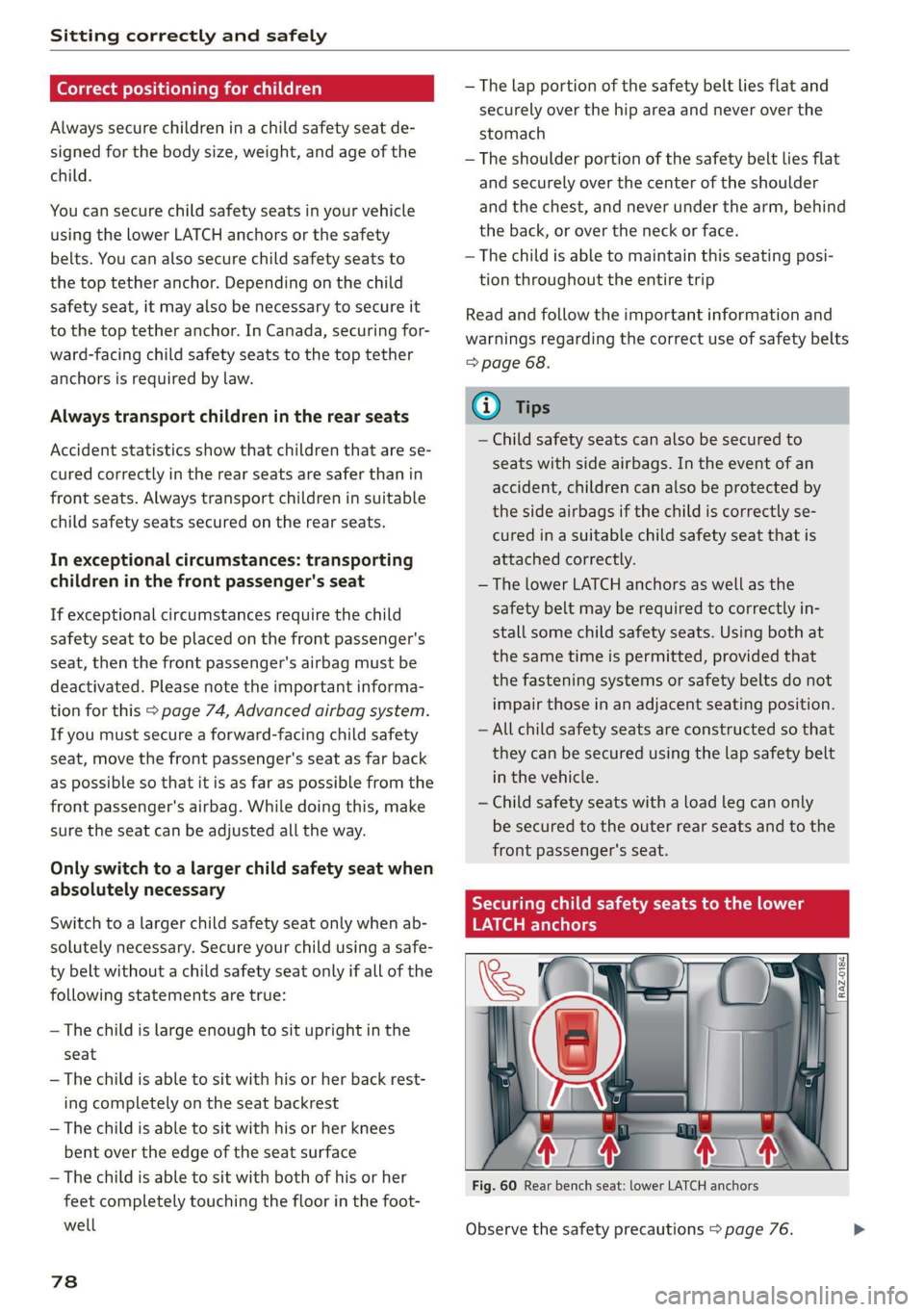
Fig. 60 Rear bench seat: lower LATCH anchors
Observe the safety precautions > page 76. >
Page 81 of 350
4K8012721BF
Sitting correctly and safely
In the United States and Canada, child safety
seats can be secured without safety belts using
the LATCH system. LATCH stands for Lower An-
chors and Tethers for Children. In Canada, similar
systems are called UCRA, LUAS, or UAS.
The lower LATCH anchors in your vehicle are lo-
cated on the outer seats of the rear bench seat
between the seat surface and the backrest. These
seating locations each have two lower LATCH an-
chors that can be used to secure a LATCH child
safety seat. Marking points with a > fig. 60 sym-
bol are located on the covers for the lower LATCH
anchors. You can locate the LATCH anchors using
the marking points.
> Activate the child safety lock > page 46.
> Remove the cover from both lower LATCH an-
chors.
> If you secure a child safety seat to the rear seat,
secure any unused safety belts that are within
reach of the child > A\ in Securing child safety
seats with a safety belt on page 80.
> Secure the child safety seat according to the
child safety seat manufacturer instructions.
> Pull on the child safety seat to check if both
sides are engaged correctly in the LATCH an-
chors.
> If possible, also secure the child safety seat to
the respective top tether anchor on the seat
=> page 80.
Z\ WARNING
The LATCH anchors in the vehicle are only de-
signed for child safety seats with the LATCH
system. To reduce the risk of serious or fatal
injury, never secure other child restraint sys-
tems, belts, or objects to the anchors.
(i) Tips
The LATCH anchors are designed for a total
weight (child and child safety seat combined)
up to 65 lbs (29 kg). If the total weight is
greater than this, the child safety seat must
be secured with the vehicle safety belt.
Securing child safety seats with a safety
Pylhg
Observe the safety precautions > page 76. The
front passenger’s seat is a dangerous location for
a child, even with an advanced airbag system. If
exceptional circumstances require the child safe-
ty seat to be placed on the front passenger's
seat, then the front passenger's airbag must be
deactivated. Please note the important informa-
tion for this > page 78, Correct positioning for
children and > page 74, Advanced airbag sys-
tem.
Securing child safety seats
> Activate the child safety lock > page 46.
> If you secure a child safety seat to the rear seat,
secure any unused safety belts that are within
reach of the child > A\, > page 81.
> If you secure a child safety seat to the front
passenger's seat, adjust the front passenger's
seat to the highest position.
> Secure the child safety seat according to the
child safety seat manufacturer instructions.
> If necessary, activate the belt retractor lock
=> page 79, Activating the belt retractor lock.
> If the child safety seat is secured on the front
passenger's seat, adjust the front passenger's
seat backrest until it rests flat against the child
safety seat. Also make sure that the upper safe-
ty belt fixture is behind the child safety seat.
> If you secure a child safety seat on the rear
seat, also secure it to the correct top tether an-
chor if possible > page 80.
Activating the belt retractor lock
If you secure a child safety seat using the vehicle
safety belt, you must activate the belt retractor
lock. Follow the child safety seat manufacturer
instructions.
The belt retractor lock prevents the safety belt
from becoming loose while driving, which could
result in the child safety seat no longer being ad-
equately secured.
» Secure the child safety seat according to the
child safety seat manufacturer instructions.
While doing so, pull out the safety belt. Insert >
79
Page 82 of 350

Sitting correctly and safely
the safety belt into the belt latch that belongs
to that seat until it audibly locks.
> Pull the upper belt out completely and then al-
low it to retract. You will hear a clicking sound
while the belt is retracting. It will not be possi-
ble to pull the safety belt out any farther.
> Push the child safety seat into the seat and al-
low the belt to retract more.
> Make sure that the child safety seat cannot
move more than 1 inch (2.5 cm).
Deactivating the belt retractor lock
> Unbuckle the safety belt from the belt latch.
> Remove the child safety seat according to the
manufacturer instructions.
> Allow the safety belt to retract completely. The
belt retractor lock is deactivated.
ZA WARNING
— A safety belt that is not locked by the belt
retractor lock or a locking device cannot se-
cure a child safety seat while driving or in
the event of an accident, which increases the
risk of fatal injury. Always make sure the
belt retractor lock on the safety belt is acti-
vated if the child safety seat manufacturer
instructions require it.
— Due to the risk of fatal injury, never place a
rear-facing child safety seat on the front
passenger's seat when the front passenger's
airbag is switched on.
— For the child safety seat to offer the maxi-
mum protection, it is especially important
to route the vehicle safety belt correctly. Al-
ways follow the instructions from the child
safety seat manufacturer for routing the
safety belt correctly. Incorrectly fastened
safety belts can cause injuries, even during
minor accidents.
80
Fig. 61 Rear backrest: top tether anchors to secure a child
safety seat with an upper belt
RAZ-0186|
Fig. 62 Rear backrest: securing the upper belt to the top
tether anchor
Observe the safety precautions > page 76.
There is a top tether anchor behind every seat in
the rear bench seat to additionally secure a child
safety seat with an upper belt.
> Move the head restraint behind the child safety
seat upward.
> Secure the child safety seat according to the
child safety seat manufacturer instructions.
> Guide the upper belt on the child safety seat
under the head restraint or along both sides of
it and toward the rear (depending on the child
safety seat model).
» Fasten the belt to the top tether anchor
=> fig. 62. While doing this, make sure the belt
is not twisted and is not running over any sharp
edges.
> Pull the belt tightly so that the child safety seat
rests at the top of the seat backrest.
> If necessary, move the head restraint behind
the child safety seat downward.
Page 83 of 350
4K8012721BF
Sitting correctly and safely
The top tether anchors in the vehicle are only
designed for child safety seats equipped with
an upper strap. To reduce the risk of serious or
fatal injury, never secure other child restraint
systems, belts, or objects to the anchors.
RONG Ot
NG = GSS
7s.
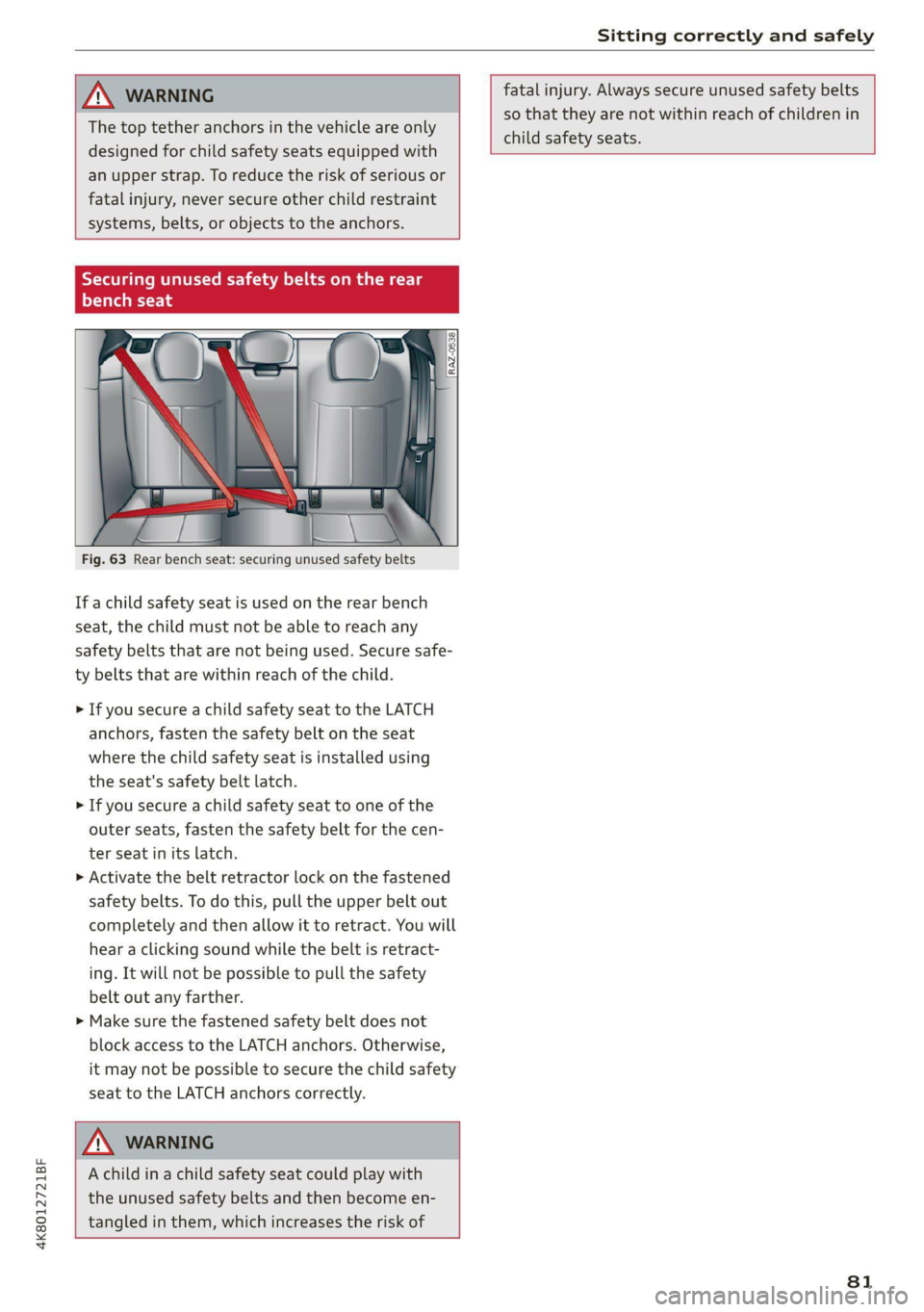
Fig. 63 Rear bench seat: securing unused safety belts
If a child safety seat is used on the rear bench
seat, the child must not be able to reach any
safety belts that are not being used. Secure safe-
ty belts that are within reach of the child.
> If you secure a child safety seat to the LATCH
anchors, fasten the safety belt on the seat
where the child safety seat is installed using
the seat's safety belt latch.
> If you secure a child safety seat to one of the
outer seats, fasten the safety belt for the cen-
ter seat in its latch.
> Activate the belt retractor lock on the fastened
safety belts. To do this, pull the upper belt out
completely and then allow it to retract. You will
hear a clicking sound while the belt is retract-
ing. It will not be possible to pull the safety
belt out any farther.
> Make sure the fastened safety belt does not
block access to the LATCH anchors. Otherwise,
it may not be possible to secure the child safety
seat to the LATCH anchors correctly.
A child ina child safety seat could play with
the unused safety belts and then become en-
tangled in them, which increases the risk of
fatal injury. Always secure unused safety belts
so that they are not within reach of children in
child safety seats.
81
Page 86 of 350
Storage and convenience
— The cargo net* is only strong enough to se-
cure light objects. Heavy objects are not ade-
quately secured. Attempting to secure heavy
objects increases the risk of injury.
— Never exceed the permitted axle and load
and vehicle weight > page 332.
— Never secure a child safety seat to the tie-
downs.
— Never leave your vehicle unattended, espe-
cially if the luggage compartment lid is
open. Children could enter the luggage com-
partment and close the luggage compart-
ment lid from the inside. This creates the
risk of fatal injury, since the children would
be locked in and may not be able to escape
by themselves.
— Do not allow children to play in or on the ve-
hicle. Close and lock the luggage compart-
ment lid as well as all other doors when you
leave
the vehicle.
— Never transport passengers in the luggage
compartment. Every passenger must be cor-
rectly secured with the safety belts in the
vehicle > page 68.
— Be careful when releasing the backrest and
folding
it forward. To reduce the risk of be-
ing pinched, pay attention and check when
folding backrests forward.
— The backrest must be securely latched so
objects cannot slide forward out of the lug-
gage compartment during sudden braking.
— The backrest must be latched securely to en-
sure that the safety belt is protecting the
center seating position.
— Always pull forward on the backrest to make
sure it is check if it is correctly locked in
place.
bench seat to protect the backrest from
damage.
— If you move the front seat back when the
rear seat backrest is folded forward, you
could damage the head restraints on the
rear seat.
— Make sure that the heating grid strips for
the rear window defogger are not damaged
by abrasive objects.
— Plug-in hybrid drive: Never exceed the maxi-
mum cargo weight for the cargo floor that is
specified on the sticker. Otherwise, the
high-voltage battery that is located under-
neath the cargo floor could be damaged.
The sticker is located on the inside of the ve-
hicle body at the left, and is visible when the
luggage compartment lid is open.
@ Tips
— The tire pressure must be adapted to the
load > page 284.
— You can purchase straps at specialty stores.
Luggage compartment cover
—_a
@) Note
—To reduce the risk of damage, move the rear
head restraints down > page 67 before fold-
ing the rear backrests forward.
— When folding the backrest forward, make
sure the outer safety belts are in the belt
guide recess so that they do not get pinched
in the backrest lock and damaged. Other ob-
jects should be removed from the rear
84
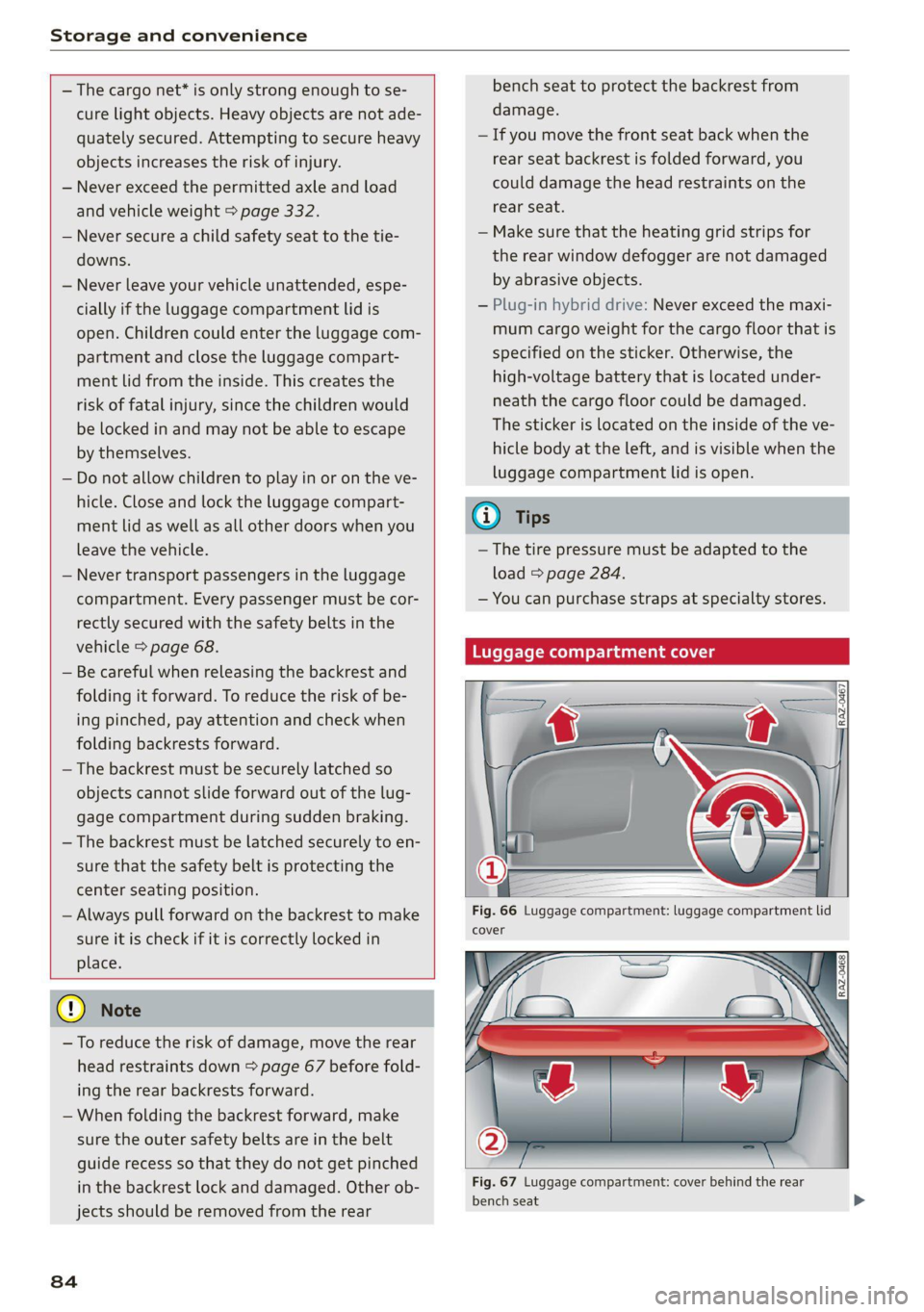
Fig. 66 Luggage compartment: luggage compartment lid
cover
Fig. 67 Luggage compartment: cover behind the rear
bench seat
Page 91 of 350

4K8012721BF
Warm and cold
Applies to: vehicles with 4-zone automatic cli-
mate control: You can press J in the rear control
panel multiple times to adjust the air distribution
based on the direction of the arrow.
® Defrosting
The windshield and side windows are defrosted
or cleared of condensation as quickly as possible.
Align the outer air vents with the side windows.
The maximum amount of air flows mainly from
the vents below the windshield. Recirculation
mode switches off. The temperature should be
set at 72 °F (+22 °C) or higher. Depending on the
outside temperature, the A/C cooling mode may
automatically switch on.
& Rear window defogger
The rear window defogger only operates when
the engine is running. It switches off automati-
cally after 10 to 20 minutes, depending on the
outside temperature.
To prevent the rear window defogger from
switching off automatically, press and hold the
&® button for more than three seconds. It will re-
main on until the ignition is switched off.
AUTO
&/& Recirculation mode
In recirculation mode, the air inside the vehicle is
circulated and filtered. This prevents the unfil-
tered air outside the vehicle from entering the
vehicle interior > A\.
Pressing <> switches recirculation mode on or
off manually.
AUTOR
When switched on, automatic recirculation
controls the recirculation mode automatically.
You must press the & button if fog forms on the
windows.
« Seat heating
Applies to: vehicles with heated seats
The seat heating temperature can be set at mul-
tiple levels. Press 4 once to switch on the highest
level. Press «/ again to decrease the temperature
one level at a time. The seat heating is switched
off if the button is not illuminated.
®) Seat ventilation
Applies to: vehicles with seat ventilation
The seat ventilation intensity can be set to multi-
ple levels. Press 2) once to switch on the highest
level. Press 2) again to decrease the heat level
one level at a time. The seat ventilation is switch-
ed off if the button is not illuminated.
@ Child safety lock*
If 8 turns on in the control panel in the rear, the
child safety lock is active and operation is blocked
=> page 46.
§ Ionizer
Applies to: vehicles with ionizer
Hazardous particles and germs in the air may be
reduced through ionization. This helps to im-
prove the air quality for individuals in the passen-
ger compartment.
&" Fragrance
Applies to: vehicles with fragrance function
The fragrance function will dispense a scent in
the vehicle interior. It is dispensed through the
front outer vents. This will produce a pleasant
scent. The fragrance is time-delayed, especially
at low or high temperatures. You can adjust the
fragrance function > page 90.
Residual heat
The residual heat from the coolant is used to
heat the vehicle interior. To use this function,
press and hold the &% button for more than two
seconds while the ignition is switched off. The
function switches off automatically after about
15 minutes.
ZX WARNING
— You should not use the recirculation mode
for an extended period of time, because no
fresh air is drawn in and the windows can
fog when cooling mode is switched off. This
increases the risk of an accident.
— Individuals with reduced sensitivity to pain
or temperature could develop burns when
using the seat heating* function. To reduce
the risk of injury, these individuals should
not use seat heating*.
89
Page 336 of 350

Index
Battery
Charge levelindicator...............00. 12
Charging (12 Volt vehicle battery)....... 272
High-voltage battery.................. 119
Vehicle battery (12 Volt)............... 270
Winter operation (12 Volt vehicle battery) . 270
Battery (vehicle)
refer to High-voltage battery........... 119
Blinds
refer to Panoramic glass roof............ 48
BlOGk
rote circus so ieee 2 ase 29 mem > wom 222
BlOWGED's © see « x sees 9 2 gon x 2 saw Ye ow 8 88
Bluetooth
Audio player « scenes: 6s scenix <5 wens ¥ 0 eee © 2 237
Connecting adevice...............000- 251
Connecting a mobile phone............ 197
Deleting adevice cisccs ss ssi e ¢ omer oo wave 252
Device overvieW.... 0.62... ee eee eee eee 251
Disconnecting adevice................ 251.
Displaying profiles..................0. 252
Selecting adevice...............-.00. 251
Specifying a favorite...............00. 252
Boost... 2... eee eee eee 16
Boost function........ 0... 0c cee ee eee 98
Boost pressure indicator................. 16
Brake fluid
Checking the brake fluid level........... 269
Brakes... 2... cee eee 105
Brakeifllids: « + sawex x = yew 2 2 eee 2 2 cee 269
Emergency braking function............ 108
Hot... eee eee 109
New brake pads.........-. 0c eee eee eee 106
Brands..............00000 0 cece eee eee 253
Break-in security feature................. 39
Breaking in
New braké pads « sss « wea so eeea 3 eae 106
New tires. 5s sccm so moma vo teem eo sm oe 281
Browser
refer to Mediacenter.................. 240
Bulb replacement.............-.020-00. 320
Business. addresses. < win. < aan oa same oo 222
Cc
California Proposition 65 Warning........ 260
Battery specific...............0.-.00. 270
CaLLLISE,. ssccane x avons w os awawees vw aoe octave 201
334
CaMONAS csciaics i o cairns o & cnwcuns vo somes x a seco 139
Locations..... 6... eee eee eee 140
Capacities
FUGUTANKS ¢ i wasn 2b imaae o anon Gs RoE GE a 332
Washer fluid reservoir................. 332
GCarGO Nets s = weg s were ss were © = Heme & x Be 85
Gariwashi« « « wey: «2 ewes = 2 wats bo ee oe oe 298
Catalytic converter........... 0. eee eee 259
Cell phone
refer to Telephone..............--.05- 197
Cell phone compartment
refer to Audi phone box.............4. 199
Central lOckinG'es « a saves x ame a e cows 2 e pow 36
FNUEOMLOGRE. « scvswen x exectzeim x serene a x iceman oa eet 36
Convenience key....... 0... cece eee e eee 4l
Convenience opening and closing......... 48
Luggage compartment lid............... 44
Mechanically unlocking and locking....... 39
M@SSAG6S « see = « mews ¢ x eee so eee § Re 38
Remote control: keys. so cies es eee ae eee 4l
Setting. ........ 0.0.02 eee eee eee eee 37
Vehicle-Kéy sce < » seu so sews + ¢ ees + vee 41
Central locking switch...............0005 38
Ceramic brakes....................00005 106
Certification... .....................00. 329
Changing light bulbs................... 320
Charging
refer to Power sourceS.........--0e ee eee 82
Charging clip
refer to Wall mount clip............... 133
Charging display................--0000- 123
Charging the battery
Mobilevdevices:: « « sissy 2 x xewe 2 2 eee 2 oo 238
SBia s+ sestos x comsene © x umsens & cuseane 1 w oeeosts a 200
Wireless ............ 0.0000 c cece eee 200
Charging time.......... 0... cee eee eee ee 120
Child safety lock
Climate control system controls in the rear. 46
PoWer WING OWS cuse x 2 gece a 2 awe 4 & gaan as 46
Rear doorsten «ose <0 wane < oamstee « citenest = 46
Child-safety seats’... cscs v5 cme ve eco se one 76
Securing to the top tether anchor........ 80
Securing with a safety belt.............. 79
Securingiwith LATCH: « 2 ssse © « ccoswes v x nose 78
GIGANIING « crv: vo same ao arms « eee oo BA 298
Cleaning Alcantara.............-.00000. 301
Cleaning artificial leather............... 301
Page 337 of 350

4K8012721BF
Cleaning carbon components........ 300, 302
Cleaning control « sisis + wee x x dearim & mane 301
Cleaning decorative parts andtrim... 300,301
Cleaning exhaust tail pipes.............. 300
Cleaning plastic parts.................. 301
Cleaning textiles..............-. eee eee 301
Climate control system ............00000. 87
Climate control system controls in the rear
Child Safety \OCKicw: ¢ : nee 5 2 cones ¥ 2 owen gy 46
Closing
Automatic luggage compartment lid...... 44
Convenience Closingtos « a sss « sazene 0 © emuvee 48
HOOd .. 0... cece eee 261
Luggage compartment lid............... 44
Luggage compartment lid with foot motion . 45
Panoramic glass roof..............2-00. 48
Sunshade (POOP) 's « wows « « sews se wows oo wes 48
WANGOWS « wscaic 2 2 conto seats 6% mice oo on 47
Closing aid (power closing doors).......... 36
COaStiNng wes + saeu ss eee & 5 eee ee eee ee 101
Cockpit’ diMMiINnG s « ves se mews se wees 8 2 oy 57
Cockpit (OVErvieW) si inca cs icea cca s crea 6
Color code... . cece cece ee eee ee eee eee 331
Combustion engine.................4-5 100
Combustion engine startup............... 98
Comfort auxiliary climate control.......... 91
Coming home/Leaving home
refer to Entry/exit lighting.............. 55
Compact spare tire...............00.004 311
GCOMpartMents:,
« « secs « = saree © « cesuwte ® 9 wore 83
Compass:in'thesmitron's « sss s sccnens ss aysewcs a 61
GCompliance:: « seve 2s weve sv wews ye eee oo: 329
Gonferetice Callow. » x sums ¢ o eames x weer ao 203
Configuration wizard.................04. 21
CONNECE. 1... ee eee 208
Data plans. 2 wow 2 s avon oe wows 2 woe g ve 212
Datta PRIVACY + « xaos oo emanate © exatannie © viata 324
Emergency call.............2.-.0000- 213
InfotainMentss « + wea vs wewy a x eeu 4 2 won 208
Infotainment services..............004 209
Online roadside assistance............. 214
Vehicle control services.............005 210
Connected devices
DevViceiOVvervieW. cies: so eae: av mewn @ ¥ ism 2511,
Connections
refer to Media..............00005 236, 239
Consumer information.................. 326
Consumption
Reducing........... eee eee ee eee eee 103
Consumption (fuel) . . srerice © cssese we secs ws we L?
Contacts
Importing .......... 0. cece eee ee eee 205
Updating inthe MMI.................. 205
also refer to Directory...............4. 202
Convenience keyls «oases ss sia e 6 sii so woes 36
Convenience closing.............000005 48
also refer to Vehicle key..............-. 40
Convenience opening and closing
Windows or panoramic glass roof........ 48
Coolant temperature display.............. 14
Cooling mode........ 6... eee eee 88
Cooling system
Adding
coolant’: sews 2 s wanes ss seme + a ew 267
Checking the coolant level............. 267
Coolant... ... eee eee eee eee 266
GOPMERIMOIGM Biss» « seesece # « sovsece aw enetete # 0 asin 52
Cross traffic assist (intersection assistant) .. 173
Cruise control system.............22005 151
Guptholdersienc «osu oo ew vs een oe em y 82
CuUrreNnECOnSUMPtION wes s wees s eewe gs eos LZ
D
Data module
Serial number (IMEI) ...............005 205
Data plans sesovs 2 sana 2 2 meen 6 ware © eee 212
Data: PrivaGy’s « sees 9 ¢ eames ¢ o ewe ss ew Gs 324
Date coos 3 meee 2 ¥ agen ¢ 2 EY SE @ae 2 RES 1?
SOtUING so omsccas iv onewens vw amie © Hartree wv oes 249
Daytime running lights.................. 52
Declaration of compliance............... 329
DEF (instrument cluster) .............0004 12
Demo mode
refer to Presentation mode............. 226
Destination onthe map................. 219
D@tailSix = 3 amex < eam oy seven ¢ s seme « ¢ see 219
Determining correct load limit........... 288
Digital compass............. cece eee eee 61
Dimensions ...........00 cece 331
Dimming the exterior mirrors............. 58
Dimming the rearview mirror............. 58
335