light AUDI A8 2012 Owners Manual
[x] Cancel search | Manufacturer: AUDI, Model Year: 2012, Model line: A8, Model: AUDI A8 2012Pages: 300, PDF Size: 75.06 MB
Page 189 of 300
Intelligent technology Notice about data
recorded by vehicle
control modules
Your vehicle is not equipped with an Event Da
ta Recorder (EDR), installed by some manu
facturers for the express purpose of capturing
data for retrieval after an accident or crash
event. EDR's are sometimes called "crash re
corders".
Some state laws restrict the retr ieval or down
loading of data stored by EDR's that were in
stalled in a vehicle for the express purpose of
retrieving data after an accident or crash
event without the owner's consent.
Although your vehicle is not equipped with an
EDR, it is equipped with a number of electron
ic control modules for various vehicle systems
such as, for examp le, engine function, emis
sion control, as well as for the airbags and
safety belts.
These electronic control modules also record
vehicle-related data during norma l vehicle op
eration for diagnostic and repair purposes.
The recording capacity of the electronic con
trol modules is limited to data (no sound is re
corded) and only a small amount of data is ac
tually recorded over a very limited period of
time and stored when a system fault or other
condition is sensed by a control unit. Some of
the data then stored may relate to vehicle
speed, direction, braking as we ll as restraint
system use and performance in the event of a
crash or other condition. Stored data can only be read and downloaded with special equip
ment.
Electronic Stability
Control (ESC)
Description
ESC helps to improve road holding and vehicle
dynamics to help reduce the probability of
skidding and loss of veh icle control. It works
only when the engine is running. ESC detects
Intelligent technology 187
certain difficult driving situations, including
when the vehicle is beginning to spin (yaw)
out of control and helps you to get the veh icle
back under control by se lectively braking the
wheels, and/or reducing engine power and
providing steering ass istance to help hold the
vehicle on the driver's intended course. The in
dicator light
Ip.] in the instrument cluster
blinks when ESC is taking action to help you
control the vehicle.
ESC has limitations .
It is important to remem
ber that ESC cannot overcome the laws of
physics.
It will not always be able to help out
under all conditions you may come up against.
For example, ESC may not always be able to
help you master situations where there is a
sudden change in the coefficient of friction of
the road surface. When there is a section of
dry road that is suddenly covered with water,
slush or snow, ESC cannot perform the same
way it would on the dry surface . If the vehicle
hydroplanes (rides on a cushion of water in
stead of the road surface), ESC will not be
able to help you steer the vehicle because con
tact with the pavement has been interrupted
and the vehicle cannot be braked or steered .
During fast cornering, particularly on winding
roads, ESC cannot always deal as effectively
with difficult driving situations than at lower
speeds. When towing a trailer, ESC is not able
to help you regain control as it would if you
were not tow ing a trailer.
Always adjust your speed and driving style to road, traffi<; and weather conditions. ESC can
not override the vehicle's physical limits, in
crease the available traction, or keep a veh icle
on the road if road departure is a result of
driver inattention. Instead, ESC improves the
poss ibility of keeping the vehicle under con
trol and on the road dur ing extreme maneu
vers by using the driver's steering inputs to
help keep the vehicle going in the intended di
rection. If you are traveling at a speed that
causes you to run off the road before ESC can
provide any assistance, you may not experi
ence the benefits of ESC.
•
•
Page 191 of 300
@ Tips
-ABS and ASR on ly work correctly when
all four wheels are equ ipped with identi
cal t ires. Different tire s iz es can lead to a
reduct ion in eng ine power.
- You may hear noises when the systems
described are working.
- If the indicator light
D] or m (USA
models) ;£1 (Canada models) appears,
there may be a malfunction¢
page 19,
c> page
18 .
Switching on and off
ESC
turn s on au tomatically when you s tart
the engine .
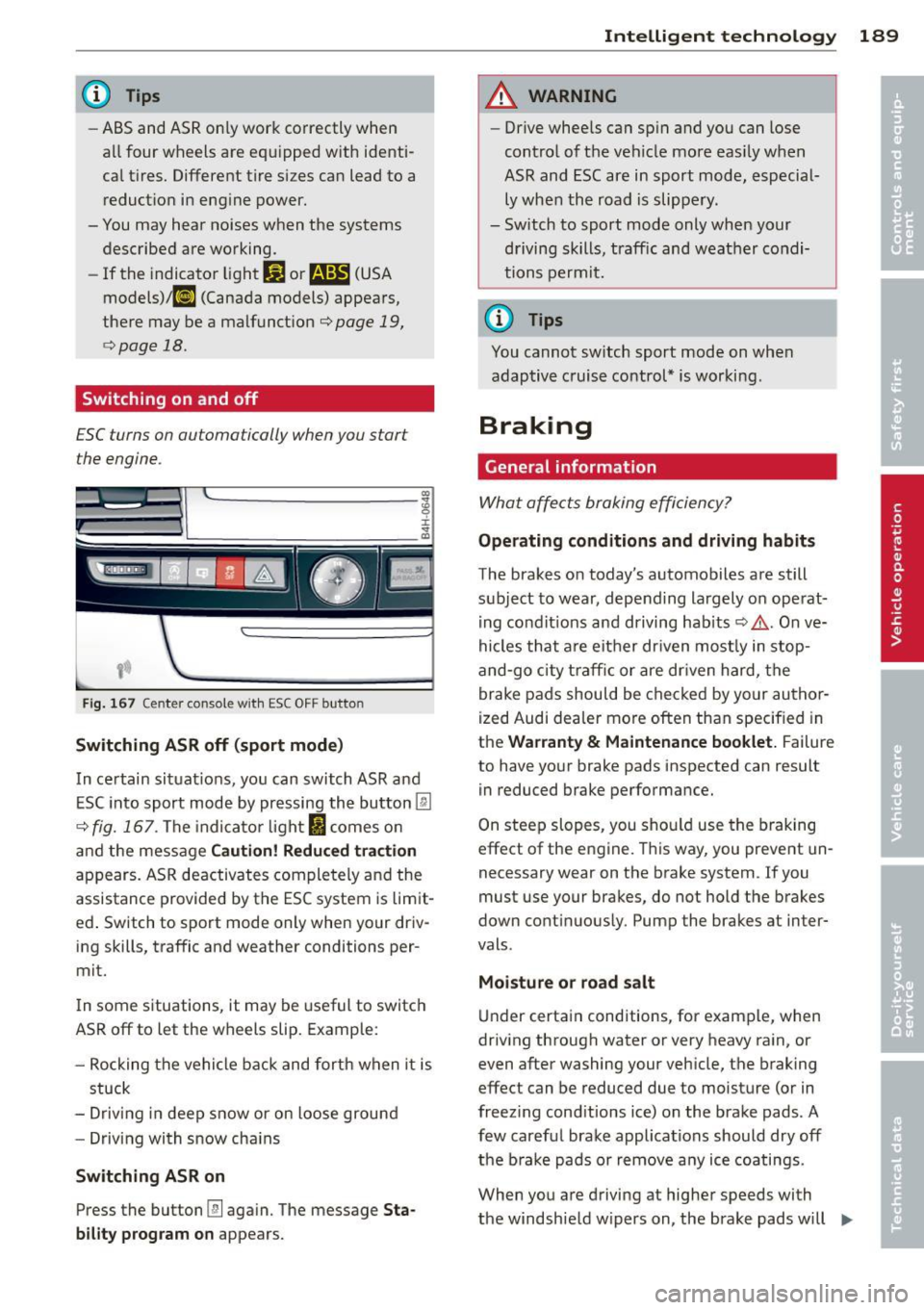
Fig. 167 Cen te r con sol e wit h ES C OF F but ton
Switching ASR off (sport mode )
In certain sit uat ions, you can switch ASR and
ESC in to sport mode by pressing the bu tton
[ru
c> fig. 167 . The indicator light I comes o n
and the message
Cauti on! R edu ced t ra cti on
appears. ASR deactivates completely and the
assistance provided by the ESC system is lim it
ed . Switch to sport mode only when your driv
ing skills, traffic and weathe r conditions per
mi t.
I n some s ituations, it may be useful to switc h
ASR off to let the wheels slip. Example:
- Rocking the vehicle back and forth when it is
stuck
- Driv ing in deep snow or on loose ground
- Driving with snow cha ins
Switching ASR on
Press the button [fil again. The message Sta
bility program on
appears.
Intelligen t technolog y 189
A WARNING
-Drive whee ls can sp in and you can lose
control of the vehicle more eas ily when
ASR and ESC are in sport mode, especial
ly whe n the road is slippe ry .
- Sw itch to sport mode only when your
driving skills, traff ic and weather condi
tions permit.
(D Tips
You cannot sw itch sport mode on whe n
adaptive cruise control* is working .
Braking
General information
What affects braking efficiency?
Operating cond itions and driving h abits
The brakes o n today's automobiles are still
subject to wear, depend ing largely on operat
i ng condit ions and driving habits ¢&, . On ve
hicles that a re either dr iven most ly in stop
and-go c ity t raff ic or are dr iven hard, the
brake pad s should be checked by yo ur author
i zed Audi dealer more often than specified in
the
Warranty & Maintenance booklet. Failure
to have your brake pads inspected can result in reduced brake performance.
On steep slopes, you sho uld use the braking
effect of the eng ine . T his way, you prevent un
necessary wear on the brake system . If you
must use your brakes, do not hold the br akes
down cont inuous ly . Pump the brakes a t in ter
vals .
Moisture o r ro ad sa lt
Under certa in conditions, for example, when
driv ing through water or very heavy ra in, or
even after washing your veh icle, the braking
effec t can be reduced due to moisture (or in
freez ing cond itions ice) on the brake pads . A
few carefu l brake applications should dry off
the b ra ke pads or remove a ny ice coatings.
When you are driving a t higher speeds with
the windsh ie ld w ipers on , the brake pads will
IJJJ,
Page 195 of 300

than is being generated and ensures an optimal state of charge for the battery.
@ Tips
- But even energy management cannot
negate the limits o f physics. Consider
that the power and life of a battery are
li mited.
- If starting ab ility is threatened, the indi
cator light
(•i appears ~ page 16, 0
Battery.
What you should know
The highest priority is given to maintaining
starting capability.
The battery is severely taxed in short-dis tance
d riving, in city traffic and during the co ld time
of year . Abundant e lectrica l energy is re
q ui red, but only a litt le is generated. It is also
cr itical if the engine is not runn ing and electri
cal components are turned on. In th is in
stance energy is being consumed but none is
be ing generated .
It is in precisely these situations that you w ill
notice energy management actively regulat
i ng the distribution of energy.
Vehicle sta nds for an ext ended p eriod
If you do not drive you r vehicle over a period
of several days or weeks, electrical compo nents are grad ually cut back or switched
off .
This reduces energy consumption and main
tains sta rting capab ility over a longer per iod.
Some of the conven ience f unctions may not
ope rate, such as the inter ior lig hts or the
power sea t adjustment. The conven ien ce
f u nctions w ill be ava ilable again when you
switch on the ignit ion and start the engine .
With the engine turned off
If you listen to the radio, for example, with
the engine turned
off or use other MMI func
tions, the battery is being discharged .
If starting capability is jeopa rdized due to en
ergy consumpt ion, the fo ll ow ing warning ap
pears in the MMI display :
Intellig ent technolog y 193
Plea se start the engine soon or the sy stem
will be turned off .
The wa rni ng ind ic ates that the system wi ll be
tu rned
off automatically a fter 3 minu tes. If
you w ish to continue using the funct ions, yo u
have to start the engine.
With the engine running
Althoug h elec trical energy is generated when
t h e ve hicl e is being driven, t he battery can be
come d ischarged. This happe ns mostly when
little energy is being generated and a great
deal consumed and the battery's state of
charge is not opt imal.
T o b ring the energy ba lance back in to equili
brium, consumers which require especially
l a rge amounts of energy a re temporari ly cut
back or sw itched
off. Heat ing systems in par
ticular require a great deal of energy. If you notice, for example, that the heated seats* or
the heated rear window are not heating, they
have been temporarily cut back or switched
off . These systems w ill be available again as
soon as the ene rgy balance has been restored.
You w ill also notice that engine id le speed has
been increased slightly . Thi s is normal and not
a cause for concern. By inc reasing engi ne id le
speed the additional e nergy requi red is gene r
ated and the b attery is charged.
•
•
Page 198 of 300
196 Driving and en vironm ent
Driving through water
on roads
Note the following to avoid vehicle damage
when driving through water, for example on
flooded roads:
- The water must not be any higher than the
bottom of the vehicle body.
- Do not drive faster than wa lking speed.
A WARNING
After driving through water, mud, slush,
etc., the brakes may be slow to take effect
because of wet brake rotors and pads. Dry
the brakes first by braking carefully to re
sto re the full braking effect.
@) Note
Vehicle components such as the engine,
transmiss ion, suspension or electrical sys
tem can be severely damaged by driving
through water.
- Check the depth of the water before dr iv
i ng through it.
- Do not stop the vehicle, drive in reverse
or switch the engine off when driving
through water .
- Keep in mind that oncoming vehicles
may create waves that raise the water
level and make it too deep for your vehi
cle to drive through safely.
- Avoid dr iving through salt water because
i t can cause corrosion.
Operate your vehicle
economically and
minimize pollution
General
Your personal style of driving will determine
the economy of your vehicle, as well as ex
haust and noise levels.
Fuel economy, environmenta l impact, and
wear on your engine, brakes and tires largely
depend on three factors:
- your personal driving style
- operating conditions
- technical limitations
If you anticipate what you need to do next and
drive economically, you can easily cut your
fuel consumpt ion by 10-15 percent . This sec
t ion will give you some tips on how you can
help the env ironment and your pocketbook.
@ Tips
The consumption estimates as published
by ENVIRONMENTAL PROTECTION AGENCY
(EPA) and Transport Canada may not corre
spond to your actual consumption on the
road, which will vary depending upon vehi
cle load and speed, road and weather con
ditions, trip length, etc.
Drive smoothly and keep a lookout
ahead
Vehicles use the most fuel when they are ac
celerating.
.,. Avoid unnecessary accelerating and braking.
Vehicles use the most fuel when they are ac
ce lerating. If you anticipate what is going to
happen next, you will need to brake less and,
thus, acce lerate less . Let the vehicle coast
whenever possible - for example when you see
that the next traffic light is red.
Page 199 of 300
Avoid full throttle
Driving at moderate speeds saves fuel and
improves your mileage.
"" Try and keep well below your car's maxi-
mum speed.
Accelerating gently reduces fuel consump tion, engine wear, and does not disturb the
environment.
F ue l consumption, exhaust emissions and en
g ine noise increase disproportionately at high
speeds. If you drive at approximately three
quarters of top speed, fuel consumption will be reduced by one half. Never drive faster
than the posted speed limit and weather con
d itions permit .
Reducing unnecessary idling
Even when your car is just idling it burns up
fuel.
"" Shut the engine off when you are not driv
ing the vehicle.
"" Do not warm up the veh icle by letting the
engine run at idle .
It makes sense to shut
off the engine in traff ic
jams, when waiting for trains to pass at ra il
road crossings, or at traffic lights that have
l ong wa its on red. Turning the engine
off fo r
just
30-40 seconds saves more fue l than is
bu rned starting the eng ine again .
It takes a long time for the engine to warm up
fu lly when it is running at idle. However, wear
and nox ious em issions are especially high
when the engine is warming up. So you should
drive away as soon as you start the engine and
avoid running at high rpms while the engine is
still warming up .
(D Note
Do not leave engine idling unattended af
ter starting . If warning lights should come
on to indicate improper operation, they
wou ld go unheeded. Extended idling also
produces heat, which cou ld result in over-
Dri vin g and en vironm ent 197
'
heating o r othe r damage to the veh icle or
other p roperty .
Regular maintenance
A badly tuned engine unnecessarily wastes a
lot of fuel.
"" Have your veh icle serviced at reg ular i nter-
vals.
By having your veh icle regu la rly serviced by an
Audi dealer he lps to ensu re that it runs prop
erly and economically. The condition of your
vehicle not only affects its sa fety and ability to
hold its value, it a lso affects
fuel con sump
tion .
Check your oil e ach t ime you fill your tank .
The amount of o il used is re lated to eng ine
load and speed .
It is normal for the oil consumption of a new
engine to reach its lowest value after a certa in
mileage has been driven .
You must drive your veh icle about 3,000 m iles
(5,000 kilometers) before you can properly
assess oil consumpt ion.
This also app lies to fue l consumption and en
gine output.
(U) Note
- Have your vehicle maintained properly
and in accordance with the service rec
ommendations in your Warranty
& Ma in
tenance booklet . Lack of proper mainte
nance as well as improper use of the ve
hicle will impair the function of the
em iss io n cont ro l system and cou ld lead
to damage.
- Do not alter or remove any component of
the Emission Control Sys tem unless ap
proved by the manufacture r.
- Do not alter or remove any device, such
as heat shie lds, swit ches, ign it ion w ires,
valves, which are designed to p rotec t
your vehicle's Emission Control System
and other important vehicle compo
nents .
•
•
Page 201 of 300

Trailer towing Driving with a trailer
General information
Your Audi was designed primarily for passen
ger transportation .
If you plan to tow a trai ler, p lease remember
that the addit ional load will affect durab ility,
economy and performance .
Trailer towing not on ly places more stress on
the vehicle, it also calls for more concentra
tion from the driver.
F or this reason, a lways fo llow the operating
and d riving instr uctions provided and use
common sense.
(D Note
If you are going to tow a trai ler, you must
activate the trailer operat ion mode
~ page 199, Operating instructions.
Technical requirements
Trailer hitch
Use a weight-carrying hitc h co nforming to the
gross trailer we ight. The hitch must be suita
b le for your veh icle and trailer and must be
mounted secure ly on the veh icle's chassis at a
technically sound location . Use only a trailer
hi tch wit h a removab le ball moun t. A lways
check with t he trail er hitch ma nufactur er to
make sure tha t you are using the corre ct
hi tch.
Do not use a bumper hitch.
The hitc h must be installed in such a way that
i t does not interfere with the impac t-absorb
i ng bumpe r sys tem. No mod ifica tio ns should
be made to the vehicle exh aust a nd brake sys
tems . From time to time, check that a ll hitch
mo unt ing bolts remain securely fastened.
W hen you are not towing a trail er, remove the
traile r hitch ball mount. Th is prevents the
hi tch from causing damage sho uld your ve hi
cle be str uck from behind ¢& .
Trailer towin g 199
Trailer brakes
If your trailer is equippe d wi th a br akin g sys
tem, check to be s ure that i t conforms to all
r egulations .
T he trailer hy draul ic brak e sys tem mus t not be
direc tly connec ted to the vehi cle' s h ydraulic
brake system .
Safety chains
Always use safety chains between your veh icle
and the tra ile r.
Trailer lights
Trai ler lights must meet all regu lations. Be
su re to check with your Audi dealer for cor rect
wir ing, swi tches and relays .
Mirrors
If you are unable to see the traffic behind you
us ing the reg ular o utside mirrors, then you
must insta ll extended mirrors. It is imp ortant
that you
always have clea r v is ion to the rear.
A WARNING ...__ -
Afte r removing the trailer hitch, do not
stor e it i n yo ur v ehicl e. In cas e o f sudden
b ra king, the hitch co uld fly forwar d and in
ju re you or your p ass en ger s.
Operating instructions
Fi g. 168 MM I dis pl ay: tow ing mode on
Ma ximum trailer weight
A trai ler fo r you r vehicle is limited to a typical
class 1 or class 2 tra iler.
ll>
Page 202 of 300
200 Trailer towing
Trail er load dis tr ibut ion
Be sure the load in the trai ler is held securely
in place to prevent it from shifting forward,
backward or sideways.
N eve r all ow a p assenger to rid e in a trailer
~ .&. in Driving instructions on page 201.
Engine cooling sy stem
Towing a tra iler makes the eng ine work hard
er . It is important that the cooling system's
performance is up to the addit ional load .
Make sure that the cooling system has eno ugh
flu id.
Tir e pressure
When tow ing a tra iler, inflate the t ires of your
vehicle to the co ld tire pressure listed under
" Full load" on the label loca ted o n the dr iver's
side B-pillar (v is ible when the door is open).
I nflate trailer tires to tra iler and tire manufac
turers' specifications.
Lights
Check to make sure both veh icle and trailer
l ights are wor king p roperly.
Safe ty chain s
Be sure tra iler safety cha ins are properly con
nected from the trailer to the hitch on the ve
h icle . Leave enough slack in the chains to per
mit turning corners. When you install safety
cha ins, make sure they w ill not drag on the
road when yo u are driving.
The chains shou ld cross under the tra iler
tongue to prevent it from dropping in case of
separat ion from the hitch .
Adjusting the Audi drive select
Make sure the vehicle is on a level surface be
for e
hitching up the tra iler and b efor e adjust
ing the tongue weight . The vehicle must be i n
auto or comfort driving mode and not raised
~ page 103, ~CD .
Make sure that the vehicle is lowered . In Info
tainment, select:
I CARI function button> Lo w
e r
control button . If you must drive under poor road conditions,
you can raise the vehicle
afte r coupling the
trailer or
a fter adjust ing the tongue we ight
~ page 105.
(D Note
-Changes in temperature or load can af
fect the height of the vehicle .
- Always select auto or comfort mode .
Otherwise, the tongue load specified for
your vehicle will no longer be applicable.
Driving instructions
Driving with a trailer always requires extra
core and consideration.
T o obtain the best possible hand ling of vehicle
and trailer, please note the fo llowing:
.. Do not tow a loaded t railer when you r ca r it
self is not loaded .
.. Be especially carefu l when passing other ve
hicles .
.. Observe speed limits.
.. Do not drive at the maximum permissible
speed .
.. Always apply brakes early .
.. Monitor the temperature gauge .
Weight distribut ion
T owing a loaded trailer with an empty car re
s ul ts in a highly unstable distribution of
weight. If this cannot be avoided, drive at very
low speeds only to avoid the risk of losing
steering control.
A "balanced" rig is easier to operate and con
trol. This means that the tow vehicle should
be loaded to the extent possible and permissi
ble , while keep ing the trailer as light as possi
ble under the ci rcumstances. Whenever poss i
ble, transfer some cargo to the luggage com
partment of the tow vehicle while obse rv ing
tong ue load requi rements and vehicle load ing
considerations .
Speed
The higher the speed, the more d ifficu lt it be
comes for the driver to control the rig. Do not
1111>
Page 203 of 300

drive at the maximum permissible speed. Re
duce your speed even more if load, weather or
wind condit ions are unfavorable -part icularly
when going downhill.
Reduce vehicle speed
immediately if the trail
er shows the slightest sign of swaying .
Do not
try to stop the swaying by accelerating.
Observe speed limits . In some areas, speeds
for vehicles towing trailers are lower than for
regular vehicles .
A lways apply brakes early. When driving
downhill, shift into a lower gear to use the en
gine braking effect to slow the vehicle . Use of
the brakes a lone can cause them to overheat
and fail.
Coolant temperature
The coolant temperature gauge c:> page 10
must be observed carefully. The coo lant tem
perature can increase if you drive on long in
clines in a low gear at high engine speeds. Re
duce your speed immed iate ly if the L EDs in
the top part of the display turn on.
F or more information about indicator lights,
refer to.
i::> page 15.
A WARNING
Anyone not properly restrained in a mov
ing vehicle is at a much greater risk in an
accident . Never let anyone r ide in your car
who is not properly wear ing the restra ints
provided by Aud i.
Trailer towing tips
Important to know
Your veh icle hand les different ly when tow ing
-
a trailer because of the addit ional weight and
d ifferent weight distribution . Safety, perform
ance and economy will greatly depend on how
carefully you load your trailer and operate
your ng .
Before you actually tow your trailer, practice
turning, stopp ing and back ing up in an area
away from traffic. Keep practicing until you
Trailer towing 201
have become completely familiar with the way
your vehicle-trai ler combination behaves and
responds .
Backing up is difficult and requires practice .
Backing up with a t railer generally requires
steering action opposite to that when backing
up your vehicle without a tra iler.
Maintain a greater distance between your ve
hicle and the one in front of you . You wi ll need
more room to stop. To compensate for the
trailer, you w ill need a larger than normal
turning rad ius.
When passing, remembe r that you cannot ac
ce lerate as fast as you norma lly would be
cause of the added load. Make sure you have
enough room to pass. After passing, allow plenty of room for your trailer before chang
ing lanes again.
Avoid jerky starts, sharp turns or rapid lane changes.
(D Tips
- Do not tow a trailer during the break-in
period of your vehicle.
- If you tow a trailer, your Audi may re
quire more frequent maintenance due to
the extra load
c:> page 280.
Parking on a slope
Do not park on a slope with a trailer. If it can
not be avoided, do so only a~er doing the fol
lowing:
When parking:
.,. App ly the foot brake.
.,. Have someone p lace chocks under both the
vehicle and the trailer wheels .
.,. With chocks in place, slowly release the
brakes until the wheel chocks absorb the
load.
.,. Turn the wheels towards the curb .
.,. Apply the parking brake .
.,. Select the P selector lever posit ion .
When restarting after parking:
.,. Apply the foot brake.
•
•
Page 205 of 300
Cleaning and protect ion
General information
Regular core preserves vehicle value.
Any automobile is exposed to industrial
fumes , corrosive road salt, etc. A well cared
for Audi can look like new many years after purchase . Regu lar and correct care w ill con
tr ibute to maintaining the beauty and value of
your Aud i.
F u rth ermor e, good c are may be a conditi on
for subs tantiati ng a w arrant y claim sho uld
c orrosion d amag e or paint d efects oc cur.
Your authorized Audi dealer has a variety of
dedic ated veh icle-car e products and can ad
vise which ones to use for cleaning the exter i
or and interior of your vehicle.
Whether you use products recommended by
Aud i or other commercially available clean ing
agents, please make sure you apply them cor
rectly .
.&, WARNING
-Cleaning agents may be poisonous. Keep
them out of the reach of children.
- Heed all caut ion labels.
- Always read directions on the container
before using any product. Follow the di
rect ions carefu lly.
- Most chemical cleaners are concentrated
and have to be diluted .
- Use spot removing fluids only in well
ventilated areas.
- Do not use gasoline, kerosene, d iesel
fuel, nail polish remover or other volatile
fluids. They may be toxic, flammab le or
haza rdous in other ways. Do not wash,
wax or dry the vehicle with the ign it ion
on or the engine running.
- Do not clean the undersides of chassis,
fenders, wheel covers, e tc. w ithout pro
tecting your hands and arms. You may c u t yourself on sharp -edged metal parts .
Cleaning and protec tion 203
- Moisture and ice on brakes may impair
brak ing effic iency¢
page 189, General
information.
Test the brakes carefully
each time you wash the vehicle.
@) For the sake of the environment
Select on ly environmentally friend ly clean
i ng products . Leftover cleaning products
should not d isposed of in the household
waste.
Care of exterior
Washing
Frequent washing protects the vehicle .
The best protection against environmental i n
fluences is
frequent washing and waxing . How
often t his is required depends on:
- How much the veh icle is used
- Where the veh icle is parked (garage, in the
open under trees, etc.)
- The seasonal and weather conditions
- Environmental infl uences
T he longer b ird droppings, insects, tree resin,
road and indus tria l gr ime, ta r, soot, road salt
and other materials remain on the vehicle body, the more lasting their destructive ef
fects wi ll be . High temperatures caused by ex
posure to intense sun light intens ify the corro
s ive effect, particularly when humid ity is high
as well.
Under certain circumstances,
weekl y washing
may be necessary. Under other cond itions, a
monthly washing and waxing may be ade
quate .
After the winter, the underside of the vehicle
should be thoroughly washed, preferab ly in a
professional car wash .
.&, WARNING ,_
A lways read and heed all WARNINGS and
other information¢
page 203 .
•
•
Page 207 of 300

-Never w ash your ca r in bri ght sunlight.
Drops of water act as magnifying lenses
and may damage your paint.
- When yo u wash your car in the winter : if
you rinse your vehicle with a hose , be
careful not to aim the stream of water
direct ly at locks, or at door or hatch
openings -they can freeze shut.
- Never use sponges des igned to remove
i nsects, or any kitchen scouring sponges
or similar products . They can damage
you r paint finish .
- Never use a dry cloth or sponge to clean
the headlights . Only use wet cloths or
sponges to prevent scratches . It is best
to use soapy water.
- You should remove debris (such as in
sects) from the headligh t lenses on a
regular basis , fo r example when refuel
i ng yo ur vehicle. Never clean the he ad
l ights w ith a dry clo th or sponge. Use a
wet cloth or sponge . It is best to use
soapy water.
@ For the sake of the environment
I n the interes t of the envi ronment, the ve
hicle sho uld only be washed in specia l
wash bays.
Washing your vehicle with a power
washer
Cleaning the exter ior of your car with a high
pressure power washer is safe as long as you observe a few simple rules.
~ Befo re using the power washe r, make sure
you have read and understood the WARN
INGS
c> A in General information on
page 203 .
~ Always follow the operating instructions for
the power washer .
~ Make sure that the jet o n the spray hose
produces a "fan shaped spray ".
~ Do not hold the spray no zzle too close to
soft materia ls.
W hen clea ning the vehi cle w it h a powe r wash
e r
always fo llow the operating instruc tions.
Cleaning and protec tion 205
This applies particu la rly to the operating
pre ssure and the spraying di stance. Keep a
distance from soft materia ls such as rubber
hoses or insulating material as we ll as sensors
and camera lenses.
Do not use a jet which sprays water in a direct
stream or one that has a rotating jet.
Water tempera ture sho uld no t exceed 140 ° F
(60 °().
A WARNING
N eve r wash t ires with a jet that sprays wa
ter in a direct stream . T hi s could cause in
v isib le damage to the t ires and weaken
them, even i f the spray is from a re lative ly
long distance and for a sho rt time. Dam
aged and weakened tires can fail and cause
accidents and personal i njury .
(D Note
To avoid damaging your vehicle, a lways
make sure that the re is suffic ient d istance
between the spray head and soft materials
li ke rubber hoses, plast ic pa rts and sound
deaden ing ma ter ia ls as well as sensors
and camera lenses. Never a im th e sp ray
head at the same point for a long time .
This also applies to cleaning headlights
and painted bum pers. Remembe r: the
cl oser the nozzle is to the surface of the
mater ia l, the greater the stress on the ma
terial.
Sensoren und Kameralinsen
- Entfernen S ie Schnee m it einem Handfeger
und Eis bevo rzugt mit einem losungsm ittel
fre ien Enteisu ngsspray .
- Reinigen Sie die Sensoren (adaptive cruise
cont ro l*, Einparkhi lfe*) mit losungsm itte l
fre iem Re inigungsmi tte l und einem weiche n
t ro ck enen Tuch .
- Befeuchten Sie die Kameralinse m it handel
si.iblichem Glasrein ig ungsm ittel a uf Al ko
holbasis und reinigen Sie die Linse mi t ei
nem trockenen Tuch . Beim lane assist* wird
de r Bereich vor der Linse im Normalfall .,..
•
•