fuel AUDI A8 2012 Owner's Manual
[x] Cancel search | Manufacturer: AUDI, Model Year: 2012, Model line: A8, Model: AUDI A8 2012Pages: 300, PDF Size: 75.06 MB
Page 218 of 300
216 Fuel supply and filling your fuel tank
-Blend must contain not more than 15%
MTBE.
Seasonally adjusted gasoline
Many gasoline grades are blended to perform
espec ially we ll for winter or summer driv ing.
During seasonal change-over, we suggest that
you fill up at busy gas stat ions where the sea
sonal adjustment is more likely to be made in
time.
(CT) Note
- Methanol fuels which do not meet these
requirements may cause corrosion and
damage to plastic and rubber compo
nents in the fuel system .
- Do not use fuels that fai l to meet the
specified criteria in this chapter.
- If yo u are unable to determine whether
or not a particular fuel blend meets the
specifications, ask your service station or
its fuel sup plier.
- Do not use fuel for which the contents cannot be identified.
- Fuel system damage and performance
problems resulting from the use of fuels
different from those specified are not
the respons ibility of Audi and are not
covered under the New Vehicle or the Emission Control System Warranties.
- If you experience a loss of fuel economy
or driveability and performance prob l ems due to the use of one of these fuel
blends, we recommend that you switch
to unblended fuel.
Gasoline additives
A major concern among many auto manufac
turers is carbon deposit build- up caused by
the type of gasoline you use.
A lthough gasoline grades differ from one
manufacturer to another, they have certain
things in common. All gasoline g rades contain
substances that can cause deposits to co llect
on vital engine parts, such as fuel injectors
and intake valves. Although most gasoline
brands include additives to keep engine and fuel
systems clean, they a re not equally effec
tive .
A udi recommends using TOP TIER Detergent
Gasoline. For more information on TOP TIER
Detergent Gasoline, please go to the official
website (www.toptiergas.com).
After an extended period of using inadequate
f uels, carbon deposit build-ups can rob yo ur
engine of peak performance.
(D Note
'
Damage or malf u nct ion due to poor fuel
quality is not covered by the Aud i New Ve
hicle Limited Warranty.
Fuel tank
Fuel filler neck
The fuel filler neck is located on the right rear
s ide panel behind the fuel filler flap.
If the power locking system should fail, you
can still open the flap manually- for detailed
instructions see
¢page 218.
You can find the fuel tank capacity of your ve
hicle in
Technical Data ¢ page 278.
The label on the inside of the fuel fi ller flap
tells you the correct fue l for your veh icle. For
more information about fuel specifications,
see
¢ page 215.
Your vehicle fuel tank has an on board refuel li ng vapor recovery system. This feature helps
to prevent fuel vapors from escaping from the
tank and polluting the environment while you refuel your vehicle . In order to fill the tank
properly wh ile protecting the environment,
please fo llow this refueling procedure careful
ly.
.8, WARNING
Under normal operating cond itions, never
carry additional fuel containers in your car.
Gas canisters and other containers used to
transport fuel can be dangerous. Such con
tainers, full or empty, may leak and could
cause a fire in a collision. If you must
Page 219 of 300
transport fuel to use for your lawn mower,
snow blower, etc., be very careful and al
ways observe local and state laws regard
ing the use, transportation and storage of
such fuel containers. Make certain the con
tainer meets industry standards (ANSI/
ASTM F8S2 -86) .
@ Note
Never drive your vehicle until the fuel tank
is completely empty. The irregular supply
of fuel can cause misfiring. Gasoline could
enter the exhaust system and damage the
catalyt ic converter.
Refuelling
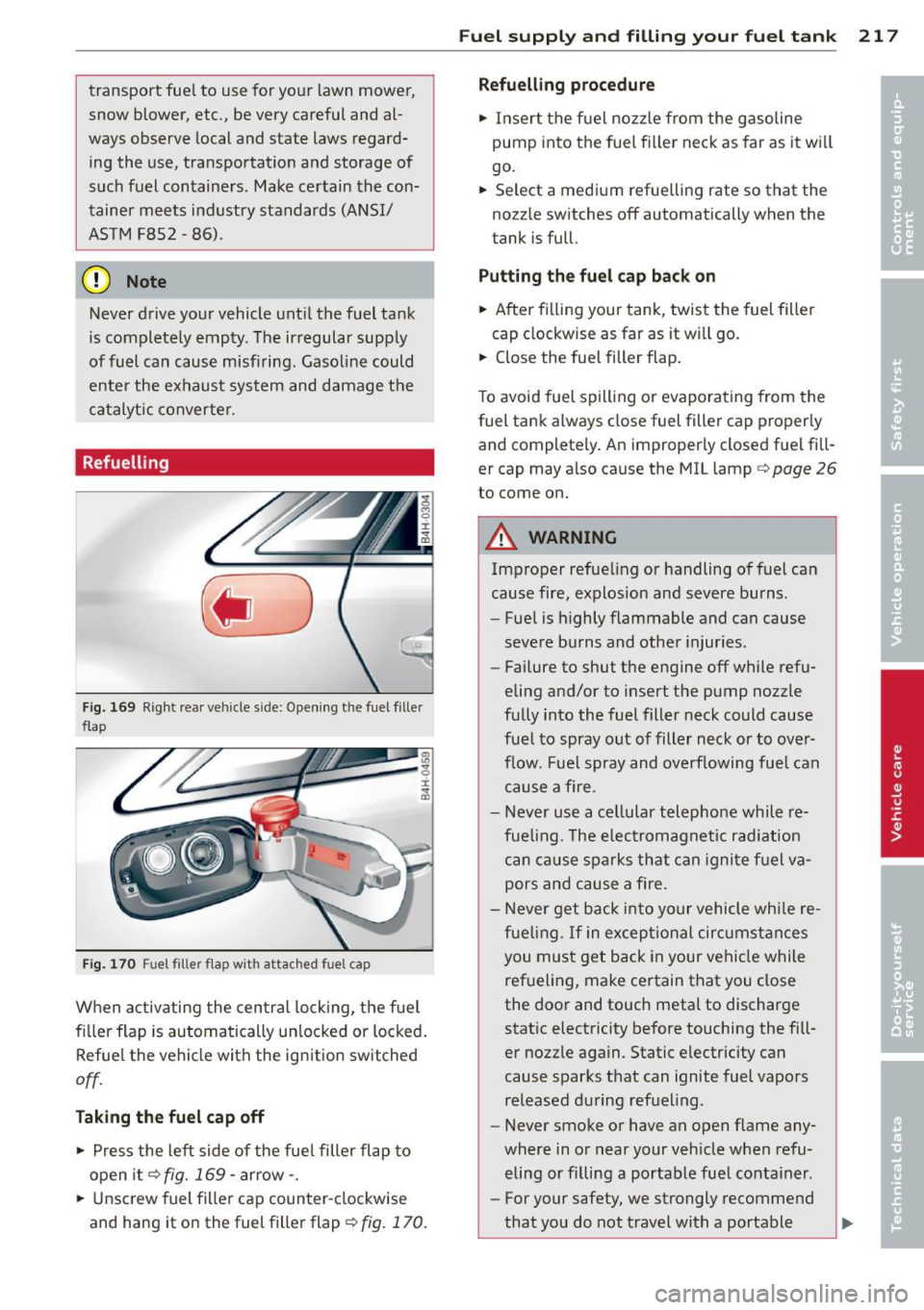
Fig. 169 Right rear vehicle s ide: Opening the fuel filler
flap
Fig. 170 Fuel filler flap with attached fuel cap
When activating the central locking, the fuel
f ill er flap is automatically un locked or locked.
Refuel the vehicle with the ignition switched
off.
Taking the fuel cap off
• Press the left side of the fuel filler flap to
open it¢
fig. 169 -arrow-.
• Unscrew fuel filler cap counter-clockwise
and hang it on the fuel filler flap
~ fig. 170 .
Fuel supply and filling your fuel tank 217
Refuelling procedure
• Insert the fuel nozzle from the gasoline
pump into the fuel filler neck as far as it will
go.
• Select a medium refuelling rate so that the
nozzle switches off automatically when the
tank is full.
Putting the fuel cap back on
• After filling your tank, twist the fuel filler
cap clockwise as far as it will go.
• Close the fuel filler flap.
To avoid fuel spill ing or evaporating from the
fuel tank always close fuel filler cap proper ly
and completely. An improperly closed fuel fill
er cap may also cause the MIL lamp ¢
page 26
to come on.
A WARNING
Improper refueling or handling of fuel can
cause fire, explosion and severe burns.
- Fuel is highly flammable and can cause
severe burns and other injuries.
- Failure to shut the engine off while refu
eling and/or to insert the pump nozzle
fully into the fuel filler neck could cause
fue l to spray out of filler neck or to over
flow. Fuel spray and overflowing fuel can
cause a fire.
- Never use a cellular telephone while re
fue ling. The electromagnet ic radiation
can cause sparks that can ignite fuel va
pors and cause a fire.
- Never get back into your vehicle while re
fueling.
If in exceptional circumstances
you must get back in your vehicle while
refueling, make certain that you close
the door and touch metal to discharge static electricity before touching the fill
er nozzle again. Static electricity can
cause sparks that can ignite fuel vapors
released during refueling.
- Never smoke or have an open flame any
where in or near your vehicle when refu
eling or filling a portable fue l container.
- For your safety, we strongly recommend
that you do not travel with a portable
Page 220 of 300
218 Fuel supply and filling your fuel tank
fuel container in your vehicle. The con
tainer, full or empty may leak and could
cause a fire, especially in a crash.
- If, under exceptional circumstances, you
must transport a portable fuel container,
please observe the following:
- Never fill a portable fuel container
while it is anywhere in or on the vehicle
(for example, in the luggage compart
ment, or on the trunk). Static electrici
ty can bui ld up while filling and can ig
nite fuel vapors causing a fire .
- Always place a portable fuel container
on the ground before filling.
- Always keep the filler nozzle complete
ly inside the portable container before
and during filling.
- If filling a portable container made of
metal, the filler nozz le must always be
in contact with the container. This will
help prevent static electricity from dis
charging and cause a fire .
- Never spill fuel inside the vehicle or
luggage compartment. Fuel vapors are
highly flammable.
- Always observe local and state/provin
cial laws regarding the use, storage
and transportation of fuel conta iners .
- Make certain the fuel container meets
industry standards (ANSI/ ASTM
F8S2 -86) .
d) Note
If any fuel has spilled onto the car, it
should be removed immediate ly to prevent
damage to the paint.
@ For the sake of the environment
As soon as the correctly operated noz zle
switches off automatically for the first
time, the tank is full. Do not try to add
more fuel because fuel may spill out. In
addition, the expansion space in the fuel
tank will be filled -causing the fuel to
overflow when it becomes warm and pol
lute the environment.
(D Tips
-Running your engine whi le refue lling
may cause vapors to escape or even
cause fuel to spi ll out of the tank. This
would then shut off the fuel nozzle be
fore the tank is full.
- Do not refuel your vehicle with the igni
tion switched on. The fuel gauge may otherwise not ind icate the correct fuel
level after refuelling .
- The fuel filler flap of your vehicle is not
locked when you lock the vehicle from
the ins ide .
Fuel filler flap emergency release
You can open the fuel filler flap by hand if the
power locking system should fail.
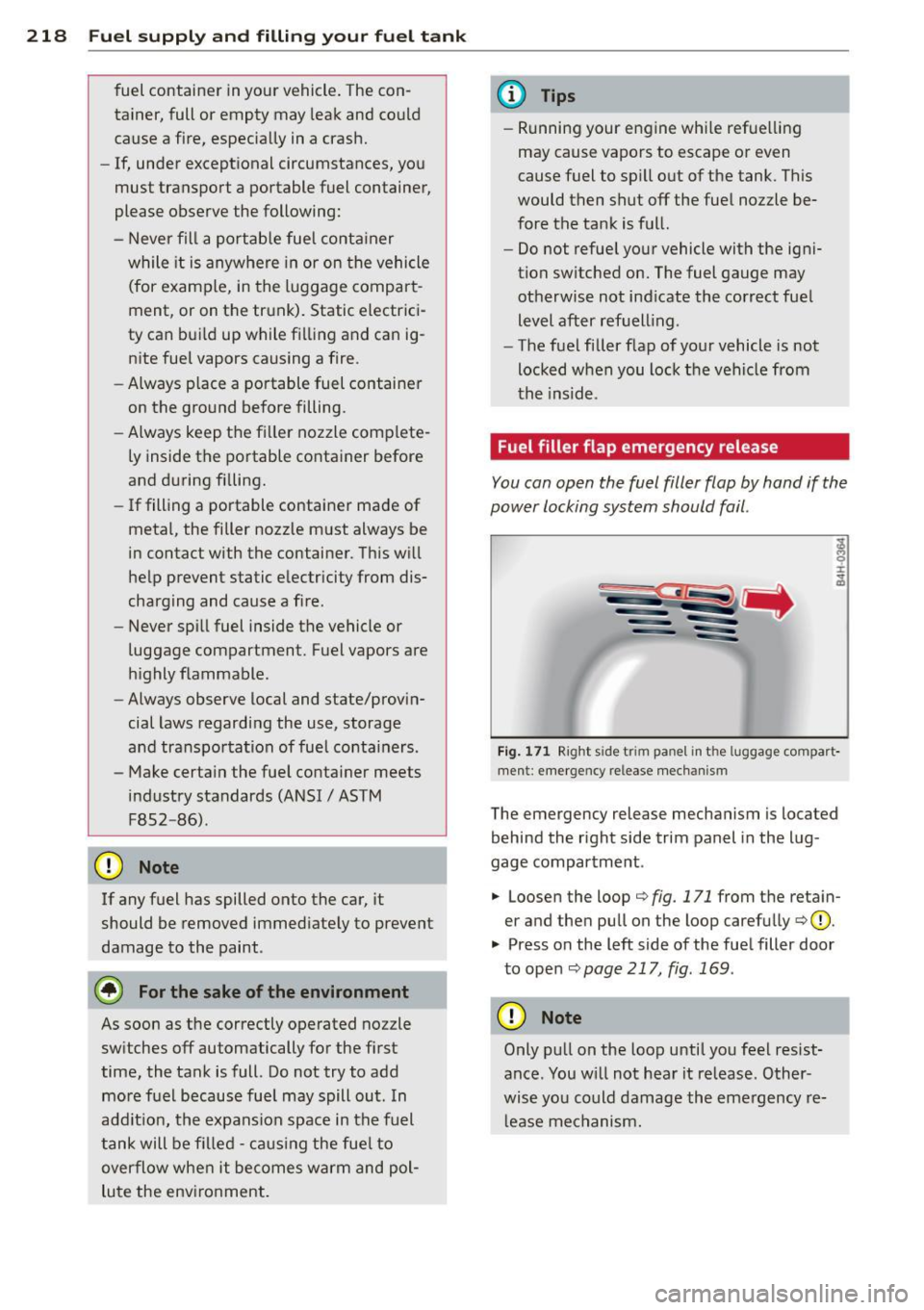
Fig. 171 Rig ht s ide t rim p an el in t he luggage compart·
men t: emerge ncy re le ase mechan is m
The emergency release mechanism is located
behind the right side trim panel in the lug
gage compartment .
.,. Loosen the loop
¢fig. 171 from the retain
er and then pull on the loop carefully
¢ (D.
.,. Press on the left side of the fuel filler door
to open
¢ page 217, fig . 169 .
(D Note
Only pull on the loop until you feel resist
ance . You w ill not hear it release . Other
wise you could damage the emergency re
l ease mechanism.
Page 225 of 300

Only if the level of the oil is at or below the min imum mark -and no oil that expressly
conforms to Audi oil standard VW 502 00
specifications is available -may you top off
with a high quality engine oil, preferably syn
thetic -based, that meets ACEA A3 or API SM
specifications, but even then, only in viscosity
grades SAE SW-40, SAE SW-30, or SAE
OW-40. However, during the entire time be
tween oil change intervals, never top off with
more than a total of 0.5 qt/liter engine oil
that does not conform to Audi oil specification
vw 502 00.
For more information about engine oil that
has been approved for your vehicle, please
contact either your authorized Audi dealer or
Audi Customer Relations at 1 (800) 822-2834
or visit our web site at www.audiusa.com or
www.audicanada.ca. Here you will also find a current list of oils (manufacturers, brand
names etc .) that conform to Audi oil standard
vw 502 00.
Changing the engine oil
The engine oil and oil filter must be changed
according to the mileage (kilometers) and
time intervals specified in your vehicle's War ranty
& Maintenance booklet. Do not exceed
these intervals -harmful deposits from old
engine oil can reduce engine performance and
can lead to expensive engine repairs.
Changing the oil at the recommended inter
vals is so very important because the lubricat ing properties of oil decrease gradually during
normal vehicle use. If you are not sure when
you have your oil changed, ask your author ized Audi Service Advisor.
Under some circumstances the engine oil
should even be changed more frequently.
Change oil more often if you drive mostly
short distances, operate the vehicle in dusty
areas or mostly under stop-and-go traffic con
ditions, or when you use your vehicle where
temperatures stay below freezing point for
long periods.
Detergent additives in the oil will make fresh
oil look dark after the engine has been run-
Checking and filling 223
ning for a short time. This is normal and is not
a reason to change the oil more often than recommended.
Damage or malfunctions due to lack of
maintenance
It is essential that you change your oil at the
recommended intervals using only engine oil
that complies with Audi oil standard
VW 502 00. Your Limited New Vehicle War
ranty does not cover damage or malfunctions
due to failure to follow recommended mainte
nance and use requirements as set forth in
the Audi Owner's Manual and Warranty
&
Maintenance booklet . Your dealer will have to
deny warranty coverage unless you present to
the dealer proof in the form of Service or Re
pair Orders that all scheduled maintenance
was performed in a timely manner.
Engine oil consumption
The engine in your vehicle depends on an ade
quate amount of oil to lubricate and cool all
of its moving ports .
In order to provide effective lubrication and
cooling of internal engine components, all in
ternal combustion engines consume a certain
amount of oil. Oil consumption varies from
engine to engine and may change significantly
over the life of the engine. Typically, engines
with a specified break-in period (see
¢ page 194) consume more oil during the
break-in period than they consume after oil
consumption has stabilized.
Under normal conditions, the rate of oil con
sumption depends on the quality and viscosity
of the oil, the RPM (revolutions per minute) at
which the engine is operated, the ambient
temperature and road conditions. Further fac
tors are the amount of oil dilution from water
condensation or fuel residue and the oxida-
tion level of the oil. As any engine is subject to
wear as mileage builds up, the oil consump-
tion may increase over time until replacement
of worn components may become necessary. ..,.
•
•
Page 226 of 300

224 Check ing and filling
With all these variab les coming in to p lay, no
standard rate of oil consumption can b e es
tablished or specif ied. There is no alternative
to regular and frequent checking of the oi l lev
el, see
Note .
If the ye llow engin e oi l level warning symbol
in the instrument cluster
1\1 li ghts up, you
should check the o il level as soon as possible
¢
page 224 or ¢ page 225. Top off the oil at
your earliest convenience¢
page 225.
A WARNING
Before yo u check anything in the engine
compartment, always read and heed all
WARN INGS
¢ .&. in Working in the engine
compartment on page
219.
(D Note
Dr iving with an insuffic ient oi l level is like
ly to ca use seve re damage to the eng ine .
{D) Tips
-The oil pressure warning display. is
not an indicator of the oil lev el. Do not
r ely on it . Instead, check the oil level in
your engine at regular intervals, pref
erably ea ch time you refuel , and always
befor e going on a long trip .
-If yo u have the impres sion you r engine
consumes excessive amo unts o f oi l, we
r ecommend that yo u consult your Audi
dealer to have the ca use of yo ur concern
properly diagnosed . Keep in mind that
the accurate measurement of oil con
sumption requires great care and may
take some time . Your Audi dealer has in
str uctions about how to measure oil con
sumption accurate ly .
Checking the engine oil level
Applies to veh icles: w ith oil level indicator
Fig. 17 6 Display : o il leve l in dicator
.,. Par k yo ur vehicle on a level surface.
.,. Shut the eng in e off when it is warm.
.,. Switch on ly the ignition back on .
.,. Wait approx imately two minutes.
.,. Select:
!CAR ! function button> Car systems
contro l butto n > Servicing & che cks > Oil
level.
.,. Check the oil level i n the display ¢ fig. 176.
Add eng ine o il if the bar o f th e oil leve l ind i
cato r is near "min"¢
page 225.
Depend ing on the way the vehicle is dr iven
and t he ope ra ti ng cond it ions, oi l consu mption
can be up to 1/ 2 quart pe r 600 miles (0 .S liter
per 1,000 km) . Consumption may be hig her
within the first 3,000 miles (S ,000 km) .
(D Tips
The oil leve l indic ato r in t he MMI Disp lay is
on ly an information display.
If the oi l level
i s low, a minimum oil war ning appea rs in
the instr ument cluster. Add oil
¢
page 225. If the hood has been opened,
the cur rent oil level is shown in t he instru
ment cluster the next t ime the ignition is
swi tched on.
Page 238 of 300
236 Tires and wheels
-Never mount used tires on yo ur vehicle if
you are not sure of their "previous histo
ry." Old used tires may have been dam
aged even though the damage cannot be
seen that can lead to sudden tire failure
and loss of vehicle control.
Glossary of tire and loading terminology
Accessory weight
means the comb ined weight (in excess of
those standard items which may be rep laced)
of automatic transmission, power steering, power brakes, power windows, power seats,
radio, and heater, to the extent that these
items are availab le as factory -installed equip
ment (whether installed or not) .
Aspect ratio
means the ratio of the he ight to the w idth of
the tire in percent. Numbers of 55 or lower in
dicate a low sidewall for improved steering re
sponse and better overall handling on dry
pavement.
Bead
means the part of the tire that is made of
steel wires, wrapped o r reinforced by ply cords
and that is shaped to fit the r im.
Bead separation
means a breakdown of the bond between
components in the bead.
Cord
means the strands forming the plies in the
tire.
Cold tire inflation pressure
means the tire pressure recommended by the
vehicle manufacturer for a tire of a designated size that has not been driven for more than a
couple of miles (kilometers) at low speeds in
the three hour period before the tire pressure
is measured or adjusted. -
If you notice unusual vibration or if the
veh icle pulls to one side when driv ing, a l
ways stop as soon as it is safe to do so and check the wheels and tires for dam
age.
Curb weight
means the weight of a motor vehicle w ith
standard equipment including the maximum
capacity of fuel, oil, and coolant, air condi
tioning and additional weight of optiona l
equipment.
Extra load tire
means a t ire design to operate at h igher loads
and at higher inflation pressures than the cor
responding standard tire. Extra load tires may
be identified as "XL", "xl", "EXTRA LOAD", or
"R F" on the sidewall .
Gross Axle Weight Rating ( "GAWR ")
means the load-carrying capacity of a s ingle
axle system, measured at the tire-ground in
terfaces .
Gross Vehicle Weight Rating ("GVWR")
means the maximum total loaded weight of
the vehicle.
Groove
means the space between two adjacent tread
ribs .
Load rating (code)
means the maximum load that a tire is rated
to carry for a given inflation pressure. Yo u
may not find this information on all tires be
cause it is not required by law.
Maximum load rating
means the load rating for a tire at the maxi
mum permissib le inflation pressure for that
tire.
Page 253 of 300
The speed rating letter code (c::> page 23 7) is
on the side wall of the tire
c::> page 246.
A WARNING
Winter tires have maximum speed limits
that may be lower than your vehicle's max
imum speed . Always know the maximum
speed before driving off. Never drive faster
than the speed permitted for your specific
winter tires . This will cause damage to the
tires leading to an accident and serious
personal injury to you and your passen
gers.
A WARNING
Driving faster than the maximum speed
for which the winter tires on your vehicle
were designed can cause tire failure in cluding a blowout and sudden deflation,
loss of control, crashes and serious per
sonal injuries . Have worn or damaged tires
replaced immediately.
- Winter tires have maximum speed rating
that may be lower than your vehicle's
maximum speed .
- Never drive faster than the speed for
which the winter or other tires installed
on your vehicle are rated .
A WARNING
Always adjust your driving to the road and
traffic conditions. Never let the good ac
celeration of the winter tires and all-wheel
drive tempt you into taking extra risks . Al
ways remember :
- When braking, an all-wheel drive vehicle
handles in the same way as a front drive
vehicle.
- Drive carefully and reduce your speed on
icy and slippery roads, even winter tires
cannot help under black ice conditions.
@l For the sake of the environment
Use summer tires when weather condi
tions permit. They are quieter, do not wear
as quickly and reduce fuel consumption.
-
Tires and wheels
Snow chains
Snow chains may be fitted only to the front
wheels , and only to certain tire sizes. Ask your
authorized Audi dealer on which tire sizes
snow chains can be used.
If you are going to use snow chains, then you
must install them on the front wheels at
least.
The snow chains must have low-profile links
and must not be thicker than 0.4 inch
(10,S mm) , including the lock.
Remove wheel center covers and trim discs
before putting snow chains on your vehicle
c::> (]) . For safety reasons cover caps must then
be fitted over the wheel bolts. These are avail
able from authorized Audi dealers.
A WARNING ,..__
Using the wrong snow chains for your vehi
cle or installing them incorrectly can in
crease the risk of loss of control leading to
serious personal injury.
- Snow chains are available in different
sizes . Always make sure to follow the in
structions provided by the snow chain manufacturer .
- When driving with snow chains never
drive faster than the speed permitted for
your specific snow chains .
- Always observe local regulations.
(D Note
- Remove snow chains before driving on
roads not covered with snow to avoid
damaging tires and wearing the snow
chains down unnecessarily.
- Snow chains, which come into direct con
tact with the wheel rim, can scratch or
damage it. Therefore, make sure that the
snow chains are suitably covered . Check
the position of the snow chains after
driving a few yards and correct if neces
sary. Follow the instructions from the
snow chain manufacturer when doing so.
- If the Adaptive Air Suspension should
malfunction, do not mount or use snow ..,.
251
•
•
Page 255 of 300

or ridges on the road, particularly if the tire is underinflated .
I n o rder to m inim ize the occu rrence of impact
damage to the t ires of your veh icle, we recom
mend that you observe the following precau
tions :
- Always maintain recommended inflat ion
pressures. Chec k your tire pressure every
2,000 miles (3 ,000
km) and add air if neces
sary.
- Drive carefu lly on roads with potholes, deep
gullies or ridges. The impact from driving
through or over such obstacles can damage
your tires. Impact with a curb may a lso
cause damage to your tires.
- After any impact, immediately inspect your
tires or have them inspected by the nearest
authorized Aud i dealer. Replace a damaged
t ire as soon as possible .
- Inspect your t ires every 2,000 miles (3,000
km) for damage and wear . Damage is not al
ways easy to see. Damage can lead to loss of
air and underinflation, wh ich could eventu
ally cause tire failure . If you be lieve that a
t ir e may have been damaged , replace the
t ire as soon as possible.
- T hese tires may wea r mo re qui ck ly than ot h
ers.
- Please a lso remember that, whi le these tires
deliver respons ive handling, they may ride
l ess comfortably and make mo re noise than
othe r choices.
Reduced performance in winter /cold
season condition s
All tires are des igned for certa in pu rposes.
The low aspect ratio, ultra high performance
tires originally installed on your veh icle are in
tended for maximum dry and wet road per
formance and handling . They are not suitable
for cold , snowy or icy weather condit ions .
If
you dr ive under those circums tances, you
should equip your veh icle with all -season or
winter tires, which offer better traction under
those cond itions . We suggest you use the rec
ommended snow or all-season tires specified
for your ve hicle, or their equ ivalent.
Tire s an d wheel s 253
Refer to q page 250 for more detailed infor
mation regard ing winter tires.
Tire pressure
monitoring system
ill General notes
Applies to veh icles: w ith t ire pressure monitoring system
Each tire, incl uding the spare (i f provided),
shou ld be checked monthly when co ld and in
flated to the inf lation pressure recommended
by the veh icle manufacturer on the veh icle
placard or tire inflation pressure label. (If your
vehicle ha s tires of a different size than the
s ize indicated on the vehicle placard or tire i n
flat ion pressu re labe l, you shou ld dete rm ine
the p roper t ire inflation p ress ure fo r th ose
t ir es).
As an added safety feature , your ve hicle has
been equipped with a tire pressure mon ito ring
system ( TPMS) that illum inates a low ti re
pressure te lltale when one or more of your
tires is significant ly under -inflated . Acco rding
l y, when the low tire pressure te lltale i llumi
nates, you shou ld stop and check your tires as
soon as possib le, and inflate them to the
proper pressure. Driving on a sign ificantly un
der- inflated t ire causes the tire to overheat
and can lead to tire fa ilure. Under -inflation al
so reduces fuel effic iency and tire tread life,
and may affect the vehicle 's hand ling and
stopp ing ability.
Please note that the TPMS is not a substitute
for proper tire ma intenance, and it is the driv
er's respons ibility to maintain co rrect tire
pressure, even if under-inflation has not
rea ched the leve l to tr igger illum inat ion of the
T PMS low tire p ressure tellta le .
Your vehicle has also been equipped with a
T PMS ma lfunction indicator to ind icate when
the system is not operating prope rly . T he
T PMS ma lfunction indicator is combined w ith
the low tire pressure te lltale. When the sys
tem detects a malfunction , the telltale wi ll
flash for approximate ly one min ute and then ..,_
•
•
Page 270 of 300

268 Fuses and bulbs
Fuse panel
® (red)
No. Equipment
=
I a
Sound actuator, AEM control module
9 Adaptive cruise control
Transmission control mod-
10 ule
---11 Climate control system sen-
sors
Fuse panel © (brown)
No. Equipment
1 Electromechanical parking
brake
2 Suspension control system
sensor
3 Right rear door control mod-
ule
4 Smart modul tank
5 Front cl
imate control system
controls
6
Rear climate control system
controls
-
7 Networking gateway
8 Cooler
9
Interface for specia l func-
tions
10 Cell phone adapter, Blue-
tooth handset
11 AEM contro l module
12 Selector lever
13 Ambient
lighting
14 Rear exterior lighting
15 Fue
l pump
1 16 Electromechanical
parking
brake
Fuse panel @ (black )
Equipment
3 Rear sockets adaptive air suspension
115-V socket
Amps
s
10
s
s
=
Amps
5
s
7,5
s
15
10
5
15
5
5
15
10
10
20
25
-
30
Amps
20 15
25
Fuse panel @ (black)
No. Equipment
7
Electromechanical parking
brake
8 Rear seat heating
9 Rear exterior lighting
10 Rear climate control system
blower
Rear sun shade, closing aid,
11 luggage compartment lock,
keyless go/entry, fuel filler
door
12 Luggage compartment
lid
control module
Fuse panel © (red)
No. Equipment
1 Rear seat adjustment but-
tons
3 Left rear seat (pneumatics)
5 Tra
iler hitch control module*
6 Left rear seat
7 Right rear seat
8 Trailer hitch control module *
9 Tra iler hitch control module*
10 Right rear seat (pneumatics)
Fuse panel
® (brown)
No. Equipment
1 Radio
receiver/sound ampli-
fier
2 Sound amplifier
3 Rear Seat
Entertainment, ra -
dio receiver/sound amplifier
Automatic dimming interior
s rearview mirror
6 DVD changer
T V tuner
MMI unit/drives
Instrument cluster, analog
9 clock
10 MMI Display
Amps
30
25
20
20
20
30
Amps
5
7,5
20
30
30
20 15
7,5
Amps
30
30
10
5
s
5
7,5 5
5
Page 278 of 300
2 76 Genera l in formati on
General information
Explanation of
technical data
Some of the technical data listed in this man
ual requires further explanation .
The technical data for your vehicle is listed in
the charts starting on
r:::> page 2 78. This sec·
tion provides general information, notes and restrictions wh ich apply to this data .
Vehicle identification
The key data is given on the vehicle identifica·
tion number (VIN) plate and the vehicle data
sticker .
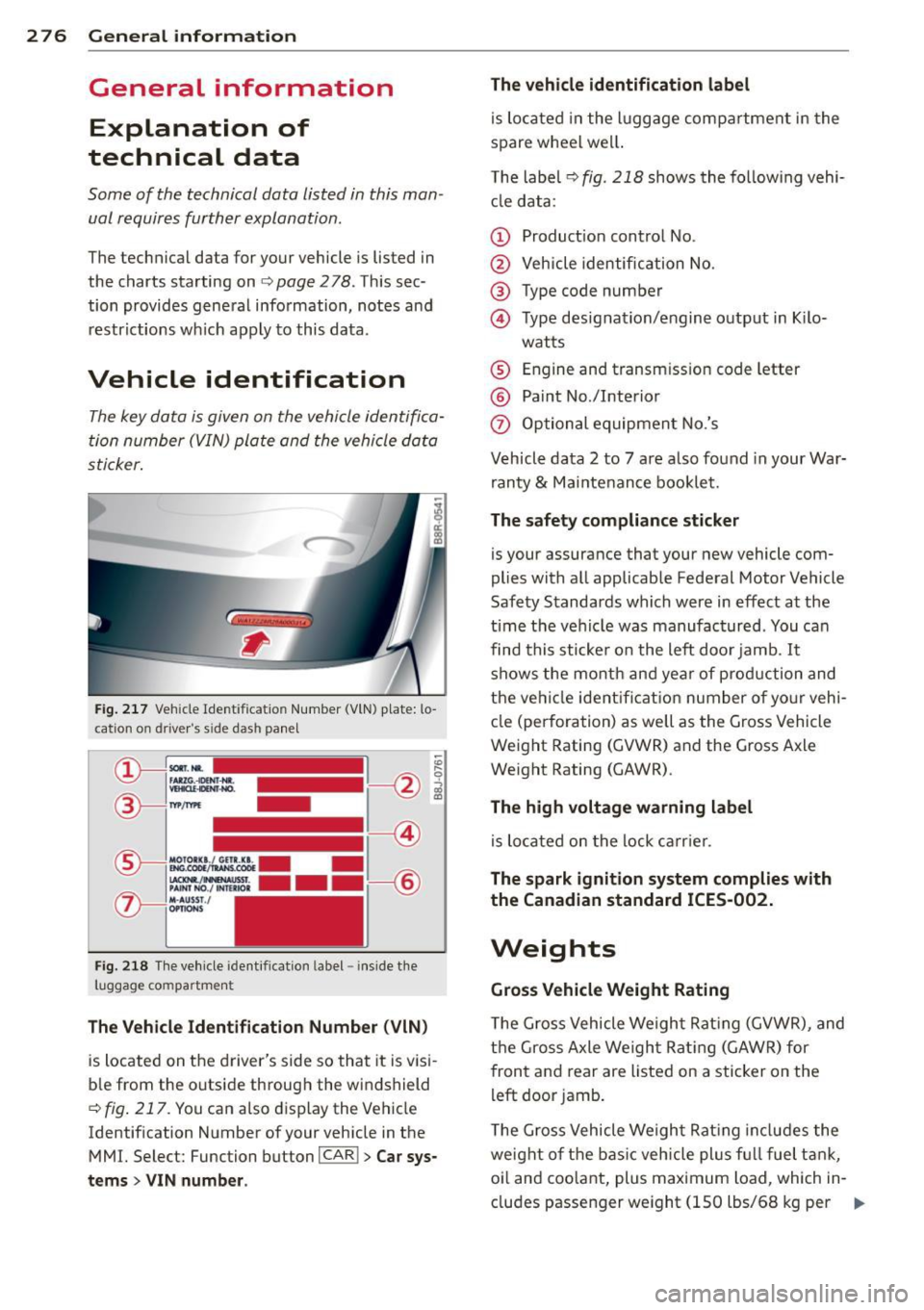
Fig. 2 17 Veh icle Ide ntific atio n Number (V lN) p late: lo
cation on driver's sid e das h panel
Fig . 2 18 The ve hicle identi fication label -inside the
luggage co mpa rtmen t
The Vehicle Iden tification Numb er (VIN )
is located on the driver's side so that it is vis i
b le from the outside through the windshield
r:::> fig . 217 . You can a lso display the Vehicle
Identification Number of your vehicle in the
MMI. Select: Function button
I CAR ! > Car s ys
t e ms
> V IN numb er. The
vehicl e identification labe l
is located in the luggage compartment in the
spare wheel wel l.
T he labe l¢
fig. 218 shows the fo llowing vehi
cl e data :
(D Product ion control No .
@ Vehicle identification No.
® Type code number
@ Type designation/engine output in K ilo·
wat ts
® Engine and transmission code letter
@ Paint No./Interior
(f) Optional equipmen t No.'s
Vehicle data 2 to 7 are also found in your War·
ran ty
& Ma intenance booklet.
The safety compliance stick er
is your assurance that your new vehicle com
plies with all applicable Federal Motor Vehicle
Safety Standards which were in effect at the
time the vehicle was manufac tured . You can
find this sticker on the left door jamb .
It
shows the month and year of production and
the ve hicl e ident ificat ion number of yo ur vehi ·
cle (perforation) as well as the G ross Vehicle
Weight Rating (GVWR) and the Gross Axle
Weight Rating (GAWR) .
The high volta ge warning label
is loca ted on the lock ca rr ier .
The spark ignition s ystem complies w ith
the Canadian standard ICES -002.
Weights
Gr oss V ehicl e Weight Rating
The Gross Vehicle Weight Rat ing (GVWR), and
t h e Gross Axle Weight Rating (GAWR) for
front and rear are Listed on a sticker on the
left door jamb .
T he Gross Vehicle Weight Rat ing includes the
weight of the bas ic vehicle plus fu ll fuel tank,
oi l and coo lant, plus maximum load , wh ich in·
eludes passenger weight (lSO lbs/68 kg per
Ill>