fuel AUDI A8 2012 User Guide
[x] Cancel search | Manufacturer: AUDI, Model Year: 2012, Model line: A8, Model: AUDI A8 2012Pages: 300, PDF Size: 75.06 MB
Page 111 of 300
Automatic Transmission
tiptronic (8-speed
transmission)
Introduction
Your vehicle is equipped with an electronically
controlled 8-speed automatic transmission .
Upshifting and downsh ifting take place
auto
matically .
The driver also has the option to shift the
gears
manually r::;, page 112 .
Dynamic Shift Progr am (DSP)
When a moderate driving style is used, the
transmission selects the most economica l
driving mode. The transmission upshifts at a lower RPM and downshifts at a higher RPM to
improve fuel efficiency.
The transmission switches to a sporty mode after a kick-down or when the driver uses a
sporty driv ing style characterized by quick ac
celerator pedal movements, heavy accelera
tion, frequent changes in speed and traveling
at the maximum speed.
Selecting the best driving mode is a continu
ous process. However, the transmiss ion will
also jump to a sporty driving mode if you
press the acce lerator pedal quick ly . When you
do this, the transmission shifts down into a
lower gear, wh ich makes it possible to acceler
ate quickly (for examp le, when passing anoth
er vehicle) without having to press the pedal
down into the k ick -down area. Once the trans
miss ion has shifted up again, it returns to the
original driving mode as long as it matches
the current driving style.
When driving in hills and mountains, the gear
selection adapts to the grade. This prevents
constant upshifting and downshifting when
driving uph ill.
Automatic Transmission 109
Indicator in the display
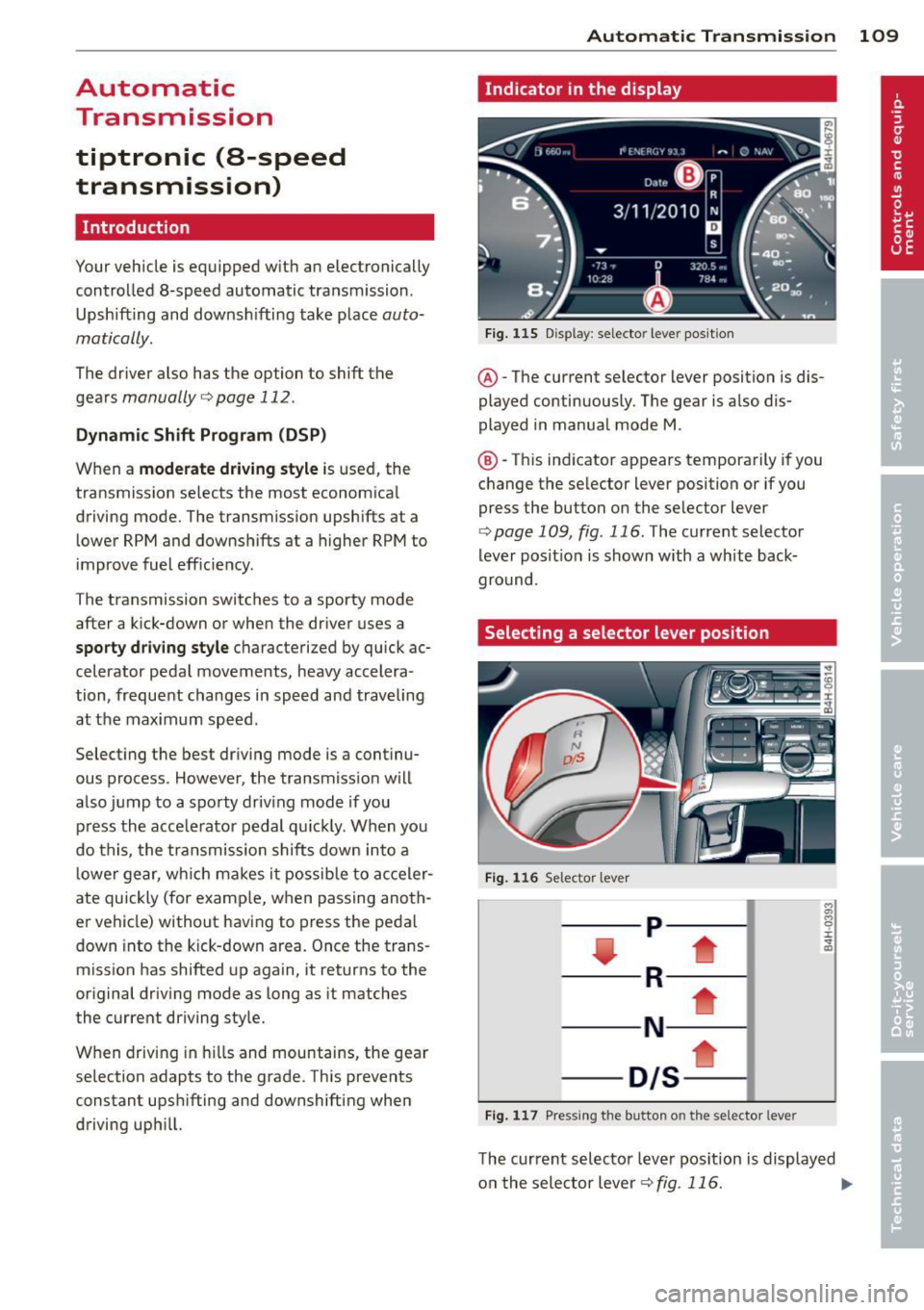
Fig. 115 Disp lay : se lecto r leve r posit ion
@ -The current selector lever position is dis
played continuously . The gear is a lso dis
played in manual mode
M .
® -This indicator appears temporarily if you
change the selector lever position or if you
press the button on the selector lever
c:> page 109, fig . 116 . The current selector
lever position is shown w ith a white back
ground.
Selecting a selector lever position
F ig. 116 Selector lever
---p--- --1
----R--- -
---N--- --1
-D/S--
Fig. 117 Pressing the button o n the selector leve r
M O>
9 :c .. CD
The current selector lever pos ition is displayed
on the sele ctor lever
r::;, fig. 116. llll>
Page 196 of 300
194 Driving and environment
Driving and
environment
The first 1,000 miles
(1,500 km) and
afterwards
New engine
The engine needs to be run-in during the first
1,000 miles (1,500 km).
For the fir st 600 miles (1,000
kilometers ):
.,. Do not use full throttle.
... Do not drive at engine speeds that are more
than 2/3 of the max imum permitted RPM.
... Avoid hig h engine speeds.
From 600 to 1,000 mile s (1 ,000 to
1,500 kilometers):
... Speeds can gradually be increased to the
max imum pe rm iss ible road or eng ine speed .
During and after break-in per iod
.,. Do not rev the engine up to high speeds
when it is cold. Th is app lies whether the
transm ission is i n N (Neutra l) or in gear.
After the break-in period
... Do not exceed maximum engine speed un
der any circumstances.
.,. Upshift into the next hig her gear
before
reaching the red area at the end of the tach
ometer scale
c:> page 10.
During the first few hours of driving, the en
g ine's interna l friction is higher than later
when all the moving parts have been broken
in . How well this break- in p rocess is do ne de
pends to a conside rable extent on th e way the
ve hicl e is driven d uring the first 1,0 00 miles
(1, 500 k ilome ters).
0 Note
E xtremely high engi ne speeds are auto
mat ica lly reduced. However, these rpm
lim its are progr amme d for an engine well
r u n- in, not a new engine .
{® For the sake of the environment
Do not drive with unnecessarily high en
g ine speeds - upshifting ear ly saves fuel,
reduces no ise and protects the environ
ment.
, New tires
If your vehicle is runni ng on new tires, drive
part icularly caref ul for the first 350 miles
(500 kilomete rs) afte r fitt ing .
A WARNING
New tires tend to be sl ippery and mus t al
so be "broken -in" . Be s ure to remember
this dur ing the fi rst 350 mi les ( 500 kilo
meters) . Brake gently . Avoid fo llow ing
closely behind other vehicles or other sit
uations that m ight require sudden, hard
braking .
New brake pads
Remember that new brake pads do not have a
full bra king effect dur ing the fi rst 250 m iles
(400 kilomete rs) afte r they a re insta lled .
New brake pads have to be "burnished in" be
fo re t hey have optima l grab
c:> A .
During the break- in period, you should avoid
putting severe loads on the brakes. Severe
l oads include, for example, sudden hard brak
i ng, in particular at very high speeds or, for
example, on mounta in passes .
A WARNING
New b rake pa ds don't have t he bes t stop
pi ng power and mus t be "broke n-in " dur
i ng the in iti al 1 00 to 150 mi les (150 to
20 0 k ilometers) of no rma l city driving . You
can compensate for this by pressing the
br ake peda l mo re f irm ly . This also applies
l ater when new pads are installed.
Page 197 of 300
Catalytic converter
It is very important that your emission control system (catalytic converter) is function
ing properly to ensure that your vehicle is run
ning in an environmentally sound manner .
.. Always use lead-free gasoline¢ page 215,
Fuel supply.
.,. Never run the tank down all the way to
empty.
.,. Never put too much motor oil in your en-
gine
¢ page 225, Adding engine oil~-
.,. Never try to push- or tow-start your veh icle.
The catalytic converter is an eff icient "clean
up" device built into the exhaust system of
the vehicle . The catalytic converter burns
many of the pollutants in the exhaust gas be
fore they are released into the atmosphere.
The exclusive use of unleaded fuel is critically
importa nt for the life of the cata lytic convert
e r and proper functioning of the engine.
A WARNING
-
- Do not park or operate the vehicle in
areas where the hot exhaust system may
come in contact with dry grass, brush,
fuel spill or other material which can cause a fire.
- Do not apply additional undercoating or
rustproofing on or near the exhaust
man ifold, exhaust pipes, catalytic con
verter or heat shields. During driving, the
substance used for undercoating cou ld
overheat and cause a fire.
0 Note
- Be aware that just one tank filling with
leaded fuel will already seriously de
grade the performance of the catalytic
converter.
- Do not exceed the correct engine oil level
¢ page 225.
-Do not drive until the fuel tank becomes
completely empty. The eng ine could mis
fire . U nburned fuel could a lso get i nto
Dri vin g and en vironm ent 195
the exhaust system and this cou ld cause
the catalytic converter to overheat .
- Do not switch off the ignit ion while the
vehicle is mov ing.
- Do not continue to ope rate your veh icle
unde r these conditions, as othe rwise fuel
can reach the catalytic converter. This
co uld result in overheating of the con
verter, requir ing its replacement .
- To assure efficient operation of the Emis
sion Control System:
- H ave your vehicle maintained prope rly
and in accordance w ith the se rv ice rec
ommendat ions in you r Warranty &
M aintenance boo klet.
- L ack of prope r maintenance as we ll as
improper use of the vehi cle w il l impair
the function of the em ission contro l
system and could lead to damage .
@ For the sake of the environment
Even when the Emiss ion Control System is
operat ing properly, the exha ust gas can
have a sul fur -li ke exhaust gas smell under
some operating states . This depends on
the sulfur content of the fuel being used .
Using a different brand of fue l may help,
or filling the tank with lead-free super
grade gasoline .
Avoid damaging the
vehicle
When you are drivi ng on poo r roads, or over
c ur bs, s teep ramps, etc., ma ke certai n that
low -lying parts s uch as spoilers and exhaust
system pa rts do not bottom o ut and get dam
aged.
T h is is espec ially true for veh icles w ith low
s lung chassis (spor ts chassis)* and fully load
ed vehicles. •
•
Page 198 of 300
196 Driving and en vironm ent
Driving through water
on roads
Note the following to avoid vehicle damage
when driving through water, for example on
flooded roads:
- The water must not be any higher than the
bottom of the vehicle body.
- Do not drive faster than wa lking speed.
A WARNING
After driving through water, mud, slush,
etc., the brakes may be slow to take effect
because of wet brake rotors and pads. Dry
the brakes first by braking carefully to re
sto re the full braking effect.
@) Note
Vehicle components such as the engine,
transmiss ion, suspension or electrical sys
tem can be severely damaged by driving
through water.
- Check the depth of the water before dr iv
i ng through it.
- Do not stop the vehicle, drive in reverse
or switch the engine off when driving
through water .
- Keep in mind that oncoming vehicles
may create waves that raise the water
level and make it too deep for your vehi
cle to drive through safely.
- Avoid dr iving through salt water because
i t can cause corrosion.
Operate your vehicle
economically and
minimize pollution
General
Your personal style of driving will determine
the economy of your vehicle, as well as ex
haust and noise levels.
Fuel economy, environmenta l impact, and
wear on your engine, brakes and tires largely
depend on three factors:
- your personal driving style
- operating conditions
- technical limitations
If you anticipate what you need to do next and
drive economically, you can easily cut your
fuel consumpt ion by 10-15 percent . This sec
t ion will give you some tips on how you can
help the env ironment and your pocketbook.
@ Tips
The consumption estimates as published
by ENVIRONMENTAL PROTECTION AGENCY
(EPA) and Transport Canada may not corre
spond to your actual consumption on the
road, which will vary depending upon vehi
cle load and speed, road and weather con
ditions, trip length, etc.
Drive smoothly and keep a lookout
ahead
Vehicles use the most fuel when they are ac
celerating.
.,. Avoid unnecessary accelerating and braking.
Vehicles use the most fuel when they are ac
ce lerating. If you anticipate what is going to
happen next, you will need to brake less and,
thus, acce lerate less . Let the vehicle coast
whenever possible - for example when you see
that the next traffic light is red.
Page 199 of 300
Avoid full throttle
Driving at moderate speeds saves fuel and
improves your mileage.
"" Try and keep well below your car's maxi-
mum speed.
Accelerating gently reduces fuel consump tion, engine wear, and does not disturb the
environment.
F ue l consumption, exhaust emissions and en
g ine noise increase disproportionately at high
speeds. If you drive at approximately three
quarters of top speed, fuel consumption will be reduced by one half. Never drive faster
than the posted speed limit and weather con
d itions permit .
Reducing unnecessary idling
Even when your car is just idling it burns up
fuel.
"" Shut the engine off when you are not driv
ing the vehicle.
"" Do not warm up the veh icle by letting the
engine run at idle .
It makes sense to shut
off the engine in traff ic
jams, when waiting for trains to pass at ra il
road crossings, or at traffic lights that have
l ong wa its on red. Turning the engine
off fo r
just
30-40 seconds saves more fue l than is
bu rned starting the eng ine again .
It takes a long time for the engine to warm up
fu lly when it is running at idle. However, wear
and nox ious em issions are especially high
when the engine is warming up. So you should
drive away as soon as you start the engine and
avoid running at high rpms while the engine is
still warming up .
(D Note
Do not leave engine idling unattended af
ter starting . If warning lights should come
on to indicate improper operation, they
wou ld go unheeded. Extended idling also
produces heat, which cou ld result in over-
Dri vin g and en vironm ent 197
'
heating o r othe r damage to the veh icle or
other p roperty .
Regular maintenance
A badly tuned engine unnecessarily wastes a
lot of fuel.
"" Have your veh icle serviced at reg ular i nter-
vals.
By having your veh icle regu la rly serviced by an
Audi dealer he lps to ensu re that it runs prop
erly and economically. The condition of your
vehicle not only affects its sa fety and ability to
hold its value, it a lso affects
fuel con sump
tion .
Check your oil e ach t ime you fill your tank .
The amount of o il used is re lated to eng ine
load and speed .
It is normal for the oil consumption of a new
engine to reach its lowest value after a certa in
mileage has been driven .
You must drive your veh icle about 3,000 m iles
(5,000 kilometers) before you can properly
assess oil consumpt ion.
This also app lies to fue l consumption and en
gine output.
(U) Note
- Have your vehicle maintained properly
and in accordance with the service rec
ommendations in your Warranty
& Ma in
tenance booklet . Lack of proper mainte
nance as well as improper use of the ve
hicle will impair the function of the
em iss io n cont ro l system and cou ld lead
to damage.
- Do not alter or remove any component of
the Emission Control Sys tem unless ap
proved by the manufacture r.
- Do not alter or remove any device, such
as heat shie lds, swit ches, ign it ion w ires,
valves, which are designed to p rotec t
your vehicle's Emission Control System
and other important vehicle compo
nents .
•
•
Page 200 of 300
198 Driving and environment
Fewer short trips
Fuel consumption will always be relatively
high on short trips .
.,. Try to avo id driving short distances with a
cold eng ine.
The engine and catalyt ic converter have to
reach their optimal
operating temperature to
reduce fuel consumption and noxious emis
sions effect ively .
Just after starting, a cold engine in a mid-size
car only achieves a f uel economy of 6-8 miles
per gallon (30-40 l/100 km). After about a
half a m ile, fuel economy climbs to 12 mpg
(20 l/100 km). After about
2.5 miles (4 km),
the engine is at its proper operat ing tempera
ture and fue l economy has reached a normal
l eve l. So you can see that you sho uld avoid
short trips wheneve r possible.
The
outside temperature is also critical in this
r egard. Your car consumes more fuel in the
winter than in the summer.
Page 205 of 300
Cleaning and protect ion
General information
Regular core preserves vehicle value.
Any automobile is exposed to industrial
fumes , corrosive road salt, etc. A well cared
for Audi can look like new many years after purchase . Regu lar and correct care w ill con
tr ibute to maintaining the beauty and value of
your Aud i.
F u rth ermor e, good c are may be a conditi on
for subs tantiati ng a w arrant y claim sho uld
c orrosion d amag e or paint d efects oc cur.
Your authorized Audi dealer has a variety of
dedic ated veh icle-car e products and can ad
vise which ones to use for cleaning the exter i
or and interior of your vehicle.
Whether you use products recommended by
Aud i or other commercially available clean ing
agents, please make sure you apply them cor
rectly .
.&, WARNING
-Cleaning agents may be poisonous. Keep
them out of the reach of children.
- Heed all caut ion labels.
- Always read directions on the container
before using any product. Follow the di
rect ions carefu lly.
- Most chemical cleaners are concentrated
and have to be diluted .
- Use spot removing fluids only in well
ventilated areas.
- Do not use gasoline, kerosene, d iesel
fuel, nail polish remover or other volatile
fluids. They may be toxic, flammab le or
haza rdous in other ways. Do not wash,
wax or dry the vehicle with the ign it ion
on or the engine running.
- Do not clean the undersides of chassis,
fenders, wheel covers, e tc. w ithout pro
tecting your hands and arms. You may c u t yourself on sharp -edged metal parts .
Cleaning and protec tion 203
- Moisture and ice on brakes may impair
brak ing effic iency¢
page 189, General
information.
Test the brakes carefully
each time you wash the vehicle.
@) For the sake of the environment
Select on ly environmentally friend ly clean
i ng products . Leftover cleaning products
should not d isposed of in the household
waste.
Care of exterior
Washing
Frequent washing protects the vehicle .
The best protection against environmental i n
fluences is
frequent washing and waxing . How
often t his is required depends on:
- How much the veh icle is used
- Where the veh icle is parked (garage, in the
open under trees, etc.)
- The seasonal and weather conditions
- Environmental infl uences
T he longer b ird droppings, insects, tree resin,
road and indus tria l gr ime, ta r, soot, road salt
and other materials remain on the vehicle body, the more lasting their destructive ef
fects wi ll be . High temperatures caused by ex
posure to intense sun light intens ify the corro
s ive effect, particularly when humid ity is high
as well.
Under certain circumstances,
weekl y washing
may be necessary. Under other cond itions, a
monthly washing and waxing may be ade
quate .
After the winter, the underside of the vehicle
should be thoroughly washed, preferab ly in a
professional car wash .
.&, WARNING ,_
A lways read and heed all WARNINGS and
other information¢
page 203 .
•
•
Page 207 of 300

-Never w ash your ca r in bri ght sunlight.
Drops of water act as magnifying lenses
and may damage your paint.
- When yo u wash your car in the winter : if
you rinse your vehicle with a hose , be
careful not to aim the stream of water
direct ly at locks, or at door or hatch
openings -they can freeze shut.
- Never use sponges des igned to remove
i nsects, or any kitchen scouring sponges
or similar products . They can damage
you r paint finish .
- Never use a dry cloth or sponge to clean
the headlights . Only use wet cloths or
sponges to prevent scratches . It is best
to use soapy water.
- You should remove debris (such as in
sects) from the headligh t lenses on a
regular basis , fo r example when refuel
i ng yo ur vehicle. Never clean the he ad
l ights w ith a dry clo th or sponge. Use a
wet cloth or sponge . It is best to use
soapy water.
@ For the sake of the environment
I n the interes t of the envi ronment, the ve
hicle sho uld only be washed in specia l
wash bays.
Washing your vehicle with a power
washer
Cleaning the exter ior of your car with a high
pressure power washer is safe as long as you observe a few simple rules.
~ Befo re using the power washe r, make sure
you have read and understood the WARN
INGS
c> A in General information on
page 203 .
~ Always follow the operating instructions for
the power washer .
~ Make sure that the jet o n the spray hose
produces a "fan shaped spray ".
~ Do not hold the spray no zzle too close to
soft materia ls.
W hen clea ning the vehi cle w it h a powe r wash
e r
always fo llow the operating instruc tions.
Cleaning and protec tion 205
This applies particu la rly to the operating
pre ssure and the spraying di stance. Keep a
distance from soft materia ls such as rubber
hoses or insulating material as we ll as sensors
and camera lenses.
Do not use a jet which sprays water in a direct
stream or one that has a rotating jet.
Water tempera ture sho uld no t exceed 140 ° F
(60 °().
A WARNING
N eve r wash t ires with a jet that sprays wa
ter in a direct stream . T hi s could cause in
v isib le damage to the t ires and weaken
them, even i f the spray is from a re lative ly
long distance and for a sho rt time. Dam
aged and weakened tires can fail and cause
accidents and personal i njury .
(D Note
To avoid damaging your vehicle, a lways
make sure that the re is suffic ient d istance
between the spray head and soft materials
li ke rubber hoses, plast ic pa rts and sound
deaden ing ma ter ia ls as well as sensors
and camera lenses. Never a im th e sp ray
head at the same point for a long time .
This also applies to cleaning headlights
and painted bum pers. Remembe r: the
cl oser the nozzle is to the surface of the
mater ia l, the greater the stress on the ma
terial.
Sensoren und Kameralinsen
- Entfernen S ie Schnee m it einem Handfeger
und Eis bevo rzugt mit einem losungsm ittel
fre ien Enteisu ngsspray .
- Reinigen Sie die Sensoren (adaptive cruise
cont ro l*, Einparkhi lfe*) mit losungsm itte l
fre iem Re inigungsmi tte l und einem weiche n
t ro ck enen Tuch .
- Befeuchten Sie die Kameralinse m it handel
si.iblichem Glasrein ig ungsm ittel a uf Al ko
holbasis und reinigen Sie die Linse mi t ei
nem trockenen Tuch . Beim lane assist* wird
de r Bereich vor der Linse im Normalfall .,..
•
•
Page 215 of 300
-Wh en cl eaning your safety belts, inspect
them for damage. If you discover dam
age, see your Audi dealer .
- Always read and heed all WARNINGS and
other information ¢
page 203.
Cooler
Applies to veh icles: with coole r
A layer of ic e or frost in th e cool er interfer es
with its cooling performanc e.
Cleaning
The refr igerator sho uld be cleaned reg ula rly .
.,. Wash the cooler w ith lukewarm water a nd a
mild cleaning so lution, if necessary .
.,. The n w ipe the coole r dry.
.. Dust and dir t will acc umu late near the ven
t il ation openings in the luggage compar t
me nt due to normal coole r usage. This
sho uld be cleaned reg ularly.
Defrosting
.,. Switc h the coo ler off ¢ page 72.
.. Remove any food or beverages and al low
the coole r to defrost with the door open .
.. Wipe the inside of the coo ler dry and clean
the cooler , if necessary .
D efrost the cooler if yo u will no t be using it
for ex tended periods of time .
Q) Note
-Do no t try to speed up the defrosting
p rocess by applying heat.
- To red uce the risk of pe rsonal injury or
dam age to the refrige rator,
- do not use any abrasive cleaners, sol
vents, wax, aggressive cleaning solu
tions , so lutions with strong fragrances,
etc.,
- do not clean the coo ler with cleaning
tools such as stee l wool.
l ) U se o nly the co rr ec t cl ean in g so lu tio ns. Ne ve r use ga s
o line or d ie sel fuel.
Cleaning and protec tion 213
Engine compartment
Be especially careful when cleaning the en
gine compartment.
Always switch off the ignit ion before clean
ing the engine
¢ .& .
Plenum panel
Remove leaves from the plenum panel in front
of the windshield under the engin e compart
ment . This prevents the water drain holes
from becoming b locked , and it preve nts de
bris from entering the vehicle interio r through
the heat ing and ventilat ion ducts .
Corrosion protection
The eng in e compartm ent and transmission
have been corrosion-protected at the facto ry .
Good anti -corrosion treatment is very impor
tant , partic ularly in the w inte r.
If the vehicle
is frequently d riven on salt treated roads, th e
entire engine compartment and p lenum panel
shou ld be thoroughly cleaned at the end of
winter a nd retreated to p revent salt damage .
At the same time, the unde rside of the vehicle
shou ld be washed as well.
If the engine compar tment is cleaned at any
time with grease remov ing solutions
1> , or if
you have the engine washed, the ant i-corro
s io n treatment is almost always removed as
well.
It i s therefo re essentia l to have a long
lasti ng cor rosion pro tect ion rea pplied to all
s u rfaces , seams, joints and components in the
engine compartment .
A WARNING
Be aware: The engine com partment of any
motor veh icle is a potentially hazardous
area.
- Before work ing in the engine compart
ment, be sure to read the information
¢ page 219 .
•
•
Page 217 of 300
Fuel supply and filling
your f uel tank
Gasoline
Fuel supply
Using the right fuel helps keep the environ
ment clean and prevents engine damage.
Fuel recommendation
The fuel recommended for you r vehicle is un
leaded premium
g rade gasolin e. See also
¢ page 278, Data. Audi recommends usi ng
TO P TI ER Deterge nt Gaso line wi th a minim um
oc ta ne ra ti ng of 9 1 AK I (9 5 RON). For more
in fo rmation on TO P TI ER De tergent Gaso line,
p lease go to the official website (www.toptier
gas.com).
The re commended g asoline octane r ating for
your engine can a lso be fo und o n a label loca t
e d on the ins ide of the fuel filler flap . This rat
ing may be specif ied as A KI or RO N.
Your veh icle m ay also be oper ated using un
l e aded regular gasoline with a minimum oc
tane rating of 87 AKI/91 RO N. However, using
87 AKI/9 1 RO N octa ne f ue l w ill sli ghtly re
d uce eng ine perfo rmance .
Use unleaded gasoline only. Unleaded gaso
line is available th rougho ut the USA, Canada,
a nd in most E uropean cou ntries . We recom
mend that you do not ta ke yo ur vehicle to
areas or count ries where unleaded gasoline
may not be ava ilable.
F or mo re informat io n on refue ling your ve hi
cle, see ¢
page 216.
Octane rating
Octane r ati ng in dicates a ga so line's abili ty to
r es ist engine damaging "knoc k" ca used by
p remature ign ition and detonation. Therefore,
buy ing the correct grade of gaso line is very
i mportant to help prevent possible engine
damage and a loss of engine performance.
Gasoline most common ly used in the Unite d
States and Canada has the followin g octane
Fuel supply and filling your fuel tank 215
ra tings that can usu a lly be found on the fi ller
p ump :
- Premium Gr ade: 9 1 -9 6 AKI
- Regular Grade : 87 -90 AKI
Explanation of the abbreviations:
AKI = Anti K nock In d ex = (R+M )/2 = (RO N
+M ON)/2
RON= Resear ch O ctane Num ber
MO N= Motor Octane Number.
(D Note
- Do not use a ny fue l w it h octane rat ings
lower than 87 A KI or 9 1 RO N othe rwise
e xpensive engi ne damage w ill occur.
- Do
not use leaded gasoli ne . The use of
leaded gasolin e w ill severely damage
yo ur vehicl e's cata lytic co nve rter and its
ability to control exh aust em iss ions.
Blended gasoline
U se of gasoline containing alcohol or
MTBE (methyl tertiary butyl ether)
You may use unleaded g asoline blende d with
a lcohol o r MTBE (commonly re fer red to as
oxygenates) if the blende d mixture meets the
fo llow ing criteria:
Blend of gasoline methanol (wood alcohol or
methyl alcohol)
- Anti -kno ck index mus t be 87 A KI or higher.
- Blend must contain no mor e than 3% meth-
anol.
- Blend must co ntain more than 2% co-sol-
vents .
Blend of gasoline and ethanol (grain alcohol
or ethyl alcohol)
- Anti -knoc k index must be 87 A KI or higher.
- Blend must not conta in mo re tha n 10%
ethanol.
Blend of gasoline and MTBE
- Anti -knoc k index must be 87 AKI or higher . ll>-
•
•