door lock AUDI Q3 2017 Owner´s Manual
[x] Cancel search | Manufacturer: AUDI, Model Year: 2017, Model line: Q3, Model: AUDI Q3 2017Pages: 236, PDF Size: 58.93 MB
Page 131 of 236
-make sure that the safety belt tension sensor is
not blocked. Shake the safety be lt latch on the
front passenger seatback and forth;
- If a strap or tether is being used to tie the child
safety seat to the front passenger seat, make
sure that it is not so tight that it causes the
weight-sensing mat to measure more weight
than is actually on the seat.
If the PASSENGER AIR BAG OFF li ght still d oes
not come on
and does not stay on continuously
(when the ignition is switched on),
- take the child restraint off the front passenger
seat and install it properly at one of the rear
seat positions. Have the airbag system inspect
ed by your authori zed Audi dealer immediately.
- move the child to a rear seat position and make
sure that the child is properly restra ined in a
child restraint that is appropriate for its size
and age .
The
PAS SENGER AIR BAG O FF light shou ld NOT
come on when the ignition is on and an adult is
sitting in a proper seating position on the front
passenger seat. If the
PASSENGER AIR BAG OFF
light comes on and stays on or flashes for about
5 seconds while driving, under these circ umstan
ces, make su re that:
- the adult on the front passenger seat is proper
ly seated on the center of the seat cushion with
his or her back up aga inst the backrest and the
back rest is not recl ined
<=? page 101, Correct
passenger seating positions,
- the adult is not taking weig ht off the seat by
hold ing on to the passenger assist handle
above the fron t passenger door o r su pporting
their weight on the armres t,
- the safety be lt is be ing p roperly wo rn and that
there is not a lo t of slack in the safe ty be lt web
bing,
- accessory seat cove rs or cushions or othe r
t h ings t hat may cause an inco rrect read ing or
impression on the weight-sensing mat under
the upho lstery of the seat have been removed
from the front passenger seat,
~ - a safety be lt extender has not been left in the ......
~ safety belt latch for the front passenger seat . N ...... 0 0
:::,
00
Airb ag sys tem
In add ition to the PASSENGER AIR BAG OFF
li ght in the center of the instrument panel, the
message
PAS SENGER AIR BAG OF F or PASSEN ·
G ER AIR BAG ON
will briefly appear in the instru
ment cluster d isp lay. This is to inform the driver
of the current front passenger airbag status.
Important safety instructions on
monitoring the Advanced Airbag System
A WARNING
-An a irbag system that is not functioning prop-
erly cannot prov ide supplemental protect ion
i n a fronta l crash.
- If the ai rbag ind icator light
c:> page 14
comes when the veh icle is being used, have
the system inspected immediately by your
author ized Audi dealer.
It is possible that
the airbag will inflate when it is not sup
posed to, or w ill not inflate w hen it should.
A WARNING
If the fron t airbag i nflates, a chi ld without a
chi ld restraint, in a rearward-facing ch ild safe
ty seat or in a forward-facing chi ld restraint
that has not been properly installed will be
seriously in jured and can be ki lled .
- Even tho ugh yo ur vehicle is equipped with
an Advanced A irbag System, make certain
that all children, especia lly 12 years and
younger, always ride on the back seat prop
erly restrained for the ir age and s ize .
- Always install fo rward or rear-facing child
safety seats on the rear seat -even with an
Advanced Airbag System.
- If you must install a rearward-facing child
safety seat on the front passenger seat be
cause of exceptional circumstances and the
PASSENGER AIR BAG OFF light does not
appear and stay on, immediately install the rear-facing chi ld safety seat in a rea r seat ing
position and have the a irbag sys tem in
spected by your autho rized Aud i dea ler.
- A t igh t tether or other strap on a rearward
facing chi ld restraint attached to the front
passenger sea t can put too much pressure
129
Page 145 of 236
Child seats
Infant seats
Babies and infants up to about one year old and
20 lbs. or 9 kg need special rearward -facing
child restraints that support the back, neck and
head in a crash .
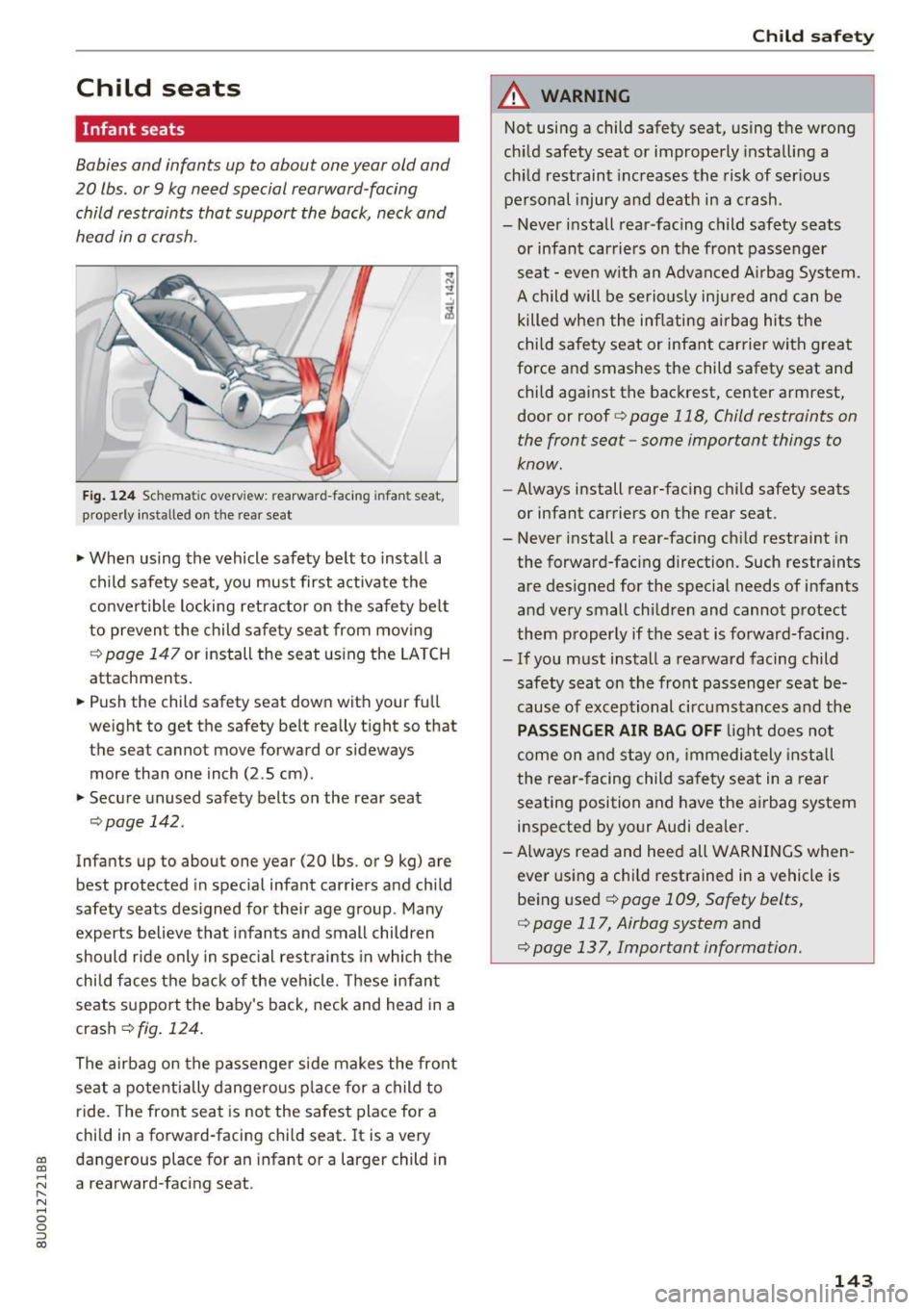
Fig. 124 Schemat ic overview: rearward-facing infant seat,
properly installed on the rear seat
"'When using the vehicle safety belt to install a
child safety seat, you must first activate the
convertible locking retractor on the safety be lt
to prevent the child safety seat from moving
¢ page 147 or install the seat using the LA TC H
attachments.
"' Push the child safety seat down with your full
weight to get the safety belt really tight so that
the seat cannot
move forward or sideways
more than one inch (2.5 cm).
"'Secure unused safety belts on the rear seat
¢page 142.
Infants up to about one year (20 lbs. or 9 kg) are
best protected in special infant carriers and child
safety seats des igned for their age group . Many
experts believe that infants and small children
should ride only in spec ial restraints in which the
chi ld faces the back of the vehicle. These infant
seats support the baby 's back, neck and head in a
crash
c!;> fig . 124.
The airbag on the passenger side makes the front
seat a potentially dangero us p lace for a child to
ride. The front seat is not the safest place for a
chi ld in a forward-facing child seat. It is a very
a:1 dangerous place for an infant or a larger child in a:,
~ a rearward-facing seat. r--. N
'"' 0 0 ::, a:,
Child sa fety
A WARNING
-Not using a child safety seat, using the wrong
ch ild safety seat or improperly installing a
child restraint increases the risk of ser ious
personal injury and death in a crash .
- Never install rear-facing child safety seats
or infant carriers on the front passenger
seat -even w ith an Advanced A irbag System .
A child will be serio usly inj ured and can be
killed when the inf lating airbag hits the
chi ld safety seat or infant carrier with great
force and smashes the child safety seat and
child against the backrest, center armrest,
door or roof
c!;> page 118, Child restraints on
the front seat -some important things to
know.
- Always install rear-fac ing child safety seats
or infant carriers on the rear seat.
- Never install a rear-facing child restraint in
the forward-facing direction . Such restraints
are designed for the special needs of infants
and very small children and cannot protect
them p roperly if the seat is forward-faci ng.
- If you must install a rearward facing child
safety seat on the front passenger seat be
cause of exceptional circumstances a nd the
PASSENGER AIR BAG OFF li ght does not
come on and stay on, immediately install
the rea r-facing child sa fety seat in a rear
seating position and have the a irbag system
inspected by your Audi dealer .
-A lways read and heed all WARNINGS when
ever using a child restrained in a vehicle is
be ing used
c!;> page 109, Safety belts,
c:> page 117 , Airbag system and
c:> page 137, Important information.
143
Page 146 of 236
Child safety
Convertible child safety seats
Properly used convertible child safety seats can
help protect toddlers and children over age one
who weigh between 20 and 40 lbs. (9 and 18 kg)
in a crash.
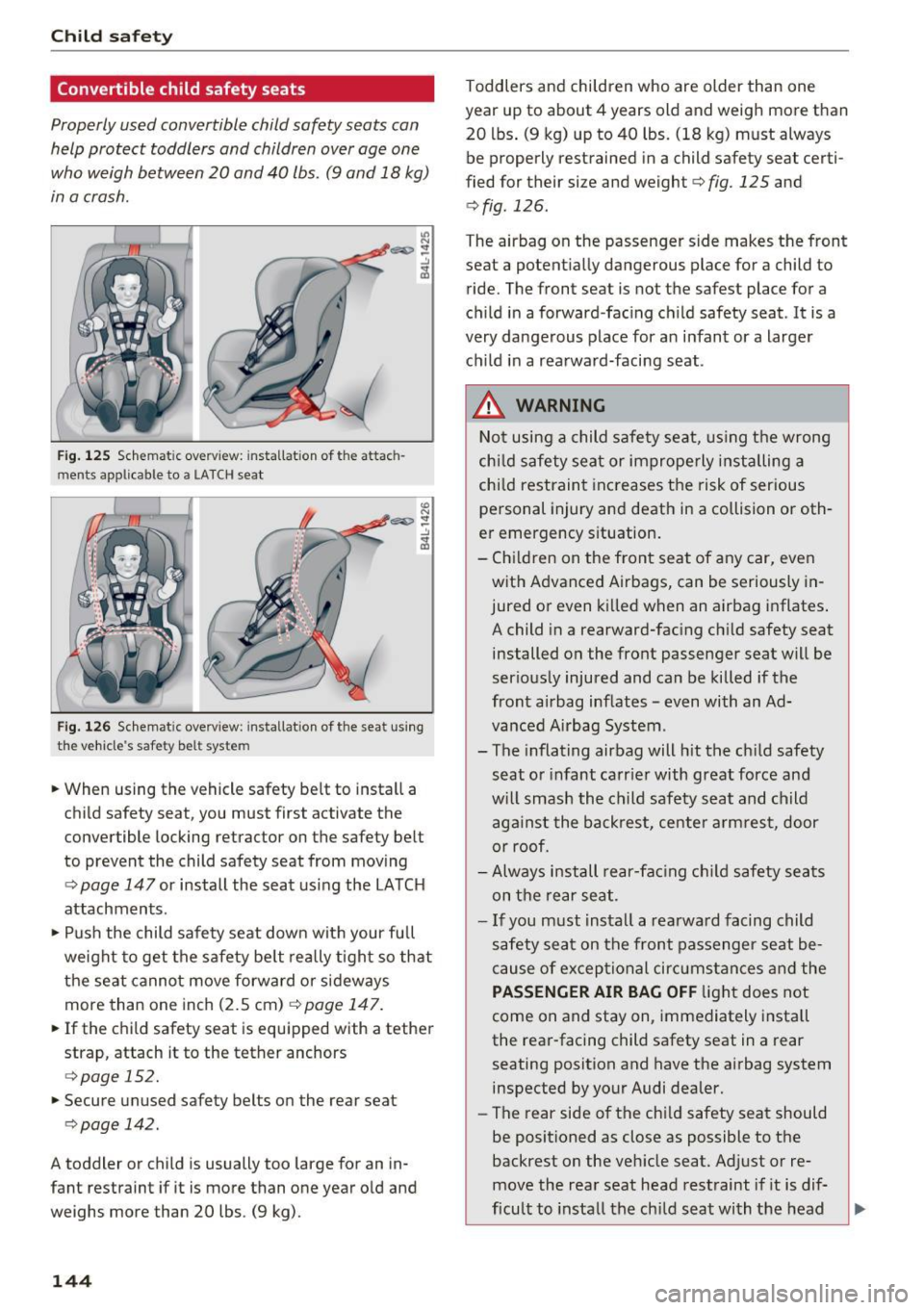
Fig. 125 Schematic overv iew: installat ion of the attach
ments app licable to a LATCH seat
Fig. 126 Schemat ic overview: installat ion of the seat using
the vehicle 's safety belt system
.. When using the vehicle safety be lt to install a
child safety seat, you must first activate the
convertible locking retractor on the safety belt
to prevent the child safety seat from mov ing
¢ page 147 or install the seat using the LATCH
attachments .
.. Push the child safety seat down with your full
weight to get the safety be lt really tight so that
the seat cannot move forward or sideways more than one inch (2 .5 cm) ¢
page 147.
.. If the child safety seat is equipped with a tether
strap, attach it to the tether anchors
¢page 152.
.. Secure unused safety belts on the rear seat
¢page 142.
A toddler or child is usually too large for an in
fant restraint if it is more than one year old and
weighs more than 20 lbs . (9 kg).
144
Toddlers and children who are older than one
year up to about 4 years old and weigh more than
20 lbs . (9 kg) up to 40 lbs. (18 kg) must always
be properly restrained in a child safety seat certi
fied for their size and weight¢
fig. 125 and
i=>fig. 126.
The airbag on the passenger side makes the front
seat a potentially dangerous place for a child to
ride. The front seat is not the safest place for a
child in a forward-facing child safety seat .
It is a
very dangerous place for an infant or a larger
ch ild in a rearward-facing seat .
.&_ WARNING
Not using a child safety seat, us ing the wrong
ch ild safety seat or imprope rly installing a
chi ld restraint increases the risk of serious
personal injury and death in a collision or oth
er emergency situation.
- Ch ildren on the front seat of any car, even
with Advanced Airbags, can be seriously in
jured or even killed when an airbag inflates .
A child in a rearward-fac ing ch ild safety seat
installed on the front passenger seat will be
serious ly injured and can be killed if the
front airbag inflates -even with an Ad
vanced Airbag System .
- The inflating airbag will h it the chi ld safety
seat or infant carr ier with great force and
w ill smash the child safety seat and child
aga inst the backrest, center a rm rest, door
or roof.
- Always install rear-fac ing ch ild safety seats
on the rear seat.
- If you must install a rearwa rd facing child
safety seat on the front passenger seat be
cause of exceptional circ umstances a nd the
PASSENGER AIR BAG OFF light does not
come on and stay on, immediately install
the rear-facing child safety seat in a rear seating position and have the airbag system
inspected by your Audi dealer .
- The rear side of the ch ild safety seat should
be positioned as close as possible to the
backrest on the veh icle seat. Adjust or re
move the rear seat head restraint if it is dif-
ficult to install the ch ild seat with the head "'
Page 149 of 236
00
00
......
"' ,....
"' ...... 0 0 :::,
00
- Never let a child stand or kneel on any seat,
for example the front seat.
- Never let a child ride in the cargo area of
your vehicle.
- Always remember that a child leaning for
ward, sitting sideways or out of position in
any way during an accident can be struck by
a deploying airbag. This will result in serious
personal injury or death.
- If you must install a booster seat on the
front passenger seat because of exceptional
circumstances the
P A SS ENGER AIR BAG
OFF
light must come on and stay on, when
ever the ignition is switched on.
- If the
PASSENGER A IR BAG OFF light does
not come on and stay on, perform the
checks descr ibed
c:> page 12 7, Monitoring
the Advanced Airbag System.
- Take the ch ild restraint off the front passen
ger seat and install it p roperly at one of the
rear seat positions if the
PA SSENGER A IR
BA G OFF
light does not stay on whenever
the ignition is switched on.
- Always read and heed all WARN INGS when
ever using a child restrained in a vehicle is
being used
r=;, page 109, Safety belts,
c:> page 117, Airbag system
and
c:> page 13 7, Important information.
Securing child seats
Securing a child safety seat using a safety
belt
Safety belts for the rear seats and the front pas
senger can be locked with the convertible locking retractor to properly secure child safety seats .
The safety belts emergency locking retractors for
the rear seats safety belts and for the front pas
senger's seat safety belt have a convertib le lock
ing retractor for child restraints. The safety belt
must be locked so that belt webbing cannot un
reel. The retractor can be activated to lock the
safety belt and prevent the safety belt webbing
from loosening up during normal driving. A child
safety seat can only be properly installed when
the safety belt is locked so that the child and
child safety seat w ill stay in place .
Child safety
Always remember : Even though your vehicle is
equipped with an Advanced Airbag system, all
children, especially those 12 years and younger,
should always ride in the back seat properly re
strained for their age and size.
A WARNING
=
Improperly installed child safety seats in
crease the risk of serious personal injury and
death in a collision .
-
-Always make sure that the safety belt re
tractor is locked when installing a child
safety seat. An un locked safety be lt retrac
tor cannot hold the ch ild safety seat in place
du ring normal driving or in a c rash.
- Always buckle the child safety seat fi rm ly in
p lace even if a ch ild is not sitt ing in it. A
loose child safety seat can fly around during
a sudden stop or in a co llision.
- Always make sure that the rear seat back
rest to which the center rear safety belt is
attached is securely latched whenever the
rear center safety belt is being used to se
cure a child restraint.
- If the backrest is not securely latched, the
child and the child restraint will be thrown
forward together with the backrest and w ill
strike parts of the veh icle inter ior. The child
can be seriously injured or killed .
- Never install rear-facing child safety seats
or infant carriers on the front passenger
seat . A child w ill be seriously injured and
can be killed when the passenger a irbag in
flates.
- The inflating airbag will h it the ch ild safety
seat or infant ca rr ier with great force and
will smash the child safety seat and child aga inst the backrest, cente r armrest, door
or roof .
- Always install rear-fac ing child safety seats
or infant car riers on the rear seat.
- Forward-facing child safety seats o r infant
carriers installed on the front passenger's
seat may interfere with the deployment of
the airbag and cause serio us injury to the
child .
- It is sa fer to install a forward -facing child
safety seat on the rear seat.
147
Page 159 of 236
a:,
a:,
...... N r--. N
'"' 0 0 ::, a:,
(D Note
Never drive your vehicle until the fuel tank is
completely empty. The irregular supply of
fuel can cause misfiring. Gasoline could enter
the exhaust system and damage the catalytic
converter.
Fueling procedure
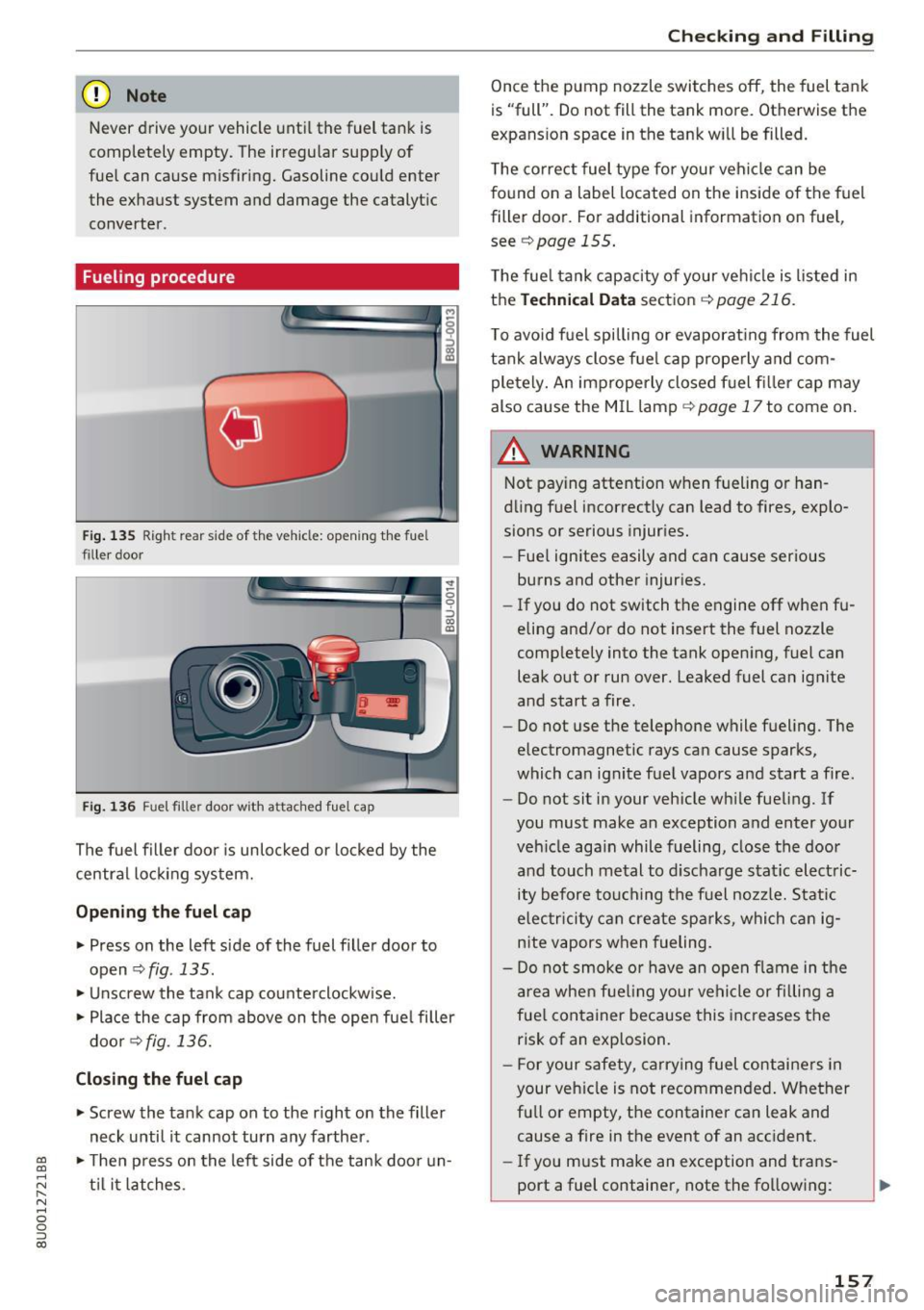
Fig. 135 R ight rear side of the vehicle: opening the fue l
f iller door
Fig. 136 Fu el fil ler door w ith attached fuel cap
The fuel filler door is unlocked or locked by the
central locking system.
Opening the fuel cap
"" Press on the left side of the fuel filler door to
open ¢
fig. 135.
""Unscrew the tank cap counterclockw ise.
"" Place the cap from above on the open fuel filler
door ¢
fig. 136.
Closing the fuel cap
""Screw the tank cap on to the right on the filler
neck until it cannot turn any farther.
""Then press on the left side of the tank door un
ti l it latches .
Checking and Filling
Once the pump nozzle switches off, the fuel tank
is "full". Do not fill the tank more . Otherwise the
expansion space in the tank will be filled.
The correct fuel type for your vehicle can be
found on a label located on the inside of the fuel
filler door. For additional information on fuel,
see
¢ page 155.
The fuel tank capacity of your vehicle is listed in
the
Technical Data section¢ page 216.
To avo id fuel spilling or evaporat ing from the fuel
tank always close fuel cap properly and com
pletely. An improperly closed fuel filler cap may
also cause the MIL lamp¢
page 17 to come on.
A WARNING
Not paying attention when fueling or han
dling fuel incorrectly can lead to fires, explo
sions or serious injuries.
- Fuel ignites easily and can cause serious
burns and other injuries.
-
-If you do not switch the engine off when fu
eling and/or do not insert the fuel nozzle
completely into the tank opening, fuel can
leak out or run over. Leaked fuel can ignite
and start a fire.
- Do not use the telephone while fueling. The
electromagnetic rays can cause sparks,
which can ignite fuel vapors and start a fire .
- Do not sit in your vehicle while fueling. If
you must make an exception and enter your
veh icle aga in while fueling, close the door
and touch metal to discharge static electric
ity before touching the fuel nozzle. Static
electricity can create sparks, which can ig
nite vapors when fueling.
- Do not smoke or have an open flame in the
area when fueling your vehicle or filling a
fuel container because this increases the
risk of an explosion.
- For your safety, carrying fuel containers in
your vehicle is not recommended. Whether
full or empty, the container can leak and
cause a fire in the event of an accident.
- If you must make an exception and trans
port a fuel container, note the following:
157
Page 160 of 236
Checking and Filling
-Never f ill the fuel container with fuel
while it is in or on the vehicle. Stat ic elec
tricity is d ischarged when filling wh ich can
cause the f uel vapors to ignite and in
creases the r isk of an explos ion .
- Always p lace a fuel container on the
ground before fi lling .
- Always hold the fuel nozzle comp letely in
the fuel container when fi lling .
- If the fue l conta iner is made of metal, the
fue l nozzle must always be in contact wit h
the conta iner w hen filling it w ith fue l. Th is
prevents static electr ic ity from discharg
ing.
- Never sp ill fuel in the veh icle or the lug
gage compartment . Evaporated fue l is ex
plosive and increases the risk of se rio us i n
jury o r death.
- Follow legal requireme nts when usi ng,
s t o ring and tran spo rting fuel cont ainers.
- Ma ke sure the fue l conta iner confo rms to
i ndu stry st anda rds (A NSI/ ASTM F852-86).
0 Note
- Remove spilled fuel from vehicle paint im
mediately, because it can damage paint.
- Never drive until the fuel tank is completely
empty . The ir regular supp ly of fuel that re
su lts from that ca n cause engine m isfires .
Uncombusted f ue l w ill enter the exha ust
sy stem a nd incr ease t he risk of damage to
the c atalyt ic converter.
@ For the sake of the environment
Do not ove rfi ll the f uel tank, othe rw ise fue l
can le ak out when the vehicle is wa rm ing up.
(0 Tips
The f uel fi ller door on yo ur vehicle does not
loc k if yo u lock the vehicle from the inside .
158
Fuel filler door emergency release
If the cen tral locking system is faulty, the fuel
filler door can be unlocked manually .
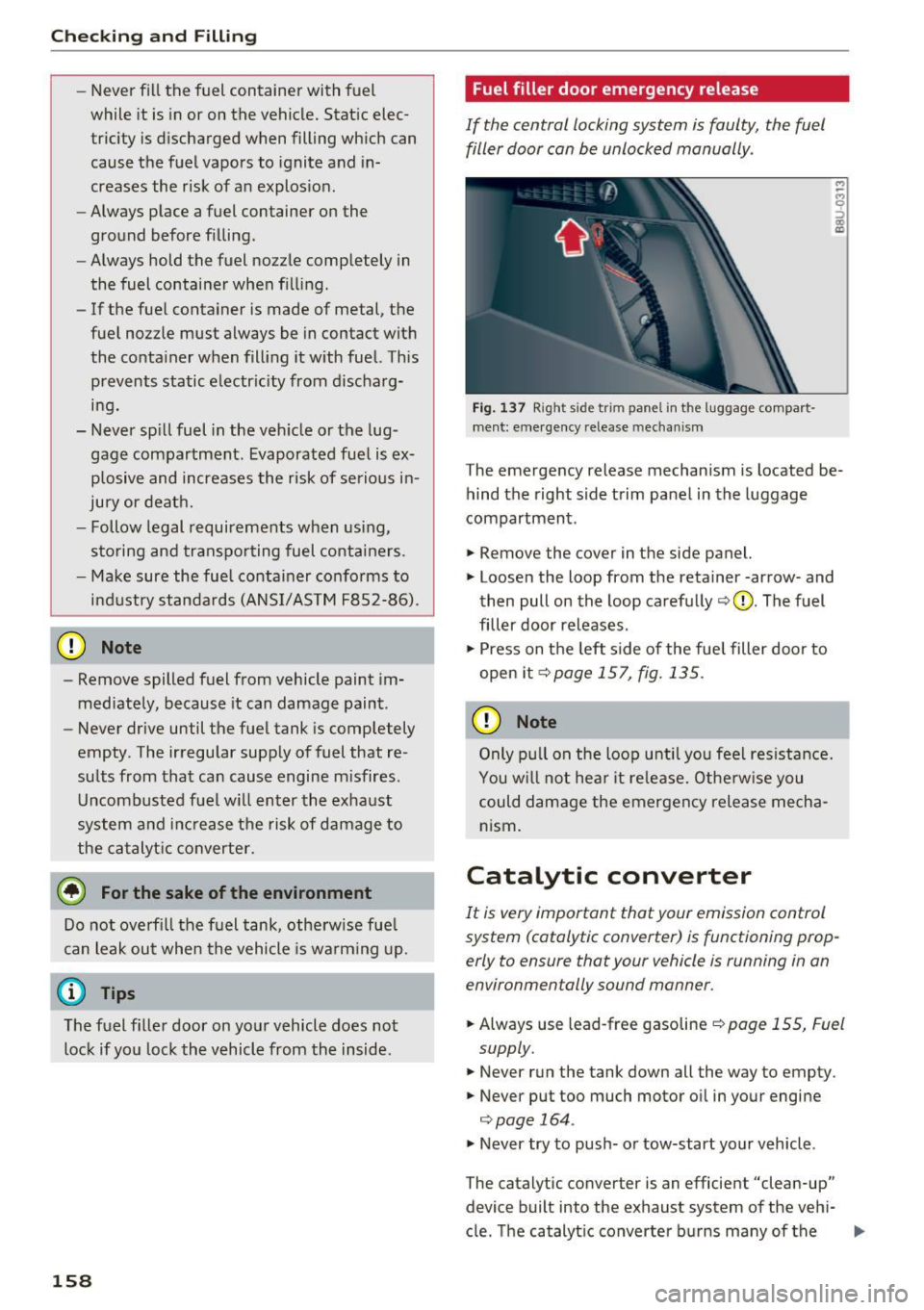
Fig. 13 7 Right side trim panel in t he lugg age compar t
m ent: eme rge ncy rele ase mecha nis m
T he emergency release mechan ism is located be
hind the right s ide trim panel in the luggage
compartment.
.,. Remove the cover in t he side panel.
.,. Loosen the loop from the retainer -arrow- and
then pull on the loop carefu lly ¢ @ . The f uel
fill er door releases.
.,. Press on t he left s ide of the fue l filler doo r to
open i t¢
page 15 7, fig. 135.
(D Note
Only p ull on t he loo p until yo u feel res ista nce.
You w ill not hea r it re lease. Othe rw ise you
c o uld d amage the emergen cy rele ase mech a
nism .
Catalytic converter
It is very important that your emission control
system (catalytic converter) is functioning prop
erly to ensure that your vehicle is running in an
environmentally sound manner .
.,. Always use lead -free gasoline ¢ page 155, Fuel
supply.
.,. Never r un the tank down all the way to empty .
.,. Never put too much motor oi l in your engine
¢ page 164 .
.,. Never try to push- or tow-start your vehicle .
The catalytic conve rter is an efficient "clean-up"
device built into the exhaust system of the veh i-
cle. The catalyt ic converter burns many of the
lilJ,
Page 209 of 236
00
00
......
"' ,....
"' ...... 0 0 :::,
00
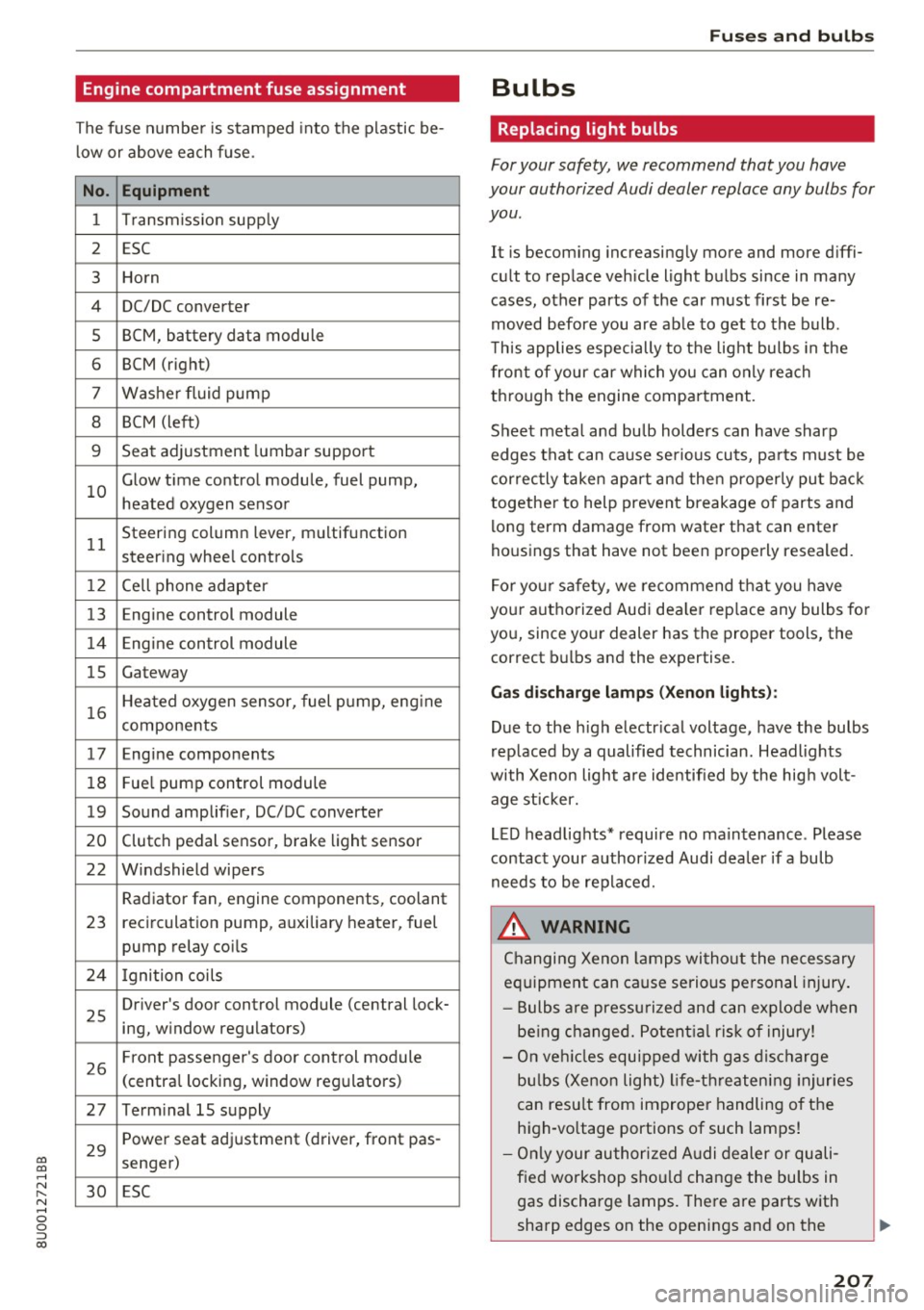
Engine compartment fuse assignment
The fuse number is stamped into the plastic be
low or above each fuse.
No. Equipment
1 Transmiss ion supply
2 ESC
3 Horn
4 DC/DC
converter
5 BCM, battery data module
6 BCM (right)
7 Washer fluid pump
8 BCM (left)
9 Seat adjustment lumbar support
10 Glow time
control module, fuel pump,
heated oxygen sensor
11 Steering
column lever, multifunction
steer ing whee l controls
1 2 Cell phone adapter
13 En
gine control module
14 Engine control module
15 Gateway
16 Heated oxygen sensor, fuel pump, eng
ine
components
17 Engine components
18 Fue
l pump control module
19 Sound amplifier, DC/DC converter
20 Clutch pedal sensor, brake light sensor
22 Windshield wipers Radiator fan, engine components, coolant
23 recirculation pump, auxiliary
heater, fuel
pump relay coils
24 Ignition coils
25 Driver's door
control module (central lock-
ing, window regulators)
26 Front passenger's door control module
(centra
l locking, window regulators)
27 Term inal 15 supply
29 Power seat adjustment (driver,
front pas-
senger)
30 ESC
Fu ses an d bulb s
Bulbs
Replacing light bulbs
For your safety, we recommend that you have
your authorized Audi dealer replace any bulbs for
you .
It is becoming increasingly more and more diffi
cult to replace vehicle light bulbs since in many
cases, other parts of the car must first be re
moved before you are able to get to the bulb .
T his applies especially to the light bulbs in the
front of your car which you can only reach
through the engine compartment .
Sheet metal and bu lb holders can have sharp
edges that can cause serious cuts, pa rts must be
correctly taken apart and then properly put back
together to help prevent breakage o f parts and
long term damage from water that can enter
housings that have not been properly resealed.
For your safety, we recommend that you have
your authorized Aud i dea ler rep lace any bulbs fo r
you, since your dealer has the proper tools, the
correct bulbs and the expertise.
Gas di schar ge la mps (Xe no n ligh ts):
Due to the high electr ical voltage, have the bulbs
rep laced by a qualified technician. Headlights
with Xenon light are identified by the hig h volt
age st icker.
LED headlights* require no maintenance . Please
contact your authorized Audi dea ler if a bulb
needs to be replaced.
_&. WARNING
Changing Xenon lamps wi thout the necessary
equipment can cause serious personal injury .
- Bulbs are pressu rized and can explode when
be ing changed. Potent ial ris k of injury!
- On veh icles equipped with gas disc harge
bu lbs (Xenon light) life-threatening injuries
can resu lt from improper handling of the
high-vo ltage portions of such lamps!
- Only your authorized A udi dealer or quali
f ied workshop sho uld change the bulbs in
gas discharge lamps. There are parts with
sharp edges on the openings and on the
207
Page 225 of 236
00
00
......
"' ,....
"' ...... 0 0 :::,
00
Belt tensioners . . . . . . . . . . . . . . . . . . . . . . . 115
Blended gasoline . . . . . . . . . . . . . . . . . . . . . 155
Blower
automatic Climate control system . . . . . . .
57
Manual climate control system . . . . . . . . . . 54
Booster seats . . . . . . . . . . . . . . . . . . . . . . . . 145
Brake fluid
Checking the brake fluid level . . . . . . . . . .
168
Brakes . . . . . . . . . . . . . . . . . . . . . . . . . . . . . . . 94
Brake booster . . . . . . . . . . . . . . . . . . . . . . . . 94
Brake fluid . . . . . . . . . . . . . . . . . . . . . . . . . 168
Electromechanical parking brake . . . . . . . . 64
Indicator light . . . . . . . . . . . . . . . . . . . . . . . 16
New brake pads . . . . . . . . . . . . . . . . . . . . . . 94
Braking
Brake assist . . . . . . . . . . . . . . . . . . . . . . . . .
92
Emergency braking function . . . . . . . . . . . . 65
Indicator light . . . . . . . . . . . . . . . . . . . . . . . 12
Worn brake pads . . . . . . . . . . . . . . . . . . . . . 15
Breaking in
New engine . . . . . . . . . . . . . . . . . . . . . . . . .
58
New tires . . . . . . . . . . . . . . . . . . . . . . . . . . 178
Bulbs . . . . . . . . . . . . . . . . . . . . . . . . . . . . . . . 207
C
California Proposition 65 Warning . . . . . . . 160
Battery specific . . . . . . . . . . . . . . . . . . . . . 168
Capacities
Fueltank . .. .. ............... .. .. .. .
216
Washer fluid reservoir ............... . 216
Caps for wheel bolts, removing . . . . . . . . . . 199
Ca re . . . . . . . . . . . . . . . . . . . . . . . . . . . . . . . . 191
Cargo area
refer to Loading the luggage compart-
ment. ... .. .. ................ ..... .
105
Cargo floor ......... ....... ...... ... .. 51
Catalytic converter . . . . . . . . . . . . . . . . . . . . 158
Center armrest . . . . . . . . . . . . . . . . . . . . . . . . 45
Central locking . . . . . . . . . . . . . . . . . . . . . . . . 23
Central locking switch . . . . . . . . . . . . . . . . . 27
Convenience key . . . . . . . . . . . . . . . . . . . . . . 26
Em ergency locking . . . . . . . . . . . . . . . . . . . . 28
Luggage compartment lid . . . . . . . . . . . . . . 28
Panorama roof . . . . . . . . . . . . . . . . . . . . . . . 32
Power windows . . . . . . . . . . . . . . . . . . . . . . 32
Index
Remote control key . . . . . . . . . . . . . . . . . . . 25
Setting . . . . . . . . . . . . . . . . . . . . . . . . . . . . . 27
Certification . . . . . . . . . . . . . . . . . . . . . . . . . 221
Changing engine oil . . . . . . . . . . . . . . . . . . . 165
Child restraints
Danger of using child restraints in the front
seat....... ... .. .. .................
118
Where can I get additional information
about child restraints and their use? . . . .
154
Child restraints system anchors......... . 150
Child safety . . . . . . . . . . . . . . . . . . . . . . . . . . 137
Important safety instructions for using child
safety seats . . . . . . . . . . . . . . . . . . . . . . . .
140
Important things to know when driving with
children . . . . . . . . . . . . . . . . . . . . . . . . . . .
137
Installing a child restraint using the LATCH
system . . . . . . . . . . . . . . . . . . . . . . . . . . . .
151
Mounting and releasing the anchorage
hook . . . . . . . . . . . . . . . . . . . . . . . . . . . . . .
151
Tether anchors . . . . . . . . . . . . . . . . . . . . . . 152
Tether straps .. .. .. ................. 152
Child safety lock
Power windows . . . . . . . . . . . . . . . . . . .
31, 32
Rear doors . . . . . . . . . . . . . . . . . . . . . . . . . . 31
Child safety seats
Booster seats . . . . . . . . . . . . . . . . . . . . . . .
145
Convertible child seats . . . . . . . . . . . . . . . 144
Convertible locking retractor . . . . . . . . . . 149
Danger of using child restraints in the front
seat ...... .... .. .. ............... ..
118
How do I properly install a child safety seat
. h. l 7 140 rn my ve 1c e ..... .. ... ........... .. .
Infant seats . . . . . . . . . . . . . . . . . . . . . . . .
143
LATCHsystem . .. .. ............... .. 151
Lower anchorages . . . . . . . . . . . . . . . . . . . 151
Safety instructions . . . . . . . . . . . . . . . . . . . 140
Unused safety be lts on the rear seat . . . . 142
Child seats . . . . . . . . . . . . . . . . . . . . . . . . . . 143
Securing . . . . . . . . . . . . . . . . . . . . . . . . . . . 147
Cleaning ... .... .. .. ............... .. 191
Cleaning/removing ice from windows . . . . . 193
Cleaning Alcantara . . . . . . . . . . . . . . . . . . . . 194
Cleaning artificial leather . . . . . . . . . . . . . . . 194
Cleaning carbon parts . . . . . . . . . . . . . 193, 194
Cleaning controls . . . . . . . . . . . . . . . . . . . . . 193
Cleaning decorative parts and trim . . . 192, 193
Cleaning exhaust tail pipes . . . . . . . . . . . . . 192
223
Page 226 of 236
Index
Cleaning plastic parts . . . . . . . . . . . . . . . . . . 193
Cleaning rims . . . . . . . . . . . . . . . . . . . . . . . . 192
Cleaning textiles . . . . . . . . . . . . . . . . . . . . . . 194
Climate control system Driv e select . . . . . . . . . . . . . . . . . . . . . . . . . . 83
Climate control system (automatic) Adjusting the temperature . . . . . . . . . . . . . 57
Air distribution .... ........... .... .... 57
Air vents . . . . . . . . . . . . . . . . . . . . . . . . . . . . 57
AUTO (automatic mode) . . . . . . . . . . . . . . . 57
Blower . . . . . . . . . . . . . . . . . . . . . . . . . . . . . 57
Changing the temperature unit . . . . . . . . . 57
Defrosting the windshield . . . . . . . . . . . . . . 57
Description . . . . . . . . . . . . . . . . . . . . . . . . . . 53
Operation . . . . . . . . . . . . . . . . . . . . . . . . . . . 56
Rear window defogger . . . . . . . . . . . . . . 55, 57
Recirculation mode . . . . . . . . . . . . . . . . . . . 56
Synchronizing . . . . . . . . . . . . . . . . . . . . . . . . 57
Climate control system (manual)
Adjusting the temperature . . . . . . . . . . . . . 55
Air distribution, air vents . . . . . . . . . . . . . . . 55
Blower . . . . . . . . . . . . . . . . . . . . . . . . . . . . . 54
Defrosting the windows . . . . . . . . . . . . . . . 55
Description . . . . . . . . . . . . . . . . . . . . . . . . . . 53
Operation . . . . . . . . . . . . . . . . . . . . . . . . . . . 54
Rear window defogger . . . . . . . . . . . . . . . . . 55
Recircula tion mode . . . . . . . . . . . . . . . . . . . 54
Closing Hood . . . . . . . . . . . . . . . . . . . . . . . . . . . . . . 161
Panorama glass roof . . . . . . . . . . . . . . . . . . 33
Windows . . . . . . . . . . . . . . . . . . . . . . . . . . . 32
Closing/opening By remote control . . . . . . . . . . . . . . . . . . . . 25
W ith the central locking switch . . . . . . . . . 27
W ith the convenience key . . . . . . . . . . . . . . 26
With the door lock . . . . . . . . . . . . . . . . . . . . 28
Cockpit (overview) . . . . . . . . . . . . . . . . . . . . . . 6
Color number . . . . . . . . . . . . . . . . . . . . . . . . 215
Com ing home . . . . . . . . . . . . . . . . . . . . . . . . . 36
Compartments . . . . . . . . . . . . . . . . . . . . . 47, 48
Compass in the mirror . . . . . . . . . . . . . . . . . . 42
Compl iance . . . . . . . . . . . . . . . . . . . . . . . . . . 221
Consumer information . . . . . . . . . . . . . . . . . 218
Consumer Information . . . . . . . . . . . . . . . . . 107
Consumption (fuel) ................ 20, 215
Contacting NH TSA . . . . . . . . . . . . . . . . . . . . 107
224
Convenience key
Indicator lights . . . . . . . . . . . . . . . . . . . . . . 63
Start ing the engine . . . . . . . . . . . . . . . . . . . 62
Stopping the engine . . . . . . . . . . . . . . . . . . 62
Switching the ignition on . . . . . . . . . . . . . . 62
Unlocking /locking . . . . . . . . . . . . . . . . . . . . 26
Convenience opening/closing
Convertible child safety seats
Convertible locking retractor ............ 32
144
Activating . . . . . . . . . . . . . . . . . . . . . . . . . . 149
Deactivating . . . . . . . . . . . . . . . . . . . . . . . . 149
Using to secure a child safety seat . . . . . . 149
Cooling mode (automatic climate control sys-
tem) . . . . . . . . . . . . . . . . . . . . . . . . . . . . . . . . 56
Cooling mode (manual climate control sys-
tem) . . . . . . . . . . . . . . . . . . . . . . . . . . . . . . . . 54
Cooling system Adding coolant . . . . . . . . . . . . . . . . . . . . . . 166
Coolant . . . . . . . . . . . . . . . . . . . . . . . . . . . . 166
Coolant level checking . . . . . . . . . . . . . . . . 166
Coolant temperature . . . . . . . . . . . . . . . . . . . 8
Indicator light . . . . . . . . . . . . . . . . . . . . . . . 13
Crossing water . . . . . . . . . . . . . . . . . . . . . 58 , 67
Cruise control system
Chang ing speed . . . . . . . . . . . . . . . . . . . . . . 79
Overriding the cruise control system . . . . . 79
Preselecting speed . . . . . . . . . . . . . . . . . . . . 79
Switching off . . . . . . . . . . . . . . . . . . . . . . . . 79
switching on . . . . . . . . . . . . . . . . . . . . . . . . . 78
Cup holders . . . . . . . . . . . . . . . . . . . . . . . . . . . 47
Current consumption 20
D
Data recorder . . . . . . . . . . . . . . . . . . . . . . . . . 98
Date .......... .................... .... 9
Daytime running lights . . . . . . . . . . . . . . . . . 35
Declaration of compliance Audi s ide ass ist . . . . . . . . . . . . . . . . . . . . . 221
Cell phone package . . . . . . . . . . . . . . . . . . 221
Conv enience key . . . . . . . . . . . . . . . . . . . . . 221
Cruise control . . . . . . . . . . . . . . . . . . . . . . . 221
E le ctronic immobilizer................ 221
Remote control key . . . . . . . . . . . . . . . . . . 221
Defect ive light bulb
Indicator light . . . . . . . . . . . . . . . . . . . . . . . 16
Page 227 of 236
00
00
......
"' ,....
"' ...... 0 0 :::,
00
Defrosting (windows)
Manual climate control system . . . . . . . . . . 55
Defrosting (windshield)
Automatic climate control system . . . . . . . 57
DEF (instrument cluster) . . . . . . . . . . . . . . . . 10
Det ermin ing correct load limit . . . . . . . . . . 185
Digital compass . . . . . . . . . . . . . . . . . . . . . . . 42
Dimensions . . . . . . . . . . . . . . . . . . . . . . . . . . 216
Dimming the rearview mirror . . . . . . . . . . . . 38
Display Cleaning . . . . . . . . . . . . . . . . . . . . . . . . . . . 193
Distance . . . . . . . . . . . . . . . . . . . . . . . . . . . . . 20
Doors Child safety lock............... ..... .. 31
Emergency locking . . . . . . . . . . . . . . . . . . . . 28
Driver information system
Driver messages . . . . . . . . . . . . . . . . . . . . . . 20
Efficiency program............ .. .... .. 21
Indicator lights . . . . . . . . . . . . . . . . . . . . . . 10
On-board computer . . . . . . . . . . . . . . . . . . . 20
Operating using the multifunction steering
wheel . . . . . . . . . . . . . . . . . . . . . . . . . . . . . . 20
Operating using windshie ld wiper lever . . . 19
Overview . . . . . . . . . . . . . . . . . . . . . . . . . . . . 19
Service interval display . . . . . . . . . . . . . . . 170
D river seat
refer to Seating position
101
Drive select
Indicator light . . . . . . . . . . . . . . . . . . . . . . . 17
also refer to Audi drive select . . . . . . . . . . . 83
Driving economically . . . . . . . . . . . . . . . . . . . 58
Driving offroad . . . . . . . . . . . . . . . . . . . . . . . . 66
Driving safely . . . . . . . . . . . . . . . . . . . . . . . . 100
Driving through water . . . . . . . . . . . . . . . 58, 67
Dr iving time . . . . . . . . . . . . . . . . . . . . . . . . . . 20
Dust filter
refer to Pollutant filter . . . . . . . . . . . . . . . . 53
E
EDL
refer to Electronic Differentia l Lock . . . . . . 92
Eff iciency program
Fuel economy messages . . . . . . . . . . . . . . . 22
Other equipment . . . . . . . . . . . . . . . . . . . . . 21
Overview . . . . . . . . . . . . . . . . . . . . . . . . . . . . 21
Elect rome chanica l park ing brake . . . . . . . . . 64
Index
El ectromechanical steering . . . . . . . . . . . . . . 96
I ndica tor light . . . . . . . . . . . . . . . . . . . . . . . 96
El ectron ic differentia l lock
Indicator light . . . . . . . . . . . . . . . . . . . . . . . 14
Electron ic Differential Lock . . . . . . . . . . . . . . 92
Electronic immobilizer . . . . . . . . . . . . . . . . . . 24
Electronic stabilization control
Indicator light . . . . . . . . . . . . . . . . . . . . . . . 14
Electronic Stabilization Control . . . . . . . . . . . 92
Hill descent assist . . . . . . . . . . . . . . . . . . . . 94
Offroad mode . . . . . . . . . . . . . . . . . . . . . . . . 93
Emergency assistance . . . . . . . . . . . . . . . . . 197
Emergency braking function . . . . . . . . . . . . . 65
Emergency flashers . . . . . . . . . . . . . . . . . . . . 36
Indicator light . . . . . . . . . . . . . . . . . . . . . . . 17
Emergency locking front passenger's door . . 28
Emergency operation
Front passenger's door . . . . . . . . . . . . . . . . 28
Fuel filler door . . . . . . . . . . . . . . . . . . . . . . 158
Luggag e compartment lid . . . . . . . . . . . . . . 31
Panorama roof . . . . . . . . . . . . . . . . . . . . . . . 34
Sun shade (roof) . . . . . . . . . . . . . . . . . . . . . 34
Emergency release Selector lever . . . . . . . . . . . . . . . . . . . . . . . . 72
Emergency starting . . . . . . . . . . . . . . . . . . . 209
Emissions data . . . . . . . . . . . . . . . . . . . . . . . 215
Energy management . . . . . . . . . . . . . . . . . . . 97
Indicator light . . . . . . . . . . . . . . . . . . . . . . . 13
Engine Coolant . . . . . . . . . . . . . . . . . . . . . . . . . . . . 166
Engine data . . . . . . . . . . . . . . . . . . . . . . . . 217
Start ing with jumper cables ........... 209
Start ing (convenience key) . . . . . . . . . . . . . 62
Starting (ignition lock) . . . . . . . . . . . . . . . . 60
Stopping (convenience key) . . . . . . . . . . . . . 62
Stopping (ignition lock) . . . . . . . . . . . . . . . . 61
Engine compartment Open ing/closing the hood . . . . . . . . . . . . . 161
Ove rview . . . . . . . . . . . . . . . . . . . . . . . . . . . 162
Safety precautions . . . . . . . . . . . . . . . . . . . 159
Engine control (indicator light) . . . . . . . . . . . 15
Engine coolant Radiator fan . . . . . . . . . . . . . . . . . . . . . . . . 167
Eng ine oil . . . . . . . . . . . . . . . . . . . . . . . . . . . 162
Adding . . . . . . . . . . . . . . . . . . . . . . . . . . . . 164
Changing . . . . . . . . . . . . . . . . . . . . . . . . . . 165
Checking the engine oil level . . . . . . . . . . . 164
225