key AUDI Q5 2014 Owner's Manual
[x] Cancel search | Manufacturer: AUDI, Model Year: 2014, Model line: Q5, Model: AUDI Q5 2014Pages: 316, PDF Size: 78.41 MB
Page 55 of 316
Notes o n these featur es
-The turn signals only work with the ignition
turned on. The indicator lights
II or Ill in
the instrument cluster
¢page 14 also b link.
- After you have turned a corner, the turn sig-
nal switches off automatica lly.
- The
high beam works only when the head
lights are on. The indicator light
II in th e
instrument cluster illuminates when the
high beams are on.
- The
headlight flasher wo rks only as long as
you hold the lever -even if there are no
lights turned on. The indicator light
II in
the instrument cluster illuminates when you
use the headlight flasher.
A WARNING
Do not use the high beam or headlight
flasher if you know that thes e cou ld blind
oncoming traffic.
Interior lights
Front interior lights
-
The front interior lights also contain reading
lights for the driver and passenger .
r ,,,,, , 11111
~8 ,~
G) Gl
,o . . o
I
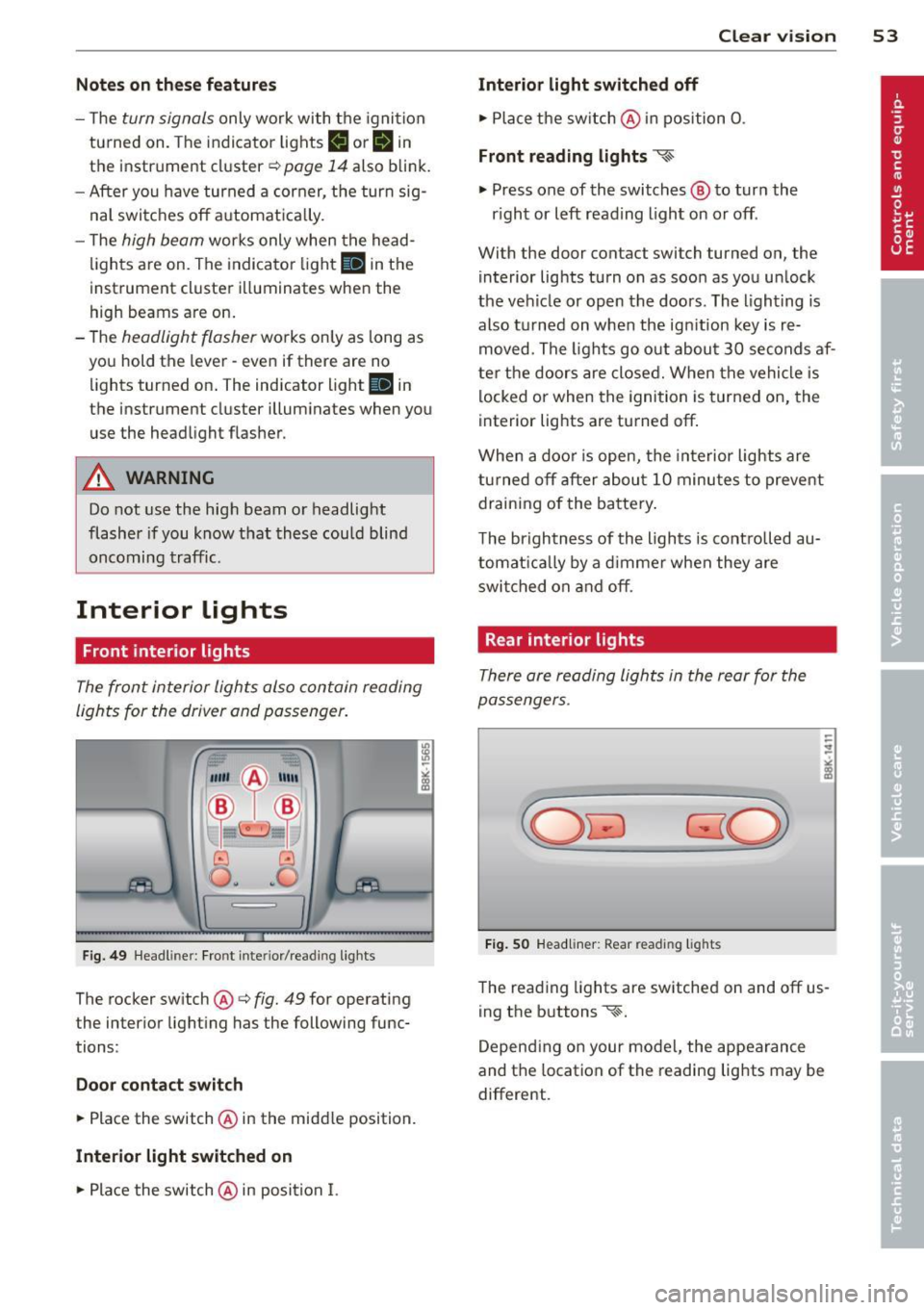
Fig. 49 Headliner: Fro nt inte rior/rea ding lights
The rocker switch @¢ fig. 49 for operating
the interior lighting has the following func
tions :
Door cont act swi tch
.,. Place the switch @ in the midd le position.
Interior light switched on
.,. Pla ce the switch @ in position I.
Clear vision 5 3
Interior light swit ch ed off
.,. Place the switch @ in position 0 .
Front read ing lights ~
.,. Press one of the switches@ to turn the
r ight or left reading light on or off .
With the door contact switch turned on, the
interior lights turn on as soon as you unlock
the vehicle or open the doors. The lighting is
also turned on when the ignition key is re
moved. The lights go out about 30 seconds af
ter the doors are closed. When the vehicle is locked or when the ignition is turned on, the
interior lights are turned off.
When a doo r is open, the interior lights are
tu rned off after about 10 minutes to prevent
draining of the battery .
The brightness of the lights is controlled au
tomat ica lly by a d immer when they are
swi tched on and off.
Rear interior lights
There are reading lights in the rear for the
passengers .
Fig . 50 Headliner: Rear read ing lig hts
The read ing l ights are switched on and off us
ing the buttons ~-
Depending on your model, the appearance
and the location of the reading lights may be
different .
Page 59 of 316
.. Fold the windshield wiper arm back onto the
windshield.
A WARNING
For safety reasons, the windshield wiper
blades should be replaced once or twice
each year.
Mirrors
Adjusting the exterior mirrors
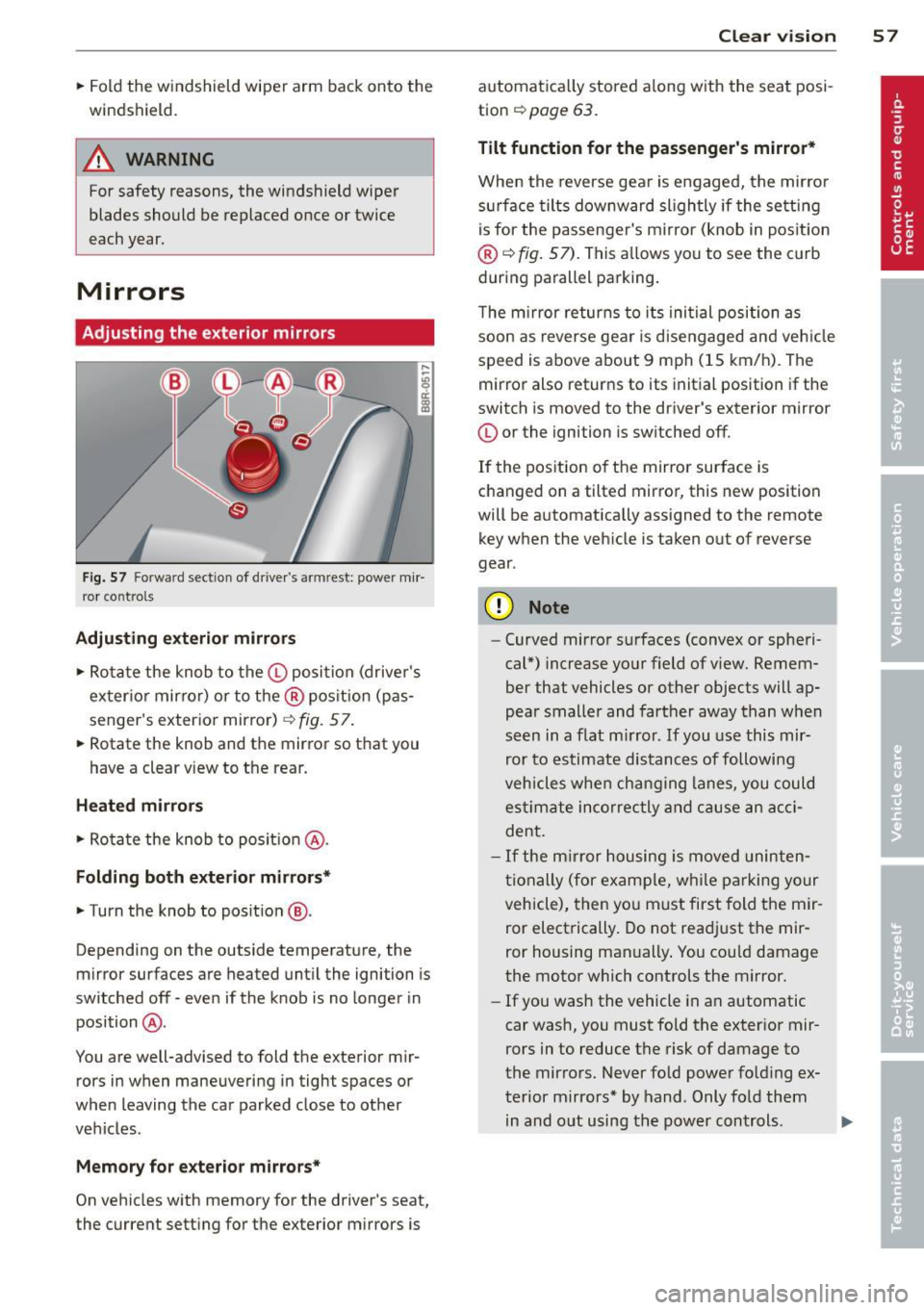
F ig. S7 Fo rwa rd sec tion of drive r's ar m rest : power mir
r or co ntro ls
Adjusting ext erior mirrors
.,. Rota te the knob to the© posi tion (drive r's
exter io r mirro r) or to the ® pos it ion (pas
senger's exter io r mirro r)
c::> fig. 57 .
.. Rotate the knob and the mirror so t hat you
have a clear view to t he rear.
Heated mirrors
.. Ro ta te the knob to pos it io n @ .
Folding both exterior mirrors*
.. Turn the knob to position @.
-
Depending on the outside temperature, the
mirror surfaces are heated unt il the ignition is
switched off -even if the knob is no longer in
position @.
You are well-advised to fold the exterior m ir
rors in when maneuveri ng in tight spaces or
when leaving the car parked close to other
vehicles .
Memory for exterior mirror s*
On vehicles with memory for the driver's seat,
the current sett ing fo r the exterior m irrors is Clear vi
sion 5 7
automatica lly stored a long with the sea t posi
tion
c::> page 63.
Tilt function for the passenger 's mirror*
When the reverse gea r is engaged, the mir ro r
s ur face tilts downward sl igh tly if the sett ing
i s for the passenge r's m irror (knob in pos it ion
®
c::> fig . 57). This a llows you to see the c urb
dur ing parallel pa rking.
T he m irror returns to its ini tial position as
soon as reverse gea r is disengaged and veh icle
s p eed is above about 9 mph (15 km/h) . The
mirror also returns to its init ial position if the
switch is moved to the dr iver's exterior m irror
© or the ignition is sw itched off.
If the position of the mirror surface is
c hanged on a tilted mirror, this new position
will be a utomatically ass igned to the remote
key w hen the veh icle is taken out of reverse
gear.
(D Note
- Curved mirror s urfaces (conve x or spheri
cal*) increase yo ur field of v iew. Remem
ber that vehicles or other objects will ap
pear smaller and farther away than when
seen in a flat m irror. If you use this mir
ror to estimate dis tances of following
vehicles whe n cha nging lanes, y ou coul d
es tim ate incorrec tly and c ause an ac ci
dent .
- I f the m irro r h ousing is moved uninten
ti onally (for e xam ple, w hile p arking yo ur
vehicle), then yo u must first fold the mir
ror elect rically . Do not read just the mir
ror housing man ually . You cou ld damage
the motor which controls the mirror.
- If you wash the vehicle in an automatic
car was h, you must fold the exterior mir
rors in to reduce the risk of damage to
the mirrors . Never fold power fo lding ex
terior mirrors* by hand . Only fo ld them
in and o ut using th e power controls .
liJl,
Page 64 of 316
62 Seats and storage
Front passenger's seat
Always move the front passenger seat into
the rea rmos t position .
To avoid contact with the airbag while it is de
ploying, do not sit any closer to the instru
ment panel than necessary and always wear
the three-point safety belt provided adjusted
correctly . We recommend that you adjust the
passenger's seat in the following manner:
• Move the front passenger seat into the rear
most position of the fore and aft adjustment
range
q _& in Why is your seat adjustment
so important? on page 61.
• Bring the backrest up to an (almost) upright
position.
Do not ride with the seat reclined.
• Adjust the head restraint so the upper edge
is as even as possible with the top of your
head . If that is not possible, try to adjust
the head restraint so that it is as close to
this position as possible
c:> page 65.
• Place your feet on the floor in front of the
passenger's seat .
Front seats
Power seat adjustment
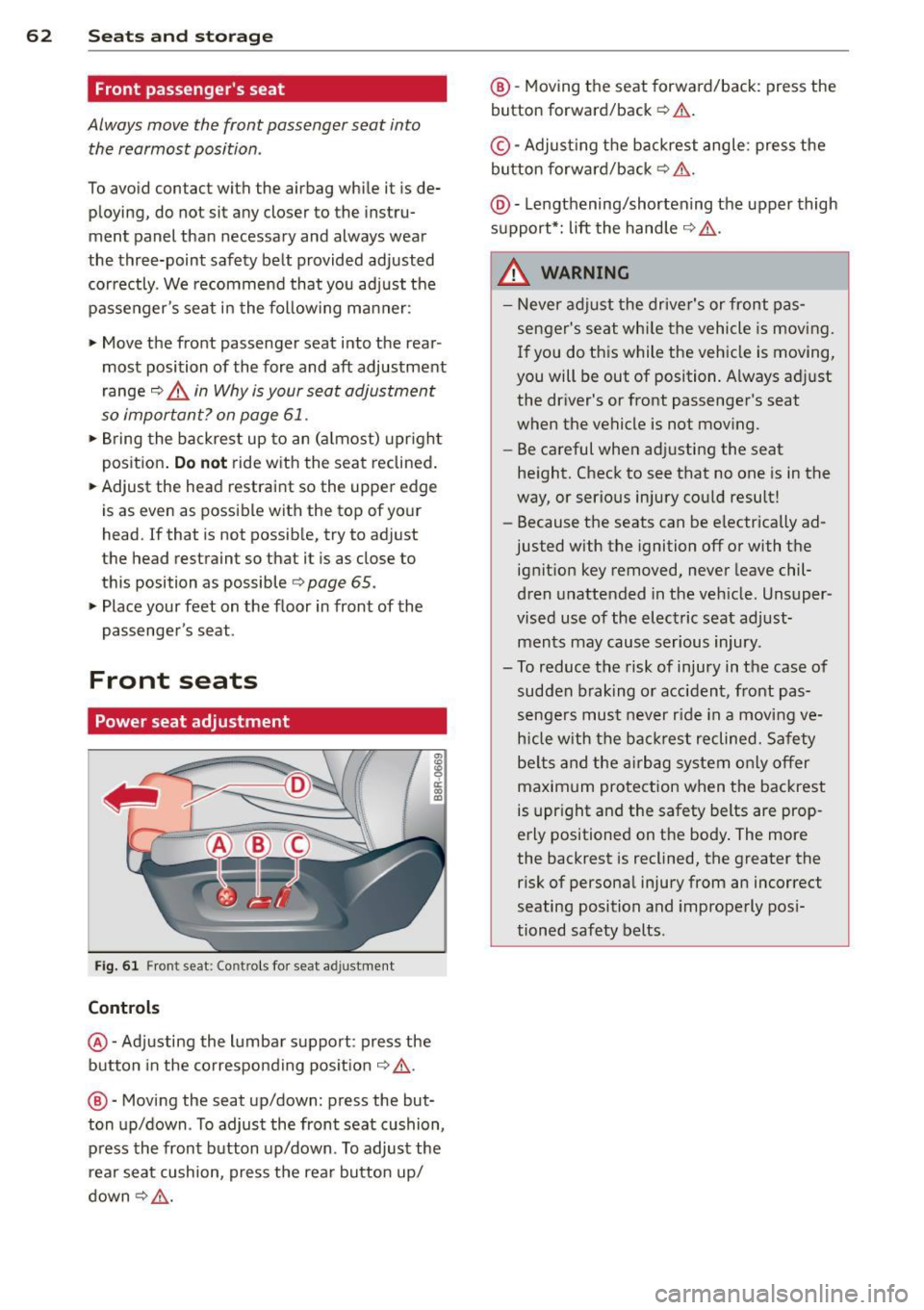
Fig. 61 Front seat: Controls for seat adjus tment
Controls
@· Adjusting the lumbar support: press the
button in the correspo nding position
q &.
@ · Moving the seat up/down: press the but
ton up/down . To adjust the front seat cushion,
press the front button up/down. To adjust the
rear seat cushion, press the rear button up/
down ~& .
@-Moving the seat forward/back : press the
button forward/back
q & .
©-Adjusting the backrest angle : press the
button forward/back
q & .
@ -Lengthening /shortening the upper thigh
support*: lift the handle
q &.
_&. WARNING
-
-Never adjust the driver's or front pas
senger's seat whi le the vehicle is moving.
If you do this while the vehicle is moving,
you will be out of position. Always adjust
the driver's or front passenger 's seat
when the vehicle is not moving.
- Be careful when adjusting the seat
height. Check to see that no one is in the
way, or serious injury could result!
- Because the seats can be electrically ad
justed with the ignition off or with the
ignition key removed, never leave chil
dren unattended in the vehicle. Unsuper
vised use of the electric seat adjust ments may cause serious injury.
- To reduce the risk of injury in the case of
sudden braking or accident, front pas
sengers must never ride in a moving ve
hicle with the backrest reclined. Safety
be lts and the airbag system only offer
maximum protection when the backrest
is upright and the safety belts are prop
erly positioned on the body . The more
the backrest is reclined, the greater the
risk of personal injury from an incorrect
seating position and improperly posi
tioned safety belts .
Page 65 of 316
Seat memory
Memory for driver's seat
Applies to vehicles: with seat memory
The seat adjustment settings for two drivers
can be stored using the memory buttons in
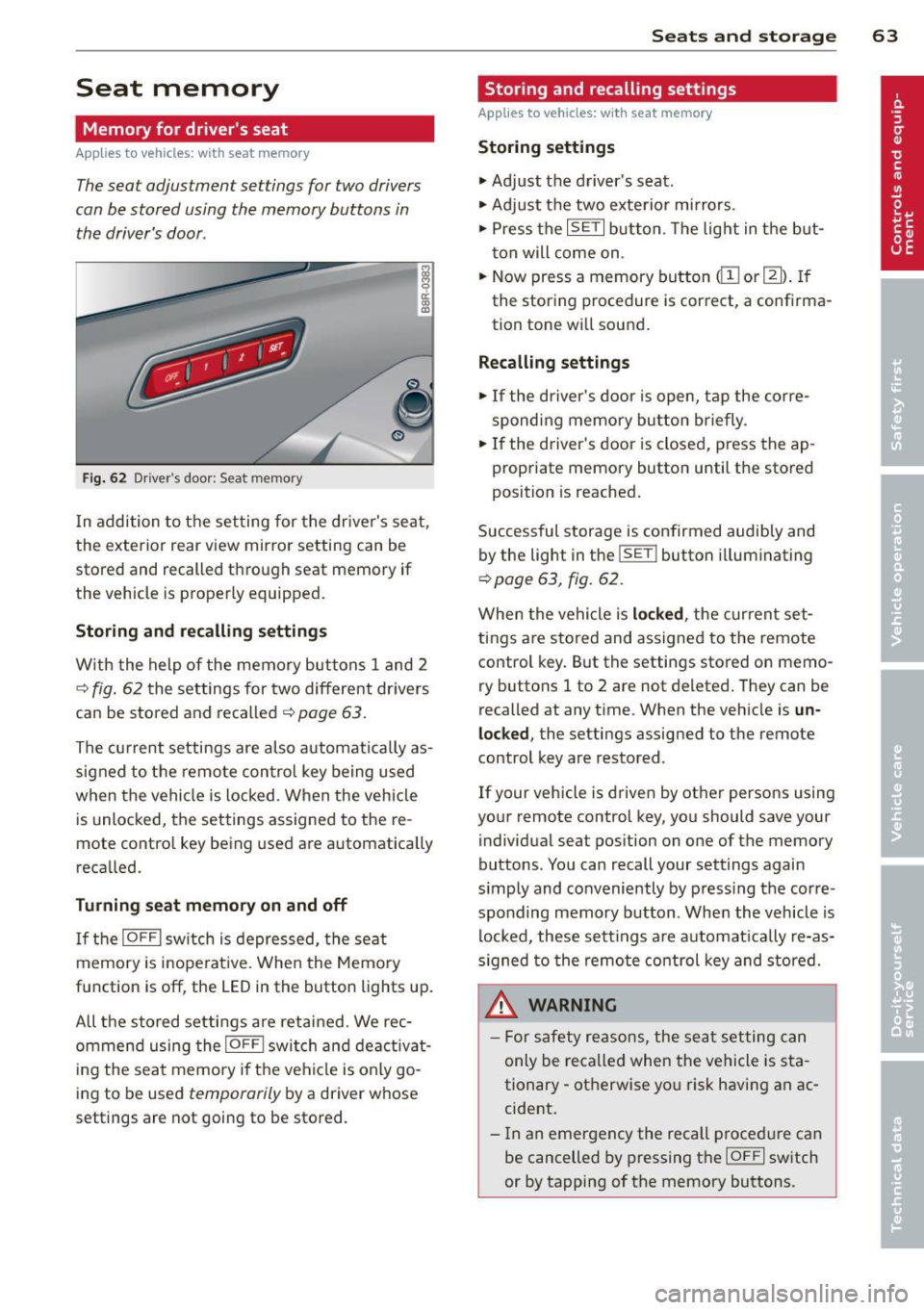
the driver's door.
Fig. 62 Driver's door: Seat memory
In addition to the setting for the driver's seat,
the exterior rear view mirror setting can be
stored and recalled through seat memory if
the vehicle is properly equipped.
Storing and recalling settings
With the help of the memory buttons 1 and 2
c::> fig. 62 the settings for two different dr ivers
can be stored and recalled
c::> page 63.
The current settings are also automatically as
signed to the remote control key being used
when the vehicle is locked . When the vehicle
is unlocked, the settings assigned to the re
mote contro l key being used are automatically
recalled.
Turning seat memory on and off
If the IOFFI switch is depressed, the seat
memory is inope rative. When the Memory
function is off , the LED in the button lights up.
A ll the stored settings are retained. We rec
ommend using the
I OFFI switch and deactivat
ing the seat memory if the vehicle is only go
ing to be used
temporarily by a driver whose
settings are not going to be stored.
Seats and storage 63
Storing and recalling settings
Applies to vehicles: wit h seat memory
Storing settings
.,. Adjust the driver's seat.
.,. Adjust the two exterior mirrors.
.,. Press the
ISET I button. The light in the but
ton will come on .
.,. Now press a memory button
<[II or m). If
the storing procedure is correct, a confirma
tion tone will sound.
Recalling settings
.,. If the driver's door is open, tap the corre
sponding memory button briefly .
.,. If the driver's door is closed, press the ap
propriate memory button until the stored
position is reached.
Successful storage is confirmed audibly and
by the light in the
ISETI button i lluminating
c::> page 63, fig. 62 .
When the vehicle is locked , the current set
tings are stored and assigned to the remote
control key. But the settings stored on
memo
ry buttons 1 to 2 are not deleted. They can be
recalled at any time. When the vehicle is
un
locked ,
the settings assigned to the remote
control key are restored.
If your vehicle is driven by other persons using
your remote control key, you should save your
individual seat position on one of the memory
buttons. You can recall your settings again
s imply and conveniently by press ing the corre
sponding memory button . When the vehicle is
locked, these settings are automatically re-as
signed to the remote control key and stored.
A WARNING
- For safety reasons, the seat setting can
only be recalled when the vehicle is sta
tionary -otherwise yo u risk having an ac
cident.
- In an emergency the recall p rocedure can
be cancelled by pressing the
IOFFI switch
or by tapping of the memory buttons.
Page 66 of 316
64 Seats and storage
Activating remote control key memory
Applies to vehicles: with seat memory
To assign the drive r's sea t settings to the re
mote contro l key when locking the vehicle, the
function must be activated in the radio or
MMI* .
• Se lect : I C AR I func tion button > Seat adjust
m ent > Driver's seat > Ke y mem . profile
>
O n. Or
· • Se lect :
~ I C- A - R-! funct ion button > Car system s*
control button > Vehicle setting s > Seat s >
Driver' s seat > Remote control key > On .
@ Tips
If you do not want another driver's set
tings to be assigned to the remote control
key, switch off the memory f unction using
the radio o r
MM!* or the IO FF I button
¢page 63.
Rear seats
General information
Safe transportation of pa ssengers on the rear
seats requires proper safe ty precautions.
All passenge rs on the rear seats must be seat
ed i n complia nce w ith the safety guidelines
explained in
i=:;, page 149 and¢ page 157.
The corre ct seating posi tion is critical fo r th e
safety o f fron t
and rear seat passengers alike
¢page 142.
~ WARNING
- Occ upants in the front and rear seats
must a lways be properly restrained.
- Do not let anyone ride i n the vehicle
without the head restraints provided.
Head restra ints help to reduce injuries.
-
- Loose items inside the passenger com
partment, can f ly forward in a crash or
sudden maneuver and i njure occupants.
Always store art icles in the luggage com
partment and use the fasten ing eyes, es
pecially when the rear seatbacks have
bee n folded down. -
Read and heed all WARNINGS
¢ page 142 , Proper seating positions
for passengers in rear seats.
Adjusting seat
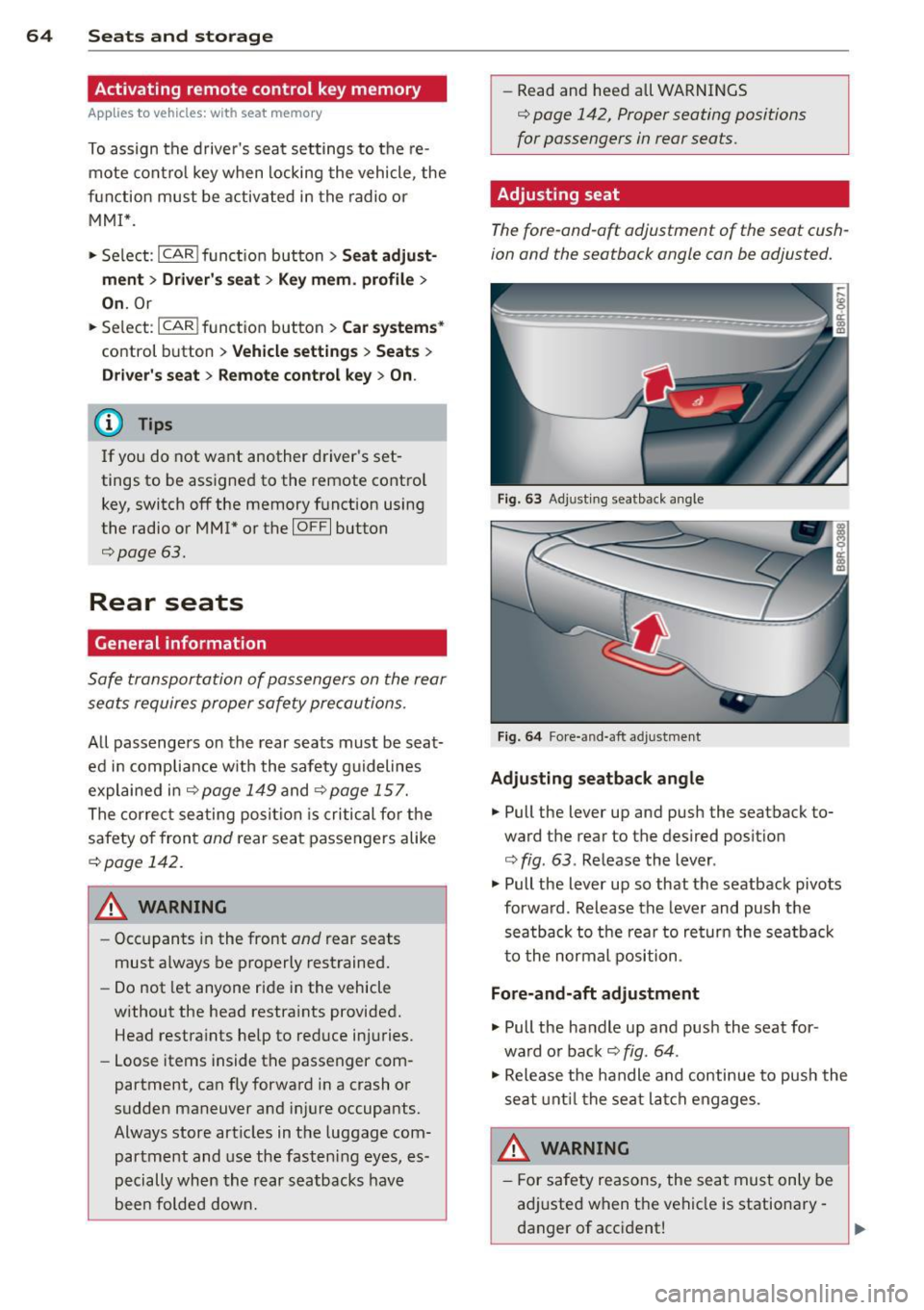
The fore-and-a~ adjustment of the seat cush
ion and the seatback angle can be adjusted.
F ig . 63 Adjus ting seatback a ngle
Fig. 6 4 Fore-and-aft adjust ment
Adjusting seatback angle
• Pull the lever up and pus h the seatback to
ward the rear to the desired posit io n
¢
fig . 63 . Release the lever .
• Pull the lever up so that the seatback pivots
forwa rd . Rel ease the lever and push the
seatb ack to the rear to re turn the sea tba ck
t o the normal position .
Fore-and-aft adjustment
• Pull the handle up and pus h the seat for
wa rd o r back ¢
fig. 64 .
• Release the handle and continue to push the
seat unt il t he seat lat ch engages .
_&. WARNING
- For safety reasons, the sea t must on ly be
a dj usted when t he vehicle is stationary
danger of acc ident!
Page 67 of 316
-Exercise caution when adjusting the seat.
Adjusting the seat without checking or
paying attention can pinch fingers or
limbs - danger of injury!
Head restraints
Front head restraints
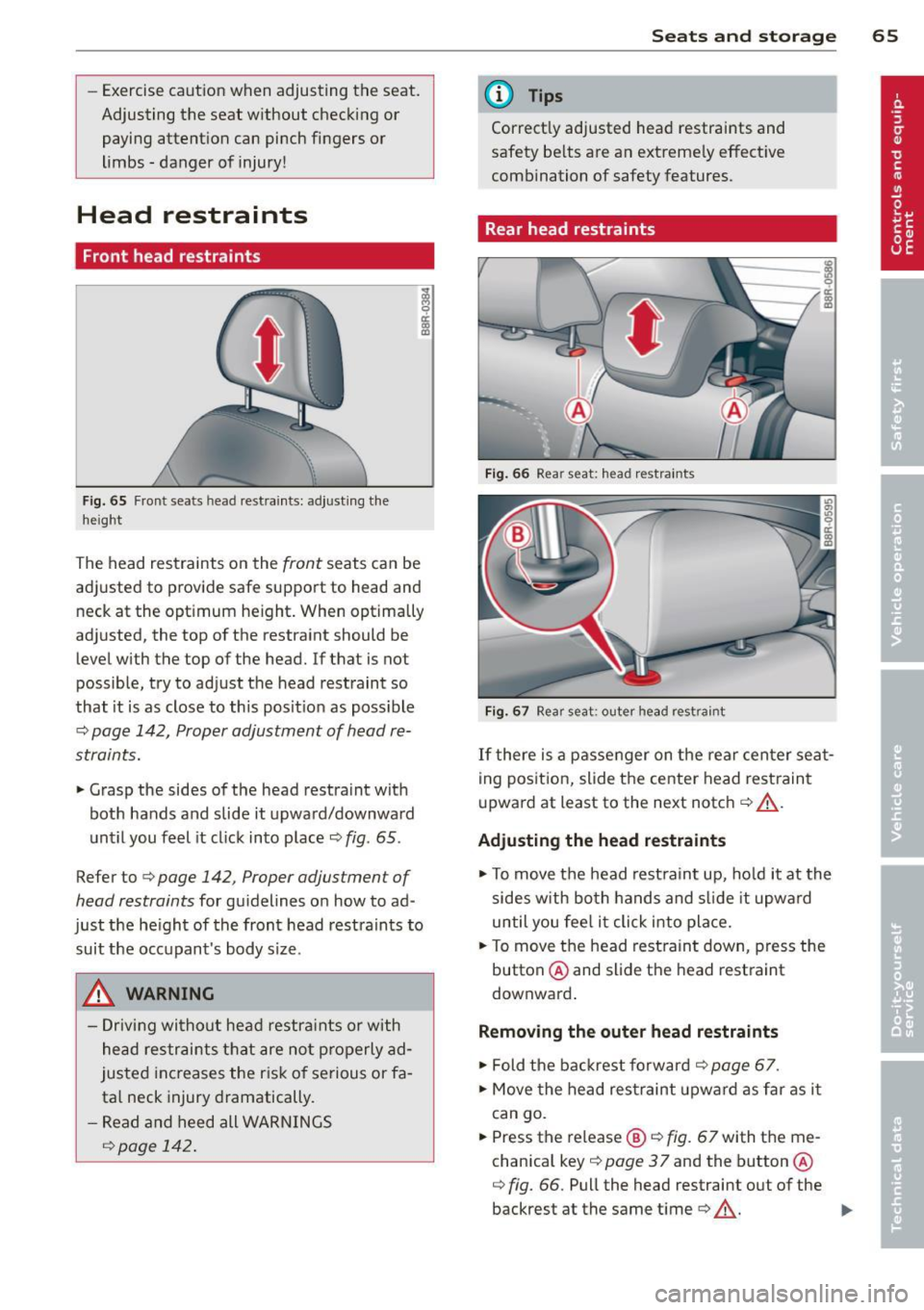
Fig. 65 Front seats head restra ints: adjusting the
height
The head restraints on the front seats can be
adjusted to provide safe support to head and
neck at the optimum he ight. When optimally
adjusted, the top of the restraint should be
level with the top of the head. If that is not
possible, try to adjust the head restraint so
that it is as close to this posit ion as poss ible
ca:> page 142, Proper adjustment of head re
straints.
.,. Grasp the sides of the head restraint with
both hands and slide it upward/downward
until you feel it click into place
c::> fig. 65 .
Refer to ¢
page 142, Proper adjustment of
head restraints
for guidelines on how to ad
just the height of the front head restraints to
suit the occupant's body s ize.
.&, WARNING
-Driving without head restra ints or with
head restraints that are not properly ad
justed increases the risk of serious or fa
tal neck injury dramatically.
- Read and heed all WARNINGS
ca:> page 142.
-
Seats and storage 65
@ Tips
Correctly adjusted head restraints and
safety be lts are an extreme ly effective
combination of safety features.
Rear head restraints
Fig. 66 Rear seat: head restra ints
Fig. 67 Rear seat: outer head restraint
If there is a passenger on the rear center seat
ing position, slide the center head restraint
upward at least to the next notc h
c::> &_.
Adjusting the head restraints
.,. To move the head restraint up, hold it at the
sides with both hands and slide it upward
until you feel it click into place.
... To move the head restraint down, press the
button @and slide the head restraint
downward .
Removing the outer head restraints
.,. Fold the backrest forward c::> page 67.
.,. Move the head restraint upwa rd as far as it
can go.
... Press the release@
c::> fig. 67 with the me
chanical key
c::> page 37 and the button @
c::> fig. 66. Pull the head restraint out of the
backrest at the same time¢,&.
IJJl-
Page 79 of 316
To close glove compartment
• Push the g love compartment lid upward un-
ti l the lock engages.
There are holders for a pen and a pad of paper in the glove compartment lid.
On the right side in the glove compartment is
a holder with the key body into which the
emergency key must be cl ipped to be able to
start the vehicle .
A WARNING
To reduce the risk of personal injury in an
accident or sudden stop, a lways keep the
glove compartment closed whi le driving.
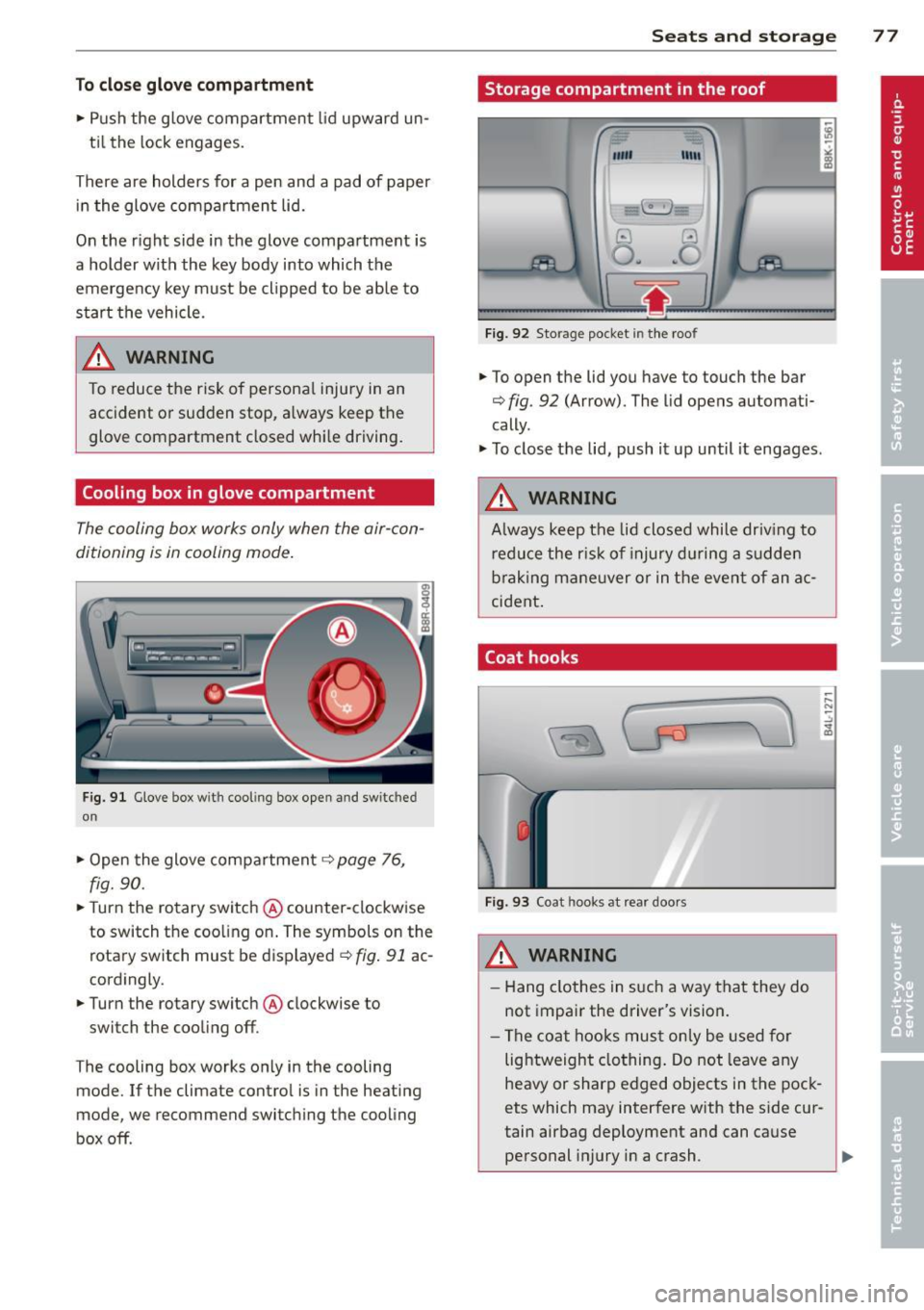
Cooling box in glove compartment
The cooling box works only when the air-con
ditioning is in cooling mode.
Fig. 91 Glove box w ith cool ing box open and switc hed
on
" Open the glove compartment c::> page 76,
fig. 90.
"T urn the rotary switch @ counter-clockwise
to switch the coo ling on. The symbols on the
rotary switch must be displayed
c::> fig. 91 ac
cordingly .
• Turn the rotary switch @ clockwise to
switch the cooling off .
T he cooling box works only in the cooling
mode. If the climate contro l is in the heating
mode, we recommend switching the cooling
box off .
Seats and storage 77
Storage compartment in the roof
""'
11111
Fig. 92 Storage pocket in the roof
.. To open the lid you have to touch the bar
c::> fig . 92 (Arrow). The lid opens automati
cally .
" To close the lid, push it up until it engages .
A WARNING
Always keep the lid closed while driv ing to
reduce the risk of injury during a sudden
braking maneuver or in the event of an ac
cident .
Coat hooks
Fig. 93 Coat hooks at rear doors
_& WARNING
- Hang clothes in such a way that they do
not impair the driver's vision.
- The coat hooks must only be used for
lightweight clothing. Do not leave any
heavy or sharp edged objects in the pock
ets which may interfere with the side cur
tain airbag deployment and can cause personal injury in a crash .
Page 81 of 316
Warm and cold Climate control
Description
The climate control system warms, cools and
adds humidity to the a ir in the veh icle inter io r.
It is the most effect ive when the windows and
panoramic sliding sunroo f* are closed . If
there is a build-up of heat inside the vehicle,
venti lation can help to speed up the cooling
process.
I n all heating mode f unctions except
defrost,
the blower on ly switches to a higher speed
once the engine coolant has reached a certain
temperature.
Condensation from the cooling system can
drip and form a puddle of water under the vehicle. This is normal and does not mean there
is a leak.
Pollutant filter
The po llutant filte r removes po llutants s uch
as dust and pollen from the air.
The air pollutants filte r must be changed at
the in tervals specified in you r Wa rranty
&
Main tenance book let, so tha t the air condi
tioner can properly work.
I f you drive you r vehicle in an area with h igh
a ir po llution, the fi lter may need to be
ch anged more freq uent ly than specified in
your Aud i Warranty
& Ma intenance booklet. If
i n doubt, ask your authorized A udi Service Ad
visor for advice .
K ey coded settings
The climate con trol settings are automat ically
stored and assigned to the remote cont ro l key
that is in use .
& WARNING
Reduced visibility is dangero us and can
cause accidents . -
Warm and cold 79
-For safe driving it is very important that
all windows be free of ice, snow and con
densat ion.
- Comp letely fam iliarize yourse lf with the
proper use and funct ion of the heat ing
and ve nti lation system and especially
how to defog and defrost the w indows.
- Never use the windshield wiper/washer
system in freez ing weather unt il you
have warmed the w indshield first, using
the heating and ventilation system. The
washer sol ution may free ze o n the wind
shie ld and red uce visib ility.
(D Note
- If you suspect that the air conditioner has been damaged, switch the system
off to avoid furt her damage and have it
i n spected by a q ua lified dea lership.
- Repairs to the Audi air conditioner re
quire specia l techni cal know ledge and
speci al tools. Contact an autho rized Aud i
dealer fo r ass istance.
@ For the sake of the environment
B y reduci ng the amou nt of f uel you use,
you also red uce the amount of pollutan ts
emitted in to the air.
(D Tips
- Keep the air intake s lots ( in fro nt of the
w indshield) free from ice, snow and de
br is in order to maintai n the proper f unc
tion of the climate control system.
- T he energy management system may
switch the seat heating* or rear window
defroster off temporar i Ly . These systems
are available again as soon as the energy
balance has been restored.
- The air flowing out of the vents and
throughout the vehicle's entire interior is
discharged at the rear of the ve hicle.
Make sure that the outlet slots are not
covered by clothing, etc.
Page 85 of 316
On the road
Steering
Manually adjustable steering wheel
The height and reach of the s teering wheel
can be adjusted .
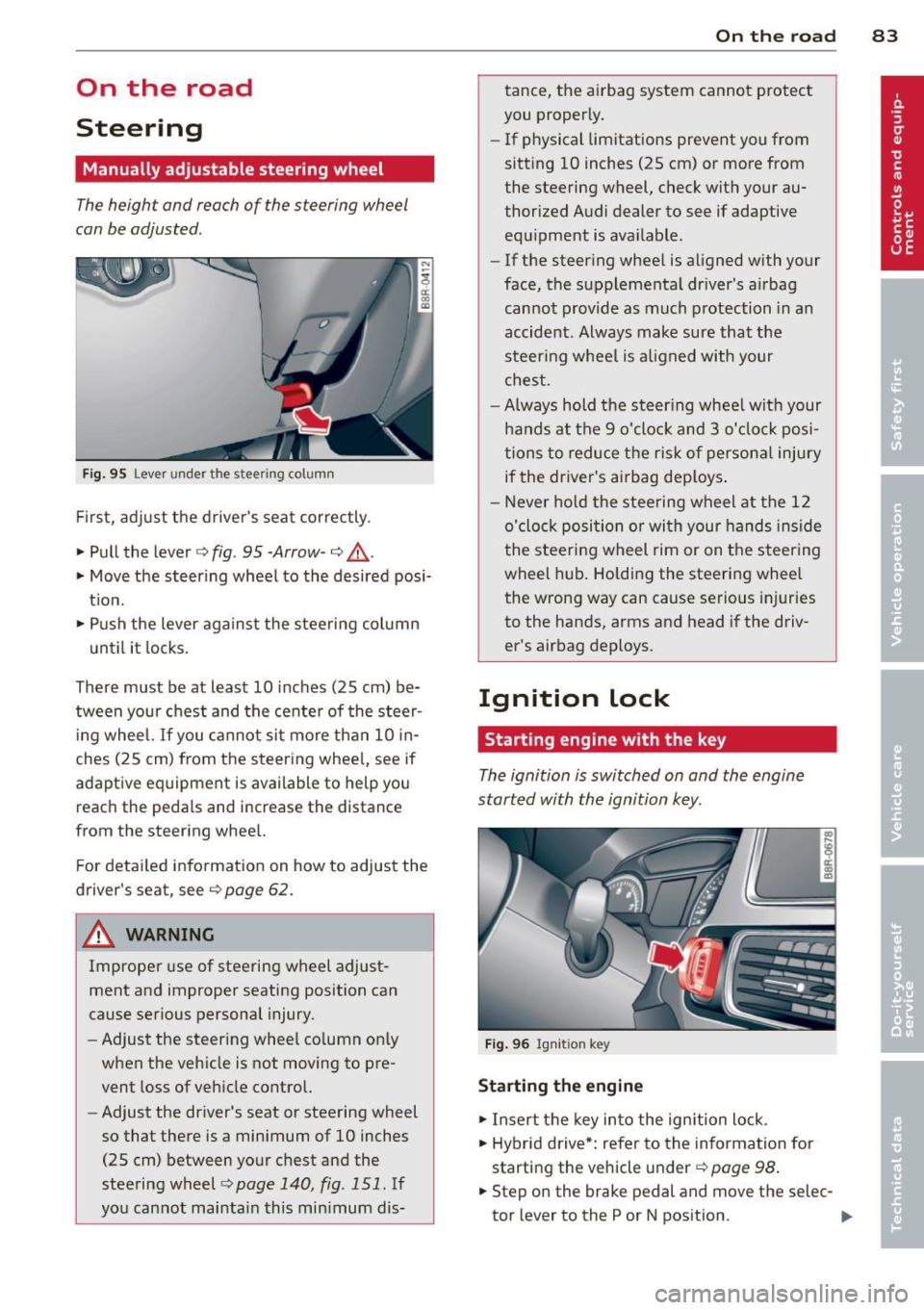
Fig. 95 Lever under the stee ring column
First, adjust the driver 's seat correctly.
• Pull the lever¢
fig. 95 -Arrow -¢ A_.
• Move the steer ing wheel to the desired posi
t ion.
• Push the lever against the steering column
until it locks.
There must be at least 10 inches (25 cm) be
tween your chest and the center of the steer ing wheel.
If you cannot sit more than 10 in
ches (25 cm) from the steering wheel, see if
adaptive equipment is available to help you
reach the pedals and increase the distance
from the steering wheel.
F or detailed information on how to adjust the
driver's seat, see
¢ page 62.
& WAR NING
Improper use of steering wheel adjust
ment and improper seating position can
cause serious personal injury .
- Adjust the steering whee l column on ly
when the vehicle is not moving to pre
vent loss of vehicle control.
- Adjust the driver's seat or steering wheel
so that there is a minimum of 10 inches
(25 cm) between your chest and the
steering wheel
c> page 140 , fig . 151. If
you cannot maintain this min imum dis-
On th e road 83
tance, the airbag system cannot protect
you properly.
- If physical limitations prevent you from
sitting 10 inches (25 cm) or more from
the steering wheel, check with your au
thorized Audi dealer to see if adaptive equipment is available .
- If the steering wheel is aligned with your
face, the supplementa l driver's a irbag
cannot provide as much protection in an
accident . Always make sure that the
steer ing whee l is a ligned with your
chest .
- Always hold the steer ing whee l w ith your
hands at the 9 o'clock and 3 o'clock posi
tions to reduce the risk of persona l injury
if the driver's airbag dep loys .
- Never hold the stee ring wheel at the 12
o'clock position or wi th your hands inside
the stee rin g wheel rim or on the steering
wheel hub. Holding the steering wheel
the wrong way can cause serious injuries
to the hands, arms and head if the driv
er's airbag deploys.
Ignition lock
Starting engine with the key
The ignition is switched on and the engine
started with the ignition key.
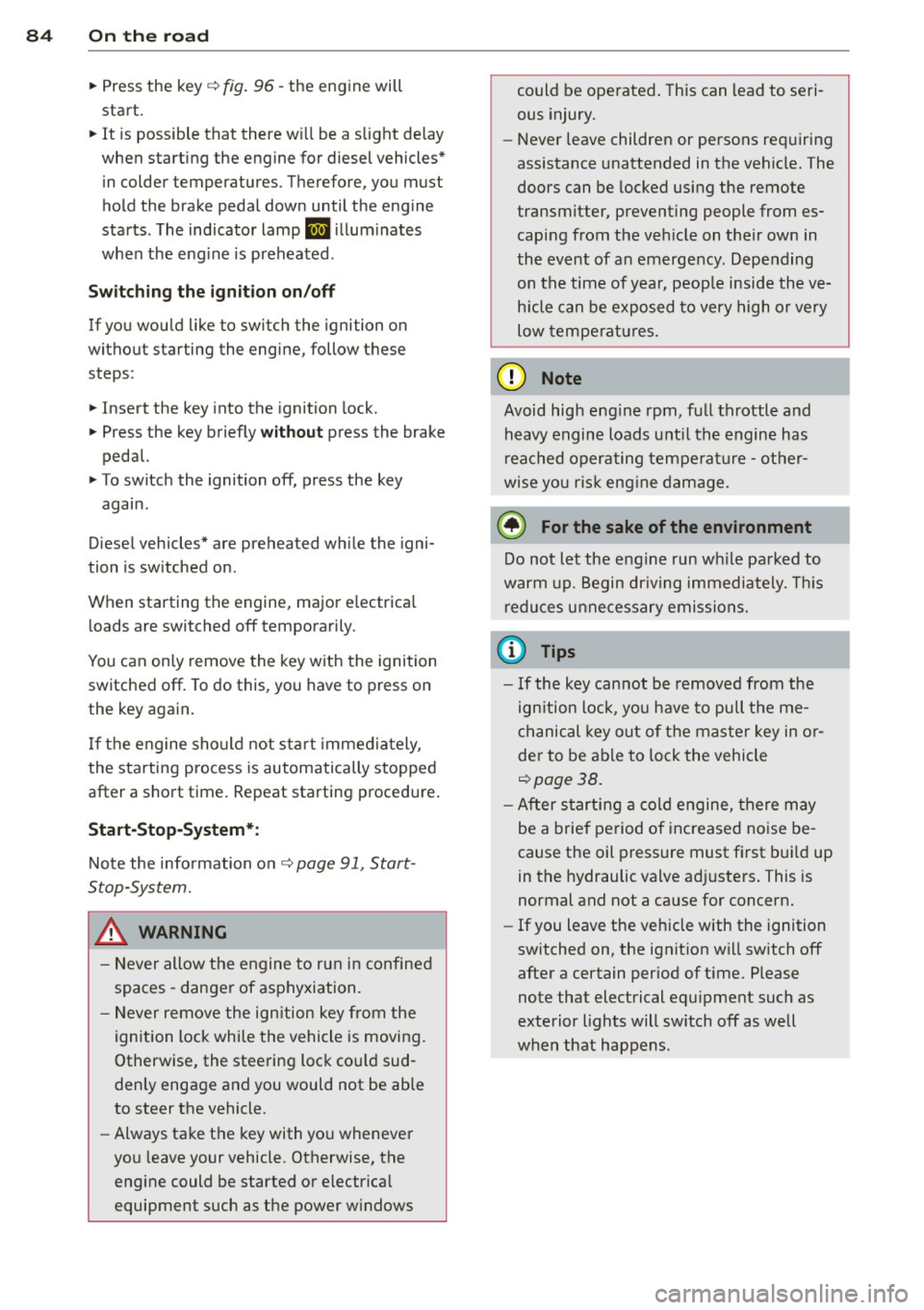
Fig . 96 Igni tion key
St arting th e engine
• Insert the key into the ign ition lock .
• Hybrid drive*: refer to the information for
starting the vehicle under
¢ page 98.
• Step on the brake pedal and mov e the selec-
tor lever to the P or N position. ..,.
Page 86 of 316
84 On th e road
• Press the key¢ fig. 96 -the engine will
start.
• It is possible that there w ill be a slight delay
when start ing the engine for diesel vehicles*
in colder temperatures . Therefore, you must
hold the brake pedal down until the eng ine
starts. The indicator lamp
m i llum inates
when the eng ine is preheated .
Switching the ignition on /off
If you would like to switch the ignition on
without s tarting the engine, follow these
steps :
• Insert the key into the ignition lock.
• Press the key briefly
without press the brake
pedal.
• To switch the ignition off, press the key
again .
Diesel vehicles* are preheated while the igni
tion is sw itched on .
When starting the engine, major e lectrica l
loads are switched off temporarily .
You can on ly remove the key with the ignition
switched off. To do this, you have to press on
the key again.
I f the engine should not sta rt immediately,
the starting process is automatically stopped
after a short time. Repeat starting procedure .
Start-Stop-System*:
Note the information on¢ page 91, Start
Stop-System.
.&_ WARNING
- Never allow the engine to run in confined
spaces -danger of asphyxiation.
- Never remove the ign ition key from the
ignition lock whi le the vehicle is moving .
Otherwise, the stee ring lock co uld sud
denly engage and you would not be able
to steer the vehicle.
- Always take the key with yo u whenever
you leave your vehicle . Otherwise , the
engine could be started or e lectr ica l
equipment such as the power w indows could be operated
. This can lead to seri
ous injury.
- Never leave children or persons req uiring
assistance unattended in the vehicle. The
doors can be locked using the remote
transmitter, preventing people from es caping from the veh icle on their own in
the event of a n emergency. Depending
on the time of year, peop le inside the ve
h icle can be exposed to very high or very
low temperatu res.
0 Note
Avoid high eng ine rpm, full th rottle and
heavy engine loads unti l the engine has
r eached operating tempe rat ure -othe r
wise you ris k eng ine damage.
@) For the sake of the environment
D o not let the engine run wh ile pa rked to
warm up. Begin dr iving immediately . Thi s
r educes u nnecessary emissions.
(D Tips
- If the key cannot be removed from the
ign ition lock, yo u have to pull t he me
chanical key o ut o f the mas ter key in or
der to be able to lock the vehicle
<:!>page 38.
-Aft er s tarting a col d engine, there may
be a brief period of inc reased noise be
cause the oil pressure must first bui ld up
in the hydraulic valve ad justers . This is
n ormal and not a cause for concern.
- If you leave the vehicle with the ignition
switched on, the ignit ion w ill switch off
after a certain per iod of t ime. Please
note that electrical equ ipment such as
exterior lights will sw itch off as well
when that happens .