service AUDI Q5 2014 Owner's Manual
[x] Cancel search | Manufacturer: AUDI, Model Year: 2014, Model line: Q5, Model: AUDI Q5 2014Pages: 316, PDF Size: 78.41 MB
Page 227 of 316
It is normal that the engine noise leve l (die
seling) is louder during the warm-up period in
winter.
It i s also norma l when whitish-blue
smoke comes out of the tailpipe after starting
and during warm-up . The amount of smoke
depends on the outside temperature.
Do not let your Diese l engine id le unnecessari
ly after a cold start. Driving off slowly will
shorten the warm-up period .
A WARNING
-Never use "starting assist fluids ." They
may be potent ially explosive or cause a
"run-away" engine condition. This cou ld
result in serious engine damage and per
sonal injury.
- Never use fuel line anti-freeze offered for
gasoline engines .
(D Note
- Refueling with gasoline when your vehi
cle has a d iesel engine can cause very se
rious and expens ive engine and fuel sys
tem damage that is not covered by any
A udi Limited Warranty.
- If you put any amount of incorrect fue l in
the fue l tank, do not start the engine un
der any circumstances. Immediately con
tact the nearest authorized Audi dealer
or authorized Audi Service Facility for as
sistance. These fuels contain substances
that can severely damage the fuel sys
tem and the engine if the engine is start
ed .
- Vehicles with diesel engines must never
be refueled or dr iven with gasoline, kero
sene, heat ing o il, or other non-specified
fuels that have not been expressly ap proved for use with the diese l eng ine.
Other kinds of fuel can cause se rious
damage to the fue l system and the en
gine that is not covered by any Audi Lim
ited Warranty.
- If Diesel fuel shou ld get on any rubber
hose, it must be wiped off immediate ly.
Then wash the contaminated hose por
tion with soap and warm water. Do not
-
Fu el su ppl y and fi lling yo ur fu el t an k 225
allow Diesel fue l to remain on connect
ing hoses . They may deve lop leaks and
cause serious damage .
Fuel tank
Fuel filler neck
The fue l filler neck is located on the right rear
s ide panel behind the fuel filler flap.
If the power lock ing system should fa il, you
can still open the flap manually - for detailed
instruct ions see
¢ page 22 7.
You can find the fuel tank capacity of your ve
hicle in
~ page 290 .
The label on the inside of the fuel filler flap
tells you the correc t fuel for your vehicle. For
more information about fuel specifications,
see ~
page 222.
Your vehicle fue l tank has an on-board refuel
ling vapor recovery system. This feature helps
to prevent fuel vapors from escaping from the
tank and pollut ing the environment wh ile you
refue l your vehicle . In order to fi ll the tank
properly while protecting the environmen t,
please fo llow this refueling p rocedure caref ul
ly .
A WARNING
-
Under normal operating conditions, never
carry additional fue l containers in your car.
Gas canisters and other containers used to
transport fuel can be dangerous. Such con
tainers, full or empty, may leak and could
cause a fire in a collision. If you must
transport fuel to use for your lawn mower,
snow blower, etc., be very careful and al
ways observe loca l and state laws regard
ing the use, transportation and storage of
such fuel containers. Make certain the con
tainer meets industry standards (ANSI/
ASTM F852 - 86).
{[) Note
Never drive your veh icle until the fuel tank
is completely empty. The irregu lar supply
of fue l can cause misfiring. Gasoline cou ld
ll-
•
•
Page 237 of 316
names etc.) that conform to Audi oi l standard
VW 502 00 (vehicles with gasoline engine) or
VW 507 00 (vehicles with diesel engine).
C hang ing th e engin e oil
The engine oil and oi l filter must be changed
according to the m ileage (kilomete rs) and
time inte rva ls specified in yo ur vehicle's War
ranty
& Maintenance booklet. Do not exceed
these intervals -harmful deposits from old
engine oil can reduce engine performance and
can lead to expensive eng ine repairs.
Changing the o il at the recommended inter
va ls is so very important because the lubricat
ing properties of oi l decrease gradually during
norma l vehicle use . If you are not sure when
you have your oi l changed, ask your author
ized Audi Service Advisor.
Under some circ umstances the engine oi l
should even be changed more frequently .
Change o il more often if you drive mostly
short distances, operate the vehicle in dusty
areas or mostly under stop-and -go traffic con
d itions, or when you use your veh icle where
temperatures stay below freezing point for l ong periods.
Detergent addit ives in the o il w ill make fresh
oil look dark after the eng ine has been run
n ing for a short time. This is norma l and is not
a reason to change the o il mo re often than
r ecommended.
Damage or ma lf u nction s du e to lac k of
ma intenance
It is essential that you change your oil at the
recommended interva ls using only engine oil
that complies with Audi oil standard
VW 502 00 (vehicles with gasoline engine) or
VW S07 00 (veh icles with diese l engi ne). Yo ur
L im ited New Vehicle Warra nty does not cover
damage or ma lfunctions due to failure to fol
l ow recommended maintenance and use re
quirements as set forth in the A udi Owner's
Manual and Warranty
& Maintenance book let.
Your dealer will have to deny warranty cover age un less you present to the dea ler proof in
the form of Service or Repa ir Orders that a ll
Checking and fillin g 235
scheduled maintenance was performed in a
timely manner.
· Engine oil consumption
The engine in your vehicle depends on an ade
quate amount of oil to lubricate and cool all
of its moving parts.
In order to prov ide effective lubrication and
cooling o f inte rna l engine components, all in
ternal combustion engines consume a certain
amount of oil. Oil consumpt ion varies from
engine to engine and may change sign ificantly
over the life of the engine. Typically, engines
with a spec ified break-in period (see
Q page 205) consume more oil during the
break-in pe riod than they consume after o il
consump tion has stabilized.
Under normal cond itions, the rate of oi l con
sumption depends on the quality and viscos ity
of the oil, the RP M (revolut ions per minute) at
which the engine is operated, the ambient
tempe rature a nd road conditions. Furt her fac
tors are the amount of oil dilut ion from wa ter
condensation or fue l residue and the oxida
tion level of the oi l. As any engine is subject to
wear as mi leage builds up, the oil consump
tion may increase over time until replacement
of worn components may become necessary.
With a ll these variab les coming into p lay, no
standard rate of oil consumpt ion can be es
tablished or spec ified. There is no alternative
to regular and frequent check ing of the o il lev
el, see
Not e.
If the yellow engine oil level warning symbo l
in the instrument cluster
II lights up, you
shou ld check the oil leve l as soon as possib le
¢ page 236 . Top off the oil at your earliest
convenience
~ page 236.
&_ WARNING
Before you chec k anything in the engine
compa rtmen t, always read and heed al l
WARNI NGS
Q .&. in Working in the engine
compartment on page 231 .
•
•
Page 239 of 316
~ Top off the oil, if necessary.
~ Screw the cap back on the filling hole.
A WARNING
- While topping off, the oil must not come in contact with hot engine parts - fire
hazard!
- The oil filler cap must be properly se cured to prevent oil from being sprayed
on the hot engine and exhaust system
when the engine is running - fire hazard!
- If your skin has come in contact with the
engine oil, you must subsequently
cleanse it thoroughly .
(D Note
-Check the oil level using the radio or the
MM!*. If the message
Please reduce oil
level
appears, contact your authorized
Audi dealer or other qualified workshop
to have excess oil extracted if necessary.
-Audi does not recommend the use of oil
additives. They may damage the engine
and adversely affect your New Vehicle
Warranty.
@ For the sake of the environment
- Under no circumstances can the oil come
in contact with the sewage network or
the soil.
- Observe and follow legal regulations
when disposing of empty oil containers.
Changing the engine oil
We recommend that have your oil changed by
an authorized Audi dealer or a qualified serv
ice station .
Before you check anything in the engine com
partment,
always read and heed all WARN
INGS
c::> .&. in Working in the engine compart
ment on page 231.
The engine oil must be changed according to
the intervals specified in your Warranty
&
Maintenance booklet. This is very important
because the lubricating properties of oil di
minish gradually during normal vehicle use.
Checking and filling 237
Under some circumstances the engine oil
should be changed more frequently. Change
oil more often if you drive mostly short dis
tances, operate the vehicle in dusty areas or
under predominantly stop-and-go traffic con
dition s, or have your vehicle where tempera
tures remain below freezing for extended pe
riods.
Detergent addi tives in the oil will make fresh
oil look dark after the engine has been run
ning for a short time . This is normal and is not
a reason to change the oil more often than recommended.
Because of the problem of proper disposal,
along with the special tools and necessary ex
pertise required, we strongly recommend that
you have your oil changed by an authorized
Audi dealer or a qualified service station.
If you choose to change your oil yourself ,
please note the following important informa
tion:
A WARNING
To reduce the risk of personal injury if you
must change the engine oil in your vehicle
yourself:
- Wear eye protection.
- To reduce the risk of burns from hot en-
gine oil, let the engine cool down to the
touch.
- When removing the oil drain plug with
your fingers, stay as far away as possible.
Always keep your forearm parallel to the
ground to help prevent hot oil from run ning down your arm.
- Drain the oil into a container designed
for this purpose, one large enough to
hold at least the total amount of oil in
your engine.
- Engine oil is poisonous. Keep it well out
of the reach of children.
- Continuous contact with used engine oil
is harmful to your skin. Always protect
your skin by washing oil
off thoroughly
with soap and water.
•
•
Page 240 of 316
238 Check ing and filling
Never mix oil additives with your engine
oil. These additives can damage your en
gine and adversely affect your Audi Limit
ed New Vehicle Warranty.
@) For the sake of the environment
- Before changing your oi l, f irst make sure
you know where you can properly dispose of the used o il.
- Always dispose of used engine oil proper
l y. Do not dump it on garden so il, wood
ed areas, into open streams or down
sewage dra ins.
- Recycle used engine oil by taking it to a
used engine oil collection facility in your
area, or contact a service station .
Engine cooling system
Coolant
The engine coolant performs two functions: it
keeps the engine from overheating and it pro tects the engine from freezing in the winter.
The cooling system is sea led and generally re
q ui res little attention .
The cooling system has been filled at the fac
tory with a pe rmanent coolant which does not
need to be changed. The coolant consists of a
mixture o f spec ia lly condi tioned water and the
manufacturer's glycol -basedcoolant addi -
tive G l3 antifreeze with anticorrosion addi
tives (50% for USA models ; 60% for Canadian
models). This mixture both assures the neces
sary frost protection and protects metal com
ponents in the engine's cooling system from
corrosion and scaling . It also raises the boil
i ng po int of the coo lant .
Do not red uce the concentration of the coo l
ant in the summer by adding plain water.
The
proportion of coolant add iti ve mu st be at
least 50 % but not more than 60 %
to main
tain antifreeze protection and cooling efficie n
cy.
If t he coolant frost protect io n is too low,
the coo lant cou ld freeze and damage the veh i
cle heating and engine cooling system. F
or year -ro und driving, antifreeze is added a t
the factory for temperatures down to :
- -31°F(-35° C)USA
- -40°F ( -40°C) Canada.
If you must add coolant, use a mixture of wa
ter and coolant additive . Mix ing the coo lant
additive with distilled water is recommended .
.&, WARNING
--
Before you c hec k anyth ing in the engine
compartment, a lways read and heed a ll
WAR NIN GS~ .&.
in Working in the engine
compor tment on page 231 .
(J;) Note
-Before winter sets in, have the coo lant
checked to see if the coolant additive in
yo ur vehicle is sufficient to meet the cli
mate condi tions . This is especia lly impor
tant if you live in a region where the win
ter is extreme ly co ld . If necessary, in
crease the p roportion of coo lant add itive
to 60%.
- When adding coolant additive to yo ur
cooling system, remember :
- W e r ecommend using o nly coola nt ad
d itive G l2++ or Gl3 for your veh icle.
T his coolan t additive is av ail ab le a t au
thor ized Audi dealers. O ther types of
antifreeze can significant ly reduce cor
rosion protection . The resulti ng cor ro
sion can cause a loss o f coolant and se
rious engine damage.
- Do not add any type of rad iator leak seal
ant to your vehicle 's eng ine coolant.
Add ing radiato r repair flu id may adverse
ly affect the function and performance of
your cooling system and co uld resu lt in
damage not cover ed by yo ur New Ve hicle
Limited Warranty.
Page 244 of 316
242 Checking and filling
@ For the sake of the environment
Be cause of the problem of proper disposa l
of brake flu id as we ll as the special tools
req uired and the necessary expert ise, we
recommend that you have the b rake fluid
changed by your author ized Audi dealer.
Battery
General information
Unde r normal operating conditions, the bat
tery in your A udi does not need any mainte
nance. With
high outside temperatures or
long daily dr ives we recommend that you have
the elect ro lyte level checked by an authorized
Aud i dea ler o r qualified workshop . The elec
trolyte leve l sho uld a lso be c hecked each t ime
the battery is c harged ¢
page 244.
Have the battery checked when you take your
ve hicle in for service . Yo u are well adv ised to
replace a bat tery that is older tha n 5 yea rs .
W ith certa in types of a irbag deployment, t he
battery is d isconnected from the vehicle elec
tr ica l system fo r safety reasons ¢
& in Re
pair, core and disposal of the airbags on
page 171.
Hybr id d rive *: you can find important i nforma
tion about the high voltage battery under
¢ page 97.
Disconnecting the battery terminals
Some veh icle functions (power w indow regu
lators, for example) are lost if the battery ter
minals a re discon nected. These functions have
to be re learned after the ba tte ry term inals a re
connect ed aga in. To prevent this , the battery
should only be d isconnected from the vehicle
e lec tric al sys te m whe n absolu tely necessa ry
for rep airs.
Vehicles not driven for long periods
If yo u do not dr ive you r vehicle over a pe riod
of severa l days or w eeks, ele ct rical com po
n e nt s are gr adually cu t ba ck o r swi tched off .
T his redu ce s energy consu mp tion and mai n- ta
ins s tart ing c apability over a longer pe riod
¢ page 203.
Take i nto consi deratio n that whe n you unl ock
yo ur vehicle, some conven ien ce f un ctions ,
s u ch as the inte rior ligh ts or the powe r sea t
adjustment, may not be availab le. T he con
venience functions will be avai lab le aga in
when you tu rn on the ign ition and start t he
engine.
Winter operation
Du ring the winte r mon ths, bat tery ca pac ity
tends to dec rease as tem peratures drop . This
is beca use more power is a lso consumed wh ile
starting, and the headlights, rear wi ndow de
fogger, etc ., are used more often.
Avoid unnecessary powe r consum ption, pa r
t icu lar ly in city traffic or when traveling only
sho rt distances. Let your authori zed Aud i
dealer check the capacity of the vehicle bat
te ry before winter sets in ¢
page 244. A well
c h arged battery will not on ly preven t starti ng
problems when the wea ther is cold, but w ill
also last lo nger.
Working on the battery
Be especially careful when working on or near
the ba ttery.
The battery is located in the luggage compart
me nt under the floor . B efo re you c hec k any
t hi ng in the luggage compartmen t,
read and
heed all WARNINGS
¢ & -
Hybrid dr ive* : yo u can find impo rtant informa
t io n about the h igh vol tage ba tte ry unde r
¢page 97 .
Always heed the safety warnings , when work
ing on the v ehicle ba tte ry or the vehicle e lec
t rical sys tem to preven t inju ry .
Page 259 of 316
to determ ine ho w th is re
du ces the avail a bl e c argo
and luggage l oad ca pa city of
yo ur vehicle .
.,. Check th e tir e s idew all
(¢ pa ge 2 58, fig. 209) to de
termin e the d esign ated lo ad
rating f or a specific tire .
Tire service life
The service life of tires depends on a lot of
different things including proper installation
and balancing, correc t tire pressure and driv
ing style .
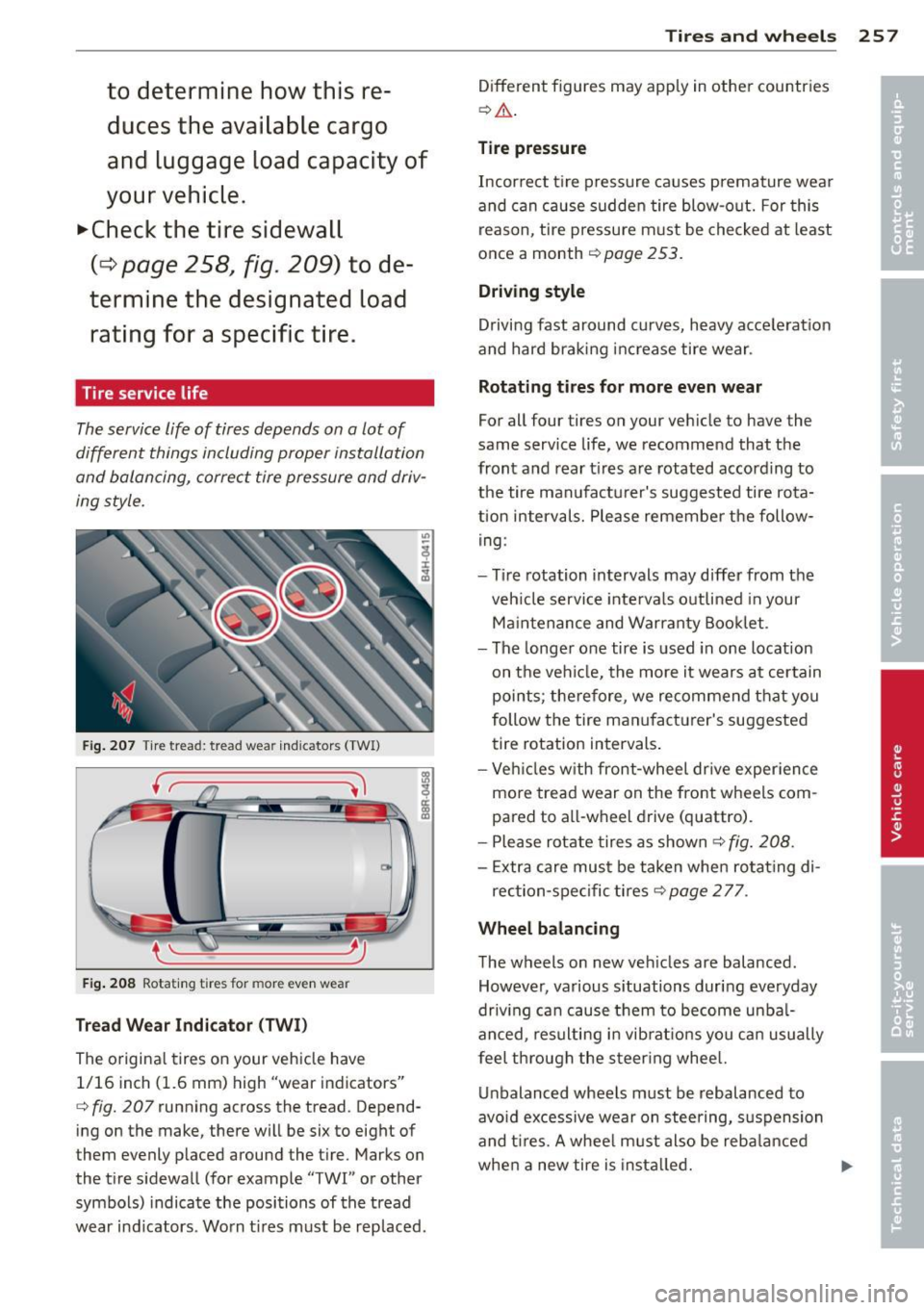
Fig . 20 7 Tire t re ad : tread we ar ind ic a tors (TWI)
Fig. 208 Rotat ing tires for more ev en wea r
Tread Wear Indicator (TWI)
The o rigina l tires on your vehicle have
1/16 inch (1.6 mm) high "wear indicators"
c::;, fig. 207 running across the tread . Depend
ing on the make, there will be six to eight of
them evenly p laced around the t ire. Marks on
the t ire s idewa ll (for example " TWI" or other
symbols) indicate the positions of the tread
wear ind icators. Wo rn t ires must be r ep laced .
Tires and wheels 25 7
Different figures may app ly in other countries
c::;, .&. .
Tire pressure
Incor rect tire press ure ca uses premature wear
and can c ause sudden tire blow-out. For this
reason , tire pressure m ust be checked at least
once a month
c::;, page 2 53.
Driving style
Driving fast around curves, h eavy acce le rat ion
and har d bra king increase tire wear .
Rotating tires for more even wear
For all four tires on your ve hicle to have the
same service life, we recommend that the
front and rear t ires a re rotated according to
the tire manufact urer's suggested tire ro ta
tion intervals. Please remembe r the follow
ing:
- Tire rotation intervals may differ from the
veh icle service inte rva ls o utlined in your
Ma intenance and Warranty Boo klet .
- The longer one tire is used in one location
on the vehi cle, the more it wears at cer tain
points ; the refore, we recommend that you
follow t he tire manu fact urer's suggested
tire rotation intervals .
- Ve hicl es w ith front-wheel dr ive exper ience
more tread wear on the front w heels com
pared to a ll-wheel drive (quattro) .
- Please rot ate tires as shown
c::;, fig . 208.
- Extra care mus t be taken whe n rota ting di-
rection-spec ific tires
c::;, page 277 .
Wheel balancing
The wheels on new veh icles are balanced .
However, various s ituations during eve ryday
driv ing ca n cause them to become unba l
anced, re su lting in vib rat io ns you ca n usually
feel t hrough the s teer ing whee l.
Unbalanced wheels must be rebalanced to
avo id excessive wear on steering, s uspension
and t ires. A whee l m ust also be reba la n ced
whe n a new tire is insta lled.
)J,,-
Page 295 of 316
Consumer Information
Warranty coverages
Your Audi is covered by the following war
ranties :
- New Vehicle Limited Warranty
- Limited Warranty Against Corrosion Perfo-
ration
- Emissions Control System Warranty
- Emissions Performance Warranty
- California Emissions Con trol Warranty (USA
vehicles only)
- California Emissions Performance Warranty
(USA vehicles only)
Detailed information regarding your warran
ties can be found in your
Warranty & Mainte
nance booklet .
Operating your vehicle
outside the U.S.A. or
Canada
Government regulations in the United States
and Canada require that automobiles meet
specific emission regulations and safety
standards. Therefore, veh icles built for the
U.S.A. and Canada differ from vehicles sold in
other countries .
If you p lan to take your vehicle outside the
continental limits of the United States or Can
ada, there is the possibility that:
- unleaded fuels for vehicles with cata lytic
converter may not be available;
- fuel may have a considerably lower octane
rating . Improper fuel may cause engine
damage ;
- service may be inadequate due to lack of
proper service facilities, tools or testing
equipment ;
- replacement parts may not be readily availa
ble.
- Navigation systems for vehicles built for the
U.S.A. and Canada will not necessari ly work
in Europe, and may not work in other coun
tries outside of North America.
Consumer Information 293
@ Note
Audi cannot be responsible for mechanical
damage that could result from inadequate
fuel, service or parts availab ility.
Audi Service Repair
Manuals and Literature
Audi Offic ial Factory Service Manuals and Lit
erature are published as soon as possible after
model introduction. Service Manuals and liter
atu re are availabl e to order from the Audi
T echnical Literature Ordering Center at:
www.audi.techliterature.com
Maintenance
' General
Your vehicle has been designed to help keep
maintenance requirements to a minimum.
However, a certain amount of regular mainte
nance is still necessary to assure your vehicle's
safety, economy and reliability . For detailed
vehicle maintenance consult your Warranty
&
Maintenance booklet.
Under difficult operating conditions , for ex
ample at extremely low outside temperatures ,
in very dusty regions, when towing a tra iler
very frequently, etc., some serv ice work
shou ld be pe rformed between the intervals
specified. This applies particularly to:
- oil changes, and
- cleaning or replacing the air filter .
® For the sake of the environment
By regularly maintaining your vehicle, you
help make sure that emission standards
are maintained, thus min imizi ng adverse
effects on the environment .
Important considerations for you and
your vehicle
The increasing use of electronics , sophisticat
ed fuel injection and emission contro l sys-
tems, and the genera lly increasing technica l ..,_
•
•
Page 301 of 316
-----------------------------~I~n~d~e~x 299
Audi Service Repair Manuals and Litera-
ture ...... .. ................. .. ... 293
Auto-Check Control ........ .. .. .. .. .. 27
Auto locking ... ........... .. .. .. .... 38
Automatic belt retractor ....... ... .. . 1S2
Automatic driving light control ... ... ... 49
Automatic Shift Lock (ASL) ... ... .. .. . 124
Automatic transmission .............. 123
Automatic Shift Lock (ASL) ... .. .. .. . 124
Driving . . . . . . . . . . . . . . . . . . . . . . . . . . 125
Emergency mode ............ ... .. . 128
Emergency release .............. .. . 128
Hill descent control ................ 126
Kick-down
. . ............. .... .. ... 127
Manual shift program .............. 127
Removal lock (ignition key) . .. .. .. .. .. 83
Selector lever ..................... 123
Shift buttons ............ .... .. ... 127
Automatic wipe/wash system . . . . . . . . . . 54
Auto Safety Hotline .............. .. . 146
AUTO (climate control) . . . . . . . . . . . . . . . . 80
Average speed . . . . . . . . . . . . . . . . . . . . . . . 23
Avoid damaging the vehicle .. .. .. .. .. . 207
B
Bass box .......................... 269
Battery . . . . . . . . . . . . . . . . . . . . . . . . . . . 242
Battery location inside the luggage com-
partment ................ ...... .. 242
Charging . . . . . . . . . . . . . . . . . . . . 105 , 244
Important warnings when working on
the battery . . . . . . . . . . . . . . . . . . . . . . . 242
Jump starting . ........... .. .. .. ... 283
L ow ............................. 203
Replacing the battery ........ ... .. . 245
State of charge .............. ... ... 203
Voltage ........................... 34
Winter operation .................. 242
Working on the battery . . . . . . . . . . . . . 242
Before driving ................. .. ... 139
Bio-ethanol (Fuel) ........... ... ... .. 223
Blended gasoline .......... .. .. .. .. . 222
Blow er (climate control) . . . . . . . . . . . . . . . 80
Booster seats .............. ...... .. 186 Brake fluid
Changing the brake fluid ............ 241
Checking the brake fluid level ...... .. 241
Reservoir . .. .. .. ................. 241
What is the correct brake fluid level? .. 241
What should I do if the brake fluid warn-
ing light comes on? .. .. .. ..... ..... 241
Brake system . ... .. .. ............... 241
Anti-lock brake system . . . . . . . . . . . . . . 17
Brake assist system ................ 197
Brake booster .. .. ................. 200
Brake fluid .. .. .. .. . .. ... .... .... . 241
Brake fluid specifications for refill and re-
placement .. .. .. ................. 241
Brak e light defective . . . . . . . . . . . . . . . . 33
Brak e pads . ... .. .. ............... 205
Electromechanical parking brake ..... . 88
General information .............. . 200
How does moisture or road salt affect the
brakes? ... .. .. .. .... ........... .. 200
Malfunc tion . . . . . . . . . . . . . . . . . . . . . . . 29
Warning/indicator lights ............. 18
Worn brake pads symbol . . . . . . . . . . . . . 33
Braking guard . . . . . . . . . . . . . . . . . 107, 113
Messages . .. .. .. ............... . .
Settings .. .. .. .. ................ .
Switching on and off .............. .
Break-in period . ..... .............. .
Brake pads . ... .. .. .............. .
Tires
B reakover angle ... ............... . .
Bulbs ......... ... .. .............. .
C
California Proposition 65 Warning ... . .
Battery specific ... ............... .
Capacities
Carbon parts 114
114
114
205
205
205
210
282
232
244
290
Cleaning . . . . . . . . . . . . . . . . . . . . 219,220
Care .............................. 217
Cargo area
refer to Load ing the luggage compart
ment
..... .. .. .. .. .. ........... .. 145
Cargo floor . . . . . . . . . . . . . . . . . . . . . . . . . 70
Catalytic converter ... .............. . 206
•
•
Page 309 of 316
Rear seats Adjusting seat ... ..... ... .. .. .. .... 64
Rearview camera Park ing mode 1 .......... .. .. .. ... 132
Park ing mode 2 .......... .. .. .. ... 132
Rear v iew mir ror . . . . . . . . . . . . . . . . . . . . . 58
Rear window heating .... ... .. .. .. .. .. 81
Recirculation mode (cl imate control) .. .. 80
Red symbols . . . . . . . . . . . . . . . . . . . . . . . . 28
Refill engine oil . . . . . . . . . . . . . . . . . . . . . . 31
Refue lling ................... ... ... 226
Gasoline inhib itor f lap ..... .. .. .. .. . 226
Release lever for hood ...... .. .. .. .. . 231
Remote cont rol
Homelink . ... ... ..... ... .. .. .. ... 135
Remote control key Un loc king and locking ..... .. .. .. .. .. 40
Remote rear lid release ..... .. .. .. .. .. 43
Repa ir manua ls ... ...... ... .. .. .. ... 293
Repai rs
A irbag system ........... .... .. ... 170
Replacing A fuse . .. .. ................. .. .. . 279
Light bulbs . ................ ... ... 282
T ires and whee ls ...... .... ... ... .. 259
Replacing w iper blades ..... .. .. .. .. .. 55
Report ing Safety Defects . . . . . . . . 146, 147
Reset button ........... .... ... ... ... 13
Retractor .... ... .. ..... ... .. .. .. ... 152
Right hand d rive .. .. .... .... . .... .. .. 5 1
Rims Clean ing . .. ............. .... .. ... 219
Roof rac k . . . . . . . . . . . . . . . . . . . . . . . . . . . 70
Attac hment points ..... ... .. .. .. .. .. 71
Install ing the attachments . .. .. .. .. .. 72
Instal ling the roof rack .... .. .. .. .. .. 71
Roof load .. ............. .... .. .... 72
Rule of behavio r offroad .. ... .. .. .. .. . 2 10
s
Safe driving hab its ......... .. .. .. .. . 139
Safety belt position .. ...... .. .. .. .. . 153
Safety belt he ight adjustment .. ... .. 155
Safety belts worn by p regnant women . 154
Safety belt pretens ioner ..... .. .. .. .. . 155
Service and disposal ...... .. .. .. .. . 156
Inde x 307
Safety be lts ... .... .. . .. .. ..... ... .. 152
Cleaning . ... .. .... . ... ...... ... .. 219
Danger to passengers who do not wear a
safety belt .. .. .. ................. 150
Fastening . .. .. .. .... ............. 152
Height adj ustment .. .............. . 155
Improperly worn ... . .. .. .. ... ... .. 155
Not worn ....... .. ..... .......... 150
Safety be lt pos ition . ........... .... 153
S afety i nstr uctions .... ......... .. .. 152
Securing child safe ty seats ... ... .. .. 188
Spec ia l considerations for pregnant
women ... .. .. .... . ... ...... ... .. 154
U nfastening . .. .. ................. 154
Warning/ind icator light ......... 17,149
Why YOU MUST wear them ........ .. 149
Wor n properly .... ............... . 151
Safety comp liance sticker ..... ... .. .. 289
Safety eq uipme nt .. .... ......... .. .. 139
Safety features for occupant restraint and protection .. .. .. .. .... ... .... .... .. 139
Safety guidelines Seat adjustment . . . . . . . . . . . . . . . . . . . . 61
Safety instr uctions
E ngine comp art ment .. ......... .. .. 231
f or side c urtain airbags . ..... ... .. .. 177
for using child safety seats ... ... .. .. 181
for using safety belts . ... .... ... .. .. 152
Monitoring the Advanced Airbag Sys-
tem ........ .. .. ................. 170
Safety systems Warning/ind icator lights ..... ... .. .. . 16
Seat Heating ... .. .. .. ... ............ .. . 81
N umber of sea ts ..... ........... .. 149
Ventila tion . ... .... .. .. ...... ... .. . 81
Seat adjustment . . . . . . . . . . . . . . . . . . . . . 62
Drive r's seat . . . . . . . . . . . . . . . . . . . . . . . 61
Fron t passenger's seat . . . . . . . . . . . . . . . 62
F ron t se ats . . . . . . . . . . . . . . . . . . . . . . . . 61
Hea d restra ints .... . .. ..... ... .. .. 142
Memory . ... .. .... . ... ...... ... .. . 63
Seat be lts
refer to Safety belts . . . . . . . . . . . . . . . . 149
Seat covers Cleaning .. .. .. .... .. ........ ..... 220
Seating capacity ... .. . ... .... ... .. .. 149
•
•
Page 310 of 316
308 Index
Seating position Driver ..... ................ ..... . 140
Front passenger .............. .... . 141
How to adjust the front seats . . . . . . . . 141
Incorrect seat position . . . . . . . . . . . . . . 143
Occupants .. ................ ... ... 140
Rear passengers ....... ..... .. .. .. . 142
Sea transport . . . . . . . . . . . . . . . . . . . . . . 106
Selective catalytic reduction
refer to Ad Blue ........... .... .. .. . 228
Selective unlock feature ............... 39
Selective whee l torque control (all-wheel
drive) ... .... ...................... 197
Selector lever .. ........... .. .. .... . 123
Emergency release .......... .. .... . 128
Service and disposal Safety belt pretens ioner ....... .. ... 156
Service interval disp lay . . . . . . . . . . . . . . . . 22
Service position
refer to Replacing wiper blades ... .. .. 55
SET button . . . . . . . . . . . . . . . . . . . . . . . . . 11
Shift buttons .................. .... . 127
Ship transport ...................... 106
Shutting down vehicle ....... .... .... 207
Side airbags Description ............... ... .... . 172
How they work ........... .... ..... 174
Side assist
Activating and deactivating ..... .... . 118
Adjusting the brightness ..... .... .. . 118
C leaning the sensors ....... ... .. ... 218
Description .................. ..... 116
Sensor range . . . . . . . . . . . . . . . . . . . . . 117
Side curta in airbags .......... .. .... . 175
Description ............... ... .... . 175
How they work ............ ... .... . 176
Safety instructions ............ .... . 177
Side marker lights ................... 49
Snow chains ........... .... .... .... 263
Socket . ..... ................ ..... .. 75
Sound system display
Driver information display . . . . . . . . . . . . 20
Sources of information about child re-
straints and their use ........... .. ... 196
Speedometer . . . . . . . . . . . . . . . . . . . . . . . 13
Speed rating letter code ....... .. .... . 259 Speed warning system ...........
.. .. . 93
Start-Stop-System . . . . . . . . . . . . . . . . . . . 91
Engine does not switched off ......... 92
Engine starts automatica lly ... .. .. .. . 92
Indicator lights .................... 91
Messages ..... .. .. .............. .. 93
Starting/stopping the engine .... .. .. . 91
Switching off/on . . . . . . . . . . . . . . . . . . . 93
START ENG INE STOP button (Convenience
key) . . . . . . . . . . . . . . . . . . . . . . . . . . . 86, 87
Starting from rest .................... 89
Starting off with a trailer .......... ... . 90
Starting the engine . . . . . . . . . . . . . . 83, 86
Starting (engine) .................... 98
Steering Electromechanical power assist . . . 201, 0
In dicator light ... ................. 201
Locking the steering ................ 83
Malfunction . . . . . . . . . . . . . . . . . . . 31, 35
Manually adjusting the steering wheel .. 83
also refer to Electromechanical power as-
s ist ......... ... .. .............. . 201
Steering wheel column
Adjusting manually ............ .. .. . 83
Steps for determining correct load limit . 256
Stopping the engine . . . . . . . . . . . . . . 85, 87
Stopping (engine) .. ............. .. .. . 98
Storage .. .. .. .. .. ............... ... 76
Cu pholder door pockets . . . . . . . . . . . . . . 7 4
G love compartment . . . . . . . . . . . . . . . . . 76
Sun shade .................. ........ 54
Sun visors .. .... .................... 54
Supplementary (climate control) ..... .. . 82
Switches Emergency flashers . . . . . . . . . . . . . . . . . 52
Symbols Red .............................. 28
Yellow .... .... ................... . 31
T
Tachometer . . . . . . . . . . . . . . . . . . . . . . . . . 11
T ail lights
Cleaning .. .. .. .. ................. 218
TDI clean diesel
refer to Ad Blue ........ ........... . 228
Technical data ...................... 289