Heat AUDI Q5 2017 Owner's Guide
[x] Cancel search | Manufacturer: AUDI, Model Year: 2017, Model line: Q5, Model: AUDI Q5 2017Pages: 296, PDF Size: 74.43 MB
Page 234 of 296
Wheel s
® Mud and snow capability
"M/5" or "M+S" indicates the tire
is sui table for driving on mud and
snow.
& indicates a winter tire.
@ Composition of the tire cord
and materials
The number of plies indicates the
number of rubberized fabric lay
ers in the t ire. In general: the
more layers, the more weight a
tire can carry . Tire manufacturers
must also specify the materials
used in the tire. These include
steel, nylon, po lyester and other
materials.
@ Maximum permitted load
This number indicates the maxi
mum load in kilograms and
pounds that the tire can carry .
@Uniform tire quality grade
standards for treadwear,
traction and temperature resist ance
Treadwear, traction and tempera
ture ranges ¢
page 247.
@ Running direction
The arrows indicate the running
direction of unidirectional t ires .
You must always follow the speci
fied running direction
¢page 259.
232
@ Ma ximum permitted
inflation pressure
This number indicates the maxi
mum pressure to which a tire can
be inflated under normal operat
ing condit ions.
Glossary of tire and loading
terminology
Acces sory we ight
means the combined weight (in
excess of those standard items
which may be replaced) of auto matic transmission, power steer
ing, power brakes, power win
dows, power seats, radio, and
heater, to the extent that these
items are available as factory-in
stalled equipment (whether in
stalled or not) .
Aspect ratio
means the ratio of the height to
the width of the tire in percent .
Numbers of 55 or lower indicate a
low sidewall for improved steer
ing response and better overall
handling on dry pavement.
Bead
means the part of the tire that is
made of steel wires, wrapped or
reinforced by ply cords and that is
shaped to fit the r im . ...
Page 243 of 296
a,
a,
-N r-N
-0 0 0: a:,
and follow the important safe
ty precautions inc:::>
page 242,
Tires and vehicle load limits .
-The tire must flex more if the
tire pressure is too low or if
the vehicle speed or load are
too high . This heats the tire up
too much. This increases the risk of an accident because it
can cause the tire to burst and result in loss of vehicle con
trol.
- Incorrect tire pressure in
creases tire wear and has a negative effect on driving and
Tire pressure table
Please note that the information
contained in the following table
was correct at the time of print ing, and the information is sub
ject to change . If there are differ
ences between this information
and the tire pressures specified
on the label on the driver's side B
pillar, always follow the specifica
tion on the B-pillar label
c:::> page 240, fig. 204.
Wheels
braking behavior, which in
creases the risk of an accident.
Replace lost valve caps to re
duce the risk of damage to the
tire valves.
Tire pressure that is too low in creases fuel consumption.
Audi recommends using the
tire pressure specified for a
normal load
c:::> table on
page 242
or for a full load
when the vehicle is partially
loaded .
Make sure that the tire designa
tion on your tire matches the des
ignation on the tire pressure label
and the tire pressure table .
The following table lists recom
mended tire pressures in cold
tires according to the load and
the size of the tires installed .
241
Page 247 of 296
CD
CD
.... N ,-... N ..... 0 0 C<'. 00
and a special procedure. You must not repair or
disassemble them ¢.&. .
A WARNING
Wheel bolts that are tightened or repaired in
correctly can become loose and result in loss
of vehicle control, which increases the risk of
an acc ident. For the correct tightening specifi
cation, see ¢
page 2 56, After changing a
wheel .
- Always keep the wheel bolts and the
threads in the wheel hub clean and free of grease.
- Only use wheel bolts that fit the rim .
- Always have damaged r ims repa ired by an
authorized Audi dealer o r autho rized Aud i
Service Facility . Never repair or d isassemble
rims yourself, because this increases the risk
of an accident.
Winter tires
W inte r ti res s ignificantly improve the vehicle's
h andling when driving in win ter condit ions . Be
cause of the ir constr uction (width, compound,
tread pattern), summer tires provide less trac
tion on ice and snow .
"'U se winter t ires on all fo ur wheels .
.. Only use winter t ires that are approve d for your
v ehicl e.
"' Please note that the maximum permitted
speed may be lower with winter tires¢.&_ . An
authorized Aud i dealer or au thori zed Aud i Serv
ice Fac ility can inform you about the maximum
permitted speed fo r your tires .
"' Check the tire press ure after installing wheels
¢page 240.
The effectiveness of winter tires is reduced great
l y when the tread is worn down to a depth of
0 .1 57 inch (4 mm). The character ist ics of winter
tires a lso de crease great ly as the tire ages, re
ga rdless of the remain ing tread.
WARNING
- Never drive faster than the maxim um per
mitted speed for your t ires. This cou ld cause
the tires to heat up too much. Th is increases
Wh eel s
the risk of an accident because it can cause
the t ire to burst.
- Always adapt your driving to the road and
traffic cond itions . Drive carefully and reduce
your speed on icy or slippery roads . Even
winter t ires can lose tract io n on black ice.
@ For the sake of the environment
Reinsta ll summer tires at the app ropr iate
time, beca use they prov ide better handling
when roads are free of snow and ice. Summer
tires cause less road no ise, tire wear and fue l
consumpt io n.
(D Tips
You can also use all season tires instead of
winter tires. Please note that in some coun
tries where winter tires are required, on ly
winter tires w ith the
& symbo l may be per
mitted .
Snow chains
Snow chains improve traction in the snow.
"'On ly install snow chains on the rear wheels.
"' Check and correct the seating of the snow
chains if necessary after d rivi ng a few feet. Fol
low the instructions from the manufacturer .
"' Note the maximum pe rmitted spe ed wh en dr iv
ing w it h snow cha ins. Do not excee d
30 mph
( SO km/h) .
S now c ha ins not o nly improve the
driving in win
te r road condit io ns, but also the
broking.
Use of snow chains is only permitted w ith certa in
r im/tire comb inat ions due to technical reasons .
Check with an author ized Audi dealer or author
ized Audi Service Facility to see if you may use
snow chains.
U se
fine-mesh snow chains . They must not add
more than
0 .53 inch (13 .5 mm) in heig ht, incl ud
ing the cha in lock.
You m ust remove the chai ns when driving on
r oads t hat are
free of snow . When roads are free
of snow, snow chai ns can impa ir han dling and .,.
245
Page 249 of 296
CD
CD
.... N ,-... N ..... 0 0 C<'. 00
Uniform tire quality grading
- T read wear
- Tractio n AA A B C
- Temperature ABC
Q ua lity grades ca n be found where ap plicable on
the tire side wall between tread shoulder and
maximum sect ion w idth
c:> page 230, fig. 202.
For example: Tread wear 200 , Traction AA, Tem
perature
A .
All passenge r ca r tires m ust conform to Federal
Safety Requirements in add ition to these grades .
Tread wear
The tread wear grade is a comparat ive rating
based on the wear rate of the t ire when tested
under cont ro lled conditions o n a specified gov
e rnment test course.
For example, a t ire graded
1 50 would wear one
and one ha lf
( 1 1/2) times as well on the gove rn
men t course as a tire g raded
100.
The relative performance of t ires depends upo n
the actual conditions of their use, howeve r, and
may depart significant ly from the norm due to
va ria tions in driving ha bits, serv ice practices and
d ifferences in road cha racteristics and climate .
Traction
The traction grades, from highest to lowest, are
AA, A, B and
C. T hose grades represent the t ire's
ab il ity to stop on wet pavement as meas ured un
de r contro lled condi tions on specified gove rn
ment tes t sur faces of asphalt and conc re te. A tire
mar ked C may have poor traction performance
c:> &. .
Temperature
The temperature grades are A (t he hi ghest), B ,
a nd C, represent ing the tire's resis tan ce to t he
generation o f heat and its ability to diss ipate
h eat when tested unde r contro lled conditions on
a specified indoor laboratory test whee l.
Sus ta ined hig h temper ature c an cause t he mate
r ial of the ti re to degenerate and red uce tire life,
and excessive temperatu re can lea d to sud den
tire fai lure
c:> &..
Wh eel s
The grade C cor responds to a level of perform
ance which all passenger car tires must meet un
der the Federal Motor Vehicle Safety Standa rd
No.
109 . Grades Band A represent higher levels
of pe rformance on the laboratory test wheel than
the minimum req uired by law .
A WARNING ,-
The tractio n grade assigned to this tire is
based on s traight-a head braking traction
t e st s, and does no t include acceler ation, co r
n eri ng, hy dropla ning or pe ak tra ction charac
terist ics.
A WARNING ,.,___
The tempera ture grade for t his tire is estab
lished for a tire that is properly inflated and
not overloaded . Excessive speed, underinfla
tion, or excessive loading, either separate ly or
i n comb inat ion, can cause heat bu ildup and
possib le tire fai lure.
A WARNING
-
Temperature g rades apply to tires that are
p roperly inflated a nd not over o r under inflat
ed.
Tire pressure monitoring system
ill General notes
App lies to : vehicles wi th tire pressure mo nito rin g syste m
-
Each tire, including the spare (if provided),
should be checked monthly whe n cold and inflat
ed to the inflat io n pressure recommended by the
vehicle manufacturer on the veh icle placard or
t ir e infla tion p ressure la be l. (If your ve hicle has
t ir es of a different size than t he si ze ind ic a ted on
the vehi cle placar d or tire in flat ion press ure la
bel, you sho uld dete rmine the proper tire infla
t ion pr ess ure for those tires) .
As an ad ded s afety feat ure, yo ur vehicle has been
equipped with a tire press ure mon itor ing system
( T PMS) t hat illuminates a low tire pressure tell
ta le wh en one or mo re of your tires is signif icant -
ly under-inf lated. According ly, when the low t ire
pressure telltale i llum inates, you shou ld stop and.,.
247
Page 250 of 296
Wheels
check your tires as soon as possible, and inflate
them to the proper pressure. Driving on a signifi
cantly under-inflated tire causes the tire to overheat and can lead to tire failure. Under-inflation
also reduces fuel efficiency and tire tread life,
and may affect the vehicle's handling and stop
ping ability.
Please note that the TPMS is not a substitute for
proper tire maintenance, and it is the driver's re
sponsibility to maintain correct tire pressure,
even if under-inflation has not reached the level
to trigger illumination of the TPMS low tire pres
sure telltale.
Your vehicle has also been equipped with a TPMS malfunction indicator to indicate when the sys
tem is not operating properly. The TPMS mal
function indicator is combined with the low tire pressure telltale. When the system detects a
malfunction, the telltale will flash for approxi
mately one minute and then remain continuously
illuminated. This sequence will continue upon
subsequent vehicle start-ups as long as the mal
function exists .
When the malfunction indicator is illuminated,
the system may not be able to detect or signal low tire pressure as intended . TPMS malfunctions
may occur for a variety of reasons, including the
installation of replacement or alternate tires or
wheels on the vehicle that prevent the TPMS from functioning properly . Always check the
TPMS malfunction telltale after replacing one or
more tires or wheels on your vehicle to ensure
that the replacement or alternate tires and
wheels allow the TPMS to continue to function
properly.
248
· If the Tire Pressure Monitoring System
indicator appears
Applies to: vehicles with Tire Pressure Monitoring System
The tire pressure indicator in the instrument
cluster informs you if the tire pressure is too low
or if there is a system malfunction.
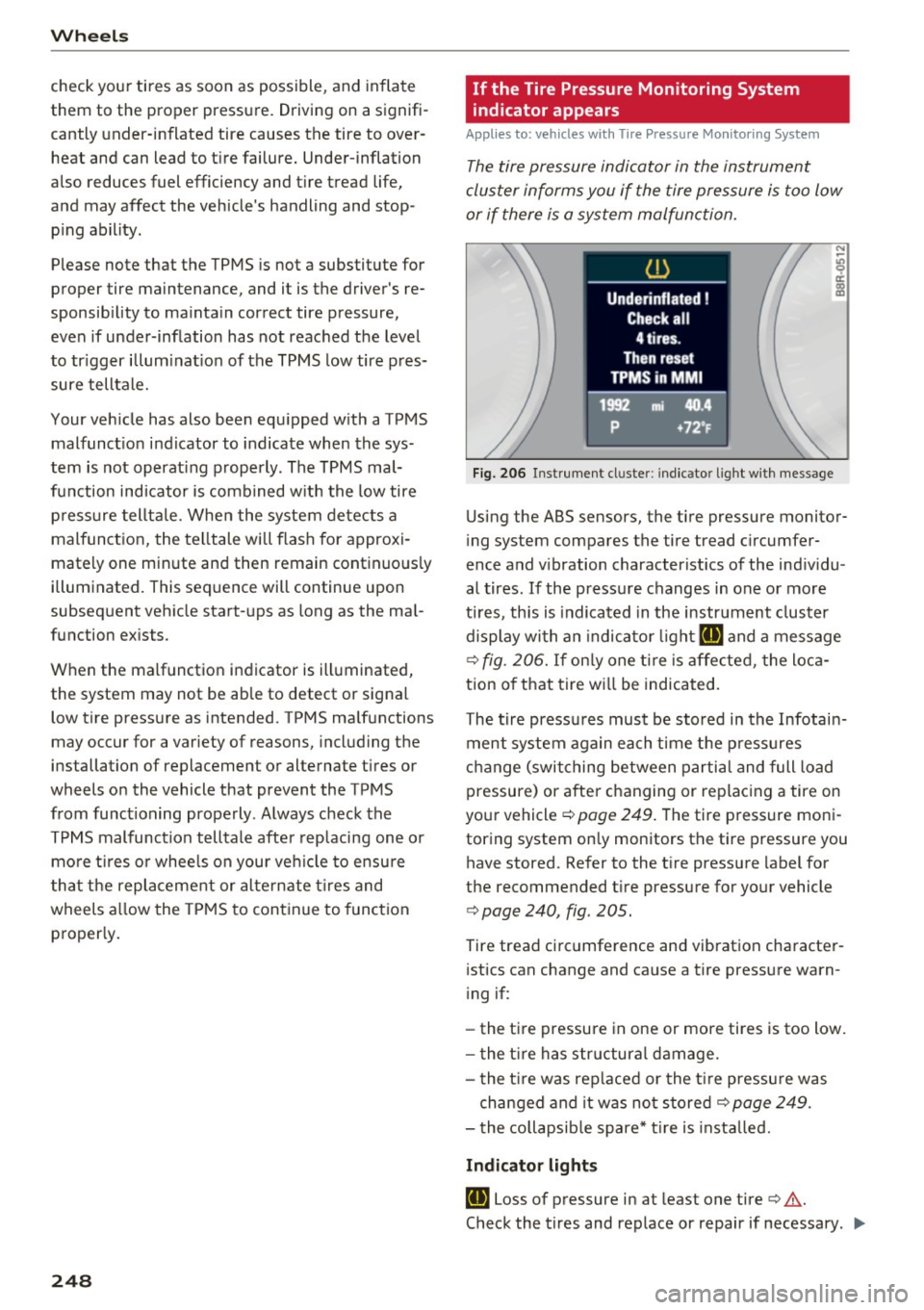
Fig. 206 Instrument cl uster: i ndic ator ligh t with message
Using the ABS sensors, the tire pressure monitor
ing system compares the tire tread circumfer
ence and vibration characteristics of the individu
al tires . If the pressure changes in one or more
tires , this is indicated in the instrument cluster
display with an indicator light
IE and a message
c>fig. 206. If only one tire is affected, the loca
tion of that tire will be indicated.
The tire pressures must be stored in the Infotain
ment system again each time the pressures
change (switching between partial and full load
pressure) or after changing or replacing a tire on
your vehicle
c> page 249. The tire pressure moni
toring system only monitors the tire pressure you have stored. Refer to the tire pressure label for
the recommended tire pressure for your vehicle
c> page 240, fig . 205.
Tire tread circumference and vibration character
istics can change and cause a tire pressure warn
ing if:
- the tire pressure in one or more tires is too low.
- the tire has structural damage.
- the tire was replaced or the tire pressure was
changed and it was not stored
c> page 249 .
-the collapsible spare* tire is installed.
Indicator lights
IE Loss of pressure in at least one tire c> &.
Check the tires and replace or repair if necessary . .,.
Page 254 of 296
Emerg ency assis ta nce
_& WARNING
- Never use the spare tire if it is damaged or if
it is worn down to the tread wear indicators .
- If the inflatable spare tire is more than 6
years old, use it only in an emergency and
with extreme caut ion and careful driving.
- The inflatable spare tire is intended only for
temporary and short-term use . It should be
replaced as soon as poss ible with the nor
mal wheel and tire.
- The tire pressure value for the inflatable
spare tire is located on the driver's s ide B
pillar
~ page 240, fig. 205.
- Max imum permissible speed is SO mph
(80 km/h).
- Avoid full-throttle accelerat ion, heavy brak
ing, and fast cornering.
- When the air is let out of the inflatable
spare wheel, it does not ass ume its folded
shape for several hours . Until then, it can
not be placed back in the spare wheel well
and stowed sec urely .
- Never dr ive with more than one inflatable
spare tire.
- For technical reasons, the use of tire chains
on the inflatab le spare tire is not perm itted.
If it is necessa ry to drive w ith tire chains,
the in flatable spare wheel m ust be mounted
on the front ax le in the event of a flat in a
rear tire. The newly avai lab le front wheel
must then be installed in place of the rear
wheel w ith the flat tire. Installing the tire
chain before mounting the wheel and tire is
recommended .
- Loose items in the passenger compartment
can cause ser ious personal injury during
hard braking or in an accident . Never store
the inflatable spare t ire or jac k* and tools in
the passenger compartment.
0 Note
- The inflatable spare tire has been developed
spec ifically for this vehicle model. It must
not be exchanged or used for other vehicle
models. Similarly, inflatable tires from oth
er vehicle models mus t no t be used.
252
- Norma l summer or winte r tires must not be
installed on the inflatable tire rim .
Inflating inflatable spare tire
Applies to: vehicles with inflatable spa re ti re
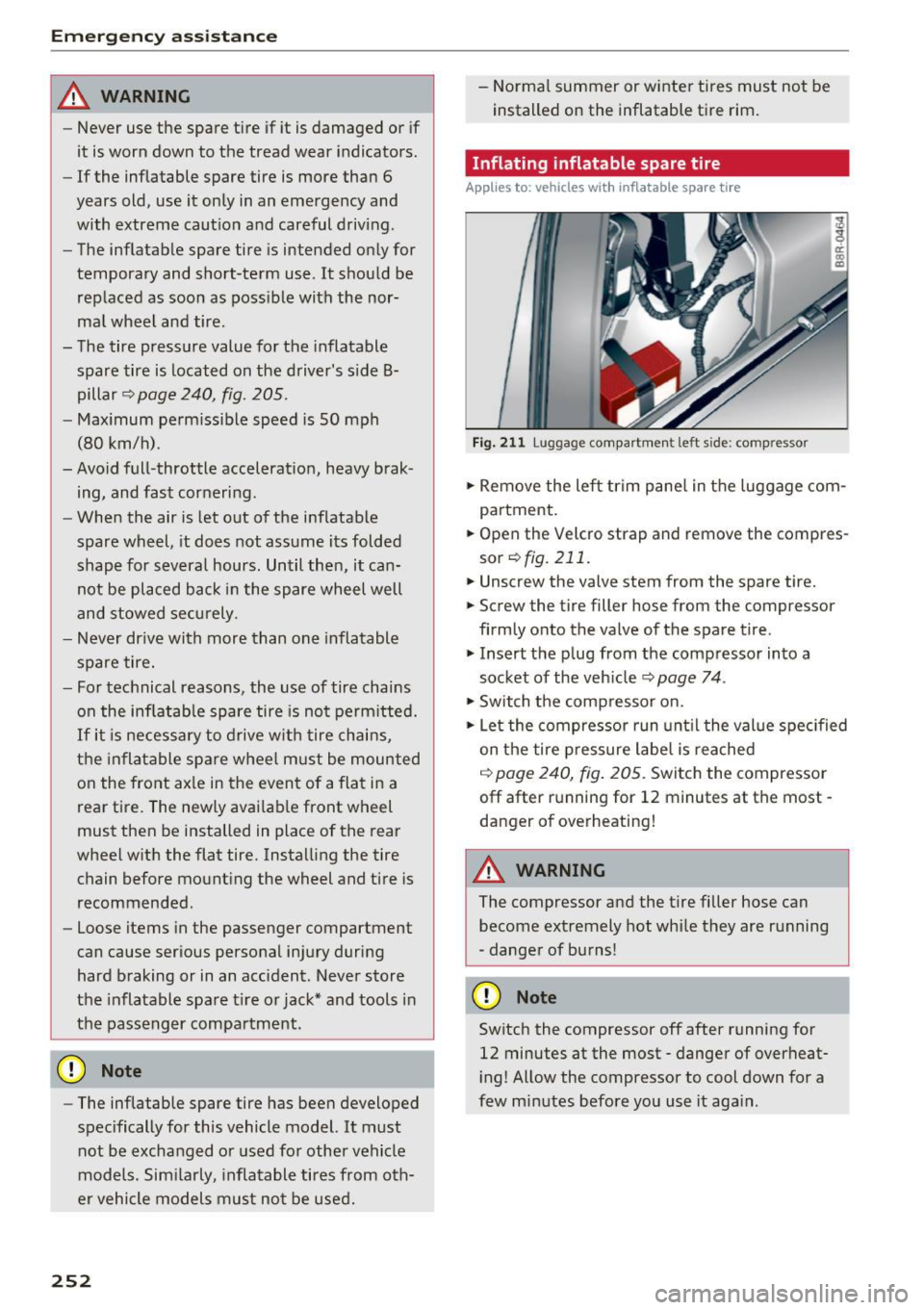
F ig . 211 Luggage compart men t left s ide : comp ressor
.,. Remove the left tr im pane l in the luggage com
partment.
.. Open the Velcro strap and remove the compres
sor
~ fig. 211.
.. Unscrew the valve stem from the spare tire.
.,. Screw the tire filler hose from the compressor
firmly onto the valve of the spare t ire.
.,. Insert the plug from the comp ressor into a
socket of the veh icle
~ page 74 .
.,. Switch the comp ressor on.
.,. Let the compressor run unt il the value spec ified
on the tire p ressure label is reached
~ page 240, fig. 205. Switch the compressor
off after r unning for 12 minutes at the most -
danger of overheating!
A WARNING
The compressor and the tire filler hose can become extremely hot whi le they are running
- danger of burns!
(D Note
Switch the compressor off after running for
12 minutes at the most - danger of overheat
i ng! Allow the compressor to cool down for a
few minutes before you use it aga in .
-
Page 257 of 296
CD
CD
.... N ,-... N ..... 0 0 C<'. 00
(D Note
Special care is required if you are repairing
the tire on a steep incline.
@ Tips
- Do not operate the compressor for more
than 12 minutes continuously, otherwise it
can overheat. Once the compressor has
cooled, you can continue to use it.
- If sealant has spi lled out, let it dry and then
you can remove it by peeling it away like a
foil.
- Remember to obtain a new bott le of sealant
from your authorized Audi dealer after re
pair ing a tire. After this, the functionality of
the tire repair set is restored .
- Obey all laws.
Replacing wheels
Before changing a wheel
Observe the following precautions for your own
and your passenger's safety when changing a
wheel.
"" After you experience a tire failure, pull the car
well away from moving traff ic and try to reach
level ground before you stop¢_& .
.. All passengers sho uld
leave the car and move
to a safe location (fo r instance, behind the
guardrai l) ¢ .&_ .
.. Engage the
par king b rake to prevent yo ur vehi
cle from roll ing unintentionally ¢&_ .
.. Move
selecto r le ver to po sitio n P ¢ &_ .
"" If you are towing a trailer: unh itch the trailer
from your veh icle.
"" Block the diagonally opposite wheel with the
folding chocks o r other objects .
""T ake the
jac k* and the inflatable spa re tir e*
out of the luggage compartment¢ page 250 .
A WARNING
You or your passengers cou ld be inj ured while
changing a wheel if you do not follow these
safety precautions:
- If you have a flat tire, move a safe distance
off the road. Turn off the engine, turn the
Em ergenc y ass is tanc e
emergency flashers on and use other wa rn
ing dev ices to alert other motorists.
- Make sure that passengers wait in a safe
place away from the vehicle and well away
from the road and traff ic.
- To help prevent the veh icle from moving
suddenly and possib ly slipping off the jack*,
always fully set the parking brake and block
the wheel diagonally opposite the wheel be i n g changed with the fold ing c hocks or oth
er objects . When one front whee l is lifted
off the ground, placing the Automatic
Transmission in P (Park) w ill
not prevent the
veh icle from moving.
- Before you change a wheel, be sure the
gro und is leve l and firm.
If necessary, use a
sturdy board under the jack*.
- Always s tore the vehicle too l kit, the jack*
and the replaced tire in the lugg age com
partment
¢ page 136.
Changing a wheel
When you change a wheel, follow the sequence
described below s tep-by -step and in exactly that
order.
1. Remove the de corative wheel cover* . For
more detai ls see also
¢page 256, Decaro-
tive wheel covers
o r r::!> poge 256, Wheels
with wheel bolt cops .
2. Loosen the w
heel bolts¢ page 256 .
3. Locate the proper mounting point for the
jack* and align the jack* below that point
¢ page 257.
4. Li ft the car with the jack*¢ page 257.
s. Remove the wheel with th e flat tire and then
insta ll the
inflatable spar e tire*
¢ page 258.
6. Tighte n all whee l bolts lightly.
7 .
Lo wer the vehicle wi th the jack *.
8 . Use the whee
l bolt wrench and
firml y tighten
all wheel bo lts
r::!> poge 256 .
9. Replace the decorat ive wheel co ver* .
255
...
Page 264 of 296
Fuses and bulbs
Left cockpit fuse assignment
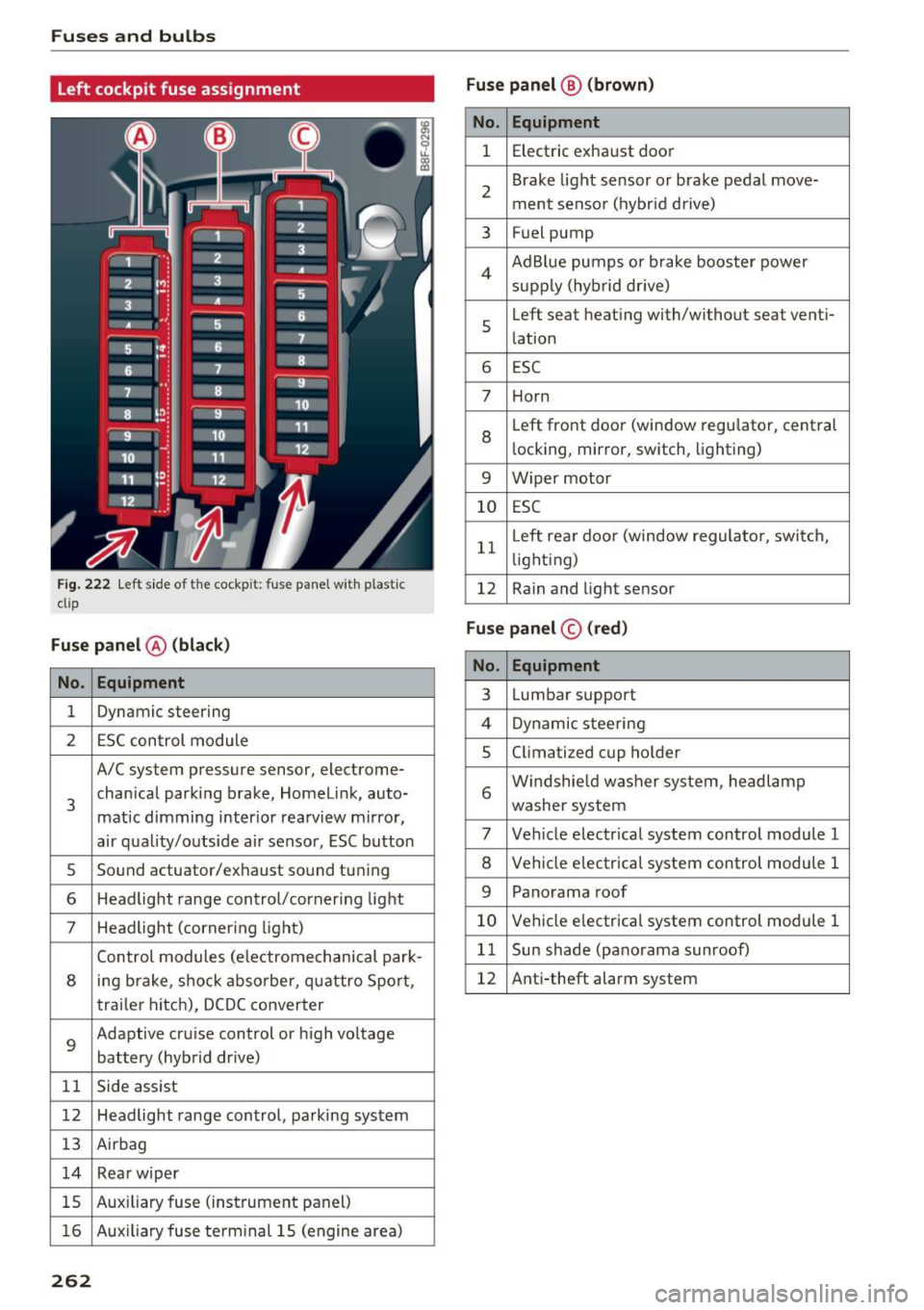
Fig. 222 Left side of the cockp it: fuse panel with p lastic
clip
Fuse panel @ (black)
No . Equipment
1 Dynamic steering
2 ESC control module
A/C system pressure sensor, electrome-
3 chanical parking
brake, Homelink, auto-
matic dimming interior rearview mirror,
air quality/outside air sensor, ESC button
s Sound actuator/exhaust sound tuning
6 Headlight range control/corner ing light
7 Headlight (cornering light)
Control modules (electromechanical park-
8 ing brake, shock absorber, quattro Sport,
trailer hitch), DCDC converter
9
Adaptive cruise control or high voltage
battery (hybrid dr ive)
11 Side assist
12 Headlight range control, parking system
13 Airbag
14 Rear wiper
15 Auxiliary
fuse (instrument panel)
16 Auxiliary fuse te rm inal 15 (engine area)
262
Fuse panel ® (brown)
No. Equipment
1 Electric exhaust door
2 Brake
light sensor or brake pedal move-
ment sensor (hybrid drive)
3 Fuel pump
4 Ad
Blue pumps or brake booster power
supply (hybrid dr ive)
s
Left seat heating with/without seat venti-
lation
6 ESC
7 Horn
8
Left front doo r (window regulator, central
locking, mirror, switch, lighting)
9 Wiper motor
10 ESC
11 L
eft rear doo r (window regulator, switch,
li ght ing)
12 Rain and light sensor
Fuse panel
© (red)
No. Equipment
3 Lumbar support
4 Dynamic steering
5 Climatized cup holder
6 Windshie
ld washer system, headlamp
washer system
7 Vehicle electrical system control module 1
8 Vehicle electrical system control module 1
9 Panorama roof
10 Vehicle electrical system control module 1
11 Sun shade (panorama sunroof)
12 Anti-theft alarm system
Page 265 of 296
a,
a,
..... N r-N ..... 0 0
0:
co
Right cockpit fuse assignment
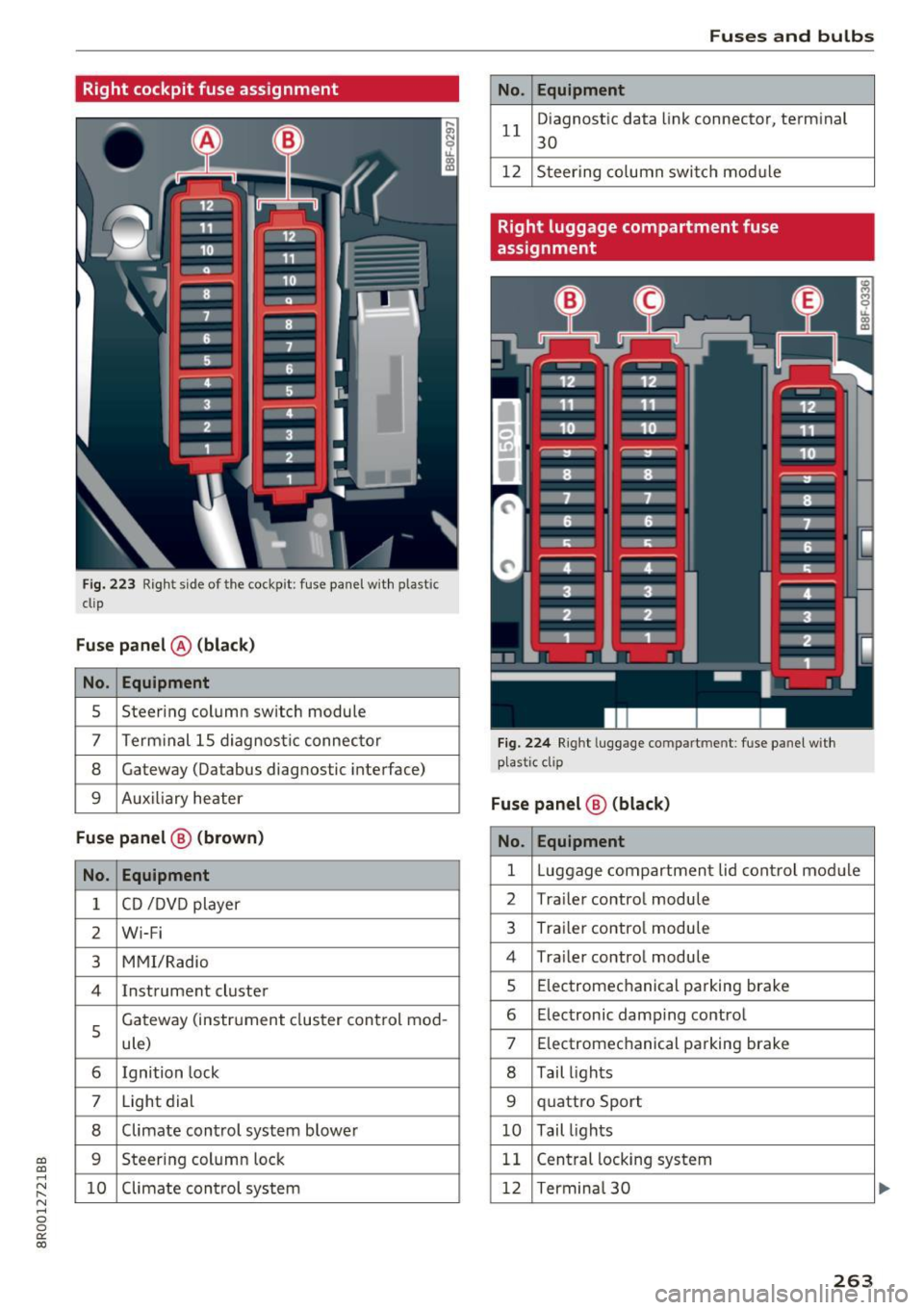
Fig. 223 Right side of the cockpit: fuse panel wit h plastic
clip
Fuse panel @ (black)
No . Equipment
5 Steering column switch module
7 Terminal 15 diagnostic connector
8 Gateway (Databus diagnostic interface)
9 Auxil iary heater
Fuse panel @ (brown)
No. Equipment
1 CD /DVD player
2 Wi-Fi
3 MMI/Radio
4 Instrument cluster
5
Gateway (instrument cluster control mod-
ule)
6 Ignition lock
7 Light dial
8 Climate control system blower
9 Steering column lock
1 0 Climate control system
Fuses and bulbs
No . Equipment
11 Diagnostic data
link connector, terminal
30
12 Steering column switch module
Right luggage compartment fuse
assignment
Fig. 224 Right luggage compartment: fuse panel with
pla stic dip
Fuse panel @ (black)
No. Equipment
1 Luggage compartment lid control module
2 Trailer control module
3 Traile r control module
4 Tra iler control module
5 Electromechanical parking brake
6 Electronic damping control
7 Electromechanical parking brake
8 Tail lights
9 quattro Sport
10 Tail lights
11 Central locking system
12 Termina l 30
263
Page 266 of 296
Fuses a nd bul bs
Fu se pa nel© (bro wn)
No. Equipment
1 Luggage compartment lid control module
2 12 V socket, cigarette lighter
3
DCDC converter path 1 or high vo ltage bat-
tery blower (hybrid drive)
4 DCDC converter path 2, DSP amp lifier, ra-
dio
7 Electromechanical
parking brake
9
Right front door (window regu lator, cen-
tral locking, mirror, switch, lighting)
11 Rear right
door (window regulator, switch,
lighting)
12 Cell phone preparation
F
use panel © (black )
No. Equipment
1 Rig ht
front seat heating/venti lation
2 Automatic dimming rearview mirror
3 Instrument
panel terminal 30
4 MMI
5 Radio
6 Rearview camera
7 Rear window defogger
8 Rear Seat Entertainment
11 AdBlue heating
12 Ad Blue supply or h
igh vo ltage battery (hy-
brid drive)
Bulbs
Replacing light bulbs
For your safety, we recommend that you have
your authorized Audi dealer replace burned out bulbs for you.
It is becoming increasingly more and more diffi
cult to replace vehicle light bulbs since in many
cases, other parts of the car must first be re
moved before you are able to get to the bu lb.
This applies espec ially to the light bulbs in the
front of your ca r wh ich you can only reach
through the eng ine compartment.
2 6 4
Sheet meta l and bu lb holders can have sharp
edges that can cause serious cuts, and parts
must be correctly taken apart and then properly
put back together to help prevent breakage of
parts and long term damage from water that can
enter housings that have not been properly re
sealed.
For your safety, we recommend that you have
your authorized Audi dealer replace any bulbs for
you, since your dealer has the proper tools, the correct bulbs and the expertise.
Ga s d ischar ge lam ps (Xeno n light s)*:
Due to the high e lectrica l voltage, have the bulbs
rep laced by a qualified technician. Headlights
with Xenon light can be identified by the h igh
voltage sticker.
A WARNING
-
Contact with high-voltage components of the
electr ical system and improper replacement
of gas discharge (Xenon) headlight bulbs can
cause ser ious persona l injury and death .
- Xenon bulbs are pressur ized and can ex
plode when being changed .
- Changing Xenon lamps requires the special
tra ining, instruct ions and equ ipment .
- Only an authorized Audi dealer or other
qualified workshop should change the bulbs
in gas discharge lamps .
A WARNING
There are parts with sharp edges on the open
ings and on the bulb ho lders that can cause
serious cuts.
- If you are uncertain about what to do, have
the wor k performed by an authorized Audi
dea ler or other qual ified workshop. Ser ious
personal injury may resu lt from improperly
performed work .
(D Tips
-If you must replace the light bulbs you rself,
always remember that the eng ine compart
ment of any vehicle is a hazardous area to
work in. Always read and heed all WARN
INGS
¢page 217 ¢ &.