ABS AUDI Q5 2018 User Guide
[x] Cancel search | Manufacturer: AUDI, Model Year: 2018, Model line: Q5, Model: AUDI Q5 2018Pages: 392, PDF Size: 60.56 MB
Page 143 of 392
u co ..... N r--N ..... 0 <( 0 00
-Press t he acce lerato r pedal ca refully whe n
acce le ratin g on smooth , sli ppery sur faces
s u ch as ice and snow. The dr ive whee ls can
spin even w hen th ese con trol systems are
ins tall ed a nd th is can a ffect drivi ng s tabili ty
a nd incr ease the r is k of a coll is io n.
(D Tips
- The ABS and ASR only function co rrectly
whe n all fo ur whee ls have a s imilar wear
Switching on and off
Intelligent Technology
c ondi tion . Diff erent tir e si zes can lea d to a
re duction in eng ine power.
- You may hear n oises when t he systems de
sc ribe d are wor king.
- Applies to: vehicles with roof racks supplied
by the factory: when in st alli ng the roof rac k
s upplie d by t he factory on t he roof rail, se n
so r tec hno logy is use d to adjust the ESC to
any poss ible c hange in t he ve hicle's cente r
of grav ity resu lting from the load.
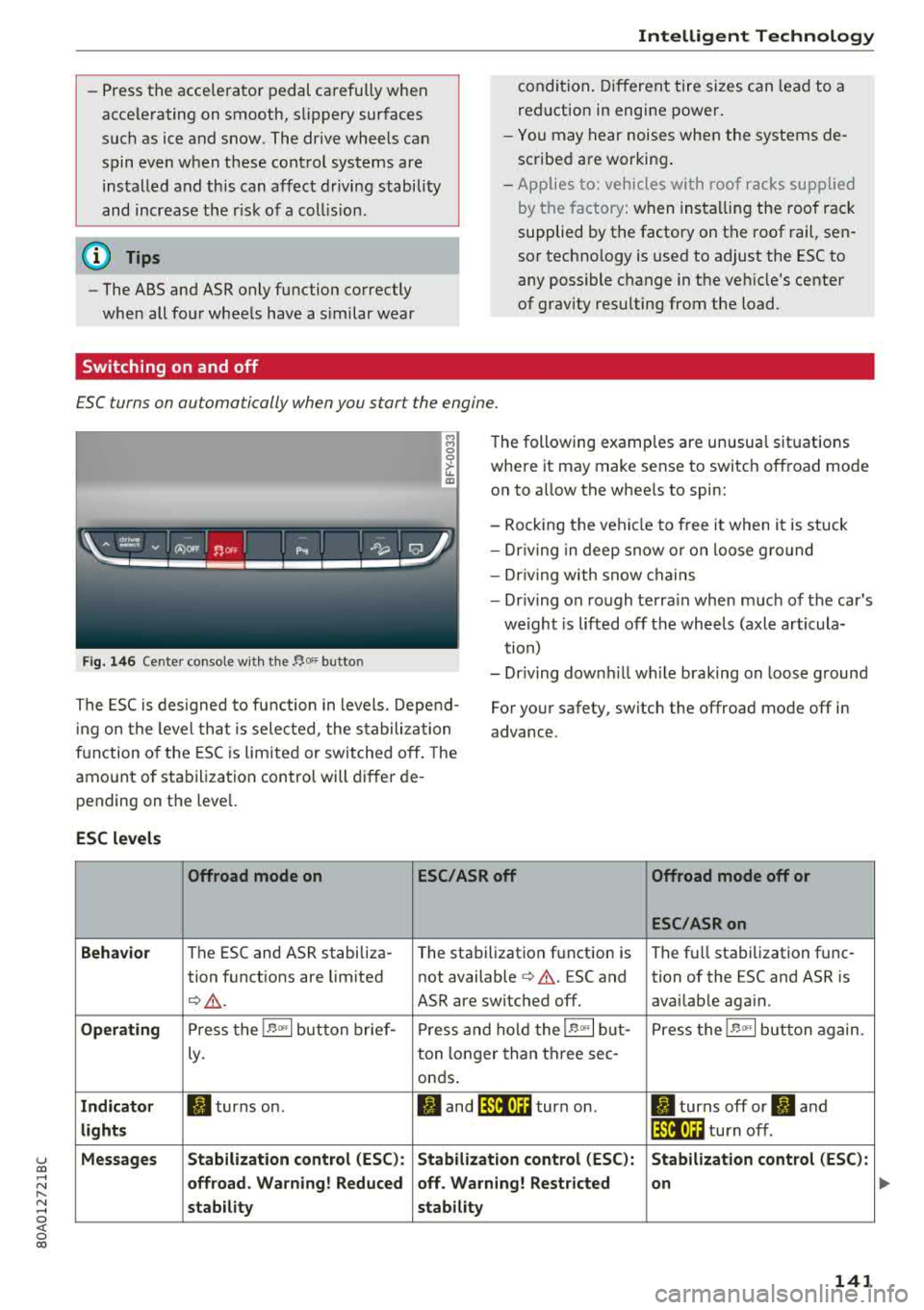
ESC turns on automatically when you start the engine.
F ig. 146 Ce nte r co nso le w it h th e 1',oFF butto n
The following examp les are unusua l situations
whe re it may make se nse to switch off road mode
o n to a llow the whee ls to spin:
- Rock ing t he veh icle to free i t when it is stuck
- Dr iv ing in deep snow o r on loose g ro und
- Dr iv ing with snow c hains
- Dr iv ing on ro ugh te rra in when much of the car 's
we ight is lifted off the wheels (axl e art icula
t ion)
- Dr iv ing down hill while b raking on loose g round
T he ES C is des igned to fu nction in levels . Depe nd
in g on the leve l that i s sele cted , the s ta b ili zat io n
f u nction o f the ES C i s lim ite d or sw it c hed off . The
amo unt o f sta biliza tio n control will differ de
pending on t he leve l. For yo
ur safety, switch the offroad mode off in
advance.
ESC levels
Offroad mode on ESC/ASRoff Offroad mode off or
ESC/ASRon
Behavior
T he ESC and ASR stabiliza -
The sta bilization f unction is T
h e f ull stabilizatio n fu nc -
tion f unct ions are limited not available
c> & . ESC and tion of the ESC and ASR is
Q _& . ASR are switc hed off . availab le aga in.
Operating P ress the 1.$ <>, I button brief - Pr ess and hold t he 1.$ <>, I but- P ress the 1.$ <>, I button again .
Ly. ton
lo n ge r than th ree sec -
on ds.
Indicator II turns on . JI and lf'lii•)H turn on. II turns off or II and
lights lf'lii•)~~ tu rn off.
Messages Stabilization control (ESC
): Stabil .ization control (ESC): Stabilization control (ESC ):
offroad . Warning! Reduced off . Warning! Restricted on
stability stability
141
..
Page 144 of 392
Intelligent Technology
A WARNING
You should only switch offroad mode on or
switch ESC/ ASR
off if your driving abilities
and the traff ic conditions perm it. There is a
r isk of slid ing.
- The stabilization function is limited when
offroad mode is switched on. The driving
wheels cou ld spin and the vehicle could
swerve, espec ially on slick or slippery road
surfaces.
- There is no vehicle stab ilizat ion when ESC/
ASR are switched
off .
Hill descent assist
Hill descent assist makes it possible to drive
down a hill at a constant speed.
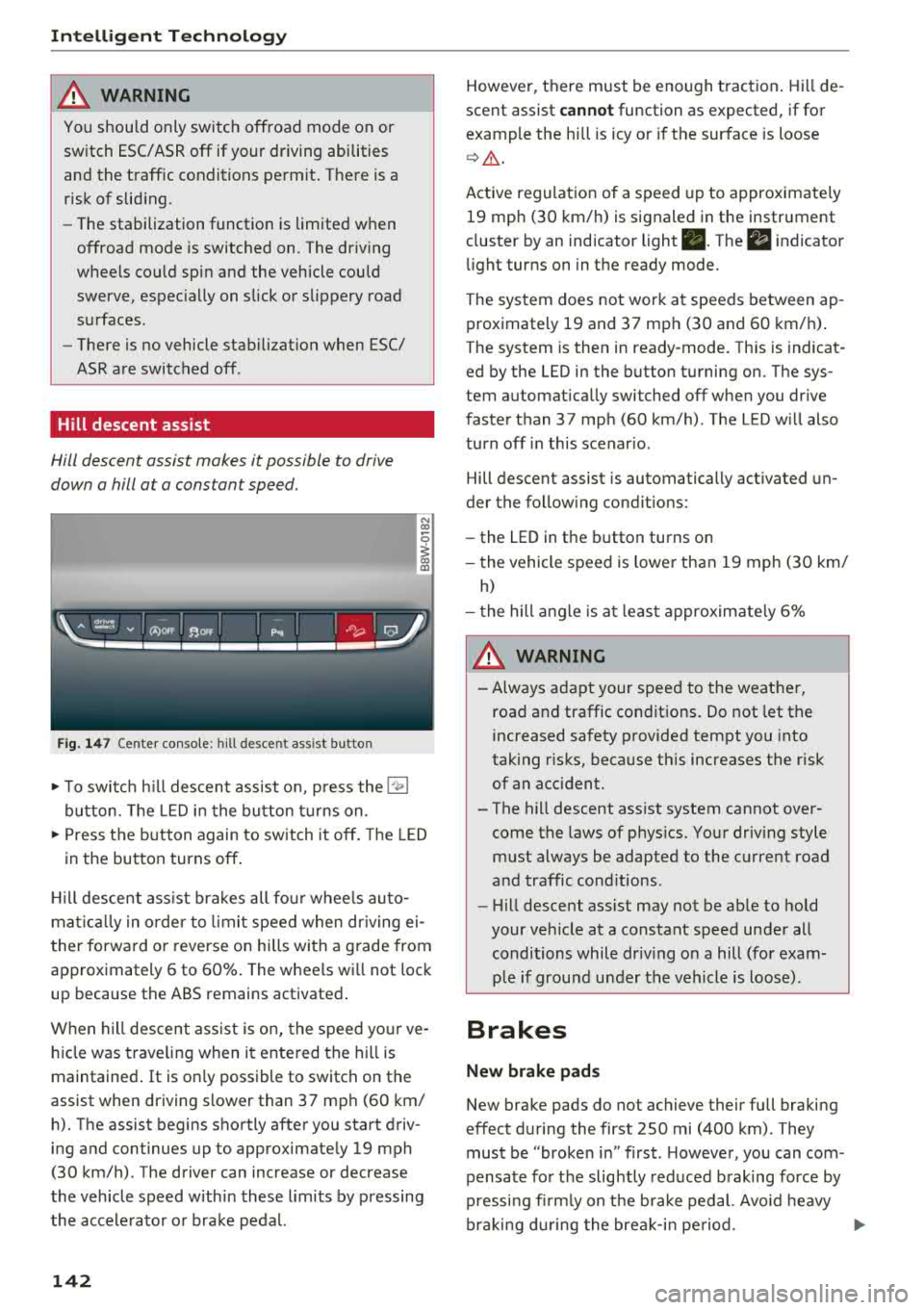
F ig . 147 Center console: hill desce nt ass ist button
.,. T o switc h hill descent assist on, press the l"l;,1
button. The LED in the button turns on.
-
N co
0
~ ID
.,. Press the button again to switch it off. The LED
in the button turns
off .
Hill descent ass ist brakes all fo ur whee ls auto
mat ically in o rder to limit speed when dr iving ei
ther forward or reverse on hills with a g rade from
approximately 6 to 60%. The wheels wi ll not lock
up because the ABS remains activated .
When hill descent ass ist is on, the speed yo ur ve
hicle was traveling when it ente red the hill is
maintained .
It is only possible to switch on the
assist when driving slower than 37 mph (60 km/
h). The assist begins shortly after you start driv
ing and continues up to approximate ly 19 mph
(30 km/h) . The driver can increase or decrease
the vehicle speed with in these limits by pressing
the accelerator or brake pedal.
142
However, there must be enough traction . Hi ll de
scent assist
cannot function as expected , if for
example the hill is icy or if the surface is loose
c> ,& .
Active regulation of a speed up to approximate ly
19 mph (30 km/h) is signaled in the instrument
cluster by an indicator light
• . The ii indicator
li ght turns on in the ready mode.
The system does not work at speeds between ap
proximately 19 and 37 mph (30 and 60 km/h).
The system is then in ready-mode. Th is is indicat
ed by the LED in the button turning on. The sys
tem automat ically switched off when you dr ive
faster than 37 mph (60 km/h) . The LED w ill also
turn off in this scenar io .
Hill descent assist is automatically activated un
der the follow ing condit ions:
- the LED in the button turns on
- the vehicle speed is lower than 19 mph (30 km/
h)
-the hill angle is at leas t approximate ly 6%
A WARNING
- Always adapt your speed to the weathe r,
road and traffic conditions . Do not let the
increased safety provided tempt you into
taking risks, because this increases the risk
of an accident .
- The hill descent assist system cannot over
come the laws of phys ics. Your driving style
must always be adapted to the current road
and traffic cond itions .
- Hill descent ass ist may not be ab le to hold
your veh icle at a constant speed under all
conditions while dr iv ing on a hill (fo r exam
p le if ground under the vehicle is loose).
Brakes
New brake pads
-
New brake pads do not achieve their full braking
effect during the first 250 mi (400 km). They
must be "broken in" first . H owever, you can com
pensate for the slightly reduced braking force by
pressi ng fi rml y on t he brake pedal. Avo id heavy
braking during the break-in period .
..,.
Page 235 of 392
u C0 .... N ,..._
N
adapter(¢ page 231). They may impair the
functionality.
- You can purchase the AUX connector cable
from an authorized Audi dealer or at spe
cialty stores.
- Audi recommends setting the volume of a
mobile device connected to the AUX input to
approximately 70% of the maximum vol ume .
- Functionality is not guaranteed for mobile
devices that do not conform to the USB 2.0
specification.
- USB hubs are not supported.
- Some versions of the iPod such as the iPod
shuffle cannot be connected to the USB
adapter for devices with Apple Dock connec
tor. Connect these devices using a AUX con nector cable.
- Changed content on a mobile device
l) that
is connected to the Audi music interface
may not be displayed in the media center.
In this case, reset the
Media settings back
to
Factory settings ¢ page 246.
- Video playback through the Audi music in
terface is only supported if the connected
device is recognized as a USB storage device
(for example a USB stick). Apple devices and
MTP devices (such as smartphones) are not
recognized as USB storage devices.
- iPod/iPhone malfunctions also affect the
operation of the MMI. Reset your iPod/
iPhone if this happens.
- Audi recommends updating the iPod/iPhone
software to the latest version. For impor
tant information on operating your iPod/ iPhone, refer to the user guide for the de
vice.
- The USB adapter on the Audi music inter
face will support iPod touch/iPhone from
the 5th generation or later with the light
ning connector.
- For more information about the Audi music
interface and supported devices, check the
Audi database for mobile devices at
www .audiusa .com/mp3 or contact an au -
.... o l) A ppli es o nly t o MTP devic e s. Doe s not a pply to Ap ple de vi
thorized Audi dealer or authorized Audi
Service Facility.
USB charging ports in the rear
Applies to: vehicles with USB charging ports in the rear
You con charge the battery on your mobile device
through a USB charging port.
Two USB charging ports are located at the back
of the center console .
-USB adapter: refer to ¢ page 2 31, USB adopter
for Audi music interface or USB charging port.
- Charging a mobile device using the USB
adapter:
connect your mobile device to a USB
charging port using a suitable USB adapter.
- Disconnecting a mobile device from the charg
ing port:
remove the USB adapter from the USB
charging port .
-Disconnecting mobile devices with an Apple
Dock connector :
remove the Apple Dock con
nector from the Apple device with the release
tabs pressed in.
A WARNING
= -
Driving requires your complete and undivided
attention. As the driver, you have complete
responsibility for safety in traffic. Never oper
ate your mobile devices while driving, because
this increases the risk of an accident.
@ Note
Extremely high or low temperatures that can
occur inside vehicles can damage mobile devi
ces and/or impair their performance . Never
leave mobile devices in the vehicle in ex
tremely high or low temperatures .
(D Tips
-In preparation at the time of printing.
- Always follow the information found in
<=> page 60 .
-When you switch the ignition off, the USB
ports are still supplied with power until the
energy management intervenes .
233
Page 260 of 392
Driving safety
A WARNING
Heavy loads will influence the way your vehi
cle handles . To help reduce the risk of a loss
of control leading to serious personal injury:
- Always keep in mind when transporting
heavy objects, that a change in the center of
gravity can also cause changes in vehicle
handling:
- Always distribute the load as evenly as
possible.
-Place heavy objects as far forward in the
luggage compartment as possible.
- Never exceed the Gross Axle Weight Rating
or the Gross Vehicle Weight Rating specified
on the safety compliance sticker on th e driv
er's side B-pillar. Exceeding permissible
weight standards can cause the vehicle to
slide and handle differently .
- Please observe information on safe driving
<=) page 252.
A WARNING
To help prevent poisonous exhaust gas from
being drawn into the vehicle, always keep the
rear lid closed while driving .
- Never transport objects larger than those
fitting completely into the luggage area be cause the rear lid cannot be fully closed .
- If you absolutely must drive with the rear lid
open, observe the following notes to reduce
the risk of poisoning:
- Close all windows,
- Close the sunroof*,
-Open all air outlets in the instrument pan-
el,
- Switch off the air recirculation,
- Set the fresh air fan to the highest speed .
A WARNING
Always make sure that the doors, all win
dows, the sunroof* and the rear lid are se
curely closed and locked to reduce the risk of
injury when the vehicle is not being used .
-After closing the rear lid , always make sure
that it is properly closed and locked.
258
-Never leave your vehicle unattended espe
cially with the rear lid left open. A child
could crawl into the vehicle through the lug
gage compartment and close the rear lid be
coming trapped and unable to get out . Be
ing trapped in a vehicle can lead to serious
personal injury.
- Never let children play in or around the vehi
cle .
- Never let passengers ride in the luggage
compartment . Vehicle occupants must al
ways be properly restrained in one of the
ve
hicle 's seating positions.
@ Note
If you are transporting large items with the
backrest folded down*, you should remove
the Rear Seat Entertainment (RSE)* and its
holder* to avoid damage.
© Tips
-Air circulation helps to reduce window fog
ging. Stale air escapes to the outside
through vents in the trim panel. Be sure to
keep these slots free and open .
-The tire pressure must correspond to the
load. The tire pressure label lists the recom
mended cold tire inflation pressures for the
vehicle at its maximum capacity weight and
the tires that were on your vehicle at the
time it was manufactured. For recommend ed tire pressures for normal load condi
tions, please see chapter
Q page 336 .
Tie-downs
The luggage compartmen t is equipped with four
t ie-downs to secure luggage and o ther i tems.
Use the tie-downs to secure your cargo properly
Qpage 25 7, L oading the luggage compartment.
In a collision , the laws of physics mean that even
smaller items that are loose in the vehicle will
become heavy missiles that can cause serious in
jury. Items in the vehicle possess ene rgy which
vary with vehicle speed and the weight of the
item . Vehicle speed is the mos t significant fac tor .
..,.
Page 264 of 392
Safety belts
Why use safety belts?
Frontal collisions and the law of physics
Frontal crashes create very strong forces for peo
ple riding in vehicles .
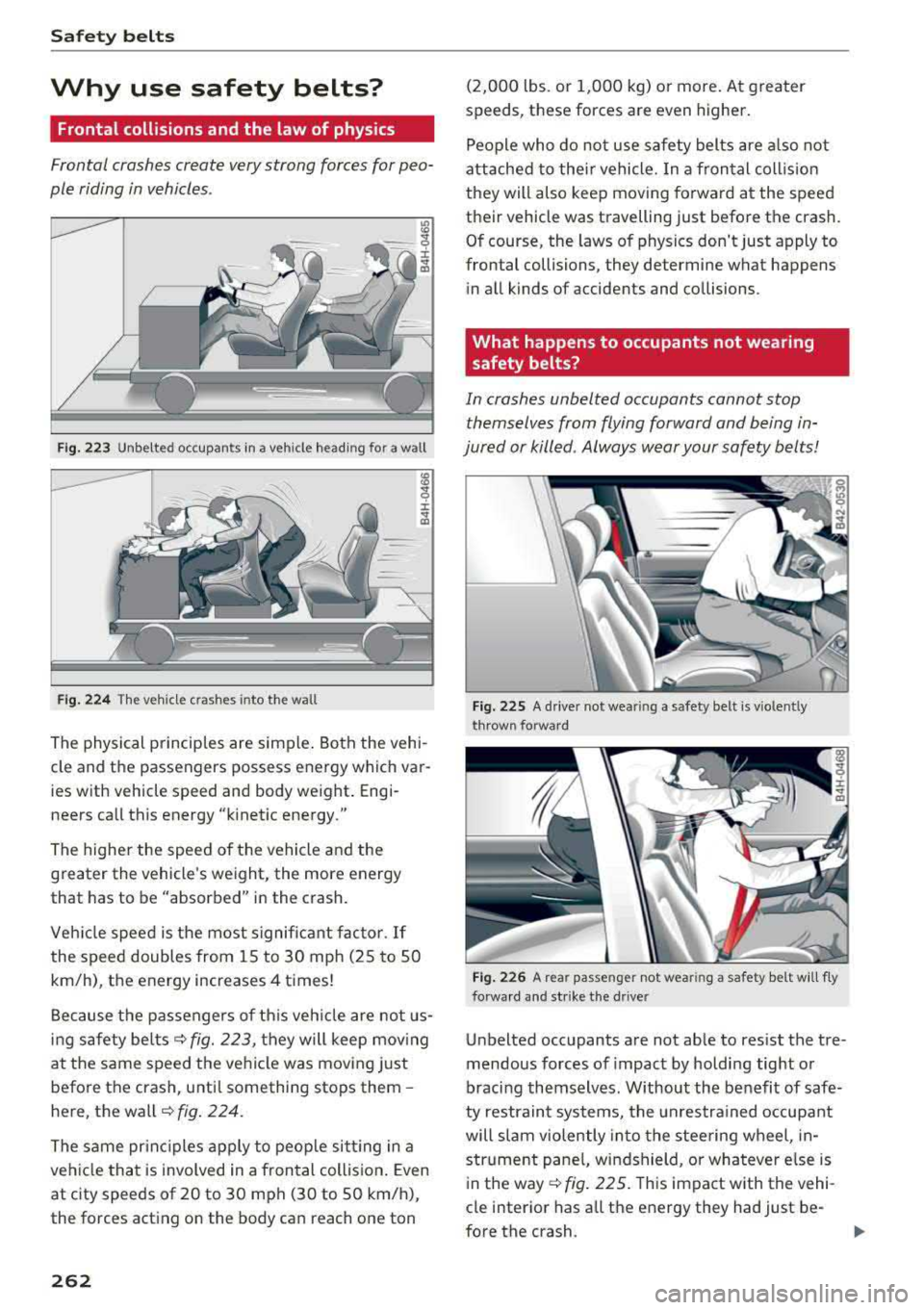
Fig. 223 Unbelted occupants in a veh icle headi ng fo r a wall
Fig. 224 The vehicle c rashes into the wall
The physical principles are simple. Both the vehi
cle and the passengers possess energy which var ies w ith vehicle speed and body weight. Engi
neers call this energy "k inetic energy."
The higher the speed of the vehicle and the
greater the vehicle's weight, the more energy
that has to be "absorbed" in the crash.
Vehicle speed is the most significant factor .
If
the speed doubles from 15 to 30 mph (25 to 50
km/h), the energy increases 4 times!
Because the passengers of this vehicle are not us
ing safety belts
qfig. 223, they will keep moving
at the same speed the vehicle was moving just
before the crash, unti l something stops them -
here, the wall
q fig . 224.
The same principles apply to people sit ting in a
vehicle that is involved in a frontal collision . Even
at c ity speeds of 20 to 30 mph (30 to 50 km/h),
the forces acting on the body can reach one ton
262
(2,000 lbs. or 1,000 kg) or more . At greater
speeds, these forces are even higher.
People who do not use safety belts are also not
attached to their vehicle. In a frontal collis ion
they will also keep moving forward at the speed
their vehicle was travelling just before the crash.
Of course, the laws of physics don't just apply to
frontal collisions, they determine what happens in all kinds of accidents and collisions .
What happens to occupants not wearing
safety belts?
In crashes unbelted occupants cannot stop
themselves from flying forward and being in
jured or killed . Always wear your safety belts!
Fig. 225 A drive r not wea ring a safety belt is vio len tly
t hrow n fo rward
Fig. 226 A rear passe nge r not wear ing a sa fety belt will fly
forward and str ike t he drive r
Unbelted occupants are not able to res ist the tre
mendous forces of impact by holding tight or
bracing themselves. Without the benefit of safe
ty restraint systems, the unrestra ined occupant
will slam violently into the stee ring wheel, in
strument panel, windshield, or whatever e lse is
in the way
q fig . 225. T his impact with the vehi
cle interior has all the energy they had just be-
fore the crash.
liJJ,-
Page 265 of 392
u co ..... N r-N .....
~ 0 co
Never rely o n airbags a lone fo r protection . Even
when t hey deploy, airbags provide on ly additiona l
protection. Airbags are not supposed to dep loy in
all kinds of accidents. A lthough your Audi is
equ ipped w ith airbags, all vehicle occupants, in
cluding the dr iver, must wear safety belts cor
rectly in order to minimize the risk of severe in
jury or death in a crash .
Remember too, that airbags will deploy only
once and that your safety belts are always there
to offer protection in those acc idents in w hich
airbags are not supposed to deploy or when they
have a lready deployed. Unbel ted occupants can
a lso be thrown o ut of the vehi cle where even
more severe or fatal injur ies can occur .
I t is also important for the rear passenge rs to
wear safety belts corre ctly . U nbel ted passengers
in the re ar seats endanger no t onl y themse lves
but also the driver and ot he r p assengers
¢ fig. 226. In a fronta l collision they will be
thrown forward violently, where they can hit and
in jure the driver and/or front seat passenger .
Safety belts protect
People think it's possible to use the hands to
brace the body in a minor collision . It 's simply
not true!
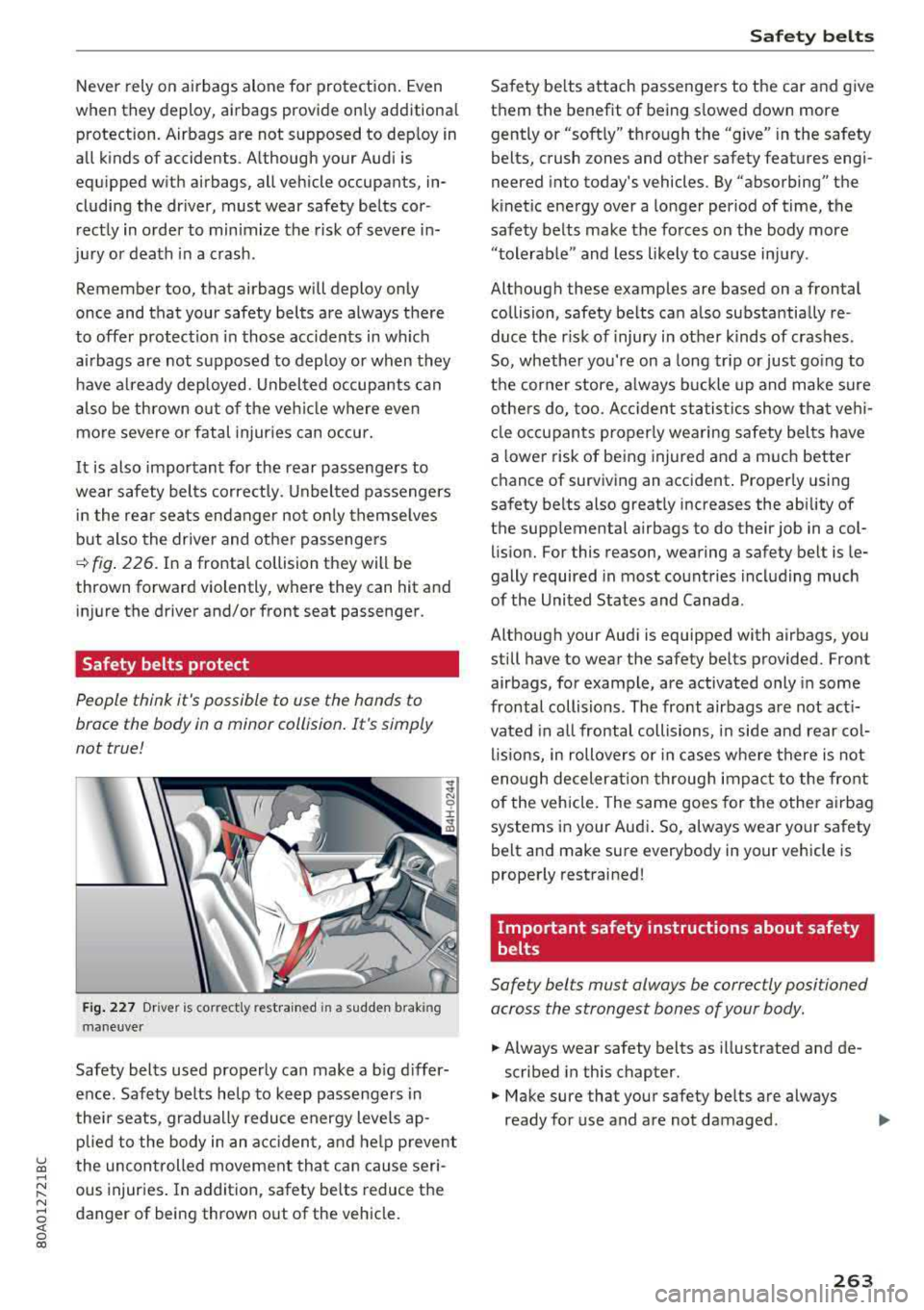
F ig. 22 7 Driver is correct ly restra ined in a s udden b rak ing
maneuve r
Safety belts used properly can make a b ig d iffer
e nce. Safety belts he lp to keep passenge rs in
thei r seats, gradually reduce energy levels ap
p lied to the body in an ac cid en t, and h elp p reven t
the uncon trolled movement tha t can cause seri
ous injuries . In addition, safety belts reduce t he
danger of being thrown out of the vehicle .
Safet y bel ts
Safety be lts attach passengers to the car and g ive
t h em the benefit of being s lowed down more
gently or "soft ly" th rough the "give" in the safety
belts, crush zones and other safety features engi
neered into today 's vehicles. By "absorbing" the
k inetic ene rgy over a longer period of t ime, the
sa fe ty belts make the fo rces on the body more
"tolerab le " and less likely to ca use in jury.
Although these examples are based on a frontal collision, safety be lts ca n also substa ntia lly re
duce the r is k of injury in ot her k inds of crashes.
So, whethe r you're on a long tr ip or just go ing to
t h e cor ner store, a lways b uck le up and make sure
othe rs do, too. A cciden t st atis tic s show tha t ve hi
cl e occupan ts properly wea ring safety bel ts have
a lower risk of be ing injured and a muc h better
chance of surviving an acci dent . Properly using
sa fety belts also great ly increases the ability of
the supp lemental airbags to do their job in a col
lis ion. For this reason, wearing a safety belt is le
gally required in most count ries includ ing much
of the United States and Canada .
Although your Aud i is equipped with airbags, you
still have to wear the safety belts provided. Front airbags, for example, are activated only in some
frontal collisions. The front airbags a re not ac ti
vated in a ll frontal collisions, in side and rear co l
li sio ns, in rollove rs o r in cases whe re there is not
eno ugh deceleration throug h impact to the front
of the veh icle. The same goes for the othe r airbag
systems in your Audi . So, always wear your safety
belt and make sure everybody in your vehicle is
properly restrained !
Important safety instructions about safety
belts
Safety belts must always be correctly positioned
across the strongest bones of your body.
.. Always wear safety belts as illustrated and de
scribed in this chapter.
.. Make sure that your safety be lts are always
ready for use and are not damaged.
263
Page 276 of 392
Airbag syste m
-Never hold the steering whee l at the 12
o'clock pos it ion or w ith your han ds any
where inside the steering wheel or on the steering wheel hub. Holding t he steering
wheel the wrong way increases the risk of severe injury to the arms, hands, and head if
the d river a irbag deploys.
A WARNING
Objects between you and the a irbag w il l in
crease the risk of inj ury in a crash by interfer
ing w ith the way the airbag unfo lds and/or by
being pushed into you as the airbag inflates .
- Always make sure nothing is in the front air-
bag deployment zone that could be str uck
by the airbag when it inflates.
-
- Objects in the zone of a deploying airbag
can become projectiles when the airbag de
ploys and cause serious persona l injury .
- Never hold th ings in your hands or on your
lap when the vehicle is in use.
- Never place accessor ies or other objec ts
(s uch as c up ho lders, telephone brackets,
note pads, navigation systems, or things
that are large, heavy, o r bulky) on the doors;
never attach then to the doors or the wind
shield; never place them over or near or at
tach them to the area marked
,,AIRBAG" on
the steering wheel, instrument panel or the seat backrests; never p lace them between
these a reas and yo u or any other person in
the vehicle.
- Never attach objects to the w indshield
above the passenger front airbag, s uch as
accessory GPS navigation uni ts or mus ic
players . S uch objects could ca use serio us in
jury in a collision, especially when the air bags inflate.
- Never recline the front passenger seat to transport objects . Items can also move into
the deployment area of the side a irbags or
the front a irbag during breaking o r in a sud
den maneuver. Objects near the airbags can
fly dangerous ly through the passenger com
partment and cause injury, particularly
when the seat is reclined and the airbags in
flate.
274
A WARNING
A person on the front passenger seat, espe
cially infants and small ch ildren, wi ll receive
serious in juries and can even be k illed by be
ing too close to the airbag when it inflates .
- Although the Advanced Airbag System in your veh icle is designed to turn off the front
passenger airbag if an infant o r a small child
is on the fron t passenger sea t, nobody can
absolu tely guarantee tha t deployment un
de r these specia l condi tions is impossible in
all conceivable situations that may happen
during the useful life of yo ur vehicle.
- The Advanced Airbag System can dep loy in
accordance with the
,. low risk" option for 3-
and 6-year-old children under the U.S. Fed
eral Standard if a child w ith electrical capac
itance greater than the combined capac i
tance of a typical one-year o ld infant re
strained in one of the forward facing or rea r
ward-facing chi ld seats with which yo ur ve
hicle was certified is on the front passenger
seat and the o ther conditions for airbag de-
ployment are me t.
- Accident s tatisti cs have shown th at children
are generally safer in the rear seat are a than
in the front seat ing pos ition.
- For their own s afety, all ch ildren, especi ally
12 years and younger, should alw ays ride in
the back proper ly restrained for their age
and size .
Advanced front airbag system
Your vehicle is equipped with a front Advanced
Airbag System in compliance with United States
Federal Motor Vehicle Safety Standard (FMVSS)
208, as well as Canada Motor Vehicle Safety
Standard (CMVSS) 208 as applicable at the t ime
you r vehicle was manufactured .
-
The front Advanced Airbag System supplements
the safety belts to provide add itiona l protect ion
for the driver 's and front passenger's heads and
upper bod ies in fronta l crashes. The a irbags in
flate only in frontal impacts when the vehicle de-
ce le ra tion is high e no ugh.
II>-
Page 278 of 392
Airbag syste m
-If you are unrestrained, leaning forward, sit
t ing s ideways or out of pos ition in any way,
your risk of injury is much h igher.
- You will also receive serious injuries and
could even be killed if you are up aga inst the
airbag or too close to it when it inflates -
even with an Advanced
Airbag ¢ page 269.
A WARNING
A child in a rearward -facing child safety seat
installed on the front passenger seat w ill be
ser iously injured and can be killed if the front
airbag inflates - even w ith an Advanced Ai rbag
System.
- Although the Advanced A irbag System in
yo ur vehicle is designed to tu rn off the front
airbag when a rearward-facing child re
straint has been insta lled on the front pas
senger seat, nobody can absolutely guaran
tee that deployment is impossible in all con
ceivable s ituations that may happen during
the useful life of your vehicle.
- The inflating a irbag w ill hit the child safety
seat or infant carrier with great force and
will smash the chi ld safety seat and child
against the backrest, center armrest, door,
o r roof .
- Always install rearward -facing ch ild re
straints on the rear seat .
- If you must install a rearward fac ing ch ild
safety seat on the front passenger seat be
cause of exceptional circumstances and the
PASSENGER AIR BAG OFF ~; light does not
come on and s tay on, immed iate ly install
the rear-fac ing ch ild safety sea t in a rear
seat ing pos ition and have the airbag system
inspected by your authorized Audi dea ler.
A WARNING
If, in exceptional circumstances, you must in
stall a forward-facing chi ld restraint on the
front passenger's seat :
- Always make sure the forward-facing seat
has been designed and cert ified by its man
ufacturer for use on a front seat with a pas
senger front and side a irbag.
276
- Never put the forward-facing child restraint
up against or very near the instrument pan
el.
- Always move the front passenger seat to
the highest posit ion in the up and down ad
justment range and move it back to the rearmost posit ion in the seat's fo re and aft
ad justment range, as far away from the a ir
bag as poss ible, before installing the for
ward-f acing chi ld restrain t.
- Always make sure that the safety be lt upper
anchorage is behind the ch ild rest raint and
not next to o r in fron t of the child rest raint
so that the safety be lt will be p roperly posi
tioned.
- Always make sure that there is noth ing on
the front passenger seat tha t will cause the
capacitive passenger detection system in
the seat to signal to the Airbag System that
the seat is occup ied by a person when it is
not, or to signal that it is occupied by some
one who is heavier than the person actually
sitt ing on the seat. The presence of addi
tional objects could cause the passenger
front airbag to be turned on when it should
be off, or could cause the airbag to work in a
way that is differen t from the w ay it wou ld
have worked without the object on the seat .
- Ma ke sure that the
PASSENGER AIR BAG
OFF
"I,;; light comes on and stays on all the
time wheneve r the ignition is switched on .
Advanced Airbag System components
The front passenger seat in your vehicle has a lot
of very important parts of the Advanced Airbag
System in it. These pa rts include the capacitive
passenger detection system, wir ing, brackets,
and more . T he control unit monitors the system
o n the front passenger seat when the ignit ion is
switched on and turns the airbag indicato r light
o n when a malfunction in the one of the system
components is
detected ¢ page 281. Because
t h e fron t passenger sea t contains impo rtant
parts of the Advanced Ai rbag System , you must
take care to prevent it from being damaged .
Damage to the seat may prevent the Advanced
.,.
Page 287 of 392
u co ..... N r-N .....
~ 0 co
-For safety reasons in severe accidents, the
alternator and starter are separated from
the vehicle battery with a pyrotechnic circuit
interrupter.
- Work on the pyrotechnic circuit interrupt
er must only be performed by a qualified
technicians who have the experience, in
formation and special tools necessary to
perform the work safely.
- If the vehicle or the circuit interrupter is
scrapped, all applicable safety precautions
must be followed .
@ For the sake of the environment
Undeployed airbag modules and pretension
ers might be classified as Perchlorate Materi
al
-special handling may apply, see
www.dtsc.ca.gov/hazardouswaste/perchlo rate. When the vehicle or parts of the re
straint system including airbag modules and
safety belts with pretensioners are scrapped,
all applicable laws and regulations must be
observed. Your authorized Audi dealer is fa
miliar with these requirements and we recom
mend that you have your dealer perform this
service for you.
Other things that can affect Advanced
Airbag performance
Changing the vehicle's suspension system can
change the way that the Advanced Airbag System performs in a crash . For example, using tire-rim
combinations not approved by Audi, lowering the
veh icle, chang ing the stiffness of the suspens ion,
including the springs, suspension struts, shock
absorbers etc. can change the forces that are
measured by the airbag sensors and sent to the
electronic contro l unit. Some suspension changes
can, for example, increase the force levels meas
ured by the sensors and make the airbag system
deploy in crashes in which it would not deploy if
the changes had not been made. Other kinds of changes may reduce the force levels measured by
the sensors and prevent the airbag from deploy
ing when it should .
Airbag system
A WARNING
Changing the vehicle's suspension including
use of unapproved tire-rim combinations can
change Advanced Airbag performance and in
crease the risk of serious personal injury in a
crash.
- Never install suspension components that
do not have the same performance charac
teristics as the components originally instal
led on your vehicle.
- Never use tire-rim combinations that have
not been approved by Audi.
Side airbags
· Description of side airbags
The airbag system can provide supplemental
protection to properly restrained occupants.
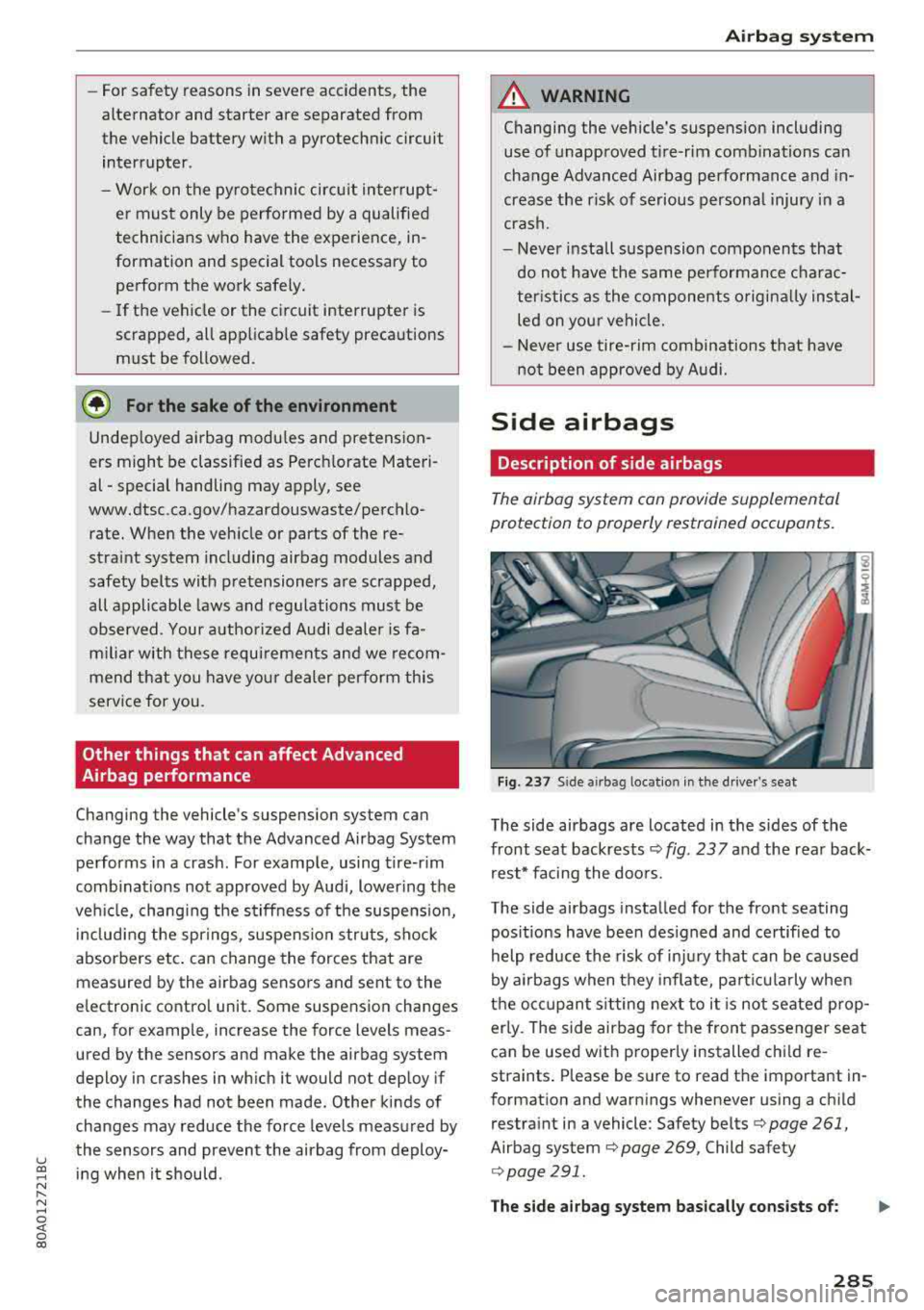
Fig. 237 Side a irbag locatio n in the driver's seat
The side airbags are located in the sides of the
front seat backrests
¢ fig . 23 7 and the rear back
rest* facing the doors.
The side airbags installed for the front seating
pos itions have been des igned and certified to
help reduce the risk of injury that can be caused
by airbags when they inflate, particularly when
the occupant s itting next to it is not seated prop
erly. The side airbag for the front passenger seat
can be used w ith proper ly installed chi ld re
straints . Please be sure to read the important in
formation and warnings whenever using a child
restraint in a vehicle: Safety belts¢
page 261,
Airbag system ¢ page 269, Child safety
r:=> page 291.
The side airbag system basically consists of:
.,..
285
Page 303 of 392
Booster seats and safety belts
Properly used booster seats can help protect
children weighing between about 40 lbs. and
80 lbs . (18 kg and 36 kg) who are less than 4
ft.
9 in. (57 inches/1.45 meters) tall.
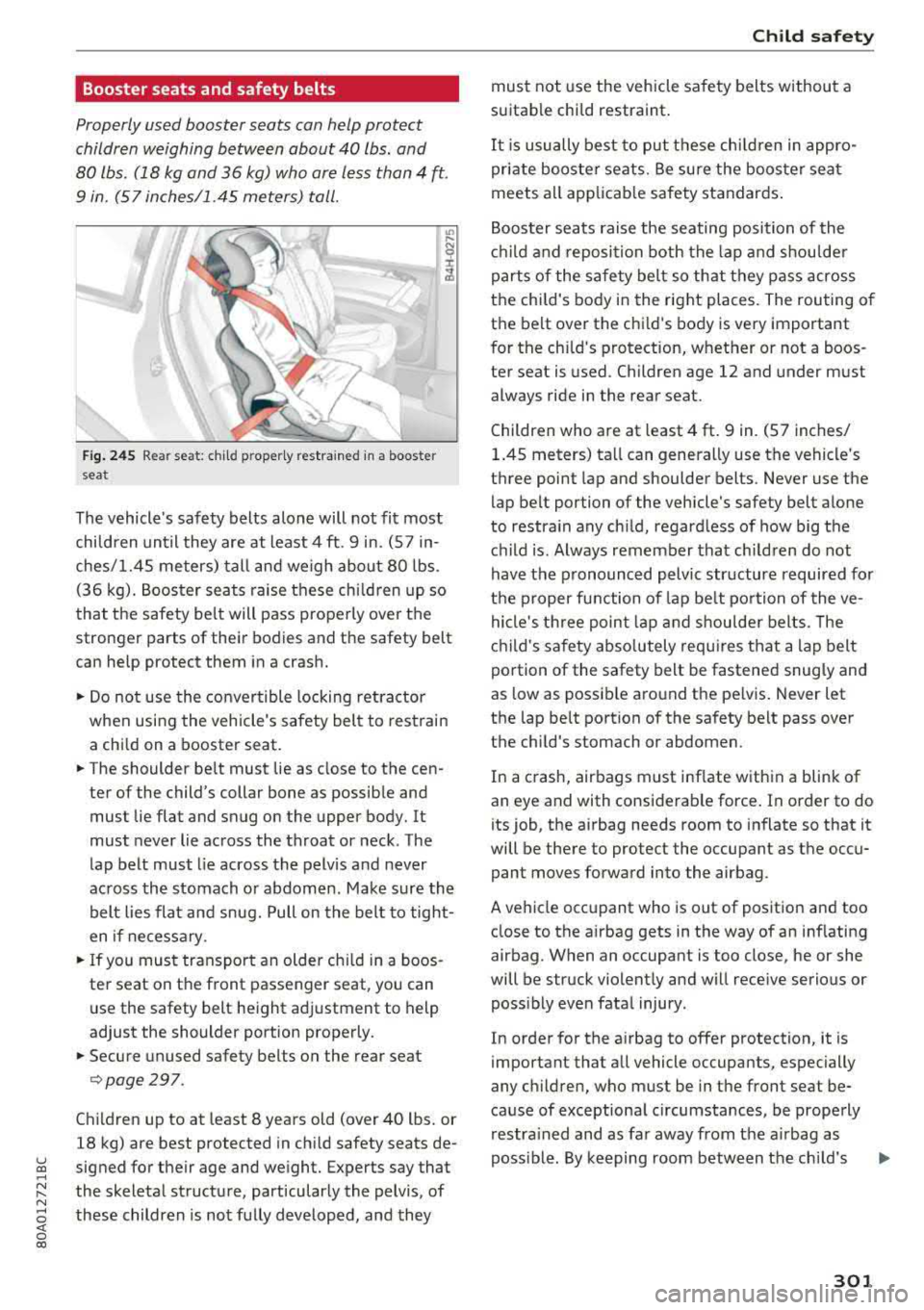
Fig . 245 Rea r seat: chi ld p roper ly restrained in a booster
sea t
The vehicle's safety belts alone will not fit most
children until they are at least 4
ft. 9 in. (57 in
ches/1.45 meters) tall and weigh about 80 lbs.
(36 kg). Booster seats raise these children up so
that the safety belt will pass properly over the
stronger parts of their bodies and the safety belt
can help protect them in a crash.
.,. Do not use the convertible locking retractor
when using the vehicle's safety belt to restrain
a chi ld on a booster seat .
.. The shoulder belt must lie as close to the cen
ter of the child's collar bone as possib le and
must lie fla t and snug on the upper body. It
must never lie across the throat or neck. The
lap belt must lie across the pelvis and never
across the stomach or abdomen . Make sure the
belt lies flat and snug. Pull on the belt to tight
en if necessary .
.,. If you must transport an older child in a boos
ter seat on the front passenger seat, you can
use the safety belt height adjustment to help
adjust the shoulder portion properly .
.. Secure unused safety belts on the rear seat
¢page 297.
Children up to at least 8 years old (over 40 lbs. or
18 kg) are best protected in chi ld safety seats de-
~ signed for their age and we ight. Experts say that .....
~ the skeletal structure, particularly the pelvis , of N
~ these children is not fully developed, and they
0 co
Child safety
must not use the vehicle safety belts without a
suitable child restraint .
It is usually best to put these children in appro
priate booster seats. Be sure the booster seat
meets all applicab le safety standards .
Booster seats raise the seating position of the
child and reposition both the lap and shoulder
parts of the safety belt so that they pass across
the chi ld's body in the right places. The routing of
the be lt over the chi ld's body is very important
for the ch ild's protection, whether or not a boos
ter seat is used. Children age 12 and under must
always ride in the rear seat.
Children who are at least 4
ft. 9 in. (57 inches/
1.45 meters) tall can generally use the vehicle 's
three point lap and shoulder belts. Never use the
lap belt portion of the vehicle 's safety belt alone
to restrain any ch ild, regard less of how big the
ch ild is. Always remember that child ren do not
have the pronounced pelvic structure required for
the proper function of lap belt portion of the ve
hicle's three point lap and shoulde r belts. The
child's safety absolutely requires that a lap belt
portion of the safety belt be fastened snugly and
as low as possible around the pe lvis . Never let
the lap belt portion of the safety belt pass over
the child 's stomach or abdomen .
In a crash, airbags must inflate within a blink of
an eye and with considerab le force. In order to do
its job, the airbag needs room to inflate so that it
will be there to protect the occupant as the occu pan t moves forward into the airbag .
A vehicle occ upant who is out of position and too
close to the a irbag gets in the way of an inf lating
airbag. When an occupant is too close , he or she
will be struck violent ly and w ill rece ive serious or
poss ibly even fata l injury .
In order for the airbag to offer protection, it is
important that all vehicle occupants, especially
any ch ildren, who must be in the front seat be
cause of exceptiona l circumstances, be properly
restrained and as far away from the airbag as
poss ible. By keeping room between the child's
..,_
301