hose AUDI Q5 2018 User Guide
[x] Cancel search | Manufacturer: AUDI, Model Year: 2018, Model line: Q5, Model: AUDI Q5 2018Pages: 392, PDF Size: 60.56 MB
Page 282 of 392
Airbag syste m
airbag inflates -even with an Advanced Airbag
System.
- The inflating airbag will hit the child safety
seat or infant carrier with great force and
will smash the child safety seat and child
against the backrest, center armrest, door
or roof .
- Always install rear-facing child safety seats
on the rear seat .
- If you must install a rearward-fac ing child
safety seat on the front passenger seat be
cause of exceptional circumstances and the
PASSENGER AIR BAG OFF ~; light does not
come on and stay on, immed iate ly install
the rear-fac ing ch ild safety seat in a rear
seat ing pos ition and have the airbag system
inspected by your a uthorized Audi dea ler.
A WARNING
Objects between you and the a irbag w ill in
crease the risk of inj ury in a crash by interfer
ing with the way the airbag unfo lds or by be
ing pushed into you as the a irbag inflates.
- Never hold things in your hands or on your
lap when the vehicle is in use.
- Never transport items on or in the area of
the front passenger seat . Objects could
move into the area of the front airbags dur
ing brak ing or other sudden maneuvers and
become dangerous projectiles that can
cause serious personal injury if the a irbags
inflate .
- Never place or attach accessor ies or other
objects (such as cupholders, telephone
brackets, large, heavy o r bulky objects) on
the doors, over or nea r the area marked
"AIRBAG" on the steering wheel, instru
ment pane l, sea t backrests or between
those areas and yoursel f. These objects
could cause injury in a crash, especially
when the airbags inflate.
- Never recline the front passenger's seat to
transport objects . Items can also move into
the area of the side airbag o r the front a ir
bag dur ing braking or in a sudden maneu
ver. Objects near the airbags can become
280
-
pro jecti les and cause injury, part icularly
when the seat is reclined.
- Never p lace or transport objects on the
front passenger seat. Objects on the front passenger seat could cause the capacitive
sensor in the seat to signal to airbag system
that the seat is occupied by a person when it
in fact is not, or that the pe rson on the seat
is heavie r than he or she act ually is . The
change in elec tric capa citan ce beca use of
such o bje cts can c ause the p assenge r front
airbag to be turned on when it should be
off, or can cause the airbag to work in a way
that is different from the way it would have
wo rked without objects on the seat.
- Always make sure that there is nothing on
the front passenge r seat that will cause the
capacitive passenge r detection system in
the seat to signal to the Airbag System that
the seat is occup ied by a person when it is
not , or to signal that it is occupied by some
one who is heavier than the person act ually
sitt ing on the seat. The presence of an ob
ject could ca use the passenger front air bag
to be turned on when it should be off, or
could cause the airbag to work in a way that is different from the way it would have
worked without the object on the seat.
A WARNING
The fine dust created when airbags deploy can
cause breathing prob lems for people with a
h istory of asthma or other breath ing cond i
tions .
- To reduce the r isk of breathing p roblems,
those with asthma or other respiratory con
ditions should get fresh a ir right away by
getting out of the vehicle or opening win
dows or doors .
- If you are in a collision in which airbags de
ploy, wash your hands and face with m ild
soap and water before eating.
- Be ca refu l not to get the dust into your eyes,
or into any cuts or scratches.
- If the residue should get into your eyes,
flush them w ith wate r.
Page 288 of 392
Airbag system
-the e lectronic control module and externa l side
impact sensors
- th e two side airbags located in the sides of the
front backrests
- two rear side airbags*
- the air bag wa rn in g light in the instrument clus-
te r.
The a irbag system is monitored electronically to
make certa in that it is functioning properly at all
times. Each time you turn on the ignition, the air
bag system ind icator light will come on for a few
seconds (self diagnostics).
The s ide a irbag system supplements the safety
be lts and can help to reduce the risk of injury to
the driver's, front and rear* passenger's upper
torso on the side of the vehicle that is struck in a
side co llision . The airbag dep loys on ly in side im
pacts and on ly when the vehicle acceleration reg
istered by the control unit is high enough. If this
rate is below the reference value programmed in
to the control un it, the side airbags w ill not be
tr iggered, even though the car may be badly
damaged as a result of the collision. It is not pos
sib le to define an ai rbag tr igger ing range that
w ill cover every possible angle of impact, s ince
t he circumstances will vary considerably between
one collision and another. Important factors in
clude, for example, the nature (hard or soft) of
the impacting object, the angle of impact, vehicle
speed, etc.
c> page 287, Important safety in
structions on the side airbag system.
Aside from their normal safety function, safety
be lts work to help keep the driver or front pas
senger in position in the event of a side collision
so that the side a irbags can provide protection.
The airbag system is
not a substitute for your
safety belt . Rather, it is part of the overa ll occu
pant restraint system in your vehicle. Always re
member that the s ide airbag system can only
help to protect you if you are wearing your safety
belt and wearing it properly. This is another rea
son why you should always wear you r safety
be lts, not just because the law requ ires you to do
soc> page 261, General information.
It is important to remember that while the sup
plemental s ide a irbag system is designed to re-
286
duce the likelihood of serious injuries, other inju
ries, for example, swelling, bruising, friction
burns and m inor abras ions can also be assoc iated
with deployed side airbags. Remember too, side
airbags will dep loy only once and only in certa in
kinds of accidents
-your safety belts are always
there to offer protection .
Vehicle damage, repair costs or even the lack of
vehicle damage are not necessar ily an ind ication
of over-sens itive or fa iled airbag activat ion . In
some collis ions, both front and side airbags may
i nflate. Remember too, that air bags w ill dep loy
only once and only in certain kinds of collisions
-
your safety belts are always there to offer protec
tion in those accidents in which airbags are not
supposed to deploy or when they have alr eady
deployed.
The side airbag system will not deploy:
-when the ignition is turned off
- in side co llisions whe n the accele ration meas-
ured by the sensor is too low
- in fro nt-end coll is ions
- in rear-end collisions
- in rollovers.
In some types of accidents t he front airbags, side
curtain airbags and side airbags may be triggered
together.
A WARNING
- Safety belts and the airbag system will only
provide protection when occupants are in
the proper seat ing position
c> page 287.
-If the airbag ind icator light c> page 26
comes when the vehicle is being used, have
the system inspected immediately by your
author ized Audi dealer . It is possible that
the airbag will inflate when it is not sup
posed to, or will not inflate when it should.
Page 293 of 392
u co ..... N r--N ..... 0 <( 0 00
Child safety
Important information
Introduction
The rear seat is generally the safest place in a
collision .
The physical principles of what happens when
your vehicle is in a crash apply also to children
c> page 262, What happens to occupants not
wearing safety belts? .
But unlike adults and
teenagers, their muscles and bones are not fully
developed. In many respects children a re at
greater r isk of se rious injury in c rashes than
ad ults .
Because ch ildren's bodies are not fully devel
oped, they requ ire restra int systems especially
des igned for their size, we ight, and body struc
ture. Many coun tries and a ll states of the United
States and p rovinces of Canada have laws requi r
ing the use of approved child restraint systems
for infants and small children .
In a frontal crash at a speed of 20 - 35 mph (30 -
56 km/h) the forces acting on a 13-pound (6 kg)
infant will be more than 20 times the weight of
the child . This means the weight of the chi ld
wou ld suddenly be more than 260 pounds
(120 kg) . Under these condit ions, only an appro
priate ch ild restraint properly used can reduce
the r isk of serious injury . Child restra ints, like
adu lt safety belts, must be used properly to be
effect ive. Used imp roperly, they can increase the
risk of ser ious injury in an acc ident .
All ch ildren, especially those 12 years and you ng
er must a lways r ide in the back seat properly re
stra ined fo r their age and size. If you must insta ll
a child restra int on t he front passenger seat in
exceptional circumstances, be sure to read and h eed the important information and warnings
c> page 270. Infants and other chi ldren who are
properly restrained in an appropriate child re
stra int that is for their si ze and age can benefit
from the protection that supplemental s ide air
bags provide in some kinds of crashes .
For more information please see information
provided by the:
Ch ild saf ety
- National Highway Traffic Safety Administration
(NHTSA), currently at: http ://www .safe
rcar.gov (for the USA)
- Transport Canada Information Centre, current-
ly at: http://www .tc .gc .ca (for Canada)
Cons ult the ch ild safety seat manuf acture r's in
structions in order to be sure t he seat is right for
yo ur chi ld's size
c> page 295 , Important safety
instructions for using child safety seats .
Please
be sure to read and heed all of the important in
format ion and WARNINGS about ch ild safety,
Advanced Airbags, and the installation of child
restra ints in this chapter .
There is a lot you need to know about the Ad
vanced Airbags in your veh icle and how they work
whe n infants and children in child restraints are
on the fro nt passenger seat . Because of the large
amount of important informat ion, we cannot re
peat it all he re . We u rge you to read the detailed
i nformat ion in this owner 's ma nual about airbags
and the Advanced Airbag Sys tem in yo ur veh icle
and the very important information about trans
porting children on the front passenger seat.
Please be sure to heed the WARNINGS -they are
extremely important for your safety and the safe
ty of your passengers, especially infants and
small ch ildren .
A WARNING
-
-Accide nt statistics have shown that children
are generally safer in the rear seat area than
i n the front seat ing pos it ion. Always restrain
a ny child age 12 and unde r in t he rear.
- All vehicle occupants and especially children
m ust be restra ined prope rly whe never r id ing
i n a vehicle. An u nres tra ined o r improperly
rest rained chi ld cou ld be inju red by st riking
the interio r or by being ejected from the ve
hicle during a sudden maneuver or impact.
An unrestrained or improperly restrained
child is a lso at greater r isk of injury or death
through contact w it h an inflating a irbag.
- A suitable ch ild restraint properly installed
and used at one of the rear seating positions
prov ides the h ighest degree of protect io n
for infants and small children in most acc i
dent situat ions .
291
Page 295 of 392
on all the time whenever the ignition is
sw itched on.
- If the
PASSENGER AIR BAG OFF ~. light
does not come on and stay on, immediate
ly insta ll the forward-facing child seat in a
rear seating position and have the airbag
system inspected by your authorized Aud i
deale r.
- Always buckle the chi ld seat firmly in
place even if a ch ild is not sitt ing in it. A
loose ch ild seat ca n fly around during a
sudden stop o r in a coll is ion.
- Always read and heed all WARNINGS
wheneve r us ing a ch ild restraint in a veh i
cle
~ page 261, Safety belts, ~ page 269,
Airbag system and ~page 291, Impor
tant information .
(j) Tips
Always replace ch ild restraints that were in
stalled in a veh icle dur ing a crash. Damage to
a child restra int tha t is not visib le co uld cause
it to fail in another collision situation .
Advanced front airbag system and children
Your vehicle is equipped with an "Advanced Air
bag System" in comp liance with United States
Federa l Motor Vehicle Safety Standard (FMVSS)
208, as well as Canada Motor Veh icle Safety
Standard (CMVSS) 208 as applicable at the t ime
your ve hicle was manufactured .
The Advanced Airbag system in your vehicle has
been certified to meet the "low-risk" requ ire
ments for 3- and 6-year old children on the pas
senger side and small adults on the driver side.
The low risk deployment crite ria are intended to
reduce t he r isk of injury thro ugh inte ract ion with
the airbag t hat can occur, for examp le, by being
too close to the steering whee l and instrument
panel when the airbag inflates . In addition, the
system has been certified to comply with the
"suppression" req uirements of the Safety Stand
ard, to turn off the front airbag for infants up to
~ 12 months who are restra ined on the front pas-...,
~ senger seat in child restraints that are listed i n
~ the Standard. 0 <( 0 00
Child s af ety
E ven thoug h your veh icle is equipped with an Ad
vanced Airbag system, all chi ldren, especially
those 12 years and younger, should a lways ride
in the back seat properly restrained for their age
and size . The airbag on the passenger side makes
the front seat a potentia lly dangerous p lace for a
ch ild to ride . Th e front seat is not the safest place
fo r a ch ild in a forward-fac ing ch ild safety seat.
It
can be a very dangerous place fo r an infant o r a
la rge r ch ild i n a rea rwa rd -facing seat.
T he veh icle 's Advanced A irbag System has a ca
pacit ive passenger detection system in the front
passenge r seat cushion that can detect the p res
ence of a baby or a c hild in a child res tra int sys
tem on this seat .
T he capacitive passenger detection system reg is
te rs the changes that result i n an elect rical field
whe n a child, a ch ild restraint, and a baby b la nket
are on t he fron t passenger seat. The change in
the measured capacitance due to the presence of a chi ld, a child restraint, and a baby blanket on
the front passenger seat is related to the child
restra int system resting on the seat. The meas
ured capacitance of a child restra int system var
ies depend ing on the type of system and specific
make and model.
The electrical capac itance of the various types,
makes, and models of child restraints specif ied
by the U .S . National Highway Traffic Safety Ad
min istrat ion (NHTSA) in the relevant safety
standard are stored in the Advanced Airbag Sys
tem contro l unit together with the capacitances
typ ica l of infants and a 1 -year old child. When a
c h ild restraint is used on the front passenger
seat with a typical 1 year -old infant, t he Ad
vanced Airbag System compares the capacitance
measured by the capacitive passenger detection
system with the data stored in the electronic con
trol un it .
Child restraints and Advanced Airbags
Regardless of the ch ild restraint that you use,
make sure that it has been certified to meet Safe
ty Standards and has been cert ified by its manu
fact urer for use w ith an airbag . Always be s ure
t h at the c hild restraint is properly installed at
IJJ,,
293
Page 297 of 392
u co ..... N ,..._
N ..... 0 <( 0 00
-Take the chi ld restraint off the front passen
ger seat and install it properly at one of the
rear seat positions if the
P AS SEN GER AIR
BA G
OFF ~; light does not stay on.
- Have the airbag system inspected by your
authorized Audi dealer immediately.
(D Tips
The chi ld seats listed in categories A to C have
been statically tested by Audi only for the Ad
vanced Airbag function.
Important safety instructions for using
child safety seats
Correct use of child safety seats substantially re
duces the risk of injury in an accident!
As the driver, you are responsible for the safety
of everybody in the veh icle, especially chi ldren:
~ Always use the right chi ld safety seat for each
child and a lways use it properly
~ page 297.
~ Always carefully follow the child safety seat
manufacturer's instructions on how to route
the safety belt properly through the child safe
ty seat .
~ When using the vehicle safety be lt to install a
ch ild safety seat, you must first activate the
convertible locking retractor on the safety be lt
to prevent the child safety seat from moving
~page 302 .
~ Push the child safety seat down with your fu ll
weight to get the safety be lt really tight so that
the seat cannot move forward or sideways
more than one inch (2.5 cm).
~ Secure unused safety belts on the rear seat
~ page 297.
Always remember: Even though your vehicle is
equ ipped w ith an Advanced A irbag system, all
children, especially those 12 years and younger,
should always ride i n the back seat properly re
stra ined fo r their age and size.
_& WARNING
Not using a ch ild safety seat, using the w rong
child safety seat or improper ly installing a
Ch ild saf ety
chi ld restraint increases the risk of serious
personal injury and death.
- All vehicle occupants and especially children
must be restra ined properly whenever r iding
in a vehicle. An unrestra ined or improperly
restrained child cou ld be injured by striking
the inter ior or by be ing ejected from the ve
hicle dur ing a sudden maneuve r or i mpact.
An unrest rained or imprope rly restrained
child is a lso at greater r is k of injury or death
through contact w ith an inflating airbag.
- Commerc ially availab le child safety seats
are requi red to comply with U.S. Federal
Motor Vehicle S afety S tandard (FMVSS) 213
(in Canada CMVSS 213).
- When buying a child restra int, select one
that fits your ch ild and the vehicle .
- Only use child restraint systems that fully
contact the flat portion of the seat cush
ion. The ch ild restraint must not t ip or
lean to either side. Audi does not recom
mend using child safety seats that rest on
legs or tube-like frames. They do not pro
vide adequ ate cont act with the se at.
- Always heed all lega l requirements per
t ai ning to the insta llation and use of child
safety seats and carefu lly follow the in
structions provided by the manufact urer
of the seat you are using .
- Never a llow children under S7 inches
(1.45 meters) to wear a normal safety be lt.
They must a lways be restrained by a proper
child restraint system. Otherwise, they
could sustain injuries to the abdomen and
neck areas during sudden braking maneu
vers or accidents .
- Never let more than one child occupy a chi ld
safety seat.
- Never let babies or o lder children ride in a
veh icle while sitting on the lap of another
passenger.
- Holding a child in your arms is never a sub
stitute fo r a chi ld restraint system .
- The st rongest person cou ld no t ho ld the
ch ild with the forces tha t exist in an acci
dent. The child will strike the interior of
the vehicle and can also be struck by the passenger.
295
Page 304 of 392
Child sa fety
body and the front of the passenger compart
ment, the air bag can inflate comp lete ly and pro
vide supp lemental protect ion in certain fronta l
coll is ions.
A WARNING
Not using a booster seat, us ing the booster
seat improperly, incorrectly installing a boos
ter seat or using the vehicle safety belt im
properly increases the risk of ser ious personal
injury and death in a collision or other eme r
gency sit uat ion. To help red uce the risk of se
rious persona l injury and/or death:
- The shoulder be lt mus t lie as close to the
center of the child's collar bone as possib le
and must lie flat and snug on the upper
body. It must never lie across the throat or
neck . The lap be lt must lie across the pelvis
and never across the stomach or abdomen.
Make sure the belt lies flat and snug. Pull on
the belt to tighten if necessary.
- Failure to proper ly route safety belts over a
child's body will cause severe injuries in an
acc ident or other emergency situation
¢ page 261.
- The rear side of the child safety seat should
be pos itioned as close as possible to the
backrest on the vehicle seat. Adjust or re
move the rear seat head restraint if it is d if
ficult to install the child seat with the he ad
restra int in place¢
page 58. Ins tall the
head restraint again immediately once the
child seat is removed . Driving without head
restra ints or w ith head rest raints that are
not properly adjusted increases the risk of
serious or fatal neck injury dramatically.
- Never let a child put the sho ulder belt under
the arm or beh ind the back, because it cou ld
cause severe injur ies in a crash.
- Children on the front seat of any car, even with Advanced Airbags, can be seriously in
jured or even killed when an airbag inflates .
- Never let a child stand or knee l on any seat,
for example the front seat.
- Never let a child ride in the ca rgo area o f
you r vehicle.
- Always remember that a child leaning for
ward, s itting sideways or out of position in
302
-
any way du ring an accident can be struck by
a deploying airbag. Th is w ill result in serious
personal injury or death.
- If you must install a booster seat on the
front passenger seat because of exceptiona l
circumstances the
PASSENGER AIR BAG
OFF
'1; light must come on and stay on,
wheneve r the ign it ion is swi tched on.
- If the
PASSENGER AIR BAG OFF '1; light
does not come on and stay on, perform the
checks desc ribed ¢
page 281, Monitoring
the Advanced Airbag System.
- Take the child res tra int off the front passen
ge r seat and install it prope rly at one of the
rear sea t positions if the
PASSENGER AIR
BAG OFF
'1; light does not st ay on whenever
the ignition is switched on .
- Always read and heed all WARNINGS when
eve r us ing a child restrained in a vehicle is
be ing used ¢
page 261, Safety belts,
¢ page 269, Airbag system and
¢ page 291 , Important information .
Securing child safety
seats
Securing a child safety seat using a safety belt
Safety belts for the rear seats and the front pas
senger can be locked with the convertible locking
retractor to properly secure child safety seats .
The safety belts for the rea r seats and for the
front passenge r's seat have a conve rtible locking
r etractor for child safety seats. The safety belt
must be locked so that be lt webb ing cannot un
r eel. The retractor can be act ivated to lock the
safety belt and prevent the safety belt webbing
from loosening up dur ing norma l dr iving . A ch ild
safety seat can o nly be prope rly installed when
t h e safety be lt is locked so that the c hild and
c hi ld s afety seat will stay in place.
Always remember : Even though your veh icle is
equipped with an Advanced Airbag system, all
c hi ld re n, especially those 12 yea rs and you nger,
sho uld always ride in t he b ack seat p roperly re-
strained for their age and s ize.
II>-
Page 308 of 392
Child safety
push-on connectors attached to adjustable
straps.
I n addition to the LATCH lower anchorages , these
child restraint systems usually require the use of
tether straps to help keep the child restraint
firmly in place.
A WARNING
Improper installation of child restraints will
increase the risk of injury and death in a
crash.
- Always follow the instructions provided by
the manufacturer of the child restraint you intend to install in your vehicle.
- Never install a child restraint without a
properly attached top tether strap if the
child restraint manufacturer's instructions
require the top tether strap to be used.
- Improper use of child restraint LATCH lower
anchorage points can lead to injury in a colli
sion . The LATCH lower anchorage points are
designed to withstand only those loads im
posed by correctly fitted child restraints.
- Never mount two child restraint systems on
one LATCH lower anchorage point.
- Never secure or attach any luggage or other
item to the LATCH lower anchorages.
Location
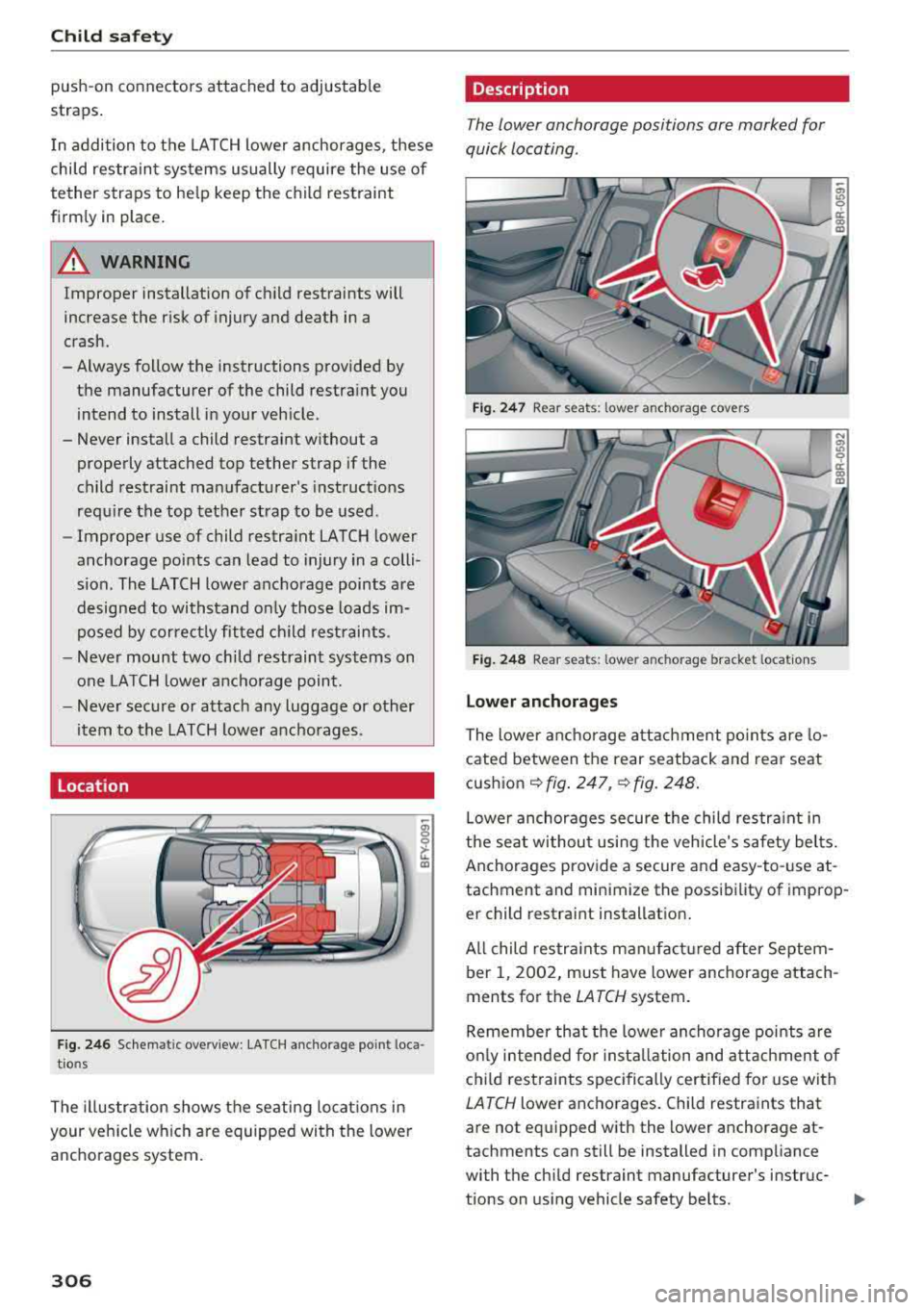
Fig. 246 Schem atic overv iew : LATCH an cho rag e point loca
tio ns
The illustration shows the seating locations in
your vehicle which are equipped with the lower
anchorages system.
306
Description
The lower anchorage positions are marked for
quick locating .
Fig. 247 Rear seats: lowe r anchorag e cove rs
Fig. 248 Rear seat s: lowe r anchorage bra cket loca tions
Lower anchorages
The lower anchorage attachment points are lo
cated between the rear seatback and rear seat
cushion
~ fig. 247, ~fig. 248.
Lower anchorages secure the child restraint in
the seat without using the vehicle's safety belts.
Anchorages provide a secure and easy-to-use at
tachment and minimize the possibility of improp
er child restraint installation.
All child restraints manufactured after Septem
ber 1, 2002, must have lower anchorage attach
ments for the
LATCH system.
Remember that the lower anchorage points are
only intended for installation and attachment of
child restraints specifically certified for use with
LATCH lower anchorages. Child restraints that
are not equipped with the lower anchorage at
tachments can still be installed in compliance
wi th the child restraint manufacturer 's instruc-
tions on using vehicle safety belts.
IJ.
Page 310 of 392
Child sa fet y
Tether anchors and tether straps
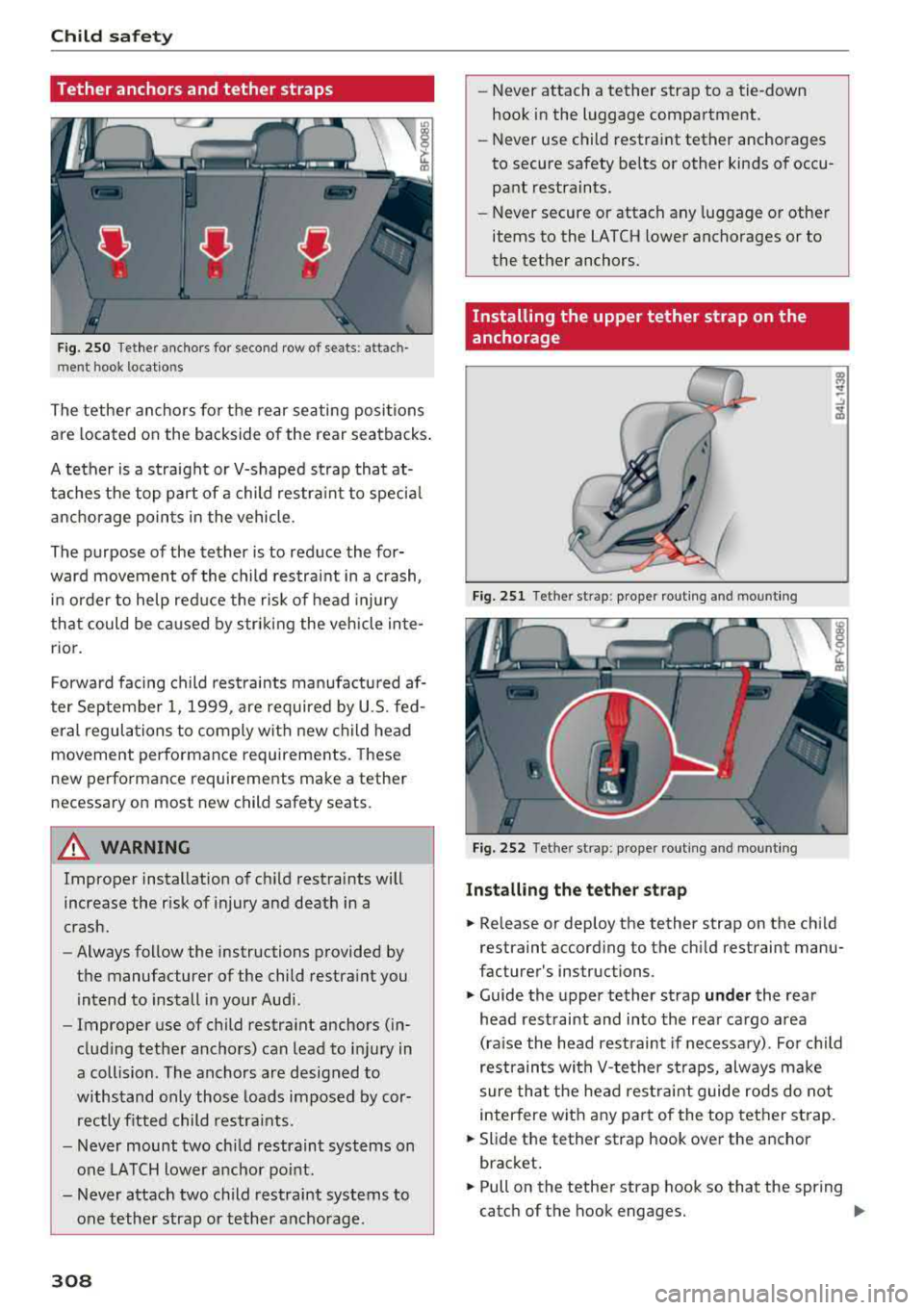
Fig. 250 Tether ancho rs for second row of seats: a tt a ch ·
m ent hook locat io ns
The tether an chors fo r the rear seating posi tions
are located on the backside of the rear sea tbacks .
A tether is a straight or V-shaped s trap that at·
t a ches the top part of a child restra int to spec ia l
ancho rage poin ts in the vehicle .
The purpose of the tether is to red uce the for
ward movement of the child res traint in a crash,
i n order to help red uce the risk of head injury
tha t could be c aused by str iki ng the vehicle inte
rior .
Forward fac ing ch ild rest rai nts manufactured af
ter September 1, 1999, are required by U .S. fed
eral regula tions to comply with new child head
movement performance requirements. These
new perfo rmance requirements make a tethe r
necessary on most new child safety seats.
A WARNING
Improper installation of c hild restraints will
increase the risk of injury and death in a
crash .
- Always follow the instructions provided by
the manufacturer of the child restra int you
intend to install in your Audi .
- Improper use of child restra int anchors (in
clud ing tether anchors) can lead to i njury in
a collision . The anchors are designed to
withs tand only those loads imposed by cor
r ectly fitted child restra ints.
- Never mount two chi ld restraint systems on
one LATC H lower anc ho r poi nt.
- Never attach two child restraint systems to
one tether strap or tether anchorage.
308
-
- Never attach a tether strap to a tie -down
hook in the luggage compartment .
- Never use child restraint tether anchorages
to secure safety be lts or other kinds o f occu
pant restraints.
- Never secure or attach any luggage or other
items to the LATCH lower ancho rages or to
the tether anchors.
Installing the upper tether strap on the
anchorage
F ig. 2 51 Tet her st ra p: pro per r out ing and m oun ting
Fi g. 2 52 Tet her st rap: prope r rou ting and m oun ting
Installing the tether st rap
.,. Re lease or deploy the tethe r strap on the chi ld
restraint accord ing to the ch ild restraint manu
fac turer's ins tructions.
.,. Guide the upper tether strap under the rear
head restraint and into the rear cargo area (ra ise the head restraint if necessa ry) . Fo r ch ild
restrain ts with V- te ther st ra ps, alw ays ma ke
sure that the hea d rest rain t guide rods do not
interfere with any part of the top tether strap.
.,. Slide the tether strap hook ove r the anchor
bracket.
.,. Pull on the tether strap hook so that the spring
catc h of the hook engages.
..,_
Page 313 of 392
u co ..... N r-N .....
~ 0 co
-If you are unable to determine whether or
not a particular fuel blend meets the speci
fications, ask your service station or its fuel
supplier.
- Do not use fuel for which the contents can
not be identified.
- Fuel system damage and performance prob
lems resulting from the use of fuels differ
ent from those specified are not the respon
sibility of Audi and are not covered under
the New Vehicle or the Emission Control
System Warranties .
- If you experience a loss of fuel economy or
driveability and performance problems due
to the use of one of these fuel blends, we
recommend that you switch to unblended
fuel.
Gasoline additives
A major concern among many auto manufactur
ers is carbon deposit build-up caused by the type
of gasoline you use.
Although gasoline grades differ from one manu
facturer to another, they have certain things in
common. All gasoline grades contain substances
that can cause deposits to collect on vital engine
parts, such as fuel injectors and intake valves.
Al
though most gasoline brands include additives to keep engine and fuel systems clean, they are not
equally effective .
Audi recommends using TOP TIER Detergent Gas
oline. For more information on TOP TIER Deter
gent Gasoline, please go to the official website
(www.toptiergas .com) .
After an extended period of using inadequate
fuels, carbon deposit build-ups can rob your
en
gine of peak performance.
(D Note
Damage or malfunction due to poor fuel qual
ity is not covered by the Audi New Vehicle
Limited Warranty.
Checking and Filling
Refueling
Fueling procedure
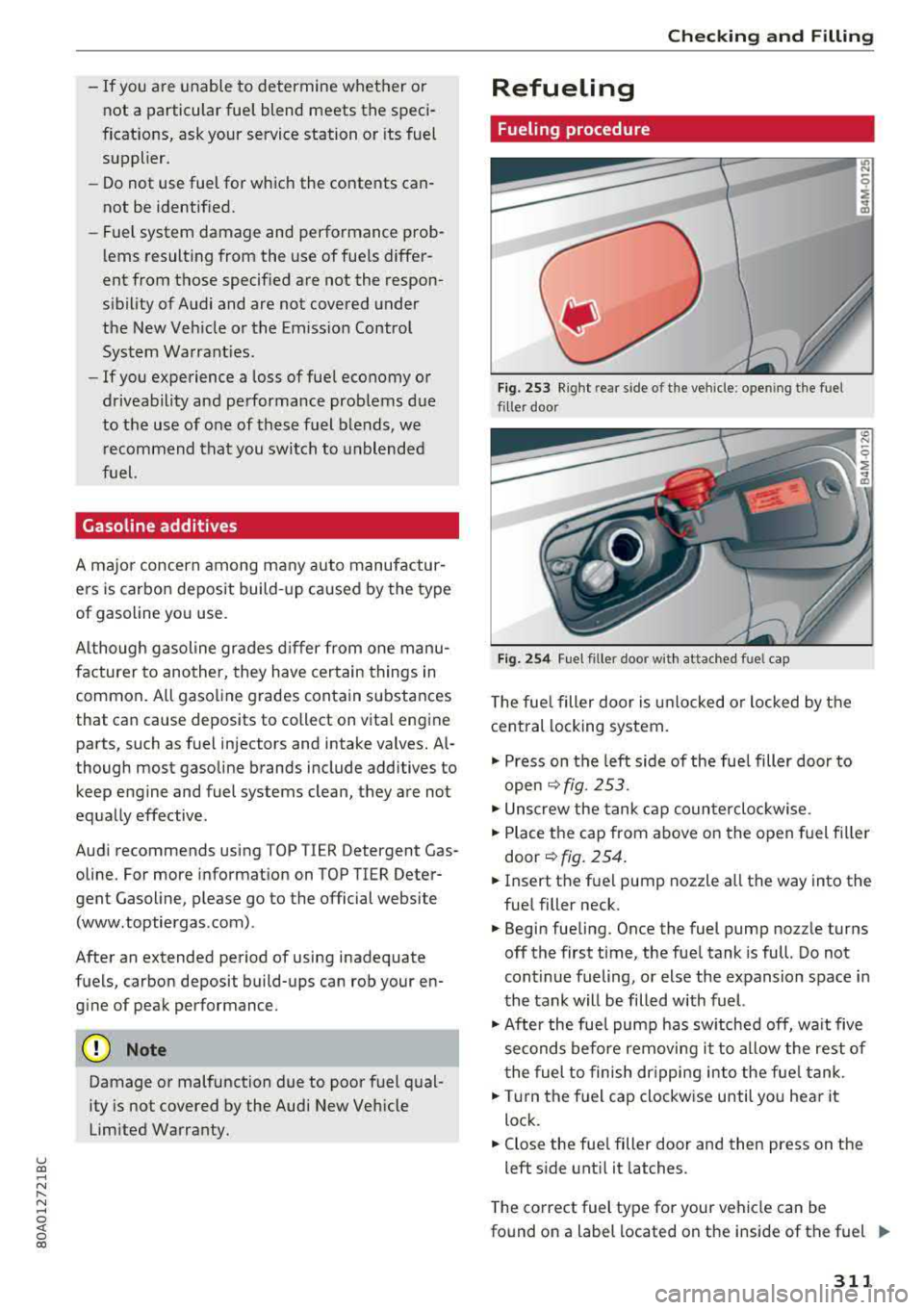
Fig. 253 Right rear s ide o f th e ve hicle : ope ning the fuel
filler door
Fig. 254 Fuel filler door with attached fue l cap
The fuel filler door is unlocked or locked by the
central locking system.
"' Press on the left side of the fuel filler door to
open
r::::>fig. 253.
"' Unscrew the tank cap counterclockwise.
"'Place the cap from above on the open fuel filler
door
r::::> fig. 254.
"'Insert the fuel pump nozzle all the way into the
fuel filler neck.
.,. Begin fueling. Once the fuel pump nozzle turns
off the first time, the fuel tank is full. Do not
continue fueling, or else the expansion space in
the tank will be filled with fuel.
"'After the fuel pump has switched off, wait five
seconds before removing it to allow the rest of
the fuel to finish dripping into the fuel tank.
"'Turn the fuel cap clockwise until you hear it
lock.
"' Close the fuel filler door and then press on the
left side until it latches .
The correct fuel type for your vehicle can be
found on a label located on the inside of the fuel
Iii>
311
Page 327 of 392
u a, .... N r-N ....
~ a,
Wheels
Wheels and Ti re s
General information
.,,.Check your tires regularly for
damage (punctures, cuts , cracks
and bulges). Remove foreign ob
jects from the tire tread .
.,,. If driving over curbs or similar
obstacles, drive slowly and ap
proach the curb at an angle.
.,,. Have faulty tires or rims re
placed immediately .
.,,.Protect your tires from oil ,
grease and fuel.
.,,. Mark tires before removing
them so that the same running
direction can be maintained if
they are reinstalled .
.,,.Lay tires flat when storing and
store them in a cool, dry locat ion
with as litt le exposure to light as
possible .
&_ WARNING -
-Never drive faster than the
maximum permitted speed
for your tires. This could cause the tires to heat up too much .
This increases the risk of an
acc ident because it can cause
the tire to burst.
-Always adapt your driving to the road and traffic condi-
Wheels
tions. Drive carefully and re
duce your speed on icy or slip
pery roads . Even winter tires
can lose traction on black ice .
@ N ot e
-Please note that summer and
winter tires are designed for
the condit ions that are typical
in those seasons. Audi recom
mends using winter ti res dur
ing the winter months. Low
temperatures significantly de crease the e lasticity of summ
er tires , which affects traction
and braking ab ility . If summer
tires are used in very cold
temperatures, cracks can form on the tread bars, resulting in
permanent tire damage that
can cause loud driving noise
and unbalanced tires.
-Burnished, polished or chromed rims must not be
used in winter driving condi
tions . The surface of the rims
does not have sufficient corro
sion protect ion for this and
could be permanently dam
aged by road salt or similar
substances.
325