door lock AUDI Q7 2012 Owner´s Manual
[x] Cancel search | Manufacturer: AUDI, Model Year: 2012, Model line: Q7, Model: AUDI Q7 2012Pages: 342, PDF Size: 86.42 MB
Page 168 of 342
166 Driving Safel y
Stowing luggage
Loading the luggage compartment
All luggage and other objects must be prop erly stowed and secured in the luggage com
partment.
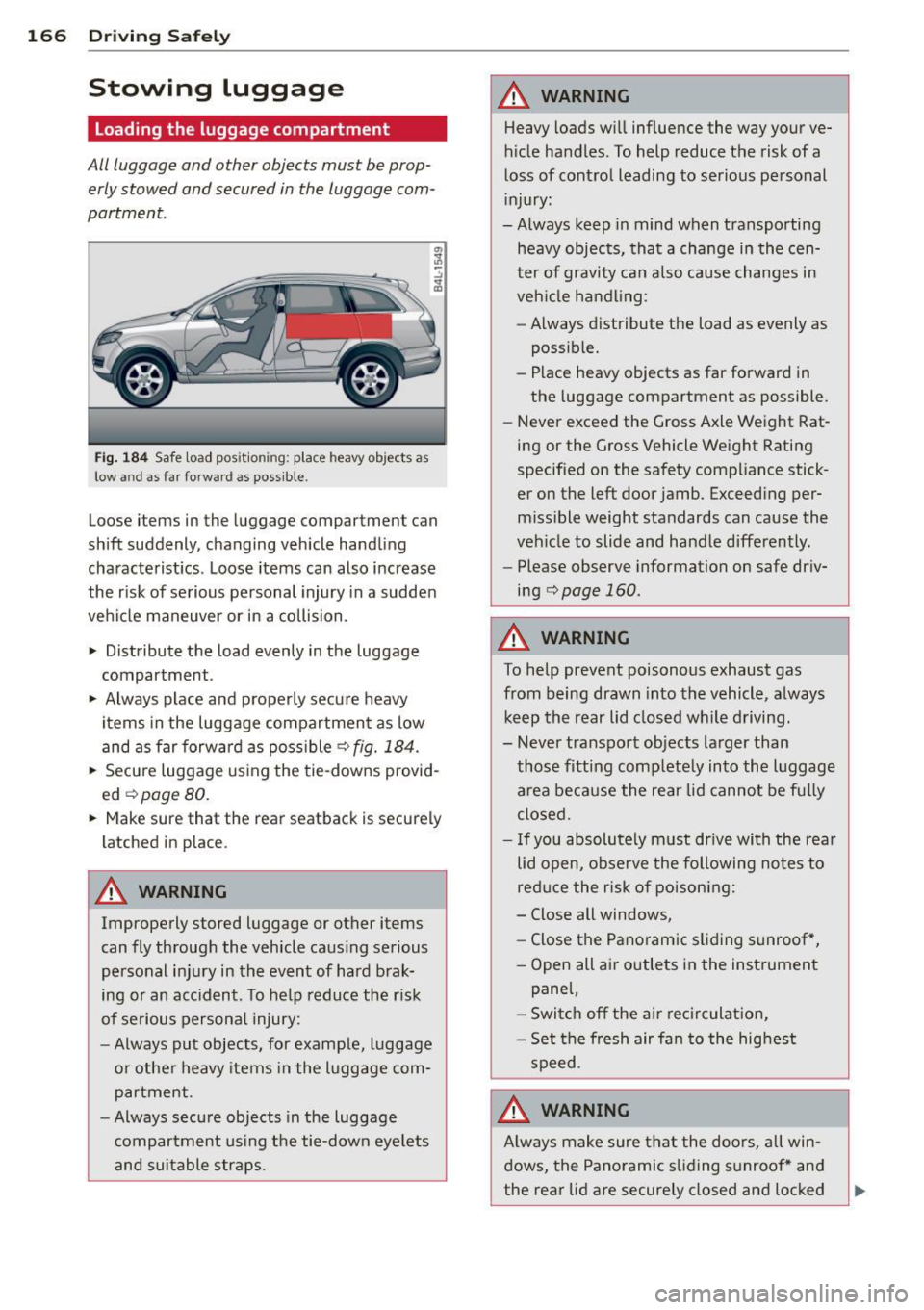
Fig . 184 Safe load pos ition ing: place heavy objects as
low and as far forward as possible.
Loose items in the luggage compartment can
shift suddenly, changing vehicle handling
characterist ics . Loose items can also increase
the r isk of serious personal injury in a sudden
vehicle maneuver or in a collision .
,. Distribute the load evenly in the luggage
compartment .
,. Always place and properly secure heavy
items in the luggage compartment as low
and as far forward as poss ible
¢fig. 184.
,. Secure luggage using the tie-downs provid
ed
¢ page 80.
,. Make sure that the rear seatback is securely
latched in place .
A WARNING
Improperly stored luggage or other items
can fly through the vehicle caus ing serious
personal inj ury in the event of hard brak
ing or an acc ident. To help reduce the r isk
of serious persona l injury:
- Always put objects, for example, luggage
or other heavy items in the luggage com
partment.
- Always secu re objects in the luggage
compartment us ing the tie-down eye lets
and suitable straps.
A WARNING
-Heavy loads wi ll influence the way your ve-
h icle ha ndles. To help reduce the risk of a
loss of control leading to serious personal
i njury:
-Always keep in mind when transporting
heavy objects, that a change in the cen
ter of gravity can also cause changes in
veh icle handling:
- Always distribute the load as evenly as
poss ible.
- Place heavy objects as far forward in
the luggage compartment as possible.
- Never exceed the Gross Axle We ight Rat
ing or the Gross Vehicle Weight Rating
specif ied on the safety compliance stick
er on the left door jamb. Exceed ing per
miss ible weight standards can cause the
veh icle to slide and handle differen tly.
- Please observe information on safe dr iv
ing
¢page 160.
A WARNING
-
To help prevent poisonous exhaust gas
from being drawn into the vehicle, a lways
keep the rear lid closed while driving.
- Never transport objects larger than those fitting comp letely into the luggage
area because the rear lid cannot be ful ly
closed.
- If you absolutely m ust dr ive wi th the rear
lid open, observe the following notes to
red uce the risk of poisoning:
- Close all windows,
- Close the Panoramic sliding sunroof *,
- Open all air outlets in the instrument pane l,
- Switc h off the air recirculat ion,
- Set the fresh air fan to the highest
speed.
A WARNING
Always make sure that the doors, all win
dows, the Panoramic sliding sunroof * and
the rear lid are securely closed and locked
-
Page 193 of 342

-a car bed has been insta lled on the front
seat, or
- a rearward-facing chi ld restraint has been
installed on the front passenger seat, or
- a forward -facing child restraint has been in
sta lled on the front passenge r seat, or
- the weight registered on the front passen
ger seat is equa l to or less than the com
bined weight of a typical 1 year -old restrain
ed in one of the rear-fac ing or forward-fac
ing infant restraints listed in Federal Motor
Vehicle Safety Standard 208 w ith which the
Advanced Airbag System in your veh icle was
certified.
If the front passenger seat is not occupied,
the front airbag will not deploy, and the
P A S
S ENGER AIR BA G OF F
light w ill stay on. Nev
er install a rearward -fac ing ch ild restra int on
the front passenger seat, the safest place for
a child in any ki nd of child restraint is at one
of the seating positions on the rear seat
~ page 181, Child restraints on the front seat
- some important things to know
and
~ page 200, Child Safety.
If the PASSENGER AIR BAG OFF light c om es
o n
when one of the conditions listed above is
met, be sure to check the light regularly to
make certain that the
PASSENGER AIR BAG
OF F
light stays on continuous ly whenever the
ignition is on. If the
PA SSE NGER AIR BAG
OFF
light does not appear on and does not
stay on all the time, stop as soon as it is safe
to do so and
- react ivate the system by turning the ignition
off and then turning it on again;
- remove and reinstall the chi ld restraint .
Make sure that the child restraint is properly
installed and that the safety belt for the
front passenger seat has been correctly routed throug h the child restraint as descri
bed in the chi ld restraint manufactu rer's in
structions;
- make sure that the convertible locking fea
tu re on the safety be lt fo r the front passen
ger seat has been activated and that the sa fety belt has been pulled tight. The bel t
mus t not be loose o r have loops of slack so
A irbag system 19 1
that the sensor below the sa fety be lt latch
on the seat can do its job
~ page 209.
- make sure that things that may increase the
weight of the child and chi ld safety seat are
not being transported on the front passen
ger seat;
- make sure t hat the safety belt tension sen
sor is not blocked. Shake the safety belt
latch on the front passenger seatback and
forth;
- If a strap or tether is be ing used to tie the
child safety seat to the front passenger
seat, make sure that it is not so tight that it
causes the weight -se nsing mat to measure
more weight than is actually on the seat .
If the P ASS ENGER AIR B AG OFF light still
do es not come on
and does not stay on con
tinuously (whe n the ignition is switched on),
- take the child restraint off the front passen-
ger seat and install it properly at one of the
rear seat positions. Have the airbag system
inspected by your authorized Aud i dealer
immed iate ly.
- move the child to a rear seat position and
make sure t hat the ch ild is properly restra in
ed in a ch ild restra int that is appropriate for
its size and age.
The
PAS SENG ER A IR BAG OFF light should
NOT come on when the ignit ion is on and an
adult is s itting in a proper seating position on
t h e front passenger seat. If the
PASSENGER
AIR BAG OFF
light comes on and stays on o r
flashes fo r about 5 seconds wh ile d riving, un
der these c ircumstances, make sure that :
- the adult on t he front passenge r seat is
prope rly seated on the cente r of the seat
cushion with his o r he r back up ag ainst the
backrest and the backrest is not reclined
~ page 161, Proper occupant seating posi
tions,
- the adult is not taking weight off the seat by
holding on to the passenger assist handle
above the front passenger door or support-
ing their weight on the armrest, .,_
•
•
Page 208 of 342
206 Child Safe ty
& WARNING
Not using a child safety seat, using the
wrong ch ild safety seat or improperly in
stall ing a child restraint increases the risk
of serious personal injury and death in a
crash.
- Never install rear-fac ing ch ild safety
seats or infant carriers on the front pas
senger seat - even with an Advanced Air
bag System. A child will be seriously in
jured and can be killed when the inflat
ing airbag hits the child safety seat or in
fant carrier with great force and smashes
the child safety seat and child against
the backrest, center armrest, door or
roof
c:> page 181, Child restraints on the
front seat -some important things to
know.
- Always install rear-facing child safety
seats or infant carriers on the rear seat.
- Never install a rear-facing child restraint
in the forward-facing direction. Such re
st raints are des igned for the spec ial
needs of infants and very small childre n
and cannot p rotect them proper ly if the
seat is forward-fac ing.
- If you must install a rea rward facing
child safety seat on the front passenge r
seat because of exceptional circ umstan
ces and the
PASSENGER AIR BAG OF F
light does not come on and stay on, im
mediately install the rear-facing child
safety seat in a rear seating position and
have th e a irbag system inspected by your
Audi dealer.
- Always read and heed all WARNINGS
whenever using a child restrained in ave
hicle is being used-:;.
page 170, Safety
belts,-:;, page 179, Airbag system
and
c:> page 200, Important things to know.
Convertible child safety seats
Properly used convertible child safety seats
can help protect toddlers and children over
age one who weigh between 20 and
40 lbs. (9
and 18 kg) in a crash.
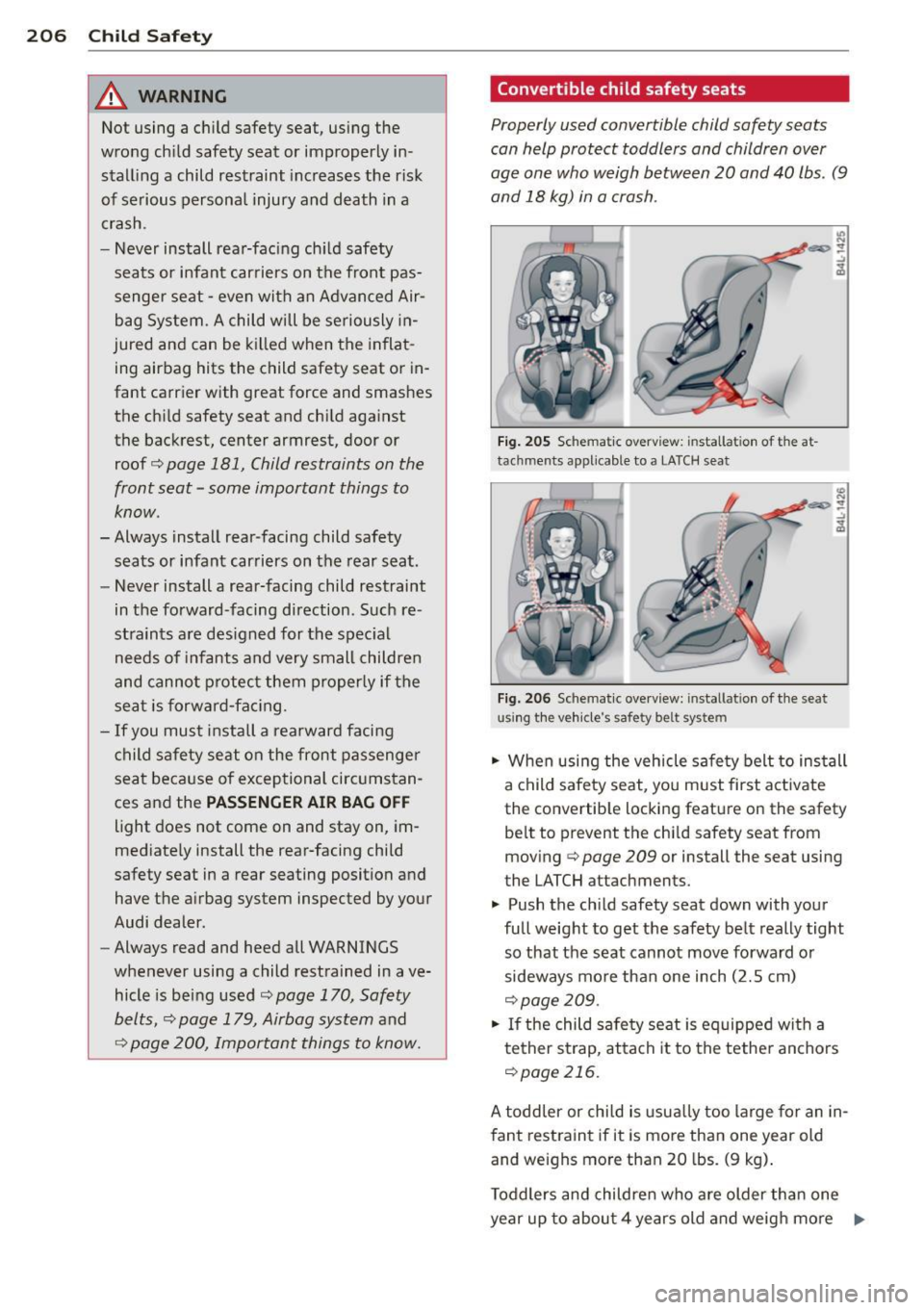
Fig. 205 Schemat ic overview: installat ion of t he at
tachments appl icable to a LATCH seat
Fig . 206 Schema tic overview: installat ion of the seat
us ing the vehicle 's safety belt system
.,. When using the vehicle sa fe ty belt to install
a child safety seat, you must first activate
the convertib le locking feature on the safety
be lt to prevent the child safety seat from
moving
c:> page 209 or install the seat using
the LATCH attachments.
., Push the child safety seat down with your
full weight to get the safety belt really tight
so that the seat cannot move forward o r
sideways mo re than one inch (2.5 cm)
c:> page 209 .
.,. If the child sa fe ty seat is eq uipped with a
t ether strap, attach it to the tethe r anchors
c:>page 216.
A toddler or chi ld is usua lly too large for an in
f ant restraint if it is more than one year old
and weighs more than 20 lbs. (9 kg).
T oddlers and childre n who a re older tha n one
year up to abou t 4 years old and weigh more ..,.
Page 212 of 342
210 Child Saf ety
is locked so that the child and child safety
seat will stay in place .
A lways remember: Even though your veh icle is
equipped w ith an Advanced A irbag system, all
children, especially those 12 years and young
er, should always ride in the back seat proper
ly restrained fo r their age and s ize.
.&_ WARNING
Improperly installed child safety seats in
crease the risk of ser ious personal injury
and death in a collision.
- Always make sure that the safety belt re
tractor is locked when installing a child
safety seat . An unlocked safety belt re
tractor cannot hold the child safety seat in place during normal driving or in a
crash .
- Always buck le the child safety seat firmly
in place even if a child is not sitting in it.
A loose ch ild safety seat can fly around
dur ing a sudden stop or in a col lision .
- Always make su re that the rear seat
backrest to which the center rear safety
belt is attached is sec urely latched when
ever the rear center safety be lt is being
used to sec ure a child restraint.
- If the backrest is not securely latched,
the chi ld and the child restraint will be
thrown forward together with the back
rest and will strike parts of the veh icle
inter ior. The child can be serious ly in
jured or killed.
- Never install rear-facing chi ld safety
seats or infant carriers on the front pas
senger seat . A ch ild will be ser iously in
jured and can be k illed when the passen
ger ai rbag inflates.
- T he inflating a irbag will hit the child
safety seat or infant carri er w ith great
force and w ill smash the ch ild safety sea t
and child against the backrest, center armrest, door or roo f.
- Always install rear-facing child safety
sea ts or infant carriers on the rear seat.
- Forward-fa cing ch ild safety seats or in
f ant ca rr iers installed on the front pas- senger's seat may interfere with the de
ployment of the a irbag and cause serious
injury to the child.
- It is safer to install a forward-facing
child safety seat on the rear seat.
- Always read and heed all WARNINGS
whenever using a child restrained in ave
hicle is being used ¢
page 200. Special
precautions apply when insta lling a child
safety seat on the front passenger seat
¢ page 181, Child restraints on the front
seat -some important things to know .
.&_ WARNING
Always take specia l precautions if you
must install a forw ard or rearward-fa cing
chi ld restraint on the front p assenge r's
seat in exceptional situations:
- W henever a forw ard or rearward-facing
child restraint is installed on the front
passenger seat , the
PASSENGER AIR
BAG OFF
light must come on and stay on
whenever the ignit ion is switched on.
- If the
PASSENGER AIR BAG OFF light
does not come on and stay on, perform
the checks described¢
page 190, Moni
toring the Advanced Airbag System.
- Take the chi ld restraint off the front pas
senger seat and install it properly at one
of the rear seat positions if the
PASSEN
GER AIR BAG OFF
light does not s tay on
wheneve r the ignit ion is switched on.
- Imprope r installation of ch ild restra ints
can reduce their effectiveness or even
p revent them from providing any protec
tion .
- An improperly installed ch ild restra int
can int erfere with the airbag as it de
p loys and se riously injure o r even k ill the
child.
- Always carefu lly follow the manufact ur
er's ins tructions p rov ided with t he chi ld
safety sea t or carrier.
- Neve r place add itiona l it ems on the seat
that c an in crease the tot al weight reg is
tered by the weight-sensing mat and can
cause injury in a crash.
~
Page 213 of 342
A WARNING
Forward-facing child restraints:
- Always make sure the forward-fac ing
seat has been des igned and certified by
its manufacturer for use on a front seat
with a passenger front and side airbag.
- Never put the forwa rd -facing child re
straint up, against or
very near the in
strument panel.
-Always
move the passenger seat into its
rearmost position in the seat's fore and
aft adjustment range, as far away from
the a irbag as poss ible before installing
the forward-facing child restraint. The backrest must be adjusted to an upr ight
posit ion .
- Make sure that the
PA SSENGER AIR BAG
OFF
light comes on and stays on all the
t ime whenever the ignition is switched
on.
A WARNING
Rearward-fac ing c hild restra ints:
- A ch ild in a rearwa rd-facing child safety
seat installed on the front passenge r
sea t will be ser iously injured and can be
killed if the front airbag inflates -
even
with an Advanced Airbag System.
- T he inflating a irbag w ill hit the child
sa fety sea t or infant carrier w ith g reat
f orce and w ill smash the ch ild safety seat
and child against the backrest, cente r
armrest, door or roo f.
- Always be especially caref ul if you must
install a rearward facing child safety seat
on the front passenger seat in exception
al circumstances.
- A tight tether strap on a rearward-facing
child restraint attached to the front pas
senger seat can put too much pressure
on the weight-mat in the seat and reg is
ter a heavier weight in the Advanced A ir
bag System. The heav ier we ight regis
tered can make the system work as
th ough an adult were on the seat and de
ploy the Advanced Ai rbag when it must
Child Sa fet y 211
be suppressed causing serio us or even
fatal injury to the ch ild.
- Make sure that the
PASSENGER AIR BAG
OFF
li ght comes on and stays on all the
time whenever the ignit ion is switched
on.
- I f the
PASSENGER AIR BAG OFF light
does not come on and stay on, immed i
ately insta ll the rear-facing child safety
seat in a rea r seat ing pos ition and have
the airbag system inspected by your Audi dea le r.
Activating the convertible locking
retractor
Use the convertible locking retractor to se
cure a child restraint.
Always heed the ch ild safety seat manufactur
er's instr uctions when installing a child re
stra in t in your veh icle. To a ctivate the conve r
t ible Lac king re tr actor:
"' Place the child rest raint on a seat, p re fera
bly on the rea r seat.
"' Slowly pu ll the belt
all the way out .
"' Route i t aroun d or throug h the ch ild re
s train t belt path
¢ .&_ .
"' Push the chi ld safety seat down with your
fu ll weight to get t he safety be lt really tight.
"' Insert the belt tong ue into the b uckle for
that seating position.
"' Guide the safety be lt back into the retractor
until the be lt lies flat and snug on the ch ild
safety sea t.
"' Yo u should hear a " clicking" no ise as the
be lt winds back i nto the inertia ree l. Test the
c onvert ible lo cki ng ret ra ctor by pulling on
the belt . You sho uld no longer be able to
pull t he be lt out of the retractor . The con
vertible locking retractor is now activated.
"' Ma ke s ure that the red release button is fac
ing away from the child restraint so that it
can be unbuckled qu ick ly.
"' Pull on the belt to make sure t he safety belt
is prop erly tight and fasten ed so tha t the
seat ca nnot
move forwa rd or sideways more
t han one inch (2.5 cm). .,. •
•
Page 243 of 342
directly at locks, or at door or hatch
openings -they can freeze shut.
- Never use sponges designed to remove
insects , or any kitchen scouring sponges
or similar products. They can damage
your paint finish .
- You should remove debris (such as in
sects) from the headlight lenses on a
regular basis, for example when refuel
ing your vehicle. Never use a dry cloth or
sponge to clean the headlights . Only use
wet cloths or sponges to prevent
scratches . It is best to use soapy water .
@) For the sake of the environment
In the interest of the environment, the ve
hicle should only be washed in special
wash bays .
Washing your vehicle with a power
washer
Cleaning the exterior of your car with a high
pressure power washer is safe as long as you observ e a few simple rules.
" Before using the power washer , make sure
you have read and understood the WARN INGS ~.&.
in General information on
page 239.
" Always follow the operating instructions for
the pow er wash er.
" Make su re that the jet on the spray hose
produces a "fan shaped spr ay" .
" Do
not hold the spray nozzle too close to
soft materials .
When cleaning the vehicle with a power wash
er
always follow the operating ins truc tions.
T his applies particularly to the
operating
pressure
and the spraying distance. Maintain
a sufficient distance to soft materials such as
rubber hoses and sound/vibration deadening
materials (particularly on the underside of the
engine hood). Do not use a jet which sprays
water in a
direct stream or one that has a ro
tating
jet.
Water temperature should not exceed 140 °F
(60 °().
Cleaning and protection 241
A WARNING
Never wash tires with a jet that sprays wa
ter in a direct stream . This could cause in
visible damage to the tires and weaken
them, even if the spray is from a relatively
long distance and for a short time . Dam
aged and weakened tires can fail and cause
accidents and personal injury.
(D Note
To avoid damaging your vehicle, always make sure that there is sufficient distance
between the spray head and soft materials
like rubber hoses, plastic parts and sound
deadening materials. Never aim the spray
head at the same point for a long time.
This also applies to cleaning headlights
and painted bumpers. Remember : the
closer the nozzle is to the surface of the
material, the greater the stress on the ma
terial.
Waxing and Polishing
Waxing
A good wax coating protects the vehicle paint
to a large extent against the environmental
factors listed under ~
page 239, Washing and
even against slight scratches.
You can use a liquid car wax to protect your
paint as soon as one week after your vehicle
has been delivered.
Even if you regularly use a
waxing process in
automatic car washes, we recommend that
you manually apply a coat of wax to give the paint extra protection, particularly if water no
longer beads on the clean paint .
Protect plastic body parts with car wax in the
same way as the vehicle body .
During warm weather dead insects tend to
collect on the front bumper and on the for
ward area of the hood. They are much easier
to remove from paint that is waxed
often . IJ,-
•
•
Page 247 of 342
The MMI control console should be cleaned
with a brush first so that no dirt is trapped be
tween the buttons and the housing . We rec
ommend giv ing the MMI control console a fi
nal w ipe with a cloth mo istened with water
and d ish washing detergent.
Q;) Note
To prevent damage, make sure that no flu
id ever gets into the MMI control console .
Aluminum trim
Use only neutr al- pH products to remove spots
and depos its from alum inum surfaces.
C hr ome ca re products and alkaline cleaners
will attack alum in um s urfaces and can dam
age them ove r time.
& WARNING
Always read and heed a ll WARNINGS and
other information
¢ page 239 .
Fabrics and fabric coverings
Fabrics and fabric coverings (e .g. seats, door
trim panels, etc.) should be cleaned at regu lar
intervals with a vacuum cleaner . Th is removes
surface dirt particles which could become em bedded in the fabr ic through use. Steam
cleaners should not be used, because the
steam tends to push the dirt deeper into the
fabric and lock it there.
Norm al cleaning
Generally, we recommend using a soft sponge
or a lint-free microfiber cloth to the clean fab
ric. Brushes should only be used for carpets
a nd floor mats, since other fabric surfaces
could be harmed by b rushes.
Normal surface sta ins can be cleaned using a
commercia lly available foam cleaner . Spread
the foam on the surface of the fab ric with a
soft sponge and work it in gently. Do not sat u
r ate the fabric. Then pat the foam dry using
absorbent, dry cloths (e .g. microfiber cloth)
and vacuum it after it has dried comp lete ly.
Cleaning and protec tion 245
Cl ean ing sta in s
Stains caused by beverages (e.g . coffee, fruit
juice, etc.) can be treated with a mild deter
gent solution. Apply the detergent sol ution
with a sponge. In the case of stubborn stains, a detergent paste can be applied directly to
the s tain and worked into the fabric . After
wards, use copious amounts of clean water to
remove the rema ining detergent . Apply the
water with a damp cloth or sponge and pat
the fabric dry with an abso rbent, dry cloth.
Stains from chocolate or makeup should have detergent paste (e .g . ox -gall soap) rubbed in
to them . Afterwards, remove the soap with
water (damp sponge).
Alcohol can be used to treat stains from
grease, o il, lipstick or a ballpoint pen . Melted
grease or dye must be patted off using ab
sorbent mater ial. It may be necessa ry to re
treat the areas with detergent paste and wa
te r.
In the case of general soiling of the uphols
tery and cover material, we recommend hir ing
a specia list that has the eq uipment to clean
the seat cove rs and othe r fabr ic surfaces by
shampooing and spray extraction.
A WARNING
A lways read and heed all WARNINGS and
the information
¢ page 239.
(D Tips
Open Ve lcro fas teners on yo ur cl othing can
damage the seat cover . Please make sure
that Ve lcro fasteners are closed .
Plastic parts and instrument panel
Always use a clean cloth moistened in clear
water to clean these areas. For persistent d irt
use an Aud i approved
s olvent-fre e plastic
clea ner/protectant . .,.. •
•
Page 255 of 342

container meets industry standards (ANSI/
ASTM F852 -86).
(D Note
Never drive yo ur vehicle unt il the fuel tank
is complete ly empty. The irregular supply
of fuel can cause misfiring . Gasoline could
enter the exhaust system and damage the
catalyt ic converter.
Refuelling
F ig. 220 Righ t rear vehicle side: Opening th e fue l fill er
flap
F ig. 221 Fu el cap hooked on the opened fuel filler flap
When adding fuel, the ignition and any cellu
lar phones in the vehicle must be sw itched
off. When activating the central locking, the
fuel filler flap is automatica lly unlocked or
locked. Refuel the ve hicle w ith the ignition
turned
off.
Tak ing th e fu el cap off
• To open the fuel filler flap, press on the left
s ide of the flap¢
fig. 220 -arrow- .
• Unscrew fuel fil ler cap counter-clockwise
and hang it on the fuel fille r flap ¢
fig. 221.
• Check the label on the inside o f the f uel fill
er flap to determine if the vehicle must be
fueled with gasoline or diesel fuel.
Fuel suppl y and filli ng your fuel t ank 25 3
Refuelling p ro cedur e
• Insert the fuel nozz le from the gasoline
pump into the fuel fi ller neck as far as it wi ll
go .
• Select a medi um refue lling rate so that the
nozz le switches off automatically when the
tank is full.
Pu tting th e fuel cap bac k on
• After fi lling your tank, twist the fuel filler
cap clockwise as far as it wi ll go.
• Close the fue l filler flap.
T o avoid fuel spill ing or evaporating from the
fuel tank always close fuel filler cap proper ly
and completely. An improperly closed fuel fill
er cap may also cause the MIL lamp¢
page 2 7
to come on (only vehicles with gasoline en
gine).
A WARNING
Improper refueling or handling of fuel can
cause fire, explosion and severe burns.
- Fuel is highly flammable and can cause
severe burns and other injur ies.
- Failure to shut the engine off wh ile refu
eling and/or to insert the pump nozzle
fully into the fuel filler neck could cause
fue l to spray out of filler neck or to over
f low. Fue l spray and overflowing fue l can
cause a fi re.
- Never use a cel lu lar telephone while re
fueling. The electromagnetic rad iation
can cause sparks that can ignite f uel va
pors and cause a fire.
- Never get back into your vehicle whi le re
fueling. If in exceptional circumstances
you must get back in your vehicle while
refueling, make certain that you close
the door and touch metal to discharge
stat ic electricity before touching the fill
er nozzle again. Static e lectricity can
cause sparks that can ignite fuel vapors re leased du ring refuel ing .
- Never smoke or have an open flame any
where in or near your veh icle when refu-
eling or filling a portab le fue l conta iner.
ll>
Page 260 of 342
258 Checking and filling
Checking and filling Engine hood
Releasing the engine hood
The engine hood is released from inside the
vehicle .
Fig . 2 27 Dr iver' s side footwe ll: e ngin e hood re lease
lever
.. Open the drive r's door.
.. Pull the release lever on the left under the
inst rument panel
c> fig . 227 in the d irect ion
of the ar row .
The hood pops up s light ly under spring pres
sure.
Opening the engine hood
Fig. 228 Re lease lever under the e ng ine hood
Before opening the engine hood, make s ure
that the windshie ld w ipers are flat against the
windshie ld. Otherwise, they co uld damage the
pa in t on the hood.
.. Lift the hood s light ly
c> _& .
.. Pull up on the release under the hood
¢ fig. 228 . This releases the catch .
.. Open the hood all the way.
A WARNING
-Hot eng ine co olant can burn you.
- To reduce the risk of being b urned, never
o pen the hood if you see or hear steam
or coo la nt escapi ng from the eng ine
compa rtment . W ait unt il no steam or
coo lant can b e se en o r heard before care
fu lly openi ng the ho od.
Closing the engine hood
.. Pull the hood down un til the pressure from
t he stru ts is reduced .
.. Let the hood
drop down and la tch in p lace.
Do not try to push it shut; it may fail to en
gage
c> _& .
A WARNING
--
A ho od t hat is not completely latched
could fly up an d block your vi ew while dr iv
i ng.
- W hen you close the engine hood, ch eck it
to make sure the safety catch has proper
ly engaged . The hood should be flush
wit h the surrou nding vehicle body parts.
- If you notice while dr iv ing t hat t he hood
is not s ecured properly, stop at once and
close it .
Working in the engine compartment
Be especially careful whenever you work in
the engine compartment .
Whenever you must perform any wo rk in the
engine compartment, for example checking
and filling different fluids, th ere is a risk of
injury, burns and accidents. To pr event per
sonal injury alway s observe the following
WARNINGS. The engine compartm ent of any
vehicle is a hazardous area
c> &, .
A WARNING
To he lp avo id i njury, before yo u check any
thi ng under the hoo d:
- Tu rn off the eng ine .
- Remove the igni tion key.
Page 302 of 342

300 What do I do now?
Loosening
.,. Install the wheel bolt wrench over the
wheel bolt and push it down as far as it will
go .
.,. Take tight hold of the
end of the wrench
handle and turn the wheel bolts
counter
clockwise
about one single turn in the direc
tion of arrow
c> fig. 251.
Tightening
.,. Install the wheel bolt wrench over the
wheel bolt and push it down as far as it will
go .
.,. Take tight hold of the
end of the wrench
handle and turn each wheel bolt
clockwise
until it is seated .
A WARNING
- Do not use force or hurry when changing
a wheel - you can cause the vehicle to slip
off the jack and cause serious personal
injuries.
- Do not loosen the wheel bolts more than
one turn
before you raise the vehicle with
the jack. - You risk an injury.
@ Tips
If a wheel bolt is very tight, you may find it
easier to loosen by carefully pushing down
on the end of the wheel bolt wrench with
one foot only. As you do so, hold on to the
car to keep your balance and take care not
to slip.
Raising the vehicle
The vehicle must be lifted with the jack first
before the wheel can be removed.
Fig. 252 Sill pane ls: mar kings
Fig. 253 Sill: posit ioning the jack
.,. Activate the vehicle jack mode* (only vehi
cles with Adaptive Air Suspension)
<::> page 154.
.,. Engage the parking brake to prevent your
vehicle from rolling unintentionally
.,. Move the
selector lever to position P .
.,. Find the marking (imprint) on the sill that
is nearest the wheel that will be changed
c> fig. 252. Behind the marking, there is a
lifting point on the sill for the jack.
.,. Turn the
jack located under the lifting point
on the sill to raise the jack until its arm@
c> fig. 253 is located under the designated
plastic mount
c> & c::> (D .
.,. Align the jack so that its arm @ c::> fig. 253
engages in the designated lifting point in
the door sill and the movable base® lies
flat on the ground. The base @ must be
ver
tical
under the lifting point@.
.,. Wind the jack up further until the flat tire
comes off the ground
c> ,& .
Position the jack only under the designated
lifting points on the sill
c>fig . 252. There is
exactly
one location for each wheel. The jack
must not be positioned at any other location
c> .&. c> CD.
An unstable surface under the jack can cause
the vehicle to slip off the jack. Always provide
a firm base for the jack on the ground. If nec
essary place a sturdy board or similar support under the jack . On
hard, slippery surfaces
(such as tiles) use a rubber mat or similar to
prevent the jack from slipping
c> ,&.. liJI,