airbag AUDI Q7 2014 Owner´s Manual
[x] Cancel search | Manufacturer: AUDI, Model Year: 2014, Model line: Q7, Model: AUDI Q7 2014Pages: 340, PDF Size: 85.02 MB
Page 92 of 340
90 Seats and storage
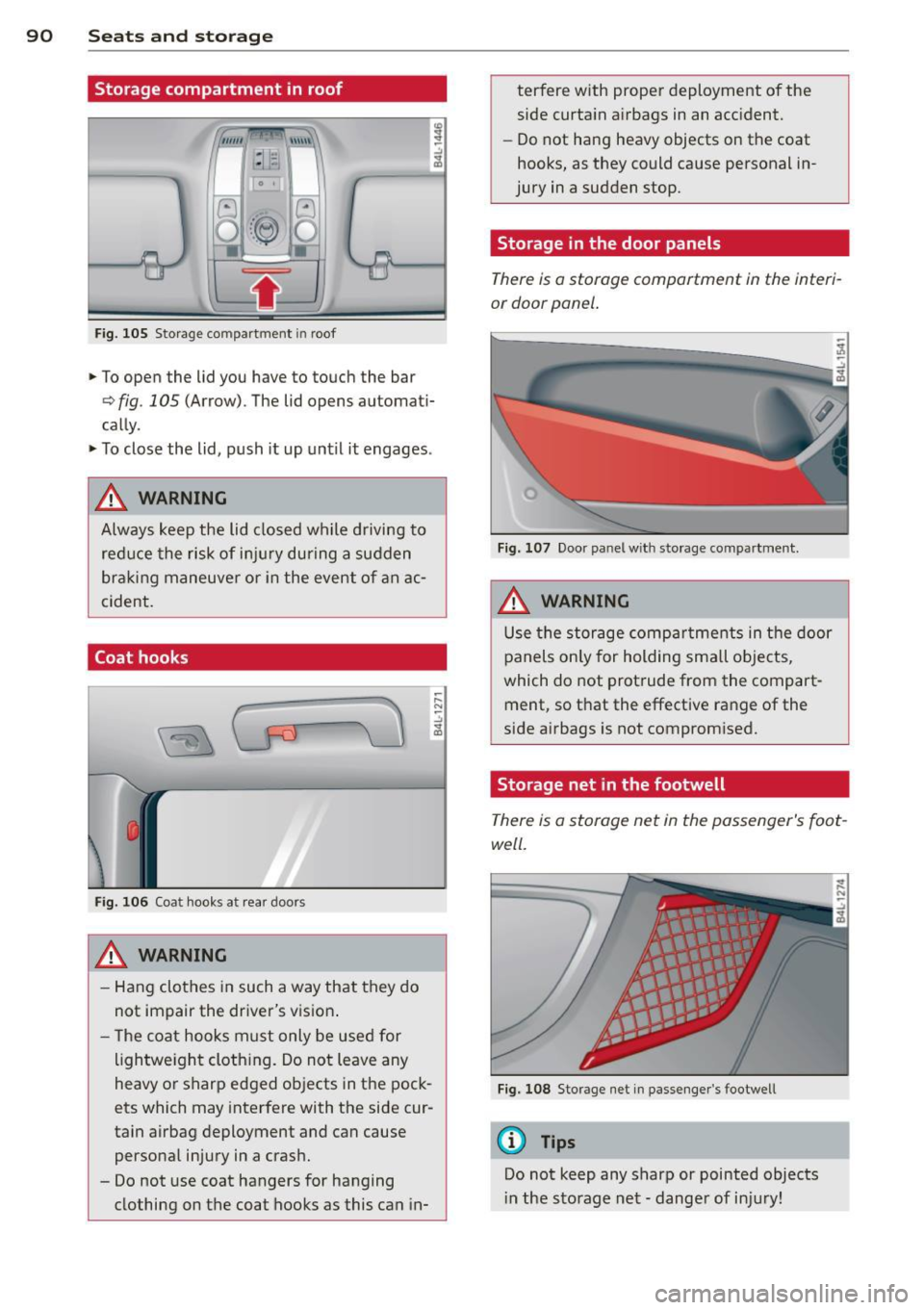
Storage compartment in roof
"'"' "' •1 '-I . .
F ig. 105 Storage compart ment in roof
.. To open the lid you have to touch the bar
¢fig . 105 (Arrow). The lid opens automat i
cally .
.. To close the lid, push it up until it engages .
A WARNING
Always keep the lid closed wh ile d riving to
reduce the risk of i njur y du ring a sudden
bra king maneuve r or in the event of an ac
cident.
Coat hooks
F ig. 1 06 Coa t hooks at rear doors
A WARNING
-Hang clothes in such a way that they do
not impair the driver 's vision .
- T he coat hooks must only be use d for
lightwe ight cloth ing. Do not leave any
heavy or sharp edged objects in the pock
ets which may interfere with the side cur
tain airbag deployment and can cause
personal injury in a crash.
- Do not use coat hangers for hanging
clothing on the coat hooks as this can in- terfere with proper deployment of the
side curta
in a irbags in an acc ident.
- Do not hang heavy objects on the coat
hooks , as they could cause personal in
jury in a sudden stop.
Storage in the door panels
There is a storage compartment in the interi
or door panel .
Fig. 107 Door panel w it h sto rage compartme nt.
A WARNING
U se the stor age comp artme nts in the door
p anels only for holding sma ll o bje cts,
which do not prot rude from the compart
ment, so t hat the effective range of the
side a irbags is not comprom ised.
Storage net in the footwell
There is a storage net in the passenger's foot
well.
F ig. 108 Storage net in passenger's footwell
(D Tips
Do not keep any sharp or pointed objects
i n the sto rage net - dange r of inj ury!
Page 105 of 340
On the road
Steering
Manually adjustable steering wheel
Applies to vehicles: with manu ally adjustable steering
w hee l
The height and reach of the steering wheel
can be adjusted.
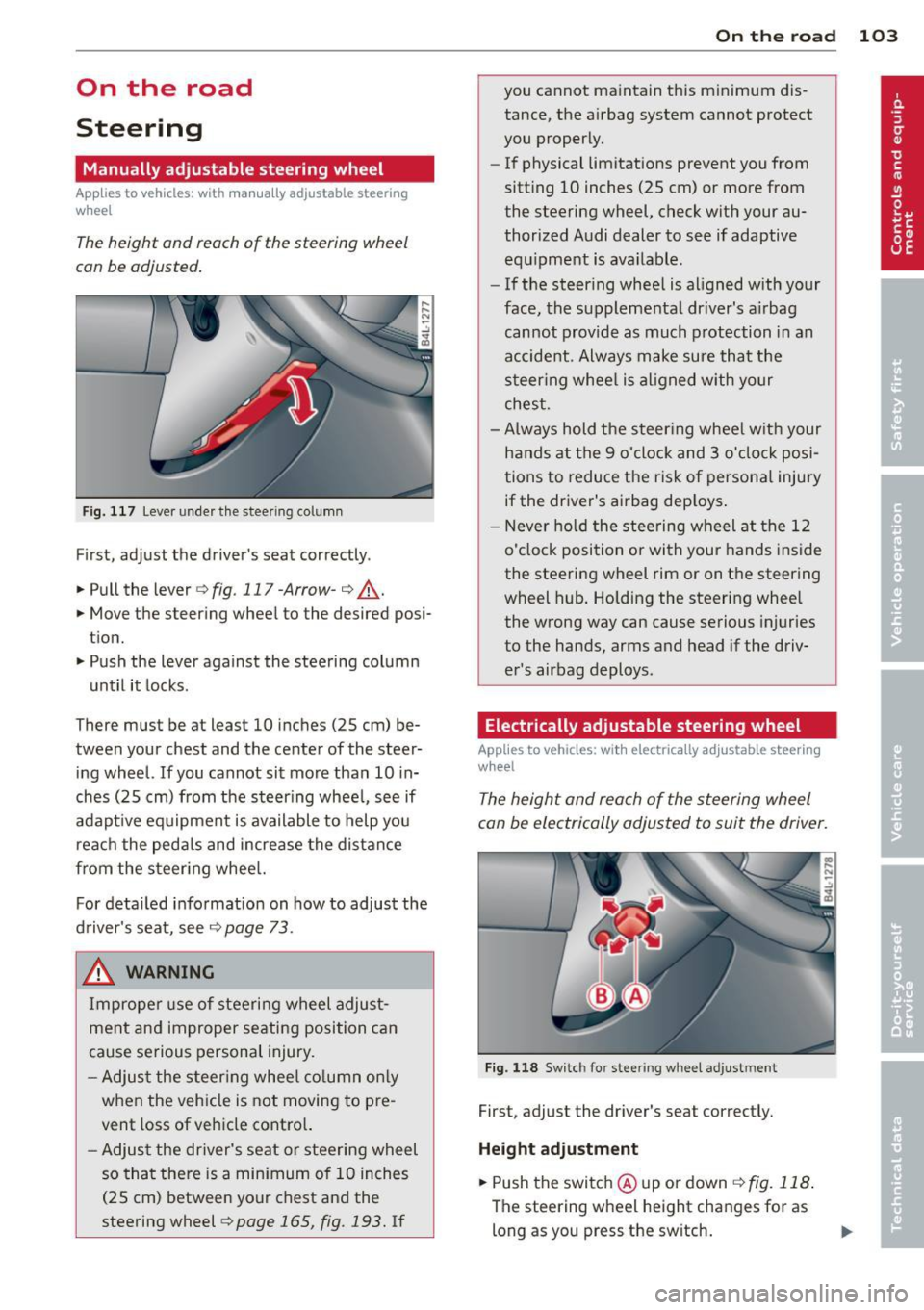
Fig. 117 Lever under the steer ing column
First, adjust the driver's seat correctly .
.. Pull the lever
q fig. 117 -Arrow-q ,A.
.. Move the steering wheel to the desired posi
tion.
.. Push the lever against the steering column
until it locks.
There must be at least 10 inches (25 cm) be
tween your chest and the center of the steer
ing wheel.
If you cannot sit more than 10 in
ches (25 cm) from the steering wheel, see if
adapt ive equipment is available to help you
reach the pedals and increase the distance
from the steering wheel.
For detailed information on how to adjust the
driver's seat, see
¢page 73.
& WARNING
Improper use of steering wheel adjust
ment and improper seating position can
cause serious personal injury.
- Adjust the steering wheel column only
when the veh icle is not moving to pre
vent loss of vehicle control.
-
-Adjust the driver's seat or steering wheel
so that there is a minimum of 10 inches
(25 cm) between your chest and the
steering wheel
¢ page 165, fig. 193. If
On the road 103
you cannot maintain this minimum dis
tance, the airbag system cannot protect
you properly.
- If physical limitations prevent you from
sitting 10 inches (25 cm) or more from
the steering wheel, check with your au
thorized Audi dealer to see if adaptive
equipment is available.
- If the steering wheel is aligned with your
face, the supplemental dr iver's a irbag
cannot provide as much protection in an
accident. Always make sure that the
steering wheel is aligned with your
chest.
- Always hold the steer ing wheel w ith your
hands at the 9 o'clock and 3 o'clock posi
tions to reduce the risk of personal injury
if the driver's airbag dep loys .
- Never hold the steering wheel at the 12
o'clock position or with your hands inside
the steering wheel rim or on the steering
wheel hub. Holding the steering wheel
the wrong way can cause serious injuries
to the hands, arms and head if the driv
er's airbag deploys.
Electrically adjustable steering wheel
App lies to vehicles: with electrically adjustable steering
w heel
The height and reach of the steering wheel
can be electrically adjusted to suit the driver.
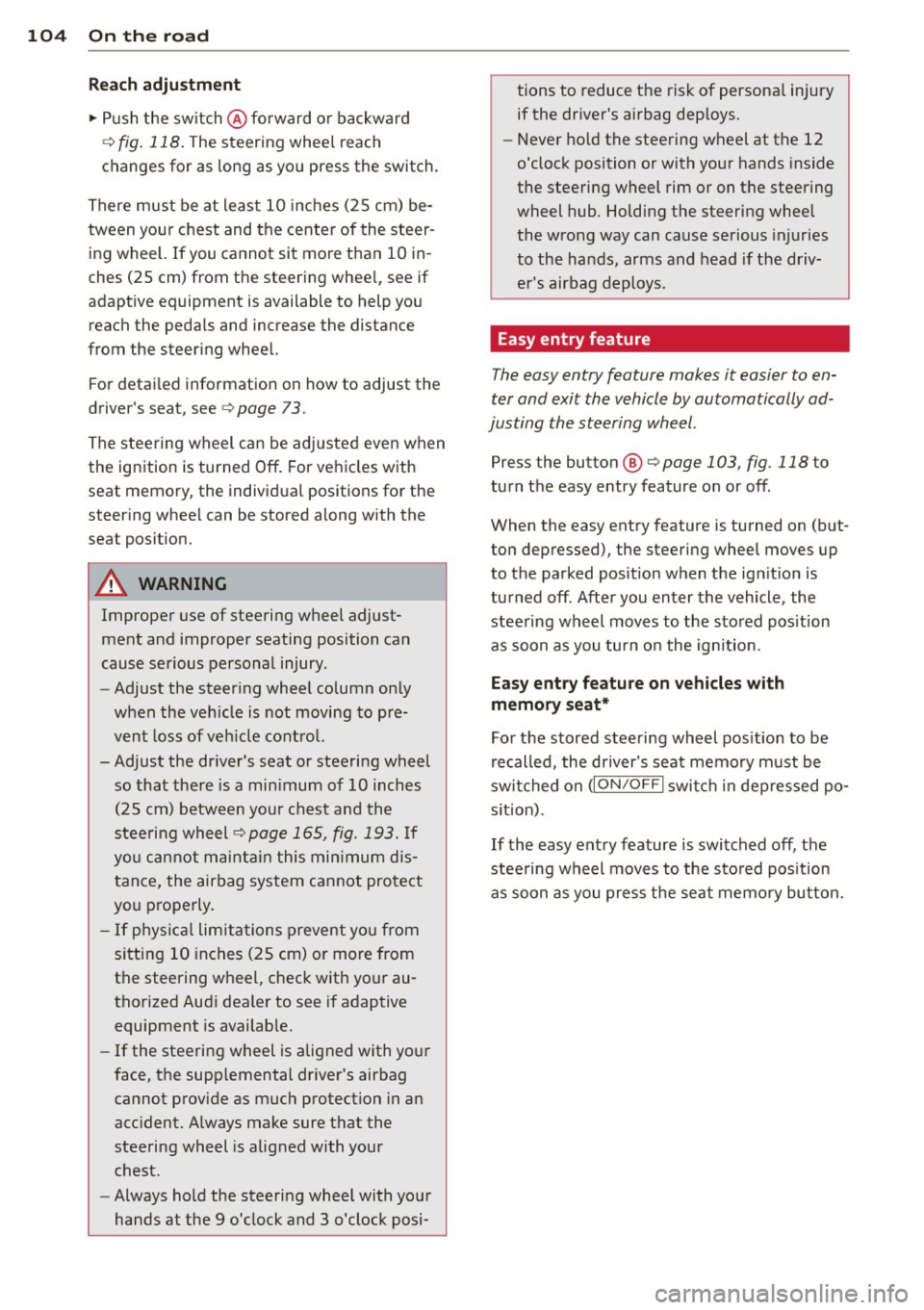
Fig. 118 Switch for stee ring wheel adjustment
First, adjust the driver's seat correctly.
Height adjustment
.. Push the switch @up or down <=> fig. 118.
The steering wheel height changes for as
long as you press the sw itch.
Page 106 of 340
104 On the road
Reach adjustm ent
.. Push the sw itch @ forward or backward
¢ fig. 118 . The steering whee l reach
changes for as long as yo u press the switch.
There must be at least 10 inches (25 cm) be
tween you r chest and the center of the steer
ing wheel. If you cannot sit more than 10 in
ches (25 cm) from the steering whee l, see if
adaptive equipment is available to help you
reach the pedals and increase the distance
from the steer ing wheel.
F or detai led informat ion on how to adjust the
driver's seat, see
¢ page 73.
The stee ring wheel can be adjusted even when
the ignition is turned
Off. For ve hicles with
seat memory, the individ ual positions for the
steering whee l can be stored along with the
seat posit ion.
A WARNING
Improper use of steering wheel adjust
ment and improper seating position can
cause se rious personal injury.
- Adjust the steer ing whee l co lumn on ly
when the veh icle is not moving to pre
vent loss of veh icle cont ro l.
- Adjust the driver's seat or steering wheel
so that the re is a min imum of 10 inches
(25 cm) between your chest and the
steering wheel
¢ page 165, fig . 193. If
yo u cannot ma int ain this min imum d is
tan ce, the airbag system c annot pro tect
yo u properly.
- If phys ica l limitations prevent yo u from
sitting 10 inches (25 cm) or more from
the steering wheel, check with yo ur au
tho rized Audi dea le r to see if adaptive
equipment is availab le.
- If the steering wheel is aligned with your
face, the supp lemental driver's airbag
cannot prov ide as much protect ion in an
acc ident. A lways make sure that the
steeri ng wheel is aligned with your
chest.
- Always hold the steering wheel with your
hands at the 9 o'clock and 3 o'clock posi- tions to reduce the risk of persona
l injury
if the dr iver's airbag dep loys .
- Never hold the steering wheel at the 12
o'clock position or with your hands inside
the steering wheel rim or on the steering
wheel hub. Holding the steering wheel
the wrong way can cause serious injuries
to the hands, arms and head if the driv
er's airbag deploys.
Easy entry feature
The easy entry feature makes it easier to en
ter and exit the vehicle by automatically ad
justing the steering wheel.
Press the button @¢ page 103, fig. 118 to
turn the easy entry feature on or
off.
When the easy entry feature is turned on (but
ton depressed), the steering wheel moves up
to the parked pos ition when the ignit ion is
turned
off. After you enter the vehicle, the
stee ring wheel moves to the sto red pos it ion
as soon as you tu rn o n the ignition.
Easy ent ry feature on vehicles w ith
memory seat*
For t he stored steering wheel pos ition to be
re called, the dr iver's seat memory m ust be
swi tched on
(ION/OF F I swi tch in dep ressed po
s it ion).
If the easy ent ry feature is switched
off, the
stee ring wheel moves to the sto red pos ition
a s soon as you press the sea t memo ry bu tton.
Page 166 of 340
164 Driving Safel y
Driving Safely
General notes
Safe driving habits
Please remember -safety first!
This chapter contains important information,
tips, instructions and warnings that you need
to read and observe for your own safety, the
safety of your passengers and others . We have
summarized here what you need to know
about safety belts, a irbags, ch ild restra ints as
well as child safety. Your safety is for us
priori
ty number 1.
Always observe the info rmat ion
and warn ings in th is sect ion -fo r yo ur own
safety as well as that of your passengers .
The information in this se ction app lies to all
model ve rsions of your veh icle . Some of the
feat ures desc ribed in this sec tions may be
standard equipment on some models, or may
be optional equipment on others . If you are
not sure, ask your authorized Aud i dealer.
A WARNING
- Always make sure that you follow the in
struct ions and heed the WARNINGS in
this manual. It is in your interest and in
the inte rest of you r passengers.
- Always keep all of the Owner's Literature
man uals in your Audi when you lend or
sell your veh icle so that this impo rtant
information will a lways be availab le to
the drive r and pas sengers.
- Always keep the Owner's Literature han
dy so tha t you can find it easily if yo u
have ques tions.
Safety equipment
The safety features are part of the occupant
restraint system and work together to help
redu ce the risk of injury in a wide variety of
accident situations.
Your safety and the safety of you r passenge rs
should not be left to chance. Advances in
technology have made a varie ty o f fea tures
avai la bl e to he lp re duce the risk of inj ury in an accident
. The following is a list of just a few of
the safety features in your Audi:
- sophis tic ated s afety be lts for d rive r and a ll
passenger sea ting pos it ions,
- be lt te nsione rs fo r th e fro nt sea ts a nd the
ou ter sea ting posit ions in the second row
seating,
- be lt h eight adjustment fo r th e front sea ts
an d the o ute r seat ing pos itions in the sec
ond row seating,
- he ad restra ints for e ach sea ting pos ition,
- fro nt airbags,
- side airbags in the fro nt seats and the outer
seating positions in the second row seat ing*,
- side curta in ai rbags,
- specia l LATCH anchorages for child re-
st raints,
- ad justab le steering colum n.
These individual safety features, can work to gether as a system to he lp protect you and
your passengers in a wide range of accidents .
These features cannot work as a system if
they are not always correctly adjusted and cor rectly used .
Safety is everybody's responsibil ity!
Important things to do before driving
Safety is everybody 's job! Vehicle and occu
pant safety always depends on the informed
and careful driver.
Fo r yo ur safety and the safety of your passen
gers,
before driving always:
.. Ma ke s ure t hat all lights and sign als are op
erati ng correctly .
.. Make s ure t hat the tire pressure is correct.
.. Make s ure that all windows are clean and af
ford good vis ibility to the outs ide.
.. Secure all luggage and other items carefu lly
¢ page 88.
.. Make s ure that nothing can inte rfere with
the peda ls.
.. Adj ust fron t seat, head restraint and m irrors
correc tly fo r you r height . .,.
Page 167 of 340
.. Instruct passengers to adjust the head re
straints according to their height.
.. Make sure to use the right child restraint
correctly to protect children
c:> page 204,
Child Safety .
.. Sit properly in your seat and make sure that
your passengers do the same
c:> page 72,
General recommendations .
.,. Fasten your safety belt and wear it properly.
Also ins truc t your passengers to fasten their
safety belts properly
c:> page 17 4.
What impairs driving safety?
Safe driving is directly related to the condi
tion of the vehicle, the driver as well as the
driver's ability to concentrate on the road
without being distracted.
The driver is respons ible for the safety of the
vehicle and a ll of its occupants . If your ability
to drive is impaired, safety risks for everybody
in the vehicle increase and you also become a
hazard to everyone else on the road
c:> .&,..
Therefore:
.. Do not let yoursel f be distracted by passen
gers or by using a cellular telephone .
.. NEVER drive when your driving ability is im
paired (by medications, alcohol, drugs, etc.).
.. Observe all traffic laws, rules of the road
and speed limits and plain common sense .
.,. ALWAYS adjust your speed to road, traff ic
and weather cond it ions .
.. Take frequent breaks on long t rips. Do not
drive for more than two hours at a stretc h.
.. Do NOT drive when you are t ired , under
pressure or when you are stressed .
A WARNING
Impaired driving safety increases the risk
of serious personal injury and death when
ever a veh icle is being used.
Driving Safely 165
Proper occupant
seating positions
Proper seating position for the driver
The proper driver seating position is impor
tant for safe, relaxed driving.
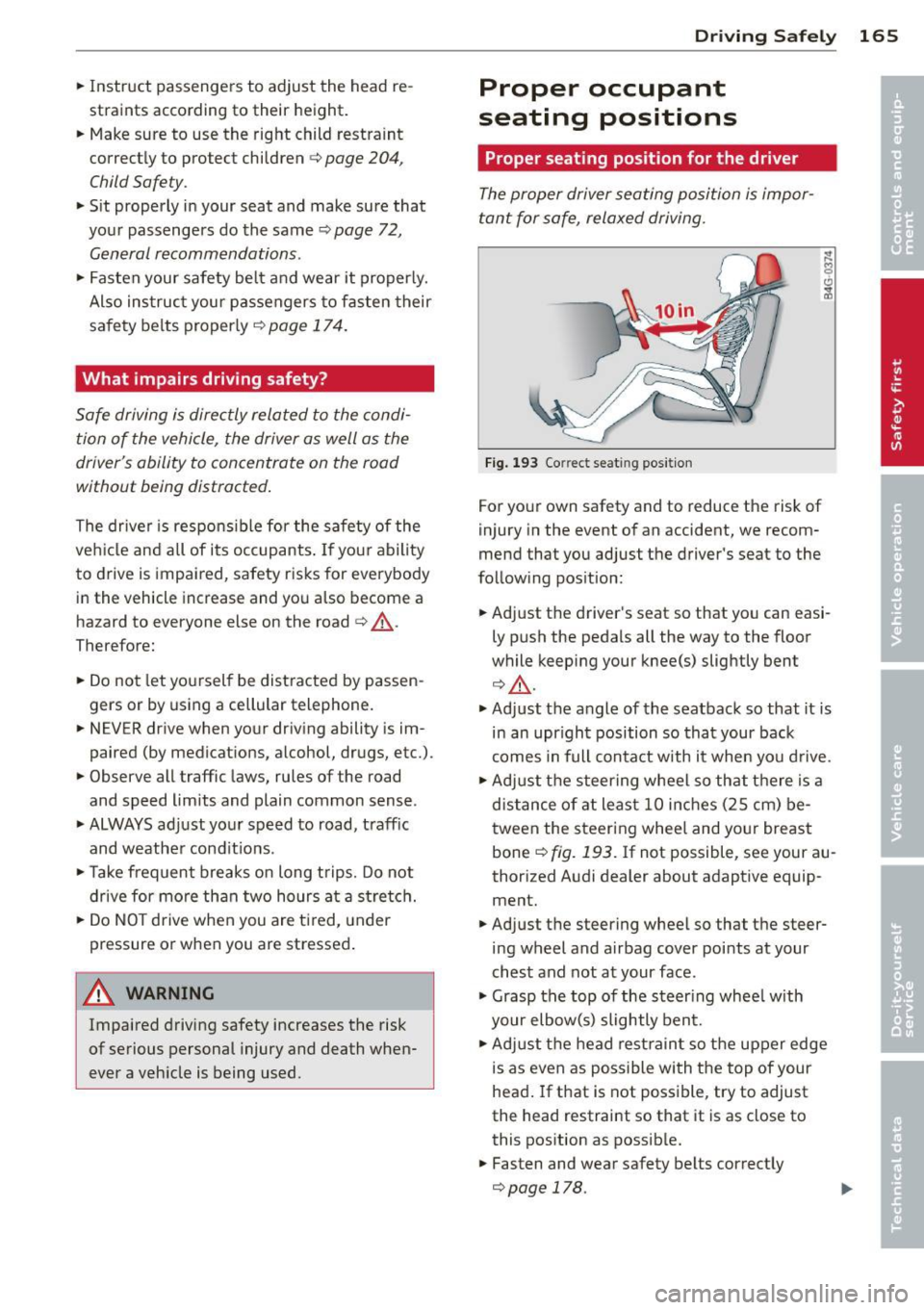
Fig. 193 Correct seat ing pos it ion
For your own safety and to reduce the risk of
injury in the event of an accident, we recom
mend that you adjust the driver's seat to the
follow ing pos ition:
.. Adjust the driver's seat so that you can easi
ly push the pedals all the way to the floor
wh ile keeping your knee(s) slightly bent
c:> .&,. .
.. Adjust the angle of the seatback so that it is
in an upr ight position so that your back
comes in full contact with it when you drive .
.. Adjust the steering wheel so that th ere is a
distance of at least 10 inches (25 cm) be
tween the steering wheel and yo ur breast
bone ~
fig. 193. If not possible, see your au
thorized Audi dealer about adaptive equip
ment .
.. Adjust the steering wheel so that the steer
ing wheel and airbag cover points at your
chest and not at your face.
.,. Grasp the top of the steer ing whee l with
your elbow(s) slightly bent.
.. Adjust the head rest raint so the upper edge
is as even as possible with the top of your
head. If that is not poss ible, try to adjust
the head restraint so that it is as close to
this position as possible .
.. Fasten and wear safety belts correctly
c:> page 178 .
Page 168 of 340
166 Driving Safely
• Always keep both feet in the footwell so
that you are in control of the vehicle at all
times.
For detailed information on how to adjust the
driver's seat, see
¢ page 73.
A WARNING
Drivers who are unbelted, out of position
or too close to the airbag can be seriously
injured by an airbag as it unfolds. To help
reduce the risk of serious personal injury:
- Always adjust the driver's seat and the
steering wheel so that there are at least
10 inches (25 cm) between your breast
bone and the steering wheel.
- Always hold the steering wheel on the
outside of the steering wheel rim with
your hands at the 9 o'clock and 3 o'clock positions to help reduce the risk of per
sonal injury if the driver's airbag inflates.
- Never hold the steering wheel at the
12 o'clock position or with your hands at
other positions inside the steering wheel
rim or on the steering wheel hub. Hold
ing the steering wheel the wrong way
can cause serious injuries to the hands,
arms and head if the driver's airbag de
ploys.
- Pointing the steering wheel toward your
face decreases the ability of the supple
mental driver's airbag to protect you in a
collision.
- Always sit in an upright position and nev
er lean against or place any part of your
body too close to the area where the air
bags are located.
- Before driving, always adjust the front
seats and head restraints properly and
make sure that all passengers are prop
erly restrained.
- Never adjust the seats while the vehicle
is moving . Your seat may move unexpect
edly and you could lose control of the ve
hicle.
- Never drive with the backrest reclined or
tilted far back! The farther the backrests
are tilted back, the greater the risk of in- jury due to incorrect positioning of the
safety belt and improper seating posi
tion.
- Children must always ride in child safety
seats ¢
page 204. Special precautions
apply when installing a child safety seat
on the front passenger seat¢
page 183.
Proper seating position for the front
passenger
The proper front passenger seating position
is important for safe, relaxed driving .
For your own safety and to reduce the risk of
injury in the event of an accident, we recom
mend that you adjust the seat for the front
passenger to the following position :
• Adjust the angle of the seatback so that it is
in an upright position and your back comes
in full contact with it whenever the vehicle is
moving .
• Adjust the head restraint so the upper edge
is as even as possible with the top of your
head. If that is not possible, try to adjust
the head restraint so that it is as close to
this position as possible
¢ page 167.
• Keep both feet flat on the floor in front of
the front passenger seat .
• Fasten and wear safety belts correct
ly ¢
page 178 .
For detailed information on how to adjust the
front passenger's seat, see ¢
page 72.
A WARNING
-Front seat passengers who are unbelted,
out of position or too close to the airbag
can be seriously injured or killed by the air
bag as it unfolds. To help reduce the risk of
serious personal injury:
- Passengers must always sit in an upright
position and never lean against or place
any part of their body too close to the
area where the airbags are located.
- Passengers who are unbelted, out of po
sition or too close to the airbag can be
seriously injured by an airbag as it
Page 169 of 340
unfolds with great force in the blink of
an eye .
- Always make sure that there are at least
10 inches (25 cm) between the front
passenger 's breastbone and the instru
ment panel.
- Each passenger must always sit on a seat of the ir own and properly fasten and
wear the safety belt be longing to that
seat .
- Before driving, always adjust the front
passenger seat and head restra int prop
erly .
- Always keep your feet on the f loor in
front of the seat. Never rest them on the
seat, instrument panel, out of the win dow, etc. The airbag system and safety
belt w il l not be ab le to protec t you prop
er ly and can even increase the risk of in
jury in a crash .
- Never drive with the backrest reclined o r
ti lted far back! The farther the backrests
are ti lted back , the greater the risk of in
jury due to incorrect positioning of the
safety belt and improper seating posi
t ion.
- Children must always ride in child safety
seats
c> page 204 . Special precautions
apply when installing a child safety seat
on the front passenger seat
c> page 183 .
Proper seating positions for passengers
in rear seats
Rear seat passengers must sit upright with
both feet on the floor consistent with their
physical size and be properly restrained whenever the vehicle is in use .
To reduce the risk of injury caused by an incor
rect seat ing pos ition in the event of a sudden
brak ing maneuve r or an acc ident , your pas
se ngers on the rea r bench seat must always
observe the fo llow ing :
~ If there are passengers in the rear seat, fold
the head rest ra ints up on the occupied seats
or slide the center head restrain t upward at
least to the next notch
c> page 78 .
Drivin g Sa fely 167
~ Make sure that the seatback is secure ly
latch ed in the upright posi tion
c> page 80.
~ Keep both feet flat in the footwell in front of
the rear seat .
~ Fasten and wear safety belts proper ly
<=> page 178 .
~ Make sure that children are always properly
restrained in a child restraint that is appro
pria te for the ir s ize and age
c> page 204.
A WARNING
Passengers who are imp roperly seated on
the rea r seat can be seriously inj ured in a
crash .
- Each passenger must always si t on a seat
of their own and properly fasten and
wear the safety belt belonging to that
seat.
- Safety belts only offer maximum protec
tion when the seatback is sec urely latch
ed in the upright position and the safety
bel ts are properly posit ioned on the
body . By not sitting upright, a rear seat
passenger increases the risk of personal
in ju ry from improperly positioned safety
be lts!
- Always adjust the head rest raint p roperly
so that it can give maximum protection .
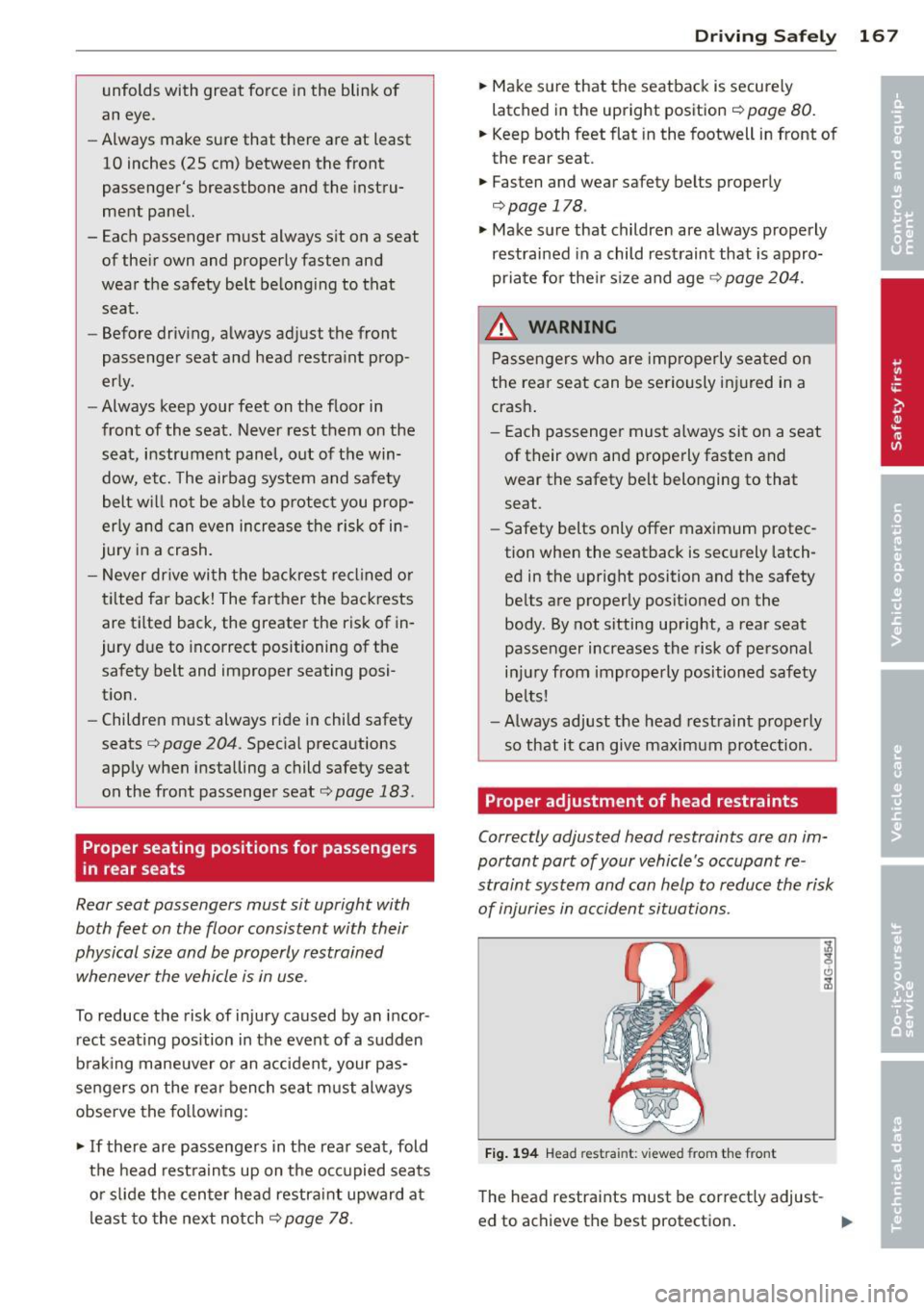
Proper adjustment of head restraints
Correctly adjusted head restraints are an im
portant port of your vehicle's occupant re
straint system and can help to reduce the risk
of injuries in accident situations .
Fig. 1 94 Head restr ain t: v ie wed from th e front
The head restraints must be correct ly adjust-
ed to achieve the best protectio n. ..,.
Page 178 of 340
176 Safety belts
What happens to occupants not wearing
safety belts?
In crashes unbelted occupants cannot stop themselves from flying forward and being in
jured or killed. Always wear your safety belts!
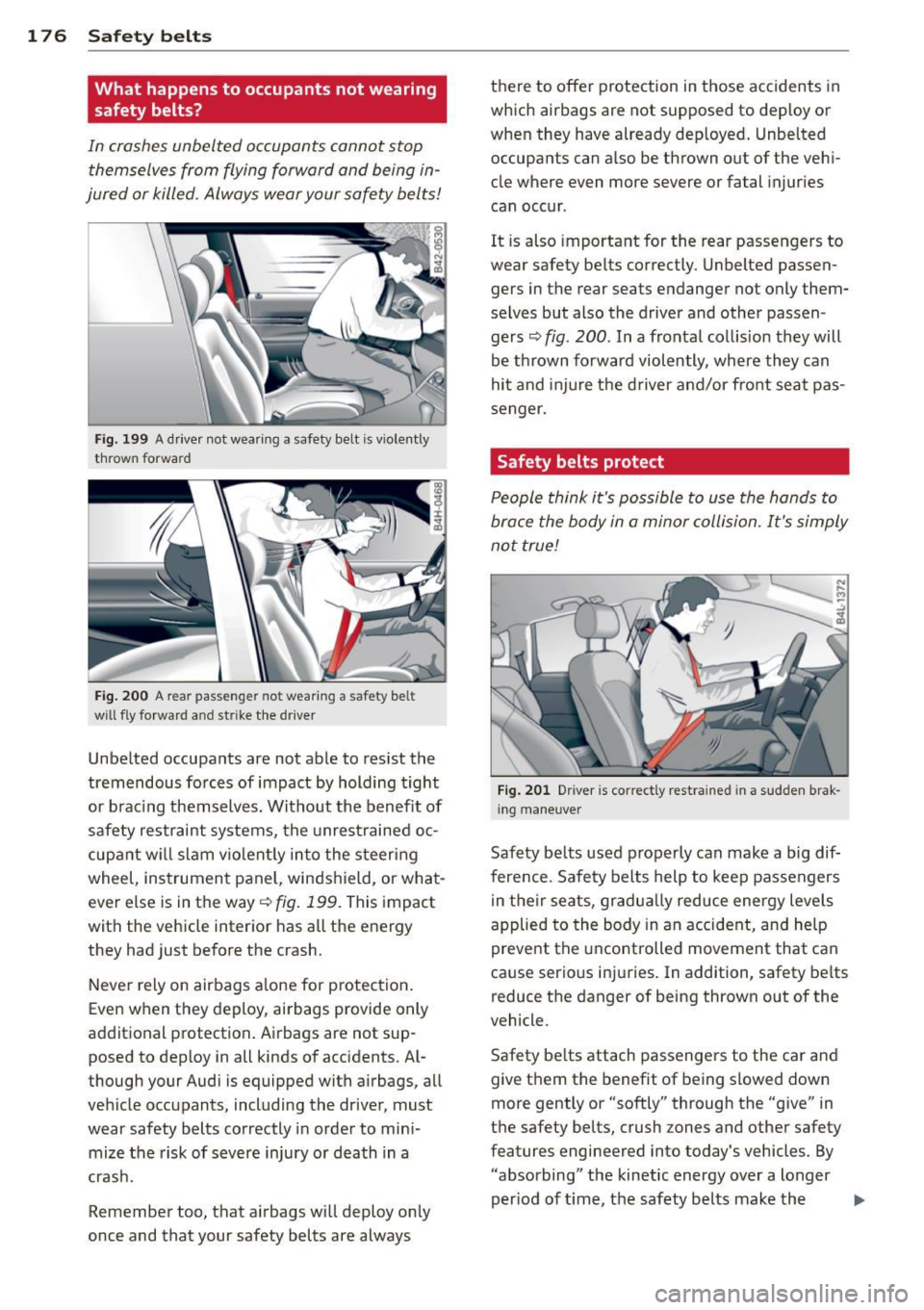
Fig. 199 A driver not wearing a safety belt is violently
thrown forward
Fig. 200 A rear passenger not wearing a safety belt
will fly forward and strike the drive r
Unbelted occupants are not able to resist the
tremendous forces of impact by holding tight
or bracing themselves. Without the benefit of
safety restraint systems, the unrestrained oc
cupant will slam violently into the steering
wheel, instrument panel, windshield, or what
ever else is in the way
q fig. 199. This impact
with the vehicle interior has all the energy
they had just before the crash.
Never rely on airbags alone for protection.
Even when they deploy, airbags provide only
additional protection. Airbags are not sup posed to deploy in all kinds of accidents. Al
though your Audi is equipped with airbags, all
vehicle occupants, including the driver, must
wear safety belts correctly in order to mini
mize the risk of severe injury or death in a
crash.
Remember too, that airbags will deploy only
once and that your safety belts are always there to offer protection in those accidents
in
which airbags are not supposed to deploy or
when they have already deployed. Unbelted occupants can also be thrown out of the vehi
cle where even more severe or fatal injuries
can occur .
It is also important for the rear passengers to
wear safety belts correctly. Unbelted passen
gers in the rear seats endanger not only them
selves but also the driver and other passen gers¢
fig. 200. In a frontal collision they will
be thrown forward violently, where they can
hit and injure the driver and/or front seat pas
senger.
Safety belts protect
People think it's possible to use the hands to
brace the body in a minor collision. It's simply
not true!
Fig. 201 Driver is correctly restrained in a sudden brak
ing maneuver
Safety belts used properly can make a big dif
ference. Safety belts help to keep passengers
in their seats, gradually reduce energy levels
applied to the body in an accident, and help
prevent the uncontrolled movement that can
cause serious injuries. In addition, safety belts
reduce the danger of being thrown out of the
vehicle.
Safety belts attach passengers to the car and
give them the benefit of being slowed down
more gently or "softly" through the "give" in
the safety belts, crush zones and other safety
features engineered into today's vehicles. By
"absorbing" the kinetic energy over a longer
period of ti me, the safety belts make the
lilJJ,
Page 179 of 340
forces on the body more "tolerable" and less likely to cause injury.
Although these examples are based on a fron
tal collision , safety belts can also substantial
ly reduce the risk of injury in other kinds of
crashes. So, whether you're on a long trip or
just going to the corner store, always buckle
up and make sure others do, too. Accident sta
tistics show that vehicle occupants properly
wearing safety belts have a lower risk of being
injured and a much better chance of surviving
an accident . Properly using safety belts also
greatly increases the ability of the supplemen
tal airbags to do their job in a collision. For
this reason, wearing a safety belt is legally re
quired in most countries including much of
the United States and Canada.
Although your Audi is equipped with airbags ,
you still have to wear the safety belts provid
ed. Front airbags, for example, are activated
only in some frontal collisions. The front air
bags are not activated in all frontal collisions,
in side and rear collisions, in roll overs or in
cases where there is not enough deceleration
through impact to the front of the vehicle .
The same goes for the other airbag systems in
your Audi. So, always wear your safety belt
and make sure everybody in your vehicle is
properly restrained!
Important safety instructions about
safety belts
Safety belts must always be correctly posi
tioned across the strongest bones of your
body.
.,. Always wear safety belts as illustrated and
described in this chapter.
.,. Make sure that your safety belts are always
ready for use and are not damaged.
A WARNING
Not wearing safety belts or wearing them
improperly increases the risk of serious
personal injury and death. Safety belts can
work only when used correctly .
Safety belts 177
-Always fasten your safety belts correctly
before driving off and make sure all pas
sengers are correctly restrained.
- For maximum protection, safety belts
must always be positioned properly on
the body .
- Never strap more than one person, in cluding small children, into any belt .
- Never place a safety belt over a child sit
ting on your lap.
- Always keep feet in the footwell in front
of the seat while the vehicle is being driv
en.
- Never let any person ride with their feet
on the instrument panel or sticking out
the window or on the seat.
- Never remove a safety belt while the ve hicle is moving. Doing so will increase
your risk of being injured or killed .
- Never wear belts twisted.
- Never wear belts over rigid or breakable
objects in or on your clothing, such as
eye glasses, pens, keys, etc., as these
may cause injury.
- Never allow safety belts to become dam aged by being caught in door or seat
hardware .
- Do not wear the shoulder part of the belt
under your arm or otherwise out of posi
tion .
- Several layers of heavy clothing may in
terfere with correct positioning of belts
and reduce the overall effectiveness of
the system .
- Always keep belt buckles free of anything
that may prevent the buckle from latch
ing securely .
- Never use comfort clips or devices that
create slack in the shoulder belt. Howev
er, special clips may be required for the
proper use of some child restraint sys
tems .
- Torn or frayed safety belts can tear, and
damaged belt hardware can break in an
accident. Inspect belts regularly. If web-
bing, bindings, buckles, or retractors are .,..
L,_ _______________ _J
•
•
Page 183 of 340
Improperly worn safety belts
Incorrectly positioned safety belts can cause
severe injuries .
Wearing safety belts improperly can cause se
rious injury or death. Safety belts can only
work when they are correctly positioned on the body . Improper seating positions reduce
the effectiveness of safety belts and will even increase the risk of injury and death by mov
ing the safety belt to critical areas of the
body . Improper seating positions also in
crease the risk of serious injury and death
when an airbag deploys and strikes an occu
pant who is not in the correct seating posi
tion . A driver is responsible for the safety of
all vehicle occupants and especially for chil
dren . Therefore:
... Never permit anyone to assume an incorrect
sitting position in the vehicle while traveling
¢ ,& .
A WARNING
Improperly worn safety belts increase the
risk of serious personal injury and death
whenever a vehicle is being used.
- Always make sure that all vehicle occu
pants are correctly restrained and stay in
a correct seating posit ion whenever the
vehicle is be ing used.
- Always read and heed all WARNINGS and
other important information
c:>page 177.
Safety belt preten
sioners
How safety belt pretensioners work
In front, side and rear -end collisions above a
particular severity and in a rollover, safety
belts are tensioned automatically.
The safety belts are equipped with safety belt
pretensioners . The system is activated by sen
sors in front, side and rear-end collisions of
great severity and in a rollover. This tightens
the belt and takes up be lt sla ck
c:> .& in Service
Safety belts 181
and disposal of safety belt pretensioner on
page 182.
Taking up the slack helps to reduce
forward occupant movement dur ing a colli
sion.
@ Note
Never let the belt remain over a rear seat
back that has been fo lded forward.
(D Tips
The safety belt pretensioner can only be
activated once.
- In minor frontal and side collisions, in
rear-end collisions and in accidents in
volving very little impact force, the safe
ty belt pretensioner are not activated.
- When the safety belt pretensioners are
activated, a fine dust is re leased. This is
normal and is not caused by a fire in the
vehicle.
- The re levant safety requirements must
be observed when the vehicle or compo
nents of the system are scrapped. An au
thorized Audi dealer or qualified work
shop is familiar w ith these regulations
and w ill be pleased to pass on the infor
mation to you.
- Be sure to observe all safety, env iron
menta l and other regulations if the veh i
cle or ind ividual parts of the system, par
ticularly the safety belt or airbag, are to
be disposed. We recommend you have
your authorized Audi dealer perform this
service for you.
Service and disposal of safety belt
pretensioner
The safety belt pretens ioners are parts of the
safety belts on your Audi. Insta lling, remov
ing, servic ing or repair ing of belt pretension
ers can damage the safety belt system and
prevent it from working correctly in a colli
s ion .
T he re are some impo rtant things you have to
know to make sure that the effectiveness of .,. •
•