roof AUDI Q7 2015 Owner´s Manual
[x] Cancel search | Manufacturer: AUDI, Model Year: 2015, Model line: Q7, Model: AUDI Q7 2015Pages: 350, PDF Size: 86 MB
Page 190 of 350
188 Airbag sys tem
If the tota l weight on the front passenger
seat is more than that of a typical 1 year-o ld,
but less than the weight of a small adu lt, the
front airbag on the passenger side may deploy (the
PASSENGER AIR BAG OFF light does not
come on).
For e xample , the airbag m ay deploy if :
-a small child that is heavier than a typical 1
year-o ld child is on the front passenger seat
(regardless of whether the child is in one of
the chi ld safety seats listed
¢ page 205),
-a chi ld who has outgrown child restraints is
on the front passenger seat.
If the front passenger airbag is turned off, the
PASSENGER AIR BAG OFF light in the center
of the instrument pane l w ill come on and stay
on.
The front airb ag on the passenger side may
not deploy (the PASSENGER AIR BAG OFF
light does not ill uminate and stay lit) if:
- a small adu lt o r teenager is o n the front pas
senger se at
- a passenger who is not sitt ing upr ight w it h
their back against a non-reclined backrest
with their feet on the veh icle floo r in front
of the seat is on the front passenge r seat .
I f the front passenge r airbag deploys, the
F ederal Standa rd requires the airbag to meet
the " low ris k'' deployment criter ia to help re
d uce the risk of inj ury through interaction
with the airbag. "Low risk" deployment occurs
in those crashes that take place at lower de
celerations as defined in the electronic control un it.
¢ page 193
Always remember: Even tho ugh yo ur vehicle
is equipped with Advanced Airbags, the safest
p lace for children is properly restrained on the
back seat. Please be sure to read the impor
tant information i n the sect ions that follow
and be sure to heed a ll of the WARNINGS.
A WARNING
To reduce the risk of injury when an airbag
inf lates, a lways wear safety belts prope rly. -
If you are unrestra ined, leaning forward,
sitt ing s ideways or o ut of pos ition in any
way, your risk of injury is m uch higher.
- You will a lso receive serious injuries and
could even be killed if yo u are up aga inst
the airbag or too close to it when it in
f lates -eve n w it h an Advanced A irbag
¢page 182.
A WARNING "---
A child in a rearward-fac ing ch ild safety
seat installed on the front passenger seat
will be serious ly inju red and ca n be killed if
the front air bag infla tes -even with an Ad
vanced A irbag System.
- Al tho ugh t he Advanced Airbag Sys tem in
your veh icle is designe d to tur n off the
front airbag when a rearward -facing
child restraint has been insta lled on the
front passenger seat, nobody can abso lutely g uarantee that dep loyment is im
possible in all conceivable situations that
may happen dur ing the usefu l life of your
veh icle.
- The inflating airbag will h it the c hild
safety seat or i nfant carrier with great
force and will smash the child safety seat
a nd child aga inst the bac krest, center
armrest, doo r, or roof.
- Always install rea rward-fac ing ch ild re
s traint s on the rear seat.
- If you must ins tall a rearwa rd fac ing
child safety seat on the fro nt passenger
seat because of exceptiona l circu mstan
ces and t he
PASSENGER AIR BAG OFF
light does not come on an d stay on, im
mediately insta ll the rear-facing c hild
safety seat in a rear seating position and
have the airbag system inspected by your
author ized Audi dealer.
A WARNING
-If, in except io nal circumstances, you m ust
i nstall a forward-facing child restraint on
the front passenge r's seat:
II--
Page 194 of 350
192 Airbag system
- when the weight on the front passenger
seat as sensed by th e Advanced Airbag Sys
tem indicates that the front airbag on the
passenger side has to be turned off by the
electronic control unit (the
PASSENGER AIR
BAG OFF
light comes on and stays on)
A WARNING
Sitting in the wrong position can increase
the risk of serious injury in crashes.
- To reduce the risk of injury when the air
bags inflate, the driver and passengers
must always sit in an upright position,
must not lean against or place any part
of their body too close to the area where
the airbags are located.
- Occupants who are unbelted, out of posi
tion or too close to the airbag can be se
riously injured by an airbag as it unfolds
with great force in the blink of an eye
¢page 184.
A WARNING -
A child in a rearward-facing child safety
seat installed on the front passenger seat
will be seriously injured and can be killed if
the front airbag inflates -even with an Ad
vanced Airbag System.
- The inflating airbag will hit the child
safety seat or infant carrier with great
force and will smash the child safety seat
and child against the backrest, center
armrest, door or roof.
- Always install rear-facing child safety
seats on the rear seat.
- If you must install a rearward-facing
child safety seat on the front passenger
seat because of exceptional circumstan
ces and the
PASSENGER AIR BAG OFF
light does not come on and stay on, im
mediately install the rear-facing child
safety seat in a rear seating position and
have the airbag system inspected by your
authorized Audi dealer.
A WARNING
Objects between you and the airbag will
increase the risk of injury in a crash by in
terfering with the way the airbag unfolds
or by being pushed into you as the airbag inflates .
- Never hold things in your hands or on
your lap when the vehicle is in use.
- Never transport items on or in the area
of the front passenger seat. Objects
could move into the area of the front air
bags during braking or other sudden ma
neuvers and become dangerous projec
tiles that can cause serious personal in
jury if the airbags inflate.
- Never place or attach accessories or oth
er objects (such as cupholders, tele
phone brackets, large, heavy or bulky ob
jects) on the doors, over or near the area marked "AIRBAG" on the steering wheel,
instrument panel, seat backrests or be
tween those areas and yourself . These
objects could cause injury in a crash, es
pecially when the airbags inflate.
- Never recline the front passenger's seat
to transport objects. Items can also
move into the area of the side airbag or
the front airbag during braking or in a
sudden maneuver. Objects near the air
bags can become projectiles and cause
injury, particularly when the seat is re
clined.
- Never tilt the front passenger seat back
rest forward when the vehicle is moving.
An inflating airbag will force the back
rest backward and can injure rear seat oc
cupants.
A WARNING
The fine dust created when airbags deploy
can cause breathing problems for people
with a history of asthma or other breath ing conditions.
-
-To reduce the risk of breathing problems,
those with asthma or other respiratory
....__ c_ o_ n_ d_ it_ i_o _ ns_ s_ ho _u_ l_ d ....:g:_ e_ t_ f_re _s_ h _ a_ i_r _ri ..::g :....h _t __
_J .,.
Page 202 of 350

200 Airbag system
heavy or sharp-edged objects in the
pockets that may interfere with side air
bag deployment and can cause personal
injury in an accident .
- Always prevent the side airbags from be
ing damaged by heavy objects knocking
against or hitting the sides of the seat
backs.
- The airbag system can only be triggered
once.
If the a irbag has been triggered,
the system must be replaced by an au
thorized Audi dealership.
- Damage (cracks, deep scratches etc.) to
the original seat covers or to the seam in
the area of the side airbag module must always be repaired immediately by an au
thorized Audi dealer.
- If children are seated improperly, their
risk of injury increases in the case of an
accident ¢
page 203, Child Safety.
-Never attempt to modify any compo
nents of the airbag system in any way.
- In a side collision, side airbags will not
function properly if sensors cannot cor
rectly measure increasing air pressure in
side the doors when air escapes through
larger, unclosed openings in the door
panel.
- Never drive with inter ior door trim pan
els removed.
- Never drive when parts have been re
moved from the inside door panel and
the openings they leave have not been
properly closed.
- Never drive when loudspeakers in the
doors have been removed unless the
speaker holes have been properly
closed.
- Always make certain that openings are
covered or filled if additional speakers
or other equipment is installed in the
inside door panels.
- Always have work on the doors done by an authorized Audi dealer or qualified
workshop.
Side curtain airbags
Description of side curtain airbags
The side curtain airbags can provide supple
mental protection to properly restrained oc
cupants.
Fig. 214 S ide curtain air bags, driver's side: location
The side curtain airbags are located on both
sides of the interior above the front and rear
side windows ~
fig. 214. They are identified
by the word "AIRBAG" on the windshield
frame and the center roof pillar .
The side curtain airbag system supplements
the safety belts and can help to reduce the
risk of injury for occupants' heads and upper
torso on the side of the vehicle that is struck
in a side collision. The side curtain airbag in
flates in side impacts and only when the vehi cle acceleration registered by the control unit
is high enough . If this rate is below the refer
ence value programmed into the control unit,
the side curtain airbag will not be triggered,
even though the car may be badly damaged as
a result of the collision. It is not possible to
define an airbag triggering range that will
cover every possible angle of impact, since the
circumstances will vary considerably between
one collision and another. Important factors
include, for example, the nature (hard or soft)
of the impacting object, the angle of impact,
vehicle speed, etc. ¢
page 201, How side cur
tain airbags work .
Aside from their normal safety function, safe
ty belts work to help keep the driver or front
passenger in position in the event of a colli
sion so that the side curtain airbags can pro
vide protection.
Page 209 of 350
M N
0 ...J
'SI: ,...., \!) 1.1'1 ,...., 1.1'1 ,....,
A WARNING
1
Not using a child safety seat, using the
wrong child safety seat or improperly in
stalling a child restraint increases the risk
of serious personal injury and death .
-All vehicle occupants and especially chil dren must always be restrained properly
whenever riding in a vehicle.
- An unrestrained or improperly restrain
ed child can be injured or killed by be
ing thrown against the inside of the ve
hicle or by being ejected from it during
a sudden maneuver or impact.
- An unrestrained or improperly restrain
ed child is at much greater risk of injury
or death by being struck by an inflating
airbag.
- Commercially available child safety seats
are required to comply with U.S. Federal
Motor Vehicle Safety Standard (FMVSS)
213 (in Canada CMVSS 213).
- When buying a child restraint, select
one that fits your child and the vehicle.
- Only use child restraint systems that
fully contact the flat portion of the
seat cushion. The child restraint must
not tip or lean to either side. Audi does
not recommend using child safety
seats that rest on legs or tube-like
frames . They do not provide adequate
contact with the seat.
-Always heed all legal requirements per
taining to the installation and use of
child safety seats and carefully follow
the instructions provided by the manu
facturer of the seat you are using.
- Never allow children under 57 inches
(1.45 meters) to wear a normal safety
belt. They must always be restrained by a
proper child restraint system. Otherwise,
they could sustain injuries to the abdo
men and neck areas during sudden brak
ing maneuvers or accidents.
- Never let more than one child occupy a
child safety seat.
Child Safety 207
- Never let babies or older children ride in
a vehicle while sitting on the lap of an
other passenger.
- Holding a child in your arms is never a
substitute for a child restraint system.
- The strongest person could not hold
the child with the forces that exist in
an accident. The child will strike the in
terior of the vehicle and can also be
struck by the passenger.
- The child and the passenger can also
injure each another in an accident.
- Never install rear-facing child safety
seats or infant carriers on the front pas
senger seat . A child will be seriously in
jured and can be killed when the passen
ger airbag inflates -even with an Ad
vanced Airbag System.
- The inflating airbag will hit the child
safety seat or infant carrier with great
force and will smash the child safety seat
and child against the backrest, center
armrest, door or roof .
-Always install rear-facing child safety
seats or infant carriers on the rear seat .
- Forward-facing child safety seats instal
led on the front passenger's seat can in
terfere with the airbag when it inflates
and cause serious injury to the child.
Al
ways install forward-facing child safety
seats on the rear seat .
- If exceptional circumstances require the
use of a forward-facing child restraint on
the front passenger's seat, the child's
safety and well-being require that the
following special precautions be taken:
- Make sure the forward-facing seat has
been designed and certified by its man
ufacturer for use on a front seat with a
passenger front and side airbag.
- Always carefully follow the manufac
turer's instructions provided with the
child safety seat or carrier.
- Always move the front passenger seat
into the rearmost position of the pas
senger seat's fore and aft adjustment
range, and as far away from the airbag •
•
•
•
Page 211 of 350
M
"' 0 _,
"". rl I.O
"' rl
"' rl
Child safety seats
Infant seats
Babies and infants up to about one year old
and 20 lbs. or 9 kg need special rearward -fac
ing child restraints that support the back,
neck and head in a crash.
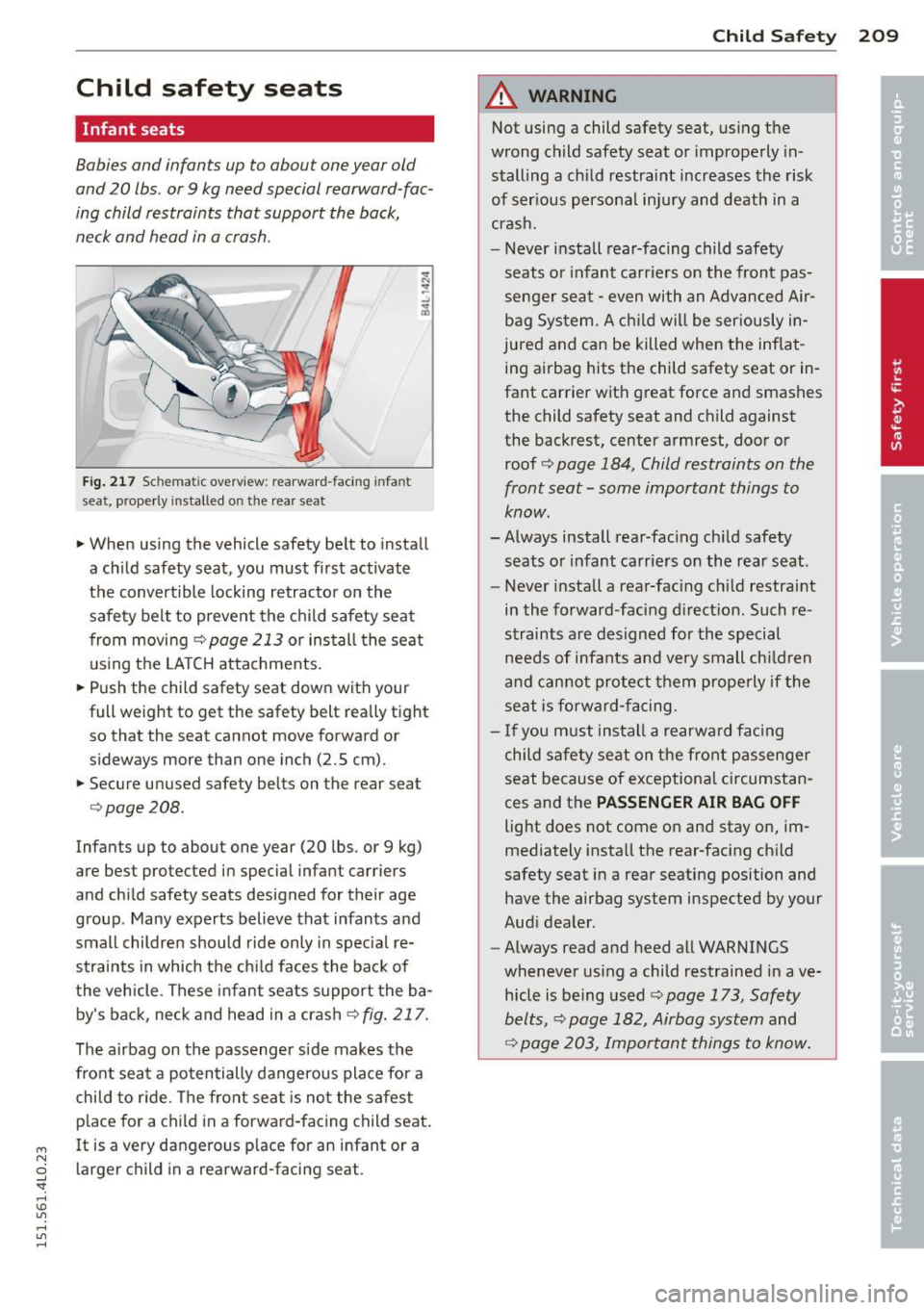
Fig . 217 Sche matic overv iew: rearward-fac ing infant
seat, properly installed o n the rear seat
~ When using the vehicle safety belt to install
a child safety seat, you must first activate
the convertible locking retracto r on the
safety be lt to prevent the child safety seat
from moving ¢
page 213 or install the seat
using the LA T CH attachments.
~ Push the child safety seat down with your
full weight to get the safety belt rea lly tight
so that the seat cannot move forward or
sideways more than one inch (2.5 cm).
~ Secure unused safety belts on the rear seat
¢page 208.
Infants up to about one year (20 lbs. or 9 kg)
are best protected in special infan t carriers
and child safety seats designed for their age
group . Many experts believe that infants and
small children should ride only in spec ial re
straints in which the ch ild faces the back of
the vehicle. These infant seats support the ba
by's back, neck and head in a crash ¢
fig. 217.
The airbag on the passenger side makes the
front seat a po tentially dangerous place for a
child to r ide . The front seat is not the safest
p lace for a child in a forward -facing child seat.
It is a very dangerous p lace for an infant or a
l arger ch ild in a rearward-facing seat.
Child Safety 209
A WARNING
Not using a child safety seat, using t he
wrong child safety seat or improperly in
stall ing a ch ild restraint increases the risk
of ser ious personal injury and death in a
crash.
- Never install rear-facing child safety
seats or infant ca rr ie rs on the front pas
senger seat -even with an Advanced Air
bag Sys tem. A ch ild will be ser iously in
jured and ca n be killed when the inflat
ing airbag hits the child safety seat or in
fant carrier with great force and smashes the child safety seat and child against
the backrest, center armrest, door or
roof ¢
page 184, Child restraints on the
front seat- some important things to
know .
-Always install rear-fac ing ch ild safety
seats or infant carriers on the rear seat .
- Never install a rear-fac ing ch ild restraint
in the forward-fac ing d irect ion. Such re
straints are designed for the special needs of infants and very small ch ild ren
and cannot prote ct them properly if the
seat is forward- facing.
- If you mus t insta ll a rearward fac ing
child sa fety seat on the fro nt passenger
seat because of exceptiona l circumstan
ces and t he
PASSENGER AIR BAG OFF
light does not come on and stay on, im
mediately insta ll the rear -fac ing ch ild
safety seat in a rear seating position and
have the airbag system inspected by your
Aud i dea ler .
- Always read and heed all WARNINGS
wheneve r us ing a child restrained in ave
hicle is being used¢
page 173 , Safety
belts,
¢ page 182, Airbag system and
¢ page 203, Important things to know.
Page 212 of 350
210 Child Safety
Convertible child safety seats
Properly used convertible child safety seats
can help protect toddlers and children over
age one who weigh between
20 and 40 lbs. (9
and 18 kg) in a crash.
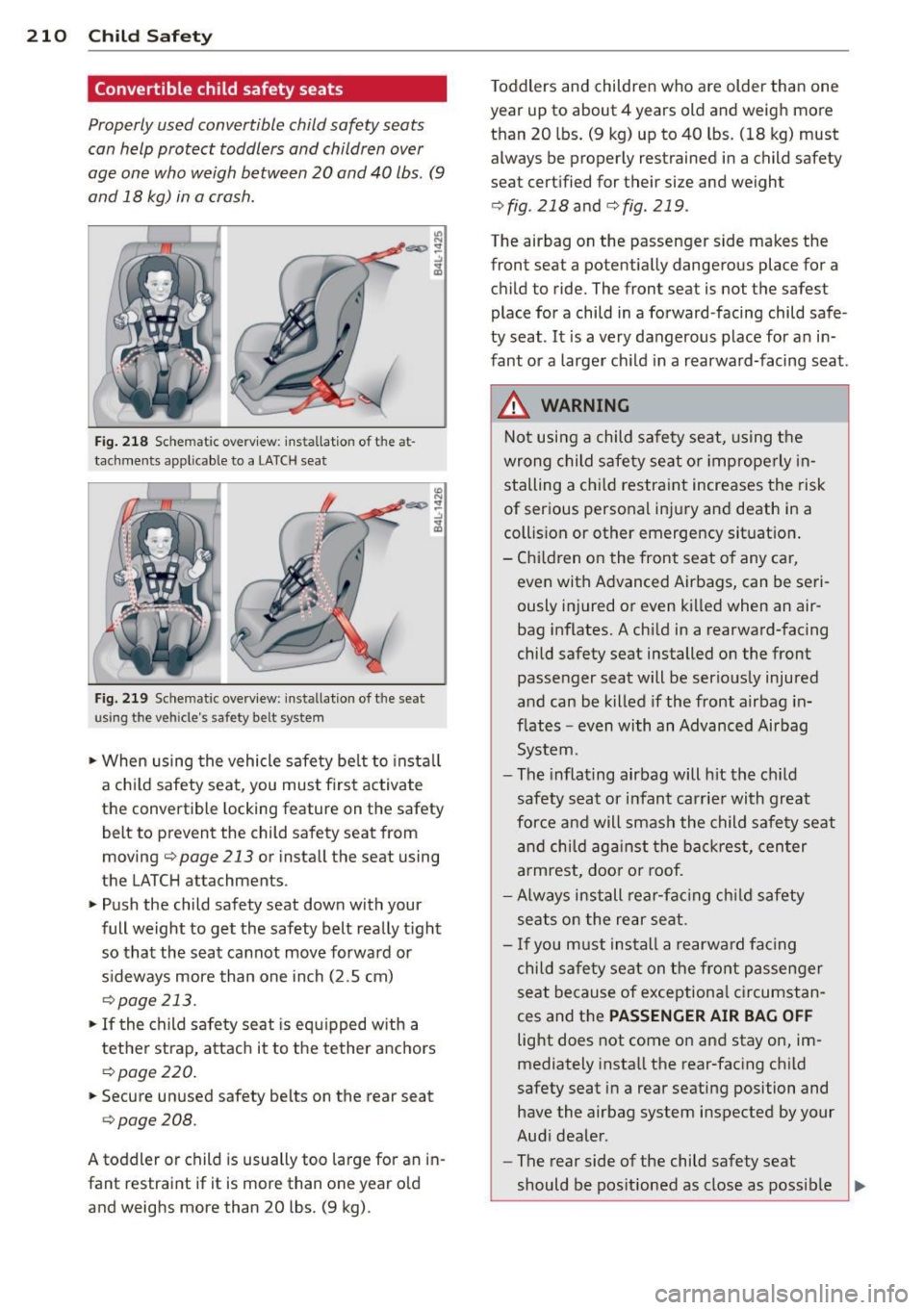
Fig. 218 Schematic overv iew : ins tallat ion of t he at
ta chments applicable to a LATCH seat
Fig. 219 Schematic overview: insta llation of th e sea t
us ing t he veh icle's safety be lt system
.. When using the vehicle safety be lt to install
a chi ld safety seat, you must f irst activate
the convertible locking feature on the safety
belt to prevent the child safety seat from
moving
c::> page 213 or install the seat using
the LATCH attachments .
.. Push the child safety seat down with your
full weight to get the safety belt really t ight
so that the seat cannot move forward or sideways more than one inch (2.5 cm)
c::>page213.
.. If the child safety seat is eq uipped w ith a
tether strap, attach it to the tether anchors
i=>page220.
.. Secure unused safety be lts on the rear seat
c::> page 208.
A toddler or child is usually too large for an in
fant restra int if it is more than one year o ld
and weighs more than 20 lbs. (9 kg). T
oddlers and children who are older than one
year up to about 4 years old and weigh more
than 20 lbs. (9 kg) up to 40 lbs. (18 kg) must
always be properly restrained in a child safety
seat certified for their size and weight
c::> fig . 218 and c::> fig . 219 .
The airbag on the passenger side makes the
front seat a potentia lly dangerous place for a
child to ride. The front seat is not the safest
place for a child in a forward-facing child safe
ty seat . It is a very dangerous place for an in
fant or a larger child in a rearward-facing seat.
_&. WARNING
Not using a child safety seat, using the
wrong child safety seat or improp erly in
stalling a chi ld restraint increases the risk
of serious personal injury and death in a
collision or other emergency situation .
- Children on the front seat of any car,
-
even with Advanced Airbags, can be seri
ously injured or even killed when an air bag inflates . A chi ld in a rearward-facing
child safety seat installed on the front passenger seat will be seriously injured
and can be killed if the front airbag in
f la tes -even with an Advanced Airbag
System .
- The inflating airbag will hit the child
safety seat or infant carrier with great
force and will smash the child safety seat
and child against the backrest, center
armrest, door or roof.
- Always install rear-facing child safety
seats on the rear seat .
- If you must install a rearward facing
child safety seat on the front passenger
seat because of exceptiona l circumstan
ces and the
PASSENGER AIR BAG OFF
light does not come on and stay on, im
mediately insta ll the rear-facing child
safety seat in a rear seating position and
have the airbag system inspected by your
Audi dealer.
- The rear side of the child safety seat
should be pos itioned as close as possible ..,.
Page 216 of 350
214 Child Safety
and child against the backrest, center
armrest, door or roof.
- Always install rear-facing child safety
seats or infant carriers on the rear seat.
- Forward-facing child safety seats or in
fant carriers installed on the front pas
senger's seat may interfere with the de
ployment of the airbag and cause serious
injury to the child.
- It is safer to install a forward-facing
child safety seat on the rear seat.
- Always read and heed all WARNINGS whenever using a child restrained in ave
hicle is being used
c::> page 203 . Special
precautions apply when installing a child
safety seat on the front passenger seat
c::> page 184, Child restraints on the front
seat -some important things to know.
A WARNING
Always take special precautions if you
must install a forward or rearward-facing
child restraint on the front passenger's
seat in exceptional situations:
- Whenever a forward or rearward-facing
child restraint is installed on the front
passenger seat, the
PASSENGER AIR
BAG OFF
light must come on and stay on
whenever the ignition is switched on.
- If the
PASSENGER AIR BAG OFF light
does not come on and stay on, perform
the checks described
<=:> page 193, Moni
toring the Advanced Airbag System.
- Take the child restraint off the front pas
senger seat and install it properly at one
of the rear seat positions if the
PASSEN
GER AIR BAG OFF
light does not stay on
whenever the ignition is switched on.
- Improper installation of child restraints
can reduce their effectiveness or even
prevent them from providing any protec
tion.
- An improperly installed child restraint
can interfere with the airbag as it de
ploys and seriously injure or even kill the
child. -
Always carefully follow the manufactur
er's instructions provided with the child
safety seat or carrier.
- Never place additional items on the seat
that can increase the total weight regis
tered by the weight-sensing mat and can
cause injury in a crash .
A WARNING
-Forward-facing child restraints:
- Always make sure the forward-facing
seat has been designed and certified by its manufacturer for use on a front seat
with a passenger front and side airbag .
- Never put the forward-facing child re straint up, against or very near the in
strument panel.
- Always move the passenger seat into its
rearmost position in the seat's fore and
aft adjustment range, as far away from
the airbag as possible before installing
the forward-facing child restraint. The
backrest must be adjusted to an upright
position.
- Make sure that the PASSENGER AIR BAG
OFF
light comes on and stays on all the
time whenever the ignition is switched
on .
A WARNING
Rearward-facing child restraints:
- A child in a rearward-facing child safety
seat installed on the front passenger
seat will be seriously injured and can be killed if the front airbag inflates -even
with an Advanced Airbag System .
- The inflating airbag will hit the child
safety seat or infant carrier with great
force and will smash the child safety seat
and child against the backrest, center
armrest, door or roof.
- Always be especially careful if you must
install a rearward facing child safety seat
on the front passenger seat in exception-
al circumstances.
~
Page 233 of 350
M N
0 ...J
'SI: ,...., \!) 1.1'1 ,...., 1.1'1 ,....,
Catalytic converter
Applies to vehicles: with gasoline engine
It is very important that your emission con
trol system (catalytic converter) is function
ing properly to ensure that your vehicle is run
ning in an environmentally sound manner .
... Always use lead-free gasoline c::> page 248,
Gasoline .
... Never run the tank down all the way to emp
ty .
... Never put too much motor oil in your engine
c::> page 261, Adding engine oil 't=r..
.,. Never try to push-or tow-start your veh icle.
The catalytic converter is an eff icient "clean
up" device built into the exhaust system of
the vehicle. The catalytic converter burns
many of the pollutants in the exhaust gas be
fore they are released into the atmosphere.
The exclus ive use of unleaded fuel is cr it ically
i mportant for the life of the cata lytic convert
e r and proper functioning of the engine.
& WARNING ,~
T he temperature of the exhaust system is
high, both when driving and after stopping
the engine .
- Never touch the exha ust tail pipes once
they have become hot. This could result
in burns.
- Do not park or operate the vehicle in
areas where the hot exhaust system may
come in contact with dry grass, brush,
fuel spill or other material which can
cause a fire.
- Do not apply additional undercoating or
rustproofing on or near the exhaust
manifold, exhaust p ipes, catalytic con
verter or heat shields . During driving, the
substance used for undercoating cou ld
overheat and cause a fire.
(D Note
- Be aware that just one tank f illing with
leaded fuel will already seriously de-
grade the performance of the catalytic
conve rter.
Dri vin g and en vironm ent 231
-Do not exceed the correct engine oil level
c::> page 261.
- Do not drive until the fue l tank becomes
completely empty. The engine cou ld mis
fire. Unburned fuel could also get into
the exhaust system and this cou ld cause
the catalytic converter to overheat.
- Do not turn off the ignition while the ve
hicle is mov ing.
- Do not continue to operate your veh icle
under these conditions, as otherwise fuel
can reach the catalyt ic converter. Th is
cou ld result in overheating of the con
verter, requir ing its replacement.
- To assure efficient operation of the Emis
sion Control System:
- Have you r vehicle main tained properly
and in accordance w ith the se rv ice rec
ommendations in your Warranty & Maintenance book let.
- Lack of proper maintenance as we ll as
improper use of t he vehicle will impair
the function of the emission contro l
system and could lead to damage.
@) For the sa ke of the env ironment
Even when the Emission Control System is
operating properly, the exhaust gas can have a sulfur-like exhaust gas smell under
some operat ing states. This depends on
the sulfur content of the fuel being used .
Using a different brand of fuel may help,
or filling the tank with lead-free s uper
g rade gasoline.
Diesel particulate filter
App lies to vehicles: wit h diese l eng ine
The diesel part iculate filter filters nearly all of
the soot pa rticles out of the exhaust . T he fil
te r clea ns itself automat ica lly under no rma l
driv ing cond itions. If the filter cannot clean it
self (for example, because you are on ly driving
short distances), the fi lter becomes clogged
with soot and the
II symbol for the diese l
particulate filter i lluminates
c::> page 36. ..,_
•
•
Page 241 of 350
M N
0 ...J
'SI: ,...., \!) 1.1'1 ,...., 1.1'1 ,....,
Weight Rating will also change the per
formance and handling characteristics of
your vehicle, which could cause a crash result ing in serious injury or death .
- The Gross Vehicle Weight Rat ing for your
vehicle would be exceeded if your vehicle is simultaneously equipped with Panor
amic sliding sunroof; th ird-row seating;
trailer towing equipment (factory or
dealer-installed), and running boards
(dea ler-installed) . UNDER NO CIRCUM
STANCES MAY ALL SUCH ITEMS BE IN
STALLED ON THE SAME VEHICLE.
Operating instructions
MAX 6.9"
MAX175mm
E
1/1 E 1/1 ... a)
m
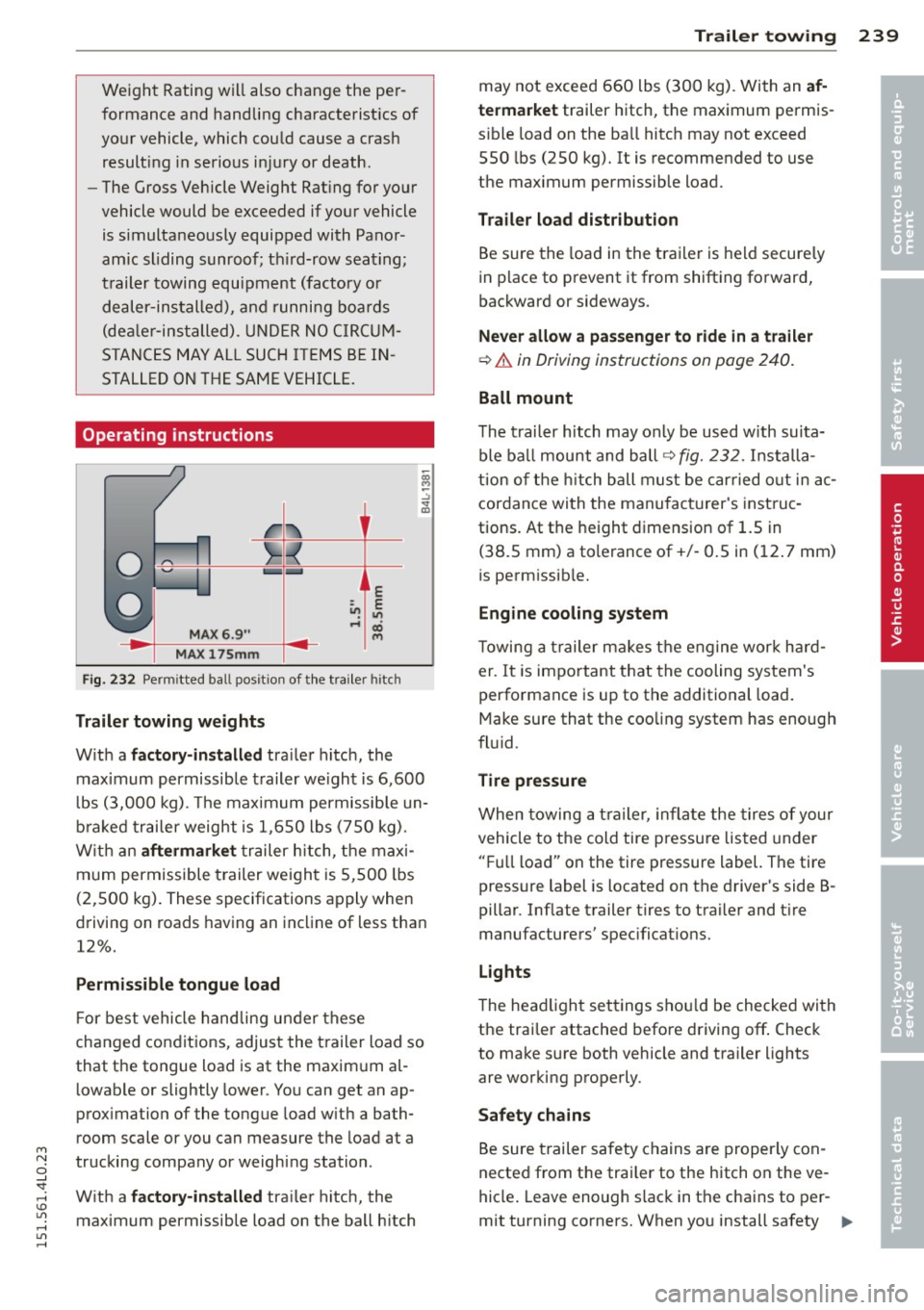
Fig. 232 Perm itted ba ll posit ion of t he tra iler hitch
Trailer towing weights
W ith a factory-installed tra iler hitch, the
maximum permissible trailer we ight is 6,600
l bs (3,000 kg). The maximum permissible un
braked trailer weight is 1,650 lbs (750 kg).
With an
aftermarket trailer hitch, the maxi
mum permissible t railer we ight is 5,500 lbs
(2,500 kg). These specifications apply when
driving on roads having an incline of less than
12%.
Permissible tongue load
For best vehicle handling under these
changed cond itions, adjust the trailer load so
that the tongue load is at the maximum al
l owable or slightly lower. You can get an ap
prox imation of the tongue load with a bath
room scale or you can measure the load at a
trucking company or weighing station .
With a
factory-installed tra iler hitch, the
maximum permissible load on the ball hitch
Trailer towing 239
may not exceed 660 lbs (300 kg). With an af
termarket
trailer hitch, the maximum permis
s ib le load on the ba ll hitch may not exceed
550 lbs (250 kg).
It is recommended to use
the maximum permissible load.
Trailer load distribution
Be sure the load in the trailer is held secure ly
in place to prevent it from shifting forward,
backward or sideways.
Never allow a passenger to ride in a trailer
¢.& in Driving instructions on page 240.
Ball mount
The trailer hitch may only be used w ith suita
ble ball mount and ball ¢
fig. 232. Installa
t ion of the hitch ball must be carried out in ac
cordance with the manufacturer's instruc
tions. At the height dimension of 1.5 in
(38.5 mm) a tolerance of+/- 0.5 in (12 . 7 mm)
is perm issib le.
Engine cooling system
Towing a trailer makes the engine work hard
er . It is important that the cooling system's
performance is up to the additional load .
Make sure that the cooling system has enough
fluid .
Tire pressure
When towing a tra iler, inflate the tires of your
vehicle to the cold tire pressure listed under
" Full load" on the tire pressure label. The tire
pressure label is located on the driver's side B
pillar . Inf late trailer tires to trai ler and t ire
manufacturers' spec ificat ions .
Lights
The headlight settings sho uld be checked with
the trailer attached before driving
off . Check
to make sure both vehicle and trailer lights
are working properly .
Safety chains
Be sure trailer safety chains are properly con
nected from the trailer to the hitch on the
ve
hicle . Leave enough slack in the chains to per
mit turning corners. When you install safety
Ill-
•
•
Page 244 of 350
242 Vehicle care and cleaning
Vehicle care and
cleaning
General information
Regular, proper care helps to maintain your
ve hicle 's value. It can also be a requirement
when subm itting warranty claims for co rro
sion damage and paint defec ts on the body .
The required cleaning and care prod ucts can
be obtained from your authorized Audi dea ler
or a qualified workshop. Read and follow the
i nstr uctions for use on th e packaging .
A WARNING
-Us ing cle aning and care products incor
rec tly can be dange rous to yo ur hea lth .
- Always store cleaning and care produc ts
o ut o f reach of childre n to r edu ce the r is k
of po ison ing.
@ For the sake of the environment
- Prefera bly use environmentally-frie ndly
p roducts when buying cleaning agents .
- Do not d ispose of leftover cleaning and
ca re p ro du cts with household trash .
Car washes
-
The longer deposits remai n on t he veh icle, the
mo re the surface ca n be damaged. H igh tem
pe rat ures such as those caused by su nlight in
cre ase the d amaging effe cts.
Before washing, wet heavy deposi ts w ith p len
ty of wate r.
Stubbor n depos its s uch as bird dropp ings or
tree sap are best removed with plen ty of wa
ter and a m icrofiber cloth .
A lso, was h the underside of your vehicle once
road salt stop s be ing used for the season.
Pres sure washers
When wash ing your ve hicles w ith a pressure
washer, always follow the operating instr uc
tions provided w ith the pressure washe r. T his
is especially important in regard to the pres- s
u re and sp raying dis tance. Do not aim the
s p ray direct ly at sea ls on side windows, doo rs,
t h e hood, the rear lid o r the sunroof* or at
t ires, rubber hoses, insu lating material, sen
sors" or camera lenses*. Keep a d ista nce of at
least 16 inches (40 cm) .
Do not rem ove snow and ice with a pressu re
washer.
Never use rotary nozzles or high pressure noz
zles .
T he wate r te mperature m ust not be above
1 4 0
°F (6 0 °( ).
Automatic car washes
S pr ay off the ve hicle befo re washing .
Make sure that the w indows and roof * are
closed and the winds hield wipers are off. Fol
low instructions from the ca r wash operator,
especially if there are accesso ries attached to
you r vehicle .
If possible, use car washes that do not have
brushes .
Washing by hand
Clean the ve hicle starti ng from the to p and
wor king down using a soft sponge or cleaning
brush. Use solvent-free clean ing products .
Washing vehicles with matte finish paint
by hand
To avoid damaging the paint when washing,
first remove dust and large particles from
yo ur vehicle. Insects, grease spots and fi nger
pr ints are best removed w ith a spec ial cleane r
for matte finish paint .
Apply t he prod uct using a microfiber cloth. To
avo id damaging the pa int surface, do not use
too much pressure.
Rinse the ve hicle thoroughly with water. Then
clean using a neutra l shampoo and a soft mi
crofiber cloth.
Rinse the ve hicl e thoro ughly again and let it
air dry. Remove any water residue using a
shammy.