esp AUDI Q7 2018 Owner´s Manual
[x] Cancel search | Manufacturer: AUDI, Model Year: 2018, Model line: Q7, Model: AUDI Q7 2018Pages: 398, PDF Size: 185.58 MB
Page 313 of 398
Cl a:, ...... N
" N ...... 0
0
::r '
not a particular fue l blend meets the speci
ficat ions, ask your service station or its fuel
supplier.
- Do not use fuel for which the contents can
not be identified.
- Fuel system damage and performance prob
l ems resulting from the use of fue ls differ
ent from those specif ied are not the respon
s ibility of Audi and are not covered under
the New Veh icle or the Emiss ion Control
System Warrant ies .
- If you experience a loss of fue l economy or
driveability and performance problems due
to the use of one of these fuel blends, we
r ecommend that you switch to unblended
fuel.
Gasoline additives
A ma jor concern among many auto manufactur
ers is carbon deposit build-up caused by the type
of gasoline yo u use.
A lthough gasoline grades d iffer from one manu
facturer to another, they have certain things in
common . A ll gasoline grades contain substances
that can cause deposits to collect on vita l engine
parts, such as fue l injectors and intake valves. A l
though most gasoline brands include additives to keep engine and fuel systems clean, they are not
equally effective .
Audi recommends using TOP TIER Detergent Gas
oline. For more informat ion on TOP TIER Deter
gent Gasoline, please go to the official website
(www .toptiergas .com) .
After an extended period of using inadequate
fuels, carbon deposit build-ups can rob your en
g ine of peak performance.
@ Note
Damage or malfunction due to poor fuel q ual
ity is not covered by the Aud i New Vehicle
Limited Warranty.
Ch eck ing and F illing
Diesel fuel
App lies to : veh icles w it h diese l eng ine
Always use U LSD (Ult ra Low Sulfur Diesel) No. 2.
T he ULSD No. 2 meets the AS TM D975.
D iesel fuel w ith concentrations of b iod iesel h igh
er than 5
% such as B 11, B20 or B100 are strict ly
proh ib ited.
Service station fuel pumps are labeled with the
correct fuel information for easy recogn it ion by
the user . If the d iesel fue l pump is not labeled
ask the station operator what fuel is being dis
pensed before fill ing up your vehicle.
U LSD No . 2 may not be ava ilable outside the USA
and Canada . Be su re to check befo re traveling to
othe r countr ies.
ULSD No . 2 can become thicker in very cold tem
peratures, and th is can impa ir the engine's start
i ng and runn ing . Depend ing on the season , gas
stations provide ULSD No. 2 that flows bette r in
co ld tempe ra tures so that you can co nti nu e ope r
at ing you r vehicle as usual.
{Qj) Note
- Yo ur vehicle's d iese l eng ine was des igned
so ley for use w ith ULS D No. 2. Therefo re,
never use gasoline, heating oil, other f uels
or flow improvers. These contain s ubstances
that will severely damage the fuel system
and the engine. Such damage will not be
covered by your New Vehicle Limited War
ranty.
- If you put any amo unt of incorrect fuel in
the fuel tank, do not start the engine under
any c ircumstances. Immed iately contact the
nearest author ized Audi dealer or author
ized Aud i Serv ice Facility fo r ass istance.
Th ese f uels con ta in substa nces that can se
verely damage the fuel system a nd the en
gine if the engi ne is st arted.
311
Page 314 of 398
Checking and Filling
Refueling
Fueling procedure
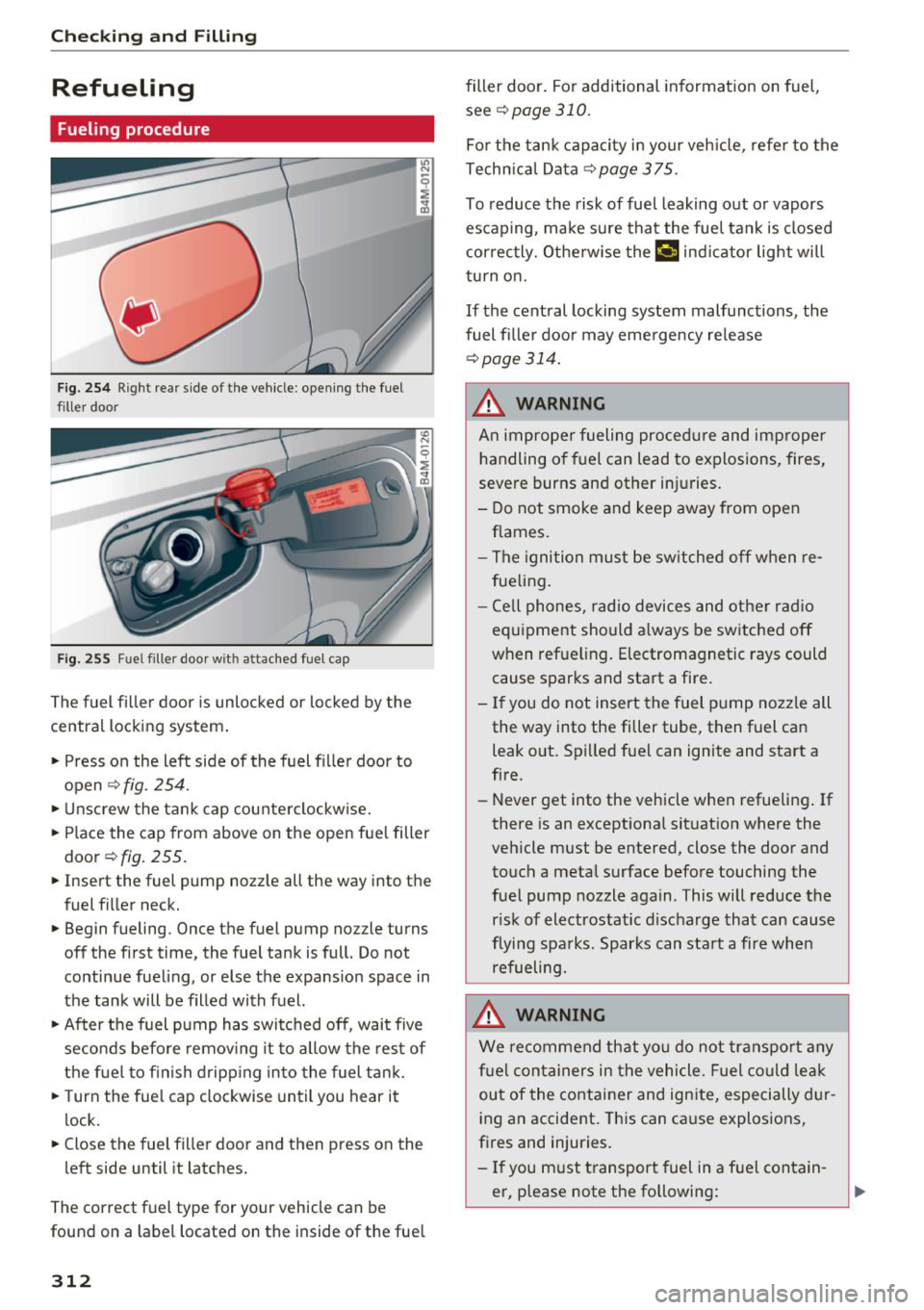
Fig. 254 Right re ar side of the vehicle : opening the fue l
filler door
Fig. 255 Fu el fi lle r door w it h atta ched fuel cap
The fuel f ille r door is unlocked or locked by the
central locking system .
• Press on the left side of the fuel filler door to
open
c:!;> fig. 254.
• Unscrew the tank cap counterclockw ise.
• Place the cap from above on the open fue l filler
door c:!;>fig. 255.
• Insert the fu el pump no zz le all the way into th e
fuel filler neck.
• Begin fueling . Once the fuel pump noz zle turns
off the first time, the fuel tank is full. Do not continue fueling , or else the expans ion space in
the tank will be filled with fuel.
• After the fuel pump has switched off , wait five
seconds before remov ing it to allow the rest of
the fuel to f inish dripp ing into the fuel tank.
• Turn the fue l cap clockwise until you hear it
lock.
• Close the fuel filler door and then pr ess on th e
left side until it latches.
The correct fu el type for your vehicle can be
found on a lab el located on the inside of the fue l
312
filler door. For additional information on fuel,
se e
c:!;> page 310.
For the tank capacity in your veh icle, refer to the
Technica l Data
c:!;> page 3 75 .
To reduce the risk of fuel leaking out or vapors
escaping, make sure that the fuel tank is closed
correctly. Otherw ise the
¢'4 ind icator light wi ll
turn on.
If the cent ral locking system malfunctions , the
fuel filler doo r may emergency re lease
c:!;> page 314.
& WARNING
An improper fueling procedure and improper
handling of fuel can lead to explosions, fires,
severe burns and other in juries.
- Do not smoke and keep away from open
flames.
- The ignition must be sw itched off when re
fueling.
- Cell phones, radio devices and other rad io
equipment should a lways be switched off
when refueling. E lectromagnetic rays could
cause sparks and start a fire.
- If you do not insert the fuel pump nozzle all
the way into the filler tube, then fuel can
leak out. Spilled fuel can ignite and start a
fire .
- Never get into the vehicle when refueling . If
there is an exceptional situation where the
vehicle must be entered, close the door and
touch a metal surface before touching the
fuel pump nozzle again . This will reduce the
r isk of electrostatic discharge that can cause
f lying sparks. Sparks can start a fire when
refueling.
& WARNING
We recommend that you do not transpo rt any
f u el containers in the vehicle . Fuel could leak
out of the container and ignite, especially dur
ing an accident. This can cause explosions,
fires and injuries.
- If you must transport fuel in a fuel contain er, p lease note the following :
Page 317 of 398
a co ...... N r--. N ...... 0
0
:E '
DEF at the next refueling. Range x mi (km)
This message appears when there is only enough
Ad Blue left to drive the distance indicated in the
instr ument cluster. Fill the Ad Blue.
U Refill with at least x qt (I) Ad Blue/DEF. No
engine start in x mi (km). See owner's manual
This message appears when there is only enough
Ad Blue left to drive the distance indicated in the
instrument cluster. Fill the Ad Blue. Otherwise
the engine will not start again if you stop i t once
the distance indicated has been driven.
• Refill with at least x qt (I) Ad Blue/DEF. Un
able to start engine. See owner's manual
This message appears when the AdBlue tank is
empty. Fill the AdBlue. Otherwise you will not be
ab le to start the engine again once yo u stop it .
The Ad Blue must be refilled when the amount in
the tank has reached the minimum level
c::, page 315, Preparation.
Incorrect filling/system malfunction
A message appears if the Ad Blue tank was filled
with a fluid other than AdBlue and the system
has detected that the tank was filled incorrectly,
or if there is a system malfunction .
II AdBlue/DEF: malfunction! No engine start
in x mi (km). See owner's manual
This message appears when it is only possible to
drive the distance indicated in the instrument
cluster . Drive to the nearest authorized Audi
dealer or authori zed Audi Service Facility to have
the ma lfunction corrected. Otherwise the engine
will not start again if you stop it once the dis
tance indicated has been driven .
• AdBlue/DEF: malfunction! Unable to start
engine. See owner's manual
This message appears if the system has detected
that the tank was filled incorrectly or that there is a malfunction . Drive immediately to the near
est authori zed Aud i dealer or authori zed Audi
Service Facility to have the malfunction correct
ed . Othe rwise you will not be able to start the en
g ine again once you stop it.
Checking and Filling
Preparation
Applies to: veh icles w ith selective catalytic reduction
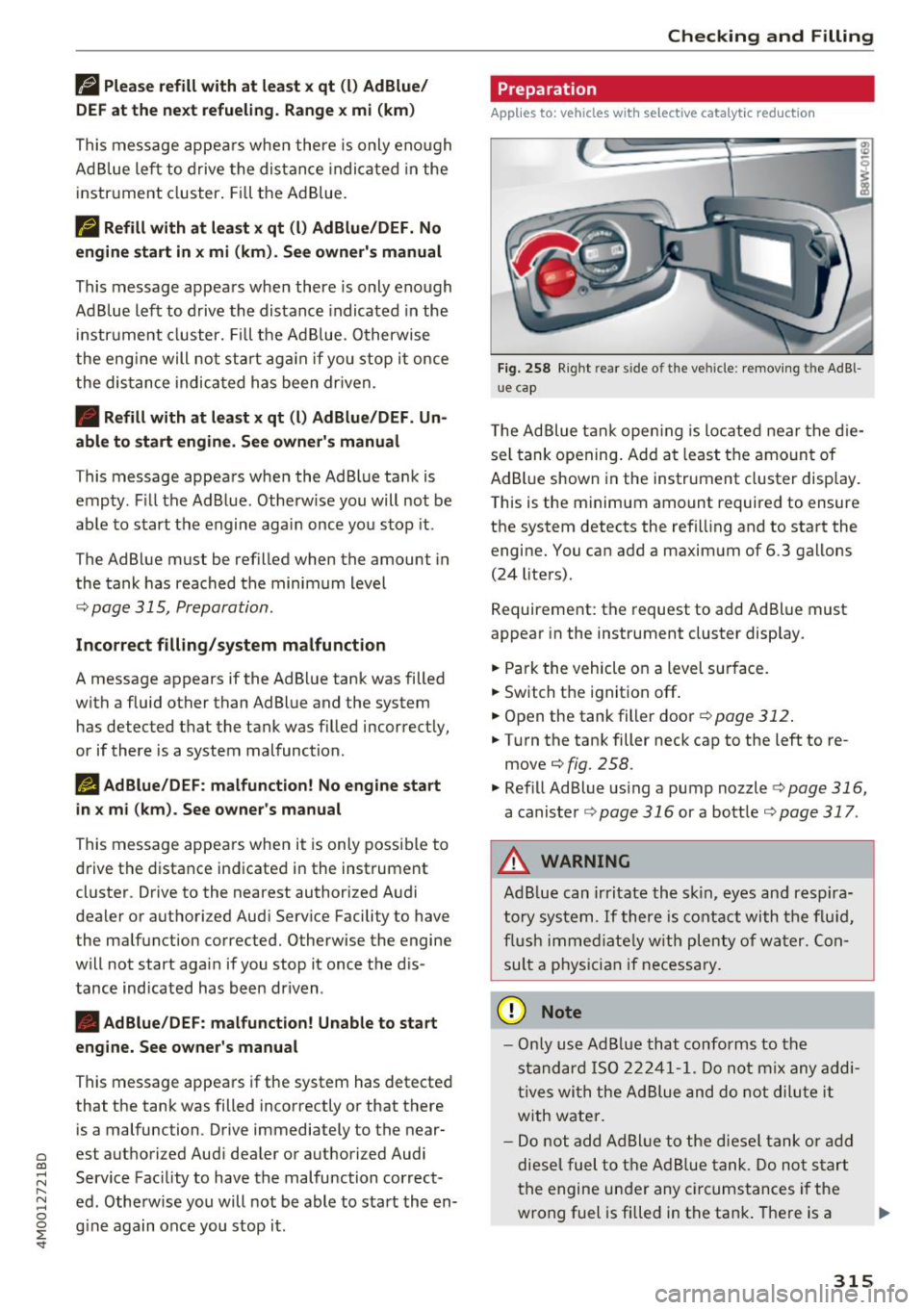
Fig . 258 Right rear s ide o f th e ve hicle: removing th e Ad B l
u e cap
T he Ad Blue tank opening is located near the die
sel tank opening. Add at least the amount of
AdBlue shown in the instrument cluster display.
This is the minimum amount required to ensure
the system detects the refilling and to start the engine. You can add a maximum of 6.3 gallons
(24 liters) .
Requirement: the request to add Ad Blue must
appear in the instrument cluster display.
.. Park the vehicle on a level surface.
.. Switch the ignit ion
off .
.. Open the tank filler door c::>poge 312.
.. Turn the tank filler neck cap to the left to re
move
¢fig. 258.
.. Refill Ad Blue using a pump nozzle c::;, page 316,
a canister c;,page 316 or a bottle c;,page 317 .
A WARNING
f-
AdBlue can irritate the skin, eyes and respira-
tory system .
If there is contact with the fluid,
flush immed iately with plenty of water. Con
sult a physician if necessary.
(D Note
-Only use Ad Blue that conforms to the
standard ISO 22241-1. Do not mix any addi
ti ves with the Ad Blue and do not dilute it
w ith water.
- Do not add Ad Blue to the diesel tank or add
diesel fuel to the Ad Blue tank . Do not start
the engine under any circumstances if the
wrong fuel is filled in the ta nk. There is a
315
Page 327 of 398
a co ...... N r--. N ...... 0
0
:E '
-Before the start of winter, have an author
ized Audi dealer or author ized Audi Service
Facility check if the coolant additive in your
vehicle matches the percentage appropriate
for the climate . Th is is especially important
when driving in co lder climates.
- If the appropriate coolant additive is not
available in an emergency, do not add any
other additive. You could damage the en
gine. If this happens, only use wa te r and re
store the co rrect mixture ratio with the
spec ified coo lan t additive as soon as possi
ble .
- Only refill with new coo lant.
- Radiator sealant must no t be mixed with
the coo lant.
Adding coolant
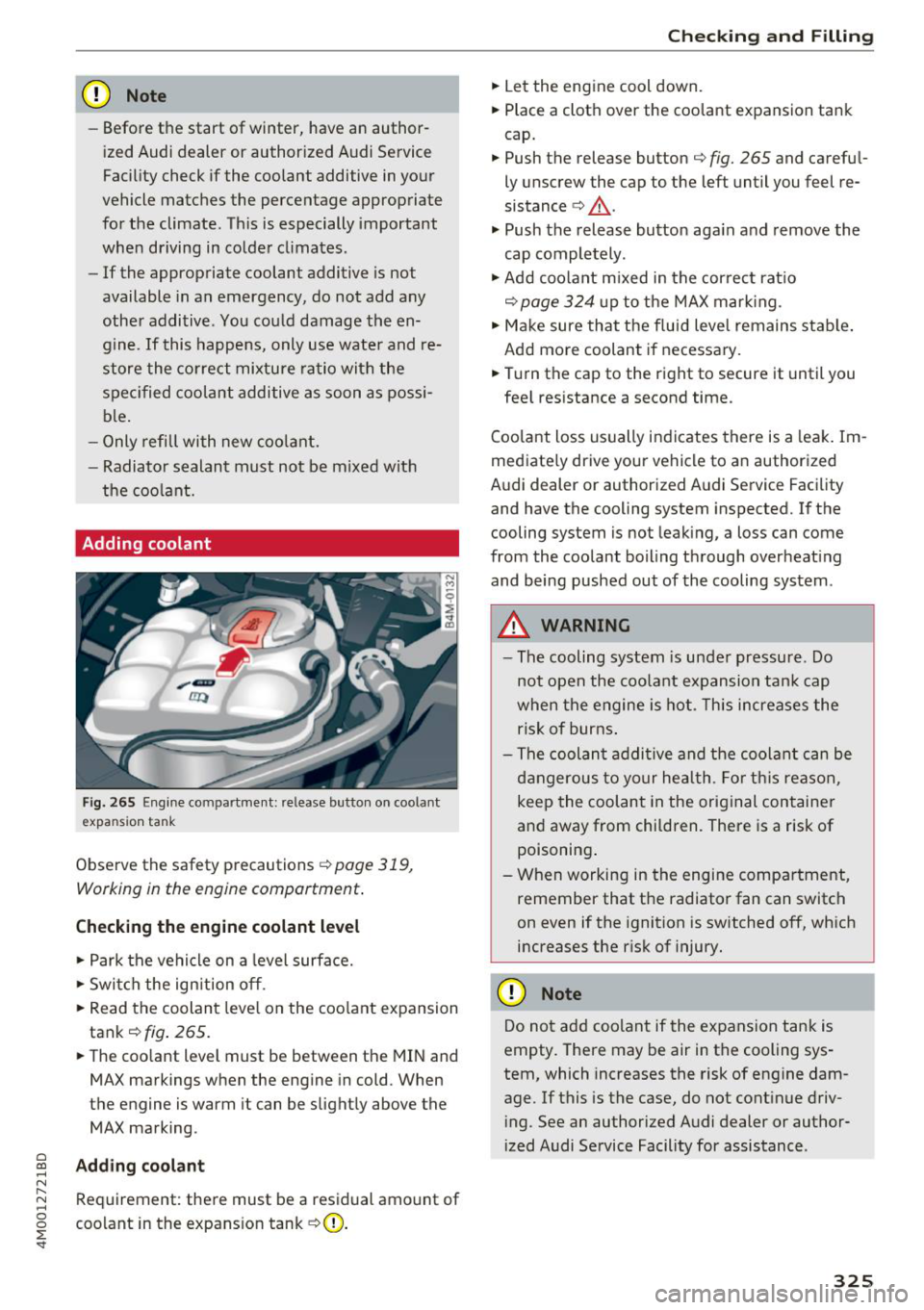
Fig . 26 5 Eng ine compartme nt: release button on coolant
expansion tank
Observe the safety precautions ¢ page 319,
Working in the engine compartment .
Checking the engine coolant level
.,. Park the vehicle on a level surface .
.,. Swi tch the ign ition off.
... Read the coolant leve l on the coo lant expansion
tank¢
fig . 265.
... The coolant level must be between the MIN and
MAX markings when the engine in cold. When
the engine is warm it can be slightly above the
MAX marking.
Adding coolant
Requirement: there must be a residual amount of
coo lant in the expans ion tank
¢ (D .
Chec king and Filling
.,. Let the engine cool down.
... Place a cloth over the coolant expansion tank
cap.
... Push the release button
¢fig. 265 and carefu l
ly unscrew the cap to the left until you feel re
sistance ¢.&, .
.,. Push the release button aga in and remove the
cap comple tely .
.,. Add coo lant m ixed in the cor rec t rat io
¢page 324 up to t he MAX mar king.
... Ma ke sure that t he f luid level remains stab le .
Add mo re coolant if necessary .
... Tu rn the cap to the right to secure it until you
fee l res istance a second time.
Coola nt loss usually in dicates there is a leak . Im
mediate ly drive your vehicle to a n authorized
Audi dealer or authorized A udi Service Facility
and have the cooling system inspected.
If the
cooling system is not leaking, a loss can come
from the coolant boiling through overheat ing
and being pushed out of the cooling system .
A WARNING ,.__
-The cooling system is under pressure. Do
not open the coo lant ex pansion tan k cap
when t he engine is hot. This increases the
ris k of burns .
- Th e coolan t addi tive and the coolan t can be
dangerou s to yo ur he alt h . Fo r th is reason,
keep the coolant in the original cont ainer
an d away from children. There is a risk of
poisoning .
- When working in the engine compar tment,
remember that t he radiator fan can switch
on even if the ignition is switched off, which increases the risk of injury .
{U) Note
Do not add coolant if the expansion tank is
empty. There may be air in the cooling sys
tem, which increases the risk of engine dam
age. If this is the case, do not cont inue driv
i ng. See an authorized A udi dealer or author
i zed Audi Service Facility for assistance .
-
325
Page 330 of 398
Checking and Filling
& WARNING
- A highly explosive mixture of gases can form
when charging batter ies . Only charge the
vehicle battery in well-vent ilated areas .
- A drained vehicle battery can freeze at tem
peratures a round 32 QF (0 QC) . A frozen or
thawed veh icle battery must not be charged
and must not be used anymore. If ice fo rms,
the battery housing ca n crack and ba tte ry
electrolyte can lea k out, which increases the
risk of an explosion and chemi cal bu rns.
Contact an authorized Au di dea le r o r au
tho rized Audi Serv ice Facility fo r more info r
mation.
- Do not connect o r disconnect the ch arging
cable while charg ing because this increases
t h e risk of an exp losion.
(D Tips
- Only charge the vehicle battery through the
con nections in the engine compartment .
- Read a ll of t he manufacture r's ins tructions
for the charger befo re charg ing the vehicle
battery.
Windshield washer system
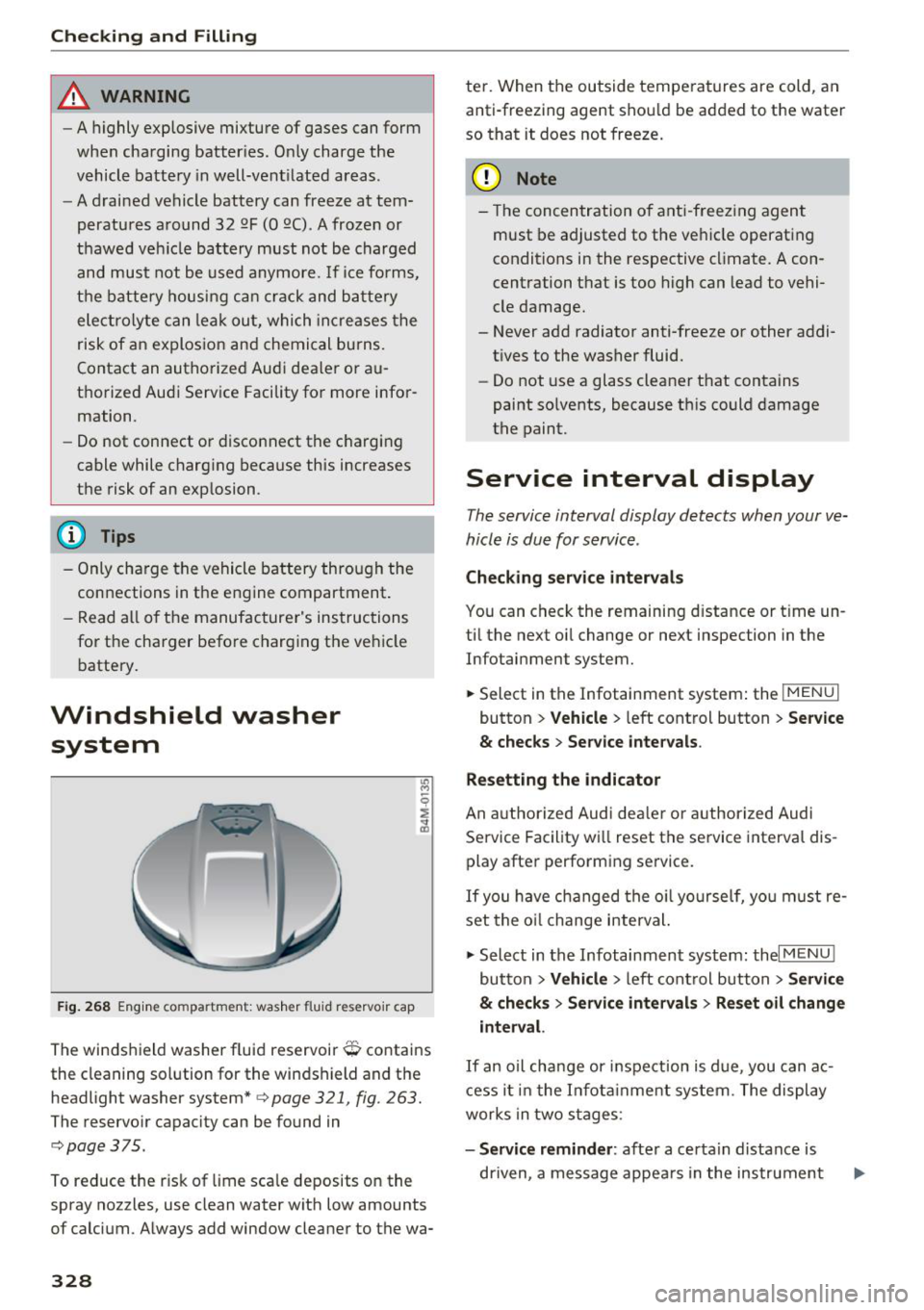
F ig. 26 8 Eng ine co mpa rtment: was her fluid reservo ir cap
The winds hield washer fluid reservoir O contains
the cleaning solution for the windshield and the
headlight washer system*
c> page 321, fig . 263.
The reservo ir capacity can be found in
c:;, page 375.
To reduce the r isk of lime sca le deposits o n the
spray nozzles, use clean water with low amounts
of calcium . Always add window cleane r to the wa-
328
te r. When the outside tempe ratures are cold, an
anti-freezing agent shou ld be added to the water
so that it does not freeze.
(D Note
- The concentration o f anti -freezing agent
must be adjusted to the ve hicle operating
conditions in the respective cl imate. A con
centration that is too high can lead to vehi
cle damage.
- Never add radiator anti-freeze or other addi tives to the washer fluid.
- Do not use a glass cleaner t hat contains
paint so lvents, because t his could damage
the paint.
Service interval display
The service interval display detects when your ve
hicle is due for service .
Checking service intervals
You can check the remaining d istance or t ime un
ti l the next oi l change or next inspection in the
Infotainment system.
.,. Select in the Infotainment system : the
I MENU I
button > Veh icle > left cont rol button > Se rvi ce
& checks > Service inter vals .
Resetting the indicator
An a utho rized Audi deal er or author ized Audi
Se rvice Facility wi ll reset the service interval dis
play after performing se rvice .
If you have changed the o il yourself, yo u must re
set the o il change interval.
.,. Select in the Infotainment system: thel
MENU !
button > Vehicle > left cont rol button > S ervice
& checks > Service intervals > Reset oil change
interval.
I f an o il cha nge or inspection is due, you can ac
cess i t in the I nfot ainment system . T he display
works in two s tages :
-Service reminder : after a certa in distance is
dr iven, a message appea rs in the instrument
Page 331 of 398
Cl a:, ...... N
" N ...... 0
0
::r '
ed on . The remaining distance and time is
displayed br iefly.
- Service due : if your vehicle has reached a serv
ice interval, a message appears briefly after
switching the ignition on.
({;D) Note
-Only reset the oil change indicator if the oil
was changed .
- Following the service intervals is critical to
maintaining t he service life and va lue of
your vehicle, especia lly the engine . Even if
the mileage on the vehicle is low, do not ex
ceed the time for the next service.
Checking and Filling
329
Page 335 of 398
0 a, .... N
" N .... 0
0
l: ..
Glossary of tire and loading
terminology
Accessory weight
means the combined weight (in
excess of those standard items
which may be replaced) of auto matic transmission, power steer
ing, power brakes, power win
dows, power seats, radio, and
heater, to the extent that these
items a re available as factory- in
stalled equipment (whether i n
stalled or not) .
Aspect ratio
means the ratio of the height to
the width of the tire in percent .
Numbers of 55 or lower indicate a
low s idewall for improved steer
ing response and better overall
handling on dry pavement.
Bead
means the part of the tire that is
made of steel wires, wrapped or
reinforced by ply cords and that is
shaped to fit the rim .
Bead separation
means a breakdown of the bond
between components in the bead .
Wheel s
Cord
means the strands forming the
plies in the tire .
Cold tire inflation pressure
means the tire pressure recom
mended by the vehicle manufac
turer for a tire of a designated
size that has not been driven for more than a couple of miles (kilo
meters) at low speeds in the
three hour period before the tire pressure is measured or adjusted .
Curb weight
means the weight of a motor ve
hicle with standard equipment in
cluding the maximum capacity of
fuel, oil , and coolant, air condi
tioning and additional weight of
optional eq uipment .
Extra load tire
means a tire designed to operate
at higher loads and at highe r in
flation pressures than the corre
sponding standard tire . Extra load
tires may be identified as "X L",
"xl", "EXTRA LOAD", or "RF" on
the sidewall. .,.
333
Page 339 of 398
0 a, .... N
" N .... 0
0
l: ..
by the tire manufacturer. This in
formation is used to contact con sumers if a tire defect requires a
recall.
Vehicle capacity weight
means the rated cargo and lug
gage load plus 150 lbs . (68 kilo
grams) times the vehicle's desig
nated seating capacity.
Vehicle ma ximum load on the
tire
means that load on an indiv idual
tire that is determined by distrib
uting to each axle its share of the
maximum loaded vehicle weight
and dividing by two.
Vehicle normal load on the tire
means that load on an indiv idual
tire that is determined by distrib uting to each axle its share of the
curb weight, accessory weight,
and normal occupant weight (dis
tributed in accordance with¢
ta
ble on page 342)
and dividing by
two .
Occupant loading and distr i
bution for vehicle normal load
for various designated seating
capacities
Refer to the tire inflation pres
s u re label
¢page 340, fig . 272
Wheels
for the n umber of seating posi
tions . Refer to the table ¢
table
on page 34 2
for the number of
people tha t correspond to the ve
hicle normal load.
New tires or wheels
Audi recommends having all work
on tires o r wheels performed by
an authorized Audi dealer or au
thorized Audi Service Facility.
These facilities have the proper
knowle dge and are eq uipped with
the requ ired too ls and replace
ment parts.
.,. New tires do not yet have the
optimum g ripping properties .
Drive carefully and at mode rate
speeds for the first 350 miles
(500 km) with new tires.
.,. Only use tires with the same de
s ign , size (rolling circumfer
ence), and as close to the same
tread pattern as possible on all
four whee ls .
.,. Do not replace tires indiv idually .
At least replace both tires on the
same ax le at the same time .
.,. Audi recommends that you use
A udi Original Tires . If you would
like to use different tires , please
note that the tires may perform ...
337
Page 349 of 398
Cl a:, ...... N
" N ...... 0
0
::r '
perature
A.
All passenger car tires must conform to Federal
Safety Requirements in addition to these grades.
Tread wear
The tread wear grade is a comparative rating
based on the wear rate of the tire when tested
under controlled conditions on a specified gov
ernment test course.
For example, a tire graded 150 would wear one
and one ha lf (1 1/2) times as well on the govern
ment course as a tire graded 100.
The relative performance of tires depends upon
the actual conditions of their use, however, and
may depart significant ly from the norm due to
variations in driving habits, service practices and
differences in road characteristics and climate.
Traction
The traction grades, from highest to lowest, are
AA, A, B and
C. Those grades represent the tire's
ability to stop on wet pavement as measured un
der controlled conditions on specified govern
ment test surfaces of asphalt and concrete . A tire
marked C may have poor traction performance
¢ &, .
Temperature
The temperature grades are A (the highest), B,
and C, representing the tire's resistance to the
generation of heat and its ability to dissipate
heat when tested under controlled conditions on
a specified indoor laboratory test wheel.
Sustained high temperature can cause the mate
rial of the tire to degenerate and reduce tire life,
and excessive temperature can lead to sudden
tire failure¢ &,.
The grade C corresponds to a level of perform
ance which all passenger car tires must meet un
der the Federal Motor Vehicle Safety Standard
No. 109. Grades Band A represent higher levels
of performance on the laboratory test wheel than
the minimum required by law.
Wheels
A WARNING
--
The traction grade assigned to this tire is
based on straight-ahead braking traction
tests, and does not include acceleration, cor
nering, hydroplaning or peak traction charac
teristics.
A WARNING
The temperature grade for this tire is estab
lished for a tire that is properly inflated and
not overloaded. Excessive speed, underinfla
tion, or excessive loading, either separately or
in combination, can cause heat buildup and
possible tire failure.
A WARNING
-
--
Temperature grades apply to tires that are
properly inflated and not over or underinflat
ed.
Tire pressure monitoring system
ill
General notes
Each tire, including the spare (if provided),
should be checked monthly when cold and inflat
ed to the inflation pressure recommended by the
vehicle manufacturer on the vehicle placard or
tire inflation pressure label. (If your vehicle has
tires of a different size than the size ind icated on
the vehicle placard or tire inflation pressure la
bel, you should determine the proper tire infla
tion pressure for those tires).
As an added safety feature, your vehicle has been
equipped with a tire pressure monitoring system
(TPMS) that illuminates a low tire pressure tell
tale when one or more of your tires is significant ly under -inflated. Accordingly, when the low tire
pressure telltale illuminates, you should stop and
check your tires as soon as possible, and inflate
them to the proper pressure. Driving on a signifi cantly under-inflated tire causes the tire to over
heat and can lead to tire failure . Under-inflation
also reduces fue l efficiency and tire tread life,
and may affect the vehicle 's handling and stop-
ping ability. .,.
347
Page 351 of 398
-The driver is responsib le for maintaining the
correct tire pressure. You must c heck the
t ire pressure regu larly.
- Under certa in conditions (s uch as a sporty
dr iv ing style, winter cond itions o r unpaved
roads), the tire p ressure monitoring system
indicator may be de layed .
(D Tips
-The t ire press ure monitoring system can al
so stop work ing when there is an ESC mal
funct ion.
- Using snow chains may result in a system
malfunction.
- The t ire press ure monitoring system in your
A udi was calib rated with "A udi Orig inal
Tires"
<=)page 337. Using these t ires is rec
omme nded .
Storing tire pressures
Applies to: vehicles with Tire Pressure Monitoring System in
dicator
If the tire pressure changes or a tire is replaced,
it must be confirmed in the Infotainment sys
tem.
~ Make s ure before storing that the tire pressures
of a ll fou r tires meet the specified values and
are adapted to the load
Q page 340 .
~ Switch the ign ition on.
~ Se lect in the Infotainment system: ! MENUI but
ton
> Vehicle > Service & checks > Tire pres
sure monitoring > Store tire pressur e> Yes,
store now .
(D Tips
Do not store the tire press ures if snow chains
are insta lled.
Run-flat ti res
Applies to: vehicles with run-flat tires
A run-flat tire helps to maintain vehicle mobility
when there is a loss of pressure .
Cl ~ Run-flat t ires have re inforced sidewalls that pro-
~ tect the t i re if there is a loss of press ure. N ,-1 0
0
::r '
If the t ire pressure monitoring system indicates a
l oss of pressure in one or severa l tires, yo u can
contin ue driving on run -flat tires fo r at least 20
miles (30 km). Drive to an authorized Audi dealer
or authorized Aud i Serv ice Facility immediately to
have the problem corrected .
Continuing to drive on run-flat tires is n o
longer possible if
- there is visible damage to the tires, such as
cracks in the sidewalls .
- strong vibrat ions are felt w hile driving, or the
tire beg ins to smoke due to a strong build-up of
heat .
- the t ire was heavi ly damaged, for example in an
accident There is a r isk that parts of the tire
tread will detach and damage important ve hi
cle components .
- the E lectron ic Stab ilizat ion Control (ESC) is not
work ing or is cont inuously r unning .
- the t ire pressure monitoring system is not
work ing .
If it is no longer poss ible to continue driving de
spite hav ing run-flat tires, see an author ized Audi
dealer or author ized Audi Service Fac ility for as
s istance.
A WARNING
-
R un-f lat t ires may only be used on vehicles
that we re equipped with them at the fa ctory.
- The vehicle must have suspens ion designed
for run-flat tires and a facto ry-installed tire
p ress ure mo nitor ing syste m.
- I nco rrect use of r un-f lat t ires can lead to ve
h icl e damage o r accidents. Contact an au
thor ized A udi dealer or au thori zed A udi
Serv ice Facili ty to lear n if r un-f la t tir es may
be used on you r vehicle an d if so, which
ones.
- If r un-fla t ti re s are used, they m ust be in
stalled on all fo ur whee ls. Mix ing ti re types
is not permitted.
- If yo u have to drive when the tire press ure is
too low or there is no tire press ure, note the
following : .,..
349