change time AUDI Q7 2018 Owner´s Manual
[x] Cancel search | Manufacturer: AUDI, Model Year: 2018, Model line: Q7, Model: AUDI Q7 2018Pages: 398, PDF Size: 185.58 MB
Page 251 of 398
Cl a:, .--, N
" N .--, 0
0
::r '
software version and the nav igat io n database *
software vers ion is disp laye d. The
Software in·
formation function a lso provides information
on the software con tained i n the MMI and t he
li cens ing agreeme nt.
Sound settings
The sound distribution and volume of the MMI
c an b e adjust ed individually . The settings d epend
on vehicle equipme nt.
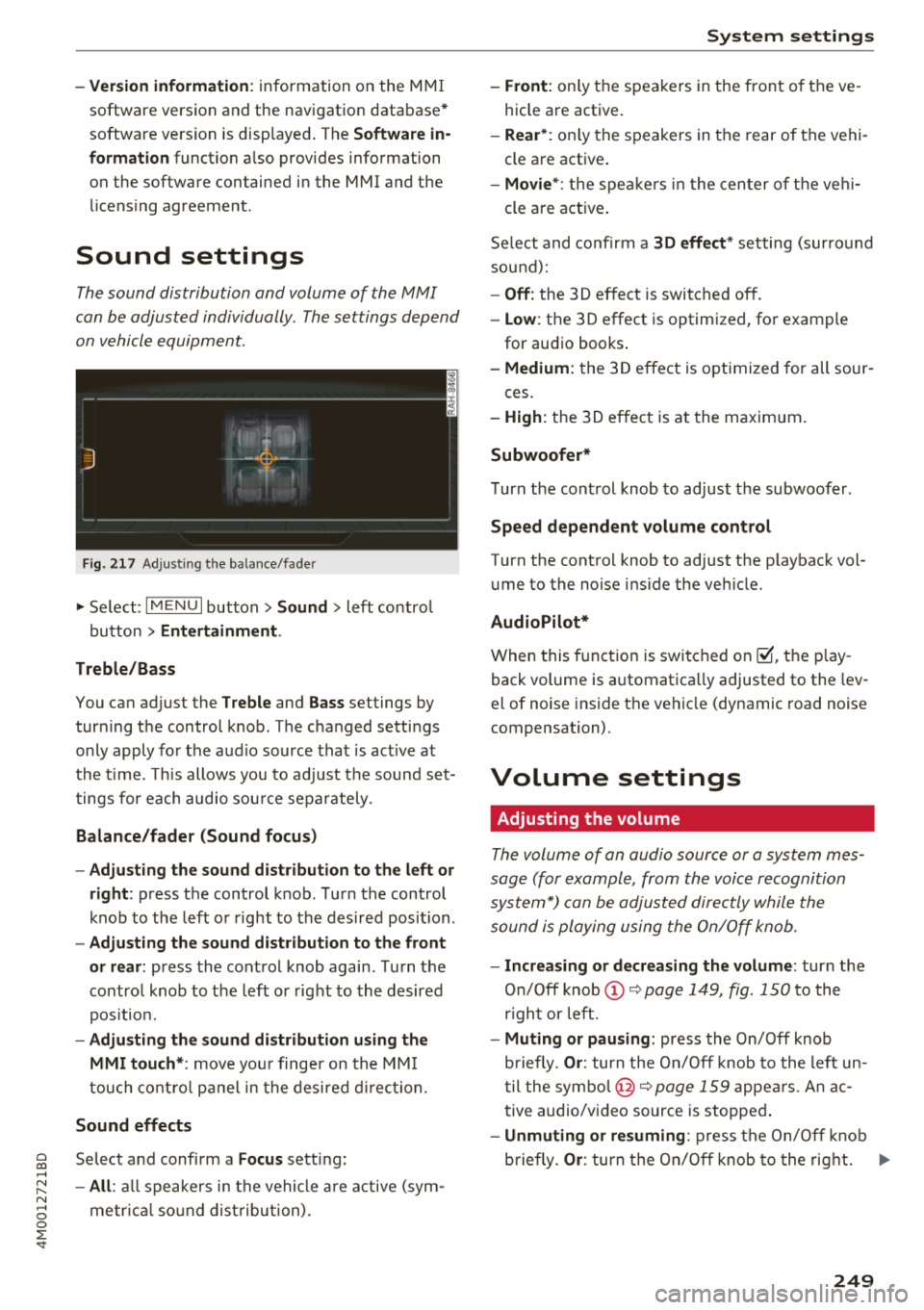
----- 1
J -~+ ~-
F ig. 217 A dj ustin g the ba la nce /fade r
"'Se lect : I MENU I bu tton >Sound > le ft contro l
b utt on
> Entertainment .
Treble/Bass
You can ad just the Treble and Bass settings by
turn ing t he control knob. The changed se ttings
only apply fo r the a ud io source tha t is ac tive at
t he time . T his allows you to ad just t he soun d set
t ings for each audio sou rce se para tely .
Balance/fader (Sound focus)
- Adjusting the sound d istribution to the left or
right :
press the control knob. Tur n the control
k nob to the left or right to the des ire d posi tion .
-Adjusting the sound distribution to the front
or rear:
press the cont rol knob again . T urn the
contro l knob to the left o r right to the desired
p os it io n.
- Adjusting the sound distribution using the
MMI touch* :
move your finger on the MM I
touch co ntro l pan el in th e desire d directio n.
Sound effects
Selec t and confi rm a Focus se tt in g:
- All : all sp eakers in t he vehi cle ar e active (sym
me trical sound dist ribu tion) .
System settings
-Front : only t he spea ke rs in the fron t of the ve
hicle are active.
- Rear *: on ly the s peakers in the rear of the vehi
cle a re act ive .
-Movie* : the spe akers in t he cen ter o f the ve hi-
cle a re a ct ive .
S e lect and co nfir m a
30 effect* setting (su rround
so und ):
-Off : the 3D ef fect is switched off.
- Low : the 3D effect is optimized, fo r exam ple
for au dio books .
-Medium: the 3D effect is optimize d for all sour -
ces .
-High : the 3 D effe ct is a t the m aximum .
Subwoofer*
Turn the con trol knob to ad just t he subwoofer .
Speed dependent volume control
Turn the cont rol knob to adjust the p layb ack vol
u me to the noise ins ide the ve hicle.
AudioPilot*
W hen thi5 fu nct ion i5 5w it ched on~. th e play
back volume is a utomat ica lly adjusted to the lev
e l of nois e inside t he ve hicl e (dy namic road nois e
compensation) .
Volume settings
Adjusting the volume
The volum e of an audio source or a system mes
sage (for e xampl e, from the voic e recognition
sys tem*) can be adjusted direc tly while the
sound i s pl aying u sing the On/Off knob.
- Increasing or decreasing the volume : turn the
On /O ff knob @~
page 1 49, fig. 150 to the
r igh t or left .
-Muting or pausing: press the On/Off knob
b riefly .
Or: tur n t he On/O ff knob to the left u n
t il the symb ol@ ~
page 159 appe ars. An ac
t ive a udio/v ideo source is s toppe d.
-Unmuting or resuming : pres s th e On/O ff kn ob
b riefly .
Or: turn the On/Off knob to the rig ht. ..,
249
Page 260 of 398
Driving safety
A WARNING
Heavy loads will influence the way your vehi
cle handles . To help reduce the risk of a loss
of control leading to serious personal injury:
- Always keep in mind when transporting
heavy objects, that a change in the center of
gravity can also cause changes in vehicle
handling:
- Always distribute the load as evenly as
possible.
- Place heavy objects as far forward in the
luggage compartment as possible.
- Never exceed the Gross Axle Weight Rating
or the Gross Vehicle Weight Rating specified
on the safety compliance sticker on th e driv
er's side B-pillar. Exceeding permissible
weight standards can cause the vehicle to
slide and handle differently .
- Please observe information on safe driving
<=) page 252.
A WARNING
To help prevent poisonous exhaust gas from
being drawn into the vehicle, always keep the
rear lid closed while driving .
- Never transport objects larger than those
fitting completely into the luggage area be cause the rear lid cannot be fully closed .
- If you absolutely must drive with the rear lid
open, observe the following notes to reduce
the risk of poisoning:
- Close all windows,
- Close the sunroof*,
- Open all air outlets in the instrument pan-
el,
- Switch off the air recirculation,
- Set the fresh air fan to the highest speed .
A WARNING
Always make sure that the doors, all win
dows, the sunroof* and the rear lid are se
curely closed and locked to reduce the risk of
injury when the vehicle is not being used .
- After closing the rear lid , always make sure
that it is properly closed and locked.
258
-Never leave your vehicle unattended espe
cially with the rear lid left open. A child
could crawl into the vehicle through the lug
gage compartment and close the rear lid be
coming trapped and unable to get out . Be
ing trapped in a vehicle can lead to serious
personal injury.
- Never let children play in or around the vehi
cle .
- Never let passengers ride in the luggage
compartment . Vehicle occupants must al
ways be properly restrained in one of the
ve
hicle 's seating positions.
@ Note
If you are transporting large items with the
backrest folded down*, you should remove
the Rear Seat Entertainment (RSE)* and its
holder* to avoid damage.
© Tips
-Air circulation helps to reduce window fog
ging. Stale air escapes to the outside
through vents in the trim panel. Be sure to
keep these slots free and open .
- The tire pressure must correspond to the
load. The tire pressure label lists the recom
mended cold tire inflation pressures for the
vehicle at its maximum capacity weight and
the tires that were on your vehicle at the
time it was manufactured. For recommend ed tire pressures for normal load condi
tions, please see chapter
Q page 341 .
Tie-downs
The luggage compartmen t is equipped with four
t ie-downs to secure luggage and o ther i tems.
Use the tie-downs to secure your cargo properly
Qpage 257, L oading the luggage compartment.
In a collision , the laws of physics mean that even
smaller items that are loose in the vehicle will
become heavy missiles that can cause serious in
jury. Items in the vehicle possess ene rgy which
vary with vehicle speed and the weight of the
item . Vehicle speed is the mos t significant fac tor . ..,.
Page 283 of 398
a co ...... N r--. N ...... 0
0
:E '
Advanced Airbag System
Airbag monitoring indicator light
Two separate indicators monitor the function of
the Advanced Airbag System: the
El light and
the
PAS SENGE R AIR BAG OFF ~; ON @ light.
The Advanced Airbag System as we ll as the side
a ir bags and side curtain airbags with eject ion
m it igation feat ures ( including the e lectron ic con
trol unit, sensors and system wiring) are a ll
monitored continuously to make sure that they
a re funct ioning properly whenever the ignition is
on. Every time you turn on the ignition, the air
bag system ind icator
light E,lwill come on for a
few seconds (function check).
Th e sys tem mu st be in spect ed wh en the
indicato r light
E,I:
- does not come on when the ignit ion is switched
on
- does not go out a few seconds after you have
switched on the ign ition, or
- comes on while driving
If an airbag system malfunction is detected, the
indicator light wi ll come on to serve as a constant
reminder to have the system inspected immedi
ately .
If a malfunction occurs that turns the front air
bag on the passenger side
off, the PASSENGER
AIR BAG OFF~.
light wi ll come on and stay on
whenever the ignition is on.
A WARNING
An airbag system that is not funct ioning prop
erly cannot provide supplemental protection
in a frontal crash .
- If the airbag indicator light¢
page 25
comes when the vehicle is be ing used, have
the system inspected immed iate ly by your
au thorized Aud i dealer.
It is possible that
the a irbag will inflate when it is not s up
posed to, or will not inflate when it shou ld.
Airbag system
PASSENGER AIR BAG OFF '1; ON @ light
"' -N
i
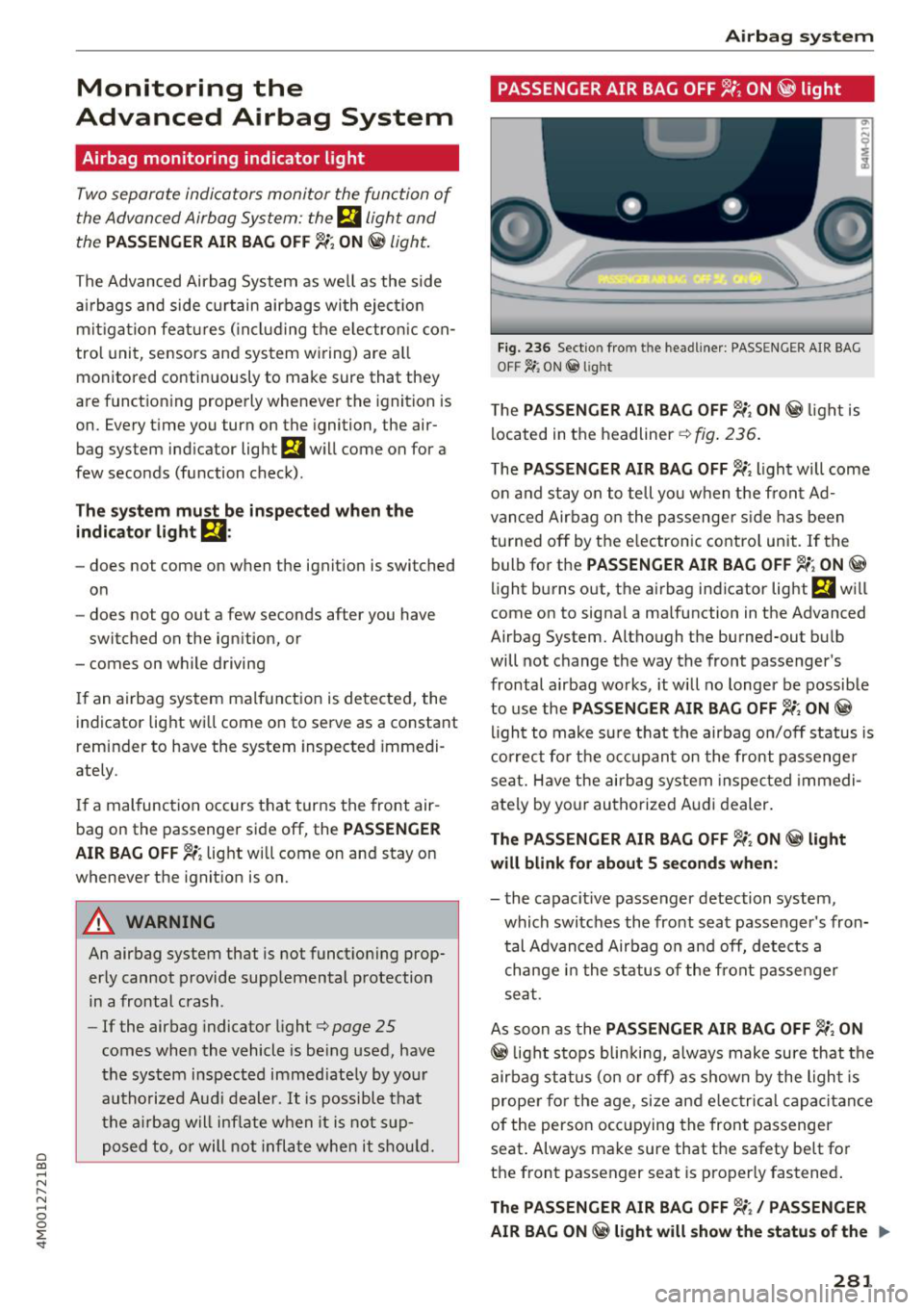
F ig. 236 Sectio n from t he headliner: PASSENGER AIR BAG
OFF~ ; ON
@ light
T he PAS SEN GER AIR BAG OFF ~; ON @ light is
located in the headliner¢
fig. 236.
T he PASS ENG ER AIR BAG OFF~; light will come
o n and stay on to tell you when the fron t Ad
vanced Airbag o n the passenger s ide has been
turned
off by the e lectronic control unit. If the
bulb for the
PA SSENGER AIR BAG OFF ~; ON @
light burns out, the airbag ind icator light El will
come on to signal a malfunction in the Advanced
Airbag System. Although the burned-out bu lb
will not change the way the front passenger's
frontal a irbag works, it will no longer be possible
to use the
PAS SENGER A IR BAG OFF~; ON @
light to make sure that the airbag on/off status is
correct fo r the occ upan t on the front passenge r
seat. Have the airbag system inspected immedi
ately by your authorized Audi dealer.
Th e PA SSENGER AIR BAG OFF ~; ON @ light
will blink for about 5 second s wh en :
- the capacit ive passenger detection system,
which switches the front seat passenger's fron tal Advanced Airbag o n and off, detects a
change in the status of the front passenger
seat.
As soon as the
PASSEN GER AIR BAG OFF~; ON
@ light stops blinking, a lways make sure that the
airbag status (on or off) as shown by the ligh t is
proper fo r the age, size and e lectrical capacitance
of the person occ upying the front passenger
seat . Always make sure that the safety belt for
the front passenger seat is properly fastened .
The PASSENGER AIR BAG OFF~/ PASSEN GER
AIR BAG ON @ ligh t will show th e sta tu s o f the .,..
28 1
Page 295 of 398
Cl a:, ...... N
" N ...... 0
0
::r '
switched on.
- If the
PASSENGER AIR BAG OFF~. light
does not come on and stay on, immediate
ly insta ll the forward-facing child seat in a
rear seating position and have the airbag
system inspected by your authorized Aud i
deale r.
- Always buckle the chi ld seat firmly in
place even if a ch ild is not sitt ing in it. A
loose ch ild seat ca n fly around during a
sudden stop o r in a coll is ion.
- Always read and heed all WARNINGS
wheneve r us ing a ch ild restraint in a veh i
cle
~ page 261, Safety belts, ~ page 269,
Airbag system and ~page 291, Impor
tant information .
(j) Tips
Always replace ch ild restraints that were in
stalled in a veh icle dur ing a crash. Damage to
a child restra int tha t is not visib le co uld cause
it to fail in another collision situation .
Advanced front airbag system and children
Your vehicle is equipped with an "Advanced Air
bag System" in comp liance with United States
Federa l Motor Vehicle Safety Standard (FMVSS)
208, as well as Canada Motor Veh icle Safety
Standard (CMVSS) 208 as applicable at the t ime
your ve hicle was manufactured .
The Advanced Airbag system in your vehicle has
been certified to meet the "low-risk" requ ire
ments for 3- and 6-year old children on the pas
senger side and small adults on the driver side.
The low risk deployment crite ria are intended to
reduce t he r isk of injury thro ugh inte ract ion with
the airbag t hat can occur, for examp le, by being
too close to the steering whee l and instrument
panel when the airbag inflates . In addition, the
system has been certified to comply with the
"suppression" req uirements of the Safety Stand
ard, to turn off the front airbag for infants up to
12 months who are restra ined on the front pas
senger seat in child restraints that are listed i n
the Standard .
Child s af ety
E ven thoug h your veh icle is equipped with an Ad
vanced Airbag system, all chi ldren, especially
those 12 years and younger, should a lways ride
in the back seat properly restrained for their age
and size . The airbag on the passenger side makes
the front seat a potentia lly dangerous p lace for a
ch ild to ride . Th e front seat is not the safest place
fo r a ch ild in a forward-fac ing ch ild safety seat.
It
can be a very dangerous place fo r an infant o r a
la rge r ch ild i n a rea rwa rd -facing seat.
T he veh icle 's Advanced A irbag System has a ca
pacit ive passenger detection system in the front
passenge r seat cushion that can detect the p res
ence of a baby or a c hild in a child res tra int sys
tem on this seat .
T he capacitive passenger detection system reg is
te rs the changes that result i n an elect rical field
whe n a child, a ch ild restraint, and a baby b la nket
are on t he fron t passenger seat. The change in
the measured capacitance due to the presence of a chi ld, a child restraint, and a baby blanket on
the front passenger seat is related to the child
restra int system resting on the seat. The meas
ured capacitance of a child restra int system var
ies depend ing on the type of system and specific
make and model.
The electrical capac itance of the various types,
makes, and models of child restraints specif ied
by the U .S . National Highway Traffic Safety Ad
min istrat ion (NHTSA) in the relevant safety
standard are stored in the Advanced Airbag Sys
tem contro l unit together with the capacitances
typ ica l of infants and a 1 -year old child. When a
c h ild restraint is used on the front passenger
seat with a typical 1 year -old infant, t he Ad
vanced Airbag System compares the capacitance
measured by the capacitive passenger detection
system with the data stored in the electronic con
trol un it .
Child restraints and Advanced Airbags
Regardless of the ch ild restraint that you use,
make sure that it has been certified to meet Safe
ty Standards and has been cert ified by its manu
fact urer for use w ith an airbag . Always be s ure
t h at the c hild restraint is properly installed at
IJJ,,
293
Page 312 of 398

Checking and Filling
Checking and Filling Fuel
Gasoline grade
A pp lies to: ve hicles w ith gasoline engines
The correct gasoline grade is stated on the inside
of the fuel filler door .
The vehicle is equipped with a catalytic converter
and must only be driven with
unleaded gasoline.
Audi recommends using TOP TIER Detergent Gas
oline. Additional information on TOP TIER Deter
gent Gasoline can be found on the official web
site (www .toptiergas.com).
The individual gasoline grades are differentiated
by
octane ratings. This value is given with (R +M)/
2 equating to AKI or in RON.
The following headings match the corresponding
sticker in the fuel filler door .
UNLEADED FUEL ONLY MIN. (R+M)/2 87
Regular/ MIN. RON 91 Regular
Use regular gasoline with minimum 87 AKI/
91 RON
i::>@ .
The max imum eng ine power is only reached if
p rem ium gasol ine 91 AKI/ 95 RON is used.
UNLEADED FUEL ONLY PREMIUM MIN. (R
+M)/2 91 / SUPER MIN. RON 95
Using premium gaso line with minimum 91 AKI/
95 RON is recommended.
If premium gasoline is not available, you can also use regular gasoline 87 AKI/ 91 RON . However
this does reduce th e engine powe r slight ly.
0 Note
- Fillin g the tank just one time with leaded
fuel or other metallic additives will cause
permanent deter iorat ion to the catalytic
converter function.
- When gasoline with an octane rat ing that is
too low is used , h igh speeds or heavy engine
load can lead to engine damage.
310
(D Tips
The vehicle may be filled with fuel that has a
h igher octane rating than what is required by
the eng ine.
Blended gasoline
App lies to : vehicles wi th gaso line e ngi ne
Use of gasoline containing alcohol or MTBE
(methyl tertiary butyl ether)
You may use unleaded gasoline blended with al
cohol or MTBE (commonly referred to as oxygen
ates) if the blended mixture meets the following
criteria:
Blend of gasoline methanol (wood alcohol or
methyl alcohol)
- Anti-knock index must be 87 AKI or h igher.
- Blend must contain no more than
3% metha-
nol.
- Blend must contain more than
2% co-solvents.
Blend of gasoline and ethanol (grain alcohol or
ethyl alcohol)
-Anti-knock index must be 87 AK I or h igher.
- Blend must not conta in more than 15% etha-
nol.
Blend of gasoline and MTBE
- Anti -knock index must be 87 AKI or higher.
- Blend must not contain more than 15% MTBE.
Seasonally adjusted gasoline
Many gasoline grades are blended to perform es
pecially well for winter or summer dr iv ing . Dur
i ng seasonal change-over, we suggest that you
fill up at busy gas stat ions where the seasonal
adjustment is more lik ely to be made in t ime.
@ Note
- Methanol fuels which do not meet these re
quirements may cause corrosion and dam
age to plastic and rubber components in the
fuel system.
- Do not u se fue ls that fail to meet the speci-
fied criteria in this chapter. ...
Page 323 of 398
a co ...... N r--. N ...... 0
0
:E '
could fly up while you are driv ing and ob
struct your vision.
Engine compartment overview
The most important check points.
Chec king and Filling
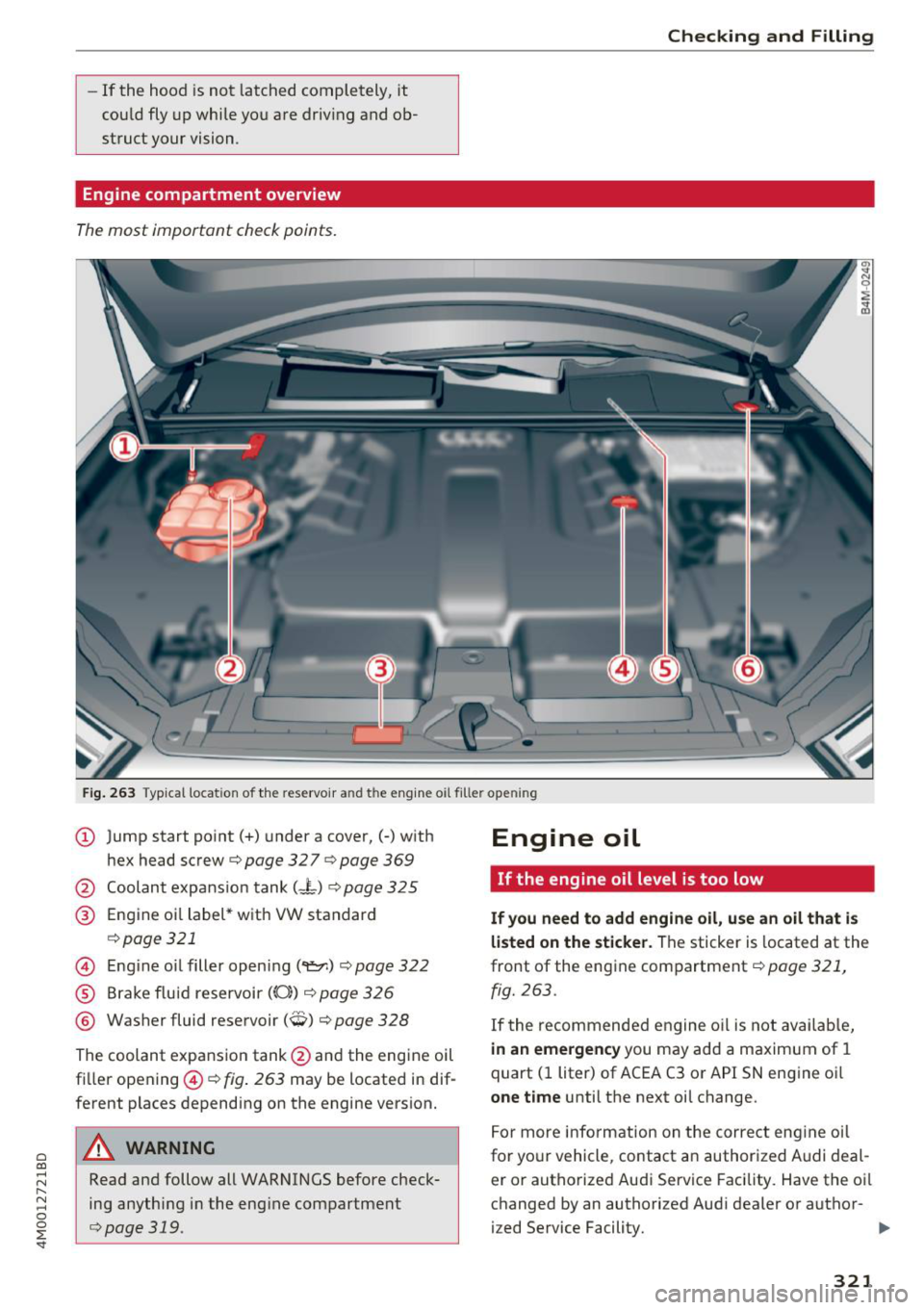
Fig . 2 63 Typ ical location of the reservoir a nd t he eng ine o il filler ope ning
@ Jump start point(+) under a cover,(-) with
hex head screw
c::> page 32 7 c::> page 369
@ Coolant expans ion tank ( - L) c::> page 325
@ Engine oi l label * with VW standard
<=:> page 321
© Engine oil filler opening ('t=:r.) c::> page 322
® Brake f luid reservoir ((0)) c::> page 326
® Washer fluid reservoir (~) c::> page 328
The coolant expansion tank @and the engine oil
fi ller opening ©
c::> fig. 263 may be located in dif
ferent places depending on the engine version.
A WARNING
Read and follow all WARNINGS before check
ing anything in the eng ine compartment
c::> page 319.
Engine oil
If the engine oil level is too low
If you need to add engine oil, us e an oil that i s
li sted on the st icker.
The sticker is located at the
front of the engine compartment
c::> page 321 ,
fig. 263.
If the recommen ded engine o il is not avai lab le,
in an emergency you may add a maximum of 1
quart
( l liter) of ACEA C3 or API SN eng ine oi l
one time until the next oil change.
F or more i nformation on the correct eng ine oil
for yo ur vehicle, contact an author ized A udi deal
er or authorized Aud i Service Facility . Have the o il
c h anged by an authorized Audi dealer or author-
i z ed Service Facility.
ll>
321
Page 324 of 398
Check ing and F illing
A ud i rec ommends
f;; Castrot //g{g{E{g ?r,w_:;-...7dri,'1AL
Audi rec ommends usi ng the Long Life high
perform ance eng ine oil from Aud i Genu ine
Part s.
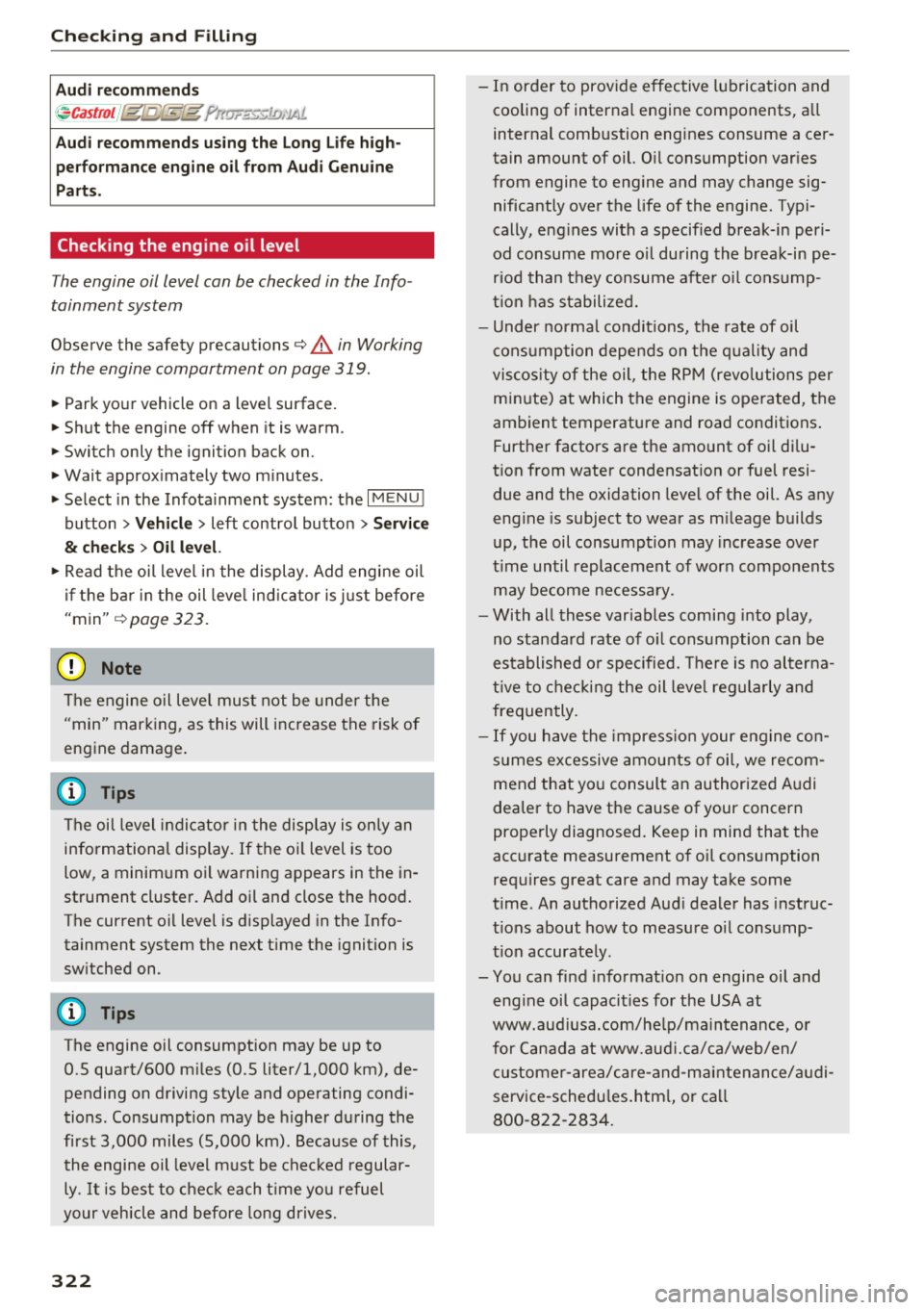
Checking the engine oil level
The engine oil level can be checked in the Info·
tainment system
Observe the safety precautions¢ A in Working
in the engine compartment on page 319.
~ Park your vehicle on a level surface.
~ Shut the engine off when it is warm.
~ Switch only the ignition back on.
~ Wait approx imately two minutes.
~ Select in the Infota inment system: the I MENU I
button > Ve hicle > left contro l button > Ser vic e
& chec ks > Oil level.
~ Read the oi l level in the display . Add engi ne oil
if th e ba r in the oil leve l ind icator is j ust before
"min" ¢
page 323.
{U) Note
The engine o il leve l must not be unde r the
"min" marking, as this will increase the risk of
engine damage .
(D Tips
The oil level indicato r in the display is on ly an
informationa l display . If the o il level is too
low, a minimum oi l warning appears in the in ·
strument cluster. Add oi l and close the hood.
The current oil leve l is d isplayed in the Info
tainment system the next time the ignition is
sw itched on.
(D Tips
The engine oil consumption may be up to
0.5 quart/600 m iles (0.5 liter/1,000 km), de
pending on driving style and operating condi
tions. Consumpt ion may be h igher during the
first 3,000 miles (5,000 km). Because of this, the engi ne oil level m ust be chec ked regular·
Ly. It is best to c hec k each t ime yo u refuel
your veh icle and before long dr ives.
322
- In order to prov ide e ffective lubrication and
cooling of interna l engine components, a ll
internal comb ustion engines consume acer
tain amount of oil. Oil consumption var ies
from engine to eng ine and may change sig
nificantly over the life of the engine. Typi·
cally, eng ines with a specified break-in per i·
od consume mo re o il during the break-in pe·
r iod than they consume afte r oil cons ump·
t ion has s tabilized.
- Under no rma l co nd it ions, the rate of oil
c ons umption depends on the q ual ity and
vis cos ity of the oil, the RPM (revo lutions per
min ute) a t which the engine is operated, the
ambient temperature and road conditions .
Further factors are the amount of oi l di lu
t ion from water condensation or fuel resi
due and the oxidation level of the oil. As any
eng ine is subject to wear as m ileage bu ilds
up, the oil consumption may increase over
t ime until replacement of worn components
may become necessa ry.
- With all these var iables comi ng into play,
no standard rate of o il consumption can be
established o r spe cified. There is no alter na
t ive to c hec king the oil leve l reg ularly and
frequently.
- If you have the impress io n your e ng ine co n
s u mes excessive amou nts of oi l, we recom
mend that yo u consult an authorized A udi
dea ler to have the cause of your concern
properly diagnosed . Keep in mind that the
acc urate measurement of o il cons umption
requires great care and may take some
t ime. An authorized Aud i dealer has instruc
t ions about how to measure o il consump·
t ion accurate ly.
- You can find i nformat ion on engine oil and
eng ine oil capac it ies for the USA at
www.aud iusa.com/he lp/ma intenance, o r
for Canada at www.aud i.ca/ ca/web/en/
c u sterne r-area/ ca re -and-ma i nte na nee/ au di
serv ice -sched u les. htm l, o r ca ll
800 -822 -2834 .
Page 331 of 398
Cl a:, ...... N
" N ...... 0
0
::r '
ed on . The remaining distance and time is
displayed br iefly.
- Service due : if your vehicle has reached a serv
ice interval, a message appears briefly after
switching the ignition on.
({;D) Note
-Only reset the oil change indicator if the oil
was changed .
- Following the service intervals is critical to
maintaining t he service life and va lue of
your vehicle, especia lly the engine . Even if
the mileage on the vehicle is low, do not ex
ceed the time for the next service.
Checking and Filling
329
Page 337 of 398
0 a, .... N
" N .... 0
0
l: ..
Production options weight
means the combined weight of
those installed regular production
options weighing over 5 lbs .
(2.3 kg) in excess of those stand
ard items which they replace, not
previously considered in curb
weight or accessory we ight, in
c luding heavy duty brakes, ride
levelers, roof rack, heavy duty
battery, and special trim .
Radial ply tire
means a pneumatic tire in which
the ply cords that extend to the beads are laid at substantially
90 degrees to the centerline of
the tread .
Recommended inflation
pressure
see ¢ page 333, Cold tire infla
tion pressure .
Reinforced tire
means a tire designed to operate
at higher loads and at h igher in
flat ion pressures than the corre
sponding standard tire. Rein
forced t ires may be identified as
"XL " "xl" "EXT RA LOA D" or "RF" , , ,
on the sidewall.
Wheels
Rim
means a metal support for a tire
or a tire and tube assembly upon
which the tire beads are seated .
Rim diameter
means nominal diameter of the
bead seat. If you change your
whee l size, you will have to pur
chase new tires to match the new
rim diameter .
Rim size designation
means rim diameter and width .
Rim width
means nominal distance between
rim flanges.
Sidewall
means that portion of a ti re be
tween the tread and bead.
Speed rating (letter code)
means the speed at which a tire is
designed to be driven for extend
ed periods of time . The rat ings
range from
93 mph (150 km/h)
to
186 mph (298 km/h) ¢ table
on page 331.
You may no t find
this info rmat ion on all tires be
cause it is not required by law.
T he speed rating letter code,
where applicable, is molded on
the tire sidewall and indicates t he
11>
335
Page 343 of 398
0 a, .... N
" N
increase the tire pressure to the
maximum specified pressure¢,& .
Checking/correcting tire
pressure
.,.Check the tire pressure at least
once per month and also check it
before every long drive.
.,.Always check the tire pressure
when the tires are
cold. Do not
reduce the pressure if it increas
es when the tires are warm .
.,.Check the labe l¢
fig. 2 72 for
the correct tire pressure based
on vehicle load.
.,,.Correct the tire pressure if nec
essary.
.,.Store the new tire pressure in
the Infotainment system
¢ page 349.
& WARNING
Always adapt the tire pressure
to your driving style and vehicle
load.
-Overloading can lead to loss of
vehicle control and increase
Tire pressure table
Please note that the information
contained in the following table
was correct at the time of print ing, and the information is sub-
...
g ject to change. If there are differ-l: ..
Wheels
the risk of an accident. Read
and follow the important safe
ty precautions in ¢
page 343,
Tires and vehicle load limits.
-The tire must flex more if the
tire pressure is too low or if
the vehicle speed or load are
too high. This heats the tire up
too much . This increases the
risk of an accident because it
can cause the tire to burst and
result in loss of vehicle con
trol.
-Incorrect tire pressure in creases tire wear and has a negative effect on driving and
braking behavior, which in
creases the risk of an accident.
@ Note
Replace lost valve caps to re
duce the risk of damage to the
tire valves.
@ For the sake of the environment
Tire pressure that is too low in
creases fuel consumption .
ences between this information
and the tire pressures specified
341