filler AUDI Q7 2021 Owner´s Manual
[x] Cancel search | Manufacturer: AUDI, Model Year: 2021, Model line: Q7, Model: AUDI Q7 2021Pages: 332, PDF Size: 117.99 MB
Page 243 of 332

4M1012721BC
Checking and Filling
Checking and Filling
Fuel
Types of gasoline
The correct gasoline grade is stated on the inside
of the fuel filler door.
The vehicle is equipped with a catalytic converter
and must only be driven with unleaded gasoline.
Audi recommends using TOP TIER Detergent Gas-
oline. For additional information on TOP TIER De-
tergent Gasoline, visit www.toptiergas.com.
The individual gasoline grades are differentiated
by octane ratings. This value is given with (R
+M)/2 equating to AKI or in RON.
The headings below match the sticker in the fuel
filler door (examples):
UNLEADED FUEL ONLY MIN. (R+M)/2 87
Regular / MIN. RON 91 Regular
Use regular gasoline with minimum 87 AKI /
91 RON > ©.
Audi recommends using premium gasoline with
minimum 91 AKI / 95 RON to achieve the rated
horsepower and torque.
UNLEADED FUEL ONLY PREMIUM MIN. (R
+M)/2 91 / SUPER MIN. RON 95
Using premium gasoline with minimum 91 AKI /
95 RON is recommended.
If premium gasoline is not available, you can also
use regular gasoline 87 AKI / 91 RON. However
this does reduce the engine power slightly.
UNLEADED FUEL ONLY PREMIUM MIN. (R
+M)/2 93 / SUPER PLUS MIN. RON 98
Using premium plus gasoline with at least 93
AKI / 98 RON is recommended.
If no premium plus gasoline is available, you can
also use premium gasoline with 91 AKI /95 RON.
However this does reduce the engine power
slightly.
CG) Note
— Filling the tank just one time with leaded
fuel or other metallic additives will cause
permanent deterioration to the catalytic
converter function.
— When gasoline with an octane rating that is
too low is used, high speeds or heavy engine
load can lead to engine damage.
@ Tips
The vehicle may be filled with fuel that has a
higher octane rating than what is required by
the engine.
Gasoline mixture
Gasoline with alcohol or MTBE (Methyl-Tert-
Butyl-Ether)
You can use unleaded gasoline mixed with alco-
hol or MTBE (generally labeled as oxygenated
compounds) as long as the fuel meets the follow-
ing conditions:
Gasoline with methanol content (methyl alco-
hol or methanol)
— Anti-Knock Index is at least 87 AKI
—No more than 3% methanol
— More than 2% solvent
Gasoline with ethanol content (ethyl alcohol or
ethanol)
— Anti-Knock Index is at least 87 AKI
—No more than 15% ethanol
Gasoline with MTBE content
— Anti-Knock Index is at least 87 AKI
—No more than 15% MTBE
Gasoline adapted to the season
Many gasoline fuels are adapted to the seasons.
When the season changes, refueling at high-traf-
fic gas stations is recommended. It is more likely
that the gasoline will be suitable for the season
there.
@) Note
— Gasoline with methanol content that does
not meet the specified conditions may cause >
241
Page 244 of 332
Checking and Filling
corrosion damage and damage to plastic or
rubber components in the fuel system.
— Do not use gasoline that does not meet the
specifications.
— If you are unable to find out if a specific gas-
oline mixture meets the specifications, ask
the gas station operator or their fuel suppli-
er.
— Do not use any gasoline mixture whose
composition cannot be identified.
— Audi does not assume any responsibility for
damage to the fuel system or for perform-
ance problems caused by using gasoline
mixtures different from those specified.
This type of damage also does not fall under
the New Vehicle Limited Warranty or under
the emissions control system warranty.
— If you notice a higher fuel consumption or
poor handling or performance problems due
to such gasoline mixtures, Audi recom-
mends fueling with unblended gasoline.
Gasoline additives
An important issue for many automobile manu-
facturers is combustion residue in the engine
that results from the use of certain fuels.
Although types of gasoline differ depending on
the manufacturer, there are similarities. Certain
substances in the gasoline may cause deposits in
the engine. Additives in the gasoline that should
keep the engine and fuel system clean do not all
function equally.
Audi recommends using TOP TIER Detergent Gas-
oline. For additional information on TOP TIER De-
tergent Gasoline, visit www.toptiergas.com.
If you use incorrect fuels over a long period of
time, the maximum engine performance may be
impaired by combustion residue.
@) Note
— Damage or malfunctions caused by the use
of incorrect types of gasoline are not cov-
ered by the New Vehicle Limited Warranty.
— Only gasoline additives that have been ap-
proved by Audi may be used.
242
Refueling
Messages
A Tank system: malfunction! Please contact
Service
There is a malfunction in the fuel tank system.
Drive to an authorized Audi dealer or authorized
Audi Service Facility immediately to have the
malfunction corrected.
Fueling procedure
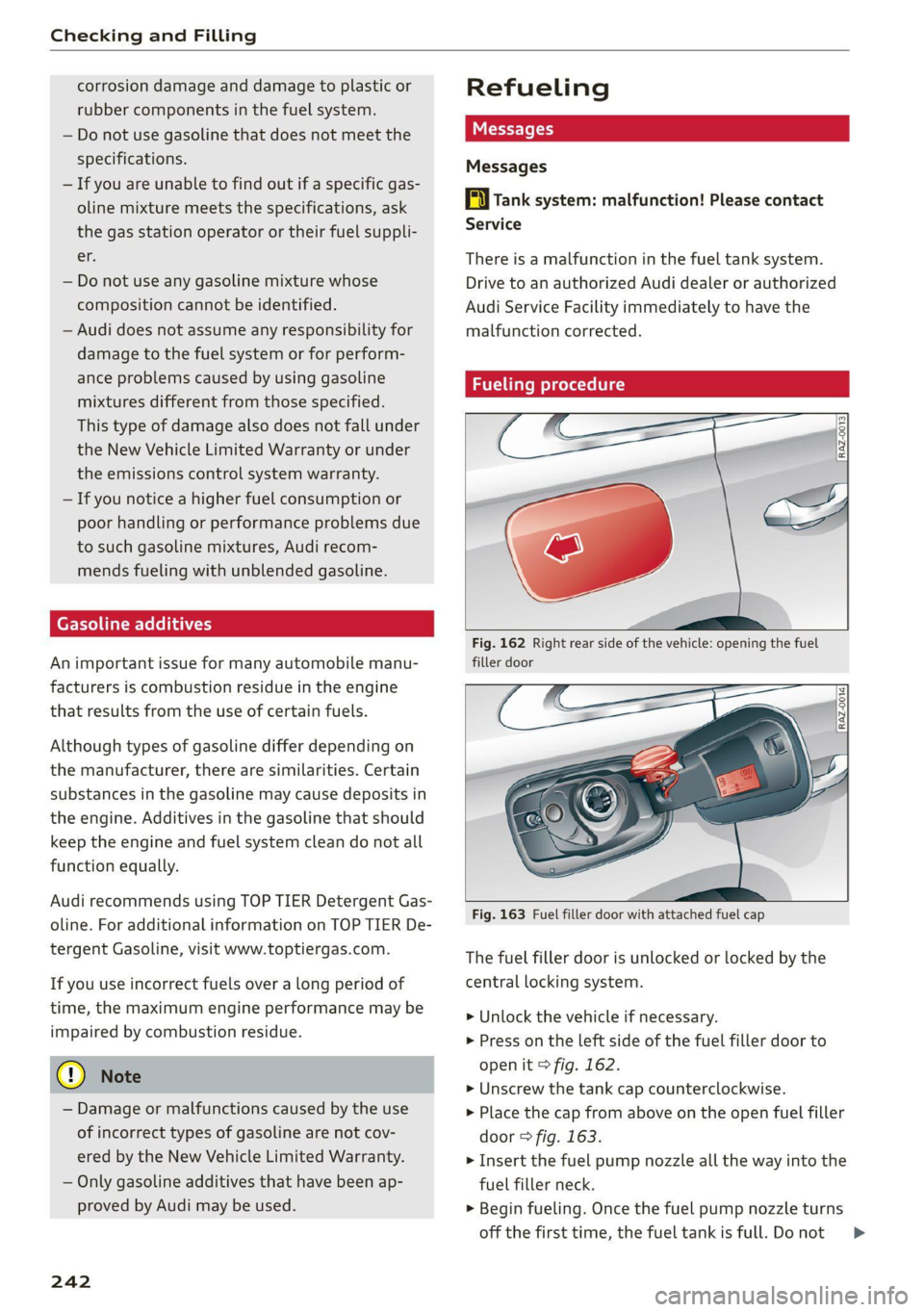
Fig. 162 Right rear side of the vehicle: opening the fuel
filler door
Fig. 163 Fuel filler door with attached fuel cap
The fuel filler door is unlocked or locked by the
central locking system.
> Unlock the vehicle if necessary.
> Press on the left side of the fuel filler door to
open it > fig. 162.
> Unscrew the tank cap counterclockwise.
> Place the cap from above on the open fuel filler
door > fig. 163.
> Insert the fuel pump nozzle all the way into the
fuel filler neck.
> Begin fueling. Once the fuel pump nozzle turns
off the first time, the fuel tank is full. Donot =>
Page 245 of 332

4M1012721BC
Checking and Filling
continue fueling, or else the expansion space in
the tank will be filled with fuel.
> After the fuel pump has switched off, wait five
seconds before removing the nozzle to allow
the rest of the fuel to finish dripping into the
fuel tank.
> Turn the fuel cap clockwise until it clicks into
place.
> Close the fuel filler door and then press on the
left side until it latches.
The correct fuel type for your vehicle can be
found on a label located on the inside of the fuel
filler door. For additional information on fuel, see
=> page 241.
For the tank capacity in your vehicle, refer to the
Technical Data > page 314.
To reduce the risk of fuel leaking out or vapors
escaping, make sure that the fuel tank is closed
correctly. Otherwise the Ey indicator light will
turn on.
ZX WARNING
Improper fueling procedures and improper
handling of fuel can lead to explosions, fires,
severe burns, and other injuries.
— Do not smoke. Keep away from open flames.
— The ignition must be switched off when re-
fueling.
— Mobile devices, radio devices, and other ra-
dio equipment should always be switched
off when refueling. Electromagnetic rays
could cause sparks and start a fire.
— If you do not insert the fuel pump nozzle all
the way into the filler tube, then fuel can
leak out. Spilled fuel can ignite and start a
fire.
— Never get into the vehicle when refueling. If
there is an exceptional situation where you
must enter the vehicle, close the door and
touch a metal surface before touching the
fuel pump nozzle again. This will reduce the
risk of electrostatic discharge that can cause
flying sparks. Sparks can start a fire when
refueling.
ZA\ WARNING
Audi does not recommend transporting fuel
containers inside the vehicle. Fuel could leak
out of the container and ignite, especially dur-
ing an accident. This can cause explosions,
fires, and injuries.
—If you must transport fuel in a fuel contain-
er, note the following:
— Always place the fuel container on the
ground before filling. Never fill the fuel
container with fuel while it is inside or on
the vehicle. Electrostatic discharge can oc-
cur while refueling and the fuel vapors
could ignite.
— When using fuel containers made of met-
al, the fuel pump nozzle must always re-
main in contact with the container to re-
duce the risk of static charge.
— Insert the fuel pump nozzle as far as pos-
sible into the filler opening while refuel-
ing.
— Follow the applicable legal regulations in
the country where you are driving when
using, storing and transporting fuel con-
tainers.
— Make sure that the fuel container meets
the industry standards, for example ANSI
or ASTM F852-86.
1) Depending on the engine and country
C) Note
— Remove fuel that has overflowed onto any
vehicle
components immediately to reduce
the risk of damage to the vehicle.
— Never drive until the fuel tank is completely
empty. The irregular supply of fuel that re-
sults from that can cause engine misfires.
Uncombusted fuel may enter the exhaust
system and increase the risk of damage to
the catalytic converter.
@) For the sake of the environment
— Do not overfill the fuel tank, or fuel could
leak out when the vehicle is warming up.
— Fuel should never enter the sewer system or
come into contact with the ground.
243
>
Page 246 of 332

Checking and Filling
The fuel filler door on your vehicle does not
lock if you lock the vehicle from the inside us-
ing
the central locking switch.
Fuel filler door emergency release
Applies to: vehicles with manual fuel filler door release
If the central locking system malfunctions, the
fuel filler door can be unlocked manually.
a sity
Fig. 165 Luggage compartment: fuel filler door emergency
release
The emergency release mechanism is located be-
hind the right light cover in the luggage compart-
ment.
> Remove the screwdriver from the vehicle tool
kit > page 286.
> Use the screwdriver to remove the light cover
> fig. 164.
> To unlock the fuel filler door, loosen the red
loop from the retainer and then pull on the
loop carefully > fig. 165 >@).
> Press on the left side of the fuel filler door to
open it > page 242, fig. 162.
244
Only pull on the loop until you feel resistance.
You
will not hear it release. If you continue to
pull, you could damage the emergency re-
lease mechanism.
Emissions control
system
General information
The temperature of the exhaust system is
high, both when driving and after stopping
the engine.
— Never touch the exhaust tail pipes once they
have become hot. This could result in burns.
— Do not park your vehicle over flammable
materials such as grass or leaves because
the high temperature of the emissions sys-
tem could start a fire.
— Do not apply underbody protectant in the
exhaust system area, because this increases
the risk of fire.
Catalytic converter
Observe the safety precautions > page 244, Gen-
eral information.
The vehicle may only be driven with unleaded
gasoline, or the catalytic converter will be de-
stroyed.
Never drive until the tank is completely empty.
The irregular supply of fuel that results from that
can cause engine misfires. Uncombusted fuel
could enter the exhaust system, which could
cause overheating and damage to the catalytic
converter.
Malfunction Indicator Lamp (MIL)
If the S indicator light blinks or turns on, there
is a malfunction that is causing poor emissions
quality and that could damage the catalytic con-
verter. Drive slowly to an authorized Audi dealer >
Page 249 of 332
4M1012721BC
Checking and Filling
Messages
B Warning! Hood is not locked. Stop vehicle
and check the lock
The hood latch is not locked correctly. Stop im-
mediately and close the hood.
— For safety reasons, the hood must always be
Z\ WARNING
— Never open the hood when there is steam or
coolant escaping from the engine compart-
ment, because there is a risk that you could
be burned. Wait until no steam or coolant is
escaping.
7
latched securely while driving. Because of
this, always check the hood after closing it
to make sure it is latched correctly. The hood
is latched if the front corners cannot be lift-
ed.
— If you notice that the hood is not latched
while you are driving, stop immediately and
close it, because driving when the hood is
not latched increases the risk of an accident.
mpartment overv
Engine co
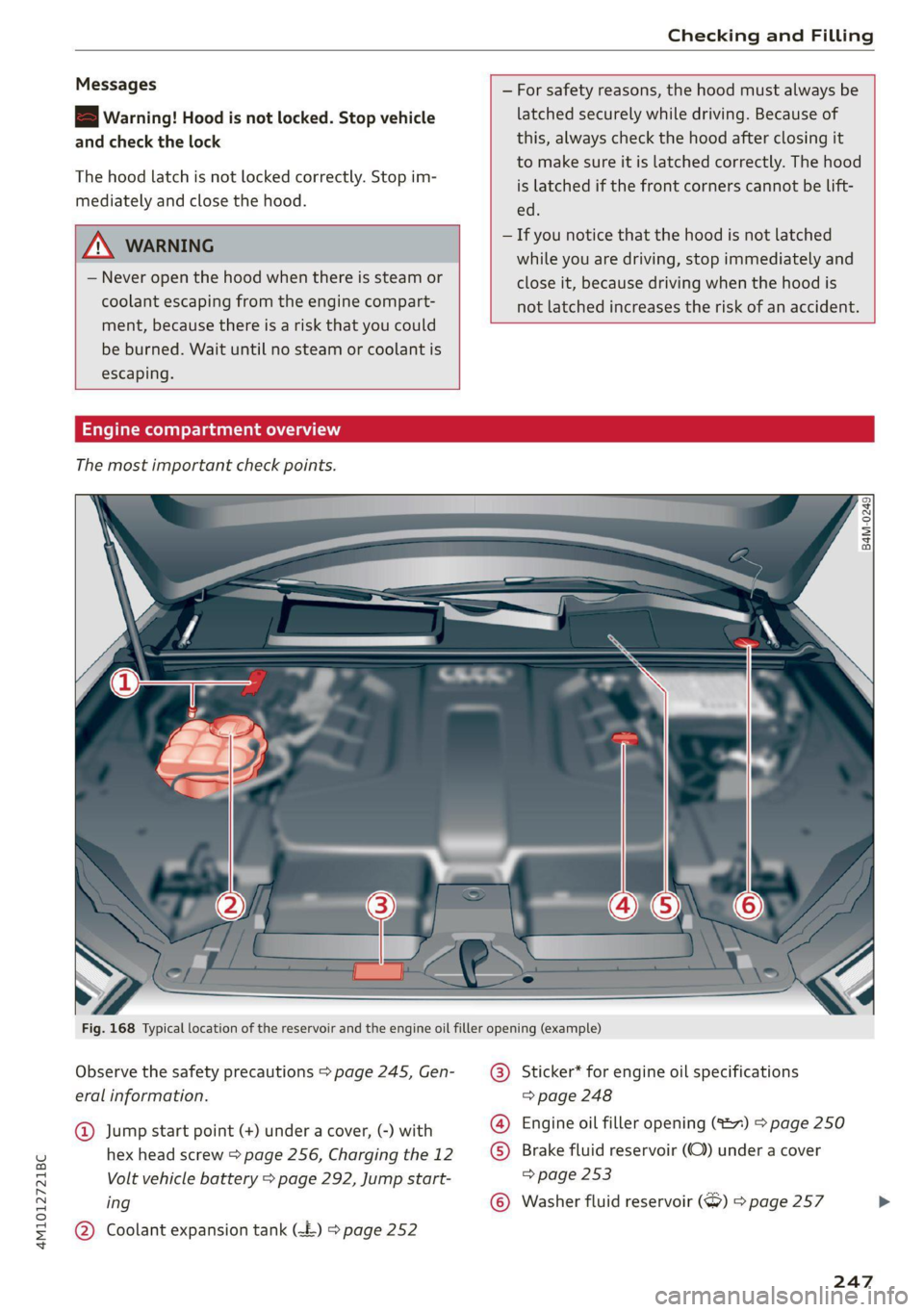
The most important check points.
B4M-0249)
Fig. 168 Typical location of the reservoir and the engine oil filler opening (example)
Observe the safety precautions > page 245, Gen-
eral information.
) Jump start point (+) under a cover, (-) with
hex head screw > page 256, Charging the 12
Volt vehicle battery > page 292, Jump start-
ing
) Coolant expansion tank (
Sticker* for engine oil specifications
=> page 248
Engine oil filler opening (%37) > page 250
Brake fluid reservoir (C)) under a cover
=> page 253
© Washer fluid reservoir (€) > page 257
247
>
Page 250 of 332
Checking and Filling
The engine oil filler opening may be located ina
different area depending on the specific engine.
Engine oil
If the engine oil level is too low
If you need to add engine oil, use an oil that is
listed on the sticker. The sticker is located at the
front of the engine compartment > page 247,
fig. 168. When using the engine oil listed on the
sticker, you can adjust the oil level as often as
needed.
If engine oil that meets the recommended speci-
fication is not available, in an emergency you
may add a maximum of 1 quart (1 liter) of
ACEA C3 or API SN engine oil one time until the
next oil change.
For more information on the correct engine oil
for your vehicle, contact an authorized Audi deal-
er or authorized Audi Service Facility. Have the oil
changed by an authorized Audi dealer or author-
ized Service Facility.
@) Tips
Audi recommends using engine oils provided
by Audi Genuine Parts.
Messages
Engine oil pressure
E Turn off engine. Oil pressure too low
Stop driving and switch the engine off. Check the
engine oil level > page 249.
— If the engine oil level is too low, add engine oil
=> page 250. Only continue driving once the in-
dicator light turns off.
— If the engine oil level is correct and the indica-
tor light still turns on, turn the engine off and
do not continue driving. See an authorized Audi
dealer or authorized Audi Service Facility for as-
sistance.
Engine oil level
E& Please add oil immediately.
248
Stop driving and switch the engine off. Check the
engine oil level > page 249 and add engine oil
immediately > page 250.
=, Add max. x qt (x J) oil. You can continue
driving
Add the amount of oil shown immediately
=> page 250.
Reducing the oil level
=) Please reduce oil level
There is too much oil in the engine and there is a
risk of damaging the catalytic converter or en-
gine. Drive to an authorized Audi dealer or au-
thorized Audi Service Facility immediately to have
engine oil extracted if necessary. Avoid high en-
gine speeds, full acceleration, and heavy engine
loads.
Engine oil sensor
Bs Oil level sensor: oil change necessary. Please
contact Service
Fuel has entered the engine oil. This will cause
the engine oil level to rise slowly and the engine
oil quality to decrease. Do not extract engine oil
to reduce the level, because this will increase the
risk of engine damage. Drive to an authorized
Audi dealer or authorized Audi Service Facility im-
mediately to have engine oil extracted.
& Oil level system: malfunction! Please con-
tact Service
The sensor that checks the engine oil level has
malfunctioned. Drive immediately to an author-
ized Audi dealer or authorized Audi Service Facili-
ty to have the malfunction repaired.
2 Oil pressure sensor: malfunction! Please
contact Service
The sensor that checks the engine oil pressure
has malfunctioned. Drive immediately to an au-
thorized Audi dealer or authorized Audi Service
Facility to have the malfunction repaired.
Engine warm-up request
i Please drive to warm up engine
Page 252 of 332
Checking and Filling
ding engine oil
B8K-2120
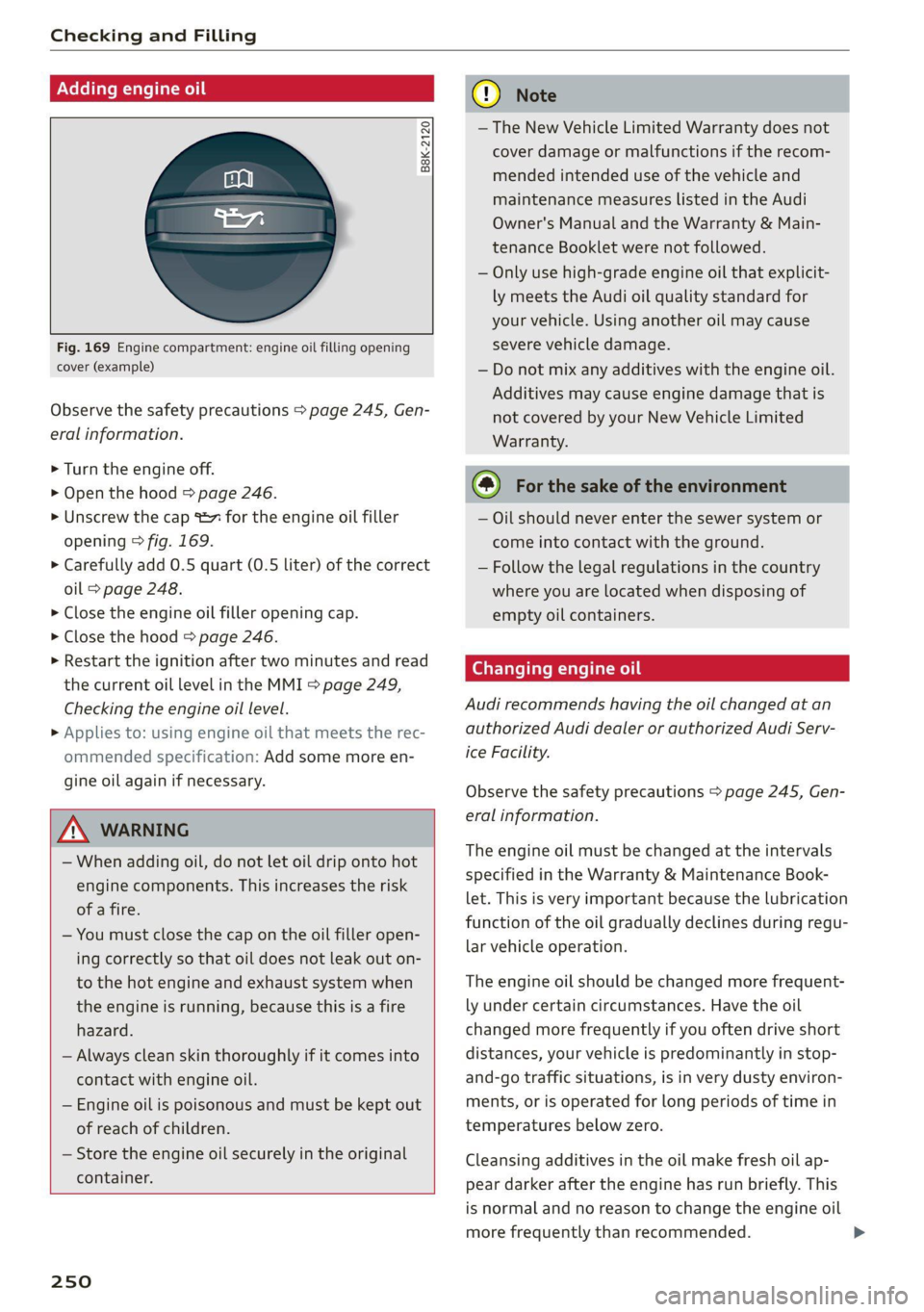
Fig. 169 Engine compartment: engine oil filling opening
cover (example)
Observe the safety precautions > page 245, Gen-
eral information.
> Turn the engine off.
> Open the hood > page 246.
> Unscrew the cap %~ for the engine oil filler
opening > fig. 169.
> Carefully add 0.5 quart (0.5 liter) of the correct
oil > page 248.
> Close the engine oil filler opening cap.
> Close the hood > page 246.
> Restart the ignition after two minutes and read
the current oil level in the MMI > page 249,
Checking the engine oil level.
» Applies to: using engine oil that meets the rec-
ommended specification: Add some more en-
gine oil again if necessary.
ZA WARNING
— When adding oil, do not let oil drip onto hot
engine components. This increases the risk
of a fire.
— You must close the cap on the oil filler open-
ing correctly so that oil does not leak out on-
to the hot engine and exhaust system when
the engine is running, because this is a fire
hazard.
— Always clean skin thoroughly if it comes into
contact with engine oil.
—
Engine oil is poisonous and must be kept out
of reach of children.
— Store the engine oil securely in the original
container.
250
@) Note
— The New Vehicle Limited Warranty does not
cover damage or malfunctions if the recom-
mended intended use of the vehicle and
maintenance measures listed in the Audi
Owner's Manual and the Warranty & Main-
tenance Booklet were not followed.
— Only use high-grade engine oil that explicit-
ly meets the Audi oil quality standard for
your vehicle. Using another oil may cause
severe vehicle damage.
— Do not mix any additives with the engine oil.
Additives may cause engine damage that is
not covered by your New Vehicle Limited
Warranty.
@) For the sake of the environment
— Oil should never enter the sewer system or
come into contact with the ground.
— Follow the legal regulations in the country
where you are located when disposing of
empty oil containers.
Changing engine oil
Audi recommends having the oil changed at an
authorized Audi dealer or authorized Audi Serv-
ice Facility.
Observe the safety precautions > page 245, Gen-
eral information.
The engine oil must be changed at the intervals
specified in the Warranty & Maintenance Book-
let. This is very important because the lubrication
function of the oil gradually declines during regu-
lar vehicle operation.
The engine oil should be changed more frequent-
ly under certain circumstances. Have the oil
changed more frequently if you often drive short
distances, your vehicle is predominantly in stop-
and-go traffic situations, is in very dusty environ-
ments, or is operated for long periods of time in
temperatures below zero.
Cleansing additives in the oil make fresh oil ap-
pear darker after the engine has run briefly. This
is normal and no reason to change the engine oil
more frequently than recommended.
Page 289 of 332
4M1012721BC
Emergency assistance
— The tire sealant must not come in contact
with skin, eyes, or clothing.
— If tire sealant comes into contact with your
eyes or your skin, thoroughly rinse the af-
fected area immediately with clean water.
— Do not inhale the fumes.
— If you swallow any of the tire sealant, thor-
oughly rinse your mouth immediately and
drink a lot of water. Do not induce vomiting.
Seek medical attention immediately.
— Change your clothing immediately if it
comes into contact with tire sealant.
— If an allergic reaction occurs, seek medical
attention immediately.
— Keep the tire sealant away from children.
G) Tips
— If sealant leaks, allow it to dry in place. You
can then peel it off like a sticker.
— Note the expiration date on the sealant bot-
tle. Replace the tire sealant at an authorized
Audi dealer or authorized Audi Service Fa-
cility.
— Radio reception can be interrupted when
operating the compressor.
— Follow the legal regulations that are appli-
cable in the country where you are operating
the vehicle.
Fae ma cd
Applies to: vehicles with tire mobility kit
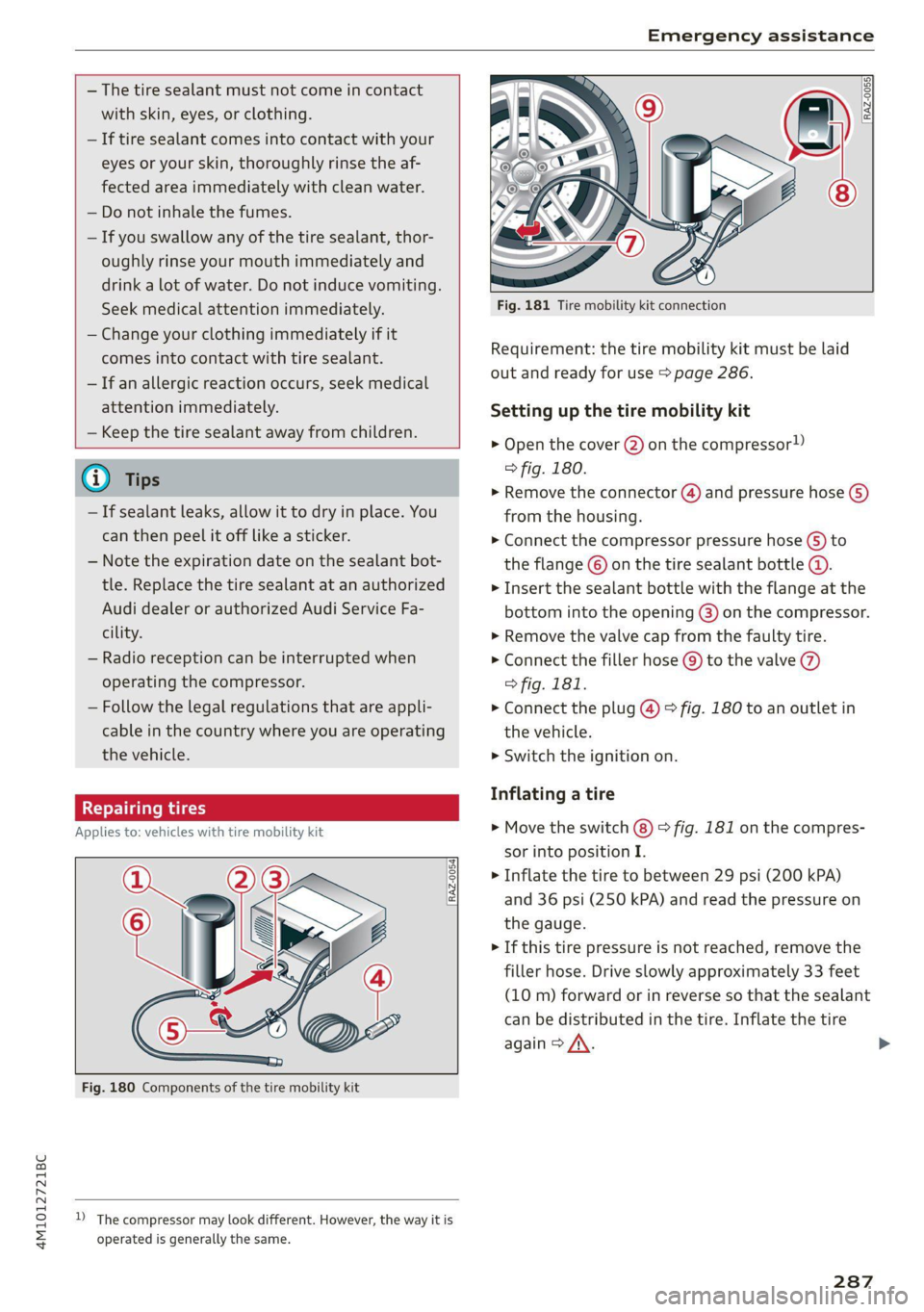
[RAZ-0054]
Fig. 180 Components of the tire mobility kit
2) The compressor may look different. However, the way it is
operated is generally the same.
SS
Fig. 181 Tire mobility kit connection
Requirement: the tire mobility kit must be laid
out and ready for use > page 286.
Setting up the tire mobility kit
> Open the cover @ on the compressor!)
> fig. 180.
>» Remove the connector (4) and pressure hose ()
from the housing.
> Connect the compressor pressure hose ® to
the flange © on the tire sealant bottle @.
> Insert the sealant bottle with the flange at the
bottom into the opening @) on the compressor.
> Remove the valve cap from the faulty tire.
> Connect the filler hose @) to the valve @)
> fig. 181.
> Connect the plug @) © fig. 180 to an outlet in
the vehicle.
> Switch the ignition on.
Inflating a tire
> Move the switch (8) © fig. 181 on the compres-
sor into position I.
> Inflate the tire to between 29 psi (200 kPA)
and 36 psi (250 kPA) and read the pressure on
the gauge.
> If this tire pressure is not reached, remove the
filler hose. Drive slowly approximately 33 feet
(10 m) forward or in reverse so that the sealant
can be distributed in the tire. Inflate the tire
again > A\.
287
Page 302 of 332

Fuses and bulbs
Fuse panel (d) (black)
No. | Equipment
Audi phone box
Climate control system, fragrance system
Head-up display
Audi music interface, USB input
Steering column lock
Upper/Lower display
W}OlN|/
Mm)
BR]
WIN
Instrument cluster
10 | DVD drive
11 | Light switch, switch panels
12 | Steering column electronics
13 | Volume control
14 | MMI Infotainment system control module
15 | Steering column adjustment
16 | Steering wheel heating
with plastic clip
Fig. 200 Left side of the luggage compartment: fuse panel
with plastic clip (plug-in hybrid drive*)
y 1 High-voltage heating, thermomanage-
ment
Air suspension/suspension control
6 |Automatic transmission control module
7 Rear seat heating, rear climate control sys-
tem controls
Third row seat adjustment
9 | Left tail light
10 | Front belt tensioner on driver's side
Luggage compartment lid central locking,
11 | fuel filler door, luggage compartment cov-
er
12 |Luggage compartment lid control module
Fuse panel @)
No. | Equipment
Fig. 199 Left side of the luggage compartment: fuse panel 1 | Rear climate control system blower
2 |Sound-amplifier
3 | Exhaust treatment, sound actuator
4 |Rear climate control system control panel
5 |Right trailer hitch light
300
Page 320 of 332
Index
Drives
refer to Media.............000 eee 222,226
Drive select
refer to Audi drive select............... 113
Drive systeM..... ee eee eee ee ee 104, 106
Audi drive Select s cso 2 ¢ cawe 2 2 gence a ee 113
Driving down hills...............-0.00- 110
Driving program..............0005 101, 147
Driving through water............-..005 111
Driving time... 6... eee eee eee 15
Driving tips
Driving through water................- 111
Efficientdriving ¢ wuss « ¢ cows se cows xe ea 104
Offroad driving............. cee eee eee 110
Uphill and downhill................00. 110
Driving uphills.................2..004. 110
DVD drive... . 2... eee eee eee eee eee 223
E
EPMA Cc ctienans a sxexsign oo someone oF 6 eaninn a 4 auata 192
Settings............. 0.000.002 0 02 192
EDL
refer to Electronic Differential Lock...... 117
EDR
refer to Event Data Recorder (EDR)...... 303
Efficiency'assist:«. « « swas ss saws ye ees soe 137
Predictive COMtOle:.c. oo snswse « oecase «4 suesecm 143
Electtical'system:. « «wes: 2 amie oe came 6 oe 254
Electromechanical parking brake......... 108
Electronic Differential Lock.............. Li?
Electronic immMobiliZetjewy: . ¢ wees 4 é wows sa ee 39
Electronic Stabilization Control........... 117
Embedded SIM card............0e0eeeee 195
Emergency assist...........000-00 ee eee 159
Emergency assistance..............000. 286
Emergency braking function............. 109
Emergemey calli: «oven se soesace es eons 190, 199
Emergency flashers..............--.00-5 53
Emergency mode..............---2ee0- 103
Emergency operation
DOORS a cess v x wasn + 5 cose 6H some ¥ shaaem FF
Fuel filler door
Luggage compartment lid............... 44
Panoramic glass roof..............0.005 47
Emissions control system..............% 244
318
EM@rgy CONSUIMENS ies & 0 csv wiemnes a ree wo 16
Energy Management. . . cw. seca ee enn 105
Engine
Breakingin.............. cece eee eee 104
Coolant... 6... ee eee eee eee eee 251
Emergency StOp ix : « wows ss wigs s nares se we 98
JUIMPISTAREIING » « canaeie ws awssins 6 # sense aw nn 292
Start/Stop system...........--0000005 105
StartinG/StOppiNG wx 2 = sew + v gems + 2 wes = 98
Engine compartment
Opening and closing the hood.......... 246
Overview .... 2... eee eee eee eee 247
Safety precautions............-0.ee0ee 245
Engine oil
AGOING « seven = ¢ eye + + seers 3 es Fc ees 248
CHANG IG psu: 1s + wausan 6 e tenses © cascan wx sanitene © 250
Checking oillevel..............--000-- 248
Consumption ss ¢ ssws « « sews se eee so 248
Tndicator light: « cas + sao e > waren @ macorn 248
Replacement interval................. 257
Temperature display................0-5 15
Engine sound
Audi drive’select« «isis +s css 2 a secu 2 0 3 114
Enigine’startsystem «css ¢ ees ss eee « x eee 99
Engine stop
refer to Start/Stop system............. 105
Entry/exit lighting oe. <2 sca se erwe ve owen a < 53
Enthy 4SSiStance:. « + aus + ¢ sqm 9 cease es 66
REAR SCALES cusses x cusses © w suenens oo mane wo oes 67
also refer to Exit assistance............. 66
Environment
Unleaded gasoline.............e eee eee 241
ESC
refer to Electronic Stabilization Control... 117
ESC OfffOad sours s = sqws & = nua ¢ 2 sates ee 118
eSIM
refer to Embedded SIMcard............ 195
Event Data Recorder (EDR).............. 303
EXHBSSSISTANGCE « ema 3 x new ¢ 2 eee 4 8 em ¥ ¥ 66
EXiIQWarnitiGhers: < = sas ¥ 2 eares 3 2 ecteN Eo ee 157
Exterior antenna..................000. 186
Exterior lighting.......... 0.0.0 e eee eee 50
Exterior mirrors. ..........0..0.00.0000. 56
Folding settings..............cceee vues 35
External voice operation................. 28