ignition AUDI R8 COUPE 2020 Manual PDF
[x] Cancel search | Manufacturer: AUDI, Model Year: 2020, Model line: R8 COUPE, Model: AUDI R8 COUPE 2020Pages: 308, PDF Size: 82.41 MB
Page 218 of 308
Child safety
— Ifa seat heater has been retrofitted or
otherwise added to the front passenger
seat, never install any child restraint sys-
tem on this seat.
— Make sure that there are no wet objects
(such as a wet towel) and no water or oth-
er liquids on the front passenger seat
cushion.
— Never place objects on the seat (such as a
laptop, CD player, electronic games device,
power inverter or seat heater for child
seats). These may influence the electrical
capacitance measured by the capacitive
passenger detection system and can also
fly around in an accident and cause serious
personal injury.
— Always buckle the child safety seat firmly in
place even if a child is not sitting in it. A
loose child safety seat can fly around during
a sudden stop or ina collision.
— Always read and heed all WARNINGS when-
ever using a child restrained in a vehicle is
being used > page 180, Safety belts,
=> page 187, Airbag system and > page 211,
Child safety.
ZA WARNING
To reduce the risk of serious injury, make sure
that the PASSENGER AIR BAG OFF %; light
comes on and stays on whenever a child re-
straint is installed on the front passenger seat
and the ignition is switched on.
— Never install a reward facing child safety
seat on the front passenger seat if the PAS-
SENGER AIR BAG OFF #; light does not
turn on and stay on.
— Have the airbag system inspected by your
authorized Audi dealer immediately.
216
Child safety seats
Meath}
Babies and infants up to about one year old and
20 lbs or 9 kg need special rearward-facing child
restraints that support the back, neck and head
in.acrash.
2 3
2 db + a
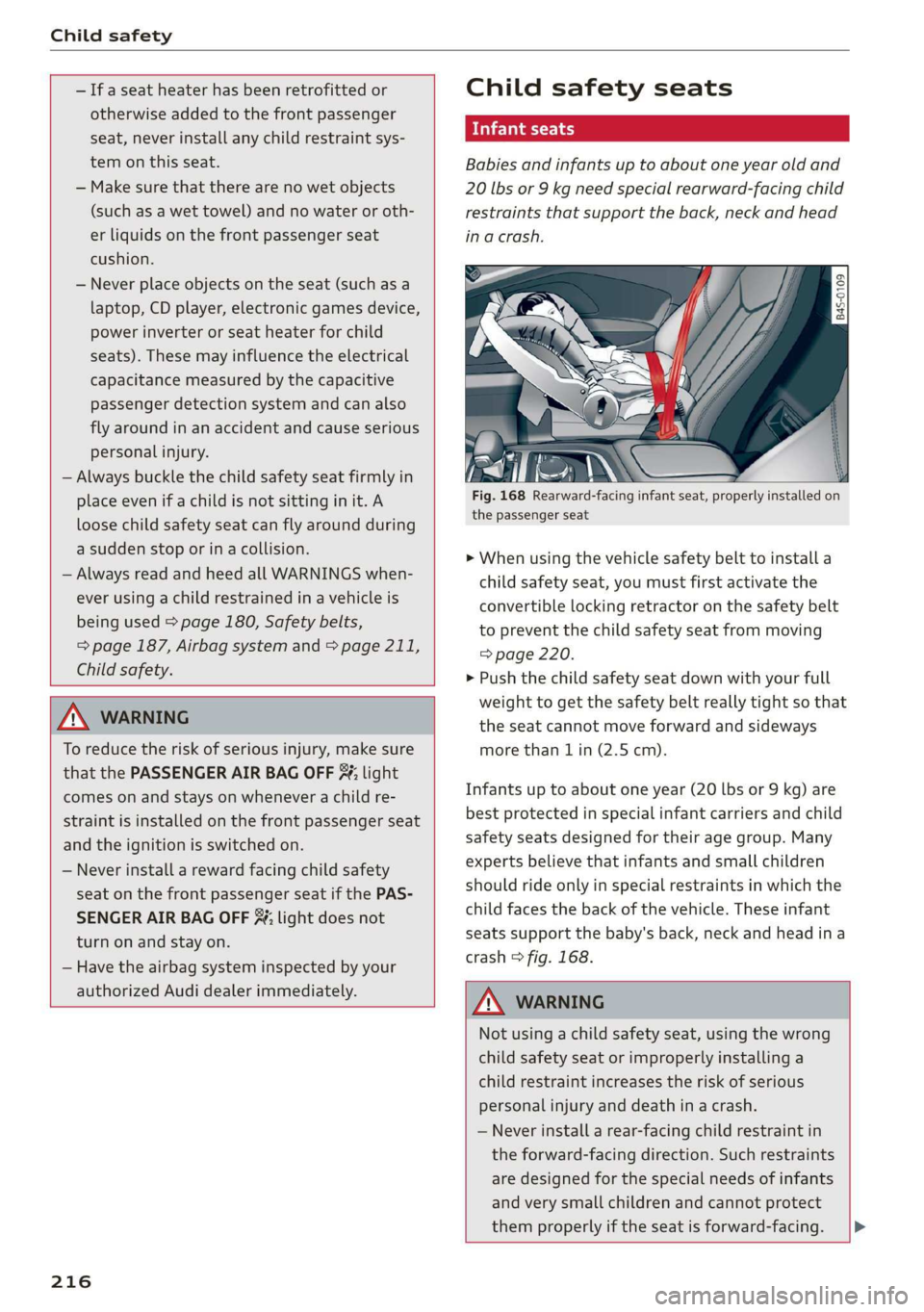
Fig. 168 Rearward-facing infant seat, properly installed on
the passenger seat
> When using the vehicle safety belt to install a
child safety seat, you must first activate the
convertible locking retractor on the safety belt
to prevent the child safety seat from moving
=> page 220.
> Push the child safety seat down with your full
weight to get the safety belt really tight so that
the seat cannot move forward and sideways
more than 1 in (2.5 cm).
Infants up to about one year (20 lbs or 9 kg) are
best protected in special infant carriers and child
safety seats designed for their age group. Many
experts believe that infants and small children
should ride only in special restraints in which the
child faces the back of the vehicle. These infant
seats support the baby's back, neck and head ina
crash > fig. 168.
A WARNING
Not using a child safety seat, using the wrong
child safety seat or improperly installing a
child restraint increases the risk of serious
personal injury and death in a crash.
— Never install a rear-facing child restraint in
the forward-facing direction. Such restraints
are designed for the special needs of infants
and
very small children and cannot protect
them properly if the seat is forward-facing.
Page 220 of 308
Child safety
seriously injured and can be killed if the
front airbag inflates —- even with an Ad-
vanced Airbag System.
— The inflating airbag will hit the child safety
seat or infant carrier with great force and
will smash the child safety seat and child
against the backrest, center arm rest, door
or roof.
— Never install a rearward facing child safety
seat on the front passenger seat unless the
PASSENGER AIR BAG OFF %; light comes
on and stays on. If the PASSENGER AIR
BAG OFF #¥; light does not come on and stay
on have the airbag system inspected imme-
diately by your Audi dealer.
— The rear side of the child safety seat should
be positioned as close as possible to the
backrest on the vehicle seat.
— Always read and heed all WARNINGS when-
ever using a child restrained in a vehicle is
being used > page 180, Safety belts,
=> page 187, Airbag system and > page 211,
Important information.
ZA WARNING
If exceptional circumstances require the use
of a forward-facing child restraint on the front
passenger's seat, the child's safety and well-
being require that the following special pre-
cautions be taken:
— Make sure the forward-facing seat has been
designed and certified by its manufacturer
for use on a front seat with a passenger
front and side airbag.
— Always follow the manufacturer's instruc-
tions provided with the child safety seat or
infant carrier.
— Always move the front passenger seat into
the rearmost position of the passenger
seat's fore and aft adjustment range, and as
far away from the airbag as possible before
installing the child restraint.
— Always make sure that nothing prevents the
front passenger's seat from being moved to
the rearmost position in its fore and aft ad-
justment range.
— Always make sure the backrest is in an up-
right position.
— Never place or use any electrical device
(such as a laptop, CD player, electronic
games device, power inverter or seat heater
for child seats) on the front passenger seat
if the device is connected to the 12-volt
socket or the cigarette lighter socket.
— If a seat heater has been retrofitted or oth-
erwise added to the front passenger seat,
never install any child restraint system on
this seat.
— Make sure that there are no wet objects
(such as a wet towel) and no water or other
liquids on the front passenger seat cushion.
— Never place objects on the seat (such as a
laptop, CD player, electronic games device,
power inverter or seat heater for child
seats). These may influence the electrical
capacitance measured by the capacitive pas-
senger detection system and can also fly
around in an accident and cause serious per-
sonal injury.
— Make sure that the PASSENGER AIR BAG
OFF %; light comes on and stays on all the
time whenever the ignition is switched on.
— If the PASSENGER AIR BAG OFF %; light
does not come on and stay on have the air-
bag system inspected by your authorized
Audi dealer.
Booster seats and safety belts
Properly used booster seats can help protect
children weighing between about 40 lbs and
80 lbs (18 kg and 36 kg) who are less than 4 ft 9
in (57 in/1.45 m) tall.
S 8
& al g a
wd af
218
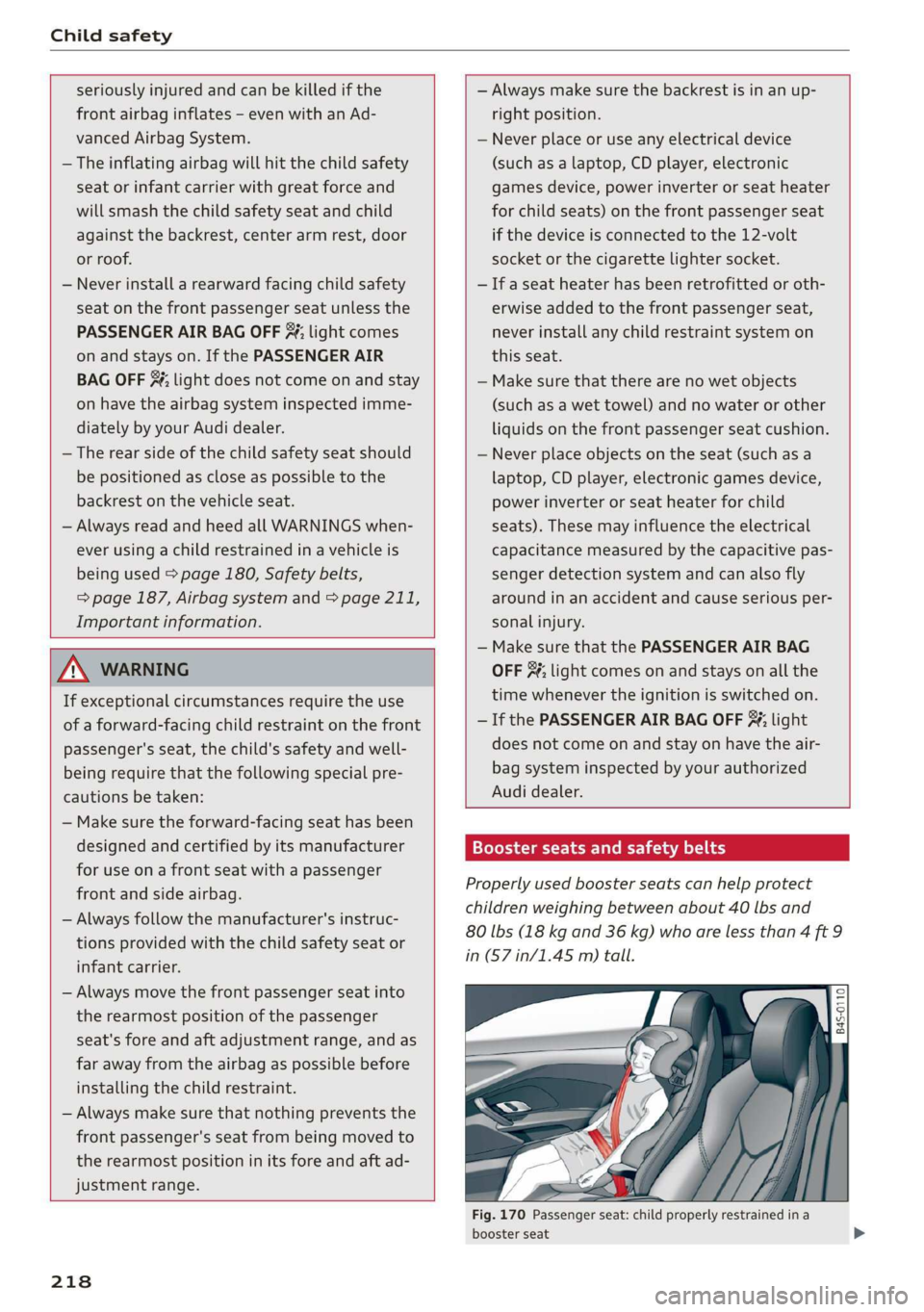
Fig. 170 Passenger seat: child properly restrained ina
booster seat
Page 222 of 308
Child safety
— Children on the front seat of any car, even
with Advanced Airbags, can be seriously in-
jured or even killed when an airbag inflates.
— Never let a child stand or kneel on the seat.
— Never let a child ride in the cargo area of
your vehicle.
— Always remember that a child leaning for-
ward, sitting sideways or out of position in
any way during an accident can be struck by
a deploying airbag. This will result in serious
personal injury or death.
— If you must install a booster seat on the
front passenger seat because of exceptional
circumstances the PASSENGER AIR BAG
OFF %; light must come on and stay on,
whenever the ignition is switched on.
— If the PASSENGER AIR BAG OFF 3; light
does not come on and stay on, perform the
checks described > page 198, Monitoring
the Advanced Airbag System.
— If the PASSENGER AIR BAG OFF %; light
does not come on and stay on whenever the
ignition
is switched on the inflating airbag
will hit the child safety seat or infant carrier
with great force and will smash the child
safety seat and child against the backrest,
center armrest, door or roof. Have the air-
bag system inspected immediately by your
Audi dealer.
— Always read and heed all WARNINGS when-
ever using a child restrained in a vehicle is
being used = page 180, Safety belts,
=> page 187, Airbag system and > page 211,
Important information.
Securing child safety
seats
Trae e Mal CRT e REL ila
bys
Safety belts for the front passenger can be
locked with the convertible locking retractor to
properly secure child safety seats.
The safety belt emergency locking retractor for
the front passenger’s seat safety belt have a con-
vertible locking retractor for child restraints. The
safety belt must be locked so that belt webbing
220
cannot unreel. The retractor can be activated to
lock the safety belt and prevent the safety belt
webbing from loosening up during normal driv-
ing. A child safety seat can only be properly in-
stalled when the safety belt is locked so that the
child and child safety seat will stay in place.
Always remember: Even though your vehicle is
equipped with an Advanced Airbag system, a
child should always ride in the seat properly re-
strained for its age and size.
ZA\ WARNING
Improperly installed child safety seats in-
crease the risk of serious personal injury and
death in a collision.
— Always make sure that the safety belt retrac-
tor is locked when installing a child safety
seat. An unlocked safety belt retractor can-
not hold the child safety seat in place during
normal driving or in a crash.
— Always buckle the child safety seat firmly in
place even if a child is not sitting init. A
loose child safety seat can fly around during
a sudden stop or in a collision.
— If the backrest is not securely latched, the
child and the child restraint will be thrown
forward together with the backrest and will
strike parts of the vehicle interior. The child
can be seriously injured or killed.
— The inflating airbag will hit the child safety
seat or infant carrier with great force and
will smash the child safety seat and child
against the backrest, center armrest, door
or roof.
— Forward-facing child safety seats or infant
carriers installed on the front passenger's
seat may interfere with the deployment of
the airbag and cause serious injury to the
child.
— Always read and heed all WARNINGS when-
ever using a child restrained in a vehicle is
being used > page 211. Special precautions
apply when installing a child safety seat on
the front passenger seat > page 188, Child
restraints on the front seat - some impor-
tant things to know.
Page 223 of 308
4S1012721BA
Child safety
ZA\ WARNING
Always take special precautions if you must
install a forward or rearward-facing child re-
straint on the front passenger's seat in excep-
tional situations:
— Whenever a forward or rearward-facing
child restraint is installed on the front pas-
senger seat, the PASSENGER AIR BAG OFF
#; light must come on and stay on whenever
the ignition is switched on.
— If the PASSENGER AIR BAG OFF %; light
does not come on and stay on, perform the
checks described > page 198, Monitoring
the Advanced Airbag System.
— If the PASSENGER AIR BAG OFF %; light
does not come on and stay on whenever the
ignition is switched on the inflating airbag
will hit the child safety seat or infant carrier
with great force and will smash the child
safety seat and child against the backrest,
center armrest, door or roof. Have the air-
bag system inspected immediately by your
Audi dealer.
— Improper installation of child restraints can
reduce their effectiveness or even prevent
them from providing any protection.
— An improperly installed child restraint can
interfere with the airbag as it deploys and
seriously
injure or even kill the child.
— Always carefully follow the manufacturer's
instructions provided with the child safety
seat or carrier.
— After checking to make sure that the child
restraint is properly installed, make certain
that the child restraint is correctly recog-
nized by the capacitive passenger detection
system in the front passenger seat and that
the PASSENGER AIR BAG OFF %; light sig-
nals the correct front passenger frontal air-
bag status.
ZA\ WARNING
Forward-facing child restraints:
— Always make sure the forward-facing seat
has been designed and certified by its manu-
facturer for use on a front seat with a pas-
senger front and side airbag.
— Never put the forward-facing child restraint
up, against or very near the instrument pan-
el
— Always move the passenger seat into its
rearmost position in the seat's fore and aft
adjustment range, as far away from the air-
bag as possible before installing the for-
ward-facing child restraint. The backrest
must be adjusted to an upright position.
— Make sure that the PASSENGER AIR BAG
OFF 3%; light comes on and stays on all the
time whenever the ignition is switched on.
ZA WARNING
Rearward-facing child restraints:
—A child in a rearward-facing child safety seat
installed on the front passenger seat will be
seriously injured and can be killed if the
front airbag inflates - even with an Ad-
vanced Airbag System.
— The inflating airbag will hit the child safety
seat or infant carrier with great force and
will smash the child safety seat and child
against the backrest, center armrest, door
or roof.
— Always be especially careful if you must in-
stall a rearward facing child safety seat on
the front passenger seat in exceptional cir-
cumstances.
— Make sure that the PASSENGER AIR BAG
OFF %; light comes on and stays on all the
time whenever the ignition is switched on.
— If the PASSENGER AIR BAG OFF #; light
does not come on and stay on, have the air-
bag system inspected by your Audi dealer.
Activating the convertible locking retractor
Use the convertible locking retractor to secure a
child restraint.
Always heed the child safety seat manufacturer's
instructions when installing a child restraint in
your vehicle. To activate the convertible locking
retractor:
> Place the child restraint on a seat.
> Slowly pull the belt all the way out.
221
Page 230 of 308
Checking and Filling
The correct fuel type for your vehicle can be
found ona label located on the inside of the fuel
filler door. For additional information on fuel, see
=> page 226.
For the tank capacity in your vehicle, refer to the
Technical Data > page 290.
ZA\ WARNING
Improper fueling procedures and improper
handling of fuel can lead to explosions, fires,
severe burns, and other injuries.
— Do not smoke. Keep away from open flames.
— The ignition must be switched off when re-
fueling.
— Mobile devices, radio devices, and other ra-
dio equipment should always be switched
off when refueling. Electromagnetic rays
could cause sparks and start a fire.
— If you do not insert the fuel pump nozzle all
the way into the filler tube, then fuel can
leak out. Spilled fuel can ignite and start a
fire.
— Never get into the vehicle when refueling. If
there is an exceptional situation where you
must enter the vehicle, close the door and
touch a metal surface before touching the
fuel pump nozzle again. This will reduce the
risk of electrostatic discharge that can cause
flying sparks. Sparks can start a fire when
refueling.
ZA WARNING
The vehicle must not be refueled with a re-
serve canister due to the risk of fire.
@) Note
— Remove fuel that has overflowed onto any
vehicle components immediately to reduce
the risk of damage to the vehicle.
— Never drive until the fuel tank is completely
empty. The irregular supply of fuel that re-
sults from that can cause engine misfires.
Uncombusted fuel may enter the exhaust
system and increase the risk of damage to
the catalytic converter.
228
— Never insert any portable nozzles, funnels
or after-market containers into the fuel fill-
er neck.
— Do not pry open the fuel filler neck forceful-
ly or press against it with foreign objects to
open the tank system.
@) For the sake of the environment
— Do not overfill the fuel tank, or fuel could
leak out when the vehicle is warming up.
— Fuel should never enter the sewer system or
come into contact with the ground.
@ Tips
— If adverse weather conditions cause the fuel
filler door to freeze shut, press on the cen-
ter of the filler door with the heel of your
hand and then try opening it again.
— The fuel filler door on your vehicle does not
lock if you lock the vehicle from the inside
using the central locking switch.
@) Tips
— Your vehicle is equipped with a misfueling
guard. It allows the vehicle to be fueled only
with the correct fuel pump nozzle.
—Aworn or damaged nozzle or a nozzle that
is too small may not be able to open the die-
sel misfueling guard. If this is the case, try
turning the nozzle before inserting it in the
fuel filler neck, use a different fuel pump, or
see an authorized Audi dealer or authorized
Audi Service Facility for assistance.
Emissions control
system
General information
ZA WARNING
The temperature of the exhaust system is
high, both when driving and after stopping
the engine.
— Never touch the exhaust tail pipes once they
have become hot. This could result in burns.
— Do not park your vehicle over flammable
materials such as grass or leaves because >
Page 231 of 308

4S1012721BA
Checking and Filling
the high temperature of the emissions sys- or authorized Audi Service Facility to have the
tem could start a fire. malfunction corrected.
— Do not apply underbody protectant in the
exhaust system area, because this increases AN WARNING
the risk of fire. Incorrect use of the connection port for the
On Board Diagnostic System can cause mal-
eo functions, which can then result in accidents
and serious injuries.
Follow the safety precautions > page 228, Gener- — Only allow an authorized Audi dealer or au-
al information. thorized Audi Service Facility to read out the
engine data.
The vehicle may only be driven with unleaded
gasoline, or the catalytic converter will be de- .
stroyed. Engine compartment
Never drive until the tank is completely empty. General information
The irregular supply of fuel that results from that
can cause engine misfires. Uncombusted fuel
could enter the exhaust system, which could
Special care is required if you are working in the
engine compartment
cause overheating and damage to the catalytic For work in the engine compartment, such as
converter. checking and filling fluids, there is a risk of in-
jury, scalding, accidents, and burns. For this
On Board Diagnostic System (OBD) reason, follow all the warnings and general
safety precautions provided in the following in-
formation. The engine compartment is a dan-
gerous area. > /\.
The On Board Diagnostic System monitors the
engine and transmission components that influ-
ence emissions.
ZA\ WARNING
— Turn the engine off.
— Switch the ignition off.
— Set the parking brake.
— Select the “P” (Park) selector lever position.
— Allow the engine to cool.
— Keep children away from the engine com-
partment.
— Never spill fluids on a hot engine. These flu-
ids (such as the freeze protection contained
in the coolant) can catch fire.
— Avoid short circuits in the electrical system.
— Never reach into the radiator fan. The fan is
Engine data can be read out at the On Board Di- temperature-controlled and can turn on
agnostic System connection port using a special suddenly, even when the ignition is switched
testing device > fig. 175. off.
S S$
z a
port for the On Board Diagnostic System (OBD)
On Board Diagnostic System
Indicator light — Never open the engine compartment lid
when there is steam or coolant escaping
from the engine compartment, because
there is a risk that you could be burned.
Wait until no steam or coolant is escaping.
If the S indicator light blinks or turns on, there
is a malfunction that is causing poor emissions
quality and that could damage the catalytic con-
verter. Drive slowly to an authorized Audi dealer
229
Page 232 of 308

Checking and Filling
— Never open the cap on the coolant expan-
sion tank when the engine is warm. The
cooling system is under pressure.
— To protect your face, hands, and arms from
hot steam or coolant, cover the cap with a
thick cloth when opening.
— Do not remove the engine cover under any
circumstances. This increases the risk of
burns.
— Due to the risk of electric shock, never touch
the ignition cable or other components in
the electronic high-voltage ignition system
when the engine is running or is starting.
— If a gear is engaged while the vehicle is sta-
tionary and the engine is running, do not
press the accelerator pedal inadvertently.
Pressing the accelerator pedal will cause the
vehicle to move, and this could result in an
accident.
— If inspections or repairs must be performed
while the engine is running, moving compo-
nents (such as the ribbed belt, generator,
and radiator fan) pose an additional risk.
— Set the parking brake first and select the
“p” (Park) selector lever position.
— Always make sure that no parts of the
body, jewelry, ties, loose clothing, and
long hair can be caught in moving engine
components. Before any work, always re-
move any jewelry and/or ties, tie back long
hair, and make sure all clothing fits close
to the body to reduce the risk of anything
becoming caught in engine components.
— Pay attention to the following warnings list-
ed when work on the fuel system or on the
electrical equipment is required.
— Do not smoke.
— Never work near open flames.
— Always have a working fire extinguisher
nearby.
— All work on the battery or electrical system
in your vehicle can result in injuries, chemi-
cal burns, accidents, or burns. Because of
this, all work must be performed only by an
authorized Audi dealer or authorized Audi
Service Facility.
— Limit your exposure to exhaust and chemi-
cals to as short a time as possible.
ZA\ WARNING
California Proposition 65 Warning:
— Engine exhaust, some of its constituents,
and certain vehicle components contain or
emit chemicals known to the State of Cali-
fornia to cause cancer and birth defects and
reproductive harm. In addition, certain flu-
ids contained in vehicles and certain prod-
ucts of component wear contain or emit
chemicals known to the State of California
to cause cancer and birth defects or other
reproductive harm.
— Battery posts, terminals and related acces-
sories contain lead and lead compounds,
chemicals known to the State of California
to cause cancer and reproductive harms.
Wash hands after handling.
230
() Note
When filling fluids, be sure not to add any flu-
ids to the wrong reservoirs. Otherwise severe
malfunctions and engine damage will occur.
@) For the sake of the environment
You should regularly check the ground under
your vehicle in order to detect leaks quickly. If
there are visible spots from oil or other fluids,
bring your vehicle to an authorized Audi deal-
er or authorized Audi Service Facility to be
checked.
Page 233 of 308

4S1012721BA
Checking and Filling
Opening and closing the engine
compartment lid
The engine compartment lid is released from in-
side the vehicle.
© s
Ss S
db eS t a
Fig. 176 Driver's side: unlocking the engine compartment
lid
Opening the engine compartment lid
Requirement: the ignition must be switched on.
> Pull the &> switch. The engine compartment
lid opens > A\.
Closing the engine compartment lid
> Push the engine compartment lid down until it
locks into place > A\.
. WARNING
— Never open the engine compartment lid
when there is steam or coolant escaping
from the engine compartment, because
there is a risk that you could be burned.
Wait until no steam or coolant is escaping.
— For safety reasons, the engine compartment
lid must always be latched securely while
driving. Because of this, always check the
engine compartment lid after closing it to
make sure it is latched correctly. When
latched correctly, the engine compartment
lid will be flush with the other body panels.
@ Tips
An emergency release can be used if the en-
gine compartment lid cannot be released with
the switch > page 231.
Engine compartment lid emergency release
The emergency release loop is located under the
trim panel behind the front passenger's seat.
3 3 s S &
g a
=N
Fig. 177 Front passenger's seat: emergency release loop
> Pull the loop forward to release the engine
compartment lid. The engine compartment lid
opens > A\ in Opening and closing the engine
compartment lid on page 231.
231
Page 236 of 308

Checking and Filling
oil quality to decrease. Do not extract engine oil
to reduce the level, because this will increase the
risk of engine damage. Drive to an authorized Au-
di dealer or authorized Audi Service Facility im-
mediately to have engine oil extracted.
3 Oil level system: malfunction! Please con-
tact Service
The sensor that checks the engine oil level has
malfunctioned. Drive immediately to an author-
ized Audi dealer or authorized Audi Service Facili-
ty to have the malfunction repaired.
3 Oil pressure sensor: malfunction! Please
contact Service
The sensor that checks the engine oil pressure
has malfunctioned. Drive immediately to an au-
thorized Audi dealer or authorized Audi Service
Facility to have the malfunction repaired.
Engine warm-up request*
fi Please drive to warm up engine
Fuel has entered the engine oil, either due to low
outside temperatures or frequent short drives.
Drive until the engine is warm so that the fuel in
the engine oil will evaporate. Avoid high engine
speeds, full accelerating, and heavy engine loads
when doing this.
G) Tips
The oil pressure warning & is not an oil level
indicator. Always check the oil level regularly.
Checking the engine oil level
The engine oil level can be checked in the Info-
tainment system
Observe the safety precautions > A\ in General
information on page 229.
> Park your vehicle on a level surface.
> Let the engine run at idle.
> Wait approximately two minutes.
> Select in the Infotainment system: the [MENU
button > left control button > Service & checks
> Oil level
234
> Read the oil level in the display. Add engine oil
if the bar in the oil level indicator is just below
“min” > page 235.
C) Note
If the engine oil level is too low or too high,
there is a risk of engine damage.
G) Tips
The oil level indicator in the display is only an
informational display. If the oil level is too
low, a minimum oil warning appears in the in-
strument cluster. Add oil and close the engine
compartment lid. The current oil level is dis-
played in the Infotainment system the next
time the ignition is switched on.
G) Tips
— The engine oil consumption may be up to
1 quart per 600 miles (0.8 liter/1,000 km),
depending on driving style and operating
conditions. Consumption may be higher dur-
ing the first 3,000 miles (5,000 km). The
engine oil level must be checked regularly.
It is best to check each time you refuel your
vehicle and before long drives.
— Because of the lubrication and cooling of
the engine, combustion engines consume
oil. The oil consumption varies depending
on the engine and may change during the
service life of the engine. Engines generally
consume more oil at the beginning during
the break-in period. Then oil consumption
stabilizes after the break-in period.
— Under normal conditions, oil consumption
depends on the quality and viscosity of the
oil, the engine RPM, the climate conditions,
and the road conditions. The dilution of oil
from condensation or fuel residue as well as
the age of the oil also play a role. Because
engine wear increases with mileage, oil con-
sumption will increase again over time until
it may be necessary to replace worn compo-
nents.
— Because all these variables play a role, it is
not possible to define an oil consumption
standard. Therefore, the oil level must be
checked regularly.
Page 239 of 308

4S1012721BA
Checking and Filling
Coolant Freeze protec-
additive tion
Warm min. 40% min. -13 °F
regions max. 45% (-25 °C)
Cold min. 50% max. -40 °F
regions max. 55% (-40 °C)
@) Note
— Before the start of winter, have an author-
ized Audi dealer or authorized Audi Service
Facility check if the coolant additive in your
vehicle matches the percentage appropriate
for the climate. This is especially important
when driving in colder climates.
— If the appropriate coolant additive is not
available in an emergency, do not add any
other additive. You could damage the en-
gine. If this happens, only use water and re-
store the correct mixture ratio with the
specified coolant additive as soon as possi-
ble.
— Only refill with new coolant.
— Radiator sealant must not be mixed with
the coolant.
@ Tips
In certain weather conditions, water can
evaporate on the radiator and exit the side
vents as steam after stopping the engine.
Adding coolant
Applies to: vehicles without power top
st SN
S QD < a
Fig. 183 Engine compartment: markings on the coolant
expansion tank
Observe the safety precautions > page 229, Gen-
eral information.
Checking the engine coolant level
>» Park the vehicle on a level surface.
>» Switch the ignition off.
> Allow the engine to cool.
> Place a large, thick cloth over the coolant ex-
pansion tank cap and unscrew the cap counter-
clockwise > A\.
> Read the coolant level using the coolant level
float. The coolant level float may only stick out
over the edge of the coolant expansion tank a
maximum of 0.39 in (1 cm) when the engine is
cool.
Adding coolant
If you must add coolant, use a mixture of water
and coolant additive. Mixing the coolant additive
with distilled water is recommended.
> Add coolant in the correct mixture ratio
=> page 236 until the dipstick is no more than
0.39 in (1 cm) above the edge of the coolant
expansion tank.
> Make sure that the fluid level remains stable.
Add more coolant if necessary.
> Close the cap securely.
Coolant loss usually indicates that there is a leak.
Immediately drive your vehicle to an authorized
Audi dealer or authorized Audi Service Facility
and have the cooling system inspected. If the
cooling system is not leaking, coolant loss can re-
sult from the coolant boiling due overheating
and then being forced out of the cooling system.
ZA\ WARNING
— The engine compartment in any vehicle can
be a dangerous area. Stop the engine and al-
low it to cool before working in the engine
compartment. Always follow the informa-
tion found in > page 229, General informa-
tion.
— Never open the engine compartment lid if
you can see or hear steam or coolant escap-
ing from the engine compartment. This in-
creases the risk of burns. The cooling system
is under pressure. When you no longer see
or hear steam or coolant escaping, you may
open the engine compartment with caution. |>
237