oil AUDI R8 SPYDER 2012 Owner's Guide
[x] Cancel search | Manufacturer: AUDI, Model Year: 2012, Model line: R8 SPYDER, Model: AUDI R8 SPYDER 2012Pages: 236, PDF Size: 59.24 MB
Page 176 of 236
17 4 Che cking and filling
@ Tips
If you have the impression your eng ine
consumes excessive amounts of oil, we
recommend that you cons ult your a uthor
ized Audi deale r to have the cause of yo ur
concer n properly d iagnosed . Keep in m ind
that the accurat e measurement of oil con
sumpt ion re quires great care an d may take
s ome time. Your author ized Audi dealer
h as ins truction s about h ow to mea sure o il
consumption a ccurately .
Checking the engine oil level
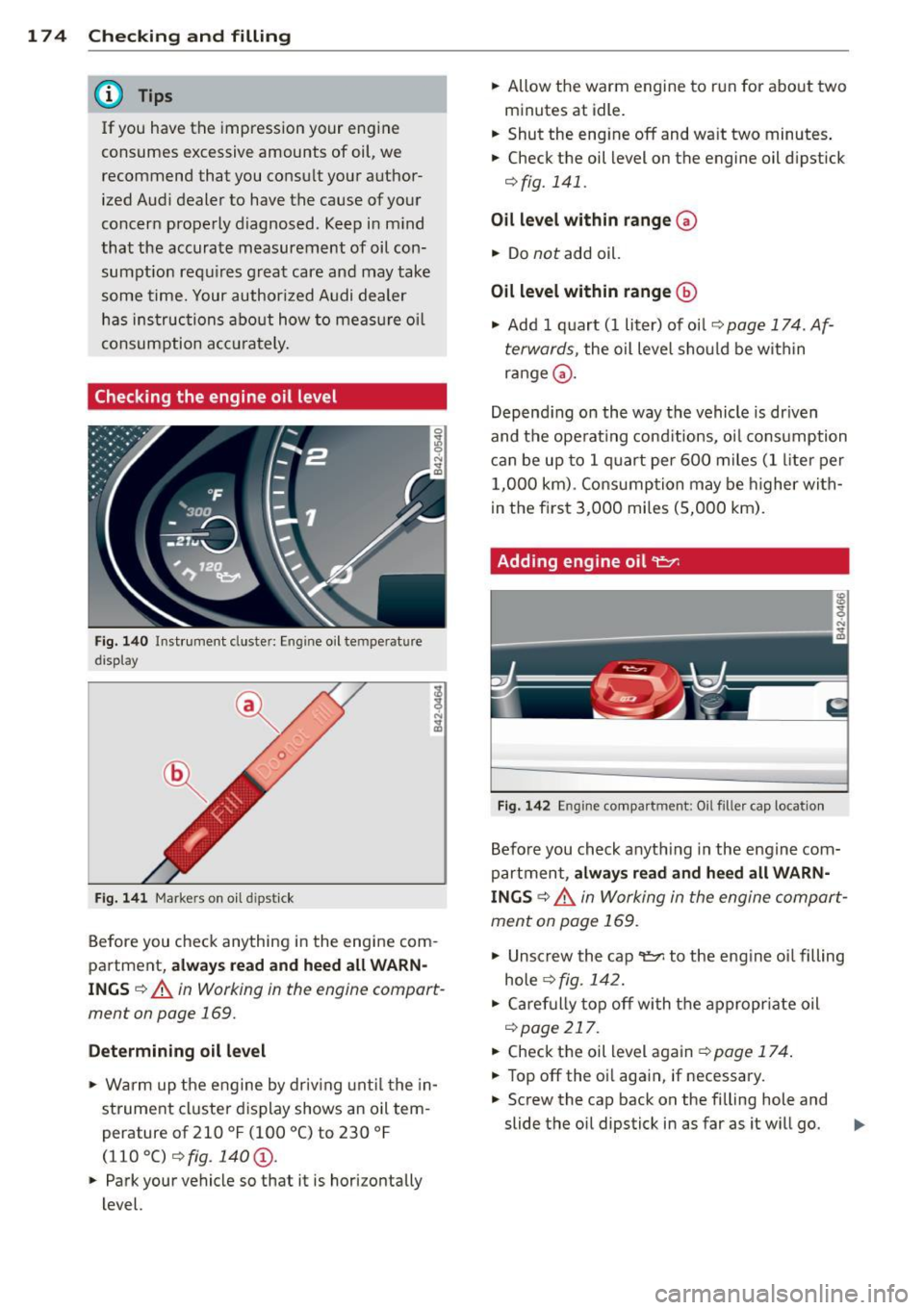
Fig. 140 Ins trume nt clus te r: En gin e o il te mpe rat ure
di sp lay
F ig.
14 1 Marke rs on oil dipstic k
Before you check anything in the eng ine com
pa rtment,
alway s read and heed all WARN
INGS ¢ A in Working in the engin e compart
ment on page 169.
Determining oil lev el
.. Warm up the engine by dr iv ing unt il t he in
strument cl uster d isplay shows an oil tem
perature of 210 °F (100 °C) to 230 °F
(110 °C)
¢ fig . 140 @ .
.. Park your vehicle so that it is hori zo ntally
level. ..
Allow the warm engine to r un for abo ut two
m inutes at idle.
.. Shut the eng ine off and wa it two minutes .
.. Check the oil level on the engine oil d ipstick
¢fig. 141.
Oil level within range (v
.. Do not add oil.
Oil level within range@
"" Add 1 quart (I liter) of oi l i=:> page 174. Af
terwards ,
the oil leve l sho uld be with in
r a nge
G) .
Depend ing on the way the vehicle is dr iven
and the ope ra tin g cond itions, o il consu mption
ca n be up to 1 q uart per 600 miles (1 liter per
1,0 00 km) . Co nsump tion may be higher with
i n the f irst 3,000 mi les (5,00 0 km) .
Adding engine oil~
Fig. 14 2 En g in e co mpa rt m ent: O il fil ler cap loca tio n
Befo re you check a nyth ing in the eng in e com
partment,
always read and heed all WARN
INGS ¢.&. in Working in the engine compar t
men t on page 169.
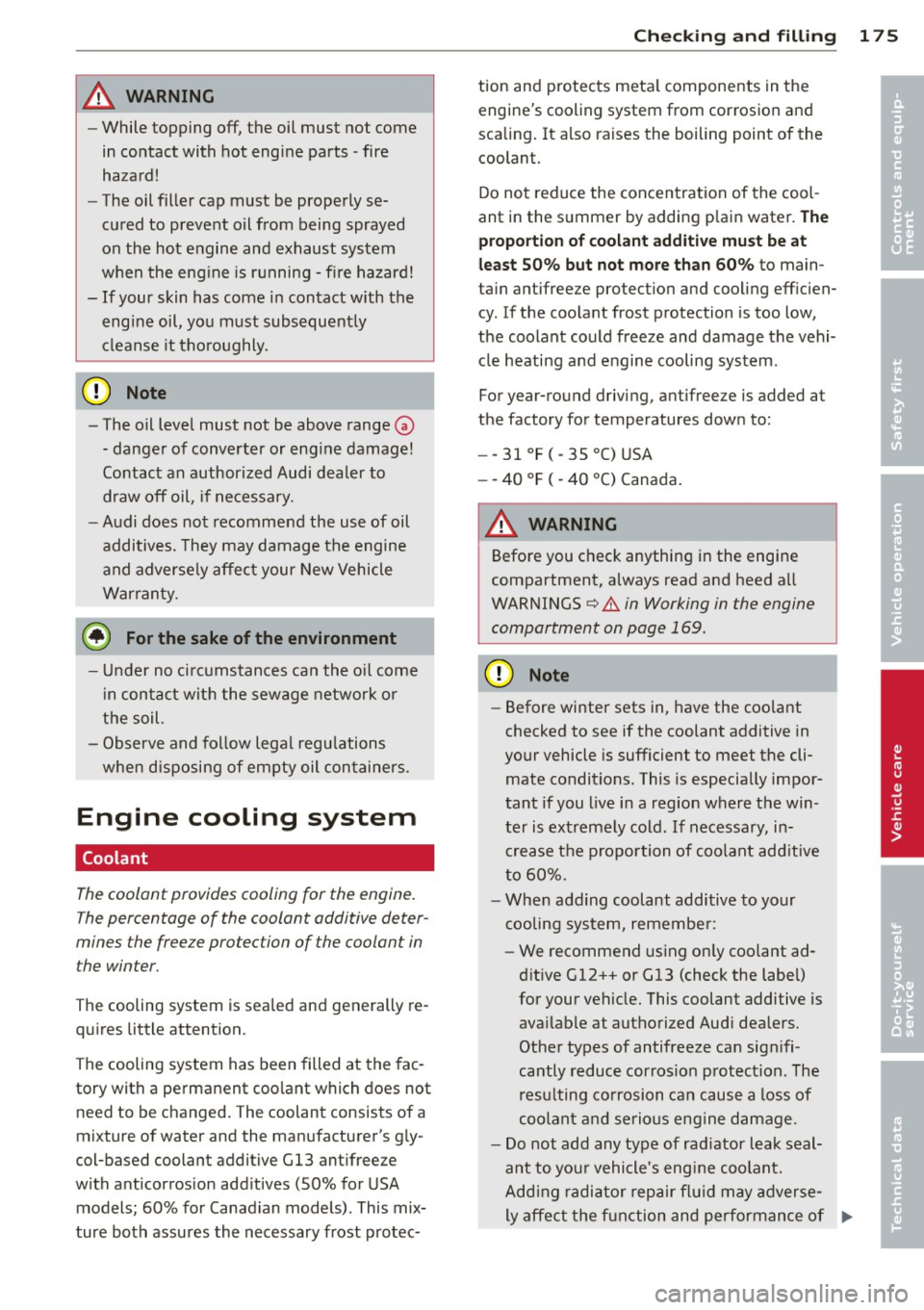
.,. Unsc rew th e cap 't=;,1 to the eng ine o il filling
hole
¢ fig . 14 2.
.,. Care fully top o ff wi th t he a ppropr iate oil
¢ page 217.
.. Check the oil level again ¢ page 174 .
.. Top off the oi l aga in, if necessary .
.,. Sc rew the cap back on the filling hole and
slide the oil dipstick in as far as it w ill go. ..,.
Page 177 of 236
A WARNING
-While top ping off, the oil must not come
in contact with hot engine pa rts -fire
hazard!
- The oil fille r cap must be prope rly se
cured to preve nt o il from being sprayed
on the hot engine and exhaust system
when the eng ine is r unning -fire hazard!
- If your skin has come in contact w ith the
engine oil, yo u must subseque ntly
cl eanse it tho roughly.
(D Note
- The oil level must not be above range G)
- danger of conver ter or eng ine damage!
Co ntact an authorized Audi dea ler to
draw off oil, if necessa ry.
- Audi does not recommend the use of oil
additiv es. They may damage the engine
and adverse ly affec t your New Vehicle
Warr an ty.
@) For the sake of the environment
- Under no ci rcumstances ca n the o il come
i n cont act w it h the sewage network o r
the soil.
- Observe and fo llow lega l regu lations
when d isposing of empty oil con taine rs.
Engine cooling system
Coolant
The coolant provides cooling for the engine.
The percentage of the coolant additive deter
mines the freeze protection of the coolant in the winter.
The cooling system is sea led and generally re
q ui res little attention.
The cooling system has been filled at the fac
tory with a permanent coolant which does not
need to be changed. The coolant consists of a
mixture o f water and the man ufacture r's g ly
col-based coolant additive Gl3 ant ifreeze
w ith a nticorros ion add itives (50% for USA
models; 60% for Canad ian models). This mix
ture bot h assures the n ecessary frost protec-
Checkin g and fillin g 175
tion and protects meta l components in t he
engine's cooling system from corrosio n and
sca ling . It a lso raises the boiling point of the
coolant.
Do not reduce the concen tration of the cool
ant in the s ummer by adding p lai n wate r.
The
proportion of coolant additive must be at
least 50 % but not more than 60 %
to main
ta in antifreeze protect io n and coo ling eff ic ien
cy. If the coo la nt frost protection is too low,
t h e coolant could freeze and damage the vehi
cle heating and engine cooling system .
For year-round driving, antifreeze is added at
the factory fo r temperatures dow n to:
- -31°F( -35°C)USA
- -40 °F ( -40 °C) Canada .
A WARNING ~
Before you chec k anything in the engi ne
compartment, always read and heed a ll
WARNINGS¢
& in Working in the engine
compartment on page 169.
-
(D Note
- Before winter sets in, have the coo lant
checked to see if the coolant additive in
your vehicle is sufficient to meet the cli
mate condit ions. This is especially impor
t ant if you l ive i n a region where the win-
t er is extremely cold. If necessary, in-
cr ea se t he p ropo rtion of coo lant add itive
t o 6 0%.
- Whe n ad ding coolant addi tiv e to yo ur
c oo ling sys te m , reme mbe r:
- We recommend using on ly coo lant ad
d itive Gl2 ++ or Gl3 (check the labe l)
for your vehicle. This coolant additive is ava ilable at authorized Aud i dea lers .
Othe r ty pes of antifreeze ca n sig nifi
ca ntly reduce cor ros io n protec tion . The
r esu lting co rrosion can cause a loss of
coo lant a nd serio us e ng ine da mage.
- Do not add any type of rad iator l eak seal
ant to yo ur vehicle's engi ne coo lant .
A dd ing radia to r r epair f luid m ay adverse-
ly affect the f unction and pe rformance of .,.. •
•
Page 178 of 236
1 7 6 Che cking and filling
your cooling system and could result in
damage not covered by your New Vehicle Limited Warranty .
Checking the engine coolant level
Proceed carefully when checking the coolant.
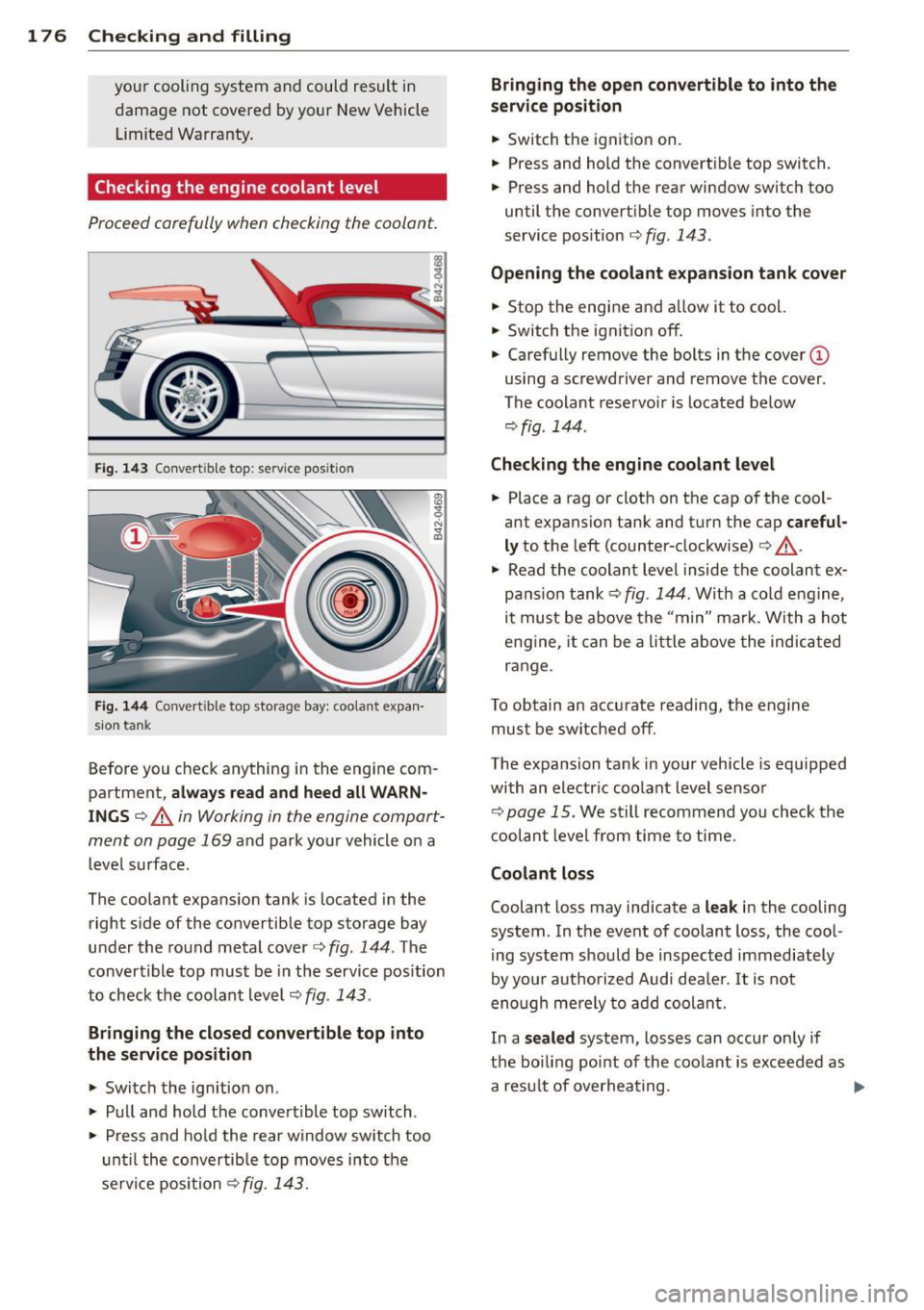
Fig . 1 43 Co nvert ible top: se rv ice pos it ion
F ig . 14 4 Convert ib le top storage bay: coolant expan·
sio n tank
Before you check anything in the engine com
partment,
a lwa ys r ead and heed all WARN
INGS ¢.&.. in Working in the engine compart
ment on page
169 and park your vehicle on a
level surface .
The coolant expansion tank is located in the right s ide of the convertible top storage bay
under the round metal cover¢
fig. 144 . The
convertible top must be in the service position
to check the coolant leve l
¢fig . 143 .
Bringing the closed con ve rtible top into
th e s ervic e position
~ Switch the ignition on .
~ Pull and hold the convert ible top switch .
~ Press and hold the rear window switch too
u nti l the convertib le top moves into the
service position¢
fig. 143.
Bringing the op en conv ertible to into the
service position
~ Switch the ignition on.
~ Press and hold the convertible top switch.
~ Press and hold the rear window switch too
until the convertible top moves into the
service position¢
fig . 143 .
Opening the coolant e xpan sion tank cover
~ Stop the engine and allow it to cool.
~ Switch the ignition off.
~ Carefully remove the bolts in the cover (D
using a screwdriver and remove the cover.
The coolant reservoir is located below
¢fig. 144.
Chec king the engine cool ant level
~ Place a rag or cloth on the cap of the cool
ant expansion tank and turn the cap
careful
ly
to the left (counter-clockwise) ¢ .&_.
~ Read the coolant level inside the coolant ex
pans ion tank ¢
fig. 144 . With a co ld engine,
it must be above the "min" mark. With a hot
eng ine, it can be a little above the indicated
range.
T o obtain an accu rate reading, the engine
must be switched off.
The expansion ta nk in your vehicle is equ ipped
with an electric coo lant level sensor
¢page 15. We still recommend you check the
c oolant level from time to time.
Coolant loss
Coolant loss may indicate a leak in the cooling
system . In the event of coolant loss, the cool
i ng system shou ld be inspected immediately
by your aut horized Audi dea ler. It is not
eno ugh me rely to add coolant.
In a
s ea le d system, losses can occur on ly if
the boiling point of the coo lant is exceeded as
a resu lt of overheating.
Page 195 of 236
A WARNING
Sudden tire failure can lead to loss of con
trol, a crash and serious personal injury !
- Never drive a vehicle when the tread on
any tire is worn down to the wear indica
tors.
- Worn tires are a safety hazard, they do
not grip well on wet roads and increase
your risk of "hydroplaning " and loss of
control.
- Always keep chemicals that can cause tire damage, such as grease, oil, gasoline
and brake fluid away from t ires.
- Tires age even if they are not be ing used
and can fail suddenly, especially at high
speeds . Tir es that are more than 6 years
old can only be used in an emergency
and then with special care and at lower
speeds.
- Never mount used tires on your vehicle if
you are not sure of their" previous histo
ry ." Old used tires may have been dam
aged even though the damage cannot be
seen that can lead to sudden tire failure
and loss of vehicle control.
Tires and wheels 193
New tires and replacing tires and wheels
New tires and wheels have to be broken in .
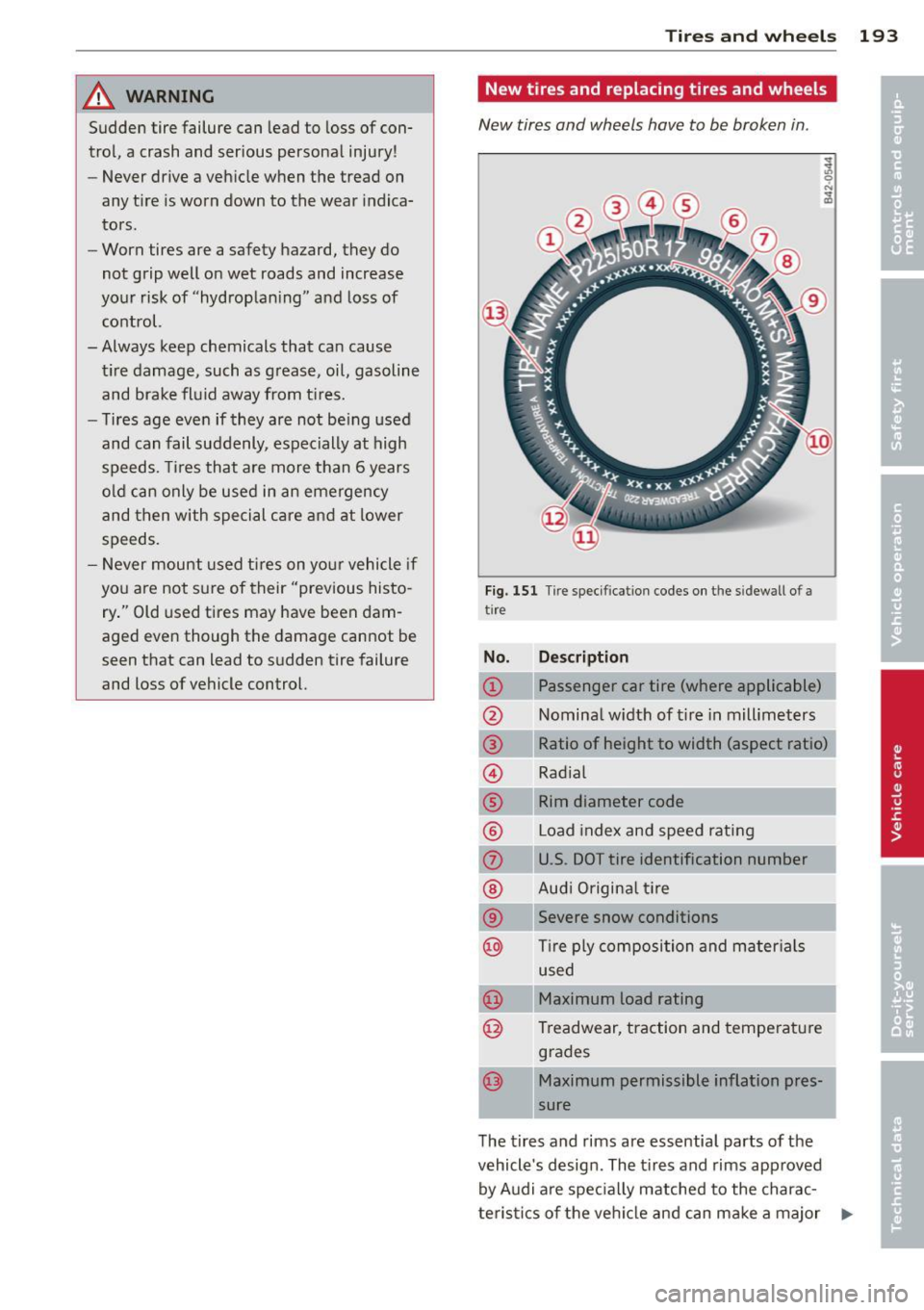
Fig. 151 Tir e specifica tion codes on t he s idew all o f a
t ir e
No. Description
CD Passenger car tire (where applicable)
@ Nominal w idth of tire in millimeters
® Ratio of height to width (aspect ratio)
© Radial
® Rim diameter code
® Load index and speed rating
(f) U.S . DOT tire identification number
® Audi Origina l tire
® Severe snow conditions
@ T ire ply composition and materials
used
@ Maximum load rating
@ Treadwear, traction and temperature
grades
@ Maximum permissible inflation pres-
sure
The tires and rims are essential parts of the
vehicle's design . The tires and rims approved
by Audi are spec ially matched to the charac
teristics of the vehicle and can make a major .,.
•
Page 201 of 236
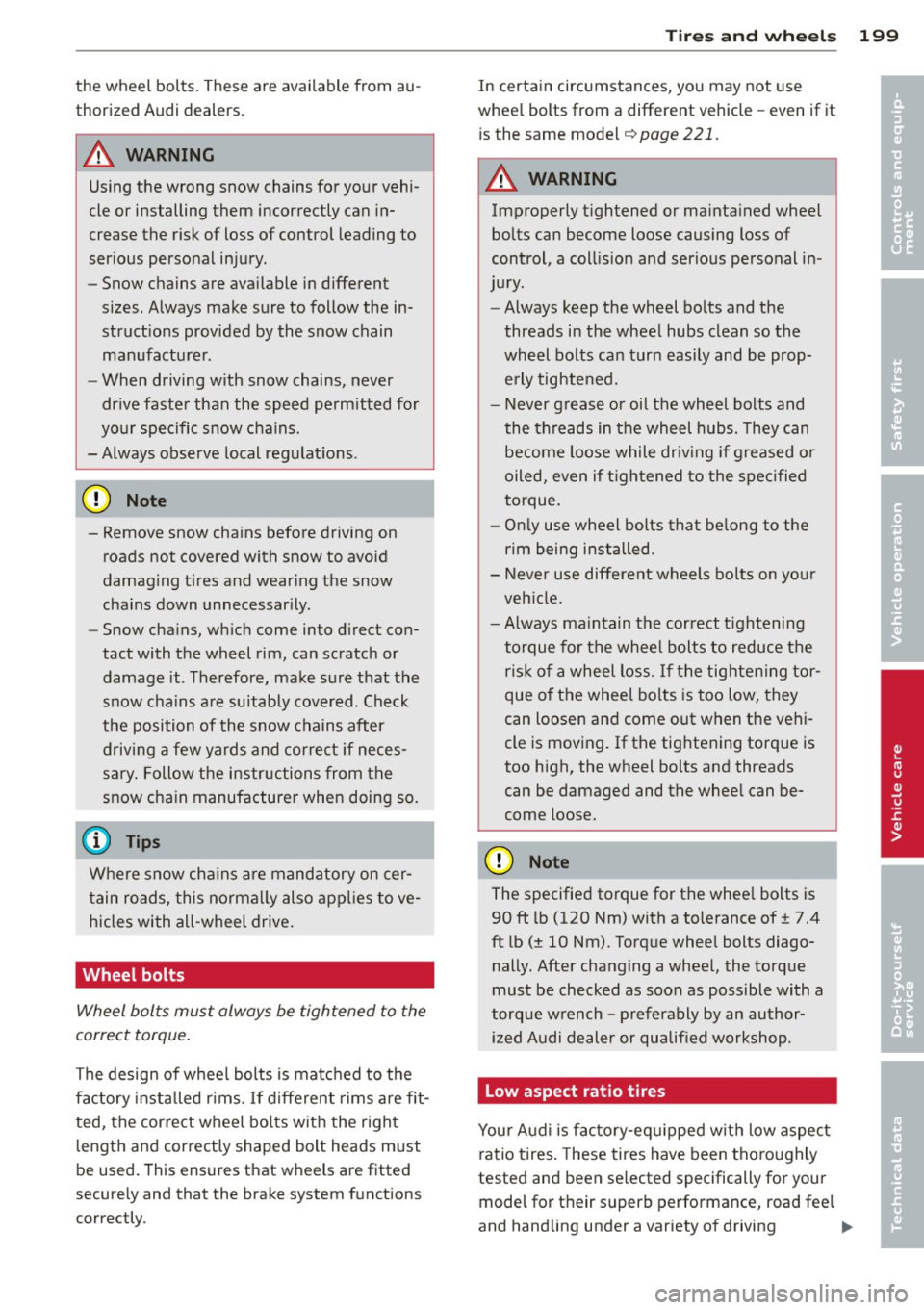
the wheel bolts. These are available from au
thorized Audi dealers.
A WARNING
Using the wrong snow chains for your vehi
cle or installing them incorrectly can in
crease the risk of loss of control leading to
serious personal injury.
- Snow chains are available in different
sizes. Always make sure to follow the in
structions provided by the snow chain
manufacturer .
- When driving with snow chains, never
drive faster than the speed permitted for
your specific snow chains.
- Always observe local regulations.
- Remove snow chains before driving on
roads not covered with snow to avoid
damaging tires and wearing the snow
chains down unnecessarily.
- Snow chains, which come into direct con
tact with the wheel rim, can scratch or
damage it. Therefore, make sure that the
snow chains are suitably covered . Check
the position of the snow chains after
driving a few yards and correct if neces
sary. Follow the instructions from the
snow chain manufacturer when doing so.
(D Tips
Where snow chains are mandatory oncer
tain roads, this normally also applies to ve
hicles with all-wheel drive.
Wheel bolts
Wheel bolts must always be tightened to the
correct torque.
The design of wheel bolts is matched to the
factory installed rims. If different rims are fit
ted, the correct wheel bolts with the right
length and correctly shaped bolt heads must
be used. This ensures that wheels are fitted
securely and that the brake system functions
correctly .
Tires and wheels 199
In certain circumstances, you may not use
wheel bolts from a different vehicle -even if it
is the same model
r:!> page 221.
A WARNING
Improperly tightened or maintained wheel
bolts can become loose causing loss of
control, a collision and serious personal in
jury.
- Always keep the wheel bolts and the
threads in the wheel hubs clean so the
wheel bolts can turn easily and be prop erly tightened.
- Never grease or oil the wheel bolts and
the threads in the wheel hubs. They can
become loose while driving if greased or
oiled, even if tightened to the specified
torque.
- Only use wheel bolts that belong to the
rim being installed.
- Never use different wheels bolts on your
vehicle.
-Always maintain the correct tightening
torque for the wheel bolts to reduce the
risk of a wheel loss. If the tightening tor
que of the wheel bolts is too low, they
can loosen and come out when the vehi
cle is moving.
If the tightening torque is
too high, the wheel bolts and threads
can be damaged and the wheel can be
come loose.
(D Note
The specified torque for the wheel bolts is
90 ft lb (120 Nm) with a tolerance of ± 7 .4
ft lb( ± 10 Nm). Torque wheel bolts diago
nally. After changing a wheel, the torque
must be checked as soon as possible with a
torque wrench -preferably by an author
ized Audi dealer or qualified workshop.
Low aspect ratio tires
Your Audi is factory-equipped with low aspect
ratio tires. These tires have been thoroughly
tested and been selected specifically for your model for their superb performance, road feel
and handling under a variety of driving
IJ,,
•
•
Page 219 of 236
Data 217
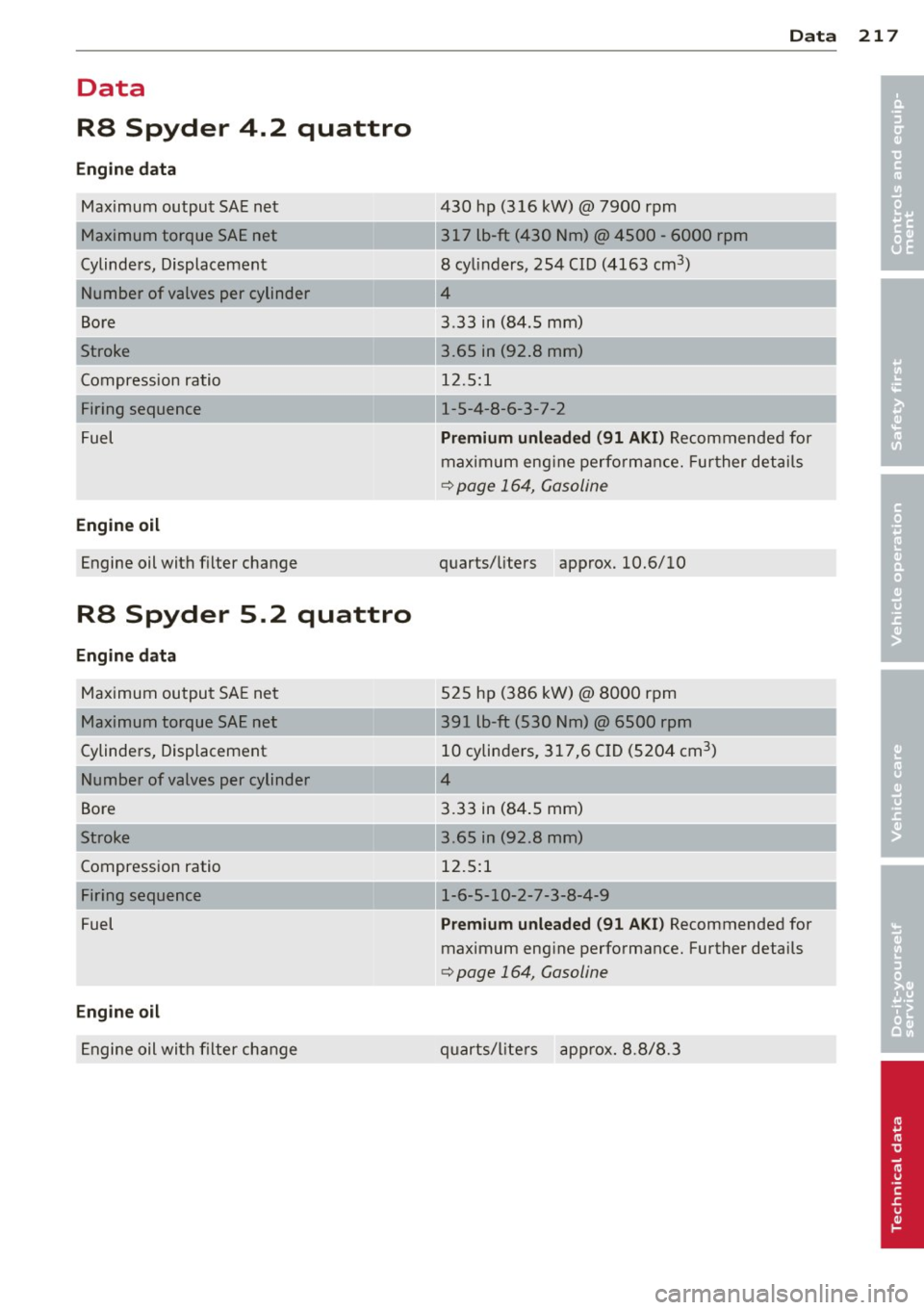
Data
RS Spyder 4.2 quattro
Engine data
430 hp (316 kW)@ 7900 rpm
------·--
Maximum output SAE net
Maximum torque SAE net
Cylinders, Displacement
Number of valves per cylinder
Bore
317 lb-ft (430 Nm) @ 4500 -6000 rpm
8 cylinders, 254 CID (4163 cm3
)
----~--
4
3 .33 in (84.5 mm)
3.65 in (92 .8 mm)
Stroke
Compression ratio
---------·
12.5:1
1-5-4-8-6-3-7-2 Firing sequence
Fuel ------~--...
Engine oil
Engine oil with filter change
RS Spyder 5.2 quattro
Engine data
Maximum output SAE net
Maximum torque SAE net
Cylinders, Displacement
Number of valves per cylinder
Bore
Stroke
Compression ratio
Firing sequence
Fuel
Engine oil
Engine oil with filter change
Premium unleaded (91 AKI) Recommended for
maximum eng ine perfo rmance. Further details
¢ page 164, Gasoline
quarts/liters approx. 10.6/10
525
hp (386 kW)@ 8000 rpm
391 lb-ft (530 Nm)@ 6500 rpm
10 cylinders, 317,6 CID (5204 cm3 )
4
3 .33 in (84.5 mm)
3 .65 in (92 .8 mm)
12.5:1
l-6-5-10-2-7-3-8-4-9
Premium unleaded (91 AKI) Recommended for
maximum engine performance. Further details
¢ page 164, Gasoline
quarts/liters approx. 8.8/8.3
•
•
Page 220 of 236
218 Data
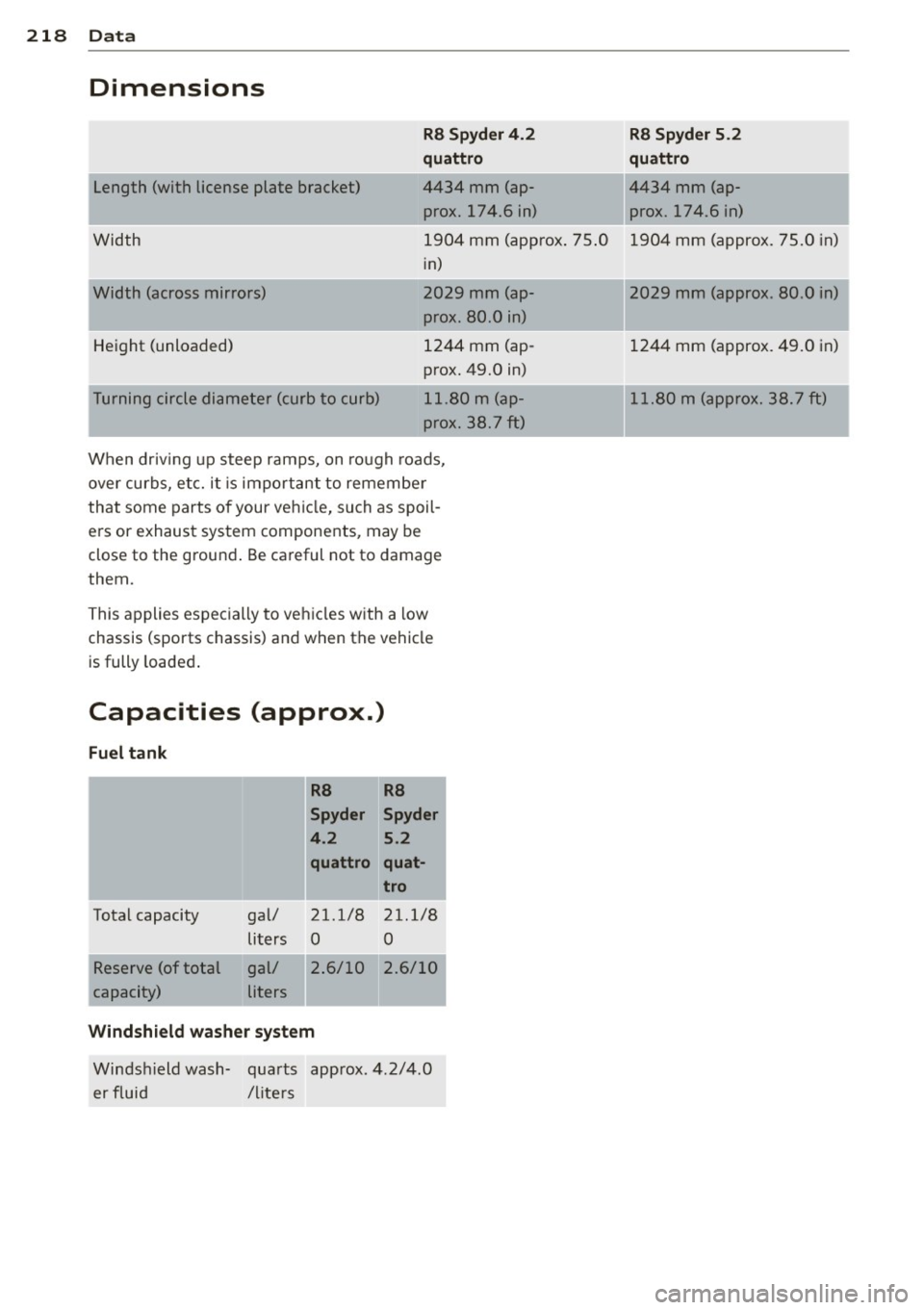
Dimensions
I
Length (with license plate bracket)
W idth
W idth (across mirrors)
He ight (unloaded)
T ur ning circle diameter (curb to curb) RB Spyder 4.2
quattro
4 434 mm (ap
prox . 174.6 in)
1 9 04 mm (app rox . 7 5. 0
i n)
2029 mm (ap
prox. 80.0 in)
1244 mm (ap
p ro x. 49.0 in)
1 1.80 m (ap
prox . 38. 7
ft)
When dr iv in g up steep ramps, on rough roads,
ove r curbs, e tc. it is impo rt a nt to remembe r
that some parts o f your ve hicl e, such as spoil
e rs or exhaust sys tem components, may be
close to the ground . Be ca reful not to damage
them.
T his applies espe cially to ve hicles w ith a low
chassis (sports chassis) an d when the vehicle
is fully loade d.
Capacities (approx.)
Fuel tank
RB RB
Spyder Spyder
4.2 5 .2
quattro quat- tro
Total capacity ga l/ 21.1/8 21.1/8
li ters
0 0
Reserve (of tota l
gal/ 2 .6/10 2 .6/10
capacity) liters
Windshield washer system Winds hield wash -qua rts app rox. 4.2/4.0
er fluid /liters RB Spyder 5
.2
quattro
4 434 mm (ap
prox. 174.6 in)
190 4 mm (approx. 75. 0 i n)
2029 mm (approx. 80.0 in)
1
1244 mm (approx. 49.0 in)
11.80 m (appro x. 38. 7
ft)
Page 221 of 236
Consumer Information
Warranty coverages
Your Audi is covered by the following war
ranties:
- New Vehicle Limited Warranty
- Limited Warranty Against Corrosion Perfo-
ration
- Emissions Control System Warranty
- Emissions Performance Warranty
- California Emissions Con trol Warranty (USA
vehicles only)
- California Emissions Performance Warranty
(USA vehicles only)
Detailed information regarding your warran
ties can be found in your
Warranty & Mainte
nance booklet .
Operating your vehicle
outside the U.S.A. or
Canada
Government regulations in the United States
and Canada require that automobiles meet
specific emission regulations and safety
standards. Therefore, veh icles built for the
U.S.A. and Canada differ from vehicles sold in
other countries .
If you p lan to take your vehicle outside the
continental limits of the United States or Can
ada, there is the possibility that
- unleaded fuels for vehicles with cata lytic
converter may not be available;
- fuel may have a considerably lower octane
rating . Improper fuel may cause engine
damage ;
- service may be inadequate due to lack of
proper service facilities, tools or testing
equipment ;
- replacement parts may not be readily availa
ble.
- Navigation systems for vehicles built for the
U.S.A. and Canada will not necessari ly work
in Europe, and may not work in other coun
tries outside of North America.
Consumer Information 219
@ Note
Audi cannot be responsible for mechanical
damage that could result from inadequate
fuel, service or parts availability.
Audi Service Repair Manuals and Literature
Audi Offic ial Factory Service Manuals and Lit
erature are published as soon as possible after
model introduction. Service Manuals and liter
atu re are availabl e to order from the Audi
T echnical Literature Ordering Center at:
https: //www.a udi.techliterature.com
Maintenance
' General
Your vehicle has been designed to help keep
maintenance requirements to a minimum.
However, a certain amount of regular mainte
nance is still necessary to assure your vehicle's
safety, economy and rel iability . For detailed
vehicle maintenance consult your Warranty
&
Maintenance booklet.
Under difficult operating conditions, for ex
ample at extremely low outside temperatures,
in very dusty regions, etc., some service work
shou ld be pe rformed between the intervals
specified. This applies particularly to:
- oil changes, and
- cleaning or replacing the air fi lter.
@ For the sake of the environment
By regu larly maintaining your vehicle, you
help make sure that emission standards
are maintained, thus min imizing adverse
effects on the environment.
Important considerations for you and
your vehicle
T he increasing use of electron ics, soph isticat
ed fuel injection and emission control sys
tems, and the generally increasing technica l
complexity of today's automobiles, have ..,_
•
•
Page 222 of 236
220 Consumer Inf ormation
steadi ly reduced the scope of maintenance
and repairs which can be carried out by vehicle
owners.
Als o, sa fe ty a nd en vir onm ent al con
cerns place very strict limits on the nature of
repairs and adjustments to engine and trans
miss ion parts which an owner can perform .
Maintenance, adjustments and repa irs usua lly
require special tools, testing devices and oth
er equipment available to specially trained
workshop personnel in order to assure proper pe rformance, reliab ility and safety of the vehi
cle and its many systems.
Improper maintenance, adjustments and re
pa irs can impair the operation and reliab ility
of your vehicle and even void your vehicle war
ranty. Therefore, proof of servic ing in accord
ance w ith the ma intenance schedule may be a
condition for upholding a poss ible warranty
claim made within the warranty period.
Above all, operational safety can be adversely
affected, c reating unnecessary risks for you
and your passengers.
If in doubt about any se rv icing, have it done
by your author ized Audi dealer or any other
p roperly equipped and qualified workshop.
We strong ly urge you to give yo ur autho rized
Audi dealer the opportunity to perfo rm all
schedu led maintenance and necessary repairs.
Your dea ler has the facilities, original parts
and trained specialists to keep your vehicle
running properly.
Performing limit ed m aint enance yours elf
The following pages describe a limited num
ber of proced ures which can be performed on
your vehicle with ordinary too ls, shou ld the
need arise and trained personnel be unavaila
ble. Before performing any of these proce
dures, always thoroughly read all of the app li
cable text and carefully follow the instruc
tions given . Always rigorously obse rve the
WARNINGS p rovided.
Before you ch eck anything in th e eng ine
co mpartm ent , alway s re ad and h eed all
WA RNINGS
c::> .&. and c::> ..&. in Working in the
engine compartment on page 169.
A WARNING
- Serious personal injury may occur as a re
sult of improperly performed mainte
nance, adjustments or repa irs.
- Always be extremely careful when work
ing on the vehicle. Always follow com
monly accepted safety pract ices and gen
eral common sense. Never r is k personal
injury.
- Do not attempt any of the maintenance,
checks or repairs descr ibed on the fol
lowing pages if you are not fu lly fam iliar
with these or other procedures with re
spect to the vehicle, or are uncertain how
to proceed .
- Do not do any work without the proper
too ls and equipment. Have the necessa ry
work done by your author ized A udi deal
er or another proper ly equipped and
qualified workshop.
- Always remove the ignition key before
anyone gets under the vehicle.
- Always support your veh icle with safety
stands if it is necessary to work under
neath the vehicle. The jack* is not ade
quate for this purpose and cou ld collapse
causing ser ious personal inju ry.
- If you must work underneath the vehicle
with the wheels on the ground, a lways
make sure the vehicle is on level ground,
that the wheels a re a lways secure ly
b locked and that t he engine cannot be
s tarted.
- Always make sure the transmission se
lec to r l ever is in
"N" (Neut ral) (R t ron ic)
or Neutral (manual transmission) and
the hand bra ke is f irmly app lied.
@ For the sake of the environment
- Changing the engine sett ings will ad
verse ly affect emission leve ls. Th is is det
r imental to the environment and increas
es fuel consumpt ion .
- Always observe environmenta l regu la
tions when disposing of old eng ine oil,
used brake flu id, dirty engine coo lant,
spent batteries or worn out tires.
Page 228 of 236
226 Index
Eng ine
Coolant . . . . . . . . . . . . . . . . . . . . . . . . . . 17 5
Eng ine compartment lid ... .. .. .... . 170
Starting . . . . . . . . . . . . . . . . . . . . . . 70, 71
Stopping . . . . . . . . . . . . . . . . . . . . . . . . . . 72
E ng ine compartment .. ... .. .. ... ... . 17 1
Safety instructions ..... ... .. .. .... . 169
E ng ine compartment lid
C losing ...... ........... .. .. .... . 170
Release lever .......... .. .. .. .. .. . 170
Eng inecoolantsystem ............... 175
Malfunct io n .................. ..... 15
Tempe ratu re ga uge .................. 9
Eng ine data ........................ 217
E ng ine oil ... .. . .. ..... ... .. .. .... . 17 2
Adding ..... .. .. ..... ... .. .. .... . 174
Additives ... ... . ...... ... .. .. .... . 174
Check ing the eng ine o il level . . . . . . . . . 17 4
Dry sump lubrication ............... 149
Indications and condit ions req uiring ex-
tra check ing . . . . . . . . . . . . . . . . . . . . . . 17 4
o·t t· 1 consump 10n .... ...... .. .. .. .. . 173
O il grades .. .......... ...... ... .. . 172
Specif ication and vi scos ity ... ... .. .. . 17 2
T empe ratu re d ispl ay ................. 8
Eng ine oil level ................. ..... 18
Engine oi l pressure (malfunction) ... .. . . 14
E ng ine o il sensor defective .. .. .. .. .. . . 18
Eng ine speed limitat ion ..... .. .. .... .. 17
E nvi ronment
Cata lytic conve rter ..... ... .. .. .... . 150
Fu el . .. .... ... . ...... ... .. .. .... . 166
Un leaded fuel .............. .. .... . 164
E PC
refer to Electronic power control . . . . . . 17
ESC (Elec tronic S tability Control)
War ning/ indica to r lights ....... .. .... 16
Event Data Recorder ( EDR) ... .... .... . 142
E xha ust tail p ipes
C leaning .... .. .. ..... ... .. .. .... . 15 8
E xp ansion ta nk .. .... ...... .. .. .. .. . 176
E xterior mirrors
Ad justing .. .. . .......... .. .. .... .. 57
o· . 1mming ... ............... ...... .. 56
H eating .. ................. ...... .. 57
F
Fan ... ... .. .... .. ... .. .. ..... ... .. . 67
Fasten ing
Boos ter seats .. .. .. ........ ...... . 137
Co nvertib le child safety seats ........ 136
Infan t se ats ... .. ... .......... .... 135
Flat bed truck ..... .......... ....... 212
Flat tire Changi ng ..... .. .... ...... ... .. .. 206
Floo r ma ts . . . . . . . . . . . . . . . . . . . . . . . . . . 96
Folding top
Care and cleaning . ................. 156
Foot peda ls ..... .. .. ... ..... ... .. .. . 96
F o r th e sake of the envi ronment
Gasoline fumes and the e nvir onme nt .. 166
L etting your eng ine warm up . ... .. .. . 71
Ref ueling ..... .. .. ... ..... ... .. .. 166
Front a irbags
Des cription .. .. .. ... .......... .. .. 113
How they wor k ................ .... 118
Frontal collis io ns and the laws of phys ics 103
Front lid
Emergency release .. ... ..... ... .. .. . 37
light . . . . . . . . . . . . . . . . . . . . . . . . . . . . . 53
Power locking system .......... ..... 37
Trunk escape handle ... ....... ... .. 203
F ront passenger
refer to Seating position . . . . . . . . . 92, 93
F ron t seats . . . . . . . . . . . . . . . . . . . . . . . . . 59
Childrest rain tsinthefrontseat ......
111
Front towing loop .................. . 212
Fuel Additives ......................... 164
B lended gaso line .............. .... 164
Current fuel mileage ................ 24
Filler neck ... .. .. .. ... ....... ... .. 16S
Fuel supply too low . . . . . . . . . . . . . . . . . 18
Gasoli ne addit ives ................ . 165
O ctane rat ing .. .. ... .......... .... 164
Recommendation .............. .. .. 164
Ref ueling ..... .. ... .. ..... .... . .. 166
Reserve ... .... .. .. ... ..... ... .. .. . 10
Tank capac ity .... ... .. ..... ... .. .. 217
Unlocking the fuel fi ller flap by hand .. 167
F uel gauge . .. .. .. ............. .... . 10
Fuel range . . . . . . . . . . . . . . . . . . . . . . . . . . 24