phone AUDI RS7 SPORTBACK 2016 Owners Manual
[x] Cancel search | Manufacturer: AUDI, Model Year: 2016, Model line: RS7 SPORTBACK, Model: AUDI RS7 SPORTBACK 2016Pages: 282, PDF Size: 70.78 MB
Page 7 of 282
In addition to this Owner's Manual, your Audi
comes with the
- MMI Operat ing Instructions
- Warranty
& Maintenance booklet.
If you are missing one of these publications, or if
you believe that the information is not complete,
contact your author ized Audi dealer for assis
tance.
MMI Operating Instructions
contain detailed description of the Aud i Mu lti
Media Interface (MMI) includ ing the nav igation
system, the sound system and the hand held
phone.
The Warranty & Maintenance booklet
explains how you can keep your Audi in top driv ing condition by having it serviced regu larly and
contains detailed information about the warran
ties covering your Aud i. Always have the booklet
with you when you take your veh icle to an author
iz ed A udi dealer for serv ice. Your Audi Serv ice Ad
visor w ill record each scheduled service and can
answer any questions you may have regarding
h ow to maintain your vehicle.
In Canada,
the vehicle literature is also available in French.
To obtain a copy, co nta ct you r dealer or write to:
Au Canada, on peut se procurer un exemplaire en
frarn;ais de ce document aupres du concession
naire ou de:
Aud i Canada
Client Assistance
Assistance a la Clientele
777 Bayly Street, West,
Ajax, Ontario LlS 7G7
If you sell your Audi
all literature should be left in the vehicle to make
the Warranty terms as well as all operating, safe
ty and maintenance informat ion ava ilable to the
next owner.
Owner 's Literature
If you change your address or if you bought
this Audi used
be sure to send in a "Notice of Address Change" I
"Not ice of Used Car Purchase" post card. This
card can be found in the Warranty
& Mainte
nance booklet or obtained from your authorized
Audi dealer.
It is in your own interest that we are able to
contact you should the need arise.
5
Page 11 of 282
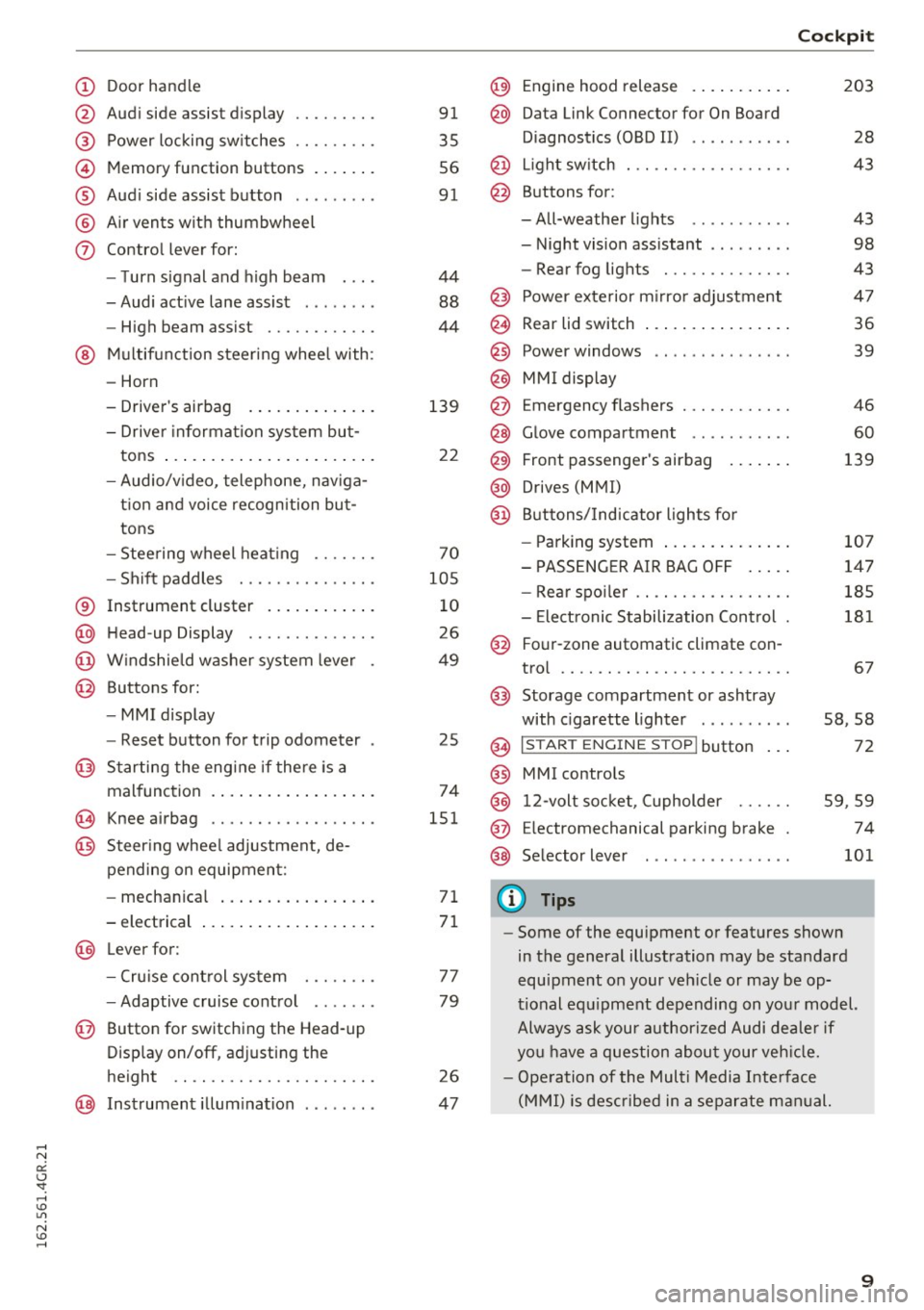
(!) Door handle
@
®
©
®
®
(j)
Audi side assist display
Power locking switches ...... .. .
Memory function buttons ...... .
Audi side assist button .. .. ... . .
Air vents with thumbwheel
Control lever for:
- Turn signal and high beam
- Audi active lane assist . .. ... . .
- High beam assist ......... .. .
@ Multifunction steering wheel with:
- Horn
- Driver's airbag
- Driver information system but-
tons ...................... .
- Audio/video, telephone, naviga
tion and voice recognition but
tons
- Steering wheel heating ...... .
- Shift paddles ............ .. .
® Instrument cluster ........... .
@ Head-up Display ............ . .
@ Windshield washer system lever
@ Buttons for:
- MMI display
- Reset button for trip odometer
@ Starting the engine if there is a
malfunction ................. .
~ Knee airbag .. ............. .. .
@ Steering wheel adjustment, de
pending on equipment:
- mechanical ................ .
- electrical
@ Lever for :
- Cruise control system ... .. .. .
- Adaptive cruise control ...... .
@ Button for switching the Head-up
Display on/off, adjusting the
height .. .. ............... .. .
@ Instrument illumination ....... .
91
35
56
91
44
88
44
139
22
70
105
10
26
49
25
74
151
71
71
77
79
26
47
@) Engine hood release .......... .
@ Data Link Connector for On Board
Diagnostics (OBD II) .... ...... .
@ Light switch . .. .............. .
@ Buttons for :
-All-weather lights - Night vision assistant .. ...... .
- Rear fog lights ............. .
@ Power exterior mirror adjustment
@ Rear lid switch ............... .
@
@
@ Power windows
MMI display
E mergency flashers
@ Glove compartment .......... .
@ Front passenger's airbag ...... .
@ Drives (MMI)
@ Buttons/Indicator lights for
- Parking system ............. .
- PASSENGER AIR BAG OFF .... .
- Rear spoiler .. .............. .
- Electronic Stabilization Control .
@ Four-zone automatic climate con-
trol .... .... .. .............. .
@) Storage compartment or ashtray
with cigarette lighter ......... .
@ I ST AR T ENGINE ST OP ! button
@ MMI controls
@
@
@ 12-volt socket, (upholder
E lectromechanical parking brake
Selector lever
(D Tips
Cockpit
203
28
43
43
98
43
47
36
39
46
60
139
107
147
185
181
67
58,58
72
59 ,59
74
101
- Some of the equipment or features shown
in the general illustration may be standard
equipment on your vehicle or may be op
tional equipment depending on your model.
Always ask your authorized Audi dealer if
you have a question about your vehicle.
- Operation of the Multi Media Interface
(MMI) is described in a separate manual.
9
Page 24 of 282
Instruments and indicator lights
CRUISE /11
(') Cru ise control
The warning/indicator light ltj;\9~1@ (USA models)/
El (Canada models) illuminates when the cruise
control is activated ¢
page 77.
Driver information
system
Overview
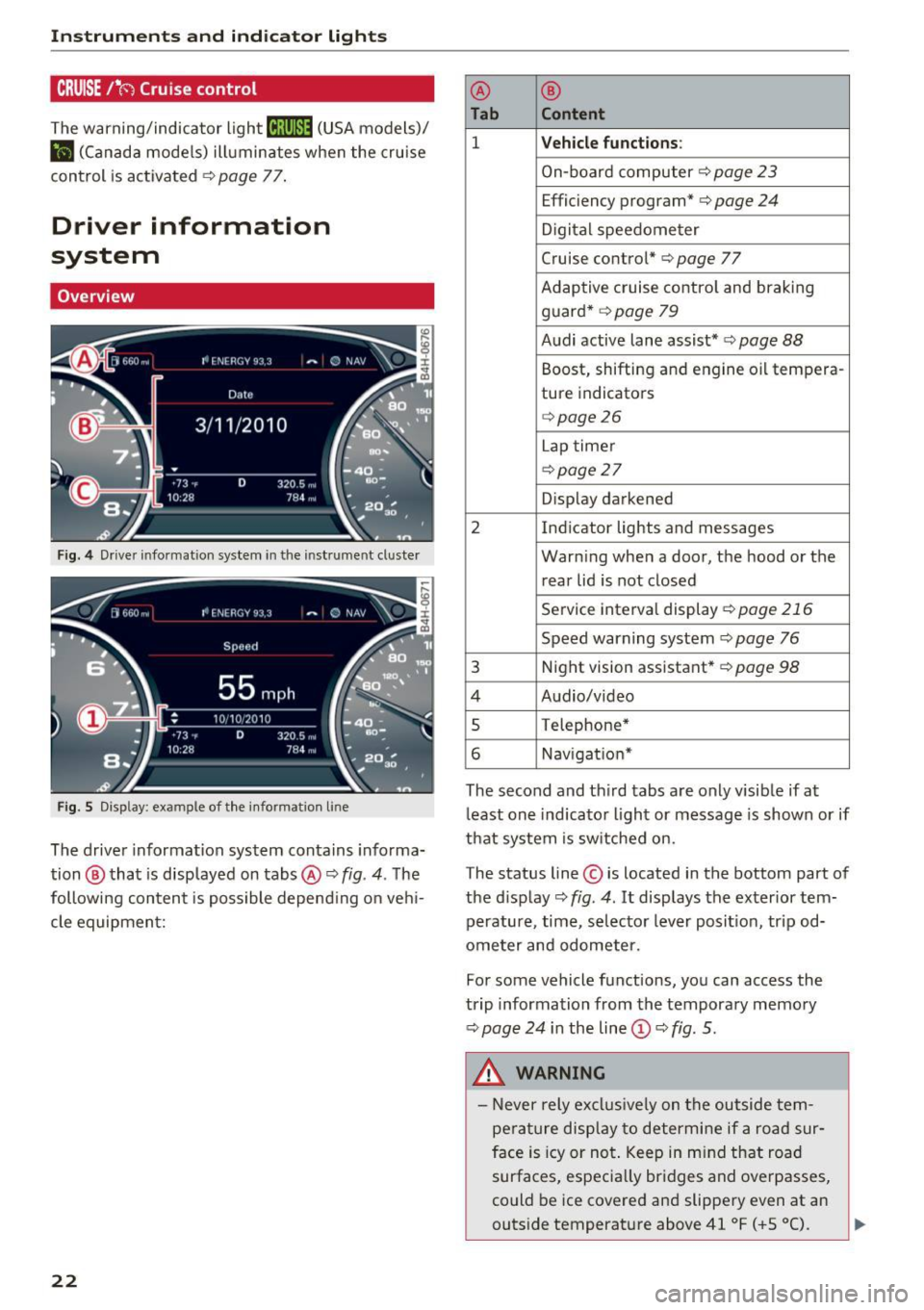
Fig. 4 Driver informat ion system in the instrument cluster
Fig. S Disp lay: example of the in formation lin e
The driver information system contains informa·
tion @ that is displayed on tabs@¢
fig. 4. The
following content is possible depend ing on veh i
cle equipment:
22
@ ®
Tab Content
1 Vehicle functions :
On-board computer¢ page 23
Efficiency program*¢ page 24
Digital speedometer
Cruise control* ¢
page 77
Adaptive cruise control and braking
guard* ¢
page 79
Audi active lane assist* ¢ page 88
Boost, shifting and engine oil tempera-
ture indicators
¢page26
Lap timer
¢page 27
Display darkened
2 Indicator lights and messages Warning when a door, the hood or the rear lid is not closed
Service interval display
¢page 216
Speed warning system~ page 76
3 Night vision assistant* ¢ page 98
4 Audio/video
s Telephone*
6 Nav igat ion*
The second and third tabs are only visible if at
least one indicator light or message is shown or if
that system is switched on.
The status line © is located in the bottom part of
the display¢
fig. 4 . It displays the exterior tern·
perature, time, selector lever position, tripod·
ometer and odometer.
Fo r some vehicle functions, you can access the
trip information from the temporary memory
¢
page 24 i n the line©¢ fig. 5.
&_ WARNING
- Never rely exclusively on the outside tern·
perature display to determine if a road sur
face is icy or not. Keep in mind that road
surfaces, especially bridges and overpasses,
could be ice covered and slippery even at an
-
outside temperature above 41 °F ( +S 0
(). ~
Page 32 of 282
Opening and closing
Opening and closing
Keys
Key set
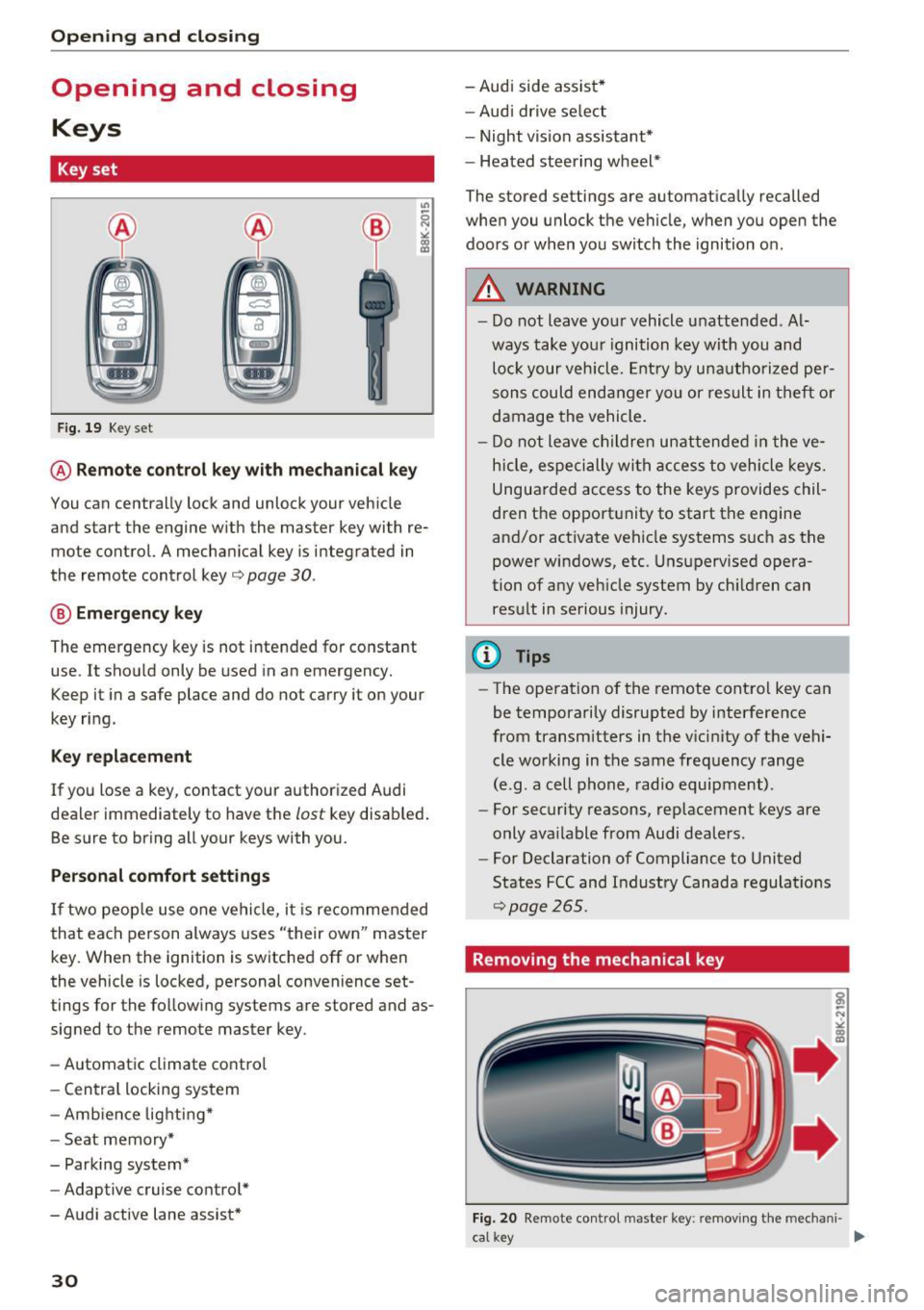
Fig. 19 Key set
@ Remote control key with mechanical key
You can centrally lock and unlock your vehicle
and start the engine w ith the master key with re
mote control. A mechanical key is integrated in
the remote control key¢
page 30.
@ Emergency key
The emergency key is not intended for constant
use. It shou ld only be used in an emergency.
Keep it in a safe place and do not carry it on your
key ring.
Key replacement
If you lose a key , contact your authorized Audi
dealer immediately to have the
lost key disab led .
Be sure to bring all your keys with you.
Personal comfort settings
If two people use one vehicle, it is recommended
that each person always uses "their own" master
key. When the ignition is switched off or when
the vehicle is locked , personal convenience set
tings for the following systems are stored and as
signed to the remote master key .
- Automatic climate contro l
- Central locking system
- Amb ience lighting*
- Seat memory*
- Parking system*
- Adaptive cruise control*
- Audi active lane assist*
30
-Audi side assist*
- Audi drive se lect
- Night vision assistant*
- Heated steering wheel*
The stored settings are automatically recalled
when you unlock the vehicle, when you open the
doors or when you switch the ignition on.
A WARNING
-
-Do not leave your vehicle unattended. Al
ways take your ignition key with you and
loc k your vehicle . Entr y by unautho rized per
sons could endanger yo u or result in theft or
damage the vehicle.
- Do not leave children unattended in the ve
hicle, especially with access to vehicle keys.
Unguarded access to the keys provides chil
dren the opport unity to start the engine
and/or activate vehicle systems s uch as the
power windows, etc. Unsupervised opera
tion of any vehicle system by ch ildren can
result in serious injury .
(D Tips
-The operation of the remote control key can
be temporarily disrupted by interference
from transmitters in the v icinity of the vehi
cle working in the same frequency range
(e.g . a cell phone, radio equipment).
- For security reasons, replacement keys are
only ava ilable from Audi dealers .
- For Declaration of Compliance to United
States FCC and Industry Canada regulations
~page 265 .
Removing the mechanical key
Fig. 20 Remote contro l maste r key : removing the mec hani -
ca l key
Ill>-
Page 40 of 282
Opening and clo sin g
- There are audio si gnals when closing the
l uggage compartment lid with the remote
contro l key (veh icles w ith convenience key*)
or with the~ button in the driver's door.
- When the vehicle is locked, the luggage
compartment lid can be unlocked separately by pressing the button
!a l on the remote
control key. The luggage compartment lid locks automatically after it is closed aga in.
- You can close the luggage compartment lid
us ing the master key (veh icles with conven
i ence key*) up to a distance of approximate
l y 9 ft (3 m).
- The luggage compa rtment lid ca n be oper
ated by hand if the vehicle battery is low. It
i s necessary to use more fo rce whe n doing
th is. Move the lid slowly to red uce the
amoun t of force needed.
Luggage compartment with movement
activated opening
Applies to: vehicles with conven ience key and sensor-control·
led luggage compartmen t lid
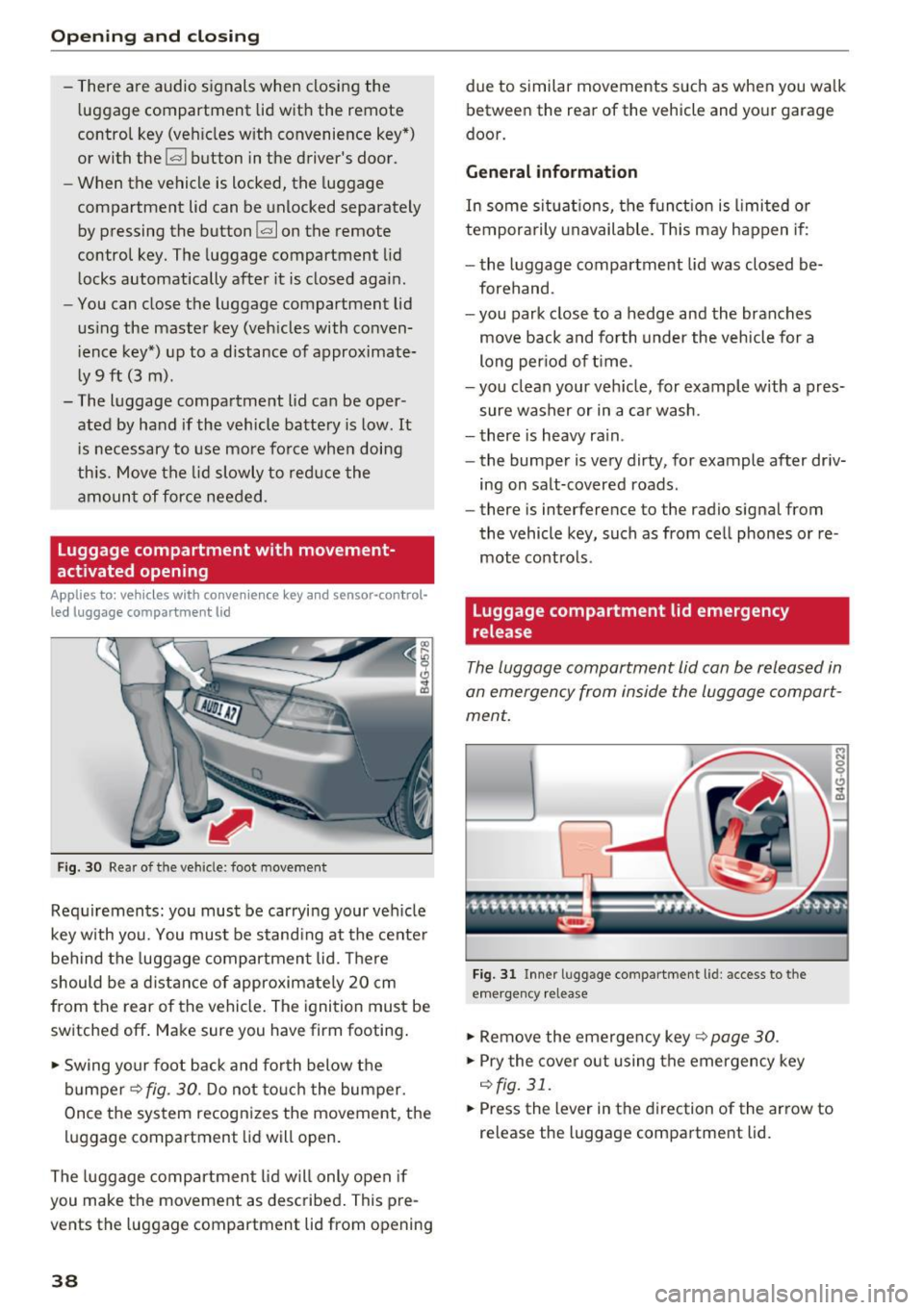
Fig . 30 Rear of the vehicle: foot movement
Req uirements: you must be carrying your ve hicle
key with you. You must be stand ing at the cente r
behind the luggage compartment lid. There
should be a d istance of approximate ly 20 cm
from the rear of the vehicle. The ignition must be
sw itched off . Make sure you have firm footing .
~ Swing your foot back and forth below the
bumper~
fig. 30. D o not to uc h the bumper.
Once the system recogni zes the movement, t he
l u ggage compartment lid will open .
The luggage compartment lid will only open if
you make the movement as described . This pre
vents the luggage compartment lid from opening
38
due to s imilar movements such as when you wa lk
between the rear of the vehicle and yo ur garage
door.
General information
In some situat io ns, the f un ct ion is limi ted or
tempora rily unavailable. Th is may happen if:
- the luggage compartment lid was closed be
forehand.
- you park close to a hedge and the branches
move back and fo rth under the veh icle for a
long per iod of t ime.
- you clean your ve hicle, for example w ith a pres
sure washer or in a c ar wash .
- there is heavy ra in .
- the bumper is very dirty, for example after dr iv-
ing on salt-covered roads .
- there is interference to the radio sig nal from
the vehicle key, such as from cel l phones or re
mote co ntrols.
Luggage compartment lid emergency
release
Th e luggage compartment lid can be released in
an emergen cy from inside the luggage compart
ment.
Fi g. 31 Inner luggage compartment lid: access to the
e m ergency release
~ Remove the emerge ncy key Q page 30 .
~ Pry the cove r out using the emerge ncy key
Q fig.31.
~ Press the lever in the direction of the arrow to
re lease the luggage compartment lid.
Page 121 of 282
.. Make sure to use the right chi ld restraint cor
rectly to protect children
~ page 159, Child
safety .
.. Sit properly in your seat and make sure that
your passengers do the same¢
page 52, Gen
eral information.
.. Fasten your safety belt and wear it properly . Al
so instruct your passengers to fasten their safe
ty belts p roperly
¢ page 127.
What impairs driving safety?
Safe driving is directly related to the condition of the vehicle, the driver as well as the driver's abili
ty to concentrate on the road without being dis
tracted.
The driver is responsible for the safety of the ve
h icle and all of its occupants. If you r ability to
d rive is impaired, safety risks for eve rybody in the
vehicle increase and you also become a hazard to
everyone else on the road ¢A -Therefore :
.. Do not let you rself be dist racted by passengers
or by us ing a cellular te lephone .
.. NEVER dr ive when your dr iv ing ability is im
paired (by medications, alcohol, drugs, etc.).
.. Observe all traff ic laws, rules of the road and
speed limits and plain common sense.
.. ALWAYS adjust your speed to road, traffic and
weather cond itions.
.. Take frequent breaks on long trips. Do not drive
for more than two ho urs at a stretch .
.. Do NOT drive when you are tired, under pres
s ur e o r when you are st ressed.
_& WARNING
Impaired dr iv ing safety inc reases the risk of
ser ious personal inju ry and death whenever a
vehicle is being used.
.
Dr iving safety
Correct passenger
seating positions
Proper seating position for the driver
The proper driver seating position is important
for safe, relaxed driving .
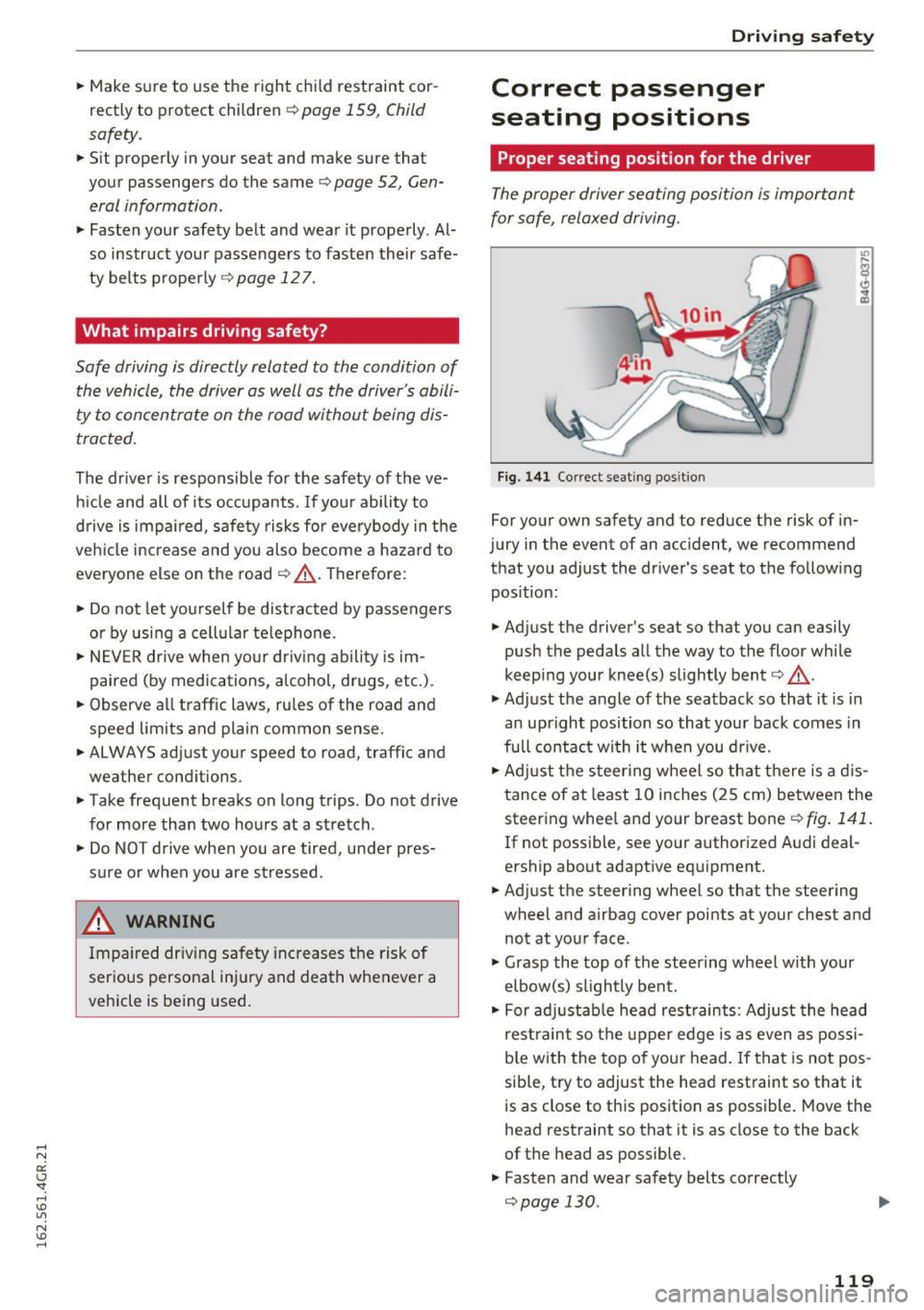
F ig. 141 Correct seat ing pos it ion
For your own safety and to reduce the risk of in
jury in the event of an accident, we recommend
that you adjust the dr iver 's seat to the fo llowing
pos ition:
.. Adjust the driver's seat so that you can easily
push the pedals all the way to the floor while
keep ing your knee(s) slightly bent¢&_ .
.,. Adjust the angle of the seatback so that it is in
an upright position so that your back comes in
full contac t wi th it when you dr ive .
.. Adj ust the steer ing wheel so that there is a d is
tance of at least 10 inches (25 cm) between the steering whee l and your breast bone¢
fig. 141.
If not poss ible, see your author ized A udi deal
ership about adapt ive equipment.
.. Adjust the steering wheel so that the steering
wheel and airbag cover points at your chest and
not at your face .
.,. Grasp the top of the steering wheel with your
elbow(s) slightly bent.
.. For adjustab le head rest raints: Adjust the head
rest raint so the upper edge is as even as possi
b le with the top of your head. If that is not pos
sible, try to adjust the head restraint so that it
is as close to this posit ion as possible. Move the
head restraint so that it is as close to the back
of t he head as possible .
.. Fasten and wear safety belts correctly
Qpage 130. ..,.
119
Page 142 of 282
Airbag system
& WARNING
Objects between you and the airbag will in
crease the risk of injury in a crash by interfer
ing with the way the airbag unfolds and/or by
being pushed into you as the airbag inflates.
-Always make sure nothing is in the front air -
bag deployment zone that could be struck
by the airbag when it inflates .
- Objects in the zone of a deploying airbag
can become projectiles when the airbag de
ploys and cause serious personal injury.
- Never hold things in your hands or on your
lap when the vehicle is in use .
- Never place accessories or other objects
(such as cup holders, telephone brackets,
note pads, navigation systems, or things
that are large, heavy, or bulky) on the doors;
never attach then to the doors or the wind
shield; never place them over or near or at
tach them to the area marked ,,AIRBAG" on
the steering wheel, instrument panel or the
seat backrests; never place them between
these areas and you or any other person in
the vehicle.
- Never attach objects to the windshield
above the passenger front airbag, such as
accessory GPS navigation units or music
players . Such objects could cause serious in
jury in a collision , especially when the air
bags inflate .
- Never recline the front passenger seat to
transport objects. Items can also move into
the deployment area of the side airbags or
the front airbag during breaking or in a sud
den maneuver. Objects near the airbags can
fly dangerously through the passenger com
partment and cause injury, particularly
when the seat is reclined and the airbags in
flate.
& WARNING
A person on the front passenger seat, espe cially infants and small children, will receive
serious injuries and can even be killed by be
ing too close to the airbag when it inflates.
-Although the Advanced Airbag System in
your vehicle is designed to turn off the front
140
-
passenger airbag if an infant or a small child
is on the front passenger seat, nobody can
absolutely guarantee that deployment un
der these special conditions is impossible in
all conceivable situations that may happen
during the useful life of your vehicle .
- The Advanced Airbag System can deploy in
accordance with the ,,low risk" option for 3-
and 6-year-old children under the U .S . Fed
eral Standard if a child with electrical capac
itance greater than the combined capaci
tance of a typical one-year old infant re
strained in one of the forward facing or rear
ward-facing child seats with which your ve
hicle was certified is on the front passenger
seat and the other conditions for airbag deployment are met .
- Accident statistics have shown that children
are generally safer in the rear seat area than
in the front seating position .
- For their own safety, all children, especially
12 years and younger, should always ride in
the back properly restrained for their age
and size.
Advanced front airbag system
Your vehicle is equipped with a front Advanced
Airbag System in compliance with United States
Federal Motor Vehicle Safety Standard 208, as
well as Canada Motor Vehicle Safety Standard
(CMVSS) 208 as applicable at the time your vehi
cle was manufactured.
The front Advanced Airbag System supplements
the safety belts to provide additional protection
for the driver's and front passenger's heads and upper bodies in frontal crashes. The airbags in
flate only in frontal impacts when the vehicle de
celeration is high enough.
The front Advanced Airbag System for the front
seat occupants is not a substitute for your safety belts. Rathe r, it is part of the overall occupant re
straint system in your vehicle . Always remember
that the airbag system can only help to protect
you, if you are sitting upright, wearing your safe
ty belt and wearing it properly . This is why you
and your passengers must always be properly .,.
Page 148 of 282
Airbag syste m
A WARNING
Objects between you and the airbag will in
cr ease the risk of inju ry in a cras h by interfer
ing w ith the way the airbag unfol ds or by be
ing pushed into you as the a irbag inflates.
- Never hold th ings in your hands or on your
lap when the vehicle is in use.
- Never transport items on or in the area of
the front passenger seat . Objects could
move into the area of the front airbags du r
ing bra king or other sudden maneuve rs and
become dangerous projectiles that can
ca use serious pe rsonal injury if the a irbags
inflate.
- Never pl ace or attach accessor ies or o ther
objects (such as cup ho lders, te lephone
brackets, large, heavy o r bulky objects) on
the doors, over or near the area marked "AIRBAG" on the steering wheel, instru
ment pane l, seat backrests or between
those areas and yourself. These objects
could cause injury in a crash, especially
when the airbags inflate.
- Never recline the front passenger's seat to transport objec ts. Items can also move into
t h e a rea of the side airbag o r the front a ir
bag during braking or in a s udden maneu
ver. Objects near the airbags can become
projectiles and cause in ju ry, particularly
when the seat is reclined.
- Never pl ace or transport o bje cts on the
front passenge r seat . Objects on the front
passenge r seat co uld cause the capac itive
sensor in the seat to signal to airbag system
that the seat is occupied by a person when it
in fact is not, or that the person on the seat
is heavier than he or she actually is. The
change in elect ric capac itance because of
s u ch objects can cause the passenger front
airbag to be turned on when it shou ld be
off, or ca n cause the a irbag to wo rk i n a way
that is diffe rent from the way it would have
wor ked witho ut objects on the seat.
- Alway s m ake sure th at the re is nothing on
t h e fron t passenger seat that w ill cause the
capacit ive passenger detection system in
the seat to signa l to the Airbag System that
146
the seat is occup ied by a person when it is
not, or to signal that it is occupied by some
one who is heavier than the person actually
sitt ing on the seat . The presence of an ob
ject could ca use the passenger front airbag
to be turned on when it should be off, or
could cause the airbag to work in a way that is diffe rent from the w ay it would have
wo rked withou t the object on the seat.
A WARNING
-
The fine dus t created when airbags deploy c an
cause breathing prob lems for peo ple with a
h istory of asthma or othe r breath ing cond i
tions.
- To reduce the r is k of breathing p roblems,
those with asthma o r other respiratory con
ditions shou ld get fresh a ir right away by
getting out of the vehicle or opening win
dows or doors .
- If you are in a co llision in which airbags de
ploy, wash yo ur hands and face with m ild
soap and water before eating.
- Be ca refu l not to get the dust into your eyes,
or into any cuts or scratches.
- If the residue sho uld get into your eyes,
flush them w ith wate r.
Monitoring the
Advanced Airbag System
t~ (USA models) !!I: (Canada models)
Airbag monitoring indicator light
Two separate indicators monitor the function of
the Advanced Airbag System: the airbag moni
toring indicator light and the
PASSENGER AIR
BAG OFF
light.
The Advanced A irbag System as well as t he side
airbags and side curta in airbags w ith ejection
mitigation features (including the electronic con
tro l unit, senso rs and system w iring) are all
monito red cont inuo usly to make sure that they
a re functioning properly whenever the ignition is
o n. Every time you tu rn o n the ign ition, the air
bag sys tem indi cato r li ght
II (USA models) a
(Canada mode ls) will come on for a few seconds
(function check). .,.
Page 152 of 282
Airbag system
(D Tips
If the capacitive passenger detection system
determines that the front passenger seat is
empty, the frontal airbag on the passenger
side will be turned off, and the
PASSENGER
AIR BAG OFF
light will stay on.
Repair , care and disposal of the airbags
Parts of the airbag system are installed at many
different places on your Audi. Installing, remov
ing, servicing or repairing a part in an area of the
vehicle can damage a part of an airbag system
and prevent that system from working properly
in a collision.
There are some important things you have to
know to make sure that the effectiveness of the
system will not be impaired and that discarded
components do not cause injury or pollute the
environment.
A WARNING
-Improper care, servicing and repair proce
dures can increase the risk of personal injury
and death by preventing an airbag from de
ploying when needed or deploying an airbag
unexpectedly:
- Never cover, obstruct, or change the steer ing wheel horn pad or airbag cover or the in
strument panel or modify them in any way.
- Never attach any objects such as cup holders or telephone mountings to the surfaces cov
ering the airbag units.
- For cleaning the horn pad or instrument
panel, use only a soft, dry cloth or one mois
tened with plain water. Solvents or cleaners could damage the airbag cover or change
the stiffness or strength of the material so
that the airbag cannot deploy and protect
properly.
- Never repair, adjust, or change any parts of the airbag system.
- All work on the steering wheel, instrument
panel, front seats or electrical system (in
cluding the installation of audio equipment,
cellular telephones and CB radios, etc.)
must be performed by a qualified technician
150
who has the training and special equipment necessary.
- For any work on the airbag system, we
strongly recommend that you see your au
thorized Audi dealer or qualified workshop.
- Never modify the front bumper or parts of
the vehicle body.
- Always make sure that the side airbag can
inflate without interference:
- Never install seat covers or replacement
upholstery over the front seatbacks that
have not been specifically approved by
Audi.
- Never use additional seat cushions that
cover the areas where the side airbags in
flate.
- Damage to the original seat covers or to
the seam in the area of the side airbag
module must always be repaired immedi
ately by an authorized Audi dealer.
- The airbag system can deploy only once. Af
ter an airbag has been deployed, it must be
replaced with new replacement parts de
signed and approved especially for your
Audi model version. Replacement of com plete airbag systems or airbag components
must be performed by qualified workshops
only . Make sure that any airbag service ac
tion is entered in your Audi Warranty
&
Maintenance booklet under AIRBAG RE
PLACEMENT RECORD.
- For safety reasons in severe accidents, the
alternator and starter are separated from
the vehicle battery with a pyrotechnic circuit
interrupter.
- Work on the pyrotechnic circuit interrupt
er must only be performed by a qualified
technicians who have the experience, in
formation and special tools necessary to perform the work safely.
- If the vehicle or the circuit interrupter is
scrapped, all applicable safety precautions must be followed.
~
Page 158 of 282
Airbag syste m
by being pushed into you as the airbag in
flates.
- Never p lace or attach accessories or other
objects (such as cup holders, telephone brackets, or even large, bulky objects) on
the doors, over or near the area marked
"AIRBAG" on the seat backrests.
- Such objects and accessories can become
dangerous projectiles and cause in ju ry
when the supplemental side airbag de ploys.
- Never carry any objects or pets in the de ployment space between them and the
airbags or allow children or other passen
gers to travel in this position.
- Always use the built-in coat hooks only for
lightweight clothing. Never leave any heavy
or sharp-edged objects in the pockets that
may interfere w ith side airbag deployment
and can cause personal i njury in an accident.
- Always prevent the side airbags from being
damaged by heavy objects knocking against
or hitting the sides of the seatbacks.
- The airbag system can only be triggered
once. If the airbag has been triggered, the
system must be replaced by an author ized
Audi dealership.
- Damage (cracks, deep scratches etc.) to the
orig inal seat covers or to the seam in the
area of the side a irbag mod ule m ust always
be repa ired immed iate ly by an authorized
Audi dealer .
- If children are sea ted improperly, their r is k
of injury increases in the ca se of an ac ciden t
~ page 159, Child safety .
-Never attempt to modify any components of
the a irbag sys tem in any way.
- In a side collision, side a irbags w il l not fu nc
t ion properly if sensors cannot correct ly
measure increasi ng air pressure ins ide the
doo rs when air escapes through larger, un
closed openings in the door panel.
- Never drive w ith inter io r door tr im panels
removed .
- Never drive when parts have been re
moved from the inside doo r panel and the
open ings they leave have not been proper
ly closed.
156
- Never drive when loudspeakers in the
doors have been removed unless the
speaker holes have been properly closed.
- Always make certain that openings are
covered or filled if additional speakers or
other equipment is installed i n the inside
door panels.
- Always have work on the doors done by an
authorized Aud i dealer or q ualified work
shop.
Side curtain airbags
Description of side curtain airbags
The side curtain airbag system can provide sup
plemental protection to properly restrained oc
cupants.
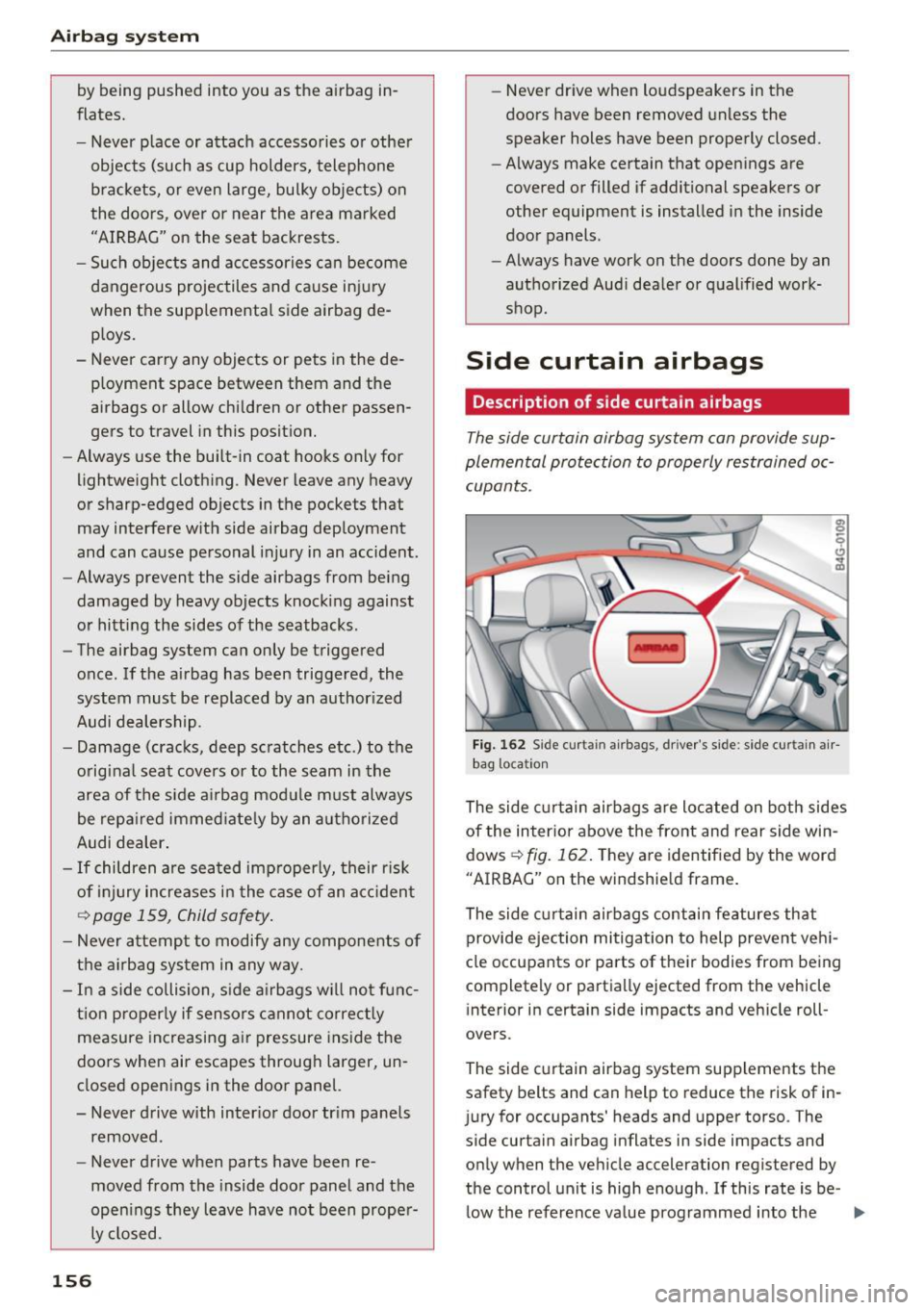
Fig. 162 S id e curt ain airbags, driver's sid e: side curtain a ir
bag locatio n
The side curtain airbags are located on both sides
of the inter ior above the fro nt and rear side win
dows~
fig. 162. T hey are identified by the word
"AIRBAG" on the windshie ld frame .
The side curtain airbags contain features that
provide ejection mitigation to help prevent veh i
cle occupants or parts of their bodies from being
completely or partially ejected from the vehicle i nterior in certain side impacts and vehicle roll
overs .
The side c urtain airbag system supplements the
safety belts and can help to reduce the risk of in
j ury for occupants' heads and upper torso . The
s ide curtain airbag inflates in side impacts and
only when the vehicle acceleration registered by
the control unit is high enough. If th is rate is be-
low the reference va lue programmed into the .,.