door lock AUDI S3 2015 Owner's Manual
[x] Cancel search | Manufacturer: AUDI, Model Year: 2015, Model line: S3, Model: AUDI S3 2015Pages: 310, PDF Size: 76.15 MB
Page 134 of 310
132 Driving saf ety
A WARNING
Heavy loads will influence the way your ve
hicle handles. To help reduce the risk of a
loss of control leading to ser ious personal
injury:
-Always keep in m ind when transporting
heavy objects, that a change in the cen
ter of gravity can also cause changes in
vehicle handling:
- Always distribute the load as evenly as
possible.
- Place heavy objects as far forward in
the luggage compartment as possible.
- Never exceed the Gross Ax le Weight Rat
ing or the Gross Vehicle Weight Rating
specified on the safety compliance stick
er on the left door jamb. Exceeding per
missible we ight standards can cause the
vehicle to slide and handle differently.
- Please observe information on safe driv
ing
opoge 125.
A WARNING
To help prevent poisonous exhaust gas
from be ing drawn into the veh icle, always
keep the rea r lid closed while dr iving.
- Never transport objects larger than those fitting completely into the luggage
area because the rear lid cannot be fully
cl osed.
- If you absolutely must drive w ith the rear
lid open, observe the follow ing notes to
reduce the risk of poisoning:
- Close all w indows,
- Close the power roof *,
- Open all air outlets in the instrument
panel,
- Sw itch off the air recircu lation,
- Set the fresh a ir fan to the highes t
speed.
A WARNING
Always ma ke s ure th at the doors, all win
dows, the power roo f* and the rear lid are
securely closed and locked to reduce the risk of injury when the vehicle is not being
used.
- After closing the rear lid, always make
sure that it is properly closed and locked.
- Never leave your vehicle unattended es
pecially with the rear lid left open. A
child cou ld craw l into the vehicle thro ugh
the luggage compartment and close the rea r lid becoming trapped and unable to
get out. Being t rapped in a vehicle can
lead to serious pe rsonal in jury.
- Never let children play in or around the veh icle.
- Never let passengers ride in the luggage
compa rtment. Vehicle occupants must
always be prope rly restra ined in one of
the vehicle's seating posit ions.
(D Tips
- Air circulation helps to reduce window
fogging. Stale a ir escapes to the outside
through vents in the t rim panel. Be sure
to keep these slots free and open.
- The tire pressure m ust correspond to the
load. The tire pressure is shown on the
t ire pressure label. The tire pressure la
bel is located on the drive r's side B-pilla r.
The tire pressure label lists the recom
mended co ld tire inflation pressures for
the vehicle at its maxim um capacity
we ight and the tires that we re on your
vehicle at the t ime it was manufactured.
For recommended tire pressures for nor
ma l load cond itions, please see chapter
opoge240.
Tie -downs
The luggage comportment is equipped with
four tie-downs to secure luggage and other
items.
Use the t ie-downs to secure your cargo prop
erly
o page 131, Loading the luggage com
portment .
In a collision, the laws of physics mean that
even smaller items that are loose in the vehi-
cle w ill become heavy missiles t hat can cause .,..
Page 151 of 310
M N
0 > co ,...., \!) ..,.,
M ..,., ,....,
detailed information about airbags, safety
belts and child safety in this and the other
chapters that make up the owner's literature.
Please be sure to heed the WARNINGS -they
are ex tremely important for your safety and
the safety of your passengers, especially in
fants and small children .
A WARNING
Never rely on airbags alone for protection.
- Even when they deploy, airbags provide only supplemental protection .
- Airbag work most effectively when used
with properly worn safety belts .
- Therefore, always wear your safety belts
and make sure that everybody in your ve
hicle is properly restrained .
- Always hold the steering wheel with both
hands on the outside of the steering
wheel rim at the 9:00 o'clock and 3:00
o'clock positions to help reduce the risk
of personal injury if the driver's airbag in
flates.
- Never hold the steering wheel at the 12
o'clock position or with your hands any
where inside the steering wheel or on the
steering wheel hub. Holding the steering
wheel the wrong way increases the risk of severe injury to the arms, hands, and
head if the driver airbag deploys .
A WARNING
Objects between you and the airbag will
increase the risk of injury in a crash by in
terfering with the way the airbag unfolds
and/or by being pushed into you as the air
bag inflates.
- Always make sure nothing is in the front
airbag deployment zone that could be
struck by the airbag when it inflates.
- Objects in the zone of a deploying airbag
can become projectiles when the airbag
deploys and cause serious personal in
jury.
- Never hold things in your hands or on
your lap when the vehicle is in use .
-
Airbag system 149
-Never place accessories or other objects
(such as cup holders, telephone brackets,
note pads, navigation systems, or things
that are large, heavy, or bulky) on the
doors; never attach then to the doors or
the windshield; never place them over or
near or attach them to the area marked
,,AIRBAG " on the steering wheel, instru
ment panel or the seat backrests; never
place them between these areas and you
or any other person in the vehicle.
- Never attach objects to the windshield
above the passenger front airbag, such
as accessory GPS navigation units or mu
sic players. Such objects could cause seri
ous injury in a collision, especially when
the airbags inflate.
- Never recline the front passenger seat to transport objects. Items can also move
into the deployment area of the side air
bags or the front airbag during breaking
or in a sudden maneuver . Objects near
the airbags can fly dangerously through
the passenger compartment and cause
injury, particularly when the seat is re
clined and the airbags inflate.
A WARNING
-=
A person on the front passenger seat , es-
pecially infants and small children, will re
ceive serious injuries and can even be kil
led by being too close to the airbag when
it inflates.
- Although the Advanced Airbag System in your vehicle is designed to turn
off the
front passenger airbag if an infant or a
small child is on the front passenger
seat, nobody can absolutely guarantee
that deployment under these special conditions is impossible in all conceiva
ble situations that may happen during
the useful life of your vehicle.
- The Advanced Airbag System can deploy
in accordance with the ,,low risk" option
for 3-and 6-year-old children under the
•
•
•
Page 160 of 310
158 Airbag system
- and if the electrica l capacitance registered
on the front passenger seat is equal to or
l ess than the combined capacitance of a typ
ical 1 year-old infant and one of the rear
ward-facing or forward-facing child re
stra ints listed in Federal Motor Vehicle Safe
ty Standard 208 w ith which the Advanced
Airbag System in your vehicle was certified.
If the front passenger seat is not occupied,
the front airbag will not deploy, and the
PAS
SENGER AIR BAG OFF
light will stay on . Nev
er insta ll a rearward-facing child restraint on
the front passenger seat, the safest place for
a child in any kind of child restraint is at one
of the seat ing positions on the rear seat
¢ page 146, Child restraints on the front seat
- some important things to know
and
¢ page 170, Child Safety .
If the PASSENGER AIR BAG light comes
on ...
If the PASSENGER AIR BAG OFF light comes
on when one of the conditions listed above is met , be sure to check the light regularly to
make certa in that the
PASSENGER AIR BAG
OFF
light stays on cont inuously whenever the
ignit ion is on . If the
PASSENGER AIR BAG
OFF
l ight does not appear on and does not
stay on all the time, stop as soon as it is safe
to do so and
- reactivate the system by turning the ignition
off for more than 4 seconds and then turn
i ng it on again;
- remove and re install the child restraint.
Make su re that the child restraint is properly
installed and that the safety belt fo r the
front passenger seat has been correctly
routed through the child restraint as descri
bed in the chi ld restraint man ufacturer 's in
structions;
- make sure that the convertible locking re
tractor on the safety belt for the front pas
senger seat has been activated and that the
safety belt has been pulled tight.
- make sure that no e lectrica l device (such as
a laptop, CD playe r, electronic games device,
power inverter or seat hea ter for child seats)
is placed or used on the front passenger seat
if the device is connected to the 12-volt
socket or the cigarette lighter socket;
- ma ke sure that no seat heater has been ret
rofitted or otherwise added to the front pas
senger seat;
- make s ure that nothing can interfere with
the safety belt buck les and that they are not
obstructed ;
- make sure that there are no wet objects
(such as a wet towe l) and no water or other
liquids on the front passenger seat cushion.
If the PASSENGER AIR BAG light still
does not come on ...
If the PASSENGER AIR BAG OFF light still
does not come on and does not stay on con
tinuous ly (when the ignition is switched on),
- take the child restraint off the front passen -
ger seat and install it properly at one of the
rear seat positions. Have the airbag system
inspected by your Audi dealer immed iately.
- move the child to a rear seat position and
make sure that the child is properly restrain
ed in a ch ild restra int that is appropriate for
its size and age .
The PASSENGER AIR BAG light should
NOT come on ...
The PASSENGER AIR BAG OFF light should
NO T come on when the ignition is on and an
adult is s itting in a proper seating position on
the front passenger seat. If the
PASSENGER
AIR BAG OFF
light comes on and stays on or
flashes for about S seconds wh ile d riving, un
der these circumstances, make sure that:
- the adult on the front passenger seat is
properly seated on the cente r of the seat
cushion with his or her back up aga inst the
backrest and the backrest is not reclined,
- the adult is not taking weight off the seat by
holding on to the passenger assist handle
above the front passenger door or support
ing their weight on the armrest ,
- t he safety belt is being properly wo rn and
that there is not a lot of s lack in the safety
be lt webbing,
- there are no aftermarket seat covers or
cushions or other things (such as blankets) .,..
Page 180 of 310
178 Child Saf ety
• When using the vehicle safety be lt to insta ll
a chi ld safety seat, you must first activate
the convertible locking retractor on the
safety belt to prevent the child safety seat
from moving ¢
page 181 or install the seat
using the LATCH attachments .
• Push the child safety seat dow n with your
full weight to get the safety belt rea lly t ight
so that the sea t ca nnot move forward or
s ideways more than one inch ( 2.5 cm)
¢page 181.
• If the child safety seat is eq uipped with a
tether strap, attach it to the tether anchors
¢ page 187.
• Secure unused safety belts on the rear seat
¢ page 176.
A toddler or child is usually too large for an in
fant restraint if it is more than one year o ld
and weighs more than 20 lbs. (9 kg) .
Todd lers and c hildren who are o lder than one
yea r up to abo ut 4 years o ld and weigh more
than 20 lbs (9 kg) up to 40 lbs . (18 kg) must
a lways be properly restrained in a ch ild safety
seat certified for the ir s ize and weight
¢
fig . 141 and ¢ fig. 142.
The airbag on the passenger side makes the
front seat a potentially dangerous place for a child to r ide . The fro nt seat is not the safest
p lace for a child in a forwa rd-facing child safe
ty seat.
It is a very dange rous p lace for an in
fant or a la rger chi ld in a rearwa rd-fa cing seat.
A WARNING
Not u sing a ch ild safety se at, using the
wrong ch ild safety sea t or improper ly in
stal ling a child restraint increases the risk
of serious personal injury and death in a
co llision or other emergency s ituation.
- Children on t he front seat of any car,
even w ith Advanced A irbags, can be seri
o usly injured or even killed when an a ir
bag inf lates. A child in a rearward-facing
child safety seat installed on the front
passenge r seat w ill be seriously injured
and can be kil led if the front ai rbag in-
-
f lates -even with an Advanced Airbag
System .
- The inflating air bag will h it the ch ild
safety seat or infant carrier with great
force and will smash the child safety seat
and child aga inst the backrest , center
arm rest, door or roof .
- Always install rear-fac ing ch ild safety
seats on the rear seat .
- If you must install a rearward fac ing
child safety seat on the front passenger
seat because of exceptiona l circumstan
ces and the
PASSENGER AIR BAG OFF
light does not come on and stay on, im
mediately insta ll t he rear-fac ing c hild
s a fety se at in a re ar seating positi on and
have the air bag system ins pected by your
Aud i deale r.
- T he rear side o f the child safety seat
should be pos itioned as close as possi ble
to the backrest on the vehicle seat .
- For a djustable head restra ints: adjust or
remove the rea r seat hea d restra int if it
is difficult to install the c hild seat w ith
the head restraint in place¢
page 59. In
stall the head restraint again immed iate
ly once the child seat is removed. Dr iv ing
without head restraints o r with head re
s traints that are not properly adjus ted
increases the risk of serious or fatal neck
in jur y drama tically.
- Always read and heed all WAR NIN GS
wheneve r using a child restraine d in ave
h icle is being u sed
¢ page 135, Safe ty
bel ts,
¢ page 1 44, Airbag system and
¢ page 170, Important things to know .
A WARNING
-
If exceptional circums tances require the
use of a fo rward-facing child restraint on
the front passenger 's seat, the child's safe
ty and well -being require that the follow
i ng spec ial precautions be taken:
- Make sure the forward- facing seat has
been designed and cert ified by its man u
facturer fo r use on a front seat with a
passenger front and side airbag.
Page 185 of 310
M N
0 > co ,...., \!) ..,.,
M ..,., ,....,
A WARNING ,~
Rearward-facing ch ild restraints:
-A chi ld in a rearward-facing child safety
seat installed on the front passenger
seat will be ser iously injured and can be
killed if the front airbag inflates -even
with an Advanced Airbag System .
- The inflating a irbag w ill hit the child
safety seat or infant carrier w ith great
force and w ill smash the ch ild safety seat
and child against the backrest, cente r
armrest, door or roo f.
- Always be especially caref ul if you must
install a rearwa rd fa cing child safety seat
on the front passenge r sea t in exception
al circumstances .
- Make su re that the
PASSENGER AIR BAG
OFF
light comes on and s tays on all the
time whenever the ignition is switched
on .
- If the
PASSENGER AIR BAG OFF light
does not come on and stay on, immedi
ately install the rea r-facing chi ld safety
seat in a rear seating position and have
the a irbag system inspected by you r Audi
dealer.
Activating the convertible locking retractor
Use the convertible locking retractor to se
cure a child restraint.
Always heed the child safety seat ma nufactur
er's instructions when install ing a chi ld re
straint in your vehicle . To activate t he conver
tible locking retracto r:
.,. Place the child restraint on a seat, prefera
bly on the rear sea t.
.,. Slow ly pull the be lt
all the way out .
.. Route it around or through the ch ild re
st ra int be lt path ¢&, .
.,. Push the child safety seat dow n with your
f ull weight to ge t the safety belt really t ight.
.,. Insert the be lt tongue into the buckle for
that seating position .
Child Safet y 183
.,. Guide the sa fe ty be lt back into the retractor
until the be lt lies flat and sn ug on the child
safety seat .
.,. You shou ld hear a "clicking" noise as the
be lt winds back into the iner tia ree l. Test the
convert ible lock ing retractor by pulling on
the belt. You sho uld no lo nger be able to
pull the be lt out of the retracto r. T he con
ver tible locking re trac to r i s now ac tiva ted .
.,. Mak e s ure t hat t he red release b utton is fac
ing away from the child rest rain t so t hat i t
can be unbuckled q uic kly .
.. Pull on the belt to make sure the safety be lt
is properly tight and fastened so that the
seat cannot move forward or sideways more
than one inch (2 .5 cm).
A WARNING
Using the wrong child restraint o r an im
p roperly installed chi ld restraint can cause
serious pe rsonal injury or death in a crash.
- Always ma ke sure that the safe ty belt re-
tracto r is loc ked when insta lling a child
safety seat. An unlocked safety belt re
tracto r can not hold the child safety seat
in place dur ing no rma l driving o r in a
cras h.
- Always buckle the child sa fe ty seat firmly
in place even i f a ch ild is not sitt ing in it.
A loose child safety seat can fly aroun d
during a sudden stop or in a crash .
- Always ma ke s ure the seat backrest to
which the child restraint is installed is in
an upright pos ition and securely latched
into place and can not fold forward . Oth
erw ise, the seatback with the child safety
seat attached to it could fly forward in
the ev ent of an accident o r othe r emer
gency situatio n.
- Always read a nd heed al l WAR NINGS
wheneve r us ing a child restrained in ave
hicle is being used ¢
page 170. Special
pre cau tions apply whe n inst alling a child
safety sea t on the fron t passenger seat
¢ page 146, Child restraints on the front
seat -some important things to know.
-
•
•
•
Page 214 of 310
212 Checking and Fill in g
- If you put any amount of incorrect fue l in
the fue l tank, do not start the engine un
der any circumstances. Immediately con
tact the nearest authorized Audi dealer
or authorized Audi Service Facility for as
sistance. These fuels contain substances
that can severely damage the fuel sys
tem and the engine if the engine is start
ed.
- If the diesel fuel quality is poor, it may
be necessary to have the water drained
from the water sepa rator in the
f ue l fi l
te r
more often than specified in the
maintenance schedu le . This can help re
duce engine ma lfunctions
Q page 24.
Fuel tank
Fuel filler neck
The fuel filler neck is located on the right rear
side panel behind the fuel fi ller flap.
If the power locking system should fail, you
can st ill open the flap manually- for detailed
instructions
seer:::.> page 214.
You can find the fuel tank capacity of your ve
hicle in
Qpage 288.
The label on the inside of the fuel filler flap
tells you the correct fuel for your vehicle. For
more information about fuel specifications,
see
c;,page 210.
Your veh icle fuel tank has an onboard refue l
ling vapor recovery system . This feature helps
to prevent fuel vapors from escaping from the
tank and polluting the environment while you refuel your vehicle . In order to fill the tank
properly while protect ing the env ironment,
p lease follow t his refueling procedure careful
ly.
.&_ WARNING
Under norma l operating conditions, neve r
carry additiona l fuel containers in your car .
Gas can isters and other containers used to
transport fue l can be dangerous. Such con
tainers, full or empty, may leak and cou ld
cause a f ire in a collision. If you must transpo
rt fuel to use for your lawn mower,
snow b lower, etc., be very careful and al
ways observe local and state laws regard ing the use, transportation and storage of
such fuel containers. Make certa in the con
tainer meets industry standa rds (ANSI/
ASTM F8S2 -86).
(D Note
Neve r drive your veh icle until the fue l tank
i s completely empty. The irregular supply
of fue l can cause misfir ing. Gasoline cou ld
enter the exhaust system and damage the
catalytic converter.
Fueling procedure
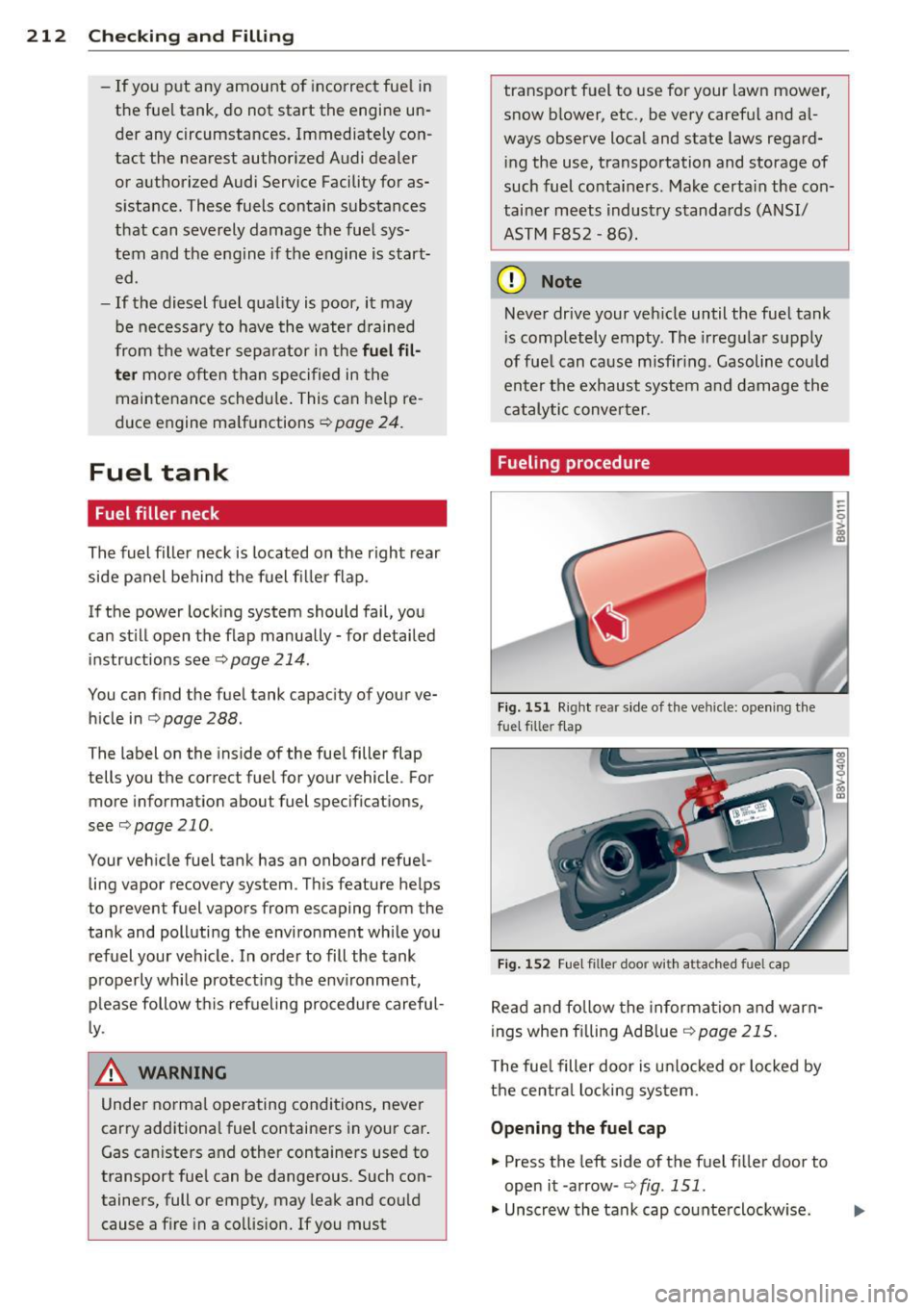
F ig. 15 1 Righ t rear side of the vehicle: opening the
fuel filler flap
Fig . 1 52 Fue l filler door w ith attached fuel cap
Read and follow the information and warn
ings when filling Ad B lue
c;, page 215.
T he fue l filler door is u nlocked or locked by
the centra l locking sys tem.
Openin g the fuel c ap
" Press the left side of the fuel f iller door to
open it -arrow-
Q fig. 151.
"Unscrew the tank cap counterclockw ise .
-;:;
> a, a,
Page 215 of 310
M N
0 > co ,...., \!) ..,.,
M ..,., ,....,
~ Place the cap from above on the open fuel
filler door
¢ fig. 152.
Closing the fuel cap
~ Turn the fuel cap clockwise until you hear it
lock.
~ Close fuel filler door until it latches.
Once the pump nozzle switches off, the fuel
tank is "full". Do not fill the tank more. Other
wise the expansion space in the tank will be
filled.
The correct fuel type for your vehicle can be
found on a label located on the inside of the
fuel filler door. For additional information on
fuel, refer to ¢
page 210.
The fuel tank capacity of your vehicle is in the
Technical Data ¢ page 288.
To avoid fuel spilling or evaporating from the
fuel tank always close fuel filler cap properly
and completely. An improperly closed fuel fill
er cap may also cause the MIL lamp ¢
page 30
to come on .
A WARNING
Not paying attention when fueling or han
dling fuel incorrectly can lead to fires, ex
plosions or serious injuries.
- Fuel ignites easily and can cause serious
burns and other injuries.
- If you do not switch the engine off when
fueling and/or do not insert the fuel noz
zle completely into the tank opening,
fuel can leak out or run over. Leaked fuel
can ignite and start a fire.
- Do not use the telephone while fueling.
The electromagnetic rays can cause
sparks, which can ignite fuel vapors and
start a fire .
- Do not sit in your vehicle while fueling. If
you must make an exception and enter
your vehicle again while fueling, close
the door and touch metal to discharge
static electricity before touching the fuel
nozzle. Static electricity can create
sparks, which can ignite vapors when fu
eling.
Checking and Filling 213
- Do not smoke or have an open flame in
the area when fueling your vehicle or fill
ing a fuel container because this increas
es the risk of an explosion .
- For your safety, carrying fuel containers
in your vehicle is recommended. Wheth
er full or empty, the container can leak
and cause a fire in the event of an acci
dent.
- If you must make an exception and
transport a fuel container, note the fol lowing:
- Never fill the fuel container with fuel
while it is in or on the vehicle. Static
electricity is discharged when filling
which can cause the fuel vapors to ig nite and increases the risk of an explo
sion.
- Always place a fuel container on the
ground before filling.
- Always hold the fuel nozzle completely
in the fuel container when filling .
- If the fuel container is made of metal,
the fuel nozzle must always be in con
tact with the container when filling it
with fuel. This prevents static electrici
ty from discharging.
- Never spill fuel in the vehicle or the
luggage compartment. Evaporated fuel
is explosive and increases the risk of
serious injury or death.
- Follow legal requirements when using,
storing and transporting fuel contain
ers.
- Make sure the fuel container conforms
to industry standards (ANSI/ASTM
F8S2-86).
@ Note
- Remove spilled fuel from vehicle paint
immediately, because it can damage
paint.
- Never drive until the fuel tank is com
pletely empty . The irregular supply of
fuel that results from that can cause the
engine to misfire. Uncombusted fuel will
enter the exhaust system and increase
1111-
•
•
Page 216 of 310
214 Checking and Fill in g
the risk of damage to the catalytic con
verter .
- If the fuel tank runs comp letely empty in
a vehicle with a
die sel en gine , the igni
tion must remain switched on for at l east 30 seconds after refueling before
starting the engine.
It may take longer
than usual for the engine to start, even up to a minute . Th is is because the air
must fi rst b leed out of the fuel system
when starting the eng ine.
@) For the s ake of the environment
- If the fuel nozzle is used correctly , it will
indicate that the tank is full the first
time it switches off automatically. Do
not t ry to add more fuel, because it can
spill over. Also , the expansion space in
the tank will fill, which can resu lt in fuel
spilling out when it becomes warm and po lluting the environment .
@ Tips
-If the engine is runn ing whi le fueling, va
pors can escape or the fuel can spi ll over.
Because of this , the fuel nozz le switches
off before the tank is full.
- Do not fuel the vehicle when the ignition
is switched on. Otherwise, the fuel
gauge may not show the correct level af
ter fueling the vehicle.
- Diesel vehicles are equipped with a diesel misfueling guard
ll. It allows the vehicle
to be fueled only with a diese l fuel pump
nozzle.
- A worn or damaged nozzle or a nozz le
that is too small may not be able to open
the d iesel m isfueling protector . If this is
the case, try t urni ng the nozzle before
i nserting it in the f uel filler neck, use a
different fuel p ump or see you r a uthor
i zed Audi dealer or author ized repair fa
cility for assistance .
- The m isf ueli ng guard does not open
when adding fuel from a fuel container .
ll Market-sp ec ifi c
You can bypass it by adding the diesel
fuel s lowly.
- The fuel fi ller door on your vehicle does
not lock when you lock the vehicle from
the inside.
· Fuel filler door emergency release
If the central locking system is faulty, the
fuel filler door can be unlocked manually.
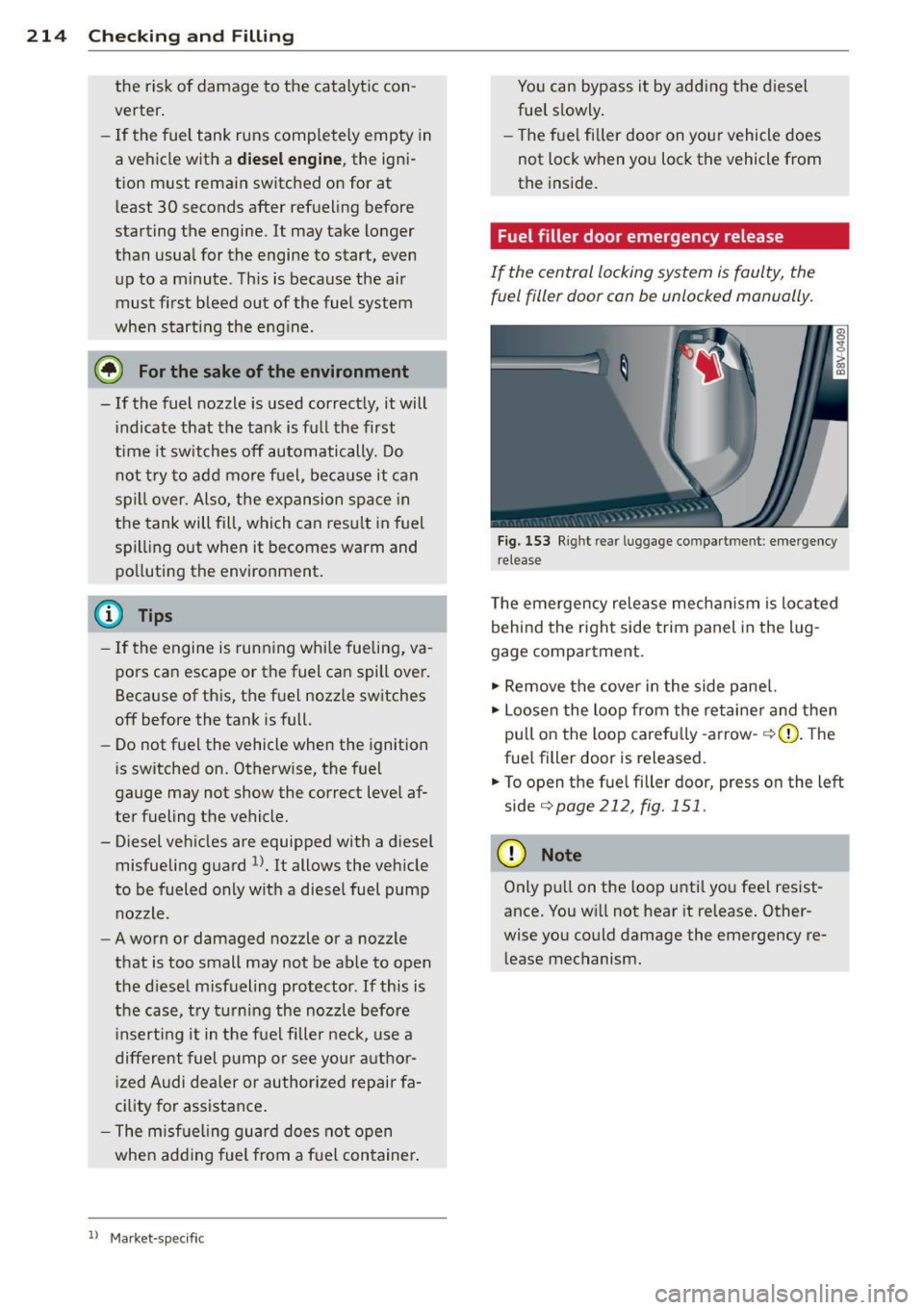
Fig. 153 Right re ar lugg age compa rtm ent : eme rgency
re lease
T he emergency release mechanism is located
behind the right side trim panel in the lug
gage compartment .
" Remove the cover i n the side pane l.
" Loosen the loop from the retaine r and then
pull on the loop carefu lly-arrow-
¢ (D . The
fue l filler door is released .
" To open the fue l filler door, press on the left
side
r=> page 212, fig. 151 .
(D Note
Only pull on the loop until yo u feel resist
ance. You w ill not hear it re lease. Other
wise you could damage the emergency re
lease mechanism.
Page 218 of 310
216 Checking and Filling
¢..ij Incorrect filling /sy stem malfunction
A message ap pears if the Ad Bl ue tank was fil
l ed with a fluid other t han Ad B lue and the sys
tem has detected t hat the tank was fi lled in
correctly, or if the re is a system malfunction .
Ad Blue/ Ad Blue: Sy stem fault! No re start
in 600 miles (1000 km ). See owner' s man
ual.
This message appears whe n it is only poss ible
to drive the distance i ndi cated in the dr iver in
formation system. Drive to the neares t au
thorized A udi dealer or author ized A udi Se rv
ice Facility to have the ma lfunction co rrected.
Otherwise the engine will not start again if
you stop it once the distance i nd icated has
been drive n.
AdBlue: system fault . Engine
start not possible! See owner 's manual
This message appears if the system has de
tected t hat the ta nk was fi lled incorrectly or
that the re is a ma lfunction . Drive immediate ly
to the nearest authorized A udi dealer or au
thor ized Audi Serv ice Facility to have the ma l
function corrected . Otherwise you will not be
ab le to start the engine aga in o nce you stop
it .
Filling the Ad Blue
App lies to vehicles: with selective cata lyt ic reduction
A special refill bottle must be used to fill the
AdBlue .
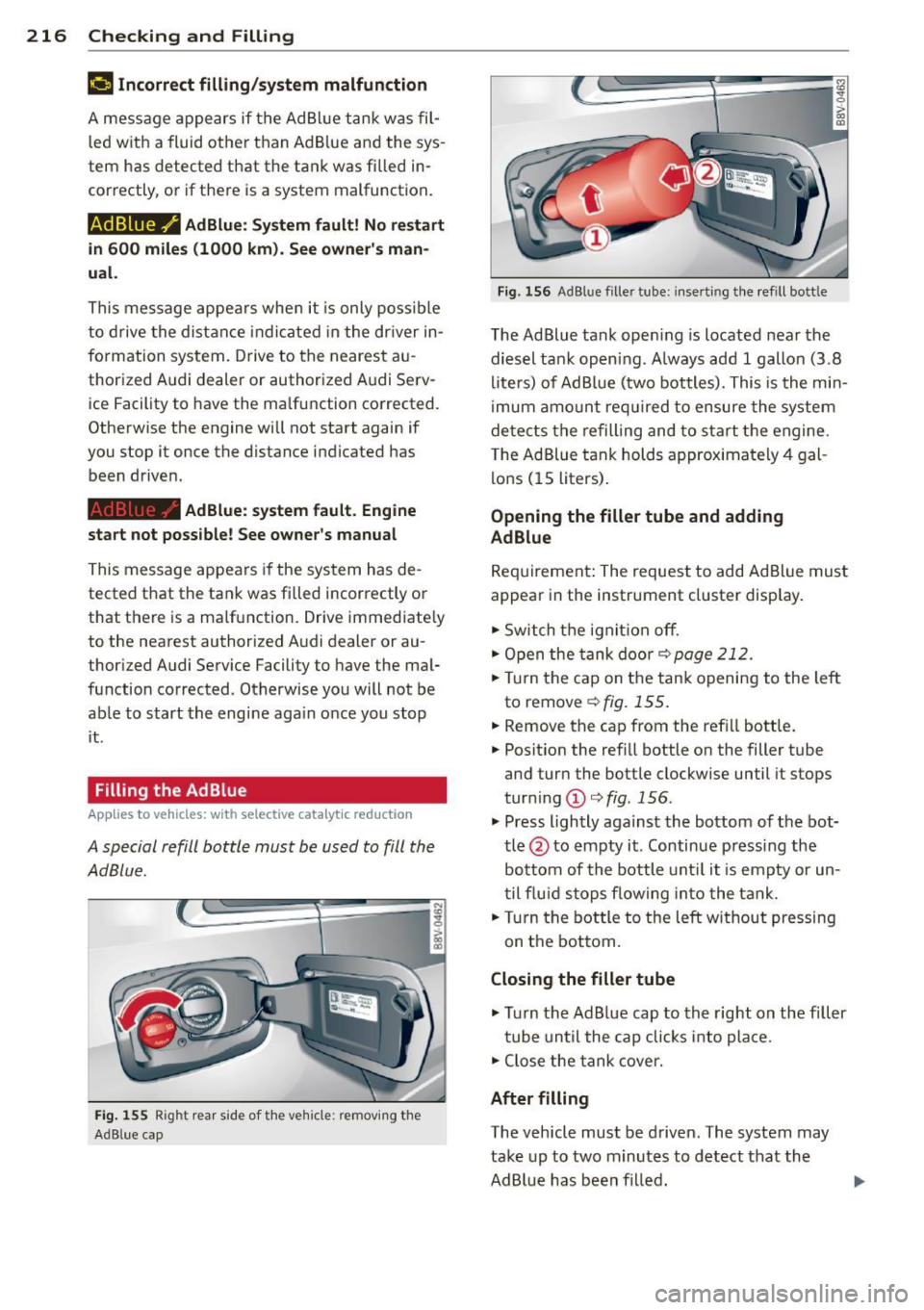
Fig. 155 R ig ht re ar s id e of th e v ehi cle: re mov ing the
Ad Blue cap
F ig . 1 56 AdBl ue f ille r tube: i nse rtin g the ref ill bottl e
The Ad Blue tank ope ning is located near the
di ese l ta nk open ing . A lways ad d 1 gallon (3.8
li te rs) of AdB lue ( two bottles). This is the min
i mum amo unt req uired to ensure the system
de te ct s the refilling and to s tart the engine .
T he Ad Blue tank holds approximately
4 gal
lo ns
(1 5 liters) .
Opening the filler tube and adding
AdBlue
Req uirement : The request to add Ad Blue mus t
appea r in the instrument cluster disp lay.
" Switch th e ignit io n off.
.. Open the tank door¢
page 212.
.. Tur n the cap on the tank opening to the left
to remove
¢ fig . 155 .
.. Remove the cap from the ref ill bott le.
.. Posit ion the refill bottle on the filler tube
and tur n the bottle clockwise until it stops
turn ing (D ¢fig .156 .
" Press lightly aga inst the bottom of the bot
tle @to empty it . Continue pressing the
bo ttom of the bottle unt il it is empty or un
t il f lu id stop s flow ing in to the ta nk.
" Turn the bottle to t he left w it h out pressing
on t he bot tom.
Closing the filler tube
" Tur n the Ad B lue cap to the right on the filler
t ube until the cap clicks into pla ce.
" Clo se the tank cover.
After filling
The vehicle must be driven. The system may
ta ke up to two m inutes to detect that the
AdBl ue has been f illed . .,.
Page 221 of 310
....,
N
0 > co
rl I.O
"' ....,
"' rl
Opening the hood
The hood is released from the interior.
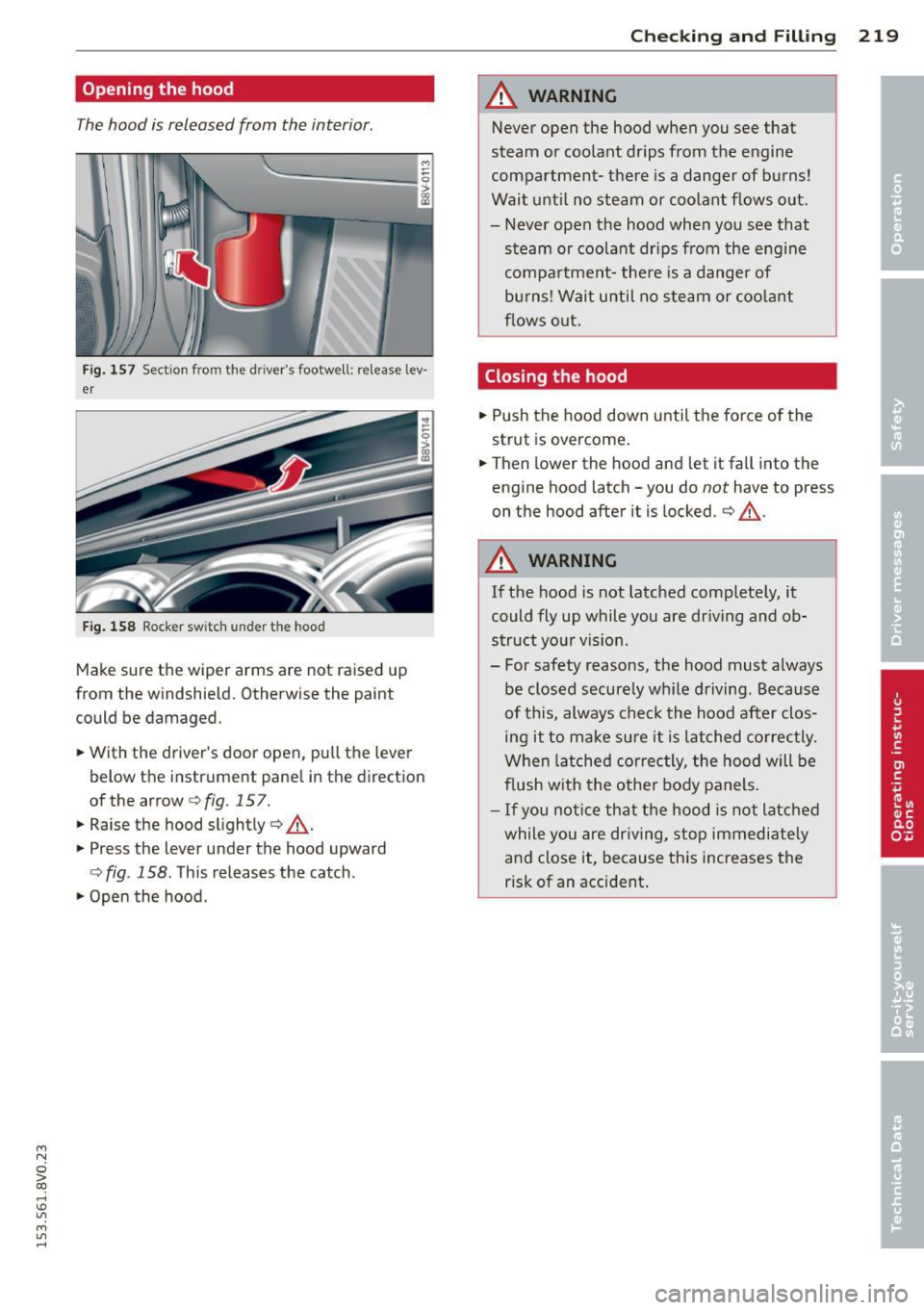
Fig. 157 Sect ion from the driver's footwe ll: release lev·
er
F ig. 158 Rocker switch un de r the hood
Make sure the wiper arms are not raised up
from the windshield. Otherwise the paint
could be damaged.
• With the driver's door open, pu ll the lever
below the instrument pane l in the direction
of the arrow
¢ fig. 157.
• Raise the hood slightly c;, &_ .
• Press the lever under the hood upward
c;, fig . 158. This releases the catch .
• Open the hood .
Che cking and Fillin g 219
A WARNING
Never open the hood when you see that
steam or coo lant drips from t he e ngine
compartment· there is a danger of burns!
Wait unti l no steam or coolant flows o ut.
- Never open the hood when you see that
steam or coo lant dr ips from the engine
compa rtment- the re is a dange r of
bu rns! Wai t until no ste am or coo lan t
flows o ut.
Closing the hood
• Push the hood down unti l the fo rce of the
strut is overcome .
• Then lower the hood and let it fall into the
engine hood latch -you do
not have to press
on the hood after it is locked.
c;, &_ .
A WARNING
If the hood is not latched complete ly, it
could fly up while you are dr iv ing and ob
struct you r vis io n.
- For safety reasons, the hood must always
be closed secure ly wh ile d riving. Because
of this, always check the hood after clos
ing it to make sure it is lat ched co rrectly.
When latched correc tly, the hood will be
f lush w ith the othe r body panels .
-If you no tic e th at t he hood is not latched
while you are dr iving, stop immedi ately
and close it, because this increases the
ris k of an accident .