lock AUDI S4 2014 Workshop Manual
[x] Cancel search | Manufacturer: AUDI, Model Year: 2014, Model line: S4, Model: AUDI S4 2014Pages: 296, PDF Size: 73.56 MB
Page 109 of 296
Audi adaptive cruise control and braking guard 107
-If you restrict or switch off the ESC, the
braking guard also switches itself off
¢page 188.
- Switch braking guard off when you are
loading the vehicle onto a vehicle carrier,
tra in, ship or other type of transporta
tion. This can prevent undesired warn i ngs from the braking guard system.
Messages
App lies to vehicles: with Audi adaptive cruise co ntrol
Braking guard: Off
This driver message appears if the system is
turned off via the radio/MM!*. Otherwise, if
the system is turned off, the information ap pears every time shortly after the start of the
tr ip.
The driver message also appears if the system is not avai lab le due to a malfunction or if the
ESC is not switched on¢
page 188. If this is
the case, the system will not provide warnings
about a possible collision.
Braking guard: Activated
This driver message appears if sharp brake
press ure was applied due to an acute warning.
•••
Three wh ite dots appear if a setting cannot be
selected with the operat ing lever . For exam
p le , this happens if you want to raise/lower
the speed even though there was no previous
l y saved speed .
ACC: Deactivation
The driver message appears in vehicles with
manual transmission . If the clutch pedal was
pressed down for too long, the adaptive cruise
control turns off . A chime sounds as a rem ind
er .
ACC: Sensor blocked
This message appears if the sensor view is ob
structed, for example by leaves, snow, heavy
spray or dirt. Clean the sensor <=>
page 99,
fig. 110.
ACC: not available
The driver message appears if there is a mal
function . The adaptive cruise contro l turns off .
A chime sounds as a reminder. Have the sys
tem checked by an authori zed Aud i dea ler or
authorized Aud i Service Fac ility.
ACC: unavailable
The driver message appears if, for example,
the brake temperat ure is too high. The adap
tive cruise control is temporarily unavailable .
A chime sounds as a reminder.
Engine speed!
This driver message appears in vehicles with
manua l transmission if the driver had not up
shifted or downs hifted in time while using
adaptive cruise control braking or accelerat
ing, caus ing the vehicle to exceed or no t reach
the permitted limit speed. The adaptive cruise
control turns off. A chime sounds as a remind
er .
Shift lever position!
Vehicles with an automat ic transmission: the
driver message appears if the selecto r lever is
shifted to the N position. Th e adaptive cruise
control is no t available while in this position.
Vehicles with manua l transm ission: the driver
message appears for vehicles with manual
transmission if there is no forward gear en
gaged, meaning if the reverse gear or the 1st
gear is engaged or if the selector leve r is in
the neutral position . The adaptive cr uise con
trol is not available while in th is position.
Stabilization control (ESC)
This message appears if the electronic stabili
z ation control ( ESC) is taking action to stab i
lize the vehicle. The adaptive cruise contro l
turns off. A chime sounds as a reminder .
Speed too low
This message appears if the current speed is
too low
to set or to maintain the desired
speed .
The speed be ing saved must be at least
20 mph (30 km/h). The cruise control is
turned off for speeds lower than 12 mph
Page 114 of 296
112 Audi side assist
- Side assist is not active wh ile you are
making the adjus tment.
- Your settings are automatica lly sto red
and ass igned to the remote control key
being used.
Driver messages
App lies to vehicles: with Audi side assist
If s ide ass ist switches off by itse lf, t he LED in
the butto n tur ns off a nd a message will ap
pear in t he instr ume nt cl uster d is p lay:
Audi side assist unavailable : Sensors blocked
T he radar sensors' vision is a ffected. Do not
cover the area in front of the senso rs with bike
wheels, stickers, dirt or other objects . Clean
the area in front of the sensors, if necessary
c::;,page 110, fig. 124.
Audi side assist : Currently unavailable
Side assist can not be swi tched on tempora ril y
bec ause there is a mal func tio n (for ex am ple,
the ba ttery cha rge leve l may be too low) .
Audi side assist : System fault!
The system ca nnot guara ntee that it w ill de
tec t ve hicles co rrec tly and it is sw itched off .
Th e senso rs have been displaced o r are faulty .
H ave the sys tem che cked by an au thor ized
Au di d eale r or auth oriz e d Au di S ervice Fa cility
soon .
Audi side assist : Unavailable when towing
Side assist sw itches off automatically when a
factory- insta lled trailer hitch is connected to
the elec trical connector on the trailer . There is
no guarantee the system will switc h off when
usi ng a retrofitted t railer hi tch . Do not use
si de assis t when towing a tra iler .
Page 122 of 296
120 Park ass is t
Sw it c hing off
.,. Drive faster than 9 mph (15 km/h), or
.,. take the vehicle out of reverse gear. The
acoustic parking system is immediately de
activated, and the rear view camera picture
is deactivated automatically after a per iod
of about 15 seconds, or
.,. switch off the ignition.
The delay in deactivating the camera provides an uninterrupted view behind the vehicle es
pec ially when maneuvering in tight parking
spaces and prevents the picture from turning
off the every time you sh ift out of reverse .
If the warning message appears in the display but not the rear view camera picture, read and
confirm the warning message. The acoustic
d istance signal is always active .
If you press a function button on the MMI
control console, the rear view camera picture
d isappears. The rear view camera picture reap
pears the next time you park.
Further information on the warn ing message
and the MMI control console can be found in
the MMI instruction booklet .
A WARNING
-Only use the rearview camera to assist
you if it shows a good, clea r picture. For
example, the image may be affected by
the sun sh in ing into the lens, dir t on the
lens or if there is a defect .
- Use the rearview camera only with the
rear lid completely closed. Make sure any
objects you may have mounted on the
rear lid do not block the rearview cam
era .
(D Tips
-The rear v iew camera picture is ava ila b le
as soon as the MM I Display or the MM I is
switched on, or the start-up phase is
completed.
- The sensors must be kept clean and free
of snow and ice for the park assist to op
erate. -
Yo u can change the vo lume and pitch of
the s ignals as we ll as the disp lay
¢ page 122 .
-What appea rs in the disp lay is time-de
layed.
· Reverse Parking
Applies to vehicles: with parking system (rear, with rear
v iew camera}
Parking mode 1 can be used when parking in
a garage or parking space.
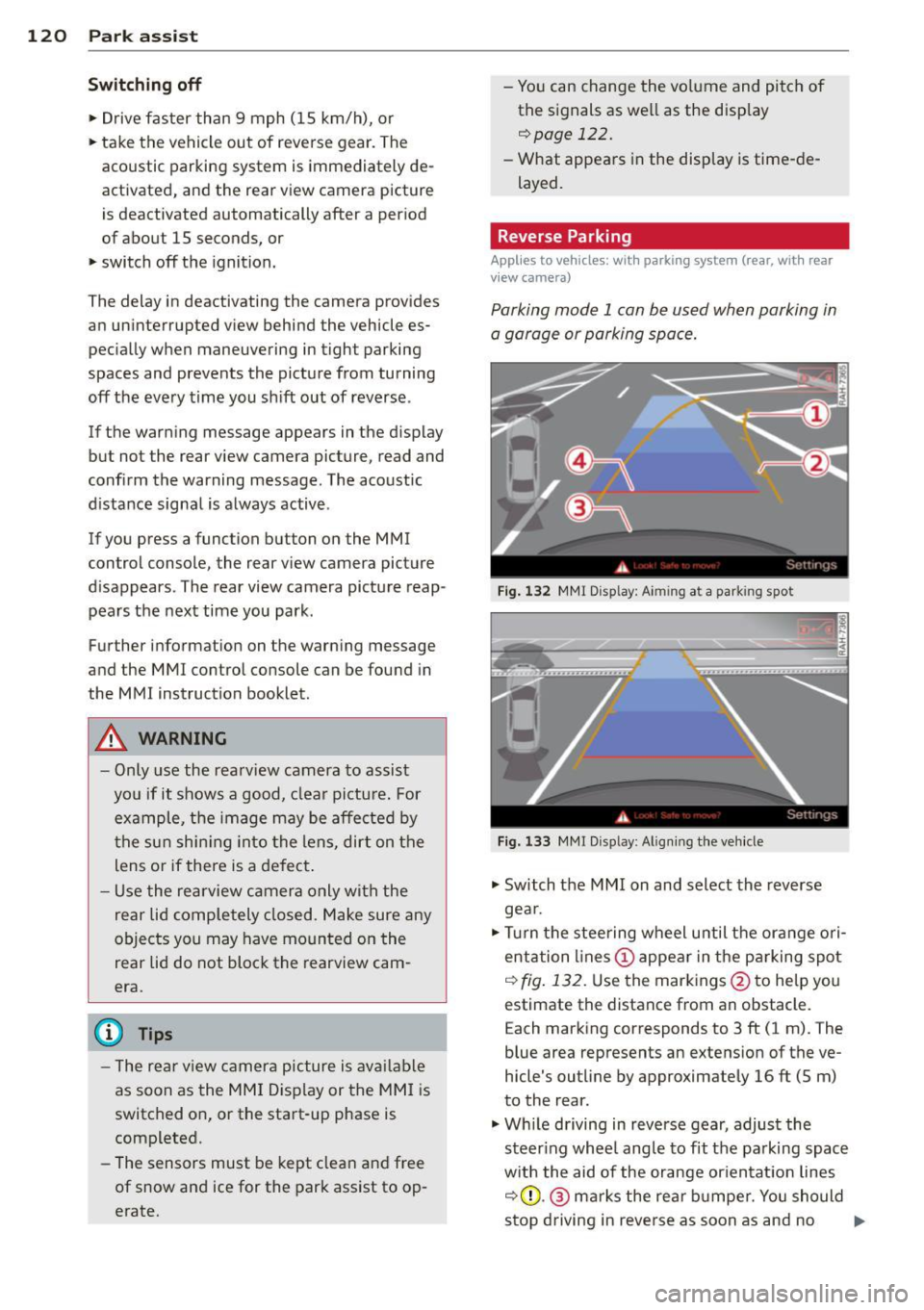
F ig . 1 32 MMI Disp lay : A im ing a t a park ing spo t
Fig. 133 MMr Disp lay : A lig nin g the ve hicle
.,. Switch the MMI on and select the reverse
gea r.
.,. Turn the stee ring wheel u ntil the ora nge ori
entation lines(!) appea r in the pa rking spot
q fig . 13 2. Use the markings @to help you
estimate the distance from an obstacle. E ach marking corresponds to 3 ft (1 m). The
blue area represents an extens ion of the ve
hicle's outline by approximately 16 ft (5 m)
to the rear.
.,. Wh ile driving in reverse gear, adjust the
steer ing whee l angle to fit the parking spac e
w ith the aid of the orange or ien tat ion lines
q (D .@ marks the rear b umpe r. You should
stop driving in reve rse as soon as and no .,.
Page 132 of 296
130 Driving Safely
• Always keep both feet in the footwell so
that you are in control of the vehicle at all
times.
For detailed information on how to adjust the
driver's seat, see
¢page 60.
A WARNING
Drivers who are unbelted, out of position
or too close to the airbag can be seriously
injured by an airbag as it unfolds. To help
reduce the risk of serious personal injury:
- Always adjust the driver's seat and the
steering wheel so that there are at least
10 inches (25 cm) between your breast
bone and the steering wheel.
- Always hold the steering wheel on the
outside of the steering wheel rim with
your hands at the 9 o'clock and 3 o'clock positions to help reduce the risk of per
sonal injury if the driver's airbag inflates.
- Never hold the steering wheel at the
12 o'clock position or with your hands at
other positions inside the steering wheel
rim or on the steering wheel hub. Hold
ing the steering wheel the wrong way
can cause serious injuries to the hands,
arms and head if the driver's airbag de
ploys.
- Pointing the steering wheel toward your
face decreases the ability of the supple
mental driver's airbag to protect you in a
collision.
- Always sit in an upright position and nev
er lean against or place any part of your
body too close to the area where the air
bags are located.
- Before driving, always adjust the front
seats and head restraints properly and
make sure that all passengers are prop
erly restrained.
- Never adjust the seats while the vehicle
is moving . Your seat may move unexpect
edly and you could lose control of the ve
hicle.
- Never drive with the backrest reclined or
tilted far back! The farther the backrests
are tilted back, the greater the risk of in- jury due to incorrect positioning of the
safety belt and improper seating posi
tion.
- Children must always ride in child safety
seats ¢
page 167. Special precautions
apply when installing a child safety seat
on the front passenger seat¢
page 146.
Proper seating position for the front
passenger
The proper front passenger seating position
is important for safe, relaxed driving .
For your own safety and to reduce the risk of
injury in the event of an accident, we recom
mend that you adjust the seat for the front
passenger to the following position :
• Move the front passenger seat back as far as
possible . There must be a minimum of
10 inches (25 cm) between the breastbone
and the instrument panel¢,&. .
• Adjust the angle of the seatback so that it is
in an upright position and your back comes
in full contact with it whenever the vehicle is
moving.
• Applies to vehicles with adjustable head re
straints: Adjust the head restraint so the up
per edge is as even as possible with the top
of your head. If that is not possible, try to
adjust the head restraint so that it is as
close to this position as possible.
• Keep both feet flat on the floor in front of
the front passenger seat.
• Fasten and wear safety belts correctly
¢page 141.
For detailed information on how to adjust the
front passenger's seat, see
¢ page 58.
A WARNING
-
Front seat passengers who are unbelted,
out of position or too close to the airbag
can be seriously injured or killed by the air bag as it unfolds. To help reduce the risk of
serious personal injury:
Page 137 of 296
A WARNING
Always make sure that the doors, all windows, the sunroof and the rear lid are se
curely closed and locked to reduce the risk
of injury when the vehicle is not being
used.
- After closing the rear lid, always make
sure that it is properly closed and locked.
- Never leave your vehicle unattended es
pecially with the rear lid left open . A
child could crawl into the vehicle through
the luggage compartment and close the
rear lid becoming trapped and unable to
get out. Being trapped in a vehicle can
lead to serious personal injury.
- Never let children play in or around the
vehicle .
- Never let passengers ride in the luggage
compartment. Vehicle occupants must
always be properly restrained in one of
the vehicle's seating positions.
(D Tips
- Air circulation helps to reduce window
fogging. Stale air escapes to the outside
through vents in the trim panel. Be sure
to keep these slots free and open .
- The tire pressure must correspond to the
load. The tire pressure is shown on the
tire pressure label. The tire pressure la
bel is located on the driver's side B-pillar.
The tire pressure label lists the recom
mended cold tire inflation pressures for
the vehicle at its maximum capacity
weight and the tires that were on your
vehicle at the time it was manufactured.
For recommended tire pressures for nor
mal load conditions, please see chapter
c:>poge234.
Driving Safely 135
Tie-downs
App lies to veh icles : w ith tie -d owns
The luggage compartment is equipped with
four tie-downs to secure luggage and other
items .
Use the tie-downs to secure your cargo prop
erly
c:> page 134, Loading the luggage com
partment .
In a collision, the laws of physics mean that
even smaller i tems that are loose in the vehi
cle will become heavy missiles that can cause
serious injury. Items in the vehicle possess en
ergy which vary with vehicle speed and the
weight of the item. Vehicle speed is the most
significant factor.
For example, in a frontal collision at a speed
of 30 mph (48 km/h), the forces acting on a
10-lb (4.5 kg) object are about 20 times the
normal weight of the item . This means that
the weight of the item would suddenly be
about 200 lbs. (90 kg). You can imagine the
injuries that a 200 lbs. (90 kg) item flying
freely through the passenger compartment could cause in a collision like this.
A WARNING
----Weak, damaged or improper straps used
to secure items to tie-downs can fail dur
ing hard braking or in a collision and cause
serious personal injury.
- Always use suitable mounting straps and
properly secure items to the tie-downs in
the luggage compartment to help pre
vent items from shifting or flying for
ward as dangerous missiles.
- When the rear seat backrest is folded
down, always use suitable mounting
straps and properly secure items to the
tie-downs in the luggage compartment
to help prevent items from flying for
ward as dangerous missiles into the pas
senger compartment .
- Never attach a child safety seat tether
strap to a tie-down . •
•
Page 144 of 296
142 Safet y belt s
To provide maximum protection, sa fety belts
must always be positioned correctly on the
wearer 's body .
.,. Adjust the front seat and head restr aint
properly ¢
page 58, Seats and storage .
.,. Make sure the seatback of the rear seat
bench is in an upright pos ition and securely
latched in place before using the belt¢.&, .
.,. Hold the belt by the tongue and pull it even-
ly across the chest and pelvis¢.&, .
.,. Inse rt the tongue into the correct buckle of
you r seat until you hea r it latch securely
¢ fig . 148.
.,. Pull on the be lt to m ake s ure th at it is se-
curely latched in the b uckle .
Automatic safety belt retractors
Every safety belt is eq uipped w ith an automat
ic belt retractor on the shoulder be lt . T his fea
ture locks the be lt when the belt is pulled out
fast, dur ing hard bra king and in an acci dent.
The belt may also lock when yo u drive up or
down a steep hill or through a sharp curve. During normal driving the belt lets you move
freely.
Safety belt pret ensioners
The sa fe ty belts are equippe d wi th a be lt pre
tensioner that helps to tigh ten the safety bel t
and remove s lack when the pretensioner is ac
tivated. The function of the pretensioner is
monitored by a warning light¢
page 20 .
Switchable locking feature
Every sa fe ty belt ex cep t the one on the dr iver
seat is eq uipped w it h a switchable locking fea
ture that
mu st be used w hen the safety belt is
used to attach a child safety seat . Be sure to
read the important inf ormation abo ut this
feature
¢page 177.
A WARNING
Improperly positioned safety belts can
cause serious injury in an accident
¢ page 142, Safety belt position .
- Safety belts offer optimum protection
only when the seatback is up right and
-
be lts are properly posit ioned on the
body.
- Always make sure that the rear seat
backrest to wh ich the center rear safety
be lt is attached is securely latched when
ever the rea r center safety belt is being
used. If the backrest is not secure ly
latched, t he passenger w ill move for
ward with the ba ckr est dur ing sudd en
bra king, in a sudden maneuver and es pe
ci ally in a crash .
- Neve r attach the safety be lt to t he buck
le for an other sea t. At taching the belt to
the wrong buckle will redu ce s afe ty be lt
effec tiveness and can cause serio us per
sonal injury.
- A passenger who is not properly restrain
ed can be seriously injured by the safety
be lt itself w hen it moves from the stro n
ger parts of the body into cr itical areas
like the abdomen.
- Always loc k the convertible locking re
tractor when you are secu ring a child
safety seat in the vehicle
c:> page 179 .
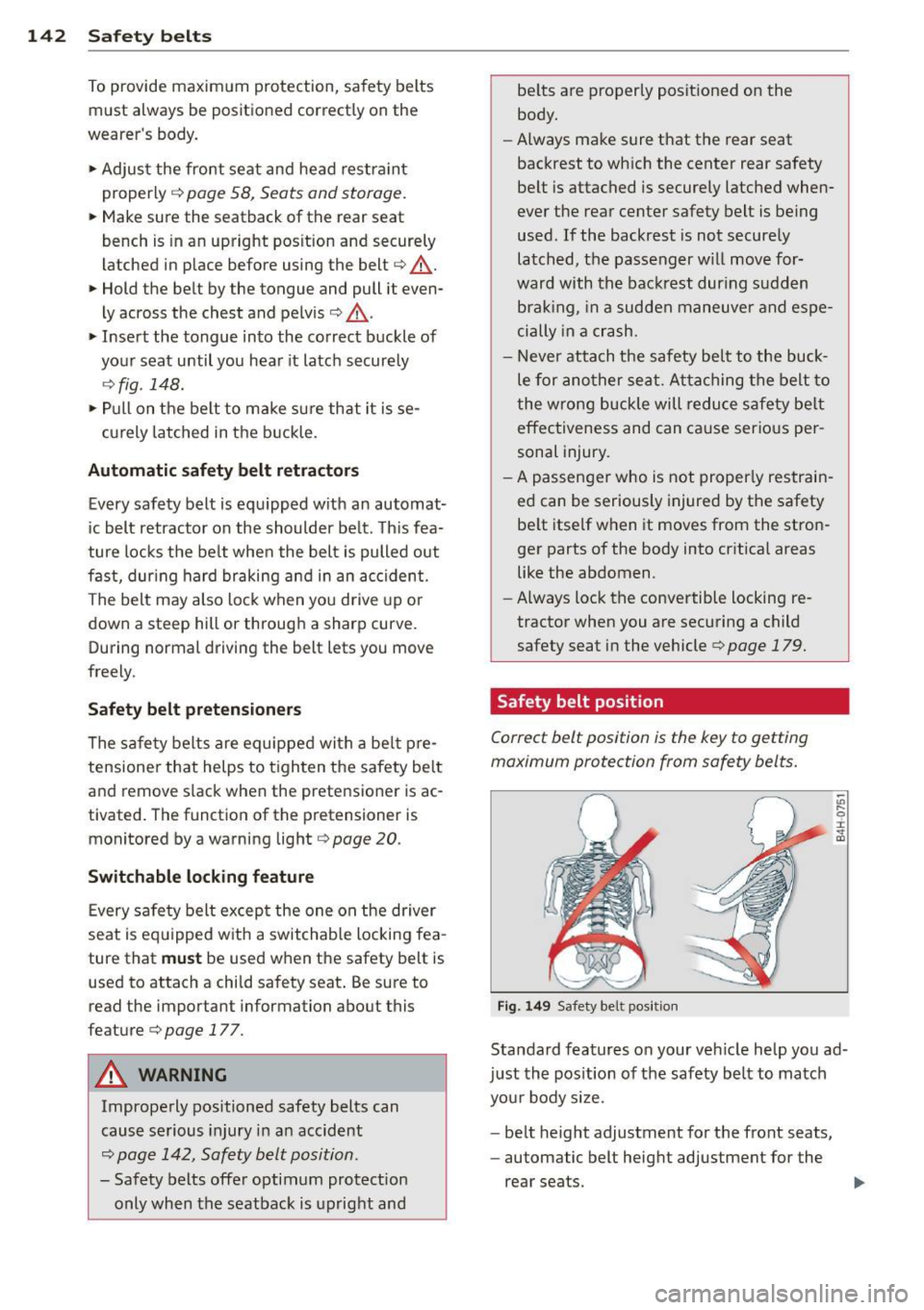
Safety belt position
Correct belt position is the key to getting
maximum protection from safety belts.
Fig . 149 Safe ty bel t pos it ion
Standard features on your veh icle help you ad
j u st the pos ition of the safety be lt to match
you r body si ze.
- be lt height adjustment for the front seats,
- automatic belt height adjustment for the
rear seats .
Page 160 of 296
158 Airbag sys te m
make certain that the PA SSENGER AIR BAG
OFF
li ght stays on continuous ly whenever the
ignit ion is on. If the
PASS ENGER AIR BAG
OFF
light does not appear and not stay on all
the time, stop as soon as it is safe to do so
and
- react ivate the system by turning the ignition
off and then turning it on again;
- remove and reinstall the child restraint.
Make sure that the child restraint is properly
installed and that the safety belt for the
front passenger seat has been correctly
routed around the child restraint as descr i
bed in the child restraint manufacturer's in
structions;
- make sure that the convertible locking fea
ture on the safety belt for the front passen
ger seat has been activated and that t he
safety belt has been pulled tight. The belt
must not be loose o r have loops of slack so
that the sensor below the safety be lt latch
on the seat can do its job
c::> page 177 .
-make su re that th ings that may increase the
weight of the chi ld and child safety seat are
not being transported on the front passen
ger seat;
- make sure that the safety be lt tension sen
sor is not b locked. Shake the safety belt
latch on the front passenger seat back and
forth;
- If a strap or tether is being used to tie the child safety seat to the front passenger
seat, make sure that it is not so tight that it
causes the we ight-sensing mat to measure
more we ight than is actua lly on the seat.
If the PASSEN GER AIR BAG OFF light still
doe s not come on
and does not stay on con
tinuously (when the ignition is switched on),
- take the chi ld restraint off the front passen -
ger seat and install it properly at one of the
rear seat pos itions . Have the a irbag system
inspected by your authorized Audi dealer
immediately .
- move the ch ild to a rear seat pos it io n and
make sure that the child is properly restrain
ed in a child restraint that is appropriate for
i ts size and age. The
PA
SSENGER AIR BAG OFF light sho uld
NOT come on when the ignition is on and an
adult is s itting in a proper seating position on
the front passenger seat. If the
PAS SENGER
AIR BAG OFF
light comes on and stays on or
flashes for about 5 seconds wh ile driving, un
der these c ircumstances, make sure that:
- the adult on the front passenger seat is properly seated on the center of the seat
cushion with his or her back up aga inst the
backrest and the backrest is not recl ined
c::> page 129, Proper occupant seating posi
tions,
- the adult is not tak ing weight off the seat by
holding on to the passenger assist handle
above the fron t passenger door or support
ing thei r weig ht on the armrest,
- t he safety belt is being properly wo rn and
t hat there is not a lot o f slack in the safety
be lt webb ing,
- accesso ry seat covers or cushions o r othe r
t hings tha t may c ause an incorrect reading
or impression on the weight-sensing mat
under the upho lstery of the seat have been
removed from the front passenger seat,
- a sa fety belt extender has not bee n left in
the safety belt latch for the front passenger
seat.
In add ition to the
PASSENGER AIR BAG OFF
li ght in the center o f the instrument panel,
t h e message
PASSENGER AIR BAG OFF or
PASSENGER AIR BAG ON wi ll briefly appear
in the instrument cluster disp lay. This is to in
form the dr iver of the current front passenger
airbag status.
Important safety instructions on
monitoring the Advanced Airbag System
A WARNING
An a irbag system that is not functioning
properly cannot provide supplemental pro
tection in a frontal c rash.
- If the airbag ind icator light
c::> page 20
comes when the veh icle is being used,
have the system inspected immediately
by your au thorized A udi dealer .
It is
-
Page 172 of 296
1 70 Child Saf ety
Model Manufactured on or
a fter
Graco Snugride September 2S, 2007
Peg Perego Primo V i- September 25, 2007
aggio SIP IMUN00US
Subpart C -Forward -facing and
con vertibl e child r estra in ts
Model Manufactured on or
after
Britax Roundabout September 25, 2007
E9L02xx
Cosco Tour iva 02519 December 1, 1999
Cosco Summit Deluxe September 2S, 2007
High Back Booster
22-262
Cosco Hig h Back September 25, 2007
Booster 22-209
Evenflo Tribute V September 25, 2007
379xxxx
Evenflo Medallion December 1, 1999
254
Evenflo Generations September 25, 200
7
352xxxx
Graco ComfortSport September 25, 2007
Graco Toddler Safety September 25, 2007
Seat Step 2
Graco P latinum Ca rgo September 25, 2007
_&. WARNING
T o reduce the risk of serious injury, make
sure that the
PASSENGER AIR BAG OFF
light comes on and stays on whenever a
child restraint is installed on the front pas
senger seat and the ignition is switched
on.
- Take the child restraint off the front pas senger seat and install it properly at one
of the rear seat positions if the
PASSEN
G ER AIR BAG OFF
light does not stay on.
- Have the airbag system inspected by
your authorized Aud i dealer immediate
ly.
(!) Tips
The child seats listed in categories A to C have been statically tested by Audi on ly for
the Advanced A irbag function.
Important safety instructions for using
child safety seats
Correct use of child safety seats substantially
reduces the risk of injury in an accident!
As the driver, you are responsib le for the safe
ty of everybody in the veh icle, especially ch il
dren:
... Always use the right ch ild safety seat for
each child and always use it properly
¢page 173 .
... Always carefully follow the child safety seat
manufacturer's instruct ions on how to route
the safety belt properly through the child
safety seat.
... When usi ng the veh icle safety belt to install
a child safety seat, you m ust first activate
the convertib le locking retractor on the
safety belt to prevent the child safety seat
from moving
¢ page 177.
... Push the ch ild safety seat down with your
full weight to get the safety belt really tight
so that the seat cannot move forwa rd or
sideways mo re than one inch (2.5 cm) .
... If a strap or tether is be ing used to t ie the
child safety seat to the front passenger
seat, make sure tha t it i s n ot so tight th at i t
causes the weight -sensing mat to measure
more weight than is act ually on the seat.
... Sec ure unused safety belts o n the rear seat
¢ page 172.
Always remember : Even tho ugh yo ur vehicle is
equipped with an Advanced Airbag system, all
chi ldren, especially those 12 years and young
er, shou ld always r ide in the back seat proper-
ly restrained for their age and size. .,.
Page 174 of 296
172 Child Safety
range, and as far away from the airbag
as possible before installing the child
restraint.
- Always make sure that nothing pre
vents the front passenger's seat from
being moved to the rearmost position
in its fore and aft adjustment range.
- Always make sure that the backrest is
in the upright position .
- Always buckle the child safety seat firmly
in place even if a child is not sitting in it.
A loose child safety seat can fly around
during a sudden stop or in a collision.
- Always read and heed all WARNINGS
whenever using a child restrained in ave
hicle is being used
c::> page 138, Safety
belts,
c::> page 146, Airbag system and
c::> page 167, Child Safety.
.,&. WARNING
To reduce the risk of serious injury, make
sure that the
PASSENGER AIR BAG OFF
light comes on and stays on whenever a
child restraint is installed on the front pas
senger seat and the ignition is switched
on.
- Take the child restraint off the front pas
senger seat and install it properly at one of the rear seat positions if the
PASSEN
GER AIR BAG OFF
light does not stay on.
- Have the airbag system inspected by
your authorized Audi dealer immediate
ly.
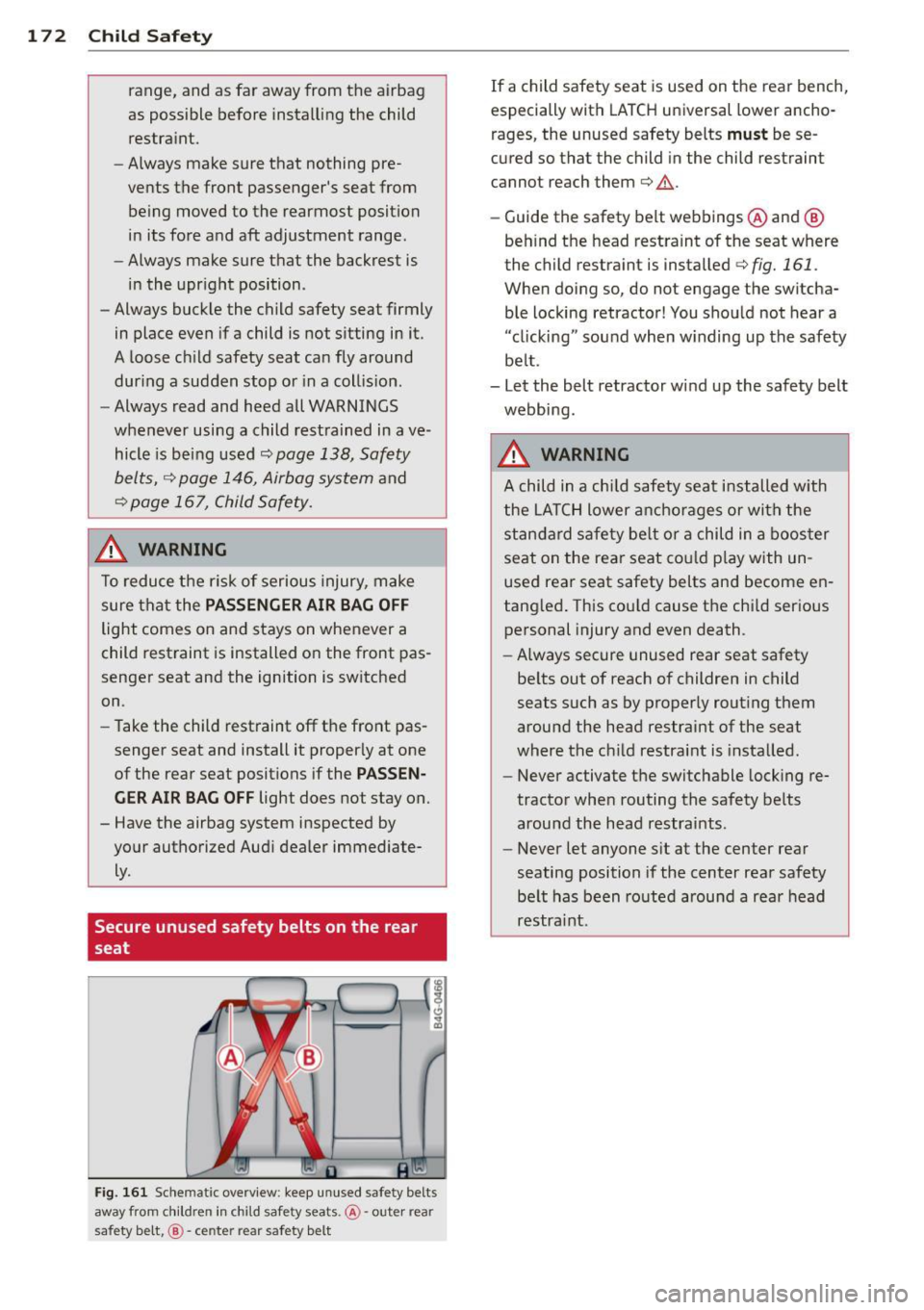
Secure unused safety belts on the rear
seat
Fig. 161 Schematic overview : keep unused safety belts
away from chil dren in child sa fety seats. @· outer rear
safety belt,
®-center rea r safety belt
.
If a child safety seat is used on the rear bench,
especially with LATCH universal lower ancho
rages, the unused safety belts
must be se
cured so that the child in the child restraint
cannot reach them
c::> &.
-Guide the safety belt webbings @and @
behind the head restraint of the seat where
the child restra int is installed
c::> fig. 161 .
When doing so, do not engage the switcha
ble locking retractor! You should not hear a
"cl icking " sound when winding up the safety
belt.
- Le t the belt retractor wind up the safety belt
webbing.
.,&. WARNING
-A child in a child safety seat installed with
the LATCH lower anchorages or with the
standard safety belt or a child in a booster
seat on the rear seat could play with un
used rear seat safety belts and become en
tangled. This could cause the child serious personal injury and even death.
- Always secure unused rear seat safety
belts out of reach of children in child
seats such as by properly routing them
around the head restraint of the seat
where the child restraint is installed.
- Never activate the switchable locking re
tractor when routing the safety belts around the head restraints.
- Never let anyone sit at the center rear
seating position if the center rear safety
belt has been routed around a rear head
restra int.
Page 175 of 296
Child safety seats
Infant seats
Babies and infants up to about one year old
and 20 lbs. or 9 kg need special rearward -fac
ing child restraints that support the back,
neck and head in a crash.
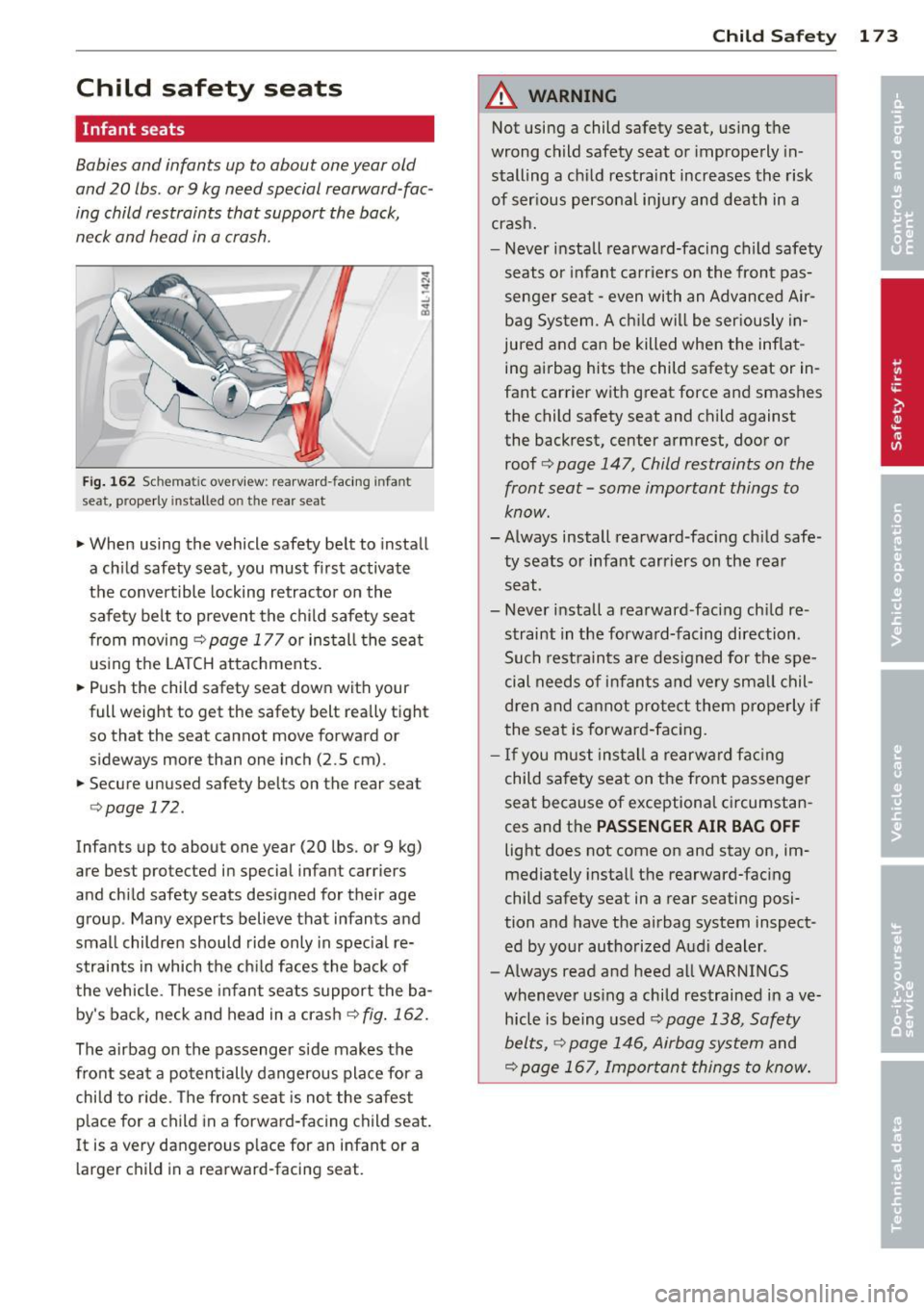
Fig . 162 Sche matic overv iew: rearward-fac ing infant
seat, properly installed o n the rear seat
.,. When using the vehicle safety belt to install
a ch ild safety seat, you must first activate
the convertible locking retracto r on the
safety be lt to prevent the child safety seat
from moving
¢ page 177 or install the seat
using the LA T CH attachments.
.,. Push the child safety seat down with your
full weight to get the safety belt rea lly tight
so that the seat cannot move forward or
sideways more than one inch (2.5 cm).
.,. Secure unused safety belts on the rear seat
¢page 172.
Infants up to about one year (20 lbs . or 9 kg)
are best protected in special infan t carriers
and child safety seats designed for their age
group . Many experts believe that infants and
small children should ride only in spec ial re
straints in which the ch ild faces the back of
the vehicle. These infant seats support the ba
by's back, neck and head in a crash
¢ fig . 162.
The airbag on the passenger side makes the
front seat a po tentially dangerous place for a
child to r ide . The front seat is not the safest
p lace for a child in a forward -facing child seat.
It is a very dangerous p lace for an infant or a
l arger ch ild in a rearward-facing seat.
Child Safety 173
A WARNING
Not using a child safety seat, using t he
wrong child safety seat or improperly in
stall ing a ch ild restraint increases the risk
of ser ious personal injury and death in a
crash.
- Never install rearwa rd-facing child safety
seats or infant ca rr ie rs on the front pas
senger seat -even with an Advanced Air
bag Sys tem. A ch ild will be ser iously in
jured and ca n be killed when the inflat
ing airbag hits the child safety seat or in
fant carrier with great force and smashes the child safety seat and child against
the backrest, center armrest, door or
roof ¢
page 147, Child restraints on the
front seat- some important things to
know .
-Always install rea rward -facing chi ld safe
ty seats or infant carriers on the rea r
seat .
- Never install a rea rward -facing ch ild re
straint in the forward-facing direction .
Such rest ra in ts are designed for the spe
cial needs of infants a nd ve ry sma ll chil
d ren and cannot pro te ct them p roperly if
the seat is forward -facing.
- If you must insta ll a rearwa rd fac ing
child safety seat on the front passenger
seat because of exceptiona l circumstan
ces and the
PASSENGER AIR BAG OFF
light does not come on and stay on, im
mediately insta ll t he rearward-facing
child safety seat in a rear seating posi
tion and have the airbag system inspect ed by your autho riz ed Audi dealer .
- Always read and heed all WARNINGS
wheneve r us ing a child restrained in ave
h icle is being used ¢
page 138, Safety
belts,
Q page 146, Airbag system and
¢ page 167, Impor tan t thi ngs to know .