Gas AUDI S4 2018 Owner's Manual
[x] Cancel search | Manufacturer: AUDI, Model Year: 2018, Model line: S4, Model: AUDI S4 2018Pages: 403, PDF Size: 66.81 MB
Page 318 of 403
any circumstances. Immediately contact the
nearest authorized Audi dealer or author
ized Audi Service Facility for assistance.
These fuels contain substances that can se
verely damage the fuel system and the en
gine if the engine is started.
Refueling
Fuel filler neck
The fuel filler neck is located on the right rear
side panel behind the fuel filler flap.
If the power locking system should fail, you can
still open the flap manually
-for detailed instruc
tions see
¢page 319.
You can find the fuel tank capacity of your vehicle
in
¢page 381.
The label on the inside of the fuel filler flap tells
you the correct fuel for your vehicle. For more in
formation about fuel specifications, see
<=?page 315.
Your veh icle fuel tank has an onboard refuelling
vapor recovery system. This feature he lps to pre
vent fuel vapors from escap ing from the tank and
polluting the environment while you refuel your
vehicle . In order to fill the tank properly while
protecting the environment, please follow this
refueling procedure carefully.
A WARNING
Under normal operating conditions, never car
ry additional fuel containers in your car. Gas
canisters and other containers used to trans
port fuel can be dangerous. Such containers,
full or empty, may leak and could cause a fire
in a collision. If you must transport fuel to
use for your lawn mower, snow blower, etc.,
be very careful and always observe local and
state laws regarding the use, transportation
and storage of such fuel containers. Make cer
tain the container meets industry standards
(ANSI/ASTM F8S2
-86).
(D Note
Never dr ive your vehicle until the fuel tank is
completely empty. The irregu lar supply of
Checking and Filling
fuel can cause misfiring. Gasoline could enter
the exhaust system and damage the catalytic
converter.
Fueling procedure
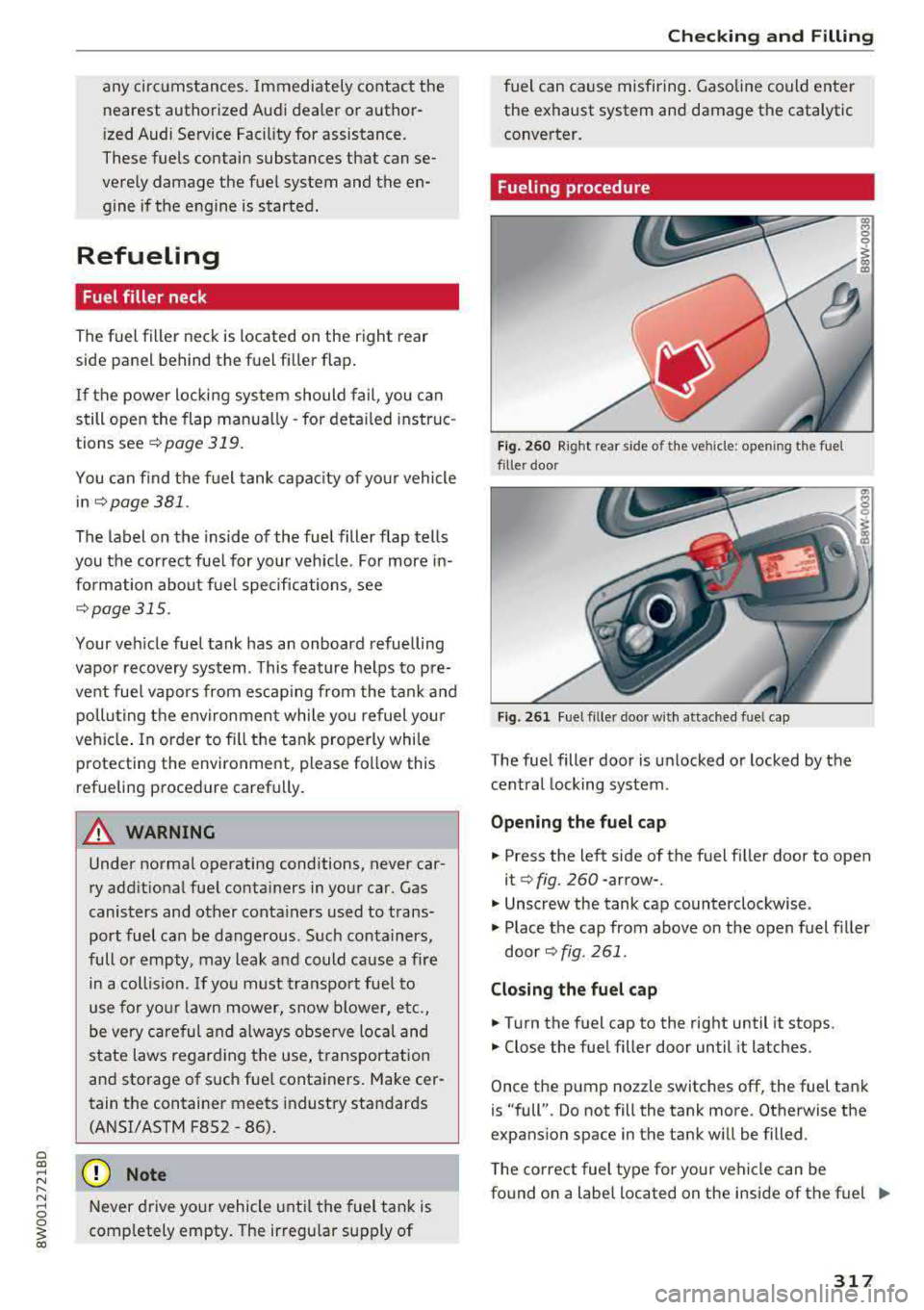
Fig. 260 Right rear side of the vehicle: opening the fuel
f ilte r door
Fig. 261 Fuel filler door with attached fuel cap
The fuel filler door is unlocked or locked by the
central locking system.
Opening the fuel cap
.,. Press the left side of the fuel filler door to open
it¢
fig. 260 -arrow-.
.,. Unscrew the tank cap counterclockwise.
.,. Place the cap from above on the open fuel filler
door¢
fig. 261.
Closing the fuel cap
.,. Turn the fuel cap to the right until it stops.
.,. Close the fuel filler door until it latches.
Once the pump nozzle switches off, the fuel tank
is "full". Do not fill the tank more. Otherwise the
expansion space in the tank will be filled.
The correct fuel type for your vehicle can be
found on a label located on the inside of the fuel
.,.
317
Page 323 of 403
Check ing and F illing
"' Position the bottle on the filler tube and turn
the bottle clockwise unti l it stops turning.
"' Press lightly aga inst the bottom of the bott le
to empty it. Continue pressing the bottom of
the bottle until it is empty or unti l fluid stops
flowing into the tank .
"' Remove the bottle and seal the filler neck
¢ page 322, Completing AdBlue refill .
0 Note
Only use refill bottles that are approved for
your vehicle. Us ing other systems can ca use
Ad Blue to leak.
-You can obta in refill bottles from an author
i zed Audi dealer or authorized A udi Service
F ac ility.
- A pe rm itted refill bottle conta ins approxi
mately 0 .5 gallon ( 1.9 liters) of Ad Blue.
Completing AdBlue refill
Applies to: vehicles with selective catalytic reduction
Closing the filler neck
"'Turn the Ad Blue cap to the r ight on the filler
tube unti l th e cap cl ic k s into
p lace ¢.&. in
Prepara tion on page 320,
¢ (Din Preparation
on page 320 ..
"' Then press on the left side of the tank door un-
ti l it latches.
After filling
The vehicle must be driven so tha t the system
recognizes t hat the Ad B lue was refilled. This can
t ake severa l m in utes.
"' If there was no Ad Blue left in the tank and a
r ange of O mi (0 km) was shown in the d isplay,
swi tch the ign ition on fo r abo ut 30 seconds be
f ore star ting the engine .
(D Tips
Ad Blue in the tank can free ze at very low tem
pera tures. If this happens, the system will
not detect that the AdB lue was refilled and it
w ill contin ue to inform you of the low AdBlue
322
leve l. The message tu rns off as soon as the
tank thaws out again .
Emissions control
systems
Cat alytic converter
Applies to: vehicles with gasoline engines
T he vehicle may only be driven w ith un leaded
gaso line, otherwise the catalytic converter will be
destroyed .
Never drive unti l the tan k is comp lete ly empty .
T he irregu lar supply of fuel that resu lts from that
can cause eng ine misfires. Uncombusted fuel will
enter the exhaust system , which can cause over
heating and damage to the catalytic converte r.
Di esel particulate filt er
Applies to: vehicles with diesel engines
The diese l particulate filter filters nearly all of
the soot part icles out of the exhaust. The filter
cleans itself automat ica lly under norma l dr iv ing
cond it io ns. If the filter cannot clean itself (for ex
amp le, because yo u are on ly driving short distan
ces), the filter becomes clogged with soot and
the
1111 i ndicato r light for the diese l particulate
filte r tu rns
on ¢ page 33.
_&. WARNING
The tempera ture o f the e xhaust sys tem is
h igh, both when driving and a fter stopping
the engine.
-
-Never tou ch the e xhaus t tail p ipes o nce they
have become hot. This cou ld resu lt in burns.
-D o not p ark your vehicle over flamm able
materials such as grass or leaves because
the hig h temperature of the emissions con
trol system (catalyt ic converter or d iese l
pa rticu late filter) co uld start a fire.
- Do not apply underbody protectant in the
exhaust system area, beca use this increases
the risk of f ire.
Page 327 of 403
Check ing and F illing
I f you must add oi l between oi l changes, use an
oil that matches the Audi oi l quality standard
listed on the st icker. The sticker is located at the
front of the engine
compartment <=> page 325,
fig. 268.
Au di r ec omm end s
ocastrol i/g/g'fE:@t P'r(w.:::-..~J.D,'JAJ..
A udi r ecommends Longli fe high performa nce
e ngin e oil from Audi G enuin e Part s
Using the proper engine oil is important for the
functionality and service life of the eng ine. Your
engine was factory-filled with a h igh-quality oil
which can usually be used throughout the entire
yea r.
0 Note
Your Limited New Vehicle Warranty does not
cover damage o r malfunctions due to failure
to follow recommended maintenance and use
requirements as set fo rth in the Aud i Owner's
Man ual and Warranty
& Maintenance booklet.
- Use only a high qual ity eng ine oi l th at ex-
p ressly complies with the Audi oil q uality
standard specified for your vehicle's engine .
Using any other oil can cause se rious engine
damage .
- Do not mix any lubricants or other additives into the engine oil. Doing so can cause en
gine damage.
(D Tips
If you need to add oil and there is none availa
ble that meets the Audi oi l quality standard
your engine requi res, you may add a total of
no more than 0.5 qt (0.5 l) of a h igh-quality
"synthet ic" o il that meets the following speci
fications.
- Vehicles with gasoline eng ine: ACEA A3 or
API SM with a viscosity grade of SAE OW-30,
SAE 5W-30 or SAE 5W-40.
- Vehicles w ith diesel eng ine: ACEA C3 or
API CF with a v iscosity grade of SAE OW-30
or SAE 5W-30 .
- For more information about engine oi l that
has been approved for your vehicle, please
contact eithe r your authorized Aud i dealer
or Audi Custome r Relat ions at
326
1 (800) 822-2834 or visit our web site at
www.audi usa .com or www .audicanada .ca.
Engine oil consumption
The engine in your vehicle depends on an ade
quate amount of oil to lubricate and cool all of
its moving ports.
In order to prov ide effect ive lub ricat ion and cool
ing of internal engine components, all internal
combustion engines consume a certain amount
of oil. Oil consumption var ies from engine to en
gine and may change significantly over the life of
the engine. Typically, engines w ith a specified
break-in period
(see<=> page 80) consume more
o il dur ing the break-in per iod than they consume
after o il consumption has stabi lized .
U nder normal cond itions, the rate of oil con
sumption depends on the quality and viscos ity of
the oil, the RPM (revolutions per m inute) at
wh ich the engine is operated, the amb ient tem
perature and road condit ions. Furthe r facto rs a re
t h e amo unt of o il di lution from wate r condensa
t ion or fue l residue a nd the oxidat ion level of the
oi l. As any engine is subject to wear as mileage
builds up, the oi l consumption may increase ove r
ti me until replacement of worn components may
become necessary.
With a ll these variab les coming into p lay, no
standard rate of oil cons umption can be estab
li shed or specified . There is no alternative to reg
ular and frequent checking of the oil level, see
Note .
If the yellow engine oil leve l warning symbo l El
in the instrument cluster lights up, you should
check the o il level as soon as possible
<=> page 32 7. Top off the o il at your earliest con
venience
<=> page 32 7.
A WARNING
Before you check anyth ing in the e ngine com
partment, always read and heed all WARN
I NGS<=> .&. in Working in the engine compart-
ment on page 323.
1iJ>,
Page 332 of 403
a co .... N ,....
N .... 0 0
3 co
edge of the reservoir and result in damage
to the vehicle .
- Do not get any brake fluid on the vehicle
paint, beca use it will corrode the paint .
Battery
General warnings about batteries
Because of the complex power supply, all work
on batteries such as disconnecting, replacing,
etc. shou ld
onl y be performed by an a uthorized
Aud i dealer o r autho rized Aud i Serv ice Facility
¢ ,&. .
The term "vehicle battery" refers to the 12 Volt
battery in your veh icle.
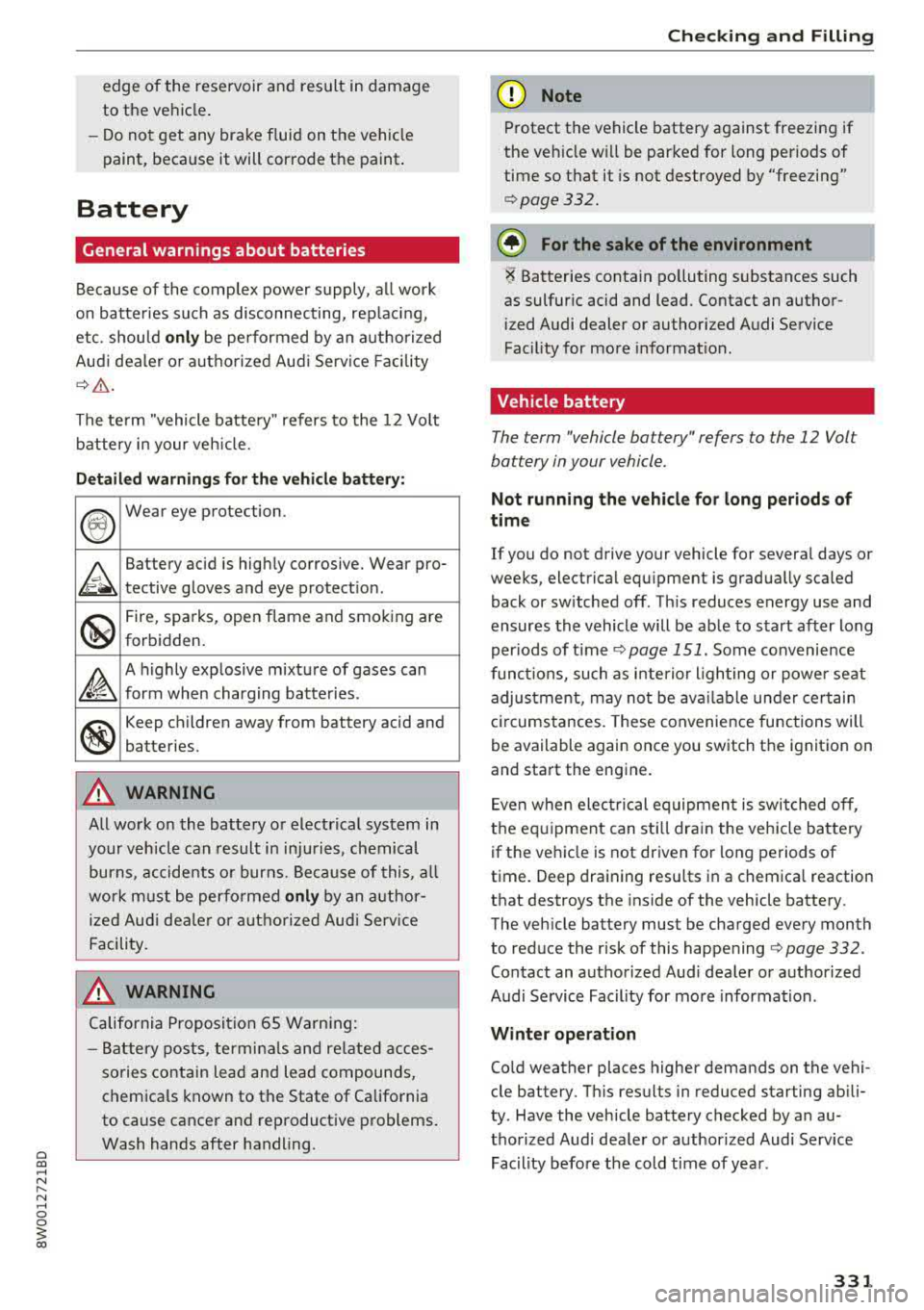
Detailed warning s for th e vehicl e batter y:
®
Wear eye protection .
A
Battery acid is highly corrosive. Wear pro-
tective gloves and eye protect ion.
@
Fire, spa rks, open flame and smoking are
forbidden.
~
A highly explosive mixture of gases can
form when charging batteries.
®
Keep children away from battery acid and
batteries.
A WARNING
All work on the battery or electrical system in
your vehicle can result in injuries, chemical
burns, accide nts o r burns. Be cause of this, a ll
work m ust be perfo rmed
only by an a uthor
ized Aud i deale r or a utho rized Aud i Serv ice
Facility.
_&. WARNING
California Proposition 65 Warning:
- Battery posts , termina ls and re lated acces
sories contain lead and lead compounds,
chemicals known to the State of California
to cause cancer and reproductive problems.
Wash hands after handling.
Ch eck ing and Filling
(D Note
Protect the vehicle battery against freezing if
the veh icle w ill be parked for long periods of
time so that it is not destroyed by "free zing"
¢ page 332.
@ For the sa ke of the environment
i Batteries contain polluting substances such
as sulfur ic acid and lead. Contact an author
i zed Audi dealer or authorized Audi Service
Fac ility for more informat ion .
Vehicle battery
The term "vehicle ba ttery" refers to the 12 Vol t
ba ttery in your vehicle.
Not running th e vehicle fo r long p eriod s of
time
If you do not drive your vehicle for severa l days or
weeks, electrical equ ipment is gradually scaled
back or sw itched off . Th is reduces energy use and
ensures the vehicle will be able to start after long
per iods of t ime
¢ page 151. Some convenie nce
funct ions, such as inte rio r ligh ting or power seat
adjustment, may not be ava ilable under certain
c ircumstances. These convenience functions will
be available again once you switch the ignition on
and start the engine.
Even when elect rical equipment is switched off,
the eq uipment can sti ll drain the vehicle battery
if the vehicle is not driven for long periods of
time. Deep draining results in a chemica l reaction
that destroys the inside of the vehicle battery .
The veh icle battery must be charged every month
to reduce the risk of this happening
¢ page 332 .
Contact an authorized Aud i dealer or authorized
Audi Service Facility for more information .
Winter operation
Co ld weather places higher demands on the vehi
cle battery. Th is results in reduced starting ab ili
ty. Have the vehicle battery checked by an au
thorized Audi dea ler or authorized Audi Service
Facil ity before the cold time of year.
33 1
Page 333 of 403
Checking and Filling
Charging the vehicle battery
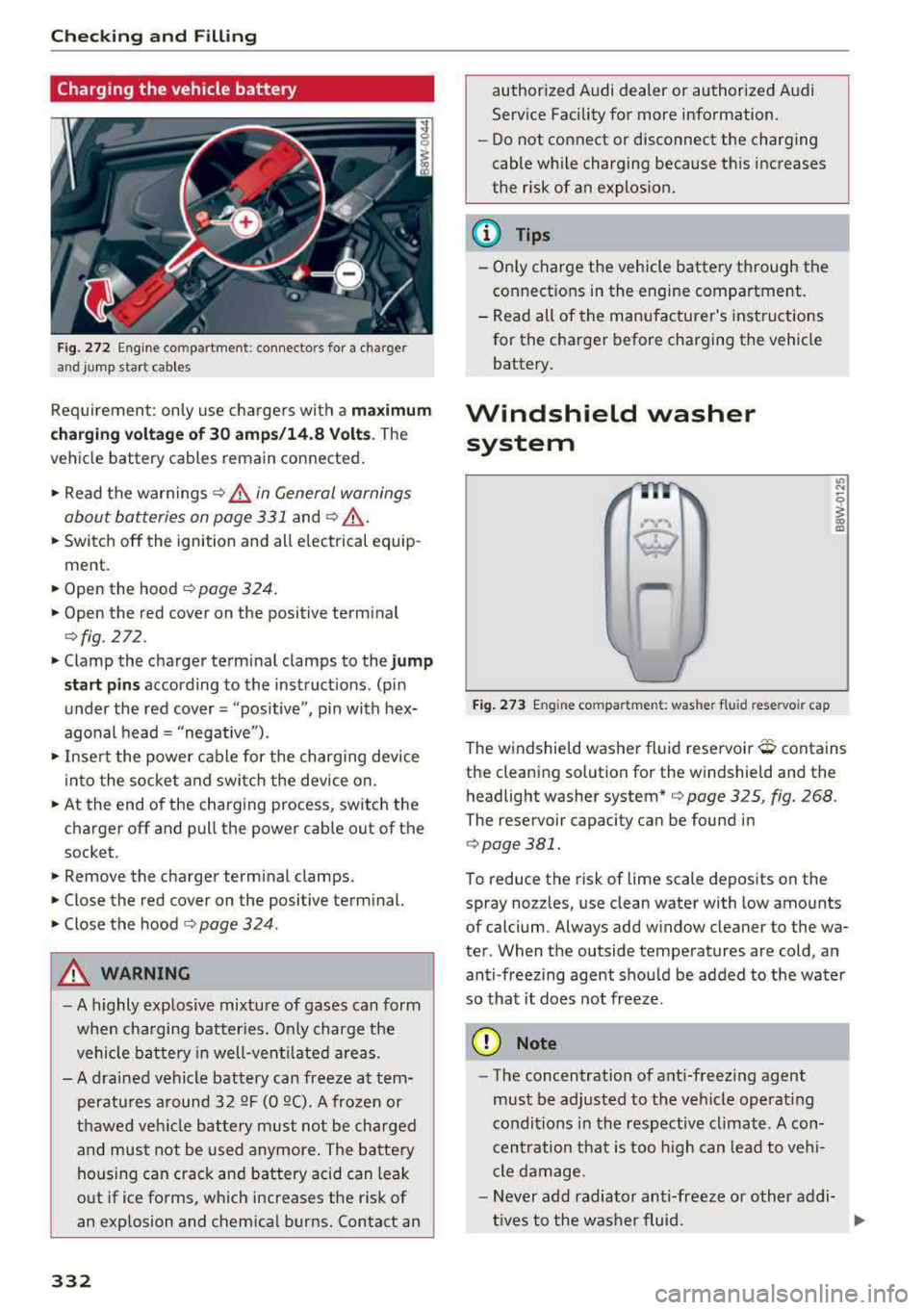
Fig. 272 Engine co mpa rtment : connec tors for a c harger
and jump start cab le s
Req uirement: only use chargers with a m aximum
c hargi ng vo lta ge of 30 amp s/14.8 Volt s.
The
vehicle battery cables remain connected .
.,. Read the warnings c> .&. in General warnings
about batteries on page 331
and c> ,&. .
.,. Switch off the ignition and all electrical equip
ment .
.,. Open the hood 9 page 324 .
.,. Open the red cover on the positive terminal
c>fig. 272 .
.,. Clamp the charger terminal clamps to the jump
s ta rt pin s
according to the instruct ions . (pin
under the red cover = "positive ", p in with hex
agonal head= "negative ") .
.,. Inse rt the powe r cable for the charg ing device
i nto the socke t and switch the dev ice on .
.,. At the end of the charging process , switch the
charger off and pull the power cab le out of the
socket .
.,. Remove the charger terminal clamps.
.,. Close the red cover on the positive terminal.
.,. Close the hood c> page 324 .
A WARNING
-A highly explosive mixtu re of gases can form
when cha rging batter ies. On ly charge the
vehicle batte ry in well-ven tilated areas.
- A drai ned vehicle battery can freeze at tem
peratu res a round 32
QF (0 QC). A froze n or
thawed veh icle bat tery must not be charged
and must not be used anymore. The ba ttery
housing can crac k and battery acid can leak
o ut if ice forms, wh ich increases the r isk of
an exp losion and chemical burns. Contact an
332
author ized Audi dealer or authorized A udi
Service Facility for more information.
- Do not connect or disconnect the charging
cable whi le charging because this increases
the risk of an explos ion.
@ Tips
- Only charge the vehicle battery t hrough the
connect ions in the engine compartme nt.
- Read all of the manufacturer's instructions
for the charger before charging the vehicle
battery.
Windshield washer system
Fi g. 2 7 3 Engine compar tm ent: washer flui d res ervoir cap
The windshield washer fluid reservoir¢ contains
t he cleaning solution for the windshield and th e
headlight washer system *
c> page 325, fig. 268 .
The reservoir capaci ty can be found in
c> page 381.
To reduce the risk of lime scale deposits on the
spray no zzles, use clean water with low amounts
of calcium . Always add w indow cleaner to the wa
ter . When the outside temperatures are cold, an
anti -freezing agent should be added to the water
so that it does not freeze .
(D Note
-The concentration o f ant i-freez ing agent
must be adjusted to the ve hicle operat ing
conditions in the respective climate . A con
cent ration t hat is too high can lead to vehi
cl e damage.
- Never add radiator anti-freeze or other addi
t ives to the washer fluid.
Page 347 of 403
Wheels
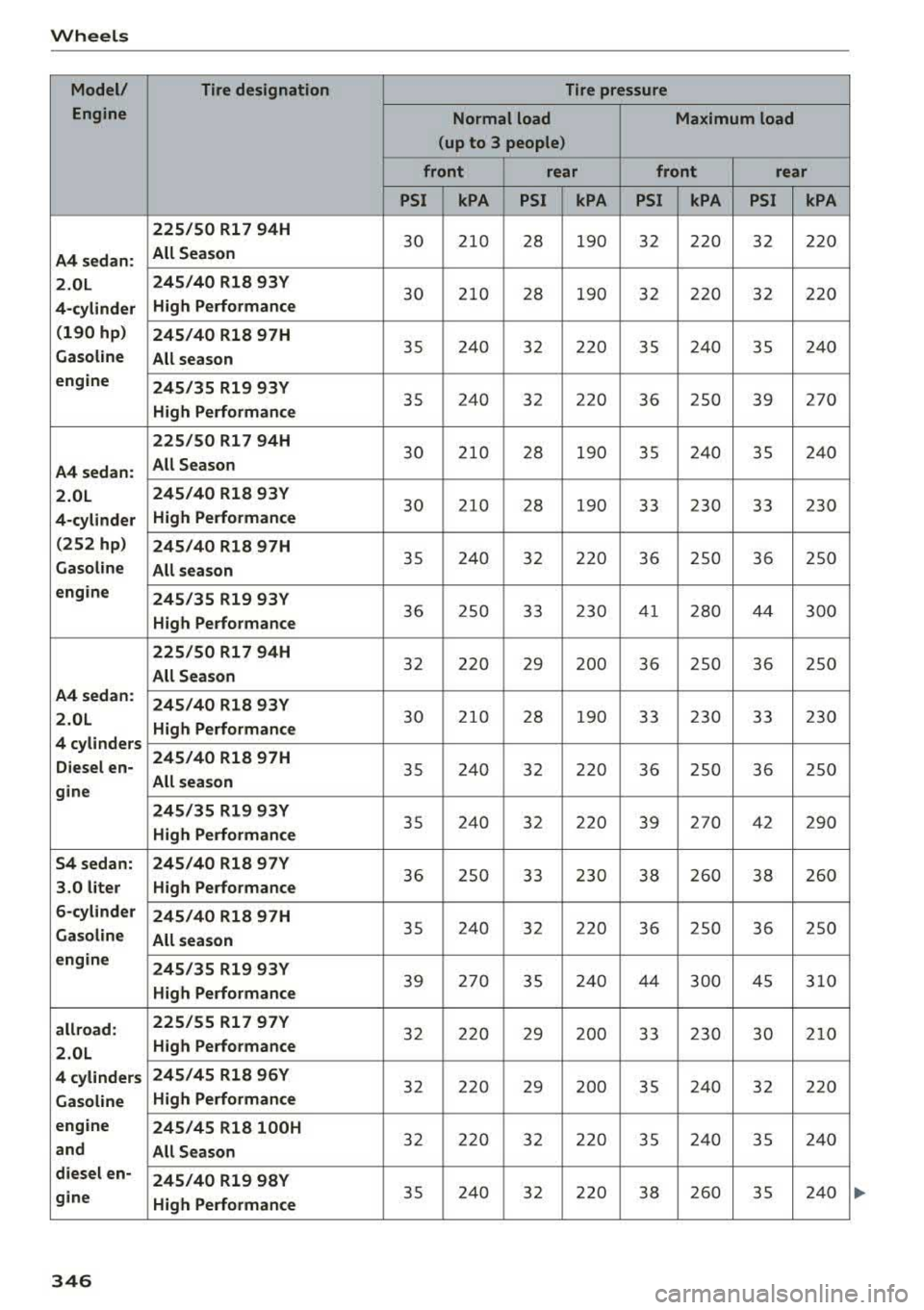
Model/ Tire designation Tire pressure
Engine Normal load
Maximum load
(up to 3 people)
front rear front rear
PSI kPA PSI kPA
PSI kPA PSI kPA
225 /50 Rl 7 94H
30 210 28 190 32 220 32 220
A4 sedan: All Season
2 .0L 245
/40 R18 93Y
30 21 0 28 190 32 22 0 32 220
4-cylinder High Performance
( 190 hp )
245/40 R18 97H
35 240 32 220 35 240 35 240 Gasoline All season
engine 245/35 R19 93Y
35 240
32 220 36 250 39 270 High Performan ce
225 /50 Rl 7 94H
30 21 0 28 190 35 240 35 240
A4 sedan : All Season
2.0L 245/40 R18 93Y
30
210 28 190
33 230
33 230
4-cyl
inder High Performan
ce
( 252 hp )
245/40 R18 97H
3 5 240
32 220 36 250 36 250 Gasoline
All season
engine 245/35 R19 93Y
36 250 33 230 41 28 0 44 300 High Performance
225/50 Rl 7 94H
32 220 29 200 36 250 36 250 All Season
A4 sedan :
245 /40 R18 93Y
2 10 28 190 3 3 230 33 230
30 2.0L
High Performance
4 cylinders
245/40 R18 97H
32 220 36 250 36 250 Diesel en-35 240 All season
gine
245/35 R19 93Y
270 42
290
35 240
32 220 39
High Performan ce
S4 sedan: 245 /40 R18 97Y
3 6 2 50 33 230 3 8 260 3 8 260 3.0 liter High Performance
6-cyl inder
245/40 R18 97H
35 240
32 220
36 250
36 250 Gasoline
All season
engine 245/35 R19 93Y
39 270 35 24
0 44
300 45 3 10 High Performance
allroad: 225/55 R17 97Y
3
2 22 0 29 200 33 230 30 2 10
2 .0L High Performance
4 cylinder s 245/45 R18 96Y
32 220 29 200 35
240
32 220
Gasoline High Performan
ce
engine 245/45 R18 l00H
3 2 220 3 2 220 35 24 0 35 2 40 and
All Season
diesel en- 245/40 R19 98Y
35 240 32 220 38 260
35 2
4 0 gine
High Performance
346
Page 374 of 403
a co .... N ,....
N .... 0 0
3 co
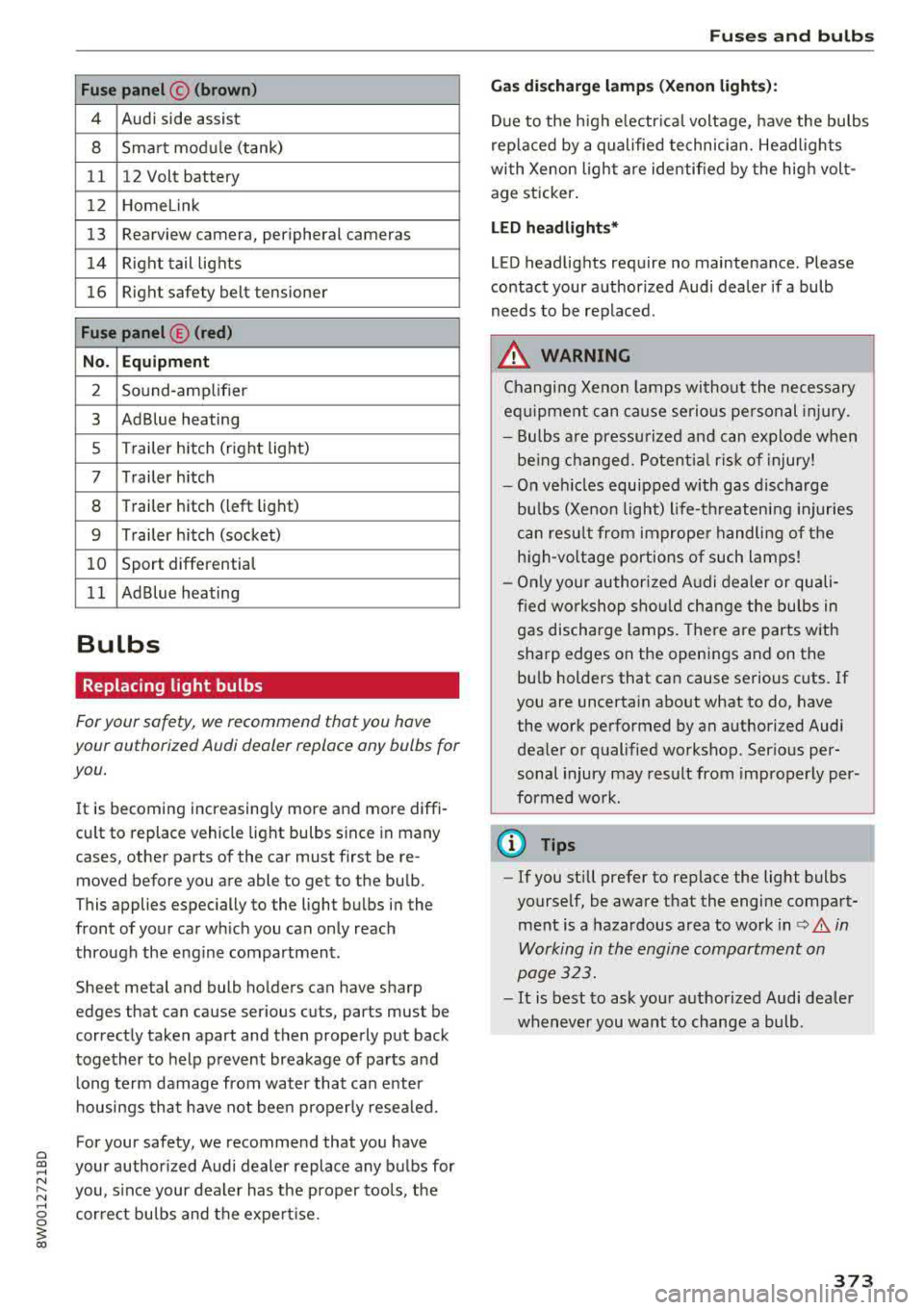
Fuse panel © (brown)
4 Audi side assist
8 Smart module (tank)
11 12 Volt battery
12 Homelink
13 Rearview camera, peripheral cameras
14 Right tail lights
16 Right safety belt tensioner
Fuse panel © (red)
No . Equipment
2 Sound-amp
lifier
3 AdBlue heating
5 Trailer hitch (right light)
7 Trailer h
itch
8 Trailer hitch (left light)
9 Trailer h itch (socket)
10 Sport differential
11 AdBlue heating
Bulbs
Replacing light bulbs
For your safety, we recommend that you have
your authorized Audi dealer replace any bulbs for
you.
It is becoming increasingly more and more diffi
cult to replace vehicle light bulbs since in many
cases, other parts of the car must first be re moved before you are able to get to the bulb.
This applies especially to the light bulbs in the
front of your car which you can only reach
through the engine compartment.
Sheet metal and bulb holders can have sharp
edges that can cause serious cuts, parts must be
correctly taken apart and then properly put back
together to help prevent breakage of parts and
l ong term damage from water that can enter
housings that have not been properly resealed.
For your safety, we recommend that you have
your author ized Audi dealer replace any bulbs for
you, s ince your dealer has the proper tools, the
correct bulbs and the expert ise.
Fuses and bulbs
Gas discharge lamps (Xenon lights) :
Due to the high e lectr ical voltage, have the bulbs
replaced by a qualified technician. Headlights
with Xenon light are identified by the high volt
age sticker .
LED headlights*
LED headlights require no maintenance. Please
contact your authorized Audi dealer if a bulb
needs to be replaced .
.&, WARNING
Changing Xenon lamps without the necessary
equipment can cause serious personal injury.
- Bulbs are pressurized and can explode when
be ing changed. Potential risk of injury!
- On veh icles equipped with gas discharge
bu lbs (Xenon light) life-threatening injuries
can resu lt from improper handling of the
h ig h-vo ltage portions of such lamps!
- Only your authorized Audi dealer or quali
fied workshop should change the bulbs in
gas discharge lamps. There are parts with
sharp edges on the openings and on the
bulb holders that can cause serious cuts. If
you are uncertain about what to do, have the work performed by an authorized Audi
dealer or qualified workshop. Ser ious per
sonal injury may result from improperly per
formed work.
(D Tips
- If you st ill prefer to replace the light bulbs
yourself, be aware that the engine compart ment is a hazardous area to work
in¢ A in
Working in the engine compartment on
page 323.
- It is best to ask your authorized Audi dealer
whenever you want to change a bulb .
373
Page 375 of 403

Emergency situations
Emergency situations
General
This chapter is intended for trained emergency crews and working personnel who have the nec
essary tools and equipment to perform these
operations.
Starting by pushing or
towing
(D Note
Vehicles with an automatic transmission
cannot be started by pushing or towing.
Starting with jumper
cables
If necessary, the engine con be started by con
necting it to the battery of another vehicle.
If the engine should fail to start because of a dis
charged or weak battery, the battery can be con
nected to the battery of
another vehicle, using a
pair of jumper cables to start the engine.
Jumper cables
Use only jumper cables of sufficiently large cross
section
to carry the starter current safely. Refer
to the manufacturer's specifications.
Use only jumper cables with
insulated terminal
clamps which are distinctly marked :
plus(+) cable in most cases colored red
minus(-) cable
in most cases colored black.
A WARNING
Batteries contain electricity, acid, and gas.
Any of these can cause very serious or fatal in
jury. Follow the instructions below for
safe
handling of your vehicle's battery.
-Always shield your eyes and avoid leaning
over the battery whenever possible.
-A dead battery can freeze at temperatures
around 32 °F (0 °C) . If the vehicle battery is
frozen, you must thaw it before connecting
the jump start cables.
If you do not, this in-
374
creases the risk of an explosion and chemi
cal burns. After jump starting the vehicle,
drive to an authorized Audi dealer or author ized Audi Service Facility immediately to
have the vehicle battery checked.
- Do not allow battery acid to contact eyes or
skin . Flush any contacted area with water
immediately.
- Improper use of a booster battery to start a
vehicle may cause an explosion .
- Vehicle batteries generate explosive gases.
Keep sparks, flame and lighted cigarettes
away from batteries.
- Do not try to jump start any vehicle with a
low acid level in the battery.
- The voltage of the booster battery must also
have a 12-Volt rating. The capacity (Ah) of
the booster battery should not be lower
than that of the discharged battery. Use of
batteries of different voltage or substantial
ly different
"Ah" rating may cause an explo
sion and personal injury.
- Never charge a frozen battery. Gas trapped
in the ice may cause an explosion.
- Never charge or use a battery that has been
frozen. The battery case may have be weak
ened.
- Use of batteries of different voltage or sub
stantially different capacity (Ah) rating may
cause an explosion and injury. The capacity (Ah) of the booster battery should not be
lower than that of the discharged battery.
- Before you check anything in the engine
compartment, always read and heed all
WARNINGS
r=:> poge 323.
([) Note
-Applying a higher voltage booster battery
will cause expensive damage to sensitive electronic components, such as control
units, relays, radio, etc.
- There must be no electrical contact between
the vehicles as otherwise current could al
ready start to flow as soon as the positive
(+) terminals are connected.
Page 376 of 403

@ Tips
The discharged battery must be properly con
nected to the vehicle's electrical system .
When jump starting or charg ing the battery,
never connect the negative ground cable to
the battery negative post because the battery
manager system must be able to detect the
battery's state of charge. Always connect the
negative ground cable to the negative ground
post of the battery manager control unit.
Using the jump start
cable
Both jump start cables must be connected in the
correct order!
Fig. 295 Engine compartment: connec tors for jump start
cables and a charger
Fig. 296 Ju mp starting us ing a battery in another vehicle:
@ -providing current, @-drained
The procedure described below for connecting
jumper cables is intended to prov ide a jump start
for your vehicle .
Vehicle with discharged battery
•Turnoff lights and accessories, move the auto
matic transmission* selecto r lever to N (Neu
tral) or P (Par k), and set the park ing brake.
Emergency situations
Connecting the positive cable (red) to the
positive terminal
• Open the red cover on the positive terminal
c:>fig. 295 .
1. Secure one end of the positive cable (red) to
the jump start pin
c:> fig. 296 (D (pin under
the red cover = "posit ive") on the vehicle that
needs to be started @.
2. Secure the other end of the positive cable
(red) to the positive termina l@ on the
bat
tery provid ing the current @.
Connecting the negative cable (black) to the
negative terminal
3. Secure one end of the negative cable (black)
to the nega tive term inal @ on the battery
that is providing the current @.
4. Secure the other end of the negative cable
(black) to the jump start
pin @ (hex head pin
= "negative") on the vehicle that needs to be
started @.
Starting the engine
• Start the engine on the vehicle providing the
jump start @and let it run at idle.
• Now start the engine on the vehicle with the
drained battery @.
• If the engine does not start, stop the starting
procedure after 10 seconds and then repeat it
after approx imately 30 seconds.
• Remove the cables when the engines are run
ning. Remove them in reverse order from the
way they were installed.
• Close the red cover on the positive terminal.
T he battery is vented to the outside to prevent
gases from enter ing the vehicle interior . Make
sure that the jumper clamps are well connected
with their
metal parts in full contact with the
battery terminals.
_& WARNING
-To avoid serious personal injury and damage to the vehicle, heed all warnings and instruc
tions of the jumper cable manufacturer. If in
doubt, call for road service.
-Jumper cables must be long enough so that
the vehicles do not touch .
..,_
375
Page 377 of 403
Emergency situations
-When connecting jumper cables, make sure
that they cannot get caught in any moving
parts in the engine compartment.
-Do not bend over the batteries -danger of
chemical burns!
-The battery cell locking screws must be
tightened securely.
-Before you check anything in the engine
compartment, always read and heed all
WARNINGS
c> page 323.
(D Note
Improper hook-up of jumper cables can ruin
the generator.
- Always connect POSITIVE(+) to POSITIVE
(+), and NEGATIVE(-) to NEGATIVE(-)
ground post of the battery manager control
unit.
- Check that all screw p lugs on the battery
cells are screwed in firmly. If not, tighten
plugs prior to connect ing clamp on negative
battery terminal.
-Please note that the procedure for connect
i ng a jumper cable as described above ap
plies specifically to the case of your vehicle
being jump started . When you are giving a
ju mp start to another vehicle, do
not con
nect the negative (-) cable to the negative
(-) terminal on the discharged batte ry @
c> fig. 296. Instead, securely connect the
negative( -) cab le to either a solid metal
component that is firm ly bolted to the en
gine block or to the engine block itself. If
the battery that is being charged does not
vent to the outside, escap ing battery gas
could ignite and explode!
Towing with a tow truck
General hints
Your Audi requires special handling for towing.
The following information is to be used by com
mercial tow truck operators who know how to op
erate the ir equipment safely.
-Never tow your Audi, towing will cause dam
age to the engine and transmission.
376
-Never wrap the safety chains or winch cables
around the brake lines .
- To prevent unnecessary damage, your Audi
must be transported with a flat bed truck .
- To load the vehicle on to the flat bed, use the
towing loop found in the vehicle tools and at
tach to the front or rear anchorage
i:>page 376 and i:>page 377 .
A WARNING
A vehicle being towed is not safe for passen
gers. Never allow anyone to ride in a vehicle
being towed, for any reason.
Front towing loop
Only install the front towing loop when it is
needed.
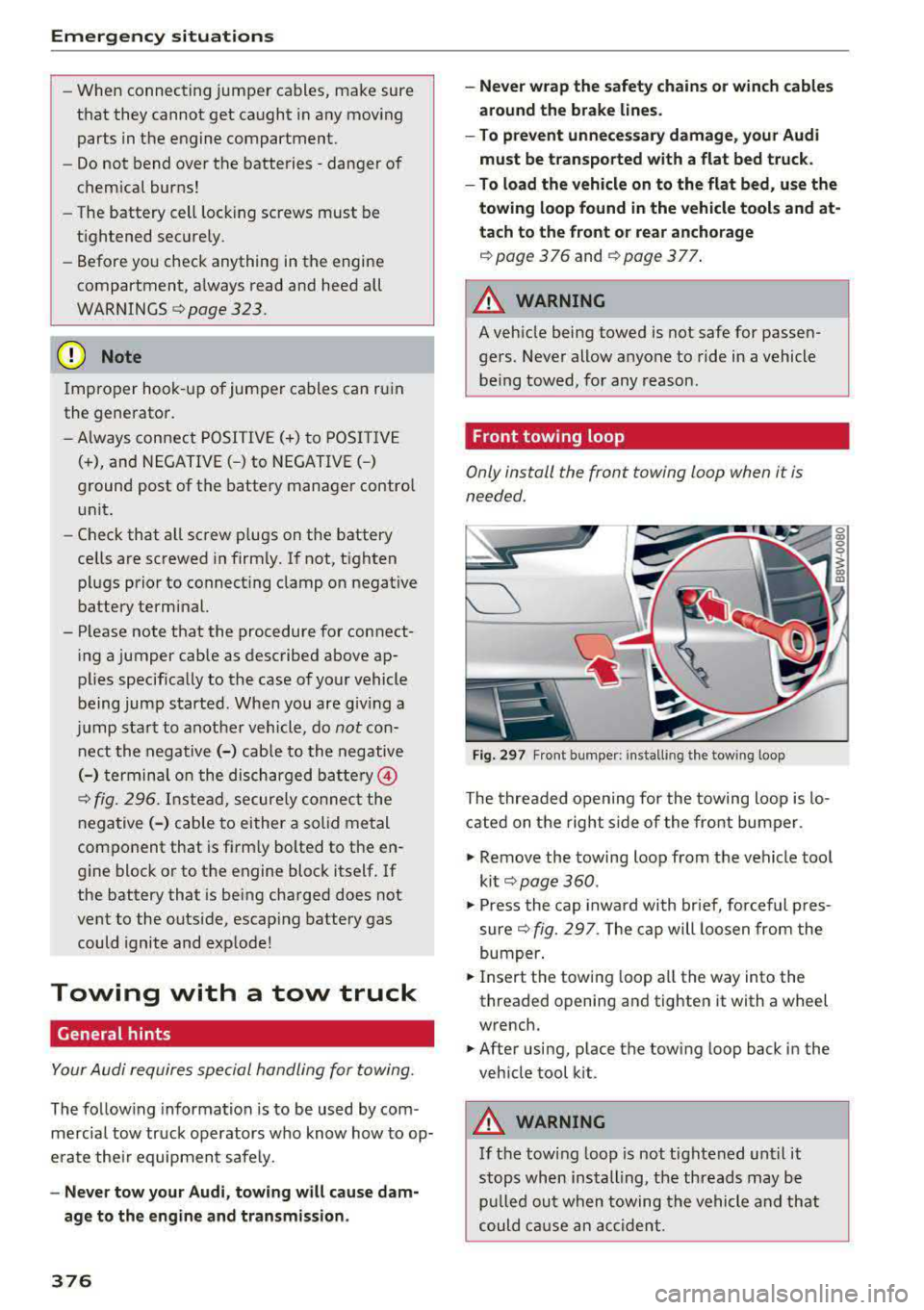
Fig. 297 F ront bumper: installing the towing loop
The threaded opening for the towing loop is lo
cated on the right s ide of the front bumper.
.,. Remove the towing loop from the vehicle too l
ki t
c> page 360 .
.,. Press the cap inward with brief, forceful p res
sure
c> fig. 297 . The cap will loosen from the
bumper .
.,. Insert the towi ng loop all the way into the
threaded opening and tighten it with a wheel
wrench.
.,. After using, place the towing loop back in the
vehicle tool kit .
A WARNING
If the towing loop is not tightened until it
stops when installing, the threads may be
pulled out when towing the vehicle and that
could cause an accident.
-