Gas AUDI S4 2018 User Guide
[x] Cancel search | Manufacturer: AUDI, Model Year: 2018, Model line: S4, Model: AUDI S4 2018Pages: 403, PDF Size: 66.81 MB
Page 192 of 403
Audi connect (Infotainment)
Closing Audi connect Infotainment services
Regardless of the fu nction se lected, you c an
close an Aud i connect Infotainmen t se rvice at any
time and ret urn to the home screen¢
page 189,
fig. 184 .
Parking information
App lies to veh icles with Aud i co nn ect (Infotainment)
Information on parking locations and fees in the
selected search area (for example
Nearby ) .
.,. Select and confirm Park ing information .
You can use the rig ht cont rol but ton to sort the
pa rking loc ations
By distance or By availability.
Travel information
Applies to veh icles with Audi co nnect (Infotainment)
Information on att ractions in the selected search
area .
.,. Select and confirm Travel information .
.,. Select an d confirm an attraction to display the
details .
Fuel prices
Appli es to veh icles with Audi co nnect (Infotainment)
Information on gas stations with the lowest fue l
prices for your vehicle in the selected search area .
.,. Select and confirm F uel prices.
You can use the rig ht cont ro l button to sort the
f u e l pri ces
By price or By distance .
1l Service in preparat ion at t he t ime of print ing. Ca n add lat
e r or is only availab le in certa in regio ns.
190
Traffic light information
App lies to vehicles w it h Au di connect (I nfo tainme nt)
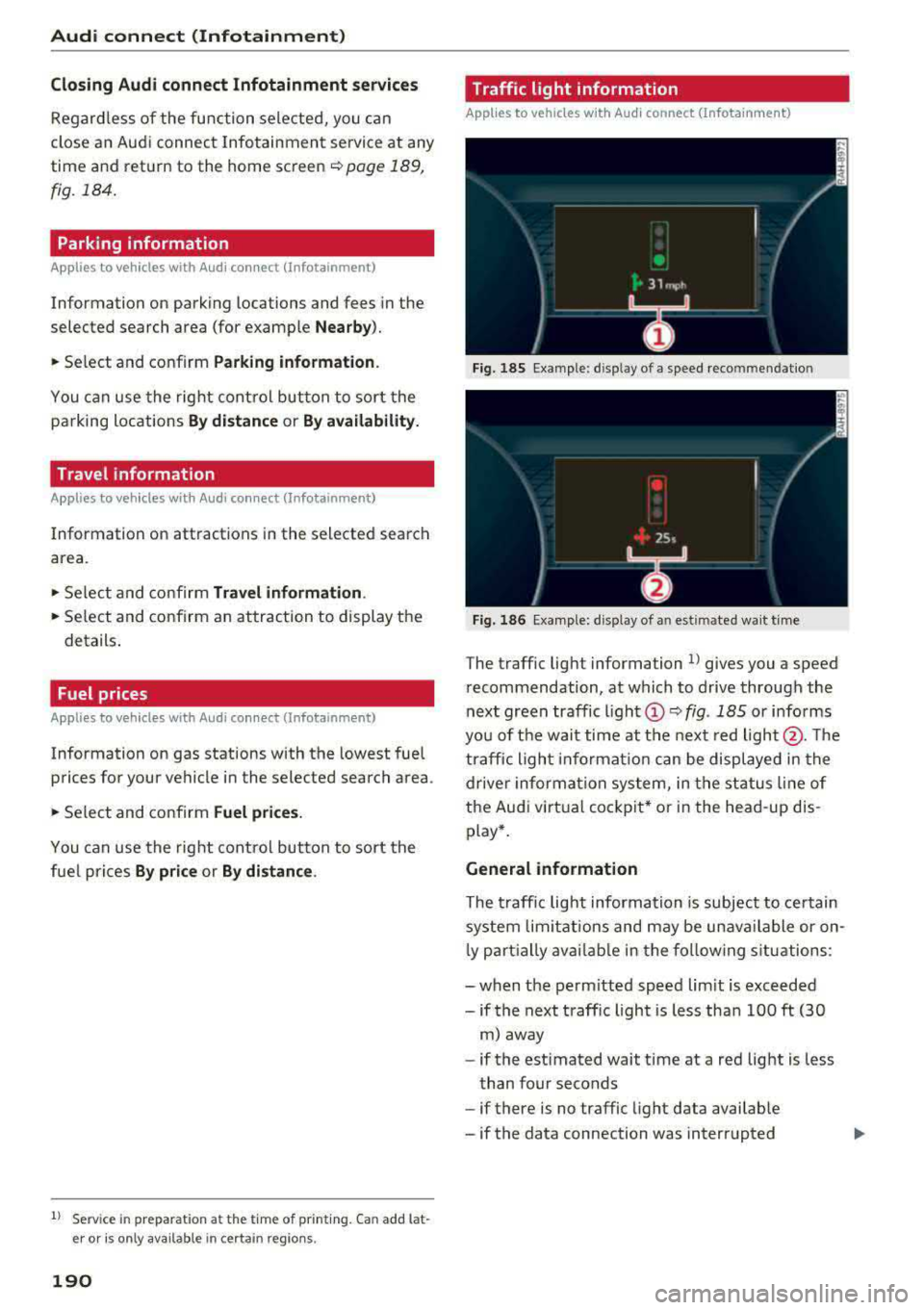
Fi g. 185 Examp le : display of a speed recommenda tion
Fig . 186 Examp le: display of an estimated wa it t im e
The t raffic light information l) g ives you a speed
r ecommendation, at which to drive through the
next green traffic
li gh t@ ~ fig. 185 or informs
yo u of t he wai t time at the next red light @. Th e
tr affic ligh t info rm ati on ca n be displ aye d in the
dr ive r in forma tio n sy stem, in t he sta tus line of
the Audi virt ua l coc kp it* or in the he ad-up dis
p lay *.
General information
The traff ic lig ht inform ation is subject to ce rtain
sy stem lim itation s and may be un avail able or on
l y part ially ava ilable in the fo llow ing s itu ations:
- when t he pe rm itted speed lim it is exceeded
-if the next t raffic light is less tha n 100 ft (30
m) away
- if the estimated wait time at a red lig ht is less
t han four seconds
- if there is no traffic light data avai lab le
- if the data connection was interrupted
Page 214 of 403
a co .... N ,....
N .... 0 0
3 co
a list of gas stations in the area. When a gas sta
tion is se lect ed, route guidance from the current
ve hicle position is calcu lated .
Trailer mode *
Trailer mode is sw itched off at the factory.
When the function is switched
on~' the maxi
mum permitted speed for vehicles with trailers is
in corporated into the route guidance and the ca l
culated arrival time is adjusted acco rding ly. Trail
e r mode is d isp layed us ing symbols -"" in the side
menu on the map .
Personal route assistance *
Pe rsonal ro ute assistance is sw itched off at the
factory.
Your tr ips are recorded and destinat ions are sug
gested by the MMI when this funct io n is switched
on~ <>page210 .
The persona l route ass istance is indicated by the
~ symbo l in the status line of the Infotainment
system display.
Not ification when ne arby *
The notification when nearby is switched off at
the factory .
The MM I notifies you when you are approaching
selected points of interest when this function is
switched
on ~-You can also have a Notification
tone .
Pres entation mode
The Pre sentation mode he lps yo u to e ffect ively
p lan a trip and follow the p lanned route without
moving the ve hicle . You can
Select starting point
when, for example, you wou ld like to ca lculate a
route starting from a locat ion other than the ve
h icle posit ion . Start
Pre sentation mod e to simu
late route gu idance .
1) Hig h occupa ncy v ehi cle
Na vigation
Route criteria
Applies to: vehicles with navigation system
Jl
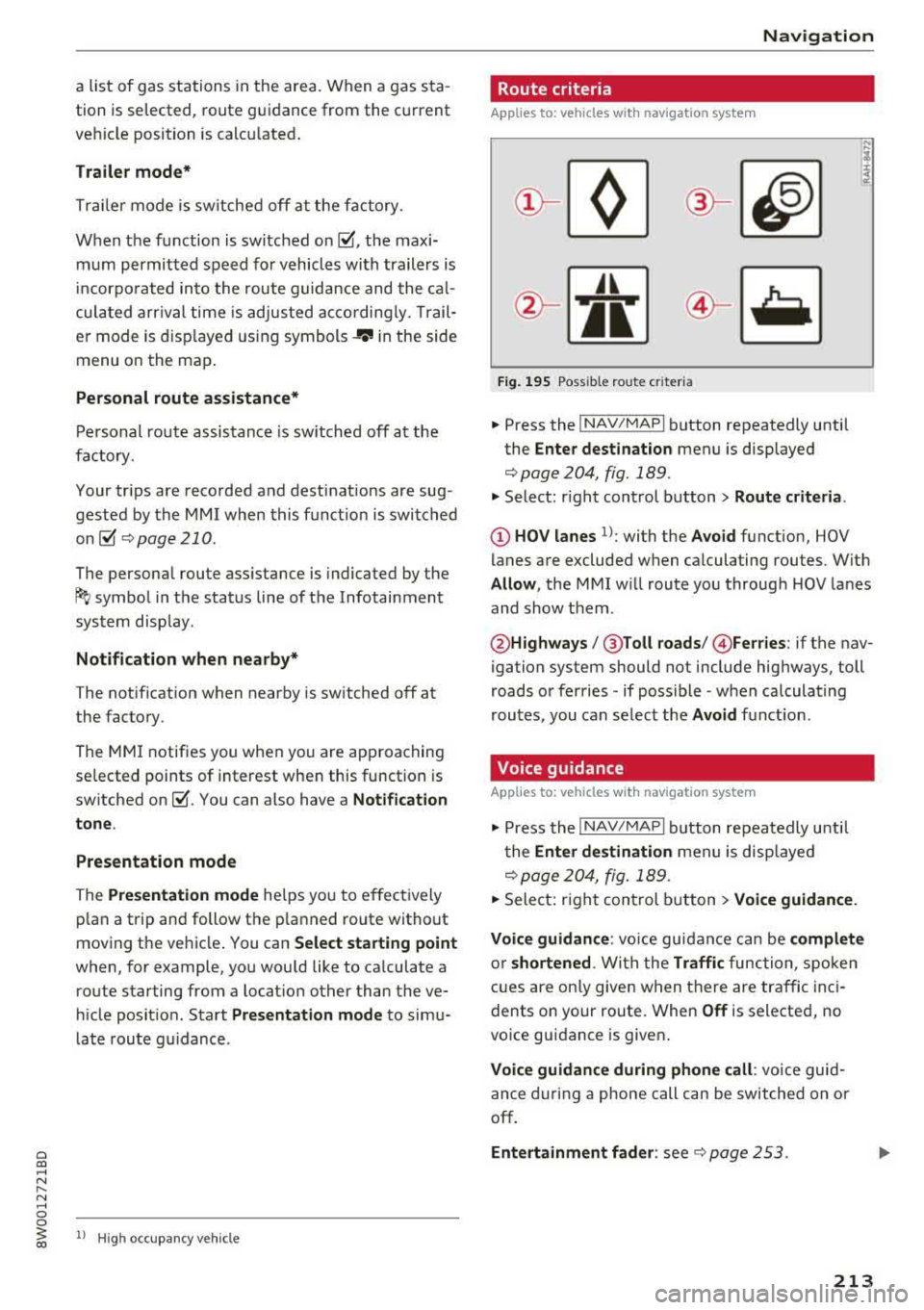
Fig . 1 95 Possible ro ute c riter ia
.,. P ress the ! NAV/MAP I button repeatedly until
the
Enter dest ination menu is displayed
<> page 204, fig. 189 .
.,. Select: right cont rol button> Route criteri a.
@ HOV lanes 1>: with the Avoid function, HOV
lanes are excluded when ca lculating rou tes. With
Allow , the MMI w ill route you throug h HOV lanes
and show them .
@Highways /@ Toll roads /@ Ferries : if the nav
igation system should not include highways, toll
roads or ferries
-if possible -when calculating
routes , you can se lect the
Avoid function .
Voice guidance
Applies to: vehicles with navigation system
.,. Press the !NAV/MAPI button repeatedly u nti l
t he
Enter destination men u is disp layed
<> page 204, fig. 189.
.,. Sele ct: righ t con trol b utton > Voice guidance.
Voic e guidan ce :
vo ice gu idance can be compl ete
o r shortened . With the Traffic function, spoken
cues are on ly given when there are traffic inc i
dents on your route. When
Off is selected, no
vo ice guidance is given .
Voice guidance during phone call : voice guid
an ce d uring a phone call can be switched on or
off.
Entertainment fad er: see <> page 253 .
213
Page 261 of 403
Driving sa fe ty
Loose items in the luggage compartment can
shift s udden ly, changing vehicle handling charac
ter istics. Loose items can also increase the risk of
serious personal in jury in a sudden vehicle
ma
neuver or in a coll is ion.
.,. Distribute the load evenly in the luggage com
partment .
.,. Always place and properly secure heavy items in
the luggage compartment as low and as far for
ward as possible
c> fig . 226 .
.,. Secure luggage us ing the tie-downs provided
¢ page 73 .
.,. Make su re that the rea r seatbac k is securely
latched in place.
A WARNING
Improperly stored luggage or othe r items can
fly through the vehicle causing serious per
sonal injury in the event of hard braking or an
accident. To help reduce the risk of serious
personal injury:
- Always put objects, for example, luggage or
other heavy items in the luggage compart
ment.
- Always sec ure objects in the luggage com
partment using the tie-down eyelets and
s u itable straps.
A WARNING
Heavy loads will influence the way your vehi
cle handles. To he lp reduce the r isk of a loss
of contro l leading to serious pe rsonal i njury:
- Always keep in mind when transporting heavy objects, that a change i n the center of
grav ity can also cause changes in vehicle
hand ling:
- Always distr ibute the load as even ly as
possible.
- Place heavy objects as far forward in the
luggage compartment as poss ible.
- Never exceed the Gross Axle Weight Rating
o r the Gross Vehicle Weight Rating specified
on the safety compliance sticker on the driv
er's side B-pillar respective ly on the front
end of the driver's door. Exceeding permissi
ble weight standards can cause the veh icle
to slide and handle differently .
260
-Please observe info rmation on safe driving
¢page 254.
A WARNING
To he lp prevent po isonous exhaust gas from
being drawn into the vehicle, always keep the
rear lid closed while driving.
- Never transport objects larger than those
fitting completely into the luggage area be
cause the rear lid cannot be fully closed.
- If you absolutely must dr ive with the rear lid
open, observe the following notes to reduce
the risk of poisoning :
- C lose all windows,
- Close the s unroof*,
- Open all a ir outlets in the instrument pan-
el,
- Switc h off the air reci rculat ion,
- Set the fresh air fan to the highest speed.
A WARNING
-
Always make sure that the doo rs, all win
dows, the sunroof * an d the rear lid are se
curely closed and locked to red uce the risk of
i n jury when the veh icle is not being used.
- After closing the rear lid, always make sure
that it is properly closed and locked.
- Never leave your ve hicle unattended espe
cially with the rear lid left open. A child
co uld crawl into the vehicle th rough the lug
g age com partment an d close the rea r lid
be
coming tr apped and unab le to ge t out . Be
ing trapped in a vehicle can lead to ser ious
pe rsonal i nju ry.
- Never let c hild ren p lay in or around the vehi
cle.
- Never let passengers ride in the luggage
compa rtment. Vehicle occupants mus t
al
ways be p roperly restrained in one of the ve
hicle's seat ing pos itions.
(D Tips
- Air circul ation helps to reduce w indow fog
ging . Stale ai r escapes to the o uts ide
t h roug h vents in the trim panel. Be sure to
keep these slots free and open.
Page 272 of 403
a co .... N ,....
N .... 0 0
3 co
Airbag system
Important information
Importance of wearing safety belts and
sitting properly
Airbags are only supplemental restraints. For
airbags to do their job, occupants must always
properly wear their safety belts and be in a prop er seating position.
For your safety and the safety of your passen
gers, before driving off, always :
.,. Adjust the driver's seat and steering wheel
properly
9 page 255,
.,. Adjust the front passenger's seat properly
¢page 256,
.,. Wear safety belts properly¢ page 265,
.,. Always properly use the proper child restraint
to protect children ¢
page 295.
In a collision, airbags must inflate within the
blink of an eye and with considerable force. The
supplemental airbags can cause injuries if the
driver or the front seat passenger is not seated
properly. Therefore in order to help the airbag to
do its job, it is important, both as a driver and as
a passenger to sit properly at all times.
By keeping room between your body and the
steering wheel and the front of the passenger
compartment, the airbag can inflate fully and
completely and provide supplemental protection in certain frontal
collisions ¢ page 255, Correct
passenger seating positions .
For details on the
operation of the seat adjustment controls
¢page 65.
It's especially important that children are proper
ly restrained
¢page 295.
There is a lot that the driver and the passengers
can and must do to help the individual safety fea
tures installed in your Audi work together as a
system.
Proper seating position is important so that the
front airbag on the driver side can do its job. If
you have a physical impairment or condition that prevents you from sitting properly on the driver
seat with the safety belt properly fastened and
Airbag system
reaching the pedals, or if you have concerns with
regard to the function or operation of the Ad
vanced Airbag System, please contact your au
thori zed Audi dealer or qualified workshop, or
call Audi Customer Relations at 1-800-822-2834
for possible modifications to your vehicle.
When the airbag system deploys, a gas generator
will fill the airbags, break open the padded cov ers, and inflate between the steering wheel and
the driver and between the instrument panel and
the front passenger. The airbags will deflate im
mediately after deployment so that the front oc
cupants can see through the windshield again
without interruption.
All of this takes place in the blink of an eye, so
fast that many people don't even realize that the airbags have deployed. The airbags also inflate
with a great deal of force and nothing should be
in their way when they deploy. Front airbags in
combination with properly worn safety belts slow
down and limit the occupant's forward move
ment . Together they help to prevent the driver
and front seat passenger from hitting parts of
the inside of the vehicle while reducing the forces
acting on the occupant during the crash . In this
way they help to reduce the risk of injury to the
head and upper body in the crash. Airbags do not
protect the arms or the lower parts of the body.
Both front airbags will not inflate in all frontal
collisions . The triggering of the airbag system de
pends on the vehicle deceleration rate caused by
the collision and registered by the electronic con
trol unit . If this rate is below the reference value
programmed into the control unit, the airbags
will not be triggered, even though the car may be badly damaged as a result of the collision. Vehi
cle damage, repair costs or even the lack of vehi
cle damage is not necessarily an indication of
whether an airbag should inflate or not.
Since the circumstances will vary considerably between one collision and another, it is not possi
ble to define a range of vehicle speeds that will
cover every possible kind and angle of impact
that will always trigger the airbags . Important
factors include, for example, the nature (hard or
soft) of the object which the car hits, the angle of
impact, vehicle speed , etc. The front airbags will
II>
271
Page 280 of 403
a co .... N ,....
N .... 0 0
3 co
Airbag System for the front passenger seat from
doing its job in a crash.
The f ront Ad vanced Airb ag S ystem con sists
of t he follo wing :
-Crash sensors in the front of the vehicle that
measure vehicle acceleration/deceleration to
provide information to the Advanced Airbag
System about the severity of the crash.
-An electronic control un it, with integrated
crash sensors for front and side impacts. The
control unit "decides" whether to fire the front
airbags based on the information received from
the crash sensors. The control unit also
"de
c ides" whether the safety belt pretens ioners
shou ld be activated .
-An Advanced Airbag with gas generator and
contro l valve for the driver ins ide the steer ing
wheel hub.
-An Advanced Airbag with gas generator and contro l valve inside the instrument pane l for
the front passenger.
-A capac itive passenger detect io n system unde r
neath the front passenger seat cover. This sys
tem measures the elect rical capac ita nce of the
person in the seat. The i nformation registe red
is sent continuously to the electron ic control
unit to regulate deployment of the front Ad
vanced Airbag on the passenger side.
-An airbag monitoring system and indicator
light
m in the instrument cluster .
-A sensor in each front seat reg isters the dis
tance between the respective seat and the
steering wheel or instrument panel. The infor
mation reg istered is sent continuously to the
electronic control unit to regulate deployment
of the front Advanced A irbags.
-The PA SS EN GER AIR BAG OFF ~; ON@ light
comes on in the
headliner¢ page 283,
fig. 241 and tells you the status of the Ad
vanced Airbag on the passenge r side .
-A sensor in the safety belt latch for the dr iver
and for the front seat passenger that senses
whether that safety belt is latched or not and
transm its this info rmat ion to the elect ronic
contro l unit.
Airb ag sys tem
_& WARNING
Damage to the front passenger seat can pre
vent the front airbag from working properly.
- Improper repair or disassembly of the front
passenger and driver seat will prevent the
Advanced Airbag System from funct ion ing
properly.
- Repairs to the front passenger seat must be
performed by qualified and properly trained
workshop personnel.
- Never remove the front passenger or driver seat from the vehicle.
- Never remove the upholstery from the front
passenger seat.
- Never disassemble or remove parts from the
seat or disconnect w ires from it.
- Never carry sharp objects in your pockets or
put them on the seat. The capacit ive pas
senger detect ion mat in the front passenger
seat will not function p roperly if it is punc
tured.
- Never carry things on your lap or carry ob
jects on the front passenger seat. S uch ob
jects can influence the capacitance reg is
tered by the capacitive passenger detection
system, so that incorrect informa tion is pro
vided to the airbag control unit.
- Never store i tems unde r the front passenger
seat . Parts of the Advanced Airbag System
under the passenger seat could be dam
aged, p reventing them and the airbag sys
tem from working proper ly.
- Never p lace seat covers or replacement up
holstery that have not been specifically ap
proved by Audi on the front seats.
- Seat covers can prevent the Advanced A ir
bag System from recognizing chi ld re
stra ints or occupants on the front passenger
seat and prevent the side airbag in the seat
backrest from deploying properly.
- If a seat heater has been retrofitted or oth
erwise added to the front passenger seat,
never install any child restra int system on
this seat.
- Never use cushions, p illows, blankets, or
similar items on the front passenge r seat .
279
Page 289 of 403
Airbag system
In addition to their normal safety function, safe
ty belts help keep the driver or front passenger in
position in a frontal collision so that the airbags
can provide supplemental protection.
The airbag system is not a substitute for your
safety belt. Rather, it is part of the overa ll occu
pant restraint system in your vehicle. Always re
member that the airbag system can only help to
protect you if you are wearing your safety belt
and wearing it properly . This is why you should
always wear your safety belt, not just because
the law requires you to do so ¢
page 263, Gener
al information.
Remember too, airbags will deploy only once and
only in certain k inds of accidents - your safety
belts are always there to offer protection in those
accidents in which airbags are not supposed to
deploy or when they have already deployed, for
examp le when your vehicle str ikes or is struck by
another after the first collision .
This is jus t one of the reasons why an airbag is
not a substitute for the safety belt. The a irbag
system works most effectively when used with
the safety belts. Therefore, always wear your
safety belts correct ly.
It is important to remember that while the sup
p lemental knee airbag system is designed to re
duce the likelihood of serious injuries, other inju
ries, for example, swe lling, bruising and minor
abrasions and friction burns can also occur when
an airbag inf lates .
The knee airbag system basically consists of:
- T he electronic control module
- T wo inflatab le airbags (airbag and gas genera-
to r), one for the driver and one for the front
pass enger
- The airbag indicator ligh t in the instrument
panel
The knee airbag system will not deploy:
-whe n the ignition is switched off
- in frontal collisions when the deceleration
measured by the control un it is too low
- in side collisions
- in rea r-end collisions
288
-in rollovers
- in the event of a system malfunction (warning/
ind icator light is on)
¢page 32 .
A WARNING
-Safety belts and the airbag system can only
provide protection when occupants are in
the proper seating
position ¢ page 281 .
-If the airbag indicator light ¢ page 32
comes when the veh icle is being used, have
the system inspected immediately by your
author ized Audi dealer. It is possible that
the airbag will inflate when it is not sup
posed to, or will not inflate when it should.
How knee airbags work
The risk of injury to the leg area con be reduced
by fully inflated knee airbags.
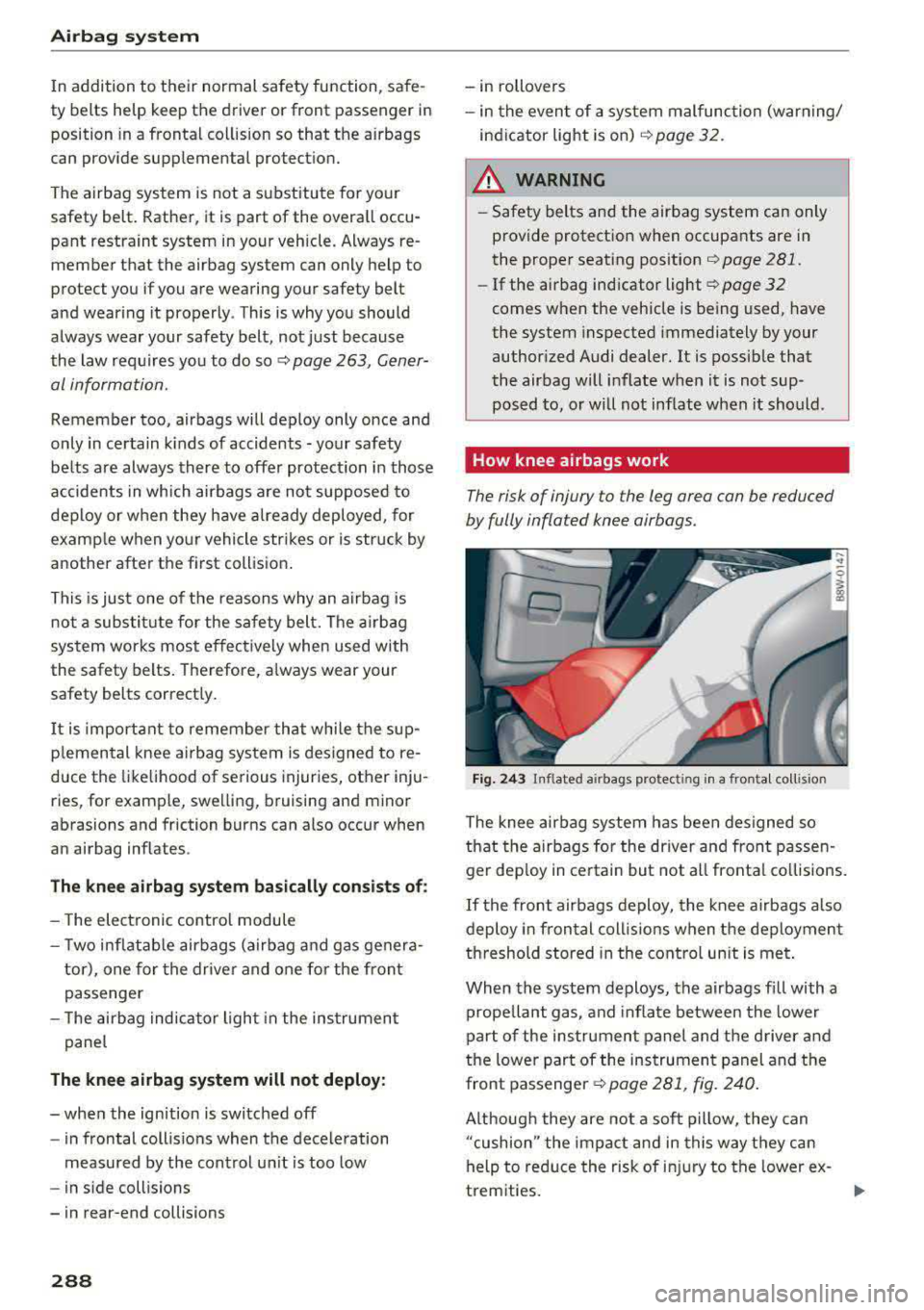
Fig. 243 In flated a irbags protect ing in a fro nta l coll ision
The knee airbag system has been designed so
that the airbags for the dr iver and front passen
ger dep loy in certain but not all fronta l collisions .
If the front airbags deploy, the knee airbags also
deploy in frontal collisions when the deployment
threshold stored in the control unit is met .
When the system deploys, the airbags fill with a
prope llant gas, and inflate between the lower
part of the instrument panel and the driver and
the lower part of the instrument panel and the
front passenger
¢page 281, fig. 240 .
Although they are not a soft pillow, they can
"cushion" the impact and in this way they can
help to reduce the risk of injury to the lower ex
tremities.
Page 292 of 403
the airbag will inflate when it is not
supposed
to, or will not inflate when it
should.
How supplemental side airbags work
Side airbags deploy instantly and can help re duce the risk of upper torso injuries for occu
pants who are properly restrained.
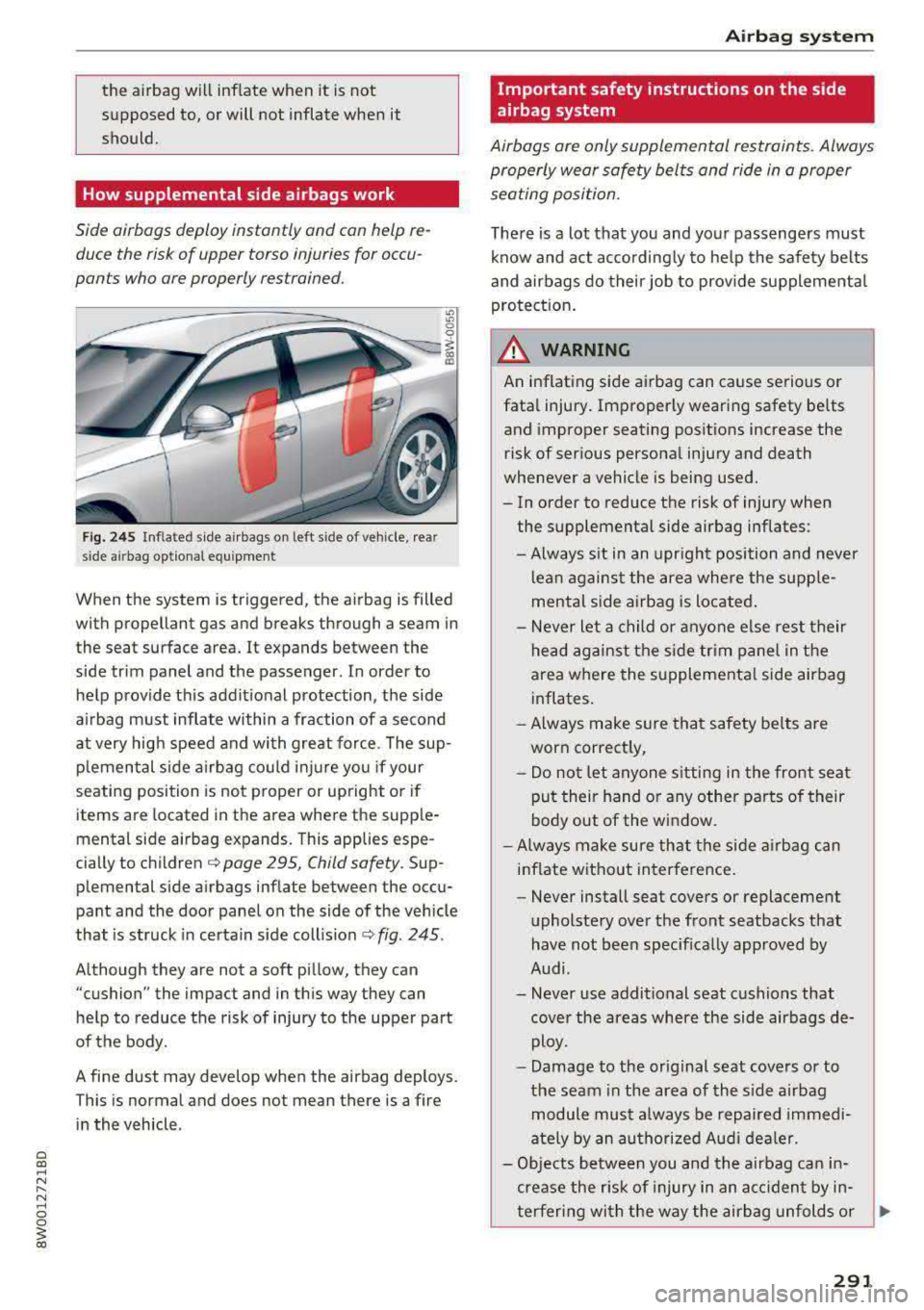
Fig. 245 Infla ted side airbags on left side of veh icle, rear
side airbag opt ional equipment
When the system is triggered, the airbag is filled
with propellant gas and breaks through a seam in
the seat surface area.
It expands between the
side trim panel and the passenger. In order to
help provide this additional protection, the side
airbag must inflate within a fraction of a second
at very high speed and with great force . The sup
plemental side airbag could injure you if your
seating position is not proper or upright or if
items are locat ed in the area where the supple
mental side airbag expands. This applies espe
cially to
children¢ page 295, Child safety. Sup
plemental side airbags inf late between the occu
pant and the door panel on the side of the vehicle
that is struck in certain side
collision ¢ fig. 245.
Although they are not a soft pillow, they can
"cushion" the impact and in this way they can
help to reduce the risk of injury to the upper part
of the body.
A fine dust may develop when the airbag deploys.
This is normal and does not mean there is a fire
in the vehicle .
Airbag system
Important safety instructions on the side
airbag system
Airbags are only supplemental restraints. Always
properly wear safety belts and ride in a proper
seating position .
There is a lot that you and your passengers must
know and act accordingly to help the safety belts
and airbags do their job to provide supplemental
protection.
A WARNING
An inflating side airbag can cause serious or
fatal injury. Improperly wearing safety belts
and improper seating positions increase the
risk of serious personal injury and death
whenever a vehicle is being used.
- In order to reduce the risk of injury when
the supplemental side airbag inflates:
- Always sit in an upright position and never
lean against the area where the supple
mental side airbag is located.
- Never let a child or anyone else rest their
head against the side trim panel in the
area where the supplemental side airbag inflates.
- Always make sure that safety belts are
worn correctly,
- Do not let anyone sitting in the front seat
put their hand or any other parts of their
body out of the window.
- Always make sure that the side airbag can
inflate without interference.
- Never install seat covers or replacement
upholstery over the front seatbacks that
have not been specifically approved by
Audi.
- Never use additional seat cushions that
cover the areas where the side airbags de ploy.
- Damage to the original seat covers or to
the seam in the area of the side airbag
module must always be repaired immedi
ately by an authorized Audi dealer.
-
- Objects between you and the airbag can in
crease the risk of injury in an accident by in
terfering with the way the airbag unfolds or
_,.
291
Page 294 of 403
collision. It is not possible to define an airbag
triggering range that will cover every possible
an
g le of impact, s ince the circumstances will vary
considerably between one collision and another.
Important factors include, for example, the
na
ture (hard or soft) of the impacting object, the
angle of impact, vehicle speed, etc.
¢ page 293,
How side curtain airbags work .
Aside from their normal safety function, safety
be lts work to he lp keep the driver or front pas
senger in pos it ion in the event of a collision so
that the side curtain airbags can p rovide protec
tion .
The airbag system is not a substitute for your
safety belt . Rather, it is part of the overall occu
pant restraint system in your veh icle . Always
re
member that the airbag system can only help to
p rotect you if you are wearing your safety bel t
and wearing it properly . This is another reason
why you should always wear your safety belts, not just because the law requires you to do so
¢ page 263, General information.
It is important to remember that whi le the s ide
curtain airbag system is designed to he lp reduce
the likelihood of serious injuries, other injuries,
for example, swelling, bruising, friction burns and minor abrasions can also be associated with
these airbags upon deployment . Remember too,
these airbags will deploy only o nce and only in
certa in ki nds of acc idents -your safety belts are
always there to offer protection .
The side curtain airba g sy stem ba sically
consists of:
- The electronic control module and external s ide
impact senso rs
- The side curtain airbags above the w indows of
the outer seating positions with ejection miti
gation feat ures
- The airbag indicator light in the instrument
panel
The airbag system is monitored electronically to make certain it is funct ion ing properly at all
times . Each time you turn on the ignit ion, the air
bag system ind icator light will come on for a few
seconds (self d iagnost ics) .
Airb ag sys tem
The side curta in airbag is not activ ated:
- if the ignition is turned off
- in side co llisions whe n the acceleration meas-
ured by the sensor is too low
- in rear-end col lisions .
_&. WARNING
-Safe ty bel ts and the airbag system will only
provide pro tect ion when occupants are in
the proper seating position
¢ page 65,
Front seats.
- I f the airbag ind ic a tor light q page 3 2
comes when the veh icle is being used, have
the system inspected immediately by your
authorized Audi dealer. It is possib le that
the airbag will inflate when it is not sup
posed to, or w ill not inf late when it should.
How side curtain airbags work
Side curtain airbags con work together with side
airbags to help reduce the risk of head and upper torso injuries for occupants who are properly re
strained .
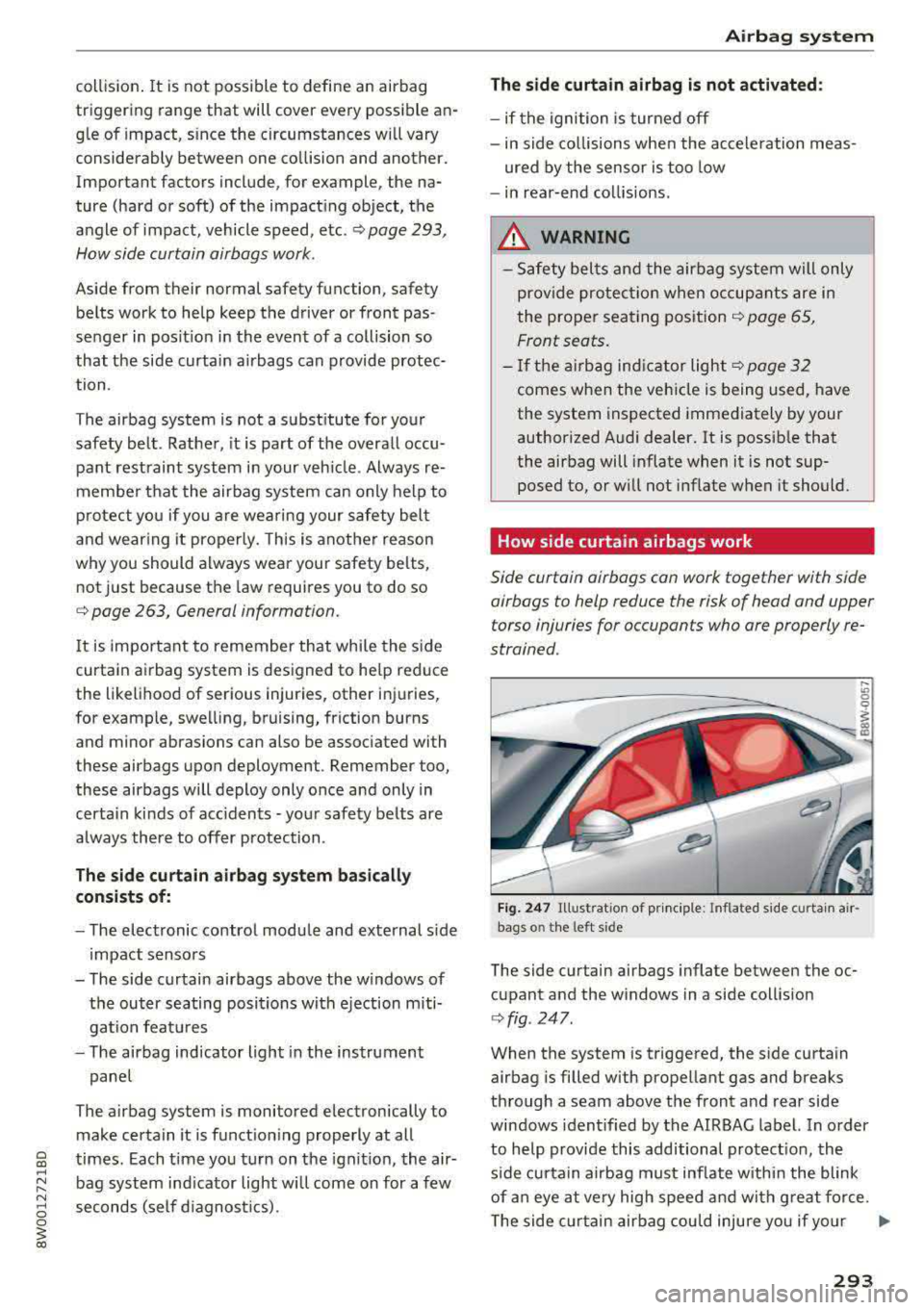
Fig. 24 7 Illustration of pr incip le: Inflated s ide curta in air
bags o n the left s ide
The side curtain airbags inflate between the oc
cupant and the w indows in a side collis ion
c> fig . 247 .
When the system is triggered, the side curtain
airbag is filled with propellant gas and breaks
through a seam above the front and rear side
windows identified by the AIRBAG label. In order
to help provide this additional protect ion, the
s ide curtain a irbag must inf late w ithi n the blink
of a n eye at very high speed and with g reat fo rce .
T he side c urtain airbag could injure you if yo ur
Ill>
293
Page 316 of 403
a co .... N ,....
N .... 0 0
3 co
Checking and Filling
Gasoline
Fuel supply
Applies to: veh icles with gaso line engine
Using the right fuel helps keep the environment
clean and prevents engine damage .
Fuel recommendation
The fuel recommended for your vehicle is unlead
ed premium
grade gasoline. Audi recommends
using TOP TIER Detergent Gasoline with a mini
mum octane rating of 91 AKI (95 RON). For more
information on TOP TIER Detergent Gasoline,
p lease go to the official website
(www.toptiergas .com) .
The recommended gasoline octane rating for
your engine can also be found on a label located
on the inside of the fuel filler flap . This rating
may be specified as AKI or RON.
Your vehicle may also be operated using unlead
ed regular gasoline with a min imum octane rat
ing of 87 AKl/91 RON. However, using 87 AKl/91
RON octane fuel will slightly reduce engine pe r
formance.
Use unleaded gasoline only. Unleaded gasoline
is available throughout the USA , Canada, and in
most European countries . We recommend that
you do not take your vehicle to areas or countries
where un leaded gasol ine may not be available.
For more information on refueling your vehicle,
see
c::> page 317 .
Octane rating
Octane rating indicates a gasoline's ability to re
sist engine damaging "knock" caused by prema
ture ignit ion and detonation . Therefore , buy ing
the correct grade of gasoline is very important to
h e lp prevent possible engine damage and a loss
of eng ine performance.
Gasoline most commonly used in the United
States and Canada has the following octane rat
ings that can usually be found on the filler pump:
- Premium Grade: 91
-96 AKI
Checking and Filling
-Regu lar Grade: 87 -90 AKI
E xplanation of the abb reviations:
AKI =
Anti Knock Index = (R +M)/2 = (RON +MON)/
2
RON = R esearch Octane Number
MON = Motor Octane Number.
(D Note
- Do not use any fuel w ith octane ratings low
er than 87 AKI or 91 RON otherwise expen
sive engine damage w ill occur .
- Do
not us e leaded gasoline. The use of lead
ed gasoline will severe ly damage your vehi
cle's catalytic converter and its ability to
control exhaust emissions .
Blended gasoline
Applies to: vehicles with gasoline engine
Use of gasoline containing alcohol or MTBE
(methyl tertiary butyl ether)
You may use unleaded gasoline blended with al
cohol or MTB E (commonly referred to as oxygen
ates) if the blended mixture meets the following
criteria:
Blend of gasoline methanol (wood alcohol or
methyl alcohol)
-Anti -knock index must be 87 AKI or higher.
- Blend must contain no more than 3% metha-
nol.
- Blend must contain more than 2% co-solvents.
Blend of gasoline and ethanol (grain alcohol or
ethyl alcohol)
- Anti-knock index must be 87 AKI or higher.
- Blend must not conta in more than 15% etha-
nol.
Blend of gasoline and MTBE
- Anti-knock index must be 87 AK I or higher.
- Blend must contain not more than 15% MTBE.
Seasonally adjusted gasoline
Many gasoline grades are blended to perform es
pecially well for winter or summer dr iving . Dur-
ing seasonal change-over, we suggest that you
..,.
315
Page 317 of 403
Checking and Filling
fill up at busy gas stations where the seasonal
adjustm ent is more likely to be mad e in time.
0 Note
- Methanol fuels which do not meet these re
quirements may cause corrosion and dam
age to plastic and rubber components in the
fuel system.
- Do not use fuels that fail to meet the speci
fied criteria in this chapter .
- If you are unable to determine whether or
not a particular fuel blend meets the speci
fications, ask your service station or its fuel
supplier.
- Do not use fuel for which the contents can
not be identified.
- Fuel system damage and performance prob
lems resulting from the use of fuels differ
ent from those specified are not the respon
sibility of Audi and are not covered under
the New Vehicle or the Emission Control
System Warranties.
- If you experience a loss of fuel economy or
driveability and performance problems due
to the use of one of these fuel blends, we
recommend that you switch to unblended
fuel.
Gasoline additives
Applies to: vehicles with gasoline engine
A major concern among many auto manufactur
ers is carbon deposit build-up caused by the type
of gasoline you use .
Although gasoline grades differ from one manu
facturer to another, they have certain things in
common. All gasoline grades contain substances
that can cause deposits to collect on vital engine parts, such as fuel injectors and intake valves.
Al
though most gasoline brands include additives to keep engine and fuel systems clean, they are not
equally effective .
Audi recommends using TOP TIER Detergent Gas
oline. For more information on TOP TIER Deter
gent Gasoline, please go to the official website (www.toptiergas .com) .
316
After an extended period of using inadequate
fuels, built-up carbon deposits can rob your
en
gine of peak performance.
([) Note
- Damage or malfunction due to poor fuel
quality is not covered by the Audi New Vehi
cle Limited Warranty.
- Do not add aftermarket fuel additive prod
ucts to your fuel tank.
Diesel fuel
Applies to: vehicles with diesel engine
Always use ULSD (Ultra Low Sulfur Diesel) No. 2.
The ULSD No. 2 meets the ASTM 0975.
Diesel fuel with concentrations of biodiesel high
er than 5
% such as 811,820 or 8100 are strictly
prohibited.
Service station fuel pumps are labeled with the
correct fuel information for easy recognition by
the user. If the diesel fuel pump is not labeled
ask the station operator what fuel is being dis
pensed before filling up your vehicle.
ULSD No. 2 may not be available outside the USA
and Canada. Be sure to check before traveling to
other countries.
ULSD No. 2 can become thicker in very cold tem
peratures, and this can impair the engine's start
ing and running . Depending on the season , gas
stations provide ULSD No. 2 that flows better in
cold temperatures so that you can continue oper
ating your vehicle as usual.
(D Note
- Your vehicle's diesel engine was designed
soley for use with ULSD No. 2. Therefore,
never use gasoline, heating oil, other fuels
or flow improvers. These contain substances
that will severely damage the fuel system
and the engine. Such damage will not be
covered by your New Vehicle Limited War
ranty.
- If you put any amount of incorrect fuel in
the fuel tank, do not start the engine under
.,..