engine AUDI S4 SEDAN 2013 Workshop Manual
[x] Cancel search | Manufacturer: AUDI, Model Year: 2013, Model line: S4 SEDAN, Model: AUDI S4 SEDAN 2013Pages: 294, PDF Size: 73.71 MB
Page 187 of 294
ESC includes and/or works together with the
anti-lock brake system (ABS), brake assist sys
tem, anti -slip regulation (ASR) , e lectronic dif
ferential lock (EDL), dynamic steering* and electronic i nteraxle differential lock* /selective
wheel torque control* . ESC is switched on all
the t ime. I n certain s ituations when you need
less traction, you can switch
off ASR by press
i ng the button~~
page 186, fig. 159 or
~ page 186, fig. 160. Be sure to sw itch ASR
on again when you no longer need less trac
tion.
Anti-lock b ra king s ystem (ABS)
ABS prevents the wheels from locking up
when braking. The vehicle can still be steered
even d uring hard brak ing . Apply ste ady p res
sure to the brake pedal. Do not pump the ped
a l. A pulsing in the brake peda l indicates t hat
the system is he lping you to brake the vehicle .
Brake assist system
The brake assist system can decrease bra king
d istance. It increases braking power when the
d river presses the brake pedal quick ly in eme r
gency situations . You must press and hold the
brake peda l until the situation is over. In
veh icles w ith adaptive cru ise contro l*, the
brake assist system is more sensit ive if the
d istance detected to the veh icle ahead is too
small.
Anti- slip regulati on (ASR)
ASR reduces engine power when the drive
wheels begin to spin and adapts the force to
the road condit ions. This makes it eas ier to
start, accelerate and drive up hills.
Elect ronic diffe renti al lo ck (EDL )
The ED L brakes wheels that are spinning and
transfers the drive power to the other drive
wheel or wheels if the vehicle is equipped with
all-wheel drive*. This function is available up
to about 60 mph (100 km/h) .
In extreme cases, EDL automatica lly switches
off to help keep the brake on the braked whee l
from overheating. EDL w ill switch on again au-
Intellig ent technolog y 185
tomat ica lly when conditions have returned to
norma l.
Dynamic steering*
On vehicles with dynam ic steering*, ESC helps
stab il ize the s teer ing in crit ica l sit uat io ns.
Electronic interaxle differential lock* /
selective wheel torque control*
T he electronic i nteraxle differential lock (front
whee l dr ive) or the se lective whee l to rque
control (all-whee l dr ive) opera tes when dr iv
ing thro ugh curves. The front wheel on the in
side of the c urve or both whee ls on the inside
of the curve are braked selectively as needed .
This min imizes sliding in the front wheels and
allows for more precise driving through
cu rves . The applicable system may not acti
vate when dr iv ing in wet or snowy conditions.
A WARNING
- ESC, ABS , ASR, EDL dynam ic steering*
a nd the elect ronic interaxle differential
loc k* /se lective wheel torque control*
function cannot overcome the laws of
physics. This is especially important on
slippery or wet roads . If the systems be
gin acting to stabilize your vehicle, you
should immediately change yo ur speed
to match the road and traff ic conditions.
Do not let the increased safety provided
by these systems tempt you to take risks .
Doing so will increase the risk of a loss of
veh icle contro l, col lision and ser ious per
sonal injuries.
- Always adapt your speed to road, traffi c
and wea ther conditions. The risk of los
ing con tro l of the vehicle increases when
driving too fast, espec ially through
curves and on slippery or wet roads, and
when dr iv ing too close to vehicles up
ahead. ESC, ABS, the brake ass ist sys
tem, ASR, EDL dynam ic steering* and the
electronic interaxle differentia l lock*/se
lective whee l torque control* function
cannot prevent collisions.
•
•
Page 188 of 294
186 Intelligent technology
-Always accelerate with special care on
even, smooth surfaces such as those that
are wet or covered with ice and snow.
The drive wheels can spin even with
these assistance systems that cannot al
ways help to reduce the risk of loss of ve hicle control.
(i_) Tips
- ABS and ASR only work correctly when
all four wheels are equipped with identi
cal tires . Different tire sizes can lead to a
reduction in engine power.
- You may hear noises when the systems
described are working .
- If the indicator light
I] or l;S (USA
models);tl] (Canada models) appears,
there may be a malfunction ¢
page 19,
¢page 19.
Switching on /off
ESC turns on automatically when you start
the engine .
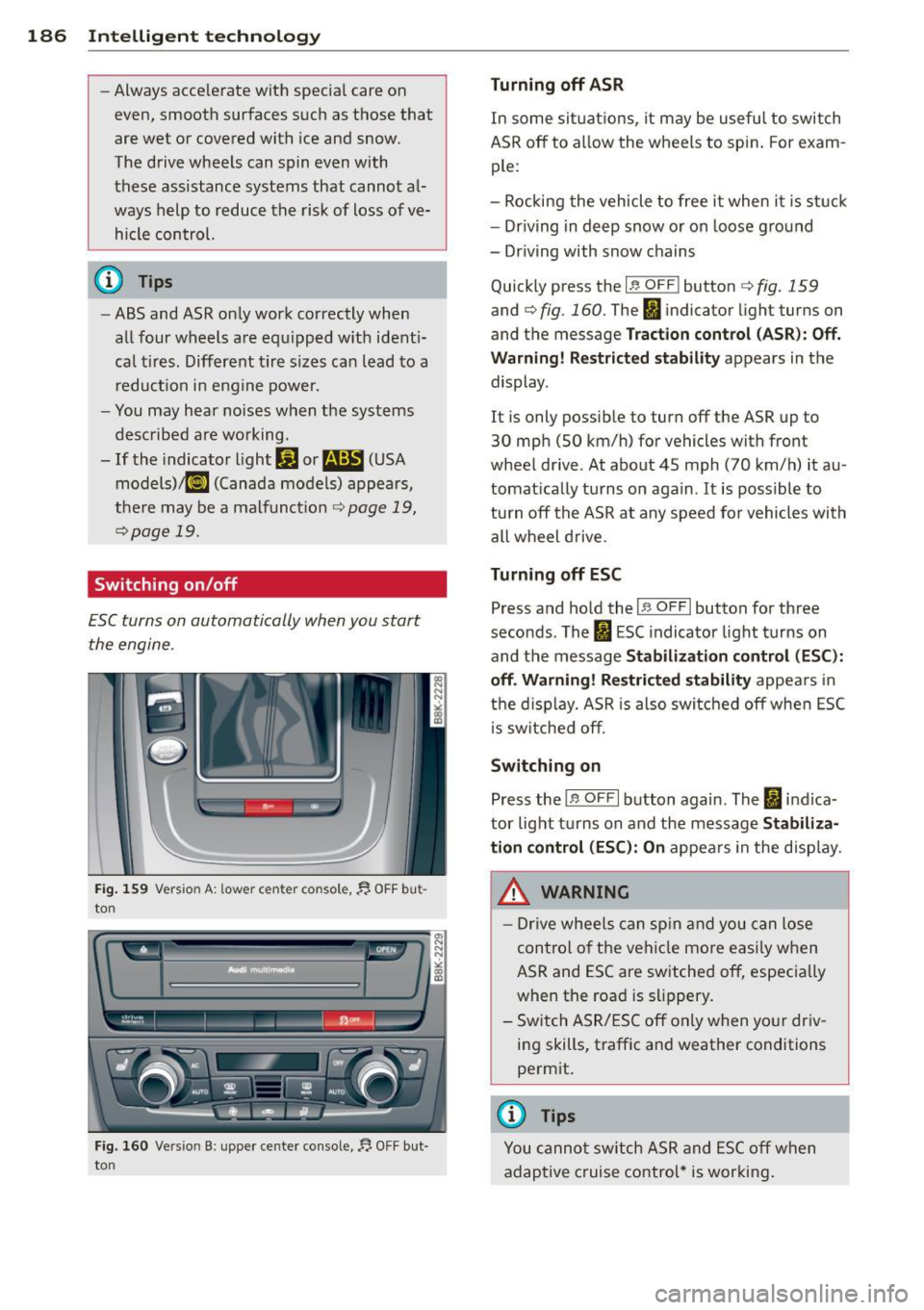
Fig. 159 Vers ion A: low er ce nter c onsol e, 1', OFF but
to n
.... .. [ I _j nw· 1-_, .. _ , 1 -- - .-=---1
I;· . i-a~ -~ ~-,' I ' .;- c;.il..-~ -~ 1,1
~' . -' '
1 ' ...... ~ ... ~- ;. '"~ l __,
Fig. 160 Versio n B: upper ce nter console,!'> OFF but
to n
Turning off ASR
In some situations, it may be useful to switch
ASR
off to allow the wheels to spin. For exam
ple:
- Rocking the vehicle to free it when it is stuck
- Driving in deep snow or on loose ground
- Driving with snow chains
Qu ickly press the
i.i, OFF I button ¢ fig. 159
and¢ fig. 160. The fi indicator light turns on
and the message
Traction control (ASR): Off.
Warning! Restricted stability
appears in the
display .
It is only possible to turn off the ASR up to
30 mph (SO km/h) for vehicles with front
wheel drive . At about 45 mph (70 km/h) it au
tomatically turns on again .
It is possible to
turn
off the ASR at any speed for vehicles with
all wheel drive.
Turning off ESC
Press and hold the I B OFFI button for three
seconds . The
Ii ESC indicator light turns on
and the message
Stabilization control (ESC):
off. Warning! Restricted stability
appears in
the display. ASR is also switched
off when ESC
is switched off.
Switching on
Press the 1 .$ OFFI button again. The 11 indica
tor light turns on and the message
Stabiliza
tion control (ESC): On
appears in the display .
_&. WARNING
- Drive wheels can spin and you can lose
control of the vehicle more easily when
ASR and ESC are switched off, especially
when the road is slippery .
- Switch ASR/ESC
off only when your driv
ing skills, traffic and weather conditions
permit.
(D Tips
You cannot switch ASR and ESC
off when
adaptive cruise control* is working.
-
Page 189 of 294
Braking
What affects braking efficiency?
New brake pads
During the first 250 miles (400 km), new
brake pads do not possess their full braking
effect, they have to be "broken in" first¢& .
You can compensate for this slightly reduced braking power by pushing harder on the brake
pedal. Avoid heavy braking loads during the
break-in per iod.
Operating conditions and driv ing habits
The brakes on today's automobi les are sti ll
subject to wear, depending largely on operat
ing conditions and driving habits¢.&. . On
vehicles that are e ither driven mostly in stop
and-go city traffic or are driven hard, the
brake pads should be checked by your author
ized Audi dealer more often than specified in
the
Warranty & Maintenance booklet . Failure
to have your b rake pads inspected can result
in red uced brake performance.
On steep slopes, you shou ld use the brak ing
effect of the engine. This way, you p revent un
necessary wear on the brake system.
If you
must use yo ur brakes, do not hold the brakes
down continuously. Pump the brakes at inter
va ls.
Operating noise
Noises may occur when braking depending on
the speed, braking force and outside condi
tions such as temperature and humidity.
Effect of water and road salt
In certain situat ions, for example after driving
through water, in heavy ra in, after overnight
condensation or after washing your car, the
braking effect can be reduced by moisture or
ice on the brake roto rs and brake pads . The
brakes must be dried first with a few careful
brake applications .
A t hi gher speeds and with the windshield w ip
ers turned on, the brake pads press against
the brake rotors for a short amount of time .
This occurs at regular intervals without the
Intelligent technology 187
driver noticing and provides for better brake
response time under wet conditions .
T he effectiveness of the brakes can be red uced
when the vehicle is driven on a sa lt-co vered
road and the b rakes are not used. Likewise,
you clean off accumulated salt coating from
brake discs and pads with a few cautious ap
plications of the brake ¢ & .
Corrosion
There may be a tendency for dirt to build up
on the brake pads and corrosion to form on
the discs if the car is not driven regu larly or
on ly for short trips with litt le use of the
brakes.
If the brakes are not used frequently, or if cor
rosion has formed on the discs, it is advisable
to clean off the pads and discs by braking
firmly a few times from a moderately high
speed ¢.&. .
Faults in the brake system
If you should notice a sudden increase in
brake pedal trave l, then one of the two brake
c ircuits may have failed ¢.&. .
Low brake fluid level
Malfunctions can occur in the brake system if
the brake fluid level is too low. The brake fluid
level is monitored electronica lly.
Brake booster
T he brake booster increases the pressure that
you generate with the brake peda l. It works
only when the engine is runn ing .¢ .&.
Brake lining wear status
Brake lining wear may be checked by visual in
spection of the condition of the brake pads
through the openings in the wheel. If neces
sary, the wheel may be removed fo r this in
spection ¢
page 252, Changing a wheel .
A WARNING
-
- New brake pads don't have the best stop
ping power and must be "broken-in" dur-
ing the initial 100 to 150 miles (150 to
~
•
•
Page 190 of 294
188 Intelligent technology
200 kilometers) of normal city driving.
You can compensate for this by pressing
the brake pedal more firmly. This also applies later when new pads are instal
led .
- You should perform braking maneuvers
for the purpose of cleaning the brake
system only if road conditions permit.
Other road users must not be put at risk -
you may cause an acc ident!
- Before descending a steep grade, reduce
speed and shift transmission into a lower
gear or lowe r driving range. Do not ride
the brakes or hold the pedal down too
long or too often. This could cause the
brakes to get hot and diminish braking
efficiency.
- Do not "ride the brakes" by resting your
foot on the pedal when you do not intend
to brake . This may cause the brakes to
overheat, premature wear and increased
stopping distance.
- Under certain climatic and operating
conditions such as passing through wa
ter, driving in heavy rain or after washing
the vehicle, the effectiveness of the
brakes can be reduced. In winter, ice can
accumulate on the brake pads, linings,
discs and drums. Carefully apply brakes
for a test. Brakes will dry and ice coat
ings will be cleaned off after a few care
ful brake applications.
- Driving for an extended period of time on
salt-covered roads without using your
brakes can also affect braking efficiency.
Clean off accumulated salt coating from
brake discs and pads with a few careful
brake applications.
- If you damage the front spoiler, or if you
install a different spoiler, be sure the air
flow to the front brakes is not obstruct
ed . Otherwise the brake system could
overheat reducing the effectiveness of
the entire brake system.
- Failure of one brake c ircuit will impair
the braking capability resulting in an in
creased stopping distance. Avoid driv ing
the vehicle and have it towed to the near- est authorized Audi dealer or
qualified
workshop.
- Never let the vehicle roll to a stop with
the engine shut off.
- If the brake booster is not working, for
example when towing your vehicle, or
because the brake booster has somehow
been damaged, the brake pedal must be
pressed considerably harder to make up
for the lack of booster assistance.
Electro-mechanical
power assist, dynamic
steering
The electro-mechanical power assist helps
the driver when steering.
Power steering adapts electronically based on
the vehicle speed .
Indicator lights and messages
• Steering defective! Do not drive vehicle!
If this indicator light turns on and stays on
and this message appears, the power steering
may have failed.
Do
not continue driving . See your authorized
Audi dealer or other qualified repair facility
for assistance.
E!"4 Dynamic steering: System fault! You can
continue driving
If the indicator light turns on and the mes
sage appears, the steering may be more diffi
cult to move or more sensitive than usual. The
steering wheel may also be at an angle when
driving straight .
Drive slowly to your authorized Audi dealer or
qualified workshop to have the malfunction
corrected .
ls!'fl Dynamic steering: initializing
If this driver message appears and the indica
tor light is flashing on the instrument panel,
dynamic steering* is being reinitialized. Once
you start the engine after this is finished, the ..,..
Page 191 of 294
steering wheel wi ll be easy to move . Re
initialization might be necessary if the steer
ing wheel was moved hard to the left and
right while the vehicle was not moving. The
d isplay goes out as soon as in itializat ion is
comp lete .
A WARNING
Have the dynamic steering* system mal
function repaired as soon as poss ible by an
authori zed A udi dealer or any qualified
workshop -risk of accident!
@ Tips
- If the . or 1;r,ij indicator light only stays
on for a short t ime, you may continue
driving.
- The dynamic steering * stability systems
are not available in t he event of a system
malfunction.
- Fo r additional informat ion on dynamic
stee ring*, re fer to
c::> page 111.
Driving with your
quattro ®
Applies to vehicles: with all-wheel drive
With oil-wheel drive, oil four wheels ore driv
en.
General information
W ith all -whee l dr ive, power is dis tributed to
a ll fo ur wheels. This happens automatica lly
depending on yo ur driving sty le and the road
conditions at the time. See also
c::> page 184 .
A center different ial d is tributes the dr iv ing
power var iably to the front and rear axle. It
wo rks together with se lective whee l to rque
contro l, which activates when driving throug h
curves
c::> page 185. With the sport d ifferen
tial*, power distribution to the rear w heels is
variable and can be adjusted with Audi drive se lect
c::> page 111 .
The all-wheel drive concept is designed for
hi gh engine power. Your vehicle is exception
ally powerful and has exce llent dr iving charac
ter ist ics both under normal d riving conditions
Int ellig ent technolog y 189
and on snow and ice . Always read and follow
safety precautions
c::> & .
Winter tires
When dr iving in t he winter, yo ur vehicle wi th
a ll -wheel drive h as an adv ant age, even w it h
regular tires. In wi nter road conditions it may
be advisable to mount winter tires (or all -sea
son tires) for improved driveability and brak
ing : these tires must be mounted on
all fou r
wheels .
See also c::> page 245, Winter tires.
Tire chains
Where tire chains a re mandatory on certain
roads, this no rma lly also app lies to veh icles
with all-wheel drive
c::> page 246 , Snow
chains .
Replacing wheels /tires
Vehicles wi th a ll-wheel drive must alw ays
have tires of the same s ize. A lso avoid tires
with different tread depths . For detai ls see
page
c::> page 241, New tires and replacing
tires and wheels.
Off-Road driving?
Your A udi does no t have enough g ro und cle ar
ance to be used as an off -road vehi cle. It is
therefore best to avoi d rough tracks and un
even te rrain as much as possib le . Also refer to
c::> page 192.
A WARNING
A lways ad just yo ur dr iv ing to road and traf
fic conditions. Do not let the extra safety
afforded by all-wheel drive tempt you into
taking extra risks .
-Al tho ugh t he all-wheel driv e is ve ry ef
fective, always remember that braking
capacity is lim ited by tire t raction. You
should t herefore not d rive a t excessive
speeds on i cy or slippery ro ad s urfa ces.
- On wet road surfa ces, be careful not to
d rive too fast bec ause the fron t whee ls
co uld begin to slide on top of the water
(aquaplani ng) . If th is should occur, yo u •
•
Page 192 of 294
190 Intelligent technology
will have no warning from a sudden in
crease in engine speed as with a front
wheel drive vehicle. Always drive at speeds wh ich are suited to the road con
ditions -risk of c rash .
Energy management
Starting ability is optimized
Energy management controls the distribution
of electrical energy and thus optimizes the
availability of electrical energy for starting
the engine.
I f a vehicle with a conven tional energy system
i s not d riven for a long period of time , the bat
tery is discharged by idling c urrent consumers
(e .g. immobilizer) . In certain circumstances it
can result in there being insuffic ient energy
avai lab le to start the engine.
I ntelligent energy management in your veh i
cle hand les the distribution of electrical ener
gy . Starting abi lity is marked ly improved and
the life of the battery is extended .
B asically , energy management consists o f
battery diagno sis, idling current manage
ment
and dynami c ene rg y man agement.
Battery diagnosis
Battery d iagnosis con tinuously dete rm ines
the state of the battery. Senso rs determ ine
battery vo ltage, batte ry cur rent and battery
temperature. This determines the current
state of charge and the power of the battery.
Idling current management
I dling c urrent managemen t red uces energy
consumption while the vehicle is stand ing.
With the ignition switched off, it contro ls the
energy s upply to the various e lectrica l compo
nents . Data from battery diagnosis is consid
ered.
D epending on the battery's state of charge,
individual consumers are grad ually turned off
to prevent excess ive d ischarge of the battery
and thus ma inta in start ing cap ability .
Dynamic energy management
While the vehi cle is being driven, dynamic en
ergy management distr ibutes the energy gen
erated according to the needs of the indiv id u
al components.
It regulates consumption, so
that more electrical energy is not being used
t h an is being generated and ensures an opti
mal state of c harge for the battery.
(!) Tips
- But even ene rgy management cannot
negate the limits of physics. Consider
that the power and life of a battery are limited.
- If start ing ability is threatened, the indi
cator light(•] appears¢
page 17 .
What you should know
The highe st priori ty is given to main taining
starting capability.
T he battery is seve re ly taxed in short -d istance
driv ing, in city traff ic and during the cold time
o f year. Abundant electrical energy is re
quired, but on ly a little is generated . It is also
critical if the engi ne is not r unning and electri
ca l components are tu rned on. In this in
sta nce ene rgy is be ing consumed bu t none is
being genera ted .
It is in precisely these s ituations t hat you will
notice ene rgy management active ly regu lat
i ng t he d istribu tion of ene rgy.
Vehicle stands for an extended period
If you do not drive your vehicle over a period
of several days or weeks, e lectr ica l compo
nents a re g radually cut back or sw itched off .
T h is reduces energy consumption and ma in
ta ins s tart ing capability over a longer pe riod .
Some of the convenience func tions may not
opera te, such as the interior ligh ts or the
power seat adjustment. The convenience
functions will be available again wh en you
switch on the ignition and start the eng ine .
Page 193 of 294
With the engine turned off
If you listen to the radio, for example, with
the engine turned off or use other MMI func
tions, the battery is being discharged .
If starting capability is jeopardized due to en
ergy consumption, the following warning ap
pears in the MMI display :
Please start the engine soon or the system
will be turned off.
The warning indicates that the system will be
turned off automatically after 3 minutes . If
you wish to continue using the functions , you
have to start the engine.
With the engine running
Although electrical energy is generated when
the vehicle is being driven , the battery can be
come discharged . This happens mostly when
little energy is being generated and a great
deal consumed and the battery's state of
charge is not optimal.
To bring the energy balance back into equili brium, consumers which require especially
large amounts of energy are temporarily cut
back or switched off . Heating systems in par
ticular require a great deal of energy. If you
notice , for example , that the heated seats* or
the heated rear window are not heating, they
have been temporarily cut back or switched
off. These systems will be available again as
soon as the energy balance has been restored.
You will also notice that engine idle speed has
been increased slightly. This is normal and not
a cause for concern . By increasing engine idle
speed the additional energy required is gener
ated and the battery is charged.
Intelligent technology 191
•
•
Page 194 of 294
192 Driving and environment
Driving and
environment
The first 1,000 miles
(1,500 km) and
afterwards
New engine
The engine needs to be run-in during the first
1,000 miles (1,500 km).
For the fir st 600 miles (1,000
kilometers ):
.,. Do not use full throttle.
... Do not drive at engine speeds that are more
than 2/3 of the max imum permitted RPM.
From 600 to 1,000 miles (1 ,000 to
1,500 kilometers):
.,. Speeds can gradually be increased to the
max imum pe rm iss ible road or eng ine speed .
During and after break-in per iod
... Do not rev the eng ine up to h igh speeds
when it is cold. Th is app lies whether the
transmission is in N (Neutral) or in gear.
After the break- in period
... Do not exceed max imum eng ine speed un
der any circumstances .
... Upshift into the next higher gear
before
reaching the red area at the end of the tach
ometer scale¢
page 10.
During the first few hours of driving, the en
g ine's inter na l friction is higher tha n later
when alt the moving parts have been broken
i n. How welt this break- in process is done de
pends to a conside rable extent on the way the
ve hicl e is driven du ring the first 1,000 miles
(1, 500 kilome ters).
(D Note
E xtremely high engi ne speeds are auto
mat ica lly re duced. However, these rpm
lim its are programmed for a n engine welt
r u n- in, not a new eng ine.
{® For the sake of the environment
Do not drive with unnecessarily high en
g ine speeds - upshifting ear ly saves fuel,
reduces no ise and protects the environ
ment.
, New tires
If your vehicle is runni ng on new tires, drive
very carefully for the first 350 miles (500 kilo meters) after fitting.
_& WARNING
N ew tires tend to be slip pery a nd mus t al
so be "broken -in" . Be s ure to remembe r
this dur ing the fi rst 350 mi les (500 kilo
meters) . Brake gently . Avoid fo llow ing
closely behind other vehicles or other sit
uations that m ight require sudden, hard
braking.
Avoid damaging the
vehicle
When you a re d rivi ng on poo r roads, or over
cu rbs, ste ep ramps, etc., ma ke certai n that
low- ly ing parts s uch as spoile rs and ex ha ust
s ystem parts do not bot tom o ut and get dam
aged.
T his is espec ially true for veh icles with low
s lu ng chassis (s por ts chassis)* and fully load
ed vehicles.
Driving through water
on roads
Note th e following to avoid vehicle damage
whe n driving through water, for examp le on
flooded roads:
- The wa ter must not be any hig he r th an the
bottom of the vehicle body .
- Do not dr ive faste r than walk ing speed.
Page 195 of 294
A WARNING ,~ ~
After driving through water, mud, slush,
etc., the brakes may be slow to take effect
because of wet brake rotors and pads. Dry
the brakes first by braking carefully to re
store the full brak ing effect.
([) Note
Vehicle components such as the engine,
transmiss ion, suspension or electrical sys
tem can be severely damaged by driving
through wate r.
@ Tips
- Check the depth of the water before dr iv
i ng through it.
- Do not stop the veh icle, dr ive in reverse
or switch the engine off when driving
th rough water.
- Keep in mind that oncoming vehicles
may create waves that raise the water
level and make it too deep for you r vehi
cle to drive th rough safely.
- Avoid dr iving through sa lt water because
i t can ca use corrosion.
Catalytic converter
It is very important that your emission con
trol system (catalytic converter) is function
ing properly to ensure that your vehicle is run
ning in an environmentally sound manner.
11-Always use lead-free gasoline q page 210,
Fuel supply .
"'" Never run the tank down a ll the way to
empty.
11-Never put too much motor oil in your en-
gine
q page 220, ~ Adding engine oil .
11-Never try to push -or tow-start your veh icle .
The catalytic converter is an efficient "clean up" device built into the exhaust system of
the vehicle . The catalytic converter burns
many of the pollutants in the exhaust gas be
fore they are released into the atmosphere .
Drivin g and en vironm ent 193
The exclusive use of unleaded fuel is critically
important for the life of the catalytic convert
er and proper funct ion ing of the engine.
A WARNING
-
- Do not park or operate the vehicle in
areas where the hot exhaust system may
come in contact with dry grass, brush,
fuel spill or other mate rial wh ich can
cause a fir e.
- Do not apply additional undercoating or rustp roof ing on or near the exhaust
manifold, exhaust pipes, catalytic con
ve rter or heat shields. During driv ing, the
substance used for undercoating co uld
overheat and cause a fire.
(D Note
- Be aware that just one tank filling with
leaded fu el w il l already ser iously de
gra de the performance of the catalytic
c onverte r.
- Do not ex ceed t he cor rect eng ine oil level
qpage 220.
- Do not drive until the fue l tank becomes
comple tely empty. The engine co uld m is
fire . Unburned fuel could also get in to
the exhaust system and th is co uld cause
the catalytic converter to overheat .
- Do not turn off the ignition while the ve
hicle is moving.
- Do not continue to ope rate your veh icle
unde r these conditions, as otherwise fuel
can reach the catalytic converte r. T his
cou ld result in overheating of the con
verter, requir ing its replacement.
- To assure efficient operation of the Emis
sion Control System:
- H ave you r vehicle maintained prope rly
and in accorda nce w ith the serv ice rec
ommendat ions in yo ur Warranty &
M ain tenance boo klet.
- L ack of prope r maintenance as we ll as
improper use of the vehi cle w ill impair
the function of the em ission contro l
system and could lead to damage . ..,. •
•
Page 196 of 294
194 Driving and en vironm ent
@ For the sa ke of the environment
Even when the Emission Contro l System is
operating properly, the exhaust gas can
have a sulfur-like exhaust gas smell under
some operating states. This depends on
the sulfur content of the fue l being used .
Using a different brand of fuel may help,
or filling the tank w ith lead-free super
grade gasoline.
Operate your vehicle
economically and minimize pollution
General
Your personal style of driving will determine
t he economy of your vehicle, as well as ex
haust and noise levels.
Fue l economy, environmental impact , and
wear on you r engine, bra kes and t ires la rgely
depend on th ree factors:
= yo ur personal dr iv ing sty le
- operating conditions
- technical lim itations
If yo u anticipate what you need to do next and
drive economically, you can easi ly cut your
fue l consumption by 10-15 percent. This sec
tion will give you some t ips on how you ca n
he lp the environmen t and your pocketbook.
(D Tips
The consumpt ion estimates as published
by ENVIRONMENTAL PROTECTION AGENCY
(EPA) and Transport Canada may not co rre
spond to your actual consumption on the
road, wh ich will vary depending upon vehi
cle load an d speed, road and weather con
ditions, tr ip le ngth, etc.
Drive smoothly and keep a lookout
ahead
Vehicles use the most fuel when they are ac
celerating .
.,. Avoid unnecessa ry accelerating and braking. Vehicles use the most fuel when they are ac
ce le rating. If you anticipate what is going to
happen next, you will need to brake less and,
th us, acce lerate less. Let the vehicle coast
whenever possible -for example when you see
that the next traff ic light is red .
· Avoid full throttle
Driving at moderate speeds saves fuel and
improves your mileage.
.. Try and keep well below your car's maxi-
m um speed .
Acce lerat ing gently red uces fue l cons ump
tion, engine wear, and does not disturb the
environment.
F uel consumpt ion, exhaust emissions a nd en
gine noise inc rease disproportionate ly at high
speeds . If yo u drive at approximately th ree
quarters of top speed, fuel consumption w ill
be reduced by one half. Never drive faster
than the posted speed limit and weathe r con
ditions pe rm it.
Reducing unnecessary idling
Even when your car is jus t idling it burns up
fuel.
.. Shut the eng ine off when you are not driv
ing the vehicle .
.. Do not warm up the vehicle by letti ng the
eng ine run at idle .
It makes sense to shut off the engine in traffic
jams, when wa it ing for tra ins to pass at rail
r oad crossings, or at traffic lig hts that have
long wai ts on red . Tu rn ing the eng ine off for
j ust 30-40 seconds saves more fuel tha n is
burned start ing t he e ngine aga in.
It takes a long t ime for the engine to warm up
fully when it is ru nning at id le. However, wea r
and noxious emissions a re espec ia lly high
whe n the eng ine is wa rm ing up. So you s hou ld
dr ive away as soon as yo u start the engine and
avo id running at high rpms whi le the engine is
still warming up.
ll-