fuel AUDI S6 2012 User Guide
[x] Cancel search | Manufacturer: AUDI, Model Year: 2012, Model line: S6, Model: AUDI S6 2012Pages: 298, PDF Size: 74.43 MB
Page 61 of 298
maximum capacity specified by the
manufacturer of the roof rack system.
A WARNING
Weak, damaged or improper straps used
to secure items to the roof rack can fail during hard braking or in a collision and
cause serious personal injury .
- Make sure the roof rack is installed exact
ly as specified above¢
page 57 .
- Always use suitable mounting straps for
securing items to the roof rack to help
prevent items from shifting or fly ing for
ward.
- Items on the roof rack must always be
securely mounted.
- The use of a roof rack can negatively af
fect the way a vehicle handles . Cargo
that is large, heavy, bulky, long or flat
will have a greater negative influence on
the vehicle's aerodynamics, center of
gravity and overall handling . Always
dr ive slowly, avoid sudden braking and
maneuvers when transpo rting cargo on
the roof of your vehicle.
- Never exceed the maximum permissible
load carrying capacity of the roof of your
vehicle , the permissib le axle weights and
the permissible total weight of your veh i
cle ¢
page 274, Weights.
-Always drive slowly, avoid sudden brak
ing and maneuvers when transporting
cargo on the roof of your vehicle .
@) For the sake of the environment
Sometimes it may be easier to leave a roof
rack insta lled even though you are not us
ing it . Due to the increased air resistance
your veh icle will unnecessar ily use more
fuel. Remove the roof rack if you are not
going to use it .
.
Sea ts a nd s to rage 59
Luggage compartment
Loading luggage compartment
Items of luggage must be stowed securely.
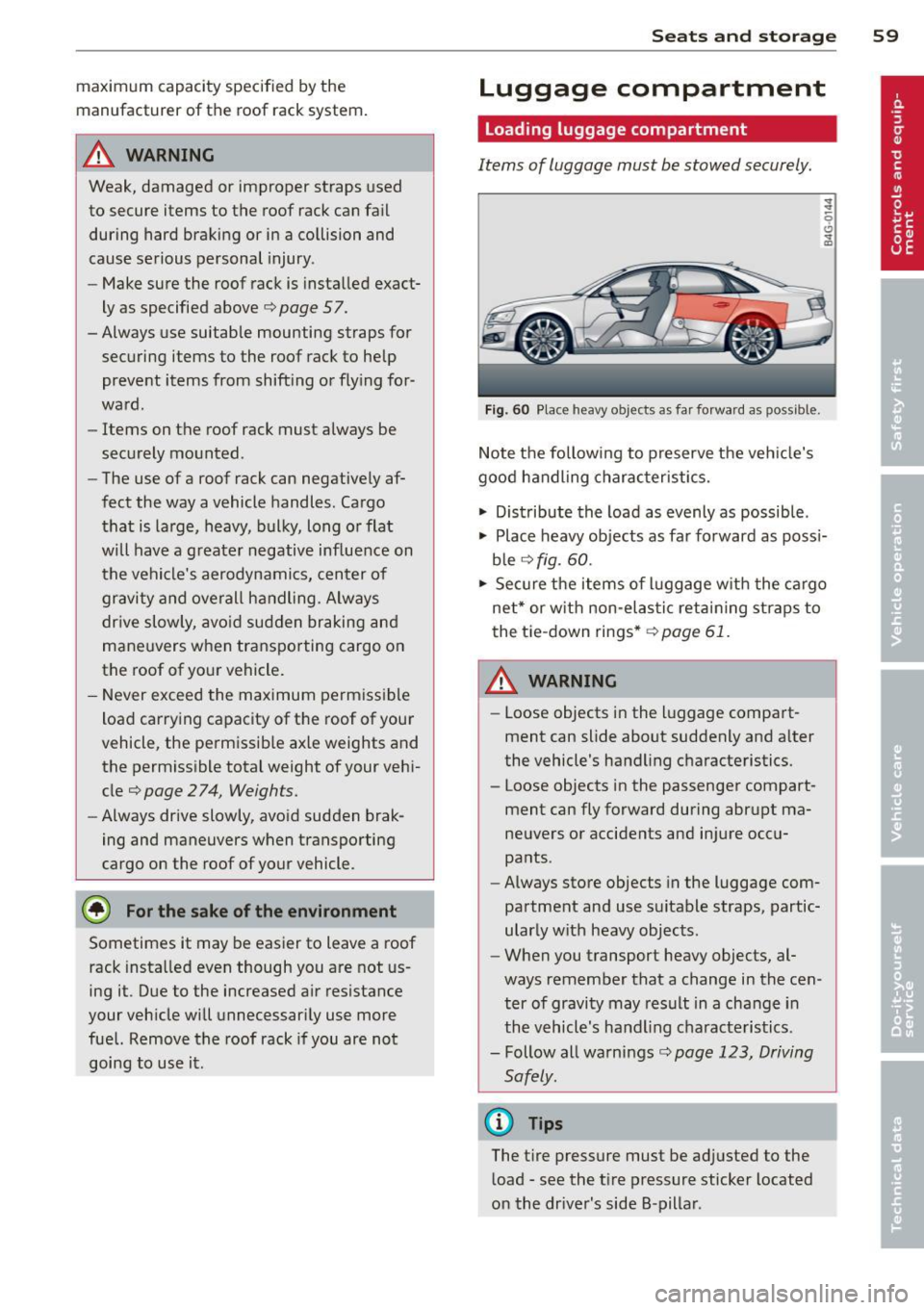
Fig. 60 Pla ce hea vy o bject s as far forward a s possible .
Note the following to preserve the vehicle's
good handling charac teristics.
.,.. Distribute the load as evenly as possible .
... Place heavy objects as far forward as poss i
ble ¢
fig. 60 .
... Secure the items of luggage w ith the cargo
net* or w ith non -elastic retaining straps to
the tie-down rings * ¢
page 61.
A WARNING
- Loose objects in the l uggage compart
ment can slide about suddenly and a lter
the vehicle's handling characteristics.
- Loose objects in the passenger compart
ment can fly forward during abr upt ma
neuvers or accidents and injure occu
pants .
- Always store objects in the luggage com
partment and use suitable straps, partic
ularly with heavy objects .
-
-When you transport heavy objects, al
ways remember that a change in the cen
ter of gravity may result in a change in
the vehicle's handling characteristics.
- Follow all warnings¢
page 123, Driving
Safely .
(D Tips
The tire pressure must be ad justed to the
load - see the t ire pressure sticker located
on the dr iver's side B -pillar .
Page 103 of 298
Automatic Transmission
multitronic ®
Introduction
Appl ies to vehicles: with multitr oni c
Your veh icle is equipped with an electronically
controlled,
continuously variable transmis
sion
(multitronic ®). In contrast to convention
al automatic transmi ssions using shifting op
erations, the transmission ratio in the contin
uously variab le transmission is changed con
tinuously. This optimizes the comfort level
and conserves fuel.
The gear ratio in the transmission is selected
(upshift and downshift) completely automati
cally as a function of the defined driving pro
grams.
If desired, the driver can also select the gears
manually (tiptronic mode).
Instead of the torque converter in convention
al automatic transmissions, your multitronic ®
transmission uses a multidisk clutch for pow
er transmission . Therefore, the "creep behav
ior" of the veh icle dur ing idling when tempo
rarily stopped in selecto r lever pos it ion 0/S or
R is less pronounced.
Driving the automatic transmission
A ppl ies to vehicles: with multitr onic
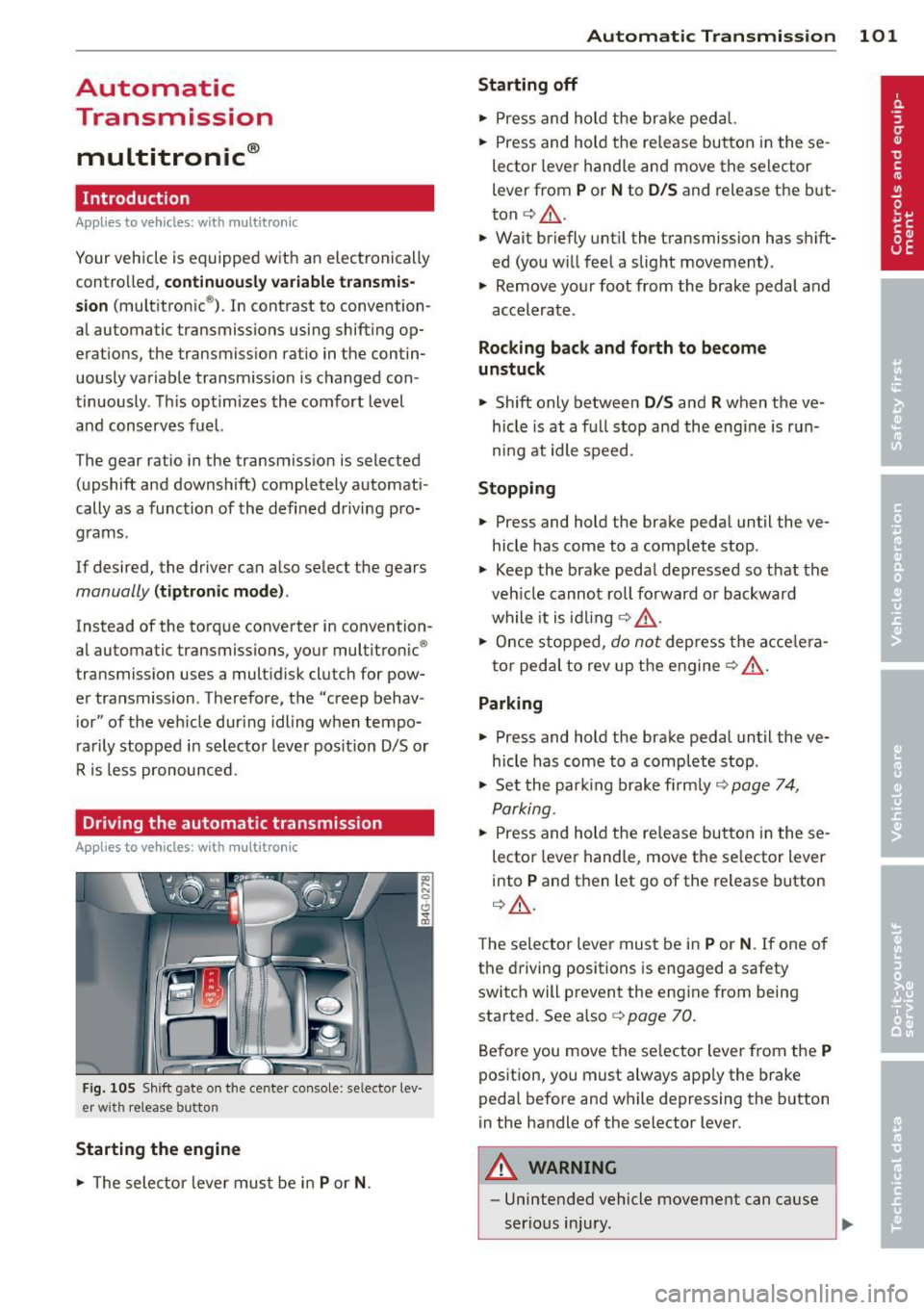
Fig . 105 Shift gate on the cente r console: se lecto r lev
er wi th release button
Starting the engine
• The selector leve r must be in P or N. Automatic Transmission 101
Starting off
•
Press and hold the brake pedal.
• Press and hold the re lease button in these
lector lever handle and move the selector
lever from
P or N to D/S and release the but
ton
c:> _&. .
.,. Wait briefly until the transmission has shift
ed (you will feel a slight movement) .
.,. Remove your foot from the brake pedal and
accelerate .
Rocking back and forth to become
unstuck
.,. Shift only between D/S and R when the ve
hicle is at a full stop and the engine is run
ni ng at idle speed .
Stopping
.,. Press and hold the brake pedal until the ve
hicle has come to a complete stop .
• Keep the brake pedal depressed so that the
veh icle cannot roll forward or backward
while it is idling
c:> _&. .
• Once stopped, do not depress the acce le ra
tor peda l to rev up the engine
c:> _&. .
Parking
.,. Press and hold the brake pedal until the ve
hicle has come to a complete stop .
• Set the park ing brake firmly
c:> page 7 4,
Parking .
• Press and hold the release button in these
lector lever handle, move the se lector lever
into
P and then let go of the release button
c:> _&..
The selector lever must be in P or N. If one of
the driving positions is engaged a safety
switch will prevent the eng ine from being
started . See also co
page 70.
Before you move the selector lever from the
P
position, you must always app ly the brake
pedal before and while depressing the button
in the handle of the selector lever.
A WARNING
-- Unintended vehicle movement can cause
serious injury.
Page 107 of 298

Manual shift program
Applies to vehicles: with multitronic
Using the manual shift program you can
manually select gears .
Fig. 108 Center console: shi ftin g th e tip tronic ma nua l·
l y
Fig. 109 Display: man ual sh ift program, selected gea r
highl ighted
Switching to manual shift program
• Push the selector lever to the right from 0/
5 . As soon as the transmission has switched
over, the selected gear appears in the dis
play.
To upshift
• Push the selector lever forward to the plus
pos ition
0 ~ fig . 108 .
To downshift
• Push the leve r to the minus position 0 -
When accelerating , the transmission will au
tomatically shift into the next gear before the
engine reaches its maximum RPM .
If you apply a light throttle when accelerat
ing, tiptron ic will automatically shift from 1st
to 2nd gear to save fuel. If you apply a heavy
thrott le, the transmission will stay in 1st gear
Automatic Transmission 105
until near maximum RPM is reached, or until
the driver shifts into 2nd gear.
If you take your foot off the accelerator pedal
when d riving down a steep incline, tiptronic
will downshift from the selected gear into the
next lower gear until it reaches 1st gear,
based on road speed and engine RPM. Auto
matic downshifting is interrupted as soon as
you apply the throttle again.
(D Tips
- When you shift into the next lower gear,
the transmission will downshift only
when there is no possibility of over-rev
ving the engine.
- When the kick-down comes on, the
transm ission w ill shift down to a lower
gear, depending on vehicle and engine
speeds .
- tiptronic is inoperative when the trans
mission is in the fai l-safe mode.
Steer ing wheel with tiptronic
Applies to vehicles: with tiptronic steering wheel
The shi~ buttons on the steering wheel allow
the driver to shift gears manually.
Fig. 1 10 Steer ing w hee l: S hift bu ttons
• To downshift, touch the button on the left
0 -
• To upshift, touch the button on the right
0.
The shift buttons are activated when these
lector lever is in
D/S or in the manual shift
program (tiptronic) .
Page 112 of 298

110 Autom atic Tran smi ssi on
Dynamic shift program (DSP)
Appli es to vehicles: with tiptronic
The automatic transmission is electronically
controlled .
The transmission is self adapting and will au
t oma tically
select the best shift program suit
ed to the driving conditions and driving style .
The transmission will se lect one of the
econo
my programs when you drive at a steady
speed or a gradually changing speed without
heavy acceleration . This achieves optimum
fuel efficiency, with early upsh ifting and de
layed downshifting.
The transmission will automatically select the
s po rty shift programs when you drive at high
er speeds, or w ith heavy acceleration and fre
quent ly changing speeds. Upshifts are de layed
to make f ull use of eng ine power. Downsh ift
i ng takes p lace at higher engine speeds than
in the economy programs.
The se lection of the most suitable shift p ro
gram is a cont inuous, automati c process. The
driver can also make the t ransmission switch
to a sporty prog ram by
quic kly pressing down
the gas pedal.
This causes the transmission to shift down to
a lower gear to achieve rap id acceleration, e.g.
for qu ickly passing another veh icle. You do not
need to press the gas peda l into the kick-down
range. After the transmission has upshifted,
the original program is selected according to
your driving style.
An additional shift program allows the automatic transmission to select the proper gear
for uphill and downhill gradients.
This keeps the transmission from shifting up
a nd down unnecessari ly on hills. The trans
mission will shift down to a lower gear when
the driver presses the brake pedal on a down
h ill gradient. This makes use of the braking ef
fect of the eng ine without the need to shift
down manually .
Manual shift program
Applies to vehicles: wit h tiptronic
Using the manual shift program you can
manually select gears .
Fig . 115 Center conso le: sh ift ing the t iptron ic ma nual
l y
Fig . 1 16 D isp lay: manual sh ift prog ra m , se lected gear
hi ghlighted
Switching to manual shift program
.,. Push the selector lever to the rig ht from D/
5 . As soon as the transmission has sw itched
over, the se lected gear appears in the dis
p lay.
To u pshift
.,. Push the selector lever forward to the plus
position
0 ¢ fig .. 115 .
To down shift
.,. Push the lever to the minus pos ition 0 -
When accelerating, the transmission will au
tomatica lly shift into the next gear before the
engine reaches its maximum RPM.
If you apply a light throttle whe n accelerat-
ing, tiptronic wi ll automatically shift from 1st
to 2nd gear to save fuel. If you apply a heavy
throttle, the transmission wi ll stay in 1st gear .,.
Page 198 of 298

196 Driving and environment
Driving and
environment
The first 1,000 miles
(1,500 km) and
afterwards
New engine
The engine needs to be run-in during the first
1,000 miles (1,500 km).
For the fir st 600 miles (1,000
kilometers ):
.,. Do not use full throttle.
... Do not drive at engine speeds that are more
than 2/3 of the max imum permitted RPM.
... Avoid hig h engine speeds.
From 600 to 1,000 mile s (1 ,000 to
1,500 kilometers):
... Speeds can gradually be increased to the
max imum pe rm iss ible road or eng ine speed .
During and after break-in per iod
.,. Do not rev the engine up to high speeds
when it is cold. Th is app lies whether the
transm ission is i n N (Neutra l) or in gear.
After the break-in period
... Do not exceed maximum engine speed un
der any circumstances.
.,. Upshift into the next hig her gear
before
reaching the red area at the end of the tach
ometer scale
c:> page 11.
During the first few hours of driving, the en
g ine's interna l friction is higher than later
when all the moving parts have been broken
in . How well this break- in p rocess is do ne de
pends to a conside rable extent on th e way the
ve hicl e is driven d uring the first 1,0 00 miles
(1, 500 k ilome ters).
0 Note
E xtremely high engi ne speeds are auto
mat ica lly reduced. However, these rpm
lim its are progr amme d for an engine well
r u n- in, not a new engine .
{® For the sake of the environment
Do not drive with unnecessarily high en
g ine speeds - upshifting ear ly saves fuel,
reduces no ise and protects the environ
ment.
, New tires
If your vehicle is runni ng on new tires, drive
part icularly caref ul for the first 350 miles
(500 kilomete rs) afte r fitt ing .
A WARNING
New tires tend to be sl ippery and mus t al
so be "broken -in" . Be s ure to remember
this dur ing the fi rst 350 mi les ( 500 kilo
meters) . Brake gently . Avoid fo llow ing
closely behind other vehicles or other sit
uations that m ight require sudden, hard
braking .
New brake pads
Remember that new brake pads do not have a
full bra king effect dur ing the fi rst 250 m iles
(400 kilomete rs) afte r they a re insta lled .
New brake pads have to be "burnished in" be
fo re t hey have optima l grab
c:> A .
During the break- in period, you should avoid
putting severe loads on the brakes. Severe
l oads include, for example, sudden hard brak
i ng, in particular at very high speeds or, for
example, on mounta in passes .
A WARNING
New b rake pa ds don't have t he bes t stop
pi ng power and mus t be "broke n-in " dur
i ng the in iti al 1 00 to 150 mi les (150 to
20 0 k ilometers) of no rma l city driving . You
can compensate for this by pressing the
br ake peda l mo re f irm ly . This also applies
l ater when new pads are installed.
Page 199 of 298
Catalytic converter
It is very important that your emission control system (catalytic converter) is function
ing properly to ensure that your vehicle is run
ning in an environmentally sound manner .
.. Always use lead-free gasoline¢ page 215,
Fuel supply.
.,. Never run the tank down all the way to
empty.
.,. Never put too much motor oil in your en-
gine
¢ page 225, Adding engine oil~-
.,. Never try to push- or tow-start your veh icle.
The catalytic converter is an eff icient "clean
up" device built into the exhaust system of
the vehicle . The catalytic converter burns
many of the pollutants in the exhaust gas be
fore they are released into the atmosphere.
The exclusive use of unleaded fuel is critically
importa nt for the life of the cata lytic convert
e r and proper functioning of the engine.
A WARNING
-
- Do not park or operate the vehicle in
areas where the hot exhaust system may
come in contact with dry grass, brush,
fuel spill or other material which can cause a fire.
- Do not apply additional undercoating or
rustproofing on or near the exhaust
man ifold, exhaust pipes, catalytic con
verter or heat shields. During driving, the
substance used for undercoating cou ld
overheat and cause a fire.
0 Note
- Be aware that just one tank filling with
leaded fuel will already seriously de
grade the performance of the catalytic
converter.
- Do not exceed the correct engine oil level
¢ page 225.
-Do not drive until the fuel tank becomes
completely empty. The eng ine could mis
fire . U nburned fuel could a lso get i nto
Dri vin g and en vironm ent 197
the exhaust system and this cou ld cause
the catalytic converter to overheat .
- Do not swi tch off the ignit ion while the
vehicle is mov ing.
- Do not continue to ope rate your veh icle
unde r these conditions, as othe rwise fuel
can reach the catalytic converter. This
co uld result in overheating o f the con
verter, requir ing its replacement .
- To assure efficient operation of the Emis
sion Control System:
- H ave your vehicle maintained prope rly
and in accordance w ith the se rv ice rec
ommendat ions in you r Warranty &
M aintenance boo klet.
- L ack of prope r maintenance as we ll as
improper use of the vehi cle w il l impair
the function of the em ission contro l
system and could lead to damage .
@ For the sake of the environment
Even when the Emiss ion Control System is
operat ing properly, the exha ust gas can
have a sul fur -li ke exhaust gas smell under
some operating states . This depends on
the sulfur content of the fuel being used .
Using a different brand of fue l may help,
or filling the tank with lead-free super
grade gasoline .
Avoid damaging the
vehicle
When you are drivi ng on poo r roads, or over
c ur bs, s teep ramps, etc., ma ke certai n that
low -lying parts s uch as spoilers and exhaust
system pa rts do not bottom o ut and get dam
aged.
T h is is espec ially true for veh icles w ith low
s lung chassis (spor ts chassis)* and fully load
ed vehicles. •
•
Page 200 of 298

198 Driving and en vironm ent
Driving through water
on roads
Note the following to avoid vehicle damage
when driving through water, for example on
flooded roads:
- The water must not be any higher than the
bottom of the vehicle body.
- Do not drive faster than wa lking speed.
A WARNING
After driving through water, mud, slush,
etc., the brakes may be slow to take effect
because of wet brake rotors and pads. Dry
the brakes first by braking carefully to re
sto re the full braking effect.
@) Note
Vehicle components such as the engine,
transmiss ion, suspension or electrical sys
tem can be severely damaged by driving
through water.
- Check the depth of the water before dr iv
i ng through it.
- Do not stop the vehicle, drive in reverse
or switch the engine off when driving
through water .
- Keep in mind that oncoming vehicles
may create waves that raise the water
level and make it too deep for your vehi
cle to drive through safely.
- Avoid dr iving through salt water because
i t can cause corrosion.
Operate your vehicle
economically and
minimize pollution
General
Your personal style of driving will determine
the economy of your vehicle, as well as ex
haust and noise levels.
Fuel economy, environmenta l impact, and
wear on your engine, brakes and tires largely
depend on three factors:
- your personal driving style
- operating conditions
- technical limitations
If you anticipate what you need to do next and
drive economically, you can easily cut your
fuel consumpt ion by 10-15 percent . This sec
t ion will give you some tips on how you can
help the env ironment and your pocketbook.
@ Tips
The consumption estimates as published
by ENVIRONMENTAL PROTECTION AGENCY
(EPA) and Transport Canada may not corre
spond to your actual consumption on the
road, which will vary depending upon vehi
cle load and speed, road and weather con
ditions, trip length, etc.
Drive smoothly and keep a lookout
ahead
Vehicles use the most fuel when they are ac
celerating.
.,. Avoid unnecessary accelerating and braking.
Vehicles use the most fuel when they are ac
ce lerating. If you anticipate what is going to
happen next, you will need to brake less and,
thus, acce lerate less . Let the vehicle coast
whenever possible - for example when you see
that the next traffic light is red.
Page 201 of 298
Avoid full throttle
Driving at moderate speeds saves fuel and
improves your mileage.
"" Try and keep well below your car's maxi-
mum speed.
Accelerating gently reduces fuel consump tion, engine wear, and does not disturb the
environment.
F ue l consumption, exhaust emissions and en
g ine noise increase disproportionately at high
speeds. If you drive at approximately three
quarters of top speed, fuel consumption will be reduced by one half. Never drive faster
than the posted speed limit and weather con
d itions permit .
Reducing unnecessary idling
Even when your car is just idling it burns up
fuel.
"" Shut the engine off when you are not driv
ing the vehicle.
"" Do not warm up the veh icle by letting the
engine run at idle .
It makes sense to shut
off the engine in traff ic
jams, when waiting for trains to pass at ra il
road crossings, or at traffic lights that have
l ong wa its on red. Turning the engine
off fo r
just
30-40 seconds saves more fue l than is
bu rned starting the eng ine again .
It takes a long time for the engine to warm up
fu lly when it is running at idle. However, wear
and nox ious em issions are especially high
when the engine is warming up. So you should
drive away as soon as you start the engine and
avoid running at high rpms while the engine is
still warming up .
(D Note
Do not leave engine idling unattended af
ter starting . If warning lights should come
on to indicate improper operation, they
wou ld go unheeded. Extended idling also
produces heat, which cou ld result in over-
Dri vin g and en vironm ent 199
'
heating o r othe r damage to the veh icle or
other p roperty .
Regular maintenance
A badly tuned engine unnecessarily wastes a
lot of fuel.
"" Have your veh icle serviced at reg ular i nter-
vals.
By having your veh icle regu la rly serviced by an
Audi dealer he lps to ensu re that it runs prop
erly and economically. The condition of your
vehicle not only affects its sa fety and ability to
hold its value, it a lso affects
fuel con sump
tion .
Check your oil e ach t ime you fill your tank .
The amount of o il used is re lated to eng ine
load and speed .
It is normal for the oil consumption of a new
engine to reach its lowest value after a certa in
mileage has been driven .
You must drive your veh icle about 3,000 m iles
(5,000 kilometers) before you can properly
assess oil consumpt ion.
This also app lies to fue l consumption and en
gine output.
(U) Note
- Have your vehicle maintained properly
and in accordance with the service rec
ommendations in your Warranty
& Ma in
tenance booklet . Lack of proper mainte
nance as well as improper use of the ve
hicle will impair the function of the
em iss io n cont ro l system and cou ld lead
to damage.
- Do not alter or remove any component of
the Emission Control Sys tem unless ap
proved by the manufacture r.
- Do not alter or remove any device, such
as heat shie lds, swit ches, ign it ion w ires,
valves, which are designed to p rotec t
your vehicle's Emission Control System
and other important vehicle compo
nents .
•
•
Page 202 of 298

200 Driving and environment Fewer short trips
Fuel consumption will always be relatively
high on short trips .
.,. Try to avo id driving short distances with a
cold eng ine.
The engine and catalyt ic converte r have to
reac h their optimal
operating temperature to
reduce fuel consumption and noxious emis
sions effect ively .
Just afte r starting, a cold engi ne in a mid -size
car on ly achieves a f uel economy of 6-8 miles
per gallo n (30-40 l/100 km). After about a
ha lf a m ile, fuel economy climbs to 12 mpg
(20 l/ 1 00 km). Afte r abo ut
2.5 m iles ( 4 km),
the eng ine is at its proper ope rat ing temp era
ture and fue l e co nomy has rea ched a no rma l
l eve l. So you can see th at you sho uld a void
shor t trip s wheneve r poss ible.
Th e
outside temperature is also critical in this
r egard. Your car co nsum es more fuel in the
win ter than in the summe r.
Page 206 of 298

204 Cleaning and protection
Cleaning and protect ion
General information
Regular core preserves vehicle value .
Any automobile is exposed to industr ial
fumes, corrosive road salt, etc. A well cared
for Audi can look like new many years after
p ur chase . Reg ular and correct care w ill con
tr ibute to maintain ing the beauty and valu e of
your Aud i.
Furthermore, good care may be a condition
for substantiating a warranty claim should
corrosion damage or paint defects occur.
Your auth orized Audi dealer has a variety of
dedicated vehicle-care products and can ad
v ise wh ich ones to use for cleaning the ext eri
or a nd inte rior o f you r vehi cle.
Whether you use products recommended by
Aud i or other commercially ava ilable clean ing
agen ts, pleas e make sure you apply t hem cor
r ectly .
A WARNING
-Cleani ng agen ts m ay be poi sonous. Kee p
them o ut of t he rea ch of childre n.
- H eed a ll ca ution labels.
- Always read directions on th e co ntai ner
b efore using a ny produc t. Follow the di
rec tions caref ully.
- Most chemical cleaners a re concentrat ed
and have to be diluted.
- Use spot removing flui ds only i n well
ventila ted areas.
- Do not use gasoline, ke rosene, d iesel
fuel, nail pol is h remov er or ot her volati le
fluid s. T hey may be to xic, flammab le or
h azar dou s in other w ays. D o not was h,
w ax or dry the vehicle wi th the ig nit ion
on or the eng ine running .
- D o not cl ean t he under sides of ch assis,
f en ders, wheel cove rs , etc. without pro
tectin g your hands and a rms. You may
c u t yourself on s harp-ed ged metal parts . -
Moisture and ice on b rakes may impair
brak ing eff ic iency
c::> page 191 , General
information.
Test the brakes ca refully
each time you wash t he vehicle .
@ For the sake of the environment
Select on ly environ mentally frien dly clean
i ng products. Leftover cleaning pr oducts
s hou ld not d isposed of in the househo ld
waste .
Care of exterior
Washing
Frequent washing protec ts the vehicle .
The best p rotection against environmen tal i n
fluences is
frequ ent wash ing and waxing . H ow
often t his is requ ire d d epends o n:
- How much t he ve hicle is used
- W he re the veh icle is parked (garage, i n the
open under trees, etc .)
- The seasona l and weather conditions
- Environmental infl uences
T he longer b ird d roppings, inse cts, tree res in,
r oad and indus trial grime, t ar, soo t, ro ad salt
and other mater ials remain on the veh icle
body, the mo re lasting their destr uctive ef
f ects w ill be . Hig h temperatures ca used by ex
pos ure to intense su nlight i ntens ify the c orro
s ive effect, particular ly when hum id ity is high
as wel l.
U nder certa in circumstances,
weekly washing
may be necessary. Unde r other cond itions, a
monthly washing and waxi ng may be ade
quate .
After the winter, the unders ide of the vehicle
sho uld be thoroughly washed, preferab ly in a
professional ca r wash.
A WARNING
-A lways read and heed all WARNINGS a nd
other info rma tion
c::> page 204.