ignition AUDI S6 2015 Repair Manual
[x] Cancel search | Manufacturer: AUDI, Model Year: 2015, Model line: S6, Model: AUDI S6 2015Pages: 314, PDF Size: 77.57 MB
Page 222 of 314
220 Fuel supply and filling your fuel tank
This message appears if the system detects it
was filled incorrect ly. Drive immediate ly to
the nearest qualified workshop to have the malfunction repaired. Otherwise you will not
be able to start the engine again once you
stop it.
Filling AdBlue
App lies to vehicles: with diesel eng in e
A special refill bo ttle must be used to fill the
AdBlue.
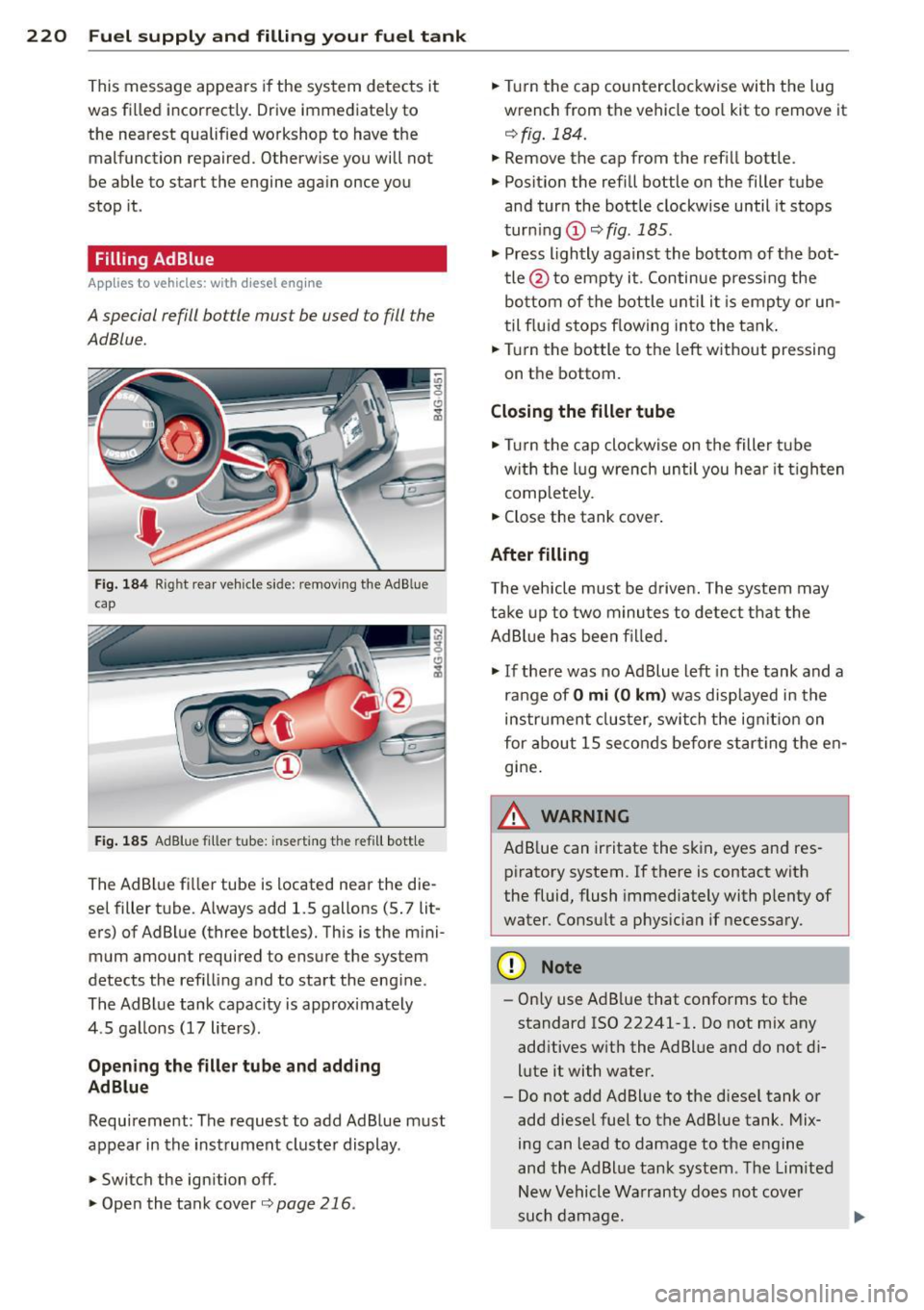
Fig. 184 Rig ht rear vehicle si de: removing the Ad Blue
cap
Fig. 185 Ad8lue filler tub e: inse rting the refi ll bott le
The Ad Blue fi ller tube is located near the die
sel filler tube. Always add 1.5 gallons (5 . 7 lit
ers) of AdBlue (three bottles). This is the mini
mum amount required to ensure the system
detects the refilling and to start the engine.
The Ad Blue tank capacity is approximately
4 .5 gal lons (17 liters).
Opening the filler tube and adding
AdBlue
Requirement: The request to add Ad Blue must
appear in the instrument cluster display.
• Switch the ignition off.
• Open the tank cover
c:;,poge 216.
• Turn the cap counterclockwise with the lug
wrench from the vehicle too l kit to remove it
C::,fig. 184.
• Remove the cap from the refill bottle.
• Position the refill bottle on the filler tube
and turn the bottle clockwise until it stops
turning
(D ~ fig. 185 .
• Press lightly against the bottom of the bot
tle @to empty it . Continue pressing the
bottom of the bottle until it is empty or un
til fluid stops flowing into the tank.
• Turn the bottle to the left without pressing
on the bottom.
Closing the filler tube
• Turn the cap clockwise on the filler tube
w ith the lug wrench until you hear it tighten
completely .
• Close the tank cover .
After filling
The vehicle must be driven. The system may
take up to two minutes to detect that the
AdBlue has been filled.
• If there was no Ad Blue left in the tank and a
range of
O mi (0 km ) was displayed in the
ins trument cluster, switch the ign ition on
for about 15 seconds before start ing the en
gine.
_& WARNING
-Ad Blue can irritate the skin, eyes and res
piratory system. If there is contact with
the fluid, flush immediately with plenty of
water. Consult a phys ician if necessary.
(D Note
-Only use Ad Blu e that conforms to the
standard ISO 22241-1. Do not mix any
additives with the AdBlue and do not di
lute it with water.
- Do not add Ad Blue to the diese l tank or
add diese l fuel to the Ad Blue tank. Mix
ing can lead to damage to the engine
and the AdBlue tank system . The Limited
New Vehicle Warranty does not cover
such damage.
Page 224 of 314
222 Checking and filling
Checking and filling Engine hood
Releasing the engine hood
The engine hood is released from inside the
vehicle .
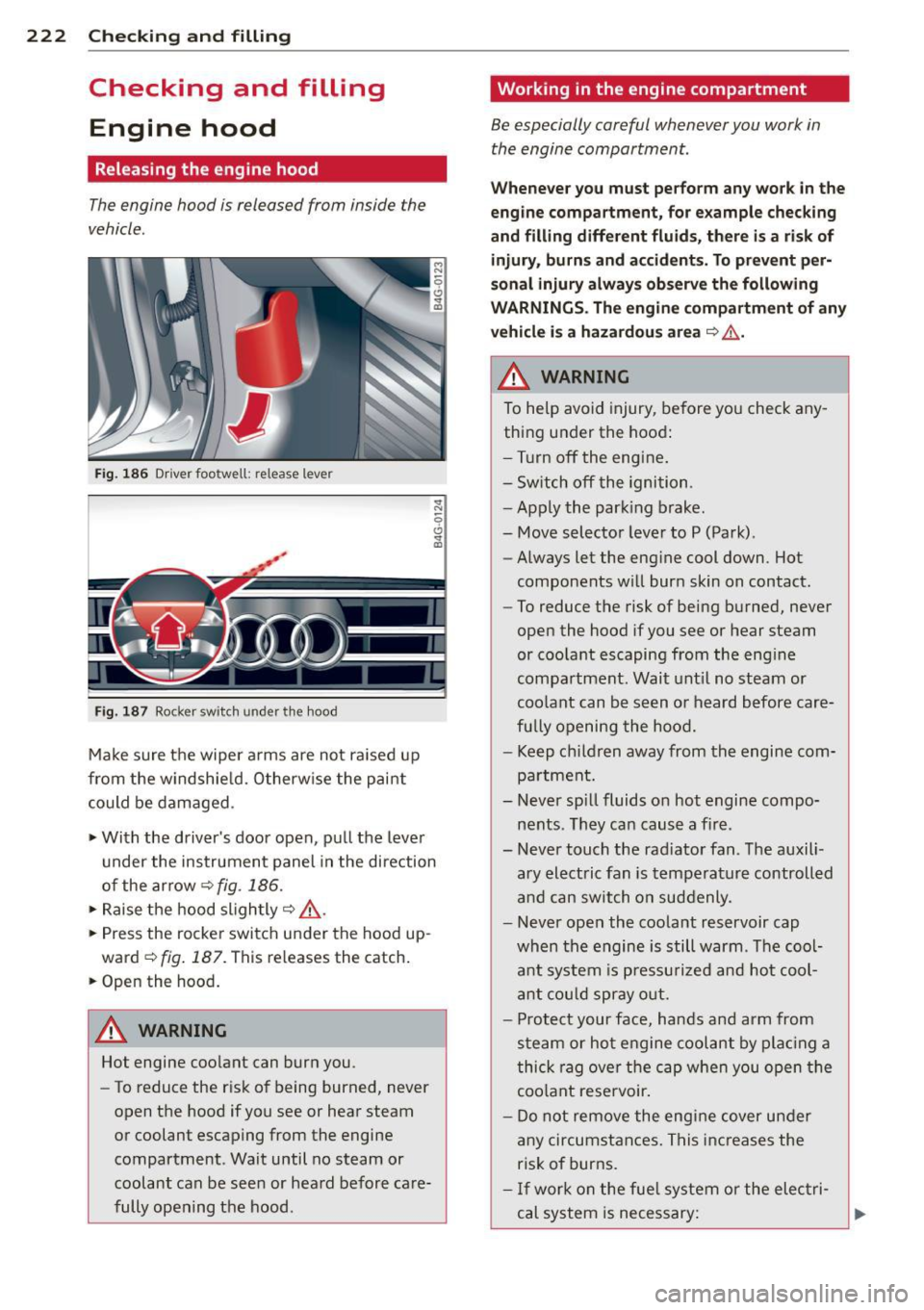
Fig. 186 Driver foo twell: release lever
Fig. 187 Rocker switch un der the hood
Make sure the wiper arms are not raised up
from the windshield. Otherwise the paint
could be damaged .
.,. With the driver's door open, pull the lever
under the instrument panel in the direction
of the arrow ¢
fig. 186.
... Raise the hood slightly¢.&_ .
... Pr ess the rocker switch under the hood up
ward ~
fig. 187. This releases the catch.
.,. Open the hood.
A WARNING
Hot engine coolant can burn you.
- To reduce the risk of being burned, never
open the hood if you see or hear steam
or coolant escaping from the engine
compartment . Wait until no steam or
coolant can be seen or heard before care
fully opening the hood .
' Working in the engine compartment
Be especially careful whenever you work in
the engine compartment.
Whenever you must perform any work in the
engine compartment, for example checking
and filling different fluids, there is a risk of injury, burns and accidents. To prevent per
sonal injury always observe the following
WARNINGS. The engine compartment of any
vehicle is a hazardous area
¢ ,&. .
A WARNING
To help avoid injury, before you check any
thing under the hood:
- Turn off the engine.
- Switch off the ignition .
- Apply the parking brake.
- Move selector lever to P (Park).
- Always let the engine cool down. Hot
components will burn skin on contact.
- To reduce the risk of being burned, never
open the hood if you see or hear steam
or coolant escaping from the engine
compartment. Wait until no steam or
coolant can be seen or heard before care
fully opening the hood.
- Keep children away from the engine com
partment.
- Never spill fluids on hot engine compo
nents . They can cause a fire .
- Never touch the radiator fan. The auxili
ary electric fan is temperature controlled
and can switch on suddenly .
- Never open the coolant reservoir cap
when the engine is still warm . The cool
ant system is pressurized and hot cool
ant could spray out.
- Protect your face, hands and arm from
steam or hot engine coolant by placing a
thick rag over the cap when you open the
coolant reservoir.
- Do not remove the engine cover under
any circumstances. This increases the
risk of burns.
- If work on the fuel system or the electri-
cal system is necessary: ..,_
Page 225 of 314

M N
0 <.J 'SI: ,...., \!) 1.1'1 ,...., 1.1'1 ,....,
-Always disconnect the battery.
- Never smoke or work near heaters or open flames. Fluids in the engine com
partment could start a fire.
- Keep an approved fire extinguisher im
mediately available.
- To avoid electrical shock and personal in
jury while the engine is running or being
started, never touch :
- Ignition cables
- Other components of the high voltage
electronic ignition system.
- If you must perform a check or repair
with the engine running:
- First, fully apply the parking brake,
move selector lever to P (Park).
- Always use extreme caution to prevent
clothing, jewelry, or long hair from get
ting caught in the radiator fan, V-belts
or other moving parts, or from contact ing hot parts. Tie back hair before
starting, and do not wear clothing that
will hang or droop into the engine.
- Minimize exposure to emission and
chemical ha zards c:::> & .
A WARNING
California Proposition 65 Warning:
- Engine exhaust, some of its constituents,
and certain vehicle components contain
or emit chemicals known to the State of
California to cause cancer and birth de
fects and reproductive harm. In addition ,
certain fluids contained in vehicles and
certain products of component wear con
tain or emit chemicals known to the
State of California to cause cancer and
birth defects or other reproductive harm .
Checking and filling 223
-Battery posts, terminals and related ac
cessories contain lead and lead com
pounds, chemicals known to the State of
California to cause cancer and reproduc
tive harms. Wash hands after handling.
(D Note
When adding fluids, always make sure that
they are poured into the proper container
or filler opening, otherwise serious dam
age to vehicle systems will occur.
(® For the sake of the environment
To detect leaks in time, inspect the vehicle
floor pan from underneath regularly . If
you see spots from oil or other vehicle flu ids, have your vehicle inspected by an au
thorized Audi dealer.
Closing the engine hood
.,. Pull the hood down until the pressure from
the struts is reduced.
.,. Let the hood
drop down and latch in place.
Do not try to push it shut; it may fail to en
gage
c:::> ,A .
A WARNING
-
A hood that is not completely latched
could fly up and block your view while driv
ing .
- When you close the engine hood, check it
to make sure the safety catch has proper ly engaged. The hood should be flush
with the surrounding vehicle body parts.
- If you notice while driving that the hood
is not secured properly , stop at once and
close it. •
•
Page 228 of 314

226 Checking and filling
@ Tips
-The oil pres sure warning display. is
not an indicator of the oil level. Do not
rely on it. Instead , check the oil level in
your engine at regular intervals, pref
erably each t ime you refuel, and always
before going on a long trip.
- If you have the impression your engine
consumes excessive amounts of oil, we
r ecommend that you consult your Audi
dealer to have the cause of your concern
properly diagnosed. Keep in mind that
the accurate measurement of oil con
sumption requires great care and may
take some time. Your Audi dealer has in
str uctions about how to measure oil con
sumption accurately.
Checking the engine oil level
Fig. 189 Display: o il level indicato r
"'"Park your vehicle on a level surface .
"'"Shu t the engine off when it is warm.
"'" Switch only the ignition back on.
"'"W ait approximately two min utes .
"'" Se lect:
I CAR I function button > (Car)* sys-
tems
con trol button > Servicing & checks >
Oil level.
"'"Check the oil level in the display¢ fig. 189 .
Add engine oil if the bar of the oil level indi
cator is near "min" ~
page 226 .
Depending on the way the veh icle is driven
and the operating conditions, oil consumption
can be up to 1/2 quart per 600 m iles (0.5 liter
per 1,000 km) . Consumption may be higher
within the f irst 3,000 miles (5,000 km).
(D Tips
The oil leve l indicator in t he MMI Display is
on ly an information display. If the oil level
i s low, a min imum oil warn ing appears in
the instrument cluster. Add oil
¢
page 226. If the hood has been opened,
the current oil level is shown in the instru
ment cluster the next t ime the ignition is
switched on.
Adding engine oil~
Fig . 190 Engine compa rtment: cover on the e ngin e oi l
filler neck
Before you check anything in the engine com
partm ent,
always read and heed all WARN
INGS
¢ A in Working in the engine compart
ment on page 222.
"'" Shut the eng ine off.
"'"U nscrew the cap
'1:::::11 to the engine oi l filling
hole ¢
fig. 190, ¢ page 224, fig. 188 .
"'"Carefully top off with 0 .5 quarts (0 .5 liters)
of the appropriate oil¢
page 224.
"'" Check the oil level again after two minutes
¢ page 226, Checking the engine oil level.
"'"Top off the o il aga in, if necessary .
"'" Screw the cap back on the fi lling hole .
_&. WARNING
-While topping off, the oil must not come
in contact with hot e ngine parts -fire
hazard!
- The oil filler cap must be properly se
cured to prevent oil from being sprayed
on the hot engine and exhaust system
when the engine is running -fire hazard! ..,_
Page 231 of 314

M N
0 <.J 'SI: ,...., \!) 1.1"1 ,...., 1.1"1 ,....,
Before you check anything in the engine com
partment,
al ways r ead and heed all W ARN
ING S r=;, A in Working in the engine compart
ment on page 222.
.. Park your vehicle on a level surface.
.. Switch
off the ignition .
.. Read the eng ine coolant leve l from the cool
ant expansion tank¢
fig. 191, ¢ page 224,
fig. 188.
With a cold engine, the coolant
level should be between the "min" and
"max" markings. When the engine is warm,
the leve l may be slightly above the "max"
mark ing .
The location of the coolant expans ion tank
can be seen in the engine compartment illus
tration ¢
page 224.
To obta in an accurate read ing, the engine
must be switched
off.
The expansion tank in your vehicle is equipped
with an electric coolant level sensor.
When the coo lant level is too low, the warning
light in the Auto-Check System
¢ page 16 will
illum inate until yo u add coolant and the level
has been restored to normal. Even though
there is an electric coo lant level sensor, we
still recommend you check the coolant leve l
from time to time .
Coolant loss
Coolant loss may indicate a lea k in the cooling
system. In the event of coolant loss, the cool
ing system should be inspected immediately
by your authorized Audi dealer . It is not
enough merely to add coola nt.
In a
sealed system, losses can occur only if
the boiling point of the coolant is exceeded as
a result of overheat ing .
A WARNING
The coo ling system is unde r pressure and
c an get ve ry ho t. Reduce the risk of s cald
ing from h ot coolan t by followi ng these
steps .
- T urn
off the engine and allow it to coo l
down.
Checkin g and fillin g 229
-Protect your face, hands and arms from
escaping flu id and steam by covering the
cap with a large, th ick rag.
- Turn the cap slowly and very carefully in
a counter-clockwise d irect ion while ap
plying lig ht, downward pressure on the
top of the cap .
- To avo id being burned, do not sp ill anti
freeze or coolant on the exhaust system
or hot engine parts. Under certa in cond i
tions, th e ethylene glycol in engine coo l
ant can catch fire.
(D Note
Do not add any type of radiator leak sea l
ant to your ve hicle's engine coolant. Add-
i ng radiator repa ir flui d may adverse ly af
fe ct the funct ion a nd pe rfo rma nce of you r
co oling system and could re sult in damage
not covered by your New Vehicle Limi ted
War ranty.
Adding coolant
Be very careful when adding engine coolant.
Before you ch eck anyth ing in the eng ine com
partment,
alway s re ad and heed all WARN
INGS ¢ A in Working in the engine compar t
ment on page 222.
.. Requirement: The re must be a residua l
amount of coolan t in the expansion ta nk
¢(D .
.. Tu rn off the engine.
.. Let the engine cool down.
.. Place a thick rag ove r th e coo lant expansion
tank
¢ page 228, fig . 191 and carefully
twist the cap counte r-clockwise ¢.&, .
.. Add coo lant m ixed in the correct ratio
¢
page 228, Coolant up to the MAX mark
ing .
.. Make s ure that the flu id leve l remains sta-
b le. Add more coo lant if ne cessary.
.. Twis t the cap o n again
t ightly.
Replacement engine coo lant must confo rm to
exact spec ificat ions
r=;, page 228, Coolant. ..,.
•
•
Page 232 of 314
230 Check ing and filling
We recommend using on ly coo lant addi-
tive
Gl2++, Gl3 or in an emergency Gl2 +. Do
not use a different additive . In an emergency
use plain water unt il you can get the correct
additive and can restore the correct ratio. This
should be done as soon as possible .
If you have lost a cons iderable amount of
coolant, then you should add co ld antifree ze
and cold water only when the engine is co ld.
A lways use
new engine coolant when refilling.
Do not fill coolant above the "MAX" mark. Ex
cess coolan t will be forced out through the
p ressure relie f valve in the cap when the en
gine becomes hot.
A WARNING
- The coo ling system is under press ure and
can get very hot. Reduce the risk of
sca lding from hot coolant by following
these steps.
- Turn off the eng ine and a llow it to cool
down.
- Protect your face, han ds and arms from
escap ing fl uid and steam by cover ing
the cap with a large, thick rag.
- Tur n the cap slowly and very c arefully
in a counter-clockwise d irect ion while
applying light, downward press ure on
the top of the cap .
- To avo id being burned, do not sp ill an
tifreeze or coolant on the exhaust sys
tem or hot engine parts. Under certain
conditions, the ethylene glyco l in en
g ine coolant can catch fire.
- Antifreeze is poisonous. Always store an
t ifreeze in its or iginal container and well
out of the reach of children.
- If you drain the coolant, it must be
caught and safely stored in a proper con
tainer clear ly marked "poison".
- Do not add coolant if the expansion tank
is empty. A ir could enter the cooling sys
tem and damage the eng ine. If this is the case, do not cont
inue driving . Seek
professiona l assistance .
- Coo lant poll utes the environmen t and
co uld cause an engine fire . Excess cool
ant will be forced out thro ugh the pres
sure relief valve in the cap when the en
gine becomes hot.
- If, in an eme rgency, only wate r can be
added, the correct ratio between water
and antifreeze
c::> page 228 must be re
stored as soon as possible .
@ For the sake of the environment
Drained coolant should not be reused . A l
ways d ispose of used coolant while observ
i ng all environmental regulations .
Radiator fan
The radiator fan switches on automatically by
itself.
An a uxiliary electric radiator fan switches on
and off depending on coolant temperature
and other vehicle operat ing condit ions .
After yo u switch the engine off, the auxi liary
fan can continue r unning for up to 10 minutes
- even w ith the ignition off . It can even switc h
on again later by itself
c::> .& , if
- the temperature of the engine coo la nt rises
due to the heat build- up from the engine in
the engine compartment, or
- the engine compa rtment heats up because
the vehicle is parked in intense sunlight.
A WARNING
- To reduce the risk of personal injury nev
er touch the radiator fan.
- The a uxiliary electric fan is temperat ure
controlled and can sw itch on suddenly
even when the engine is not ru nning .
- The a uxiliary radiator fan sw itches on a u
tomatically when the engine coo lant
reaches a certai n temperature and will
continue to run until the coolant temper
ature drops.
Page 234 of 314
232 Checking and filling
@ For the sake of the environment
Because of the problem of proper disposal
of brake fluid as we ll as the special tools
required and the necessary expertise, we recommend that you have the brake fluid
changed by your author ized Audi dealer.
Battery
General information
Under normal operating conditions, the bat
tery in your Audi does not need any mainte
nance. With
high outside temperatures or
long daily drives we recommend that you have
the electro lyte level checked by a service fa
cility . The electrolyte level should also be
checked each time the battery is charged
¢ page 234.
Have the battery checked when you take your
vehicle in for service . You are well adv ised to
replace a battery that is older than 5 years .
With certain types of airbag deployment, the battery is disconnected from the vehicle elec
tr ical system for safety reasons¢
& in Re
pair, care and disposal of the airbags on
page 161.
Disconnecting the battery terminals
Some vehicle functions (power window regu
lators, for example) are lost if the battery ter
minals are disconnected. These functions have
to be relearned after the battery terminals are
connected again. To prevent this , the battery
should only be disconnected from the vehicle
e lectrica l system when absolutely necessary
for repairs.
Vehicles not driven for long periods
If you do not drive your vehicle over a period
of severa l days or weeks, electrical compo
nents are gradually cut back or switched off.
This reduces energy consumption and main
tains starting capabi lity over a longer period
¢page 198. Some of the convenience func
tions may not operate, such as the interior
lights or power seat adjustment. The conven- ience
functions will be available again when
you switch on the ignition and start the en gine.
Winter operation
During the winter months, battery capac ity
tends to decrease as temperatures drop. This
is because more power is a lso consumed whi le
starting, and the headlights, rear window de
fogger, etc., are used more often.
Avoid unnecessary power consumption, par
ticu larly in city traffic or when traveling only
short distances. Let your authorized Audi
deale r check the capacity of the vehicle bat
tery before winter sets in¢
page 234 . A well
charged battery will no t only prevent star ting
problems when the weather is cold, but will
also last longer .
@ Tips
If your vehicle is left standing for several
weeks at extremely low temperatures, the
vehicle battery shou ld be removed and
stored where it w ill not freeze. This will
prevent it from be ing damaged and having
to be replaced .
Working on the battery
Be especially careful when working on or near
the battery.
The battery is located in the luggage compart
ment under the floor . Before you check any
thing in the luggage compartment,
read and
heed all WARNINGS
¢ .&, .
Always heed the safety warnings , when work
ing on the vehicle battery or the vehicle elec
t rical system to prevent injury.
The following WARNINGS are very
important when working on the battery:
Always heed the following WARNING SYM-
BOLS and safety precautions when working
on the battery.
®
Always wear eye protection.
Page 236 of 314

234 Checking and filling
(D Note
-Do not disconnect the vehicle battery
when the ignition is on or when the en
gine is running, otherwise, you will dam
age electronic components in the electri
cal system.
- If your vehicle is going to stand for a
long period of time without being driven,
protect the battery from "freezing", oth
erwise it w ill be damaged and w ill then
have to be replaced.
Battery charging
Starting the engine requires a well charged
battery.
Fi g. 19 3 Engine compartment : connectors for a charg ·
er and jump sta rt cables
Alway s re ad and h eed all WARNINGS below
c:> & and c:> & in Working on the battery on
page 233 .
• Switch off the ignitio n and all electrical con
sumers.
• Make sure the area is well vent ilated when
yo u charge the battery .
• Open the engine hood
i=!.> page 222.
• Open the red cover o n the pos itive pole
e!.>fig. 193.
• Connect the charger connectors according to
the instructions to the
jump start bolt s.
(Bolts under the red cover= "positive", Bolts
with hex head= "negative").
• Only now plug the mains lead for the charg
ing equipment into the wall outlet and turn
it on
c::> .&,. .
• Mak e sure th e charging rate is not over
30 amp s/14 .8 Volt .
• When the battery is fully charged: Turn the
charging equipment off and remove the
mains lead from the wall out let.
• Now remove the clamps for the charging
equ ipment.
• Close the red cover on the positive pole.
• Close the hood
c::> page 223 .
A discharged battery can freeze at tempera
tures of only 32 F
0 (0 °C). Allow a frozen bat
tery to thaw completely before attempting to charge it
c::> ,&. . However, we recommend not
u sing a thawed batte ry aga in because the bat
tery casing can be c racked due to ice fo rm a
t io n an d can leak battery a cid.
Battery charging (Maximum charging rate
of
30 amps/14.8 Volt )
When charg ing at low vo lt a ges (e.g. wi th a
trickle charger ), the battery cables do not
have to be disconnected firs t. T he battery
caps should
not be opened when charg ing a
battery .
It is no t necessa ry to remove the battery from
the luggage compartment, and it is a lso not
necessary to d isconnect the cab les .
Fast charging the battery (charging rate
above 14.8 Volts )
For technica l reasons do not use a battery
c h arger that uses voltage greater than
14.8
Volts to charge yo ur vehicle's battery.
Ln._ WARNING
--
Charging a battery can be dangerous.
- Always follow t he operati ng instructions
provided by the battery charger manu
facturer when charg ing your battery.
- Never cha rge a frozen battery . It may ex
p lode because of gas trapped in the ice.
Allow a frozen batte ry to thaw out f irst.
- Do not reuse batteries wh ich were fro
zen. The battery housing may have
cracked and weakened when the battery
froze.
Page 270 of 314
268 Tires and wheels
Tire pressure indicator appears
The tire pressure indicator in the instrument
cluster informs you if the tire pressure is too
low or if there is a system malfunction.
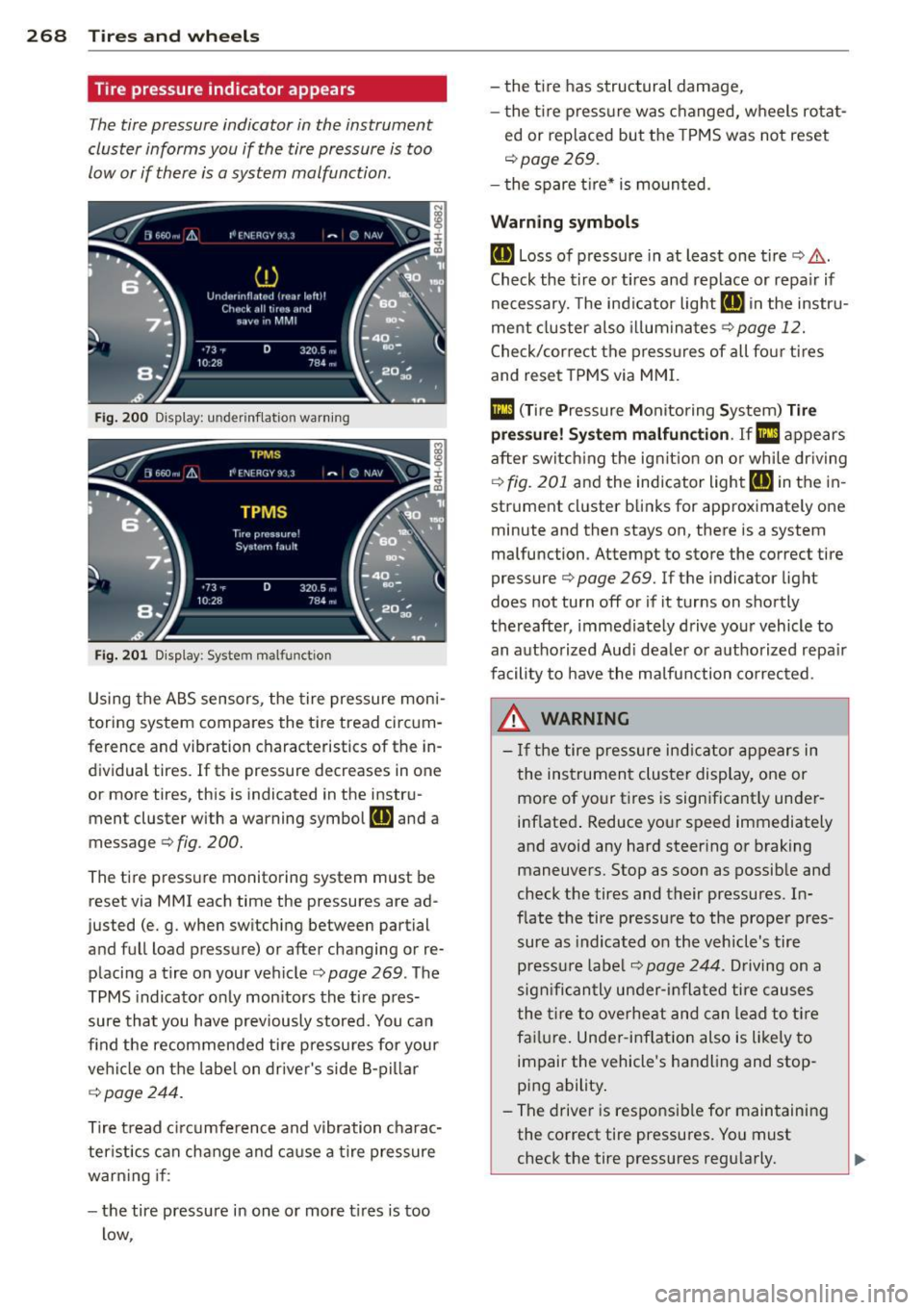
Fig. 200 Display : und erinflatio n warn ing
Fig. 201 Display: Syste m malfunction
Using the ABS sensors , the tire pressure moni
toring system compares the tire tread circum
ference and vibration characteristics of the in
dividual tires.
If the pressure decreases in one
or more tires, this is indicated in the instru
ment cluster with a warning symbol
[9] and a
message ¢
fig. 200.
The tire pressure monitoring system must be
reset via MMI each time the pressures are ad
justed (e. g. when switching between partial
and full load pressure) or after changing or re
placing a tire on your vehicle¢
page 269 . The
TPMS indicator only monitors the tire pres
sure that you have previously stored. You can
find the recommended tire pressures for your vehicle on the label on driver's side 8-pillar
¢page 244.
Tire tread circumference and vibration charac
teristics can change and cause a tire pressure
warning if:
- the tire pressure in one or more tires is too
low, -
the tire has structural damage,
- th e tire pressure was changed, wheels rotat-
ed or replaced but the TPMS was not reset
¢page 269.
- the spare tire* is mounted .
Warning symbols
[9] Loss of pressure in at least one tire¢&. .
Check the tire or tires and replace or repair if
necessary. The indicator light
[9] in the instru
ment cluster also illuminates
¢page 12.
Check/correct the pressures of all four tires
and reset TPMS via MMI.
Ill (Tire Pressure Monitoring System ) Tire
pressure! System malfunction . Iflll appears
after switching the ignition on or while driving
¢
fig. 201 and the indicator light [9] in the in
strument cluster blinks for approximately one
minute and then stays on, there is a system
malfunction . Attempt to store the correct tire
pressure ¢
page 269. If the indicator light
does not turn off or if it turns on shortly
thereafter, immediately drive your vehicle to
an authorized Audi dealer or authorized repair
facility to have the malfunction corrected.
A WARNING
- If the tire pressure indicator appears in
the instrument cluster display, one or
more of your tires is significantly under
inflated. Reduce your speed immediately
and avoid any hard steering or braking
maneuvers. Stop as soon as possible and
check the tires and their pressures. In
flate the tire pressure to the proper pres
sure as indicated on the vehicle's tire
pressure label¢
page 244 . Driving on a
significantly under-inflated tire causes
the tire to overheat and can lead to tire
failure. Under-inflation also is likely to
impair the vehicle's handling and stop
ping ability.
- The driver is responsible for maintaining the correct tire pressures. You must
check the tire pressures regularly. ..,
Page 271 of 314

M N
0 <.J 'SI: ,...., \!) 1.1'1 ,...., 1.1'1 ,....,
-Under certain cond itions (such as a spor
ty driving style, w inter condit ions or un
paved roads), the pressure monitor
indicator may be delayed.
- Ask your author ized Audi dealer if run
flat tires may be used on your veh icle.
- The tire pressure monitoring system may
stop working when there is an ESC mal
funct ion.
- Using snow chains may result in a system
malfunction.
- The tire pressure monitoring system on
your Audi was developed using t ires with
the "AO" or "RO" identification on the
tire sidewall
c> page 257. We recom
mend using these t ires.
Reset tire pressure monitoring system
If the tire pressure is adjusted, wheels are ro
tated or changed, the TPMS must be reset via
MMI.
"' Before storing the new tire pressures, check
that the current pressures on all four t ires
correspond to the specified values and
adapt the p ress ures to the current load
c> page 244.
"'Switch on the ignition.
"' Se lect in the MMI:
!CAR ! func tion button>
(Car )* sys tems contro l button > Servicin g &
checks > Tire pre ssure mon ito ring > Store
tire pre ssure s> Y es, sto re now .
Do not store the tire p ress ure if the re a re
snow chains on the tire. Otherwise, a sys
tem ma lf u nction may occu r.
Tires an d wheel s 269
•
•