warning AUDI S6 2016 Owners Manual
[x] Cancel search | Manufacturer: AUDI, Model Year: 2016, Model line: S6, Model: AUDI S6 2016Pages: 294, PDF Size: 73.88 MB
Page 199 of 294
Reducing unnecessary idling
Even when your car is just idling it burns up fuel.
~ Shut the engine off when you are not driving
the vehicle.
~ Do not warm up the vehicle by letting the en-
gine run at idle .
The idling phase is automat ically reduced for
veh icles w ith the Start-Stop-System. It is effi
cient to switch off the engine in vehicles without
the Start-Stop-System when stopped at ra ilroad
crossings and long red lights . Turning the engine
off for just 30-40 seconds saves more fuel than is
b ur ned by sta rting the engine ag ain.
It takes a long t ime for the engine to warm up
fu lly when it is runni ng at idle . Howeve r, wear
and noxio us emiss ions a re espe cially high when
the eng ine is wa rm ing up. So you sho uld d rive
away as soon as you sta rt the engi ne and avoid
r u nning at high rpms whi le the engine is still
warming up .
(D Note
Do not leave engine id ling unatten ded a fter
starting . If warning lights should come on to
indicate im proper operation, they wou ld go
unheeded. Extended id ling a lso produces
heat, wh ich could result in overheat ing or
other damage to the vehicle or other proper
ty.
Regular maintenance
A badly tuned engine unnecessarily wastes a lot of fuel.
~ Have your veh icle serviced at regu lar intervals.
By having your veh icle reg ularly serviced by an
Audi dea ler helps to ensure that it runs proper ly
and econom ica lly. The condition of your veh icle
not on ly affects its safety and ability to ho ld its
va lue, it a lso affects
fuel consumption .
Check you r oil each time you fill your tank.
The amount of oil use d i s re lated to e ngine lo ad
a nd speed.
Driving and the envir onment
It is normal for the oil consumption of a new e n
gine to reach its lowest value after a certain mi le
age has been dr iven.
Yo u m ust dr ive your ve hicl e abou t 3,0 00 m iles
(S, 000 kilometers) befo re yo u can properly as
sess oil consumption .
T h is also ap plies to f ue l cons umption and eng ine
o utput .
CD Note
-Have your ve hicle maintained pro perly and
in acc ordance w ith the se rvice rec ommend a
ti ons i n your W arra nty
& M ain ten ance book
let . Lack of proper maintenan ce as we ll as
improper use of the ve hicl e w ill impair the
function of the em ission cont rol system and
co uld lead to damage.
- Do not alte r or remove any component of
the Emission Contro l System unless ap
proved by the man ufacturer.
- Do not alte r or remove any device, such as
heat shields, switches, ign it ion w ires,
valves, which are designed to protect your
vehicle's Emission Contro l System a nd othe r
im por tan t ve hicle components .
Fewer short trips
Fuel consumption will always be relatively high
on short trips.
~ Try to avo id driv ing short distances with a cold
eng ine .
T he engine and cata lytic conve rter have to reach
their opt imal
operating temperature to reduce
fuel consumpt io n and noxious emiss ions effec
tively.
Just afte r starting, a cold engine in a mid-size car
only achieves a fuel economy of 6-8 m iles per
gallo n (30-40 l/ 100 km) . After about a half a
mile, fuel economy climbs to 12 mpg (20 l/100
km) . Afte r about
2 .5 m iles (4 km), the eng ine is
at its p roper operat ing temperature and fue l
eco nomy has reached a no rma l level. So yo u can
see th at yo u should avoid short trips w heneve r
poss ible. .,.
197
Page 201 of 294
Trailer mode Driving with a trailer
General information
Your Audi was designed primarily for passenger
transportation .
If you plan to tow a trailer, please remember that
the additional load will affect durability, econo
my and performance.
T railer tow ing not only p laces more stress on the
vehicle, it a lso calls for more concentration from
the dr iver.
F or this reason, always follow the operating and
driving instructions provided and use common
sense.
(D Note
If you are going to tow a trailer, you must ac
tivate the trai ler operation mode
¢ page 199, Operating instructions.
Technical requirements
Tr ailer hitch
Use a weight -carrying hitch conforming to the
gross tra iler weight. The h itch must be suitab le
for your vehicle and tra ile r and must be mo unted
securely on the vehicle's chassis at a
technically
sound
location . Use on ly a trailer hitch with a re
movable ba ll mou nt. Always che ck wit h the t rail
e r hitch manufac turer to make s ure that you a re
usi ng the co rrect hitch .
Do not use a bumper hitch .
The hitch must be installed in such a way that it
does not interfere with the impact -absorbing
bumper system . No mod ifica tions should be
made to the vehicle exhaust and brake systems .
Fr om time to time, chec k that all hitch mo un ting
bo lts rem ain securely fastened.
W hen you are not tow ing a trailer,
remove the
tra iler hitch ba ll mount . This prevents the hitch
from ca u sing damage s hou ld your veh icle be
struck from behind
¢ .&, .
Trailer mode
Trailer brakes
If your traile r i s equ ipped with a b raking sys tem,
c h ec k t o be sure that it con forms to a ll regu la
tions.
T he tra ile r h ydr aulic bra ke sy stem must not be
directly con nected to the vehicle's hydr aulic
brake sy stem.
Safety chains
Always use safety chains between your vehicle
and the tra iler .
Trailer lights
Trailer lights must meet all regulations. Be sure
to check w it h your Aud i dealer for correct wir ing,
swi tches and relays .
Mirrors
If you are unab le to see the traffic behind you us
ing the regular outside mirrors, then you
must in
stall extended mirrors . It is important that you
always have clear vision to the rear .
A WARNING
--
After remov ing the tra ile r hi tch, do not sto re
i t in yo ur vehicle. In case of sudde n brak ing,
t he hitch could fly fo rwa rd and injure you or
your passengers.
Operating instructions
Maximum trailer weight
A traile r for yo ur vehicle is lim ited to a typical
cla ss 1 or class 2 trailer.
Trailer load distribut ion
Be sure the load in the tra iler is held secure ly in
place to p reve nt it from shifting forward, back
ward o r sideways.
Ne ver allow a passenger to ride in a trailer¢.&.
in Driving instructions on page 201 .
Engine cooling system
Towing a tra ile r makes the engine wor k harder. It
is important that the cooling system's perform
ance is up to the additional load. Make sure that
the cool ing system has enoug h fluid . .,..
199
Page 203 of 294
braking effect to slow the vehicle. Use of the
brakes alone can cause them to overheat and fail.
Air suspension*
When driving with a tra ile r, activate the trailer
mode of the air suspension. Switch the air sus
pension trailer mode on when you are towing a
trailer. This will limit the regulation by the air
suspension while driving. Select in the MMI :
ICARI function button > (Car)* systems control
button>
Vehicle settings> Air susp.: towing>
On.
Coolant temperature
The coolant temperature gauge¢ page 10 must
be observed carefully . The coolant temperature
can increase if you drive on long inclines in a low
gear at high engine speeds. Reduce your speed immediately if the LEDs in the top part of the dis
play turn on .
For more information about ind icator lights, re
fer to. ¢
page 15.
A WARNING
Anyone not properly restrained in a moving
vehicle is at a much greater risk in an acci
dent. Never let anyone ride in your car who is
not p roperly wearing the restraints p rovided
by Audi.
Trailer mode notes
Important to know -
Your vehicle handles differently when towing a
trailer because of the additional weight and dif
ferent weight distribution. Safety, performance
and
economy will greatly depend on how careful
ly you load your trailer and operate your rig .
Before you actually tow your trailer, practice
turning, stopping and backing up in an area away
from traff ic. Keep practicing until you have be
come comp letely fami liar with the way your vehi
cle-trailer comb inat ion behaves and responds.
Backing up is difficult and requires practice.
Backing up with a trailer generally requires steer-
Trailer mode
ing action opposite to that when backing up your
vehicle without a trailer .
Maintain a greater distance between your vehicle
and the one in front of you. You will need more
room to stop . To compensate for the trailer, you
will need a larger than normal turning radius .
When passing, remember that you cannot accel
erate as fast as you normally wo uld because of
the added load . Make sure you have enough room
to pass. After passing, allow p lenty of room for
your trailer before changing lanes again .
Avo id jerky starts, sharp turns or rapid lane
changes.
(D Tips
- Do not tow a trailer during the break-in peri
od of your veh icle.
-If you tow a trailer, your Audi may require
more frequent maintenance due to the ex
tra load ¢
page 2 73.
Parking on a slope
Do not pork on a slope with a trailer. If it cannot
be avoided, do so only ofter doing the following:
When parking:
"Apply the foot brake .
" Have someone place chocks under both the ve
hicle and the trailer wheels.
"W ith chocks in place, slowly release the brakes
until the wheel chocks absorb the load.
" Turn the whee ls towards the curb.
" App ly the parking brake.
" Select the P selector lever position.
When restarting after parking:
"App ly the foot brake.
" Start the engine .
"S elect the D/S se lector lever position.
" Release the parking brake and slowly pull out
and away from the wheel chocks.
" Stop and have someone retrieve the wheel
chocks.
201
Page 205 of 294
Care and cleaning
General information
Regular, proper care helps to maintain your vehi
cle's value.
It can a lso be a requirement when
submitting warranty claims for corrosion damage
and paint defects on the body.
The necessary care products can be obtained
from your authorized Audi dealer. Read and fol l ow the instructions for use on the packaging.
A WARNING
- Using clean ing and care products incorrectly
can be dangerous to your health.
-Always store cleaning and care products out of reach of chi ldren to reduce the r isk of po i
soning .
@) For the sake of the environment
- Preferably use environmentally-friendly
products when buying cleaning agents.
- Do not dispose of leftover cleaning and care
products with household trash.
Car washes
The longer that deposits remain on the vehicle,
the mor e the surface may b e damaged . High
temperatures such as those caused by sunlight
increase the damag ing effect.
Before washing, rinse off heavy deposits with
p lenty of water .
S tu bborn depos its s uch as bird d roppings or tree
sap are best removed with plenty of water and a
microfiber cloth.
A lso , wash the underside of yo ur vehicle once
road sa lt stops being used for the season.
Pressure washers
When washing your ve hicles w ith a pressure
washer, always follow the operating instructions
p rovided w ith the pressure washer. This is espe
cially importa nt in regard to the pressu re and
sp raying distance . Do no t aim the sp ray directly
at seals on side windows, doors, the hood, the
rear lid or the sunroof * or at tires, rubber hoses,
Ca re and cleaning
insulating materia l, sensors* or camera lenses* .
Keep a distance of at least 16 inches (40 cm) .
Do no t remove snow and ice with a p ressure
washe r.
Never use rota ry nozzles or high pressure noz
z les.
The water temperature must not be above 140 °F
(60 °().
Automat ic car washe s
Spray off t he vehicle before washing .
Make s ure that the windows and roo f* are closed
and the windsh ie ld wipers are off . Follow instruc
tions from the car wash operator, especially if
there are accessories attached to your vehicle .
If possible, use car washes that do not have
brushes .
Washing
by hand
Clean the vehicle starting from the top and work
ing down using a soft sponge o r cleaning br ush.
U se solven t-free cleaning produ cts .
Washing vehicles with matte finish paint
by
hand
T o avo id damag ing the pa int w hen washi ng, fi rst
remove d ust and large p articl es from you r vehi
cl e. Insects, grease spots and f ingerprints are
best removed with a special cleaner for matte
finish paint.
Apply t he p roduct using a microfiber cloth. To
avo id damag ing the pa int surfa ce, do not use too
much pressure.
Rinse the ve hicle thorough ly w ith wate r. Then
clean usi ng a neutral shampoo and a soft micro
fiber clo th .
Rinse the ve hicle thorough ly agai n and let it air
dry. Remove a ny wate r residue using a sham my .
A WARNING
- On ly wash the vehicle when the ign ition is
off and follow t he instr uctions from the car
wash operator to reduce the risk of acci
dents.
-
203
Page 208 of 294
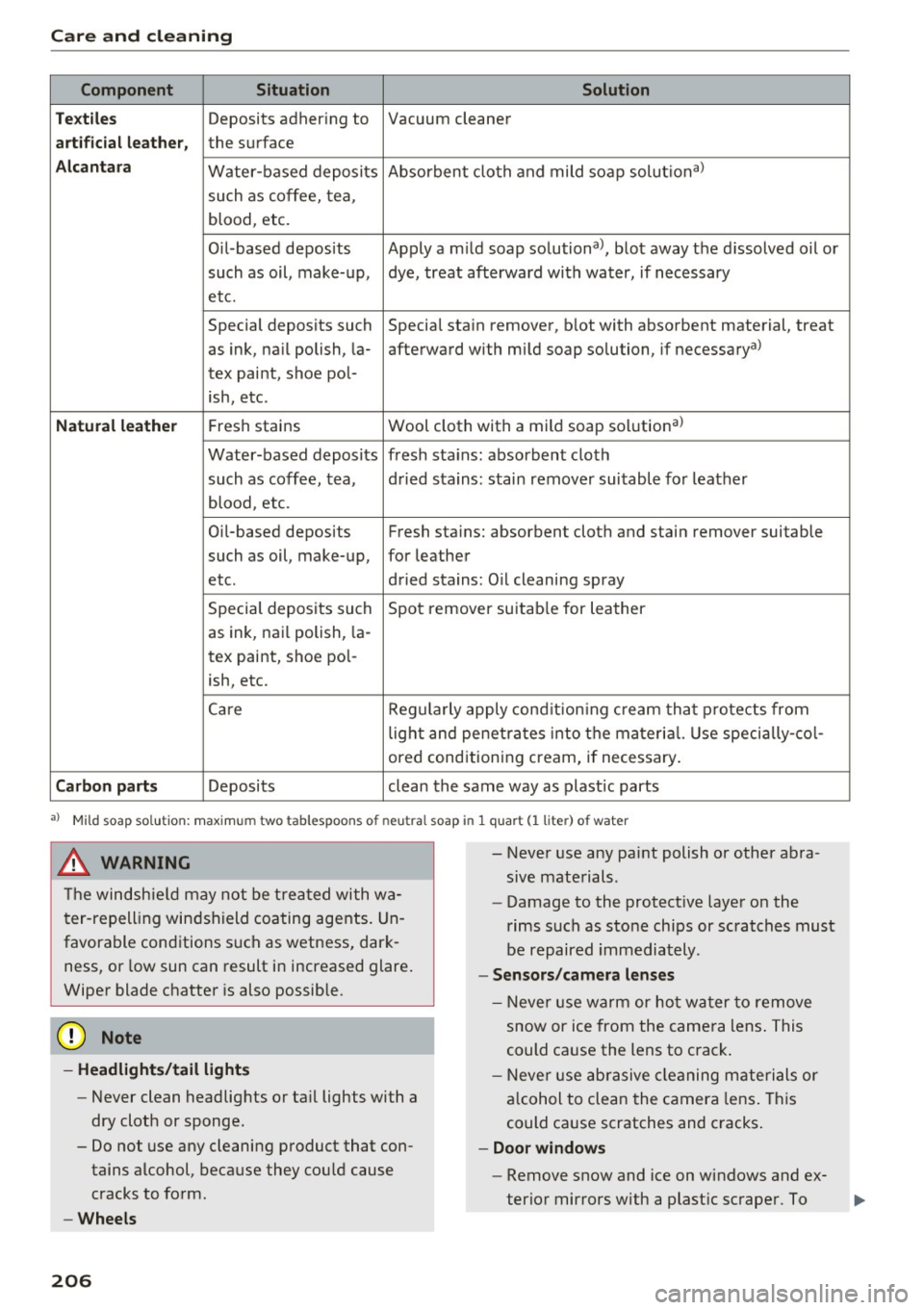
Care and cleaning
Component Situation Solution
Te xtil es
Deposits adhering to Vacuum cleaner
a rt ifici al le ather , the surface
Alcant ara Water-based deposits Absorben
t cloth and mild soap solutiona>
such as coffee, tea,
blood, etc.
O il-based deposits Apply am ild soap solutiona>, blot away the d issolved oil or
such as oil, make-up, dye, treat afterward with water, if necessary
etc.
Special deposits such Special stain remover, b lot with absorbent material, treat
as ink, na il polish, la- afterward with mild soap solution, if necessarya>
tex paint, shoe pol-
ish, etc.
Natural leather Fresh stains Wool cloth with a mild soap so
lutiona)
Water-based deposits fresh sta ins: absorbent cloth
such as coffee, tea, d ried stains: stain remover suitable for leather
blood, etc.
Oil-based deposits Fresh staiins: absorbent cloth and stain remover suitable
such as oil, make-up, for leather
etc. dried stains: Oil cleaning spray
Special deposits such Spot remover suitab le for leather
as ink, nai l polish, la -
tex paint, shoe pol-
ish, etc.
Ca re Regularly apply cond ition ing cream that protects from
light and penet rates into the materia l. Use specia lly-co l-
ored conditioning cream, if necessary.
Carbon parts Deposits clean the same way as plastic parts
a) Mild soap solution: maximum two tablesp oons of neutral soap in 1 quart (l liter) of water
_& WARNING
The windshie ld may not be trea ted with wa
ter-repelling windshield coating agents. Un
favorable conditions s uch as wetness, dark
ness, or low sun can result in increased glare .
Wiper blade chatter is also possible.
(D Note
- Headlights/tail light s
-Never clean headlights or tail lights with a
dry cloth or sponge.
- Do not use any cleaning product that con
tains alcohol, because they cou ld cause
cracks to form.
- Wheels
206
-
- Never use any paint polish or other abra
sive materials.
- Damage to the protect ive layer on the
rims such as stone chips or scratches must
be repaired immediately.
- Sensors /camera lenses
- Neve r use wa rm or ho t wa ter to remove
snow or ice from the camera lens . This
could cause the lens to crack .
- N eve r use ab rasive cleaning materials or
a lcohol to clea n the camera lens . This
could cause scratches and cracks .
-Doo r window s
-Remove snow and ice on windows and ex-
terior mirrors with a plast ic scraper. To
Page 212 of 294
Fuel and Refueling
These fuels contain substances that can se
verely damage the fue l system and the en
gine if the engine is started .
Refueling
Fuel filler neck
The fuel fill er neck is located on the right rear
side panel beh ind the fuel fil ler flap.
If the power locking system should fail , you can
still open the flap manually - for detailed instruc
tions see ¢
page 212.
You can find the fuel tank capacity of your vehicle
i n
¢ page 271 .
The label on the inside of the fuel filler flap tells
you the correc t fuel for you r vehicle . For more in
formation about fuel specifications , see
¢ page 208 .
Your vehicle fuel t ank has an onboard refuelling
vapor recovery system . This fea tu re helps to pre
vent fuel vapors from escaping from the tank and
polluting the environment while you refuel your
vehicle. In order to fill the tank properly while
protecting the environment, please fo llow this
refueling procedure carefully.
8_ WARNING
Under normal operating conditions, never car
ry additiona l fuel containers in your car. Gas
canisters and other containers used to trans
port fuel can be dangerous . Such containers,
full or empty , may leak and could cause a fire
in a collision . If you must transport fuel to
use for your lawn mower, snow blower, etc.,
be
very careful and always observe local and
state laws regard ing the use, transportation
and storage of such fuel containers. Make cer
tain the container meets industry standards
(ANSI/ASTM F852 -86).
(D Note
Never drive your vehicle until the fuel tank is
completely empty. T he irregular supply of
fue l can cause m isfiring. Gasoline could enter
the exhaust system and damage the catalytic
converter.
210
Refuelling
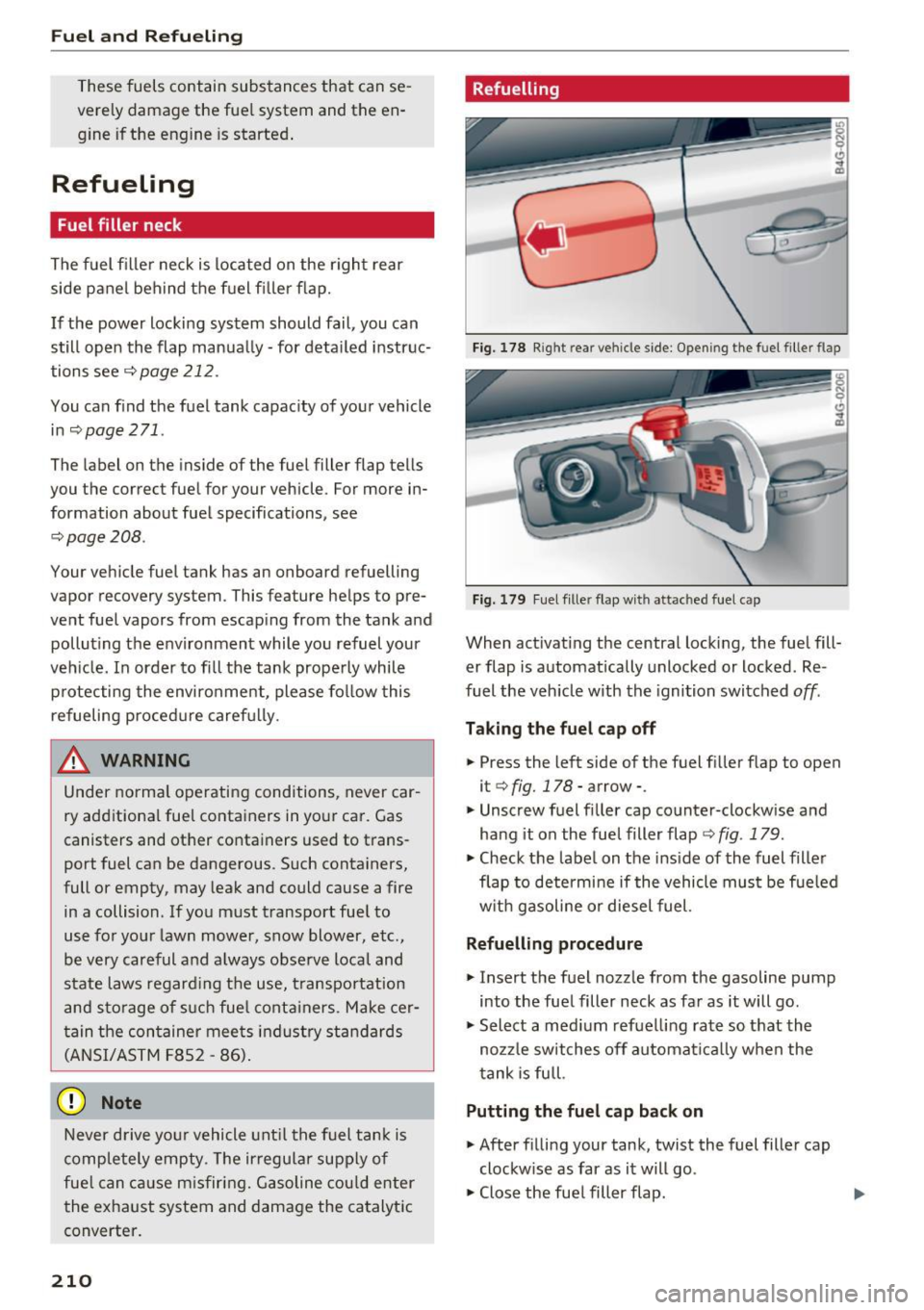
Fig. 178 Righ t re ar v ehicl e side : O penin g the fuel fill er flap
Fig. 179 Fuel fille r flap w it h att ach ed fuel c ap
When act iv a ting the central locking, the fuel fill
er flap is automatically unlocked or locked. Re
fuel the veh icle with the ignition switched
off.
Taking the fuel cap off
.. Press the left s ide of the fuel filler flap to open
i t ¢
fig. 178 -arrow-.
.. Unscrew fuel filler cap counter-clockwise and
hang it on the fuel filler flap~
fig. 179.
.. Check the label on the inside of the fuel filler
flap to determine if the vehicle must be fueled
w ith gasoline or diesel fuel.
Refuelling procedure
.. Insert the fuel nozzle from the gasoline pump
into the fuel filler neck as far as it will go .
.. Select a med ium refuelling rate so that the
nozz le switches off automatica lly when the
tank is full.
Putting the fuel cap back on
.. After filling your tank, twist the fuel filler cap
clockw ise as far as it will go .
.. Close the fuel filler flap.
Page 213 of 294
To avoid fuel spilling or evaporating from the fuel
tank always close fuel filler cap properly and
completely. An improperly closed fuel filler cap
may also cause the MIL lamp
c> page 28 to come
on.
A WARNING
Improper refueling or handling of fuel can
cause fire, explosion and severe burns.
- Fuel is highly flammable and can cause se
vere burns and other injuries.
- Failure to shut the engine off while refuel
ing and/or to insert the pump nozzle fully
into the fuel filler neck could cause fuel to
spray out of filler neck or to overflow. Fuel
spray and overflowing fuel can cause a fire.
- Never use a cellular telephone while refuel
ing. The electromagnetic radiation can
cause sparks that can ignite fuel vapors and
cause a fire.
-
-Never get back into your vehicle while refu
eling.
If in exceptional circumstances you
must get back in your vehicle while refuel
ing, make certain that you close the door
and touch metal to discharge static electric
ity before touching the filler nozzle again.
Static electricity can cause sparks that can ignite fuel vapors released during refueling.
- Never smoke or have an open flame any where in or near your vehicle when refueling or filling a portable fuel container.
- For your safety, we strongly recommend that you do not travel with a portable fuel container in your vehicle. The container, full
or empty may leak and could cause a fire,
especially in a crash.
- If, under exceptional circumstances, you
must transport a portable fuel container,
please observe the following:
- Never fill a portable fuel container while it
is anywhere in or on the vehicle (for exam
ple, in the luggage compartment, or on
the trunk). Static electricity can build up while filling and can ignite fuel vapors
causing a fire.
- Always place a portable fuel container on
the ground before filling.
Fuel and Refueling
- Always keep the filler nozzle completely
inside the portable container before and
during filling.
- If filling a portable container made of
metal, the filler nozzle must always be in
contact with the container. This will help prevent static electricity from discharging
and cause a fire.
- Never spill fuel inside the vehicle or lug
gage compartment. Fuel vapors are highly
flammable .
- Always observe local and state/provincial
laws regarding the use, storage and trans
portation of fuel containers.
- Make certain the fuel container meets in dustry standards (ANSI/ ASTM F852 -86) .
(D Note
If any fuel has spilled onto the car, it should
be removed immediately to prevent damage
to the paint.
@) For the sake of the environment
As soon as the correctly operated nozzle
switches off automatically for the first time,
the tank is full. Do not try to add more fuel
because fuel may spill out. In addition, the
expansion space in the fuel tank will be filled -
causing the fuel to overflow when it becomes
warm and pollute the environment.
(D Tips
-Running your engine while refuelling may
cause vapors to escape or even cause fuel to
spill out of the tank. This would then shut
off the fuel nozzle before the tank is full.
- Do not refuel your vehicle with the ignition
switched on. The fuel gauge may otherwise
not indicate the correct fuel level after refu
elling.
- Diesel vehicles* are equipped with a diesel
misfueling protector.
It allows the vehicle
to be fueled only with a diesel fuel pump nozzle. A worn or damaged nozzle or a noz
zle that is too small may not be able to open
the diesel misfueling protector. If this is the .,..
211
Page 215 of 294
... N
0 CJ '
Messages in the instrument cluster display
Applies to vehicles: with selective catalytic reduction
The display indicates if the Ad Blue level is low or
if there is a system malfunction .
AdBlue le vel low
You will be informed if the Ad Blue in the tank
drops below a certa in level.
Plea se refill Ad Blue. Range 1500 mi (2400 km )
This message appears whe n there is only eno ugh
Ad B lue lef t to d rive the distance indicated in the
d river i nformation system. Fill the AdBl ue.
AdBlue ,0 Refill AdBlue! No re start in 600 mi
( 1000 km )! See owner 's manual
This message appea rs when there is only eno ugh
Ad Blue left to drive the distance indicated in the
driver info rmation system . Fill the Ad Blue . Ot her
wise the eng ine will not sta rt aga in if you s top it
once the d ist anc e in dicate d ha s been d riven. Yo u
can also check t he remai ning dis tan ce in the on
board com puter* .
Refill Ad Blue! No restart! See own-
er's manual
This message appears whe n the AdBlue ta nk is
empty. F ill the AdB lue. Otherwise you will not be
ab le to s tart the engine aga in once yo u stop it.
The AdBlue must be refilled when t he amount in
the tank has reached the minimum level
q page 213, Filling Ad Blue.
Incorrect filling /system malfunction
A message appears if the AdBlue tank was filled
with a fluid other than AdBlue and the system
has detected that the tan k was fi lled incor rect ly,
or if there is a system malfunction .
Ad Blue -I' Ad Blue: System fault! No restart in
600 mi (1000 km ). See owner's manual.
This message appears when it is only poss ible to
drive the d istance indicated in the dr iver informa
tion system. Drive to the nearest authorized Audi
dealer or authorized Audi Serv ice Facility to have
the ma lfunction co rrected. Otherwise the engine
w ill not start agai n if you stop it once the d is
tance ind icated has been driven .
Fuel and Refueling
AdBlue: System fault No re start!
See owner's manual
T his mess age app ea rs if the sy stem ha s detec ted
t h at the t ank was fi lled incor rec tly or tha t there
is a ma lf u nction . Drive immediate ly to the near
est authorized A udi dealer or authorized A udi
Se rvice Facility to have the ma lf u nction co rrect
ed. Ot herwise you wi ll not be able to start the en
gine again once you stop it .
Filling AdBlue
Applies to vehicles: with selective catalytic reduction
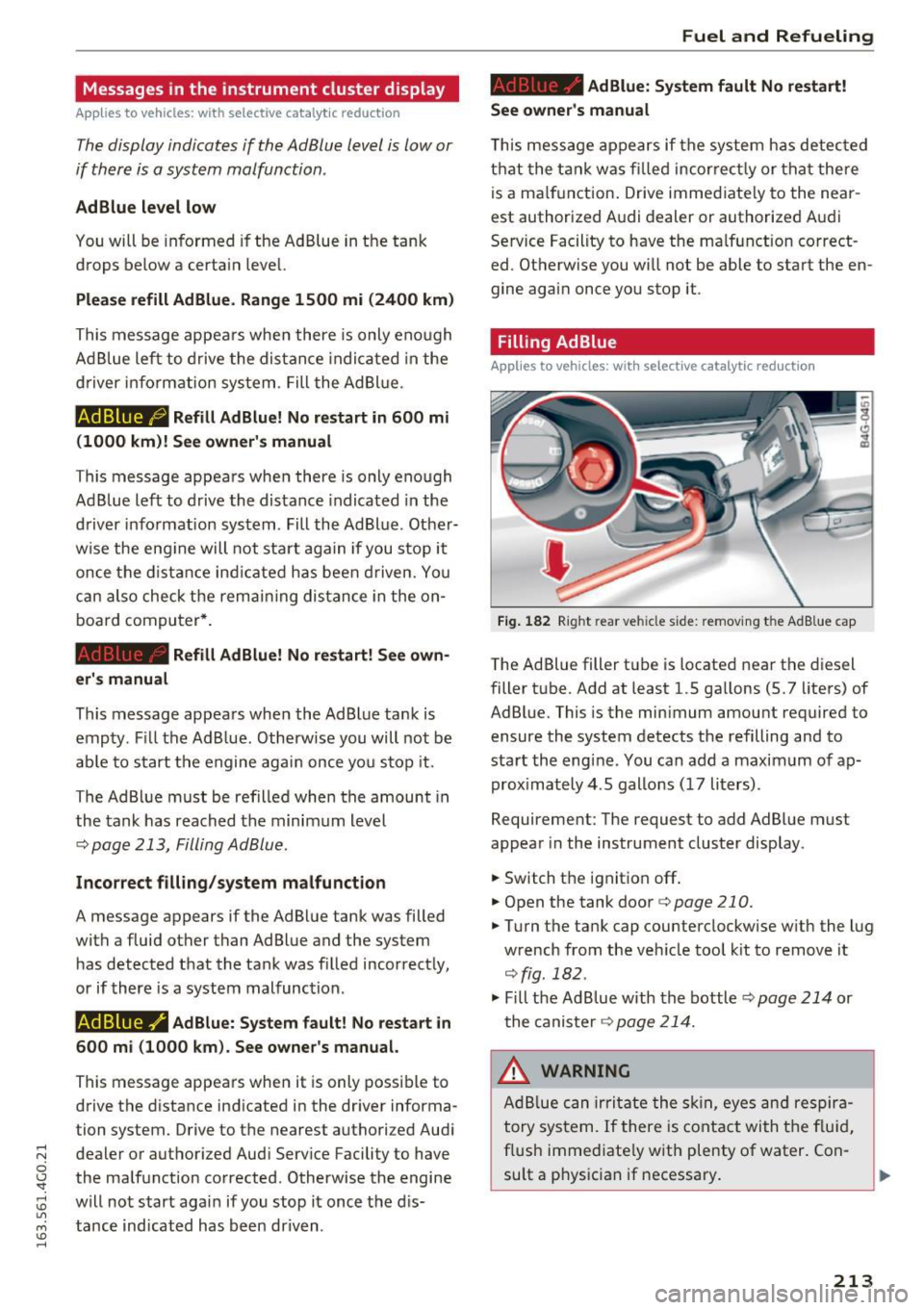
Fig. 182 Right rear vehicle side: removing the Ad Bl ue cap
The Ad Blue filler t ube is located near the d iesel
filler t ube. Add at least 1.5 gallons (5.7 lite rs) of
AdBl ue. This is the min imum amount required to
ensure the system detects the refilling and to
sta rt the eng ine . You can add a maxim um of ap
prox imately 4 . 5 gallons ( 17 li ters) .
Requirement: The request to add Ad Blue must
appear in the instrument cluster display.
.. Switch th e ignition off .
.. Open the tank door
q page 210.
.. Tu rn the ta nk cap counterclockw ise w it h the l ug
w rench from the veh icle tool k it to remove it
qfig. 182.
.,. Fill the Ad Blue with the bottle ~ page 214 or
t he ca nister ~
page 21 4.
.&_ WARNING
Ad Bl ue can ir rit a te the s kin, eyes an d respir a
tory sy stem.
If there is co nta ct wi th t he f lu id ,
f lus h imme diate ly w ith plenty of water . Con-
su lt a p hys ician if necessary .
IJII>
213
Page 218 of 294
Checking and Filling
Checking and Filling
Hood
Releasing the engine hood
The engine hood is released from inside the vehi
cle .
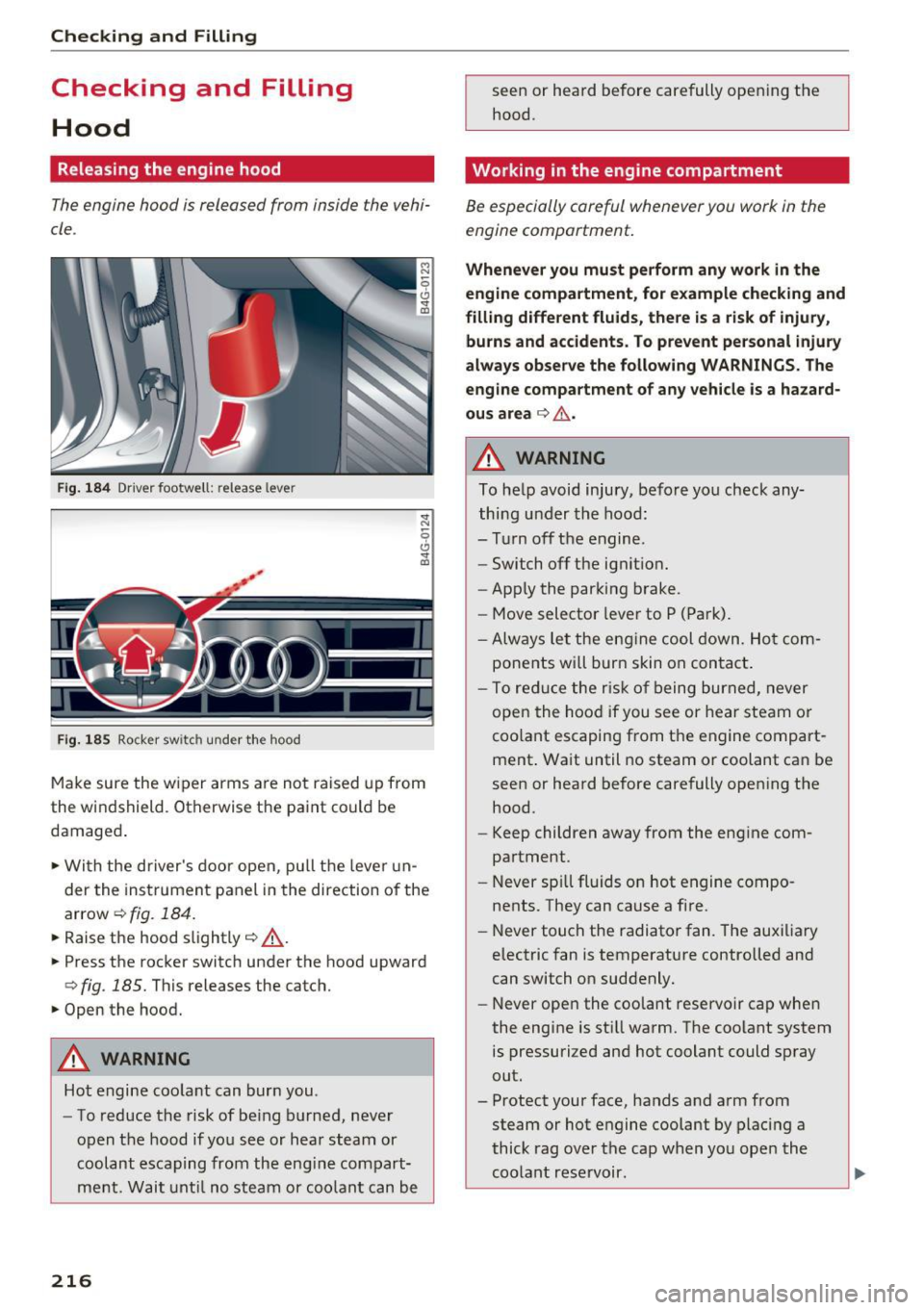
Fig. 184 Driver footwell: release leve r
Fig . 185 Rocker switch under the hood
Make sure the wiper arms are not raised up from
the windshield . Otherwise the paint could be
damaged .
.. With the driver's door open, pu ll the lever un
der the instrument panel in the direction of the
arrow ¢
fig. 184.
.. Raise the hood slightly Q _A .
.. Press the rocker switch under the hood upward
Q fig. 185. This releases the catch.
.. Open the hood.
A WARNING
Hot engine coo lant can burn you .
- To reduce the risk of be ing burned, never
open the hood if you see or hear steam or
coolant escaping from the eng ine compart
ment. Wait unt il no steam or coolant can be
216
seen or heard before carefully open ing the
hood.
Working in the engine compartment
Be especially careful whenever you work in the
engine comportment.
Whenev er yo u mu st perform an y work in the
engin e compartment , for example ch ecking and
filli ng d iffe rent fl uids , the re is a risk of injury ,
bu rn s and a ccid ents . To pre ve nt p erso nal injur y
a lway s obse rve the foll owing WARNING S. The
e ng ine compartment o f an y v ehicl e is a haz ard
ou s a rea
Q _6 .
A WARNING
To he lp avoid injury, before you check any
thing under the hood:
- Turn off the engine .
- Switch off the ignit ion.
- Apply the parking brake.
- Move selector lever to P (Park).
- Always let the eng ine cool down. Hot com-
ponents will burn skin on contact .
-
-To redu ce the risk of being burned, never
open the hood if you see or hear steam or
coo lant escaping from the engine compart
ment . Wait until no steam or coolant can be
seen or heard before carefully open ing the
hood.
- Keep children away from the engine com
partment .
- Never sp ill fluids on hot engine compo
nents. They can cause a fire.
- Never touch the radiator fan. The auxiliary
electric fan is temperature controlled and
can switch on suddenly.
- Never open the coolant reservoir cap when
the engine is sti ll warm. The coolant system
is pressurized and hot coolant could spray
out.
- Protect your face, hands and arm from
steam or hot engine coolant by placing a
thick rag over the cap when you open the
coolant reservoir .
Page 219 of 294
-Do not remove the engine cover under any
circumstances. This increases the risk of
burns.
- If work on the fuel system or the electrical
system is necessary:
- Always d isconnect the battery.
- Never smoke or work near heaters or open
flames. Flu ids in the engine compartment
could start a fire.
- Keep an app roved fire ext inguisher imme
d iate ly availab le.
- To avo id electr ical shock and personal injury
wh ile the eng ine is running or being started,
never touch:
- Ignition cables
- Other components of the high voltage
electronic ignition system.
- If you must perform a check or repa ir with
the engine running:
- First, fully apply the parking brake, move
selector lever to P (Park) .
- Always use extreme caution to prevent
cloth ing, jewelry, or long hair from get
ting caught in the radiator fan, V-belts or
other mov ing parts, or from contacting
hot parts. Tie back ha ir before starti ng,
and do not wear clothi ng that will hang or
d roop into t he engine.
- Min imize exposu re to emission and chem i
cal hazards¢ .&.-
_& WARNING
California Proposition 65 Warn ing:
- E ngine exhaust, some of its constituents,
and certain vehicle components contain or
em it chem ica ls known to the St ate of C ali
f orn ia to cause cancer and bi rth de fects and
reproductive harm . In addition, certain flu
ids contained in ve hicles and certain prod
ucts of component wear contain or emit
Ch eck ing and Filling
chemicals known to the State of California
to cause cancer and birth defects or other
reproductive harm.
- Battery posts, term inals and related acces
sories contain lead and lead compounds,
chemicals known to the State of Californ ia
to cause cancer and reproductive harms.
Was h hands afte r handling .
([) Note
When adding flu ids, always make sure that
they are poured into the proper co nta iner or
fille r opening, otherwise serious damage to
vehicle systems w ill occur.
® For the sake of the environment
To detect leaks in time, inspect the veh icle
floor pan from unde rneath regularly. If you
see spots from oil or other veh icle fluids, have
your vehicle inspected by an authorized Audi
dealer.
Closing the engine hood
.,.. Pull the hood down un til the press ure from the
struts is reduced.
.,.. Let the hood
drop down and latch in p lace . Do
not try to push it shut;
it may fail to engage
¢ _& .
_& WARNING
--A hood that is not completely latched co uld
fly up and block your view while driv ing.
- When you close the engine hood, check it to
make sure the safety catch has properly en
gaged . The hood s hou ld be flush with the
sur rounding vehicle body parts.
- If you notice while driv ing that the hood is
not secured properly, stop at once and close
it.
-
217