instrument panel AUDI S6 2016 Owner's Manual
[x] Cancel search | Manufacturer: AUDI, Model Year: 2016, Model line: S6, Model: AUDI S6 2016Pages: 294, PDF Size: 73.88 MB
Page 166 of 294
Airbag system
below the reference value programmed into the
control unit, the side curtain airbag will not be
triggered, even though the car may be bad ly
damaged as a result of the collision. It is not pos
sible to define an airbag triggering range that
will cover every possible angle of impact , since
the circumstances will vary cons iderably between
one co llision and another. Important factors in
clude, for example, the nature (hard or soft) of
the impacting object, the angle of impact, vehicle
speed, etc. ¢
page 164, How side curtain air
bags work.
Aside from their normal safety function, safety
be lts work to help keep the driver or front pas
senger in pos it ion in the event of a collision so
that the side curtain airbags can provide protec
tion .
The airbag system is not a substitute for your
safety belt. Rather, it is part of the overa ll occu
pant restraint system in your vehicle. Always re member that the airbag system can only he lp to
protect you if you are wearing your safety belt
and wear ing it properly . This is another reason
why you should always wear your safety belts ,
not just because the law requires you to do so
¢ page 134, General information.
It is important to remember that while the s ide
curtain airbag system is designed to help reduce
the likelihood of serious injuries, other injuries,
for example, swel ling, b ruising, fr iction burns
and minor abrasions can also be assoc iated with
these airbags upon deployment . Remember too,
these airbags will deploy only once and only in
certain kinds of acc idents -your safety be lts are
always there to offer protection.
The side curtain airbag system basically
consists of:
-The electronic control module and external side
impact sensors
- The side curtain airbags above the front and
rear side windows with ejection mitigation fea
tures
- T he airbag indicator light in the instrument
panel
The airbag system is monito red electronically to
make certa in it is funct ion ing properly at all
164
times. Each time you switch on the ignition, the
airbag system indicator light will come on for a
few seconds (se lf diagnostics).
The side curtain airbag is not activated:
-if the igni tion is sw itched off,
- in side collisions when the acceleration meas-
ured by the sensor is too low,
- in rear-end co llisions.
A WARNING
- Safety belts and the airbag system will only
provide protection when occupants are in
the proper seating position¢
page 53, Gen
eral information.
- If the airbag indicator light¢ page 18
comes when the vehicle is being used, have
the system inspected immediately by your
author ized Audi dealer. It is possible that
the airbag will inflate when it is not sup
posed to, or will not inflate when it should.
How side curtain airbags work
Side curtain airbags can work together with side
airbags to help reduce the risk of head and upper
torso injuries for occupants who are properly re
strained.
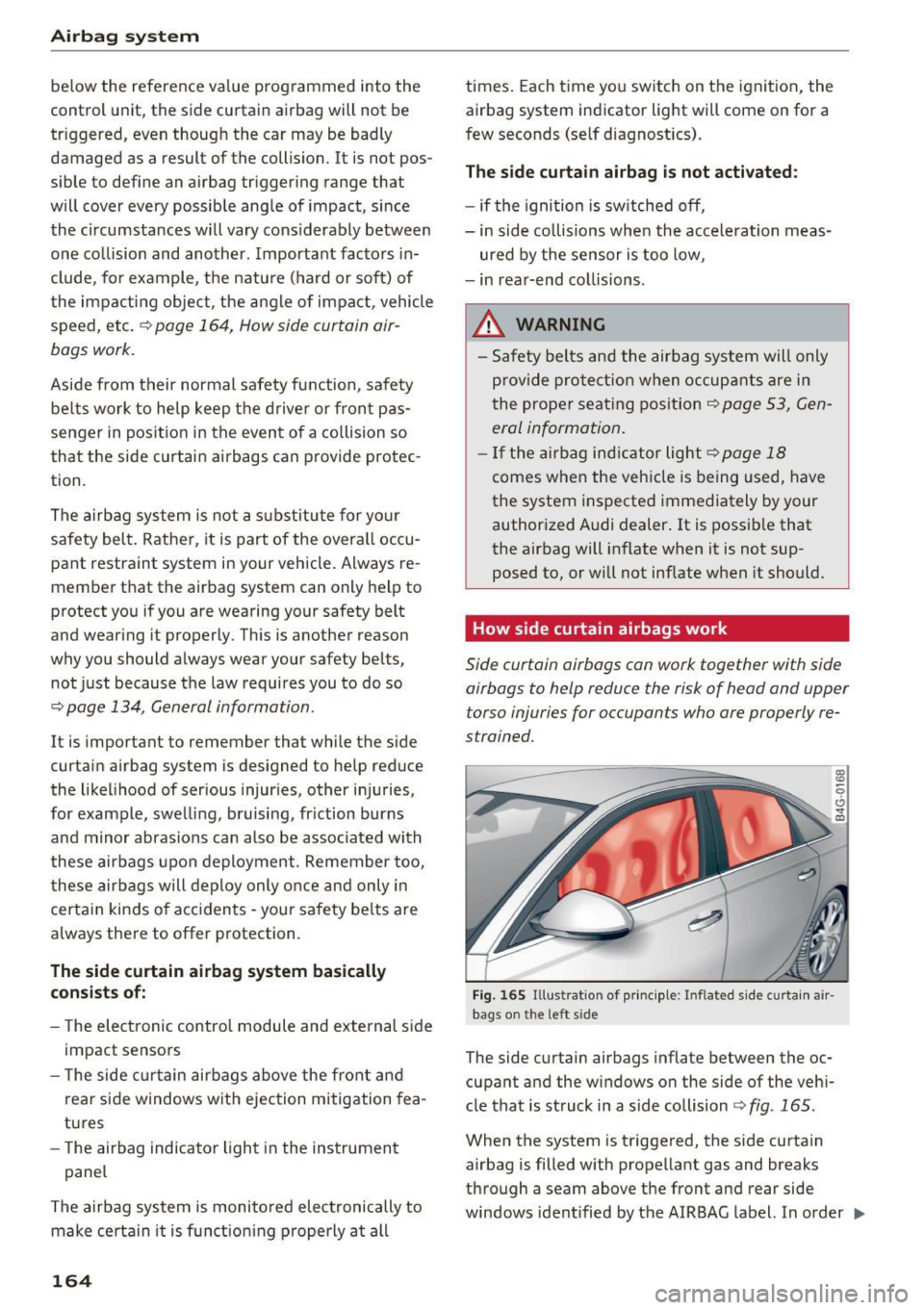
Fig. 165 Illus trat ion of principle: Inflated side curtain a ir
bags o n the left s ide
The side curtain airbags inflate between the oc
cupant and the windows on the side of the veh i-
cle that is struck i n a side collision ¢
fig. 165 .
When the system is triggered, the s ide curtain
airbag is filled with propellant gas and breaks
through a seam above the front and rear side
windows identified by the AIRBAG label. In order ..,.
Page 170 of 294
Child safety
Advanced front airbag system and children
Your vehicle is equipped with a front "Advanced
Airbag System" in compliance with United States Federal Motor Vehicle Safety Standard (FMVSS)
208, as well as Canada Motor Vehicle Safety
Standard (CMVSS) 208 as applicable at the time
your vehicle was manufactured.
The Advanced Airbag system in your vehicle has
been certified to meet the "low-risk" require
ments for 3- and 6-year old children on the pas
senger side and small adults on the driver side.
The low risk deployment criteria are intended to
reduce the risk of injury through interaction with
the airbag that can occur, for example, by being
too close to the steering wheel and instrument panel when the a irbag inflates. In addition, the
system has been certified to comply with the
"suppression " requirements of the Safety Stand
ard, to turn off the front airbag for infants up to
12 months who are restrained on the front pas
senger seat in child restraints that are listed in
the Standard.
Even though your vehicle is equipped with an Ad ·
vanced Airbag system, all children, especially
those 12 years and younger, should always ride in the back seat properly restrained for their age
and size. The airbag on the passenger side makes
the front seat a potentially dangerous place for a
child to ride . The front seat is not the safest place
for a child in a forward-facing child safety seat . It
can be a very dangerous place for an infant or a
larger child in a rearward-facing seat.
The vehicle's Advanced Airbag System has a ca
pacitive passenger detection system in the front
passenger seat cushion that can detect the pres
ence of a baby or a child in a child restraint sys
tem on this seat .
The capacit ive passenger detection system regis
ters the changes that result in an electrical field
when a child, a child restraint, and a baby blanket
are on the front passenger seat. The change in
the measured capacitance due to the presence of
a child, a child restraint, and a baby blanket on
the front passenger seat is related to the child restraint system resting on the seat. The meas
ured capacitance of a child restraint system var-
168
ies depending on the type of system and specific
make and model.
The electrical ca pacita nee of the various types,
makes, and models of child restraints specified
by the U.S .National Highway Traffic Safety Ad
ministration (NHTSA) in the relevant safety
standard are stored in the Advanced Airbag Sys
tem control unit together with the capacitances
typical of infants and a 1-year old child. When a
child restraint is used on the front passenger
seat w ith a typical 1 year-old infant, the Ad
vanced Airbag System compares the capacitance measured by the capacitive passenger detection
system with the data stored in the electronic con
trol unit.
Child restraints and Advanced front airbag
system
Regardless of the child restraint that you use,
make sure that it has been certified to meet Safe
ty Standards and has been certified by its manu
facturer for use with an airbag . Always be sure
that the child restraint is properly installed at
one of the rear seating positions. If in exception
al circumstances you must use it on the front
passenger seat, carefully read all of the informa
tion on child safety and Advanced Airbags and heed all of the applicable WARNINGS. Make cer
tain that the child and child restraint are correct ly recognized by the capacitive passenger detec
tion system in the front passenger seat, that the
front passenger airbag is turned off, and that the airbag status is always correctly signaled by the
PASSENGER AIR BAG OFF light .
Many types and models of child restraints have
been available over the years, new models are in
troduced regularly incorporating new and im
proved designs and older models are taken out of
production. Child restraints are not standardized.
Child restraints of the same type typically have
different weights and sizes and different "foot
prints", the size and shape of the bottom of the
child restraint that sits on the seat, when they
are installed on a vehicle seat. These differences make it virtually impossible to certify compliance
with the requirements for advanced airbags with
each and every child restraint that has ever been .,..
Page 218 of 294
Checking and Filling
Checking and Filling
Hood
Releasing the engine hood
The engine hood is released from inside the vehi
cle .
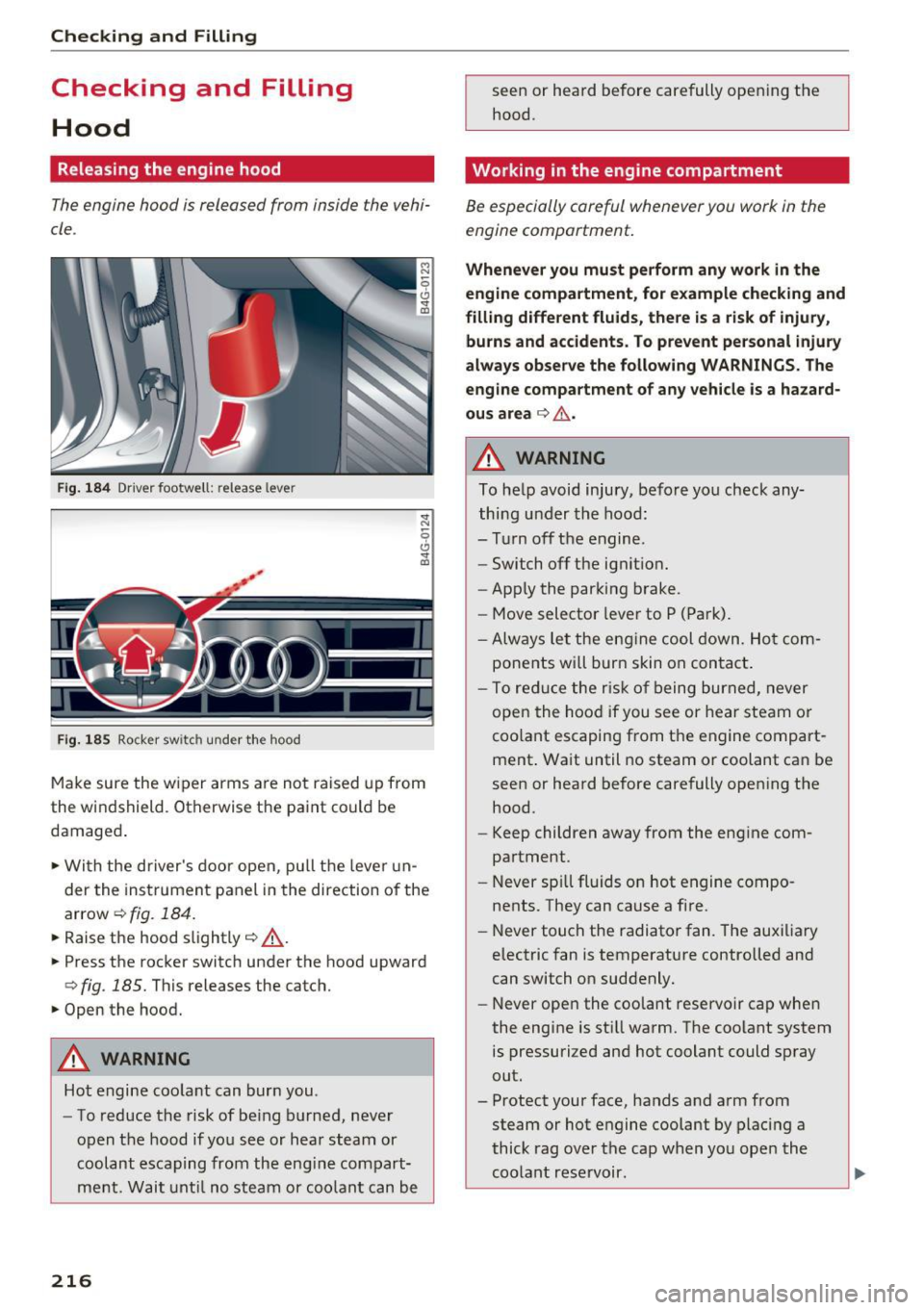
Fig. 184 Driver footwell: release leve r
Fig . 185 Rocker switch under the hood
Make sure the wiper arms are not raised up from
the windshield . Otherwise the paint could be
damaged .
.. With the driver's door open, pu ll the lever un
der the instrument panel in the direction of the
arrow ¢
fig. 184.
.. Raise the hood slightly Q _A .
.. Press the rocker switch under the hood upward
Q fig. 185. This releases the catch.
.. Open the hood.
A WARNING
Hot engine coo lant can burn you .
- To reduce the risk of be ing burned, never
open the hood if you see or hear steam or
coolant escaping from the eng ine compart
ment. Wait unt il no steam or coolant can be
216
seen or heard before carefully open ing the
hood.
Working in the engine compartment
Be especially careful whenever you work in the
engine comportment.
Whenev er yo u mu st perform an y work in the
engin e compartment , for example ch ecking and
filli ng d iffe rent fl uids , the re is a risk of injury ,
bu rn s and a ccid ents . To pre ve nt p erso nal injur y
a lway s obse rve the foll owing WARNING S. The
e ng ine compartment o f an y v ehicl e is a haz ard
ou s a rea
Q _6 .
A WARNING
To he lp avoid injury, before you check any
thing under the hood:
- Turn off the engine .
- Switch off the ignit ion.
- Apply the parking brake.
- Move selector lever to P (Park).
- Always let the eng ine cool down. Hot com-
ponents will burn skin on contact .
-
-To redu ce the risk of being burned, never
open the hood if you see or hear steam or
coo lant escaping from the engine compart
ment . Wait until no steam or coolant can be
seen or heard before carefully open ing the
hood.
- Keep children away from the engine com
partment .
- Never sp ill fluids on hot engine compo
nents. They can cause a fire.
- Never touch the radiator fan. The auxiliary
electric fan is temperature controlled and
can switch on suddenly.
- Never open the coolant reservoir cap when
the engine is sti ll warm. The coolant system
is pressurized and hot coolant could spray
out.
- Protect your face, hands and arm from
steam or hot engine coolant by placing a
thick rag over the cap when you open the
coolant reservoir .