wheel AUDI S8 2014 Manual PDF
[x] Cancel search | Manufacturer: AUDI, Model Year: 2014, Model line: S8, Model: AUDI S8 2014Pages: 314, PDF Size: 78.47 MB
Page 259 of 314
A WARNING ,~
Overloading a vehicle can cause loss of ve
hicle control, a crash or other accident, se
rious persona l injury, and even death .
- Carrying more weight than your vehicle
was designed to carry will prevent the
vehicle from handling properly and in crease the risk of the loss of vehicle con
trol.
- The brakes on a vehicle that has been
overloaded may not be able to stop the
vehicle within a safe distance.
- Tires on a vehicle that has been overload
ed can fail suddenly, including a blowout
and sudden deflation, causing loss of
control and a crash.
- Always make sure that the total load be
ing transported -including the weight of
a trailer hitch and the tongue weight of a
loaded trailer -does not make the vehi
cle heavier than the vehicle's Gross Vehi
cle Weight Rating.
Determining correct load limit
Use the example below to cal
culate the total weight of the
passengers and luggage or oth
er things that you plan to trans
port so that you can make sure
that your vehicle will not be
overloaded.
Steps for Determining Correct Load Limit
1. Locate the statement "THE
COMBINED WEIGHT OF OC
CUPANTS AND CARGO
SHOULD NEVER EXCEED XXX
KG OR XXX LBS" on your ve
hicle's placard (tire inflation
Tires and wheels 257
pressure label) ¢ page 252,
fig. 208.
2. Determine the combined
weight of the driver and pas
sengers that will be riding in
your vehicle.
3. Subtract the combined weight of the driver and pas
sengers from
"XXX" kilo
grams or
"XXX" pounds
shown on the sticker
¢ page 252, fig. 208.
4. The resulting figure equals
the available amount of car
go and luggage load capaci
ty. For example, if the
"XXX"
amount equals 1400 lbs.
and there will be five 150
lbs. passengers in your vehi
cle, the amount of available
cargo and luggage load ca
pacity is 650 lbs. (1400-7 50
(5
X 150) = 650 lbs.)
5. Determine the combined weight of luggage and cargo
being loaded on the vehicle.
That weight may not safely
exceed the available cargo
and luggage load capacity
calculated in Step 4.
6. If your vehicle will be towing
a trailer, load from your trail
er will be transferred to your
i,,,.
•
•
Page 260 of 314
258 Tires and wheels
ve hi cle. C onsult thi s m anual
t o deter mine how this re
d uce s the availabl e cargo
a nd lug gage lo ad ca pacity of
yo ur vehicle .
.,.Che ck the tire sidewall
(¢ page 259 , fig . 212 ) to de
termine the de signa ted lo ad
rating for a specific tire .
Tire service life
The service life of tires depends on a lot of
different things including proper installation
a nd balan cing, correct tire pressure and driv
ing style.
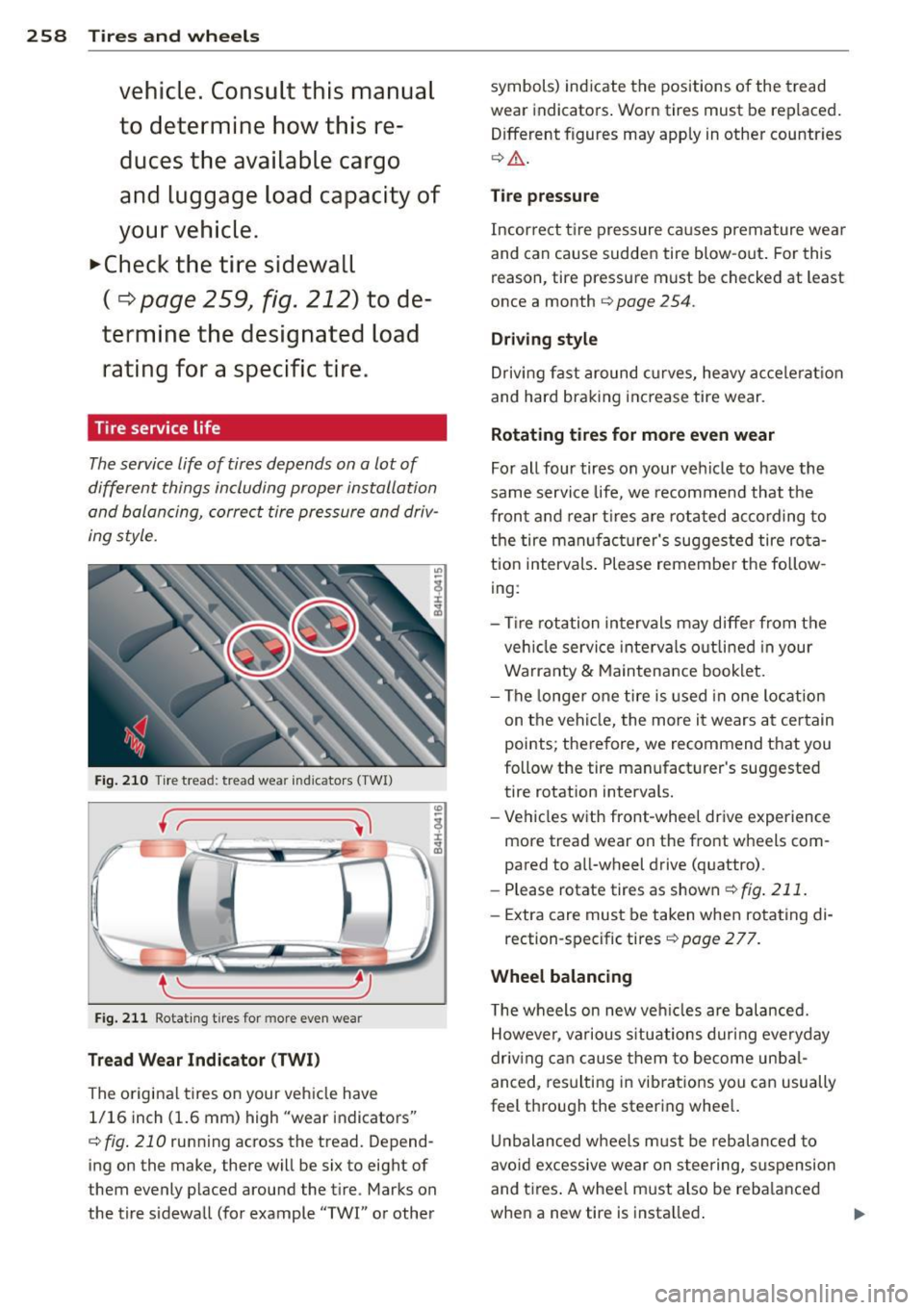
Fig . 210 Tire tread: tread wea r ind icato rs (TWI)
( r------
{ \.._ ______ _.
F ig. 211 Rotat ing t ires for more even wear
Tread Wear Indicator (TWI)
The o rigina l tires on your veh icle have
1/16 inch (1.6 mm) high "wear indicators"
c:::> fig . 210 running across the tread. Depend
ing on the make, there will be six to eight of
them evenly p laced around the t ire . Marks on
the tire s idewall (for example
"TWI" or other symbols) ind
icate the positions o f the tread
wear indicato rs . Worn tires must be replaced .
Different figures may app ly in other countr ies
¢ Ll:). .
Tire pressur e
Incorrect t ire pressure ca uses prema ture wear
and can cause sudden tire blow -out . For this
reason, tire pressure must be checked at least
once a month
c:::> page 254.
Driving style
Dr iving fast around c urve s, he avy a ccele rat ion
and hard braking inc rease tire wear.
Rotating tires for more even wear
Fo r all four tires on your veh icle to have th e
same service life, we recomme nd that the
fron t and rear tires a re rotated ac co rd ing to
the tire m an ufa ctu rer's suggested tire ro ta
tion intervals . Please remembe r th e fo llow
ing :
- Tire rotation in tervals may diffe r from the
ve hicle service inte rva ls o utlin ed in your
Warranty
& M aintena nce booklet.
- The longe r one tire is used in one lo cation
on t he veh icle, the more it wears at cer tain
points; there fore, we recommend that you
follow the tire manufact urer's suggested
tire rotation intervals.
- Vehicles w ith front-whee l dr ive experience
more tread wear on the front w heels com
pa red to a ll-wheel drive (q uattro).
- Please rotate tires as shown
c:::>fig . 211.
- Extra care mus t be taken when ro ta ting di-
rection-specific tires¢
page 2 77.
Wheel balancing
The wheels on new ve hicles are balanced.
However, va rious s ituatio ns dur ing everyday
driv ing c an cause them to become unbal
anced, res ulting in vib rations you can usually
feel thro ugh the steering whee l.
Un balanced w hee ls mu st be rebalanced to
avo id excessive wear on steering, s uspension
and t ires . A whee l m ust also be reba lance d
when a new tire is insta lled .
ll-
Page 261 of 314
Incorrect wheel alignment
Incorrect wheel alignment can cause exces
sive tire wear, impairing the safety of the vehi
cle. If tires show excessive wear, have the
wheel alignment checked by an authorized
Audi dealer or qualified workshop .
All Wheel Drive
Vehicles with quattro must always have tires
of the same size, construction and tread type. For details see ~page 204.
_& WARNING
Sudden tire failure can lead to loss of con
trol, a crash and serious personal injury!
- Never drive a vehicle when the tread on
any tire is worn down to the wear indica
tors.
- Worn tires are a safety hazard, they do
not grip well on wet roads and increase
your risk of "hydroplaning" and loss of
control.
- Always keep chemicals that can cause
tire damage, such as grease, oil, gasoline
and brake fluid away from tires.
- Tires age even if they are not being used
and can fail suddenly, especially at high
speeds . Tires that are more than 6 years
old can only be used in an emergency
and then with special care and at lower
speeds .
- Never mount used tires on your vehicle if
you are not sure of their "previous histo
ry." Old used tires may have been dam
aged even though the damage cannot be
seen that can lead to sudden tire failure
and toss of vehicle control. Tires and wheels 259
New tires and replacing tires and wheels
New tires and wheels have to be broken in
.
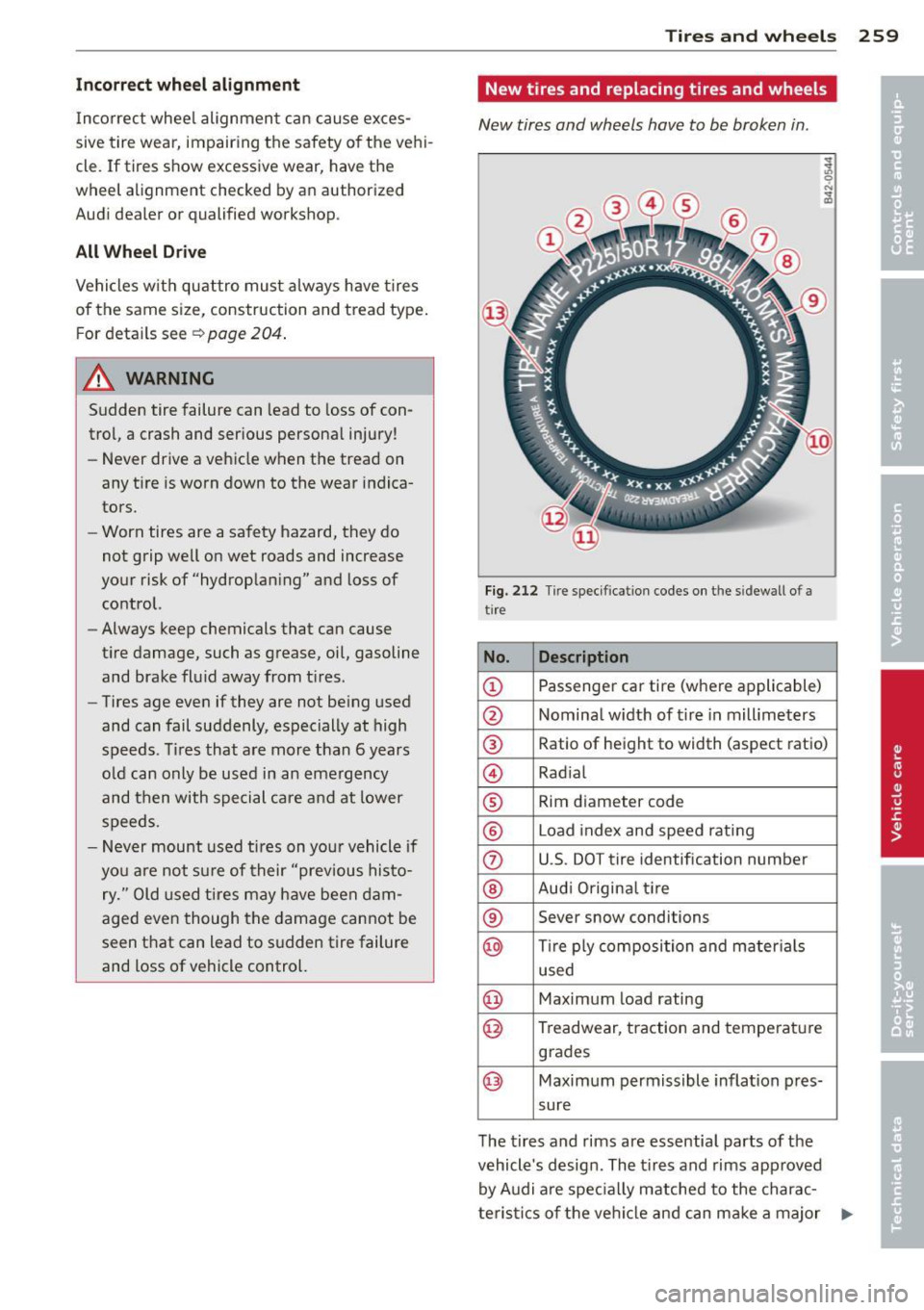
Fig. 212 Tire specificat ion codes on t he s idewall o f a
tire
No. Description
@ Passenger car tire (where applicable)
@ Nominal width of tire in millimeters
@ Ratio of height to width (aspect ratio)
© Radial
® Rim diameter code
® Load index and speed rating
0 U.S. DOT tire identification number
® Audi Original tire
® Sever snow conditions
@ Tire ply composition and materials
used
@ Maximum load rating
@ Treadwear, traction and temperature
grades
@ Maximum permissible inflation pres-
sure
The tires and rims are essential parts of the
vehicle's design . The tires and rims approved
by Audi are specialty matched to the charac
teristics of the vehicle and can make a major .,.
Page 262 of 314
260 Tire s and wheel s
contribution to good road ho lding and safe
handling when in good condition and properly
inflated
¢ ,& .
We recommend that all work on tires and
wheels be perfo rmed by an authorized Audi
dea ler. They are familiar with recommended
proced ures and have the necessary spec ial
too ls and spare parts as well as the proper fa
cilities for disposing of the old tires.
Authorized Audi dealers have the necessary information about techn ica l requ irements for
installing or changing tires and r ims.
R eplacing t ires and whe els
Tires sho uld be rep laced at least in pairs and
not individua lly (for examp le both front tires
or both rear tires together).
Be sure to read and heed the information to
the tire pressure monitoring system*
¢page 266.
A lways buy rep lacement radial tires that have
the same specifications as the tires approved
for your vehicle by Audi. Replacement t ires
must always have the same load rating speci
fication as the original equipment or approved
optional tires listed in the table
¢ page 252.
Aud i-approved specification ti res are specially
matched to your vehicle and its load limits,
and can contribute to the important road ho ld
ing, driving characteristics, and safety of the
vehicle. The table
(¢page 252) lists spec ifica
tions of the tires approved for the Audi mod
els covered by your Owner's Literature .
The tire pressure labe l located on driver's side
B-pillar
( ¢ page 252, fig. 209) lists the speci
f ications of the orig inal equipment tires in
stalled on your veh icle at the time it was man
ufactured.
Federal law requires t ire manufacturers to
p lace standard ized information on the s ide
wall of all tires
¢ fig. 212 . This information
i dent ifies and describes the fundamental
characterist ics, the quality grade of the tire
and a lso provides a tire ident ificat ion number f
or sa fety standard ce rtification and in case of
a reca ll.
Tire specifications
Knowledge of ti re specificat ions makes it eas
ier to choose the correct tires. Radial ti res
have the tire specifications marked on the
sidewa ll, for examp le:
255 /45 R 19 104 H
This co nta ins the following information:
P Indicates the t ire is for passenger cars
(where app licab le)
2 55 Nominal tire width in mm of the tire
from sidewall edge to sidewa ll edge. In
general, the larger the number, the wider
the tire
45 Height/w idth ratio in percent (aspect ra-
t io)
R Tire construction: Radial
19 Rim diameter code (in inches)
104 Load rating code
H Speed rat ing letter code
X L (or "xl", "EXTRA LOAD" or "RF") Indicates
t h at the t ire is a "Reinforced" or an "E xt ra
Load " tir e
M+S (or "M/S") Indicates that the tire has
some mud and snow capabi lity
The tires could also have the information of
direction of rotatio n ¢
page 248 .
Tire manufacturing date
The manufact uring date is also indicated on
the tire sidewall (possibly on ly on the
inner
s ide of the wheel) :
"DOT ... 2213 ... " means, for example, the tire
was produced in the 22nd week of 2013.
Speed rating (letter cod e)
The speed rating letter code on the whee ls in
dicates the maximum permissible road speeds
¢ .&. in Winter tires on page 264.
P up to 93 mp h (150 km/h)
Q up to 99 mph (158 km/h)
R up to 106 mph (170 km/h)
S up to 110 mph (180 km/h)
Page 263 of 314

T up to 118 mph (190 km/h)
U up to 124 mph (200 km/ h)
H up to 130 mph (210 km/ h)
V up to 149 mph (240 km/h)1
)
Z over 149 mph (240 km/h)l)
W up to 168 mph (270 km/h)l)
Y up to 186 mph (298 km/h)l)
Your veh icle is no rma lly factory equipped with
tires , which possess excellent driving charac
teristics and give your Audi opt imum driving
comfort . An e lectronic speed limiter
c::> page 30 wi ll normally prevent you r vehicle
from go ing faster than the tire speed ra ting
c:::> .& .
U.S . DOT T ire Identification Numb er (TIN )
and tire manufacture date
This is the t ire's "serial number". It begins
wi th the letters "DOT" and indicates that the
tire meets all federal standards . The next two
numbers or letters indicate the plant where it
was manufactured, and the last four numbers r ep resent the week and year of manufacture.
F or
examp le, the numbers 22 13 mean the ti re
was prod uced in the 22nd week of 2013. The
other numbers are marketing codes that may
or may not be used by the tire manufacturer .
T his information is used to contact consumers
if a t ire defect requires a reca ll.
Aud i original tir e
Tires with t he identification "AO" or "RO" have
been specia lly matched w ith your Audi . We
recommend using only these tires because
they meet the highest standards regard ing
safety and driving character istics when used
correctly . Your authorized Audi dealer will
gladly provide you with more information .
Tire ply compo sit ion and materi als used
The number of plies indicates the number of
layers of rubber-coated fabric in the t ire. In
general, the greater the number of plies, the more weight a tire can support. Tire manufac -
llFt· "h · or ires wit a m ax im um spee d ca pabil ity over 149
mph (2 4 0 k m/h) , tire man ufacturers some times u se
th e le tters " ZR."
Tire s an d wheel s 261
ture rs also must indicate the mate rials in the
tire , which include stee l, nylon , po lyester, and
others .
Maximum Load Rating
This number ind icates the maximum load in
k ilograms and po unds that can be ca rr ied by
the tire.
Tire quality grading for treadwear ,
tract ion, and t emperatur e resistanc e
Tre ad wear, t raction and tempera ture grades
c::> page 2 62 .
Maximum Permissible Inflation Pressure
Th is number is the greatest amount of a ir
pressure that should ever be pu t in the t ire
u nder norma l dr iv ing cond itions .
_&. WARNING ,-=
-Using incorrect o r unmatched tires and/
or wheels or improper tire and wheel
comb inations can lead to loss of control
'
coll is ion and serious personal inj ury.
- Always use tires, rims and whee l bolts
that meet the specifications of original
factory- insta lled tires or other combina
tions that have been specifically ap proved by the vehicle manufacturer.
- Tires age even if they are not being used
a nd can fail sudden ly , especially at high
speeds . Tires that are more than 6 years
old can only be used in an emergency
and then w ith special care and at lower
speeds.
- Never mo unt used tires on your veh icle if
you are not sure of the ir "previous histo
ry." O ld used tires may have been dam
aged even though the damage cannot be
seen that can lead to sudden tire fai lure
and loss of vehicle control.
- All four whee ls must be fitte d with radial
tires of the same type, size (rolling cir
cumference) and the same tread pattern .
~
•
•
Page 264 of 314
26 2 T ire s and wheel s
Driving with different tires reduces vehi
cle handling and can lead to a loss of
co ntrol.
- I f the spare tire is not the same as the
t ires that are mounted on the veh icle -
for example with winter tires - only use
the spare tire for a short period of time
and dr ive with extra care . Refit the nor
ma l road wheel as soon as safely possi
ble.
- Never drive faste r than the maximum
speed for which the tires on your veh icle
are rated because ti res that a re driven
faster than their rated speed can fail
sudden ly .
- Overloading t ires cause heat build- up,
sudden tire failure, including a blowout
and sudden deflation and loss of control.
- T emperature grades app ly to tires that
are properly inflated and not over o r un
derinflated .
- For technical reasons it is not a lways
possible to use wheels from other
vehicles -in some cases not even wheels
from the same vehicle model.
- If you insta ll wheel trim discs on the ve
hicle whee ls, make sure that the air f low
to the brakes is not blocked. Reduced air
flow to the brakes can them to overheat, increasing stopping distances and caus
ing a collision .
- Run flat t ires may on ly be used on
vehicles that were equ ipped w ith them
at the facto ry . The vehicle must have a
chassis des igned for run f lat t ires . Incor
rect use of run flat tires can lead to vehi
cle damage or acc idents. Check with an
au thorized Aud i dealer or ti re specia list
to see if your vehicle can be equipped
with run f lat tires. If run flat tires are
used, they must be installed on all four
wheels . Mix ing tire types is not permit
ted .
(D Note
-For technica l reasons, it is not generally
possib le to use the whee l rims from oth- er veh
icles. This can hold true for wheels
of the same vehicle type.
- If the spare tire is d iffe rent from the
tires that yo u have mounted on your ve
hicle (for example winter tires o r wide
profi le tires), then use the spare tire for a
short period of time only and drive w ith
extra care. Replace the flat tire w ith the
tire matching the others on your vehicle as soon as possible .
- Never drive without the valve stem cap .
T he valves could get damaged .
® For the sake of the environment
Dispose of o ld tires in accordance with the
l ocal requirements.
Uniform tire quality grading
- Tread wear
- Traction AA A B C
- Temperature ABC
Quality grades can be found where applicab le
on the t ire s ide wall between tread shou lder
and maximum section width
c> page 259,
fig. 212 .
For example : Tread wear 200, Traction AA,
Temperature A.
All passenger ca r tires must conform to Feder
al Safety Requirements in addition to these
grades.
Tread wear
T he tread wear grade is a comparative rating
based on the wear rate of the t ire when tested
u nder contro lled conditions o n a specified
government test course .
For example, a tire graded 1S0 would wear
one and o ne ha lf ( 11/2) times as well on the
gover nment course as a t ire g raded 100 .
The relative performance of tires depends upon the actual conditions of their use, how
ever, and may depa rt s ignificantly from the
norm due to va ria tions in d riving hab its, se rv
ice practices and differences in road character-
istics and climate.
ll-
Page 265 of 314
Traction
The traction grades, from highest to lowest,
a re AA, A, Band
C. Those grades represent the
tire's ability to stop on wet pavement as
measured under controlled conditions on
specified government test surfaces of asphalt
and concrete . A tire marked C may have poor
traction performance¢ .&..
Temp eratu re
The temperature grades are A (the highest),
B, and
C, representing the tire 's resistance to
the generat ion of heat and its ability to dissi
pate heat when tested under controlled condi
tions on a specified indoor laboratory test
wheel.
Sustained high temperature can cause the
material of the tire to degenerate and reduce
tire life, and excessive temperature can lead
to sudden tire failu re ¢ .&. .
The grade C corresponds to a level of perform
ance which all passenger car tires m ust meet
u nder the Federa l Motor Ve hicle Safety Stand
ard No.
1 09. Grades Band A represent higher
l eve ls of pe rformance on the laboratory test
wheel than the m inimum required by law.
_& WARNING
Th e traction grade assigned to this tire is
based on stra ight-ahead b raking t raction
tests, and does not include acceleration,
cornering , hydrop laning or peak traction
character istics.
A WARNING
The temperature grade for this t ire is es
tablished for a t ire that is properly inflated
and not overloaded. Excessive speed, un
derinflation, or excessive loading, either
separate ly or in combination, can cause
heat buildup and possibl e tire fa ilu re.
-
Tire s an d wheel s 263
Winter tires
Winter tires can improve vehicle handling on
snow and ice . At temperatures below 45 °F
(7 °C) we recommend changing to winter
tires.
In some heavy snow areas, local governments
may require true w inter o r "snow" tir es, those
with very deeply cut t read. These tires should
o nl y be used in pairs and be installed o n all
f o ur wheels . Make sure you p urchase snow
ti res that are the same size and cons truc tion
type as the other tires on yo ur vehicle .
I f your veh icle is eq uipped w ith all-whee l
drive *, t his w ill improve trac tion durin g w in ter
driv ing, even wi th the s tanda rd tires. Howev
er, we strongly recommend that you always
equip all four wheels on your veh icle w ith cor
rect ly fitted winter tires or all-season t ires,
when winter road condit ions are expected.
This also improves the veh icle 's b rak ing per
fo rmance and reduces stoppi ng d ista nces .
Summer tires provide less grip on ice and
snow.
Winter tires (snow tires) must always be fitted
o n all fo ur whee ls .
As k your au thori zed A udi d ealer or qualified
workshop for permit ted
winter tire size s. Use
o nl y radial winter ti res .
Win ter tires lose their effec tiveness whe n the
tread is worn down to a depth o f
0.15 7 inch
(4 mm) .
Only d rive w it h w inte r tir es under w inte r con
di tions. S umme r tir es handle bette r whe n
t h e re is no s now o r ice on the ro ad s an d the
temperature is above 45 ° F (7 °C) .
I f you have a flat t ire, see notes on spare
whee l
¢page 259.
Please a lways remember that winter tires may
have a lowe r sp eed rating than the tires o rig i
nally i nstalled on your veh icle at t he time it
was ma nufactu red. Please see ¢
page 260,
Speed ra ting (letter code)
for a lis ting o f th e
speed ra ting lette r codes and the max imum
speed at which the tires can be driven .
111>-
•
•
Page 266 of 314
264 Tires and wheels
The speed rating letter code( ¢ page 251) is
on the side wall of the tire¢ page
259.
A WARNING
Winter tires have maximum speed limits
that may be lower than your vehicle's max
imum speed . Always know the maximum
speed before driving off. Never drive faster
than the speed permitted for your specific
winter tires. This will cause damage to the
tires leading to an accident and serious
personal injury to you and your passen
gers.
A WARNING I>=
Driving faster than the maximum speed
for which the winter tires on your vehicle
were designed can cause tire failure in
cluding a blowout and sudden deflation,
loss of control, crashes and serious per
sonal injuries. Have worn or damaged tires
replaced immediately.
- Winter tires have maximum speed rating
that may be lower than your vehicle's
maximum speed .
- Never drive faster than the speed for
which the winter or other tires installed on your vehicle are rated.
A WARNING
Always adjust your driving to the road and
traffic conditions. Never let the good ac
celeration of the winter tires and all-wheel
drive tempt you into taking extra risks . Al
ways remember :
- When braking , an all-wheel drive vehicle
handles in the same way as a front drive
vehicle.
- Drive carefully and reduce your speed on
icy and slippery roads, even winter tires
cannot help under black ice conditions.
@) For the sake of the environment
Use summer tires when weather condi
tions permit. They are quieter, do not wear
as quickly and reduce fuel consumption.
Snow chains
Snow chains may be fitted only to the front
wheels, and only to certain tire sizes . Ask your
authorized Audi dealer on which tire sizes snow chains can be used.
If you are going to use snow chains, then you
must install them on the front wheels at
least.
The snow chains must have low-profile links
and must not be thicker than 0.4 inch
(10,5 mm) , including the lock.
Remove wheel center covers and trim discs
before putting snow chains on your vehicle
¢ (!) . For safety reasons cover caps must then
be fitted over the wheel bolts. These are avail
able from authorized Audi dealers.
A WARNING
=
Using the wrong snow chains for your vehi-
cle or installing them incorrectly can in
crease the risk of loss of control leading to
serious personal injury.
- Snow chains are available in different
sizes . Always make sure to follow the in
structions provided by the snow chain manufacturer.
- When driving with snow chains never
drive faster than the speed permitted for
your specific snow chains.
- Always observe local regulations.
(D Note
- Remove snow chains before driving on
roads not covered with snow to avoid
damaging tires and wearing the snow
chains down unnecessarily .
- Snow chains, which come into direct con
tact with the wheel rim, can scratch or damage it. Therefore, make sure that the
snow chains are suitably covered. Check
the position of the snow chains after
driving a few yards and correct if neces
sary. Follow the instructions from the
snow chain manufacturer when doing so.
-If the Adaptive Air Suspension should
malfunction, do not mount or use snow
11-
Page 267 of 314

chains because the vehicle will be ex
tremely low. If you do drive with snow
chains on while the vehicle is at this lev
el, the snow chains might severe ly dam
age the wheelhouse and other parts of
the veh icle .
@ Tips
Where snow cha ins are mandatory oncer
tain roads, this normally also applies to
veh icles with All Wheel Drive.
Wheel bolts
Wheel bolts mu st always be tigh tened to the
correc t torque .
The design of whee l bolts is matched to the
factory in sta lled r ims. If different rims are fit
ted, the correct wheel bolts with the right
length and correctly shaped bolt heads must
be used . This ensures that wheels are f itted
secure ly and that the brake system f unctions
correctly .
In certain circumstances, you may not use
wheel bolts from a d iffe rent vehicle -even if it
i s the same mode l
¢page 294.
A WARNING
Imprope rly tig hte ned or maintained whee l
bolts can be come loose causin g loss of
contro l, a co llision and serious persona l in
jury .
- Alw ays keep the w heel bolts and the
th reads in the wheel hubs clea n so the
wheel bolts can turn easily and be prop
er ly tightened .
- Never grease or oil the wheel bo lts and
the threads in the w heel h ubs. They can
become loose while driving if greased or
o iled, even if tightened to the specif ied
torque.
- Only use wheel bolts that belong to the rim being installed.
- Never use different whee ls bolts on your
vehicle .
- Always maintain the co rrect tightening
torq ue for the wheel bo lts to reduce the
Tire s an d wheel s 265
risk of a wheel loss. If the tighte ning tor
que of t he wheel bolts is too low, they
can loosen and come out when the vehi
cle is mov ing . If the tighte ning torque is
too h igh, the wheel bol ts and threads
can be damaged and the whee l can be
come loose.
(I) Note
The specified torque for the whee l bolts is
90 ft lb ( 120 Nm) with a tole ranc e of± 7,4
ft lb(± 10 Nm). Torq ue whee l bolts diago
nally. Afte r cha nging a whee l, the torq ue
must be checked as soon as possible wi th a
torque w rench -prefe rably by an au thor
i z ed Audi dealer or qualif ied workshop .
Low aspect ratio tires
Your Audi is facto ry-eq uipped with low aspect
ratio tires. These tires have been thoro ughly
tested and been se lected specifically for your
model for their superb performance , road fee l
and handling under a variety of driving cond i
tions . Ask your authorized Audi dealer for
more details.
The low aspect ratio of these t ires is ind icated
by a numeral of
55 or less in the tire's size
designation . The numera l rep resents the ratio
of the t ire's sidewall height in relation to its
t read width ex pressed in perce ntage. Conven
tion al tires have a he igh t/w idth ratio of 60 or
more.
The performance of low-aspe ct-ratio tire s is
particularly sensitiv e to improper infla tion
pres sure. It is therefore important that l ow
a spect ratio tires are inflated to the specified
pre ssure and that the inflation pressure is
regularly checked and maintained. Tire pres·
sures should be checked at least once a
month and always before a long trip
¢ page 254 , Checking tire pressure .
What you can do to avoid tire and rim
damage
Low aspect ratio tires can be damaged more
easily by impact w it h potholes , curbs, gul lies ..,.
•
•
Page 268 of 314
266 Tire s and wheels
or ridges on the road, part icu larly if the tire is
underinflated.
I n o rder to minim ize the o ccurrence of impact
damage to the tires of your vehicle, we recom
mend that you observe the following precau
tions:
- Always maintain recommended inflation
pressures. Check your tire pressure every
2,000 miles (3,000
km) and add air if neces
sary .
- Drive carefu lly on roads with potholes, deep
gullies or ridges. The impact from driving
through or over such obstacles can damage
your tires. Impact with a curb may also cause damage to your tires.
- After any impact, immediately inspect your
tires or have them inspected by the nearest
authorized Aud i dealer. Replace a damaged
t ir e as soon as possible .
- Inspect your tires every 2,000 miles (3,000
km) for damage and wear . Damage is not al
ways easy to see . Damage can lead to loss of
air and underinflation, wh ich could eventu
ally cause t ire failure . If you be lieve that a
t ir e may have been damaged, replace the
t ir e as soon as possible.
- T hese tires may wea r mo re quick ly than oth
ers.
- Please a lso remember that, whi le these t ires
deliver respons ive handling, they may ride
less comfortably and make mo re no ise than
other choices.
Reduced performance in winter/cold
season conditions
All tires are designed for certain purposes.
The low aspect ratio, ultra high performance
tires originally installed on your vehicle are in
tended for maximum dry and wet road per
formance and handling. They are not suitable
for cold, snowy or icy weather condit ions. If
you drive under those circumstances, you should equip your vehicle with all -season or
winter tires, which offer better traction under
those cond it ions. We suggest you use the rec
ommended snow or all-season tires specified
for your vehicle, or their equivalent. Refer
to
q page 263 for more detailed infor
mation regarding winter tires.
Tire pressure monitoring system
ill General notes
Applies to veh icles: w ith tire pressure monitoring system
Each tire, including the spare ( if provided),
shou ld be checked monthly when co ld and in
flated to the inflation pressure recommended
by the veh icle manufacturer on the vehicle
placard or tire inflation pressure label. (If your
vehicle has tires of a different size than the
s ize indicated on the vehicle placard or tire in
flation pressure label, you should determine
the proper tire inflation pressu re fo r those
t i res).
As an added safety feature, your ve hicle has
been equipped with a tire pressure mon itoring
system ( TPMS) that illuminates a low tire
pressure telltale when one or more of your
tires is significant ly under-inflated. According
l y, when the low tire pressure telltale i llumi
nates, you should stop and check your tires as
soon as possib le, and inflate them to the
proper pressure. Driving on a sign ificantly un
der-inflated t ire causes the tire to overheat
and can lead to tire fa ilure . Under-inflation al
so reduces fuel efficiency and tire tread life,
and may affect the vehicle 's handling and
stopping ability.
Please note that the TPMS is not a substitute
for proper tire ma intenance, and it is the driv
er's responsibility to maintain co rrect tire
pressure, even if under-inflation has not
reached the level to trigger illuminat ion of the
TPMS low tire pressu re tellta le .
Your vehicle has also been equipped with a
TPM S ma lfunction indicator to ind icat e when
the system is not operating properly. The
T PMS ma lfunction indicator is combined with
the low tire pressure telltale. When the sys
tem detects a malfunction, the telltale will
flash for approximately one minute and then ..,_