battery AUDI S8 2016 Owner's Manual
[x] Cancel search | Manufacturer: AUDI, Model Year: 2016, Model line: S8, Model: AUDI S8 2016Pages: 302, PDF Size: 75.68 MB
Page 197 of 302
Driving with your
quattro
With All Wh eel Drive , all four wh eels are driven .
General information
With All W heel Drive, power is dis tribute d to all
four wheels . This happens automatically depend
ing on your dr iving style and the road conditions
at the time . See also¢
page 190 . With the sport
d ifferent ial*, power d istr ibution to the rear
wheels is variable and can be adjusted with Audi
d rive select*
¢ page 106. Always read and fo llow
safety preca utio ns ¢ ,&. .
Winter tires
When drivi ng in the w inter, you r vehicle with All
Wheel Drive has an advantage, even with reg ular
tires. In winter road cond itions it may be adv isa
b le to mount w inte r tir es (or a ll-season tires) for
i mproved d riveab ility and bra king : these tires
must be mounted on
all four wheels . See also
¢ page 251, W inter tires.
Snow chains
Where snow chains are mandatory on certain
roads, this normally also a pplies to vehicles w it h
All Whee l Dr ive ¢
page 251, Snow chains.
Replacing wheels /tires
Veh icles w ith All Wheel Drive must always have
tires of the same s ize. A lso avo id tires wi th d iffer
ent tread depths. For detai ls see page
¢ page 243.
Off-Road driving?
Your Aud i does not have e nough g round clear
a nce to be used as an off-road vehicle . It is there
fore best to avoid rough tracks and uneve n ter
r ain as m uch as possible . Also refe r to
¢page 197.
_& WARNING ,~ -
Always adjust you r driv ing to road and t raffic
conditions . Do not let the extra safety affo rd
ed by All Wheel Drive tempt you into taking
extra risks.
Sma rt Technology
- Although the A ll Whee l Drive is very effec
tive, always remember that braking capacity
is limited by t ire tract ion. You shou ld there
fore not dr ive at excessive speeds on icy or
slippe ry road surfaces .
- On wet road surfaces, be careful not to dr ive
too fast because the front wheels could be
g in to slide on top of the water (aquap la n
ing) . If th is should oc cur, you will have no
warn ing from a sudden increase in engine
speed as with a front-wheel d rive vehicle.
Always d rive at speeds which are suited to
the road conditions -risk of c rash.
Energy management
Starting ability is optimized
Energy management controls the distribution of
electrical energy and thus op timizes the availa
bility of electrical energy for starting the engine .
If a vehicle with a conventional energy system is
not driven for a long pe riod of time, the battery is
discharged by id ling curre nt consumers (e.g. im
mobilize r) . In certain circumstances i t can resu lt
in t he re being i nsufficien t energy ava ilable to
sta rt the engine.
Intelligent energy manageme nt in you r vehicle
hand les the distribution of electrical energy .
Start ing ability is markedly improved and the life
of the ba ttery is ex tended.
Bas ica lly, energy management cons ists of
bat
tery diagnosis , idling current management
and
dynamic energy management .
Battery diagnosis
Battery d iagnosis continuously dete rm ines the
state of the battery. Sensors determine battery
vo ltage, battery current and battery tempera
tu re. This de termines the current state o f ch arge
and the power of the battery .
Idling current management
Idling current management reduces energy con
sumption while the vehicle is standing. With the ..,_
195
Page 198 of 302
Smart Technology
ignition switched off, it controls the energy sup
p ly to the various electrical components. Data
from battery diagnosis is considered.
Depending on the battery's state of charge, indi
vidual consumers are gradually turned off to pre
vent excessive discharge of the battery and thus maintain starting capability.
Dynamic energy management
While the vehicle is being driven, dynamic energy
management distributes the energy generated
according to the needs of the individual compo
nents.
It regu lates consumption, so that more
electrical energy is not being used than is being
generated and ensures an optimal state of
charge for the battery.
(D Tips
- But even energy management cannot neg
ate the limits of physics . Cons ider that the
power and life of a battery are limited.
- If starting ability is threatened, the indica
tor light (•) appears
9 page 15, Cl Battery.
What you should know
The highest priority is given to maintaining start
ing capability .
The battery is severely taxed in short-distance
driving, in city traffic and during the cold time of
year. Abundant electrical energy is required, but
only a little is generated . It is also crit ica l if the
engine is not running and electrical components
are turned on . In this instance energy is be ing
consumed but none is being generated .
It is in precisely these situations that you will no
tice energy management actively regulat ing the
d istr ibut ion of energy .
Vehicle stands for an extended period
If you do not driv e your vehicle over a period of
several days or weeks, electrical components are
gradually cut back or switched off. This reduces
energy consumption and ma inta ins starting ca
pability over a longer period . Some of the con
ven ience funct ions may not operate, such as the
interior l ights or the power seat adjustment. The
196
convenience functions will be availab le again
when you switch on the ignition and start the en gine.
With the engine turned off
If you listen to the radio, for example, with the
engine turned off or use other MMI funct ions,
the battery is being d ischarged .
If starting capab ility is jeopardized due to energy
consumption, a message appears in the MMI dis
play .
The message indicates that the system will be
switched off automat ically in a moment . If you
wish to cont inue using the functions, you have to
start the engine.
With the engine running
Although electrica l energy is generated when the
vehicle is being driven, the battery can become
discharged. This happens mostly when little en
ergy is being generated and a great deal con
sumed and the battery's state of charge is not
opt imal.
To bring the energy balance back into equilibr i
um, consumers wh ich require espec ially large
amounts of energy are temporarily cut back or
switched off. Heating systems in particular re
quire a great dea l of energy. If you notice , fo r ex
amp le, that the heated seats* or the heated rear
window are not heating, they have been tempo
rarily cut back or switched off. These systems will
be available aga in as soon as the energy balance
has been restored.
You will also notice that engine idle speed has
been increased slig htly. This is norma l and not a
cause for concern . By increasing engine idle
speed the additional energy required is generat
ed and the battery is charged.
Page 200 of 302
Driving and th e en vironm ent
pollutants in the exha ust gas before they are re
leased into the atmosphere.
The exclusive use of unleaded fue l is critica lly im
portant for the l ife of the catalytic converter and
proper functioning of the engine.
A WARNING
T he temperature of the exha ust system is
high, both when driving and after stopping
the engine.
-
- Never touch the exhaust tail pipes once they
have become hot. This could result in burns.
- Do not park or operate the vehicle in areas
where the hot exha ust system may come in
contact with dry grass, brush, fue l spill or
other mater ial which can cause a fire.
- Do not apply additional undercoating or rustproofing on or near the exhaust mani
fold, exhaust p ipes, catalytic converter or
heat sh ields. During dr iv ing, the substance
used fo r undercoating could overheat and
ca use a fire.
(D Note
- Be aware that just one tank filling with
le aded fuel will already ser iously degrade
the performance of the catalytic co nverter .
- Do not exceed the correct eng ine oil level
<=;> page 225.
-Do not drive until the fuel tank becomes
complete ly empty. The engine could mis
fire. Unburned fuel could also get into the
exhaust system and this cou ld cause the
cataly tic converte r to overheat.
- Do not sw itch off the ignition while the veh i
cle is moving.
- Do not continue to operate your vehicle un
der these cond it ions, as otherwise fue l can
r each the catalyti c converte r. This cou ld re
su lt in overheating of the conve rter, req uir
i ng its replacement.
- T o assure efficient oper ation of the Emis
s ion Control Sys tem:
- Have your veh icle maintained properly and
in accordance with the service recommen
dations in your Warranty
& Maintenance
book let .
198
-Lack of proper ma intenance as well as im
proper use of the vehicle wi ll impair the
funct ion o f the emission control system
and could lead to damage.
@ For the sake of the environment
Even when the Emiss ion Control System is op
erating properly, the exhaust gas can have a
su lfu r-li ke exhaust gas sme ll under some op
erating states. Th is depends on the sulfur
content of the fuel being used. Us ing a d iffer
ent brand of fuel may help, or fi lling the tank
with lead-free super g rade gasoline.
Diesel particulate filter
App lies to: vehicles with diese l engine
The diesel particulate filter filters nearly all of
the soot part icles out of the exhaus t. The filte r
clea ns itself automat ica lly unde r no rma l dr iv ing
cond it ions. If the fil ter canno t clean i tself (fo r ex
amp le, because yo u are on ly driving short distan
ces), the filter becomes clogged with soot and
the
II symbol for the diese l particu late filter il
l uminates
¢ page 20.
A WARNING
- Do not park your vehicle over flammable
materials such as grass or leaves because
the high temperature of the diesel particu
la te filte r could sta rt a fi re.
-
- Do not apply an underbody protectant in the
exhaust system area or a fire could start.
Shutting down vehicle
If you would like your vehicle to remain inopera
tive for a longer period of time, contact an Audi
or other spec ia lized dealer . They can adv ise you
o n necessary p recautions e .g. corros ion preven
tion, ma intenance and storage . Pay attention to
additional informat ion concer ning t he battery.
Refer to
<::;> page 2 31.
Page 223 of 302
-Do not remove the engine cover under any
circumstances. This increases the risk of
burns.
- If work on the fuel system or the electrical
system is necessary:
- Always d isconnect the battery.
- Never smoke or work near heaters or open
flames. Flu ids in the engine compartment
could start a fire.
- Keep an app roved fire ext inguisher imme
d iate ly availab le.
- To avo id electr ical shock and personal injury
wh ile the eng ine is running or being started,
never touch:
- Ignition cables
- Other components of the high voltage
electronic ignition system.
- If you must perform a check or repa ir with
the engine running:
- First, fully apply the parking brake, move
selector lever to "P" (Park).
- Always use extreme caution to prevent
cloth ing, jewelry, or long hair from get
ting caught in the radiator fan, V-belts or
other mov ing parts, or from contacting
hot parts. Tie back ha ir before starti ng,
and do not wear clothi ng that will hang or
d roop into t he engine.
- Min imize exposu re to emission and chem i
cal hazards¢ .&.-
_& WARNING
California Proposition 65 Warn ing:
- E ngine exhaust, some of its constituents,
and certain vehicle components contain or
em it chem ica ls known to the St ate of C ali
f orn ia to cause cancer and bi rth de fects and
reproductive harm . In addition, certain flu
ids contained in ve hicles and certain prod
ucts of component wear contain or emit
Ch eck ing and Filling
chemicals known to the State of California
to cause cancer and birth defects or other
reproductive harm.
- Battery posts, term inals and related acces
sories contain lead and lead compounds,
chemicals known to the State of Californ ia
to cause cancer and reproductive harms.
Was h hands afte r handling .
([) Note
When adding flu ids, always make sure that
they are poured into the proper co nta iner or
fille r opening, otherwise serious damage to
vehicle systems w ill occur.
® For the sake of the environment
To detect leaks in time, inspect the veh icle
floor pan from unde rneath regularly . If you
see spots from oil or other veh icle fluids, have
your vehicle inspected by an authorized Audi
dealer.
Closing the engine hood
.,.. Pull the hood down un til the press ure from the
struts is reduced.
.,.. Let the hood
drop down and latch in p lace . Do
not try to push it shut;
it may fail to engage
¢ _& .
_& WARNING
--A hood that is not completely latched co uld
fly up and block your view while driv ing.
- When you close the engine hood, check it to
make sure the safety catch has properly en
gaged . The hood s hou ld be flush with the
sur rounding vehicle body parts.
- If you notice while driv ing that the hood is
not secured properly, stop at once and close
it.
-
221
Page 233 of 302
@ For the sake of the environment
Because of the problem of proper disposal of
brake fluid as we ll as the special toots re
quired and the necessary expertise, we rec
ommend that you have the brake fluid
changed by your authorized Audi dealer .
Battery
General information
Under normal operating conditions, the battery
in your Audi does not need any maint enance.
With
high outside temperatures or long daily
drives we recommend tha t you have the electro
lyte level checked by a service facility. The elec
trolyte level should also be checked each time
the battery is charged ¢
page 233.
Have the battery checked when you take your ve
hicle in for serv ice. You are well advised to re
place a battery that is older than 5 years .
With certain types of airbag deployment, the batte ry is disconnected from the vehicle electri
cal system for safety reasons¢
& in Repair, care
and disposal of the airbags on page 159 .
Disconnecting the battery terminals
Some vehicle functions (power window regu la
tors, for example) are lost if the battery te rmi
nals are disconnected. These functions have to be
relearned after the battery terminals are con
nected again. To prevent th is, the battery should
only be disconnected from the vehicle e lectr ica l
system when abso lutely necessary for repairs.
Vehicles not driven for long periods
If you do not drive your vehicle over a period of
several days or weeks, electrical components are
gradually cut back or sw itched off. This reduces
ene rgy consumption and ma inta ins starting ca
pability over a longer period ¢
page 195. Some
of the convenience functions may not operate,
such as the interior lights or the power seat ad
justment. The convenience funct ions will be
ava ilable again when you switch on the ignition
and start the engine.
Checking and Filling
Winter operation
During the winter months, battery capacity tends
to decrease as temperatures drop . This is be
cause more power is also consumed while start
ing, and the headlights, rear window defogger,
etc., are used more often.
Avo id unnecessary power consumption, particu
larly in city traffic or when traveling only short
distances . Let your authorized Audi dealer check
the capacity of the vehicle battery before winter
sets in ¢
page 233. A well charged battery will
not only prevent starting problems when the
weather is cold, but will also last longer .
(D Tips
If your vehicle is left standing for several
weeks at extremely low temperatures, the ve
hicle battery should be removed and stored
where it w ill not freeze . This will prevent it
from be ing damaged and having to be re
placed.
Working on the battery
Be especially careful when working on or near
the battery.
The battery is located in the luggage compart
ment under the floor . Before you check anything
in the luggage compartment,
read and heed all
WARNINGS ¢
&-
Always heed the safety warnings, when working
on the vehicle battery or the veh icle electrical
system to prevent injury.
The following WARNINGS are very important
when working on the battery:
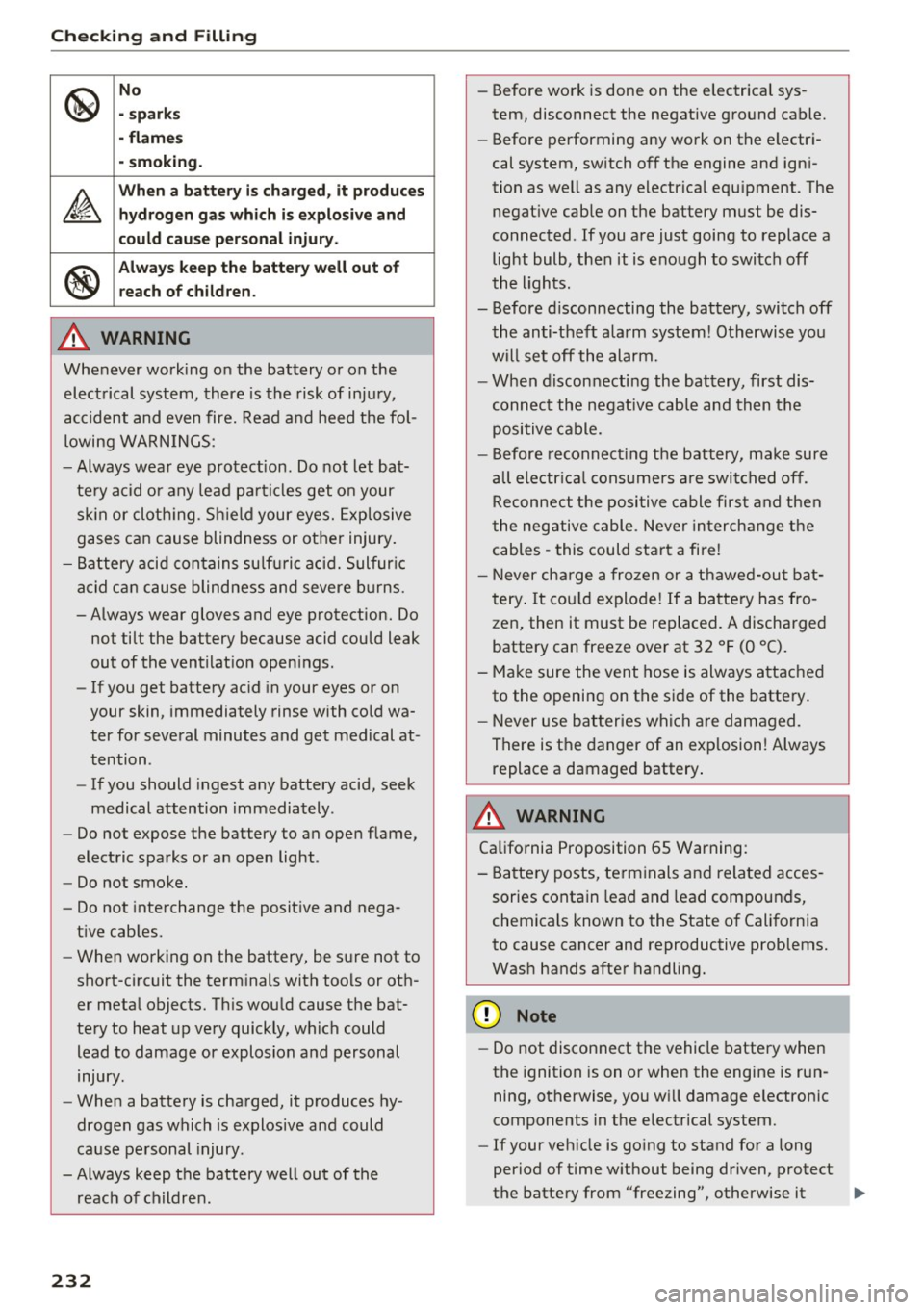
Always heed the following WARNING SYM·
BOLS and safety precautions when working on
the battery.
®
Always wear eye protection.
~
Battery acid contains sulfuric acid. Al-
ways wear gloves and eye protection.
231
Page 234 of 302
Check ing and F illing
@
No
- spark s
- fl ame s
- smokin g.
~
Wh en a b att ery is ch arg ed , it produc es
h yd ro ge n ga s which i s explosive and
could cau se per sonal injury.
®
Always keep the b atter y well out of
r each of child ren.
A WARNING
Whenever work ing on the battery or on the
elect rical system, there is the risk of injury,
accident and
even fire. Read and heed the fol
lowing WARN INGS :
- Always wear eye protection. Do not let bat
te ry acid or any lead particles get on your
sk in or cloth ing . Sh ield your eyes. Explosive
gases can cause blindness or other injury .
- Battery acid con tains su lfu ric acid. Sulfur ic
acid can cause blindness and severe b urns.
- Always wear gloves and eye protection. Do
no t tilt the battery because acid could leak
out of the ventilat ion open ings .
- If you get battery ac id in your eyes or on
your skin, immediately rinse with cold wa
ter for several minutes and get medical at tention .
- If you should ingest any battery acid, seek
medical attention immediately .
- Do not expose the battery to an open flame,
electric sparks or an open light .
- Do not smoke.
- Do not interchange the positive and nega-
t ive cables.
- When working on the battery, be sure not to
short-circuit the terminals with tools or oth
er metal objects. Th is wou ld cause the bat
tery to heat up
very quickly, which could
lead to damage or explosion and personal
injury .
- When a battery is charged, it produces hy
drogen gas which is explosive and could
ca use personal injury.
- Always keep the battery well out of the reach of ch ildre n.
232
-
-Before work is done on the electrical sys
tem, disconnect the negative gro und cable.
- Before performing any work on the e lectri
cal system, switch off the engine and ign i
tion as well as any electrical equ ipment . The
negat ive cab le on the battery must be dis
connected . If you are just going to replace a
light bulb, then it is enough to switch off
the lights.
- Before d isconnecting the battery, switch off
the anti-theft alarm system! Otherwise you
will set off the alarm.
- When disconnecting the battery, first dis
connect the negative cab le and then the
positive cable.
- Before reconnect ing the battery, make sure
all electr ica l consume rs a re switched off .
Reconnect the positive cable first and then
the negative cable . Never in terch ange t he
cables -this could sta rt a fire!
- Never cha rge a frozen or a thawed-out bat
tery . It cou ld explode ! If a ba ttery has fro
zen, then it must be replaced. A discharged
battery can freeze over at 32 ° F (0 °C).
- Make sure the
vent hose is always attached
to the opening on the side of the battery .
- Never use batter ies which are damaged.
There is the danger of an exp losion! Always
replace a damaged battery .
A WARNING
Califo rnia Proposition 65 Warning :
- Batte ry posts, te rm inals and related acces
sories contain lead and lead compounds,
chemicals known to the State o f Cali fornia
to cause cancer and reproductive problems.
Wash hands after handling.
(D Note
- Do not disconnect the vehicle battery when
the ignition is on or when the engine is run
ning, otherwise, you w ill damage electronic
components in the electrical system.
- If your veh icle is go ing to stand for a long
period of time w ithout being driven, protect
the battery from "freezing", otherwise it ..,.
Page 235 of 302
will be damaged and will then have to be re
placed.
Battery charging
Starting the engine requires a well charged bat
tery.
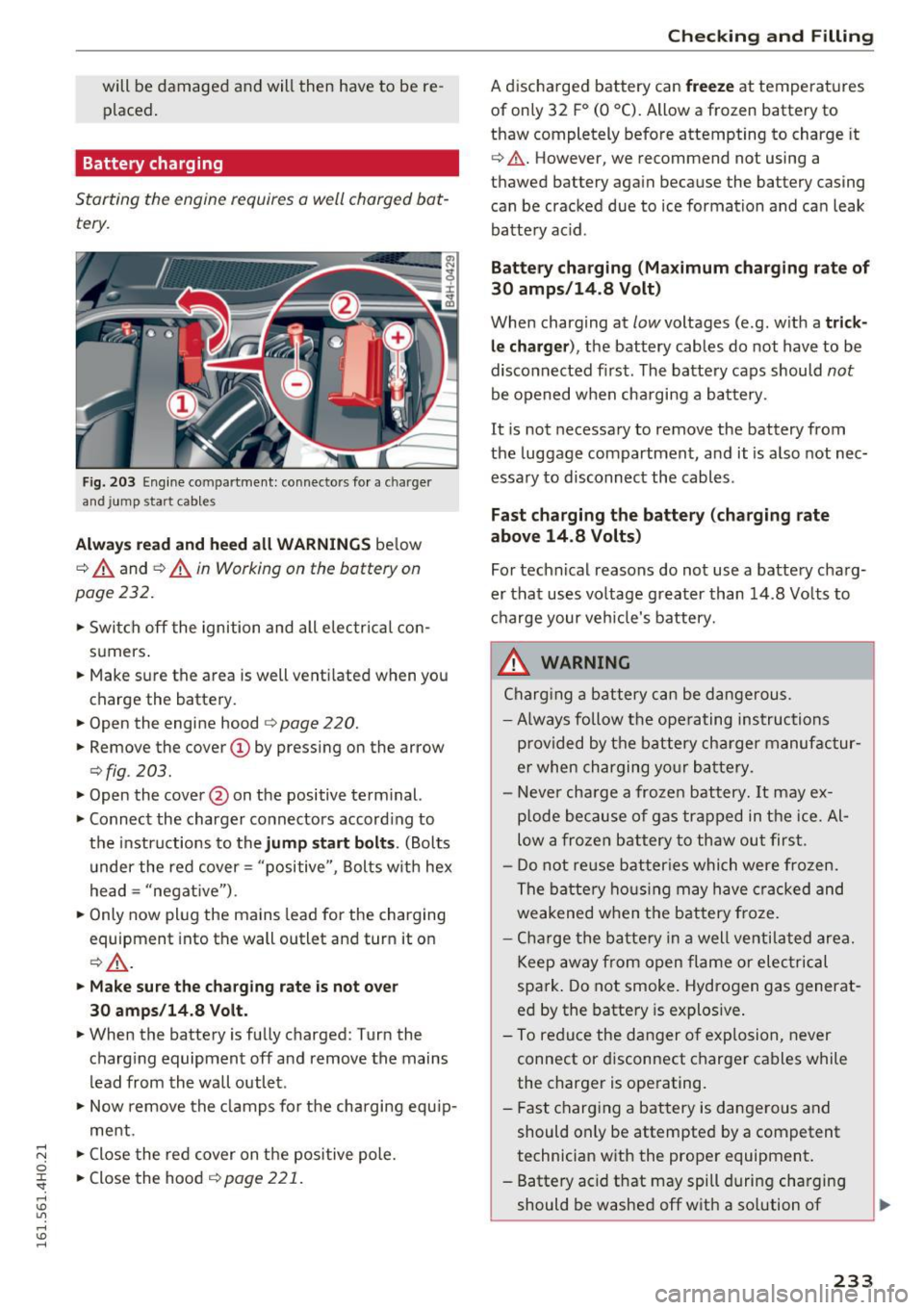
Fig. 203 Engine co mpa rtment: connectors fo r a c harger
and jump start cables
Always read and heed all WARNINGS below
~ &. and
¢ A in Working on the battery on
page 232.
• Switch off the ignition and all electrical con
sumers .
• Make sure the area is well ventilated when you
charge the battery.
• Open the engine hood
~ page 220.
• Remove the cover (D by pressing on the arrow
¢ fig . 203.
• Open the cover @on the positive terminal.
• Connect the charger connectors according to
the instructions to the
jump start bolts. (Bolts
under the red cover= "positive" , Bolts with hex
head
= "negat ive").
• Only now plug the mains lead for the charging
equipment into the wall outlet and turn it on
¢&,, .
• Make sure the charging rate is not over
30 amps/14.8 Volt.
• When the battery is fully charged: Turn the
charging equipment off and remove the mains
lead from the wall outlet .
• Now remove the clamps for the charging equip-
ment.
~ • Close the red cover on the positive pole. 0
~ • Close the hood~ page 221.
rl I.Cl U"I
rl I.Cl rl
Checking and Filling
A discharged battery can freeze at temperatures
of only 32 F
0 (0 °C). Allow a frozen battery to
thaw completely before attempting to charge it
¢ &. However , we recommend not using a
thawed battery again because the battery casing can be cracked due to ice formation and can leak
battery acid.
Battery charging (Maximum charging rate of
30 amps/14.8 Volt)
When charging at low voltages (e.g . w ith a trick
le charger),
the battery cables do not have to be
disconnected first. The battery caps should
not
be opened when charging a battery.
It is not necessary to remove the battery from
the luggage compartment, and it is also not nec
essary to disconnect the cables .
Fast charging the battery (charging rate
above 14.8 Volts)
For technical reasons do not use a battery charg
er that uses voltage greater than 14.8 Volts to
charge your vehicle's battery.
.&_ WARNING
Charging a battery can be dangerous.
- Always follow the operating instructions
provided by the battery charger manufactur
e r when charging your battery.
- Never charge a frozen battery. It may ex
p lode because of gas trapped in the ice. Al
low a frozen battery to thaw out first.
- Do not reuse batteries which were frozen.
The battery housing may have cracked and
weakened when the battery froze.
- Charge the battery in a well ventilated area.
Keep away from open flame or electrical
spark. Do not smoke. Hydrogen gas generat
ed by the battery is explosive.
- To reduce the danger of explosion, never
connect or disconnect charger cables while
the charger is operating.
- Fast charging a battery is dangerous and
should only be attempted by a competent
technician with the proper equipment.
- Battery acid that may spill during charging
should be washed off with a so lution of
233
Page 236 of 302
Check ing and F illing
warm water and baking soda to neutralize
the acid.
CD Note
Never use a fast charger as a booster to start
the engine . This will serious ly damage sensi
tive electronic components, such as control
units, relays, radio, etc., as well as the battery
charger.
Battery replacement
T he new battery must have the same specifica
t ions and dimensions as the original equipmen t
bat tery.
Int elli g ent en ergy managem ent in your vehicle is
responsible for distributing the electrical energy
throughout your vehicle
r=> page 195. The intelli
gent energy management system will keep the
engine battery charged better than veh icles w ith
out this system . To make sure the addit ional
e lectrical energy is avai lab le once again after you
have changed the battery, we recommend that
you install batteries of the same type and manu facture on ly (the same as those installed at the
time your vehicle was delivered). Specifications
are listed on the battery housing. Your author
i z ed dealer must code the battery in the energy
management system to enable you to use the en
ergy management functions correctly after re
placing the battery .
The new battery must have the same capacity,
voltage (12 volts) , amperage, construction and
plug sealing .
When installing the battery, make sure the igni
tion and all electrical consumers are sw itched
off.
CD Note
- Make sure the ventilation hose on the s ide
of the battery is connected, otherw ise
fumes or battery ac id can leak out.
- Vehicles with the Start-Stop-System* are equipped with a special cycle-proof AGM battery . Installing a d ifferent type of bat
tery can cause problems in the vehicle elec -
234
trical system. When replacing the vehicle
battery, always install one with the same
specifications as the original battery .
- Battery mounts and clamps m ust always be
secured correctly.
- Read and follow the warnings under
¢ page 231, Working on the battery before
performing any work on the battery .
@ For the sake of the environment
Because of the p roblem of proper disposal of
a battery, we recommend your authorized
A udi dealer change the battery for you . Bat
teries contain sulfur ic acid and lead and must
a lways be disposed of properly in compliance
with all environmental regulations . Disposing
of veh icle batteries improperly is very danger
ous to the environment .
Windshield washer
system
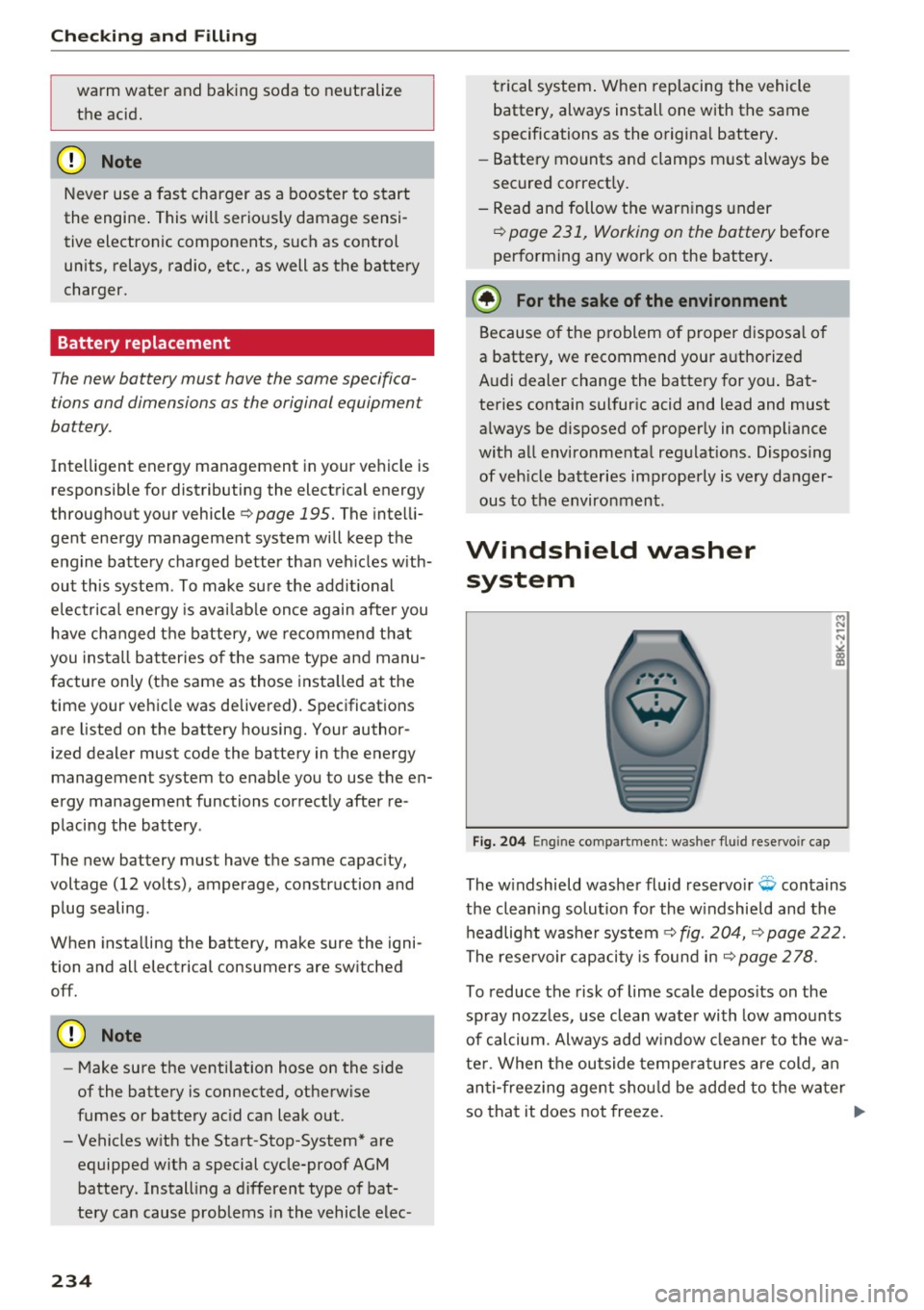
Fig. 204 En gin e compa rt ment: washer fluid rese rvoir cap
The w indshield washer fluid reservo ir Q conta ins
the cleaning solution for the w indshield and the
headlight washe r system ¢
fig. 204, ¢ page 222.
The reservoir capacity is found in
r=> page 2 78 .
To reduce the risk of lime scale depos its on the
spray nozzles, use clean water with low amounts
of calcium. Always add w indow cleaner to the wa
ter . When the outside temperat ures are cold , an
anti-freez ing agent shou ld be added to the water
so that it does not freeze. ..,.
Page 242 of 302
Wheels
(a) Curb weight
(b) Accessory weight
(c) Vehicle capacity weight, and
(d) Production options weight
Maximum (permissible )
inflation pressure
means the maximum cold infla
tion pressure to which a tire may be inflated. Also called "maxi
mum inflation pressure ."
Normal occupant weight
means 150 lbs . (68 kilograms)
times the number of occupants
seated in the vehicle up to the to
ta l seating capacity of your vehi
c le .
Occupant distribution
means distribut ion of occupan ts
in a vehic le .
Outer diameter
means the overall diamete r of an
inflated new tire.
Overall width
means the l inear distance be
tween the exter iors of the side
walls of an infla ted tire , including
elevations due to labeling , deco
rations, or protective bands or
r ibs.
2 4 0
Ply
means a layer of rubber -coated
pa rallel cords.
Production options weight
means t he comb ined we ight of
those insta lled regular production
options weighing over 5 lbs . (2 .3
kg) in excess of those standard
items which they replace , not pre
viously considered in curb weight or accessory weight, inc luding
heavy duty brakes, ride levelers,
roof rack, heavy duty battery, and
special trim.
Radial ply tire
means a pneumatic tire in which
the ply co rds that extend to the
beads are laid at subs tantially 90
deg rees to the centerline o f the
tread .
Recommended inflation
pressure
see~ page 239, Cold tire infla
tion pressure.
Reinforced tire
means a tire designed to operate
at highe r loads and at h igher in
flat ion pressures than t he corre
spond ing standa rd tire . R ein
forced tires may be identified as .,.
Page 273 of 302
Emergency situations
General
This chapter is intended for trained emergency
crews and working personnel who have the nec
essary tools and equipment to perform these
ope rations.
Starting by pushing or
towing
(D Note
Veh icles with an automatic transmission can
not be started by pushing or towing.
Starting with jumper
cables
If necessary, the engine can be started by con
necting it to the battery of another vehicle .
If the engine shou ld fail to start because of a dis
charged or weak battery, the battery can be con
nected to the battery of
another vehicle, using a
pair of jumpe r cables to start the engine.
Jumper cables
Use only jumper cables of suffic iently large cross
section
to carry the starter current safely. Refer
to the manufacturer's specifications.
Use only jumper cables with
insulated term inal
clamps which are dis tinct ly marked :
plus(+) cable in most cases colored re d
minus( -) cable
in most cases colored blac k.
A WARNING
Batteries contain electricity, acid, and gas.
Any of these can cause very serious or fatal in
jury. Follow the instructions below for safe
handling of your vehicle's battery.
- Always shield your eyes and avo id leaning
over the battery whenever poss ible.
- A discharged battery can freeze at tempera
tures just below 32 °F (0 °C) . Before con
necting a jumper cable, you must thaw the
Emergency situations
frozen battery completely, otherwise it
could explode .
- Do not allow battery acid to contact eyes or
skin. Flush any contacted area with water immediately.
- Improper use of a booster battery to start a
vehicle may cause an exp losion.
- Vehicle batteries generate exp losive gases.
Keep sparks, flame and lighted cigarettes
away from batteries.
- Do not try to jump start any vehicle with a
low acid level in the battery .
- The vo ltage of the booster battery must also
have a 12-Volt rating. The capacity (Ah) of
the booster battery should not be lower
than that of the discharged battery. Use of
batter ies of different voltage or substantial
ly different "Ah" rating may cause an exp lo
sion and personal injury .
- Never charge a frozen battery. Gas trapped
in the ice may cause an explosion.
- Never charge or use a battery that has been
frozen . The battery case may have be weak
ened .
- Use of batter ies of different voltage or sub
stantially different capacity (Ah) rating may
cause an exp losion and injury. The capac ity
(Ah) of the booster battery should not be
lowe r than that of the discharged battery.
- Before you check anything in the eng ine
compartment, always read and heed all
WARNINGS
r::!)page 220.
(D Note
-Applying a higher voltage booster battery
will cause expensive damage to sensitive
electronic components, such as control
units, relays, radio, etc.
- Th ere must be no electrical contact between
the vehicles as otherwise current could al
ready start to flow as soon as the positive
(+) terminals are connected.
(D Tips
- The discharged battery must be properly
connected to the vehicle's e lectrica l system. ..,.
271