steering AUDI TT 2013 Owner´s Manual
[x] Cancel search | Manufacturer: AUDI, Model Year: 2013, Model line: TT, Model: AUDI TT 2013Pages: 262, PDF Size: 65.91 MB
Page 86 of 262
84 Transmission
tiptronic operation
Applies to vehicles: with S tron ic
Tiptronic allows the driver to shift gears man
ually.
--
-
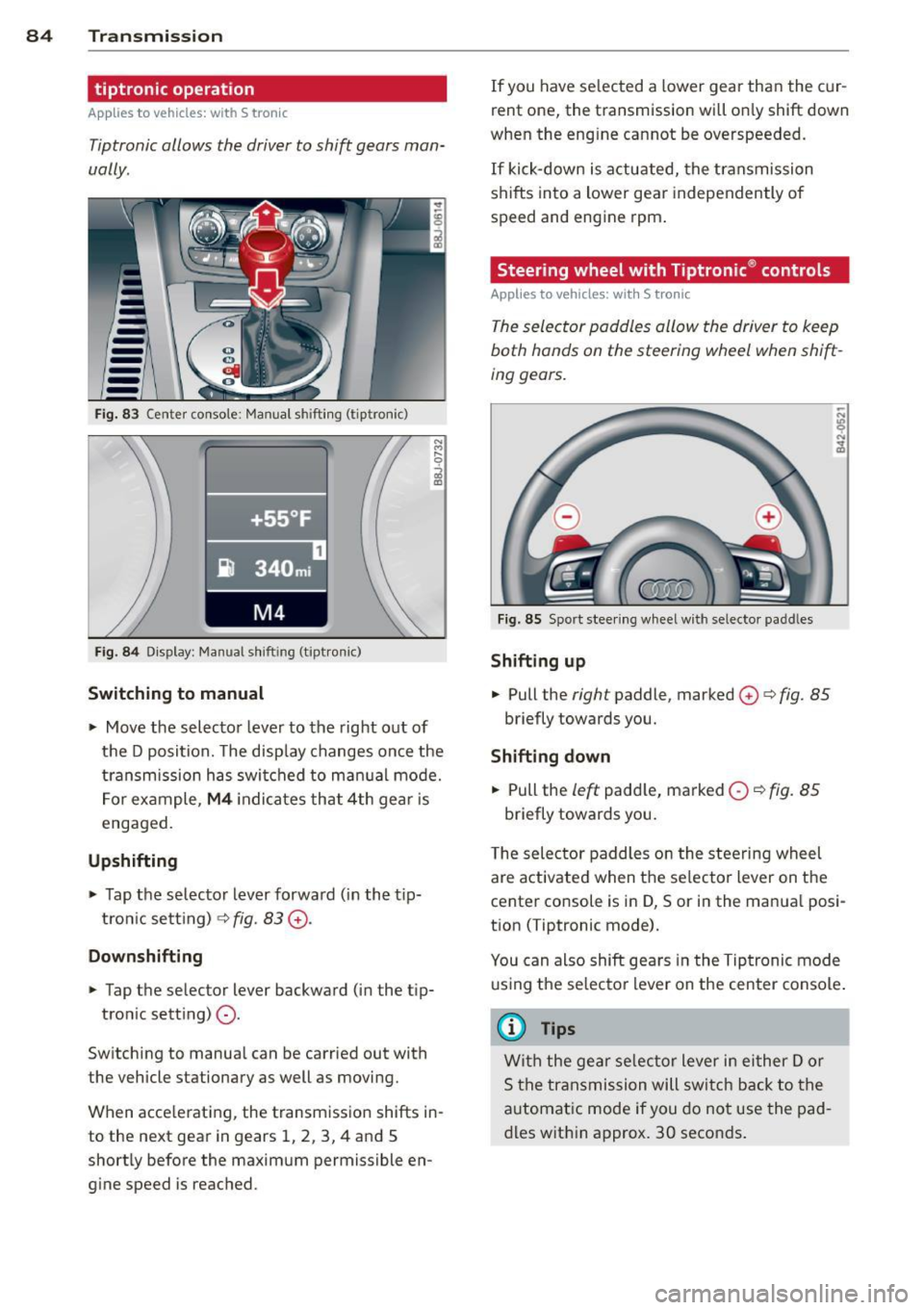
Fig. 83 Center conso le : Manual shift in g (tiptronic)
Fig . 84 Display : Manual sh ift ing (tipt ron ic)
Switching to manual
.,. Move the selector lever to the right out of
the D position. The disp lay changes once the
transmission has switched to manual mode.
For example,
M4 indicates that 4th gear is
engaged.
Upshifting
.,. Tap the selecto r lever forward (in the tip
tron ic setting)
¢ fig. 83 G).
Downshifting
.,. Tap the selector lever backward (in the t ip-
tron ic sett ing)
0-
Switching to manual can be carried out with
the vehicle stationary as well as moving.
When accelerat ing, the transmission shifts in
to the next gear in gears 1, 2, 3, 4 and 5
shortly before the maximum permissible en
gine speed is reached. If
you have selected a lower gear than the cur
rent one, the transmission will only shift down
when the eng ine cannot be overspeeded.
If kick-down is act uated, the transmission
shifts into a lower gear independently of
speed and engine rpm.
Steering wheel with Tiptronic ® controls
Applies to vehicles: with S tronic
The selector paddles allow the driver to keep
both hands on the steering wheel when shift
ing gears.
Fig . 85 Sport steering wheel with selecto r padd les
Shifting up
.,. Pull the right paddle, marked 0 ¢ fig. 85
briefly towards you .
Shifting down
.,. Pull the left padd le, marked 0 ~ fig. 85
briefly towards you.
T he selector paddles on the steering wheel
are activated when the se lecto r lever on the
center co nsole is in D, Sor in the manua l posi
tion (Tiptronic mode).
You can also shift gears in the Tiptronic mode
using the selector lever on the center console .
@ Tips
With the gear selector lever in either Dor
S the transmission will switch back to the
automatic mode if you do not use the pad
dles within approx. 30 seconds.
Page 92 of 262
90 Driving Safel y
Driving Safely
General notes
Safe driving habits
Please remember -safety first!
This chapter contains important information,
tips, instructions and warnings that you need
to read and observe for your own safety, the
safety of your passengers and others . We have
summarized here what you need to know
about safety belts, a irbags, ch ild restra ints as
well as child safety. Your safety is for us
priori
ty number 1.
Always observe the info rmat ion
and warn ings in th is sect ion -fo r yo ur own
safety as well as for that of your passengers.
The information in this se ction app lies to all
model ve rsions of your veh icle . Some of the
feat ures desc ribed in this sec tions may be
standard equipment on some models, or may
be optional equipment on others . If you are
not sure, ask your authorized Aud i dealer.
A WARNING
- Make certain that you follow the instruc
t ions and heed the WARNINGS in this
Manual. It is in your interest and in the
interest of your passengers .
- Always keep the complete Owner's Liter
ature in your Audi when you lend or sell
yo ur vehicle so that this important info r
mation will a lways be ava ilable to the
dr iver and passenge rs.
- Always keep the Owner's literature handy
so that you can find i t eas ily if you have
ques tions.
Safety equipment
The safety features are part of the occupant
restraint system and work together to help
redu ce the risk of injury in a wide variety of
accident situations.
Your safety and the safety of your passenge rs
should not be left to chance. Advances in
technology have made a varie ty o f fea tures
avai la bl e to he lp re duce the risk of injury in an accident
. The following is a lis ting o f just a
few of the safety features in your Audi:
- sophis tic ated s afety be lts fo r drive r and a ll
passenger sea ting pos it ions,
- safety belt pre-tensione rs,
- fro nt airbags,
- knee airbags for the front seats,
- side airbags in the front seats,
- LATCH anchorages for child restraints,
- ad justab le steering column .
T hese ind iv idual safety features can wor k to
ge ther as a sys tem to he lp p rotec t you and
you r passengers in a wide range of accidents.
These features cannot wo rk as a system if
they are not always p roper ly adjusted and
properly used!
Safet y is everyb ody's re spon sibilit y!
Important things to do before driving
Safety is everybody's job! Vehicle and occu
pant safety always depends on the informed and careful driver.
For yo ur safety and the safety of you r passen
gers,
befor e driving alwa ys:
"' Make su re that all lig hts and signa ls a re op
erati ng correctly .
"' Ma ke s ure that the ti re p ressu re is co rrec t.
"' Mak e s ure th at all windows are clean and
afford good v is ibility to the o utside .
"' Secu re a ll luggage and other items caref ully
I:!) page 64.
"' Make s ure that nothing can interfere with
the pedals.
"' Adjust front seat, head restraint and mir
rors co rrectly for your height .
"' Instruct passenge rs to adjust the head re
st raints accord ing to the ir height .
"' Ma ke s ure to use the r igh t child re straint
correc tly to protect c hildren¢
page 130,
Child Safety .
"' Sit properly in your seat and make s ure that
your passengers do the same
I:!) page 54,
General recommendations. .,_
Page 93 of 262
.. Fasten your safety belt and wear it properly.
Also instruct your passengers to fasten their
safety belts properly ¢
page 100.
What impairs driving safety?
Safe driving is directly related to the condi
tion of the vehicle, the driver as well as the
driver's ability to concentrate on the road
without being distracted.
The driver is responsible for the safety of the
veh icle and a ll of its occupants . If your ability
to drive is impaired, safety risks for everybody
in the vehicle increase and you also become a
hazard to everyone else on the road ¢
,&..
Therefore:
.. Do not let yourself be distracted by passen
gers or by us ing a cellular telephone.
.. NEVER drive when your driv ing ability is im
paired (by medicat ions, alcohol, drugs, etc .) .
.. Observe all traffic laws, rules of the road
and speed limits and plain common sense.
.. ALWAYS adjust your speed to road, traffic
and weather condit ions .
.. Take frequent breaks on long trips . Do not
drive for more than two hours at a stretch .
.. Do NOT drive when you are tired, under
pressure or when you are stressed.
A WARNING
Impaired driving safety increases the risk
of serious personal injury and death when
ever a vehicle is being used .
Driving Safely 91
Proper occupant
seating positions
Proper seating position for the driver
The proper driver seating position is impor
tant for safe, relaxed driving.
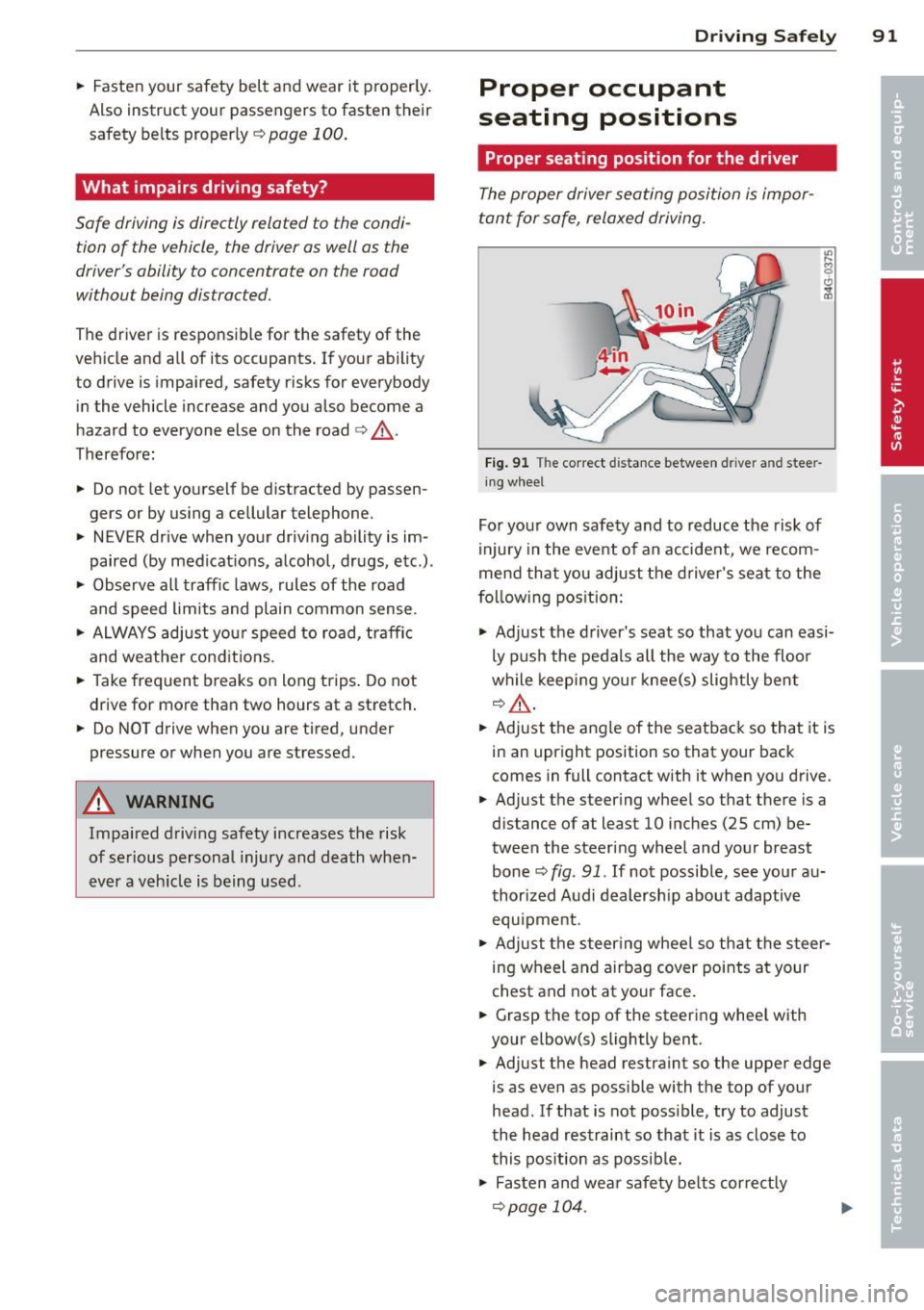
Fig. 91 The correct d istance between d river a nd stee r
in g whee l
For your own safety and to reduce the risk of
injury in the event of an accident, we recom
mend that you adjust the driver's seat to the
foll owing pos ition:
.,. Adjust the driver's seat so that you can easi
ly push the pedals all the way to the floor
while keeping your knee(s) slightly bent
q&_ ,
.. Adjust the angle of the seatback so that it is
in an upright position so that your back
comes in full contact with it when you drive.
.. Adjust the steering wheel so that there is a
distance of at least 10 inches (25 cm) be
tween the steering wheel and your breast
bone ¢
fig. 91. If not possible, see your au
thorized Audi dealership about adaptive
equ ipment .
.. Adjust the steer ing wheel so that the steer
ing wheel and airbag cover points at your
chest and not at your face .
.. Grasp the top of the steering wheel with
your elbow(s) slightly bent .
.. Adjust the head restraint so the upper edge
is as even as possible with the top of your
head . If that is not poss ible, try to adjust
the head restraint so that it is as close to
this position as possible .
.. Fasten and wear safety belts correctly
qpage 104.
Page 94 of 262
92 Driving Safely
• Always keep both feet in the footwell so
that you are in control of the vehicle at all
times.
For detailed information on how to adjust the
driver's seat, see
c::> page 55.
A WARNING
Drivers who are unbelted, out of position
or too close to the airbag can be seriously
injured by an airbag as it deploys. To help
reduce the risk of serious personal injury:
- Always adjust the driver's seat and the
steering wheel so that there are at least
10 inches (25 cm) between your breast
bone and the steering wheel.
- Always adjust the driver's seat and the
steering wheel so that there are at least
4 inches (10 cm) between the knees and
the lower part of the instrument panel.
- Always hold the steering wheel on the
outside of the steering wheel rim with
your hands at the 9 o'clock and 3 o'clock positions to help reduce the risk of per
sonal injury if the driver's airbag inflates.
- Never hold the steering wheel at the
12 o'clock position or with your hands at
other positions inside the steering wheel
rim or on the steering wheel hub. Hold
ing the steering wheel the wrong way
can cause serious injuries to the hands,
arms and head if the driver's airbag in
flates
- Pointing the steering wheel toward your
face decreases the ability of the supple
mental driver's airbag to protect you in a
collision.
- Always sit in an upright position and nev
er lean against or place any part of your
body too close to the area where the air
bags are located.
- Before driving, always adjust the front
seats and head restraints properly and
make sure that all passengers are prop
erly restrained.
- Never adjust the seats while the vehicle
is moving. Your seat may move unexpect- edly and you could lose control of the ve
hicle .
- Never drive with the backrest reclined or
tilted far back! The farther the backrests
are tilted back, the greater the risk of in
jury due to incorrect positioning of the safety belt and improper seating posi
tion .
- Children must always ride in child seats
c::> page 130. Special precautions apply
when installing a child seat on the front passenger seat¢
page 108.
Proper seating position for the front
passenger
The proper front passenger seating position
is important for safe, relaxed driving .
For your own safety and to reduce the risk of
injury in the event of an accident, we recom
mend that you adjust the seat for the front
passenger to the following position :
• Adjust the angle of the seatback so that it is
in an upright position and your back comes in full contact with it whenever the vehicle is
moving.
• Adjust the head restraint so that the upper
edge is as even with the top of your head as
possible but not lower than eye level and so
that it is as close to the back of your head as
possible
c::> page 94.
• Keep both feet flat on the floor in front of
the front passenger seat.
• Fasten and wear safety belts correctly
c::>page 104.
For detailed information on how to adjust the
front passenger's seat, see
c::> page 54 .
A WARNING
-
Front seat passengers who are unbelted,
out of position or too close to the airbag
can be seriously injured or killed by the air
bag as it unfolds. To help reduce the risk of
serious personal injury:
Page 104 of 262
102 Safet y belt s
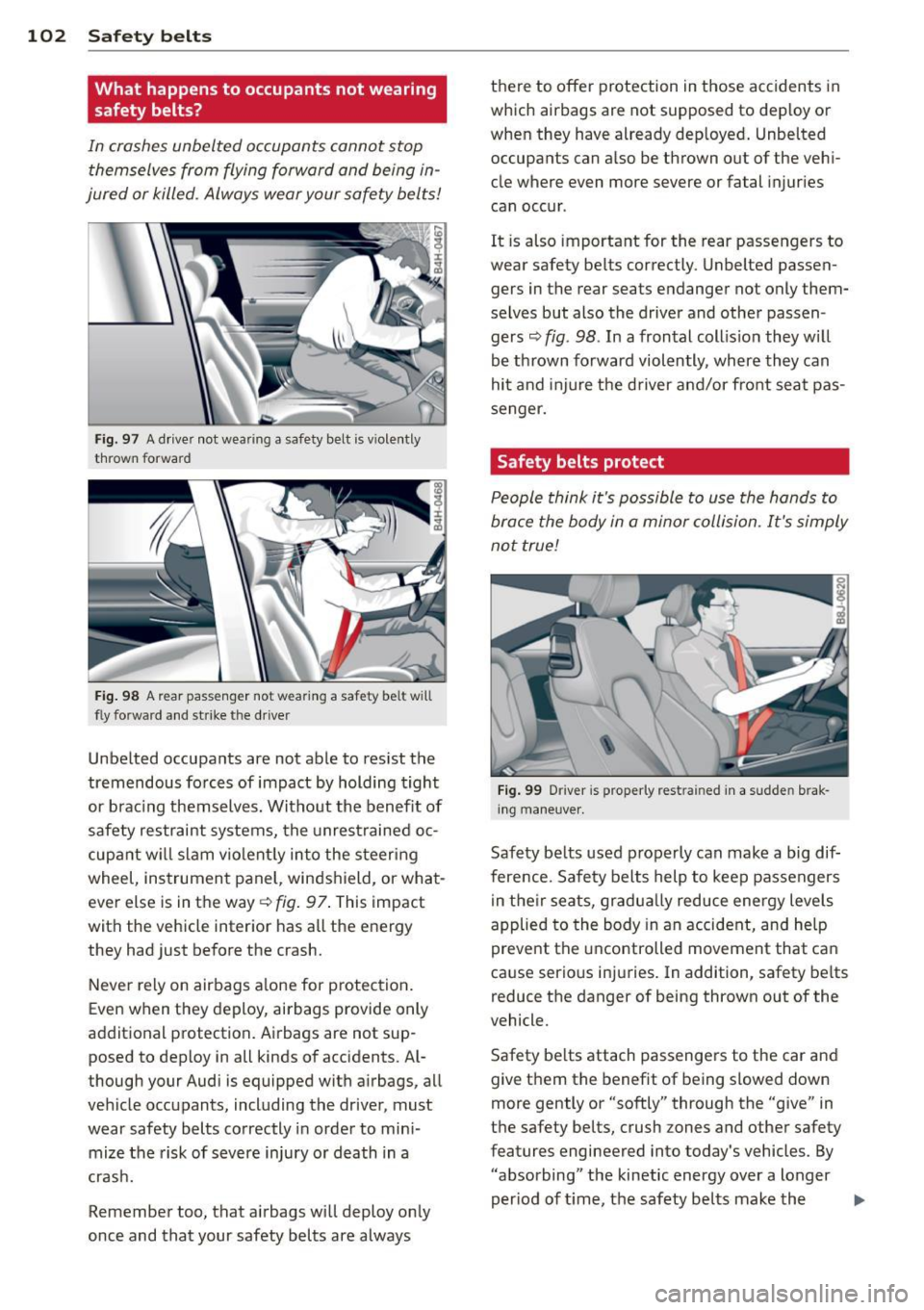
What happens to occupants not wearing
safety belts?
In crashes unbelted occupants cannot stop
themselves from flying forward and being in
jured or killed. Always wear your safety belts!
F ig . 97 A driver not wearing a safety belt is violently
thrown forward
F ig. 98 A rear passenger not wearing a safety belt will
fly forward a nd strike the d river
Unbelted occupants are not able to res ist the
tremendous fo rces of impact by holding tight
or brac ing thems elves. Without the benefit of
safety restraint systems, the unres trained o c
cupa nt w ill slam vio lent ly into the steering
wheel, instrument panel, winds hield, or what
ever else is in the way
q fig . 97 . This impact
with the vehicle interior has all the energy
they had just before the crash.
Neve r rely on airbags a lone for p rotection .
Even when they deploy, airbags provide only
addit ional protection . Airbags are not sup
posed to deploy in all kinds of accidents. Al
though your Audi is equipped with a irbags, all
vehicle occupants, including the driver, must
wear safety belts correctly in order to min i
mize the risk of severe inju ry or death in a
crash.
Remember too, that a irbags will deploy on ly
once and that your safety belts are always there to offe
r protection in those accidents in
which airbags are not supposed to dep loy or
when they have already dep loyed . Unbelted
occupa nts can also be thrown o ut of the ve hi
cle where even more severe or fatal injuries
can occur .
It is also important for the rear passengers to
wear safety belts correctly. Unbelted passen
gers in the rear seats endanger not only them
se lves but also the driver and othe r passen
gers¢
fig. 98 . In a frontal coll is ion they w ill
be th rown forward violently, where they can
hi t and i njur e the d river a nd/or fro nt sea t pas
senger.
Safety belts protect
People think it's possible to us e the hands to
brace the body in a minor collision. It 's simply
not true!
Fig. 9 9 Driver is proper ly restrained in a sudden brak
in g maneuve r.
Safety be lts used p roperly can make a big dif
fere nce. Safe ty belts help to keep passengers
in the ir seats, gradua lly reduce energy leve ls
applied to the body in an accident, and he lp
prevent the uncontrolled movement that ca n
ca use serio us inju ries . In addition, safety be lts
reduce the danger of being thrown out of the
vehicle.
S afety be lts attach passenge rs to the car and
give them the benefit of being slowed down
more gently or "softly" through the "give" in
the safety belts, crush zones and other safety
features engineered into today's vehicles. By
"absorbing" the kinetic energy over a longer
per iod of t i me, the safety be lts make th e
lilJJ,
Page 110 of 262
108 Airbag sys tem
Airbag system
Important things to know
Importance of wearing safety belts and
sitting properly
Airbags are only supplemental restraints. For
airbags to do their job , occupants must al
ways properly wear their safety belts and be
in a proper seating position.
F or your safety and the safety of your passen
gers, before driving off, a lways:
• Adjust the dr iver's seat and steering wheel
properly ¢
page 91,
• Adjust the front passenger's seat properly
r=:;page 55,
• Wear safety be lts properly r=; page 103,
• Always properly use the proper child re-
stra int to protect children¢
page 130.
In a collision airbags must inflate within the
blink of an eye and with considerable force .
The supplementa l airbags can cause injuries if
the dr iver or the front seat passenger are not
seated properly . Therefore in order to help the
a irbag to do its job, it is impo rtant, both as a
d river and as a passenge r to s it prope rly at all
times.
By keeping room between your body and the
steering wheel and the front of the passenge r
compa rtment, the airbag can inflate fully and
comp lete ly and provide supp lemental protec
tion in ce rtain frontal collisions
r=:; page 91,
Proper occupant seating positions .
For detai ls
on the operat ion of the seat adjustment con
trols ¢
page 55 and c:, page 56.
It's especially important that children a re
properly restrained ¢
page 130.
There is a lot that the driver and the passen
gers can and must do to help the individua l
safety features installed in your A udi work to
gether as a system.
P rope r seat ing pos ition is important so that
the front airbag on the drive r side can do its
job. If yo u have a physical impa irment or con- dition that prevents yo
u from sitting properly
o n the driver seat with the safety belt properly
fastened and reaching the peda ls, or if you
have concerns with regard to the function or
operation of the Advanced Airbag System,
please contact your author ized Audi dealer or
qualified workshop, o r call Audi Customer Re
lations at 1-800-822-2834 fo r poss ible modi
fica tions to your ve hicle.
When the airbag system dep loys, a gas gener
ator will f il l the a irbags, break open t he pad
ded cove rs, and inflate between t he steering
whee l and the dr ive r and be tween the instru
ment pane l and the fron t passenger. The a ir
bags will deflate immediately after dep loy
me nt so that the front occupants can see
t hr ough the windshie ld again witho ut inter
ruption .
All of th is takes p lace in the b link o f an eye, so
fast that many peop le don't even realize tha t
t h e airbags have deployed. The airbags a lso
inflate with a great dea l of force and nothing
shou ld be in their w ay when they deploy.
Front a irbags in combination with properly
wor n safety belts slow down and lim it the oc
cupant's forward movement . T ogether they
help to prevent the drive r and front seat pas
senger from hitti ng pa rts of the inside the ve
hicle while reducing the forces acting on the
occupant dur ing the crash . In this way they
help to reduce the risk of injury to the head
and upper body in the crash. A irbags do not
protect the arms or the lower parts of the
body.
Both front airbags wi ll not inflate in all fronta l
collisions . The triggering of the airbag system
depends on the vehicle dece lerat ion rate
caused by the co llision and registered by the
electron ic control unit. If th is rate is below
the reference value programmed into the con
t rol unit , the airbags will not be trigge red,
even though the car may be badly damaged as
a res ult of the co llision . Ve hicl e damage, re
pair costs o r even the lack of ve hicle damage
is not necessari ly an indication of whether an
airbag shou ld inflate or not .
IJll-
Page 111 of 262
It is not possible to define a range of vehicle
speeds that will cover every possible kind and
angle of impact that will always trigger the
airbags, since the circumstances will vary con
siderably between one collision and another.
Important factors include, for example, the nature (hard or soft) of the object which the
car hits, the angle of impact, vehicle speed ,
etc. The front airbags will also not inflate in
side or rear collisions, or in roll-overs .
Always remember: Airbags will deploy only
once, and only in certain kinds of collisions.
Your safety belts are always there to offer pro
tection in those situations in which airbags
are not supposed to deploy , or when they have
already deployed ; for example , when your ve
hicle strikes or is struck by another after the
first collision.
This is just one of the reasons why an airbag is
a supplementary restraint and is not a substi
tute for a safety belt. The airbag system
works most effectively when used with the
safety belts. Therefore, always properly wear
your safety belts
c::;, page 100 .
A WARNING
Sitting too close to the steering wheel or
instrument panel will decrease the effec
tiveness of the airbags and will increase
the risk of personal injury in a collision.
- Never sit closer than 10 inches (25 cm)
to the steering wheel or instrument pan
el.
- If you cannot sit more than 10 inches
(25 cm) from the steering wheel, investi
gate whether adaptive equipment may
be available to held you reach the pedals
and increase your seating distance from
the steering wheel.
- If you are unrestrained, leaning forward,
sitting sideways or out of position in any
way, your risk of injury is much higher.
- You will also receive serious injuries and could even be killed if you are up against
the airbag or too close to it when it in
flates -even with an Advanced Airbag.
Airbag system 109
-To reduce the risk of injury when an air
bag inflates, always wear safety belts
properly
c::;, page 104, Safety belts.
- Always make certain that children age 12
or younger always ride in the rear seat. If
children are not properly restrained, they
may be severely injured or killed when an
airbag inflates .
- Never let children ride unrestrained or
improperly restrained in the vehicle. Ad
just the front seats properly .
- Never ride with the backrest reclined .
- Always sit as far as possible from the
steering wheel or the instrument panel
c::;, page 91, Proper occupant seating po
sitions .
- Always sit upright with your back against
the backrest of your seat.
- Never place your feet on the instrument
panel or on the seat. Always keep both
feet on the floor in front of the seat to help prevent serious injuries to the legs
and hips if the airbag inflates.
-Never recline the front passenger's seat
to transport objects. Items can also
move into the area of the side airbag or
the front airbag during braking or in a
sudden maneuver. Objects near the air bags can become projectiles and cause
injury when an airbag inflates .
A WARNING
Airbags that have deployed in a crash must
be replaced.
- Use only original equipment airbags ap
proved by Audi and installed by a trained
technician who has the necessary tools
and diagnostic equipment to properly re
place any airbag in your vehicle and as
sure system effectiveness in a crash .
- Never permit salvaged or recycled air bags to be installed in your vehicle. •
•
Page 114 of 262
112 Airbag system
-An improperly installed child restraint
can interfere with the airbag as it de
ploys and seriously injure or even kill the
child -even with an Advanced Airbag
System .
- Always carefully follow the manufactur
er's instructions provided with the child
safety seat or carrier.
- Never place additional items on the seat
that can increase the total weight regis tered by the weight-sensing mat and can
cause i njury in a crash .
Front airbags
Description of front airbags
The airbag system con provide supplemental
protection to properly restrained front seat
occupants.
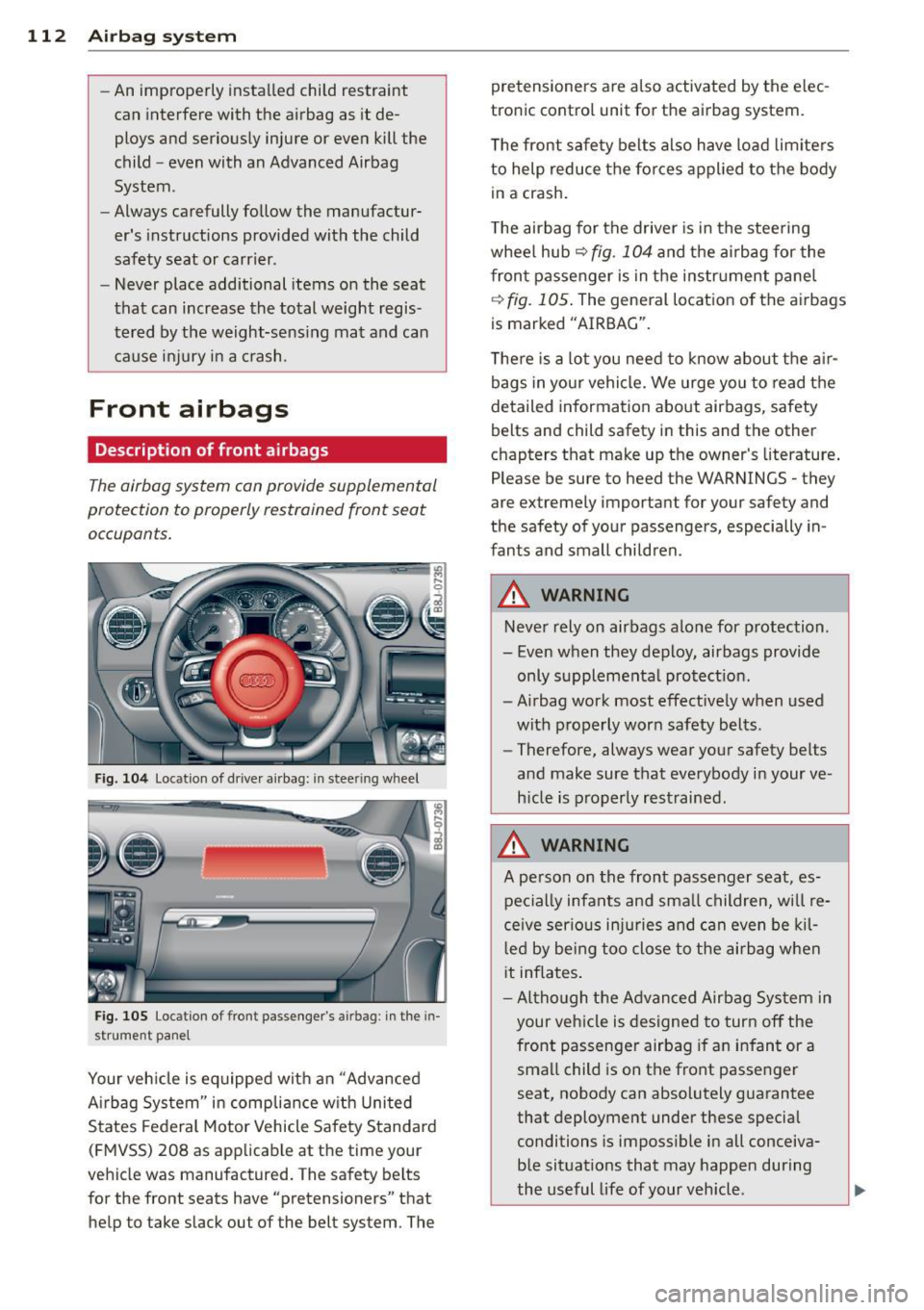
Fig. 104 Location of driver airbag: in stee ring wheel
Fig. 105 Location of front passenger's air bag : in the in
st rume nt panel
Your veh icle is equipped with an "Advanced
A irbag System" in compliance w ith United
States Federal Motor Vehicle Safety Standa rd
(FMVSS) 208 as applicab le at the time your
vehicle was manufactured. The safety belts
for the front seats have "pretensioners" that
help to take slack out of the belt system. The pretensioners are a
lso activated by the e lec
tronic contro l unit for the airbag system.
T he front safety belts also have lo ad lim ite rs
to help reduce the fo rces applied to the body
in a crash .
T he airbag for the d river is in the steering
wheel hub~
fig. 104 and the ai rbag for the
fron t passenger is in the instrument panel
~ fig. 105 . The general locat ion of the ai rbags
is marked "AIRBAG".
T he re is a lot you need to know about t he a ir
bags in you r vehicle. We urge yo u to read the
detailed information abo ut airbags, safety
belts and child safety in this and the other
chapters that make up the owner's literature .
P lease be sure to heed the WARNINGS - they
are extremely important for your safety and
the safety of your passengers, especially in
fants and small children .
A WARNING
Never rely on airbags alo ne for protection .
- Even when they deploy, airbags provide
only supplemental protect ion.
- Airbag work most effective ly when used
with properly worn safety belts.
- Therefore, always wear your safety belts
a nd make sure that eve rybody in your ve
h icle is p roperly rest rained.
A WARNING
A person on the front passenger seat, es
pec ially infants and sma ll children, w ill re
ceive serio us injuries and can even be kil-
l ed by be ing too close to the ai rbag when
i t inflates .
- Al tho ugh the Advanced Airbag System in
your veh icle is designed to tur n
off the
front passenge r airbag if an infant or a
small child is on the front passenger
seat, nobody can absolutely guarantee
that deployment under these special
conditions is impossible in all conceiva
b le situat ions that may happen during
-
the useful life of your vehicle . ~
Page 115 of 262
-The Advanced Airbag System can deploy
in accordance with the "low risk" option
under the U .S . Federal Standard if a child
that is heavier than the typical one-year
old child is on the front passenger seat
and the other conditions for airbag de
ployment are met .
-Accident statistics have shown that chil
dren are generally safer in the rear seat
area than in the front seating position.
- For their own safety, all children, espe
cially 12 years and younger, should al
ways ride in the back properly restrained
for their age and size.
Advanced front airbag system
Your vehicle is equipped with a front Advanced
Airbag System in compliance with United
States Federal Motor Vehicle Safety Standard
208 as applicable at the time your vehicle was
manufac tured.
The front Advanced Airbag System supple ments the safety belts to provide additional
protection for the driver's and front passeng
er's head s and upper bodies in frontal crashes.
T he airbags inflate only in frontal impacts
when the vehicle deceleration is high enough.
T he front Advanced Airbag System for the
front seat occupants is not a substitute for
your safety belts . Rather, it is part of the over
all occupant restraint system in your vehicle.
Always remember that the airbag system can
only help to protect you, if you are sitting up
right , wearing your safety belt and wearing it
properly . This is why you and your passengers
must always be properly restrained, not just
because the law requires you to be.
The Advanced Airbag System in your vehicle has been certified to meet the "low risk" re
quirements for 3 and 6 year-old children on
the passenger side and very small adults on
the driver side. The low risk deployment crite
ria are intended to help reduce the risk of in
jury through interaction with the front airbag that can occur, for example, by being too
Airbag system 113
close to the steering wheel and instrument
panel when the airbag inflates.
In addition, the system has been certified to
comply with the "suppression" requirements
of the Safety Standard, to turn off the front
airbag for infants 12 months old and younger
who are restrained on the front passenger
seat in child restraints that are listed in the
Standard ¢
page 132 , Child restraints and
Advanced Airbags .
"Suppression" requires the front airbag on the
passenger side to be turned off if:
- a child up to about one year of age is re
strained on the front passenger seat in one
of the rear-facing or forward-facing infant restraints listed in Federal Motor Vehicle
Safety Standard 208 with which the Ad
vanced Airbag System in your vehicle was
certified . For a listing of the child restraints
that were used to certify your vehicle's com pliance with the US Safety Standard
¢page 132,
-weight less than a threshold level stored in
the control unit is detected on the front pas
senger seat.
When a person is detected on the front pas senger seat, weighing more than the total
weight of a child that is about 1 year old re
strained in one of the rear-facing or forward
facing infant restraints (listed in Federal Mo
tor Vehicle Safety Standard 208 with which
the Advanced Airbag System in your vehicle
was certified), the front airbag on the passen ger side may or may not deploy.
The
PASSENGER AIR BAG OFF light comes on
when the electronic control unit detects a to
tal weight on the front passenger seat that re
quires the front airbag to be turned off. If the
PASSENGER AIR BAG OFF light does not
come on, the front airbag on the passenger
side has not been turned off by the control unit and can deploy if the control unit senses
an impact that meets the conditions stored in
its memory.
If the total weight on the front passenger
seat is more than that of a typical 1 year-old , ..,. •
•
Page 117 of 262
-Never put the forward-facing child re
straint up against or very near the instru
ment panel.
- Always move the passenger seat into its
rearmost position in the seat's fore and
aft adjustment range, as far away from
the airbag as possible, before installing
the forward-facing child restraint . The
backrest must be adjusted to an upright
position.
- Make sure that the
PASSENGER AIR BAG
OFF
light comes on and stays on all the
time whenever the ignition is switched
on.
Advanced Airbag System components
The front passenger seat in your vehicle has a
lo t of very important parts of the Advanced
Airbag System in it. These parts include the
weight-sens ing mat, sensors, wiring, brack
ets, and more. The function of the system in
the front passenger seat is checked by the
electronic control unit when the ignition is on.
The control unit monitors the Advanced Air
bag System and turns the airbag indicator
light on when a malfunction in the system
components is detected. The function of the
airbag indicator light is described in greater
detail below. Because the front passenger
seat contains important parts of the Ad
vanced Airbag System, you must take care to
prevent it from being damaged. Damage to
the seat may prevent the Advanced Airbag for
the front passenger seat from doing its job in
a crash .
The front Advanced Airbag System
consists of the following:
- Crash sensors in the front of the vehicle that
measure vehicle acceleration/deceleration
to provide information to the Advanced Air
bag System about the severity of the crash.
-An electronic control unit, with integrated
crash sensors for front and side impacts .
The control unit "decides" whether to fire
the front airbags based on the information
r eceived from the crash sensors. The control
Airbag system 115
unit also "decides" whether the safety belt
pretensioners should be activated.
- An Advanced Airbag with gas generator for
the driver inside the steering wheel hub.
- An Advanced Airbag with gas generator in
side the instrument panel for the front pas
senger.
- A weight-sensing mat under the upholstery
padding of the front passenger seat cushion
that measures the total weight on the seat.
The inform ation registered is sent continu
ously to the electronic control unit to regu
late deployment of the front Advanced Air
bag on the passenger side.
- An airbag monitoring system and indicator
light in the instrument cluster
c:;. page 119.
-The PASSENGER AIR BAG OFF light comes
on and stays on in the center of the instru
ment panel
c:;. page 119, fig. 107 and tells
you when the front Advanced Airbag on the
passenger side has been turned off.
- A sensor below the safety belt latch for the
front seat passenger to measure the tension
on the safety belt. The tension on the safety
belt and the weight registered by the
weight-sensing mat help the control unit
"decide" whether the front airbag for the
front passenger seat should be turned off or
not
c:;. page 110, Child restraints on the
front seat -some important things to
know.
- A sensor in the safety belt latch for the driv
er and for the front seat passenger that
senses whether that safety belt is latched or
not and transmits this information to the
electronic control unit .
.&_ WARNING
Damage to the front passenger seat can
prevent the front airbag from working
properly.
- Improper repair or disassembly of the
front passenger and driver seat will pre
vent the Advanced Airbag System from
functioning properly.
- Repairs to the front passenger seat must
be performed by qualified and properly
-
trained workshop personnel. 111>
•
•