height AUDI TT 2013 Owner´s Manual
[x] Cancel search | Manufacturer: AUDI, Model Year: 2013, Model line: TT, Model: AUDI TT 2013Pages: 262, PDF Size: 65.91 MB
Page 56 of 262

54 Seat s a nd s tor ag e
Seats and storage
General recommen
dations
Why is your seat adjustment so
important?
The safety belts and the airbag system can
only provide maximum protection if the front
seats are correctly adjusted.
There are various ways of adjust ing the front
seats to provide safe and comfortable support
for the driver and the front passenger . Adjust
your seat properly so that :
- you can easily and quick ly reach all the
switches and controls in the instrument
panel
-your body is prope rly supported thus reduc
ing physical stress and fatigue
- the safety be lts and airbag system can offer
maximum protection
¢ page 108 .
In the following sec tions, you will see exactly
how you can best adjust you r seats .
There are special regulations and instructions
for insta lling a child safety seat on the front
passenger's seat. Always heed the informa
tion rega rd ing child safety provided in
~ page 130, Child Safety.
A WARNING
Incorrect seating position of the driver and
all other passengers can result in serious
personal in jury.
- Always keep your feet on the floor when
the vehicle is in motion -never p ut your
feet on top of the instrument panel, out
of the w indow or on top of the seat cush
ion! This applies espec ially to the passen
gers .
If your seating position is incorrect
yo u increase the r isk of injury in the case
of sudden braking or an acc ident.
If the
airbag infla tes and the seating position
is incorrect this could result in personal
injury or even death.
- It is import ant for bo th the driver and
front passenger to keep a distance of at least 10 inches (25 cm) between them
selves and the steering wheel and/or in
strument panel. If you're s itting any
closer than th is, the a irbag system can
not protect you properly . In addition to
this, the front seats and head restra ints
must be adjusted to your body height so
that they can give you max imum protec
tion.
- Always try to keep as much distance as
possible between yourself and the s teer
ing wheel or instrument pane l.
- Do not adjust the driver's o r fron t pa s
senger's seat whi le the vehicle is moving.
Your seat may move unexpected ly, caus
ing sudden loss of vehicle contro l and
personal injury . If you ad just yo ur seat
while the veh icle is moving, you are out
of posit ion.
Driver's seat
The correct seat position is important for safe
and relaxed driving.
We recommend that you adjust the driver's
seat in the fo llowing manner:
.,. Adjust the seat in fore and aft direction so
t ha t you can easily p ush the peda ls to the
floor wh ile keeping your knee slightly bent
~ A in Why is your seat adjustment so im
portant? on page 54 .
.,. Adjust the seatback so that when you sit
w ith your back against the seatback, you can
still grasp the top of the steering wheel.
.,. Posit ion the head restraint accord ing to the
occupant 's height~
page 57 . For maxi
mum protection, t he top of the head re
s t raint shou ld be a t least at eye level, pref
erably higher and idea lly level with the top
of the head
¢ page 94, fig. 92.
A WARNING "--
Never place any objects in the dr iver's foot-
well. An object could get into the pedal
area and interfere with pedal function. In
case of sudden braking or an acc ident, you
would not be able to brake or accelerate!
Page 57 of 262
Front passenger's seat
Always move the front passenger seat into the rearmost position .
To avoid contact with the airbag while it is de
ploying, do not sit any closer to the instru
ment panel than necessary and always wear
the three-point safety belt provided adjusted
correctly . We recommend that you adjust the
passenger's seat in the following manner:
.. Bring the backrest up to an (almost) upright
pos it ion .
Do not ride with the seat reclined .
.. The idea l posit ion for the head restraint is
with the upper edge of the restraint level
with the top of your head
¢ page 5 7. You
shou ld
not lower the top of the restraint be
low the level of your eyes .
.. Place your feet on the floor in front of the
passenger's seat.
Adjusting front seats manually
Adjustment controls
Applies to vehicles: with manual seat adjustme nt
Various controls on the manual seats provide
a wide range for individual adjustments.
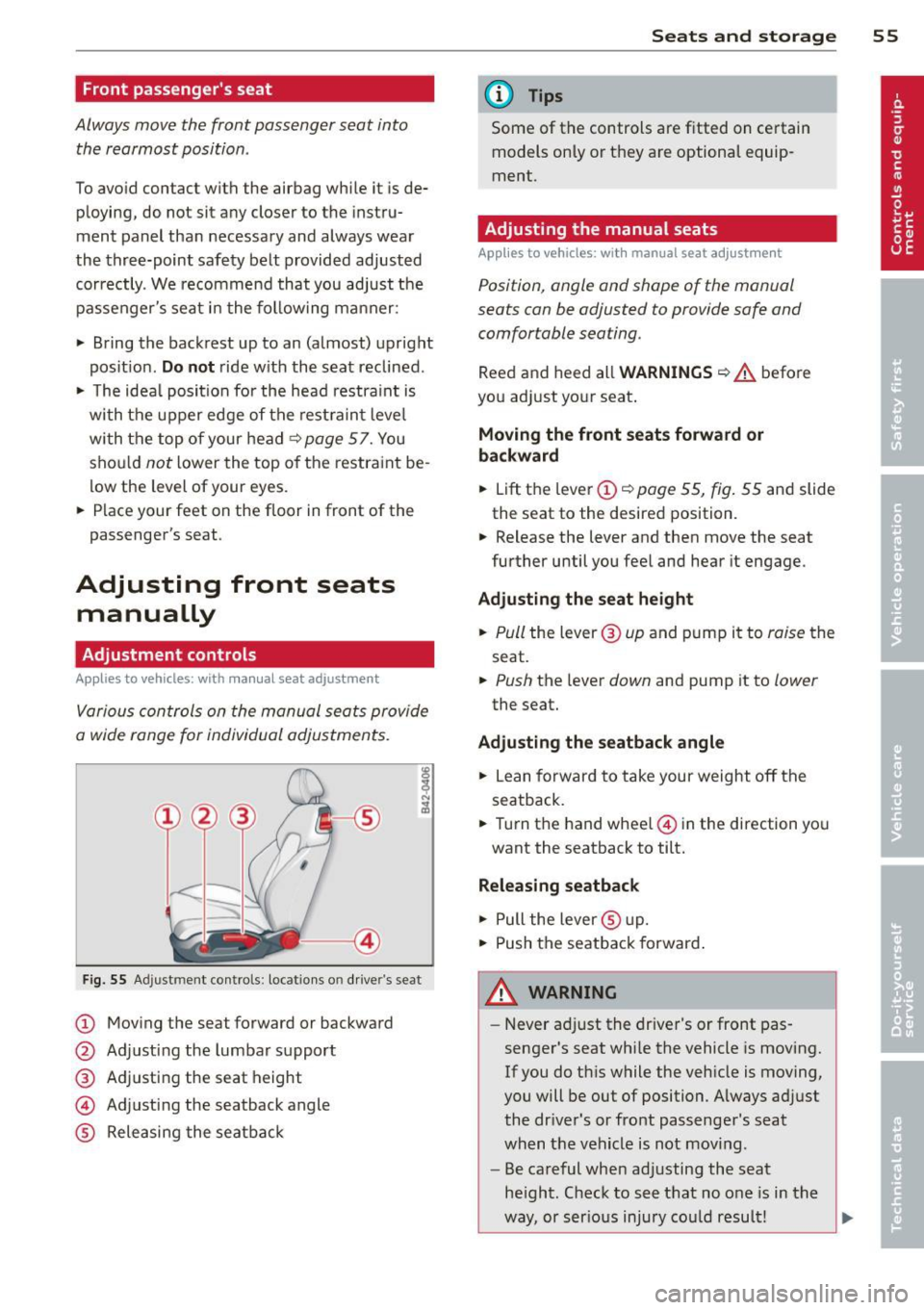
Fig. S5 Ad just men t contro ls : locat ions o n drive r's seat
CD Moving the seat forward or backward
@ Adjusting the lumbar support
@ Adjusting the seat height
@ Adjusting the seatback angle
® Releasing the seatback
Seats and storage 55
@ Tips
Some of the controls are fitted on certain
models only or they are optional equip
ment .
Adjusting the manual seats
Applies to vehicles: with manual seat adjustment
Position, angle and shape of the manual
seats can be adjusted to provide safe and
comfortable seating .
Reed and heed all WARNINGS ¢.&. before
you adjust your seat .
Moving the front seats forward or
backward
.. Lift the lever CD¢ page 55, fig. 55 and slide
the seat to the desired position.
.. Release the lever and then move the seat
further until you feel and hear it engage.
Adjusting the seat height
.. Pull the lever ® up and pump it to raise the
seat .
.. Push the lever down and pump it to lower
the seat.
Adjusting the seatback angle
.. Lean forward to take your weight off the
seatback .
.. Turn the hand wheel@ in the direction you
want the seatback to tilt.
Releasing seatback
.. Pull the lever ® up .
.. Push the seatback forward.
WARNING
-Never adjust the driver's or front pas
senger's seat while the vehicle is moving.
If you do this while the vehicle is moving,
you will be out of position. Always adjust
the dr iver's or front passenger's seat
when the vehicle is not moving .
- Be careful when adjusting the seat
he ight. Check to see that no one is in the
way, or serious injury cou ld result!
Page 58 of 262
56 Seats and storage
- To reduce the r isk of injury in the case of
sudden braking or accident, front pas
sengers must never ride in
a moving ve
hicle with the seatback recl ined . Safety
belts and the airbag system only offer
maximum protection whe n the seatback
is up right and the safe ty belts a re p rop
erly posi tioned on the body. The more
the seatback is re clin ed, the greate r the
risk of personal injury from an incorrect
seating posit ion and improperly posi
t ioned safety be lts!
Power seats
Adjustment switches
App lies to vehicles: with power seats
The operating logic for the switches corre
sponds to the construction and function of
the seat.
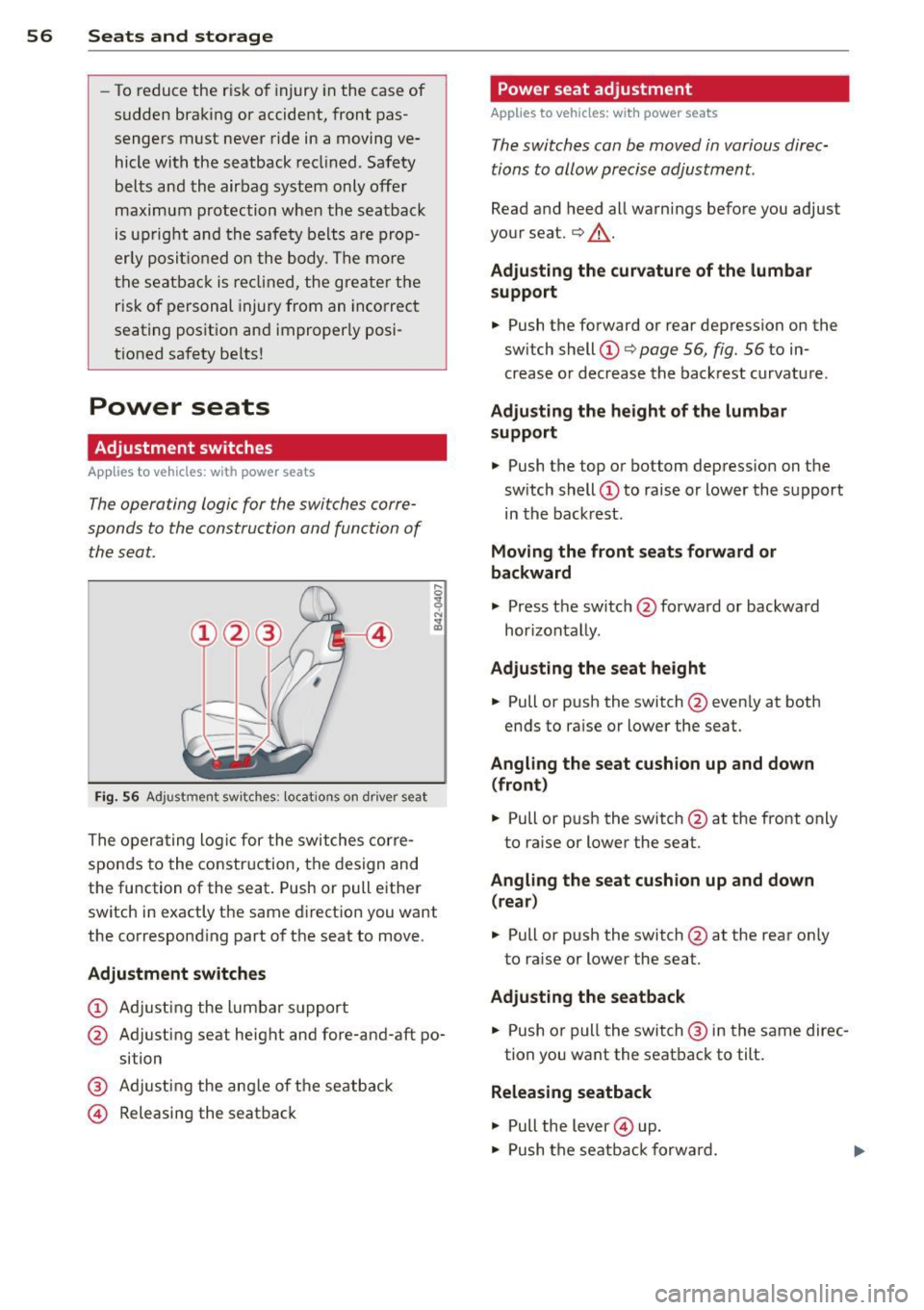
Fi g. 56 Adjust ment sw itches : locat io ns on driver seat
The operating logic for the switches corre
sponds to the constr uction, the design and
the function of the seat . Push or pull e ither
switch in exactly the same d irect ion you want
the corresponding part of the seat to move.
Adjustment switches
CD Adjusting the lumbar s upport
@ Adjusting seat height and fore-and-aft po
sition
@ Adjusting the ang le of the seatback
@ Releasing the seatback
Power seat adjustment
Applies to vehicles: with power seats
The switches can be moved in various direc
tions to allow precise adjustment.
Read and heed all warnings before you adjust
your seat.¢ &.
Adju sting the curv atur e of the lumbar
support
.,._ Push the forward or rear depression on the
sw itch shell CD¢
page 56, fig. 56 to in
crease or decrease the back rest curvature.
Adju sting the he ight of the lumbar
support
.,._ Push the top or bottom depress ion on the
sw itch shell (!) to raise or lower the support
in the back rest .
Mo ving the front se ats forward or
ba ckward
.,._ Press the switch @forward or backward
hor izontally.
Ad ju sting the seat height
.,._ Pull or push the switch @even ly at both
ends to ra ise or lower the seat.
Angling the seat cu shion up and down
(front )
.,._ Pull or push the switch @at the front only
to raise or lower the seat .
Angling the seat cushion up and down
( rear)
.,._ Pull or push the switch @at the rear on ly
to ra ise or lower the seat.
Ad ju sting the seatback
.,._ Push or pull the switch @ in the same direc-
tion you want the seatback to tilt .
Releasing seatback
.,. Pull the lever@ up .
.,. Push the seatback forward.
Page 59 of 262
A WARNING
-Never adjust the driver's or front passen
ger seat while the vehicle is moving. If
you do this while the vehicle is moving,
you will be out of posit ion. Always adjust
the driver's or front passenger seat when
the vehicle is not moving.
- Be careful when adjusting the seat
height. Check to see that no one is in the
way, or serious injury could result!
- Beca use the seats can be electrically ad
justed wi th the ign it ion key removed,
never leave children unattended in the
vehicle. Unsupervised use of the e lectric
seat adj ustments may cause serious in
jury.
- To reduce the r isk of injury in the case of
sudden braking or accident, front pas
sengers must never ride in a moving ve hicle with the seatback recl ined. Safety
belts and the airbag system offer maxi
mum p rotection only when the seatback
is upright and the safety be lts a re prop
erly posit ioned on the body. The more
the seatback is recl ined, the greate r the
risk of personal injury from an inco rrec t
seating position and improperly posi
t ioned safety be lts!
- Always make sure the front seatbac ks are
in the upright position and securely
locked in place when driving.
S ea ts a nd s to rage 57
Head restraints
Adjusting head restraints, front seats
The head restraints must be adjusted proper
ly to provide protection.
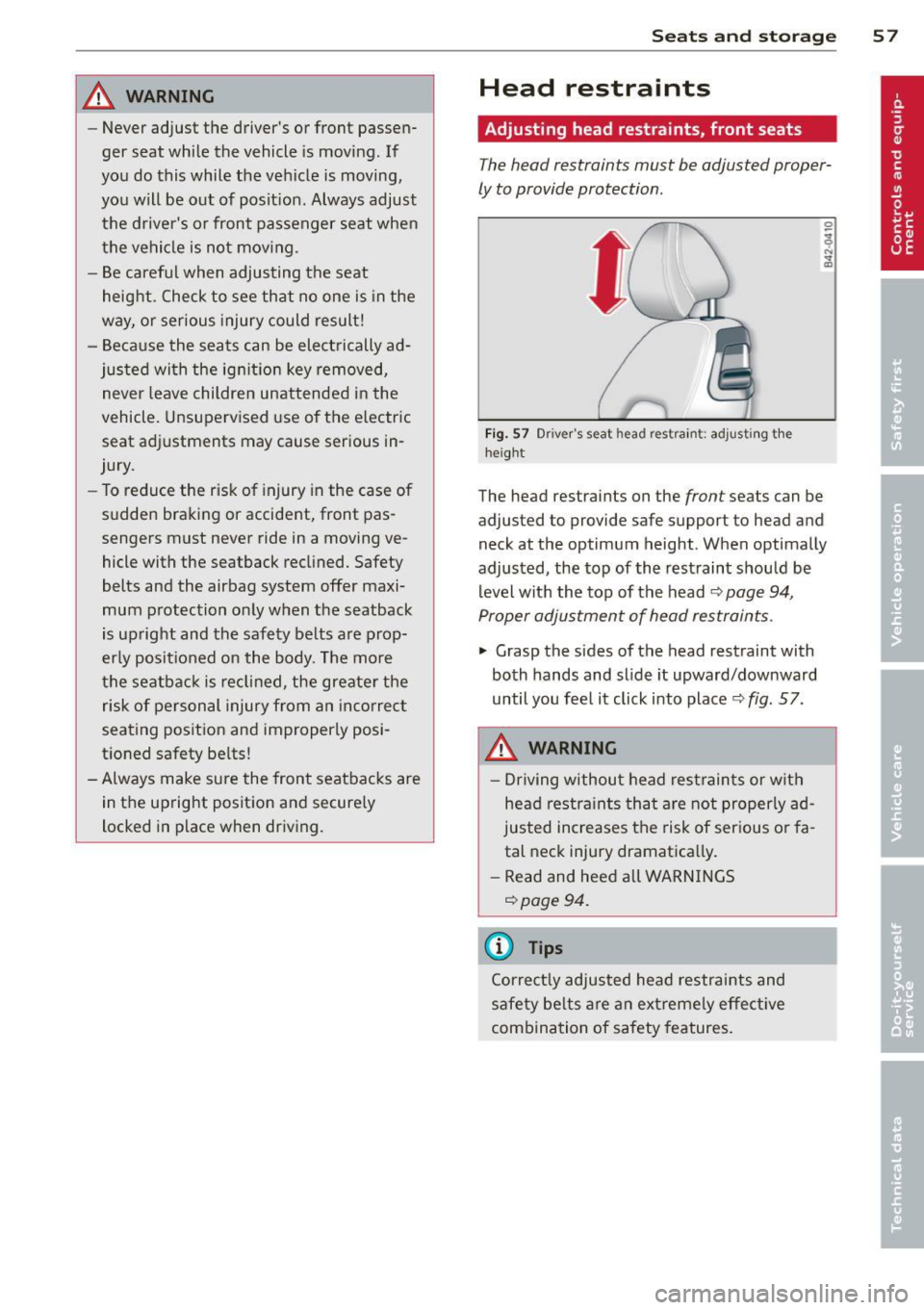
Fi g. 57 Driver's seat head restra int: adjust ing the
he ig ht
The head restraints on the front seats can be
adjusted to provide safe support to head and
neck at the optimum height . When optimally
adjusted , the top of the rest raint should be
level with the top of the head
~ page 94,
Proper adjustment of head restraints .
.. Grasp the sides of the head restraint with
both hands and slide it upward/downward
until you fee l it click into place<>
fig. 57.
A WARNING
- Driving withou t head restraint s or wit h
head restra ints tha t are not properly ad
justed increases the risk of serious o r fa
tal neck injury dramatica lly .
- Read and heed all WARNINGS
<> page 94 .
{i) Tips
Correctly adjusted head restraints and
safety be lts are an ext reme ly effect ive
combination of safety features.
-
Page 63 of 262
When should the roof rack be removed?
-Before going through an automatic car wash
(it is best to ask the car wash operator for
advice).
- When not in use, to reduce fuel consump
tion, wind noise and to guard against theft.
_& WARNING
- Use of an unapproved roof rack or incor
rect mounting of an approved roof rack
can cause the roof rack or the items at
tached to it to fall off the roof onto the road .
- Objects falling from the roof of a vehicle
can cause a crash and personal injury .
- Only mount the system between the
markings shown in
¢ page 61, fig. 62.
- The roof rack system must be installed
exactly according to the instructions pro
vided.
(D Note
- Your vehicle warranty does not cover any
damages to the vehicle caused by using
roof racks or mounting structures not
approved by Audi for your vehicle. The
same applies to damage resulting from
i ncorrect roof rack installation.
- Always check the roof rack mountings
and hardware before each trip and dur
ing a trip to make sure everything is se
curely tightened.
If necessary, retighten
the mount ings and check the entire sys
tem from time to time.
- After mounting a roof rack system, or
whe n you transport objects on the roof
of your vehicle, the height of the vehicle
is naturally increased. Be careful when
driving under low br idges or in parking
garages for example. This could cause
damage to the load and even the vehicle
i tself .
Seats and storage 61
Mounting locations
The roof rack must be attached only at the
positioning bolts.
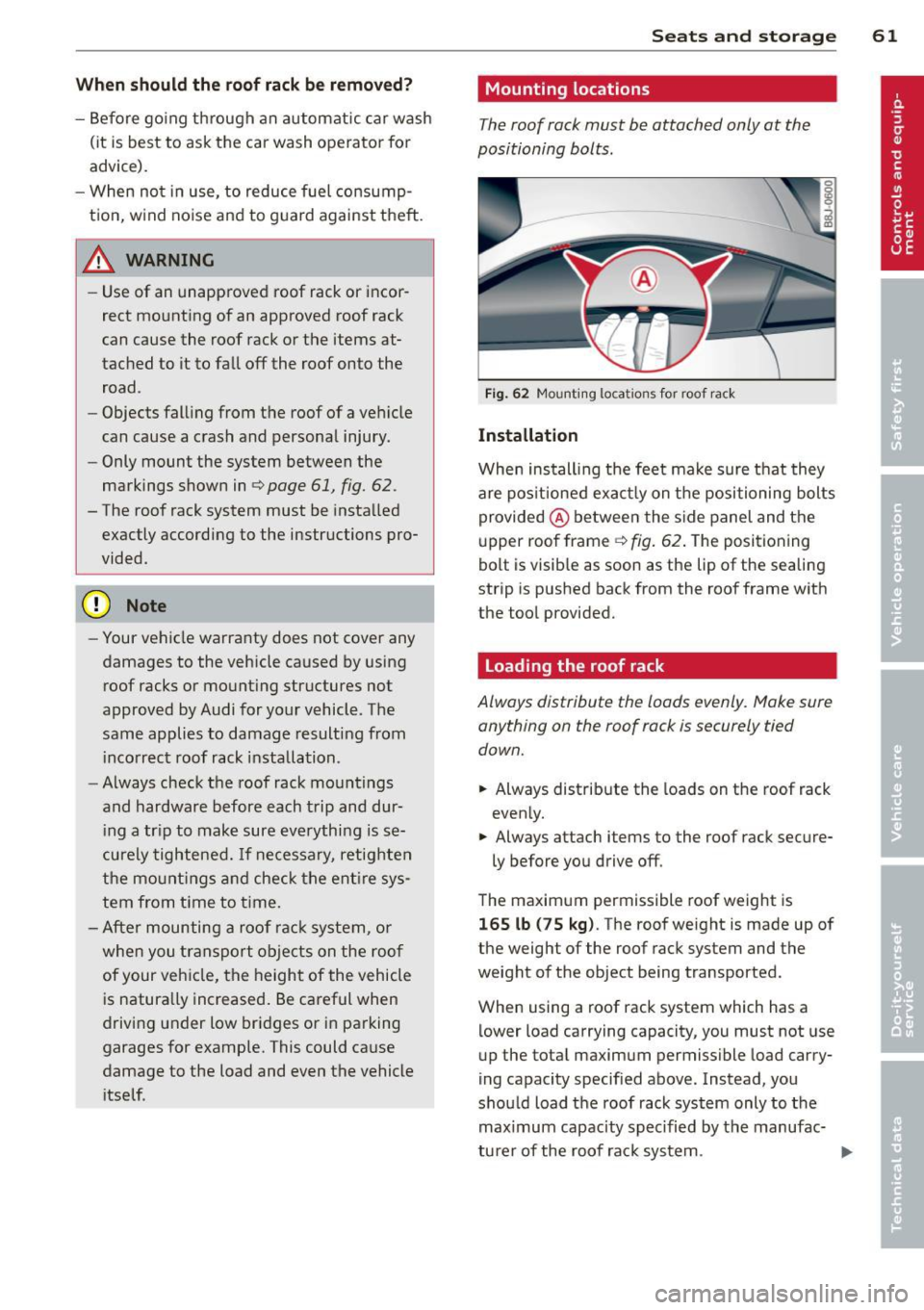
Fig. 62 Mounting locat ions for roof rac k
Installation
When installing the feet make sure that they
are pos itioned exact ly on the positioning bolts
provided @ between the side panel and the
upper roof frame ¢
fig. 62. The positioning
bolt is visib le as soon as the lip of the sealing
strip is pushed back from the roof frame with
the tool provided.
Loading the roof rack
Always distribute the loads evenly. Make sure anything on the roof rack is securely tied
down.
.,. Always distribute the loads on the roof rack
evenly.
.,. Always attach items to the roof rack secure-
ly before you drive off .
The maximum permissible roof weight is
165 lb (75 kg). The roof weight is made up of
the weight of the roof rack system and the
weight of the object being transported.
When using a roof rack system which has a
lower load carrying capacity, you must not use
up the total maximum permissible load carry
ing capacity specified above. Instead, you
should load the roof rack system only to the maximum capacity spec ified by the manufac-
turer of the roof rack system . ..,.
Page 73 of 262
On the road
Steering
Adjusting the steering wheel column
The steering wheel position can be continu
ously adjusted in height and distance.
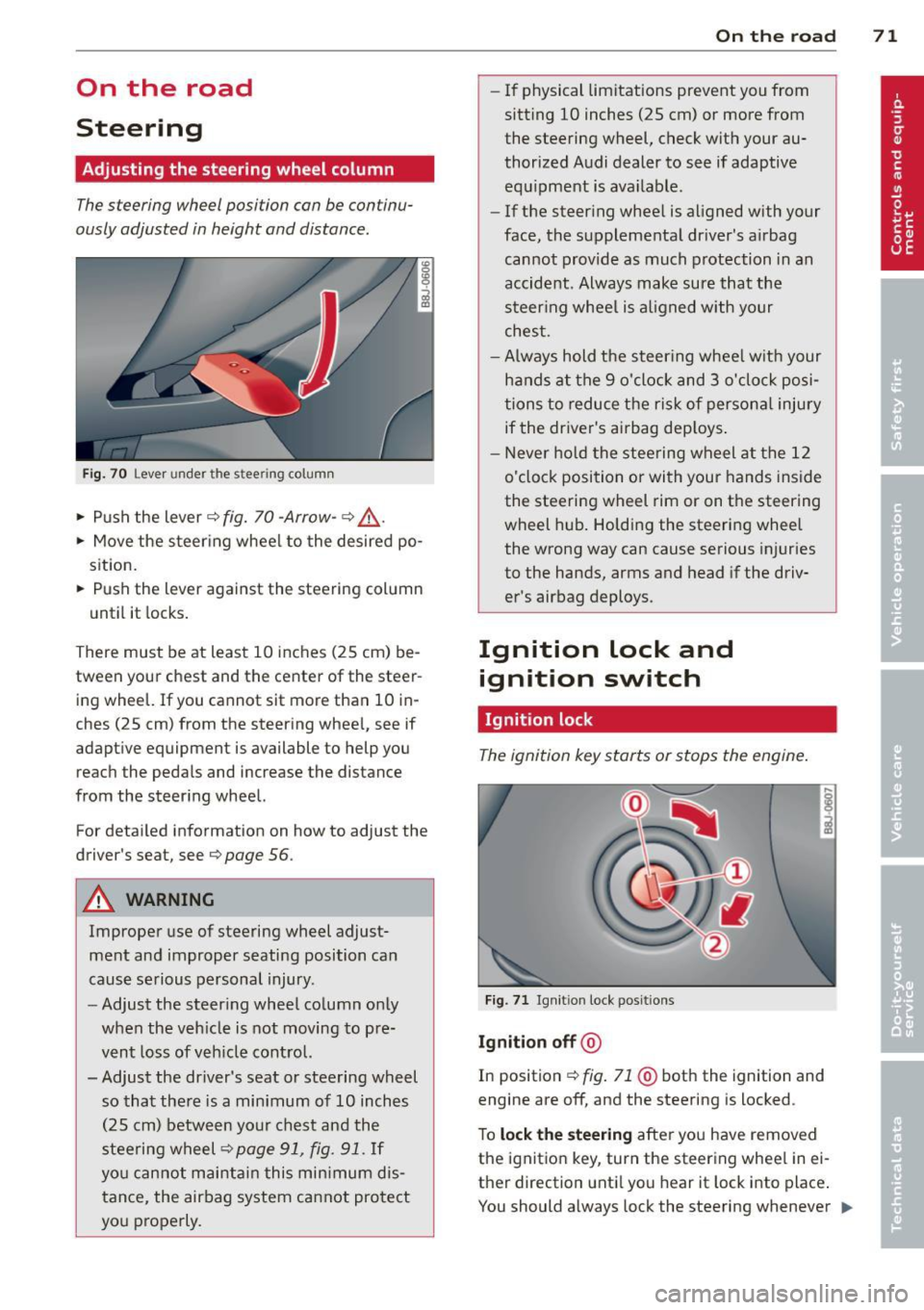
Fig. 70 Lever under the stee ring column
• Push the lever~ fig. 70 -Arrow-~ .&,..
• Move the steering wheel to the desired po
sition.
• Push the lever against the steering column
until it locks.
There must be at least 10 inches (25 cm) be tween your chest and the center of the steer
ing wheel. If you cannot sit more than 10 in
ches (25 cm) from the steering wheel, see if
adaptive equipment is available to help you
reach the pedals and increase the distance
from the steering wheel.
For detailed information on how to adjust the
driver's sea t, see
Q page 56 .
A WARNING
Improper use of steering wheel adjust
ment and improper seating position can
cause serious personal injury.
- Adjust the steering wheel column only
when the vehicle is not moving to pre
vent loss of vehicle control.
- Adjust the driver's seat or steering wheel so that there is a minimum of 10 inches
(25 cm) between your chest and the
steering wheel
~page 91, fig. 91. If
you cannot maintain this minimum dis
tance, the airbag system cannot protect
you properly.
On the road 71
-If physical limitations prevent you from
sitt ing 10 inches (25 cm) or more from
the steering wheel, check with your au
thorized Audi dealer to see if adaptive equipment is ava ilable .
- If the steering wheel is aligned with your
face, the supplemental dr iver 's airbag
cannot provide as much protection in an
accident. Always make sure that the
steering wheel is al igned with your
chest .
-Always hold the steer ing wheel w ith your
hands at the 9 o'clock and 3 o'clock posi
tions to reduce the risk of persona l injury
if the driver's airbag deploys .
- Never hold the steering wheel at the 12
o'clock position or with your hands inside
the steering wheel rim or on the steering
wheel hub. Holding the steering wheel
the wrong way can cause serious injuries
to the hands, arms and head if the driv
er's airbag deploys.
Ignition lock and ignition switch
Ignition lock
The ignition key starts or stops the engine.
Fig. 71 Ignit ion lock posit ions
Ignition off @
In position ~ fig. 71 @both the ignition and
engine are off, and the steering is locked .
To
lock the steering after you have removed
the ignition key , turn the steering wheel in ei
ther direction until you hear it lock into place .
You should always lock the steering whenever ..,.
Page 92 of 262
90 Driving Safel y
Driving Safely
General notes
Safe driving habits
Please remember -safety first!
This chapter contains important information,
tips, instructions and warnings that you need
to read and observe for your own safety, the
safety of your passengers and others . We have
summarized here what you need to know
about safety belts, a irbags, ch ild restra ints as
well as child safety. Your safety is for us
priori
ty number 1.
Always observe the info rmat ion
and warn ings in th is sect ion -fo r yo ur own
safety as well as for that of your passengers.
The information in this se ction app lies to all
model ve rsions of your veh icle . Some of the
feat ures desc ribed in this sec tions may be
standard equipment on some models, or may
be optional equipment on others . If you are
not sure, ask your authorized Aud i dealer.
A WARNING
- Make certain that you follow the instruc
t ions and heed the WARNINGS in this
Manual. It is in your interest and in the
interest of your passengers .
- Always keep the complete Owner's Liter
ature in your Audi when you lend or sell
yo ur vehicle so that this important info r
mation will a lways be ava ilable to the
dr iver and passenge rs.
- Always keep the Owner's literature handy
so that you can find i t eas ily if you have
ques tions.
Safety equipment
The safety features are part of the occupant
restraint system and work together to help
redu ce the risk of injury in a wide variety of
accident situations.
Your safety and the safety of your passenge rs
should not be left to chance. Advances in
technology have made a varie ty o f fea tures
avai la bl e to he lp re duce the risk of injury in an accident
. The following is a lis ting o f just a
few of the safety features in your Audi:
- sophis tic ated s afety be lts fo r drive r and a ll
passenger sea ting pos it ions,
- safety belt pre-tensione rs,
- fro nt airbags,
- knee airbags for the front seats,
- side airbags in the front seats,
- LATCH anchorages for child restraints,
- ad justab le steering column .
T hese ind iv idual safety features can wor k to
ge ther as a sys tem to he lp p rotec t you and
you r passengers in a wide range of accidents.
These features cannot wo rk as a system if
they are not always p roper ly adjusted and
properly used!
Safet y is everyb ody's re spon sibilit y!
Important things to do before driving
Safety is everybody's job! Vehicle and occu
pant safety always depends on the informed and careful driver.
For yo ur safety and the safety of you r passen
gers,
befor e driving alwa ys:
"' Make su re that all lig hts and signa ls a re op
erati ng correctly .
"' Ma ke s ure that the ti re p ressu re is co rrec t.
"' Mak e s ure th at all windows are clean and
afford good v is ibility to the o utside .
"' Secu re a ll luggage and other items caref ully
I:!) page 64.
"' Make s ure that nothing can interfere with
the pedals.
"' Adjust front seat, head restraint and mir
rors co rrectly for your height .
"' Instruct passenge rs to adjust the head re
st raints accord ing to the ir height .
"' Ma ke s ure to use the r igh t child re straint
correc tly to protect c hildren¢
page 130,
Child Safety .
"' Sit properly in your seat and make s ure that
your passengers do the same
I:!) page 54,
General recommendations. .,_
Page 102 of 262
100 Safety belts
Safety belts
General notes
Always wear safety belts!
Wearing safety belts correctly saves lives!
This chapter explains why safety belts are nec
essary, how they work and how to adjust and
wear them correctly .
.. Read all the information that follows and
heed all of the instructions and WARNINGS.
A WARNING
Not wearing safety belts or wearing them
improperly increases the risk of serious
personal injury and death.
- Safety belts are the single most effective
means available to reduce the risk of se
rious injury and death in automobile acci
dents. For your protection and that of
your passengers, always correctly wear
safety belts when the vehicle is moving.
- Pregnant women, injured, or physically
impaired persons must also use safety
belts. Like all vehicle occupants, they are
more likely to be seriously injured if they
do not wear safety belts. The best way to
protect a fetus is to protect the mother -
throughout the entire pregnancy.
Number of seats
Your Audi TT Coupe has two seating positions in the front and two height-limited seating
positions in the rear. Each seating position has
a safety belt. The rear seat area in your Audi
TT Coupe does not have enough room for pas
sengers of all sizes. For reasons of safety, no
person taller than 4'11" (1.S meters) should
ever ride in the rear seat area.
A WARNING
Not wearing safety belts or wearing them
improperly increases the risk of serious
personal injury and death. -
Never strap more than one person, in
cluding small children, into any belt.
It is
especially dangerous to place a safety belt over a child sitting on your lap.
- Never let more people ride in the vehicle
than there are safety belts available.
- Be sure everyone riding in the vehicle is
properly restrained with a separate safe
ty belt or child restraint.
- Persons taller than 4'11" (1.5 m) as well
as children in booster seats who are too
close to the rear window and roof can
suffer severe head and neck injuries
when the rear lid is closed or in a crash .
- The minimum clearance between the passenger's heads and the rear window
must never -under any circumstances -
be less that 1 inch (2.5 cm.) when the
passengers sit fully upright.
- Always make sure that rear seat passen
gers cannot be struck when the rear lid is
closed.
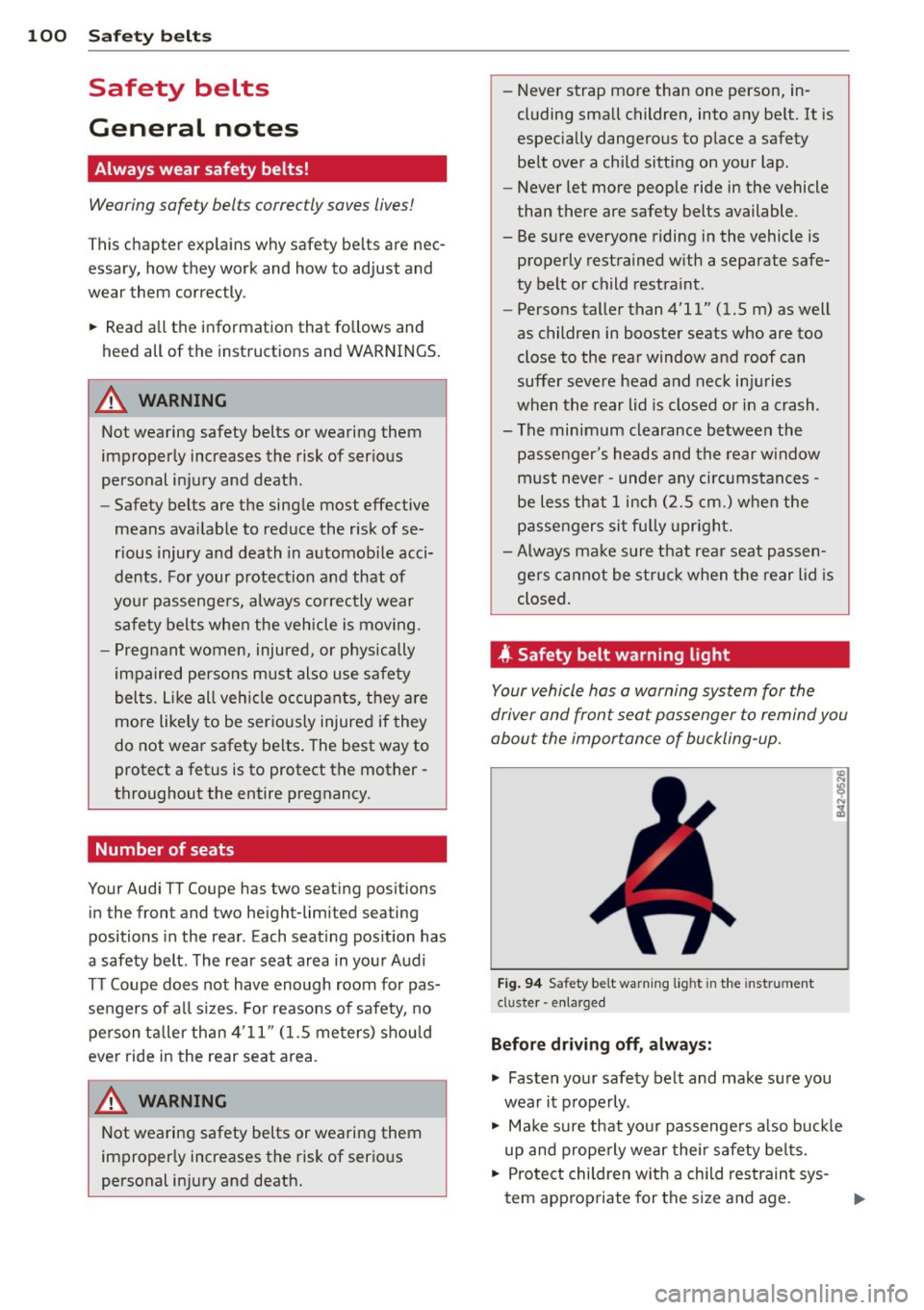
,! Safety belt warning light
Your vehicle has a warning system for the
driver and front seat passenger to remind you
about the importance of buckling-up.
Fig. 94 Safety belt warning light in the instrument
cluster· enlarged
Before driving off, always:
" Fasten your safety belt and make sure you
wear it properly .
.. Make sure that your passengers also buckle
up and properly wear their safety belts.
.. Protect children with a child restraint sys-
tem appropriate for the size and age.
Ill-
Page 107 of 262
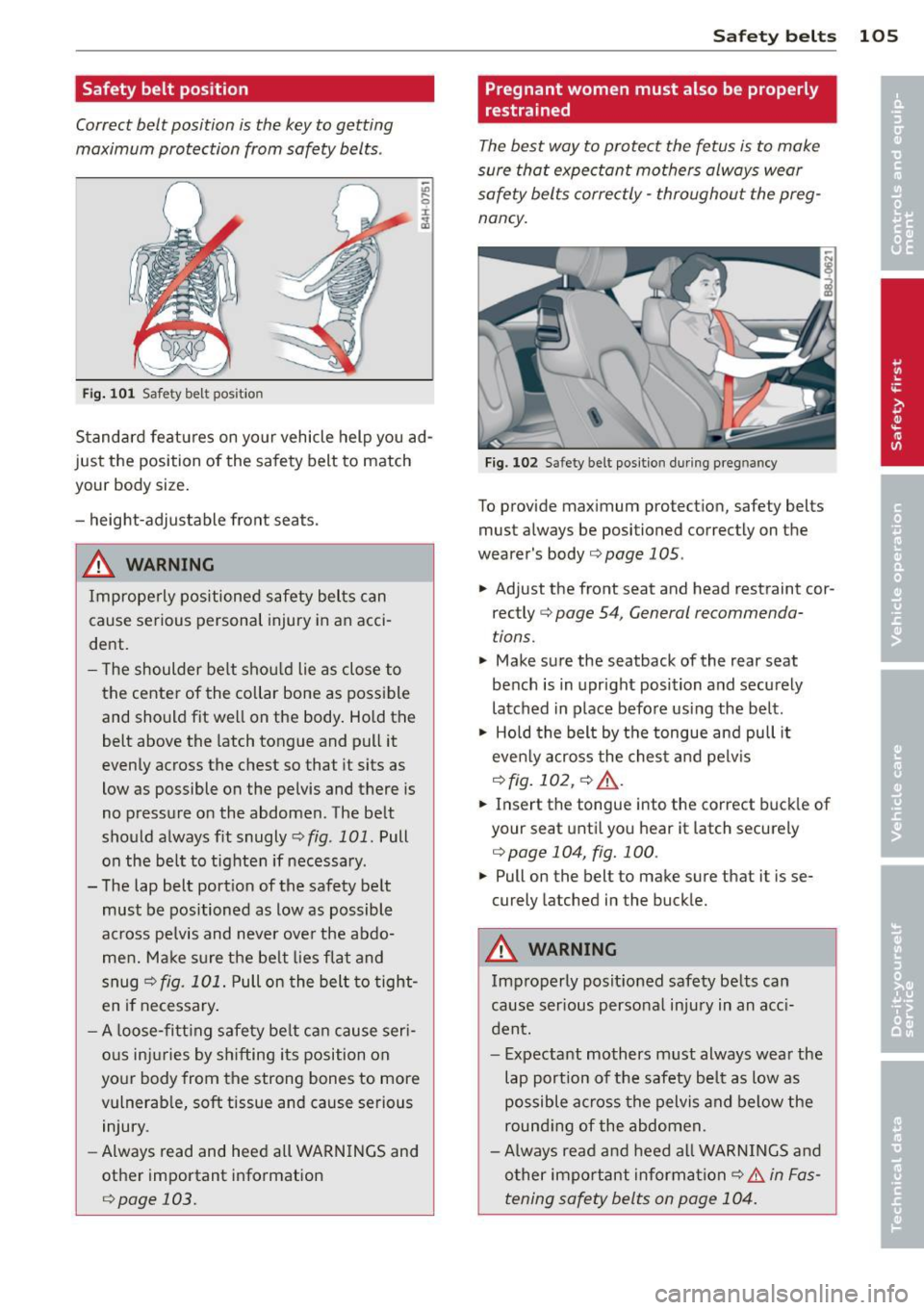
Safety belt position
Correct be.It position is the key to getting
maximum protection from safety belts .
Fig. 1 01 Safety belt pos it io n
Standard features on yo ur vehicle help you ad
just the position of the safety belt to match
your body size.
- height-adjustable front seats.
& WARNING
Improperly positioned safety belts can
cause serious personal injury in an acci
dent.
-
- T he shoulder be lt shou ld lie as close to
the cente r of the collar bone as poss ible
and should fit we ll on the body . Ho ld the
belt above the latch tongue and pull it
evenly across the chest so that it sits as
low as possible on the pelvis and there is
no pressure on the abdomen. The be lt
should always fit snugly
c:> fig . 101 . Pull
on the belt to tighten if necessary .
- The lap belt port ion of the safety be lt
must be positioned as low as possible
across pelvis and never ove r the abdo
me n. Ma ke su re the be lt lies flat and
snug
c:> fig. 101 . Pull on the belt to tight
en if necessary .
- A loose-fi tt ing safety be lt c an cause seri
o us inj uries by s hifting its position on
yo ur body from the strong bones to more
vulnerab le, soft tissue and cause serious
injury.
- Always read and heed all WARN INGS and
other important info rmation
c:> page 103.
Safety belts 105
Pregnant women must also be properly
, restrained
The best way to protect the fetus is to make
sure that expectant mothers always wear
safety belts corre ctly -throughout the preg
nancy.
Fi g. 102 Safety be lt po sit ion d uring preg nancy
To provide max imum protect ion, safety belts
must a lways be positioned correctly on the
wearer 's body
c> page 105.
.,. Adjust the front seat and head restraint cor
rectly
c:> p age 54 , General recommenda
t ions .
.,. Make s ure the seatback of the rear seat
bench is in upright position and securely
latched in p lace befo re using the belt.
.,. Hold the belt by t he tongue and pull it
even ly across the ches t and pelv is
c> fig.10 2,c> .&., .
.,. Insert the tongue into the correct buck le of
your seat unti l yo u h ear it latch securely
<=> page 104, fig. 100 .
.,. Pull on the belt to make sure that it is se
curely latched in the buck le.
& WARNING
Imp roperly posit ioned safety belts can
cause ser ious persona l inju ry in an acc i
dent.
-
- Expectant mothers must always wear the
lap port ion of the safety belt as low as
possible a cross the pelvis and below the
round ing of the abdomen.
- Always read a nd heed all WAR NIN GS a nd
o ther impo rtant inform ation
c:> & in Fas
tening safety belts on page 104.
Page 126 of 262
124 Airbag sys te m
about the same height in the instrument pan
e l underneath the glove compartment.
The knee a irbag offers add it iona l pro tect ion
to the driver's and passenger 's knees and up
per and lower thigh areas and supp lements
the protection by the safety be lts .
I f the front airbags deploy , the knee airbags
a lso deploy in frontal co llisions when the de
p loyment thresho ld stored in the cont rol unit
is met ¢
page 117, More important things to
know about front airbags .
In addi tion to their normal safety function,
safety belts he lp keep the driver or front pas
senger in position in a frontal collisio n so that
the airbags can prov ide supplemental protec
tion.
The airbag system is not a s ubstitute for yo ur
safety be lt . Rather, it is part of the overall oc
cupant restraint system in your veh icle. Al
ways remember that the airbag system can
only help to protect you if you are wearing
your safety belt and wear ing it properly . Th is
i s why you shou ld always wear you r safety
be lt, not just because the law requires you to
do so ¢
page 100, General notes.
The safety belt buck le for the dr iver and front
seat passenger have switches that te ll the a ir
bag control module if the safety belt is being
used or not. If the safety belt is being used,
the knee airbag will deploy at a slightly highe r
rate of deceleration than if the belt is not be
ing used . Therefore, in a partic ular collision , it
is possible that an airbag will not deploy at a
seating position where the safety belt is being used but will inflate at the position where the
safety belt is not be ing used.
Remembe r too, airbags will deploy only once
and on ly in certain kinds of accidents -your
safety belts are always there to offer protec
tion in those acc idents in which airbags are
n ot supposed to deploy or when they have a l
ready deployed, fo r example whe n your veh i
cle str ikes or is struck by another after the
fi rs t collis io n. This is
just one of the reasons why an airbag is
not a s ubstitute for the safety be lt. The airbag
system works most effect ively when used with
the safety belts. Therefore, always wear yo ur
safety belts correct ly.
It is important to remember that w hil e the
s u pplementa l knee airbag system is designed
to reduce the likelihood of ser ious injuries,
other injur ies, for example, swelling, bru is ing,
minor abrasions and friction bu rns can a lso
occur when an airbag inflates.
The knee airbag system basically consi sts
of:
- The e lectronic control module
- Two inflatable a irbags (a irbag and gas gen-
erator), one for the driver and one for the
front passenge r
- The a irbag ind icator light in the instrument
panel
The knee airbag sy ste m w ill not depl oy :
- when the ignition is t urned off
- in frontal collisions when the deceleration
measured by the contro l unit is too low
- in side co llisions
- in rea r-end co llisions
- in rollove rs
- in the event of a system malfunction (warn -
ing/ind icator light is on)
¢ page 15.
A WARNING
-Safety belts and th e airbag system can
only provide pro te ction when occupa nts
a re in the proper se ating posi tion
<=:>page 117.
- If the airbag ind icator light come s when
the vehicle is be ing used, have the sys
tem inspected immediate ly by yo ur au
thor ized A udi dealer.
-