airbag off AUDI TT COUPE 2014 User Guide
[x] Cancel search | Manufacturer: AUDI, Model Year: 2014, Model line: TT COUPE, Model: AUDI TT COUPE 2014Pages: 284, PDF Size: 34.42 MB
Page 211 of 284
Downloaded from www.Manualslib.com manuals search engine 0
N
co
....
\D L/'l
N
L/'l
.... Airbag
system
Description of airbag
system
General notes on airbag system
The airbag is an integral part of the car's passive
safety system.
In conjunction with the seat belts, the airbag sys
tem gives the front occupants additional protec
tion for the head and chest in the event of a se
vere frontal collision.
In a side collision the side airbags reduce the risk
of injury to the areas of the body facing the im
pact ¢_&.
In addition to their normal function of protecting
the occupants in a collision, the seat belts also
hold them in a position where the airbags can in
flate properly and provide maximum protection.
The airbag system will only work with the igni
tion on. The airbag system is monitored electron
ically; the airbag warning lamp indicates whether
the system is functioning properly.
The main parts of the airbag system are:
- The electronic monitoring system (control unit
and sensors)
- The two front airbags
- The two side airbags
- The warning lamp El in the instrument cluster
There is a fault in the airbag system if the
warning lamp
- does not come on when the ignition is switched
on.
- does not go out about 4 seconds after the igni
tion is switched on.
- goes out and then comes on again after the ig
nition is switched on.
- comes on or flickers while the car is moving.
A WARNING
- The airbags are not a substitute for the seat
belts; they are an integral part of the car's
overall passive safety system. The airbags
can only offer effective protection if the oc- Airbag system
cupants are wearing their seat belts. For
this reason it is very important to wear the
seat belts at all times ¢ page 204, Why is it
so important to use seat belts?.
- The seat belts and airbags can only provide
maximum protection if the occupants are
seated correctly ¢ page 46, Seats and stor
age.
- If you do not wear a seat belt, if you lean
for ward, or are not seated correctly while
the vehicle is in motion, you are at greater
risk of injury should the airbag system be
triggered in an accident.
- Components of the airbag system are loca
ted in various parts of the vehicle. If repairs
to other vehicle components make it neces
sary to perform work on the airbag system
or to remove or install parts of the airbag
system, this may cause damage to the air
bag system. As a result, the airbags may not
inflate correctly or may not be triggered at
all in an accident situation. For this reason,
you should always have the work carried out
by a qualified workshop.
- If a fault should occur in the airbag system,
have the system checked immediately by a
qualified workshop. Otherwise the system
may fail to trigger in an accident.
- Do not attempt to modify components of
the airbag system in any way.
- Never make any alterations to the front
bumper or the body.
- Do not remove the front seats.
- The airbag system can only be activated
once; if the airbag has been triggered, the
system must be replaced. Should the airbag
system or airbag modules have to be re
placed, the qualified workshop carrying out
the replacement will document all details.
- If you sell the vehicle, remember to pass on
the complete Service Wallet to the new
owner. If any of the airbags have been deac
tivated, it is important that the new owner
is also given the relevant documents.
- The relevant safety requirements must be
observed when the vehicle or components
of the airbag or belt tensioner systems are
scrapped.
209
Page 213 of 284
Downloaded from www.Manualslib.com manuals search engine Deactivating
the front passenger's airbag
Applies to vehicles: with key-operated switch for front pas
senger's airbag
If an airbag has been deactivated, it should be
reactivated as soon as possible so that it can
continue to give the required protection.
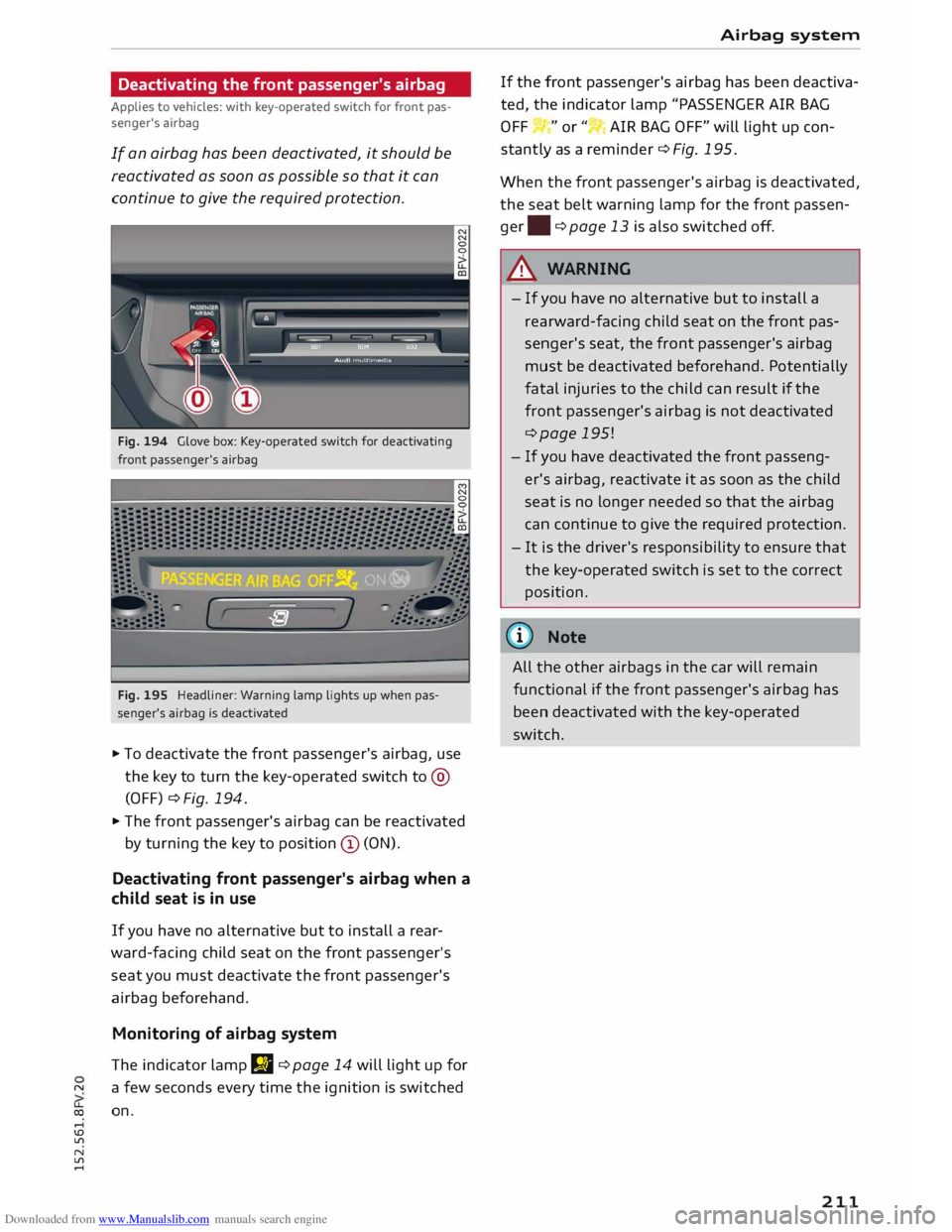
Fig. 194 Glove box: Key-operated switch for deactivating
front passenger's airbag
Fig. 195 Headliner: Warning lamp lights up when pas
senger's airbag is deactivated
... To deactivate the front passenger's airbag, use
the key to turn the key-operated switch to@
(OFF) ¢ Fig. 194 .
... The front passenger's airbag can be reactivated
by turning the key to position (D (ON).
Deactivating front passenger's airbag when a
child seat is in use
If you have no alternative but to install a rear
ward-facing child seat on the front passenger's
seat you must deactivate the front passenger's
airbag beforehand.
Monitoring of airbag system
The indicator lamp JJI ¢ page 14 will light up for
"' a few seconds every time the ignition is switched
� on.
,-1
\D U'l
N
U'l
,-1 Airbag
system
If the front passenger's airbag has been deactiva
ted, the indicator lamp "PASSENGER AIR BAG
OFF "or" AIR BAG OFF" will light up con
stantly as a reminder ¢Fig. 195.
When the front passenger's airbag is deactivated,
the seat belt warning lamp for the front passen
ger. ¢ page 13 is also switched off.
A WARNING
- If you have no alternative but to install a
rearw ard-facing child seat on the front pas
senger's seat, the front passenger's airbag
must be deactivated beforehand. Potentially
fatal injuries to the child can result if the
front passenger's airbag is not deactivated
¢page 195!
- If you have deactivated the front passeng
er's airbag, reactivate it as soon as the child
seat is no longer needed so that the airbag
can continue to give the required protection.
- It is the driver's responsibility to ensure that
the key-operated switch is set to the correct
position.
((J) Note
All the
other
airbags in the car will remain
functional if the front passenger's airbag has
been deactivated with the key-operated
switch .
211
Page 216 of 284
Downloaded from www.Manualslib.com manuals search engine Airbag
system
Side airbags
Description of side airbags
Applies to vehicles: with side airbags
The airbag system is not a substitute for the seat
belts.
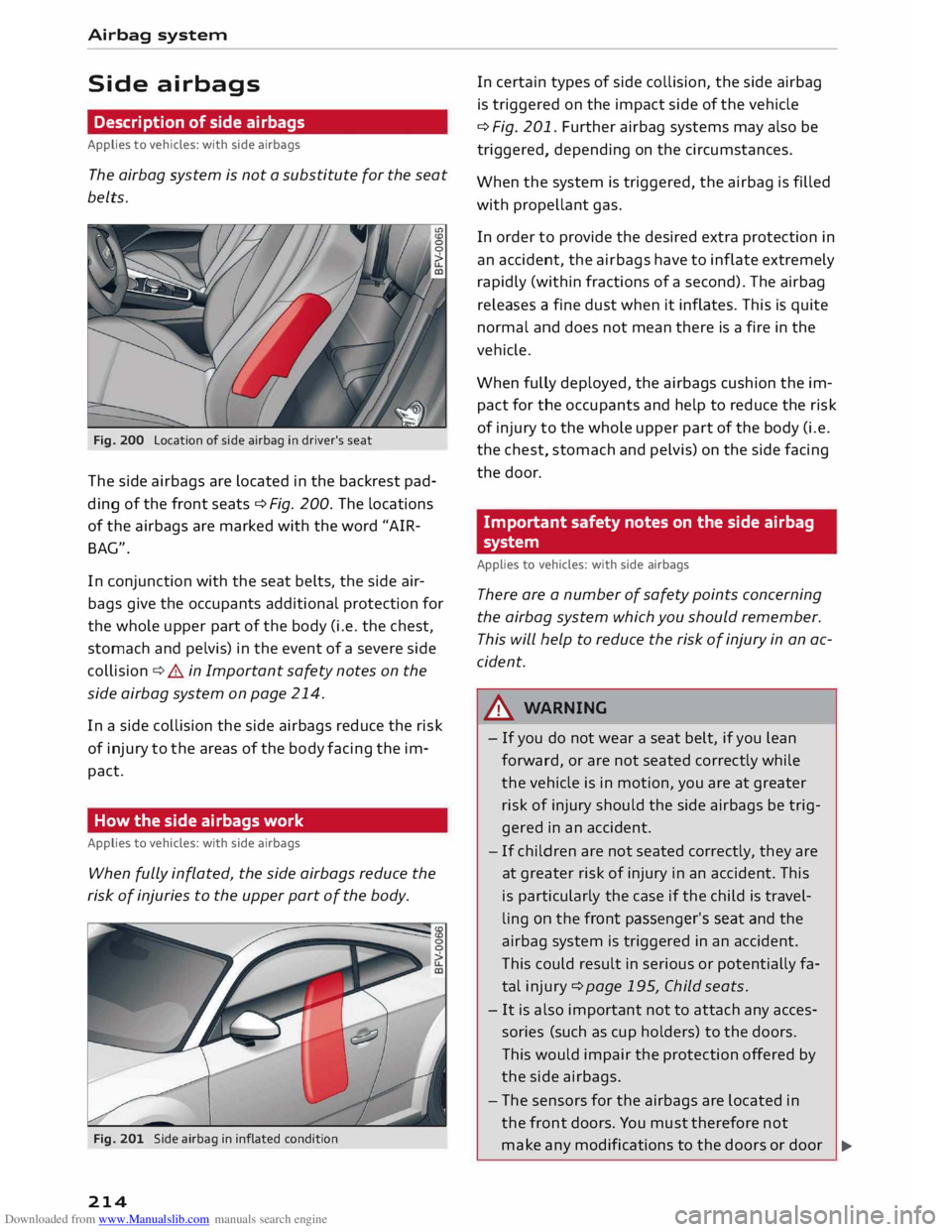
Fig. 200 Location of side airbag in driver's seat
The side airbags are located in the backrest pad
ding of the front seats¢ Fig. 200. The locations
of the airbags are marked with the word "AIR
BAG".
In conjunction with the seat belts, the side air
bags give the occupants additional protection for
the whole upper part of the body (i.e. the chest,
stomach and pelvis) in the event of a severe side
collision ¢&. in Important safety notes on the
side airbag system on page 214.
In a side collision the side airbags reduce the risk
of injury to the areas of the body facing the im
pact.
How the side airbags work
Applies to vehicles: with side airbags
When fully inflated, the side airbags reduce the
risk of injuries to the upper part of the body.
Fig. 201 Side airbag in inflated condition
214 In
certain types of side collision, the side airbag
is triggered on the impact side of the vehicle
¢ Fig. 201. Further airbag systems may also be
triggered, depending on the circumstances.
When the system is triggered, the airbag is filled
with propellant gas.
In order to provide the desired extra protection in
an accident, the airbags have to inflate extremely
rapidly (within fractions of a second). The airbag
releases a fine dust when it inflates. This is quite
normal and does not mean there is a fire in the
vehicle.
When fully deployed, the airbags cushion the im
pact for the occupants and help to reduce the risk
of injury to the whole upper part of the body (i.e.
the chest, stomach and pelvis) on the side facing
the door.
Important safety notes on the side airbag
system
Applies to vehicles: with side airbags
There are a number of safety points concerning
the airbag system which you should remember.
This will help to reduce the risk of injury in an ac
cident.
A WARNING
- If you do not wear a seat belt, if you lean
forward, or are not seated correctly while
the vehicle is in motion, you are at greater
risk of injury should the side airbags be trig
gered in an accident.
- If children are not seated correctly, they are
at greater risk of injury in an accident. This
is particularly the case if the child is travel
ling on the front passenger's seat and the
airbag system is triggered in an accident.
This could result in serious or potentially fa
tal injury ¢page 195, Child seats.
- It is also important not to attach any acces
sories (such as cup holders) to the doors.
This would impair the protection offered by
the side airbags.
- The sensors for the airbags are located in
the front doors. You must therefore not
make any modifications to the doors or door
�
Page 217 of 284
Downloaded from www.Manualslib.com manuals search engine 0
N
co
....
\D Lfl
N
Lfl
.... trim
(e.g. retrofitting loudspeakers), as this
could impair the function of the side air
bags. Any damage to the front doors could
lead to faults in the system. Repairs or any
other work on the front doors must there
fore always be carried out by a qualified
workshop.
- Do not apply excessive force to the sides of
the backrests (such as hard knocks or kicks),
as this could damage parts of the system.
The side airbags could then fail to operate
when required.
- If you intend to fit protective covers over the
seats, these must be of the specific type ap
proved for use on Audi seats with side air
bags. Conventional seat covers would ob
struct the side airbag when it inflates out of
the backrest, and seriously reduce the air
bag's effectiveness.
- Any damage to the original seat upholstery
or around the seams of the side airbag units
must be repaired immediately by a qualified
workshop.
- Any work involving the
side
airbag system or
removal and installation of the airbag com
ponents for other repairs (such as repairs to
the seats) must always be performed by a
qualified workshop. Otherwise the airbag
system may fail to work properly.
Head-protection airbags
Description of head-protection airbags
Applies to vehicles: with head-protection airbags
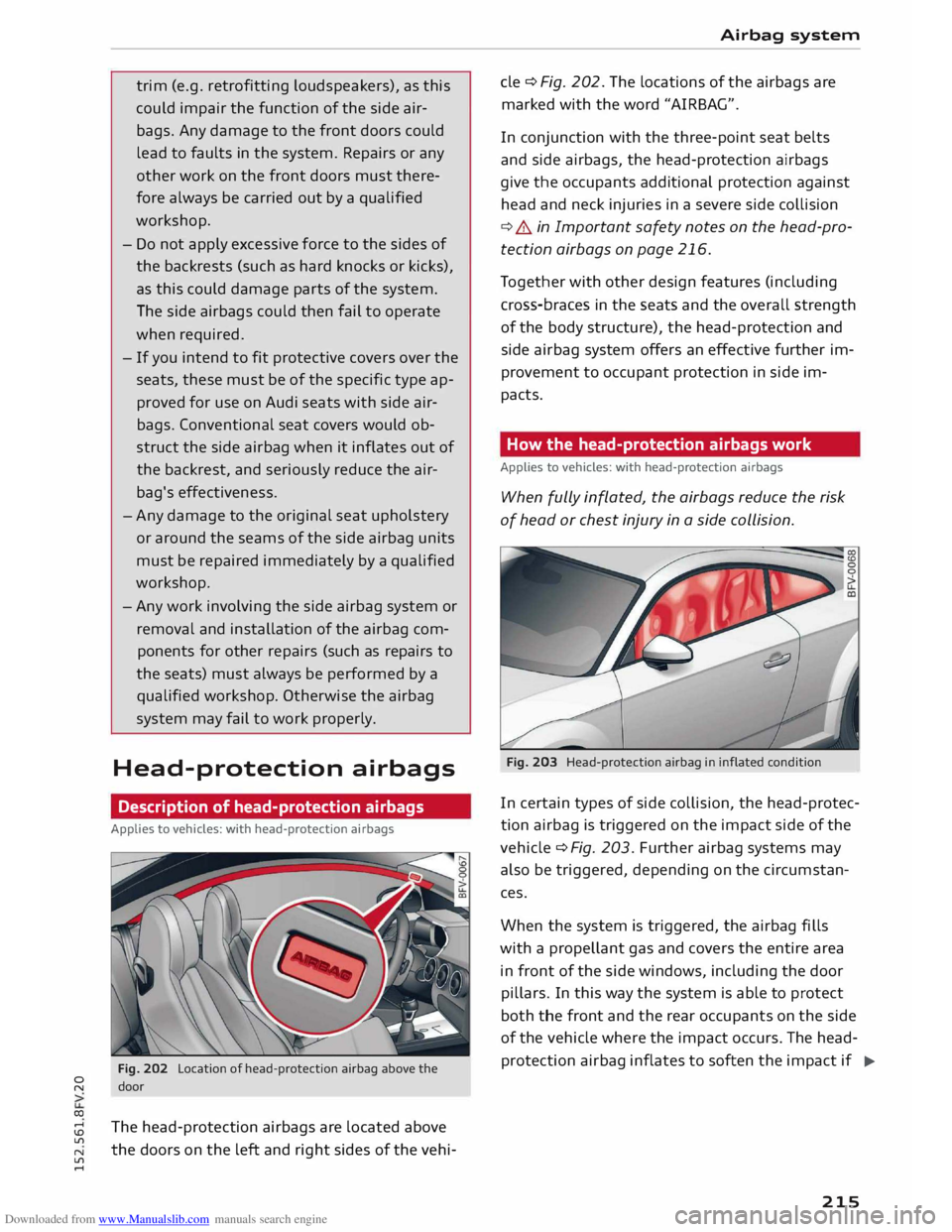
Fig. 202 Location of head-protection airbag above the
door
The head-protection airbags are located above
the doors on the left and right sides of the vehi- Airbag
system
de ¢Fig. 202. The locations of the airbags are
marked with the word "AIRBAG".
In conjunction with the three-point seat belts
and side airbags, the head-protection airbags
give the occupants additional protection against
head and neck injuries in a severe side collision
¢.&. in Important safety notes on the head-pro
tection airbags on page 216.
Together with other design features (including
cross-braces in the seats and the overall strength
of the body structure), the head-protection and
side airbag system offers an effective further im
provement to occupant protection in side im
pacts.
How the head-protection airbags work
Applies to vehicles: with head-protection airbags
When fully inflated, the airbags reduce the risk
of head or chest injury in a side collision.
Fig. 203 Head-protection airbag in inflated condition
In certain types of side collision, the head-protec
tion airbag is triggered on the impact side of the
vehicle ¢ Fig. 203. Further airbag systems may
also be triggered, depending on the circumstan
ces.
When the system is triggered, the airbag fills
with a propellant gas and covers the entire area
in front of the side windows, including the door
pillars. In this way the system is able to protect
both the front and the rear occupants on the side
of the vehicle where the impact occurs. The head
protection airbag inflates to soften the impact if
..,.
215
Page 228 of 284
Downloaded from www.Manualslib.com manuals search engine Checking
and topping up fluids
Brake fluid
&
8cm DOT 4 0
0
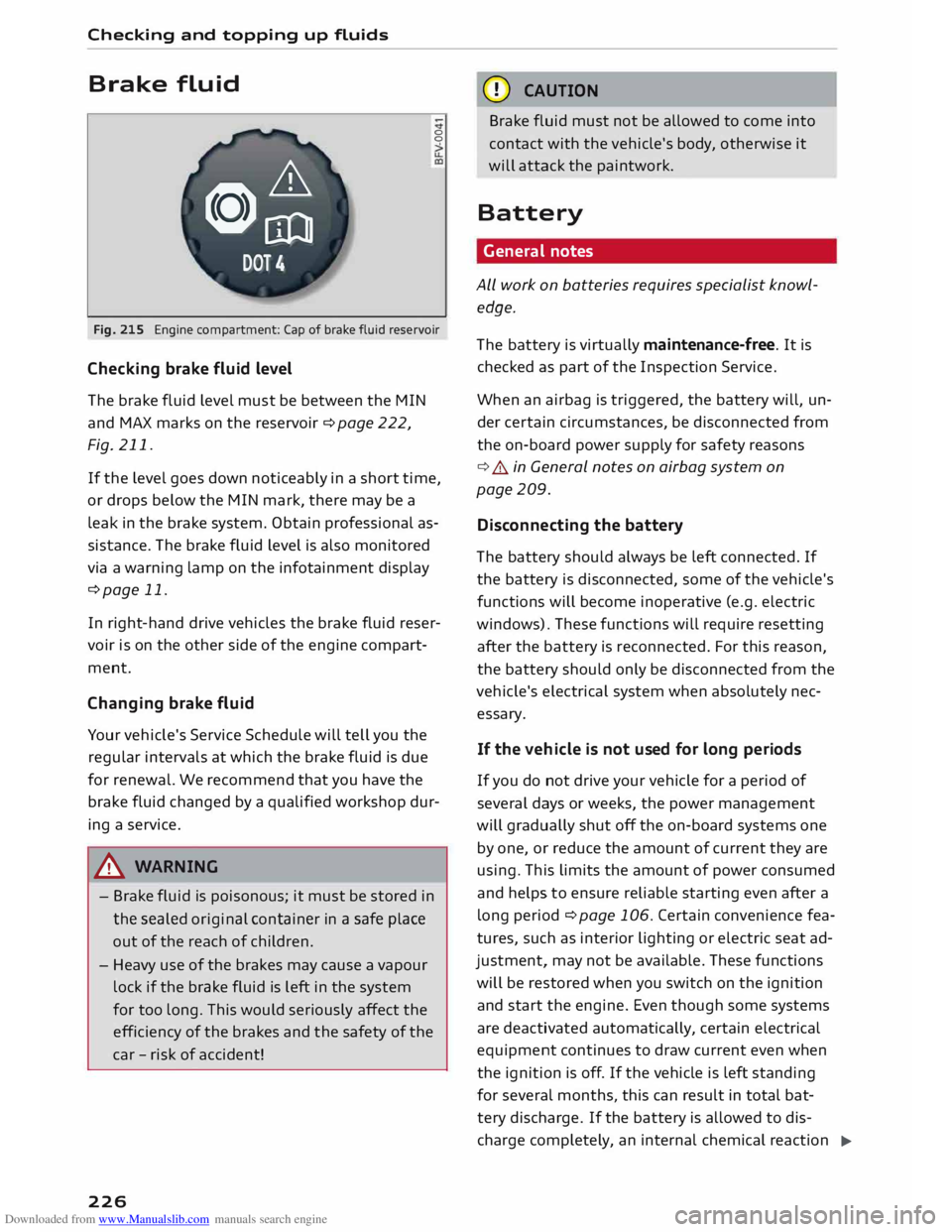
Fig. 215 Engine compartment: Cap of brake fluid reservoir
Checking brake fluid level
The brake fluid Level must be between the MIN
and MAX marks on the reservoir ¢ page 222,
Fig. 211.
If the Level goes down noticeably in a short time,
or drops below the MIN mark, there may be a
Leak in the brake system. Obtain professional as
sistance. The brake fluid Level is also monitored
via a warning Lamp on the infotainment display
¢page 11.
In right-hand drive vehicles the brake fluid reser
voir is on the other side of the engine compart
ment.
Changing brake fluid
Your vehicle's Service Schedule will tell you the
regular intervals at which the brake fluid is due
for renewal. We recommend that you have the
brake fluid changed by a qualified workshop dur
ing a service.
A WARNING
- Brake fluid is poisonous; it must be stored in
the sealed original container in a safe place
out of the reach of children.
- Heavy use of the brakes may cause a vapour
Lock if the brake fluid is left in the system
for too Long. This would seriously affect the
efficiency of the brakes and the safety of the
car -risk of accident!
226 CD
CAUTION
Brake fluid must not be allowed to come into
contact with the vehicle's body, otherwise it
will attack the paintwork.
Battery General notes
ALL work on batteries requires specialist knowl
edge.
The battery is virtually maintenance-free. It is
checked as part of the Inspection Service.
When an airbag is triggered, the battery will, un
der certain circumstances, be disconnected from
the on-board power supply for safety reasons
¢ .&.. in General notes on airbag system on
page 209.
Disconnecting the battery
The battery should always be Left connected. If
the battery is disconnected, some of the vehicle's
functions will become inoperative (e.g. electric
windows). These functions will require resetting
after the battery is reconnected. For this reason,
the battery should only be disconnected from the
vehicle's electrical system when absolutely nec
essary.
If the vehi cle is not used for long periods
If you do not drive your vehicle for a period of
several days or weeks, the power management
will gradually shut off the on-board systems one
by one, or reduce the amount of current they are
using. This Limits the amount of power consumed
and helps to ensure reliable starting even after a
Long period ¢ page 106. Certain convenience fea
tures, such as interior Lighting or electric seat ad
justment, may not be available. These functions
will be restored when you switch on the ignition
and start the engine. Even though some systems
are deactivated automatically, certain electrical
equipment continues to draw current even when
the ignition is off. If the vehicle is Left standing
for several months, this can result in total bat-
tery discharge. If the battery is allowed to dis
charge completely, an internal chemical reaction
..,_
Page 262 of 284
Downloaded from www.Manualslib.com manuals search engine Accessories
and modifications to the vehicle
Accessories and modifi
cations to the vehicle
Accessories .,
replacement parts and
repairs
It is best to consult an authorised Audi dealer
before purchasing accessories and replacement
parts or having any repairs carried out.
Your car is designed to offer a high standard of
active and passive safety. For this reason, we rec
om mend that you ask your Audi dealer for advice
before fitting accessories or replacement parts.
This is also very important if body repairs are re
quired. Audi dealers have full information on the
manufacturer-approved repair methods and can
recommend suitable accessories and spare parts.
They can also give advice regarding official re
quirements for the vehicle.
We recommend you to use only Audi accessories
and Audi Genuine Parts. Audi has tested these
products for suitability, reliability and safety.
Audi dealers have the necessary experience and
facilities to ensure that the parts are installed
properly.
Although the market is constantly scrutinised,
Audi cannot judge or assume responsibility for
the reliability, safety and suitability of non-genu
ine products -even though in some instances,
these parts may have been approved by an offi
cially recognised technical testing authority or
accompanied by an official approval certificate.
Any retro-fitted equipment which has a direct ef
fect on the vehicle and/or the way it is driven
(e.g. cruise control system or electronically-con
trolled suspension) must be approved for use in
your vehicle and bear thee mark (the European
Union's approval symbol).
If any additional electrical components are fit
ted which do not serve to control the vehicle it
self (for instance a refrigerator box, laptop or
ventilator fan, etc.), these must bear the CE mark
(manufacturer conformity declaration in the Eu
ropean Union).
260 A
WARNING
Never attach accessories (such as cup holders
or telephone brackets) to the surfaces cover
ing the airbag units or the areas around the
airbags: this could cause injury if the airbag is
triggered.
({D Note
- Since the Audi TT has an aluminium body,
all ser vicing, repairs or other work on the
car body must be carried out by an Audi
workshop or a qualified workshop working
to the specifications of the Audi factory.
This ensures that the necessary repairs or
servicing are performed properly and that
only Audi Genuine Parts are installed on
your vehicle. Use of non-genuine replace
ment parts, equipment or accessories on
your Audi TI, or repair of the vehicle by un
qualified persons, may result in serious
damage to your car (possibly including cor
rosion).
- The manufacturer cannot be held liable for
damage which occurs as a result of failure
to comply with these stipulations, and such
damage is not covered under warranty.
Modifi cations
Modifications must always be carried out accord
ing to our specifications.
Unauthorised modifications to the electronic
components or software in the vehicle may cause
malfunctioning. Due to the way the electronic
components are linked together in networks, oth
er systems may be affected by the faults. This can
seriously impair safety, lead to excessive wear of
components, and also invalidate the type appro
val for your vehicle.
You will appreciate that your Audi dealer cannot
be held liable for any damage caused by modifi
cations and/or work performed incorrectly.
We recommend that all work should be per
formed by an Audi workshop using Audi Genuine
��- �
Page 265 of 284
Downloaded from www.Manualslib.com manuals search engine Numbers
and
Symbols
360 °
display . . . . . . . . . . . . . . . . . . . . . . . . . .
94
A
A/C (automatic air conditioner) . . . . . . . . . . .
55
A/C (manual air conditioner) . . . . . . . . . . . . . 54
ABS see Anti-Lock brake system 102
Accelerator pedal . . . . . . . . . . . . . . . . . . . . . 200
Accepting an entry suggestion . . . . . . . . . . 114
Accessories . . . . . . . . . . . . . . . . . . . . . . . . . .
260
Active Lane assist . . . . . . . . . . . . . . . . . . . . . .
84
Driver messages . . . . . . . . . . . . . . . . . . . . . .
86
Indicator Lamp . . . . . . . . . . . . . . . . . . . . . . .
85
Setting steering vibration . . . . . . . . . . . . . .
87
Setting time of warning................
87
Switching on/off . . . . . . . . . . . . . . . . . . . . .
85
Adaptive Light Indicator lamp . . . . . . . . . . . . . . . . . . . . . . . 17
Adjusting volume
Multi-function steering wheel.. . . . . . .
20, 21
Airbag .............................. 209
Deactivating front passenger's airbag . . . 211
Front airbags . . . . . . . . . . . . . . . . . . . . . . . 210
Head-protection airbag . . . . . . . . . . . . . . . 215
Side airbags . . . . . . . . . . . . . . . . . . . . . . . . 214
Warning lamp . . . . . . . . . . . . . . . . . . . . . . . 14
Air conditioner (automatic)
Adjusting air outlets . . . . . . . . . . . . . . . 55, 56
Air distribution, air outlets . . . . . . . . . . . . . 55
Air recirculation mode . . . . . . . . . . . . . . . . . 56
AUTO (automatic mode) . . . . . . . . . . . . . . . 55
Blower . . . . . . . . . . . . . . . . . . . . . . . . . . . . .
55
Controls . . . . . . . . . . . . . . . . . . . . . . . . . . . .
55
Defrosting windows . . . . . . . . . . . . . . . . . . .
56
Drive select . . . . . . . . . . . . . . . . . . . . . . . . . . 90
Key-coded settings . . . . . . . . . . . . . . . . . . . .
55
Rear window heating . . . . . . . . . . . . . . . . . .
56
Selecting temperature . . . . . . . . . . . . . . . . . 55
Air conditioner (manual) Adjusting air outlets . . . . . . . . . . . . . . . 54, 56
� Adjusting
temperature . . . . . . . . . . . . . . . . 54
� Air
distribution, air outlets . . . . . . . . . . . . . 54
,-j
� Air
recirculation
mode . . . . . . . . . . . . . . . . . 54
� Blower
. . . . . . . . . . . . . . . . . . . . . . . . . . . . . 53
,-j Index
Controls . . . . . . . . . . . . . . . . . . . . . . . . . . . . 53
Defrosting windows . . . . . . . . . . . . . . . . . . . 54
Key-coded settings. . . . . . . . . . . . . . . . . . . . 53
Rear window heating . . . . . . . . . . . . . . . . . . 54
Air distribution, setting
Automatic air conditioner . . . . . . . . . . . . . .
55
Manual air conditioner . . . . . . . . . . . . . . . . .
54
Air outlets, adjusting . . . . . . . . . . . . . . . . . . .
56
Air recirculation mode
Automatic air conditioner . . . . . . . . . . . . . .
56
Manual air conditioner . . . . . . . . . . . . . . . . .
54
Alarm system
see Anti-theft alarm system . . . . . . . . . 25,
31
All-season tyres
see ALL-weather tyres . . . . . . . . . . . . . . . . .
233
All-weather Lights . . . . . . . . . . . . . . . . . . . . . . 3 7
All-weather tyres . . . . . . . . . . . . . . . . . . . . . 233
Alterations to the vehicle . . . . . . . . . . . . . . .
260
Alternative frequency (radio) . . . . . . . . . . . . 166
Alternative route . . . . . . . . . . . . . . . . . . . . . 155
Alternator (warning lamp) . . . . . . . . . . . . . . . 13
AMI see Audi music interface .......... 174,
175
Annou ncements (traffic programme) . . . . . 190
Anti-dazzle exterior mirrors . . . . . . . . . . . . . .
42
Anti-dazzle interior mirror . . . . . . . . . . . . . . .
42
Anti-freeze Coolant . . . . . . . . . . . . . . . . . . . . . . . . . . . . 224
Winds creen washer system . . . . . . . . . . . . 229
Anti-lock brake system . . . . . . . . . . . . . . . . .
102
Anti-theft alarm system . . . . . . . . . . . . . . . . . 31
Anti-theft wheel bolts . . . . . . . . . . . . . . . . . 244
Armrest, front . . . . . . . . . . . . . . . . . . . . . . . . .
47
Ashtray . . . . . . . . . . . . . . . . . . . . . . . . . . . . . . 48
A5R
see Traction control system . . . . . . . . . . . . 102
Assigning function to button (multi-function
steering wheel) . . . . . . . . . . . . . . . . . . . . . . . . 20
Audi connect . . . . . . . . . . . . . . . . . . . . . . . . .
137
Activating . . . . . . . . . . . . . . . . . . . . . . . . . .
137
Closing . . . . . . . . . . . . . . . . . . . . . . . . . . . .
140
Configuring . . . . . . . . . . . . . . . . . . . . . . . .
143
Connecting a mobile phone . . . . . . . . . . . .
137
Connection settings . . . . . . . . . . . . . . . . . .
187
Data protection . . . . . . . . . . . . . . . . . . . . .
146
Functions . . . . . . . . . . . . . . . . . . . . . . . . . .
140
263
Page 268 of 284
Downloaded from www.Manualslib.com manuals search engine Index
Closing Bonnet 222
Windows ........................... 33
Coasting mode . . . . . . . . . . . . . . . . . . . . . . . .
75
Coat hooks . . . . . . . . . . . . . . . . . . . . . . . . . . .
SO
Colour code . . . . . . . . . . . . . . . . . . . . . . . . . . 257
Coming home . . . . . . . . . . . . . . . . . . . . . . . . . 40
Command (speech dialogue system) . . . . . .
116
Compact temporary spare wheel . . . . . . . . . 247
Compartments . . . . . . . . . . . . . . . . . . . . . . . . 49
Compass in mirror
Conference calling
Connecting a mobile phone 44
129
Requirements . . . . . . . . . . . . . . . . . . . 124, 137
Connection manager . . . . . . . . . . . . . . . . . .
187
Audi MMI connect app . . . . . . . . . . . . . . . .
187
Bluetooth settings . . . . . . . . . . . . . . . . . . .
188
Data connection . . . . . . . . . . . . . . . . . . . . . 187
Directory . . . . . . . . . . . . . . . . . . . . . . . . . . .
188
Music . . . . . . . . . . . . . . . . . . . . . . . . . . . . . 187
Network settings . . . . . . . . . . . . . . . . . . . .
188
Online settings . . . . . . . . . . . . . . . . . . . . . .
188
Options . . . . . . . . . . . . . . . . . . . . . . . . . . . .
188
SIM PIN settings . . . . . . . . . . . . . . . . . . . .
188
Telephone . . . . . . . . . . . . . . . . . . . . . . . . . .
187
Connections see Media drives. . . . . . . . . . . . . . . . . . . . .
168
Consumption (fuel) . . . . . . . . . . . . . . . . 22, 257
Contact Calling . . . . . . . . . . . . . . . . . . . . . . . . . . . . 133
Deleting . . . . . . . . . . . . . . . . . . . . . . . 133, 135
Editing . . . . . . . . . . . . . . . . . . . . . . . . . . . .
133
Finding . . . . . . . . . . . . . . . . . . . . . . . . . . . . 131
Greying out . . . . . . . . . . . . . . . . . . . . . . . . .
135
Having read out . . . . . . . . . . . . . . . . . . . . .
133
Importing/exporting . . . . . . . . . . . . . . . . . 133
Navigating to . . . . . . . . . . . . . . . . . . . 133, 149
Searching for . . . . . . . . . . . . . . . . . . . . . . .
132
Sending as text message . . . . . . . . . . . . . .
133
Using from another mobile phone . . . . . .
132
Contacts Favourites . . . . . . . . . . . . . . . . . . . . . . . . . . 129
Controls Multi-function steering wheel . . . . . . . . . . .
19
Controls and displays (overview) . . . . . . . . . . . 6
Controls (MMI control console) . . . . . . . . . .
109
Control units . . . . . . . . . . . . . . . . . . . . . . . . . 107
266 Convenience key
Indicator lamp . . . . . . . . . . . . . . . . . . . . . . . 62
Locking and unlocking the vehicle . . . . . . .
28
Switching off engine (START ENGINE STOP
button) . . . . . . . . . . . . . . . . . . . . . . . . . . . . . 61
Convenience open/close . . . . . . . . . . . . . . . . . 34
Cooling mode (automatic air conditioner) . . 55
Cooling mode (manual air conditioner) . . . . . 54
Cooling system
Anti-freeze . . . . . . . . . . . . . . . . . . . . . . . . . 224
Checking coolant level . . . . . . . . . . . . . . . .
225
Coolant temperature gauge . . . . . . . . . . . . . 8
Topping up coolant . . . . . . . . . . . . . . . . . . 225
Warning lamp . . . . . . . . . . . . . . . . . . . . . . . 12
Copyright Media drives . . . . . . . . . . . . . . . . . . . . . . . . 168
Cornering light . . . . . . . . . . . . . . . . . . . . . . . . 90
Country information . . . . . . . . . . . . . . . . . . . 157
Cruise control system
Adjusting stored speed . . . . . . . . . . . . . . . .
81
Pre-selecting a speed . . . . . . . . . . . . . . . . . .
81
Switching off . . . . . . . . . . . . . . . . . . . . . . . .
81
Switching on . . . . . . . . . . . . . . . . . . . . . . . . .
80
Cup holder . . . . . . . . . . . . . . . . . . . . . . . . . . . .
49
Current fuel consumption . . . . . . . . . . . . . . . 22
D
DAB (digital radio)
Data connection
Configuring ....................... .
Data connection .................... .
Data roaming ...................... .
Resetting configuration .............. .
Usage meter ....................... .
Data encryption
Data protection
Audi connect 166
144 144
144
144
188
186
146
Date . . . . . . . . . . . . . . . . . . . . . . . . . . . . . 22, 186
Daytime running Lights.. . . . . . . . . . . . . . . . . 37
Deactivatiing front passenger's airbag . . . . . 211
Defrosting (windows)
Automatic air conditioner . . . . . . . . . . . . . .
56
Manual air conditioner. . . . . . . . . . . . . . . . .
54
DEF (instrument cluster) . . . . . . . . . . . . . . . .
22