ECU AUDI TT ROADSTER 2011 User Guide
[x] Cancel search | Manufacturer: AUDI, Model Year: 2011, Model line: TT ROADSTER, Model: AUDI TT ROADSTER 2011Pages: 260, PDF Size: 64.11 MB
Page 112 of 260
110 Safety belts
-Never strap more than one person, in
cluding small children, into any single
safety belt.
- Neve r place a safety belt over a child sit
t ing on your lap.
- Always keep feet in the footwell in front
of the seat while the vehicle is being driv
en.
- Never let any person ride with feet on
the instrument panel or sticking out the
window or on the seat.
- Never remove a safety belt while the ve
hicle is moving. Doing so will increase
your risk of being injured or killed.
- Never wear belts twisted.
- Never wear belts over rigid or breakable
objects in or on your clothing, such as
eye glasses, pens, keys, etc., as these
may cause injury.
- Never wear the shoulder part of the belt
under your arm or otherwise out of posi
tion.
- Several layers of heavy clothing may in
terfere with correct positioning of belts
and reduce their effectiveness.
- Always keep belt buckles free of anything
that may prevent the buckle from latch
ing securely.
- Never use comfort clips or devices that
create slack in the shoulder belt. Howev
er, special clips may be required for the
correct use of some child restraint sys
tems.
- Never allow safety belts to become dam
aged by being caught in door or seat hardware.
- Torn or frayed safety belts can tear and
damaged belt hardware can break in an
accident. Inspect belts regularly.
If web
bing, bindings, buckles, or retractors are
damaged, have belts replaced by an au
thorized Audi dealer or qualified work
shop.
- Safety belts that have been worn and
loaded in an accident must be replaced
with the correct replacement safety belt by an a uthor ized Audi dealer or qualified
workshop . Replacement may be necessa- ry
even if damage cannot be clearly seen.
Anchorages that were loaded must also be inspected.
- Never remove, modify, disassemble, or
try to repai r the safety belts yourself.
- Always keep the belts clean. Dirty belts
may not work properly and can impair
the function of the inertia reel
c::> page 172, Safety belts.
Safety belts
Fastening safety belts
Seat first -everybody buckle up!
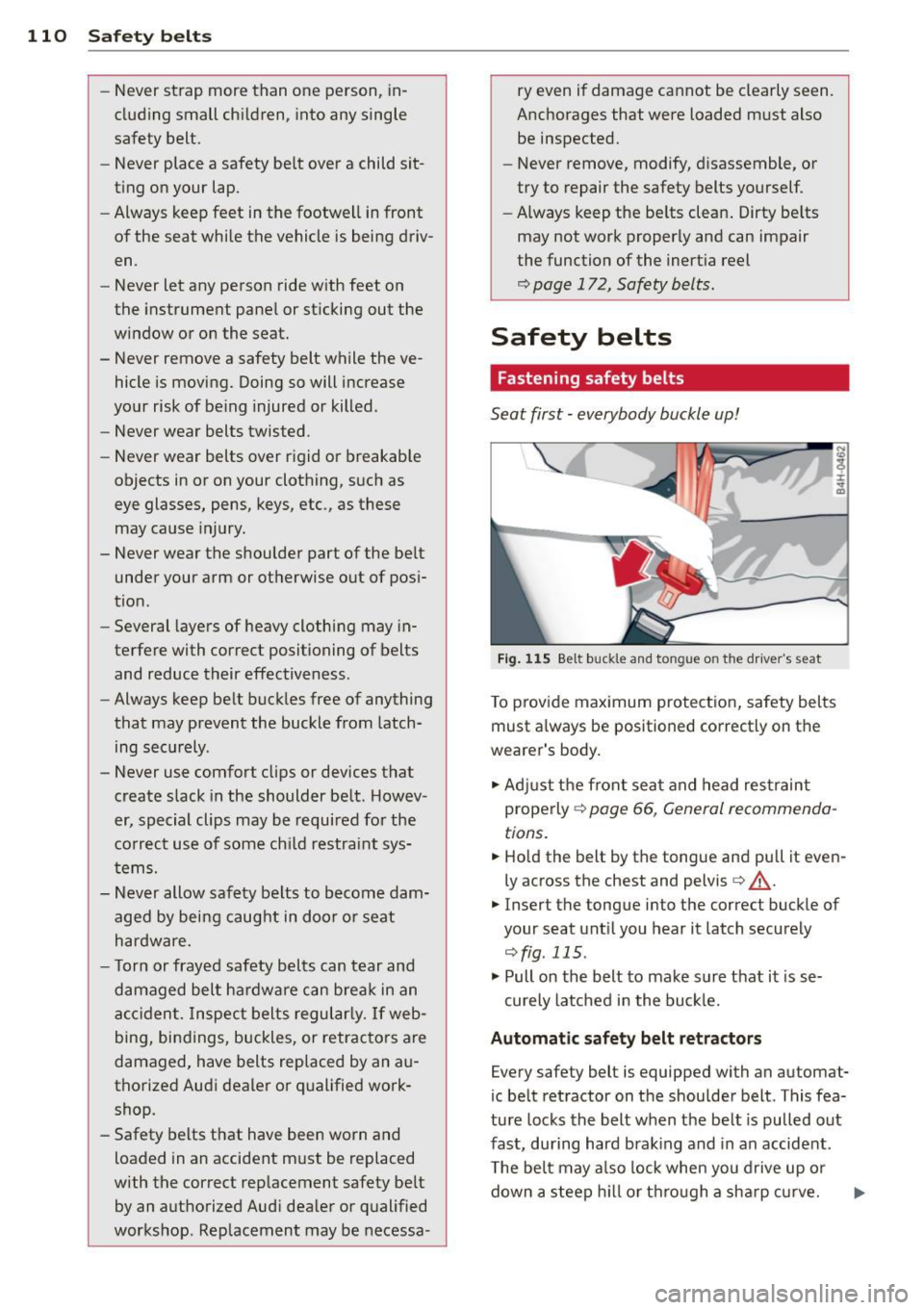
Fig. 115 Belt buckle and tongue on the driver's seat
To provide maximum protection, safety belts
must always be positioned correctly on the
wearer's body.
.,. Adjust the front seat and head restraint
properly
c::> page 66, General recommenda
tions.
.,. Hold the belt by the tongue and pull it even
ly across the chest and pelvis
c::> .&_.
.,. Insert the tongue into the correct buckle of
your seat until you hear it latch securely
c::>fig . 115.
.,. Pull on the belt to make sure that it is se-
curely latched in the buckle.
Automatic safety belt retractors
Every safety belt is equipped with an automat
ic be lt retractor on the shoulder belt . This fea
ture locks the belt when the belt is pulled out
fast, during hard braking and in an accident .
The belt may also lock when you drive up or
down a steep hill or through a sharp curve.
Page 113 of 260
During normal driving the belt lets you move
freely.
Safety belt pretensioners
The safety belts are equipped with a belt p re
tensione r that helps to t igh ten the safety be lt
and remove s lack when the pretensione r is ac
tivated. The function of the pretensioner is monitored by a warning light
¢ page 16.
Switchable locking feature
Every safe ty belt excep t the one on the driver
seat is eq uipped w ith a switchab le locking fea
ture that
mu st be used when the safety belt is
used to attach a child seat . Be s ure to read the
important informat ion about th is f eature
c:;, page 144.
A WARNING
Improperly positioned safety belts can
cause serious injury in an accident
¢ page 111, Safety belt position .
-Safety belts offer optimum protection
only when the seatback is upright and
belts are properly positioned on the
body .
-
-Never attach the safety belt to the buck
le for another seat . Attach ing the belt to
the wrong buckle will reduce safety belt effect iveness and ca n cause seri ous per
sonal in jury.
- A passenger who is no t properly rest rain
ed can be se rio usly inju red by the safety
belt itself when it moves from the stron
ger parts of the body into critical areas
like the abdomen .
- Always lock the convert ible locking re
tractor when yo u are secur ing a chi ld
seat in the vehicle
c:;, page 146 .
Safety belts 111
Safety belt position
Correct belt position is the key to getting
maximum protection from safety belts .
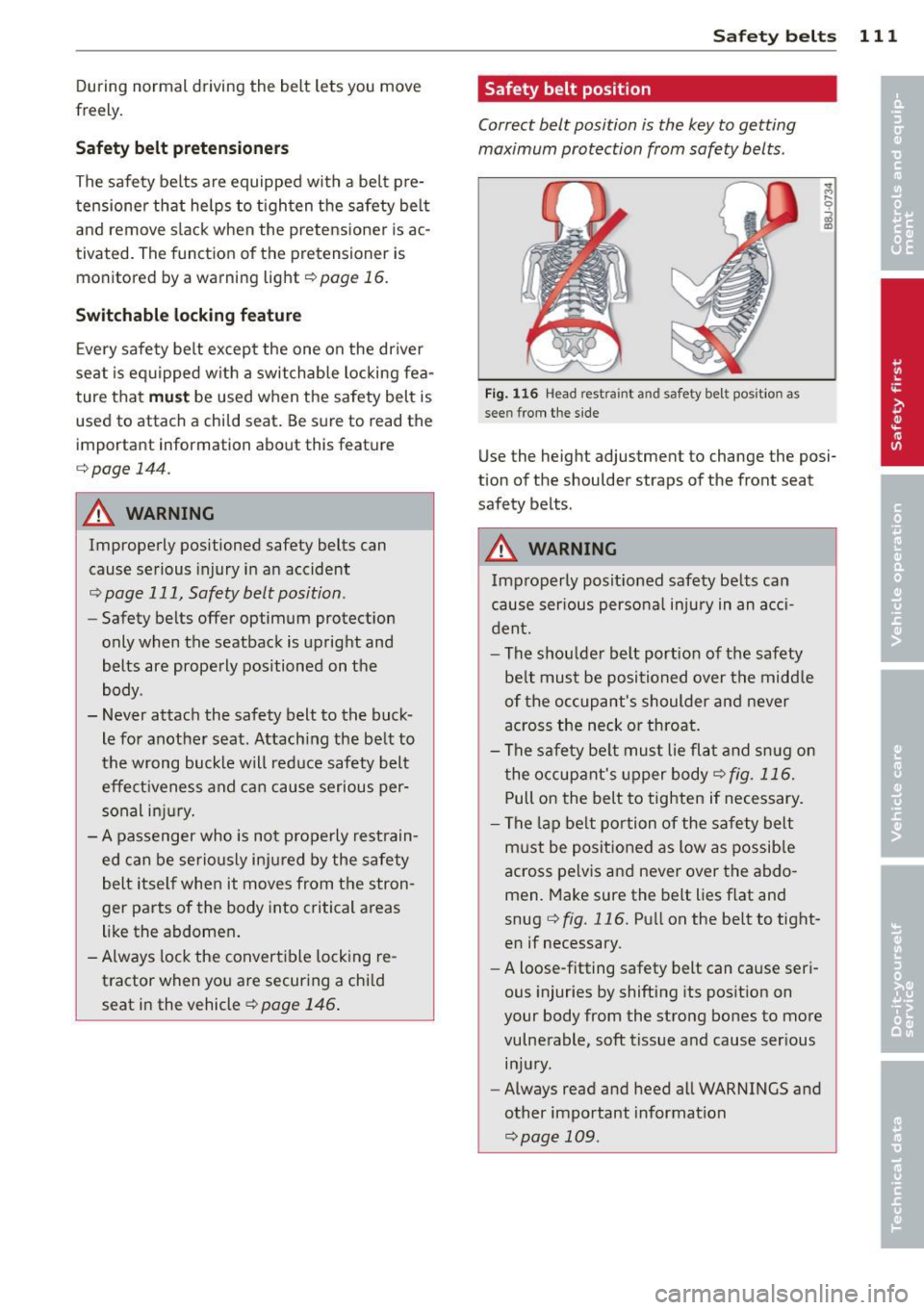
Fig . 1 16 Head restra int a nd safety be lt pos it io n as
see n fr om t he side
Use the height adjustment to change the posi
tion of the shoulder straps of the fro nt seat
safety belts .
A WARNING
Imp roperly posit ioned safety be lts can
cause ser ious persona l injury in an acci
dent.
- The shou lder belt portion of the safety
be lt must be posi tioned over the midd le
of the occupant's shoulder and never
across the neck or throat.
- The safety be lt must lie fla t and sn ug on
the occupant's upper body¢
fig. 116.
Pull on the belt to tighten if necessary.
-
- The lap be lt po rtion of the safety belt
must be posit ioned as low as possib le
across pelvis and never over the abdo
men. Make sure the belt lies flat and
snug ¢
fig. 116 . Pull on the belt to tight
en if necessary .
- A loose-fitting safety belt can cause seri
ous injuries by shifting its pos it ion on
your body from the strong bones to more
vulne rable , soft tissue and cause ser ious
in jury .
- Always read and heed all WARNINGS and
other important information
¢page 109.
Page 114 of 260
112 Safet y belt s
Pregnant women must also be properly
restrained
The best way to protect the fetus is to make
sure that expectant mothers always wear
safety belts correctly -throughout the preg
nancy.
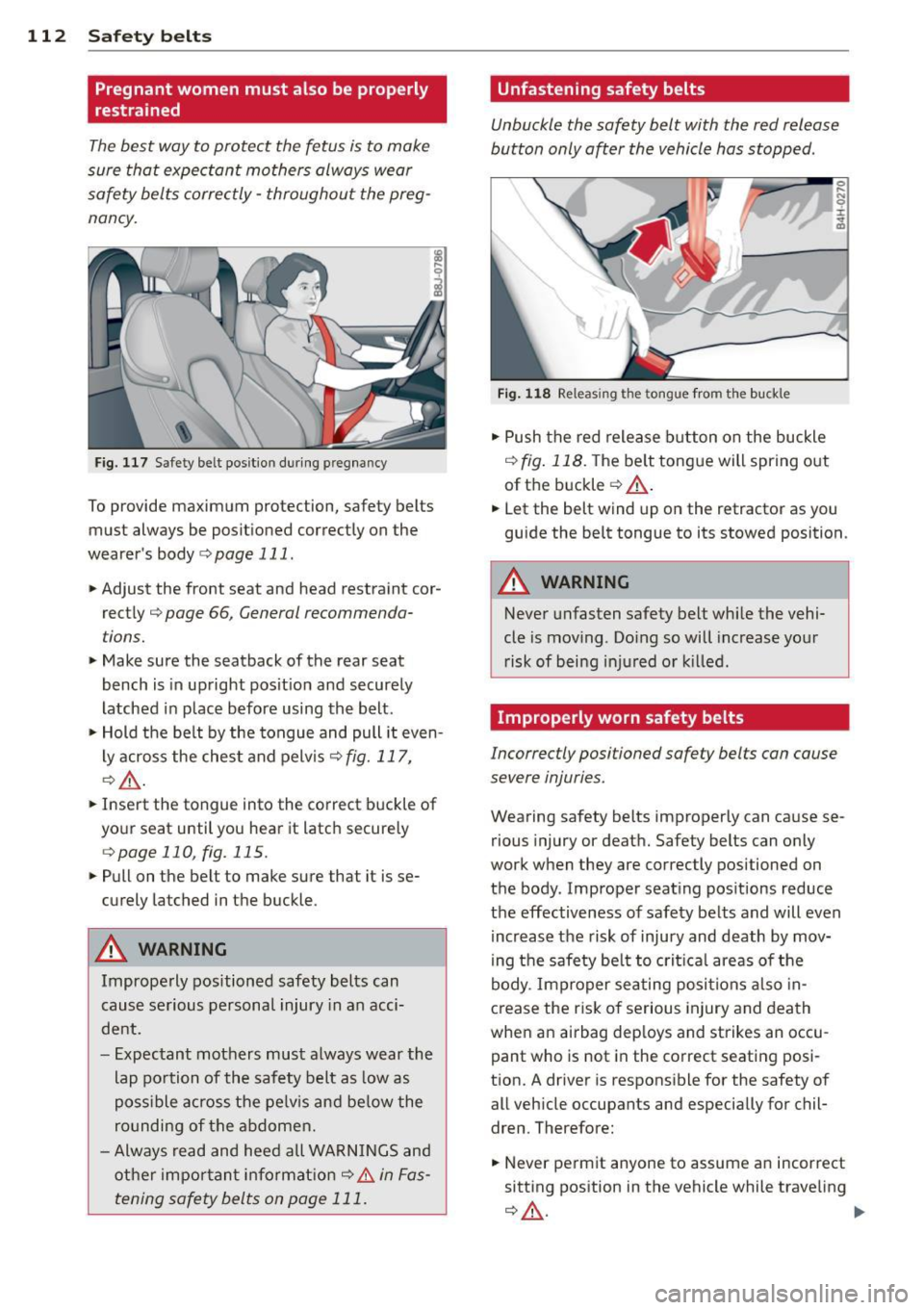
Fig. 117 S afety be lt pos it io n during p regnancy
To provide maximum protection, safety belts
must always be positioned correctly on the
wearer's body
c> page 111 .
• Adjust the front seat and head restraint cor
rectly
c> page 66, General recommenda
tions.
• Make sure the seatback of the rear seat
bench is in upright posit ion and securely
latched in p lace before using the belt .
• Hold the belt by the tongue and pull it even
ly across the ches t and pelvis
c> fig. 117,
c> ,& .
• Insert the tongue into the correct buckle of
yo ur seat until you hear it latch securely
c> poge 110 , fig. 115.
•Pullon the belt to make sure that it is se
curely latched in the buckle .
A WARNING
Improperly positioned safety belts can
cause se rious personal injury in an acci
dent.
-
- Expectant mothers must always wear the
lap po rtion of the safety belt as low as
poss ible ac ross the pe lv is and be low the
rounding of the abdomen.
- Always read and heed all WARN INGS and
ot her impo rtan t info rmat ion
c> .&. in Fas
tening safety belts on page
111.
Unfastening safety belts
Unbuckle the safety belt with the red release
button only o~er the vehicle has stopped .
,,
}_
Fig . 1 18 Releas ing the tongue from the buc kle
• Push the red release b utton on the buckle
c> fig. 118. T he be lt tongue will spring out
of t he b uckle
c> ,& .
N 0 ;c
a1i
• Let the belt wind up on the retractor as you
guide the belt tongue to its stowed position .
A WARNING
-
Never unfasten safety belt while the vehi-
cle is mov ing . Do ing so will increase your
risk of being i njured or k illed.
Improperly worn safety belts
Incorrectly positioned safety belts con cause
severe injuries.
Wearing safety belts improper ly can ca use se
rious injury or deat h. Safety belts can only
work when they are correctly positioned on
the body . Improper seat ing positions reduce
the effectiveness of safety be lts and will even
increase the risk of injury and death by mov
ing the safety be lt to crit ica l areas of the
body . Imp roper seati ng posi tions a lso in
crease the risk of serious injury and death
whe n an airbag dep loys and strikes an occu
pant who is not in the correct seating posi
t ion. A driver is respons ible for the safety of
all veh icle occupants and especially for chil
dren. Therefore:
• Never pe rmit anyone to assume an incorrect
sitting position in the vehicle while traveling
c> ,& . ~
Page 146 of 260
144 Child Safety
In o rder for the airbag to offer protection, it is
important that all vehicle occupants, especia l
l y any children, who must be in the front seat
because of exceptional circumstances, be
properly restrained and as far away from the
a irbag as poss ible. By keep ing room between
the child's body and the front of the passen
ger compartment, the airbag can inflate com
p letely and provide supplemen tal p rotection
i n cer tain frontal co llisions .
& WARNING
Not using a booster seat, using the boos
ter seat improperly, incorrect ly installing a
booste r seat or using the vehicle safety
belt improperly increases the risk of seri
ous personal injury and death in a collision
or ot her emergency situation. To help re
duce the risk of ser ious personal injury
and/or death:
- Always make sure to position the should
er port ion of the three-po int belt over
the midd le of ch ild's shou lder .
- Never let the shoulder port ion of the belt
rest against or across the neck, face,
chin, or throat of the child .
-Always make sure the lap belt portion of the three-po int be lt is worn snug and
passes as low as possib le across the
c hild's pelvis. Neve r let the belt pass over
the soft abdomen.
- Failure to properly route safe ty belts
over a ch ild 's body will cause severe inju
ries in an acc iden t or other emergency
sit uation
c;, page 10 7.
- Children on t he front seat of any car ,
even w ith Advanced A irbags, can be seri
o usly injured or even killed when an air
bag inflates .
- Never let a child stand or knee l on any
seat, for examp le the front seat.
- Never let a child ride in the ca rgo a rea of
yo ur vehicle.
- Always remember that a ch ild lean ing
f orward, sitting sideways or o ut o f posi
t ion in any way during an acc ident can be
struck by a deploying airbag. This will re
sult in serious personal injury or death.
-
- If you must insta ll a booster seat on the
front passenger seat because of excep
tional circumstances the
PASSENGER
AIR BAG OFF
li ght must come on and
stay on, whenever the ignition is switch
ed on .
- If the
PA SSENGER AIR BAG OFF light
does not come on and stay on, pe rform
the checks descr ibed
¢page 125, Moni
toring the Advanced Airbag System.
- If the PASSENGER AIR BAG OFF light
does not come on and stay on whenever
the ignition is switched on the infla ting
ai rbag w ill hit the child sa fety seat or in
fant car rier with g reat force and will
smash the child safety seat and child
aga inst the backrest, door or roof . Have
the airbag system inspected immed iately
by your Audi dea ler.
- Always read and heed all WARNINGS whenever us ing a child restrained in ave
h icle is being used
c;, page 107, Safety
belts,
c;, page 115, Airbag system and
c;, page 136, Important things to know.
Installing a child safety
seat
Securing a child safety seat using a
safety belt
Safety belts for the front passenger can be
locked with the convertible locking retractor
to properly secure child safety seats .
The safety belts emergency locking retractors
for the front passenger's seat safety belt have
a convertible locking retractor for ch ild re
stra ints . The safety be lt must be locked so
that be lt webbing cannot unree l. The retrac
tor can be act ivated to lock the safety belt and
prevent the safety be lt webb ing from loosen
ing up during norma l driving. A child safety
seat can only be properly insta lled when the
safety belt is locked so that the chi ld and child
safety seat will stay in place.
Always remember : Even tho ugh your vehicle is
equipped with an Advanced Airbag system, a
ll-
Page 180 of 260
1 78 Che cking and filling
Checking and filling
Engine hood
Releasing the engine hood
The engine hood is released from inside the
vehicle .
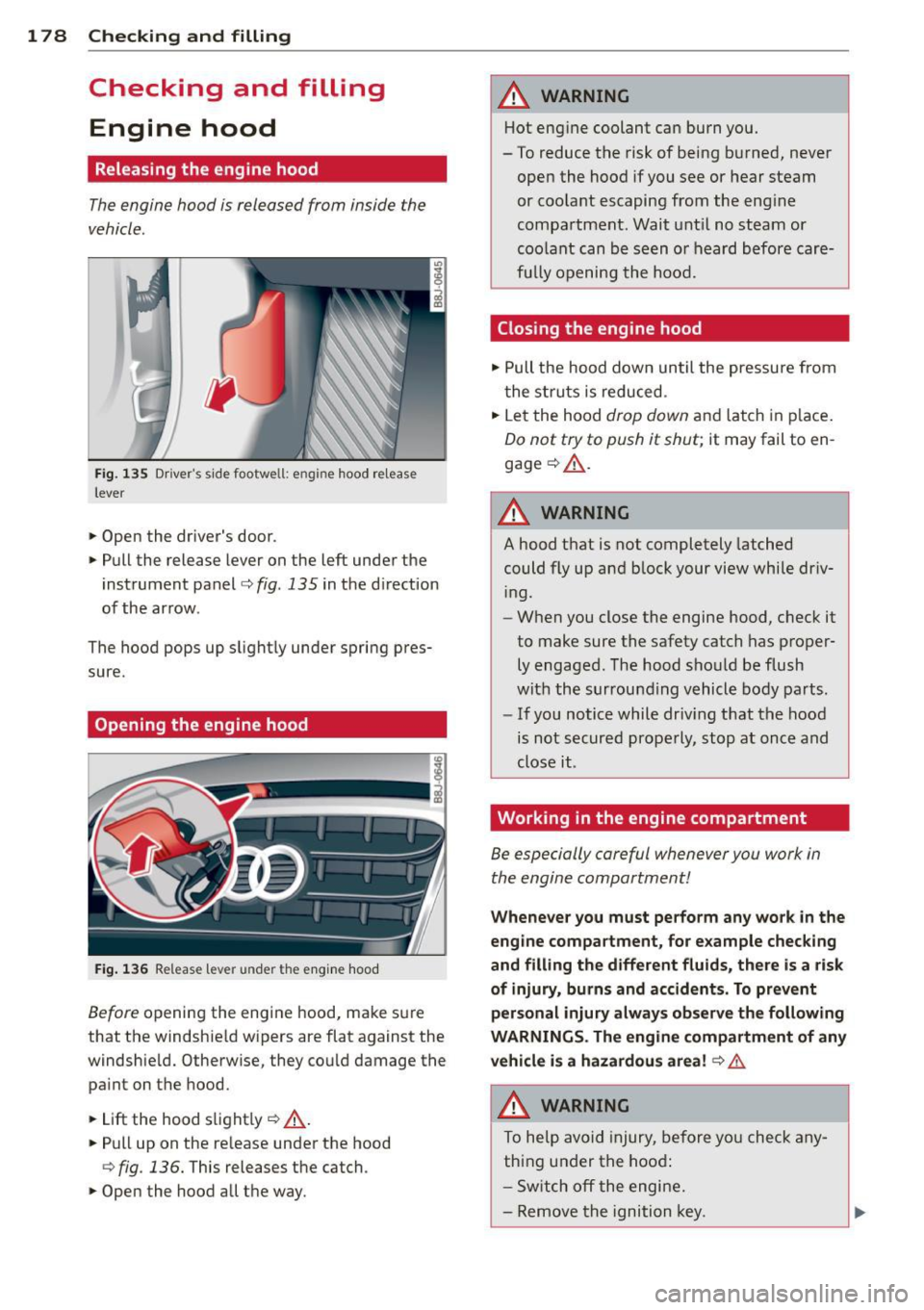
Fig . 135 Dr iver's side footwe ll: e ngin e hood re lease
lever
.. Open the driver's door .
.. Pull the release lever on the left under the
inst rument panel
c> fig . 135 in the direction
of the arrow .
The hood pops up s light ly under spring pres
sure.
Opening the engine hood
Fi g. 136 Release lever under the eng ine hood
Before opening the engine hood, make s ure
that the windshie ld wipers are flat against the
windshie ld. Otherwise, they co uld damage the
pa in t on the hood.
.. Lift the hood slight ly
c> .&, .
.. Pul l up on the release under the hood
c> fig . 136. This releases the catch .
.. Open the hood all the way.
A WARNING
-Hot eng ine coolant can burn you.
- To reduce the risk of being b urned, never
open the hood if you see or hear steam
or coo la nt escaping from the eng ine
compa rtment . Wait unt il no steam or
coo lant can be seen o r heard before care
fu lly openi ng the hood.
Closing the engine hood
.. Pull the hood down until the pressu re from
the struts is reduced .
.. Le t t he hood
drop down and latch in p lace .
Do not try to push it shut; it may fail to en
gage
c> .&, .
A WARNING
--
A hood that is not completely latched
could fly up and b lock your view while dr iv
i ng.
- W hen you close the engine hood, check it
to make sure the safety catch has p roper
ly engaged . The hood sho uld be flush
wit h the surrou nding vehicle body parts.
- If you notice while dr iv ing that the hood
is not s ecured properly, stop at once and
close it .
Working in the engine compartment
Be especially careful whenever you work in
the engine compartment!
Whenever you must perform an y wo rk in the
eng ine compartment, for example checking
and filling the different fluids, there is a risk
of injury, burns and a ccidents. To prevent
per sonal injury alway s obs erve the following
WARNINGS. The engin e compartm ent of an y
vehicle is a hazardou s area!
c> .&.
A WARNING
To he lp avo id injury, before yo u check any
thing under the hoo d:
- Sw itch off the engi ne .
- Remove the igni tion key.
Page 191 of 260
still functioning and they will draw energy
from the battery and drain it, for example, the
engine immobilizer . To prevent this, you can
e ither charge the battery occasionally to keep
it in good working condi tion or you can d is
connect the negat ive cable on the battery .
Winter ope ration
During the winter months, battery capacity
tends to decrease as temperatures drop . This
is because more power is also consumed while
start ing, and the headlights, rear window de
fogger, etc ., are used more often .
Avoid unnecessary power consumption, par
ticularly in c ity traffic or when traveling on ly
short distances. Let your authori zed Audi
dealer check the capacity of the vehicle bat
tery before winter sets in
¢ page 192. A well
charged battery w ill not only prevent starting
p rob lems when the weathe r is cold, but will
a lso last longer .
Replacing b attery
The new battery m ust have the same capaci
ty, voltage (12 volts), amperage, construction
a n d p lug sealing, as the origina l batte ry. Spec
ifications are listed on the batte ry housing.
Batteries specially developed by A udi f ulfill
the ma intenance, output, and safety require
ments.
When insta lling the bat tery , make sure the ig
n ition and all e lectr ica l cons umers are sw itch
ed
off ¢ (j) .
We recommend that you use ma intenance
free or
cy cle-re sis tant /le ak -proof batteries
according to the standards TL 825 06 (from
December 1997) and VW 7 SO 73 (from Au
gust 200 1).
Replacing the battery should be ca rried by a
qua lified workshop. Please follow the instruc
tions on the battery cover.
(D Note
- All work on t he battery requires techni
ca l knowledge. Please contact an A udi
dealership or anothe r authorized facili ty
Checkin g and fillin g 189
for questions abo ut the batte ry - danger
of acid burns and exp losion hazard!
- T he battery must not be opened! Do not
try to change the battery's liquid level,
otherwise detonating gas will escape
from the battery - explosion hazard!
- The AGM battery in the luggage com
partment cannot leak, because the elec
tro lyte for this battery is absorbed into a
special glass mat. This leak-proof battery
must not be replace with a convent iona l
battery.
- Make sure the ventilation hose on the
side of the battery is connected, other
w ise fumes or battery ac id can leak out.
- Battery holder and terminals always
have to be secured correctly.
- Before all work on the battery follow the
warnings below ¢.&. in Working on the
battery on page 190.
@) For the sake of the environment
Because of the prob lem of proper disposal
of a battery, we recommend your author
ized Audi dealer change the battery for
you. Batteries contain sulfur ic acid and
l ead and must always be disposed of prop
erly in compl iance with a ll environmental
regulat ions. Disposing of vehi cle batter ies
improperly is very dangerous to the envi
ronment. Make sure that the removed bat
tery cannot overbalance, otherwise sulfu ric acid might escape!
(D Tips
If your vehicle is left standing for several
weeks at extremely low temperatures, the
vehicle battery shou ld be removed and
stored where it w ill not freeze. This will
prevent it from be ing damaged and having
to be replaced . •
•
Page 203 of 260
Never exceed the m aximum inflati on pres
s u re li sted on the ti re sidew all for any rea
son.
Remembe r that the vehicle manufacturer, not
the t ire manufacturer, determines the co rrect
tire pressure for the tires on your vehicle.
It is importan t to check the tire pressure when
t he t ires are cold .
- Read the requ ired ti re pressure from the tire
pressure label located on d river's s ide B-pi l
l ar .
- T urn the valve stem cap counter-clockwise
to remove it from the tire valve .
- Place the air pressure gauge on the valve .
- The tire pressures should only be checked
and adjusted when the tires are cold . The
s li ght ly raised p ressures of warm tires must
not be reduced.
- Adjust the t ire pressure to the load you a re
ca rrying.
- Re install the valve stem cap on the valve .
When should I ch eck the ti re pres sur e?
The correct tire pressure is especially impor
tant at high speeds. The pressure should
therefore be checked at least once a month
and a lways before start ing a journey .
When should I ad just th e tir e pre ss ures?
Ad just the tire pressure to the load you are
carrying . After changing a wheel
or replacing
wheels you have to adjust the tire pressures
on all wheels. In addition, you must then in it i
alize the new tire pressures in the tire pres
sure mon itor ing system
q page 212 .
A WARNING
Incorrect tire pressures and/or unde rinfla
tion can lead sudden tire failure, loss of cont ro l, col lision, ser ious persona l inju ry
or even death.
- When the warning symbo l
[D] appears in
the instrument cl uster, stop and inspect
the tires.
- Incor rect tire pressure and/or underinfla
tion can cause increased tire wear and
Tire s an d wheel s 201
can affect the handling of the vehicle and
stopping ability .
- Incorrect tire pressures and/or underin
flation can a lso lead to sudden t ire fail
ure, including a blowout and sudden de
flation, caus ing loss of veh icle control.
- The driver is responsible for the correct
tire pressures for all tires on the veh icle.
The applicable pressure values are locat ed on a sticker on the dr iver's s ide B-pil
lar .
- On ly when all tires on the vehicle are fil
led to the correct pressure, the t ire p res
sure mon itor ing system can work cor
rectly.
- The use of incorrect tire p ressu re va lues
can lead to acc idents or other damage.
Therefore it is essential that the drive r
observe the spec ified t ire p ress ure val ues
for the t ires and the correct pressures for
the function of the tire press ure monito r
ing system.
-A lways inflate tires to the recommended
and correct tire pressure before dr iv ing
off.
- Driving with underinf lated tires bend
mo re, letting them get too hot resulting
in tread separation, sudden tire failure
and loss of control.
- Excessive speed and/over loading can
cause heat b uild-up, sudden tire failure
and loss of control.
- If the tire pressure is too low or too high,
the t ires will wear prematurely and the
veh icle w ill not handle well.
- If the tire is not flat and you do not have
to change a wheel immediately, drive at
reduced speed to the nearest service sta
tion to check the t ire p ressu re and add
a ir as requ ired.
(D Note
Driving w it h out valve stem caps can cause
damage to the tire valves. To prevent this,
always make sure that factory installed
valve stem caps on all whee ls are secu rely
mounted o n the valve. .,.
•
•
Page 212 of 260
210 Tir es and whe els
Snow chains
Snow chains may be fitted only to the front
wheels, and only to certain tire sizes. Ask your
authorized Audi dealer on which tire sizes
snow chains can be used.
If you are going to use snow chains , then you
must install them on the front wheels at
least.
The snow chains must have low-profile links
and must not be thicker than 0.53 inch
(13.S mm), including the lock .
Remove wheel center covers and tr im discs
before putting snow cha ins on your vehicle
¢ Q) . For safety reasons cover caps must the n
be fitted over the whee l bolts. These are avai l
ab le from authorized Audi dea lers.
A WARNING
Using the wrong snow chains for yo ur vehi
cle or installing them incorrectly can in
crease the risk of loss of control leading to
ser ious personal inj ury.
- Snow chains are ava ilable in different
sizes. Always make sure to follow the in
struct ions provided by the snow chain
manufacturer .
- When driving w ith snow chains never
dr ive faster than the speed permitted for
your specific snow cha ins.
- Always observe local regulat ions.
([) Note
-Remove snow chains before driving on
roads not covered with snow to avoid
damaging tires and wear ing the snow
chains down unnecessar ily.
- Snow chains, which come into direct con
tact with the wheel rim, can scratch or
damage it. Therefore, make sure that the
snow chains are suitably covered. Check
the position of the snow chains after
driving a few yards and correct if neces
sa ry. Follow the i nstructions from the
snow cha in manufacture r when doing so.
(D Tips
Where snow chains are mandatory on cer
tain roads, th is normally a lso applies to ve
hicles with All Whee l Dr ive.
Wheel bolts
Wheel bolts must always be tightened to the
correct torque.
T he design of wheel bo lts is matched to the
factory installed rims. If different rims are fit
ted, the correct whee l bolts with the right
l ength and correctly shaped bolt heads must
be used. Th is ensures that wheels are fitted
securely and that the brake system functions correctly.
In certa in circumstances, you may not use
whee l bolts from a different vehicle -even if it
is the same model
¢page 243.
A WARNING
-Imp roperly t ightened or ma inta ined wheel
bo lts can become loose causing loss of
control, a coll is ion and serious pe rsonal in
jury.
- Always keep t he wheel bo lts and the
threads in the wheel hubs clean so the
wheel bo lts can turn easily and be prop
erly tightened.
- Never grease or oil the wheel bolts and
the threads in the whee l hubs . They can
become loose while driving if g reased or
oiled, even if tightened to the specified
torque.
- Onl y use whee l bolts that belong to the
rim being installed.
- Never use different wheels bo lts on yo ur
vehicle .
- Always maintain the correct tightening
torque for the whee l bolts to reduce the
risk of a whee l loss. If the tightening tor
que of the whee l bolts is too low, they
can loosen and come out when the vehi
cle is mov ing. If the tightening torque is
too high, the wheel bolts a nd threads
II>-
Page 226 of 260
224 What do I do now?
a firm base for the jack on the ground. If nec
essary place a sturdy board or similar support
under the jack. On
hard, slippery surfaces
(such as tile s) use a rubber mat or similar to
prevent the jack from slipping¢,&.
A WARNING
- You or your passengers could be injured
wh ile changing a wheel if you do not fol
low safety p recautions:
- Positioning the jack under the vehicle
at any other place than those indicated
above may damage the vehicle or may result in personal injuries.
- A soft or unstable surface under the
jack may ca use the vehicle to slip off
the jack. Always provide a firm base for the jack on the ground . If necessary,
use a sturdy board under the jack.
- On hard, slippery surface (such as tiles)
use a rubber mat or s imilar to prevent
the jack from slipping.
- To help prevent injury to yourself and
your passengers:
- Do not raise the vehicle unti l yo u are
sure the jack is securely engaged.
- Passengers must not remain in the ve
hicle when it is jacked up.
- Make sure that passengers wait in a
safe p lace away from the vehicle and
well away from the roadway and traffic.
- Make sure jack position is correct, ad
just as necessa ry and then continue to
raise the jack .
@ Note
A floor jack or the pads on the hoist arms
must
not be positioned at the points
shown
-arrows-.
Taking the wheel off
F ollow these instructions step-by-step for
changing the wheel .
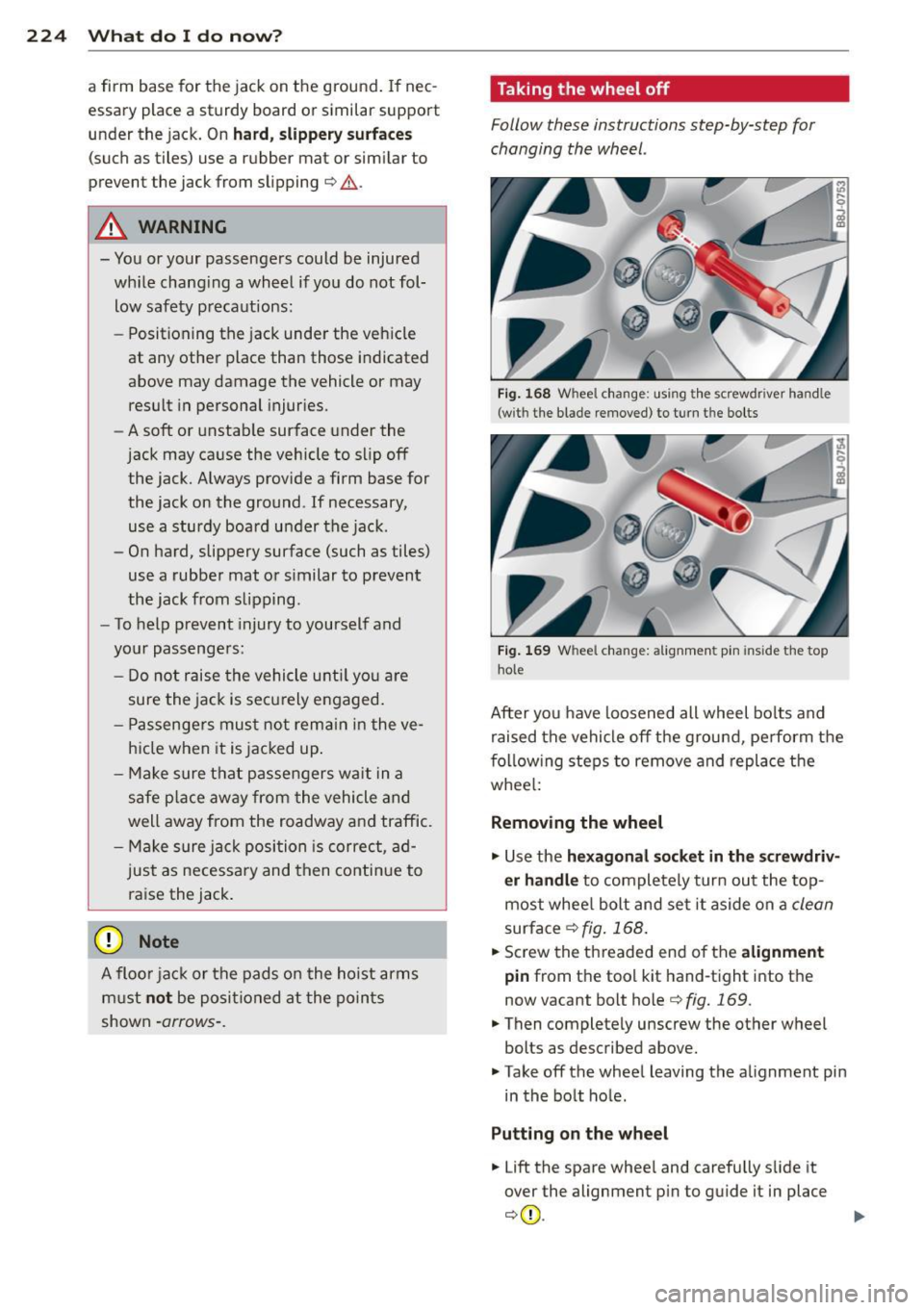
Fig. 168 Whee l cha nge: us ing th e screwd river ha nd le
(with the blad e removed ) to turn t he bolts
Fig. 169 Whee l change: alignment pin inside the top
h ole
After you have loosened all wheel bolts and
raised the vehicle off the ground, pe rform the
f ol low ing steps to remove and replace the
whee l:
Removing the wheel
.,. Use the hexagonal socket in the screwdriv
er handle
to completely turn out the top
most whee l bolt and set it aside on a
clean
surface ¢fig. 168.
... Screw the threaded end of the alignment
pin
from the tool kit hand-tight into the
now vacant bolt hole¢
fig. 169 .
.. Then completely unscrew the other wheel
bolts as described above .
.. Take off the wheel leaving the alignment pin
in the bolt hole .
Putting on the wheel
... Lift the spare wheel and carefully s lide it
over the alignment pin to guide it in place
¢(0.
Page 227 of 260

~ Use the hexagonal socket in the screwdriver
handle to screw in and tighten all wheel
bo lts
slightly .
~ Unscrew the alignment pin and insert and
t ighten the remaining wheel bolt s light ly
like the rest.
~ T urn the jack handle counter-clockw ise to
l ower the vehicle unti l the jack is fully re
leased .
~ Use the whee l bolt w rench to t ighten al l
whee l bolts firmly <=>
page 222 . Tighten
them
crosswise, from one bolt to the (ap
proximate ly) opposite one, to keep the
whee l cente red.
Q;) Note
When removing or installing the wheel,
the rim could hit the brake rotor and dam
age the rotor. Work carefully and have a
second person help you.
(D} Tips
Never use the hexagonal socket in the han
dle of the screwdriver to loosen or t ighten
the wheel bolts .
- Pull the reversib le b lade from the screw
driver before yo u use the hexagonal
socket in the handle to t urn the whee l
bo lts .
- When mounting tires with
unid irectional
tread design
make su re the tread pat
te rn is poi nted the r ight way
<=> page 226.
- The wheel bolts should be clea n and easy
to tu rn . Check for d irt and corrosion on
the mat ing s urfaces of both the wheel
and the hub. Rem ove a ll dirt from these
su rfaces before rem ounting the wheel.
Notes on wheel change
Please read the information <=> page 205 , New
tires and replacing tires and wheels ,
if you are
going to use a spare t ire which is different
from the tires on your ve hicle.
Afte r you change a tire :
What do I do now? 225
-Check the tire pre ssure on the spare imme
diately after mounting.
- Have the whe el bolt tightening torque
checked with a torque wrench as soon a s
possible by your authorized Audi dealer or
a qualified service station.
- With steel and alloy wheel rim s, the wheel
bolt s are cor rectly tightened at a torque of
90 ft lb (120 Nm ).
- If you noti ce while changing a tire that the
wheel bolts are corroded and difficult to
turn , then they should be replaced before
you check the tightening to rque.
- Replace the flat tire w ith a new one and
have it installed on your vehicle as soon as
possible. Remount the whee l co ver.
Until then , dr ive with extra care and at re
duced speeds.
A WARNING
- If you are going to equ ip your vehicle
w it h tires o r rims which differ from those
which were factory installed, then be
sure to rea d the information
¢ page 205,
New tire s and replacing tires and
wheels.
- Always sto re the too ls secu rely in lug
gage com partmen t. Othe rwise , in a n ac
cident or s udden m aneuver they cou ld fly
forwa rd, causing inj ury to passengers in
the vehicle.
(D Note
D o not use comme rcially ava ilab le tire
se alants . Ot herwise, t he e lectr ic al c ompo
nen ts of the tire pressu re monitoring sys
tem will no lo nger work p roperly and the
sensor fo r the tire pressure mon itor ing
system will have to be rep laced by a quali
fied workshop. •
•