instrument panel AUDI TT ROADSTER 2011 User Guide
[x] Cancel search | Manufacturer: AUDI, Model Year: 2011, Model line: TT ROADSTER, Model: AUDI TT ROADSTER 2011Pages: 260, PDF Size: 64.11 MB
Page 127 of 260
-The inflating airbag will hit the child
safety seat or infant carrier with great
force and w ill smash the ch ild safety seat
and child against the backrest, center
arm rest, door or roof.
- If you must install a rearward facing
child safety seat on the front passenger
seat because of exceptional circumstan ces and the
PASSENGER AIR BAG OFF
light does no t come on and stay on, im
med iately install the rear-facing child
safety seat in a rear seating position and
have the airbag system inspected by your
Audi dealer .
&_ WARNING
Objects between you and the airbag will
increase the risk of in jury in a crash by in
terfering with the way the airbag unfolds or by being pushed into you as the a irbag
inflates.
- Never hold th ings in your hands or on
your lap when the vehicle is in use .
- Never transport items on or in the area
of the front passenger seat. Objects
could move into the area of the front air
bags dur ing braking or other sudden ma
neuver and become dange rous projec
t il es that can cause serious personal in
jury if the airbags inflate.
- Never place o r attach accessories or oth
er objects (such as cup ho lders, tele
phone brackets, large, heavy or b ulky ob
jects) on the doors, over or near the area
marked "AIRBAG" on the steering wheel,
instrument panel, seat backrests or be
tween those areas and yourself. These
objects could cause injury in a crash, es
pecially when the airbags inflate.
- Never recline the front passenger's seat
to transport objects. Items can also move into the area of the side airbag or
the front airbag dur ing braking or in a
sudden maneuver. Objects near the air
bags can be come project iles and cause
injury, part icularly when the seat is re
cl ined.
-
A irbag sys tem 125
&_ WARNING
The fine dust created when airbags deploy
can cause breathing prob lems fo r people
with a history of as thma or other breath
ing cond itions.
- To reduce the risk of breath ing problems,
those with asthma o r other respiratory
conditions s hou ld get fresh air r ight
away by getting o ut of the veh icle or
open ing windows or doors.
- If you are in a collision in which airbags
deploy, wash your hands and fa ce with
mild soap and wate r before eating.
- Be ca reful not to get the dust in to your
eyes, o r into any c uts or sc ratches.
- If the residue should get into your eyes,
f lush them w ith wate r.
Monitoring the
Advanced Airbag System
fl~ Airbag monitoring indicator light
Two separate indicators monitor the function
of the Advanced Airbag System: the airbag
monitoring indicator light and the
PASSEN
GER AIR BAG O FF
light.
T he Advanced A irbag System (includ ing the
electron ic co ntro l unit, sensor circu its and sys
tem wiring) is monitored continuously to
make sure that it is function ing properly
whenever the ignition is on. Each time you
turn on the ignition, the airbag mon itoring in
dicator light
I will come on for a few seconds
(self diagnostics).
Th e syste m mu st b e in spected when the
indicator light
I :
- does not come on when the ignition is
sw itched on,
- does not go out a few seconds after you
have switched on the ignit ion, or
- comes on while driving.
If an airbag system malfunction is detected,
the indicator light wi ll first start flashing to
catch the driver's attention and then stay on
llo-
•
•
Page 129 of 260
routed around the child restraint as descri
bed in the chi ld restraint manufacturer's
instruct ions;
- make sure that the convertible locking fea
ture on the safety belt for the front passen ger seat has been activated and that the
safety belt has been pulled tight. The belt must not be loose or have loops of slack so
that the sensor below the safety belt latch
on the seat can do its job
~ page 144 .
-make sure that th ings that may increase the
weight of the ch ild and child safety seat are
not being transpo rted on the front passen
ger seat;
- make sure that the safety belt tension sen
sor is not b locked. Shake the safety belt
latch on the front passenge r sea t back and
forth;
- If a st rap or tether is being used to tie the
child safety seat to the front passenger
seat, ma ke s ure that i t is not so tight tha t it
ca uses the weight -sensing mat to meas ure
more weight than is actually on the seat .
If the PASSENGER AIR BAG OFF light still
d oes not come o n
and does not stay on con
tinuously (when the ignition is switched on),
- ta ke the ch ild restraint off the front passen-
ger seat and insta ll it p roperly at one of the
rear seat pos itions. Have the a irb ag system
inspected by your A udi dealer immediately.
- move the chi ld to a rea r seat posi tion and
make su re that the ch ild is p roperly res train
ed in a child restraint that is appropriate for
its size and age .
The
PASSENGER AIR BAG OFF light shou ld
NO T come on when the ign ition is on and an
ad ult is sitting in a proper seating position on
the front passenger seat.
If the PASSENGER
AIR B AG O FF
light comes on and stays on or
flashes for about 5 seconds while dr iv ing, un
der these circumstances, make sure that:
- the ad ult on the front passenger seat is
properly seated on the center of the seat
c u shi on with h is or her back up against the
backrest and the backrest is not reclined
A irbag system 127
~ page 99, Proper occupant seating posi
tions,
- the adult is not tak ing we ight off the seat by
holding on to the passenger assist handle
above the front passenger door or support
ing their weight on the armrest,
- the safety be lt is being properly worn and
that there is not a lot of s lack in the safety
be lt webbing,
- accessory seat covers or cushions or other
things that may cause an incorrect reading
or impression on the weight-sensing mat
under the upho lstery of the seat have been
removed from the front passenger seat,
- a safety belt extender has not been left in
the safety belt latch for the front passenger
seat .
In add ition to the
PA SSEN GER AIR BAG O FF
light in the center of the instrument panel,
the message
PASS ENGE R AIR BAG O FF or
PASSENGER AIR BAG ON w ill briefly appear
i n the instrument cluster d isp lay . This is to in
form the dr iver of the current front passenge r
a irbag sta tus.
Important safety instructions on
monitoring the Advanced Airbag System
A WARNING
An ai rbag system that is not functioning
p roperly cannot provide supplemental pro
tection in a frontal crash.
- If the airbag ind icator light comes on, it
means that there may be something
wrong wi th the Advanced Airbag Sys tem.
It is poss ible that the ai rbag w ill inflate
when it is not supposed to, or will not in
f late when it sho uld .
- Have the airbag system inspected imme
diate ly by yo ur Audi dealer.
A WARNING
If the front airbag inflates, a child without
a child restraint, in a rearward -facing child
safety seat or in a forward-facing child re
straint that has not been proper ly installed
-
will be ser ious ly injured and can be killed. ~
•
•
Page 130 of 260
128 Airbag system
-Even though your vehicle is equipped
with an Advanced Airbag System, make
certain that all children, especially 12
years and younger, always ride on the
back seat properly restrained for their
age and size.
- If you must install a rearward-facing
child safety seat on the front passenger
seat because of exceptional circumstan
ces and the
PASSENGER AIR BAG OFF
light does not appear and stay on, imme
diately install the rear-facing child safety
seat in a rear seating position and have the airbag system inspected by your Audi
dealer.
- A tight tether or other strap on a rear
ward-facing child restraint attached to
the front passenger seat can put too
much pressure on the weight-sensing
mat in the seat and register more weight
than is actually on the seat. The heavier
weight registered can make the system
work as though an adult were on the seat
and deploy the Advanced Airbag when it
must be suppressed causing serious or
even fatal injury to the child.
- If, in exceptional circumstances, you
must install a forward-facing child re
straint on the front passenger seat, al
ways move the seat into its rearmost po
sition in the seat's fore and aft adjust
ment range, as far away from the airbag
as possible. The backrest must be adjust
ed to an upright position . Make sure that
the
PASSENGER AIR BAG OFF light
comes on and stays on all the time when
ever the ignition is switched on.
A WARNING
- If the PASSENGER AIR BAG OFF light
does not go out when an adult is sitting
on the front passenger seat after taking
the steps described above, have the air
bag system inspected by your Audi deal
er before transporting anyone on the
front passenger seat.
-
(!) Tips
If the weight-sensing mat in the front pas
senger seat detects an empty seat, the
front airbag on the passenger side will be
turned
off, and PASSENGER AIR BAG OFF
will stay on.
Repair , care and disposal of the airbags
Parts of the airbag system are installed at
many different places on your Audi. Installing,
removing, servicing or repairing a part in an
area of the vehicle can damage a part of an
airbag system and prevent that system from
working properly in a collision.
There are some important things you have to
know to make sure that the effectiveness of
the system will not be impaired and that dis
carded components do not cause injury or pol
lute the environment.
A WARNING
-Improper care, servicing and repair proce-
dures can increase the risk of personal in
jury and death by preventing an airbag from deploying when needed or deploying
an airbag unexpectedly:
- Never cover, obstruct, or change the
steering wheel horn pad or airbag cover
or the instrument panel or modify them
in any way.
- Never attach any objects such as cup
holders or telephone mountings to the
surfaces covering the airbag units.
- For cleaning the horn pad or instrument
panel, use only a soft, dry cloth or one
moistened with plain water. Solvents or
cleaners could damage the airbag cover
or change the stiffness or strength of the material so that the airbag cannot de
ploy and protect properly.
- Never repair, adjust, or change any parts
of the airbag system.
- All work on the steering wheel, instru
ment panel, front seats or electrical sys-
tem (including the installation of audio
II),
Page 133 of 260
The safety belt buckle for the driver and front
seat passenger have switches that tell the air
bag control mod ule if the safety belt is being
used or not. If the safety belt is being used,
the knee airbag will deploy at a slightly higher
rate of deceleration than if the belt is not be
i ng used. Therefo re, i n a pa rtic ular collision, it
is poss ible that an airbag will not deploy at a
seating position whe re the safety belt is being
used but will inflate at the position whe re the
safety be lt is not being used .
R emembe r too, airbags will deploy only once
and on ly in ce rtain kinds of accidents -your
safety be lts are a lways there to offer pro te c
t ion in those acc idents in which airbags are
not supposed to deploy or when they have a l
ready deployed, fo r example when your vehi
cle strikes or is struck by another after the
f irst coll is ion.
This is just one o f th e reasons why an ai rbag is
not a substitute for the safety belt . The airbag
system works most effective ly when used with
the safety belts. Therefore, always wear your
safety belts correctly .
It is important to remember that while the
supp lemental airbag system is designed to re
duce the likelihood of serio us inj uries, other
in juries, for example, swel ling, bruising, and
minor abrasions can also be associated with
a ir bags .
The knee airbag sy stem ba sically consist s
of:
- The electronic control modu le
- Two inflatable airbags (airbag and gas gen-
erator), one for the driver and one for the
front passenger
- The airbag indicator light in the instrument
panel
The knee airbag sy stem will not deploy :
-when the ignition is turned off
- in fron t-end col lisions w hen the dece lerat ion
measured by the control unit is too low
- in s ide collisions
- i n rear-end colli sions
- in ro llovers
A irbag system 131
- in the event of a system mal function (warn
ing/indicator light illuminated)
r=>poge 16.
A WARNING
-Safety belts and the airbag system can
only provide pr otection w hen occupants
are in the proper seating position
r=>poge 124.
-If the ai rbag ind icator light comes when
the vehicle is be ing used, have the sys
tem inspected immediate ly by yo ur au
thori zed A udi deal er. The airbag may not
wo rk p roperly when the vehicle a ccele ra
tion in a side col lision i s high enough to
dep loy the airbag. See also
c=:> page 16.
How knee airbags work
The risk of injury to the leg area is reduced by
fully deployed knee airbags.
Fig. 1 24 In flated a irbags protec ting in a fronta l coll i
sio n
The knee airbag system has been designed so
that the a irbags for the driver and front pas
senger are dep loyed in certa in but not a ll
fron tal coll is io ns.
If the front a irbags dep loy, the knee a irbags
also dep loy in fronta l co llisions above ace r
ta in seve rity .
When the system is dep loyed, the a irbags
start to fill w ith a propellant gas, and inflate
betwee n the lower pa rt of the instrument
panel and the driver and the lowe r part of the
in strume nt pa nel and the fron t passenger
r=> page 124 , fig . 12 1.
Although they are not a soft p illow , they can
"c ushion" the impact and in th is way they can
Ill>
Page 134 of 260
132 Airbag system
help to reduce the risk of injury to the lower
extremit ies.
All this takes place instantaneously, so fast
that many people don 't even realize that the
airbags have deployed. The airbags also in
flate with a great deal of force and it is impor
tant for occupant safety that nothing should be in their way when they deploy.
Fully inflated airbags in combination with
properly worn safety belts slow down and lim
it the occupant's forward movement and help
to reduce the risk.
Important safety instructions on the
knee airbag system
Airbags are only supplemen tal res traints. Al
ways wear safety belts correctly and ride in a
proper seating position.
The re is a lot tha t you and your passengers
must know and do to help the safety belts and
airbags to provide supplemental protection .
A WARNING
An inflating knee airbag can cause serious
injury. Wearing safety belts incorrectly and
improper seating positions increase the
risk of serious personal injury and death
whenever a vehicle is being used .
- The airbag system cannot protect you
properly if you are seated too close to
any of the airbag locations. When adjust
ing their seat positions, it is important
that both the driver and the front pas
senger keep their upper bodies and
knees at the following minimum safe
distances:
- 10 inches (25 cm) between the chest
and the steering wheel/instrument
panel.
- 4 inches (10 cm) between the knees
and the lower part of the instrument
panel.
- The risk of personal injury increases if
you lean forward or to the side, or if the seat is improperly positioned and you are
not wearing your safety belt. The risk in- creases even more should the airbag de
ploy
.
- Always make sure that the knee airbag
can inflate without interference. Objects
between yourself and the airbag can in
crease the risk of injury in an accident by
interfering with the way the airbag de
ploys or by being pushed into you as the
airbag deploys.
- No persons (children) or animals
should ride in the footwell in front of
the passenger seat.
If the airbag de
ploys, this can result in serious or fatal
injuries.
- No objects of any kind should be car
ried in the footwell area in front of the
driver 's or passenger's seat . Bulky ob
jects (shopping bags, for example) can
hamper or prevent proper deployment
of the airbag . Small objects can be
thrown through the vehicle if the air
bag deploys and injure you or your pas
sengers.
- Make sure there are no cracks, deep
scratches or other damage in the area of
the instrument panel where the knee air
bags are located.
- If children are incorrectly seated, their
risk of injury increases in the case of an
accident
c:> page 136, Child Safety.
Side airbags
Description of side airbags
T he airbag system can provide supplemen tal
protection to properly restrained front seat
occupants.
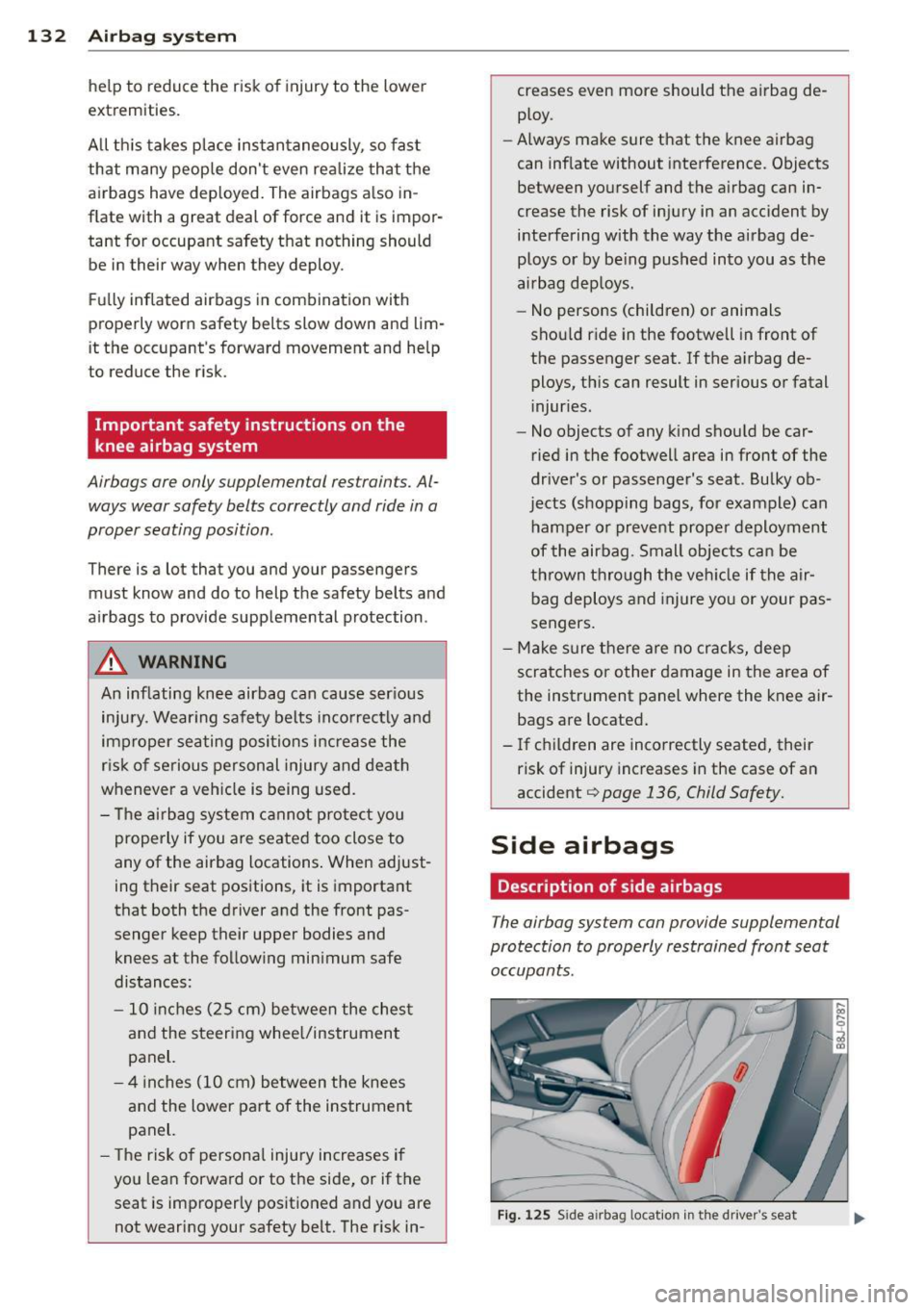
Fig. 12S S ide a irba g locatio n in the d river's seat
Page 139 of 260

A WARNING ,~
If, in exceptional circumstances, you must
install a forward-facing child restraint on
the front passenger's seat:
- Always make sure the forward-facing
seat has been designed and certified by
its manufacturer for use on a front seat
with a passenger front and side airbag.
-Always follow the manufacturer's in
structions provided with the child safety
seat or carrier.
- Always move the passenger seat into its
rearmost position in the seat's fore and
aft adjustment range, as far away from
the airbag as possible before installing
the child restraint. The backrest must be
adjusted to an upright position.
- Always make sure that the
PASSENGER
AIR BAG OFF light comes on and stays
on all the time whenever the ignition is
switched on.
Advanced front airbag system and children
Your vehicle is equipped with an "Advanced
Airbag System" in compliance with United
States Federal Motor Vehicle Safety Standard
(FMVSS) 208 as applicable at the time your
vehicle was manufactured.
The Advanced Airbag system in your vehicle
has been certified to meet the "low-risk" re
quirements for 3- and 6-year old children on
the passenger side and small adults on the
driver side. The low risk deployment criteria
are intended to reduce the risk of injury
through interaction with the airbag that can
occur, for example, by being too close to the
steering wheel and instrument panel when
the airbag inflates. In addition, the system has been certified to comply with the "sup
pression" requirements of the Safety Stand
ard, to turn
off the front airbag for infants up
to 12 months who are restrained on the front
passenger seat in child restraints that are list
ed in the Standard.
Child Safety 137
Even though your vehicle is equipped with an
Advanced Airbag system, a child should al
ways ride in theseat properly restrained for its
age and si ze . The airbag on the passenger side
makes the front seat a potentially dangerous
place for a child to ride . The front seat is not
the safest place for a child in a forward-facing
child safety seat . It can be a very dangerous
place for an infant or a larger child in a rear
ward-facing seat.
Advanced Airbags and the weight
sensing mat in the front seat
The Advanced Airbag System in your vehicle detects the presence of an infant or child in a
child restraint on the front passenger seat us
ing the weight -sensing mat in the seat cush
ion and the sensor below the safety belt latch
on the front passenger seat that measures the
tension on the safety belt.
The weight -sensing mat measures total
weight of the child and the child safety seat
and a child blanket on the front passenger
seat. The weight on the front passenger seat
is related to the design of the child restraint
and its "footprint", the size and shape of the
bottom of the child restraint as it sits on the
seat. The weight of a child restraint and its
"footprint" vary for different kinds of child re
straints and for the different models of the
same kind of child restraint offered by child
restraint manufacturers .
The weight ranges for the individual types,
makes and models of child restraints that the
NHTSA has specified in the Safety Standard
together with the weight ranges of typical in
fants and typical 1 year-old child have been
stored in the control unit of the Advanced Air
bag System. When a child restraint is being
used on the front passenger seat with a typi
cal 1 year-old child, the Advanced Airbag Sys
tem compares the weight measured by the
weight sensing mat with the information stor
ed in the electronic control unit.
The electronic control unit also registers the
tension on the front passenger safety belt. ..,. •
•
Page 171 of 260
(D Note
To avoid scratching the display, you should never clean it dry.
Aluminum trim
Use only neutr al- pH products to remove spots
and depos its from alum inum surfaces.
Chrome care products and alkaline cleaners
will attack alum inum su rfaces and can dam
age them over time.
A WARNING
Always read and heed a ll WARNINGS and
t he information<=>
page 162.
Fabrics and fabric coverings
Fabrics and fabric coverings (e .g. seats, door
trim panels, etc.) should be cleaned at regular
interva ls with a vacuum cleaner. T his removes
surface dirt particles which could become em
bedded in the fabr ic through use. Steam
cleaners should not be used, because the
steam tends to push the dirt deeper into the
fabric and lock it there.
Norm al cleaning
Generally, we recommend using a soft sponge
or a lint-free microfiber cloth to the clean fab
ric. Brushes should only be used for carpets
and floor mats, s ince other fabric surfaces
could be harmed by b rushes .
Normal surface sta ins can be cleaned using a
commercially available foam cleaner . Spread
the foam on the surface of the fabric with a
soft sponge and work it in gently . Do not satu
rate the fabric. Then pat the foam d ry using
absorbent, dry cloths (e.g. microfibe r clo th)
and vacuum it afte r it has dr ied comp lete ly.
Cl eaning stains
Stains caused by beve rages (e .g. coffee, fruit
juice, etc.) can be t reated with a mild deter
gent solution. App ly the dete rgent so lution
wi th a sponge. In the case of s tubbor n stains,
a detergent paste can be applied directly to
Cleaning and protec tion 169
the stain and worked into the fabric. After
wards, use copious amounts of clean water to
remove the rema in ing detergent. Apply the
water with a damp cloth or sponge and pat
the fabric dry with an absorbent, dry cloth.
Stains from choco late or makeup should have
detergent paste (e.g . ox-gall soap) rubbed in
to them. Afterwards, remove the soap with
water (damp sponge).
A lcohol can be used to treat stains from
grease, o il, lipstick or a ballpoint pen. Melted
grease or dye must be patted off using ab
sorbent mater ial. It may be necessary to re
treat the areas with detergent paste and wa
te r.
In the case of genera l soiling of the uphols
tery and cover material, we recommend hir ing
a specia list that has the equipment to clean
t h e seat covers and othe r fabr ic surfaces by
shampooing and spray extraction .
A WARNING
Always read and heed all WARNINGS and
the info rmation
<=> page 162.
@ Tips
Open Velcro fasteners on your clothing can
damage the seat cover. Please make sure
that Ve lcro fasteners are closed.
Plastic parts and instrument panel
A lways use a clean clo th moistened in clea r
water to clean these areas . For pe rsistent d irt
u se an Aud i approved
solvent-free p lastic
clea ner/protectant.
A WARNING
Solvents can change the properties of
some plastics and make it harder for the
a irbag to deploy.
-
- Never clean the instrument panel or the
surface of Airbag modu les with cleaning
products that co nta in solvents .
- Products containing solvents will make
the surface of this part porous. •
•
Page 229 of 260
Fuses and bulbs
Electrical fuses
Replacing fuses
Fuses that have blown will have metal strips
that have burned through.
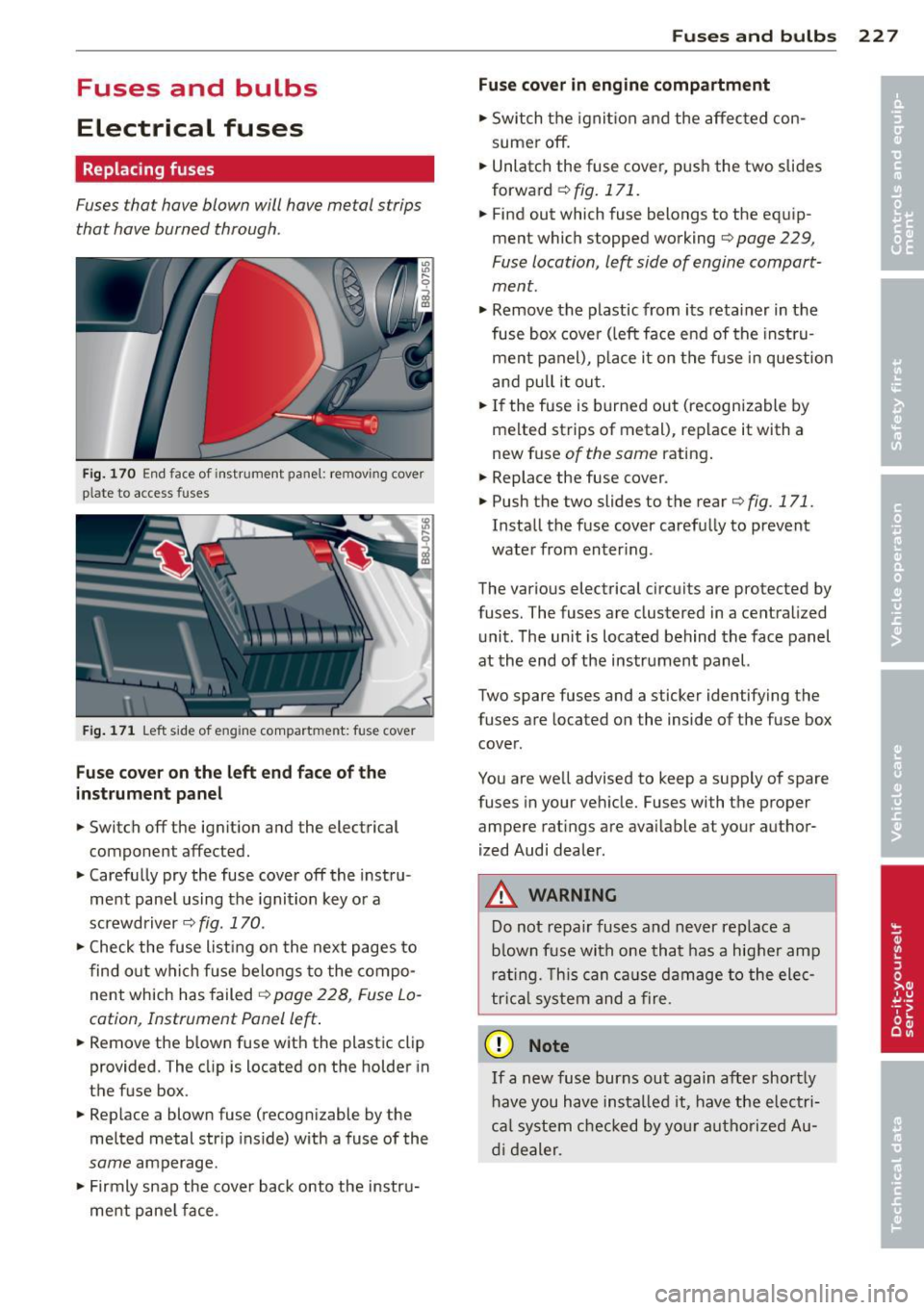
Fig. 170 End face of instrument panel: removing cover
p late to access fuses
Fig. 171 Left side of eng ine compart ment: fuse cove r
Fuse cover on the left end face of the
instrument panel
.. Switch off the ignition and the electrical
component affected .
.. Carefully pry the fuse cover off the instru
ment panel using the ignition key or a
screwdriver ~
fig. 170.
.. Check the fuse list ing on the next pages to
find o ut which f use belongs to the compo
nent which has failed ¢
page 228, Fuse Lo
cation, Instrument Panel left .
.. Remove the blown fuse with the plastic clip
provided. The clip is located on the holder in
the fuse box.
.. Replace a blown fuse (recognizable by the
melted metal str ip inside) with a fuse of the
same amperage .
.. Firmly snap the cover back onto the instru
ment pane l face .
Fuse s and bulbs 22 7
Fuse cover in engine compartment
.. Switch the ignit ion and the affected con
sumer off .
.. Unlatch the fuse cover, p ush the two slides
forward
~ fig. 171.
.. Find out which fuse belongs to the equip
ment which stopped working
~ page 229,
Fuse location, le~ side of engine compart
ment.
.. Remove the plastic from its retainer in the
fuse box cove r (left face end of the instru
ment panel), place it on the f use in question
and pull it out .
.. If the fuse is burned out (recognizable by
melted strips of metal), replace it with a
new fuse
of the same rating.
.. Replace the fuse cover .
.. Push the two slides to the rear¢
fig. 171.
Install the fuse cover carefully to prevent
water from enter ing .
The various electrical circuits are protected by
fuses. The fuses are clustered in a centralized unit. The unit is located behind the face panel
at the end of the instrument panel.
Two spare fuses and a sticker identifying the
fuses are located on the inside of the fuse box
cover.
You are well advised to keep a supply of spare
fuses in your vehicle. Fuses with the proper ampere ratings are available at your author
ized Audi dealer .
A WARNING
Do not repair fuses and never replace a
blown fuse with one that has a higher amp
rating. Th is can cause damage to the elec
trical system and a fire .
(D Note
If a new fuse burns out again after short ly
have you have installed it, have the electri
cal system checked by your authorized Au
di dealer .
Page 230 of 260
228 Fuses and bulbs
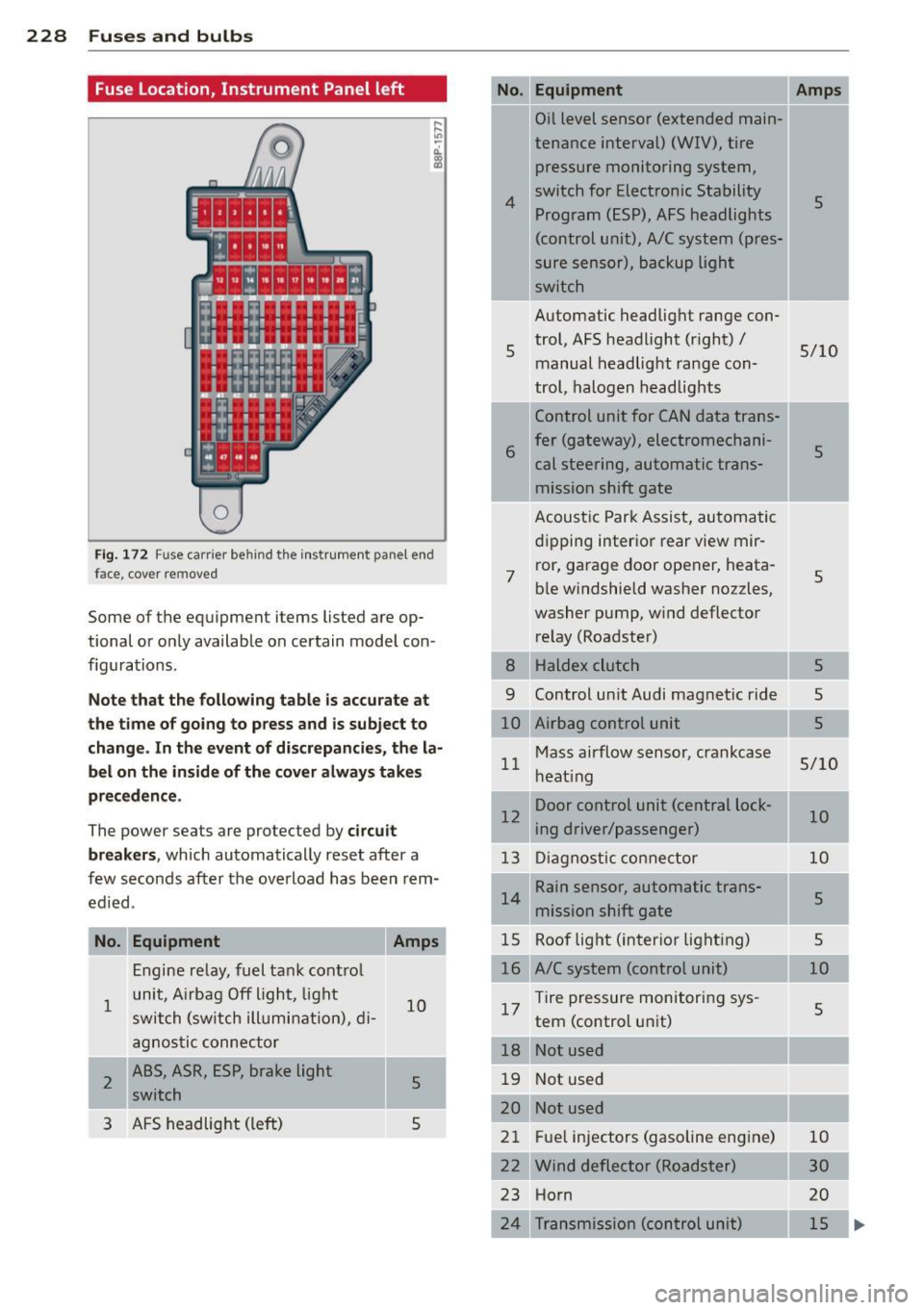
Fuse Location, Instrument Panel left
0
Fig. 172 Fuse ca rrier be hind the inst rum ent pan el end
fa ce, cover rem oved
Some of the equipment i tems lis ted are op
tional or only available on certain model con
figurations.
Note that the following table is accurate at
the time of going to press and is subject to
change. In the event of discrepancies, the la
bel on the inside of the cover always takes
precedence.
The power seats are protected by circuit
breakers,
which automatically reset after a
few seconds after the overload has been rem
edied .
No. Equipment
1
I 2
Engine relay, fuel tank control
unit , Airbag Off light, light
switch (switch illumination), di-
agnostic connector
ABS, ASR, ESP, brake light switch
3 AFS headlight (left)
Amps
10
5
s
No.
4
5
6
7
Equipment
Oil level sensor (extended main-
tenance interval)
(WIV), tire
pressure monitoring system,
switch for Electronic Stability Program (ESP), AFS headlights
(control unit), A/C system (pres-
sure sensor), backup light
switch
Automatic headlight range con
trol, AFS headlight (right)/
manual headlight range con
trol, halogen headlights
Control unit for CAN data trans
fer (gateway), electromechani
cal steering, automatic trans mission shift gate
Acoustic Park Assist, automatic
dipping interior rear
view mir-
ror, garage door opener, heata
ble windshield washer nozzles,
washer pump, wind deflector
relay (Roadster)
--r-
Amps
5
5/10
5
5
8 Haldex clutch 5
9 Control unit Audi magnetic ride 5
10 Airbag control unit 5
Mass airflow sensor, crankcase
11 5/10
heating
Door control unit (central lock-
12 10
ing driver/passenger)
--
13 Diagnostic connector 10
Rain sensor, automatic trans-
14 5
mission shift gate
15 Roof light (interior lighting) 5
16 A/C system (control unit) 10
17 Tire pressure monitoring sys-
5
tern (control unit)
l
I
18 Notused -
19 Not used
20 Not used
21 Fuel injectors (gasoline engine)
Wind deflector (Roadster)
Horn
24 Transmission (control unit) 10
30
20
15
..,.
Page 252 of 260

250 Index
Washer system . . . . . . . . . . . . . . . . . . . . . 62
Xenon headlights . . . . . . . . . . . . . . . . . . . 53
H ead restraints . ........... .... .... . 101
Adjusting .. ............. .. .. .. .. . 101
Heated front seats (climate control) . . . . . . . . . .
79
rear window . . . . . . . . . . . . . . . . . . . . . . . 79
Heated outside mirrors ..... .... .... .. 59
Heated seats . . . . . . . . . . . . . . . . . . . . . . . .
79
Heated washer jets
W iper and washer system .. .. .. .. .. . . 60
Heating ... .. ................ ..... .. 75
H igh beam . . . . . . . . . . . . . . . . . . . . . . 53, 55
Warn ing/ indicator l ights . .. .... .. .. .. 15
High voltage warn ing label ...... .. .. . 237
Hill Descent Assist .......... ... .... ..
90
H omeLink ® universal remote control . . . . 94
Hood
Opening . .. ..... ........... ... .. . 178
Release lever .. .... ...... .. .. .. .. . 178
Horn .. ... .................. ..... .. .
8
H ow many airbags does my vehicle have? 121
How often should I check my tire pres-
sures? .. .. .. ................ ... ... 201
How safety belt pretensioners work ... . 113
H ydroplaning 204
I
Ignition key . . . . . . . . . . . . . . . . . . . . . . . . . 80
Ignition key safety lock ..... .. .. .... .. 81
I gnition lock . . . . . . . . . . . . . . . . . . . . . . . . 80
Ignition lock pos itions . . . . . . . . . . . . . . . . 80
Immobilizer ................ .. .... .. 12
Important things to do before driving . . . 98
Improperly worn safety belts . .. .. .. .. . 112
I ndicator light
Airbag system . . . . . . . . . . . . . . . 125, 126
Audi magnetic ride ......... ... .... .. 14
C lutch overheating . . . . . . . . . . . . . . . . . . 92
PASSENGER AIR BAG OFF .. .... .... . 126
I ndicator lights ............ .. .. .. .. .. 13
Red symbols in the center disp lay .... . . 29
Ye llow symbols in the center disp lay ... 29
Infant seats . ... .......... .. .. .. .. . 141
Inside rearview mirror ...... .. .. .... .. 58 Installing child safety seats
Safety be lts . . . . . . . . . . . . . . . . . . . . . . 144
Instrument cluster and controls ... .... . 10
Instrument panel illumination .... .... . 57
Instruments and controls General illustration . . . . . . . . . . . . . . . . . . 8
Interior lights . . . . . . . . . . . . . . . . . . . . . . . 56
Luggage compartment ............. . 57
J
Jump-starting . .. .. ..... ....... ... .. 231
Jumper cables ... .. ............. .... 232
K
Key ........ .... .. .................. 35
Battery replacement .............. .. 36
Convenience opening and closing of pow-
er top .... ...... ............. .... . 48
Convenience opening and closing of win-
dows ........ ... .. ................ 44
Emergency key ... ....... ...... .. .. . 35
Key replacement .............. ..... 35
Master key ....................... . 35
Valet key .. .. .. .. ... .......... .... . 35
Keyless entry remote control .. .. ... ... . 35
Kick -down . . . . . . . . . . . . . . . . . . . . . . . . . . 91
Knee air bags .. .. .. ... .......... .... 130
Description .. .. .. ............. .. .. 130
How they work ... ................ . 131
Important safety instructions ........ 132
L
Lap timer ... .. .. .. ............. .. .. . 25
Launch Control Program ... ...... .. .. . 91
Leather . . . . . . . . . . . . . . . . . . . . . . . . . . . 170
Cleaning ......................... 171
Leaving home ..... ............. .... . 54
Lifting jack . .... .. .. ... ... ..... .. .. 223
Lifting vehicle ..... ................ . 236
Light/rain sensor defective ........... . 34
Lights . .... .... .. ............. .... . 53
Coming/Leaving home . . . . . . . . . . . . . . . 54
Emergency flasher . . . . . . . . . . . . . . . . . . 56
Exterior lighting . . . . . . . . . . . . . . . . . . . . 54
Front fog lights . . . . . . . . . . . . . . . . . . . . 55