ABS AUDI TT ROADSTER 2011 Owner's Manual
[x] Cancel search | Manufacturer: AUDI, Model Year: 2011, Model line: TT ROADSTER, Model: AUDI TT ROADSTER 2011Pages: 260, PDF Size: 64.11 MB
Page 173 of 260
creme will nourish and moisturize the
l eather, helping it to b reathe and stay
supple . It also helps to b uild up a protec
tive coat ing on the surface.
- Clean the leather every 2 -3 months,
and clean any areas that get soiled.
- Remove fresh marks made by ba llpoint
pens, ink, lipstick, shoe polish, etc . as
soon as possib le.
- Preserve the color of the leather as need
ed by using a special colored leather care
creme to touch up areas of uneven color.
Cleaning and caring for leather
upholstery and trim
App lies to vehicles: with natural leather
Natural leather requires special care and at
tention .
Normal cleaning
~ Clean soi led areas with a slightly moistened
cotton or woolen cloth.
Mor e stubborn dirt
~ More stubbo rn dirt can be removed using a
cloth saturated with a mi ld soap so lution (2
tablespoons mi ld liquid soap) .
~ Never allow the soap so lution to saturate
the leather, and make certa in that no water
soaks into the seams .
~ Wipe off the soap solution with a soft, dry
cloth .
Cleaning sp ots
~ Remove fresh wa ter-b ase d spots (such as
coffee, tea, ju ices, blood) w ith an absorbent
cloth or paper towel.
~ Remove fresh gr ease or oi l-ba sed spot s
(such as butter, mayonnaise, chocolate) with
an absorbent cloth or paper towe l, or use
the cleane r from the leathe r care kit if the
spot has not yet pene trated into the surface
of the leather .
~ Use an oil/grease dissolving spray, if oil/
grea se spots h ave d ried on.
~ Remove specific kinds of spots (ballpoint
pen, felt marker, fingernail polish, water-
Cleaning and protec tion 17 1
based paint, shoe po lish, etc.) with a spot
remover specifically formu lated for leather .
Le ather car e
~ Every half year use an approved leather care
product (available from your Audi dea ler) to
care for the leathe r.
~ App ly the product very sparingly.
~ Wipe it off with a damp clot h.
If you have any questions about cleaning and
caring for the leather in your vehicle, it is best
to contact your a uthorized Audi dea ler, who
will be g lad to help you and tell you abo ut our
full range of leather care products, such as:
- Leather cleaning and care kit
- Cremes to care fo r colored lea ther
- Spot removers for ballpoint pens, shoe pol-
ish, etc.
- Oil/grease d issolving spray
- New and upcom ing products.
A WARNING
Always read and heed all WARNINGS and
the information <=) page 162.
Q) Note
-Never use chemical so lvents (e.g. lighter
fluid, tu rpentine), waxes, shoe polish or
simi lar products on the leather surfaces
in yo ur Audi .
- T o avoid damage, have stubborn sta ins
removed by a comme rcial clean ing spe
cialist.
Cleaning Alcantara ® (synthetic suede)
Applies to vehicles: with Alcantara upholstery
Removing dust and dirt
~ Moisten a cloth, squeeze out excess water
and wipe down the seat surfaces.
Removing stains
~ Moisten a cloth with lukewarm water or
w ith diluted
ethyl (rubbing ) alcohol.
~ Dab at the stain . Start at the outs ide and
work inwards . •
•
Page 190 of 260
188 Checking and filling
If the brake fluid level falls considerably be
l ow the "MIN" mark, the brake warning/indi
cator light (U .S . mode ls: . , Canadian
models: .) will come on
¢ page 16 and
¢ page 30. Do not continue to operate the ve
h icle . The complete brake system shou ld be
thoroughly checked by an authorized A ud i
dea ler o r othe r qualified facility and t he cause
corrected. If the bra ke fluid level is too low,
the bra ke warning/ind ic a tor ligh t will illum i
nate . Contact an authorized Aud i dea ler
im
mediatel y.
Changing brake fluid
Hove the broke fluid changed by on experi
enced technician.
B rake fl uid abso rbs mois ture from the a ir. If
the water content in the b ra ke fluid i s too
h igh, corros ion in the brake sys tem may result
after a period of t ime . The boi ling point o f the
b rake fluid wi ll also decrease considerab ly and
decrease braking per formance.
T herefore, the brake flu id mus t be changed
every two year s. Always use new b rake fluid
which conforms to Fede ral Motor Vehicle
Standard "FMVSS 116 DOT 4".
T he brake flu id rese rvoi r can be difficul t to
reach, therefo re, we recommend that yo u
have the brake f luid changed by yo ur autho r
ized
Audi dealer . Your dealer has the correct
too ls, the right b rake f luid and the know-how
to do this for you.
A WARNING
- B rake fluid is poiso nous . It mus t be stor
ed only in th e closed orig inal con tainer
o ut of the reac h of children!
- Brake fa ilure can result from old o r inap
propriate b ra ke fluid. Observe these pre
c aut ions:
- Use o nly brake fluid t hat meets SAE
specif ication
J 1703 and confo rms to
Federal Motor Vehicle Standard 116.
Always check with your a uthorized Audi
dealer to make s ure you are using the
correct brake fl uid. T he correct type of brake flu
id is also ind icate d on the
brake f lu id rese rvoir.
- The brake fl uid must be new . Heavy use
of the brakes can cause a vapo r lock if
the brake fluid is left in the system too
long . This can se riously affect the effi
c iency of t he brakes as well as your
safe ty. This co uld resu lt in a n accide nt.
([) Note
Brake fluid will damage the paint of your
vehicle.
@ For the sake of the environment
Because o f the prob lem of prope r disposal
of brake fluid as well as t he spec ial too ls
required and the necessary expertise, we
recomme nd t hat yo u have th e brake flu id
cha nged by yo ur autho rize d Au di dea le r.
Battery
General information
Your ve hicl e is equipped with a specia l bat
tery, an
ACM battery. This battery is located
in t he luggage compartment and must be re
placed with an origina l equipment battery.
U nder normal opera ting condit ions, the bat
te ry is
maintenance-fr ee .
Have the battery checked when you take your
vehicle in for se rv ice . You a re well advised to
replace a battery that is o lde r th an 5 years .
Disconnecting the battery terminals
Some vehicle functions (power window reg u
lators, for example) are lost if the battery te r
mina ls are disconnected. T hese functions have
to be relearned after the battery termina ls are
connected aga in . T o prevent t his, t he battery
shou ld only b e disconne cted from the ve hicle
ele ct ric al sy stem w hen abso lutely ne cessary
f o r rep air s.
Vehicles not driven for long periods
If you are go ing to let your vehicle stand for a
long time a nd not drive it, you should remem
ber there are elect rical components which a re
Ill-
Page 191 of 260
still functioning and they will draw energy
from the battery and drain it, for example, the
engine immobilizer . To prevent this, you can
e ither charge the battery occasionally to keep
it in good working condi tion or you can d is
connect the negat ive cable on the battery .
Winter ope ration
During the winter months, battery capacity
tends to decrease as temperatures drop . This
is because more power is also consumed while
start ing, and the headlights, rear window de
fogger, etc ., are used more often .
Avoid unnecessary power consumption, par
ticularly in c ity traffic or when traveling on ly
short distances. Let your authori zed Audi
dealer check the capacity of the vehicle bat
tery before winter sets in
¢ page 192. A well
charged battery w ill not only prevent starting
p rob lems when the weathe r is cold, but will
a lso last longer .
Replacing b attery
The new battery m ust have the same capaci
ty, voltage (12 volts), amperage, construction
a n d p lug sealing, as the origina l batte ry. Spec
ifications are listed on the batte ry housing.
Batteries specially developed by A udi f ulfill
the ma intenance, output, and safety require
ments.
When insta lling the bat tery , make sure the ig
n ition and all e lectr ica l cons umers are sw itch
ed
off ¢ (j) .
We recommend that you use ma intenance
free or
cy cle-re sis tant /le ak -proof batteries
according to the standards TL 825 06 (from
December 1997) and VW 7 SO 73 (from Au
gust 200 1).
Replacing the battery should be ca rried by a
qua lified workshop. Please follow the instruc
tions on the battery cover.
(D Note
- All work on t he battery requires techni
ca l knowledge. Please contact an A udi
dealership or anothe r authorized facili ty
Checkin g and fillin g 189
for questions abo ut the batte ry - danger
of acid burns and exp losion hazard!
- T he battery must not be opened! Do not
try to change the battery's liquid level,
otherwise detonating gas will escape
from the battery - explosion hazard!
- The AGM battery in the luggage com
partment cannot leak, because the elec
tro lyte for this battery is absorbed into a
special glass mat. This leak-proof battery
must not be replace with a convent iona l
battery.
- Make sure the ventilation hose on the
side of the battery is connected, other
w ise fumes or battery ac id can leak out.
- Battery holder and terminals always
have to be secured correctly.
- Before all work on the battery follow the
warnings below ¢.&. in Working on the
battery on page 190.
@) For the sake of the environment
Because of the prob lem of proper disposal
of a battery, we recommend your author
ized Audi dealer change the battery for
you. Batteries contain sulfur ic acid and
l ead and must always be disposed of prop
erly in compl iance with a ll environmental
regulat ions. Disposing of vehi cle batter ies
improperly is very dangerous to the envi
ronment. Make sure that the removed bat
tery cannot overbalance, otherwise sulfu ric acid might escape!
(D Tips
If your vehicle is left standing for several
weeks at extremely low temperatures, the
vehicle battery shou ld be removed and
stored where it w ill not freeze. This will
prevent it from be ing damaged and having
to be replaced . •
•
Page 214 of 260

212 Tires and wheels
Tire pressure
monitoring system
General notes
Appl ies to vehicles: with tire pressure monitoring system
Each tire, including the spare (if provided),
should be checked monthly when cold and in
f lated to the inflation pressure recommended
by the vehicle manufacturer on the vehicle
placard or tire inflation pressure label. (If your
vehicle has t ires of a different size than the
size indicated on the vehicle placard or tire in
flation pressure label, you should determine
the proper tire inflation pressure for those
tires.)
As an added safety feature, your vehicle has
been equipped with a tire pressure monitoring
system (TPMS) that illuminates a low tire
pressure telltale when one or more of your
tires is significantly under-inflated. According
ly, when the low tire pressure telltale illumi
nates, you should stop and check your tires as
soon as possible, and inflate them to the proper pressure. Driving on a significantly un
der-inflated tire causes the tire to overheat
and can lead to tire failure. Under-inflation al
so reduces fuel efficiency and tire tread life,
and may affect the vehicle's handling and
stopping ability.
Please note that the TPMS is not a substitute
for proper tire maintenance, and it is the driv
er's responsib ility to ma inta in correct tire
pressure , even if under-inflation has not
reached the level to trigger illumination of the
TPMS low tire pressure telltale.
Your veh icle has also been equ ipped with a
TPMS malfunction indicato r to indicate when
the system is not operating properly. The
TPMS malfunction indicato r is combined with
the low tire pressure telltale. When the sys
tem detects a malfunction, the telltale will
f lash for approximately one minute and then
remain continuously illuminated. This se
quence will continue upon subsequent vehicle
start-ups as long as the ma lfunction exists. When the
malfunction indicator is illuminat
ed, the system may not be ab le to detect or
s ignal low tire pressure as intended. TPMS
malfunctions may occur for a variety of rea
sons, including the installation of replace
ment or alternate tires or wheels on the vehi
cle that prevent the TPMS from functioning
properly. Always check the TPMS malfunction
telltale after replacing one or more tires or
wheels on your vehicle to ens ure that the re
placement or alternate ti res and wheels allow
the TPMS to continue to function properly.
Tire pressure indicator appears
Applies to veh icles : w ith tire pressure monitoring system
The tire pressure indicator in the instrument
cluster informs you if the tire pressure is too
low or if there is a system malfunction.
Fig. 151 Display : underinflatio n warning
Fig. 152 Display: System malfunction
Using the ABS sensors, the tire pressure moni
toring system compares the tire tread circum
ference and vibration characteristics of the in dividual tires. If the pressure decreases in one
or more t ires, this is indicated in the instru
ment cluster with a warning symbol
g and a
message
r=:> fig. 151. Th e driver message in the
display goes out after 5 seconds. The driver
message can be displayed again by pressing
11--
Page 215 of 260
the !CHECK I button @c:> page 10, fig. 3. If on
l y one tire is affected, the display will indicate
its pos ition.
The tire p ress ure moni to ring m ust be reset in
the menu display each time the pressures are
adjusted (e .g. when switc hing between parti
a l and full load pressure) or after chang ing or
replac ing a tire on your vehicle
c:> page 214.
You can find the recommended tire pressures
for your vehicle on the label on the driver's
door p illar
c:> page 198.
Tire tread circumference and vibration charac
ter istics can change and cause a tire pressure
warn ing if:
- the tire pressure in one or more t ires is too
low,
- the tire has structural damage,
- the tire pressure was changed, whee ls rotat -
ed or replaced but the TPMS was not reset
c:> page 214 .
Warning symbol s
[@] Loss of pressure in at least one tire c:> ,&..
Check the ti re or tires and rep lace or repair if
necessary . The indicator light
RI] in the instru
ment cluster also illuminates
r=:>page 13.
Check/correct the pressures of all four tires
and reset TPMS in the menu display.
11@1@1 < T ire Pressure Monitoring Sys tem) Tire
p re ss ure! Sy stem malfunction. JfllAl@ ap
pears after switching the ignition on or while
driving
r=:> fig. 152 and the indicator light RI] in
the instrument cluster blinks for approxi
mately one minute and then stays on, there is
a system malfunction . See your author ized
Aud i dealer as soon as possible.
.&, WARNING
- If the t ire pressure indicator appea rs in
the instrument cl uster d isplay, one or
more o f you r tires is s ignificantly under
inflated. Reduce your speed immediately
and avoid any hard steering or bra king
maneuvers. Stop as soon as possible and
check the t ires and the ir pressures. In
flate the tire pressure to the proper pres-
.
Tire s an d wheel s 213
sure as indicated on the vehicle's tire
pressure labe l
r=:>page 198. Driving on a
significantly under-inflated tire causes
the t ire to overheat and can lead to tire
fa ilure . Unde r-inflation also is l ikely to
impair the vehicle's handling and stop
ping ability.
- The d rive r is respons ib le for maintaining
the co rrect tire pressures. You must
check the tire pressures regularly.
- Unde r ce rtain conditions (such as a spo r
ty driving style, winter conditions or u n
p aved roads), the pressu re monitor indi
ca tor may be delayed.
- Ask you r authorized Aud i dea le r i f run
f lat tires may be used on your vehicle.
Your vehicle registration becomes invalid
if you use these t ires when not perm it
ted. Damage to your vehicle or accidents
could a lso result.
- If you switch between standard and run
flat tires, an autho rized Audi dealer o r
qualified workshop must reprogram the
contro l modu le.
(D Tips
- The tire pressure monitor ing system
stops work ing when there is an ESP/ABS
ma lfunction.
- Us ing snow c hains may res ult in a system
ma lfunction.
- Tires wit h the identification "AO" or "RO"
have been specially matched with yo ur
Audi. We recommend using on ly these
tires because they meet the highest
standards regarding safety and dr iv ing
character istics when used correctly. Your
authorized Audi dealer wi ll gladly pro
vide you with more information .
•
•
Page 230 of 260
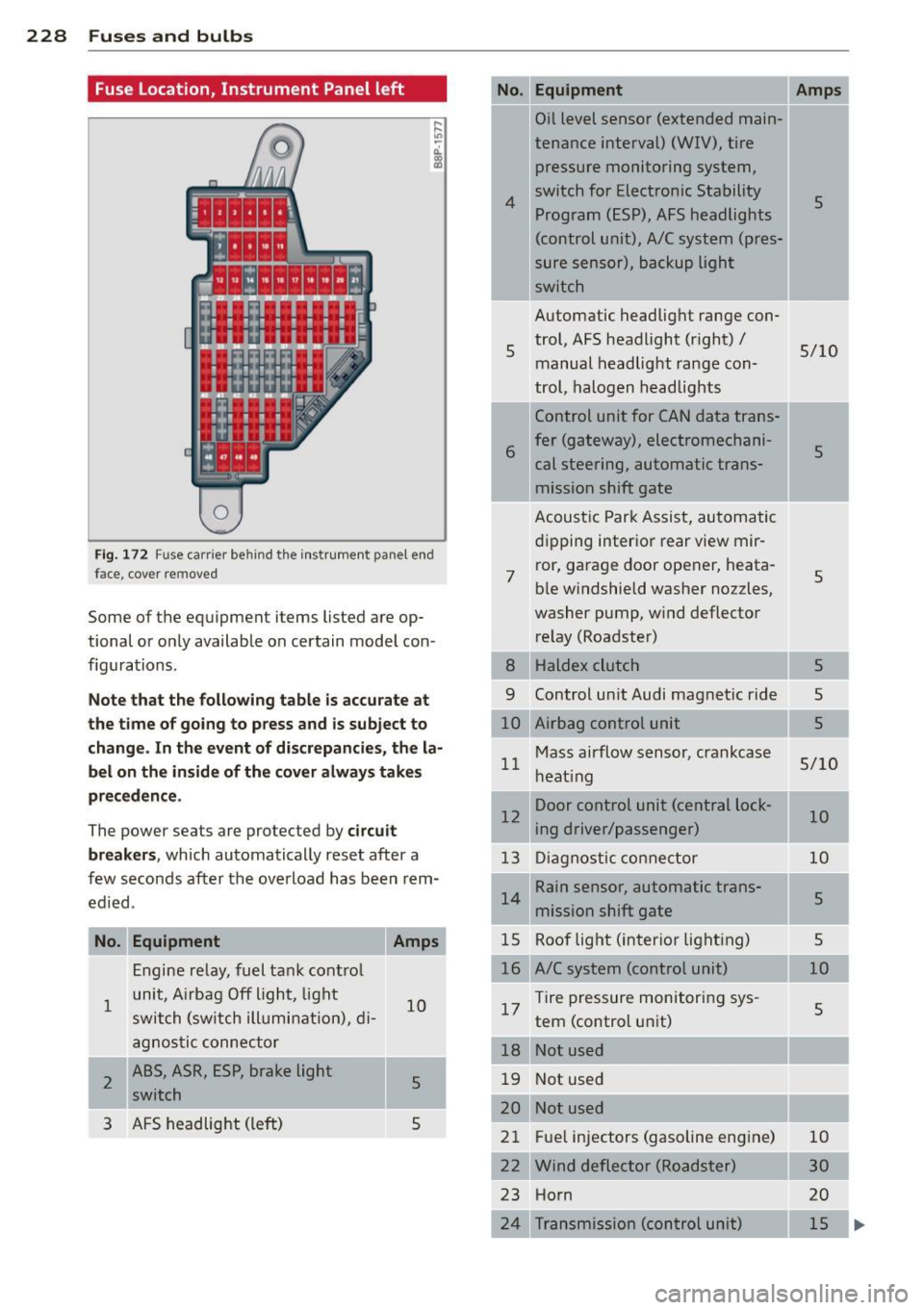
228 Fuses and bulbs
Fuse Location, Instrument Panel left
0
Fig. 172 Fuse ca rrier be hind the inst rum ent pan el end
fa ce, cover rem oved
Some of the equipment i tems lis ted are op
tional or only available on certain model con
figurations.
Note that the following table is accurate at
the time of going to press and is subject to
change. In the event of discrepancies, the la
bel on the inside of the cover always takes
precedence.
The power seats are protected by circuit
breakers,
which automatically reset after a
few seconds after the overload has been rem
edied .
No. Equipment
1
I 2
Engine relay, fuel tank control
unit , Airbag Off light, light
switch (switch illumination), di-
agnostic connector
ABS, ASR, ESP, brake light switch
3 AFS headlight (left)
Amps
10
5
s
No.
4
5
6
7
Equipment
Oil level sensor (extended main-
tenance interval)
(WIV), tire
pressure monitoring system,
switch for Electronic Stability Program (ESP), AFS headlights
(control unit), A/C system (pres-
sure sensor), backup light
switch
Automatic headlight range con
trol, AFS headlight (right)/
manual headlight range con
trol, halogen headlights
Control unit for CAN data trans
fer (gateway), electromechani
cal steering, automatic trans mission shift gate
Acoustic Park Assist, automatic
dipping interior rear
view mir-
ror, garage door opener, heata
ble windshield washer nozzles,
washer pump, wind deflector
relay (Roadster)
--r-
Amps
5
5/10
5
5
8 Haldex clutch 5
9 Control unit Audi magnetic ride 5
10 Airbag control unit 5
Mass airflow sensor, crankcase
11 5/10
heating
Door control unit (central lock-
12 10
ing driver/passenger)
--
13 Diagnostic connector 10
Rain sensor, automatic trans-
14 5
mission shift gate
15 Roof light (interior lighting) 5
16 A/C system (control unit) 10
17 Tire pressure monitoring sys-
5
tern (control unit)
l
I
18 Notused -
19 Not used
20 Not used
21 Fuel injectors (gasoline engine)
Wind deflector (Roadster)
Horn
24 Transmission (control unit) 10
30
20
15
..,.
Page 236 of 260
234 Emergency situations
Front towing loop
Do not install the front towing loop until it is
needed.
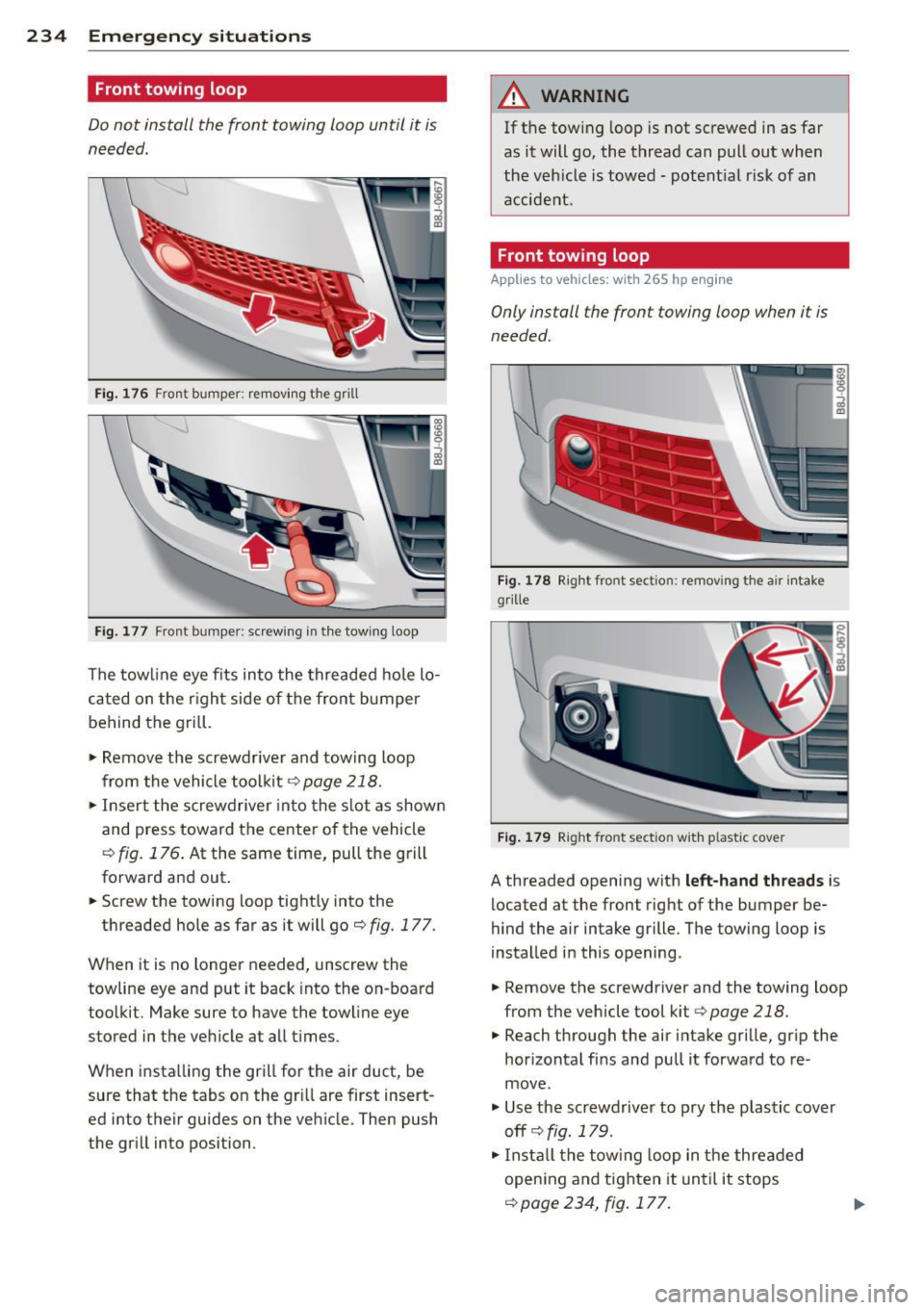
Fig. 176 Front bumper: removing th e grill
Fig. 177 Front bumper: screwing in the tow ing loop
The towline eye fits into the threaded hole lo
cated on the r ight side of the front bumper
behind the grill .
... Remove the screwdriver and towing loop
from the vehicle toolkit
q page 218 .
... Insert the screwdriver into the slot as shown
and press toward the cente r of the vehicle
¢
fig. 176 . At the same time, pull the grill
forward and out .
.,. Screw the towing loop tight ly into the
threaded hole as far as it will go¢
fig. 177.
When it is no longer needed, unscrew the
towline eye and put it back into the on-board
too lkit. Make sure to have the towline eye
stored in the vehicle at all times.
When installing the grill for the air duct, be
sure that the tabs on the gr ill are first insert
ed into their guides on the vehicle. Then push
the grill into position .
A WARNING
-If the towing loop is not screwed in as far
as it will go, the thread can pull out when
the veh icle is towed -potent ial risk of an
accident.
Front towing loop
Applies to veh icles: w ith 265 hp engine
Only install the front towing loop when it is
needed .
Fig. 178 Right front sect ion: remov ing the air intake
grille
Fig. 179 Right front sect io n with plast ic cove r
A threaded opening with left-hand threads is
located at the front right of the bumper be·
hind the air intake grille. The towing loop is
installed in this opening .
.,. Remove the screwdriver and the towing loop
from the vehicle tool kit
q page 218.
... Reach through the air intake grille, grip the
hor izontal fins and pull it forward to re
move.
... Use the screwdriver to pry the plastic cover
off
q fig. 179.
... Install the towing loop in the threaded
opening and tighten it until it stops
q page 234, fig. 177.
Page 237 of 260
Remove the towing loop when you are done
using it and place it back in the vehicle tool
kit . A lways keep the tow ing loop in the vehi
cle.
When insta lling the air intake grille, insert the
tabs on the grille in the mounts on the vehicle
first . Then press the gri lle in to sec ure it.
A WARNING
If the towing loop is not tightened until it
stops when instal ling, the threads may be
pulled out when tow ing the ve hicle and
t hat could ca use an accident.
Rear towing loop
Do not install the rear towing loop until it is
needed.
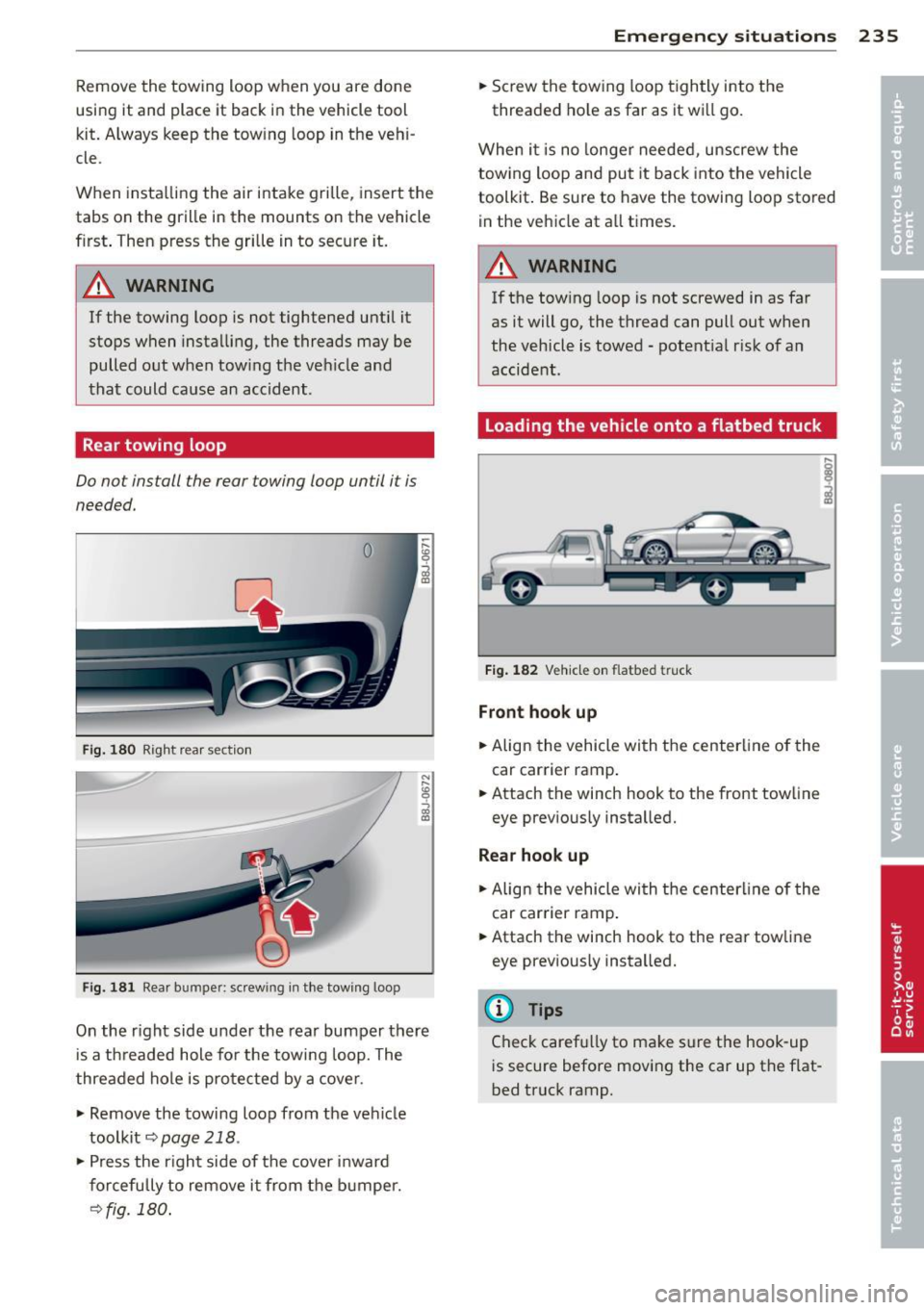
Fi g. 180 Right rea r sect ion
Fi g. 18 1 Rea r bumper: screwing in t he tow in g loop
On the r ight side under the rear bumper there
i s a t hreaded hole for the tow ing loop. The
threaded hole is pro tected by a cove r.
"' Remove the towing loop from the ve hicle
toolkit
r:::;,page 218.
"'Press the right side of the cover inward
f orcefully to remove i t from the b umper.
¢fig. 180.
Emergency s itu ations 235
"' Sc rew the towing loop tightly into the
threaded ho le as far as it wi ll go.
When it is no longe r neede d, unscrew the
towing loop and put it back into the vehicle
toolk it . Be sure to have the towing loop sto red
in the vehicle at all times.
A WARNING
If t he tow ing loop is not screwed in as far
as it will go, the thread can pull out when
the vehicle is towed -potent ia l risk of an
accident.
loading the vehicle onto a flatbed truck
I
Fi g. 182 Ve hicle on flatbed truck
Front hook up
"'Align the vehicle wi th t he centerline of the
car carrier ramp.
"' Attach the winch hook to the front towline
eye prev iously insta lled.
Rear hook up
"' Alig n the vehicle wi th the center line of the
car car rier ramp .
"' Attach the winch hook to the rear tow line
eye previous ly insta lled.
(D Tips
Check caref ully to ma ke s ure the hook-up
i s secure before moving the car up the flat
bed truck ramp.
Page 247 of 260
A
A/C operation
ABS ................... .... 78
refer to Anti-lock brake system .. .. .. . 153
Accessories . . . . . . . . . . . . . . . . . . . . . . . . 243
Acoustic park assist . . . . . . . . . . . . . . . . . . 83
Adaptive light ................ .... ... 54
defective . . . . . . . . . . . . . . . . . . . . . . . . . . 34
Adding Engine coolant ........... .. .. .. .. .
Engine oil ...... .... ... .. .. .. .. .. .
Windshield washer fluid ....... . ... .
Additional accessories
Additives Engine oil .. ............. .. .. .. .. .
Adjustable steering column ...... ... .. . 186
183
192
243
183 80
Adjusting front seats ............ ..... 66
Adjusting steering column ... .. .. .. .. .. 80
Adjusting the seats ......... .. .. .. .. .. 67
Advanced Airbag System Children ... ................ ... ... 137
Components ................ ... .. .
Front airbags ............ .... .. .. .
How the components work together . . 121
120
123
Monitoring . . . . . . . . . . . . . . . . . . . . . . . 125
Weight -sensing mat ......... .... .. 137
Airbag Warning/indicator lights ..... .. .. .. .. 16
Airbag system . . . . . . . . . . . . . . . . . 115, 134
Care ....... .. ............... .. .. . 128
Child restraints .............. ... ... 138
Components (front airbags) . ... .. .. . 121
Danger of fitting a child safety seat on
the front passenger seat . . . . . . . . . . . . 116
Disposal 128
Front airbags .... .. ...... .. .. .. .. . 119
How do the front airbags work? . ..... 124
How many airbags does my vehicle
have? . .. .. .... ............. .. .. . 121
I mportant safety instructions on the
knee airbag system .......... ... .. . 132
Important things to know ... ... .. .. . 115
Indicator light .............. ... ... 125
Knee airbags . . . . . . . . . . . . . . . . . . . . . . 130
Monitoring . ............. .... .. ... 125
PASSENGER AIR BAG OFF light .. .. .. . 126
Repairs . ... ... .. .. ...... .. .. .. .. . 128
Index 245
Side airbags ..... ................. 132
When must the system be inspected? . 125
All-wheel drive .. .. ................. 154
Winter tires ... .. .... ........... . .
Alloy wheels .. .. .. .. . ... ...... ... . .
Alternator
refer to Generator . . .............. ..
Anti-freeze 209
167
16
refer to Engine cooling system ... .. .. 185
Anti -glare inside day-night mirror ....... 58
Anti-lock brake system How the ABS system works ......... . 153
Warning/indicator lights ........ .. .. . 17
Anti-Sl ip Regulation System (ASR)
How the system works .............. 150
Anti-theft systems Anti-theft alarm system ........ .. .. . 42
Electronic immobilizer .......... .. .. . 36
Ashtray
ASR
.... .. .. .. ... ............ ...
How the Anti-Slip Regulation System 71
works .... .. .. .. ................. 150
Asterisk What does it mean when something is marked with an asterisk? .............. 6
Audi magnetic ride . . . . . . . . . . . . . . . 14, 86
Description .. .. .. ... ............ .. . 86
Ind icator light . .... ... .......... .. . 14
Audi Service Repair Manuals and Litera-
ture .......... ... .. .. ... ......... .
Automatic belt retractor ............ .
Automat ic car wash
refer to Washing . .... ........... . .
Automatic convertible top 241
110
163
closing . .. .. .. .. .. . .. .... ........ . 48
opening ........ .. ............... .
Automatic transmission ............ .. .
Driving Notes .. .. ................. . 48
87
89
Emergency program .. .. ...... ...... 92
Emergency release . . . . . . . . . . . . . . . . . . 92
Ignition key safety lock .............. 81
Kick-down ... .. .. ... ............ ... 91
Launch Control Program .......... .. . 91
Selector lever lock . . . . . . . . . . . . . . . . . . 88
Selector lever positions . . . . . . . . . . . . . . 87
Tiptronic . . . . . . . . . . . . . . . . . . . . . . . . . . 90
Tiptronic controls on the steering wheel 91
•
•
Page 257 of 260
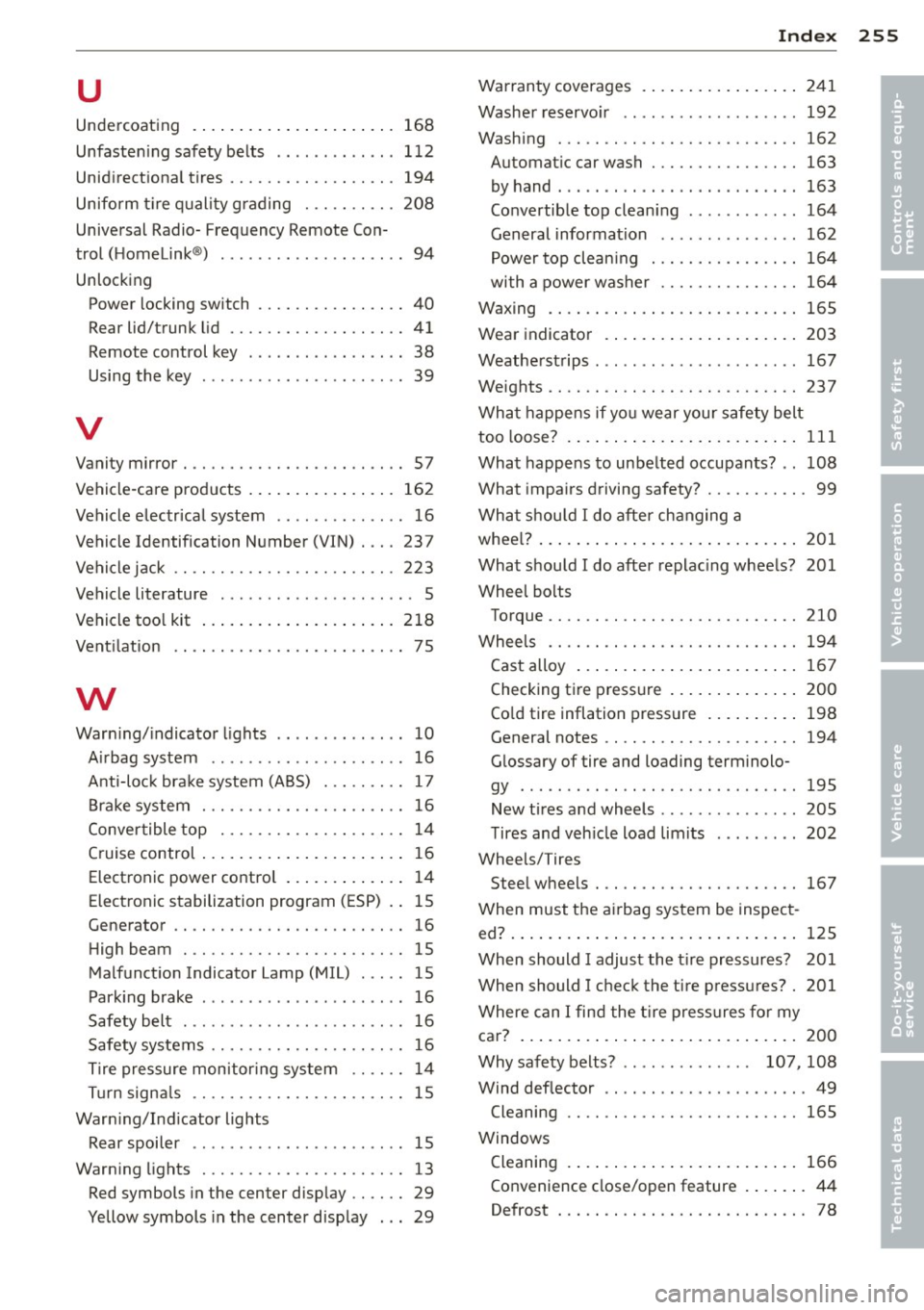
u
Undercoating ................... ... 168
Unfastening safety belts .. .. .. .. .. .. . 112
Unidirectional tires ......... .. .. .. .. . 194
Uniform tire quality grading . .. .. .. .. . 208
Universal Radio- Frequency Remote Con-
trol (Homelink ®) ....... ...... .... ... 94
Unlocking Power locking switch ...... .. .. .. .. .. 40
Rear lid/trunk lid ......... .. .. .. .. .. 41
Remote control key . . . . . . . . . . . . . . . . . 38
Using the key ............... ... ... . 39
V
Vanity mirror . .. ........... .. .. .. .. .. 57
Vehicle-care products .......... ... .. . 162
Vehicle electr ical system .... .. .. .. .. .. 16
Vehicle Identification Number (VIN) . .. . 237
Vehicle jack .. .... ............. .. .. . 223
Vehicle literature . . . . . . . . . . . . . . . . . . . . . 5
Vehicle tool kit ..................... 218
Ventilation . . . . . . . . . . . . . . . . . . . . . . . . .
7 5
w
Warning/indicator lights .. ..... .... ... 10
Airbag system ... .. ...... .. .. .. .. .. 16
Anti-lock brake system (ABS) . . . . . . . . . 17
Brake system ............ .. .. .. .. .. 16
Convertible top . . . . . . . . . . . . . . . . . . . . 14
Cruise control .................. .... 16
Electronic power control . . . . . . . . . . . . . 14
Electronic stabilization program (ESP) .. 15
Generator .. ............. .... .. .. .. 16
High beam . ............. .... .. .... 15
Malfunction Indicator Lamp (MIL) ..... 15
Parking brake ............... .... ... 16
Safety belt .... .. .. ...... .. .. .. .. .. 16
Safety systems ........... .... .. .. .. 16
Tire pressure monitoring system .. .. .. 14
Turn signals ............. .... .. .... 15
Warning/Indicator lights Rear spoiler .......... .... ... ... ... 15
Warning lights ............ .... .. .... 13
Red symbols in the center display .. .. .. 29
Yellow symbols in the center display . .. 29
Index 255
Warranty coverages ................ .
241
Washer reservoir .................. . 192
Washing ... .. .. .. ... ............ . .
162
Automatic car wash ............ ... .
163
by hand . .. .. .. .. .. . ... ...... ... . .
163
Convertible top cleaning . .......... . 164
General information .............. . 162
Power top clean ing ............ .. . . 164
with a power washer .............. . 164
Waxing .... .. .. .. .. .. ........... . .
165
Wear indicator ...... .............. .
203
Weatherstrips ...... .... ... ........ . 167
Weights .... .. .. .. .. .. ........... . .
237
What happens if you wear your safety belt
too loose? ........ .. ............... 111
What happens to unbelted occupants? .. 108
What impairs driving safety? ........... 99
What should I do after changing a
wheel? ............................ 201
What should I do after replacing wheels? 201
Wheel bolts Torque .... .. .. .. ............... .. 210
Wheels ........ ................... 194
Cast alloy ..... .. .. ............... 167
Checking tire pressure .............. 200
Cold tire inflation pressure ......... . 198
General notes .. ................... 194
Glossary of tire and loading terminolo-
gy ....... .. .. .. .... ... .... .... .. 195
New tires and wheels .. .. .......... . 205
Tires and vehicle load limits ........ . 202
Wheels/Tires Steel wheels . .. ...... ............. 167
When must the airbag system be inspect-
ed? ......... ..... ................. 125
When should I adjust the tire pressures? 201
When should I check the tire pressures? . 201
Where can I find the tire pressures for my
car? ........ ... .... ............... 200
Why safety belts? . . . . . . . . . . . . . . 107, 108
Wind deflector .. .. ................. . 49
Cleaning .... .. ................... 165
Windows Cleaning 166
Convenience close/open feature ..... .. 44
Defrost . .. .. .. .. .. ................ 78
•
•